
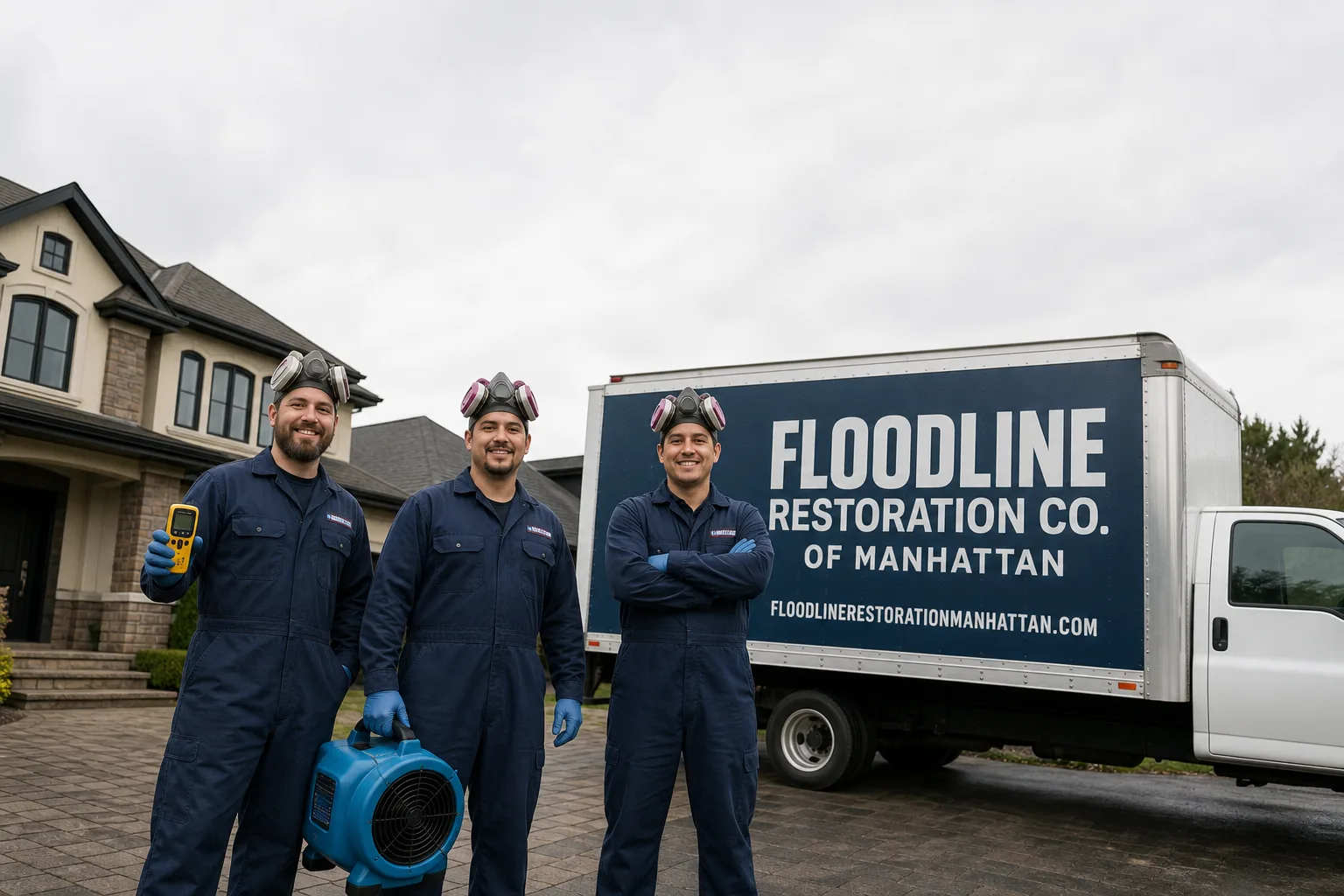
Free visual inspection and a written scope of work before any mitigation begins - photos, moisture readings, and drying logs go in your claim file
The scope we write is the scope we bill. Anything new gets shown to you, in writing, before we touch it.






 Before
 After
After Before
 After
After Before
 After
After24/7 Emergency Mold Remediation in Park Ridge
Mold remediation in Park Ridge typically costs $1,800-$6,500 depending on how far moisture has traveled and whether containment, drywall removal, and structural drying are required. Most jobs we handle in the borough are completed within 3-7 days, and we answer the phone live at (917) 924-4221 around the clock. If you’ve spotted black staining on a basement wall, a musty smell near the Pascack Brook side of town, or buckling baseboards after a water heater failure, the first call costs you nothing and gets a certified crew to your door fast.
The first hour matters more than most homeowners realize. Mold spores that land on wet drywall in a Park Ridge basement can germinate within 24-48 hours. Once growth starts, it spreads through wall cavities, settles into carpet padding, and works its way into the sill plates. We send a background-checked, uniformed technician to assess the situation, take moisture readings, and give you a written scope before any work begins. No pressure, no guessing, no box-fan advice that makes the problem worse.
Understanding Mold Remediation Severity in Park Ridge Properties
Park Ridge’s housing stock runs heavily toward split-levels, ranch homes, and colonials built between the 1950s and 1980s, plus a solid number of older homes near the downtown corridor. These homes share a common vulnerability: finished basements and attached crawl spaces that sit close to the water table. When the Pascack Brook rises after heavy rain or a sump pump fails during a nor’easter, moisture gets trapped behind drywall, under vinyl flooring, and inside rim joists. That hidden moisture is where mold takes hold.
We classify every job by the source of the water and the extent of the affected area. Category 1 water, clean water from a supply line or water heater, can still turn into a mold problem if it isn’t dried properly within 48 hours. Category 2 water, from a washing machine overflow or sump failure, carries contaminants that feed microbial growth faster. Category 3 water, from sewage or outside flooding, requires full containment, antimicrobial treatment, and usually more extensive demolition. The severity of the mold remediation job in Park Ridge depends less on the mold itself and more on where the water came from and how long the materials stayed wet.
Why Park Ridge Property Owners Choose Floodline Restoration Co. of Manhattan
- 45-minute response commitment: When you call us from Park Ridge, a live dispatcher confirms your address and starts a crew your way. We treat every mold call as urgent because delay means more drywall to cut out.
- 24/7 live answer, never a recording: Call at 2 a.m. and a person picks up. Not a menu tree, not a voicemail box. That’s how we’ve run dispatch since Curt Bowman founded Floodline in 2010.
- IICRC-certified crews: Our technicians hold WRT, FSRT, and AMRT certifications and follow the standards those codes require. You get the same certified team from the first moisture reading to the final clearance test.
- Free visual inspection: We walk the affected areas, take moisture readings with Dri-Eaz meters, and explain what we found in plain English before quoting any work.
- Direct insurance billing: We document the loss, coordinate with your adjuster, and bill your carrier directly. You’re not the messenger between us and the insurance company.
- One team from extraction to reconstruction: If mold remediation in your Park Ridge home requires drywall removal and rebuild, the same crew handles both. No mid-job handoff to a subcontractor you’ve never met.
Our Mold Remediation Process
Inspection & Assessment
We start with thermal imaging and moisture meters to find water you can’t see. In Park Ridge homes, that often means checking rim joists, sill plates, and the back side of finished basement walls facing the Pascack Brook side of the property.
Containment & Stabilization
We seal off affected areas with 6-mil polyethylene and run negative air machines with HEPA filtration. This keeps mold spores from spreading to clean rooms during demolition. Skipping this step is the biggest mistake we see from unqualified contractors.
Removal of Affected Materials
Moldy drywall, insulation, and carpet padding come out and go into sealed bags for disposal. We cut back to clean, dry material and check the framing behind it before any rebuilding begins.
Cleaning & Antimicrobial Treatment
Exposed framing gets wire-brushed, vacuumed with HEPA equipment, and treated with an antimicrobial to prevent regrowth. Air scrubbers run continuously while we work.
Drying & Dehumidification
We set up XPOWER air movers and Phoenix dehumidifiers and log daily moisture readings until every affected material reaches its dry standard. In Park Ridge’s humid summers, this step takes real discipline; pulling equipment early just invites the mold back.
Repairs & Restoration
New drywall, tape, spackle, primer, and paint. If flooring or trim was affected, we handle that too. The job isn’t done until your Park Ridge home is back to pre-loss condition and you have the moisture log in hand.
Need Emergency Mold Remediation in Park Ridge Now?
Crews minutes away, answering live 24 hours a day. The sooner we start, the less it costs.
Working With Your Insurance Company
Most Park Ridge homeowners policies cover mold remediation when it results from a sudden, covered water loss, like a burst pipe or water heater failure. What insurers need is documentation, and that’s where we step in. From the first hour on site, we photograph every affected surface, log moisture readings room by room, and build a line-item scope of work that matches the adjuster’s software. We talk directly with your carrier so you don’t have to translate drying standards into insurance language.
If the mold predates your current policy or comes from long-term seepage, coverage gets murkier. Either way, you’ll know the truth from us before any work starts. Our free inspection gives you a written assessment you can take to your adjuster, or we’ll make that call with you.
What We Provide Your Insurer
- Thorough documentation of the loss
- Photos of all damage, room by room
- Moisture readings and drying logs
- A detailed, line-item scope of work
- Direct coordination with your carrier
Built for Park Ridge’s Loss Calendar
Park Ridge sees mold problems in patterns that follow the weather. January and February bring deep freezes that burst supply lines in uninsulated basements and crawl spaces. When the thaw hits, those slow leaks have already been feeding mold behind walls for weeks. March through May brings spring rain and snowmelt, which raises the water table along the Pascack Brook and pushes groundwater into basements through floor cracks and cove joints. Homeowners notice the musty smell first, then the staining along the baseboards.
Summer in Park Ridge is the humidity problem. Air conditioning runs constantly, but basements stay cool and damp, especially in older homes without dedicated dehumidification. That’s when we see mold bloom in closets, behind furniture, and in crawl spaces. Fall brings the leftovers of hurricane season and the first nor’easters. Sump pump failures during heavy rain are a call we get every year from neighborhoods near the Brook. Knowing when mold strikes in Park Ridge matters because the right response changes with the season, and so does the scope of the remediation.
Mold Remediation Across Park Ridge’s Neighborhoods
Park Ridge is small enough that our crews know the streets, but the building patterns differ enough that we read each job differently. Homes near the Pascack Brook, along streets like Cedar and points east toward the train line, sit closer to the water table. Basements there hold moisture longer after rain, and we routinely set dehumidifiers for extra days. The finished basements in these homes hide the first signs of trouble behind drywall, where mold grows before you ever see it.
The neighborhoods west of Pascack Road, many of them 1960s and 1970s split-levels and ranches, have a different failure pattern. Crawl spaces under the lower levels stay damp because the ground beneath them never dries completely. We find mold on the subfloor underside and along the sill plate, even when the living space above looks fine. Up near the Park Ridge-Montvale border, we see more slab foundations, which shifts the problem to wall cavities where plumbing runs behind drywall. A supply-line pinhole leak in that construction can mold an entire wall before water ever reaches the floor. Knowing the housing stock in each part of Park Ridge helps us predict where the moisture went and how far we need to open the wall.
Specialized Mold Remediation Services We Offer in Park Ridge
Mold Inspection & Testing
Not every stain is mold, and not every musty smell needs demolition. We inspect the whole property, take air and surface samples when warranted, and tell you honestly what you’re dealing with. For Park Ridge homes near the Pascack Brook, we check crawl spaces and sill plates even when the visible problem is upstairs; water moves downhill, and so does the mold that follows it. You get a written report with moisture readings, lab results if testing was done, and a recommended scope if remediation is needed.
Mold Removal
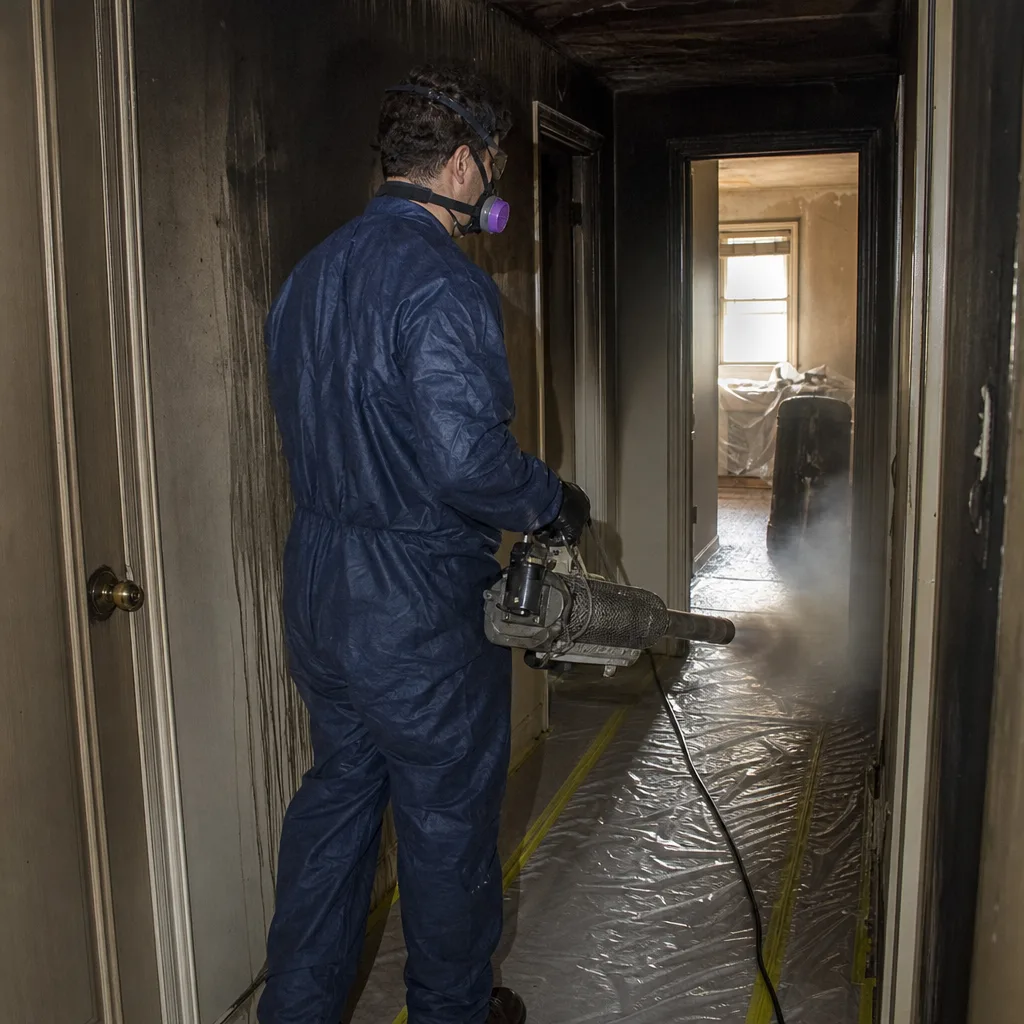
Mold removal in Park Ridge means cutting out the affected material, not just wiping it down. Drywall with visible growth goes. Insulation that’s been wet goes. Carpet pad that’s been damp goes. We set up containment first so spores don’t travel through your home while we work, then remove bagged material and run HEPA air scrubbers until the air inside the containment reads clean. The goal is simple: remove everything that’s growing mold, dry everything that got wet, and leave nothing behind for regrowth.
Black Mold Remediation
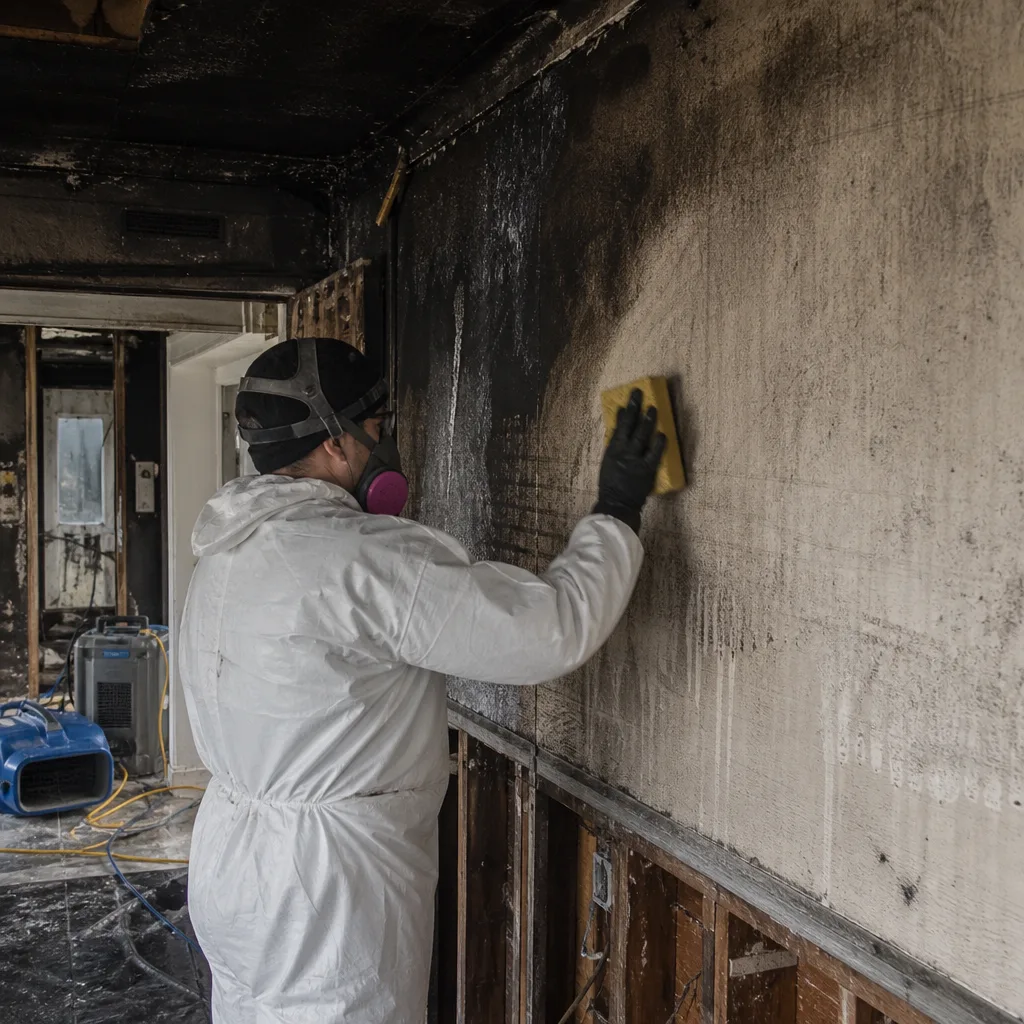
Black mold, most often Stachybotrys chartarum in this part of Bergen County, grows on materials that have stayed wet for more than a week. In Park Ridge basements, that’s drywall that got soaked during a sump failure and never dried properly. We treat all toxigenic mold with full containment, HEPA filtration, and proper disposal. The process is what matters; whether the mold is black, green, or gray, the protocol is the same: contain it, remove it, dry the structure, and verify the air is clean before we leave.
Air Quality Restoration
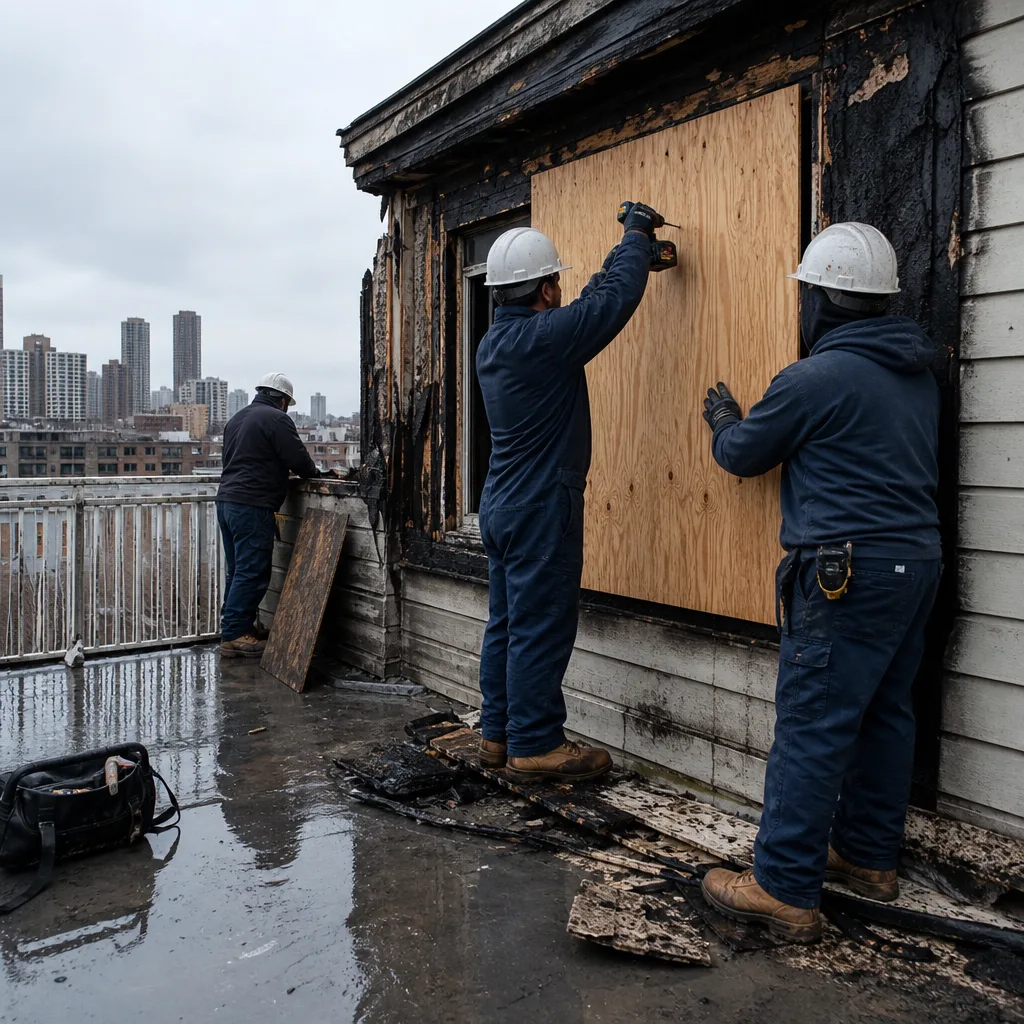
After remediation, we run HEPA air scrubbers to pull airborne spores from the space, then verify with clearance testing when you want it. This part of the job gets skipped by fly-by-night outfits, and it’s the part that determines whether your family is breathing clean air or whatever was left floating after the drywall came down. Park Ridge homes with forced-air HVAC systems get special attention; we check the ductwork because spores travel through return air and settle in places you can’t see.
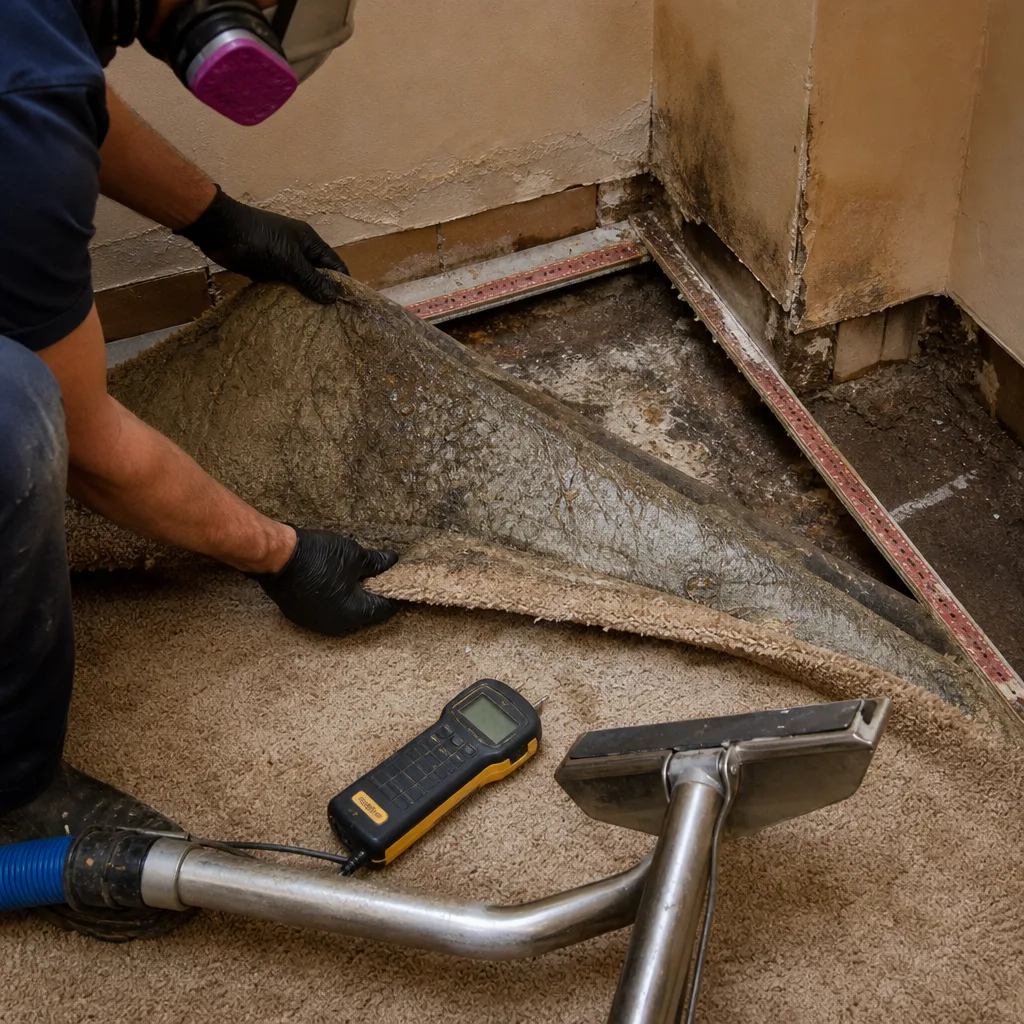
Crawl Space Treatment
Park Ridge’s high water table means crawl spaces here never really dry on their own. We treat the wood with antimicrobial products, install vapor barriers where needed, and set up dehumidification to keep the space below the mold-growth humidity threshold. Homeowners who skip this step end up with mold on the same sill plates six months later. The crawl space is where Park Ridge mold problems come from more often than any other single spot in the house.
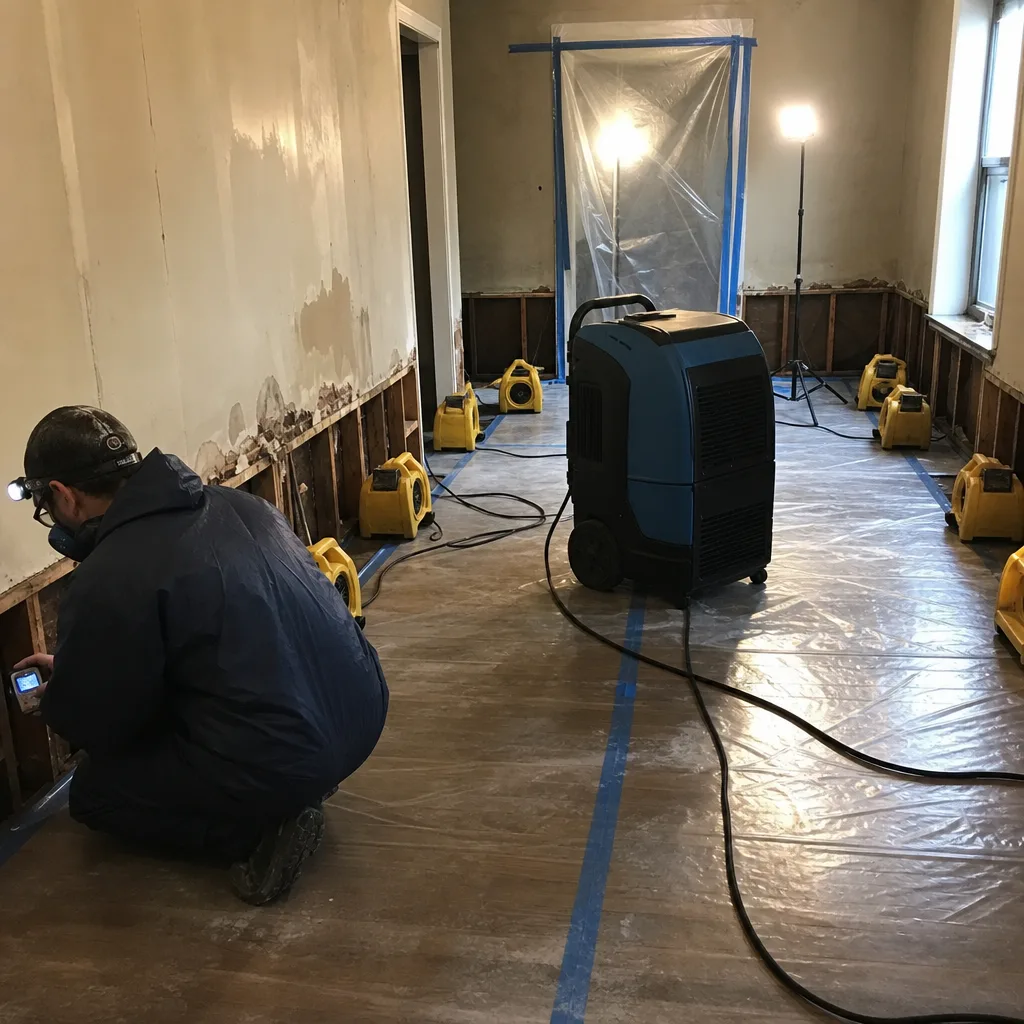
Moisture & Humidity Control
Mold doesn’t need a flood. In a Park Ridge summer, ambient humidity alone can push a damp basement over the line. We assess your home’s moisture profile, recommend the right dehumidifier capacity, and install units that discharge directly so you don’t have to empty a bucket. Paired with proper grading and gutter extensions, moisture control keeps the basement dry and the mold from returning. It’s the least expensive mold safeguard we know.
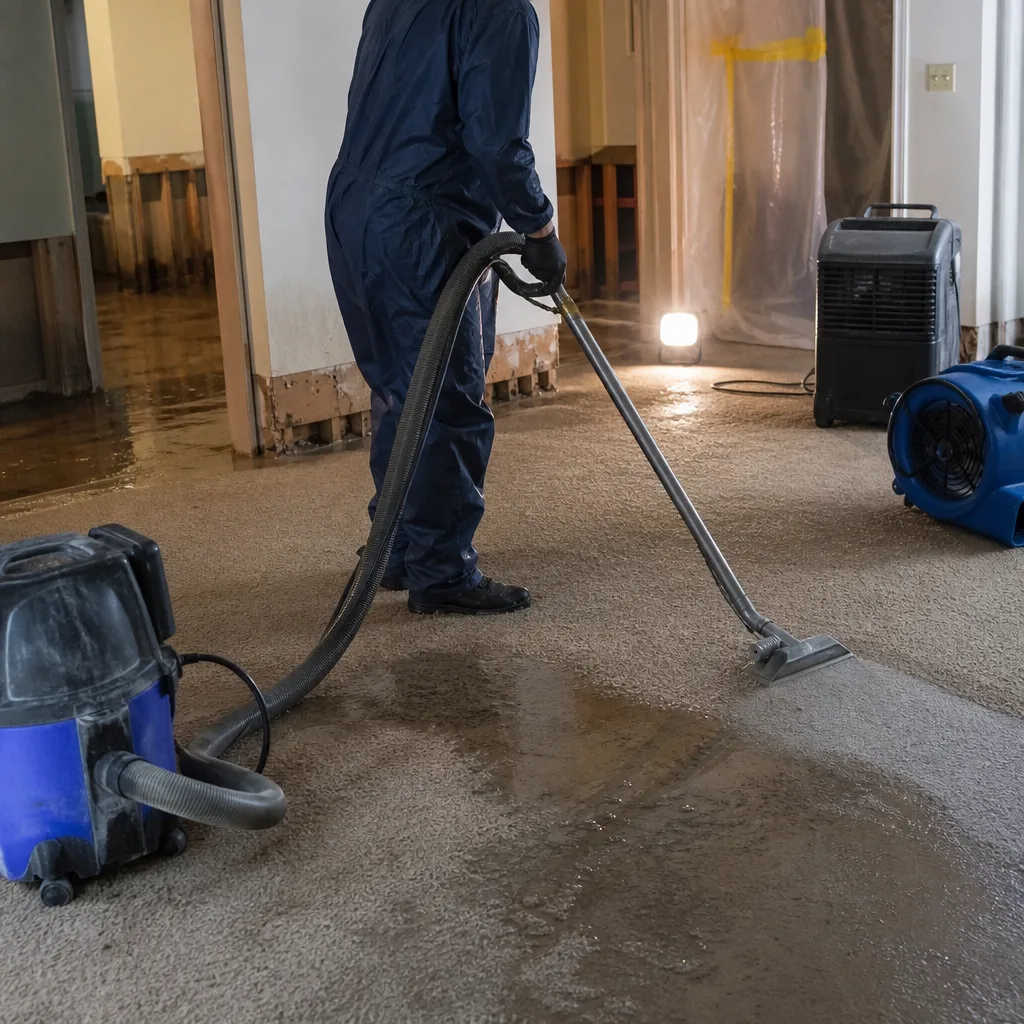
What happens when you call
- 1
A real person answersNo phone trees - you reach a local pro.
- 2
You get an upfront price rangeHonest numbers before anyone is dispatched.
- 3
A background-checked tech heads outLicensed & insured, dispatched right away.
- 4
You approve before work beginsNothing starts until you say go.
Mold Remediation Costs in Park Ridge, NJ
Mold remediation in Park Ridge runs about $1,800-$3,500 for a contained, isolated area like a bathroom wall or a closet. A full finished basement with drywall removal, framing treatment, and rebuild typically lands between $4,000 and $6,500. Crawl space treatment alone runs $1,200-$2,800 depending on square footage and how much wood is affected. Air quality restoration with post-remediation clearance testing adds $400-$900 in most Park Ridge homes.
What moves the price: how much drywall comes out, whether insulation is affected, how long the area has been wet, and whether the HVAC system needs cleaning. A small leak caught early might cost $1,500. That same leak found two weeks later with mold behind three walls might cost $5,000. The free inspection is how you find out which situation you’re in before spending a dollar. If insurance covers the loss, we bill them directly and you’re responsible only for your deductible. The $50 Off Any Repair Over $250 offer and the Senior & Veteran 5% discount both apply to mold work where eligible.
We also serve Park Ridge homeowners throughout the borough, from the Brook-side streets to the Ridgewood border. Every job gets the same written scope before work starts.
We Also Serve Cities Near Park Ridge
Our crews work throughout this corner of Bergen County. If you’re in Montvale, Woodcliff Lake, Hillsdale, or Westwood, the same 24/7 dispatch, certified technicians, and direct insurance billing apply. Call (917) 924-4221 and a live person will start a crew your way.
Serving Park Ridge, NJ - Our Local Coverage Area
We’re based in the Park Ridge area and know this community well. Use the map below to see our service coverage - if you’re nearby, we can almost certainly help.
Park Ridge Mold Remediation Questions, Answered
How fast can mold start growing on wet drywall in a Park Ridge basement?
Mold can start germinating on wet drywall within 24-48 hours, especially in Park Ridge basements where summer humidity keeps the air above 60% relative humidity. Once it starts, it spreads inside wall cavities and behind baseboards within days. The clock starts the moment the drywall gets wet, which is why we recommend a free inspection the same day you notice a leak or a musty smell. Call (917) 924-4221 and a technician will be on the way.
What does the water category mean for mold remediation in Park Ridge homes?
The water category tells us what we’re dealing with. Category 1 is clean water from a supply line or water heater; it can still cause mold if materials stay wet more than 48 hours. Category 2 is contaminated water from sump failures or washing machine overflows; it feeds microbial growth faster. Category 3 is sewage or floodwater, which requires full containment, antimicrobial treatment, and more aggressive demolition. We assess the category during the free inspection and build the scope from there.
Do I need to leave my Park Ridge home during mold remediation?
For small, contained jobs, usually not. We seal off the work area with plastic sheeting and run negative air pressure so spores don’t travel through the house. For large basements or cases involving black mold throughout, we’ll recommend staying elsewhere for a day or two while containment is active and demolition is underway. We’ll tell you honestly before we start, and you’ll know the schedule in the written scope.
Why does my Park Ridge crawl space keep getting mold even after cleaning?
Because the crawl space never dries. Park Ridge’s high water table, especially near the Pascack Brook, keeps the soil in crawl spaces damp year-round. Surface cleaning kills the visible mold but doesn’t address the moisture feeding it. You need the wood treated with antimicrobials, a vapor barrier over the soil, and dehumidification running until the space stays below the mold-growth threshold. Every time we treat a crawl space in Park Ridge, moisture control is part of the job; without it, the mold comes back.
Can you remove black mold from a finished Park Ridge basement without tearing out all the drywall?
Sometimes. If the mold is on the surface and the drywall is still structurally sound, we can clean it with HEPA vacuums and antimicrobial treatment. But if moisture got behind the drywall, the back side is growing mold too, and the only honest fix is to remove the affected sections. We’ll show you the moisture readings and explain what has to come out before any cutting starts. The free inspection gives you that information with no obligation.
How fast can you get to a mold job in Park Ridge?
We commit to 45-minute dispatch from the time you call (917) 924-4221. A live person answers, confirms your address in Park Ridge, and starts a crew your way. For emergency water events that could lead to mold, we move faster because the first 48 hours decide how much remediation you’ll need. For a known mold issue, we schedule the inspection at your convenience, often the same day.
Will my homeowners insurance cover mold remediation in Park Ridge?
Most policies cover mold remediation when it results from a sudden, covered water loss like a burst pipe, water heater failure, or storm damage. Long-term seepage or pre-existing mold usually isn’t covered. We document everything from the first hour, coordinate directly with your adjuster, and bill the carrier so you’re not fronting the cost. The free inspection includes a written report you can take to your insurer.
What should I do in the first 30 minutes after I find mold in my Park Ridge home?
Don’t disturb it. Leave the area, close the door if you can, and turn off fans or HVAC that could blow spores through the house. Don’t try to wipe it with bleach; that doesn’t work on porous materials and can release more spores into the air. Call (917) 924-4221 and we’ll send a technician to assess the situation, take moisture readings, and give you a written plan. The first 30 minutes are about not making it worse.
Last spring, our crew responded to a Park Ridge split-level on Cedar Street after a water heater failed during a weekend away. By the time we arrived, category 1 water had wicked into the drywall and baseboards in the lower-level family room. We set up containment, pulled readings with a Dri-Eaz moisture meter, and found pockets of 33% moisture content in the sill plate. We removed the affected drywall, treated the framing with an antimicrobial, and ran XPOWER air movers and a Phoenix dehumidifier for three days, then verified the structure was back to pre-loss condition before reinstalling. That’s the standard we bring to every mold job in Park Ridge.
At Floodline Restoration Co., the Mold Remediation team doesn’t hand your job to a subcontractor once the drywall comes down. We contain it, remove it, dry it, treat it, and rebuild it with the same certified crew. Every job gets the 90-Day Done Right Promise in writing, backed by the K.E.Y.S. values code: Krafted right, Every time, Your home first, Standing behind it. If it’s not done right, we make it right. No arguing, no paperwork battles.
Floodline Restoration Co. dispatches crews to Park Ridge from our New York City office, with local technicians who know the borough’s streets, the water table, and the housing stock. We answer live 24 hours a day at (917) 924-4221. Call for a free inspection and a written scope. No pressure, no surprises, just a square deal on paper before work starts.
Written by Curt Bowman, Owner at Floodline Restoration Co. of Manhattan, serving Park Ridge, NJ.