
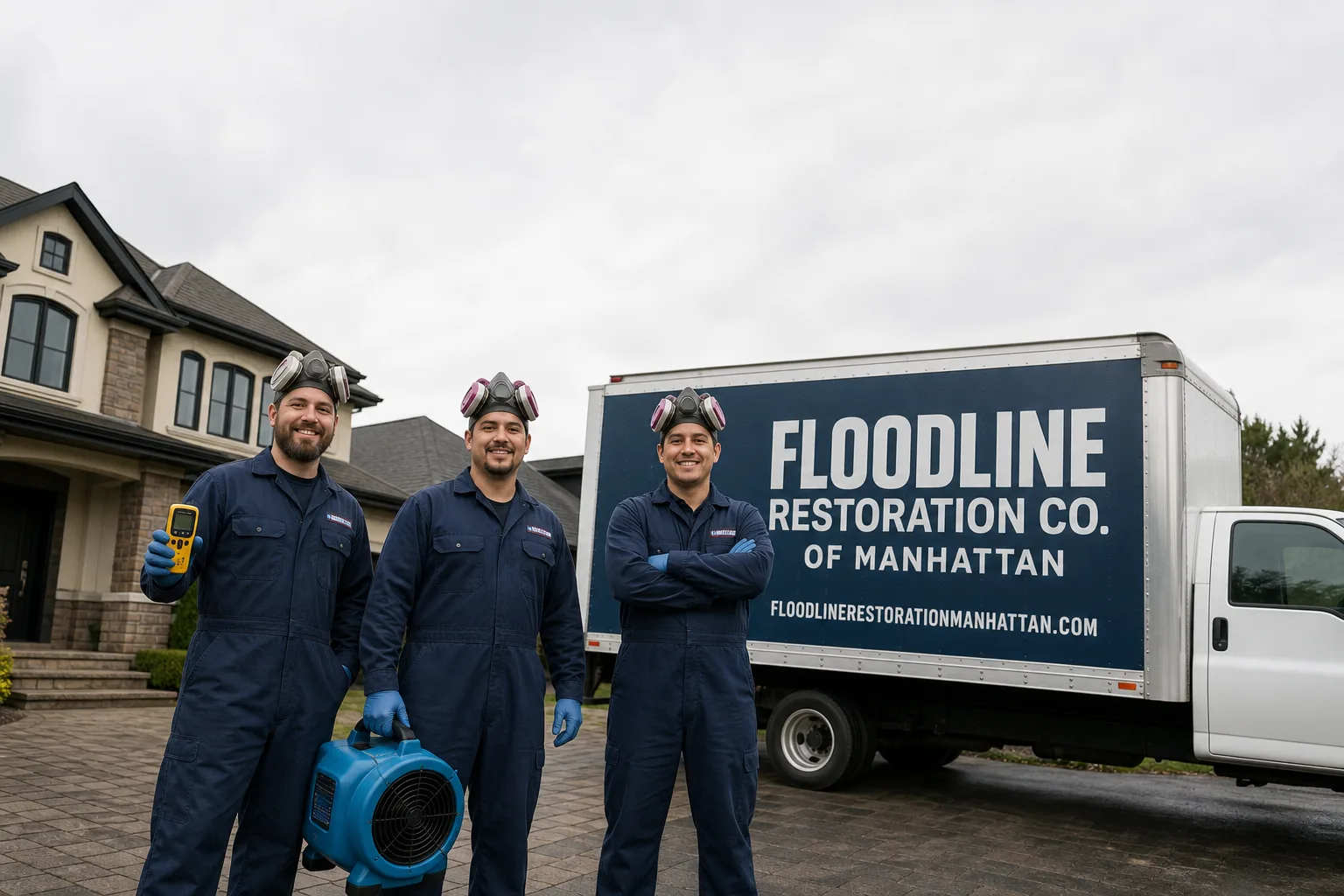
Free visual inspection and a written scope of work before any mitigation begins - photos, moisture readings, and drying logs go in your claim file
The scope we write is the scope we bill. Anything new gets shown to you, in writing, before we touch it.






 Before
 After
After Before
 After
After Before
 After
After24/7 Emergency Mold Remediation in Sleepy Hollow
Mold remediation in Sleepy Hollow typically runs $1,800 to $6,500 for a contained basement or crawl space job, and we answer the phone at (917) 924-4221 around the clock, every day of the year. If you’ve found mold after a flood, a roof leak, or a slow pipe leak inside a wall, the first call should happen now, not after the weekend. Mold in a pre-1940 Sleepy Hollow house spreads fast, especially in the village’s river-humid air, and every day of delay pushes spores deeper into original plaster and old-growth framing. We dispatch a background-checked, uniformed crew from our New York City office straight to Sleepy Hollow, usually within 45 minutes, and the visual inspection is free. The first hour matters because brackish Hudson River moisture, the kind that saturates Beekman Avenue and Riverside Drive basements during a nor’easter, starts colonizing horsehair plaster and balloon-frame stud cavities within 48 hours.
Understanding Mold Remediation Severity in Sleepy Hollow Properties
Not every mold problem is the same, and in Sleepy Hollow the difference usually comes down to water source and building age. A Category 1 leak from a clean supply line inside a newer Edge-on-Hudson unit is a contained job: dry the cavity, clean the surface, move on. A Category 3 flood from the tidal Hudson is a different animal entirely. That water carries salt, sewage, and river sediment into basement framing, and the saline residue left behind after drying keeps wicking moisture back into the wood for weeks. Mold that feeds on brackish-contaminated joists grows faster and returns more aggressively if the salt is not physically removed. In the village’s historic core, around the Philipse Manor area and the steep streets off North Broadway, we routinely open walls and find black mold thriving in balloon-frame wall cavities that no one has seen since the house was built. The severity is not just about what you can see. It is about what the moisture map says beneath the plaster, inside the voids, behind the original millwork. We use thermal imaging and hygrometers on every job, not just the big ones, because in a house built in 1910, hidden moisture means hidden mold, and hidden mold means a problem that comes back.
Why Sleepy Hollow Property Owners Choose Floodline Restoration Co. of Manhattan
We are a full-cycle restoration company, which means the crew that reads the moisture map on day one is the same crew that handles daily readings, hands the log to you and your carrier, and rebuilds what needs rebuilding. No mid-job handoff. No inherited crew you never met. Here is what that looks like in Sleepy Hollow:
- 45-minute response commitment to Sleepy Hollow. We dispatch from a metro office with crews staged for Westchester calls, and a real dispatcher answers at 2 a.m., not a recording.
- Live answer, 24/7. Floodline Restoration Co. of Manhattan has answered every call with a person since Curt Bowman founded the company in 2010, and that has not changed once in 15 years.
- IICRC-certified crews on every job. Our technicians hold WRT and AMRT certifications, plus RIA and IFA training, and they show up in uniforms with background checks already completed.
- Free visual inspection before any work begins. You get a written scope and a square-deal price before we touch a wall, not after.
- Direct insurance billing. We document the loss from hour one, submit industry-standard estimates to your carrier, and talk to your adjuster so you do not have to.
- One team, extraction through reconstruction. Mold removal is rarely the end of the job. We also handle the framing repair, plaster restoration, and finish work so your house goes back together right.
Every job we do is backed by the 90-Day Done Right Promise, the Keystone Standard. If it is not done right, we make it right. In writing. No arguing.
Our Mold Remediation Process
Inspection & Assessment
We start with thermal imaging and moisture mapping across every affected room, plus the rooms next to them. In Sleepy Hollow’s older homes, that means checking balloon-frame wall cavities, original plaster, and sill plates above the foundation. You get a written scope before any demolition happens.
Containment & Source Control
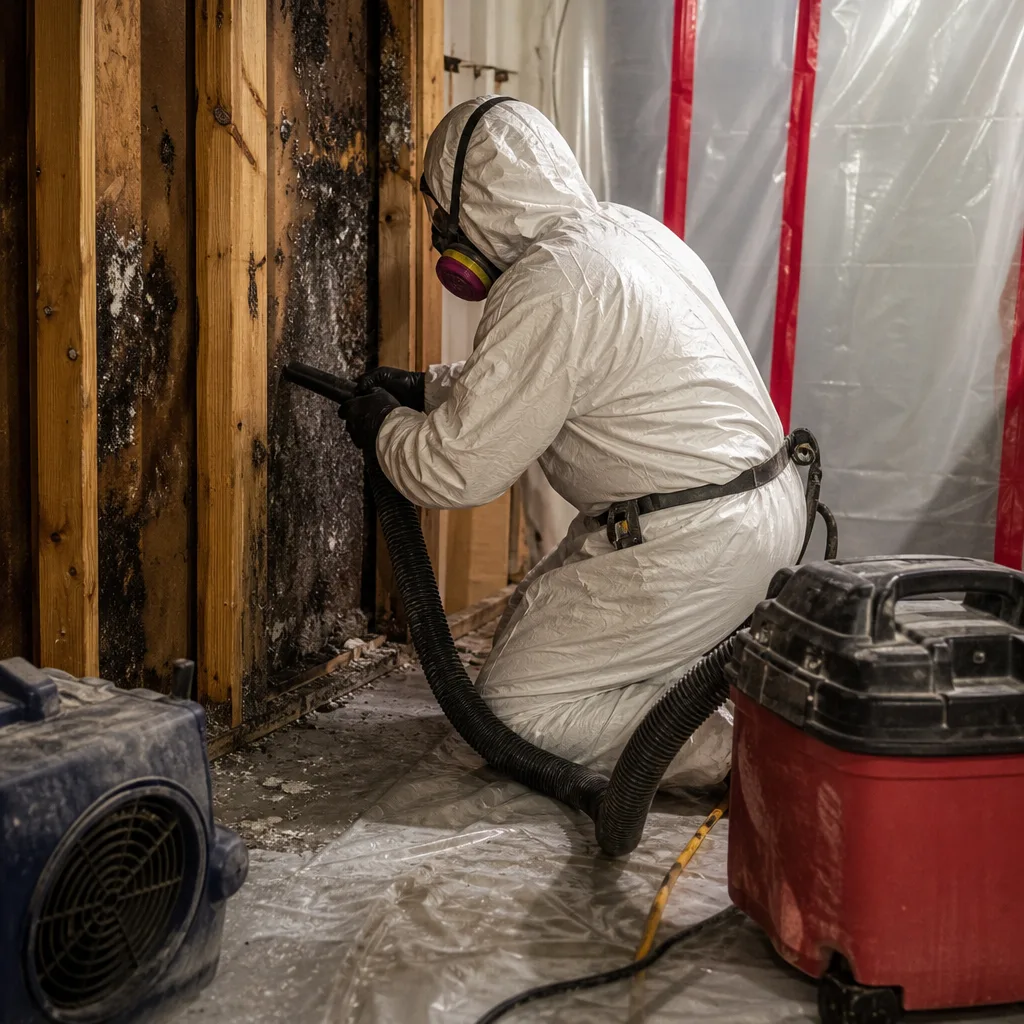
We seal the affected area with 6-mil poly and run HEPA-filtered air scrubbers to keep spores from moving into clean rooms. The water source, a leak, a seep, a failed sump, gets fixed or capped before drying starts. Drying a wet wall while it is still getting wet is wasted effort.
Drying & Dehumidification
Dri-Eaz and Phoenix air movers and low-grain refrigerant dehumidifiers run continuously, with daily hygrometer readings logged until the dry standard is met. That standard is tricky on the Hudson. Salt-laced framing releases moisture slowly, so we monitor daily and adjust airflow until the log shows stable, low moisture content across the entire affected area.
Removal & Cleaning
Mold-contaminated plaster, insulation, and drywall come out under HEPA-filtered negative air. Salvageable original millwork and framing get wire-brushed, sanded, and treated with antimicrobials. In a Sleepy Hollow Victorian, we save what we can. Original chestnut trim is not something you find at a lumberyard.
Air Quality Restoration
After the surfaces are clean, we run additional HEPA air scrubbing and, where indicated, post-remediation clearance testing through an independent lab. You get air samples before and after so you can see the difference in writing, not just smell it.
Repairs & Reconstruction
The same crew that removed the mold rebuilds what came out. New framing, plaster repair, insulation, paint, trim. The 90-Day Done Right Promise covers the whole job, not just the mold part.
Need Emergency Mold Remediation in Sleepy Hollow Now?
Crews minutes away, answering live 24 hours a day. The sooner we start, the less it costs.
Working With Your Insurance Company
Mold claims are not automatically covered, but when the mold results from a covered peril, a sudden pipe break, a storm surge, a failed appliance, your policy will often pay for the remediation and the water damage that caused it. The carrier wants proof, and proof starts in the first hour. We photograph every affected room before a single tool comes out, log moisture readings room by room, and document the full scope with line-item detail. Our team talks directly with your adjuster, submits the estimate, and handles the back-and-forth so you are not on hold with a claims department at 9 p.m. If your mold resulted from years of slow seepage, that is a maintenance issue and usually not covered. We will tell you that straight, before any work begins, so you make the call with your eyes open.
What We Provide Your Insurer
- Thorough documentation of the loss
- Photos of all damage, room by room
- Moisture readings and drying logs
- A detailed, line-item scope of work
- Direct coordination with your carrier
Built for Sleepy Hollow’s Loss Calendar
Sleepy Hollow has a mold season that does not appear on any national restoration franchise’s calendar. January and February bring deep-freeze pipe bursts in the village’s older stock, supply lines letting go inside uninsulated exterior walls of 1920s balloon-frame houses along Beekman Avenue and the hillside streets west of Route 9. The water runs inside the wall for days before anyone notices, and by then the horsehair plaster is wicking moisture and mold is blooming inside the stud cavities. Spring thaw pushes groundwater into old stone and brick foundations from the steep slopes above the village, and basements that have not seen water in years go damp for weeks. Summer brings Hudson Valley thunderstorm humidity so thick that a slow leak becomes a mold event within days. And nor’easter season, September through April, drives the tidal river into the riverside blocks, exactly the brackish surge that makes Sleepy Hollow mold different from inland mold. Every season has a pressure point, and every pressure point is moisture. The difference between a small cleanup and a full remediation project is usually not the amount of water. It is how long it sat.
Mold Remediation Across Sleepy Hollow’s Neighborhoods
The village is small, but the mold risks shift block by block. Down along Beekman Avenue and the riverside streets, the tidal surge risk is highest, and we see brackish-contaminated basements after every significant nor’easter. These are the jobs where salt removal matters as much as moisture removal. Up the hill, around the Philipse Manor and Webber Park neighborhoods, the housing stock skews to turn-of-the-century single-family homes with stone and brick foundations, and the typical call is hillside runoff saturating a basement wall during heavy rain, followed by mold on the furring strips and framing inside the finished basement. The original streets off North Broadway, around the Old Dutch Church and along the steep blocks above the river, are where we see the most balloon-frame construction, uninsulated wall cavities that carry moisture and mold spores from a leaking sill all the way to the attic. In the village core, homes near Sleepy Hollow High School and the residential blocks west of Route 9 run the full range of ages, some pre-1940, some mid-century, and each building type needs a different drying strategy. A 1925 house with horsehair plaster and no vapor barrier cannot be dried like a 1995 house with fiberglass insulation and gypsum board. The moisture map tells the story every time.
Specialized Mold Remediation Services We Offer in Sleepy Hollow
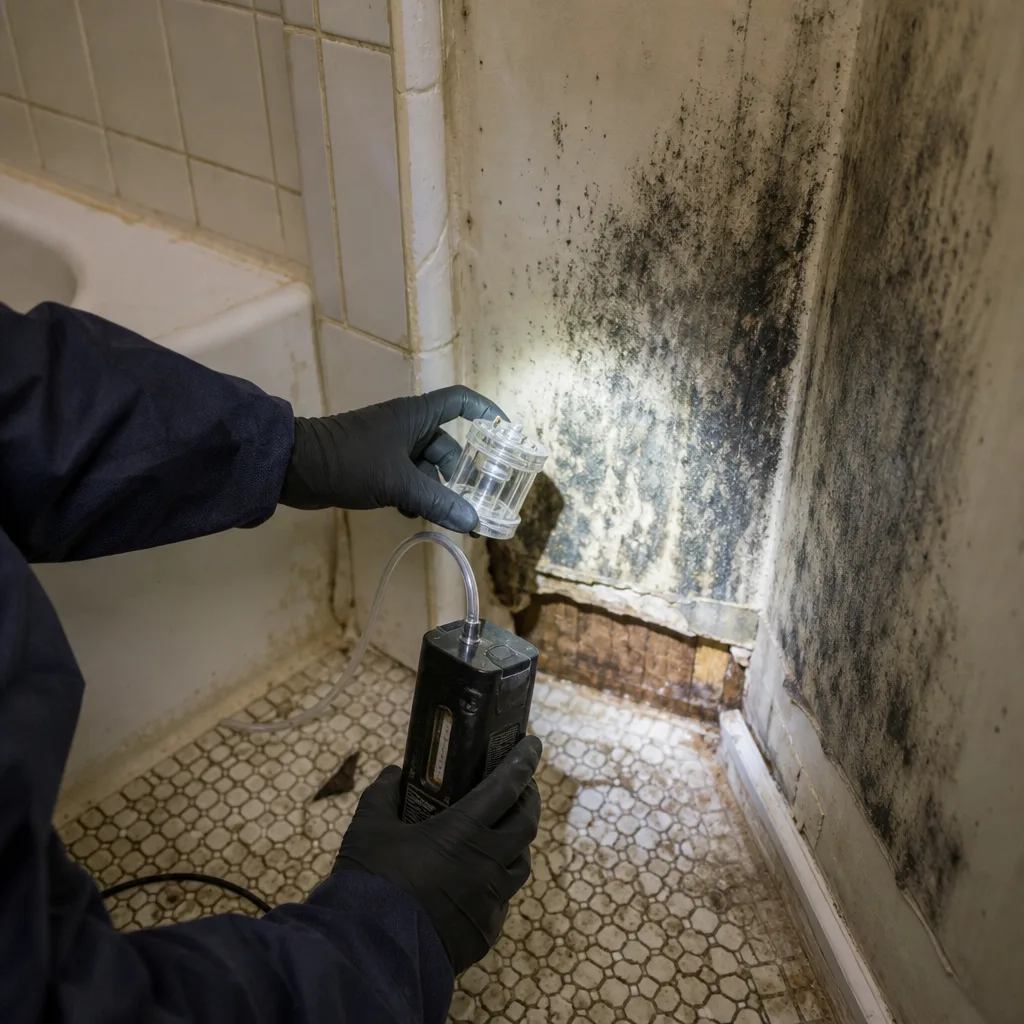
Mold Inspection & Testing
Before we touch anything, we figure out what kind of mold you have, where it is hiding, and where the moisture is coming from. In Sleepy Hollow’s pre-1940 homes, that means running a thermal camera across original plaster walls to find wet cavities that look perfectly dry from the outside. We collect air and surface samples where indicated and send them to an independent lab. You get a written report, not a guess.
Mold Removal
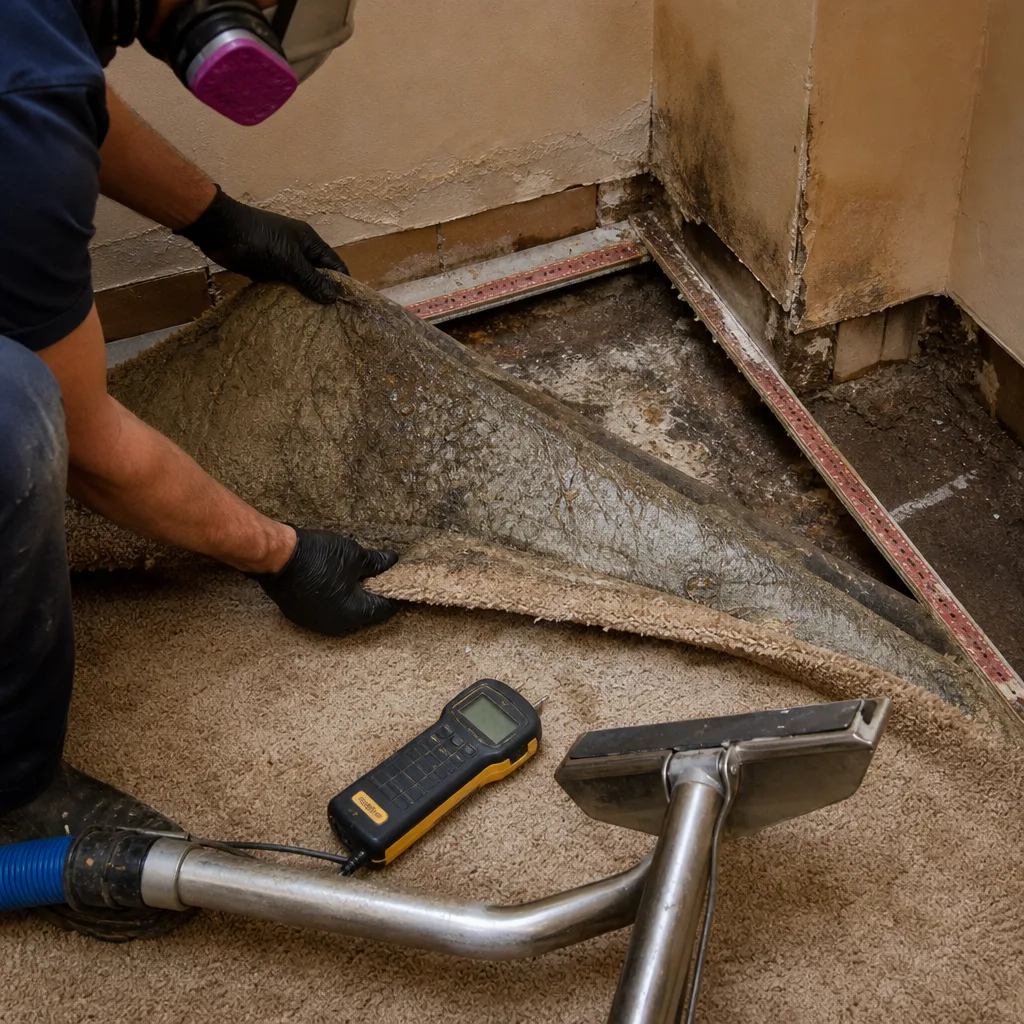
Contained removal of mold-contaminated material under negative air, with HEPA filtration running throughout. On Beekman Avenue, we remediated a 1920s balloon-frame house after a nor’easter surge pushed Category 3 water into the basement and first floor. Our techs found horsehair plaster walls wicking brackish moisture into the stud cavities, and moisture mapping showed readings above 40% in the old-growth floor joists. We contained the affected rooms, air-moved and dehumidified for five days, and removed saline-contaminated insulation before treating framing with antimicrobials.
Black Mold Remediation
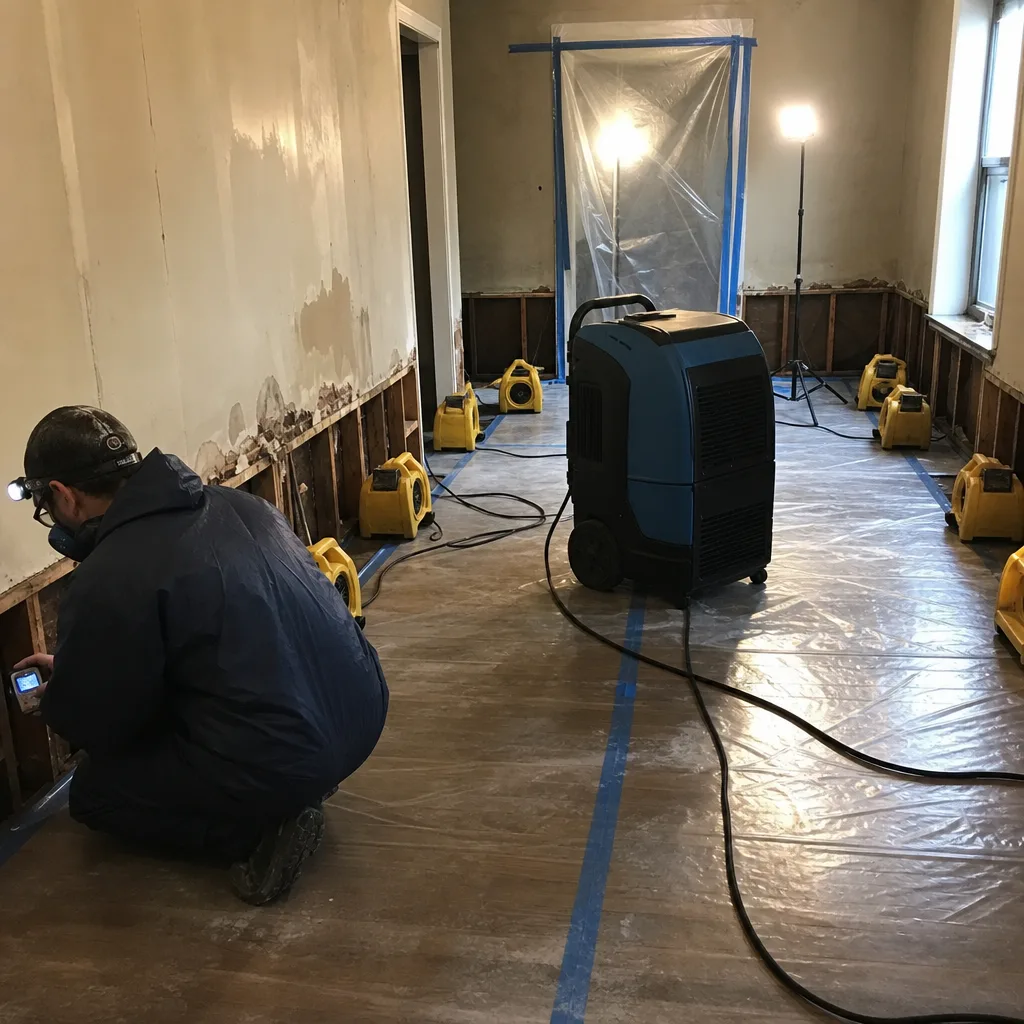
Stachybotrys chartarum, the mold people call black mold, loves the cellulose in old plaster, lath, and exposed wood framing, the exact materials Sleepy Hollow’s older homes are built from. It needs constant moisture, which is why it shows up after floods and hidden leaks rather than from everyday bathroom humidity. We remove the contaminated material, treat the remaining framing, and verify the moisture source is truly gone. Surface bleach sprays do not work on porous material. The contaminated substrate has to come out.
Air Quality Restoration
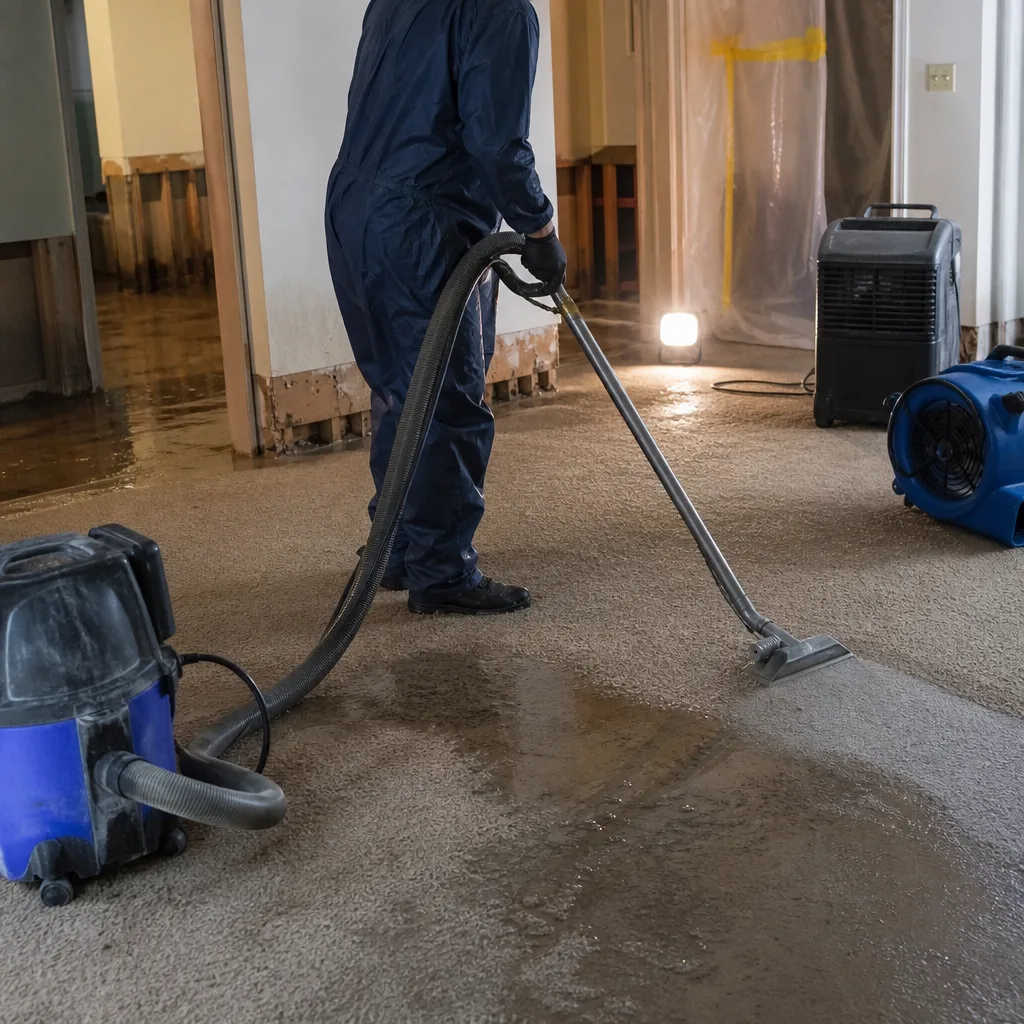
Mold spores move through air, and in a balloon-frame house they move further than you would believe. We run HEPA air scrubbers during and after remediation, and where you want third-party verification, we arrange clearance testing through an independent lab. This matters in Sleepy Hollow because the Hudson’s persistent humidity keeps airborne spore counts elevated even after visible mold is gone. The air has to be brought back to a normal fungal ecology, not just made to smell clean.
Crawl Space Treatment
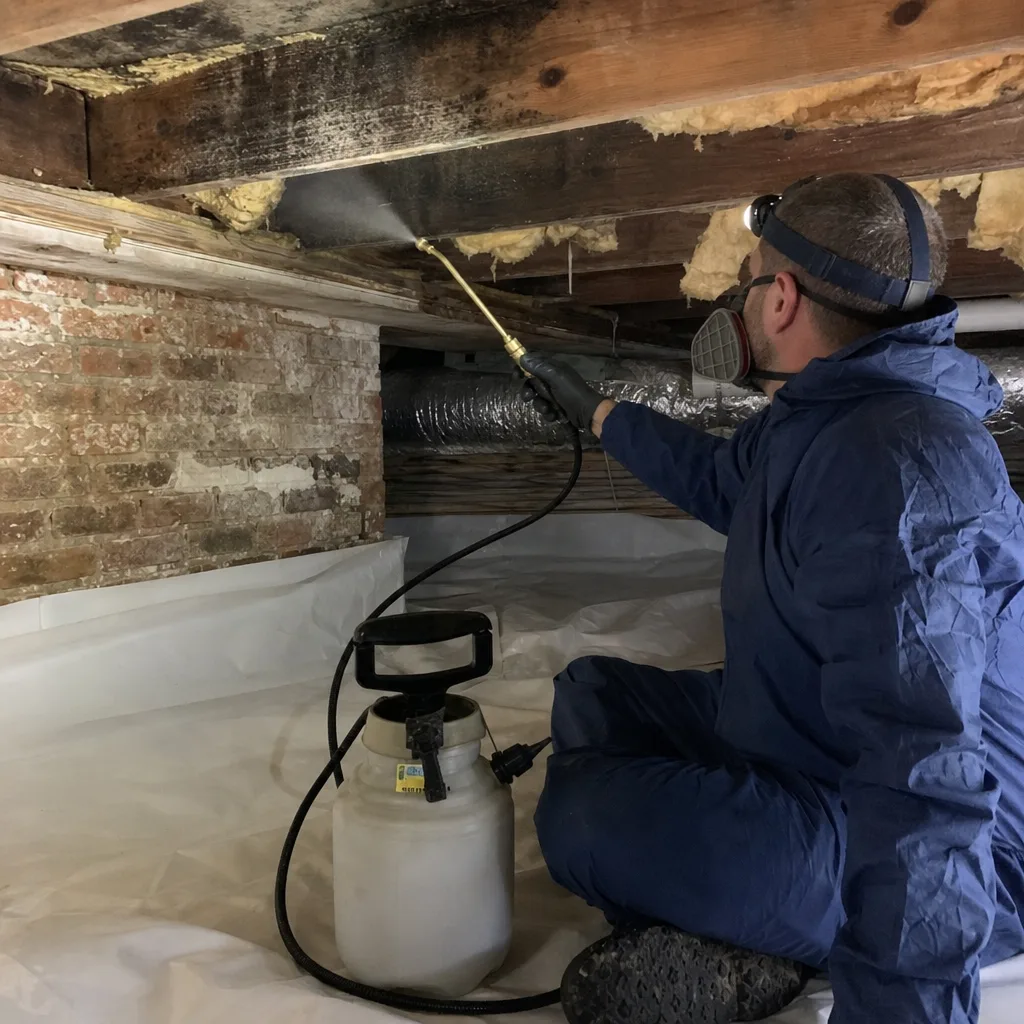
Crawl spaces in Sleepy Hollow’s hillside homes are often dirt-floored, poorly vented, and in direct contact with the same runoff that saturates foundations. We install or repair vapor barriers, seal foundation vents where appropriate, and treat the framing. In a village where the relative humidity sits high for months at a time, a wet crawl space will keep feeding mold into the house above it no matter how many times you clean the living room walls.
Moisture & Humidity Control
Mold is a moisture problem disguised as a fungus problem. We install dehumidifiers, improve drainage, and seal the pathways that let Hudson River humidity and hillside runoff into your house in the first place. This is the part of mold remediation that keeps it from coming back, and it is the part that gets skipped too often. A dried house with no moisture control is a future mold job.
What happens when you call
- 1
A real person answersNo phone trees - you reach a local pro.
- 2
You get an upfront price rangeHonest numbers before anyone is dispatched.
- 3
A background-checked tech heads outLicensed & insured, dispatched right away.
- 4
You approve before work beginsNothing starts until you say go.
Mold Remediation Costs in Sleepy Hollow, NY
A contained bathroom mold removal in Sleepy Hollow typically runs $800 to $1,800. A full basement remediation after brackish flood intrusion, with containment, framing treatment, and rebuild of finished walls, usually lands between $4,500 and $12,000. A whole-house job in a pre-1940 home with mold in multiple wall cavities and original plaster removal can exceed $18,000, especially when historic millwork has to be carefully removed and reinstalled. What moves the price: the size of the affected area, whether salt contamination requires additional framing treatment, how much original material has to be removed versus saved, and whether post-remediation clearance testing is included. Insurance covers mold when it results from a covered water loss, and we bill your carrier directly. For jobs that are out of pocket, we offer a free visual inspection and a written scope before any work starts. The $89 Seasonal Tune-Up covers a moisture check and dehumidifier calibration if you want to catch problems before they become mold. And every job, insured or not, carries the 90-Day Done Right Promise. Call (917) 924-4221 for a firm number after inspection. Estimates are free.
We Also Serve Cities Near Sleepy Hollow
Our crews cover the full lower Hudson corridor. We provide Mold Remediation in Sleepy Hollow and regularly run calls to Fairview, Harrison, East Bronx, and Hunts Point. The same live dispatcher answers, the same certified crews show up, and the same Keystone Standard applies.
Serving Sleepy Hollow, NY - Our Local Coverage Area
We’re based in the Sleepy Hollow area and know this community well. Use the map below to see our service coverage - if you’re nearby, we can almost certainly help.
Sleepy Hollow Mold Remediation Questions, Answered
How does brackish Hudson River floodwater affect mold remediation in Sleepy Hollow homes?
Brackish water changes the drying and treatment protocol. Salt-laced moisture leaves behind saline residue in framing, insulation, and plaster that keeps pulling humidity out of the air long after the visible water is gone. If that salt is not physically removed, mold regrowth happens within weeks, not years. We treat Sleepy Hollow flood jobs as salt-contamination jobs first, moisture jobs second. That means aggressive drying, framing treatment with antimicrobials, and in many cases removal of insulation that looks dry but tests positive for elevated conductivity from salt. Call (917) 924-4221 and we will walk the property with a moisture meter and a conductivity meter before any demo starts.
What are the mold risks in Sleepy Hollow’s pre-1940 homes after a basement flood?
Pre-1940 construction means balloon framing, which creates continuous wall cavities from basement to attic. Water that wicks into the sill plate can carry mold spores up through the entire wall within days, and the horsehair plaster hides the problem until it blooms on the surface. Original plaster also holds moisture far longer than modern drywall, giving mold a longer window to establish. After any basement flood in an older Sleepy Hollow house, the wall cavities above the waterline have to be checked, not just the basement itself. The free visual inspection includes thermal imaging of the first-floor walls.
Do I need mold testing before or after cleanup in a Sleepy Hollow Victorian?
Both make sense in different situations, but after is the one that matters most. Pre-testing identifies what you are dealing with, particularly whether it is a toxigenic species like Stachybotrys. Post-remediation clearance testing verifies the job actually worked, that spore counts in the affected rooms match or beat the outdoor baseline for Sleepy Hollow. In an older home where hidden cavities are common, we recommend clearance testing through an independent lab on any job over $5,000. You should not have to take our word that the air is clean. The lab report tells you.
How do you dry out a Sleepy Hollow basement with river fog and high humidity?
You dry the structure differently than you dry the air. Low-grain refrigerant dehumidifiers, the XPOWER and Phoenix units we run, pull moisture out of framing and concrete even when outdoor humidity is high. Air movers create evaporation across the surface of wet materials. The key in Sleepy Hollow is continuous monitoring. The Hudson’s ambient humidity means materials dry slower here than in inland towns, and daily hygrometer readings tell us exactly when the dry standard is met, not before, not after. We log every reading and hand that log to you and your carrier. Call us at (917) 924-4221 for a free inspection.
Can you remediate mold in original plaster walls without removing them?
Sometimes, but not always. If the plaster is intact and the mold is on the surface, we can clean, treat, and seal it. If the mold has penetrated the plaster and the lath behind it, the plaster has to come out, because surface treatment cannot reach mold that is growing inside the wall assembly. In Sleepy Hollow’s historic homes, we save what can be saved. Original plaster with a smooth finish and decades of paint history is not replaceable with modern materials. But a wall that is actively growing mold behind the plaster will keep releasing spores into the room no matter how much sealer gets painted on the outside. The moisture map makes the call.
How fast can someone actually get to my Sleepy Hollow house?
Most calls, we are on site within 45 minutes. We run crews from our New York City office and dispatch to Sleepy Hollow around the clock, with a live person answering the phone at 2 a.m. Mold does not wait for business hours, and neither do we. The sooner we arrive, the sooner containment and drying start, and the less material has to be removed. The first hour is when the scope of the job gets set. Call (917) 924-4221 now if you are looking at mold.
Will insurance cover mold remediation in Sleepy Hollow?
It depends entirely on the source of the moisture. If the mold resulted from a sudden, covered water event, a burst pipe, a storm surge, a water heater failure, your policy will typically cover the resulting mold remediation as part of the water damage claim. If the mold comes from years of slow seepage or a long-running leak, that is considered maintenance and is generally excluded. We bill carriers directly, document everything from the first hour, and coordinate with your adjuster so the claim is filed with evidence, not hearsay. Bring the policy details and we will tell you straight what to expect before any work begins.
What should I do in the first 30 minutes after finding mold in my Sleepy Hollow house?
Stop the water source if you can do it safely, shut off the power to any wet electrical outlets, and call us at (917) 924-4221. Do not run box fans or open windows to air it out. That spreads spores through the house. Do not spray bleach. That adds moisture and does not kill mold on porous surfaces. Do not tear out a wall yourself. Pre-1940 Sleepy Hollow homes may have lead paint, and disturbing it without EPA RRP containment creates a second hazard. Close the door to the affected area, keep kids and pets out, and let us get containment and drying running the same visit.
Written by Curt Bowman, Owner at Floodline Restoration Co. of Manhattan, serving the lower Hudson Valley since 2010. We started at the floodline and we stay until the job is done, and we stand behind it in writing.