
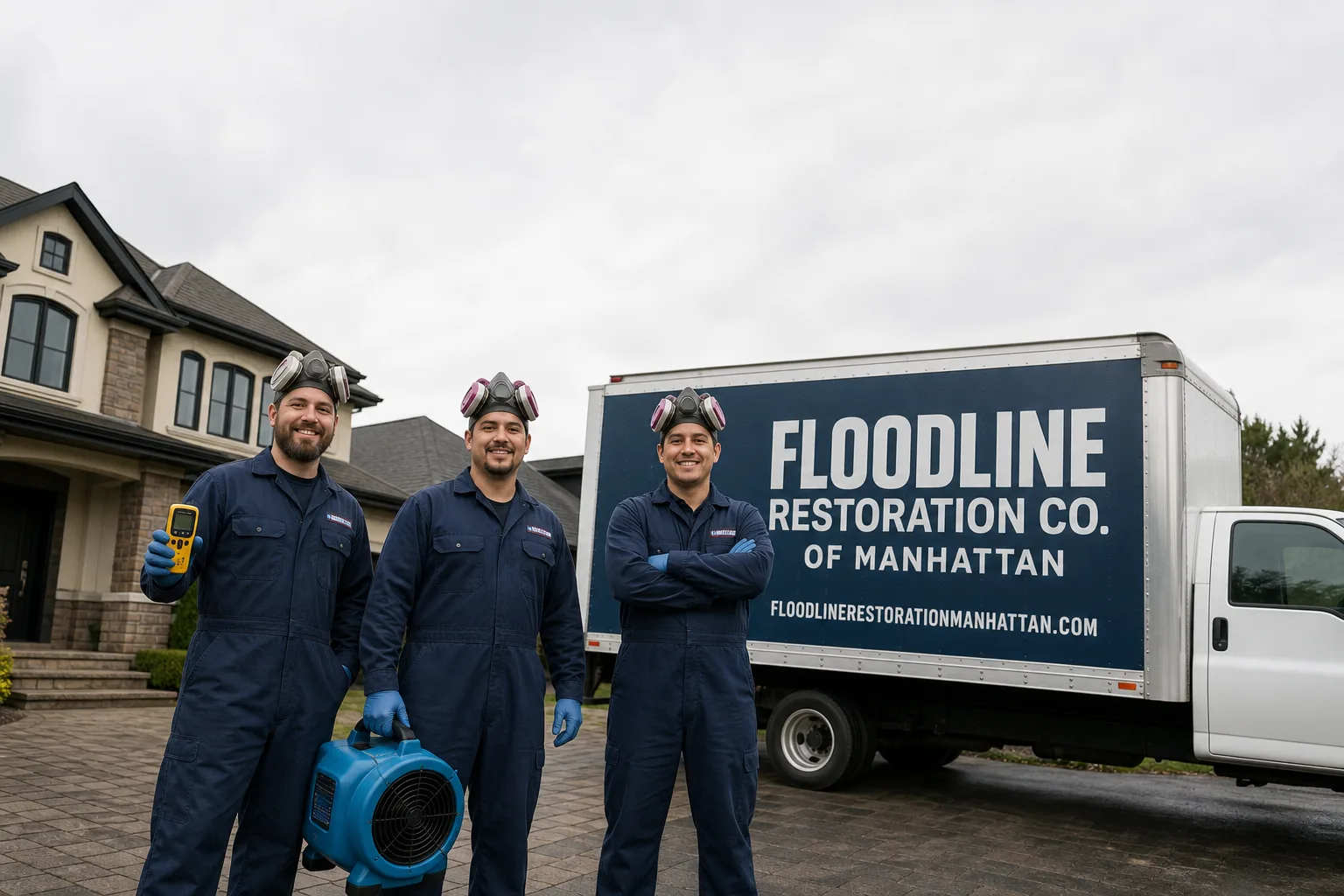
Free visual inspection and a written scope of work before any mitigation begins - photos, moisture readings, and drying logs go in your claim file
The scope we write is the scope we bill. Anything new gets shown to you, in writing, before we touch it.






 Before
 After
After Before
 After
After Before
 After
After24/7 Emergency Reconstruction & Cleanup in Bedford Hills
When a tree comes through a slate roof in Bedford Hills or a burst supply line floods a fieldstone basement, you need a crew that answers at 2 a.m. and arrives with professional-grade drying equipment, not a recording. Floodline Restoration Co. of Manhattan has live dispatchers on the phones around the clock, every day of the year, and we dispatch crews to Bedford Hills immediately. Call (917) 924-4221 now. A certified technician reaches your property, assesses the damage, and starts stabilization the same visit.
We understand what’s at stake on Bedford Hills’s older estate properties. Water moving through horsehair plaster and old-growth timber doesn’t wait for business hours. Mold colonizes behind plaster-and-lath walls within 48 hours of a water intrusion. Our crews are trained to IICRC, RIA, and IFA standards, and they arrive wearing uniforms, carrying moisture meters and thermal imaging cameras, and ready to document everything your insurer will need. The first hour determines whether a tree strike becomes a repair or a gut. We’re built for the first hour.
Understanding Reconstruction & Cleanup Severity in Bedford Hills Properties
Reconstruction severity in Bedford Hills doesn’t look like it does in postwar suburbs. Most homes across the Town of Bedford predate 1900: colonial and Federal farmhouses with plaster-and-lath walls, stone or fieldstone foundations, and roofing systems of slate or aged cedar shake. When water enters these structures, it behaves differently than in a sheetrock home built in 1985. Plaster absorbs water slowly but releases it even slower. Fieldstone foundations wick moisture upward through mortar joints. Old-growth timber framing, dense and tight-grained from centuries of slow growth, can often be saved if drying begins quickly. But if a contractor rips it out and replaces it with modern lumber, the house loses structural character and market value in a single visit.
We classify water by category, the way IICRC standards require. Category 1 is clean water from a supply line. Category 2 carries significant contamination, like washing machine overflow. Category 3, the kind that comes from sewage backups or outdoor flooding after a nor’easter, contains pathogens and requires full containment, antimicrobial application, and often removal of porous materials. Fire and smoke damage carries its own severity ladder: dry soot from a fast-burning fire is easier to clean than the wet, protein-rich smoke residue that coats plaster and lathe after a smoldering electrical fire. On Bedford Hills properties, we map moisture with thermal imaging and hygrometers before we cut anything. You get a written scope of work based on readings, not guesses.
Why Bedford Hills Property Owners Choose Floodline Restoration Co. of Manhattan
- 45-minute response commitment. When you call our 24/7 dispatch for a tree strike on Holly Branch Road or a flooded basement off Route 117, a crew is rolling toward Bedford Hills immediately, not after a callback from a sales rep.
- 24/7 live answer, every time. A real dispatcher picks up at 2 a.m., not an automated tree. You tell us what happened. We tell you who’s coming and when.
- IICRC-certified crews. Our technicians hold WRT, FSRT, and AMRT certifications, and they’re trained to RIA and IFA standards. That matters when the job involves drying horsehair plaster instead of replacing it.
- Free visual inspection. We look at the damage before you sign anything. You get a written scope, not pressure.
- Direct insurance billing. We bill your carrier directly, document every layer of loss, and talk to your adjuster so you don’t have to play messenger.
- One team from extraction to finished reconstruction. The same certified crew that reads the moisture map on day one handles daily readings, rebuilds what needs rebuilding, and hands you the drying log when the job is done.
Our Reconstruction & Cleanup Process
Inspection & Assessment
We arrive with thermal imaging cameras and moisture meters, map every affected surface, and document the loss room by room. For pre-1900 Bedford Hills homes, this includes checking stone foundations, plaster keys, and timber framing behind walls. You get a written scope of work before any demolition starts. The inspection is free.
Extraction & Stabilization
Standing water comes out first, using truck-mounted extraction units where access allows and portable units for tight fieldstone basements. We stabilize the structure: tarp a breached roof, shore a sagging ceiling, cut off water at the source. The goal in hour one is stopping the loss from spreading.
Drying & Dehumidification
We run professional-grade air movers, dehumidifiers, and Injectidry systems, Dri-Eaz and Phoenix units among them, positioned from the moisture map taken in step one. Daily readings are logged until the dry standard is met. On plaster walls, that means drying in place whenever possible, not gutting to the studs.
Cleaning & Sanitization
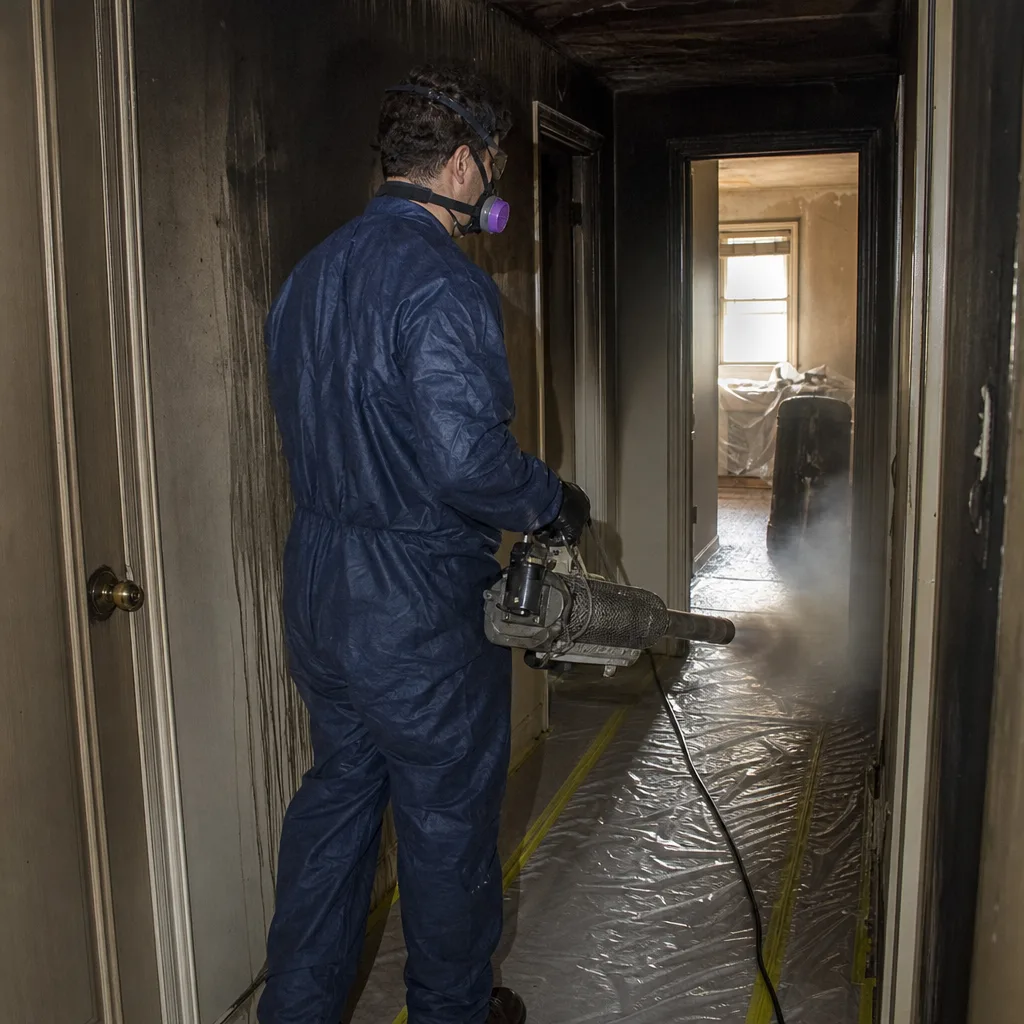
For water losses we apply antimicrobials and clean salvageable surfaces. For fire and smoke damage, we remove soot and odor using HEPA filtration and appropriate cleaning agents. In Bedford Hills, any outdoor application happens only after checking DEP watershed runoff rules. We don’t risk fines or job shutdowns by spraying without checking.
Contents Restoration & Pack-Out
Furniture, documents, artwork, and personal property get packed out, inventoried, photographed, and restored off-site where necessary. On estate homes with irreplaceable antiques, our pack-out process includes a line-item inventory your insurer can use directly. Every item is tracked from removal to return.
Repairs & Restoration
We rebuild with an eye toward what the house is, not just what the policy covers. Period-appropriate materials, matched plaster textures, old-growth timber where it can be saved and reused, slate or cedar shake roofing matched to the remaining sections. The crew that dried the house is the crew that rebuilds it. You get the 90-Day Done Right Promise in writing when we finish.
Need Emergency Reconstruction & Cleanup in Bedford Hills Now?
Crews minutes away, answering live 24 hours a day. The sooner we start, the less it costs.
Working With Your Insurance Company
Insurance claims for reconstruction work in Bedford Hills turn on documentation. Carriers want moisture readings, room-by-room photos, a line-item scope of work, and a clear causal chain from storm or flood to damage. We build that file from the first hour on site. Our technicians photograph every affected surface before anything is moved or cut. We log daily moisture readings until the structure reaches dry standard. We write scopes in the same estimating language adjusters use, and we talk to your adjuster directly. You pay your deductible. We bill the carrier for covered work. When a tree falls through a slate roof on Succabone Road, your insurer needs to see the full path of water through the plaster, not just a photo of the hole. We hand them the whole file.
What We Provide Your Insurer
- Thorough documentation of the loss
- Photos of all damage, room by room
- Moisture readings and drying logs
- A detailed, line-item scope of work
- Direct coordination with your carrier
Built for Bedford Hills’s Loss Calendar
Bedford Hills properties fail in patterns we’ve learned to read over the years. January and February bring deep freezes that burst supply lines in unheated fieldstone basements and over garages. Water follows the path of least resistance: down through plaster ceilings, into wall cavities, behind baseboards, into the stone foundation itself. Spring thaw saturates the heavily forested lots that define Bedford Hills, and basement seepage rises with the water table. Summer thunderstorms drop enough rain in an hour to overwhelm older drainage systems around steep, hilly properties. Nor’easters and the remnants of tropical storms, the ones that push up the coast in late summer and fall, bring the big one: full-tree strikes through roofs and dormers on occupied structures.
Every season carries a signature. We know that a February pipe burst on a Succabone Road estate means checking the plaster-and-lath walls for hidden water migration. We know that a September limb strike means full containment before mold colonizes behind plaster. And we know that in Bedford Hills specifically, all of it happens inside the NYC Croton watershed, which brings DEP runoff compliance into play on any outdoor cleaning or antimicrobial application. Most restoration contractors working a few miles south don’t think about watershed rules. We can’t afford not to.
Reconstruction & Cleanup Across Bedford Hills’s Neighborhoods
Bedford Hills stretches across a landscape of wooded ridges, stone walls, and estate properties that vary block by block. Around the hamlet center and near the Bedford Hills train station, we see older colonials and farmhouses on tighter lots, where water moves from a burst pipe through shared walls and down into fieldstone cellars. Off Succabone Road and Harris Road, where multi-acre lots and long driveways are the rule, tree strikes are the dominant loss. A limb that would clip a gutter in Mount Kisco crashes through a slate roof and two floors in Bedford Hills because the canopy is denser and the trunks are older.
Along Route 117 and the Babbitt Road corridor, homes sit closer to the roadway, and snow plow pushback creates seasonal ice dams and drainage backups. Around Holly Branch Road and the estates near the Mianus River, groundwater runs high in spring, and every thaw cycle tests the mortar joints in stone foundations. We respond to the same neighborhoods year after year, which means we know which houses have what kind of framing, which driveways a box truck can navigate, and which properties the adjusters have flagged for prior claims. That local knowledge shortens our assessment time and gets your house dry faster.
Specialized Reconstruction & Cleanup Services We Offer in Bedford Hills
Our wider Reconstruction & Cleanup work in Bedford Hills covers the full rebuild after water, fire, storm, or sewage losses, but the services below carry the most weight on these older estate homes.
Full-Service Reconstruction
We rebuild from the floodline to the finish. That means framing, insulation, plaster repair, trim, millwork, paint, and roofing, done by the same certified crew that dried the house. On a pre-1900 Bedford Hills home, this is where period-appropriate craftsmanship actually shows: matching plaster textures, salvaged old-growth timber where code allows, and finishes that respect the house’s original bones rather than covering them with box-store materials. We stand behind the work with the 90-Day Done Right Promise, in writing, no arguing.
Drywall & Flooring Repair
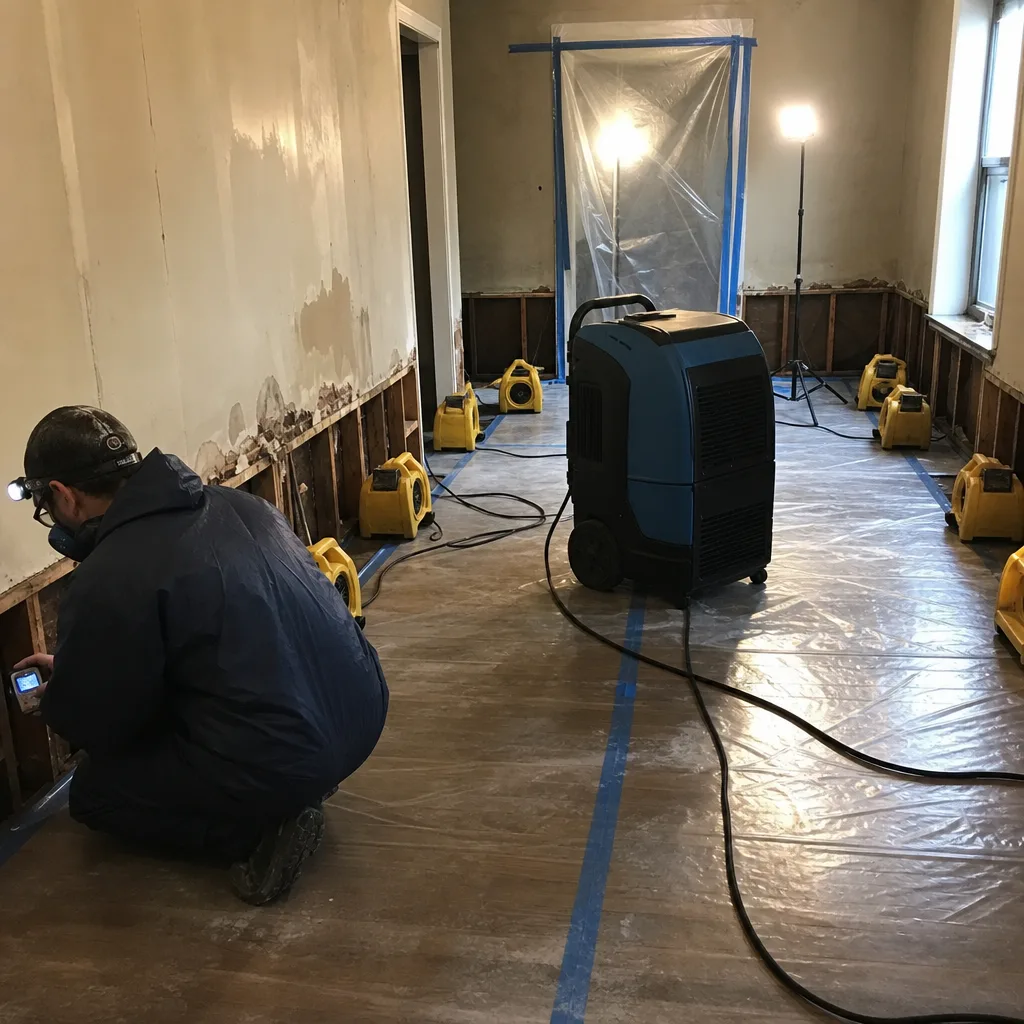
For Bedford Hills homes, drywall repair often means matching older wall profiles and blending new work into lathe-and-plaster transitions. Flooring runs from wide-plank pine in farmhouses to parquet and tile in newer sections. We cut out damaged material cleanly, dry the subfloor, and match replacement material to the room. On historic floors, we salvage and reuse what we can before we lay down anything new.
Contents Restoration & Pack-Out
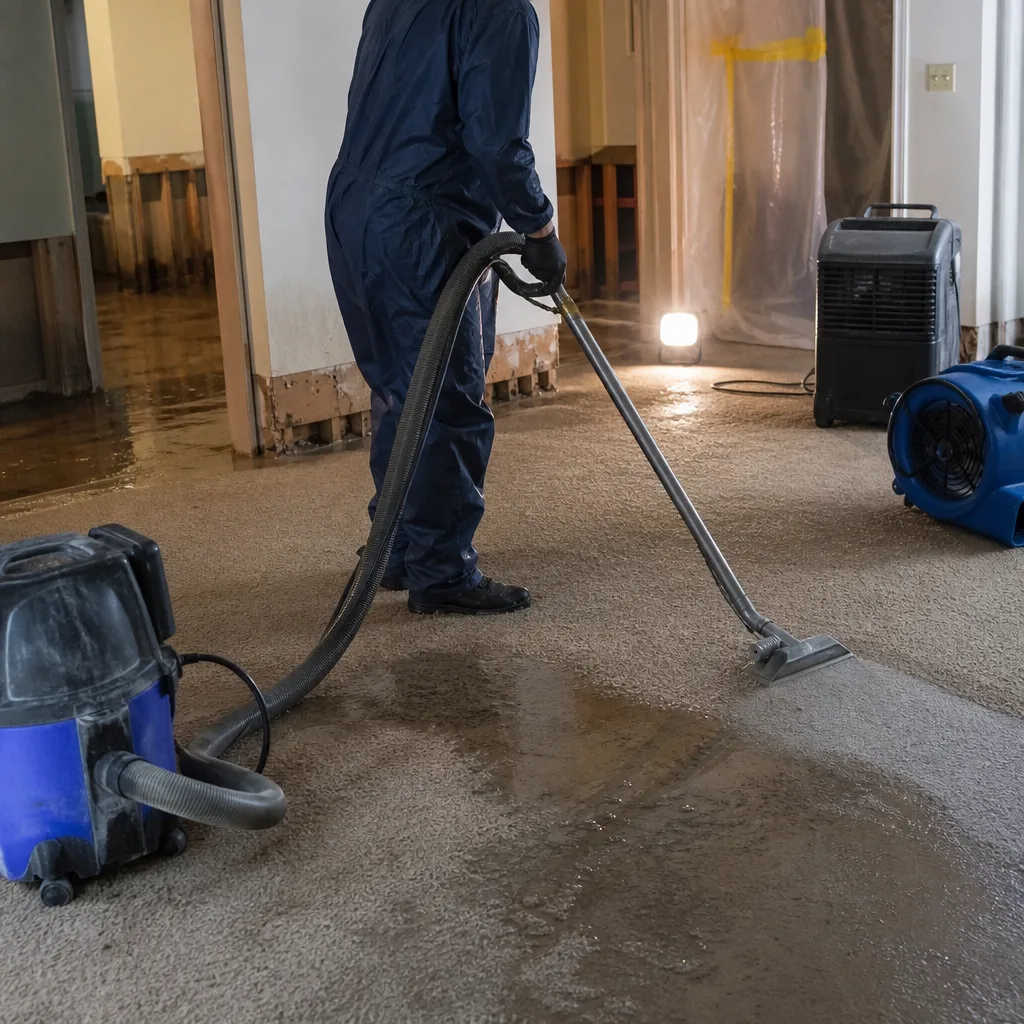
Large estate homes in Bedford Hills hold generations of furniture, documents, artwork, and objects. When water or smoke damage forces a pack-out, we inventory every item with photos and condition notes, pack everything in labeled, coded boxes, and store them in a controlled environment until the structure is ready. Your insurer gets a complete itemized inventory. You get your belongings back clean, dry, and in the condition the inventory says they left in. We coordinate directly with your adjuster on contents claims so you never have to argue over a damaged set of dining chairs that was already damaged before the flood.
Carpet & Upholstery Cleaning
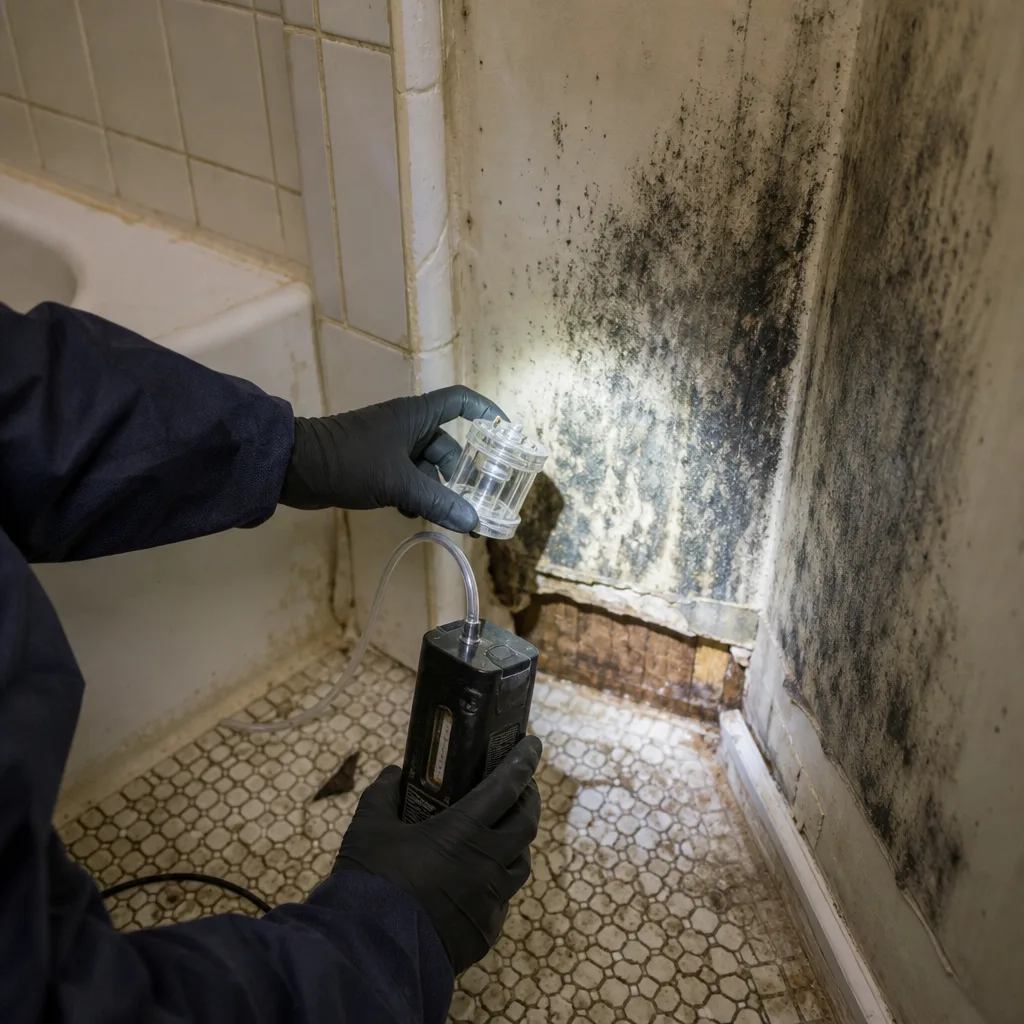
After a Category 1 water loss or light smoke exposure, salvageable carpet and upholstery get professionally cleaned, deodorized, and dried rather than thrown out. We use truck-mounted hot water extraction where access allows and portable units where it doesn’t. On Bedford Hills estate homes with large area rugs and custom drapery, this single step routinely saves tens of thousands in replacement costs, and your insurer sees the line-item distinction between cleanable and un-salvageable.
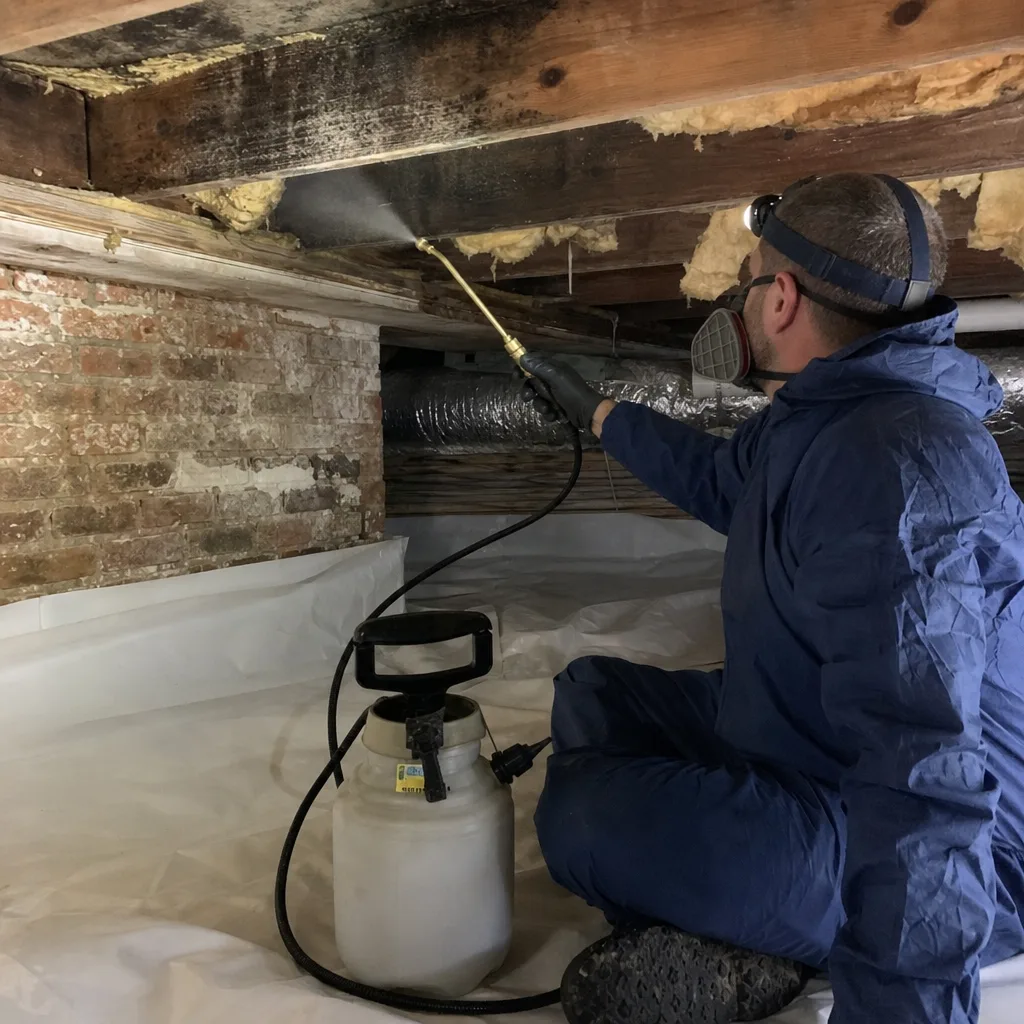
Post-Construction Cleanup
After we rebuild in Bedford Hills, or after any contractor’s renovation, dust settles into every gap in a 150-year-old house. Post-construction cleanup means HEPA vacuuming every surface, wiping down millwork, cleaning windows and sills, and removing construction debris from the property. In the Croton watershed, that debris removal has to follow DEP disposal rules, which we handle from the first roll-off. You walk back into a finished house, not a jobsite.
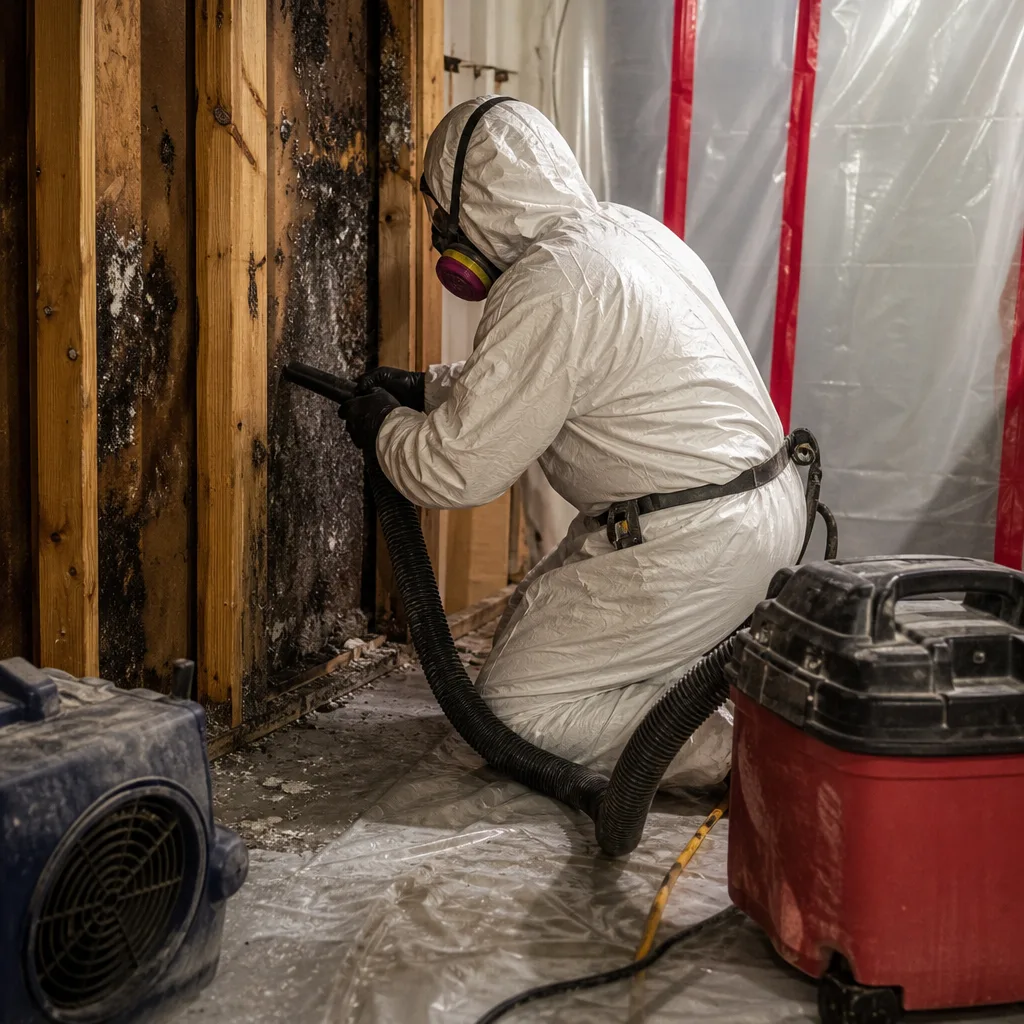
Insurance Claim Documentation
This is the service that saves Bedford Hills homeowners the most money, because it starts before the claim is filed. We photograph everything: the tree on the roof, the water line on the plaster, the moisture readings behind the wall, the floorboards swelling in the hall. We write line-item scopes in the estimating format adjusters expect. We log drying progress daily and hand the complete file to your carrier. When an adjuster questions whether a period-appropriate plaster restoration is necessary, we have the readings and photos to justify it. Homeowners who work with us avoid the classic underpayment trap: the adjuster prices a drywall replacement while the house has horsehair plaster.
What happens when you call
- 1
A real person answersNo phone trees - you reach a local pro.
- 2
You get an upfront price rangeHonest numbers before anyone is dispatched.
- 3
A background-checked tech heads outLicensed & insured, dispatched right away.
- 4
You approve before work beginsNothing starts until you say go.
Reconstruction & Cleanup Costs in Bedford Hills, NY
Reconstruction costs in Bedford Hills run higher than the Westchester average because the housing stock is older, the materials are period-specific, and watershed compliance adds a layer most towns don’t carry. Here are real ranges for our market. A small Category 1 water loss with drying and minor plaster repair typically runs $2,500 to $6,500. A full tree-strike reconstruction on a slate roof with plaster restoration, contents pack-out, and structural drying lands between $35,000 and $120,000 depending on the scale of the roof breach and the finish level of the affected rooms. Carpet and upholstery cleaning after a water exposure runs $400 to $1,800. Contents pack-out for a large estate home runs $4,000 to $18,000. Post-construction cleanup on a full-house rebuild runs $1,500 to $6,000.
What moves the price: category of water, square footage affected, whether horsehair plaster can be dried in place or must be replicated, and whether roof repair requires slate matching. Insurance covers most storm and flood-related reconstruction, minus your deductible. We document everything so the carrier sees the full scope, not a photoshopped version of it. The free inspection gives you a firm number before you commit to anything.
We Also Serve Cities Near Bedford Hills
Our crews work the whole northern Westchester corridor. In addition to Bedford Hills, we handle reconstruction and cleanup in Katonah, Mount Kisco, Bedford, and Millwood, with the same 45-minute response commitment and the same live 24/7 dispatch. If you’re in one of those towns and a tree just came through the roof, call the same number: (917) 924-4221.
Bedford Hills Reconstruction & Cleanup Questions, Answered
What happens when a tree falls on a pre-Civil War house in Bedford Hills and water gets into the horsehair plaster?
We stabilize the roof breach first, then set up full containment and structural drying around the horsehair plaster walls while documenting every layer for the insurer. Horsehair plaster can often be saved if drying starts within 48 hours. After a nor’easter dropped a limb through a slate roof on Succabone Road, we ran Dri-Eaz and Phoenix dehumidifiers until the drying logs showed pre-loss moisture levels in the plaster and the old-growth timber framing. In many cases the plaster stays, and only the finish coat gets patched. Call (917) 924-4221 and we’ll assess it the same day.
Can you dry out a stone foundation after a flood in Bedford Hills without ripping it apart?
Yes, in most cases. Fieldstone and stone foundations dry differently than poured concrete: water moves through mortar joints and wicks upward into sill plates and floor joists. We use moisture mapping, air movers, and dehumidifiers positioned to dry the stone and the surrounding soil over several days, not hours. Ripping out a stone foundation is rarely necessary and almost never advisable on a historic Bedford Hills home. We dry it, monitor it, and document it for your carrier.
Does my Bedford Hills reconstruction job need to follow NYC DEP watershed rules?
Yes, if any part of the job involves outdoor washing, antimicrobial application, or flood debris disposal. Bedford Hills sits inside the Croton watershed protection zone, and the NYC DEP regulates what can run off a property. We check the rules before we spray, pump, or haul anything outdoors. The same job a few miles south in Mount Kisco has no such layer. We handle the compliance so you don’t get a fine you didn’t see coming.
How do you handle pack-out and contents restoration for a large estate home in Bedford Hills after water damage?
We photograph and inventory every item with condition notes before anything moves, then pack everything in labeled boxes and move it to controlled storage. Your insurer gets the full itemized inventory, which streamlines the contents claim. After restoration, every item returns in the condition the inventory shows. For antiques, documents, and custom furnishings, we use specialized cleaning methods and coordinate directly with your adjuster on valuation.
Will my insurance company accept a reconstruction scope of work that includes period-appropriate materials instead of standard replacements?
In our experience, yes, when the scope is supported by photos, moisture readings, and a documented material-match rationale. Carriers push back when a contractor submits a one-line “plaster restoration” without evidence. We build the case from the first hour: photos of the original plaster, readings showing it can be dried, quotes from period-material suppliers, and line items that distinguish restoration from replacement. Adjusters accept what they can verify. We make every line verifiable.
How fast can you actually get to Bedford Hills?
We commit to 45 minutes or less from the time you call. Our dispatchers coordinate from our New York City office, and crews are staged throughout the northern Westchester corridor. When a tree lands on a house off Harris Road at 11 p.m., the crew that gets there is the one closest to Bedford Hills, not the one finishing a job in Yonkers.
Will I need to leave my home during reconstruction in Bedford Hills?
That depends on the severity and the location of the damage. A contained water loss in one wing may allow you to stay. A full tree strike with structural damage, open roof, and remediation zones usually means vacating until the structure is stabilized and the air quality clears. We tell you honestly in the first visit. We don’t promise occupancy we can’t deliver, and we don’t drag out displacement because our crew runs the job end to end.
What should I do in the first 30 minutes after water or storm damage in Bedford Hills?
Call us at (917) 924-4221. Then, if it’s safe, shut off the water source or the main valve, move small valuables out of the water path, and take photos with your phone. Don’t enter a room with a sagging ceiling, and don’t handle electrical panels if water is present. Don’t try to pump a flooded fieldstone basement yourself; you’ll move contaminated water into the soil and complicate the drying. The less you disturb before we arrive, the more precisely we can map the damage.
Serving Bedford Hills, NY - Our Local Coverage Area
We’re based in the Bedford Hills area and know this community well. Use the map below to see our service coverage - if you’re nearby, we can almost certainly help.
Call Floodline Restoration Co. of Manhattan for Reconstruction & Cleanup in Bedford Hills
If your Bedford Hills home has water where it shouldn’t be, a tree where the roof used to be, or smoke in the plaster, call (917) 924-4221 now. A live person answers. A certified, background-checked, uniformed crew arrives within 45 minutes. You get a free visual inspection, a written scope of work, and the 90-Day Done Right Promise in writing when we finish. We’ve done this for over 42 years, and we’ll be in this town in thirty more. Done right, and backed in writing.
Written by Curt Bowman, Owner at Floodline Restoration Co. of Manhattan.