
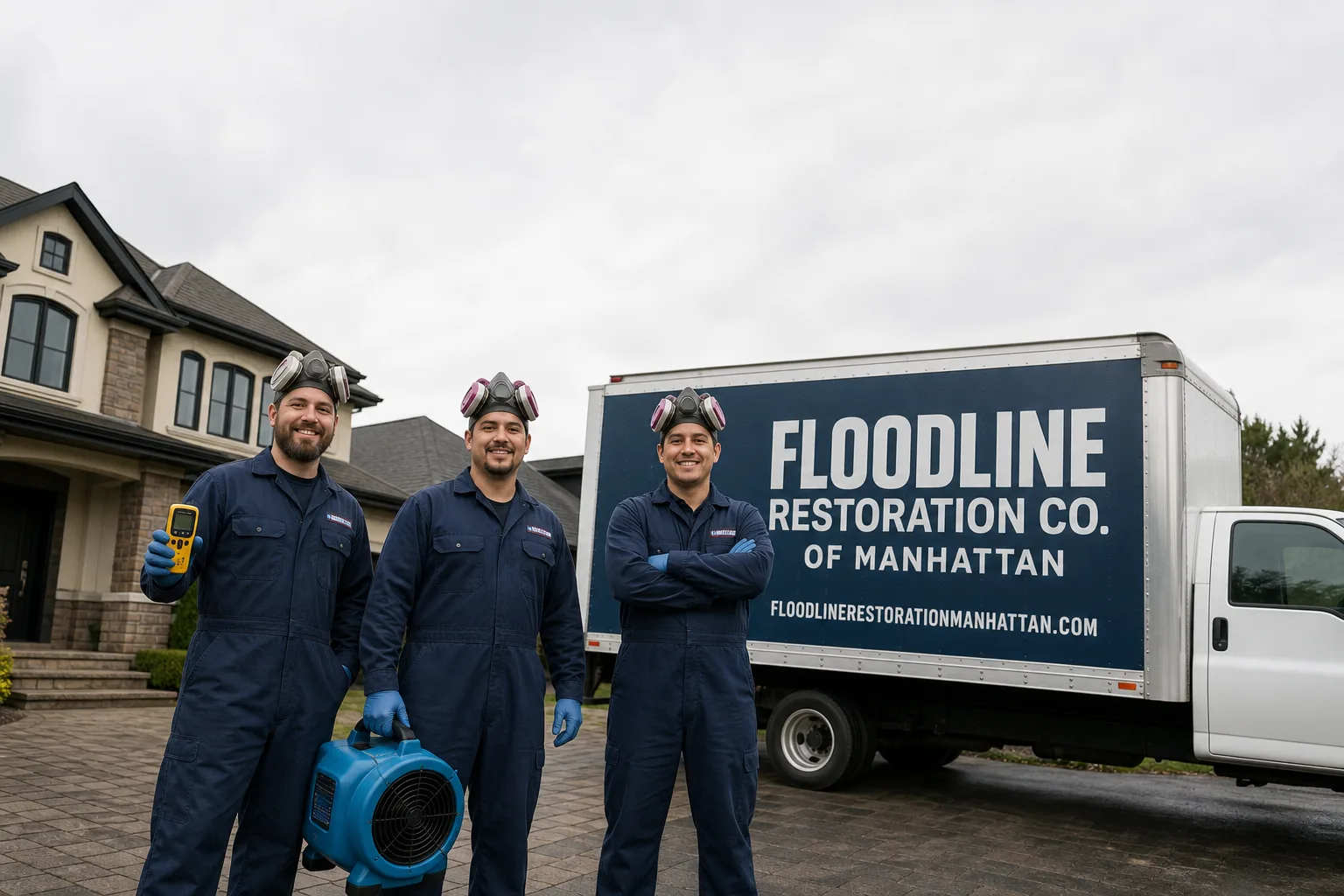
Free visual inspection and a written scope of work before any mitigation begins - photos, moisture readings, and drying logs go in your claim file
The scope we write is the scope we bill. Anything new gets shown to you, in writing, before we touch it.






 Before
 After
After Before
 After
After Before
 After
After24/7 Emergency Reconstruction & Cleanup in Blauvelt
When water is inside your Blauvelt home, every hour counts. Our crews answer live at (917) 924-4221 around the clock, and we dispatch into Blauvelt the same visit, ready to start extraction, structural drying, and the full scope of Reconstruction & Cleanup that follows. We provide a free visual inspection so you know exactly what you are facing before any work begins. The first hour matters most because saturated drywall, carpet, and framing start wicking moisture upward fast, and the window for saving finishes closes quickly, especially with the clay-heavy soils and older foundations common around here.
This page is written for homeowners in Blauvelt who may be dealing with water in a finished basement, a storm-damaged room, or a moisture problem that keeps returning every spring. We explain why Blauvelt homes fail the way they do and what the fix actually costs.
Understanding Reconstruction & Cleanup Severity in Blauvelt Properties
Reconstruction and cleanup work in Blauvelt generally falls into three severity bands, and the difference usually comes down to the source of the water and how long it sat before anyone found it. Category 1 water is clean supply water from a burst pipe or failed appliance line. Category 2 carries some contamination, like sump pump discharge or washing machine overflow. Category 3 is grossly contaminated water from storm flooding or sewage backup, and it requires full containment, antimicrobial treatment, and often demolition of affected finishes before rebuilding can start. Blauvelt sees a disproportionate amount of Category 3 work because stormwater from the Palisades escarpment pushes through basement walls under pressure, carrying soil, silt, and whatever else it picks up along the way.
The housing stock here makes this worse than it should be. Most Blauvelt homes were built in the 1950s through the 1970s, and the poured concrete block foundations beneath them were rarely waterproofed to today’s standards. Block walls have cores and mortar joints that permit lateral moisture migration, and once water has pushed through, it saturates drywall, insulation, and carpet from the back side. That hidden moisture is where the real damage lives. Without moisture mapping and structural drying, a wall that looks dry on the surface can be holding 30 percent moisture inside the cavity, and that is exactly how mold takes hold within 48 hours.
Why Blauvelt Property Owners Choose Floodline Restoration Co. of Manhattan
- 45-minute response commitment – When you call from Blauvelt, a live dispatcher gets a crew moving immediately. We commit to a 45-minute response window for emergency calls in the area, and we hold ourselves to it.
- 24/7 live answer, never an automated system – You get a person on the phone at 2 a.m., not a recording. That person knows the dispatch map for Blauvelt and can tell you who is coming and when.
- IICRC-certified crews – Our technicians hold IICRC certifications including WRT (Water Damage Restoration Technician), FSRT (Fire & Smoke Restoration Technician), and AMRT (Applied Microbial Remediation Technician). Background-checked and uniformed, every time.
- Free visual inspection – Before any work begins, we walk the damage with you, show you the moisture readings, and explain what needs to happen and why. No obligation, and you keep the information either way.
- Direct insurance billing – We bill your carrier directly and communicate with your adjuster. You never have to play messenger between us and the insurance company.
- One team from extraction to reconstruction – The same crew that reads the moisture map on day one handles daily readings, hands you the drying log, and rebuilds what needs rebuilding. No mid-job handoff.
Our Reconstruction & Cleanup Process
Inspection & Assessment
We start with a full visual inspection plus moisture mapping across floors, walls, and wall cavities. Thermal imaging cameras and penetrating moisture meters show us exactly where the water went, including behind baseboards and under vinyl flooring where it hides. In Blauvelt, we pay special attention to exterior foundation walls where hydrostatic pressure pushes moisture through block.
Extraction & Stabilization
Standing water comes out fast with professional-grade extraction equipment. We remove saturated carpet pad, cut away failed drywall, and stabilize the structure to stop water from wicking higher. Anything that can be saved stays; anything holding water and deteriorating gets documented and removed.
Drying & Dehumidification
We run Dri-Eaz LGR dehumidifiers and Phoenix or XPOWER air movers placed according to the moisture map, not guesswork. Drying logs are updated every 12 hours until every affected surface reaches the dry standard. In Blauvelt’s clay-heavy soils, this matters because exterior walls dry slower than interior partitions, and stopping early invites mold behind rebuilt finishes.
Cleaning & Sanitization
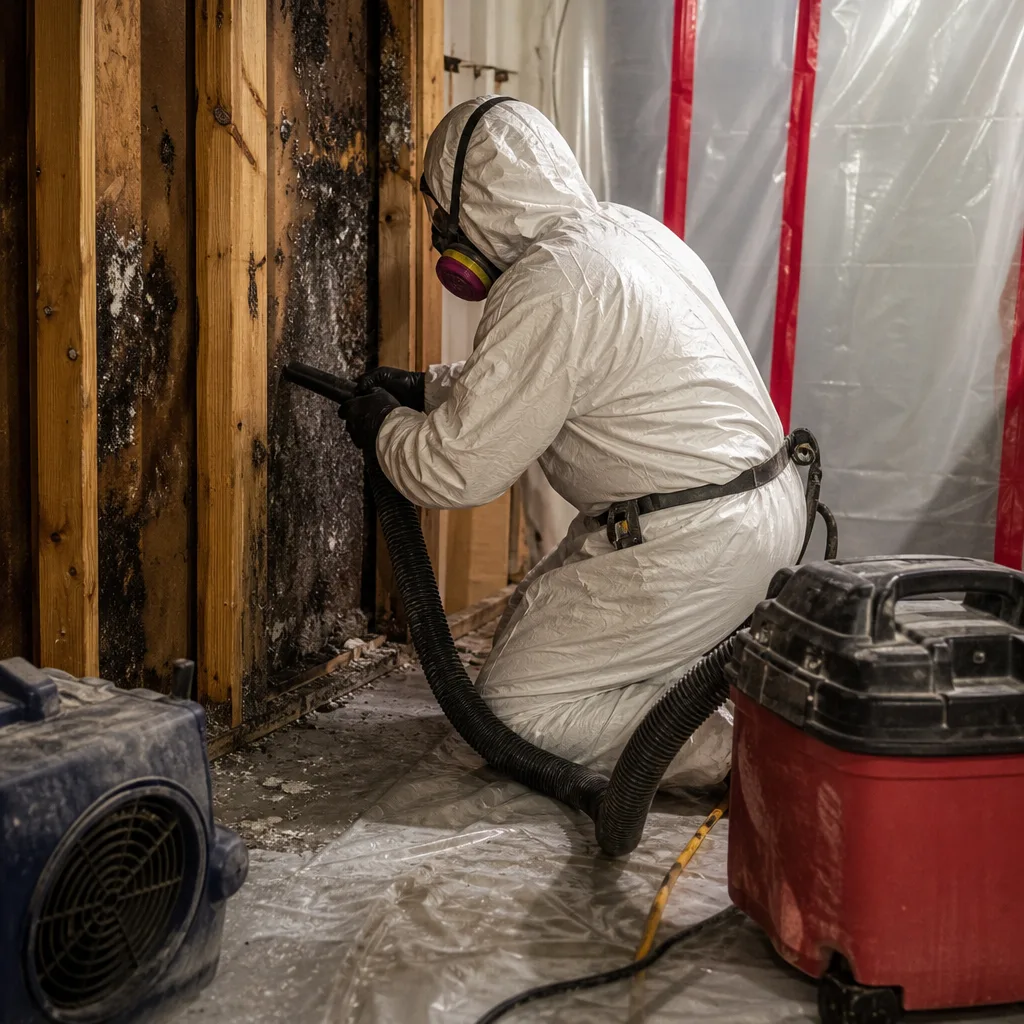
Once surfaces are dry, we clean and sanitize everything that remains. For Category 3 water, this includes antimicrobial treatment on framing and concrete. HEPA vacuuming and air scrubbing remove particulates so you are not living with whatever the stormwater brought in.
Structural-Drying Verification
After drying, we re-test with penetrating meters and give you a written report showing every reading. This is the same report your adjuster sees. For Blauvelt basements, we verify that foundation walls are stable and dry before any rebuild starts, because putting drywall over a wet block wall is how the next flood becomes a mold problem.
Repairs & Restoration
Our carpenters, drywallers, and painters rebuild to pre-loss condition or better. We hang and finish drywall, install flooring, replace trim, and paint. The final result is a finished, livable space, backed by the 90-Day Done Right Promise in writing.
Need Emergency Reconstruction & Cleanup in Blauvelt Now?
Crews minutes away, answering live 24 hours a day. The sooner we start, the less it costs.
Working With Your Insurance Company
Insurance claims move faster when the documentation is complete from day one, and that is where we make your life easier. From the first hour on site, we document every square foot of damage: photographs room by room, moisture readings logged every 12 hours, and an itemized scope of work that your adjuster can verify line by line. We communicate directly with your carrier, so you are not the one making phone calls and explaining drying standards. Most Blauvelt homeowners with finished basements and standard homeowners policies find that water damage from storm flooding or a sudden pipe failure is covered, subject to their deductible and policy limits. Let us bring the facts to the adjuster.
What We Provide Your Insurer
- Thorough documentation of the loss
- Photos of all damage, room by room
- Moisture readings and drying logs
- A detailed, line-item scope of work
- Direct coordination with your carrier
Built for Blauvelt’s Loss Calendar
Blauvelt’s geography means the loss calendar runs differently than up on the plateau. January and February bring deep freezes that sit in the valley, and supply lines in uninsulated crawl spaces or exterior wall cavities freeze and burst. When the thaw comes in March and April, snowmelt from the escarpment runs straight into the hamlet, and foundation walls that cracked over the winter reveal themselves as new seeps through the interior face of the block. Summer thunderstorms drop water faster than the Sparkill Creek drainage system handles it, and finished basements along the lower-lying streets take the brunt of it. Fall nor’easters combine all of it: saturated ground, heavy rain, and stormwater arriving at volume. The pattern is consistent enough that long-time Blauvelt residents learn to watch the east-facing foundation wall after any heavy rain, but water still gets in through the path of least resistance, and that path changes as concrete ages and cracks.
Reconstruction & Cleanup Across Blauvelt’s Neighborhoods
Homes along Western Highway and the streets running east toward the Sparkill Creek drainage corridor see the most hydrostatic basement flooding, because they sit lowest in the valley floor and receive runoff directly from the ridge. In these areas, we see water emerging through the interior face of exterior block walls rather than rising through floor drains, which tells us lateral pressure is the cause and the drying plan has to account for the wall itself, not just the floor.
The split-level and ranch developments off Erie Street and Van Wyck Road present a different pattern. These 1960s homes were built fast, on poured concrete block foundations, with no exterior waterproofing membrane and no drainage board. Water infiltrates through mortar joints and wicks upward into the sill plate and framing, saturating finished basement drywall from behind and rotting the bottom plate before anyone sees a stain. By the time a Blauvelt homeowner notices peeling paint or a musty smell, the moisture has usually been present for weeks.
Older homes closer to the historic center of Blauvelt, including a handful of early-20th-century houses with rubble or stone foundations, are the most vulnerable of all. Rubble foundations offer essentially no resistance to hydrostatic pressure, and freeze-thaw cycles destabilize them further each winter. In these homes, water intrusion is less about pointing and more about redirecting groundwater and managing interior drainage before any finished space can be restored.
Specialized Reconstruction & Cleanup Services We Offer in Blauvelt
Full-Service Reconstruction
When a Blauvelt basement has been stripped to the studs after a flood, we rebuild it properly. That means new drywall on properly dried framing, new flooring, trim, and paint, all done by the same team that did the drying. We do not hand you off to a subcontracted crew that never saw the moisture readings.
Drywall & Flooring Repair
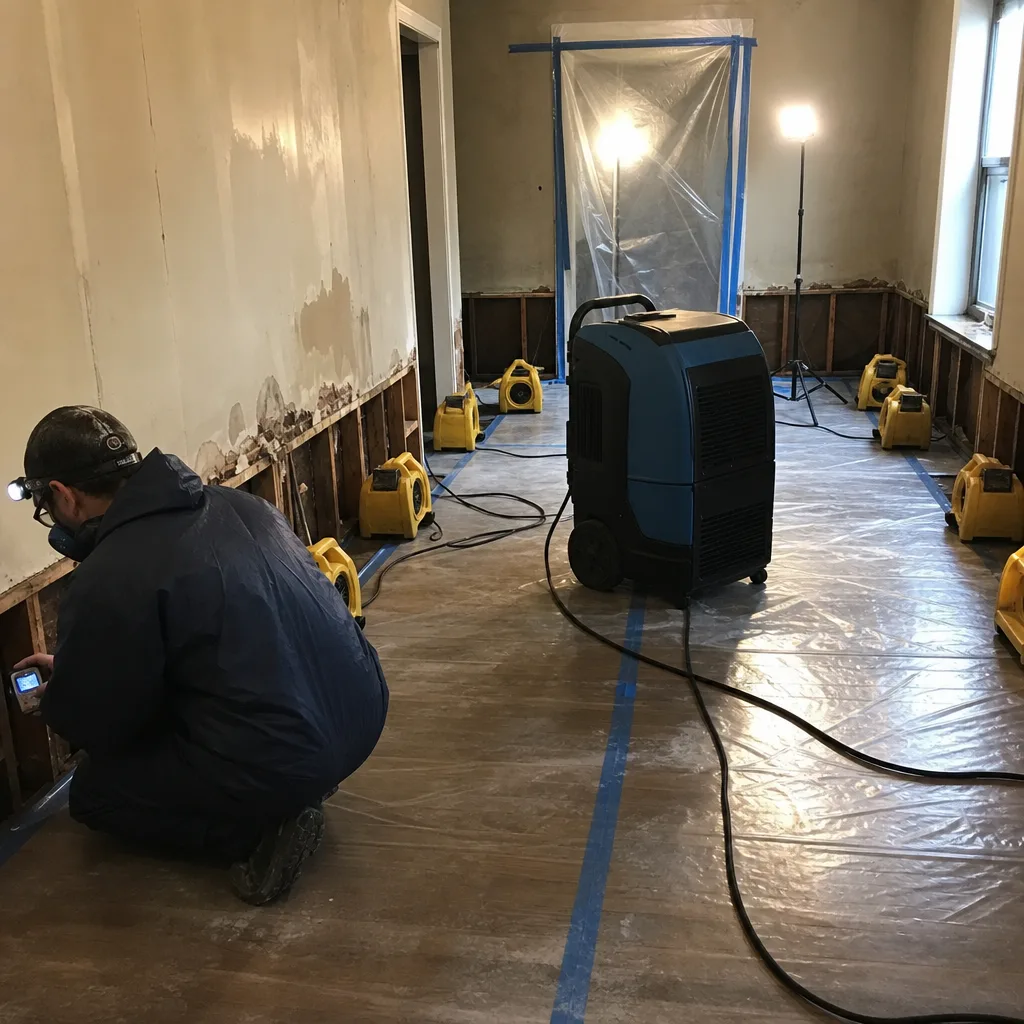
Water-damaged drywall in a Blauvelt split-level usually needs to be cut back to at least 12 inches above the visible water line, because moisture wicks upward through gypsum and hides in the seam cavities. We cut, remove, dry, and replace with new board, taped and finished to match the existing surface. Flooring follows the same standard: saturated carpet and pad rarely survive a Category 3 event, and vinyl flooring often traps moisture underneath it, hiding damage that only a moisture meter reveals.
Contents Restoration & Pack-Out
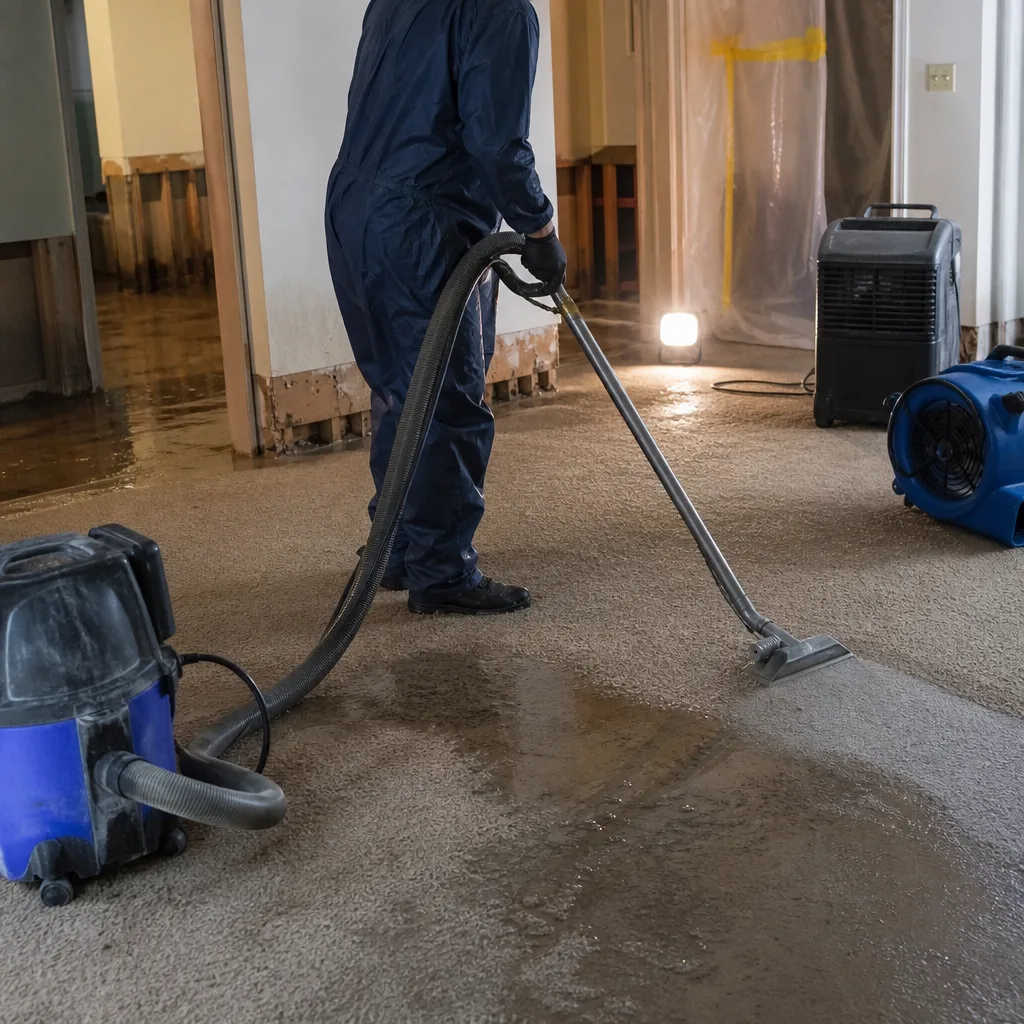
Furniture, electronics, documents, clothing, and keepsakes can often be cleaned and restored off-site while your home is being rebuilt. We inventory, pack, transport, clean, and store contents, then return them when the space is ready. For Blauvelt basements full of holiday decorations, stored furniture, and irreplaceable family photos, this service is frequently the difference between saving and losing what matters.
Carpet & Upholstery Cleaning
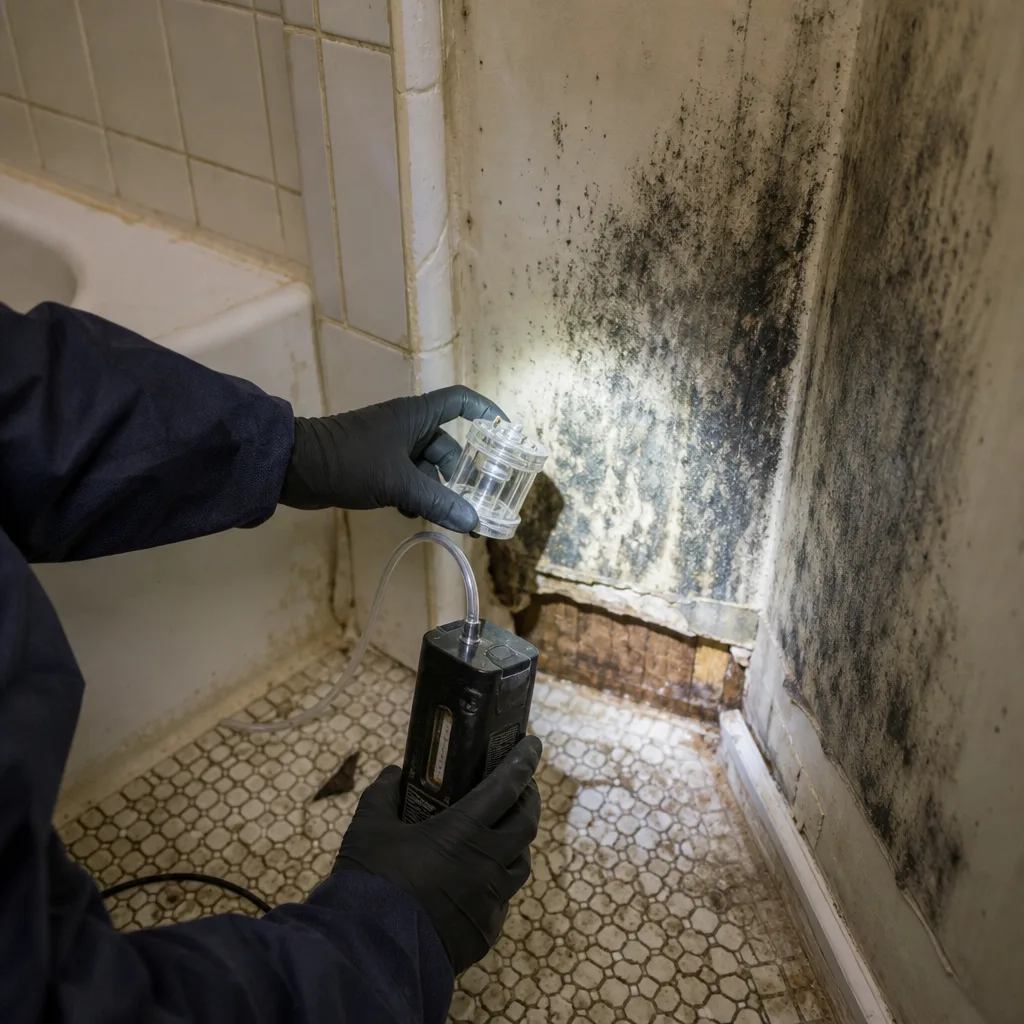
Category 1 water events in Blauvelt, such as a burst supply line in a first-floor laundry room, often leave carpet and upholstery salvageable rather than destroyed. We clean, deodorize, and sanitize these materials in place or at our facility, depending on the extent of water contact. You will know after inspection whether your carpet is a candidate for cleaning rather than replacement.
Post-Construction Cleanup
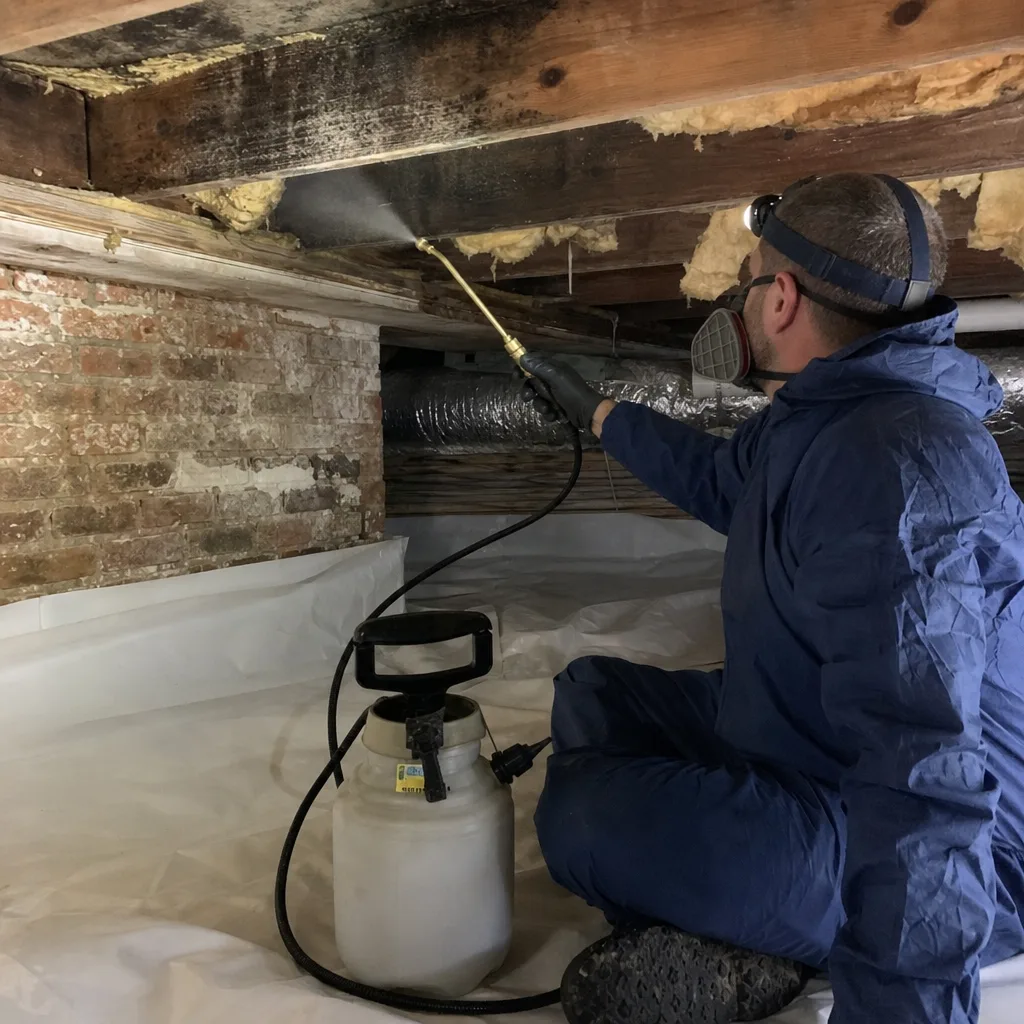
After reconstruction is done, we remove construction dust, debris, and residue, leaving the space livable. HEPA vacuuming, surface wiping, and air filtration clear out the fine particulate that ordinary cleaning misses. You get the space back without the layer of drywall dust on everything.
What happens when you call
- 1
A real person answersNo phone trees - you reach a local pro.
- 2
You get an upfront price rangeHonest numbers before anyone is dispatched.
- 3
A background-checked tech heads outLicensed & insured, dispatched right away.
- 4
You approve before work beginsNothing starts until you say go.
Reconstruction & Cleanup Costs in Blauvelt, NY
Costs in Blauvelt reflect the valley’s biggest variable: how far the water traveled and what it touched before anyone found it. A minor Category 1 pipe leak with fast response typically runs $1,800 to $4,000 for extraction, drying, and drywall patch. A finished basement flood from stormwater or groundwater intrusion usually runs $5,500 to $14,000, depending on how much drywall and flooring is removed, whether structural drying is required, and what rebuilding finishes you choose. Severe Category 3 events involving sewage or long-standing water can reach $20,000 or more, particularly in older Blauvelt homes with rubble foundations where the rebuild scope expands after walls are opened. Insurance coverage changes these numbers significantly; the free visual inspection we offer is the honest path to a firm, written scope. Call (917) 924-4221 and we will tell you what you are actually facing before any work begins.
We Also Serve Cities Near Blauvelt
In addition to Blauvelt, our crews serve Orangeburg, West Nyack, Tappan, and Pearl River. The geology changes subtly from town to town, but the valley-floor flooding pattern extends across all of them, and we bring the same drying standards to every job.
Serving Blauvelt, NY - Our Local Coverage Area
We’re based in the Blauvelt area and know this community well. Use the map below to see our service coverage - if you’re nearby, we can almost certainly help.
Blauvelt Reconstruction & Cleanup Questions, Answered
Why does my Blauvelt basement get water through the walls instead of the floor drain after heavy rain?
Water coming through the interior face of your basement walls, rather than rising through floor drains, means hydrostatic pressure is pushing groundwater laterally through your foundation, and Blauvelt’s valley-floor topography and clay-heavy soils create exactly the right conditions for that. The fix is structural drying and often exterior drainage correction, not a plumbing repair. Call us at (917) 924-4221 and we will map the intrusion point and show you what is happening.
How do you decide whether to repair or replace water-damaged drywall in a Blauvelt split-level?
We use penetrating moisture meters to measure moisture content inside the wall cavity. Drywall that is saturated or has wicked water more than a few inches above the sill plate is cut out and replaced, because gypsum loses its structural integrity and becomes a mold substrate even after surface drying. Drywall that is damp but within salvageable range is dried in place with air movers and dehumidifiers. Call (917) 924-4221 for a free inspection and a straight answer on which category your walls fall into.
My 1960s Blauvelt home has a finished basement that floods every spring. Can you restore it and prevent future damage?
Yes. We start by drying and restoring the space to pre-loss condition, then assess what is causing the repeated intrusion. In most Blauvelt homes of that era, the foundation was never waterproofed to modern standards, and the real fix involves exterior excavation and waterproofing, interior drainage correction, or a combination of both. We can scope that work and coordinate it with your insurance claim where applicable. Call (917) 924-4221 to schedule the assessment.
What does your insurance claim documentation include for a Blauvelt basement flood?
Your insurance documentation includes room-by-room photographs, moisture readings and drying logs recorded every 12 hours, an itemized scope of work, and a written dry standard verification report. We send this directly to your adjuster and handle communication on your behalf. Call (917) 924-4221 and we will get documentation started the same day as the loss.
How quickly can mold start on my Blauvelt basement drywall after a flood?
Mold can begin colonizing on damp drywall within 24 to 48 hours, and Blauvelt’s valley-floor humidity levels push that window tighter in spring and summer. This is why we prioritize same-visit extraction and structural drying, and why we document moisture readings continuously. Call (917) 924-4221 as soon as you see water, and we will get ahead of the mold window.
How fast can someone actually get to my Blauvelt home?
We commit to a 45-minute response window for emergency calls in Blauvelt. A live dispatcher answers your call, confirms your location, and gets a crew moving immediately. You will know who is coming and roughly when before you hang up. Call (917) 924-4221.
Can I stay in my Blauvelt home during reconstruction and cleanup?
In many cases, yes. If we need to contain the affected area with plastic sheeting and negative air pressure, that is typically limited to the basement or the damaged room. For severe Category 3 flood or sewage losses, we may recommend temporary relocation while demolition and drying are underway. We will tell you honestly during the inspection whether staying is practical. Call (917) 924-4221.
What should I do in the first 30 minutes after I find water in my Blauvelt basement?
Call us at (917) 924-4221. Do not enter standing water if electrical outlets or appliances are affected. Shut off power to the affected area if you can do so safely. Move small valuables and documents to dry ground. Do not attempt to remove saturated drywall or carpet yourself, because disturbing it can spread contaminated water and make the drying job harder. We will be there quickly.
Written by Curt Bowman, Owner at Floodline Restoration Co. of Manhattan, serving Blauvelt and the surrounding communities.