
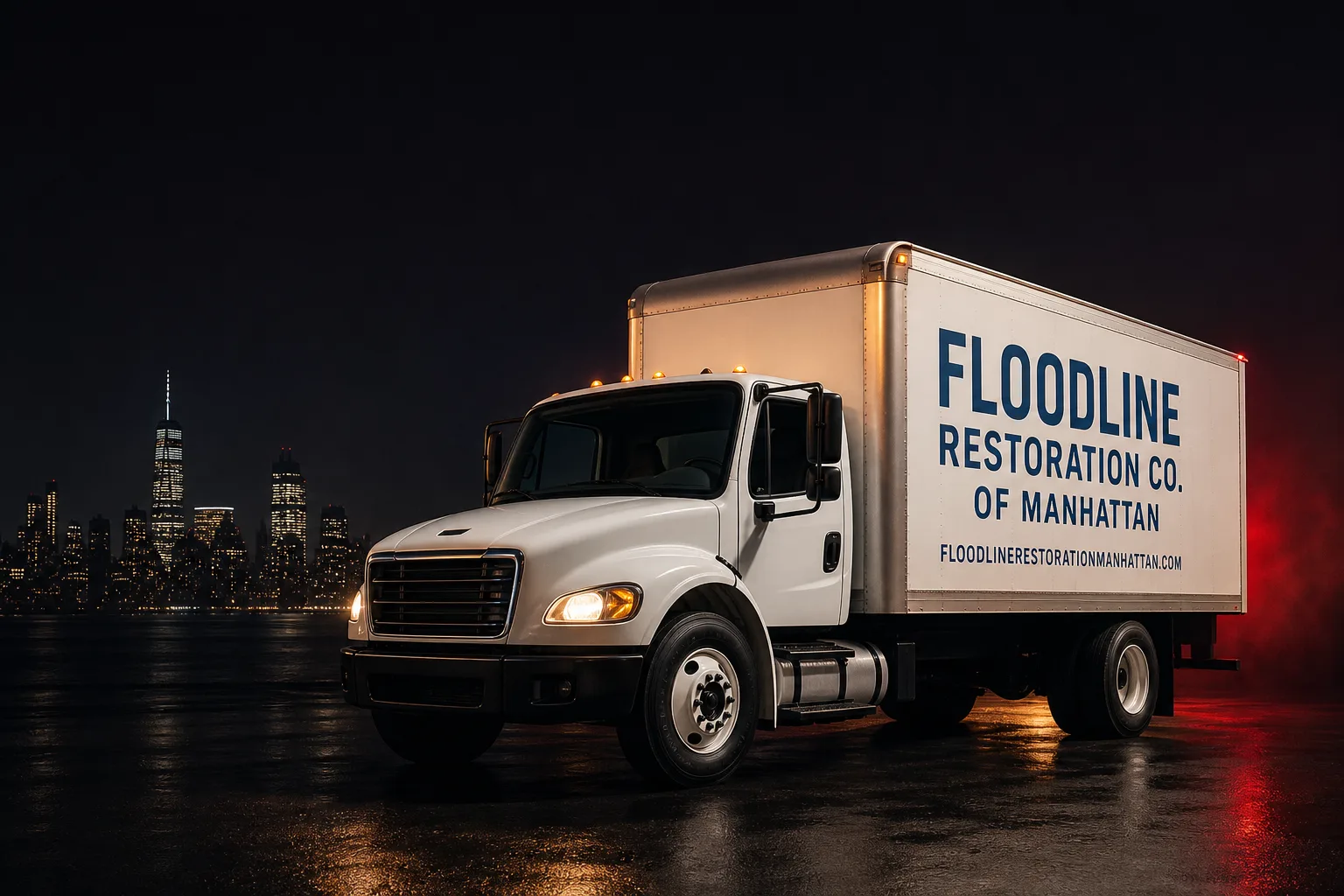
Free visual inspection and a written scope of work before any mitigation begins - photos, moisture readings, and drying logs go in your claim file
The scope we write is the scope we bill. Anything new gets shown to you, in writing, before we touch it.






 Before
 After
After Before
 After
After Before
 After
After24/7 Emergency Reconstruction & Cleanup in Ho-Ho-Kus
Reconstruction and cleanup after a flood in Ho-Ho-Kus typically runs $8,000 to $42,000 depending on whether we’re rebuilding a finished basement, replacing plaster-and-lath walls, or restoring contents from a 1920s Colonial. Most jobs begin with emergency mitigation within hours, not days, because water from the Hohokus Brook keeps moving through rubble-block foundations long after the surface looks dry. Our crew answers live at (917) 924-4221 around the clock. We’re already familiar with the homes here, the floodplain streets, and what it takes to get a Brook-adjacent house back to finished condition without leaving the old damage hiding behind new drywall.
When a nor’easter pushes the Hohokus Brook over its banks, the first call you make matters. We dispatch within 45 minutes to any address in Ho-Ho-Kus, run a free visual inspection, and start extraction the same visit. Every hour of delay means more groundwater wicking up through the porous stone foundations common in the borough’s pre-war housing stock. You’ll get a written scope before any rebuild work starts, so you know exactly what we found, what we’re fixing, and what it costs. No surprises. No mid-job handoff.
Understanding Reconstruction & Cleanup Severity in Ho-Ho-Kus Properties
Reconstruction and cleanup severity in Ho-Ho-Kus breaks down by water category and what the original construction methods mean for drying. Category 1 water is clean supply-line water or overflow from a broken pipe. Category 2, what Hohokus Brook flooding most often produces, contains significant contaminants. Category 3 is sewage or toilet backflow, which requires full containment, material removal, and sanitization protocols.
The borough’s 1920s-to-1950s Colonials, Tudors, and Craftsman bungalows compound the problem. Plaster-and-lath walls, common in nearly every pre-war home here, trap moisture differently than drywall. Lime-based plaster is porous and holds water against the lath, which means surface drying readings can look acceptable while the wall cavity stays wet for weeks. Porous rubble-block foundations wick groundwater upward long after the Brook recedes. If a reconstruction scope stops at patching the visible damage without moisture mapping through the structure, the job fails within months. We see this pattern repeatedly on streets near the lower sections of the borough. A proper severity assessment here means thermal imaging through the plaster, daily moisture readings on the foundation, and an honest conversation about which materials need to come out, not just dry.
Why Ho-Ho-Kus Property Owners Choose Floodline Restoration Co. of Manhattan
- 45-minute response commitment for any Ho-Ho-Kus address, with crews already staged across Bergen County. When the Brook is rising, waiting half a day for another company means a wet basement becomes a rebuilt basement.
- Live answer every time, 24/7. A real dispatcher picks up at (917) 924-4221 at 2 a.m., not a recording. You’ll speak with someone who knows the floodplain streets and can tell you what to do in the next 30 minutes.
- IICRC-certified crews trained to WRT, FSRT, and AMRT standards. Background-checked, uniformed technicians on every job, with RIA and IFA training behind the certifications.
- Free visual inspection with a written scope before any reconstruction starts. You see what we found, what we recommend, and what it costs, on paper.
- Direct insurance billing. We handle the adjuster communication, the documentation, and the paperwork so you’re not playing messenger between your carrier and the crew.
- One team from extraction to rebuild. The same certified crew that reads the moisture map on day one handles daily readings, hands the log to you and your carrier, and swings the hammer when it’s time to rebuild.
Our Reconstruction & Cleanup Process
Inspection & Assessment
We start with thermal imaging and moisture mapping through plaster, drywall, and foundation walls. We classify the water, trace the migration path, and document everything photographically for your carrier. You get a written scope before we do anything else.
Extraction & Stabilization
Standing water comes out first with truck-mounted extraction. If the flooding touched the Brook, we treat it as contaminated and set containment before air moves through the house. We stabilize any sagging drywall or compromised flooring the same visit.
Drying & Dehumidification
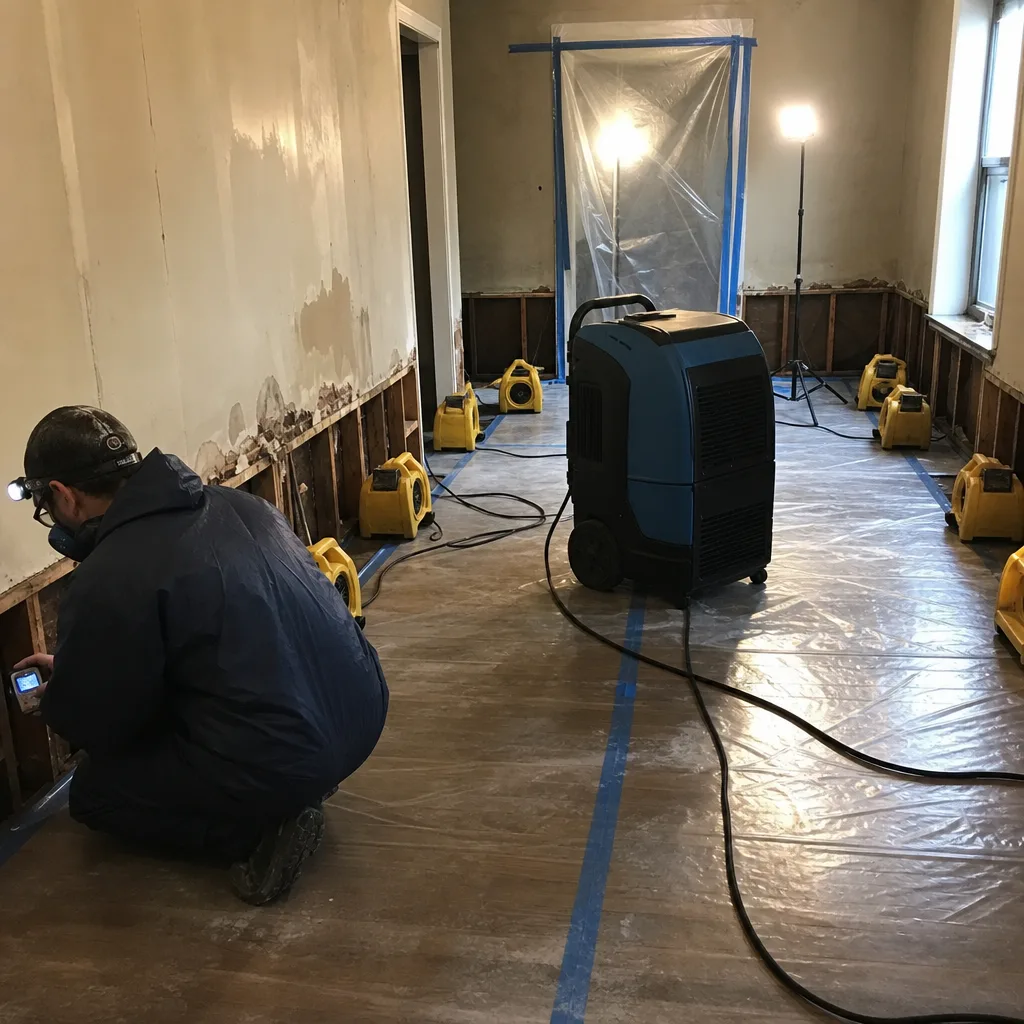
We run Dri-Eaz air movers and Phoenix dehumidifiers matched to the room dimensions and the moisture load. Daily hygrometer readings are logged in writing. In Ho-Ho-Kus, we hold the drying phase longer on plaster-and-lath walls because the material releases moisture slowly.
Cleaning & Sanitization
HEPA air scrubbers run during the entire cleaning phase. All affected surfaces get antimicrobial treatment. We’re particular about this step in floodplain homes, where hidden mold colonies from a previous owner’s DIY recovery are common behind finished walls.
Specialty Treatment for Reconstruction
For Brook-adjacent homes, this includes vapor barrier installation, redundant sump pump upgrades, and foundation wall sealing. We also do contents pack-out, cleaning, and storage when a full rebuild requires emptying the basement or lower floor.
Repairs & Restoration
Drywall replacement, flooring, trim, paint, and any structural work. We match your home’s original character, so a 1930s Tudor gets period-appropriate trim, not builder-grade substitutions. The finish crew is the same crew that did the mitigation.
Need Emergency Reconstruction & Cleanup in Ho-Ho-Kus Now?
Crews minutes away, answering live 24 hours a day. The sooner we start, the less it costs.
Working With Your Insurance Company
Flood claims are different from standard water-damage claims, and Ho-Ho-Kus homeowners dealing with Hohokus Brook overflow need documentation that holds up to adjuster scrutiny. We photograph every affected room before we move anything. We log moisture readings daily until the dry standard is met. We write a detailed, line-item scope of work that separates flood damage from pre-existing conditions, which matters when a prior owner’s hidden mold becomes part of the picture. Our team communicates with your adjuster directly, provides the drying logs and equipment records your carrier expects, and handles the billing conversation so you’re not caught in the middle.
What We Provide Your Insurer
- Thorough documentation of the loss
- Photos of all damage, room by room
- Moisture readings and drying logs
- A detailed, line-item scope of work
- Direct coordination with your carrier
One note that matters in this borough specifically: if the previous owner did a DIY recovery after Irene or Sandy and skipped proper drying, your current claim may involve pre-existing mold that your carrier could dispute. Our documentation proves what’s new, what’s old, and what the water actually touched. That distinction has saved Ho-Ho-Kus homeowners thousands in denied claims. Our Reconstruction & Cleanup team handles this documentation from the first hour, so nothing gets missed.
Built for Ho-Ho-Kus’s Loss Calendar
Reconstruction and cleanup calls in Ho-Ho-Kus follow the same pattern every year. January through February brings the deep freezes that burst supply lines in unheated crawl spaces and cause ice damming on the steep-pitched roofs of older borough homes. March and April bring snowmelt and spring rains that saturate the ground and push groundwater into basements through the rubble-block foundations that predate modern drainage. August and September are the flash-flood and tropical remnant months, when the Hohokus Brook rises fast and the floodplain streets along its lower sections take on water. Nor’easters hit in the shoulder seasons, bringing prolonged, saturating rainfall that sends the Brook over its banks while the ground is already frozen or waterlogged.
The result is that Ho-Ho-Kus doesn’t have a single “storm season.” We respond to furnace-room supply-line failures in February, basement seepage in March, and full Brook overflows in September. The homes cycle through professional restoration every few years, which is why our scopes here routinely include discovering and removing conditions left behind by earlier, incomplete recoveries. When you call us in Ho-Ho-Kus, you’re getting a crew that knows what this specific calendar does to this specific housing stock.
Reconstruction & Cleanup Across Ho-Ho-Kus’s Neighborhoods
The lower sections of the borough, particularly the streets that run parallel to the Hohokus Brook, are where we see the most severe reconstruction scopes. Homes along Brookside Avenue, Hollywood Avenue, and the blocks near the borough’s southern end take direct floodwater, and the finished basements there have been rebuilt after prior events, sometimes more than once. We know the pattern: a new flood event uncovers what the last repair missed. The homes on the higher ground east of Sheridan Avenue and toward the Franklin Turnpike corridor tend to see more supply-line breaks, roof leaks, and ice damming than floodwater, though the older Colonials throughout the borough share the same plaster-and-lath drying challenges.
In the neighborhoods near Ho-Ho-Kus Avenue and the municipal center, we’re often called in for post-construction cleanup after renovations, or for whole-home reconstruction after a fire or sewer backup. The Tudor and Craftsman homes there have original trim and flooring that require careful matching during rebuild. The work along the borough’s western edge, near the Saddle River border, often involves groundwater seepage through the same porous foundations, even when the Brook itself doesn’t overflow. Every neighborhood has its own loss pattern, and our crews know the streets by name.
Specialized Reconstruction & Cleanup Services We Offer in Ho-Ho-Kus
Full-Service Reconstruction
When a Brook flood takes out a finished basement, the rebuild is part of the same job as the extraction. We handle framing, drywall, flooring, trim, paint, and any structural repairs. In Ho-Ho-Kus, that often includes replacing plaster-and-lath walls with properly insulated, moisture-managed assemblies that preserve the home’s original character. One crew from first pump-out to final paint, backed by the 90-Day Done Right Promise in writing.
Drywall & Flooring Repair
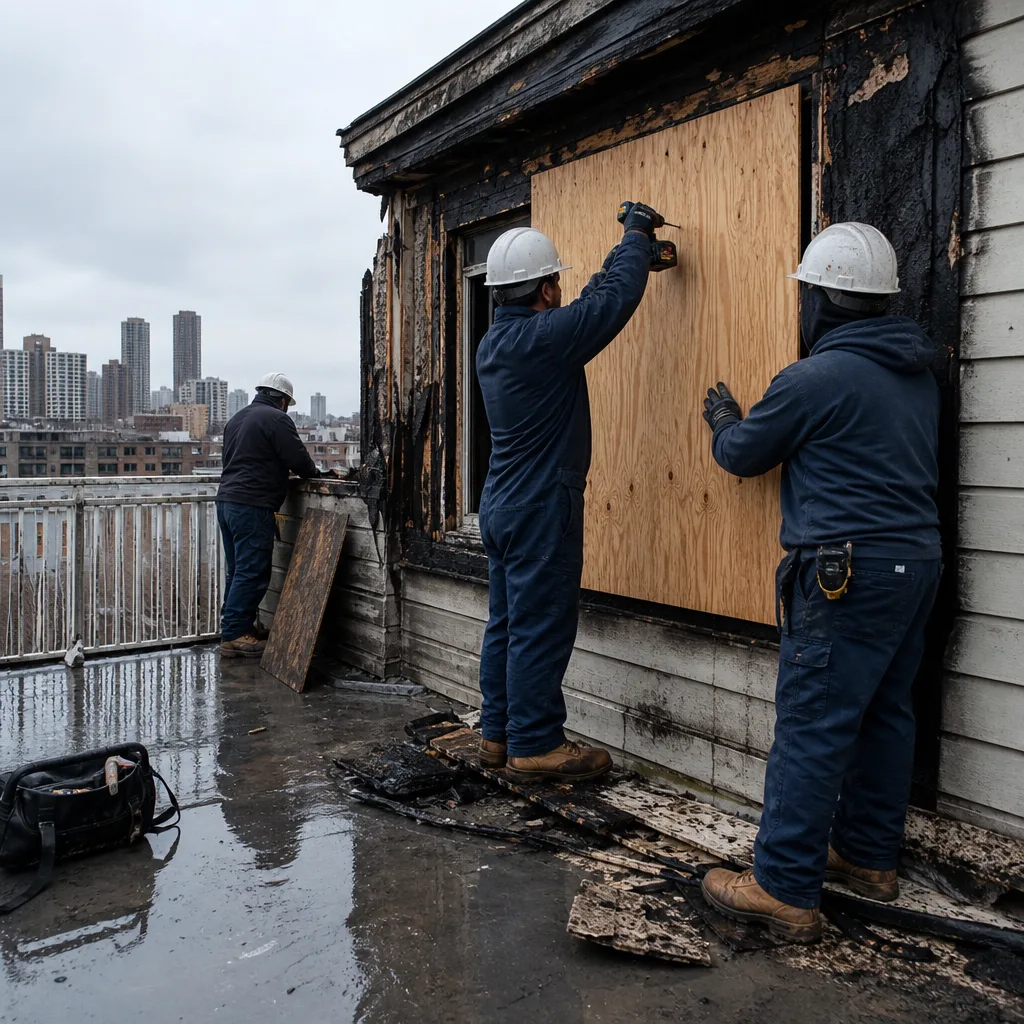
Flood-damaged drywall gets cut to the flood line, while moisture mapping tells us whether the plaster behind it needs to come out too. We do not patch over wet materials. For flooring, we match period hardwood in pre-war homes or install engineered materials suited to a basement that may see water again. In floodplain homes, we recommend flooring assemblies that can handle occasional moisture without buckling.
Contents Restoration & Pack-Out
When a Ho-Ho-Kus basement floods, the contents are part of the loss. We pack out furniture, documents, photographs, and clothing, clean or restore what’s salvageable, and store everything until the rebuild is done. Our technicians use professional content-cleaning methods, not a mop and a fan. Everything is inventoried, photographed, and documented for your insurer.
Carpet & Upholstery Cleaning
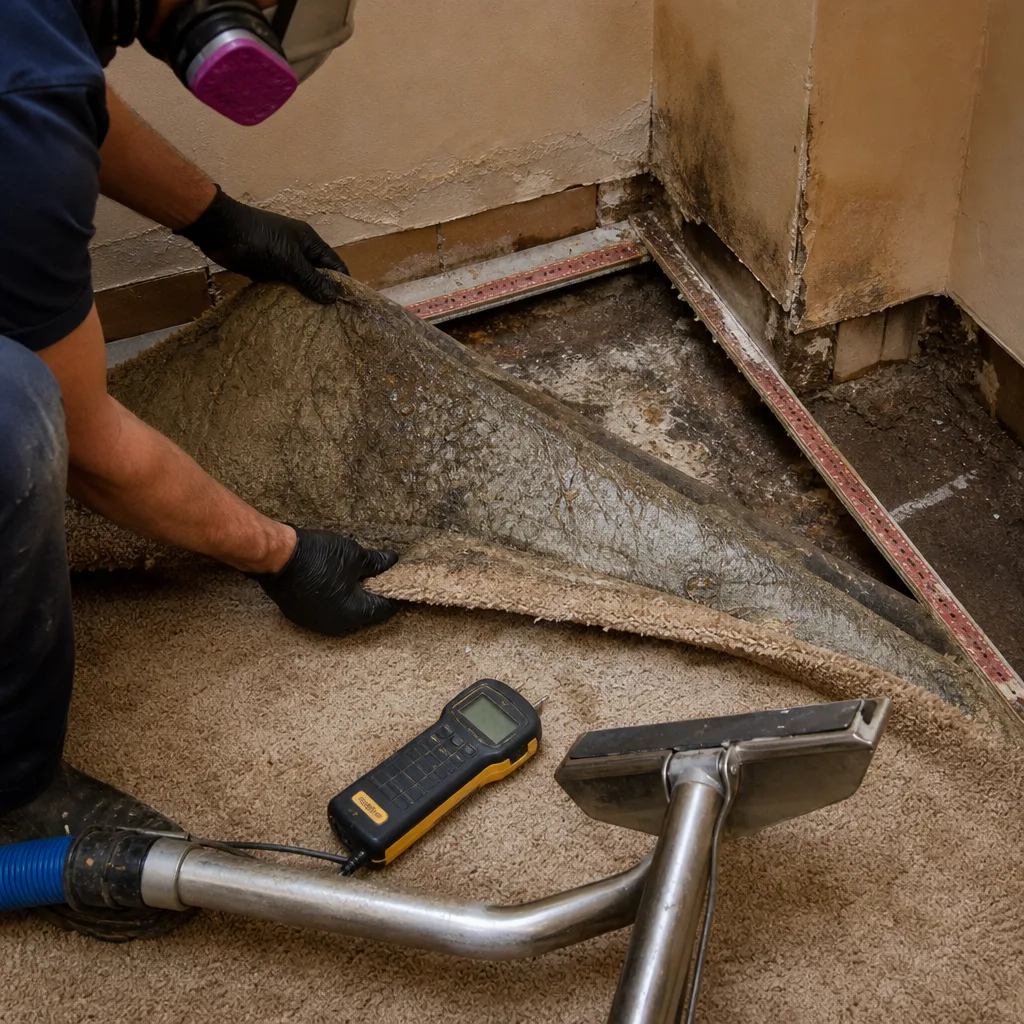
Category 2 and 3 water means carpet and upholstery usually get removed, not cleaned. But for clean-water events, our professional-grade cleaning with truck-mounted extraction can save rugs and furniture that a rental machine can’t. We do post-construction cleaning after rebuilds too, so the house is finished, not just framed. This includes the $89 Seasonal Tune-Up for annual maintenance on flood-prone homes.
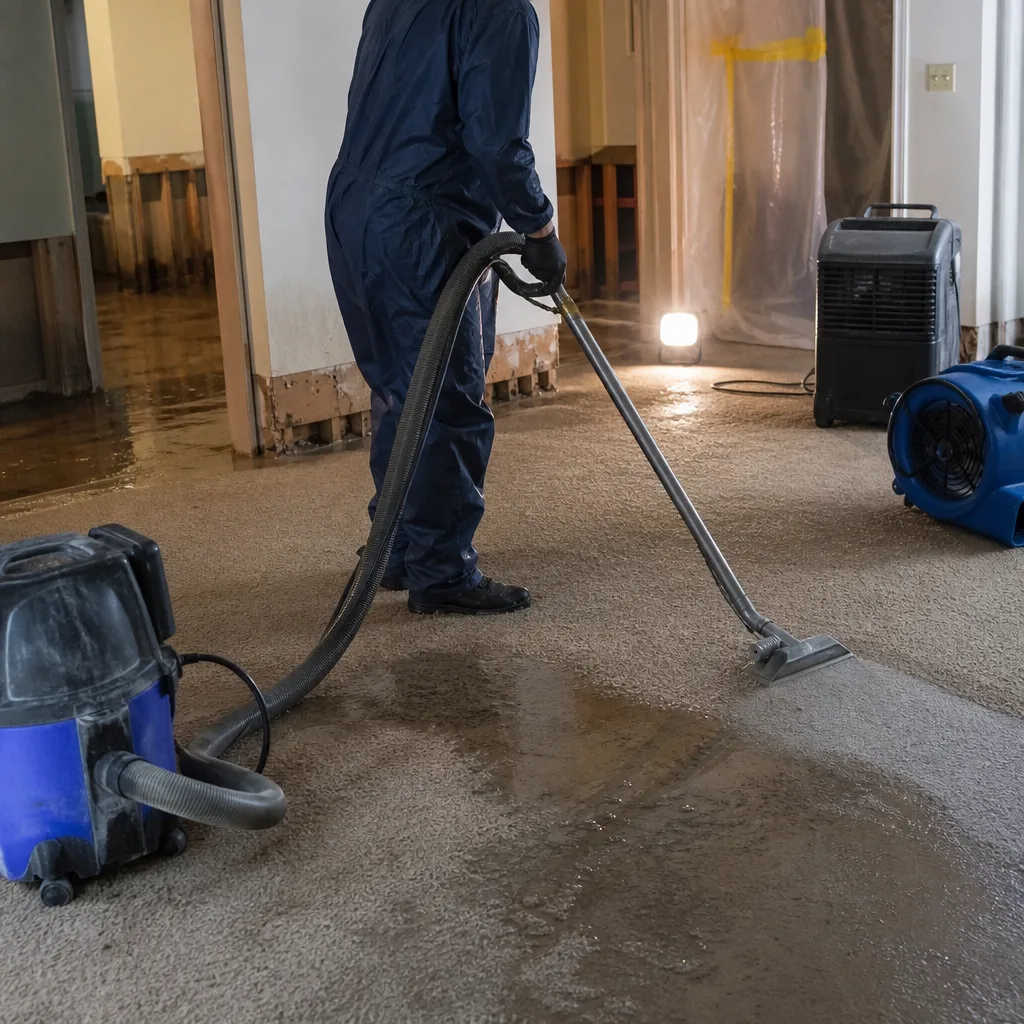
Post-Construction Cleanup
After any reconstruction job, we run HEPA air scrubbers to pull construction dust down to acceptable levels, clean every surface, and remove debris. We treat this as a professional service with equipment, not a broom-and-dustpan pass. If the job was a full basement rebuild after a flood, the post-construction cleanup includes a final moisture check and a walkthrough with you and your carrier’s adjuster if they want to verify the work.
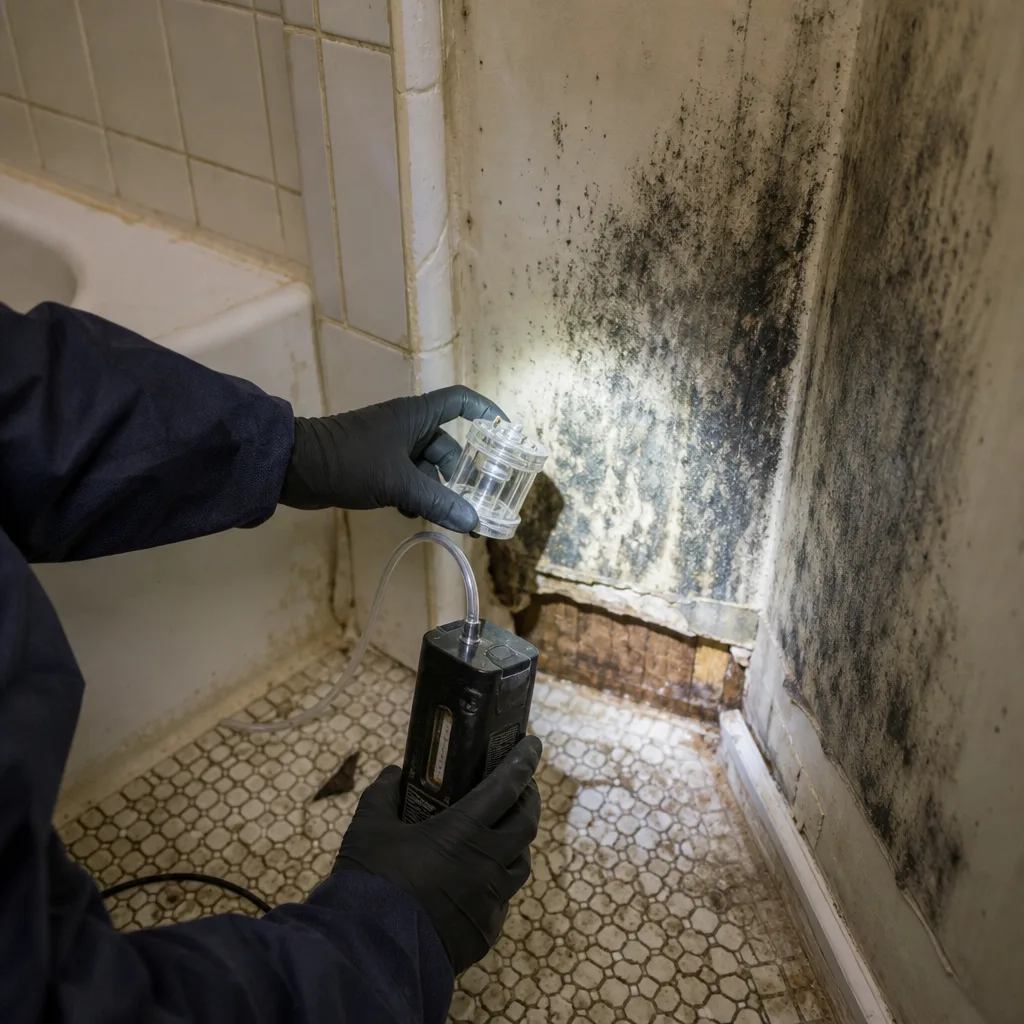
What happens when you call
- 1
A real person answersNo phone trees - you reach a local pro.
- 2
You get an upfront price rangeHonest numbers before anyone is dispatched.
- 3
A background-checked tech heads outLicensed & insured, dispatched right away.
- 4
You approve before work beginsNothing starts until you say go.
Reconstruction & Cleanup Costs in Ho-Ho-Kus, NJ
Here’s what we actually quote for Ho-Ho-Kus work. A full finished-basement rebuild after a Brook flood, including drywall, flooring, trim, and vapor barrier installation, runs $18,000 to $42,000 depending on square footage and finish level. Drywall and flooring repair for a partial flood typically lands between $6,500 and $14,000. Contents pack-out, cleaning, and storage adds $3,000 to $9,000 depending on volume. Post-construction cleanup after a rebuild is $1,200 to $3,500 for a typical basement. A simple supply-line break with no reconstruction, mitigated within hours, often stays under $5,000 before insurance.
What moves the price in Ho-Ho-Kus specifically: whether the walls are plaster-and-lath (more labor to dry and replace), whether the foundation is the original rubble block (more evaporation time and sealing work), and whether we find hidden mold from a prior DIY recovery that needs remediation before we can rebuild. You’ll get a written scope after our free visual inspection, so the number you see is the number you plan around. Our Reconstruction & Cleanup team bills your carrier directly, and we honor the $50 Off Any Repair Over $250 offer and the Senior & Veteran 5% discount on every eligible job.
We Also Serve Cities Near Ho-Ho-Kus
Floodline Restoration Co. serves Reconstruction & Cleanup in Ho-Ho-Kus and the surrounding communities. Our crews respond daily to Alpine, Bergenfield, Bogota, and Carlstadt, with the same 45-minute commitment and the same written-scope promise.
Serving Ho-Ho-Kus, NJ - Our Local Coverage Area
We’re based in the Ho-Ho-Kus area and know this community well. Use the map below to see our service coverage - if you’re nearby, we can almost certainly help.
Ho-Ho-Kus Reconstruction & Cleanup Questions, Answered
How do you handle plaster-and-lath walls in Ho-Ho-Kus Colonials after a flood?
We treat plaster-and-lath as a slow-drying material that needs moisture mapping through the wall cavity, not just surface readings. Lime-based plaster holds water against the lath for weeks after a flood, so we typically hold drying longer, run thermal imaging through the wall, and often remove the plaster to the flood line to dry the cavity properly before rebuilding with moisture-managed assemblies that match the original character. Skipping this step is why many Ho-Ho-Kus homeowners see paint bubbling and mold returning six months after a surface-only patch. Call (917) 924-4221 and we’ll assess your walls for free.
My finished basement flooded from the Hohokus Brook. How do I know if the previous owner’s DIY repair after Irene left hidden mold?
The telltale signs are visible, but the confirmation is professional testing. Look for uneven drywall seams, fresh paint over old water stains, musty odor that returns after cleaning, or trim that doesn’t match the rest of the room. Any of those suggests a prior owner patched surface damage without proper drying. We find hidden mold colonies behind finished walls all the time in Brook-adjacent homes. Our free visual inspection includes thermal imaging through the wall, which shows moisture anomalies before we open anything up. If mold is present, that changes the reconstruction scope to include containment and remediation before rebuild. Call us and we’ll tell you what’s actually behind those walls.
Is my foundation still wicking groundwater even after the surface water is gone?
Very likely yes, if your home has the original rubble-block or stone foundation common in 1920s-to-1950s Ho-Ho-Kus housing. Those foundations are porous by design, so groundwater moves through them gradually long after the Brook recedes. We confirm this with moisture meters placed directly on the foundation walls during our assessment. If readings stay elevated, the drying phase runs longer, and we may recommend interior drainage or sealing work before rebuild. Treating only the surface in a home with a wicking foundation means the water comes back, and so do the problems.
How do you document everything for insurance after a Brook-related flood in Ho-Ho-Kus?
We start documentation within the first hour, before we move anything. That includes photos of every affected room from multiple angles, moisture readings logged daily with time stamps, equipment records showing what we ran and for how long, and a detailed line-item scope that separates new flood damage from pre-existing conditions. This separation is specific to Ho-Ho-Kus, where a prior owner’s DIY recovery after Irene or Sandy may have left pre-existing mold that your carrier could try to exclude. We provide all of this directly to your adjuster. Our experience with flood claims in this borough is why homeowners trust us to run the paperwork as carefully as the drying equipment. Call (917) 924-4221 for a free inspection and we’ll start that documentation the same day.
Can you rebuild our basement so it survives the next Hohokus Brook flood?
Yes, and in Ho-Ho-Kus this is what separates a real scope from a temporary patch. A flood-resistant rebuild means vapor barriers installed correctly on the foundation walls, redundant sump pumps with battery backup, flooring assemblies that can handle occasional moisture, and wall materials that don’t trap water. If your finished basement was rebuilt after a prior flood without these elements, the next Brook overtopping will damage the same walls and floors again. We design the rebuild scope around the reality that homes near the Brook will flood again, not around the hope that they won’t. Call us and we’ll walk you through what that means for your specific basement.
How fast can you actually get to Ho-Ho-Kus after I call?
Our commitment is 45 minutes to any Ho-Ho-Kus address, and we hold to it because we keep crews staged in Bergen County specifically for quick response through this borough. The dispatcher answers live at (917) 924-4221 and starts a crew toward you during the call if you have standing water. In a flood event, the first hour determines whether you’re drying a basement or rebuilding it, because the rubble-block foundations here keep moving water upward as long as it stays in contact.
Will my insurance cover the full reconstruction after a Brook flood?
Most standard homeowners policies in New Jersey cover water damage from internal sources like burst pipes, but flood damage from the Hohokus Brook rising requires a separate flood insurance policy through FEMA’s National Flood Insurance Program or a private carrier. We recommend checking your policy declarations page before the next storm. What we always do, regardless of your coverage, is document everything to the standard your insurer needs, bill the carrier directly, and give you a written scope so you know the true cost before rebuild starts. Call (917) 924-4221 and we’ll help you understand what your policy says in plain language.
What should I do in the first 30 minutes after my Ho-Ho-Kus basement floods?
Call (917) 924-4221 first, because our dispatcher will stay on the line with you while the crew rolls. Then: shut off power to the affected area at the breaker if you can do so without standing in water. Do not enter standing water, especially if sewage or the Brook was involved. Move small valuables upstairs if safe. Take photos of everything before anything moves. Do not run a household fan to dry walls, because that just circulates moisture through the structure and drives water deeper into the plaster. Our crew arrives with professional extraction and drying equipment and takes over from there.
If you’re looking at water where it shouldn’t be, or you can see the damage spreading behind your walls, call (917) 924-4221 now. The estimate is free, the inspection is thorough, and a real person answers every time.
Written by Curt Bowman, Owner at Floodline Restoration Co. of Manhattan, serving Ho-Ho-Kus and surrounding Bergen County communities.