
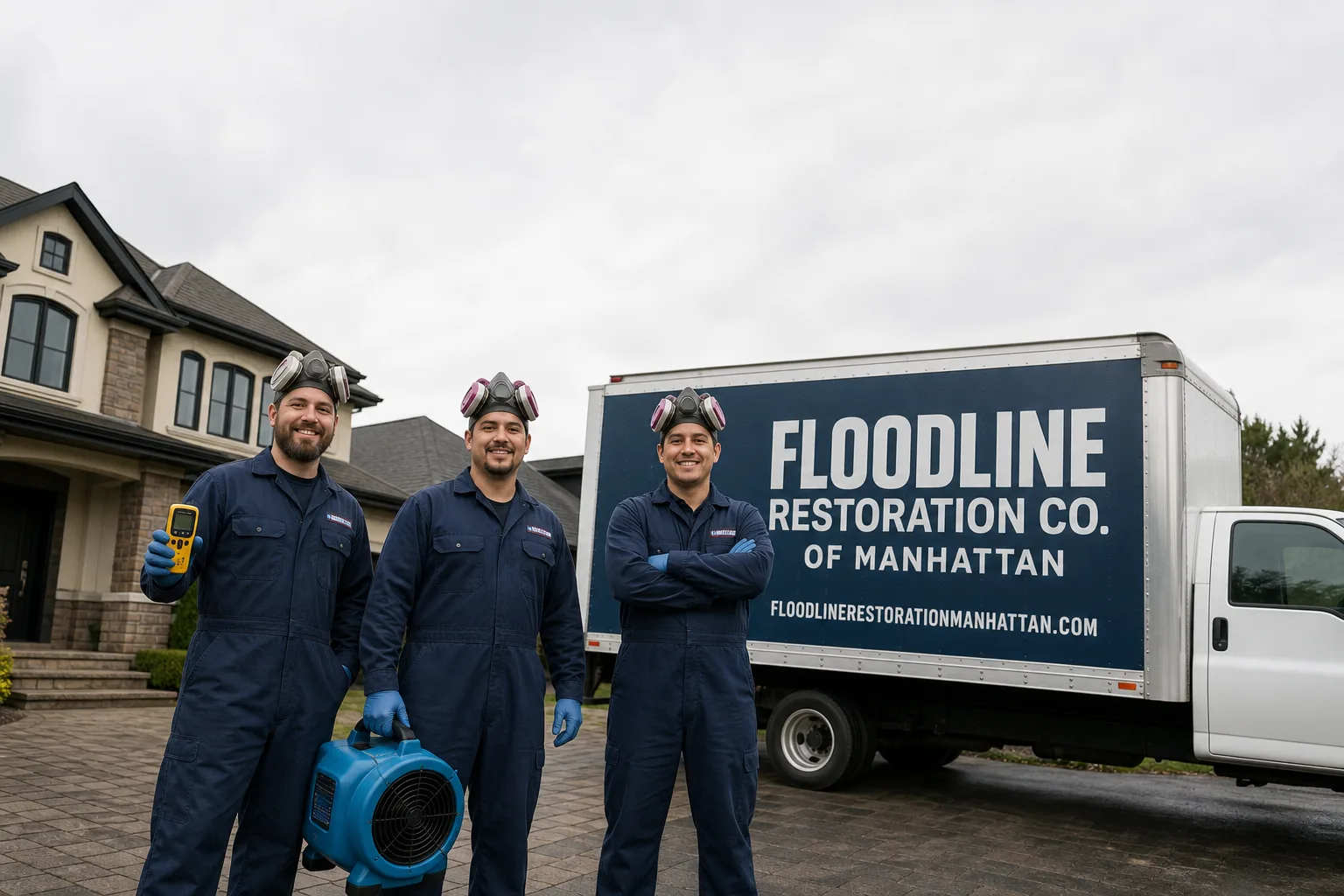
Free visual inspection and a written scope of work before any mitigation begins - photos, moisture readings, and drying logs go in your claim file
The scope we write is the scope we bill. Anything new gets shown to you, in writing, before we touch it.






 Before
 After
After Before
 After
After Before
 After
After24/7 Emergency Reconstruction & Cleanup in Ossining
When a basement floods or a fire tears through a kitchen in Ossining, the first phone call sets the timeline for everything that follows. Our crews answer live at (917) 924-4221 around the clock, and we dispatch into Ossining neighborhoods immediately, not after a callback. A free visual inspection happens on-site, usually within 45 minutes of your call. The first hour matters because water keeps moving through plaster, lath, and hardwood long after the visible puddle is gone, and smoke residue bonds harder to old plaster the longer it sits. You will not reach a recording. You will reach a person who knows Ossining’s housing stock and can tell you what happens next.
Understanding Reconstruction & Cleanup Severity in Ossining Properties
Reconstruction severity in Ossining rarely follows a simple formula, because the town’s homes were built before modern building science existed. Most houses date from the 1880s through the 1930s, with rubble-stone or unreinforced concrete-block foundations, plaster-and-lath walls, and cast-iron drain lines. Water damage in these structures behaves differently than in a 1990s framed house. Category 1 water from a supply line is clean but still destructive; Category 2 carries detergents or biological contaminants; Category 3 water, what we see with storm-drain backflow near the Hudson, contains sewage and requires full containment, antimicrobial treatment, and aggressive structural drying. Moisture mapping with thermal imaging and hygrometers is not optional here. Plaster holds water behind its surface, and a wall that feels dry to the touch can read 40 percent moisture two inches in. We use Dri-Eaz dehumidifiers and Phoenix air movers to pull moisture from deep inside old assemblies, and we log readings daily until the dry standard is met. Flat roofs on mid-century multi-family buildings downtown add another failure mode: water intrusion through membrane seams that travels down through framing long before a ceiling stain appears.
Why Ossining Property Owners Choose Floodline Restoration Co. of Manhattan
- 45-minute response commitment. When you call, a uniformed technician is dispatched immediately. We are not booking you for a window sometime next week.
- 24/7 live answer, every time. A dispatcher picks up at 2 a.m. on a Sunday. No automated tree, no “leave a message.”
- IICRC-certified crews. Our technicians hold WRT and FSRT certifications, with AMRT training for mold and microbial work. The person doing the work knows the standard.
- Free visual inspection. We assess the damage on-site and tell you what we found. You owe nothing for the inspection.
- Direct insurance billing. We work directly with your carrier. You never play messenger between us and the adjuster.
- One team from extraction to reconstruction. The same Floodline Restoration Co. crew that vacuums the floodwater is the crew that hangs new drywall and lays new flooring. No handoff to a subcontractor you have never met.
Our Reconstruction & Cleanup Process
Inspection & Assessment
We arrive, assess the full extent of loss, and identify the water category immediately. On Ossining hillside homes, we check the foundation’s relationship to slope runoff and look for hydrostatic intrusion points before we touch a wall.
Extraction & Stabilization
We pump standing water, remove unsalvageable materials, and stabilize the structure. For storm-drain backflow events near the Metro-North corridor, this includes removing saturated drywall and lath just like the rebuild we completed above the Ossining station.
Drying & Dehumidification
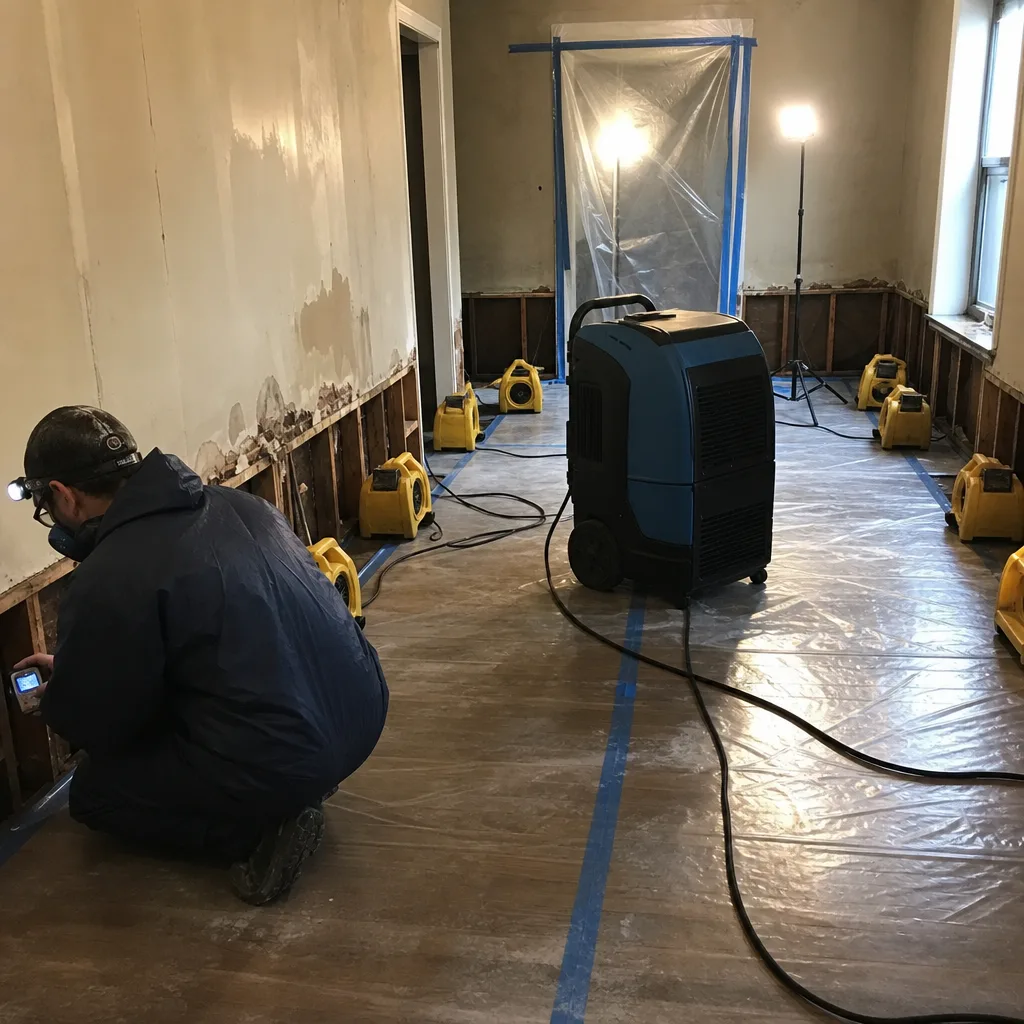
Dri-Eaz dehumidifiers and Phoenix air movers run continuously, with daily moisture readings taken with hygrometers and thermal imaging. We document every reading and hand the log to you and your carrier.
Cleaning & Sanitization
HEPA air scrubbers run during demolition and drying to control airborne particles. Hard surfaces are cleaned, and affected materials are treated with antimicrobial products appropriate for the water category.
Specialty Reconstruction Treatment
For flood-damaged basements in Ossining’s older homes, this means evaluating the cast-iron drain lines and clay tile connections before we rebuild. We look for what the water revealed, not just what it damaged.
Repairs & Restoration
Drywall goes up, flooring goes down, and finishes are restored to pre-loss condition. You get a written scope before work starts, and the job is not done until the 90-Day Done Right Promise applies.
Need Emergency Reconstruction & Cleanup in Ossining Now?
Crews minutes away, answering live 24 hours a day. The sooner we start, the less it costs.
Working With Your Insurance Company
Insurance claims after a flood or fire in Ossining succeed or fail on documentation. We start documenting in the first hour: photos of standing water before extraction, moisture readings before drying begins, and a room-by-room photo set before anything is removed. Our estimates are written to the same standard adjusters use, with line-item scopes that hold up in review. We communicate directly with your adjuster, provide the drying logs they ask for, and bill the carrier directly so you are not financing the claim out of pocket. Then we rebuild. The documentation trail from our first visit becomes the backbone of your claim, whether it is a burst supply line in January or storm-drain backflow after a nor’easter. This full Reconstruction & Cleanup documentation discipline is why adjusters treat our scopes seriously and why our Ossining clients get paid out more completely.
What We Provide Your Insurer
- Thorough documentation of the loss
- Photos of all damage, room by room
- Moisture readings and drying logs
- A detailed, line-item scope of work
- Direct coordination with your carrier
Built for Ossining’s Loss Calendar
Ossining’s damage calendar follows the Hudson Valley weather pattern with undeniable regularity. January and February bring deep freezes that burst supply lines in unheated basements and crawl spaces, sending Category 1 water through floors and into plaster walls. March and April thaw the hillsides, and all that snowmelt runs down toward the river, overwhelming French drains and window wells on uphill properties while basement seepage starts on lower blocks. Summer thunderstorms drop an inch of rain in an hour, and Ossining’s steep streets turn into channels. The nor’easters arrive in fall and early winter, dumping 3 to 5 inches and testing every flat roof downtown. And when a coastal storm like Sandy pushes the tidal Hudson back through storm drains, the low-lying streets near the train station flood from below, not above. That is the Ossining pattern: water comes from the sky, from the hillside, from the river, and from inside the walls when old pipes let go. We staff and equip for all of it, year-round.
Reconstruction & Cleanup Across Ossining’s Neighborhoods
The hillside streets above Main Street, the historic blocks near the Ossining Metro-North station, the residential lanes through Sparta, the quiet neighborhoods off Croton Avenue, and the mid-century apartment buildings downtown all have distinct loss profiles. Uphill homes in Sparta and along Revolutionary Road face chronic groundwater pressure against rubble-stone foundations; water seeps through mortar joints and pools against old plaster. The blocks just above the waterfront, particularly around the train station and the lower parts of Main Street, flood from storm-drain backflow during tidal surge events, and that water carries sewage. Downtown multi-family buildings present flat-roof failures and cast-iron stack deterioration. Homes along the Route 9 corridor and near the Croton border run the full spectrum depending on elevation. When we quote a job in one part of Ossining, we know which failure mode is likely before we walk in. That means faster scoping, fewer surprises, and a square deal on the line-item estimate.
Specialized Reconstruction & Cleanup Services We Offer in Ossining
Full-Service Reconstruction
From the first extraction to the final coat of paint, our crew handles the entire Reconstruction & Cleanup sequence in-house. In Ossining’s older homes, that means rebuilding plaster walls properly, matching trim profiles from the 1920s, and replacing water-damaged flooring with materials that suit century-old framing. We do not hand your job to a separate contractor.
Drywall & Flooring Repair
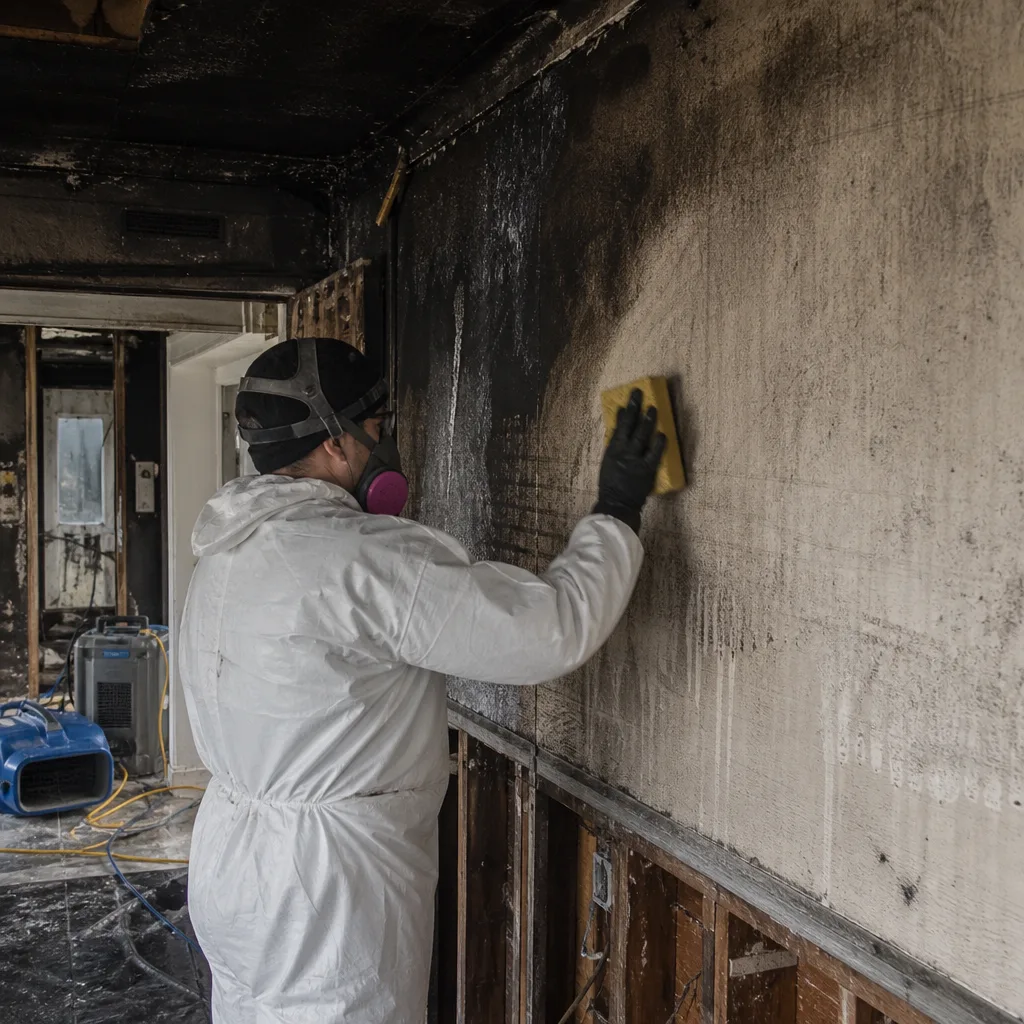
Flood cuts, ceiling collapses, and smoke-damaged finishes are our daily work. We remove damaged material to the flood line, treat the framing, and hang new drywall with proper drying times. Hardwood floors in Ossining’s prewar houses respond well to our drying protocols, and we salvage what can be saved rather than quoting a full replacement by default.
Contents Restoration & Pack-Out
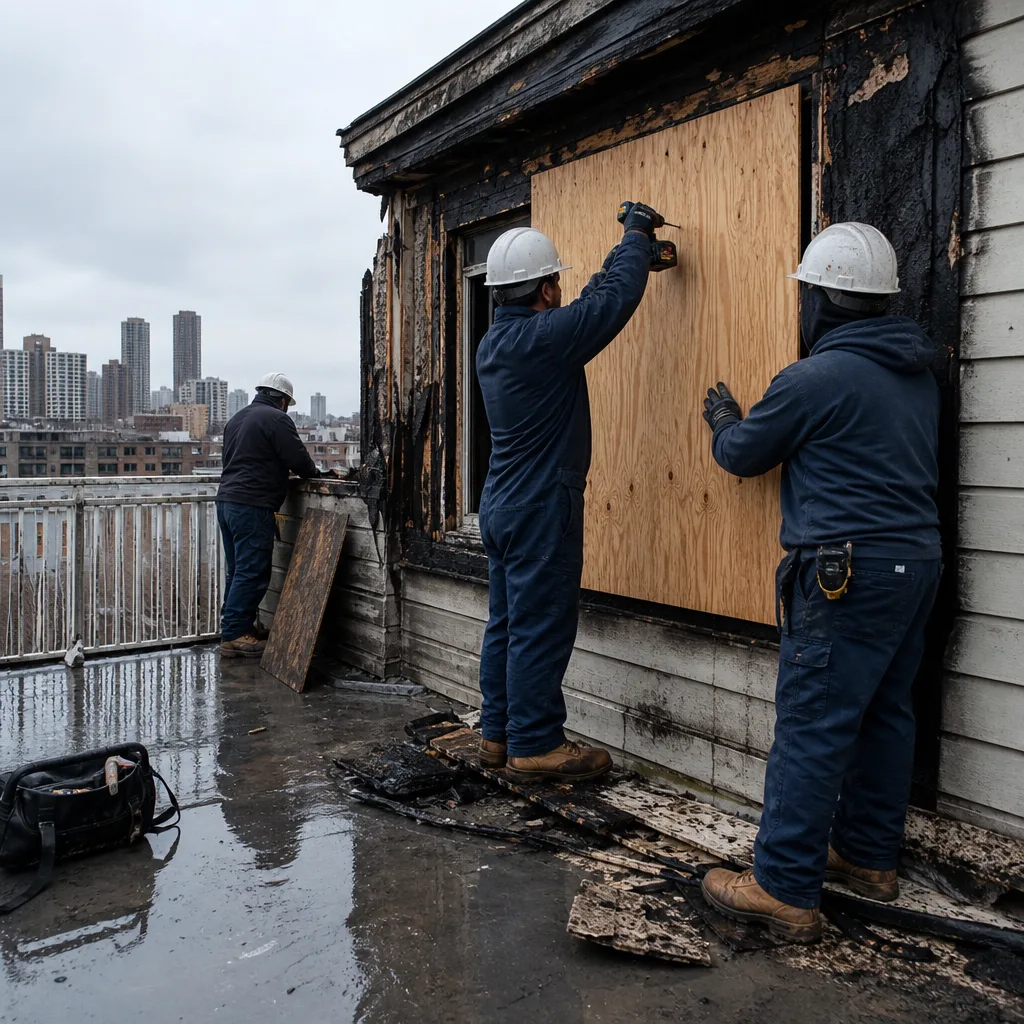
When water or fire affects your belongings, we pack out, inventory, clean, and store your contents until the rebuild is done. In a Category 3 flood near the river, this is not optional: saturated upholstery and porous materials must go. We photo-document everything for your claim and return your home to pre-loss condition.
Carpet & Upholstery Cleaning
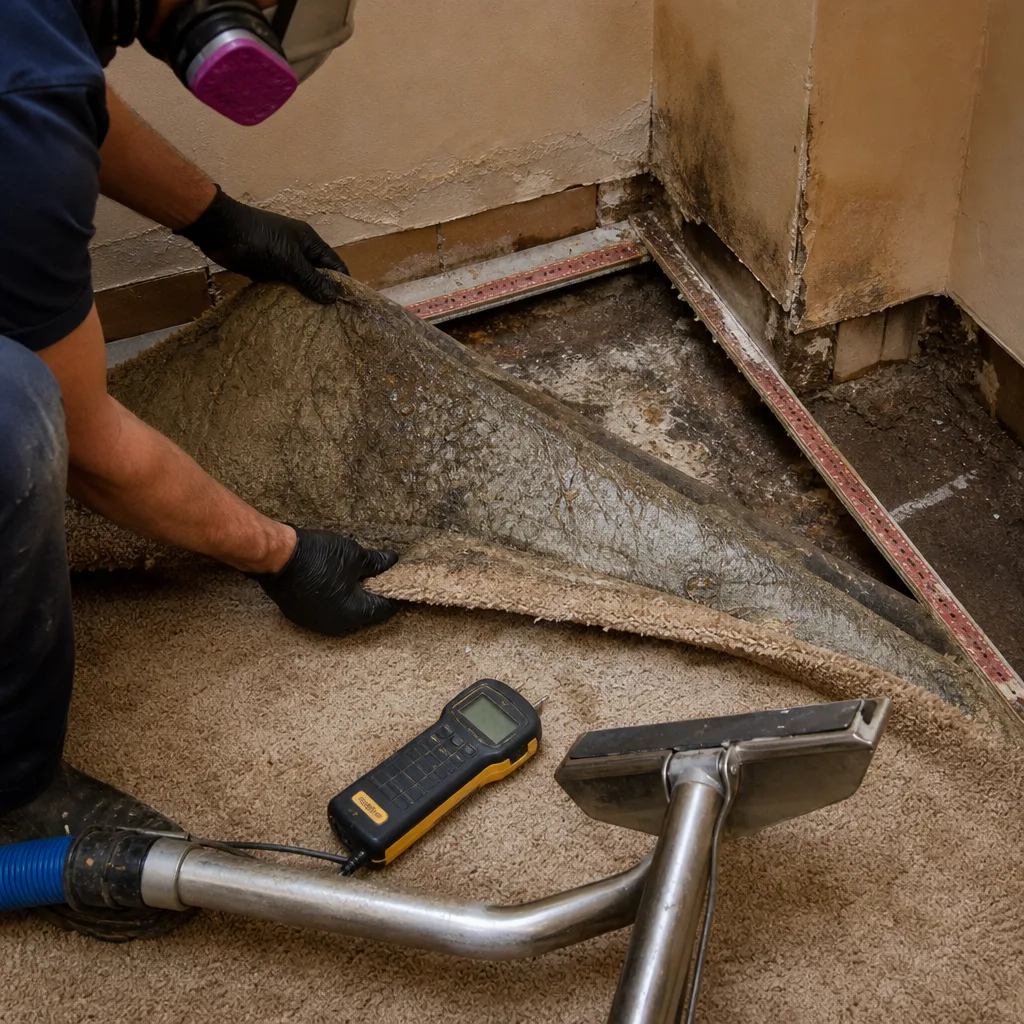
After a flood or fire, textiles hold odors and contaminants. We clean what is cleanable and tell you plainly what is not. For Ossining homeowners with wool carpets and vintage furniture, our cleaning process restores what can be restored without over-promising.
Post-Construction Cleanup
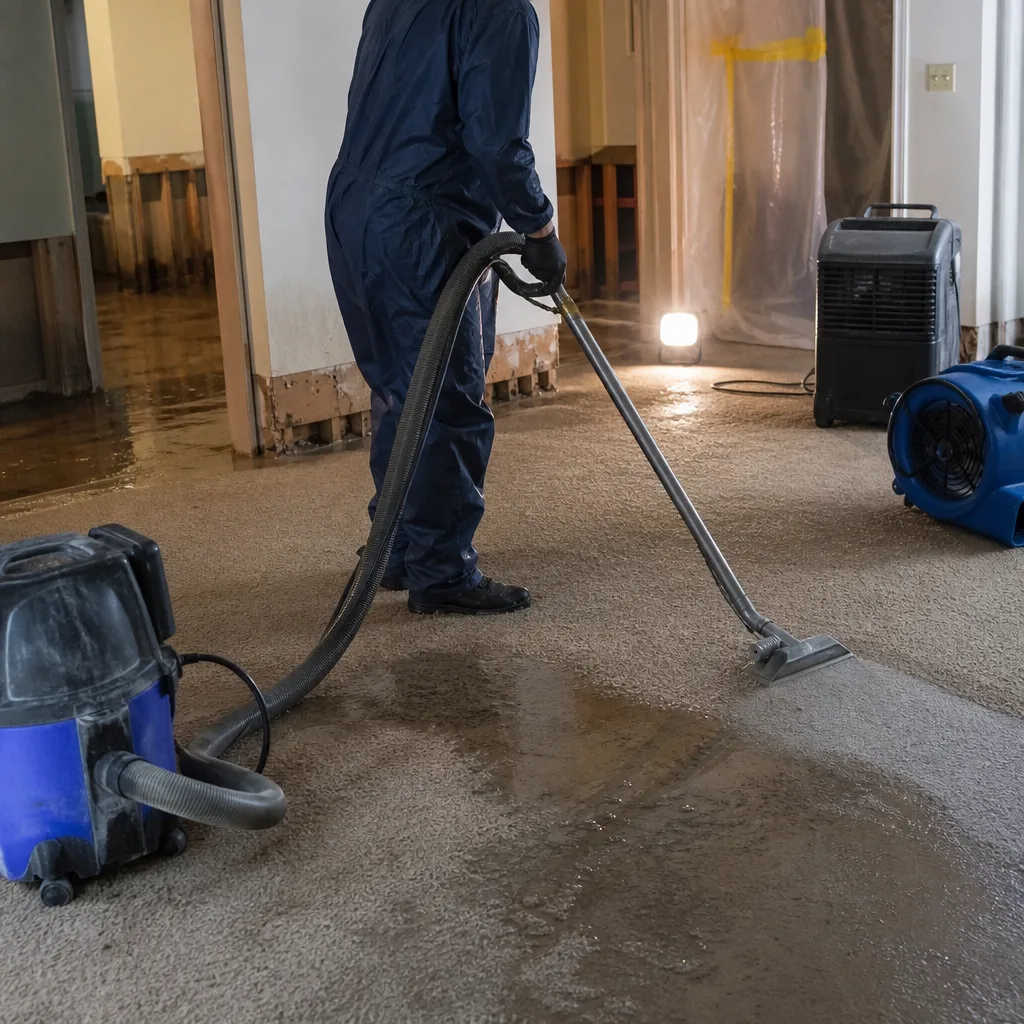
After the rebuild, we remove dust, debris, and construction residue. HEPA-filtered vacuums and air scrubbers leave the house clean, not construction-clean. You move back into a finished home.
What happens when you call
- 1
A real person answersNo phone trees - you reach a local pro.
- 2
You get an upfront price rangeHonest numbers before anyone is dispatched.
- 3
A background-checked tech heads outLicensed & insured, dispatched right away.
- 4
You approve before work beginsNothing starts until you say go.
Reconstruction & Cleanup Costs in Ossining, NY
Honest numbers for Ossining work: a Category 1 water mitigation with drying runs $2,500 to $6,500 depending on square footage and how fast we start. Category 3 flood water with sewage contamination, the kind we see near the waterfront, typically runs $7,000 to $18,000 by the time extraction, containment, drying, and rebuild are complete. Drywall and flooring repair in a finished basement runs $4,000 to $12,000. Full basement reconstruction after a serious flood, including framing, drywall, flooring, and paint, typically lands between $15,000 and $35,000 in Ossining’s housing stock. What moves the price: water category, how long the water sat, how much lath and plaster we must remove, and whether your elevation certificate flags additional flood-plain requirements. Most homeowners pay little out of pocket when insurance covers the loss; we bill the carrier directly. The free visual inspection is the path to a firm written scope, not an estimate you have to guess from.
We Also Serve Cities Near Ossining
Our crews work throughout northern Westchester, including Briarcliff Manor, Millwood, Pleasantville, and Chappaqua. Same response time, same written 90-Day Done Right Promise, same live answer at (917) 924-4221, day or night.
Serving Ossining, NY - Our Local Coverage Area
We’re based in the Ossining area and know this community well. Use the map below to see our service coverage - if you’re nearby, we can almost certainly help.
Ossining Reconstruction & Cleanup Questions, Answered
Why did my uphill-side neighbor’s basement stay dry during Sandy while mine flooded, even though we’re on the same street in Ossining?
Because Ossining’s hillside streets create a hyper-local flood boundary that follows elevation, not the street line. Homes on the downhill side of the same block sit lower relative to the storm-drain system, and when the tidal Hudson pushes water back through those drains, it surfaces first in the lowest basements. Your neighbor’s elevation certificate probably places them above the backflow threshold; yours places you below it. That is why we check elevation before quoting flood reconstruction here, and why a downhill-side home may need Category 3 protocols and full pack-out while an uphill-side home only needs mitigation. Call (917) 924-4221 and we will pull the elevation data during your free inspection.
Can you dry out a century-old plaster-and-lath basement after a flood, or does it all need to come out?
Plaster and lath can be dried, but it takes longer than drywall and requires real moisture mapping. The lath behind the plaster holds water that surface readings miss, and the lime plaster itself acts like a sponge, so hidden moisture can sit for weeks and feed mold. We use thermal imaging and penetrating hygrometers to find those pockets before we decide what comes out. With Dri-Eaz dehumidifiers and Phoenix air movers running continuously, many plaster walls can be saved, but flood-cut removal to the water line is the honest answer for anything that was submerged for more than a few hours. We will show you the readings and tell you straight.
What’s the biggest mistake contractors make when quoting flood reconstruction in Ossining’s hillside neighborhoods?
Quoting without checking the elevation certificate and hyper-local flood zone. In Ossining, homes on the same street can have completely different flood profiles. A contractor who does not know which side of the street you are on, or does not understand that storm-drain backflow is a Category 3 event, will underbid, cut corners on containment, and leave you with a mold problem inside the walls. We have seen the downstream cost of that mistake more times than we can count. Our scopes account for the actual water category and your property’s elevation before we write the first line item.
How quickly do you need to start drying after a basement flood in Ossining to save the drywall and framing?
The clock starts the moment the water stops rising. In Ossining’s older homes, drywall wicks water upward quickly, and wood framing reaches saturation within 24 to 48 hours. If we get air movers and dehumidifiers running within the first day, we can often salvage framing and some drywall. After three days of standing or trapped moisture, mold growth becomes likely behind the walls, and the scope shifts from dry-in-place to full flood-cut removal. The first hour is the cheapest hour in any flood reconstruction, and our crews are dispatched the moment you call (917) 924-4221.
Does insurance pay for reconstruction after storm-drain backflow flooding in Ossining, and how do you document it?
Standard homeowners policies often exclude flood damage, but storm-drain backflow may be covered under a sewer-backup endorsement or a separate flood policy. The documentation decides the claim. We photograph standing water before extraction, log moisture readings daily, and write a line-item scope that matches the adjuster’s format. We also flag the elevation and water-category evidence that supports your position. Then we coordinate directly with your carrier and bill them directly. You are not left explaining why the water was Category 3 or why your downhill-side home flooded while your uphill-side neighbor stayed dry.
How fast can someone actually get here from Floodline Restoration Co. of Manhattan?
Within 45 minutes in most parts of Ossining. Our dispatch is coordinated from the New York City office, but our crews serve Ossining locally and are usually already working in the area. A live person answers 24 hours a day, and a uniformed technician is dispatched that same visit. No callbacks. No appointment window. The sooner we start extraction and drying, the less of your home we have to rebuild.
Can I stay in my home during the reconstruction and cleanup process?
Depends on the damage. After a clean-water event with fast extraction, many Ossining homeowners stay home while we dry the affected area with containment barriers. After a Category 3 flood or a significant fire, you should plan to stay elsewhere during demolition and drying, especially if the house has one bathroom or the affected area includes the kitchen. We will tell you honestly on the first visit, not after you have already unpacked.
What certifications do your crews hold, and do you really use professional-grade equipment?
Our technicians are background-checked, uniformed, and trained to IICRC, RIA, and IFA standards, including WRT and FSRT certifications and AMRT training for mold work. The equipment is Dri-Eaz, Phoenix, XPOWER, B-Air, and Injectidry: commercial dehumidifiers, high-velocity air movers, HEPA air scrubbers, and moisture-mapping tools. We do not bring a box fan and a hope. The equipment runs until the dry standard is met, and you get the daily logs.
Written by Curt Bowman, Owner at Floodline Restoration Co. of Manhattan, serving Ossining and northern Westchester since 2010.