
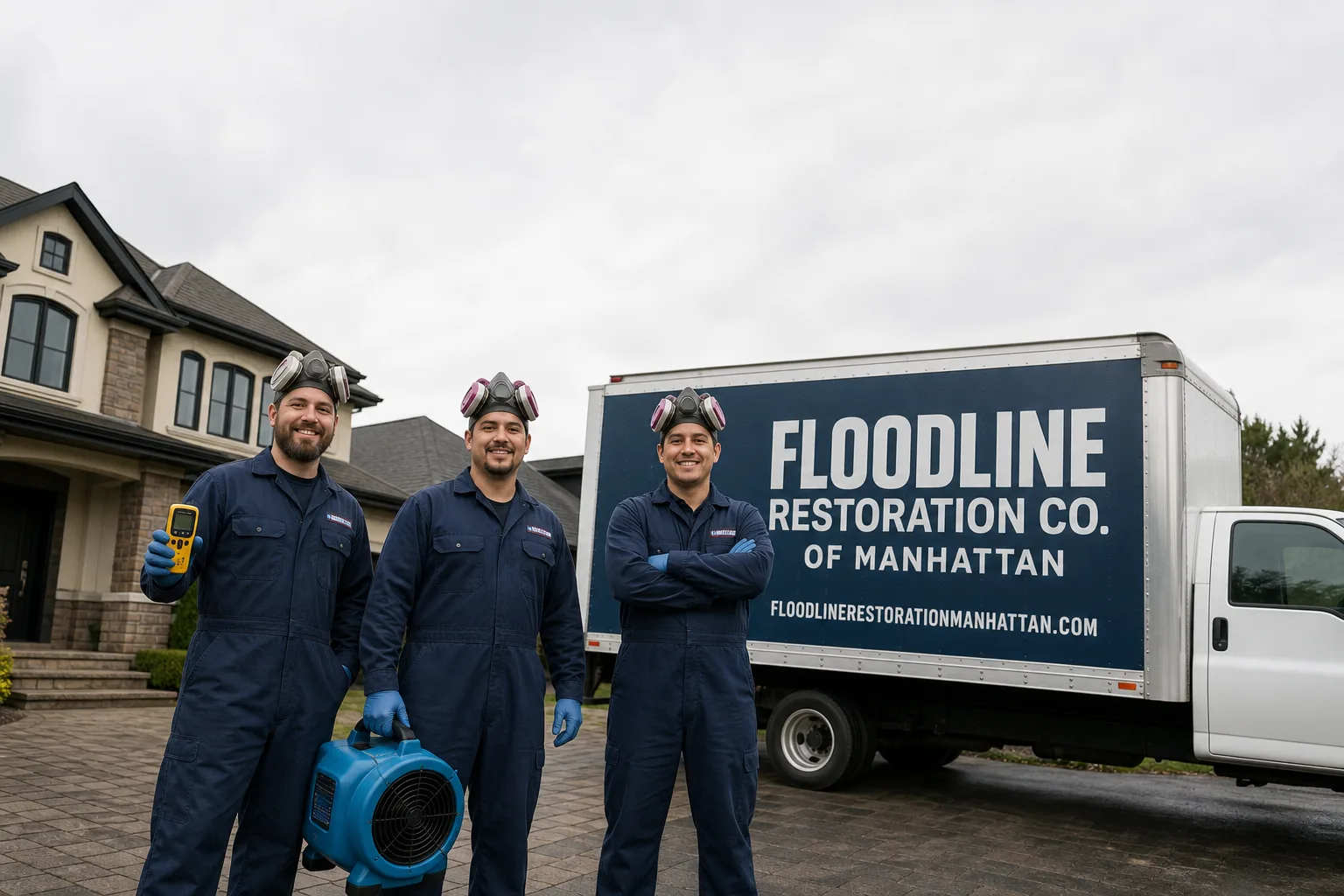
Free visual inspection and a written scope of work before any mitigation begins - photos, moisture readings, and drying logs go in your claim file
The scope we write is the scope we bill. Anything new gets shown to you, in writing, before we touch it.






 Before
 After
After Before
 After
After Before
 After
After24/7 Emergency Reconstruction & Cleanup in Stony Point
Reconstruction and cleanup after a flood or storm in Stony Point typically runs $2,800-$18,000 depending on how far the water reached and how long it sat, and our crews are dispatched from the New York City office into Stony Point within 45 minutes of your call. If you’re standing in water or watching it soak into drywall right now, call (917) 924-4221. A live dispatcher answers at 2 a.m., not a recording, and a background-checked, uniformed crew reaches your property the same visit. The first hour matters more here than almost anywhere in Rockland County: brackish water from Haverstraw Bay soaks into wall cavities and framing faster than freshwater, and once salt residue sets, drying timelines stretch from days into weeks.
Understanding Reconstruction & Cleanup Severity in Stony Point Properties
Most homeowners think a flood is a flood until the water recedes and the real work begins. In Stony Point, the severity conversation starts with water category. The IICRC classifies clean water from a broken supply line as Category 1, contaminated water from a washing machine overflow or sump failure as Category 2, and grossly contaminated water containing sewage, seawater, or river sediment as Category 3. The tidal surges that push up from Haverstraw Bay bring brackish, salt-laden water that carries Category 3 classification every time. That changes everything: Category 3 requires full demolition of saturated porous materials-drywall, insulation, carpet, padding-plus antimicrobial treatment on framing and subfloor before anything gets rebuilt. Our crews run moisture mapping with thermal imaging and hygrometers before we remove a single stud, because the converted 1950s bungalows and cottages along Stony Point’s lower riverfront streets hide water in shallow crawl spaces and unimproved basements where it pools against floor joists for weeks if nobody checks. We measure. Then we cut. Never the reverse.
Why Stony Point Property Owners Choose Floodline Restoration Co. of Manhattan
- 45-minute response commitment. When a crew is dispatched from our New York City office into Stony Point, we commit to a 45-minute arrival window for emergency calls. The dispatcher tracks the truck, not the other way around.
- 24/7 live answer, every single call. You reach a person at (917) 924-4221 at any hour-not a phone tree, not a callback service. The dispatcher knows the Stony Point streets and starts coordinating the crew while you’re still on the line.
- IICRC-certified crews. Our technicians hold WRT (Water Damage Restoration), FSRT (Fire & Smoke Restoration), and AMRT (Applied Microbial Remediation) certifications. They’re trained to the standard, and we’ll show you the credentials if you ask.
- Free visual inspection with a written scope. Before any work begins, you get a line-item scope of work in writing. No open-ended invoices, no surprise line items after demolition starts.
- Direct insurance billing. We bill your carrier directly and walk the adjuster through the drying log, the moisture readings, and the photo documentation. You’re not the messenger between us and the insurance company.
- One team from extraction to finished rebuild. The same certified crew that pulls the salt-soaked drywall runs the dehumidifiers, applies the antimicrobial treatment, hangs the new drywall, and hands you the moisture log. No mid-job handoff to a subcontractor you’ve never met.
Our Reconstruction & Cleanup Process
Inspection & Assessment
We arrive, walk the property with you, and map the full extent of the damage. Thermal imaging finds water behind walls and under flooring that a visual check misses. You get a written scope and a firm starting point before we touch anything.
Extraction & Stabilization
Standing water comes out first-truck-mounted extraction units pull hundreds of gallons an hour. We cut away saturated drywall and insulation to their proper flood-cut line, then stabilize the structure and secure any salvageable materials.
Drying & Dehumidification
We set up Dri-Eaz dehumidifiers and XPOWER air movers in a containment pattern that maximizes airflow across wet framing. Daily moisture readings-not guesses-tell us when the dry standard is actually reached. Salt residue means this phase runs longer in Stony Point than inland; we plan for it.
Cleaning & Sanitization
For Category 3 water, we apply antimicrobial and decontamination treatments to every affected surface, including the framing that stays in place. We run HEPA air scrubbers to capture airborne particulates and control the microbial load before rebuild materials go in.
Contents Restoration & Pack-Out
Furniture, documents, clothing, and keepsakes get packed out, inventoried, and either restored on site or taken to our contents facility. Brackish water is aggressive on textiles and photographs-the faster items are packed out, the better the recovery odds.
Repairs & Restoration
The same crew rebuilds what was removed. Drywall, insulation, flooring, trim, paint-done to match the structure that was there before. You get a moisture log, a final photo set, and the 90-Day Done Right Promise in writing before we close the job.
Need Emergency Reconstruction & Cleanup in Stony Point Now?
Crews minutes away, answering live 24 hours a day. The sooner we start, the less it costs.
Working With Your Insurance Company
Most Stony Point homeowners have flood coverage through a separate policy or rider, and the claim process after tidal water enters a home is more complicated than a standard water claim. The carrier wants documentation from hour one: what was wet, how wet it was, what we removed, what we treated, and why. We provide all of it. Our team photographs every affected room before demolition starts, logs moisture readings daily, and produces a line-item scope of work that matches the carrier’s estimating format. When the adjuster calls, we answer. When they want to walk the property, we meet them there. You hired us to rebuild-not to spend six weeks fighting an adjuster on the phone. Let us handle that part.
What We Provide Your Insurer
- Thorough documentation of the loss
- Photos of all damage, room by room
- Moisture readings and drying logs
- A detailed, line-item scope of work
- Direct coordination with your carrier
Built for Stony Point’s Loss Calendar
Stony Point’s flood season isn’t a single window-it’s a running set of problems that shifts by month. January and February bring deep freezes that split supply lines in the older bungalows along Mott Farm Road and wash out the unheated crawl spaces faster than anywhere with newer plumbing. March and April thaw the Highlands above town, and snowmelt runs downhill into the riverfront streets before the storm drains can carry it. Summer thunderstorms drop inches of rain in an hour, and the flat streets near Stony Point Bay fill faster than the drainage system can push them out. But the big one is the fall nor’easter season: tidal backpressure from Haverstraw Bay blocks the storm drains at exactly the moment the creeks and gutters are trying to dump runoff. That’s the pincer-flooding from uphill runoff and tidal surge at the same time. We plan for it every year, because Stony Point homeowners live with it every year.
Reconstruction & Cleanup Across Stony Point’s Neighborhoods
Response routes matter when tidal water is moving. The riverfront streets below Route 9W-around the Stony Point Battlefield area and down toward the bay-reach us fastest, and those are the homes that see the worst of the Category 3 surge. The older bungalows and converted cottages on the lower streets near the marina are the ones where we most often open a crawl space and find standing brackish water eating at floor joists. Up the hill along Mott Farm Road and the residential streets that climb toward the Highlands, the losses look different: hillside runoff pushes water into basements with no interior drainage, and homeowners mistake it for a sump pump failure until the water comes back after the next storm. We’ve rebuilt throughout Stony Point, from the riverfront flats to the higher ground near Cedar Pond Road, and the damage pattern changes by elevation. Knowing where you are on that elevation map tells us what we’re likely to find before we step inside.
Specialized Reconstruction & Cleanup Services We Offer in Stony Point
Full-Service Reconstruction
Floodline Restoration Co. of Manhattan handles the entire rebuild, not just the tear-out. After the drying is done, our same certified crew hangs new drywall, replaces insulation, repairs or replaces flooring, and restores trim and paint to match the existing structure. We don’t hand you off to a general contractor we’ve never met. One name, one crew, one written scope-and the 90-Day Done Right Promise in your hand when the work is finished.
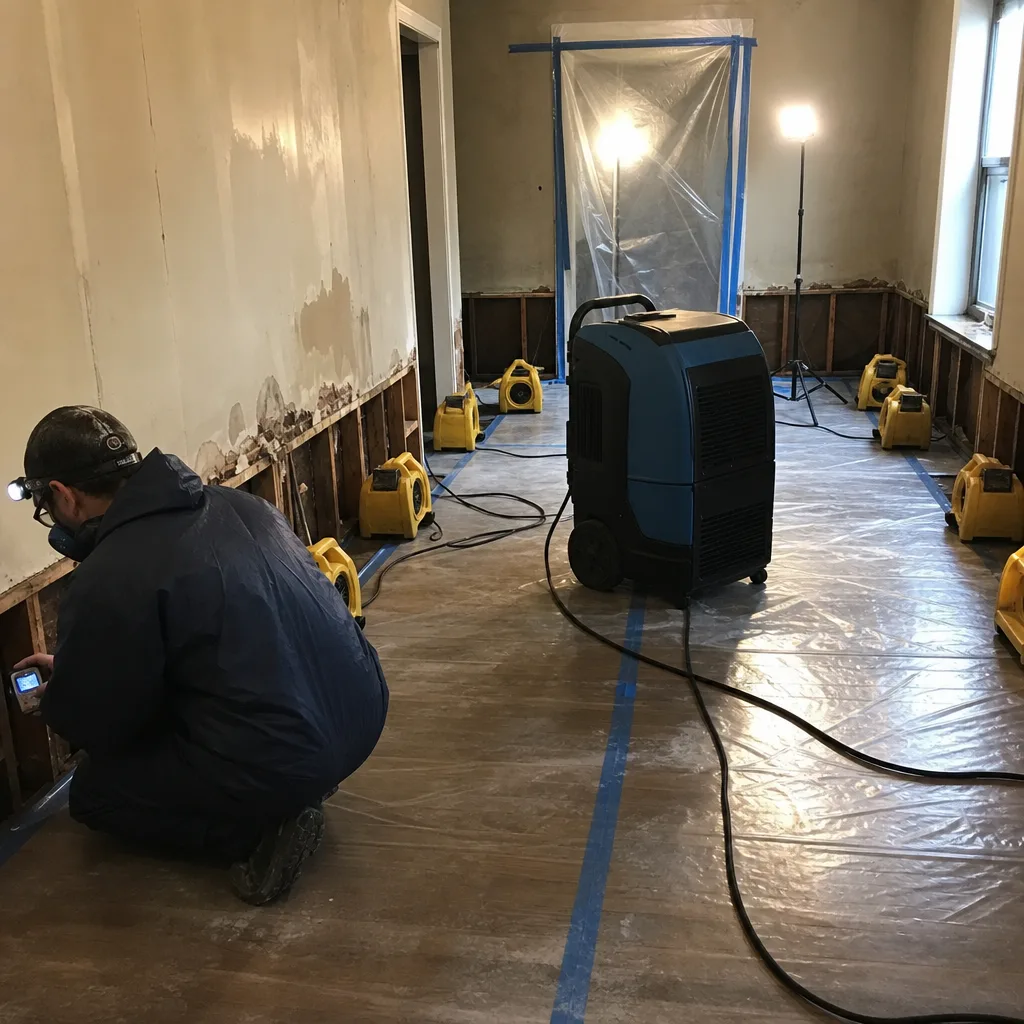
Drywall & Flooring Repair
Brackish flood water doesn’t stop at the flood line on your wall. Salt wicks upward through gypsum like a sponge, which is why we cut drywall well above the visible water mark in Stony Point homes. Same with subfloor and finished flooring: what looks dry from above can be holding 30% moisture content below. We verify with meters, not eyeballs, before anything gets reinstalled.
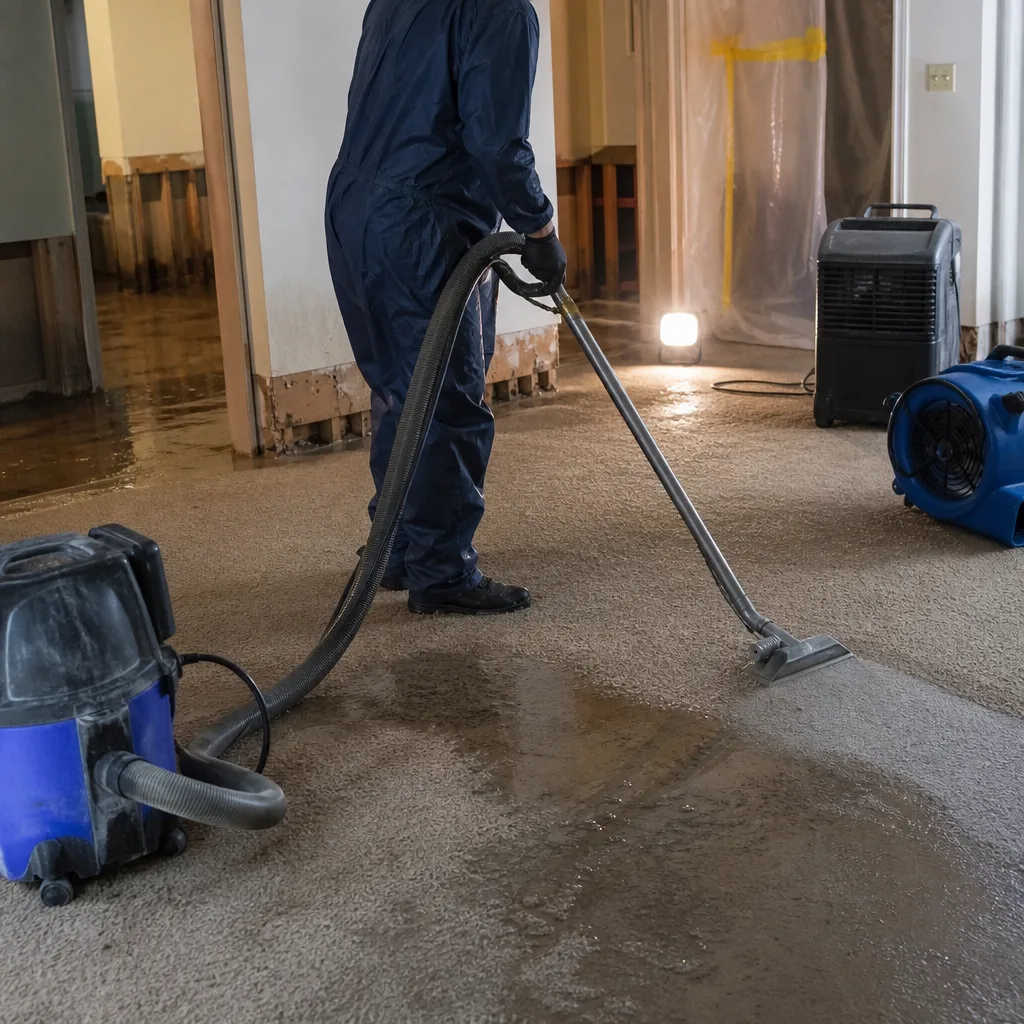
Contents Restoration & Pack-Out
Furniture, rugs, clothing, photos, documents-Category 3 water is hard on everything it touches. We pack out salvageable contents, inventory each item, and either restore them on site or transport them to our contents facility for specialized cleaning. Brackish water leaves a salt residue that accelerates corrosion on metal and sticks to fabric fibers. Contents handled within 48 hours have a real recovery chance. Items left sitting in a salt-soaked basement for two weeks usually don’t.
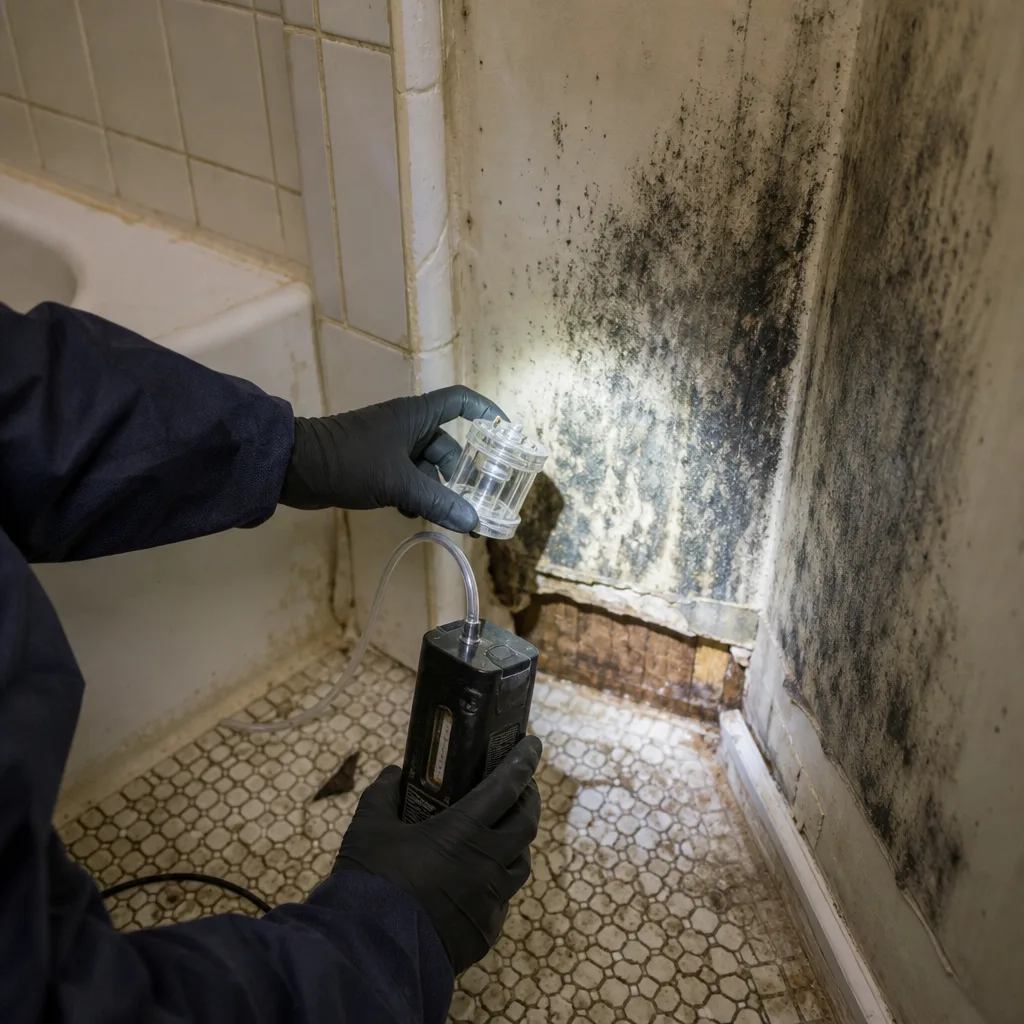
Carpet & Upholstery Cleaning
If your carpet took in clean water from a supply line break, we can often clean and dry it in place without full replacement. If the water came from Haverstraw Bay or backed-up storm drains, that carpet and pad get removed-Category 3 water and soft flooring don’t mix. We’ll tell you straight which situation you’re in, and we’ll show you the readings that back up the recommendation.
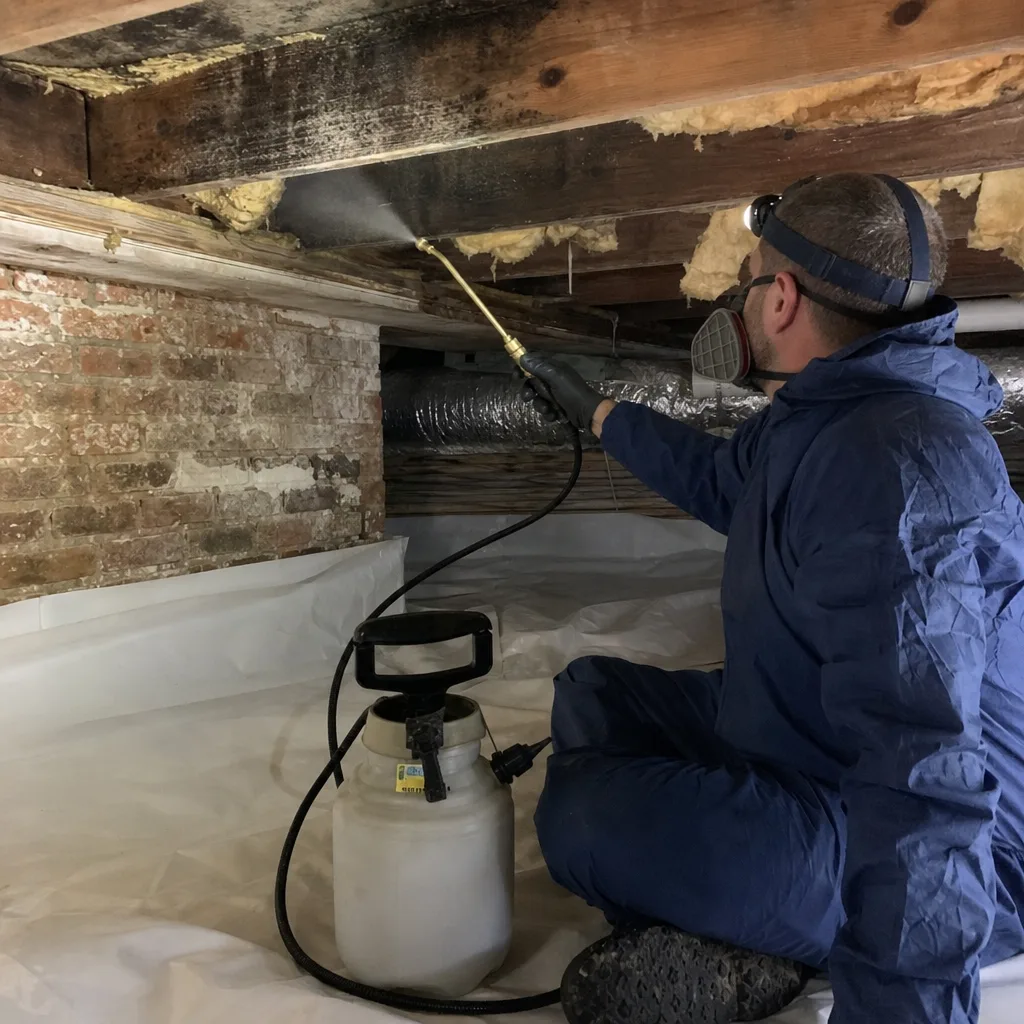
Post-Construction Cleanup
After we rebuild, we clean up. Drywall dust, sawdust, debris, and leftover materials all leave with us. The post-construction phase includes HEPA vacuuming of all affected rooms, surface cleaning, and a final walkthrough with you before we close the file.
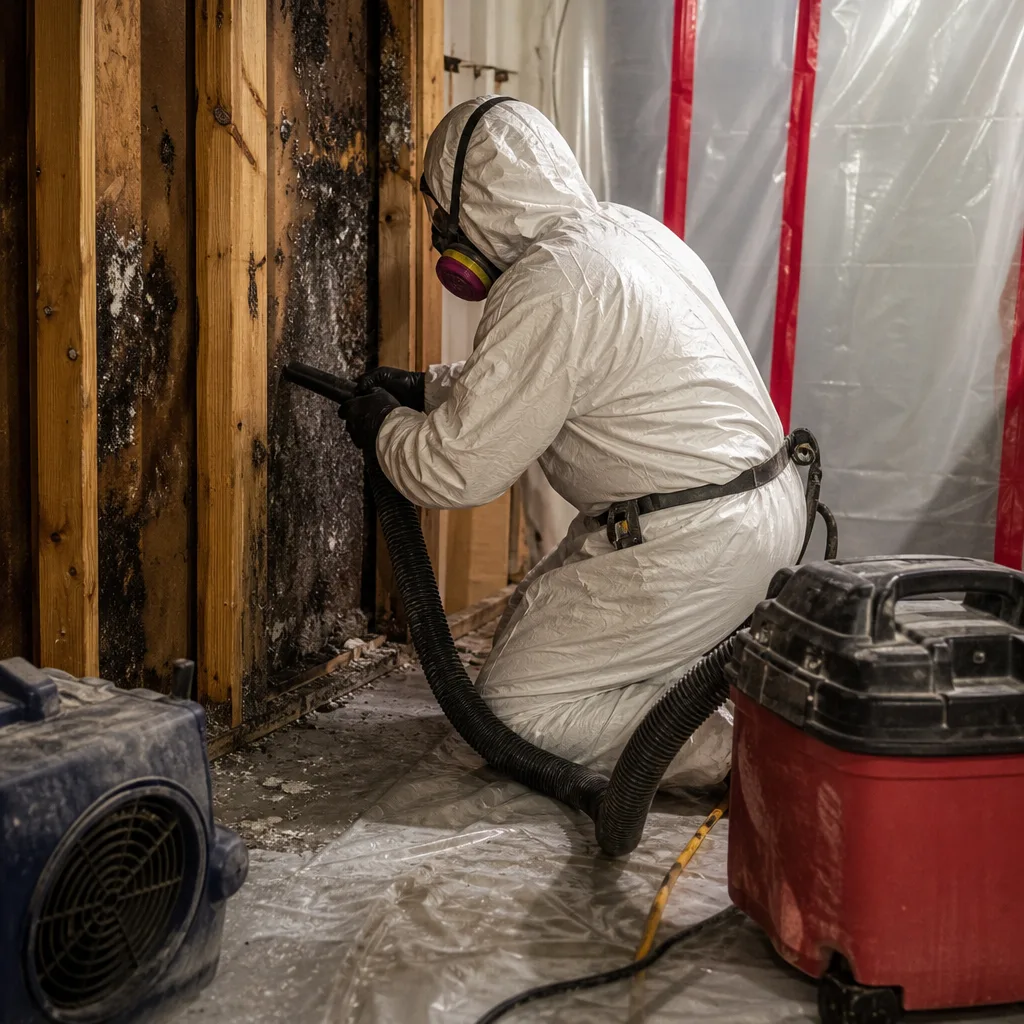
What happens when you call
- 1
A real person answersNo phone trees - you reach a local pro.
- 2
You get an upfront price rangeHonest numbers before anyone is dispatched.
- 3
A background-checked tech heads outLicensed & insured, dispatched right away.
- 4
You approve before work beginsNothing starts until you say go.
Reconstruction & Cleanup Costs in Stony Point, NY
Here’s what Stony Point homeowners actually pay. A small Category 1 water loss confined to one room-supply line break, quick extraction, drying-usually runs $1,800-$4,500. A full tidal flood in a riverfront bungalow with Category 3 water, crawl space extraction, full pack-out, and rebuild typically lands between $12,000 and $28,000 depending on square footage and how far the water reached. Drywall replacement alone in Stony Point runs $2.50-$4.75 per square foot. Carpet and pad removal runs $1.50-$2.50 per square foot. Contents pack-out and restoration ranges from $1,500 for a small job to $8,000+ for a full house. Salt-specific decontamination-the part inland contractors never quote-adds $1,200-$3,500 depending on the affected area. The fastest way to a firm number is a free visual inspection: we give you a written line-item scope before you commit to anything. Call (917) 924-4221 to schedule it.
We Also Serve Cities Near Stony Point
Our crews regularly work across the surrounding Rockland communities. We handle Reconstruction & Cleanup in West Haverstraw, Thiells, Haverstraw, and Verplanck-same 45-minute response commitment, same IICRC-certified crews, same written scope and direct insurance billing. If you’re in one of those towns and dealing with flood water, storm damage, or a failed sump pump, call the same number and talk to the same dispatcher.
Serving Stony Point, NY - Our Local Coverage Area
We’re based in the Stony Point area and know this community well. Use the map below to see our service coverage - if you’re nearby, we can almost certainly help.
Stony Point Reconstruction & Cleanup Questions, Answered
Why does Stony Point’s tidal flooding require more demolition than a freshwater flood?
Stony Point’s tidal flooding is Category 3 water because it carries brackish water, sediment, and contaminants from Haverstraw Bay. Under IICRC standards, Category 3 water means all saturated porous building materials-drywall, insulation, carpet, pad-must be removed and replaced, not cleaned and dried in place. Freshwater floods from a broken pipe are Category 1 or 2 and can often be dried without full demolition. The salt content in tidal water also means structural framing needs aggressive decontamination before new materials go in.
How long does it take for mold to start in a Stony Point crawl space after a tidal surge?
Mold colonization can begin within 24 to 48 hours in a warm, damp crawl space after Category 3 water intrusion. In Stony Point’s shallow crawl spaces under the converted riverfront bungalows, the timeline is often faster because standing brackish water creates a warm, humid microclimate with almost no ventilation. That’s why our crews set up containment and begin drying within the first visit-every hour of delay extends the drying timeline and increases what has to be demolished.
What does salt residue do to wall cavities after flooding near the river?
Salt residue in wall cavities keeps framing at elevated moisture levels weeks after the standing water is gone. Salt is hygroscopic-it draws moisture from the air-so studs and sill plates that would normally dry in 4 to 6 days can stay above 20% moisture content for weeks, feeding mold growth behind new drywall. We run daily moisture readings until the framing is dry by the meter, then apply antimicrobial treatment before closing the wall.
Can you restore contents from a Stony Point home that took in brackish water?
Yes, but brackish water is harder on contents than freshwater. We handle emergency pack-out within hours of arrival, inventory every item, and transport restorable contents to our facility for specialized cleaning. Textiles, paper documents, and photographs need fast action-the salt residue starts degrading them immediately. Hard goods like furniture and kitchen items often restore well if handled within 48 hours. We’ll tell you what’s salvageable and what isn’t, straight.
Why do my basement walls stay wet for weeks after the water recedes in Stony Point?
Salt-saturated concrete and masonry hold moisture long after standing water is removed. The brackish water from Haverstraw Bay leaves salt crystals in the pores of concrete walls and floors, and those crystals pull humidity from the air. In Stony Point’s converted bungalows with unimproved basements and no interior drainage, the problem compounds: outside groundwater pressure keeps pushing moisture through the foundation while the salt residue holds it inside. Proper drying means running dehumidifiers and air movement long enough to hit the dry standard-measured with meters-not just until the floor looks dry.
How fast can someone actually get to Stony Point for an emergency?
Our commitment is 45 minutes from dispatch to arrival for emergency calls in Stony Point. The dispatcher you reach at (917) 924-4221 coordinates the nearest available crew and tracks them to your door. A live person answers at any hour-no phone tree, no callback request. For a tidal flood, the sooner extraction starts, the less demolition is required.
Will insurance cover reconstruction after tidal flooding in Stony Point?
Most standard homeowners policies do not cover flood damage, but many Stony Point homeowners in FEMA-designated Special Flood Hazard Zones carry separate flood insurance through the NFIP or a private carrier. Tidal flooding from Haverstraw Bay is a covered peril under those flood policies. We bill your carrier directly, provide full photo and moisture documentation, and meet with the adjuster on your behalf. The documentation we produce in the first 24 hours is what makes the difference between a full settlement and a partial one.
What should I do in the first 30 minutes after water enters my Stony Point home?
Call (917) 924-4221 first. Then get off the wet floor-Category 3 water carries contaminants. Kill the power to affected rooms if you can safely reach the panel, and move small valuables to higher ground. Don’t try to extract the water yourself with a shop vacuum; brackish water needs real extraction and professional containment. The faster our crew reaches the property, the less demolition you’ll need and the more contents we can save.
Key Takeaways
- Stony Point tidal flooding is Category 3 water-full demolition of saturated materials, antiseptic treatment, and salt-specific decontamination are required before rebuild.
- Salt residue extends drying timelines from days to weeks. Daily moisture readings until the dry standard is met are non-negotiable.
- Crews respond to Stony Point within 45 minutes, with a live dispatcher answering (917) 924-4221 24 hours a day.
- One team handles the entire job-from extraction and drying to full reconstruction-and hands you a moisture log and the 90-Day Done Right Promise in writing.
If water is in your Stony Point home right now, call (917) 924-4221. If you’re planning ahead and want a free visual inspection with a written scope, call the same number and ask for one. Either way, a live person answers. The line the water left is where we start.
Written by Curt Bowman, Owner at Floodline Restoration Co. of Manhattan, serving Stony Point and the surrounding Rockland communities.