

Free visual inspection and a written scope of work before any mitigation begins - photos, moisture readings, and drying logs go in your claim file
The scope we write is the scope we bill. Anything new gets shown to you, in writing, before we touch it.






 Before
 After
After Before
 After
After Before
 After
After24/7 Emergency Reconstruction & Cleanup in Wood-Ridge
Reconstruction and cleanup in Wood-Ridge usually starts with Category 3 water in a basement that flooded from tidal surge, not rain. Crews from Floodline Restoration Co. of Manhattan answer live around the clock, and we dispatch into the borough the same visit. If you’re looking at a wet basement, buckled flooring, or contaminated drywall right now, call (917) 924-4221. The first hour decides how much demolition happens and how much can be saved.
We perform a free visual inspection, map the moisture, and hand you a written scope before any work starts. That’s how we’ve run every Reconstruction & Cleanup job for over 42 years, and how we run yours in Wood-Ridge. A real person picks up the phone at 2 a.m. A certified crew reaches your street, not a call center.
Understanding Reconstruction & Cleanup Severity in Wood-Ridge Properties
Most Wood-Ridge homes were built between 1940 and 1965: Cape Cods, ranches, and two-families with full basements, plaster-over-lath walls, and the original cast-iron plumbing. When the Hackensack River backs up through Moonachie Creek, the water pushing into those basements is Category 3: contaminated with sewage, tidal salts, and whatever the storm carried. That’s not a mop-and-fan situation. That’s containment, antimicrobial treatment, and demolition of saturated materials down to the framing.
Category 2 water (gray water from a washing machine or a failed supply line) can still turn Category 3 inside 48 hours if it sits behind plaster walls or under vinyl flooring. In post-war homes, plaster acts as a vapor trap. Moisture hides in the lath and stud cavity while the surface feels dry. Our crew uses thermal imaging and penetrating moisture meters, not fingertips, to find what the wall is hiding. That’s the difference between drying a room and rebuilding it twice.
We also see failures that predate the current loss. Rim-joist insulation saturated during Superstorm Sandy was never removed in many basements. A new flood saturates it again, mold blooms behind the framing, and a small dryout becomes a structural reconstruction. That’s a Wood-Ridge pattern we know before we open the first wall.
Why Wood-Ridge Property Owners Choose Floodline Restoration Co. of Manhattan
- 45-minute response commitment. We dispatch crews to Wood-Ridge within 45 minutes of your call, and we begin extraction the same visit.
- 24/7 live answer, every time. A dispatcher picks up the phone. Not a recording. At 3 a.m. you talk to a person who can send a truck.
- IICRC-certified crews. Our technicians hold WRT, FSRT, and AMRT certifications. They know how Category 3 water behaves in a 1950s basement.
- Free visual inspection. We assess the damage and give you a straight answer about what needs to happen, before you owe us a dollar.
- Direct insurance billing. We document, we estimate to industry standards, and we deal with your adjuster directly. You don’t carry paperwork between us and the carrier.
- One team from extraction to reconstruction. The same crew that maps the moisture on day one rebuilds the walls on day thirty. No handoffs, no inherited subcontractors, no lost context.
Our Reconstruction & Cleanup Process
Inspection & Assessment
We arrive, walk the property with you, and document everything: water category, affected materials, structural suspects like rim joists and floor sheathing. Thermal imaging and hygrometers give us the moisture map that drives the scope.
Extraction & Stabilization
We remove standing water with truck-mounted extraction, cut out ruined drywall, and lift carpet where it can be saved. For Category 3 losses in Wood-Ridge, this is where containment goes up.
Drying & Dehumidification
Dri-Eaz dehumidifiers, Phoenix air movers, and Injectidry mats run on a drying plan built for post-war basements: daily readings, logged, until we hit the dry standard. We never guess at dry.
Cleaning & Sanitization
All affected surfaces get cleaned and treated. Category 3 intrusion gets antimicrobial treatment. Contents are either cleaned onsite or packed out, inventoried, and restored.
Specialty Treatment for Flood-Prone Basements
In Wood-Ridge, we check what previous floods left behind: rim-joist insulation, sill plates, subfloor framing. If it’s compromised, it comes out now. Rebuilding over old damage is how you get mold in year two.
Repairs & Restoration
Full reconstruction: framing, moisture-resistant drywall, flooring, trim, paint. We hand you a moisture log, a completed scope, and the 90-Day Done Right Promise in writing.
Need Emergency Reconstruction & Cleanup in Wood-Ridge Now?
Crews minutes away, answering live 24 hours a day. The sooner we start, the less it costs.
Working With Your Insurance Company
Most Wood-Ridge flood losses are insurance claims, and the carrier wants the same thing you do: a dry, stable house with a defensible scope. We document from the first hour. Photos, moisture readings, material samples, and a line-item estimate that matches what the adjuster expects. We talk to your adjuster directly, so you’re not relaying messages between two parties who speak different languages.
Curt Bowman built Floodline Restoration Co. on a simple idea: a job is done when the homeowner and the carrier both see the documentation and agree it’s done. The 90-Day Done Right Promise covers every reconstruction we finish. If it’s not done right, we make it right. In writing, no arguing.
What We Provide Your Insurer
- Thorough documentation of the loss
- Photos of all damage, room by room
- Moisture readings and drying logs
- A detailed, line-item scope of work
- Direct coordination with your carrier
Built for Wood-Ridge’s Loss Calendar
Wood-Ridge takes its water on a schedule. January and February freeze pipes in uninsulated crawl spaces and exterior walls of 1940s ranches. March and April bring snowmelt and spring rain that saturates the ground, and basements with original waterproofing take on groundwater through floor cracks and cove joints. Summer thunderstorms overwhelm Moonachie Creek quickly; the low-lying blocks near the creek flood fast with little warning.
Fall is nor’easter season. That’s when the Hackensack River’s tidal reach combines with coastal storm surge, and Category 3 water enters homes that stayed dry during spring rain. In Wood-Ridge, this isn’t a once-a-decade event. It’s a pattern. Residents on Hackensack Street, Valley Boulevard, and the streets near the creek know the cycle. We do too. Our crews are staged for local dispatch through every season, and our equipment list is built for what these floods actually deposit: salt water, silt, sewage, and the mold that follows within 48 hours.
Reconstruction & Cleanup Across Wood-Ridge’s Neighborhoods
The houses near Moonachie Creek, around Hackensack Street and Valley Boulevard, flood first and deepest. These are the originals: 1940s Cape Cods and early ranches with unencapsulated rim joists, full basements, and decades of layered flood repairs. When water gets in here, we’re usually looking at full basement demolition and structural drying before reconstruction can begin.
The blocks east of Route 17, closer to the center of the borough, tend to take surge water in smaller volumes but from the same tidal source. Owners here often try a DIY dryout first, which means we arrive after mold has started in the wall cavities. The two-family homes near Wood-Ridge High School present their own challenge: two units, two insurance policies, one shared framing system. Drying one side without opening the other is how you get a callback. We scope both sides with written approval from both owners.
The ranches along Susquehanna Avenue and the streets near 07075 sit slightly higher, but their slab foundations and shallow crawl spaces hold water under floor sheathing where you can’t see it. A moisture meter finds it. So does the smell, eventually.
Specialized Reconstruction & Cleanup Services We Offer in Wood-Ridge
Full-Service Reconstruction
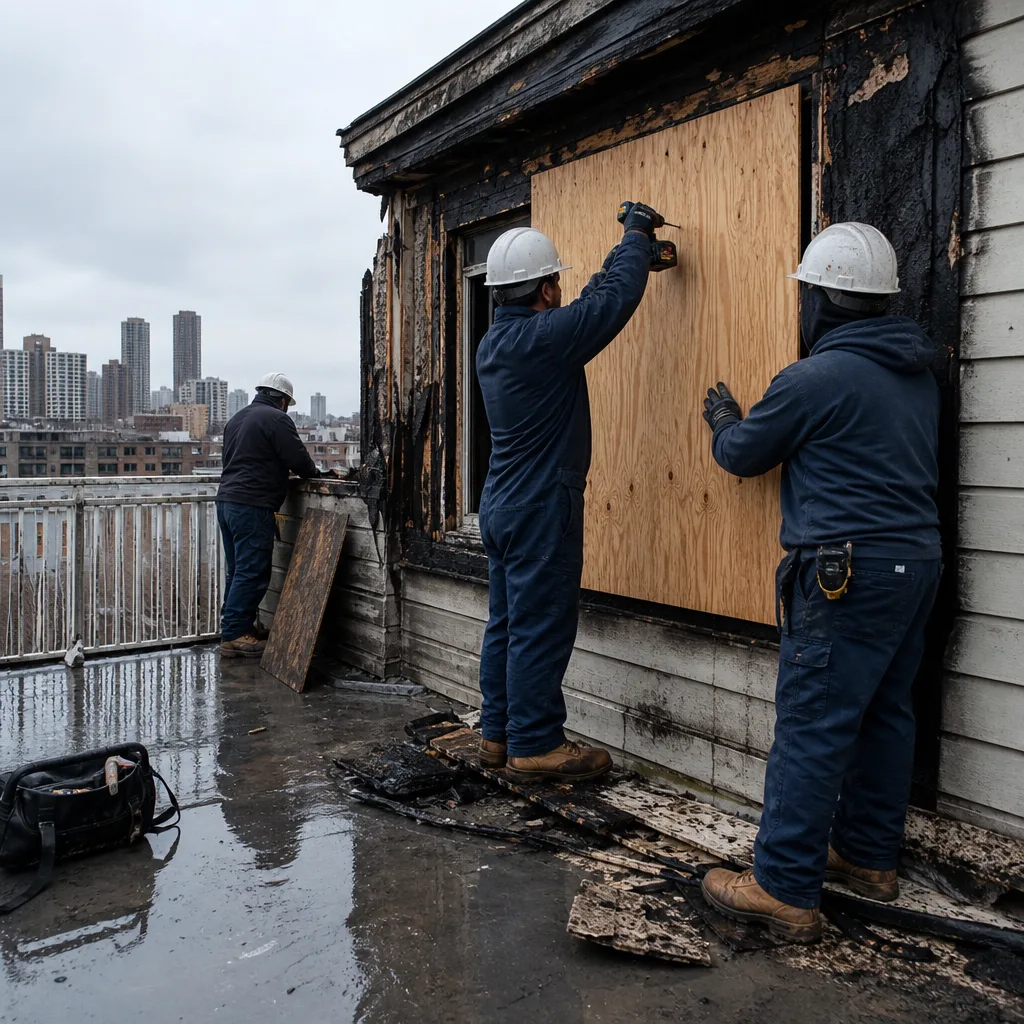
After a flood, a Wood-Ridge basement rarely needs just drying. It needs demolition of saturated plaster and lath, removal of compromised rim-joist insulation, and rebuilding with materials that tolerate future moisture. We handle framing, drywall, flooring, trim, and painting. Same crew from the first extraction to the final coat of paint.
Drywall & Flooring Repair
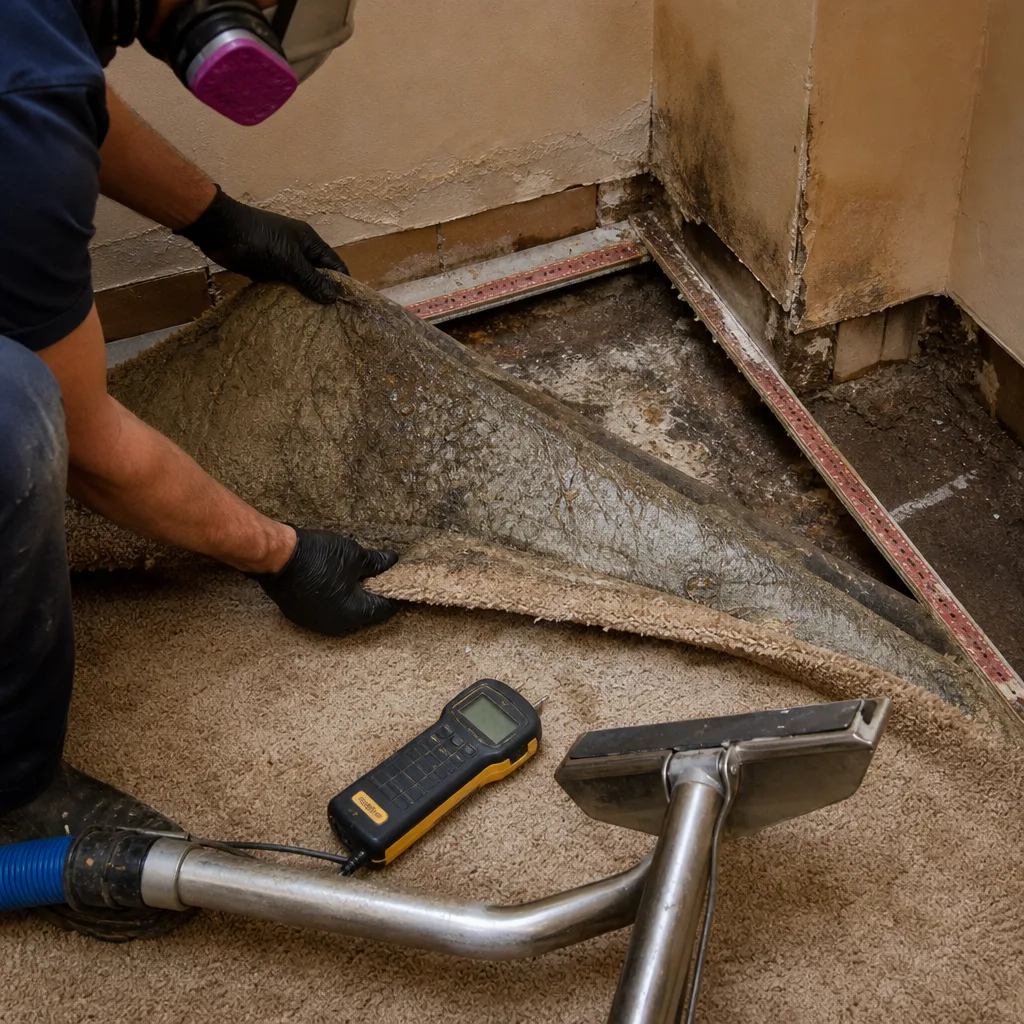
Category 3 water means drywall below the flood line is gone. No drying it, no salvaging it. We cut at a clean line above the flood mark, remove what’s contaminated, and install moisture-resistant drywall that won’t feed mold if the next storm gets in. Flooring gets evaluated honestly: solid hardwood can sometimes be saved with Injectidry mats; laminate and engineered wood rarely survive a Category 3 event.
Contents Restoration & Pack-Out
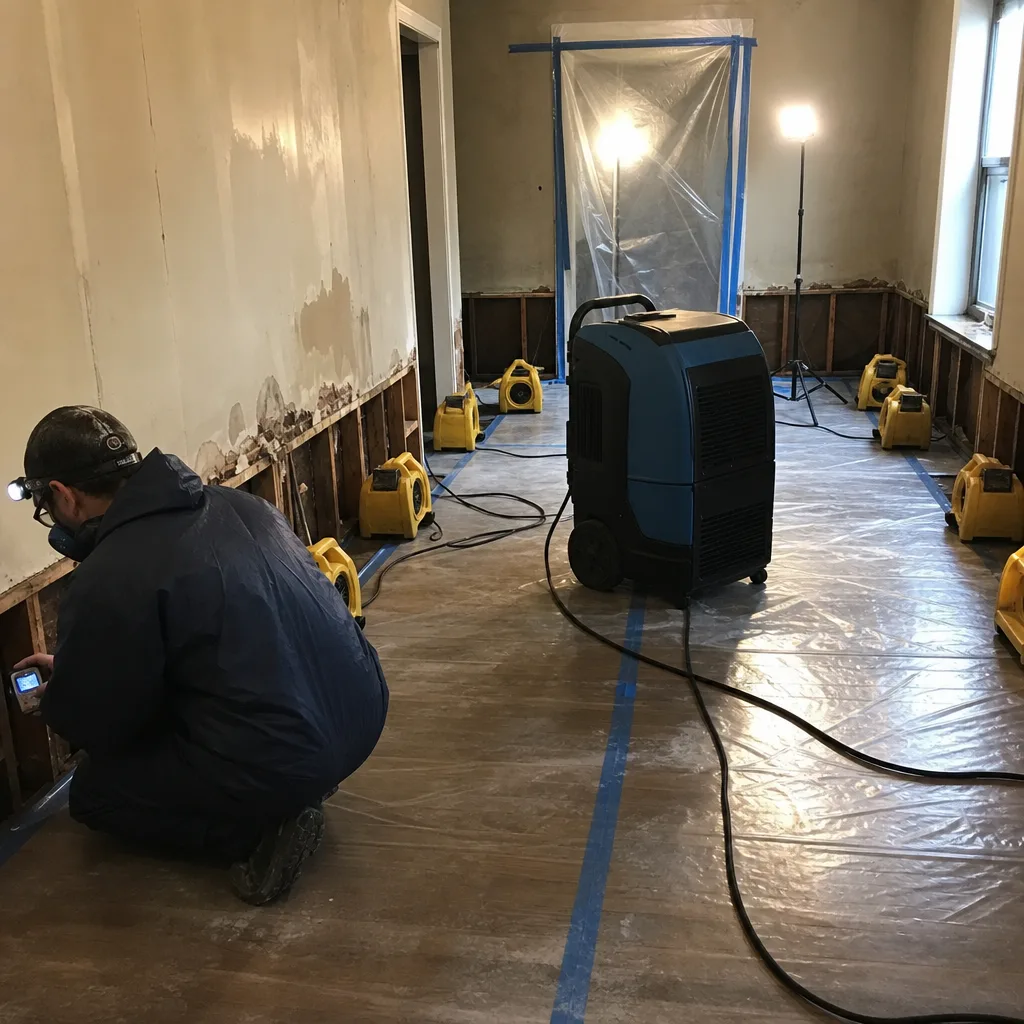
When a basement floods, what’s in it matters too. We inventory, pack out, clean, and restore contents, or store them while reconstruction proceeds. For Wood-Ridge homes with limited space, we coordinate storage so you’re not living around boxes for six weeks. Every item gets documented for your claim.
Carpet & Upholstery Cleaning
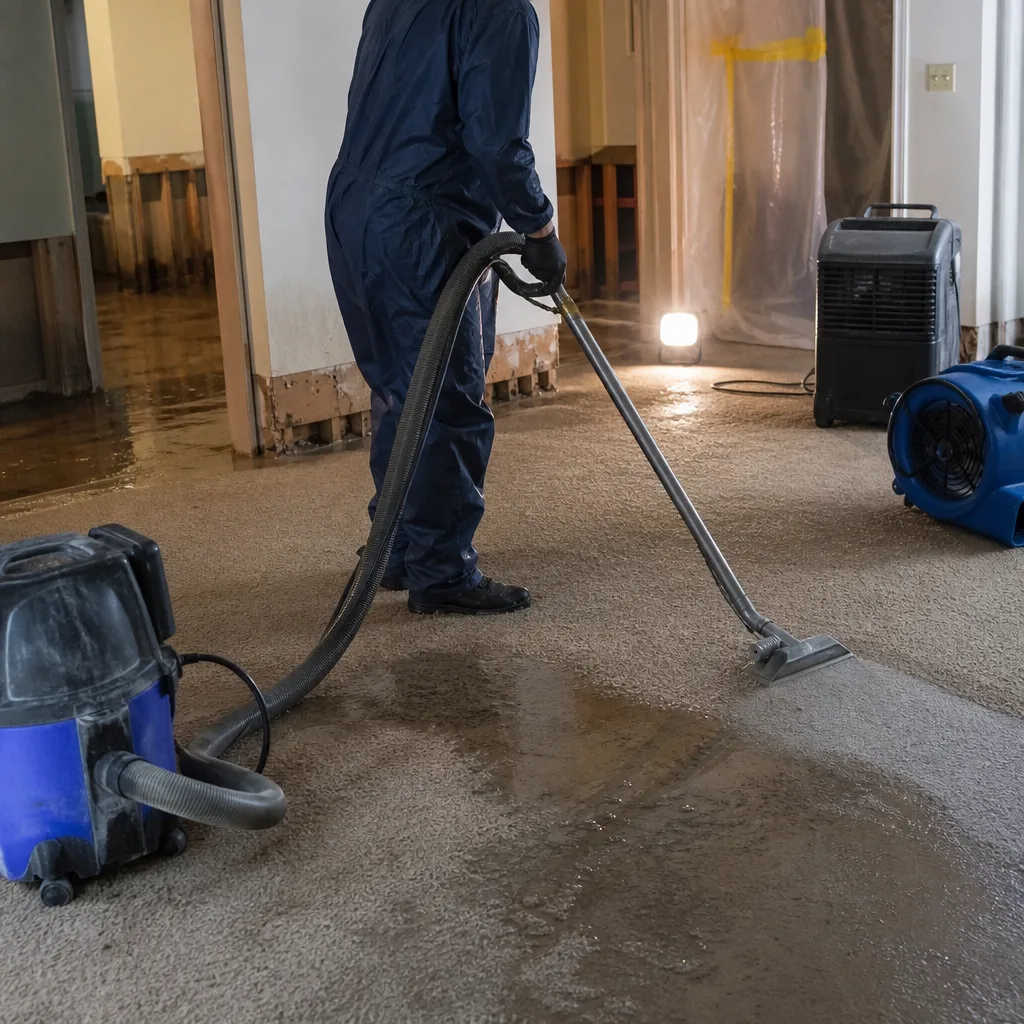
Floodwater in carpets and upholstery is a health issue, not just an appearance issue. Category 3 water saturated into carpet pad and fabric requires either full replacement or professional extraction, cleaning, and sanitization. We don’t shampoo over sewage. We treat it right or we tell you it needs replacement.
Post-Construction Cleanup
Reconstruction leaves dust, drywall compound, and construction debris. We clean the workspace after our own rebuilds, and we handle the cleanup after other contractors’ work too. HEPA air scrubbing, surface cleaning, and the kind of detail work that makes a house feel lived-in again.
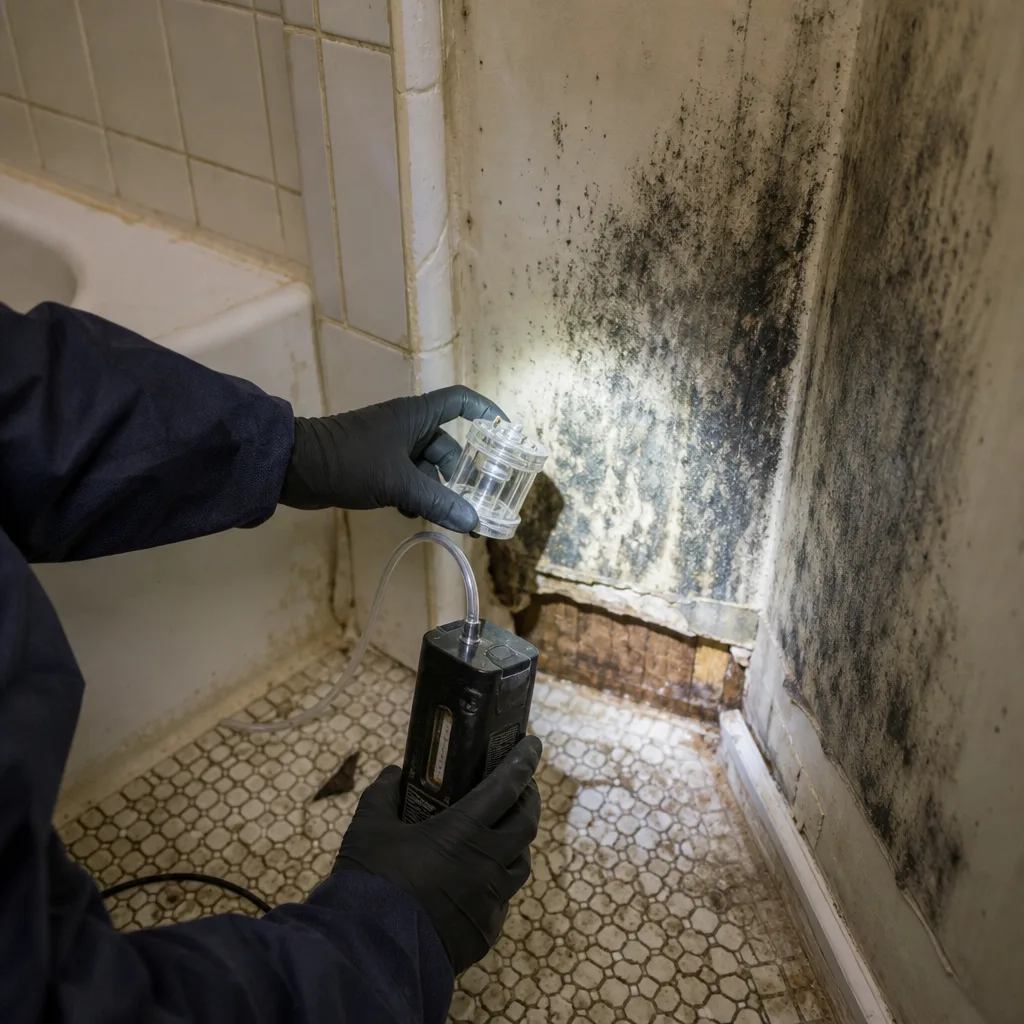
Insurance Claim Documentation
Every photo, every moisture reading, every line item on the scope goes to your adjuster in a format they recognize. We’ve spent years building a documentation standard that shortens the claim cycle. You get a copy of everything. No secrets, no surprises.
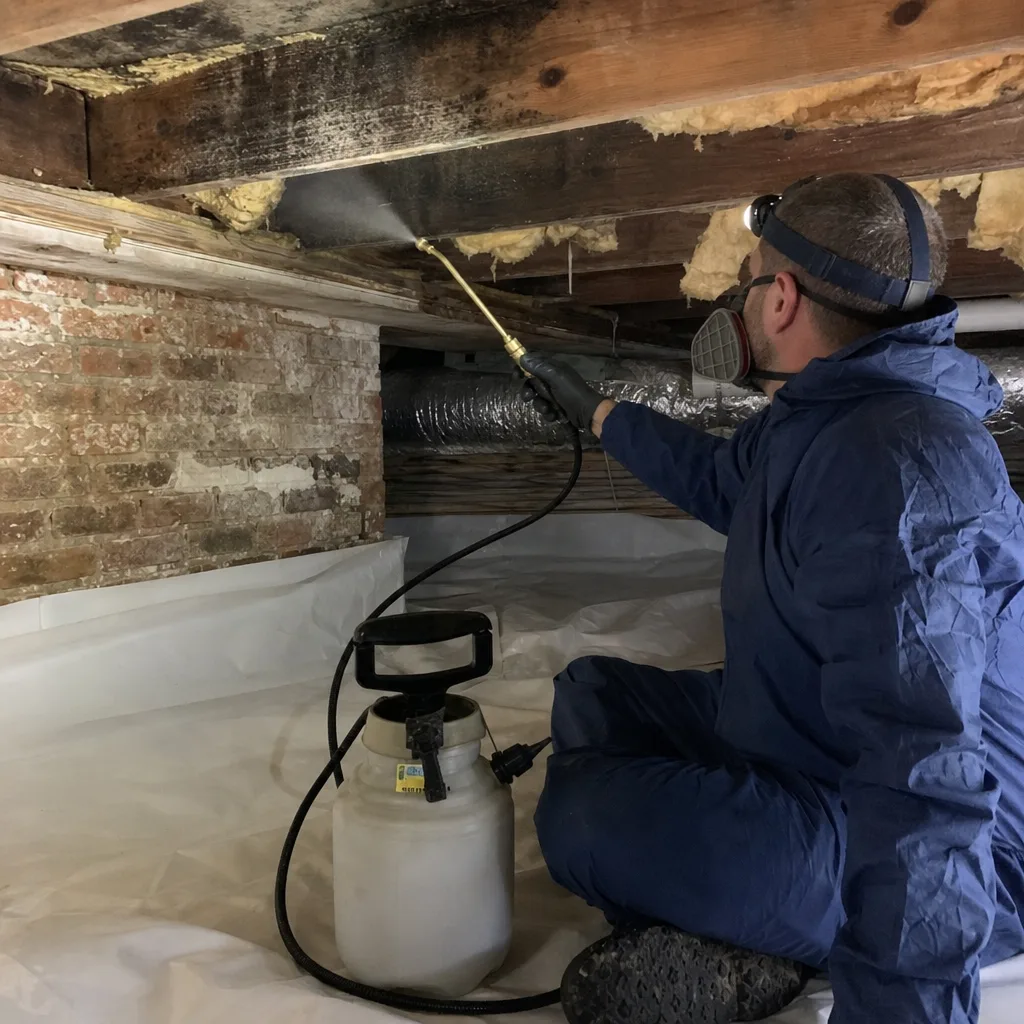
What happens when you call
- 1
A real person answersNo phone trees - you reach a local pro.
- 2
You get an upfront price rangeHonest numbers before anyone is dispatched.
- 3
A background-checked tech heads outLicensed & insured, dispatched right away.
- 4
You approve before work beginsNothing starts until you say go.
Reconstruction & Cleanup Costs in Wood-Ridge, NJ
In Wood-Ridge, a Category 3 basement flood with containment, demolition, and structural drying typically runs $4,800 to $11,000 before reconstruction. Full basement rebuilds after a serious tidal event land between $18,000 and $45,000, depending on square footage, material finishes, and whether rim-joist or subfloor framing needs replacement. A contents-only pack-out and restoration usually costs $1,900 to $5,500.
What moves the price: the water category, how many rooms are affected, whether plaster walls need to come out, and whether prior flood damage is hiding behind what’s visible. Insurance covers most flood losses when the policy includes flood coverage; standard homeowners policies typically do not. We bill your carrier directly for covered losses, and for anything out of pocket, you’ll have a line-item scope in hand before work starts. The free inspection is how you get a firm number.
We Also Serve Cities Near Wood-Ridge
Beyond Wood-Ridge, our crews regularly work in Alpine, Bergenfield, Bogota, and Carlstadt. Each town has its own flood pattern, but the same tidal Hackensack River system drives most of what we see in southeastern Bergen County.
Serving Wood-Ridge, NJ - Our Local Coverage Area
We’re based in the Wood-Ridge area and know this community well. Use the map below to see our service coverage - if you’re nearby, we can almost certainly help.
Wood-Ridge Reconstruction & Cleanup Questions, Answered
How does tidal flooding from the Hackensack River affect the category of water in a Wood-Ridge basement?
Tidal water is Category 3 by definition: it carries sewage, salt, and debris from the river and creek system. It requires containment, antimicrobial treatment, and removal of all saturated porous materials before drying can begin.
Do Wood-Ridge post-war homes need special moisture mapping before demolition?
Yes. Plaster-over-lath walls hide moisture in cavities that surface readings miss. We use thermal imaging and penetrating meters to map the full moisture profile before we cut anything, so demolition removes everything that’s wet, not just what looks wet.
Why does your crew check rim-joist insulation in Wood-Ridge basements even when the new loss looks minor?
Because many basements still contain soggy fiberglass in the rim joists from Sandy or later floods. Rebuilding over wet insulation guarantees mold inside the framing. We check every time, and if it’s compromised, it comes out.
What parts of a Reconstruction & Cleanup project in Wood-Ridge take longest due to repeated flooding?
Structural drying of post-war framing takes the longest. Old-growth lumber, plaster, and layered materials dry slowly, and we don’t rush it. Full reconstruction after a major basement flood usually takes 3 to 6 weeks, depending on scope.
Is pack-out ever not recommended for a Wood-Ridge flood loss?
Yes. If contents are saturated with Category 3 water and contain porous materials like upholstered furniture or cardboard, restoration isn’t safe or cost-effective. We tell you straight and document it for your claim.
How fast can you get to my Wood-Ridge home?
We commit to a 45-minute dispatch to anywhere in Wood-Ridge. A live dispatcher answers 24/7 and sends a certified crew the same visit. Call (917) 924-4221.
Will my insurance cover reconstruction and cleanup in Wood-Ridge?
Flood coverage is separate from a standard homeowners policy. If you have flood insurance, most Category 3 losses, demolition, structural drying, and reconstruction are covered. We document everything and bill your carrier directly.
What should I do in the first 30 minutes after water enters my Wood-Ridge home?
Call us. Don’t touch the water, don’t open walls, don’t run fans. Take photos if you can do it safely. The faster we start containment and extraction, the less demolition you’ll need. Call (917) 924-4221 now.
Written by Curt Bowman, Owner at Floodline Restoration Co. of Manhattan, serving Wood-Ridge with certified reconstruction and cleanup crews.