
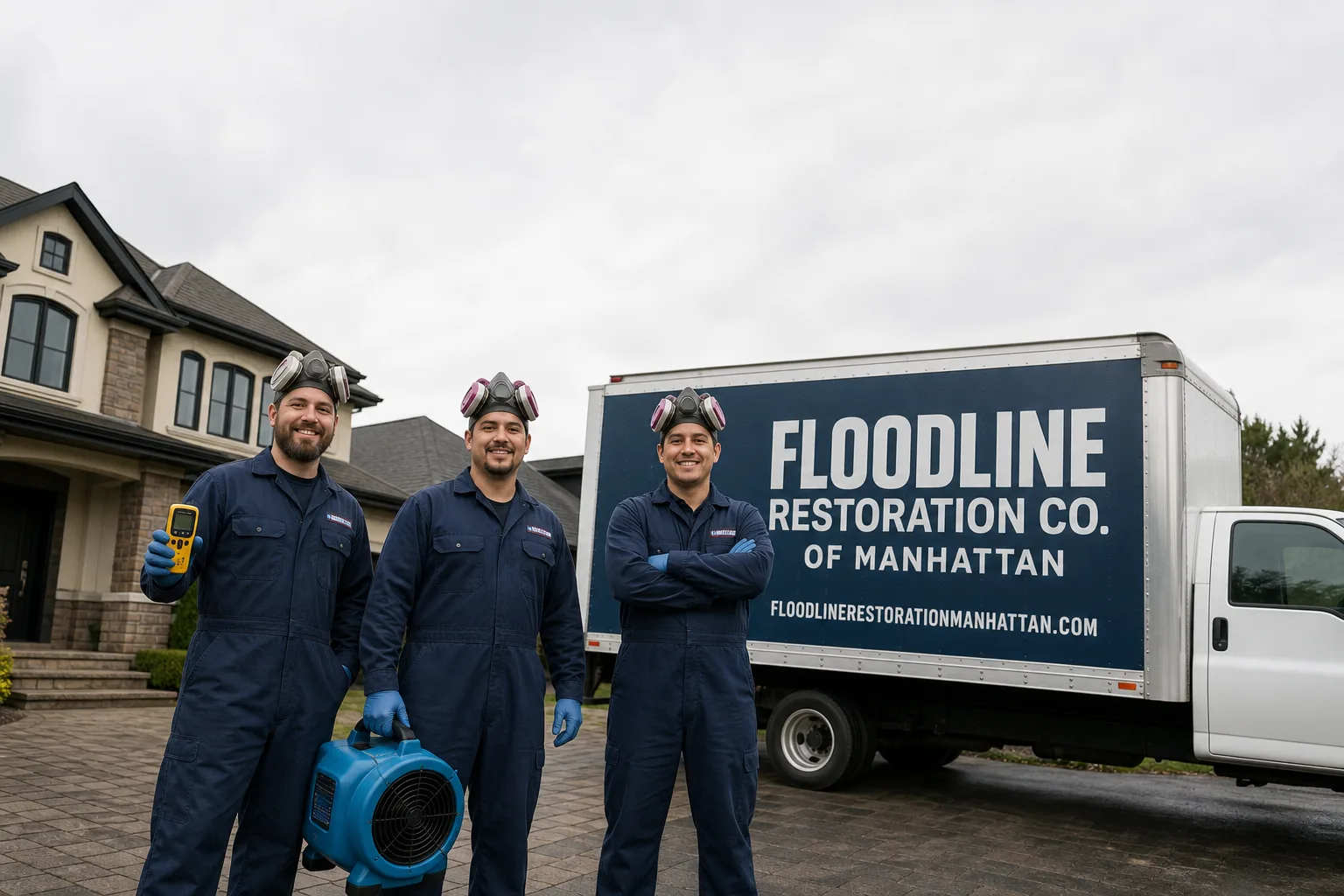
Free visual inspection and a written scope of work before any mitigation begins - photos, moisture readings, and drying logs go in your claim file
The scope we write is the scope we bill. Anything new gets shown to you, in writing, before we touch it.






 Before
 After
After Before
 After
After Before
 After
After24/7 Emergency Sanitization Services in Tenafly
Sanitization services in Tenafly typically run $350-$1,800 for a whole-home treatment, depending on square footage, the materials affected, and whether ductwork or original plaster needs special handling. Floodline Restoration Co. of Manhattan answers live around the clock at (917) 924-4221, and we dispatch certified crews into Tenafly neighborhoods the same day you call. When Category 3 water from the Tenakill Brook or a nor’easter tree-fall has contaminated living space, the first hour matters: bacteria from floodwater and trapped moisture move into porous plaster, hardwood, and fabric within 24 hours, and every day that passes makes the difference between a contained sanitization and a full tear-out. Call us, and a real person picks up at 2 a.m. That’s not a slogan. It’s how we run the board.
For Tenafly homeowners, sanitization isn’t a spray-and-go service. Your house was likely built between 1910 and 1960, with original three-coat plaster, hand-troweled finishes, sawn oak millwork, and slate or clay-tile roofs. Standard fogging chemicals can etch lime plaster if applied without protection. Modern dehumidification can delaminate original hardwood if moisture mapping isn’t done first. We know that. Our Sanitization Services team sequences every antimicrobial treatment around period materials, not in spite of them.
What happens when you call
- 1
A real person answersNo phone trees - you reach a local pro.
- 2
You get an upfront price rangeHonest numbers before anyone is dispatched.
- 3
A background-checked tech heads outLicensed & insured, dispatched right away.
- 4
You approve before work beginsNothing starts until you say go.
Understanding Sanitization Services Severity in Tenafly Properties
Sanitization is not a single procedure. It’s a spectrum that depends on the water category, the surfaces affected, and how long contamination has sat. Category 1 water comes from a clean supply line: a burst pipe in a 1920s Colonial on West Clinton Avenue, for example. That water is initially clean but degrades within 48 hours if it soaks into plaster and subfloor. Category 2 carries significant contaminants: washing machine overflow, sump pump failure, radiator leaks in older Tenafly homes. Category 3 is grossly contaminated: Tenakill Brook floodwater, sewage backup, or storm runoff that entered through a breached slate roof. Category 3 demands full containment, HEPA air scrubbing, and antimicrobial treatment with an EPA-registered product rated for porous historic materials.
What makes Tenafly different is how quickly severity escalates in old construction. A Category 1 pipe burst in a modern drywall home might dry in three days with standard equipment. The same leak in a Tenafly Tudor soaks into brown-coat plaster, lathe, and oak flooring laid over clay-heavy glacial soil that holds moisture for days after the source is stopped. Our techs run thermal imaging and hygrometer readings on every job, mapping where water has wicked behind walls and under finished millwork. That map, not guesswork, tells us whether we’re cleaning or restoring.
The tree canopy complicates things further. When a century-old oak breaches a roof, you get two contamination events at once: storm water and decades of attic dust, insulation particles, and whatever the tree carried down with it. That’s a Category 3 scenario with asbestos-era debris in the mix. Sanitizing that properly means sealing off the affected rooms with 6-mil poly and negative air pressure before anyone touches the plaster.
Why Tenafly Property Owners Choose Floodline Restoration Co. of Manhattan
- 45-minute response commitment. Our nearest crew is dispatched the moment you hang up, and we commit to being on-site in Tenafly within 45 minutes for active water or contamination emergencies.
- A live person answers, 24/7. No phone tree, no “press 3 for emergencies,” no recorded message asking you to leave a number. A dispatcher answers and starts the clock.
- IICRC-certified crews. Our techs are certified in Water Damage Restoration (WRT), Fire & Smoke Restoration (FSRT), and Applied Microbial Remediation (AMRT). Background-checked and uniformed, every visit.
- Free visual inspection. We walk the property, explain what we see, and give you a written scope before any chargeable work begins. No pressure, no surprises.
- Direct insurance billing. We coordinate with your carrier, send them the loss documentation, and bill them directly for covered work. You never play messenger.
- One team, start to finish. Your Floodline crew handles extraction, drying, sanitization, and any needed reconstruction. No mid-job handoff to a subcontractor you’ve never met.
Since 2010, Curt Bowman has run this company on a simple rule: the crew that reads the moisture map on day one is the same crew that hands you the drying log and the 90-Day Done Right Promise in writing when the job is finished. That promise, our Keystone Standard, says exactly what it means: if the work isn’t done right, we make it right. No arguing, no paperwork battles. Tenafly homeowners who remember being burned by a contractor once appreciate a guarantee we’re willing to write down.
Our Sanitization Services Process
Inspection & Assessment
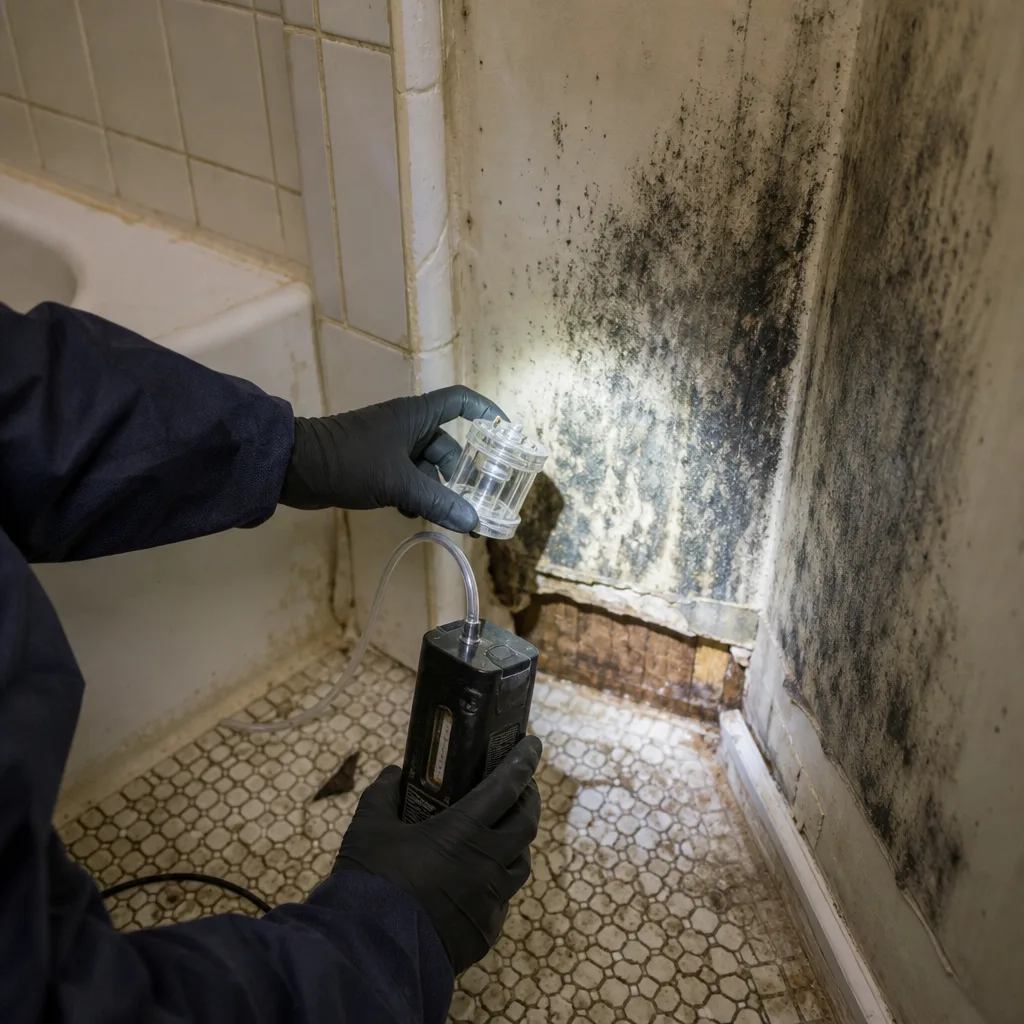
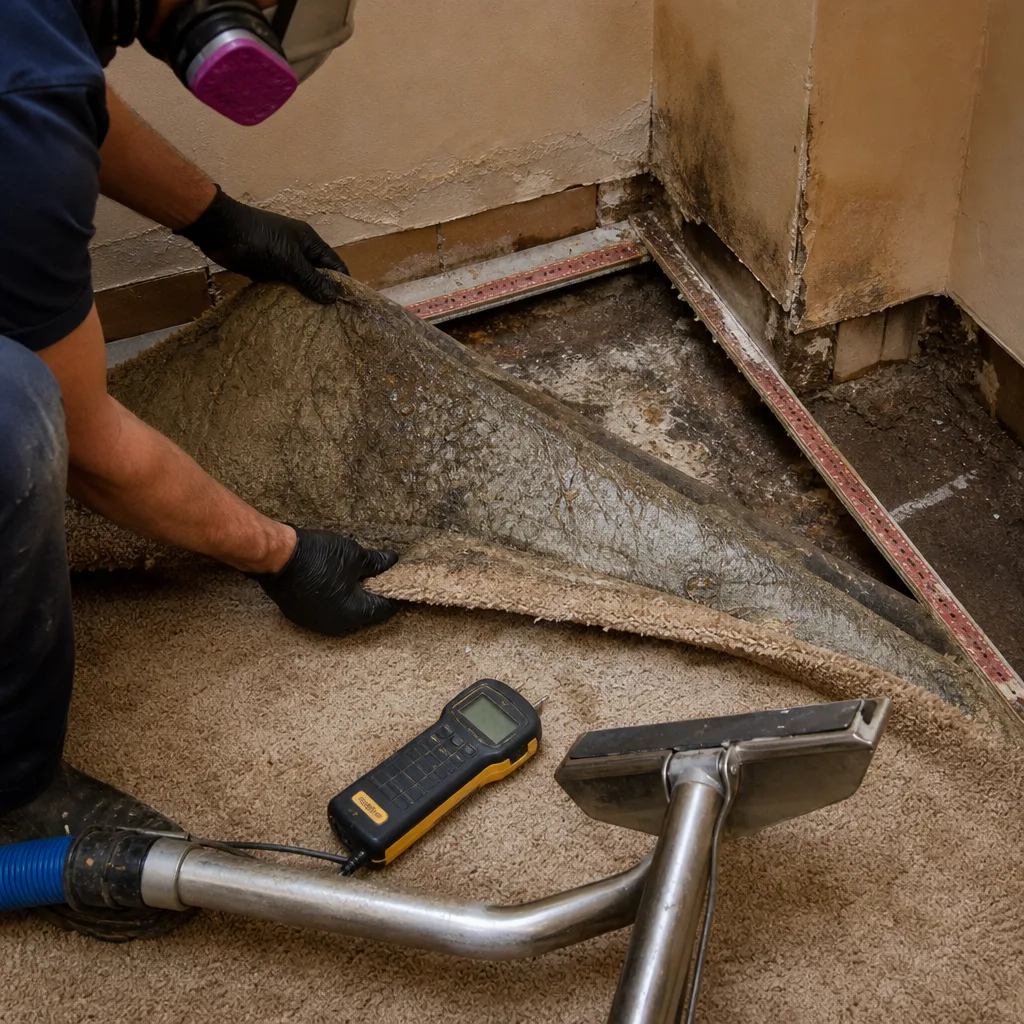
We start with a room-by-room walkthrough, using thermal imaging cameras and penetrating moisture meters to map exactly where water and contamination have traveled. In Tenafly’s older homes, that means checking behind plaster walls, under flooring, and inside original millwork cavities. You get a written scope before work starts.
Containment & Source Control
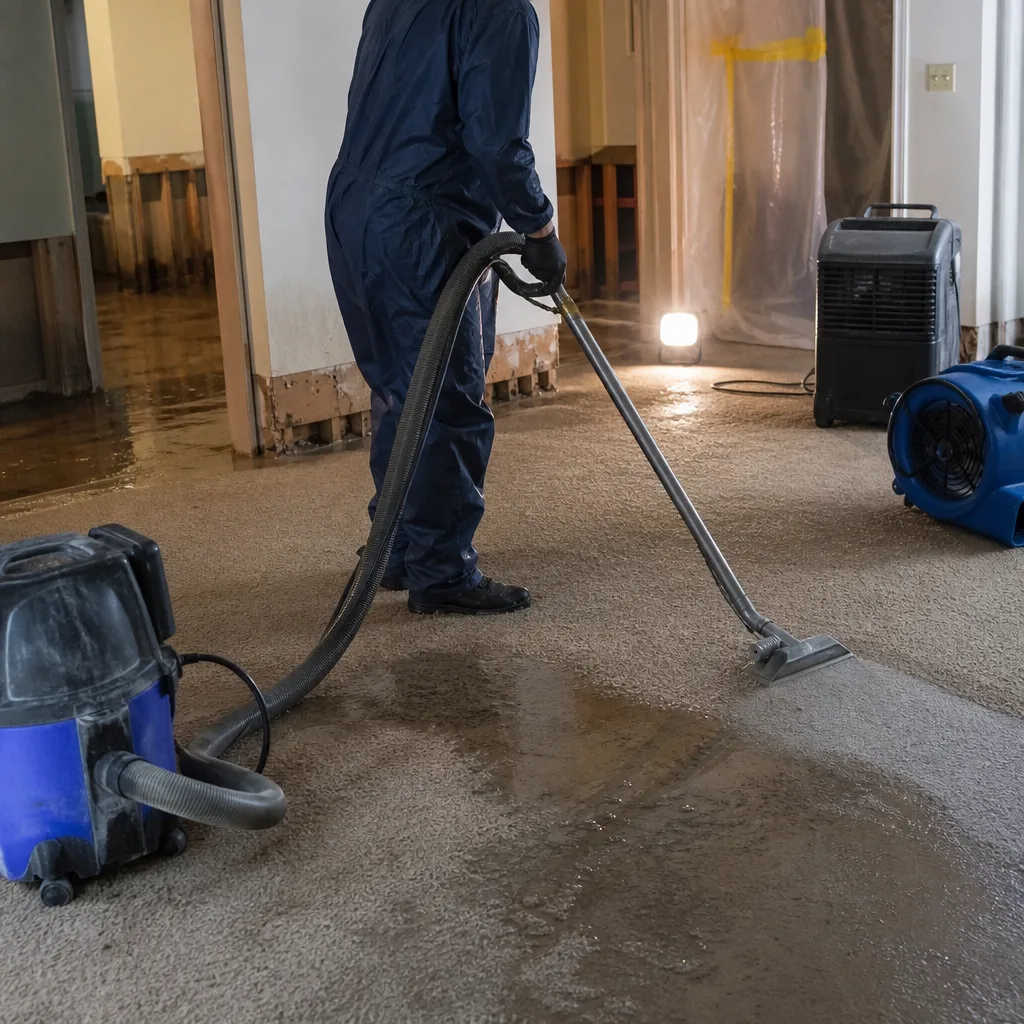
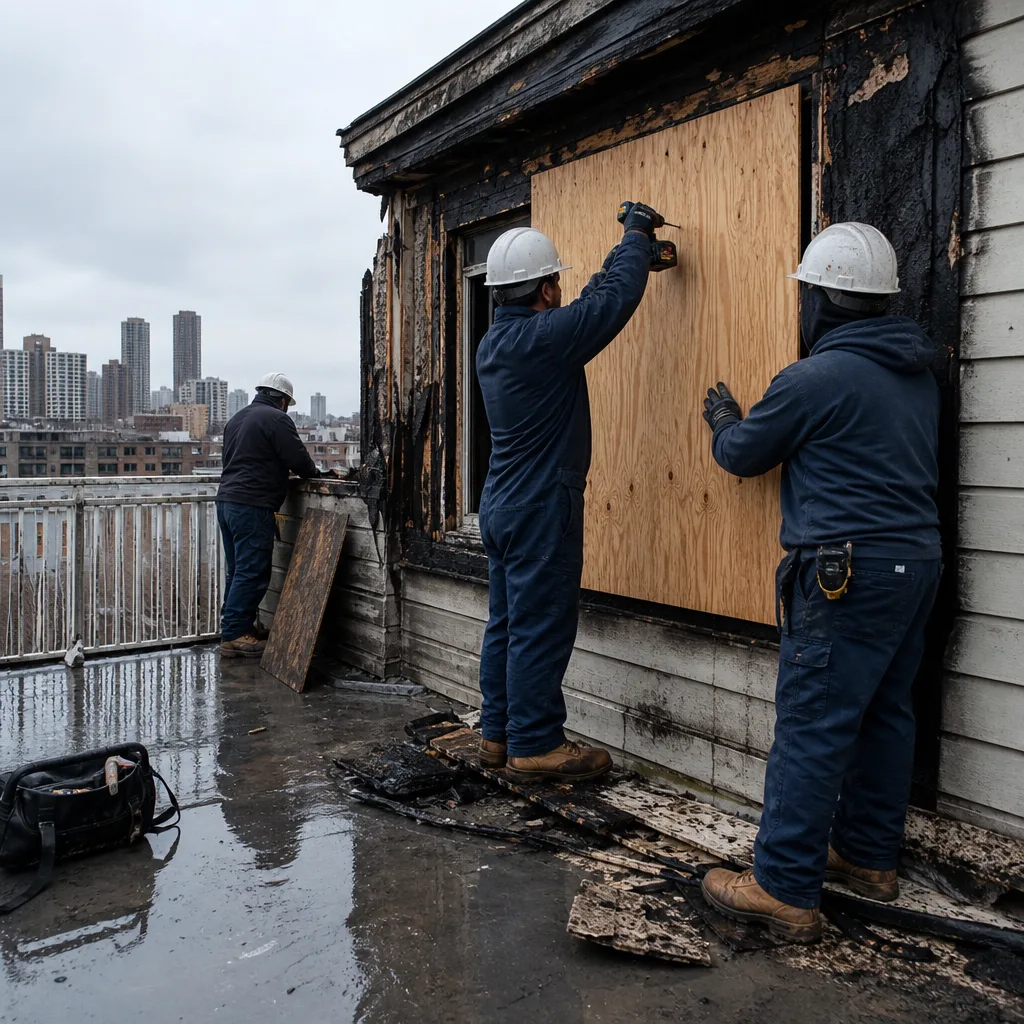
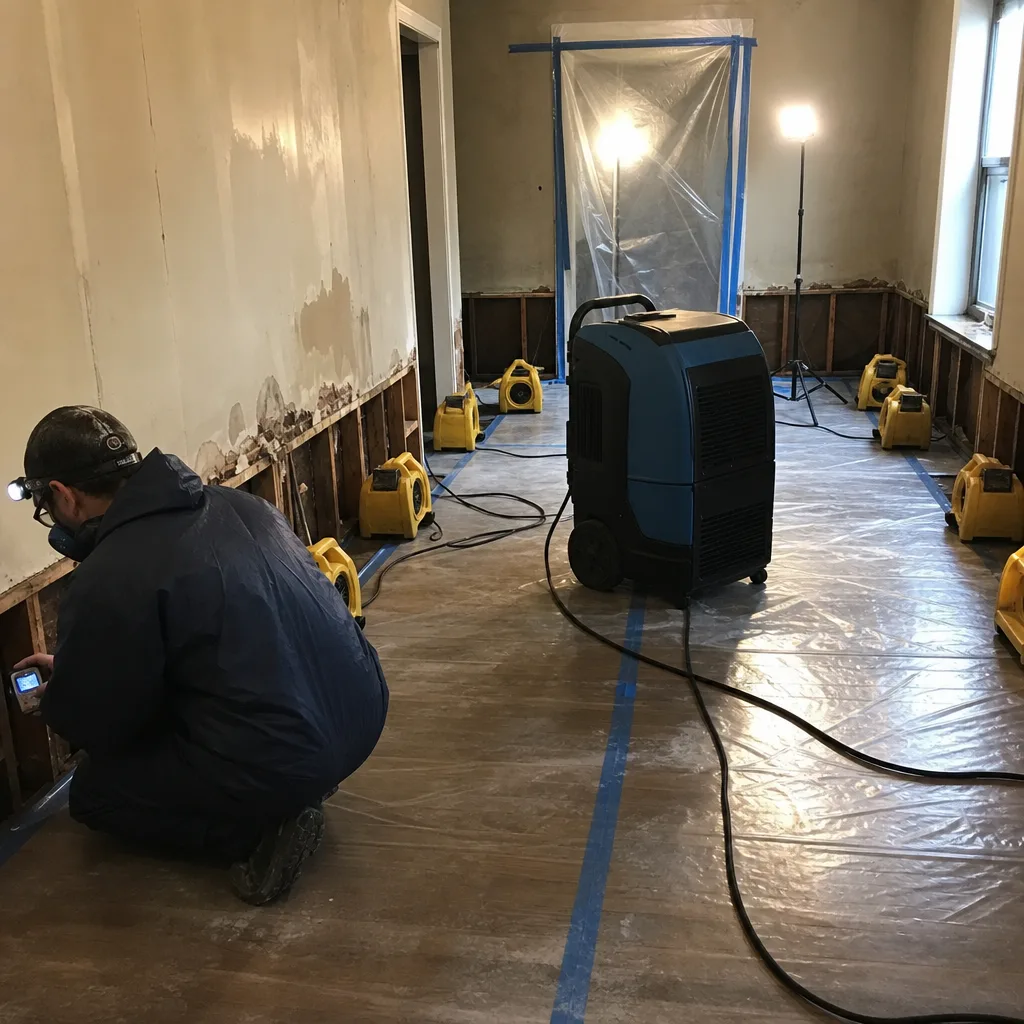
For Category 3 water or suspected microbial growth, we seal the affected area with 6-mil polyethylene and establish negative air pressure with HEPA-filtered air scrubbers. That prevents cross-contamination to clean rooms while we work. Source control happens first: stop the water, cap the leak, tarp the roof breach.
Extraction & Stabilization
We remove standing water with truck-mounted and portable extraction units, then stabilize the environment. For historic plaster and hardwood, we bring humidity down gradually to avoid cracking and delamination. This is where moisture mapping pays off: we dry to the material’s tolerance, not just to a number on a hygrometer.
Drying & Dehumidification
Dri-Eaz and Phoenix dehumidifiers and XPOWER air movers are positioned according to the moisture map, not scattered on guesswork. Daily readings are logged until every affected material reaches its dry standard. For Tenafly’s three-coat plaster and gumwood trim, that log is your proof that we dried it right.
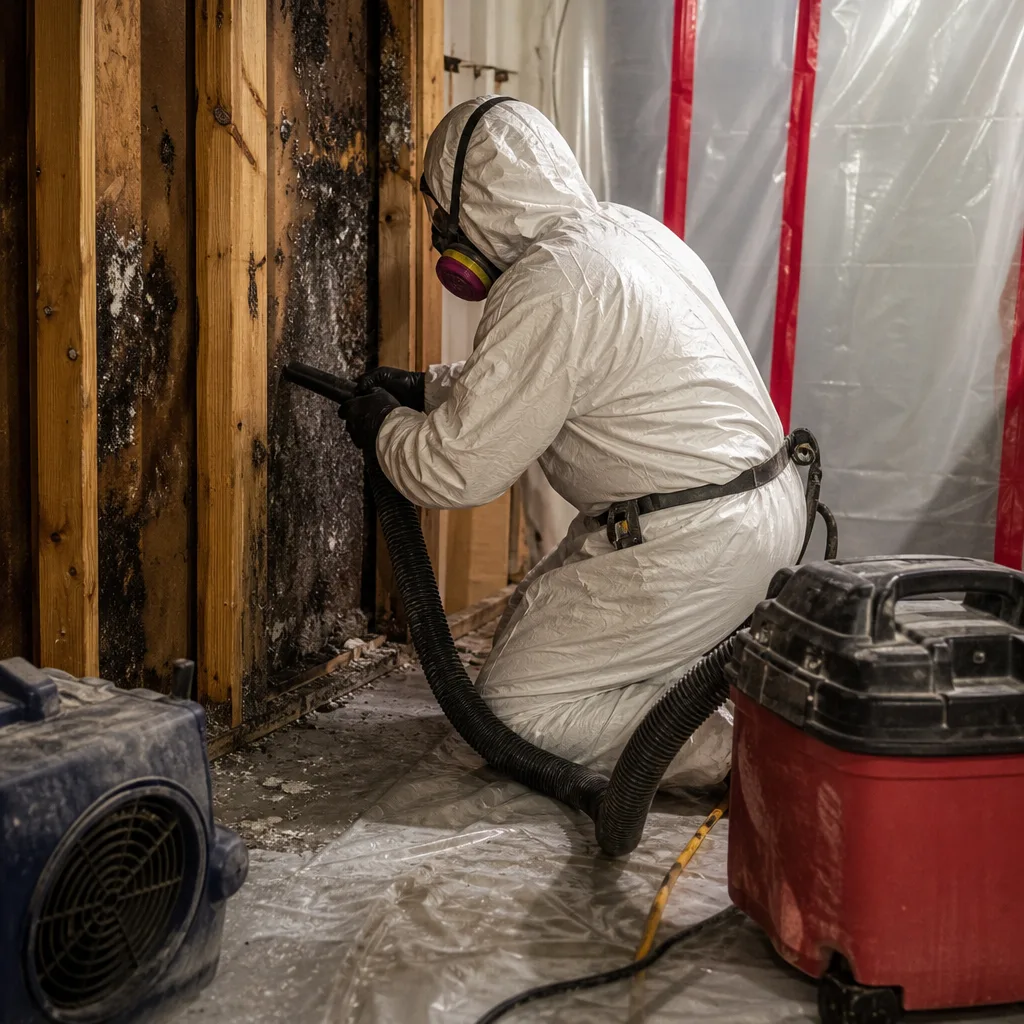
Cleaning & Sanitization
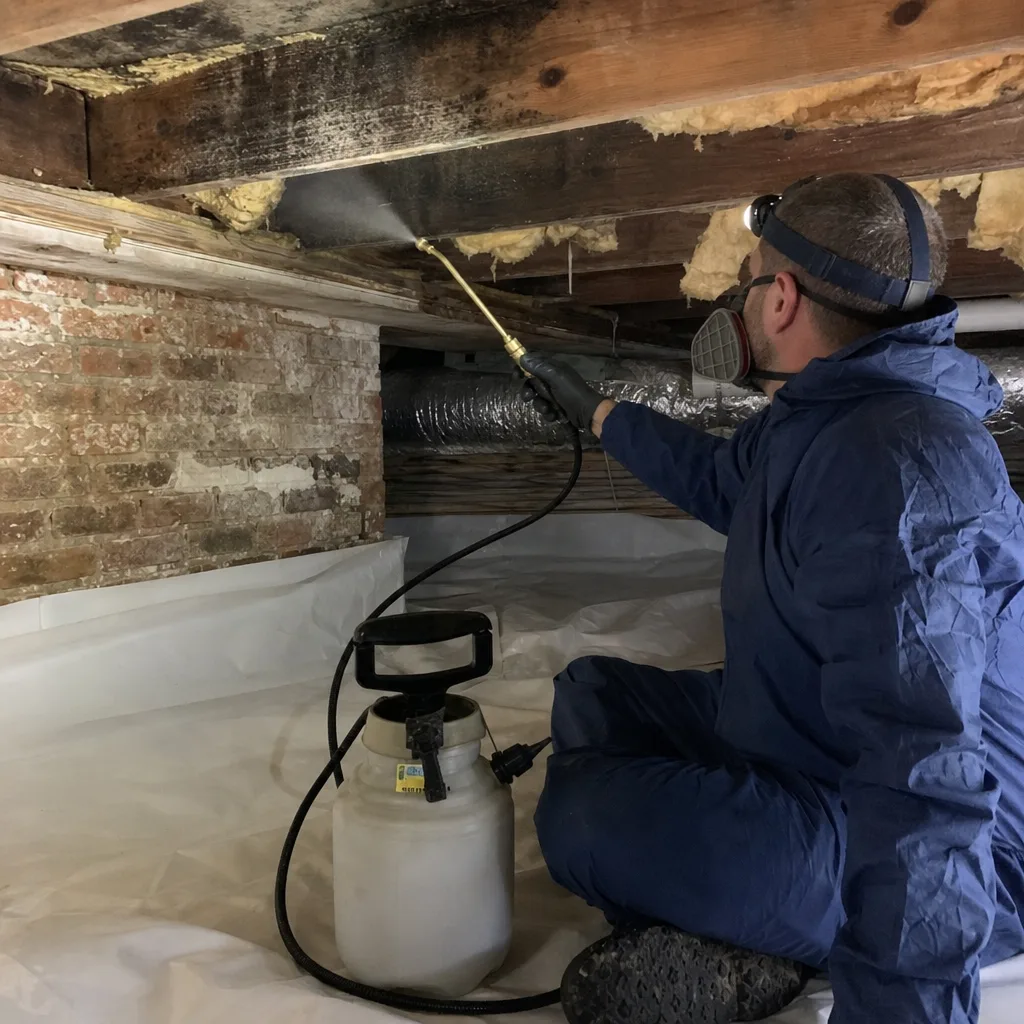
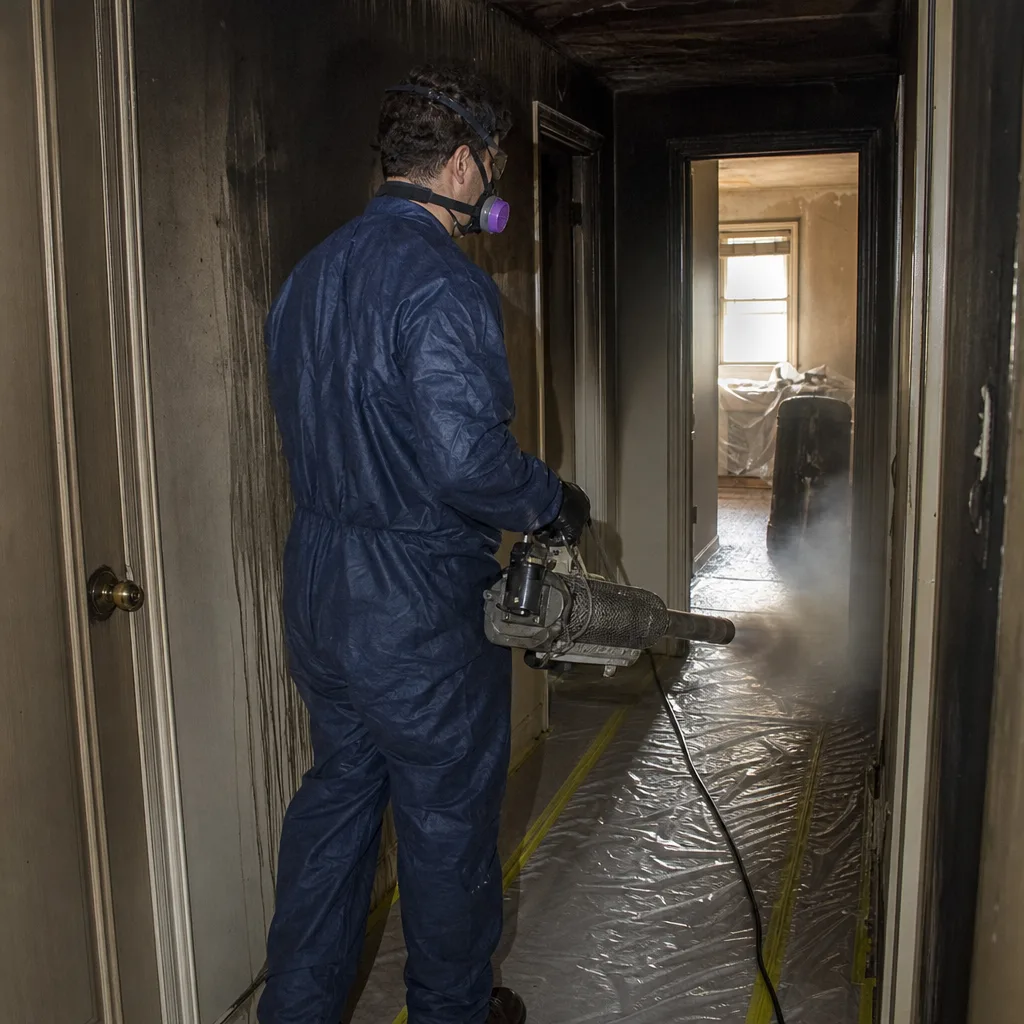
We apply an EPA-registered antimicrobial approved for porous historic materials, using ULV fogging where appropriate and targeted application where fogging would risk etching original finishes. Stained glass, custom wood doors, and hand-troweled plaster get masked or hand-treated before any broadcast application.
Specialty Treatment & Repairs
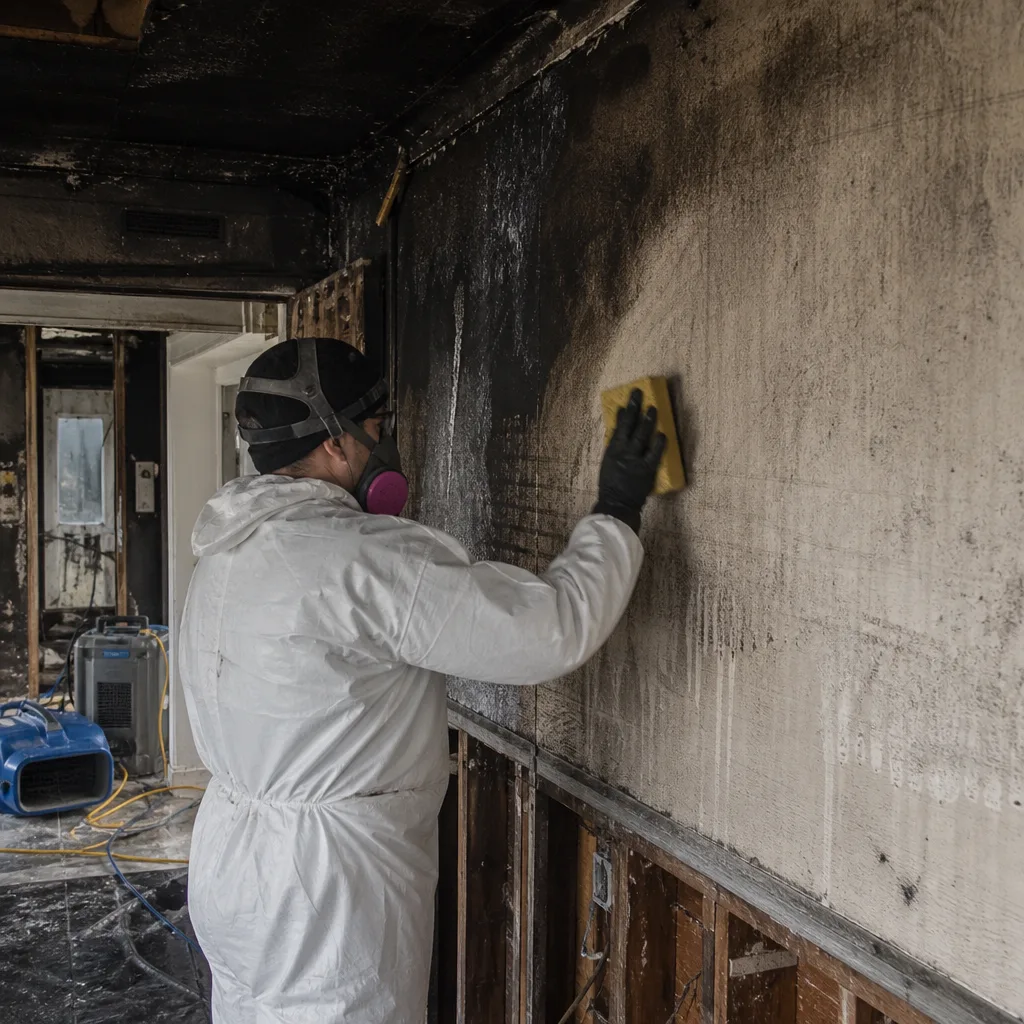
Depending on the job, this means air duct sanitization for older radiant-heated homes, odor neutralization at the molecular level for smoke or sewage, or coordinated pack-out of salvageable millwork for finish matching. Then we rebuild whatever needs rebuilding, matching period profiles and wood species so the repair disappears.
Need Emergency Sanitization Services in Tenafly Now?
Crews minutes away, answering live 24 hours a day. The sooner we start, the less it costs.
Working With Your Insurance Company
Sanitization is almost never the cheapest line item on a Tenafly claim, but it’s the one insurance carriers scrutinize hardest. They want proof that the contamination was real, that the treatment was necessary, and that the scope matched the damage. We build that file for you from the first hour. Our techs photograph every affected room before touching anything, log moisture readings daily, and write a line-item scope that uses industry-standard pricing no adjuster can bounce. When your carrier has questions, we answer them directly. You don’t sit on hold. You don’t translate trade language into insurance language. You get a square deal: the work is done, the documentation is complete, and the bill goes to the carrier for covered losses.
What We Provide Your Insurer
- Thorough documentation of the loss
- Photos of all damage, room by room
- Moisture readings and drying logs
- A detailed, line-item scope of work
- Direct coordination with your carrier
Built for Tenafly’s Loss Calendar
Sanitization calls in Tenafly follow a pattern. January and February bring deep-freeze bursts: supply lines in unheated crawlspaces under 1920s porches and additions let go, and Category 1 water soaks into finished basements before anyone notices. March and April thaw the clay-heavy glacial soil around foundations, and seepage through fieldstone and block walls becomes the dominant call. Summer microbursts drop branches onto slate roofs, opening small breaches that drip into attics and wall cavities for weeks before a stain shows on the ceiling. September through November is nor’easter season, when Tenafly’s dense private-lot tree canopy becomes a liability: century-old oaks and maples come down on roofs, gutters clog with leaf mat, and drainage swales overflow. And the Tenakill Brook doesn’t check the calendar. It overtops its banks during any heavy rainfall event, flooding basements on low-lying streets near the borough’s eastern edge.
We staff for all of it. The same crews that handle a January pipe burst in a Colonial on Knickerbocker Road handle a nor’easter tree-fall in the East Hill section in October. That continuity matters when the sanitization call is the third loss a homeowner has faced in a decade, and they want a name they can hold accountable.
Sanitization Services Across Tenafly’s Neighborhoods
Tenafly’s neighborhoods are not interchangeable, and neither are their sanitization needs. In the East Hill section, where Colonial Revival and Tudor Revival homes sit high on ridgelines, nor’easter tree-fall is the dominant loss type. Roof breaches expose attic insulation and finished rooms to Category 3 storm water; our crews route up East Clinton Avenue and set containment before structural drying begins. The Tenakill Brook corridor, running roughly north-south through the borough’s low-lying eastern streets, floods basements during heavy rain. Homes here, many built before 1940, often have fieldstone foundations and original wood framing that wicks contamination upward into finished spaces. We treat those basements as source zones: sanitize, dry, and verify clearance before anyone reconstructs over it.
Along West Clinton Avenue and the streets running off it, the housing stock shifts to mid-century Colonials and ranches with finished basements and original oak flooring. Pipe bursts and groundwater seepage are the repeat offenders. Over on the north end near Knickerbocker Country Club, the estate homes sit on large, tree-shaded lots where roof breaches and gutter failures channel water into walls and eaves. Each area gets the same standard: moisture mapping before drying, containment before fogging, and a written scope before work starts.
Specialized Sanitization Services Services We Offer in Tenafly
Commercial-Grade Fogging
ULV fogging with an EPA-registered antimicrobial reaches spaces that wiping and spraying can’t: wall cavities, behind built-in cabinetry, inside closet framing, and across attic surfaces. In Tenafly’s older homes we mask original stained glass, cover custom wood doors, and hand-treat lime plaster before any broadcast fogging happens. The chemical profile matters as much as the delivery method. We specify products rated for porous historic materials, not just the cheapest broad-spectrum on the shelf.
Air Duct Sanitization
Many Tenafly homes built before 1960 rely on radiant heat or retrofitted duct systems with long, hidden supply runs. After a flood or tree-fall contamination event, those ducts recirculate odor, spores, and fine debris into freshly restored rooms. We inspect accessible duct interiors, sanitize what’s cleanable, and document what should be replaced. Skipping this step is the most common reason restored Tenafly homes still smell like the flood a month later.
Odor Neutralization
Odor molecules from sewage, smoke, or microbial growth embed in porous surfaces: plaster, raw wood, fabric, and even the dead air space inside walls. Masking agents don’t remove them. We use hydroxyl generators, ozone treatments where appropriate, and thermal fogging to denature odor molecules at the source. In original millwork-heavy rooms, we sequence odor work before finish repairs so nothing gets sealed over with an odor trapped underneath.
Virus & Bacteria Decontamination
Post-illness calls and flu-season deep cleans are part of the same discipline: treat the surfaces that get touched, the air that gets breathed, and the materials that harbor microbes. We follow IICRC and IFA protocols, using hospital-grade disinfectants approved for residential surfaces. For Tenafly households with young children or elderly family members, the assurance is the same one we give on flood jobs: a written scope, a documented process, and a clear standard for what “done” means.
Deep Disinfection
This is comprehensive surface sanitization for high-contact areas: kitchens, baths, railings, door hardware, light switches, and the horizontal surfaces that collect dust and microbes. In a large Tenafly estate home, that’s a two-crew job with a checklist. In a mid-century Colonial, it’s a focused half-day. Either way, we treat it like a contamination job, not a cleaning service: containment where needed, proper dwell times, and verification.
Post-Illness Cleanup
When norovirus, C. diff, or a serious respiratory illness passes through a household, the rooms where the person slept and used the bathroom need more than a wipe-down. We sanitize those zones with appropriate disinfectants, fog where surfaces allow, and dispose of contaminated soft materials according to protocol. It’s a sensitive service, and we handle it without the drama: discreet crews, unmarked or lightly marked vehicles if you prefer, and no questions about the “why.”
Sanitization Services Costs in Tenafly, NJ
What does sanitization actually cost in Tenafly? Here are honest ranges based on the jobs we’ve done in this borough:
| Service | Typical Tenafly Range |
|---|---|
| Post-illness room sanitization (single room) | $250-$450 |
| Whole-home deep disinfection (2,500-4,000 sq ft) | $600-$1,200 |
| Air duct sanitization (full system) | $400-$900 |
| Category 3 flood sanitization with containment | $1,800-$4,500 |
| Commercial-grade fogging (whole-home) | $500-$1,000 |
What moves the price: square footage, the number of contaminated rooms, whether containment is required, whether original plaster or millwork needs protection, and whether ducts are involved. A Category 3 flood from Tenakill Brook in a 1920s Colonial with finished basement and original oak flooring will land at the top of these ranges. A post-illness disinfection of two bedrooms and a bath lands at the bottom. Insurance typically covers sanitization when it’s part of a covered water or storm loss. Our free visual inspection is the path to a firm written scope: no estimate games, no creeping change orders. Call (917) 924-4221 and we’ll tell you what it costs before you commit.
We Also Serve Cities Near Tenafly
Floodline Restoration Co. of Manhattan runs crews through all of Bergen County’s eastern corridor. If you’re in Cresskill, Bergenfield, Englewood, or Dumont, the same 45-minute response commitment and live 24/7 dispatch apply. We know the housing stock, the storm patterns, and the local adjusters. Call us at (917) 924-4221 and a person answers.
Serving Tenafly, NJ - Our Local Coverage Area
We’re based in the Tenafly area and know this community well. Use the map below to see our service coverage - if you’re nearby, we can almost certainly help.
Tenafly Sanitization Services Questions, Answered
How do you sanitize Category 3 floodwater from Tenakill Brook without destroying our original plaster walls?
We sanitize Category 3 floodwater in original plaster walls by removing wet contaminated base, drilling small access points, applying an EPA-registered antimicrobial rated for porous historic materials, and drying with controlled dehumidification so the plaster doesn’t crack or delaminate. Plaster isn’t drywall. Flood-soaked three-coat plaster on wood lathe holds water in the brown coat, and if you force-dry it with high heat you get cracking, spalling, and sometimes full failure. Our process: containment first, then slow drying with Dri-Eaz and Phoenix units running to a target, not a deadline. The antimicrobial is applied at a concentration and dwell time appropriate for lime-based finishes. We’ve done this on Category 3 jobs in Tenafly houses where the alternative quote was “tear it all out and drywall it.” That’s not restoration. That’s demolition. Call (917) 924-4221 and we’ll show you the difference in writing.
Can you sanitize our home after a nor’easter tree-fall without removing the original millwork?
Yes. We sanitize around original millwork by masking it, cleaning it with material-appropriate techniques, and treating the contaminated cavities behind and beneath it rather than pulling it off. A tree-fall brings Category 3 storm water, attic insulation, and decades of dust into finished rooms. The millwork is often salvageable if we get to it before the water does its worst. Our process: set containment, remove the wet insulation and debris, map moisture in the wall cavities behind the millwork, then treat those cavities with targeted antimicrobial application. The millwork itself gets cleaned, not stripped. If a section must be removed for drying or replacement, our finish-matching team profiles the wood species, grain, and original stain so the replacement disappears. Call (917) 924-4221 for a free inspection.
Do we need air duct sanitization after a flood in our 1920s-era Tenafly house?
If your 1920s-era home has forced-air ducts, yes, duct sanitization should be part of any Category 2 or Category 3 water loss, because flood contamination and microbial growth in duct interiors recirculate into restored rooms for months afterward. Radiant-heated older homes don’t have ducts, but many were retrofitted with supply runs through basement ceilings and closets. Those don’t dry themselves. We inspect what’s accessible, sanitize what’s cleanable with EPA-registered products, and document what should be replaced. Skipping this step is how you end up with a restored living room that still smells like the flood. Call (917) 924-4221 and we’ll tell you what your duct system actually needs.
What’s the difference between sanitizing after a Category 1 pipe burst vs. Category 3 floodwater in Tenafly?
A Category 1 pipe burst from a clean supply line requires drying-focused treatment with light antimicrobial application on affected surfaces, while Category 3 floodwater from Tenakill Brook or sewage requires full containment, HEPA air scrubbing, and aggressive antimicrobial treatment on every contaminated material. Category 1 water is initially clean but degrades within 48 hours if it soaks into plaster, framing, or subfloor. Category 3 is contaminated the moment it enters. The cost difference is significant: a clean pipe burst in a Tenafly bathroom might sanitize for under $800; a Category 3 basement flood usually starts around $1,800 and climbs with each finished room affected. The free inspection is the honest way to know which one you’re dealing with. Call (917) 924-4221.
Will the fogging chemical damage our stained-glass windows or custom wood doors?
Not if they’re protected correctly. Fogging chemicals can etch stained glass if the antimicrobial is allowed to dry on the surface, and certain finishes on custom wood doors can be dulled by broadcast application. We mask stained glass, cover finished wood doors and trim, and hand-treat any finish we’re not certain about. For porous historic materials, we select EPA-registered antimicrobials formulated to be non-corrosive to lime plaster and safe on sealed wood finishes. If a surface can’t be verified, we test a small section first and show you the result. That’s the standard. Call (917) 924-4221 and we’ll walk the house with you before any chemical goes down.
How fast can you get to a Tenafly sanitization emergency?
We commit to 45 minutes from your call to our crew arriving on-site in Tenafly for active water or contamination emergencies. That’s a real commitment, backed by a dispatch board that’s staffed 24/7 by a live person. The sooner we start, the more original plaster, millwork, and flooring you keep. Call (917) 924-4221 and the clock starts while you’re still on the line.
Will my insurance cover sanitization after a storm or flood in Tenafly?
Sanitization is covered when it’s part of a covered water, storm, or sewage loss, and we document the contamination so your carrier can’t argue it was optional. That means photos before work starts, moisture readings and drying logs, a line-item scope that names the contamination and the treatment protocol, and direct communication with your adjuster. For a Tenafly tree-fall claim with Category 3 water, sanitization is usually written into the same loss as the roof repair and interior restoration. We bill the carrier directly for covered work. Call (917) 924-4221 and we’ll review your policy situation before any charges accrue.
Do we need to leave our Tenafly home during sanitization?
For most sanitization jobs, no. For Category 3 floodwater or sewage contamination inside finished living space, we may recommend relocating for 24 to 48 hours while containment is up, the antimicrobial dwells, and HEPA air scrubbers run. The recommendation depends on the size of the affected area, whether occupants have respiratory conditions, and whether chemicals will be fogged into finished rooms. We’ll tell you straight before work starts, and we’ll write it into the scope so there’s no mid-job surprise. Call (917) 924-4221 with your situation and we’ll give you a straight answer.
Written by Curt Bowman, Owner at Floodline Restoration Co. of Manhattan, serving Tenafly and Bergen County with certified restoration and sanitization crews since 2010.
If your Tenafly home needs sanitization, disinfection, or contamination cleanup, call (917) 924-4221 now. A live dispatcher will answer, and we’ll have a crew on the way. Free inspection, written scope, and the 90-Day Done Right Promise in your hands before we leave. Sanitization Services in Tenafly is what we do, and we do it right.
Why Tenafly Chooses Floodline Restoration Co. of Manhattan
We set the standard for sanitization services in Tenafly.
Documented for Your Claim
Every job is photographed before, during and after, with moisture logs where they apply. We hand the full file to your adjuster and bill your insurance directly - you are never the one relaying it.
Licensed & Insured
Fully certified technicians who meet all local and state licensing requirements.
Upfront Pricing
No hidden fees, no surprises. You approve the price before any work begins.
Guaranteed Work
Every repair and installation is backed by our workmanship warranty and satisfaction guarantee.
How It Works in Tenafly
Getting your sanitization services handled is simple and fast.
Call or Request a Free Estimate
Tell us about your sanitization services needs and we provide an upfront, transparent quote - no obligation, no hidden fees.
Licensed Technician Dispatched
A background-checked, certified technician arrives in Tenafly - typically within 30-60 minutes, with parts stocked on the truck.
Problem Solved, Guaranteed
We complete the job to your full satisfaction, backed by our warranty and 100% satisfaction guarantee.
What happens when you call
- 1A real person answersNo phone trees - talk to a local sanitization services pro.
- 2You get an upfront price rangeHonest numbers before anyone is dispatched. No surprises.
- 3We come out and measureLicensed & insured, at a time that suits you - the visit and the quote are both free.
- 4You get the price in writingLine-itemed, yours to keep, and nothing starts until you say go.
What Tenafly Customers Say
Trusted by homeowners across Tenafly and surrounding areas.
"Sewage backed up into the downstairs bathroom on a holiday weekend. The crew arrived in full protective gear, took out everything porous, bagged it, and sanitized the space twice. They treated a disgusting job like it was routine, which for them I suppose it is."
"We had a musty smell in the hall closet for months. He tested first, found the leak inside the wall, sealed the area off with plastic before opening anything, and put the whole scope in writing before asking for a signature."
"Another company told me the whole attic needed mold remediation at a terrifying price. These guys tested, showed me it was surface growth on one sheet of plywood, and charged me for a cleaning instead. That kind of honesty buys a customer for life."
Our Work in Tenafly
A look at recent damage restoration projects across Tenafly and surrounding areas.
Ready for Sanitization Services in Tenafly?
Call now for a free estimate - or request one below. Licensed, insured, and available 24/7 in Tenafly.
(917) 924-4221Request a Free Estimate in Tenafly
Tell us about your sanitization services needs - we'll respond within the hour.