
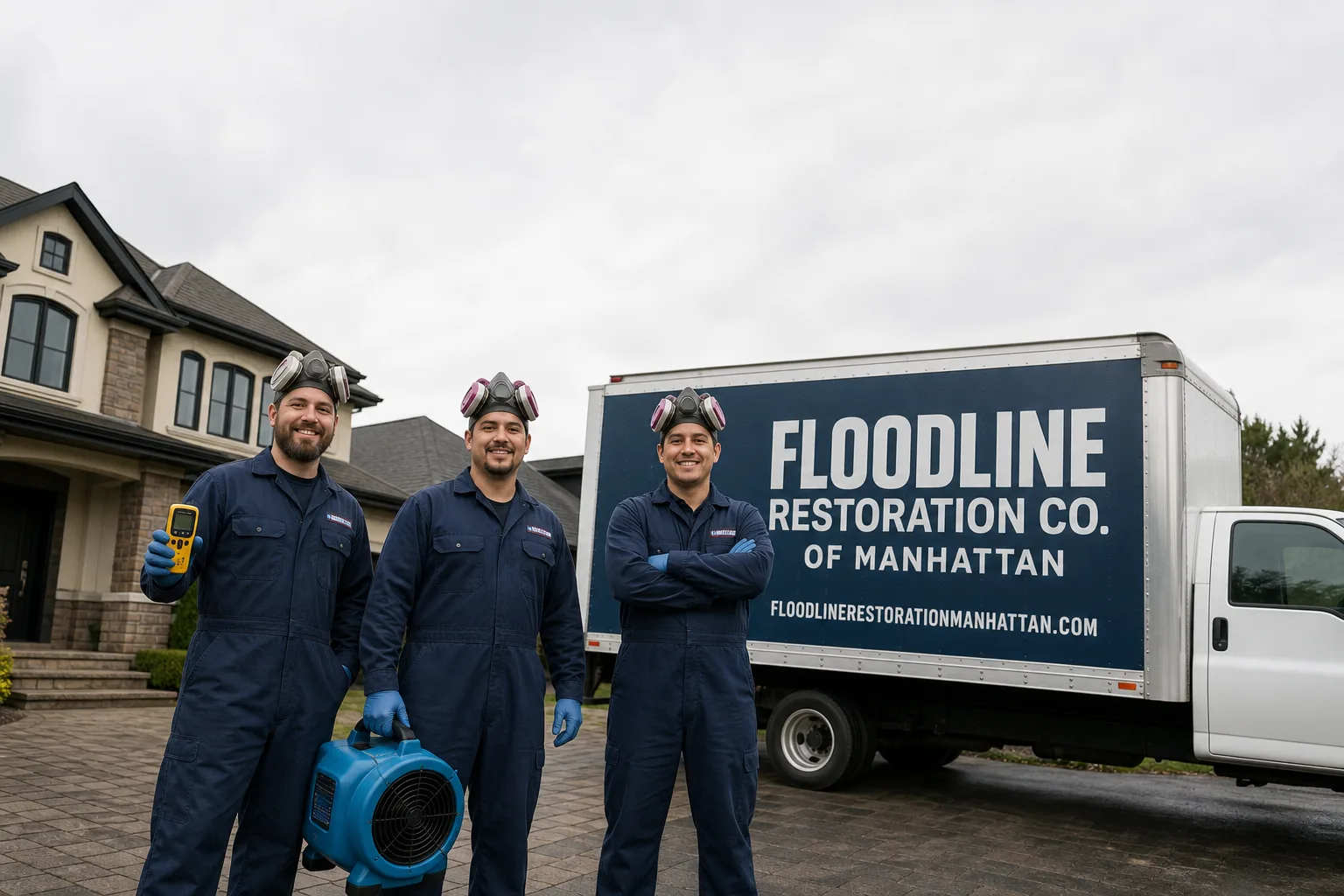
Free visual inspection and a written scope of work before any mitigation begins - photos, moisture readings, and drying logs go in your claim file
The scope we write is the scope we bill. Anything new gets shown to you, in writing, before we touch it.






 Before
 After
After Before
 After
After Before
 After
After24/7 Emergency Sewage Cleanup in Alpine
Sewage cleanup in Alpine, NJ requires a fast, contained response, because category 3 water moves through older homes differently than it does in new construction. We answer the phone live at (917) 924-4221, every hour of every day, and our crews reach Alpine properties quickly with containment, extraction, and sanitization equipment ready to run. The first hour matters most: sewage that sits in a fieldstone basement or wicks into horsehair plaster becomes a structural problem, not just a cleaning job. Call us the moment you see a backup, an overflow, or water where it should not be, and we will walk you through the first steps while a crew is already on the way.
Understanding Sewage Cleanup Severity in Alpine Properties
Not every sewage spill is the same. Cleanup in Alpine divides into three categories. Category 1 water starts clean, from a supply line or a burst pipe under a sink. Category 2 carries some contamination, like washing machine discharge or a sump pit overflow. Category 3 water, sometimes called black water, contains sewage, bacteria, and pathogens from a toilet, floor drain, or septic system. That is the level that demands containment, antimicrobial treatment, and often controlled demolition of the affected finishes.
Alpine’s housing stock makes this classification work harder than it does in a newer suburb. A 1920s colonial on Anderson Avenue with cast-iron waste lines and horsehair plaster will hold moisture inside wall cavities for weeks. A mid-1800s farmhouse with a fieldstone foundation has no vapor barrier and no modern drainage plane. When category 3 water reaches those materials, you are not dealing with wet drywall. You are dealing with saturated lime plaster, old-growth framing, and rubble-mortar joints that can hide contamination well beyond the visible stain line. Moisture mapping and thermal imaging are not optional here. They are how we find what the water touched before we decide what gets cleaned, what gets treated, and what gets removed.
Why Alpine Property Owners Choose Floodline Restoration Co. of Manhattan
- Rapid dispatch to Alpine, day or night. A live dispatcher answers the phone and a certified crew is routed to your street immediately, not sent to a voicemail queue.
- 24/7 live answer. You speak to a person at 2 a.m., not a recording. That person knows the difference between a category 2 situation and a category 3 emergency.
- IICRC-certified crews with specific training. Our technicians carry WRT, FSRT, and AMRT certifications, and every crew is background-checked and uniformed.
- Free visual inspection. We assess the visible damage, the moisture pattern, and the likely source before you commit to anything.
- Direct insurance billing. We document, photograph, and communicate with your carrier directly. You never play messenger between us and the adjuster.
- One team from extraction to reconstruction. The same certified crew that sets containment also handles the drying, the sanitization, and the rebuild. No mid-job handoff.
Our Sewage Cleanup Process
Inspection & Assessment
We trace the source, classify the water, and map the moisture. In Alpine homes, that often means opening a small access point to check what is inside a plaster wall or under a finished basement floor.
Extraction & Stabilization
We remove the standing sewage with truck-mounted and portable extraction units. The goal is to stop the water from spreading before it reaches more materials. The faster this happens, the less gets torn out.
Drying & Dehumidification
Structural drying in Alpine takes longer than in modern construction. We run Dri-Eaz and Phoenix dehumidifiers with air movers, and we take daily moisture readings in the framing, plaster, and subfloor until each material hits its dry standard.
Cleaning & Sanitization
Every affected surface gets cleaned and treated with EPA-registered antimicrobials. We do not just mask odor. We remove the contamination that causes it, then verify with post-treatment testing.
Black Water Specific Treatment
Category 3 contamination requires containment, negative air where needed, and disposal of unsalvageable porous materials. Carpet, pad, and saturated drywall cannot be reliably sanitized after sewage contact, and we will tell you that plainly.
Repairs & Restoration
We rebuild what was removed, matching the age and character of your Alpine home where possible. The same crew that extracted on day one hangs the new drywall and reinstalls the trim.
Need Emergency Sewage Cleanup in Alpine Now?
Crews minutes away, answering live 24 hours a day. The sooner we start, the less it costs.
Working With Your Insurance Company
Sewage backup claims are common in Alpine, but they get harder when documentation is thin. We start documenting from the first hour: photos of every affected room, moisture readings in the walls and floors, and a line-item scope that shows exactly what we found and what we plan to do. That level of detail matters when an adjuster questions why a 1920s plaster wall needs to come out instead of being sprayed and painted. Our team communicates with your carrier directly, sends the documentation as it is produced, and answers the adjuster’s questions about Alpine building conditions without you having to translate. You get a square deal: no surprises on the bill, and the carrier gets the evidence it needs to process the claim.
What We Provide Your Insurer
- Thorough documentation of the loss
- Photos of all damage, room by room
- Moisture readings and drying logs
- A detailed, line-item scope of work
- Direct coordination with your carrier
Built for Alpine’s Loss Calendar
Sewage problems in Alpine follow a seasonal rhythm, and knowing it helps you know what to watch for. Winter is the harshest season. Deep freezes in January and February drive frost deep into the ground, and the same freeze-thaw cycles that heave roads also stress cast-iron waste lines and clay pipe joints that have been in the ground for 80 or 100 years. A hairline crack becomes a full break by spring, and that is when basements back up. Spring thaw sends snowmelt toward foundations, and homes on Alpine’s hillside lots take on groundwater that finds its way into floor drains and sump pits. Summer brings sudden downpours that overwhelm older drainage systems, pushing water back up through fixtures in basements with failed check valves. Autumn is the quiet season, but it is also when seasonal properties sit empty. A slow drain leak in a house that is closed up for two months turns into a category 3 problem long before anyone opens the door.
Sewage Cleanup Across Alpine’s Neighborhoods
Alpine is small, but its streets show clear patterns when it comes to sewage work. The homes along Anderson Avenue, many built in the 1910s and 1920s, run on original cast-iron waste lines that have been in service for a century. Those lines crack under the slab, and the sewage surfaces in finished basements. Homes near the borough’s eastern edge, closer to the Hudson-facing slope, deal with more groundwater pressure against their foundations during wet seasons, which presses into older clay pipe joints and backs up floor drains. The larger estate properties set back from Church Street and Closter Dock Road often have long lateral runs from the house to the municipal connection, which means more pipe in the ground and more opportunity for a failure before the waste ever leaves the property. And the hillier lots above the Palisades face a different problem: surface water running downhill during heavy rain can overwhelm a property’s own drainage, and that water carries everything it picks up along the way. Each of these patterns changes where we look first and what we expect to find behind the drywall.
Specialized Sewage Cleanup Services We Offer in Alpine
Sewage Backup Cleanup
A backed-up waste line in an Alpine home usually shows up first in the lowest fixture: a basement floor drain, a laundry sink, or a toilet in a finished lower level. Our Sewage Cleanup team extracts the standing black water, sets containment, and removes the materials the sewage touched. In homes with original plaster walls, that often means cutting plaster and lath back to the studs to remove contaminated insulation and hidden moisture before sanitization.
Toilet Overflow Cleanup
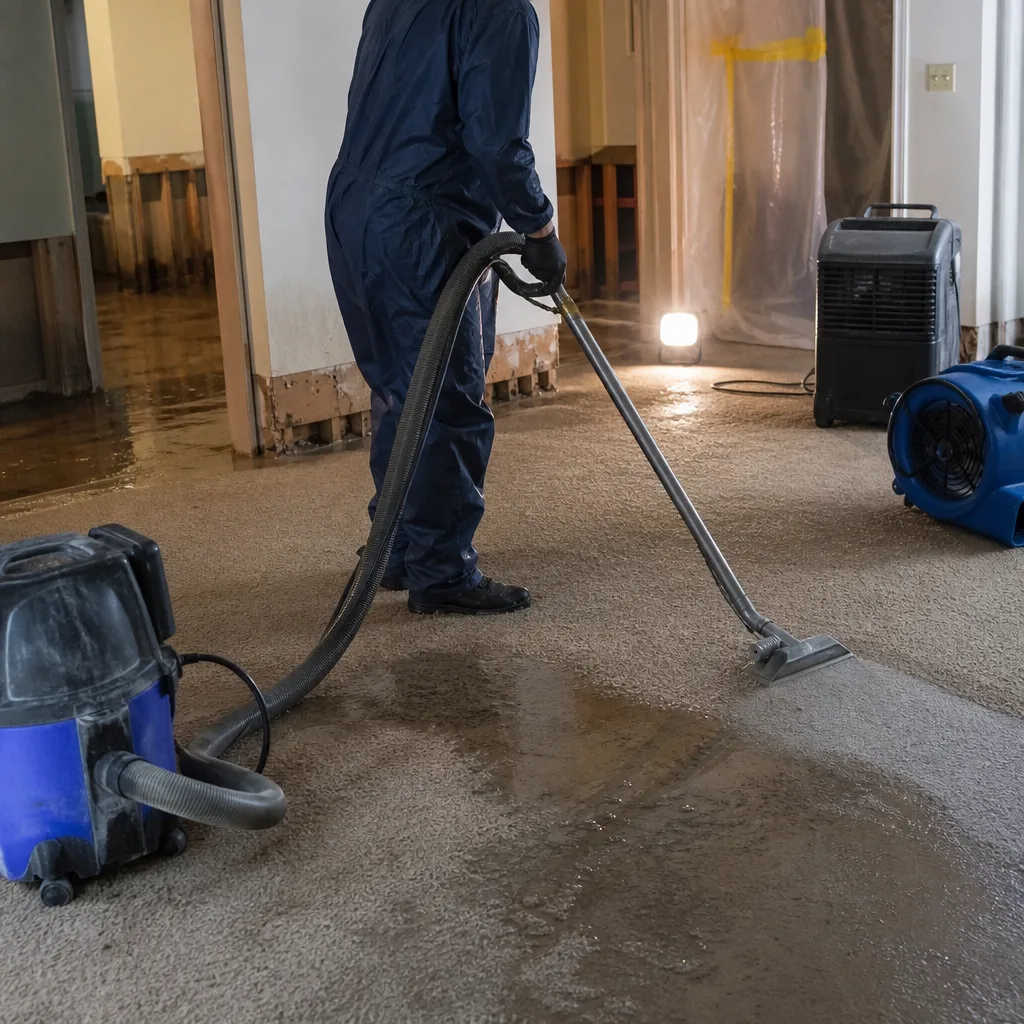
An overflowing toilet is rarely just a cleaning problem. The water travels fast across tile and into the nearest wall or floor cavity. On Alpine properties with older finished basements, we regularly find sewage that has run under vinyl plank, soaked the underlayment, and migrated behind the baseboard before anyone realized the full extent. We pull the affected materials, dry the framing, and sanitize the floor before any new finish goes in.
Septic Failure Cleanup
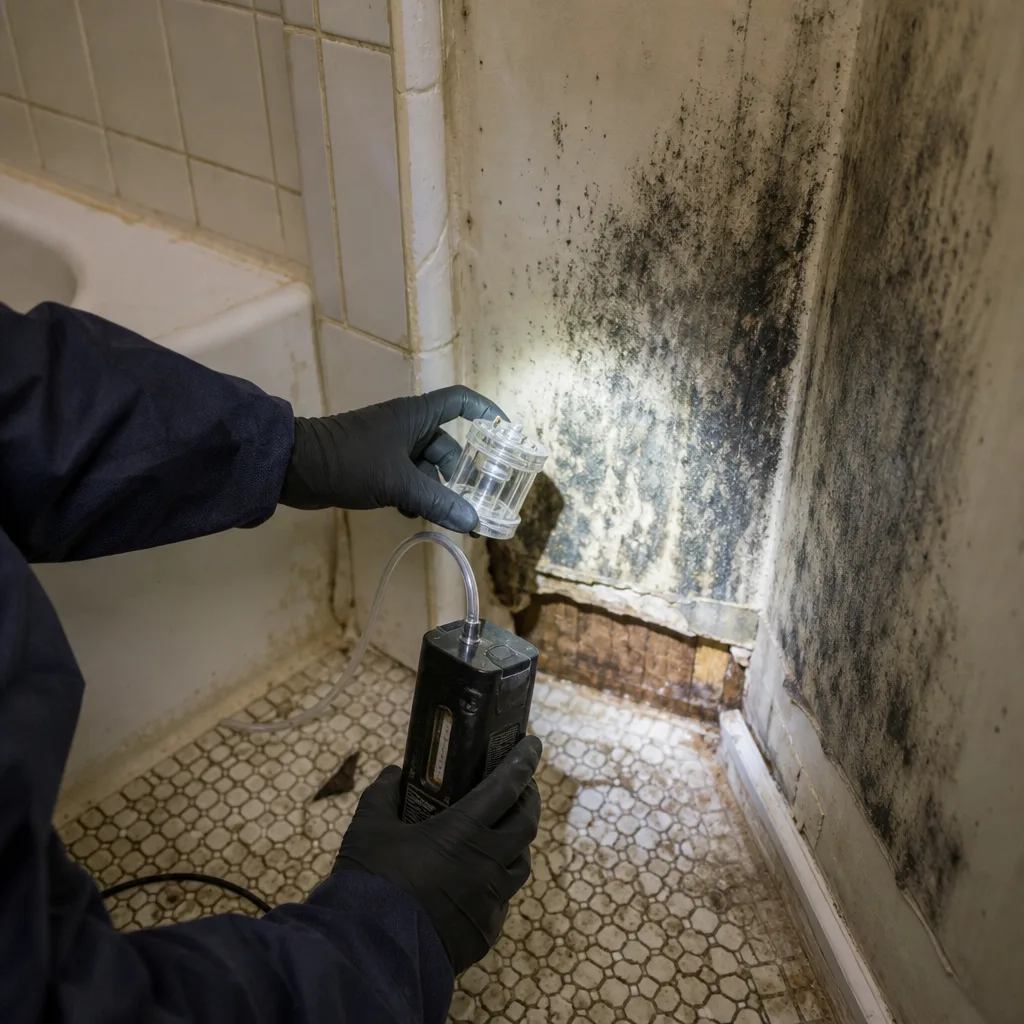
Some Alpine properties operate on septic systems, and a failed drain field or a full tank sends sewage back into the house through floor drains and ground-floor fixtures. These events are often slow to declare themselves: an odor first, then a slow drain, then a flooded basement. By the time we arrive, the contamination has usually spread beyond the obvious puddle. We approach these with full containment and thorough moisture mapping, because septic overflow is category 3 water every time.
Black Water Extraction
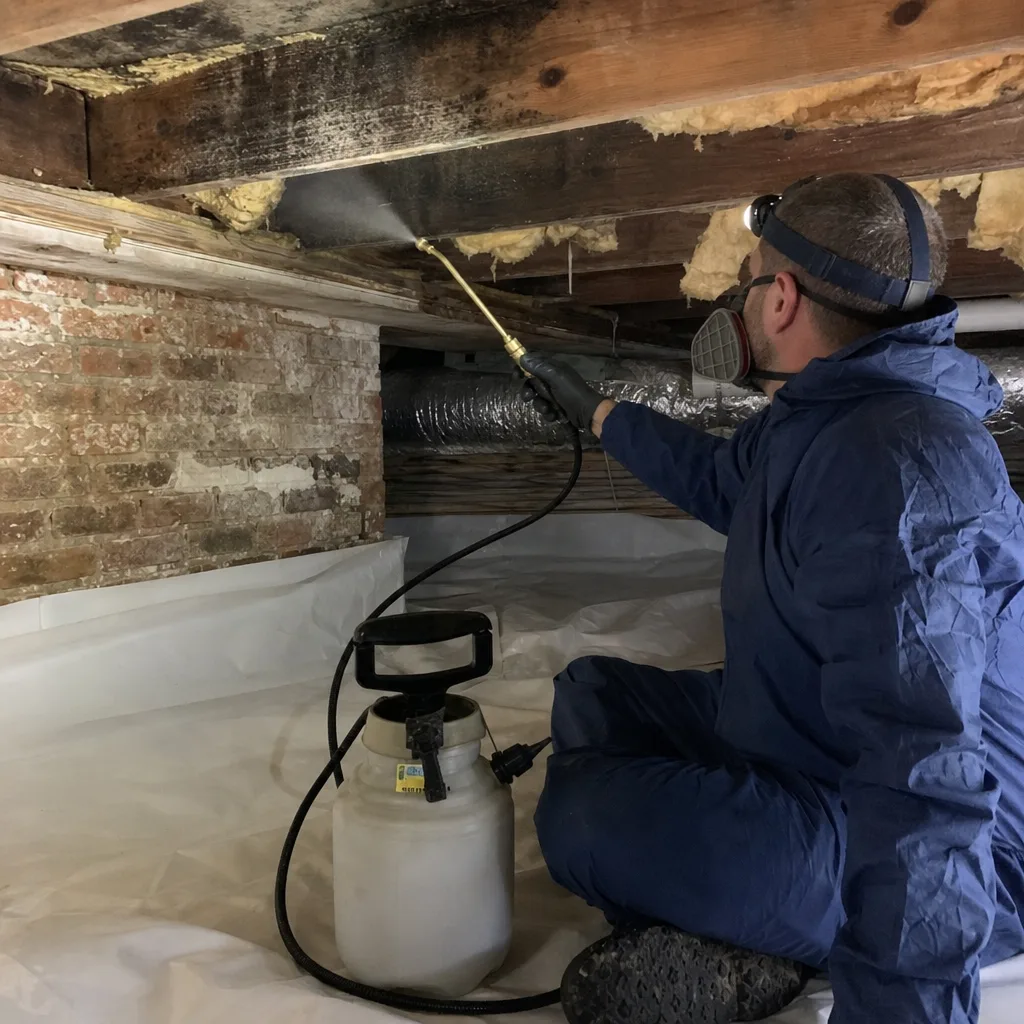
Black water extraction in Alpine requires equipment that moves volume quickly while containing what it moves. We run truck-mounted extractors and portable units rated for category 3 water, and we do not dump extracted sewage into Alpine’s storm water system. That violates local environmental regulations and exposes property owners to citations. Disposal is handled through approved waste channels, documented and traceable.
Sanitization & Disinfection
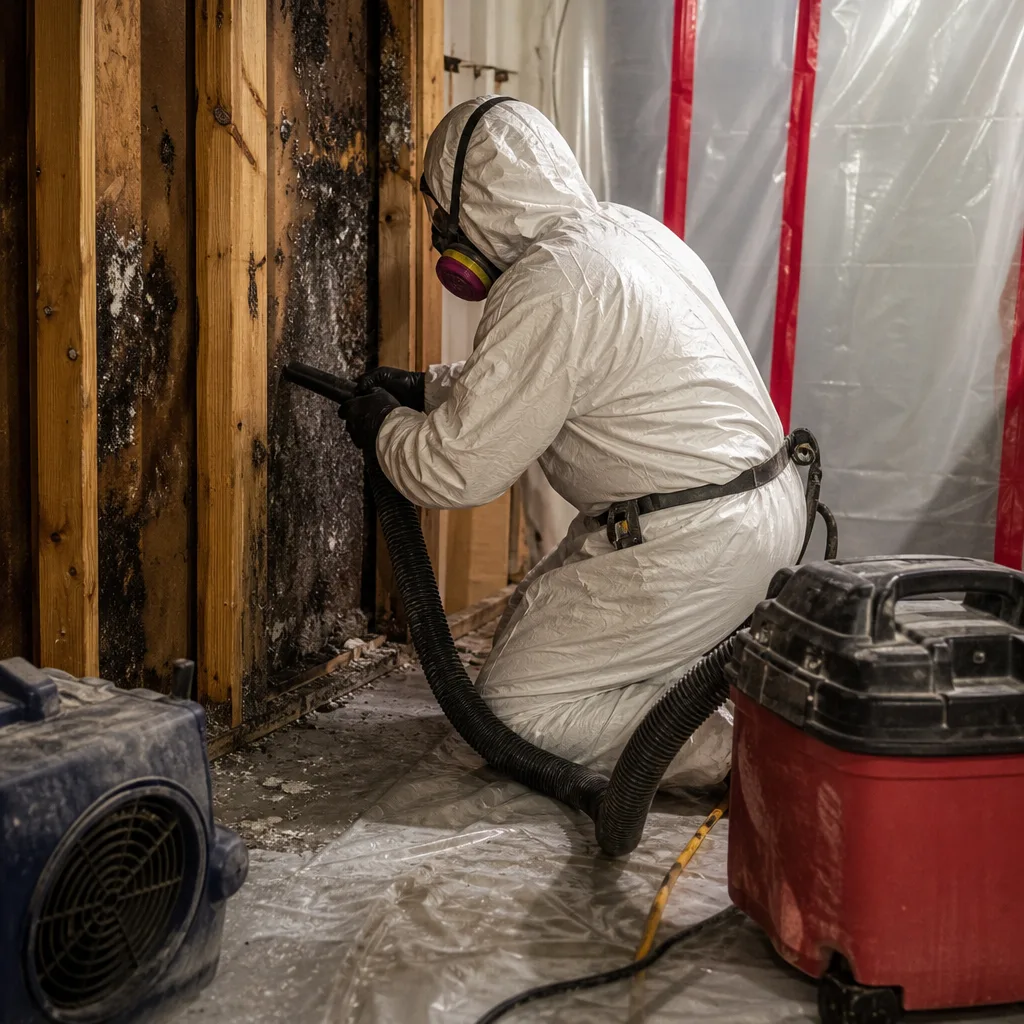
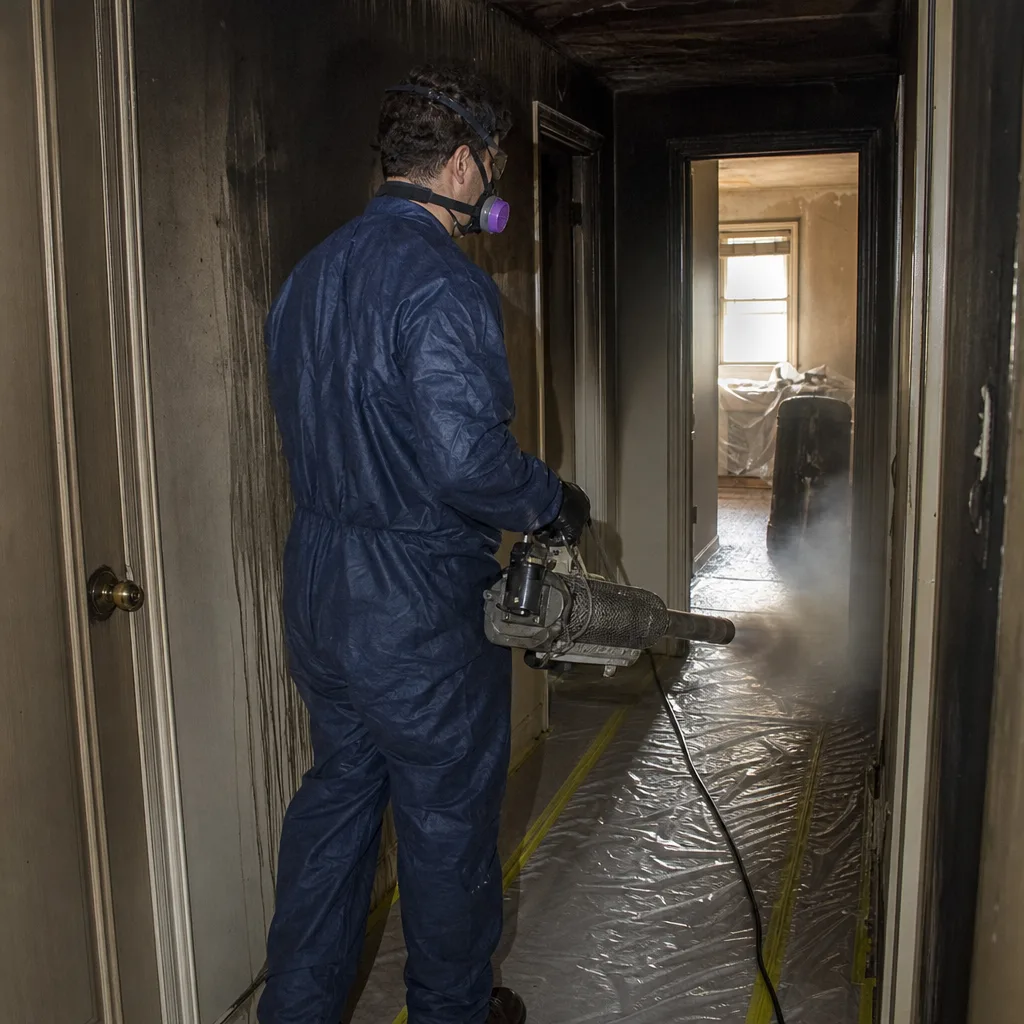
Once extraction and demolition are complete, every affected surface in the Alpine home gets treated with EPA-registered antimicrobials. Hard surfaces like concrete, tile, and framing are cleaned and treated. Porous materials that cannot be reliably sanitized get removed. We then verify the work with post-treatment testing. The goal is a basement, crawlspace, or first floor you can safely walk through without wondering what is still growing inside the walls.
What happens when you call
- 1
A real person answersNo phone trees - you reach a local pro.
- 2
You get an upfront price rangeHonest numbers before anyone is dispatched.
- 3
A background-checked tech heads outLicensed & insured, dispatched right away.
- 4
You approve before work beginsNothing starts until you say go.
Sewage Cleanup Costs in Alpine, NJ
Sewage cleanup in Alpine runs higher than in nearby boroughs for one main reason: the homes are older and the materials demand more careful work. A contained toilet overflow limited to a tile bathroom floor may cost $1,200 to $3,000. A backup that spreads through a finished basement with carpet, drywall, and built-ins typically falls between $4,500 and $12,000. A full category 3 loss in a home with plaster walls, original trim, and a crawlspace that is also involved can reach $15,000 to $35,000 or more, depending on what must be removed and rebuilt. What moves the price: the square footage of the affected area, whether plaster or drywall is involved, whether the crawlspace or basement floor slab holds moisture, and how much of the finish work must be replicated. Most Alpine homeowners file these events through their insurance, and our documentation supports the claim from the first hour. For an exact number, start with a free visual inspection, and we will give you a written scope before any work begins. Call (917) 924-4221 and we will walk it through with you.
We Also Serve Cities Near Alpine
Our crews serve Alpine and the surrounding boroughs, including Demarest, Cresskill, Closter, and Tenafly. Each area has its own mix of housing stock and sewage infrastructure, and our approach adjusts to what we find under the slab and behind the walls. If you are in one of those communities and dealing with a sewage backup, the same live dispatch, the same certified crews, and the same written guarantee apply.
Serving Alpine, NJ - Our Local Coverage Area
We’re based in the Alpine area and know this community well. Use the map below to see our service coverage - if you’re nearby, we can almost certainly help.
Alpine Sewage Cleanup Questions, Answered
How quickly can your crew get to Alpine when a toilet overflows and sewage is spreading across the first floor?
Our crews are dispatched to Alpine immediately when you call (917) 924-4221, and we make every effort to arrive within the hour. While the crew is traveling, the dispatcher will stay on the line with you and walk you through the first steps: shut off water if you can reach the valve safely, keep people and pets away from the spill, and do not attempt to flush or run water anywhere else in the house.
Does Alpine require a permit for cutting out drywall and flooring after a sewage backup?
In many Alpine properties, cutting out drywall, flooring, and saturated plaster is considered abatement of a sanitary nuisance and may not require a permit when done as part of emergency mitigation. Rebuilding, relocating plumbing, or changing the structure often does. We handle permit filing where it is required and coordinate with the borough’s building department so the work stays compliant from the first cut to the final inspection.
What do you do with carpet and pad that got soaked with septic tank overflow in an Alpine basement?
We remove and dispose of it. Carpet and pad that have absorbed category 3 water cannot be reliably sanitized, even with antimicrobial treatment. The pad acts like a sponge and holds contaminated moisture against the slab for days. We cut the carpet and pad out, bag it as contaminated material, and then treat the slab and the lower portions of the walls before anything new goes in.
How do you dry a 100-year-old Alpine home’s fieldstone foundation after a sewage backup into the crawlspace?
Fieldstone foundations dry differently than poured concrete. The stone itself absorbs some moisture, and the mortar joints wick water upward into the sill plate and framing. We run dehumidifiers and air movers in the crawlspace, monitor moisture readings daily in the mortar joints and rim joists, and keep drying until the materials return to their pre-loss readings. In some cases, we apply antimicrobial treatment directly to the stone and mortar before drying completes.
Can you sanitize our kitchen after a sewage backup contaminated the cabinets, or do they have to be replaced?
It depends on what the cabinets are made of and how long they sat in contaminated water. Solid wood cabinet boxes can sometimes be cleaned, treated, and saved if the exposure was brief and the water did not penetrate the joinery. Particleboard and MDF cabinets absorb category 3 water and typically cannot be reliably sanitized. We will show you what we found, explain which route is defensible, and let you decide before we cut anything out.
Is sewage cleanup in Alpine covered by homeowners insurance?
Sewage backup coverage is not automatic on every policy in Alpine. Many standard policies require a specific rider or endorsement for sewer and drain backup. Water damage from a burst pipe is usually covered, but a backup from a municipal line or a failed septic system may fall under different terms. We recommend reviewing your policy declarations, and our team can provide the documentation your adjuster needs to confirm coverage. Call (917) 924-4221 and we will help you understand what your policy likely covers before work begins.
What certifications do your technicians carry for sewage cleanup work?
Our technicians are certified through the IICRC, including WRT for water damage restoration, FSRT for fire and smoke, and AMRT for applied microbial remediation. They are background-checked, uniformed, and trained on category 3 water protocols specifically. The crew that arrives at your Alpine home has done this work before, and they follow the same process every time: contain first, extract second, sanitize third, and document everything in between.
What should I do in the first 30 minutes after a sewage backup in Alpine?
Call (917) 924-4221 first. Then, if you can do so safely, shut off the water supply to the affected fixture, keep everyone out of the affected area, and do not attempt to plunge or flush anything. Do not run a shop vac over standing sewage. Do not try to dry the area with a household fan, which can aerosolize contaminants into other rooms. The best first step is a live conversation with our dispatcher, who will guide you while the crew rolls.
Written by Curt Bowman, Owner at Floodline Restoration Co. of Manhattan, serving Alpine and surrounding communities since 2010.