
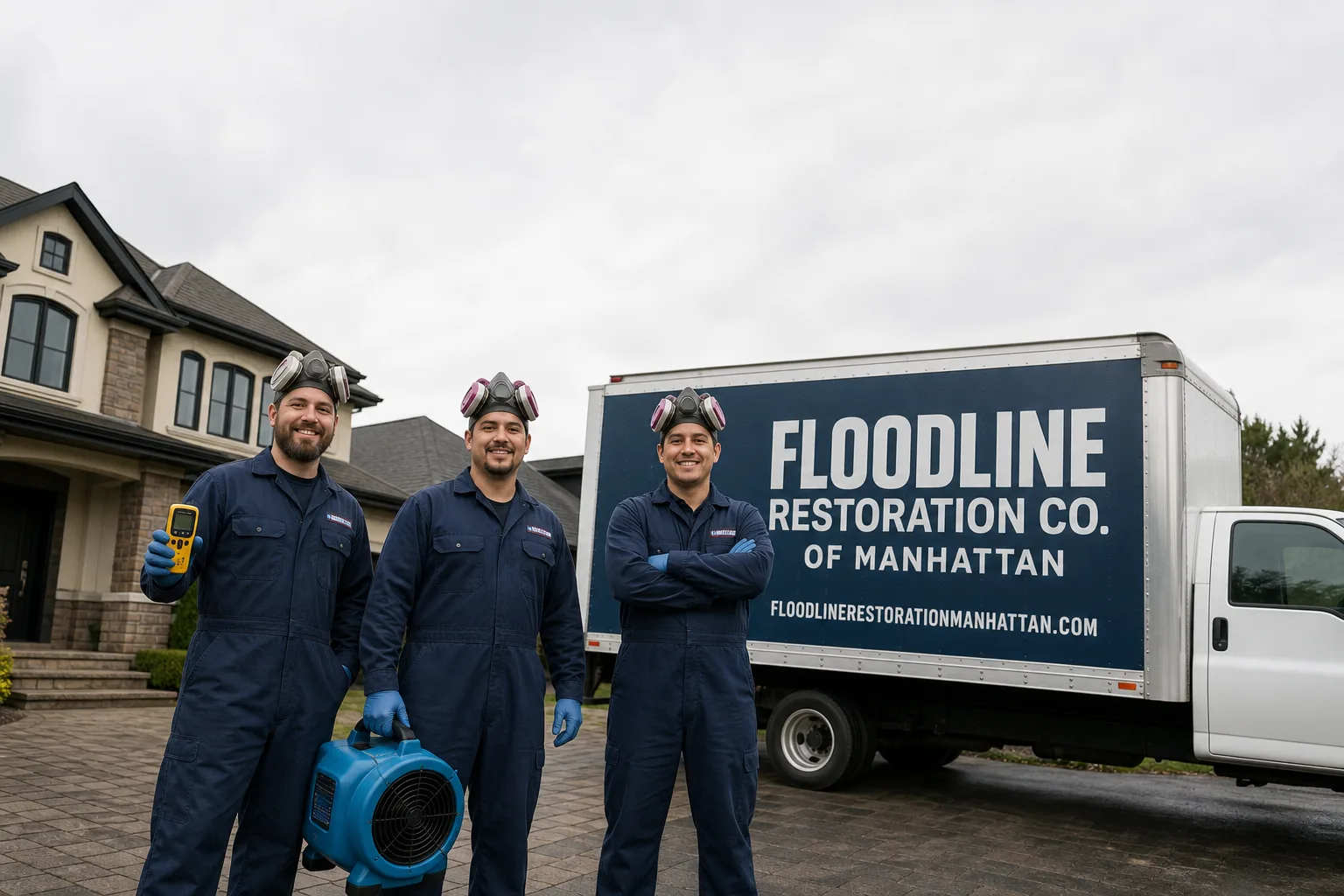
Free visual inspection and a written scope of work before any mitigation begins - photos, moisture readings, and drying logs go in your claim file
The scope we write is the scope we bill. Anything new gets shown to you, in writing, before we touch it.






 Before
 After
After Before
 After
After Before
 After
After24/7 Emergency Sewage Cleanup in Astoria
Sewage backup in an Astoria rowhouse or pre-war walk-up is a Category 3 contamination event that starts spreading through party walls and cast-iron stacks within the hour. Our crews answer live at (917) 924-4221 and dispatch into Astoria immediately, with extraction equipment running the same visit. The first hour determines whether you’re dealing with one affected unit or three. We offer a free visual inspection, photo documentation from the first walkthrough, and a written scope before any work begins. A live dispatcher picks up at 2 a.m., not a recording, so the first truck reaches your building while the water is still moving.
Understanding Sewage Cleanup Severity in Astoria Properties
Sewage cleanup is not flood cleanup. Category 3 water, commonly called black water, carries bacteria, viruses, and pathogens from toilets, floor drains, and sewer lines. In Astoria’s attached 1920s-1940s brick buildings, that water does not stay in one apartment. Original cast-iron drain stacks run vertically through shared walls. When one cracks, black water follows gravity behind plaster and along party-wall cavities before showing up as staining two or three units away. We use moisture mapping with thermal imaging and penetrating meters to trace contamination that is not visible on any surface. Severity is measured not just by the water you see, but by where the water went before you saw it. Ground-floor units near the East River or Bowery Bay face a second risk: storm-surge backflow pushing sanitary sewer waste up through basement drains. The same visit that extracts standing sewage often requires antimicrobial treatment inside wall cavities that were never opened, because the contamination reached them anyway.
Why Astoria Property Owners Choose Floodline Restoration Co. of Manhattan
- 45-minute response commitment: Live dispatch sends a background-checked, uniformed crew into Astoria fast, because lateral migration through party walls does not wait for business hours.
- 24/7 live answer, not an automated menu: A real person picks up at the office and coordinates your dispatch. No “press 2 for emergencies.”
- IICRC-certified crews: Our technicians hold WRT and AMRT certifications and train to RIA and IFA standards, which matters when antimicrobial treatment and containment are required.
- Free visual inspection: We walk the affected rooms, check adjacent units with your permission, and tell you honestly what needs doing. The estimate costs you nothing.
- Direct insurance billing: We work with your carrier and your building’s carrier. You do not shuttle paperwork between the two. We document, we communicate, we bill.
- One team from extraction to reconstruction: The same certified crew that extracts black water on day one runs daily moisture readings and rebuilds what was torn out. No mid-job handoff, no inherited crew.
Our Sewage Cleanup Process
Inspection & Assessment
We start with a full visual inspection of the affected unit, then check adjacent apartments, the basement, and the shared drain path where accessible. Thermal imaging and penetrating moisture meters locate contaminated water that is still moving behind plaster. You get a written scope before any demolition begins.
Extraction & Stabilization
Standing sewage is removed with truck-mounted or portable extraction units, depending on building access and floor. Contaminated porous materials like carpet pads and soaked insulation are cut out and bagged on-site. Containment is established on every affected floor, including negative air where required.
Drying & Dehumidification
We run professional-grade air movers and low-grain refrigerant dehumidifiers, including Dri-Eaz and Phoenix units, with hygrometers logging readings daily. The moisture map from day one drives the placement of equipment, and daily readings continue until the structural dry standard is met.
Cleaning & Sanitization
All affected hard surfaces are cleaned and treated with an EPA-registered antimicrobial. We focus on the splash zones, baseboards, drain lines, and any area within the contamination plume. This is the step where cross-contamination into a neighbor’s unit gets stopped, not just cleaned up.
Specialty Treatment for Black Water Contamination
We are not just mopping. Category 3 water requires materials removal, cavity treatment, and in many Astoria buildings, party-wall moisture checks on the other side of the wall. Where cast-iron stacks have failed, we coordinate with your plumber or bring in a licensed trade partner to address the source before rebuild begins.
Repairs & Restoration
Once the dry standard is met and antimicrobial treatment is complete, we rebuild. That includes drywall, baseboards, flooring, and paint matched to the existing apartment. The same crew that did extraction now does the finish work, with the 90-Day Done Right Promise in writing at the end.
Need Emergency Sewage Cleanup in Astoria Now?
Crews minutes away, answering live 24 hours a day. The sooner we start, the less it costs.
Working With Your Insurance Company
We document the loss from the first hour, which is what your carrier needs to move a claim. Moisture readings, photos of the source, photos of every affected room, and a line-item scope with labor and equipment separated. If the backup started in a neighbor’s unit or a shared drain stack, we document the migration path so your policy is not left holding the entire claim. We speak directly with adjusters from both policies and from the building owner’s carrier when that is part of the picture. You should not have to explain the difference between a Category 2 and Category 3 loss to an insurance desk. That is our job. The goal is a claim that gets approved without losing a week to back-and-forth.
What We Provide Your Insurer
- Thorough documentation of the loss
- Photos of all damage, room by room
- Moisture readings and drying logs
- A detailed, line-item scope of work
- Direct coordination with your carrier
Built for Astoria’s Loss Calendar
Astoria’s sewage problems follow the seasons, but they do not all look alike. Late January and February are the freeze-thaw months. Original cast-iron drain stacks in 1920s-1940s buildings endure decades of thermal cycling, and a single hard freeze can crack one behind a third-floor wall. No one notices until sewage backs up into a second-floor unit or the basement. Spring brings heavy rain into aging flat built-up roofs on pre-war walk-ups, and roof drains that fail send stormwater into the sanitary system, creating backflow conditions in basement drains near Steinway Street and 31st Street. Summer thunderstorms drop an inch of rain in an hour, and the combined sewer system along the East River and Bowery Bay waterfront backs up into ground-floor apartments. Fall nor’easters put storm surge pressure on those same low-lying blocks. The pattern is consistent enough that we plan equipment staging for Astoria accordingly: more portable extraction units, more HEPA air scrubbers, and more negative-air containment ready for multi-floor pre-war work than we would stage for a detached-home suburb.
Sewage Cleanup Across Astoria’s Neighborhoods
Astoria is not one building type, and sewage cleanup does not look the same in every part of it. The blocks west of 21st Street toward the East River, including the area around Astoria Park, run heavily to pre-war brick walk-ups with basement units that flood during storm surge and backflow events. Those are the calls where extraction and antimicrobial treatment have to happen simultaneously, because the 24-48 hour mold window is already running. The Ditmars Boulevard corridor and the blocks around Astoria Boulevard station are dense attached rowhouses where a toilet backup in one unit can push waste through a shared party-wall cavity into the next address. Last month our crew handled a sewage backup on 28th Avenue near Steinway Street where a corroded original cast-iron stack failed in a top-floor unit, sending Category 3 water down through two floors and into the basement of the attached rowhouse next door. We set up containment on three floors, ran air movers and dehumidifiers for five days, and documented moisture readings across the party wall to support simultaneous insurance claims for all affected units. Down by Socrates Sculpture Park and the industrial edge, larger semi-attached buildings have long drain runs that clog and back up where the slope was never corrected. Each neighborhood needs a different equipment loadout and a different containment plan.
Specialized Sewage Cleanup Services We Offer in Astoria
Sewage Backup Cleanup
A drain stack backs up, a basement floor drain reverses, or a building sewer line fails, and black water comes up where it should not. We extract, remove contaminated material, treat affected cavities, and dry the area to standard. In Astoria’s attached buildings, we also check the units above and below for migration, because the water in your apartment rarely started there.
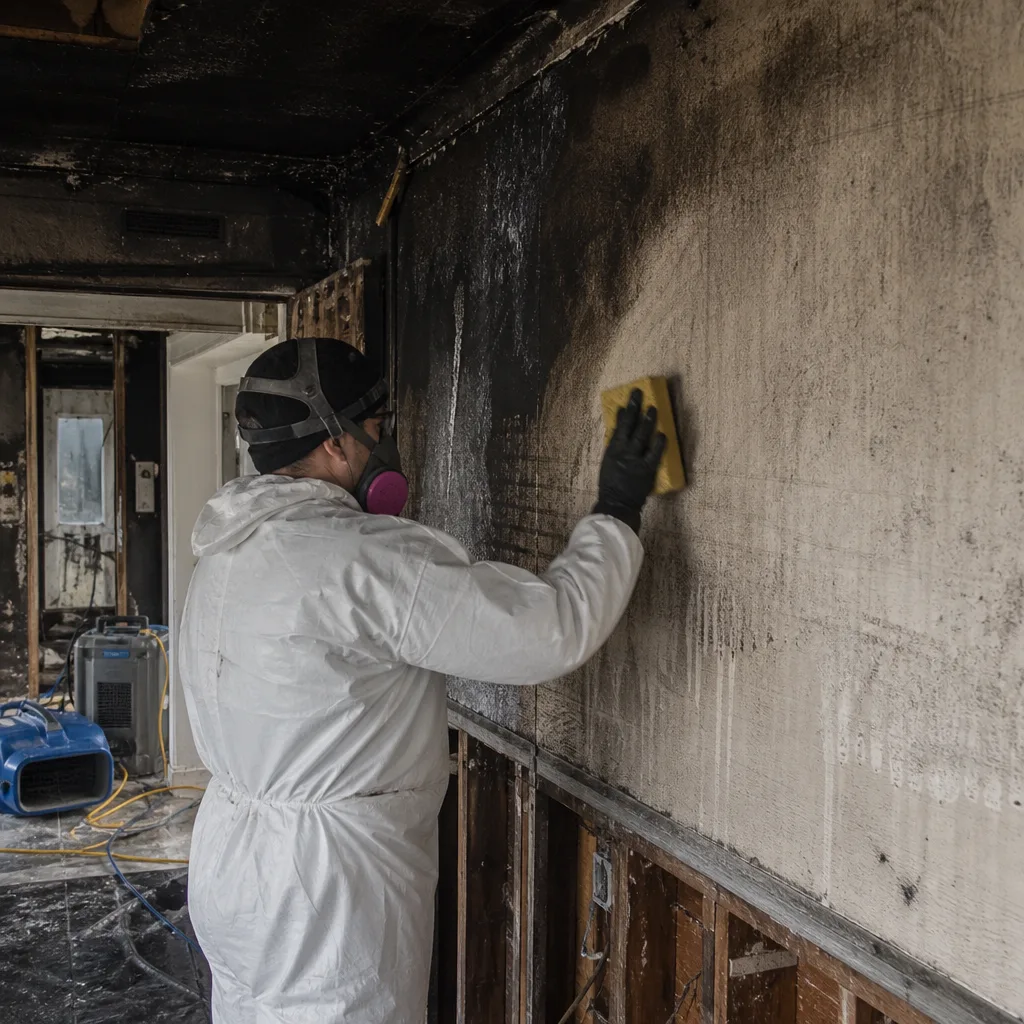
Toilet Overflow Cleanup
Toilet overflows in pre-war apartments are rarely contained to the bathroom. Water finds the path of least resistance, which usually means the gap around the old wax ring, the seam between floorboards, or the cavity behind a wall. We extract, sanitize, and pull affected baseboards and flooring only where needed, so you do not lose original pre-war wood over a small overflow.
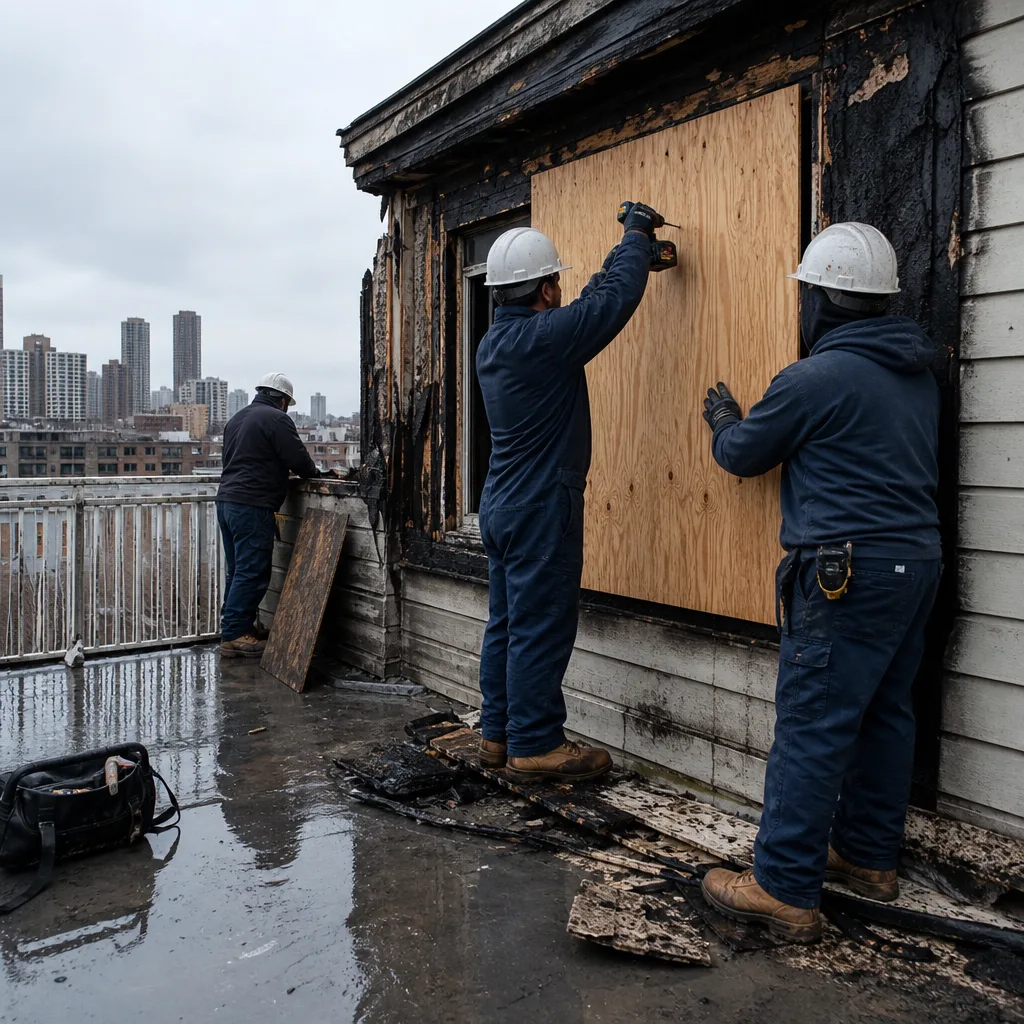
Septic Failure Cleanup
Most Astoria buildings are on municipal sewer, but a few older properties on the edges of the neighborhood still run private or combined systems. When those fail, the contamination burden is worse, not better. We handle the cleanup with full Category 3 protocols and coordinate with the septic contractor so the system gets fixed while the cleanup proceeds.
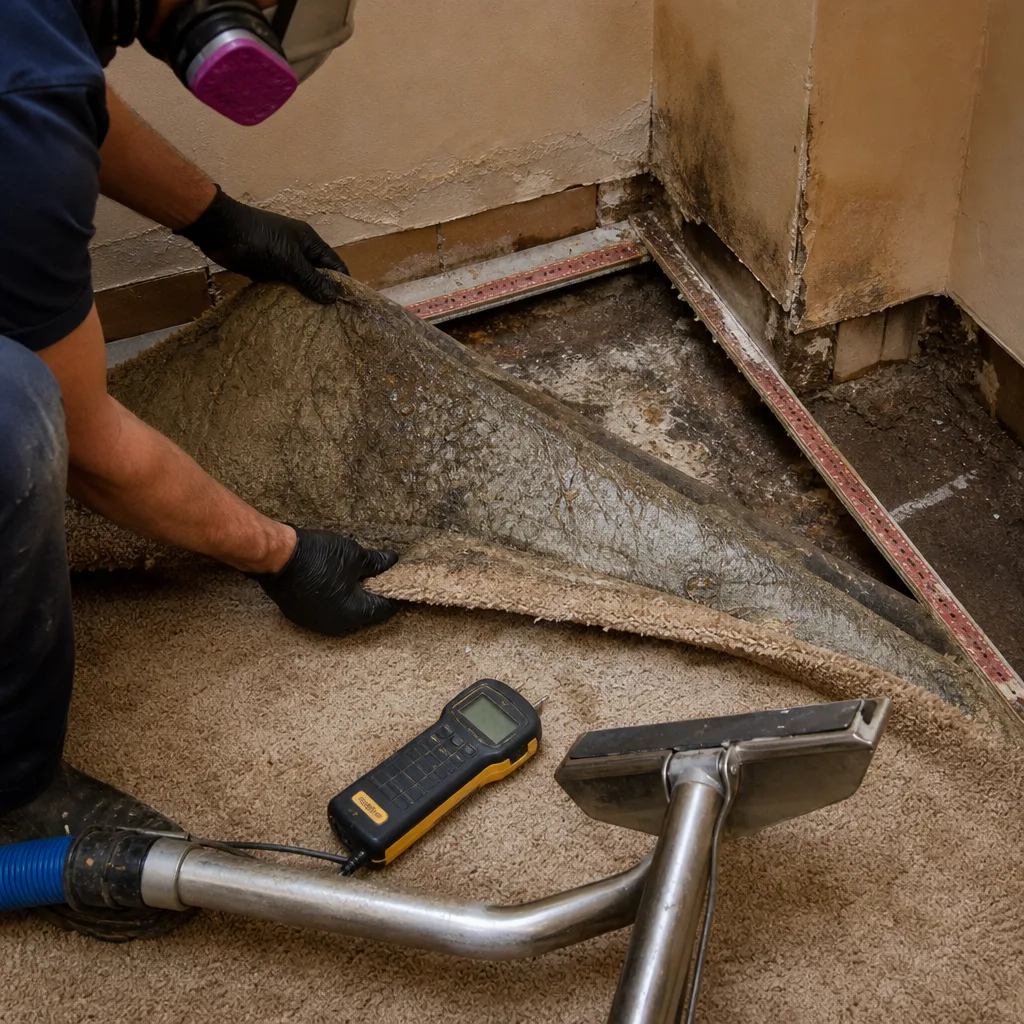
Black Water Extraction
Black water in an Astoria basement near the East River is often storm surge mixed with sanitary sewer backflow. That is the worst kind of Category 3 event, because the contamination layer is deep and the standing water is actively hazardous. We use full PPE, establish containment, extract with truck-mounted or portable units, and treat the entire affected envelope before drying begins.
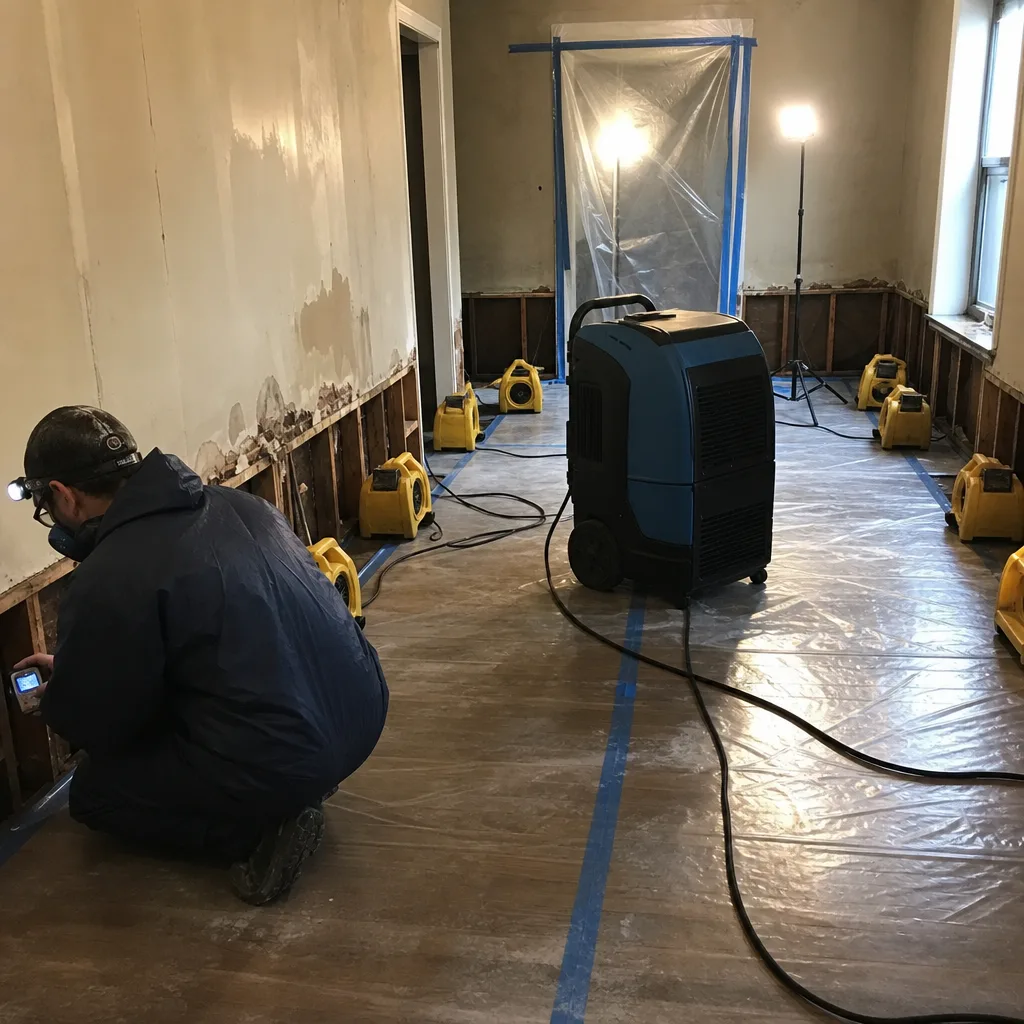
Sanitization & Disinfection
Extraction without sanitization leaves the most dangerous part of the event behind. We treat all affected surfaces with an EPA-registered antimicrobial, fog wall cavities where contamination migrated, and run HEPA air scrubbers until airborne particulates settle. Daily logs document every treatment, and those logs go to your carrier with the rest of the file.
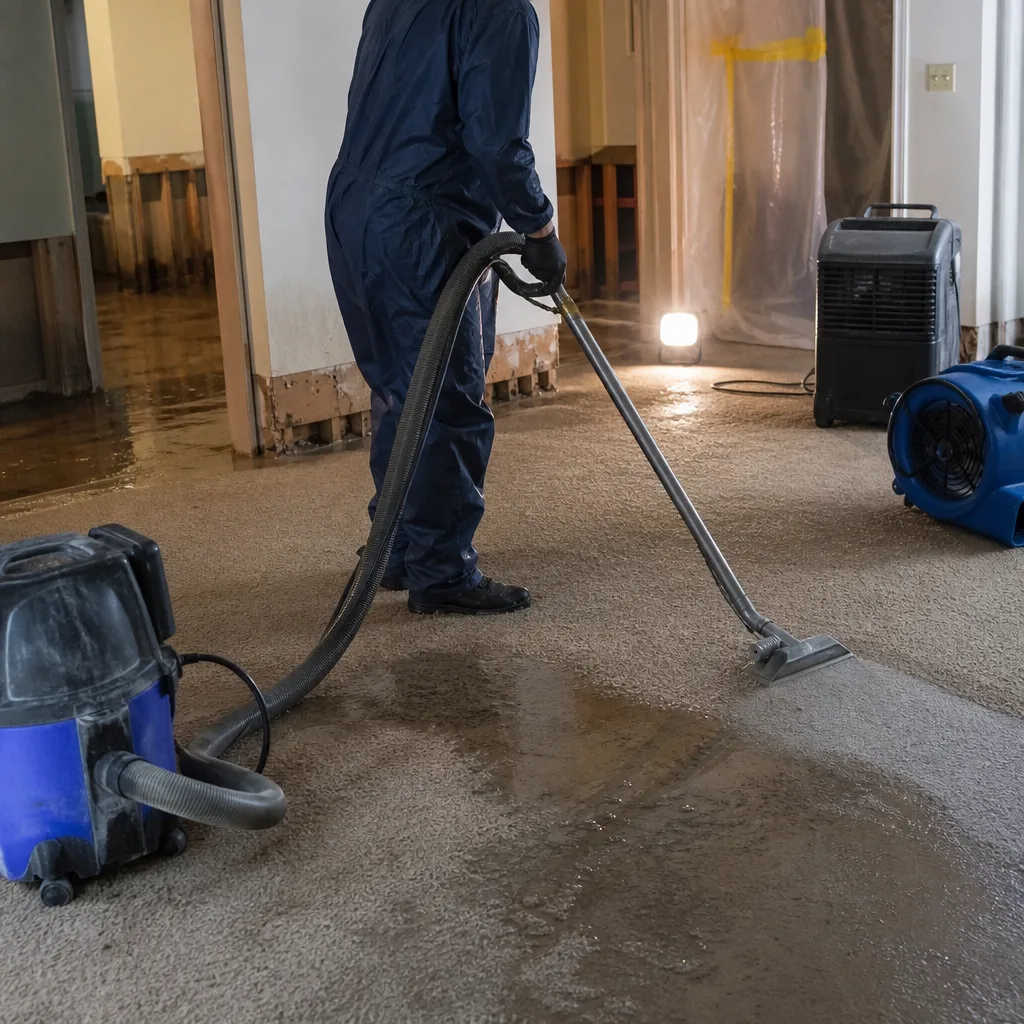
Crawl Space Sewage Removal
Some Astoria rowhouses have shallow crawl spaces under the front or rear extension. When a drain line fails above, sewage pools down there where nobody sees it until odor becomes the first clue. We remove the contaminated water and material, treat the crawl space soil and framing, and dry it to standard before it spreads into the living space above.
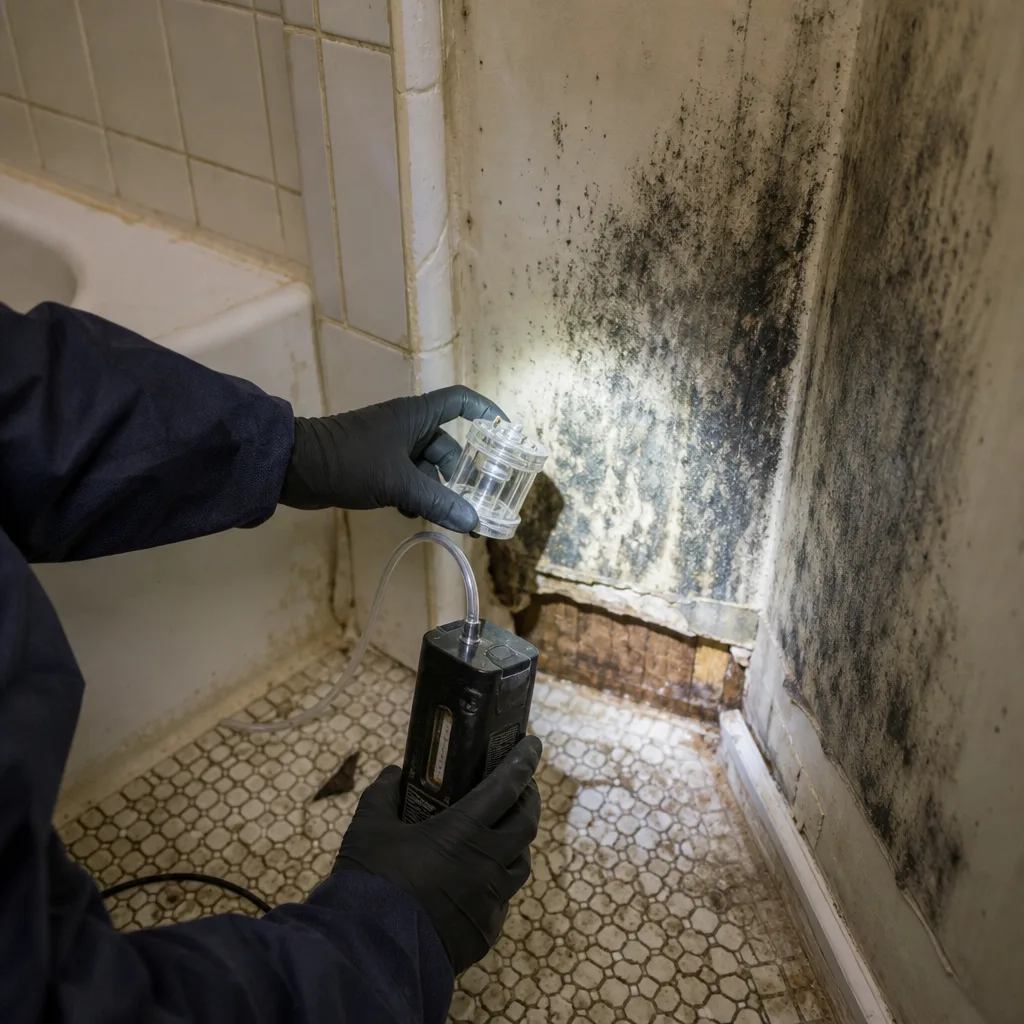
What happens when you call
- 1
A real person answersNo phone trees - you reach a local pro.
- 2
You get an upfront price rangeHonest numbers before anyone is dispatched.
- 3
A background-checked tech heads outLicensed & insured, dispatched right away.
- 4
You approve before work beginsNothing starts until you say go.
Sewage Cleanup Costs in Astoria, NY
A typical toilet overflow cleanup in Astoria runs $900 to $1,800 when it is caught the same day and contained to one bathroom. A full sewage backup affecting a basement or multiple rooms usually lands between $2,500 and $7,500, depending on how much material must be removed and how many units are involved. When black water migrates through party walls into an adjacent apartment, the combined scope can reach $10,000 to $18,000 across both policies, which is why we document the migration path from the first walkthrough. What moves the price: the number of affected rooms, whether containment and negative air are required, how much flooring and drywall must be removed, and whether cast-iron stack replacement or plumbing repair must happen before rebuild. Most homeowner and condo policies cover sudden sewage backup events; sewer backup riders are increasingly common, and we will tell you plainly if your coverage looks thin. Call (917) 924-4221 for a free visual inspection and a firm written scope. You will know what it costs before we start, and no check gets written until you approve the line items.
We Also Serve Cities Near Astoria
Our crews handle sewage cleanup across the surrounding Queens neighborhoods, including Long Island City, with its converted industrial lofts and new high-rise plumbing; Sunnyside, where pre-war brick six-family buildings have the same aging stack problems as Astoria; Woodside, with a mix of rowhouses and attached two-families; and Jackson Heights, where the coop buildings require careful coordination with building management and unit owners. Sewage Cleanup is our specialty, and we run the same 45-minute dispatch standard across the area.
Serving Astoria, NY - Our Local Coverage Area
We’re based in the Astoria area and know this community well. Use the map below to see our service coverage - if you’re nearby, we can almost certainly help.
Astoria Sewage Cleanup Questions, Answered
How quickly can sewage from a backup in an Astoria pre-war building spread to neighboring units?
Within hours, not days. A cracked cast-iron stack or a failed wax ring in a top-floor unit sends water down through wall cavities and shared drainage chases, and it typically shows up in the next unit over or two floors down within the same day. In attached rowhouses along 28th Avenue and Ditmars, we regularly find staining in an adjacent apartment before the source unit’s tenant even knows the extent of their own damage. That is why we check neighboring units during the initial inspection with the owner’s permission, and why containment is set up on every affected floor immediately.
Do I need to evacuate my Astoria apartment during sewage cleanup?
Usually yes for the affected rooms and sometimes the whole unit. Category 3 water carries pathogens that become airborne during extraction and demolition, so we run negative air and HEPA air scrubbers while work is underway. If the contamination is confined to a bathroom or basement, you can often stay in the other rooms. If it has migrated through walls into living areas, you should plan to be out for the duration of the active cleanup. We will tell you honestly based on the moisture map, not on a generic policy.
What’s different about sewage cleanup in Astoria’s attached rowhouses versus a detached home?
The main difference is that the water does not stop at the property line, because there is no property line between shared walls. Astoria’s pre-war attached brick rowhouses share party walls and original drain stacks, so sewage from one unit migrates laterally into adjacent units. In a detached home, you contain and clean one envelope. Here, the average job requires simultaneous coordination of a building owner, a property manager, and multiple tenants and policies. Most of our Astoria sewage jobs are multi-unit claims on day one.
Can you handle a sewage backup that also flooded my Astoria basement during a coastal storm?
Yes. When storm surge or heavy rain pushes backflow up through basement drains in ground-floor units near the East River or Bowery Bay, the standing water is a mix of storm water and raw sewage. That means full Category 3 protocol: PPE, containment, extraction, material removal, antimicrobial treatment, and drying. We also document the surge conditions and the backflow source for your carrier, because those claims are handled differently than a standard indoor plumbing backup. Our Astoria crews are staged for exactly this event during nor’easter season.
What should I do right after a toilet overflows in my pre-war Astoria apartment?
First, stop the water at the toilet’s shutoff valve behind the bowl or at the unit’s main shutoff. Do not flush again. Turn off any fans or the building’s central air if you can, because moving air spreads contaminated droplets. Move valuables and furniture out of the path of the spreading water. Then call us at (917) 924-4221. Do not try to extract sewage yourself, especially in a pre-war building where the water is already moving into wall cavities you cannot see. The first 30 minutes decide how far the contamination spreads before we can contain it.
How long does sewage cleanup and drying take in an Astoria apartment?
Drying typically takes three to five days once extraction and material removal are complete, assuming air movers and dehumidifiers run continuously and daily moisture readings confirm progress. A single-bathroom overflow caught the same day can be dried and ready for rebuild inside a week. A multi-floor backup with party-wall migration and cast-iron stack involvement can push the full timeline to two to three weeks, including rebuild. We hand you a daily moisture log so you and your carrier are never wondering what is happening.
Are your technicians certified for sewage cleanup work?
Yes. Our crews hold IICRC certifications in WRT (Water Damage Restoration Technician) and AMRT (Applied Microbial Remediation Technician), and they train to RIA and IFA standards. They are background-checked, uniformed, and equipped with professional-grade Dri-Eaz and Phoenix drying equipment, HEPA air scrubbers, and thermal imaging for moisture mapping. We do not send untrained labor into a Category 3 environment, and we will not ask you to trust anyone who does.
Will my insurance cover sewage backup cleanup in Astoria?
Most homeowners and condo policies cover sudden and accidental sewage backup, but coverage often depends on whether the source was inside your unit or in a shared drain line. Sewer backup riders are becoming standard on many policies, and they matter in Astoria’s attached buildings where a neighbor’s failure becomes your claim. We document the source, the migration path, and every affected room from the first visit, and we communicate directly with your adjuster so the claim gets filed with the right evidence. If the source is a shared stack or building drain, we will help you and your building owner coordinate so your policy does not take the whole hit.
Written by Curt Bowman, Owner at Floodline Restoration Co. of Manhattan, serving Astoria and the surrounding Queens neighborhoods since 2010.