
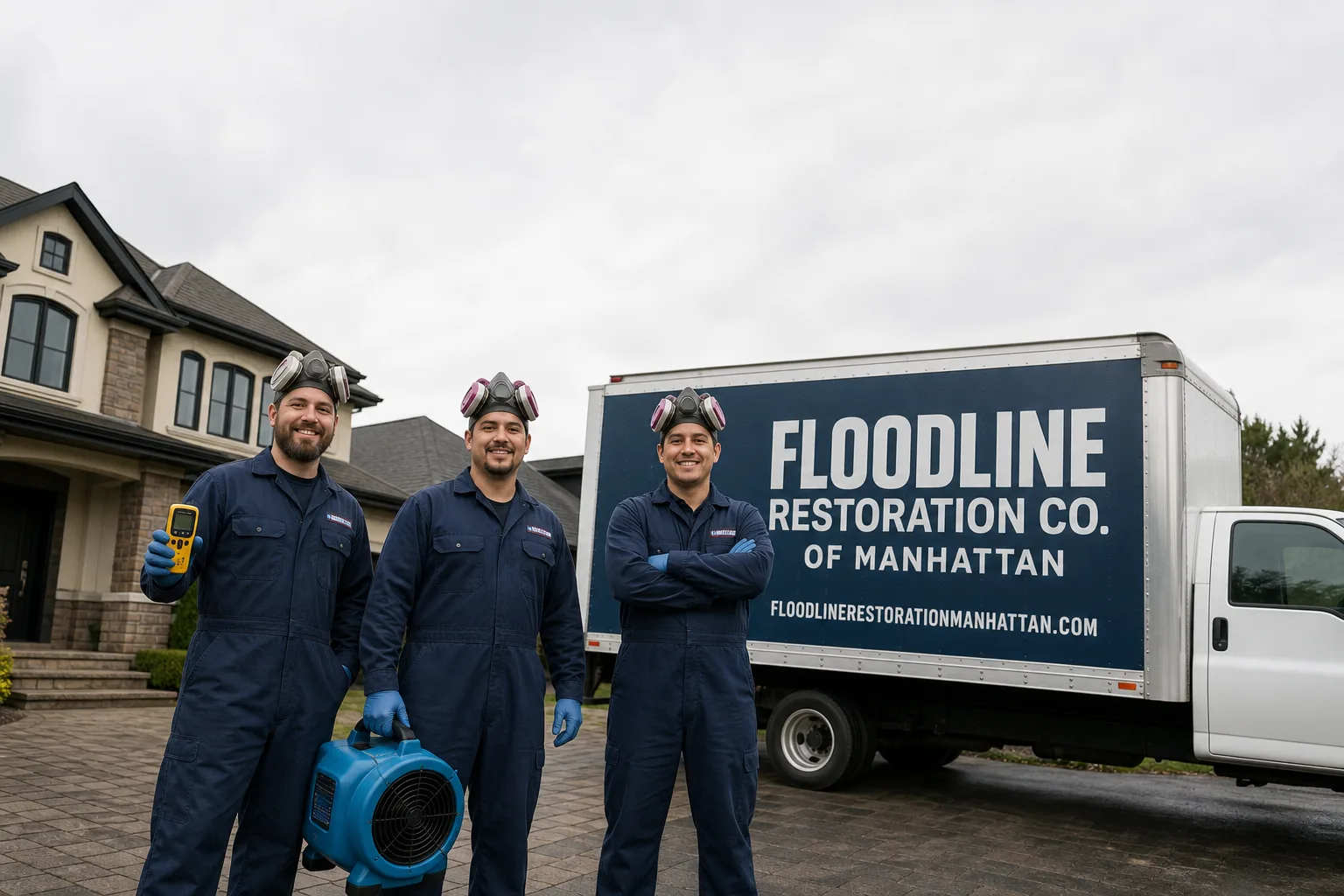
Free visual inspection and a written scope of work before any mitigation begins - photos, moisture readings, and drying logs go in your claim file
The scope we write is the scope we bill. Anything new gets shown to you, in writing, before we touch it.






 Before
 After
After Before
 After
After Before
 After
After24/7 Emergency Sewage Cleanup in Englewood
When a sewage backup hits an Englewood home, the first hour determines how much of the basement gets torn out. Call (917) 924-4221 and a live person answers, day or night. We dispatch crews into Englewood within 45 minutes, start extraction the same visit, and give you a straight read on what needs removal versus what can be saved. Sewage is Category 3 water: it carries bacteria, viruses, and parasites that wick into drywall, insulation, and framing within hours. The sooner we contain it, the less we tear out, the less it costs, and the sooner your house stops smelling like it happened.
Understanding Sewage Cleanup Severity in Englewood Properties
Sewage cleanup in Englewood runs harder than in newer Bergen County subdivisions because the housing stock is older and the ground underneath it fights the pipes. Most homes here sit on pre-1950s fieldstone or concrete-block foundations with original cast-iron drain lines that have spent 70 to 90 years in glacial clay. That clay expands when wet and shrinks when dry, and every cycle flexes the cast iron until it cracks. When a crack opens, groundwater and sewage can both find their way in. The water we extract is Category 3 by default: contaminated with human waste, soil organisms, and whatever the lateral has been carrying. We treat it as a biohazard, not a plumbing puddle. That means containment, antimicrobial treatment, structural drying to a specific moisture standard, and daily readings logged until the dry standard is met. In Englewood specifically, we’re often not just drying one flooded room. We’re drying the seam where a 1930s stone foundation meets a 1960s finished basement addition, and that hidden cavity is where moisture hides for weeks.
Why Englewood Property Owners Choose Floodline Restoration Co. of Manhattan
- 45-minute response commitment: When sewage is spreading across a finished basement, waiting until tomorrow is not acceptable. Our crews are on the road and into Englewood within 45 minutes of your call, any hour, any day.
- A live person answers, always: The dispatcher who picks up at 2 a.m. is a real human being. No automated system, no phone tree, no “leave a message and we’ll call you Monday.”
- IICRC-certified crews: Technicians trained to IICRC, RIA, and IFA standards. For sewage work, that means AMRT and WRT certifications, applied by background-checked, uniformed people you can actually let into your house.
- Free visual inspection: Before any work starts, we assess the full loss. We’ll tell you what needs extraction, what needs tear-out, and what can dry in place. No charge, no obligation.
- Direct insurance billing: We bill your carrier directly and handle adjuster communication. You never play messenger between Floodline and the insurance company.
- One team, start to finish: The same crew that extracts the sewage handles drying, sanitization, and rebuild. No mid-job handoff, no inherited strangers, no “we only do mitigation, you need to find a contractor.”
Our Sewage Cleanup Process
Inspection & Assessment
We start with a full walkthrough using thermal imaging and moisture meters to map how far the Category 3 water has traveled. In Englewood’s patchwork basements, that often means probing the seam between the original stone foundation and any 1960s additions where water hides. We document everything in writing before work begins.
Extraction & Stabilization
Black water comes out first. We use Dri-Eaz and Phoenix extraction equipment to remove standing sewage, then cut away saturated drywall and carpet to stop wicking from spreading further. Containment goes up immediately to isolate the affected area from the rest of the house.
Drying & Dehumidification
Structural drying in Englewood’s older basements takes longer than average because fieldstone and concrete-block hold moisture deep in the material. XPOWER air movers and dehumidifiers run continuously, and we take daily hygrometer and moisture readings, logging them until the dry standard is reached.
Cleaning & Sanitization
Every surface in the affected area gets a full antimicrobial treatment. Contents that can be restored are packed out, cleaned, and decontaminated. Anything porous that absorbed sewage, like carpet padding or upholstered furniture, is documented and disposed of properly.
Sewage-Specific Treatment
Category 3 water requires more than drying. We treat framing, floor joists, and any cavity where sewage migrated, including the old-new foundation seams common in Englewood. Air scrubbers run to pull microbial particulates from the air during and after the work.
Repairs & Restoration
Once the area is dry and sanitized, we rebuild through our Reconstruction & Cleanup in Englewood. Drywall, insulation, flooring, trim, paint. The same crew handles it, so there’s no gap between mitigation and reconstruction, and no second company to argue with about the moisture log.
Need Emergency Sewage Cleanup in Englewood Now?
Crews minutes away, answering live 24 hours a day. The sooner we start, the less it costs.
Working With Your Insurance Company
Most Englewood homeowners we serve have never filed a sewage loss before, and the claim process can feel like a second job. Ours is simple: we take photos from the first hour, document every damaged square foot, and log every moisture reading until the structure is dry. We provide your carrier a detailed, line-item scope of work so adjusters can see exactly what the loss required and what it cost. When the adjuster calls with questions, we answer them directly. You don’t act as the middleman. We bill the carrier directly, and if something is denied, we walk you through why and what options exist. Curt Bowman built this company in 2010 around a dispatch board, not a sales desk, and that means we handle the paperwork as deliberately as we handle the extraction.
What We Provide Your Insurer
- Thorough documentation of the loss
- Photos of all damage, room by room
- Moisture readings and drying logs
- A detailed, line-item scope of work
- Direct coordination with your carrier
Built for Englewood’s Loss Calendar
Englewood’s sewage backup calls follow a seasonal rhythm that newer towns don’t experience. January and February bring deep freezes that crack aging supply lines and send meltwater into cracked laterals once the thaw hits. March and April are our busiest months: Hudson Valley nor’easters dump heavy wet snow, and when it melts fast, the glacial clay under Englewood can’t absorb it. Groundwater rises, hydrostatic pressure builds against foundation walls, and any compromised cast-iron drain line becomes a point of entry. Summer thunderstorms overwhelm the original drainage on pre-war lots, and fall leaves clog the same 1930s cleanouts that have been there since the house was built. The pattern is predictable to someone who’s worked this area for years. To a homeowner standing in two inches of black water, it’s the worst day of the year.
Sewage Cleanup Across Englewood’s Neighborhoods
Englewood isn’t one housing type; it’s a patchwork, and each area fails differently. Homes near the historic district around Palisade Avenue and East Linden Avenue are mostly pre-1940s fieldstone and frame, with original cast-iron laterals that crack under decades of clay-soil shifting. The East Hill neighborhood, with its larger properties and older estate homes, often has complex foundation systems: stone walls, concrete additions, and buried downspouts that channel water straight into the basement during a hard rain. Homes along West Englewood, west of the railroad tracks toward Teaneck, tend to be slightly newer, 1950s and 1960s split-levels, but many still have their original cast-iron waste lines and builder-grade sump pits that were never meant for the hydrostatic pressure this soil produces. Near the Englewood Cliffs border, homes with finished basements over original stone foundations are where we see the worst hidden sewage damage: black water moves under the finished slab, saturates the sill plate, and no one knows until the odor bleeds through. Our Sewage Cleanup team knows these streets, and we know what each building era means for the scope of the work.
Specialized Sewage Cleanup Services We Offer in Englewood
Sewage Backup Cleanup
A sewage backup in Englewood almost always traces to the original cast-iron lateral under the foundation. The clay shifts, the pipe cracks at the joints, and what was flowing away starts flowing back. We extract the black water, tear out what’s saturated, and dry the structure to the standard. If the pipe itself needs repair, we coordinate with a licensed plumber while we handle the restoration.
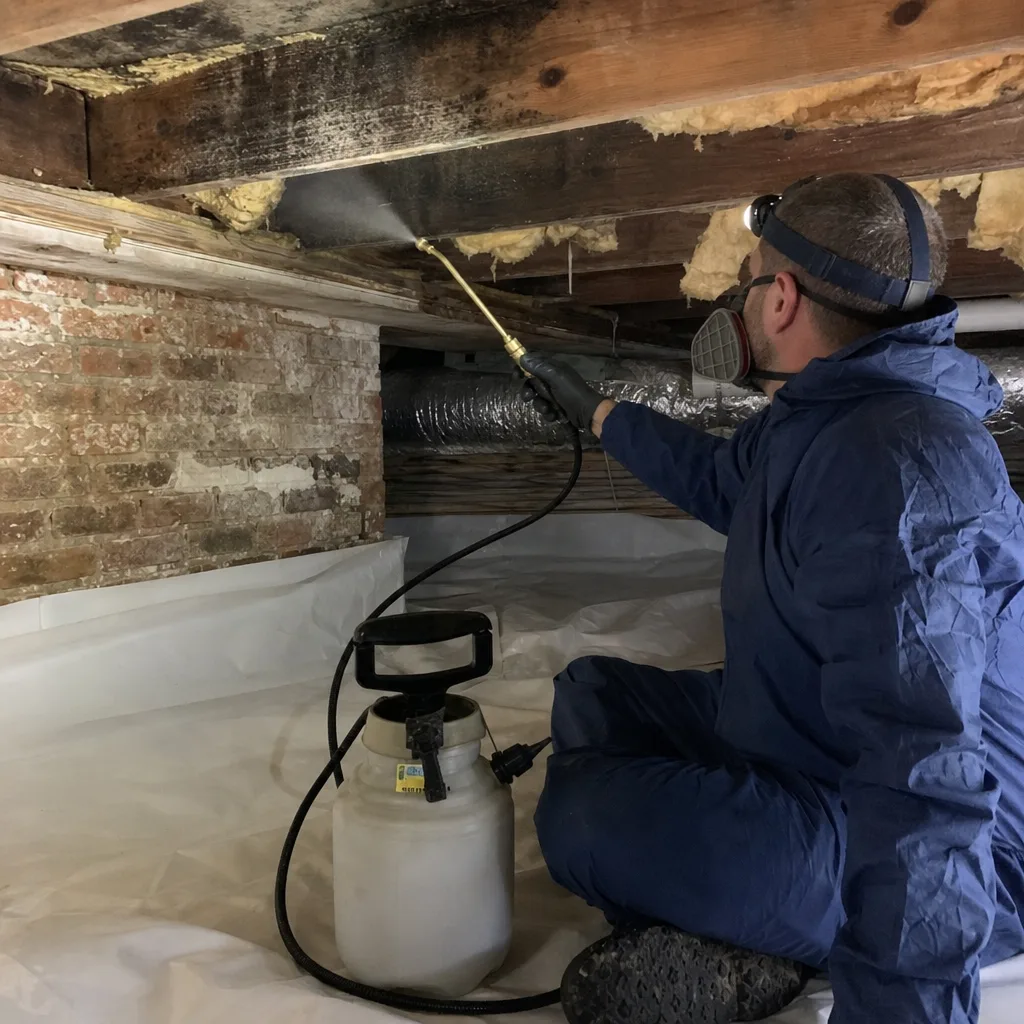
Crawl Space Sewage Removal
Englewood’s pre-war homes often have crawl spaces that haven’t been entered in decades. When a buried waste line fails, sewage pools directly on the soil under the house. We enter, extract, remove contaminated soil, treat the area with antimicrobials, and dry the space to prevent the odor from migrating into the living areas above. This is messy, confined work, and it’s exactly what we train for.
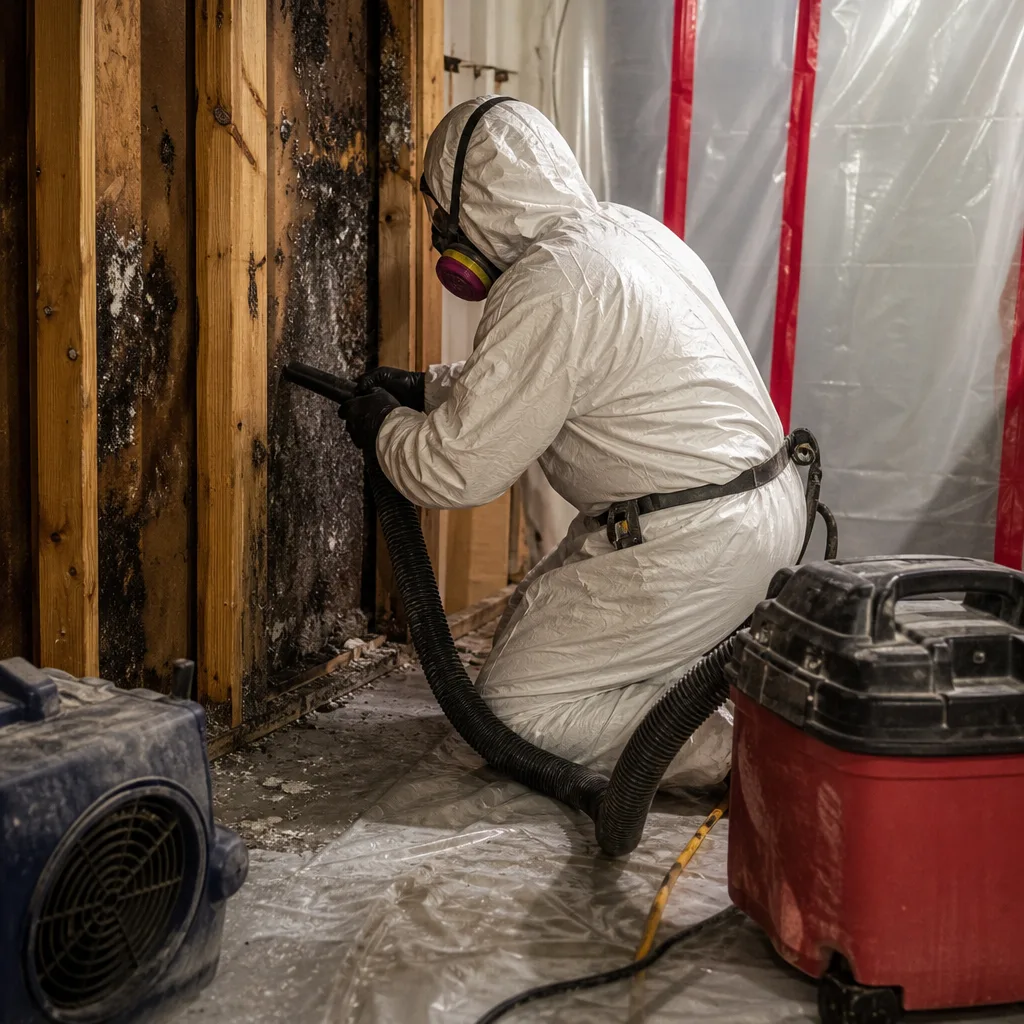
Black Water Extraction
Category 3 water moves fast in Englewood’s finished basements, especially where a 1960s addition sits over a 1930s foundation. The water travels along the seam between old and new, saturating insulation and framing that could not be seen from the surface. We use Dri-Eaz and Phoenix extraction units to pull the black water, then open the walls where moisture mapping tells us to.
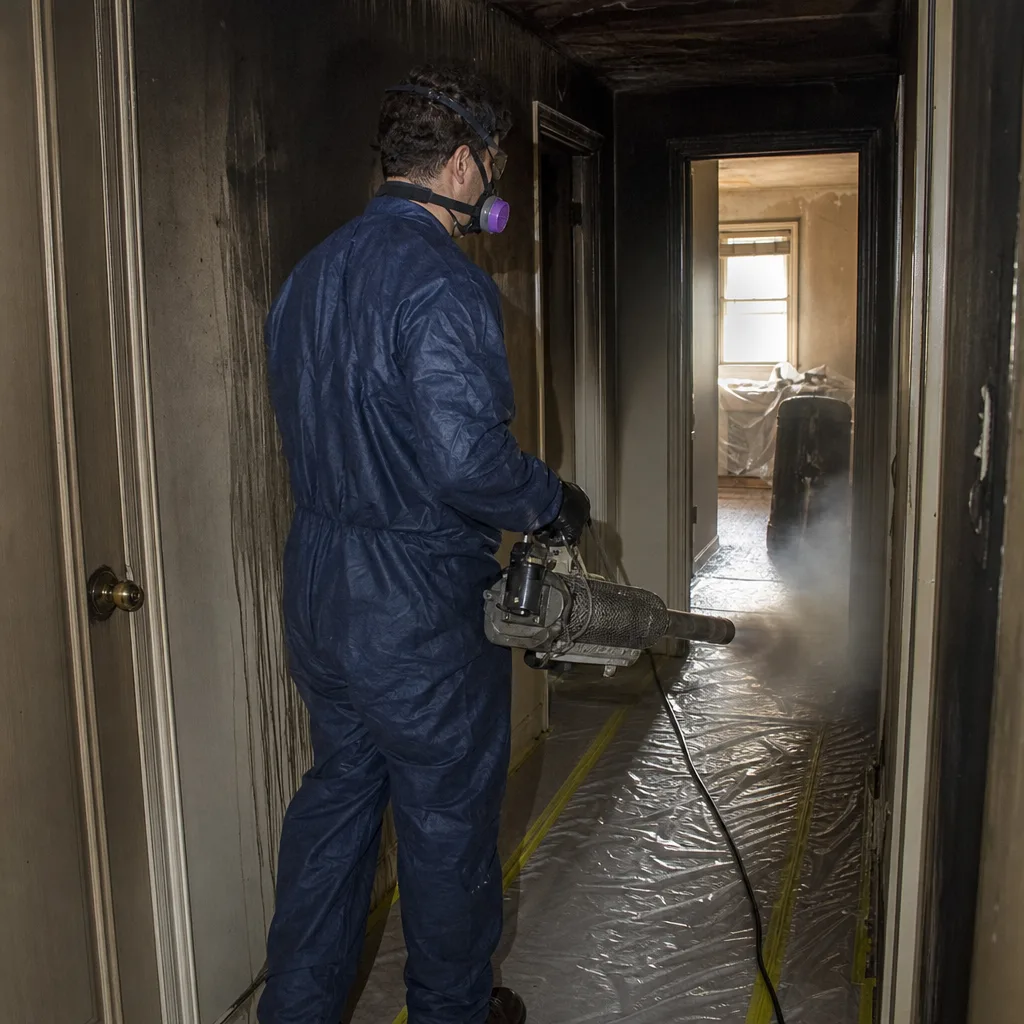
Toilet Overflow Cleanup
A toilet overflow that seems contained can still be a Category 3 loss. In Englewood’s older homes, water from a clean-looking overflow often finds its way behind baseboards and into the wall cavity, where the original plaster and lath soak it up. We treat every toilet overflow as a potential sewage loss and dry the area accordingly.
Septic Failure Cleanup
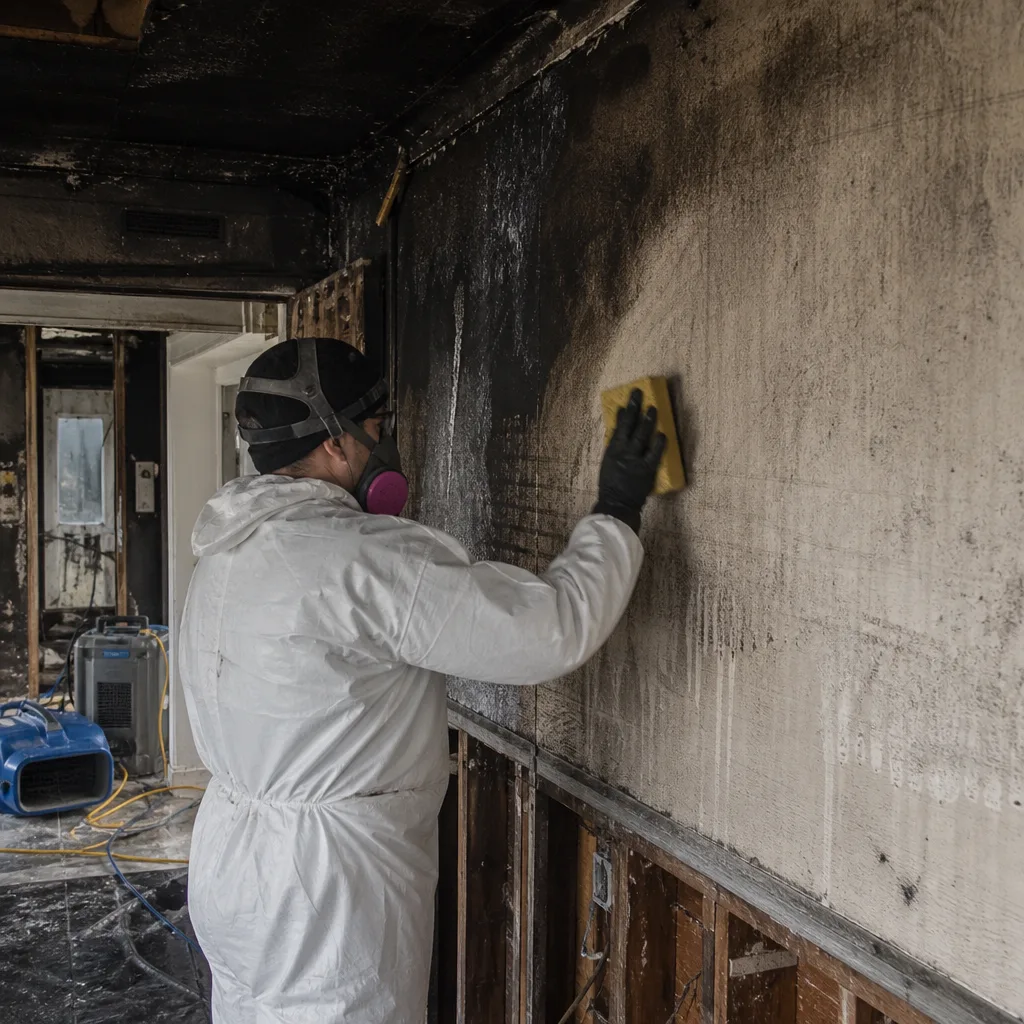
Some Englewood properties, especially larger lots on the east side, still run on septic. When a septic system fails, the result is black water backflowing into the house or surfacing in the yard. We handle the interior and structural side of the loss while you work with a septic contractor on the system itself.
Sanitization & Disinfection
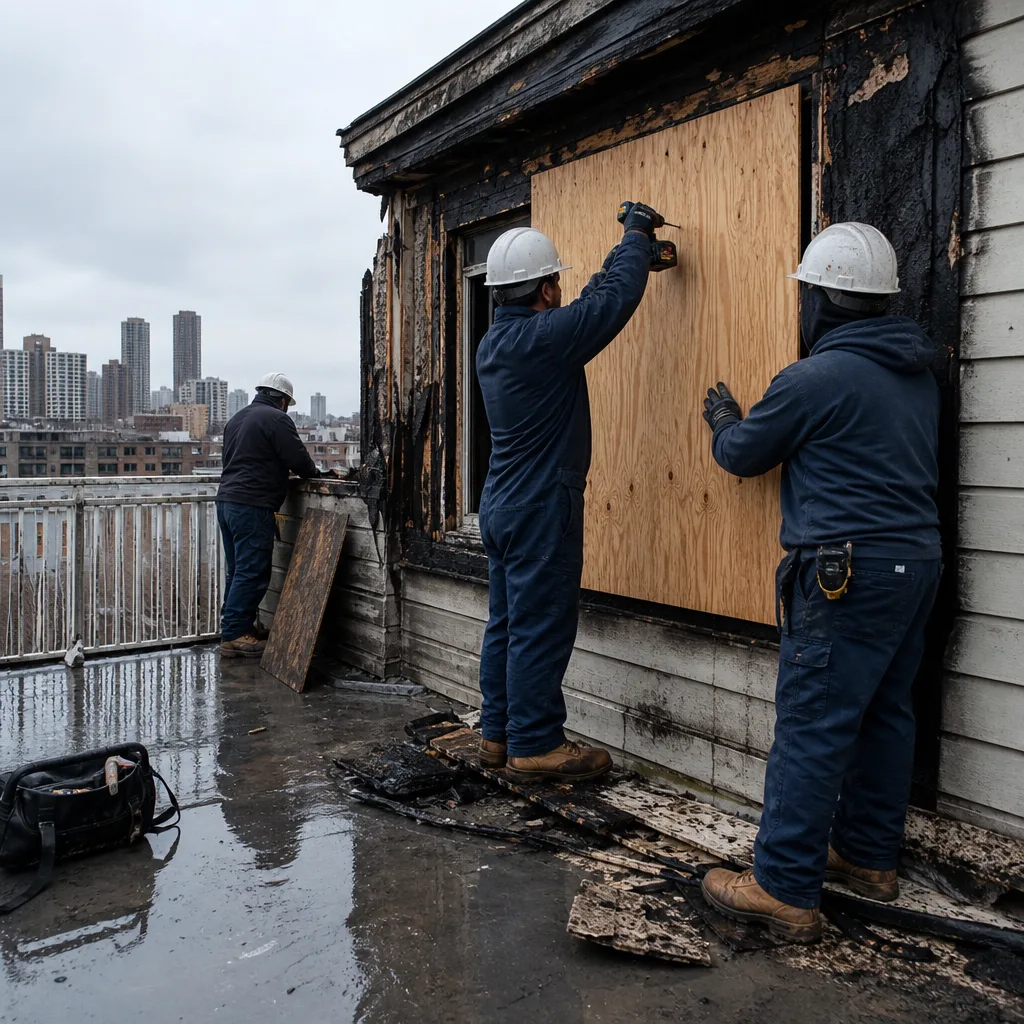
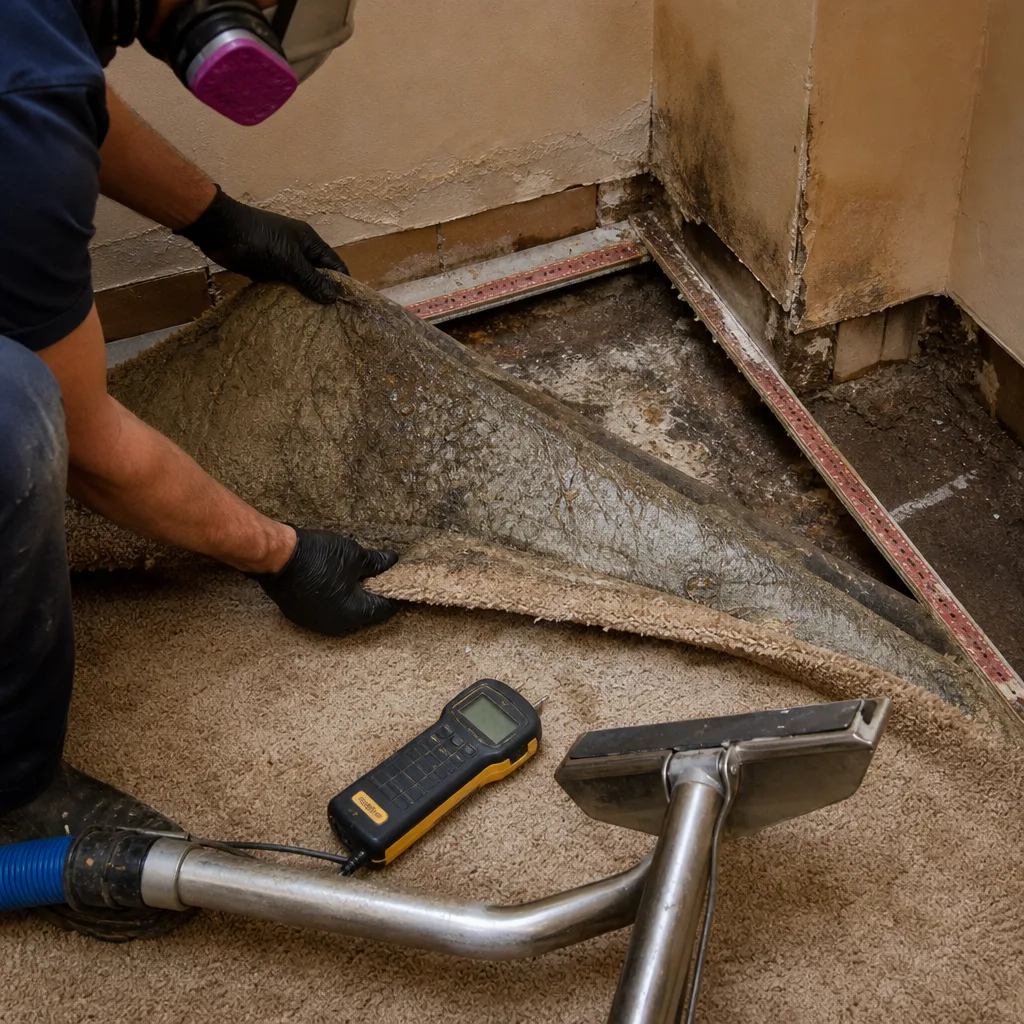
Sewage cleanup isn’t done when the water is gone. We apply hospital-grade antimicrobial treatment and Sanitization Services in Englewood to every structural surface in the affected area, run air scrubbers during and after the work, and log every step so you have a written record of what was cleaned and how.
What happens when you call
- 1
A real person answersNo phone trees - you reach a local pro.
- 2
You get an upfront price rangeHonest numbers before anyone is dispatched.
- 3
A background-checked tech heads outLicensed & insured, dispatched right away.
- 4
You approve before work beginsNothing starts until you say go.
Sewage Cleanup Costs in Englewood, NJ
Sewage cleanup in Englewood typically runs $2,800 to $6,500, depending on how far the water traveled and what absorbed it. A contained toilet overflow with a fast response and minimal drywall removal can run $1,200 to $2,000. A full basement backup requiring extraction, containment, tear-out of drywall and insulation, daily drying for five to seven days, and rebuild will push toward $7,000 to $15,000 when the reconstruction is included. Crawl space sewage removal usually lands between $3,000 and $8,000 depending on accessibility and soil removal requirements. What moves the price is time: the longer sewage sits, the more surfaces become permanently contaminated and the more framing and drywall must come out. Most homeowner policies in New Jersey cover sudden and accidental sewage backup events, though some require a specific endorsement for backup coverage. We document everything and bill your carrier directly. Call (917) 924-4221 and we’ll give you a free visual inspection and a written scope before any work starts.
We Also Serve Cities Near Englewood
Our crews serve the surrounding Bergen County area, including Englewood Cliffs, Teaneck, Tenafly, and Leonia. If you’re in one of those towns and dealing with a sewage emergency, call (917) 924-4221 and we’ll get someone out to you the same way we do in Englewood: fast, thorough, and with everything documented from the first hour.
Serving Englewood, NJ - Our Local Coverage Area
We’re based in the Englewood area and know this community well. Use the map below to see our service coverage - if you’re nearby, we can almost certainly help.
Englewood Sewage Cleanup Questions, Answered
Why does Englewood see more sewage backup calls in spring than neighboring towns?
Englewood’s pre-1950s fieldstone and concrete-block foundations, combined with the heavy glacial clay that underlies the area, create hydrostatic pressure during spring snowmelt that pushes groundwater and sewage through any crack in the original cast-iron drain lines. Neighboring towns with newer subdivisions and PVC piping simply don’t have the same structural failure points. The clay doesn’t drain, the pressure builds, and the oldest point in your plumbing gives way first.
How do our crews handle sewage cleanup in an Englewood basement with a 1960s finished addition over a 1930s stone foundation?
This is the signature Englewood loss. We start with moisture mapping and thermal imaging to find how far the Category 3 water has traveled through the seam where the 1960s addition meets the 1930s foundation. That seam is almost always the hidden path. We set containment, extract the standing sewage, open the walls where the readings dictate, and run structural drying until the whole cavity, not just the surface, reaches the dry standard.
What’s the difference between a local sump pit overflow and a true sewage backup in Englewood?
A sump pit overflow is usually groundwater, clear or slightly brown, rising because the pump failed or the pit was undersized for Englewood’s spring pressure. A true sewage backup carries solid waste, toilet paper, and a distinct odor. If you flush a toilet and the water backs up into the basement, that’s a Category 3 loss and needs full sewage protocols. If the water looks and smells mostly like dirt, it may be groundwater, but the presence of any sewage changes the classification and the scope of the work entirely.
Why do some Englewood sewage backups turn into full mold remediation jobs?
In Englewood’s older homes, sewage often sits behind finished walls for days or weeks before anyone notices. The original plaster and lath, the old growth fir framing, and the lack of vapor barrier all hold moisture. By the time the odor gives it away, microbial growth is already established. When a sewage loss has been hidden long enough, containment, air scrubbing, and full antimicrobial treatment become necessary to prevent a chronic mold problem.
How do you protect Englewood homeowners from re-contamination after a sewage cleanup?
We document every surface we touched, every treatment we applied, and every moisture reading we took. We dry to the IICRC standard, not just until it looks dry. We treat with antimicrobials, run air scrubbers during and after the work, and log everything. If a surface could not be cleaned, it’s removed. We hand you the moisture log at the end, so you know the structure is dry and clean. And because we handle Englewood Commercial Restoration and rebuild what we tear out, there’s no question about whether the next crew is walking into a contaminated space.
How fast can a crew get to my Englewood home?
We aim for 45 minutes from your call to arrival at your door anywhere in Englewood. Our Sewage Cleanup crews are dispatched from a New York City office and serve Englewood locally, so there’s always someone close. A live person answers 24 hours a day, every day. Call (917) 924-4221 and we’ll tell you exactly when to expect us.
Will my insurance cover sewage cleanup in Englewood?
Most New Jersey homeowners policies cover sudden and accidental sewage backup events, but coverage varies between carriers and policies. Some require a specific water backup endorsement. We document everything from the first hour, file the claim documentation directly with your insurer, and handle adjuster communication. If coverage is denied, we’ll tell you what we see in the policy language and what your options are before any paid work proceeds. Call (917) 924-4221 for a free visual inspection.
What should I do in the first 30 minutes after a sewage backup?
Turn off water to the fixtures, shut off electricity to the affected area if you can do so safely without standing in water, and keep everyone out of the space. Do not flush toilets or run sinks. Do not use a shop vac or household fan; sewage contamination makes both dangerous and useless. Call a professional who can begin extraction and containment immediately. The faster the response, the less demolition the job requires, and the less it costs. Call (917) 924-4221 and a live person answers.
Written by Curt Bowman, Owner at Floodline Restoration Co. of Manhattan, leading the crews serving Englewood since 2010.