
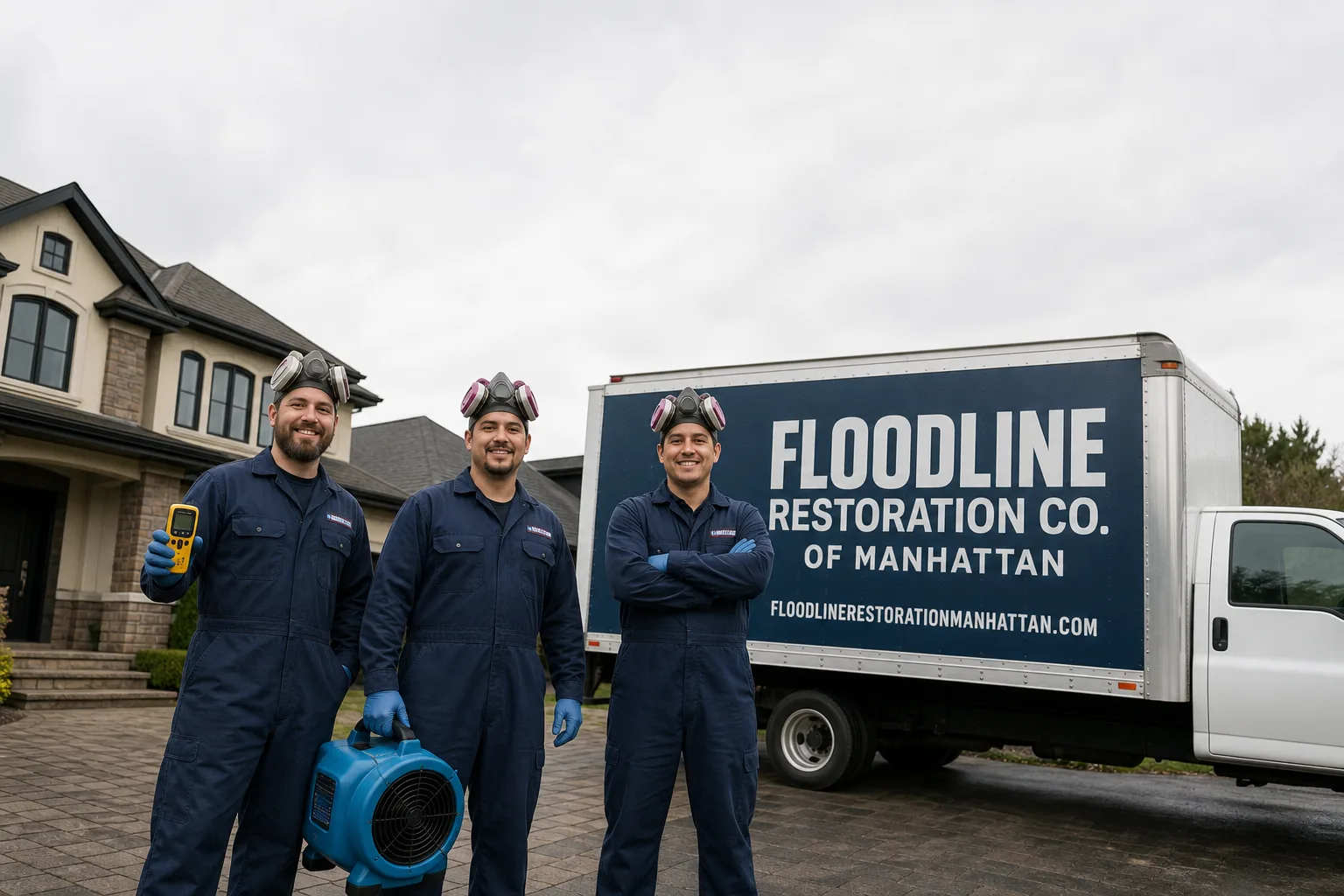
Free visual inspection and a written scope of work before any mitigation begins - photos, moisture readings, and drying logs go in your claim file
The scope we write is the scope we bill. Anything new gets shown to you, in writing, before we touch it.






 Before
 After
After Before
 After
After Before
 After
After24/7 Emergency Sewage Cleanup in Lyndhurst
Sewage backing up into your Lyndhurst home is a Category 3 water event, and it needs a crew on site fast, not a recording. Black water carries bacteria, viruses, and parasites that begin contaminating porous surfaces within minutes, and the damage compounds every hour you wait. Floodline Restoration Co. of Manhattan answers the phone with a live dispatcher at 2 a.m., and crews reach Lyndhurst quickly to start extraction, containment, and sanitization the same visit. Call (917) 924-4221 now for a free visual inspection and a firm scope of work before anything gets torn out.
Understanding Sewage Cleanup Severity in Lyndhurst Properties
Not all sewage backups are equal, and the distinction matters when you’re deciding whether to call a professional or reach for a shop vac. Water from a toilet overflow that never left the bowl area may fall under Category 2, gray water, if the source is clean supply water mixed with urine. Once that water touches fecal matter, storm sewer inflow, or sits for more than 48 hours, it becomes Category 3, black water, and requires full extraction, antimicrobial treatment, and often removal of porous materials like drywall, carpet pad, and lower-wall insulation. Lyndhurst’s housing stock leans heavily toward pre-war colonials and mid-century ranches, and those older homes frequently have cast-iron drain lines, clay tile laterals, and finished basements with materials that wick black water upward into wall cavities. We moisture-map every affected room with thermal imaging and hygrometers, because what you can’t see behind baseboards and under vinyl plank is where the real problem starts.
Why Lyndhurst Property Owners Choose Floodline Restoration Co. of Manhattan
- 45-minute response commitment to Lyndhurst. A live dispatcher confirms the address, the nature of the backup, and the nearest available crew while you’re still on the phone.
- 24/7 live answer, every day. You get a real person in the New York City dispatch office, not an automated tree or a callback queue.
- IICRC-certified crews. Our technicians hold current certifications in Water Damage Restoration and Applied Microbial Remediation, with ongoing training through RIA and IFA standards.
- Free visual inspection. A uniformed, background-checked technician walks the affected area and gives you a written scope before any work begins.
- Direct insurance billing. We document everything from the first hour and work directly with your adjuster, so you aren’t the messenger between us and the carrier.
- One team, start to finish. Extraction, sanitization, drying, and any reconstruction are handled by the same Floodline crew. No mid-job handoff to strangers.
Our Sewage Cleanup Process
Inspection & Assessment
We identify the source of the backup, document affected materials, and categorize the water. Thermal imaging and moisture meters map the migration path, especially in finished basements where water travels behind baseboards and under cabinetry.
Extraction & Stabilization
Black water is extracted using truck-mounted and portable units, including Dri-Eaz extraction equipment. Contaminated porous materials like carpet pad and damaged drywall are removed and bagged on site to stop cross-contamination.
Containment & Air Control
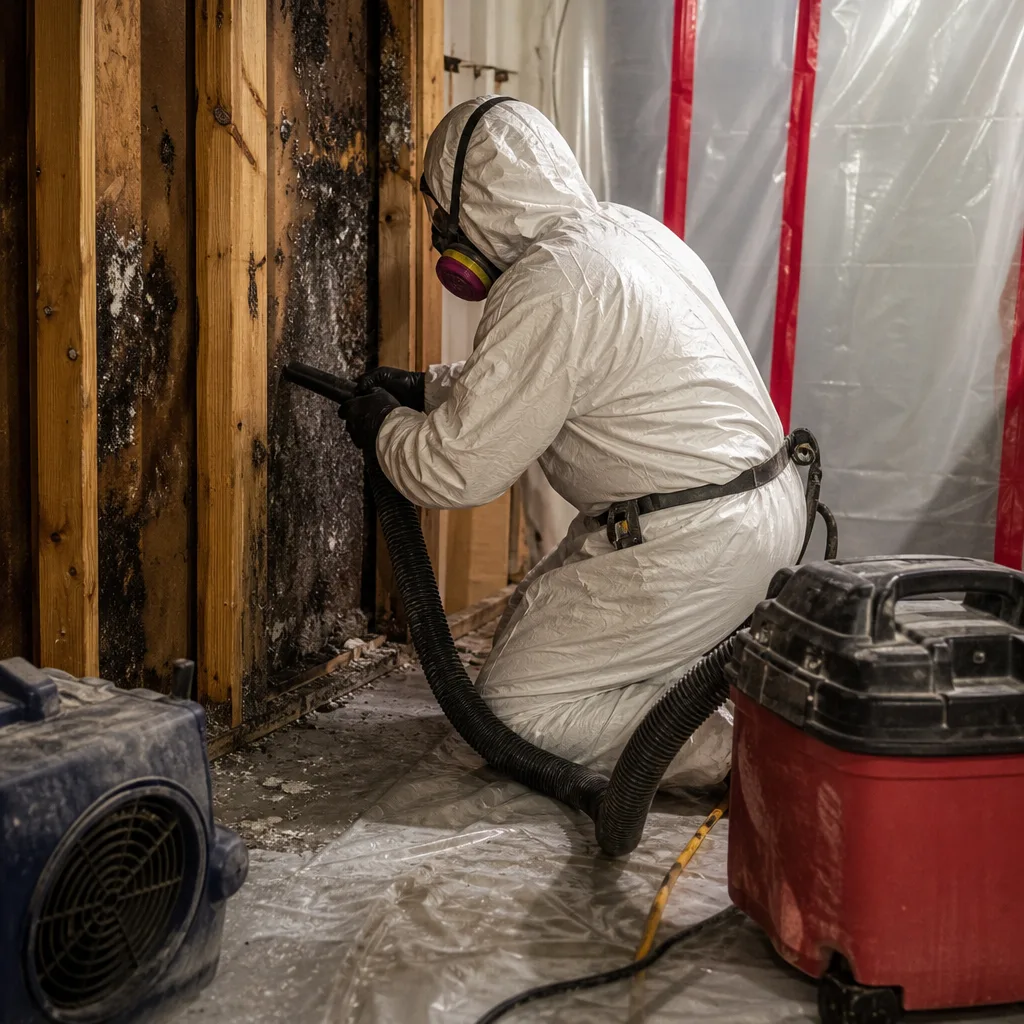
We set up physical containment barriers and negative air pressure where needed to prevent sewage aerosols and odors from migrating into unaffected parts of the home. HEPA scrubbers run continuously during active remediation.
Cleaning & Sanitization
Hard surfaces are cleaned with EPA-registered antimicrobial agents. Custom woodwork, doors, and trim that can be saved are treated, dried, and sealed rather than replaced wherever structurally sound.
Structural Drying
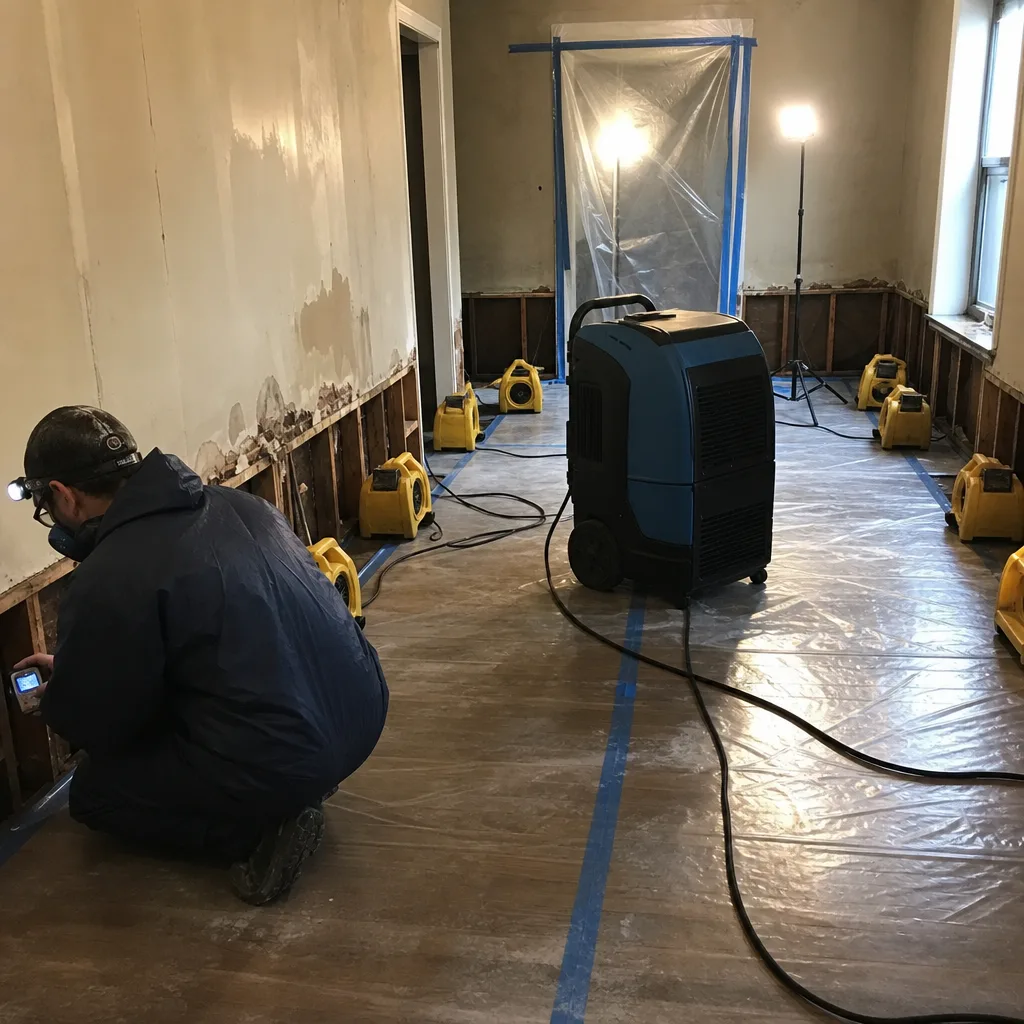
Low-grain refrigerant dehumidifiers and Phoenix air movers drive moisture out of wall cavities, subfloors, and joist bays. Daily moisture readings are logged and shared with you and your carrier until the dry standard is met.
Repairs & Restoration
Replacement drywall, insulation, millwork, and flooring are installed by the same Floodline crew. We match existing profiles and finishes, including custom wainscoting and built-in cabinetry, so the repair disappears into the original character of the home.
Need Emergency Sewage Cleanup in Lyndhurst Now?
Crews minutes away, answering live 24 hours a day. The sooner we start, the less it costs.
Working With Your Insurance Company
Sewage backup claims are messy for homeowners, less because of the damage and more because of the paperwork. Water damage from a failed sump pump, a sewer line backup into a finished basement, or a toilet overflow that soaks custom millwork is generally covered under standard homeowners policies when the cause is sudden and accidental. What adjusters want is proof: timestamps on photos, a clear narrative of what failed, and a line-item restoration scope that doesn’t pad the bill with unnecessary work. We produce that documentation from the first hour and send it directly to your carrier. You get a copy of everything. If the adjuster has questions, we answer them, not you.
What We Provide Your Insurer
- Thorough documentation of the loss
- Photos of all damage, room by room
- Moisture readings and drying logs
- A detailed, line-item scope of work
- Direct coordination with your carrier
Built for Lyndhurst’s Loss Calendar
Lyndhurst sits in the flood-prone corridor of the Meadowlands, and its combined sanitary and storm sewer system has sections over 80 years old. When a heavy summer thunderstorm drops two inches in an hour, stormwater surges into the same pipes carrying household sewage. The system backs up, and finished basements along Valley Brook Avenue and near Riverside County Park take the hit first. January and February bring a different pattern: deep freezes contract cast-iron waste lines, and older laterals crack under the stress. Spring thaw then finds those cracks, and groundwater intrusion pulls soil and sewage into the line. Nor’easters compound it all with sustained rain and street flooding that overwhelms municipal pumps. Lyndhurst homeowners with finished basements, custom built-ins, and lower-level dens should treat the first sign of slow drainage or gurgling floor drains as an early warning, not a nuisance to live with.
Sewage Cleanup Across Lyndhurst’s Neighborhoods
Response routes through Lyndhurst follow the town’s main corridors: Ridge Road, Kingsland Avenue, and Valley Brook Avenue, and the side streets off Fern, Court, and Stuyvesant. Homes in the Kingsland section, many of them pre-war colonials with finished basements and original trimwork, need careful moisture mapping because old plaster and lath hold water differently than modern drywall. Near the Passaic River side of town, homes between Riverside County Park and the Paterson Plank Road corridor face a higher groundwater table, and sewage backups there often involve water pushing up through floor drains during heavy rain, not just a failed ejector pump. Closer to Lyndhurst High School and the neighborhoods off Weart Avenue, mid-century ranches and split-levels on slabs present a different challenge: black water on concrete slab floors can wick into lower wall framing without ever showing on the surface. We map the migration path before we tear anything out.
Specialized Sewage Cleanup Services We Offer in Lyndhurst
Black Water Extraction
When sewage has backed up through a floor drain or toilet and sat on finished flooring, the first priority is removal without spreading contamination. We use truck-mounted Dri-Eaz extraction units to pull standing black water quickly, then cut and remove contaminated pad and drywall in one contained pass. No dragging wet carpet through a clean living room.
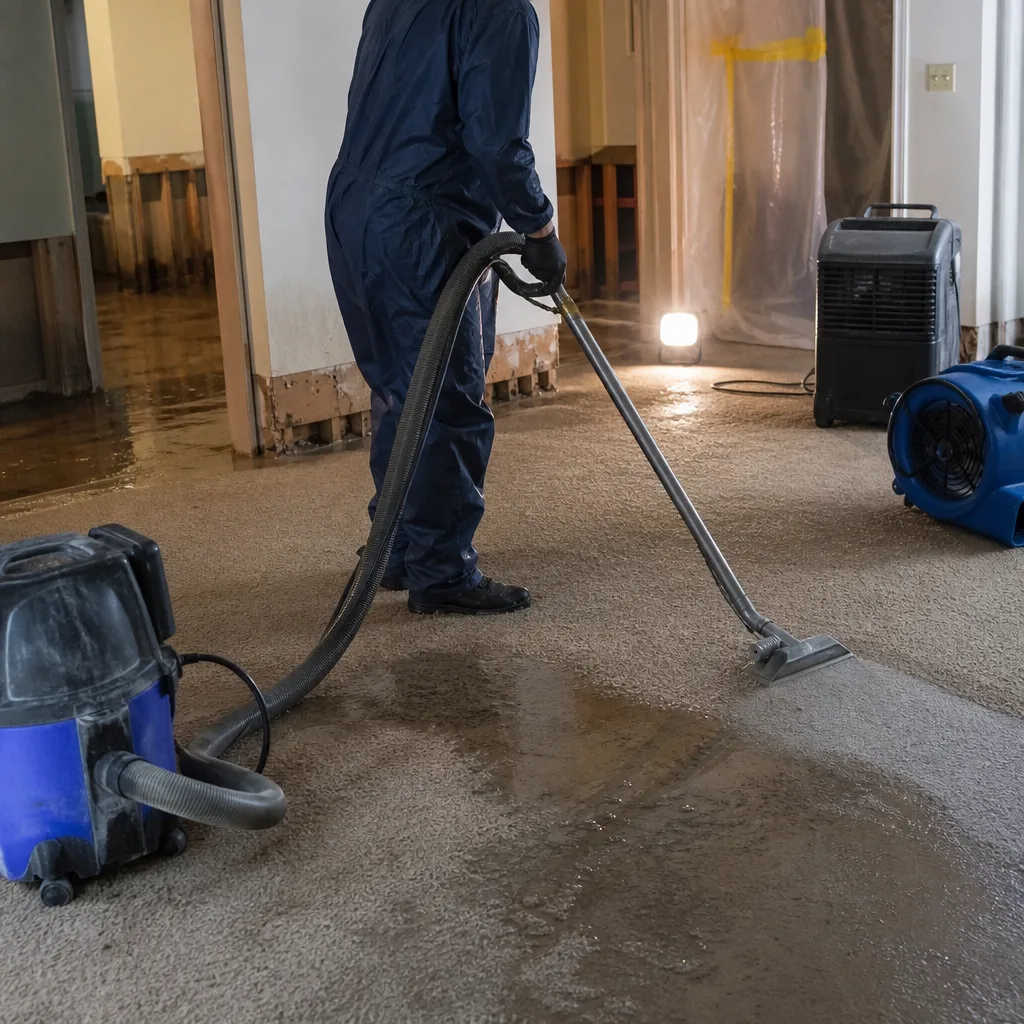
Toilet Overflow Cleanup
A toilet overflow in a Lyndhurst powder room spreads fast, especially when the floor is solid oak or the wall has custom wainscoting. We extract immediately, lift the affected flooring where necessary, treat the subfloor, and run structural drying with low-grain refrigerant dehumidifiers. If the wainscoting is salvageable, we dry it in place rather than replacing it.
Septic Failure Cleanup
Older Lyndhurst homes near the Passaic River floodplain sometimes still rely on aging septic systems or have combined lateral connections that fail during wet seasons. Septic effluent is Category 3 water, and we treat it as a biological hazard from the first step: containment, extraction, removal of contaminated materials, and full antimicrobial treatment.
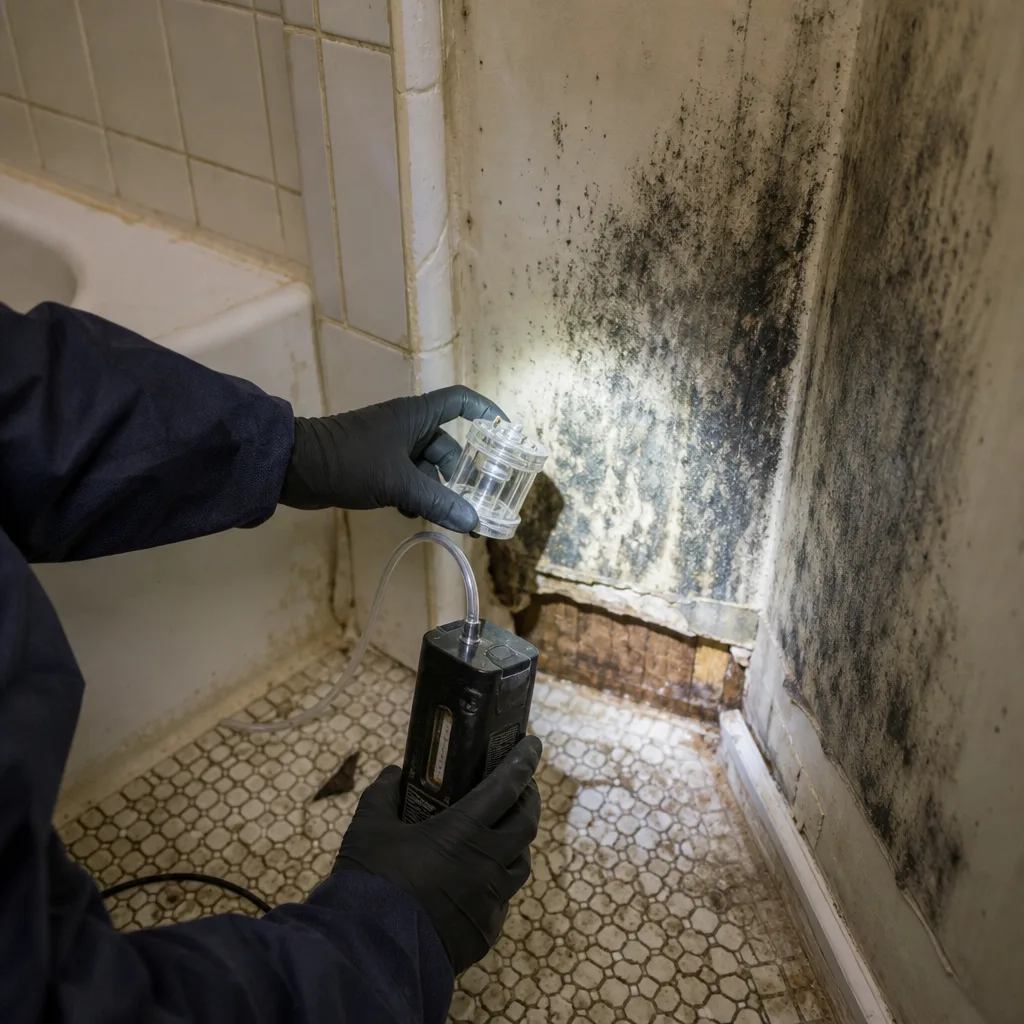
Sanitization & Disinfection
After black water removal, every affected surface gets treated with EPA-registered antimicrobials, including wall cavities, subfloors, and the backside of existing trim. We don’t just spray the surface and call it done; we treat the materials that will be hidden behind new drywall and millwork.
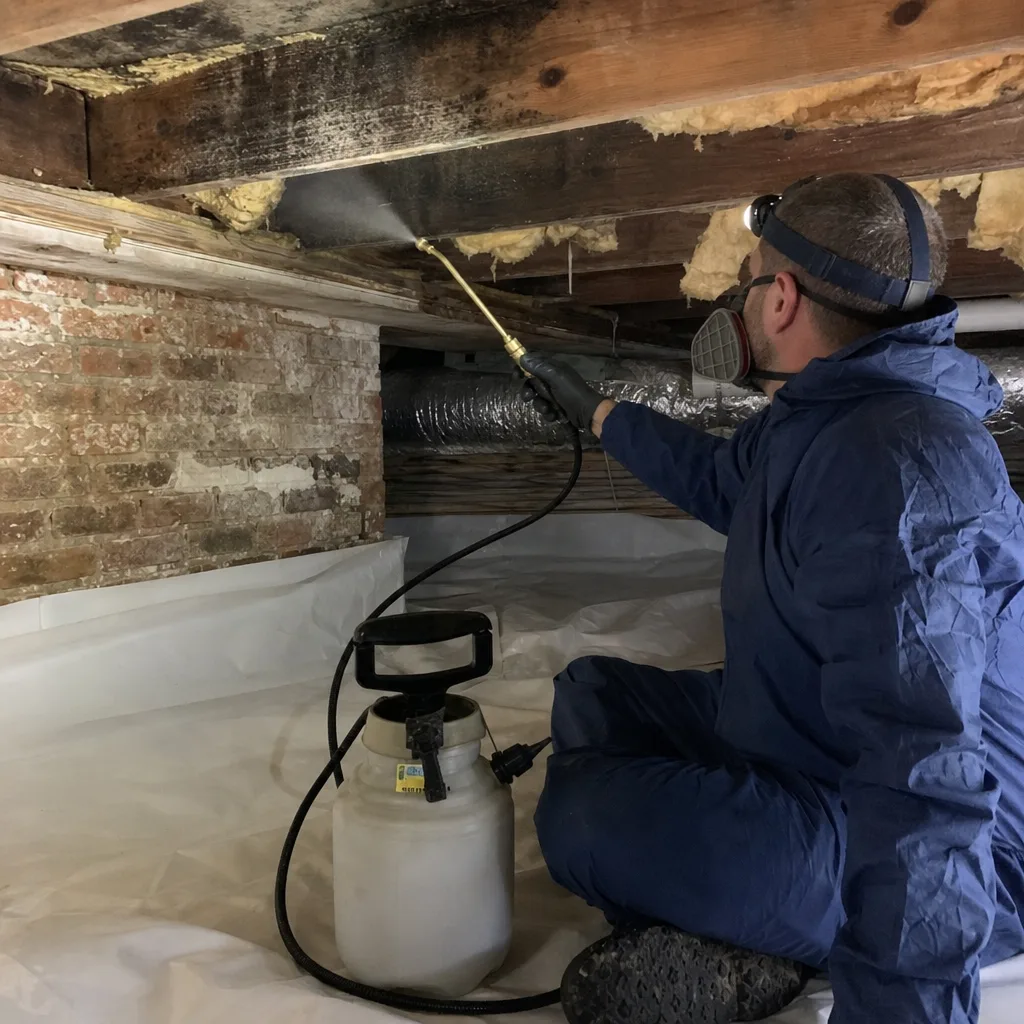
Crawl Space Sewage Removal
Lyndhurst homes with crawl spaces, especially along the older streets off Kingsland Avenue, can hide a slow sewage leak for weeks before the odor gives it away. We access the crawl space, extract standing effluent, remove contaminated soil and insulation, and run drying and air scrubbing until the space is clean and dry. We also check for cast-iron waste line failures, which are common in pre-1960 construction.
What happens when you call
- 1
A real person answersNo phone trees - you reach a local pro.
- 2
You get an upfront price rangeHonest numbers before anyone is dispatched.
- 3
A background-checked tech heads outLicensed & insured, dispatched right away.
- 4
You approve before work beginsNothing starts until you say go.
Sewage Cleanup Costs in Lyndhurst, NJ
Sewage cleanup in Lyndhurst typically runs between $2,800 and $8,400 for a contained basement backup involving extraction, removal of a few sheets of contaminated drywall, drying, and sanitization. A smaller toilet overflow confined to a half bath runs $950 to $2,200. A larger event, where black water sat overnight and soaked custom cabinetry, wainscoting, and finished flooring in a finished basement, can run $9,000 to $18,000 or more, depending on the millwork replacement and drying cycle. What moves the price is square footage of affected materials, whether moisture got behind built-ins, and how long the water sat before extraction. Insurance covers most sudden and accidental sewage backups, minus your deductible. We provide a written, line-item scope after the free visual inspection, so there’s no guessing and no change-order surprises.
We Also Serve Cities Near Lyndhurst
Our crews regularly handle Sewage Cleanup in North Arlington, Rutherford, East Rutherford, and Carlstadt. The same live dispatch team, the same certified technicians, and the same 90-Day Done Right Promise apply across every town we serve. Call (917) 924-4221 for a free estimate.
Serving Lyndhurst, NJ - Our Local Coverage Area
We’re based in the Lyndhurst area and know this community well. Use the map below to see our service coverage - if you’re nearby, we can almost certainly help.
Lyndhurst Sewage Cleanup Questions, Answered
How do you handle sewage cleanup in Lyndhurst homes with custom-built wood wainscoting or built-in cabinetry?
We dry salvageable wainscoting and build-ins in place whenever structurally sound, using low-grain refrigerant dehumidifiers and targeted air movement rather than tearing everything out. Custom woodwork that has been soaked with Category 3 water but is still dimensionally stable gets treated with antimicrobials, dried to standard, and sealed. Only materials that cannot be dried or decontaminated are removed, and we match the original wood profile and finish when replacement is necessary. Call (917) 924-4221 and we’ll assess your millwork before recommending any removal.
Does your sewage cleanup service in Lyndhurst integrate with smart-home systems for monitoring or alerts?
We don’t install new monitoring systems, but we work around existing smart-home wiring and do not disturb it. In one Fern Avenue carriage house, we removed and replaced the lower six inches of custom wainscoting around the homeowner’s smart-home paneling, running wire-safe moisture mapping around all connected components. Wiring is documented before any material removal, and nothing gets cut, crimped, or disconnected. If a smart moisture sensor alerted you to the backup, keep that log, it helps your claim.
What’s the difference between Category 2 and Category 3 water in a Lyndhurst basement backup?
Category 2 is gray water, soiled but not fecal: a washing machine overflow or a toilet overflow with no solid waste. Category 3 is black water, sewage, storm sewer inflow, or any Category 2 water left sitting for 48 hours or more. Black water carries pathogens that require full PPE during extraction, containment barriers, and EPA-registered antimicrobial treatment. If Lyndhurst’s combined sewer backed up into your basement during heavy rain, that’s Category 3.
How quickly can you respond to a sewage backup in a Lyndhurst carriage house with wood garage doors?
We commit to a 45-minute response to Lyndhurst. For carriage-house properties with wood garage doors and finished living space above or beside the garage, speed matters because black water wicks into wood grain almost immediately. A live dispatcher confirms the job, the nearest certified crew is sent directly to your address, and extraction starts the same visit. Call (917) 924-4221 now, and we’ll be there when we say.
Will your sewage cleanup process disturb the custom finish on my Lyndhurst home’s interior doors or trim?
We treat finished doors and trim as assets to protect, not casualties to replace. Where water has not contacted the wood, we leave it untouched. Where lower door casings or baseboards have absorbed black water, we dry them in place with targeted air movement and low-grain dehumidifiers, treating them with antimicrobials before reinstallation. If replacement is unavoidable, we match the species, profile, and finish and stand behind the result with the 90-Day Done Right Promise.
Can we stay in the home during sewage cleanup?
It depends on the extent of contamination. A small toilet overflow confined to one bathroom may allow you to stay, provided the room is contained and the air is being scrubbed. A larger backup that spread black water through a finished basement usually means we recommend leaving during active extraction and sanitization until clearance readings are taken. We’ll tell you straight, based on what we find, not what’s convenient. Call (917) 924-4221 for an honest assessment.
What certifications do your Lyndhurst sewage cleanup technicians hold?
Every Floodline technician is background-checked, uniformed, and certified to IICRC standards, with training through RIA and IFA. Our sewage cleanup crews hold current Water Damage Restoration and Applied Microbial Remediation certifications, which cover Category 3 water handling, containment, and antimicrobial application. We don’t send uncertified labor to a black water job, ever.
What should I do in the first 30 minutes after a sewage backup in Lyndhurst?
Stop using water in the house, shut off the main water valve if the backup is from an internal line, and kill power to the affected area if water is near outlets. Call (917) 924-4221 immediately. Do not use a shop vac on sewage, do not run HVAC through the affected space, and do not walk through the water without boots and gloves. Move pets and children away from the area. The first 30 minutes determine how much custom woodwork and flooring we can save. Call us now.
Written by Curt Bowman, Owner at Floodline Restoration Co. of Manhattan, serving Lyndhurst and the surrounding Bergen County communities.