
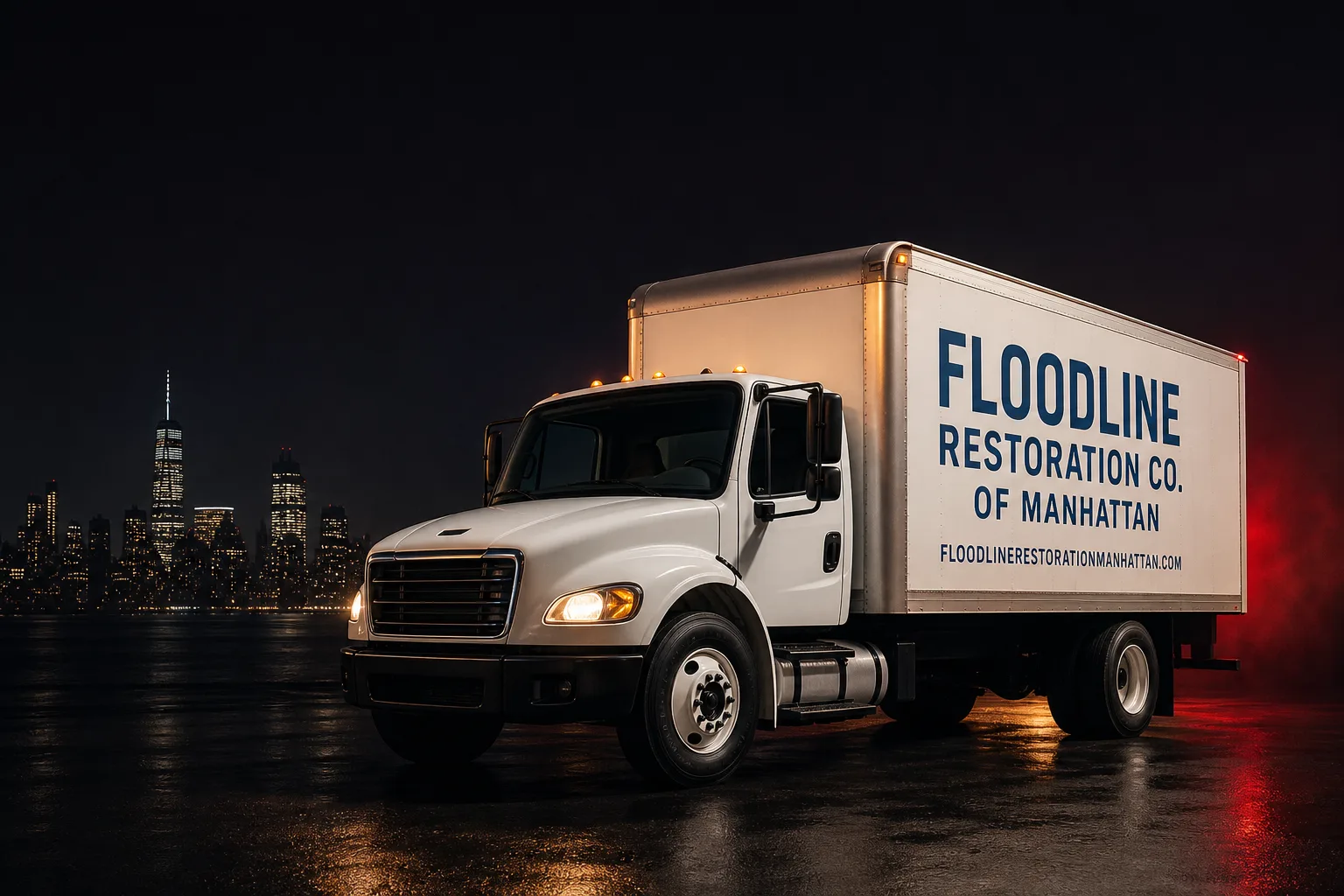
Free visual inspection and a written scope of work before any mitigation begins - photos, moisture readings, and drying logs go in your claim file
The scope we write is the scope we bill. Anything new gets shown to you, in writing, before we touch it.






 Before
 After
After Before
 After
After Before
 After
After24/7 Emergency Sewage Cleanup in Union Square
Sewage cleanup in Union Square typically runs $350 to $2,800 depending on how far Category 3 water has traveled, and we’re on site within 45 minutes of your call. If you’ve got black water backing up through a floor drain or a toilet overflowing into a pre-war loft, call (917) 924-4221 right now. A live dispatcher answers no matter the hour, and the first hour matters because sewage that sits in a 100-year-old masonry building starts wicking into brick and plaster immediately. That’s what turns a $500 extraction into a $4,000 wall tear-out.
Understanding Sewage Cleanup Severity in Union Square Properties
Not all water is the same, and in Union Square the distinction matters more than in almost any other Manhattan district. Category 1 water is clean, from a supply line or radiator. Category 2 is gray water, lightly contaminated. Category 3, or black water, carries raw sewage, bacteria, and pathogens. Sewage backup from a surcharged combined sewer is always Category 3. In Union Square’s loft conversions, where original cast-iron drain stacks run through 18-inch brick party walls, Category 3 water travels in ways a standard moisture meter won’t catch. We use thermal imaging and invasive probing on every sewage job here because the masonry hides what drywall would reveal in a day. Moisture mapping is the difference between cleaning a floor and replacing the bottom four feet of a terra cotta wall.
Why Union Square Property Owners Choose Floodline Restoration Co. of Manhattan
- 45-minute response commitment. We keep crews staged near Union Square and we give you a real arrival window, not a two-hour window that slides. When we say we’ll be there, we will.
- 24/7 live answer. Call (917) 924-4221 at 2 a.m. and a dispatcher picks up. Not a recording, not a callback list. A person who starts the dispatch while you’re still on the phone.
- IICRC-certified crews. Our technicians hold WRT and FSRT certifications and train to RIA and IFA standards. Background-checked, uniformed, and they’ll explain what they’re doing in plain English.
- Free visual inspection. Before any work starts, we assess what’s actually happened and what needs to happen next. No charge, no obligation, no pressure.
- Direct insurance billing. We work directly with your carrier, send them the documentation they need, and handle adjuster calls so you don’t have to chase anyone.
- One team from extraction to reconstruction. The same crew that pumps out the sewage stays through drying, sanitization, and rebuilding. No mid-job handoff to a subcontractor you’ve never met.
Our Sewage Cleanup Process
Inspection & Assessment
We start by identifying the source of the backup and the category of water. Using thermal imaging and moisture probes, we map how far the sewage has traveled through flooring, walls, and sub-grade spaces. You get a written scope of work before anything gets torn out.
Extraction & Stabilization
Black water comes out first. We run Dri-Eaz and Phoenix extraction units sized for the tight doorways and stairwells common in Union Square buildings, and we set containment around affected areas to stop cross-contamination.
Drying & Dehumidification
XPOWER air movers and high-capacity dehumidifiers go in once the standing water is out. In masonry buildings, drying takes longer than in drywall construction, because brick and terra cotta hold moisture deep. We log readings twice daily until the structure hits the dry standard.
Cleaning & Sanitization
All affected surfaces get cleaned with EPA-registered antimicrobials and sanitized for Category 3 contamination. Porous materials that can’t be sanitized, like saturated drywall, carpet pad, and upholstery, are cut out and bagged for disposal.
Containment & Air Scrubbing
HEPA air scrubbers run throughout the job to pull pathogens and airborne particulates from the air. Negative air pressure keeps contaminated air from drifting into clean rooms or neighboring units.
Repairs & Restoration
The same crew rebuilds what was removed. We replace drywall, refinish floors, repaint, and restore affected spaces to pre-loss condition, backed by the 90-Day Done Right Promise in writing.
Need Emergency Sewage Cleanup in Union Square Now?
Crews minutes away, answering live 24 hours a day. The sooner we start, the less it costs.
Working With Your Insurance Company
Most sewage backups in Union Square are covered by insurance, but only if the claim is documented properly from the first hour. We photograph every wet surface before we touch it, log moisture readings on a daily schedule, and write a line-item scope carriers recognize. Your adjuster gets the same documentation we hand you, which means less back and forth and faster approval. We’ve been dealing with New York City carriers for years, and we know what they need to see. You should never have to play messenger between your restoration company and your insurer.
What We Provide Your Insurer
- Thorough documentation of the loss
- Photos of all damage, room by room
- Moisture readings and drying logs
- A detailed, line-item scope of work
- Direct coordination with your carrier
Built for Union Square’s Loss Calendar
Sewage problems in Union Square follow a pattern you can set a clock by. August brings the convective thunderstorm season, when Manhattan’s combined sewer system surcharges and pushes black water back up through basement floor drains across the district. January and February see frozen drain lines and cracked fixtures in unheated sub-grade spaces. And spring thaw, combined with elevated groundwater from the subway tunnels, pushes hydrostatic pressure against aging cast-iron stacks until something gives. The buildings around Union Square Park, especially the pre-war loft conversions along Broadway and Park Avenue South, take the brunt of it. We plan our equipment staging around these seasons, so when the next nor’easter hits, the extraction units are already nearby. This isn’t a service you schedule; it’s one you need within the hour. That’s exactly how we run it.
Sewage Cleanup Across Union Square’s Neighborhoods
Every block around Union Square has its own access challenges, and we know them before we arrive. The loft buildings along Broadway between 14th and 17th Streets have narrow freight entrances and service elevators that shut down after hours, so we hand-carry compact equipment and stage containment in the freight hall. On University Place, the curb cuts are tight and enforcement is aggressive, so we coordinate loading-zone permits before a single piece of equipment comes off the truck. Park Avenue South condos present a different problem entirely: high-end lobbies and co-op boards that require advance notice and proof of insurance before work can begin, which we handle for you. East 13th and 14th Streets, with their mix of converted warehouses and retail-over-residential buildings, force us to work around active storefronts and live-in tenants on upper floors. And the blocks just off Union Square East sit nearest the subway convergence, where tunnel vibration shakes loose old bell-and-spigot joints and groundwater finds its way in. We serve all of these corridors with the same Sewage Cleanup team, and we’ve learned the access and scheduling quirks of each one.
Specialized Sewage Cleanup Services We Offer in Union Square
Sewage Backup Cleanup
When the combined sewer surcharges and black water pushes up through a basement floor drain, the first step is always containment. In Union Square’s thick-walled masonry buildings, that means sealing off the affected sub-grade space and mapping moisture into the party walls before demolition starts. We extract, sanitize, and dry to the structural standard, then rebuild what came out.
Black Water Extraction
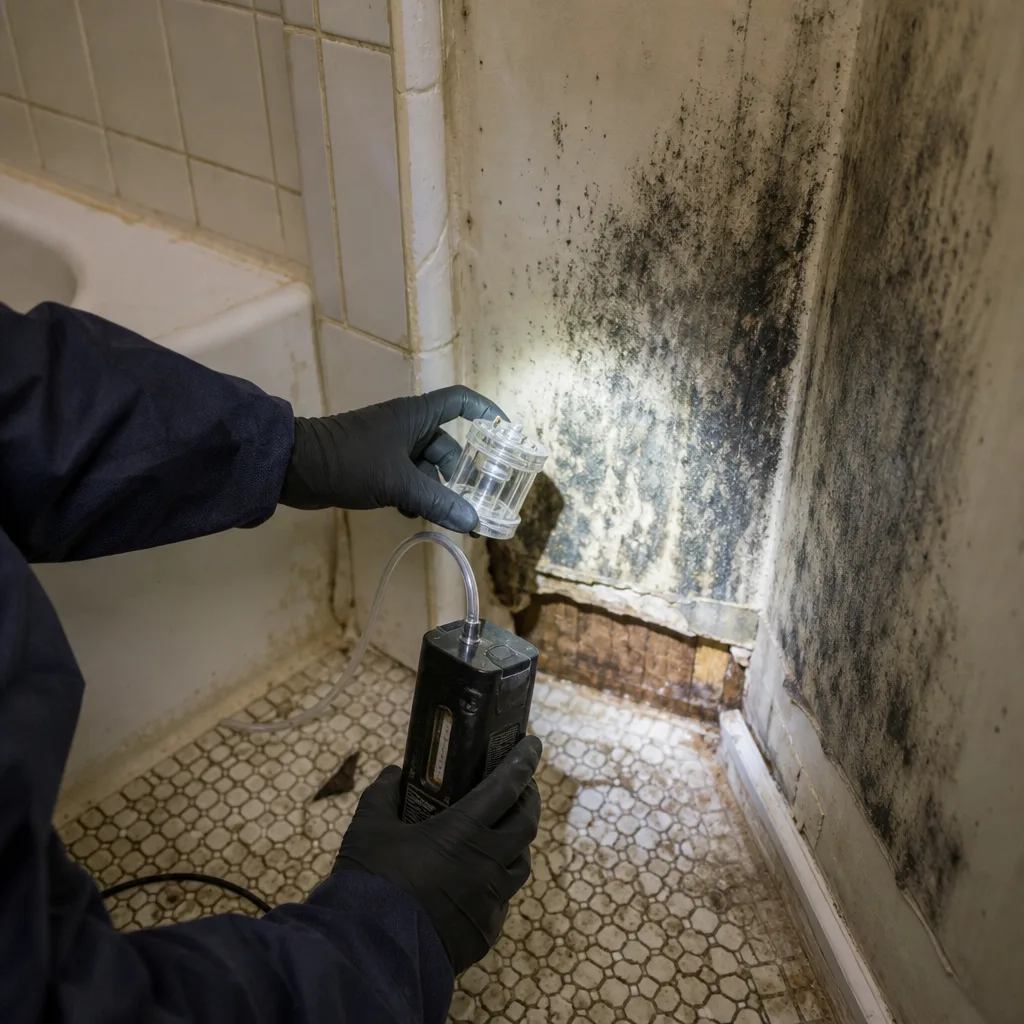
Category 3 water needs commercial extraction equipment, and we run Dri-Eaz and Phoenix units sized for the job. A standard shop vac won’t touch what comes up through a failed cast-iron stack in a Union Square loft. We extract down to the substrate, then check the brick and terra cotta for wicking that surface meters would miss.
Sanitization & Disinfection
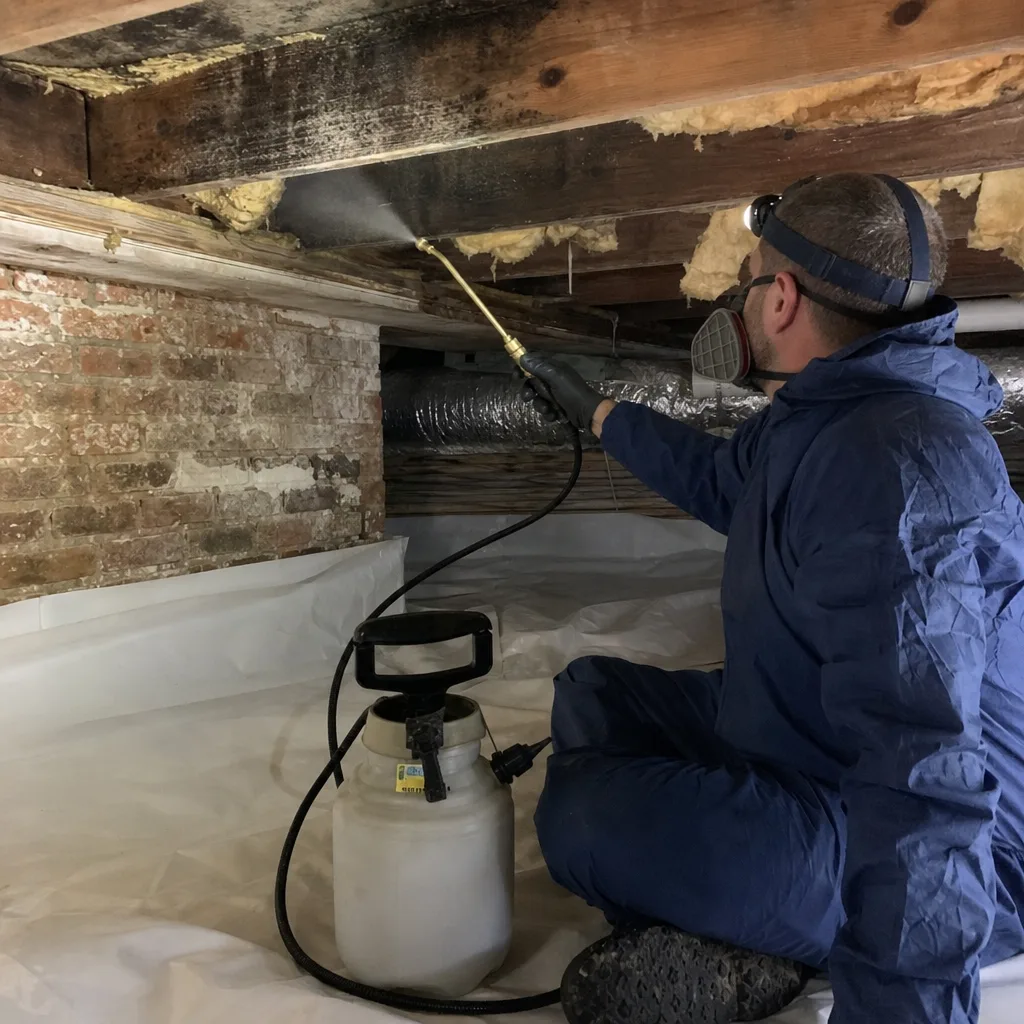
Any surface black water touches has to be either sanitized to a Category 3 standard or removed. We use EPA-registered antimicrobials and run HEPA scrubbers to pull airborne contaminants out of the air. In tight masonry enclosures like those under Union Square’s loft buildings, air scrubbing runs longer than in open drywall construction because the brick holds and releases moisture slowly.
Toilet Overflow Cleanup
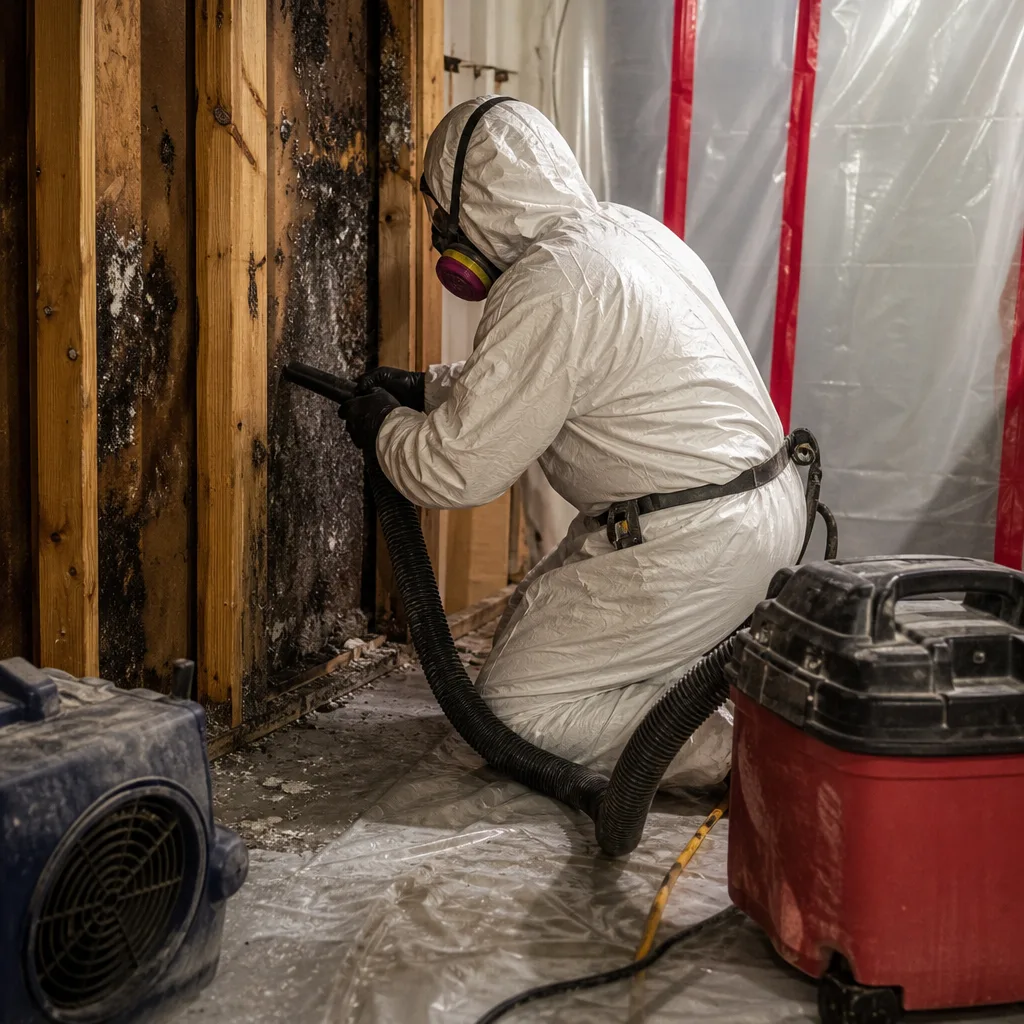
A toilet that overflows in a converted factory building on 14th Street sends contaminated water under tile, into subflooring, and often into the neighbor’s ceiling below. We respond fast, extract what’s standing, pull affected building materials, and dry the cavity before mold gets a foothold. If it’s a second-floor unit, we set containment below while we work above.
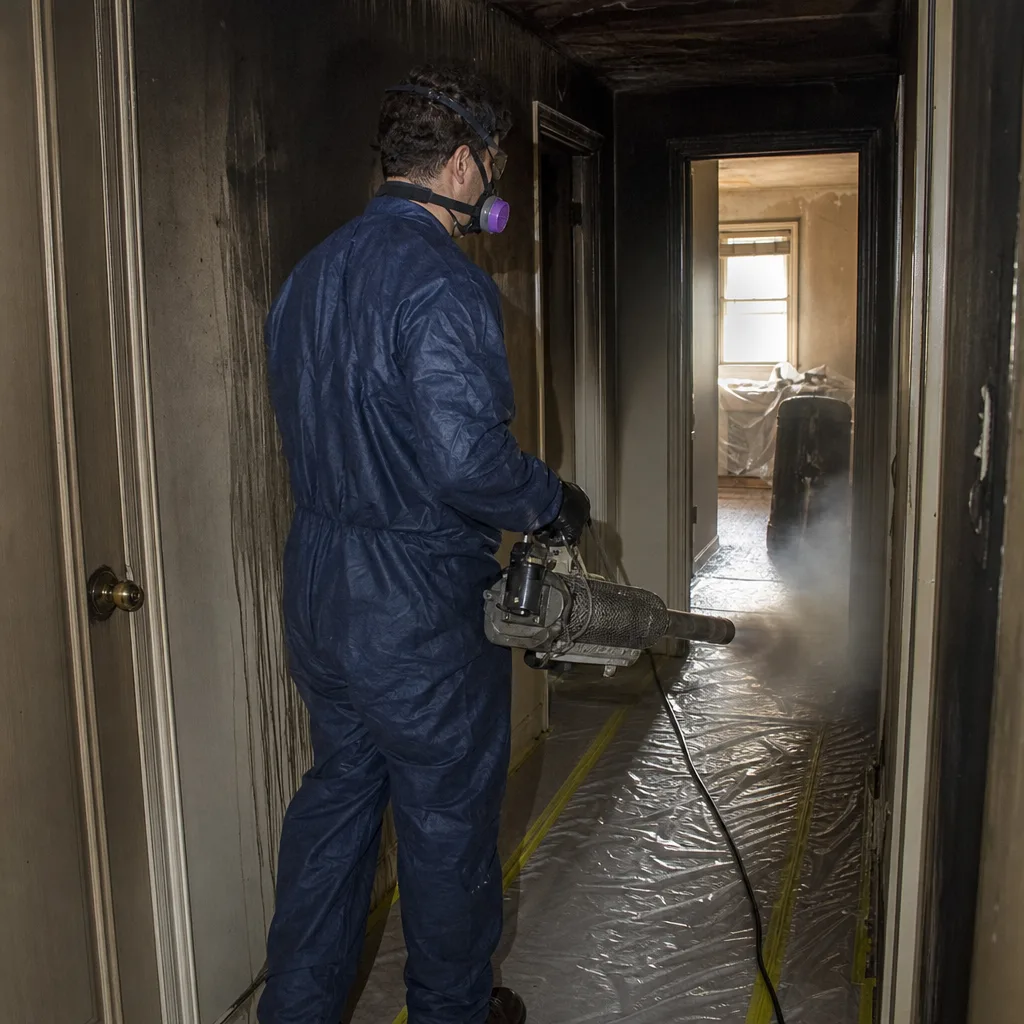
Septic Failure Cleanup
Septic failures are less common in Union Square than combined sewer backups, but when they happen in rare private systems or holding tanks serving older buildings, the Category 3 contamination is identical. We handle extraction, disposal, and full sanitization, then coordinate with a licensed plumber for the system repair.
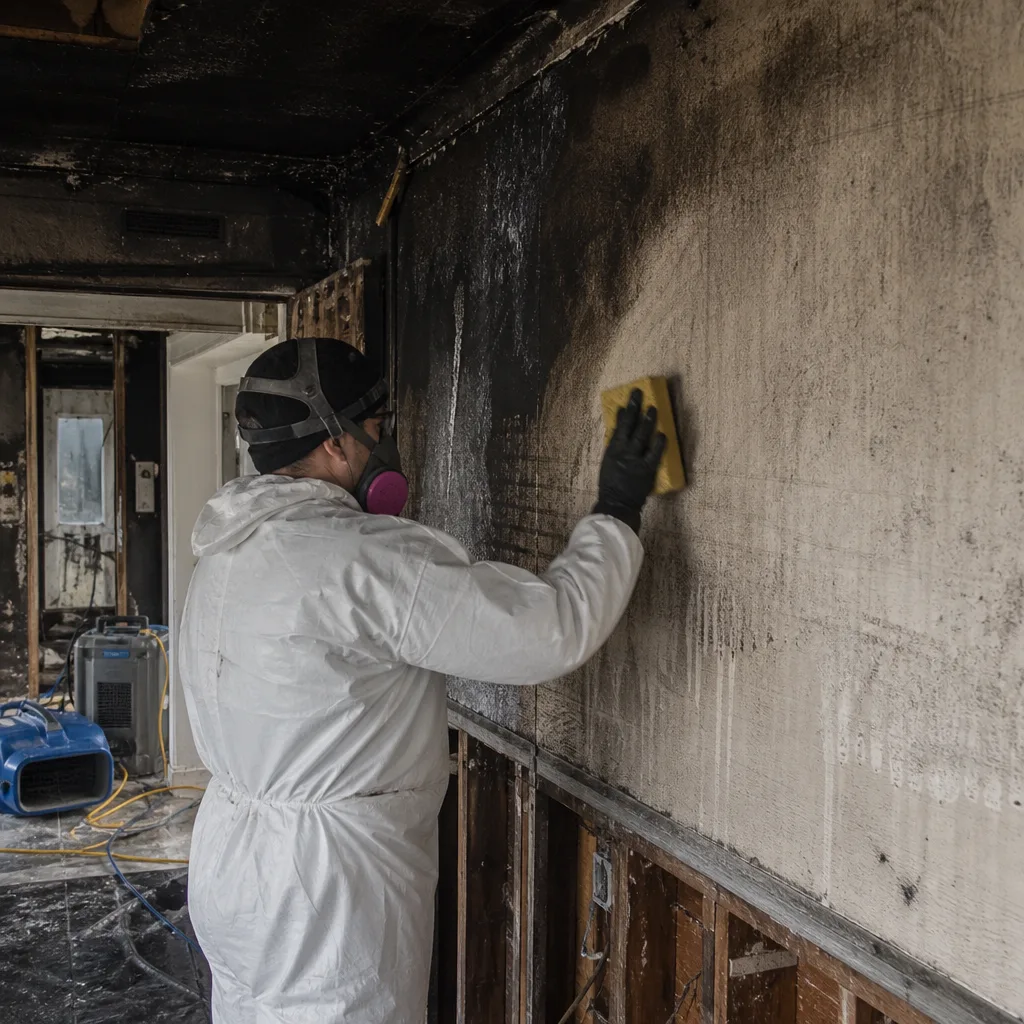
Crawl Space Sewage Removal
Some older Union Square buildings have crawl spaces under the first floor where sewage collects after a pipe separation. These spaces are tight, dark, and rarely vented, which makes them mold factories. We use compact extraction equipment, full PPE, and negative air containment to clean them without contaminating the living space above.
What happens when you call
- 1
A real person answersNo phone trees - you reach a local pro.
- 2
You get an upfront price rangeHonest numbers before anyone is dispatched.
- 3
A background-checked tech heads outLicensed & insured, dispatched right away.
- 4
You approve before work beginsNothing starts until you say go.
Sewage Cleanup Costs in Union Square, NY
For Union Square’s market right now, a straight toilet overflow cleanup on a finished floor runs $350 to $950. A bathroom sewage backup that’s been caught same-day and contained to one room typically lands between $800 and $1,800. A basement black water event with masonry wall wicking, containment, demolition, drying, and repair runs $2,200 to $4,500 and sometimes higher. What moves the price is how far the water traveled, what building materials absorbed it, and whether the affected area is a framed interior wall or an 18-inch brick party wall. Insurance covers most backed-up sewer claims, subject to your deductible. The free visual inspection gives you a firm line-item scope before anything gets torn out, so the number on the wall is the number on the bill. Call (917) 924-4221 to schedule an inspection.
We Also Serve Cities Near Union Square
Our Union Square crews also cover Fairview, Harrison, East Bronx, and Hunts Point. Response times vary by distance and traffic, but the same certified technicians and equipment serve every one of those areas.
Serving Union Square, NY - Our Local Coverage Area
We’re based in the Union Square area and know this community well. Use the map below to see our service coverage - if you’re nearby, we can almost certainly help.
Union Square Sewage Cleanup Questions, Answered
Why do Union Square basement sewage backups smell worse than in other Manhattan neighborhoods?
Union Square’s basement sewage smells worse because the combined sewer lines under the district carry both stormwater and raw waste, and when the system surcharges, that mix sits in low-pressure pockets under the dense street grid. The pre-war cast-iron drain lines and thick masonry foundations here absorb and hold the odor longer than newer construction with PVC waste lines. Once we remove the water and contaminated material, we run hydroxyl generators and seal porous surfaces to kill the smell at its source, not just mask it.
How do restoration pros tell if water in my Union Square loft is Category 3 and what must be removed?
We identify Category 3 water by its source, not just its appearance. If it came from a sewer backup, toilet overflow with waste, or any line carrying human or animal waste, it’s Category 3, or black water, regardless of color. Everything porous the water touched, including carpet pad, drywall, insulation, and upholstered furniture, has to be removed and disposed of. Non-porous surfaces get sanitized with EPA-registered antimicrobials. There’s no safe shortcut with black water, and anyone who tells you otherwise is guessing.
Does living above the 4/5/6 or L subway make sewage cleanup more complicated in Union Square buildings?
Yes. The subway tunnels beneath Union Square concentrate hydrostatic pressure around the neighborhood’s foundations, and tunnel vibration shakes old cast-iron drain joints loose over time. That pressure pushes groundwater and sewage into basements and sub-grade spaces through cracks and separations that wouldn’t leak in a quieter location. We account for the tunnel adjacency in our drying protocols, because the masonry stays saturated longer when groundwater is pushing from outside, and we probe deeper than surface readings to find it.
How quickly does mold start in a Union Square loft after a sewage backup, and why does the clock matter here more than in newer buildings?
Mold can begin colonizing in 24 to 48 hours in the warm, humid conditions a sewage backup creates. In Union Square’s loft conversions, the clock matters more because the thick brick and terra cotta walls provide mold with an oxygen-rich, porous food source that stays damp far longer than drywall. By the time you see a stain on the plaster surface, the colony behind it is often already extensive. That’s why we respond within 45 minutes and start extraction the same visit, not the next day.
Do I need a pack-out if sewage backs up into my Union Square condo with 15-foot ceilings?
Often yes, especially if the water reached stored boxes, lower shelving, or furniture legs. Black water that’s wicked into fabric or wood can’t be surface-cleaned safely. We document everything we remove, inventory it, and coordinate pack-out with your insurance carrier so nothing gets lost in the process. If the backup stays contained to one bathroom or mechanical room, usually the rest of the unit can stay in place behind containment.
How fast can you actually get to Union Square?
We commit to 45 minutes or less for emergency sewage calls in Union Square. We keep crews and equipment staged in the area, and because we’ve worked these buildings for years, we know the access routes, freight entrances, and loading zones before the truck parks. Call (917) 924-4221 and a dispatcher gives you the ETA while you’re still on the line.
Will my insurance cover sewage cleanup in Union Square?
Most homeowners and condo policies in New York cover sewage backup as long as the loss is sudden and accidental, not a maintenance failure. Some policies require a specific sewer backup endorsement, so coverage depends on your policy language. We work directly with your adjuster, provide the photo documentation and moisture logs they need, and bill the carrier directly so you’re not fronting thousands of dollars out of pocket.
What should I do in the first 30 minutes after discovering a sewage backup in Union Square?
Stop using all water in the unit, shut off electricity to the affected area if you can do so safely, and keep people and pets away from the water. Do not attempt to plunge or flush, because that can push contaminated water deeper into wall cavities. Call (917) 924-4221 and we’ll talk you through the next steps while the crew is dispatched. The single most important thing is to get extraction running before the water wicks into masonry, because that’s what turns a one-day job into a two-week rebuild.
Written by Curt Bowman, Owner at Floodline Restoration Co. of Manhattan, serving Union Square with certified Sewage Cleanup crews since 2010.