
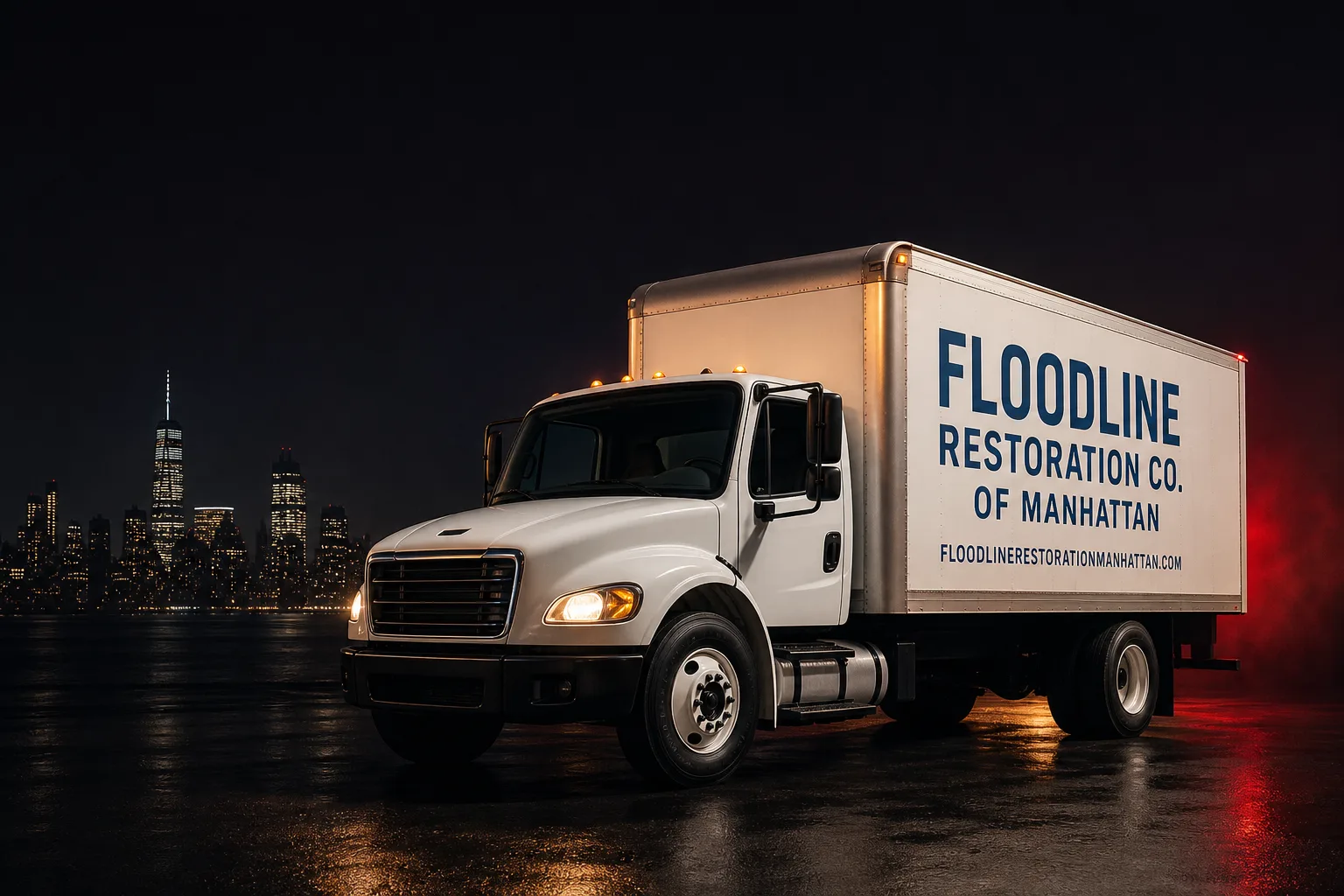
Free visual inspection and a written scope of work before any mitigation begins - photos, moisture readings, and drying logs go in your claim file
The scope we write is the scope we bill. Anything new gets shown to you, in writing, before we touch it.






 Before
 After
After Before
 After
After Before
 After
After24/7 Emergency Storm & Disaster Restoration in Arden Heights
A nor’easter tears through Arden Heights and within hours you’re standing in a wet living room, staring at a ceiling that’s starting to bow. Storm and disaster restoration in Arden Heights needs to start now, not after a weekend or a callback. Floodline Restoration Co. of Manhattan answers live at (917) 924-4221 around the clock. A real dispatcher picks up, every time. We get a certified crew moving toward your street immediately, because the first hour after wind-driven water intrusion determines whether you’re dealing with a dry-out or a gut-and-rebuild. The damage spreads while you wait: water wicks up drywall, mold spores germinate in 24 to 48 hours, and wet insulation loses its R-value permanently. In this neighborhood, with the Woods wetland right there and clay soils holding water against foundations, time works against you faster than in most of Staten Island. Call now. We’ll be there when we say. The line the water left is where we start.
Understanding Storm & Disaster Restoration Severity in Arden Heights Properties
Not every storm loss in Arden Heights is the same animal. We classify water by category before we touch anything. Category 1 is clean water, say from a wind-damaged roof letting rain through before it picks up contaminants. Category 2 carries significant contamination, common when water passes through insulation or wall cavities. Category 3 is black water: sewage, river surge, or groundwater that has picked up whatever was in the saturated clay outside your foundation. Around Arden Heights, we see Category 3 more than most Staten Island homeowners expect, because the combined sewer system regularly surcharges during heavy rain and backs up into finished basements. That changes everything: full biohazard protocol, containment, removal of porous materials, not just extraction. We also read the building itself. Your Cape Cod, ranch, or split-level from the 1960s through early 1980s likely has asbestos-containing materials in floor tile, joint compound, and pipe insulation. Pulling storm-soaked drywall on a 1972 split-level without asbestos sampling first is a mistake that costs time, money, and air quality. Severity here means reading the water, the structure, and the era of construction in one pass.
Why Arden Heights Property Owners Choose Floodline Restoration Co. of Manhattan
- 45-minute response commitment: When you call with a storm emergency in Arden Heights, we commit to having a crew dispatched toward you within 45 minutes. Live dispatch means no answering service delay.
- 24/7 live answer, never an automated system: You get a person when you call at 3 a.m. That person knows the difference between a wind-damage call and a sewage backup, and they send the right crew.
- IICRC-certified crews: Our technicians hold WRT (Water Damage Restoration Technician), FSRT (Fire and Smoke Restoration Technician), and AMRT (Applied Microbial Remediation Technician) certifications. The letters mean something: documented training, tested knowledge, and current standards compliance.
- Free visual inspection: Before any work gets scoped, we walk the damage with you, document it, and give you a written assessment. No charge, no obligation to proceed.
- Direct insurance billing: We coordinate with your carrier, submit documentation, and handle the adjuster conversation. You don’t play messenger between Floodline and the insurance company.
- One team from extraction to reconstruction: The same certified crew that reads the moisture map on day one handles daily readings, hands the log to you and your carrier, and rebuilds what needs rebuilding. No mid-job handoff to an inherited crew.
Our Storm & Disaster Restoration Process
Inspection & Assessment
We arrive, walk the property with you, and document everything. Thermal imaging and Dri-Eaz moisture meters tell us where water has traveled inside wall cavities and under flooring, not just where it’s visible on the surface. For storm damage in Arden Heights specifically, we check wind-rating compliance on exterior openings and check for sewer surcharge evidence in basement losses.
Extraction & Stabilization
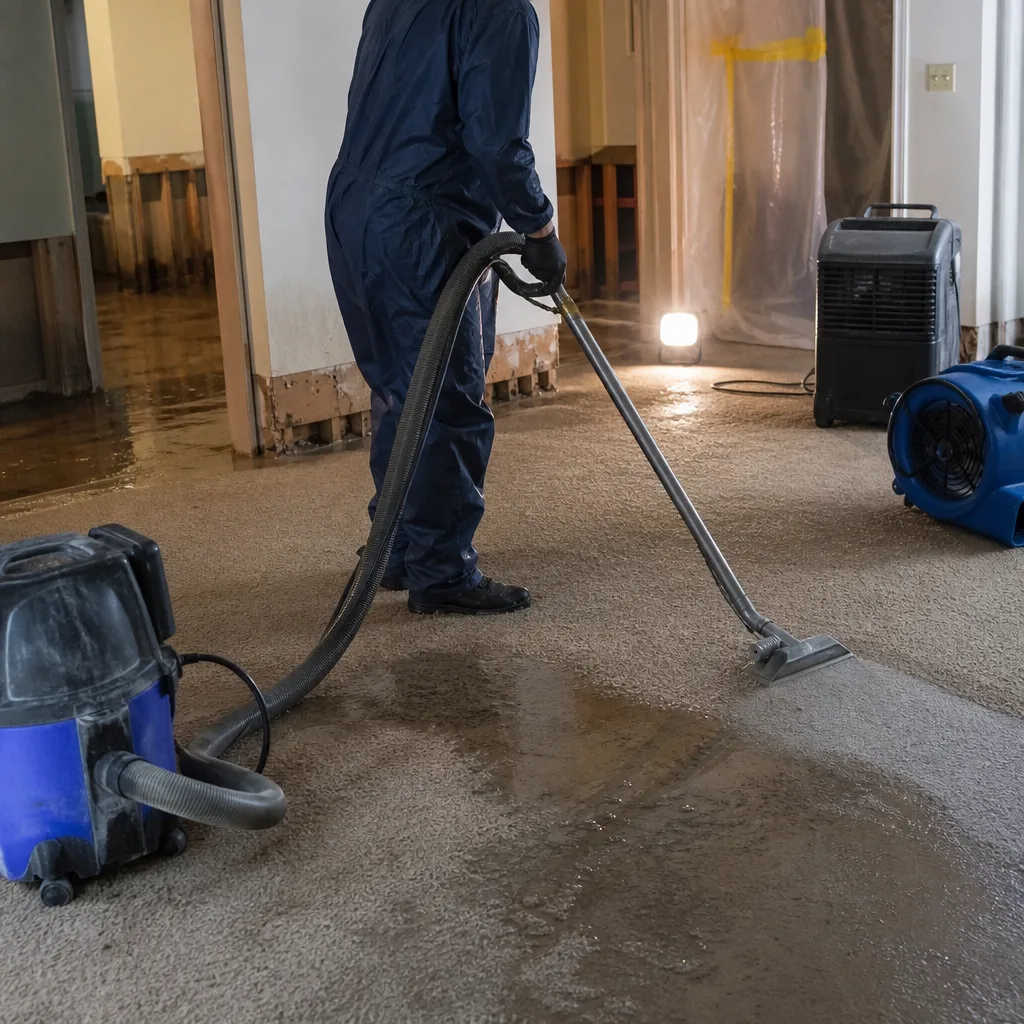
Standing water comes out first, using truck-mounted and portable extraction units. Emergency board-up and roof tarping happen in this phase too, so the structure stops taking on water and wind while we work inside. If the loss involves wind-damaged entry doors or broken windows, we secure those openings before weather changes.
Drying & Dehumidification
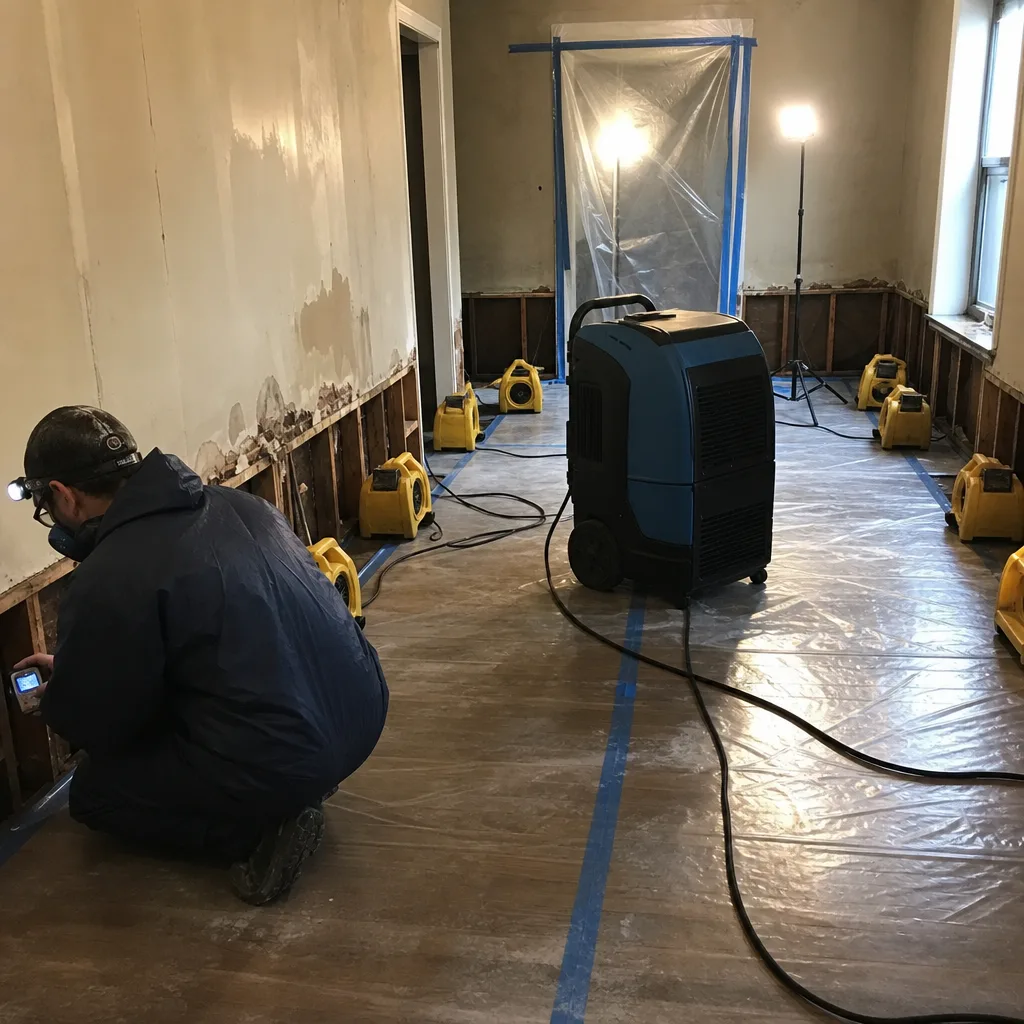
XPOWER air movers and Phoenix dehumidifiers go in, positioned based on the moisture map, not guessed at. Daily readings get logged with hygrometers until we hit the documented dry standard. Around Arden Heights, with ambient humidity amplified by the Kill Van Kull and Arthur Kill on either side of the island, drying times run longer than inland Staten Island, and we plan for that.
Cleaning & Sanitization
HEPA air scrubbers run during demolition and cleaning to control airborne particles, including mold spores and, where applicable, asbestos fibers. Antimicrobial treatment follows where Category 2 or 3 water was present. Every porous surface that cannot be dried and cleaned gets removed and replaced, not painted over.
Specialty Treatment
Here’s where Arden Heights dictates the work plan. Chronic clay-soil saturation adjacent to the Woods means we evaluate drainage, grading, and foundation waterproofing before we close up walls. Wind-damaged openings get verified for wind rating, not just re-hung. A 1970s ceiling with asbestos joint compound gets abatement coordination before structural repair begins.
Repairs & Restoration
The same crew that mitigated your loss rebuilds it. Drywall, flooring, trim, paint, doors, roof decking, whatever the scope requires. We hand you the moisture log, the documentation binder, and our 90-Day Done Right Promise in writing. Done right, and backed in writing.
Need Emergency Storm & Disaster Restoration in Arden Heights Now?
Crews minutes away, answering live 24 hours a day. The sooner we start, the less it costs.
Working With Your Insurance Company
Storm damage claims move faster when documentation starts in the first hour, before anyone has touched the scene. We photograph everything room by room before mitigation begins, then log moisture readings, drying progress, and material removals as the job proceeds. Our scopes are line-item and detailed, built to industry-standard estimating formats your adjuster already knows how to read. We talk to your carrier directly: sending documentation, answering adjuster questions, and coordinating supplemental approvals when hidden damage turns up behind walls. You get a copy of everything we send. For property owners in Arden Heights who have lived in their homes twenty years and plan to stay another twenty, this matters. You don’t need to become an insurance expert overnight. That’s our part. We handle the carrier, you handle the next chapter.
What We Provide Your Insurer
- Thorough documentation of the loss
- Photos of all damage, room by room
- Moisture readings and drying logs
- A detailed, line-item scope of work
- Direct coordination with your carrier
Built for Arden Heights’s Loss Calendar
January and February in Arden Heights bring deep freezes that burst supply lines in uninsulated garage walls and crawl spaces, and the resulting water damage goes unnoticed for days. March and April thaw the clay-heavy soil along the Woods edge, pushing groundwater against foundations and into basements that stayed dry all winter. June through August, the summer convective storms hit fast, overwhelming the aging combined sewer system and sending Category 3 backups into finished basements across the neighborhood. September through November is nor’easter season, when wind loads test roofs, siding, and entry doors, and rain gets driven sideways under shingles and through flashing failures. December brings the first freeze-thaw cycle, which widens any crack the previous storm opened. Understanding this calendar is how we scope work in Arden Heights. A basement that flooded in July because the sewer surcharged needs a different plan than a roof leak in October from wind-driven rain. When you call after a storm, we know what month it is and what that means for your house.
Storm & Disaster Restoration Across Arden Heights’s Neighborhoods
Our crews run Arden Heights’s main corridors constantly: Arthur Kill Road on the eastern edge, where split-levels from the late 1960s predominate and aging original roofs fail under nor’easter wind loads; Annadale Road through the center, where Cape Cods and ranches sit on grading that drains toward the Woods; Drumgoole Road East near the preserve boundary, where groundwater pressure against foundations makes even minor storms cause basement seepage; and the streets off Woodrow Road, where mature trees drop limbs through roof decking during high-wind events. Along the western slope toward the Arthur Kill, salt-laden air accelerates corrosion on flashing, door thresholds, and window wells, so we see failures there that inland blocks don’t experience. Every one of these sections of Arden Heights responds differently to the same storm. We know that because we work them all, month after month, year after year. When we roll up to your house, we already know what the block next to you went through in the last two storms, and that context shapes how we assess yours.
Specialized Storm & Disaster Restoration Services We Offer in Arden Heights
Storm Damage Cleanup
After wind and rain tear through Arden Heights, the cleanup is more than picking up branches. We remove water-logged debris, stabilize damaged areas, and document everything for your carrier before anything gets thrown away. The goal is a clean, controlled site where mitigation can start properly.
Flood Damage Restoration
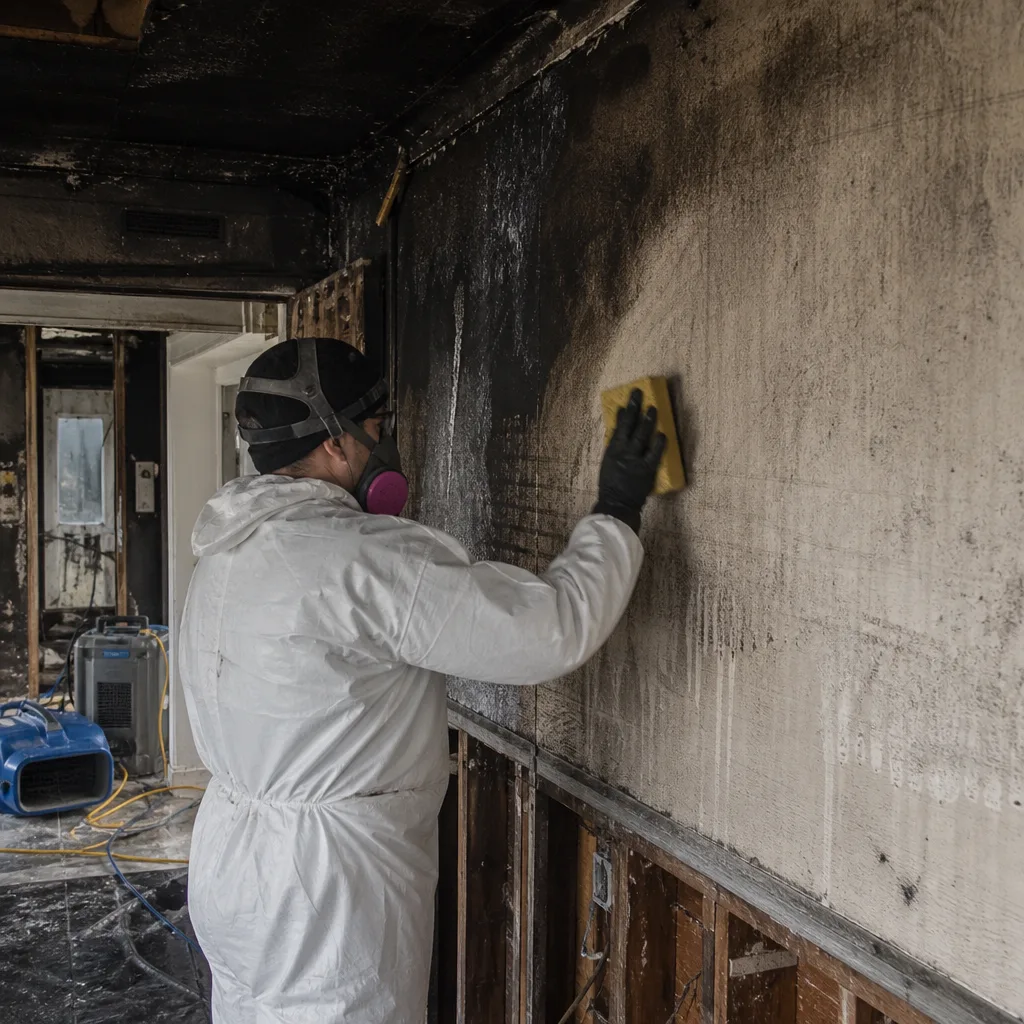
Flooding in Arden Heights comes from three directions: sewer surcharge, groundwater from the wetland side, and wind-driven rain intrusion. Each requires a different approach. We identify the source, classify the water, and build the drying plan around what actually happened, not just what you can see on the floor.
Emergency Board-Up
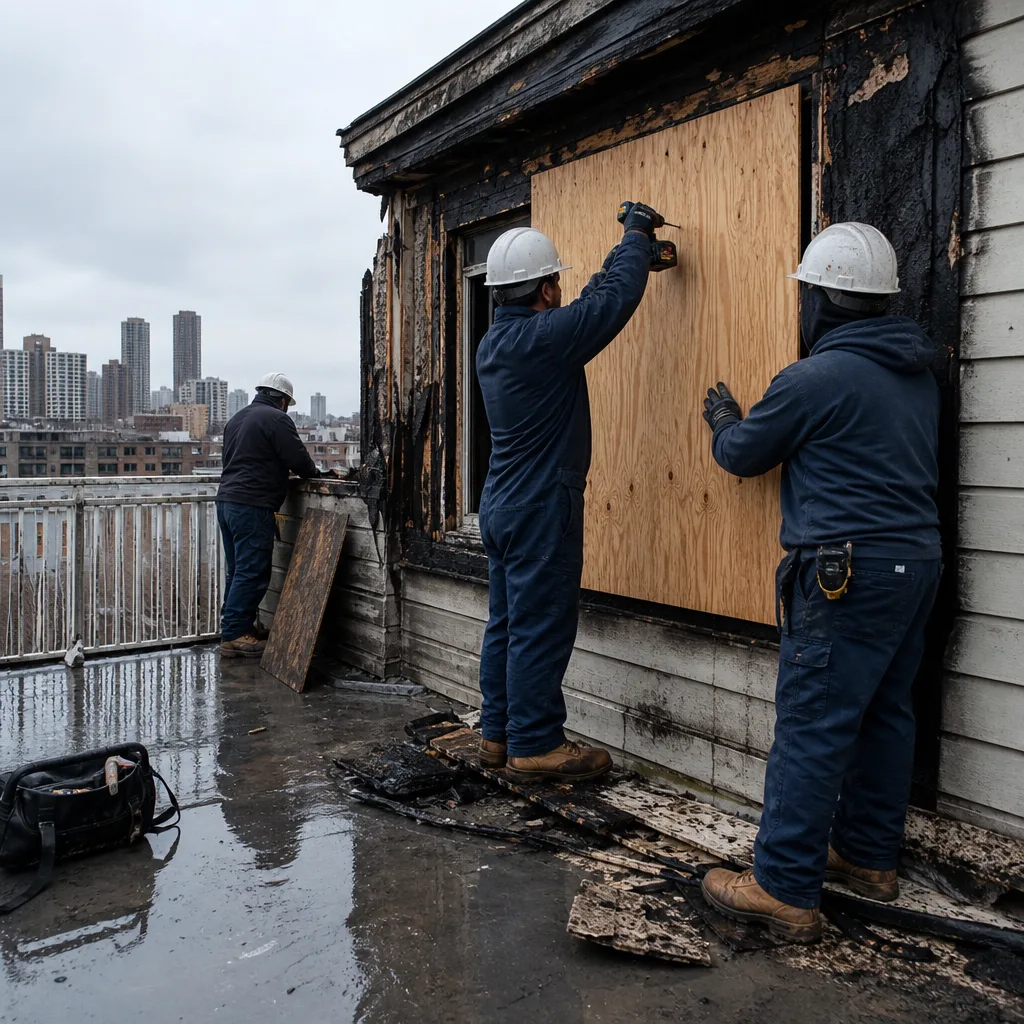
A broken window or a blown-out door is an open invitation to weather, animals, and the next storm. Our emergency board-up service secures openings fast, using materials that hold under Staten Island wind conditions, not just a sheet of plywood nailed at the corners. This is the difference between a contained loss and a compounding one.
Roof Tarping
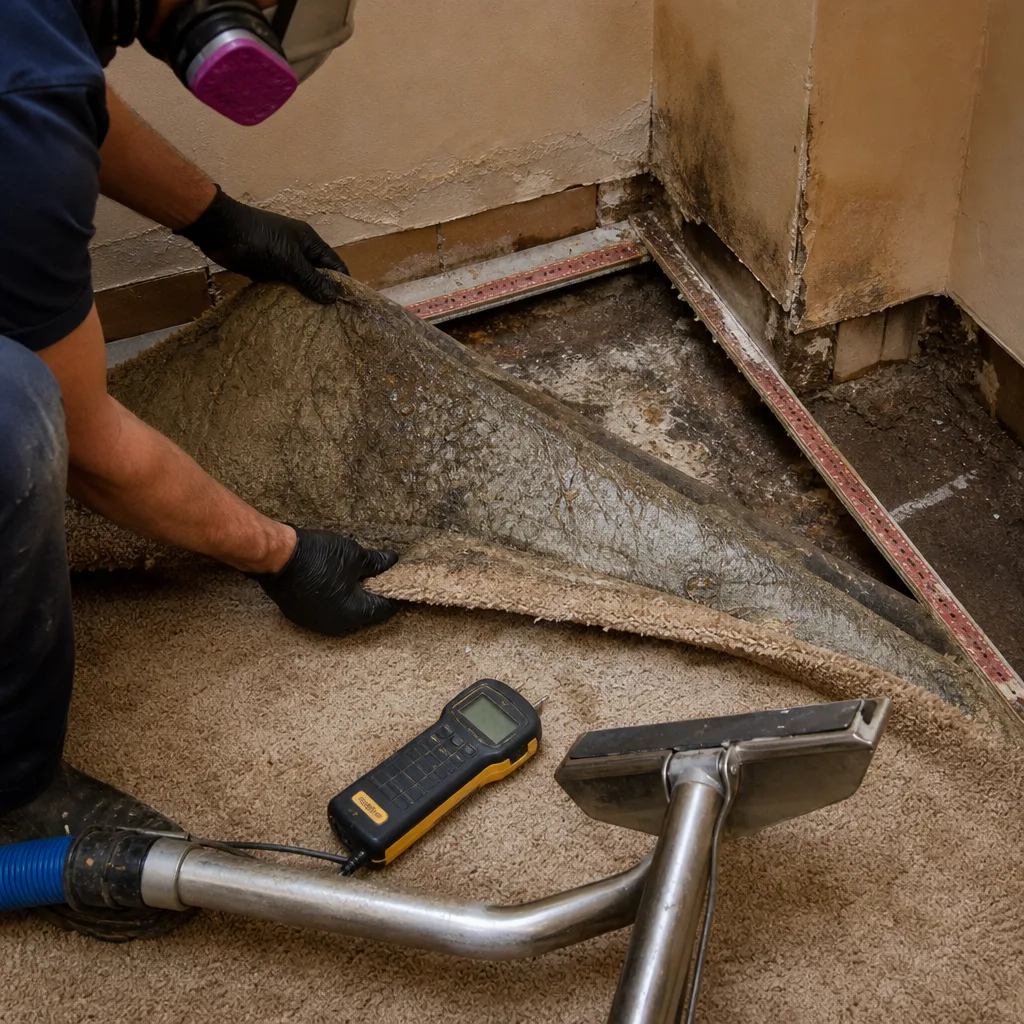
When nor’easter winds peel back roof decking, the attic starts taking on water within minutes. We tarp damaged roof sections immediately, using professional-grade covering systems that stay in place through the next weather system. A properly tarped roof buys you the time to make a sound repair decision instead of an emergency one.
Debris Removal
Storm debris in Arden Heights gets complicated fast. Fallen trees, broken fencing, saturated insulation, and sheetrock all require proper disposal, and some materials from older homes require special handling. We clear the site fully, documenting what came out and why, so your insurance claim reflects the real scope of the loss.
Through every one of these services, our Storm & Disaster Restoration team keeps one rule: the same crew starts and finishes the job, and you never get handed off to a subcontractor you haven’t met.
What happens when you call
- 1
A real person answersNo phone trees - you reach a local pro.
- 2
You get an upfront price rangeHonest numbers before anyone is dispatched.
- 3
A background-checked tech heads outLicensed & insured, dispatched right away.
- 4
You approve before work beginsNothing starts until you say go.
Storm & Disaster Restoration Costs in Arden Heights, NY
A typical storm damage cleanup with board-up and tarping in Arden Heights runs $1,200 to $4,800, depending on the size of the opening and the extent of interior water that followed. Roof tarping alone typically runs $600 to $1,800 for a professional, weather-rated installation. Full flood damage restoration, including extraction, drying, and antimicrobial treatment on a finished basement, ranges from $4,000 to $14,000, with Category 3 sewage contamination at the higher end because of the biohazard containment requirements. Wind damage repair on a single entry door or window assembly lands between $800 and $3,500, with wind-rated replacement units running more than standard hardware. What moves the price: how much water got where, whether asbestos abatement is required, and whether the loss is Category 1 or Category 3. Insurance covers most storm-related losses when documented properly. For anything not covered, we give you a written scope before work starts, so you know the number before you commit. Call (917) 924-4221 and we’ll send a crew for a free visual inspection, then put the real number in your hand.
We Also Serve Cities Near Arden Heights
Our storm restoration crews cover the surrounding Staten Island and Bronx communities too. We respond to storm damage in Arden Heights and the neighboring areas of Fairview, Harrison, East Bronx, and Hunts Point. Same live dispatch, same certified crews, same 90-Day Done Right Promise. If you’re in one of those communities when a storm hits, call (917) 924-4221.
Arden Heights Storm & Disaster Restoration Questions, Answered
How does living next to Arden Heights Woods affect my storm damage restoration timeline?
Living adjacent to the Woods means your restoration timeline runs longer than a typical Staten Island job, typically 20 to 40 percent longer for full drying. The heavy clay soils and elevated groundwater keep perimeter foundations saturated long after the storm passes, so we plan for extended structural drying and often add drainage and grading corrections to the scope before closing walls back up.
Do I need a wind-rated door before the next nor’easter, or can I just repair the frame?
If your door is an exterior opening in a storm-prone zone, local code requires verification of wind rating when the door itself is replaced or substantially repaired. Repairing just the frame without addressing a failed door panel leaves you with the same weak point next storm season. We evaluate the assembly, verify the rating, and give you a scope that meets code, not one that just quiets the visible damage.
Why did my basement flood with sewage during a rainstorm, and is it safe to dry out myself?
Arden Heights sits on Staten Island’s aging combined sewer system, which regularly surcharges during heavy rainfall and sends raw sewage backups into finished basements. That water is Category 3, meaning it carries pathogens and requires full biohazard protocol: containment, removal of porous materials, and professional antimicrobial treatment. Drying it yourself with a fan and a shop vac spreads contamination and leaves persistent odors. Call us instead.
My Cape Cod was built in the 1970s. What should I expect before you tear out storm-damaged walls?
Homes built in Arden Heights during that era commonly contain asbestos in floor tile, joint compound, and pipe insulation. Before we tear out storm-damaged walls or ceilings, we coordinate asbestos testing. If it comes back positive, abatement gets scheduled before demolition proceeds. It adds time, but it’s the safe, legal, and correct sequence. Our team handles that coordination so you don’t have to chase another contractor.
How do you dry a paneled den that took wind-driven rain through the roof without gutting the whole room?
We use injective drying for paneled walls: Injectidry systems push dry air into wall cavities behind the paneling, pulling moisture out without removing the finish surface. We map the moisture first with Dri-Eaz meters, drill small access points, and run the system until the cavity hits the dry standard. This works when the paneling itself is sound and the leakage was clean rainwater. If Category 3 water was involved, the paneling comes out.
How fast can you actually get to my Arden Heights house after a storm?
We commit to having a crew dispatched toward Arden Heights within 45 minutes of your call, 24 hours a day. A live dispatcher answers, takes the address, and gets the truck moving. In practice, most of our Arden Heights calls see a crew on site within an hour to an hour and a half, depending on where we’re coming from and what the roads look like after the storm.
Will my insurance cover storm damage restoration, and who deals with my adjuster?
Most standard homeowners policies cover storm and wind damage, including water intrusion that follows wind-damaged openings. We document the loss from the first hour, submit directly to your carrier, and handle the adjuster conversation ourselves. You get copies of everything. If there’s a coverage question, we help you understand exactly what your policy says before work proceeds.
What should I do in the first 30 minutes after storm damage hits my Arden Heights home?
Call (917) 924-4221 first. Then, if it’s safe, shut off power to affected areas and move valuables off wet floors. Do not enter standing water that could be sewer-contaminated. Do not use a wet-vac on sewage water. Take photos from a safe distance if you can. Our crew handles everything from there, and we document everything properly for your carrier from the moment we arrive.
The Storm Damage You Can’t See Is the Storm Damage That Costs You
On a split-level off Annadale Road, our crew arrived after a nor’easter had peeled back roof decking and driven rain into the attic. We installed XPOWER air movers and a Phoenix dehumidifier to stabilize the interior, performed moisture mapping with our Dri-Eaz meters, then coordinated asbestos abatement on the 1970s ceiling before structural drying and antimicrobial treatment could begin. That’s the reality of storm restoration in Arden Heights: the water you see on the floor is the smallest part of the problem. The moisture inside the cavities is where mold grows, where framing rots, and where next year’s damage starts. We dry what you can’t see, because that’s where the real expense lives. A square deal means we tell you what’s actually wrong, not just what’s visible.
Serving Arden Heights, NY - Our Local Coverage Area
We’re based in the Arden Heights area and know this community well. Use the map below to see our service coverage - if you’re nearby, we can almost certainly help.
Call Floodline Restoration Co. of Manhattan for Storm & Disaster Restoration in Arden Heights
Storm damage in Arden Heights isn’t a one-time event. The wetland, the clay soils, the aging sewers, and the salt air combine to make this neighborhood’s storm losses recurring and compounding. That’s exactly what our Storm & Disaster Restoration team is built for: reading the full picture, handling the insurance, fixing it right the first time, and standing behind it in writing with our 90-Day Done Right Promise. Curt Bowman founded this company in 2010 around a dispatch board, not a sales desk, and the crews answering calls in Arden Heights today work to the same standard. Call (917) 924-4221 for a free visual inspection. A live person answers. We’ll be there when we say, and we’ll do it right. Senior and veteran homeowners receive a 5% discount, and you can take $50 off any repair over $250. Done right, and backed in writing.
Written by Curt Bowman, Owner at Floodline Restoration Co. of Manhattan, serving Arden Heights since 2010.