
Free visual inspection and a written scope of work before any mitigation begins - photos, moisture readings, and drying logs go in your claim file
The scope we write is the scope we bill. Anything new gets shown to you, in writing, before we touch it.






 Before
 After
After Before
 After
After Before
 After
After24/7 Emergency Storm & Disaster Restoration in Brighton Beach
Storm damage in Brighton Beach rarely waits for a convenient hour, and neither do we. When a nor’easter pushes the Atlantic over the boardwalk or wind tears a section of roofing off a pre-war brick building, every hour of delay means more water moving deeper into plaster, subfloors, and wiring. Our Storm & Disaster Restoration crews answer live around the clock and dispatch into Brighton Beach immediately. Call (917) 924-4221 the moment you see water, and we’ll have a certified team on site fast with a free visual inspection and a plan that starts with stopping the loss. The first hour after storm damage decides whether you’re drying a room or rebuilding it.
Understanding Storm & Disaster Restoration Severity in Brighton Beach Properties
Not all storm water is the same, and Brighton Beach’s geography makes that distinction matter more than it does almost anywhere else in Brooklyn. Category 1 water from a burst supply line inside a 1950s apartment building on Brighton 6th Street is one thing. Category 3 water, the kind a nor’easter or hurricane surge pushes up from the ocean and through the basements on Neptune Avenue or Brighton Beach Avenue, is another entirely. That water carries sewage, fuel residue, and in this neighborhood, salt, which changes the chemistry of drying and the timeline of corrosion behind walls. Our crews classify the water, map moisture with penetrating meters and thermal imaging, and adjust the drying protocol accordingly. A freshwater procedure on a salt-saturated foundation in Brighton Beach will fail. The salt stays behind, pulls moisture from the air, and feeds mold months after the job looks done. That’s why we test, why we log daily readings, and why we never treat a storm surge in this zip code like a burst pipe in the Bronx.
Why Brighton Beach Property Owners Choose Floodline Restoration Co. of Manhattan
- 45-minute response commitment. We dispatch from our New York City office directly into Brighton Beach, and a certified crew is typically on site within 45 minutes for storm emergencies. The clock matters with saltwater.
- A real person answers, 24/7. When you call at 2 a.m. during a storm, a live dispatcher picks up. Not a recording, not a callback later. A person who starts your file and gets a crew moving.
- IICRC-certified technicians. Our storm and flood crews hold WRT and ASD certifications, with AMRT for the mold that follows saltwater intrusion. Background-checked, uniformed, and trained for exactly what Brighton Beach buildings face.
- Free visual inspection. Before any work begins, we walk the damage with you, explain what we’re seeing, and put the scope in writing. No pressure, no obligation, no surprise add-ons.
- Direct insurance billing. We bill your carrier directly and communicate with your adjuster. You don’t play messenger between us and the insurance company.
- One team from extraction to reconstruction. The same crew that sets up containment and dries your basement is the crew that rebuilds it. No mid-job handoff, no inherited strangers.
Floodline Restoration Co. has been restoring properties for over 42 years, and every job carries the 90-Day Done Right Promise, what we call the Keystone Standard. It’s in writing. If something isn’t right within 90 days, we make it right. No arguing, no paperwork battles. Curt Bowman built this company in 2010 around a dispatch board, not a sales desk, and that’s still how we run it.
Our Storm & Disaster Restoration Process
Inspection & Assessment
We arrive, walk the property, and classify the water and damage extent. Thermal imaging and penetrating moisture meters tell us what’s wet behind walls and under floors, not just what’s visibly soaked. For pre-1978 Brighton Beach buildings, we also flag potential asbestos and lead paint conditions before any drywall comes out.
Extraction & Stabilization
We remove standing water fast using truck-mounted extraction and XPOWER submersible pumps. If wind has opened the building envelope, we board up and tarp immediately to stop new water from entering. Saltwater extraction here means flushing surfaces with fresh water to prevent hygroscopic salt residue from staying behind in masonry.
Drying & Dehumidification
We set up Dri-Eaz LGR dehumidifiers and Phoenix air movers, positioned for the building’s specific airflow. Daily readings get logged on a moisture map, and we don’t stop until the structure meets the dry standard. Brighton Beach’s high water table means we run equipment longer than an inland job would require.
Cleaning & Sanitization
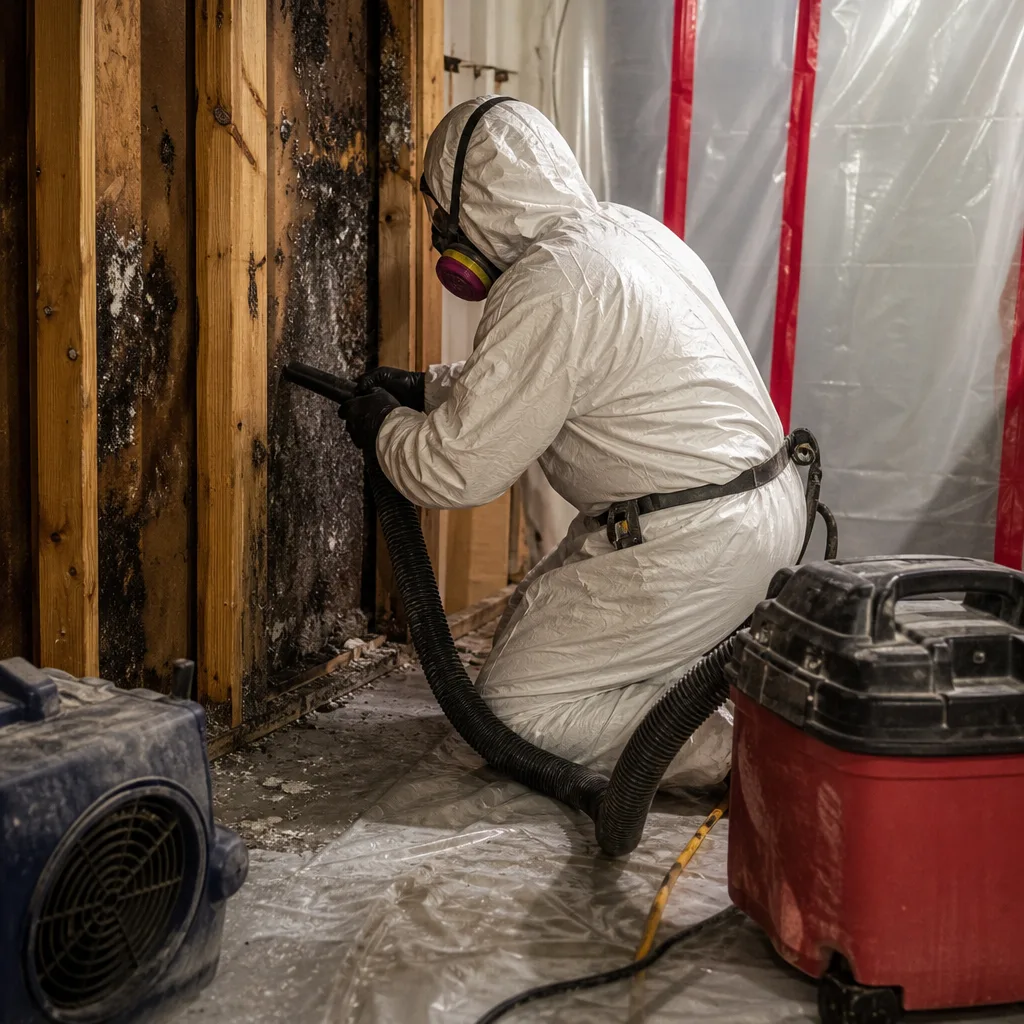
Storm surge water carries contaminants, so we use antimicrobial and disinfecting treatments appropriate for Category 3 exposure. HEPA air scrubbers run during and after the cleaning phase to pull airborne particulates and mold spores from the space.
Salt-Specific Treatment & Containment
This is the step that sets Brighton Beach restoration apart. We address the salt: treating affected concrete and rebar, inspecting copper wiring for corrosion, and containing hidden mold colonies that saltwater intrusion feeds. If original plaster can be saved, we save it. If it can’t, we remove it under proper containment.
Repairs & Restoration
The same crew rebuilds what needs rebuilding. Drywall, flooring, electrical, paint. When we’re done, you get a full moisture log, photo documentation, and the 90-Day Done Right Promise in writing. One team, start to finish.
Need Emergency Storm & Disaster Restoration in Brighton Beach Now?
Crews minutes away, answering live 24 hours a day. The sooner we start, the less it costs.
Working With Your Insurance Company
Storm and flood claims in Brighton Beach are complicated enough without you having to translate between a restoration crew and an insurance adjuster. We handle that. From the first hour on site, we document everything: photos of every affected room, moisture readings, daily drying logs, and a detailed line-item scope of work in industry-standard format. Your adjuster gets direct access to our documentation, and we bill your carrier directly for covered work. What that means for you is a square deal: no surprises on the bill, no mid-claim phone tag, and a restoration plan your insurer can actually work with. Floodline Restoration Co. stands behind every job with the Keystone Standard, and we make sure your carrier has what it needs to stand behind the claim.
What We Provide Your Insurer
- Thorough documentation of the loss
- Photos of all damage, room by room
- Moisture readings and drying logs
- A detailed, line-item scope of work
- Direct coordination with your carrier
Built for Brighton Beach’s Loss Calendar
Brighton Beach’s storm damage follows a rhythm, and we’ve learned it over thousands of local jobs. Winter brings nor’easters that push ocean surge over the boardwalk and into basement units along Brighton Beach Avenue and Neptune Avenue, saturating foundations for days while the high water table holds the water in place. Spring adds thaw cycles that stress aging brick and mortar on buildings put up between the 1920s and 1960s, opening cracks that let rainwater find the interior. Summer thunderstorms arrive fast and drop inches of rain in hours, overwhelming drainage on a barrier beach that was never built to shed water quickly. And through every season, the salt air off the Atlantic works silently on exposed fasteners, HVAC ductwork, and electrical connections inside those same buildings. The damage you see after a storm in Brighton Beach is rarely the whole story. The part behind the wall is where the real work happens.
Storm & Disaster Restoration Across Brighton Beach’s Neighborhoods
We know the routes, and we know the buildings. The six- to ten-story brick apartment blocks along Brighton Beach Avenue and Neptune Avenue are our most frequent storm calls, especially the below-grade basement units that flood first and dry last. On Brighton 3rd Street and Brighton 6th Street, the pre-war construction means original plaster and older wiring, which changes how we approach drying and repair. Down by the ocean side of the neighborhood, from Coney Island Avenue east toward Manhattan Beach, properties catch the full force of storm surge and wind-driven debris, so we see more structural damage along with the flooding. And in the ground-floor retail spaces under residential units along the commercial corridors, a flooded storefront means water moving up through the building, which is exactly the kind of vertical migration that most standard drying protocols miss. We don’t. Our Storm & Disaster Restoration team is built around Brighton Beach’s specific loss patterns. For a broader look at what we do across the area, see our Storm & Disaster Restoration in Brighton Beach page.
Specialized Storm & Disaster Restoration Services We Offer in Brighton Beach
Storm Damage Cleanup
When high wind and heavy rain leave Brighton Beach buildings with downed debris, broken glass, and soaked interiors, we clear the affected areas, secure the property, and begin the drying sequence immediately. Cleanup here isn’t just hauling debris. It’s identifying what the storm moved inside your walls while it was outside breaking things.
Flood Damage Restoration
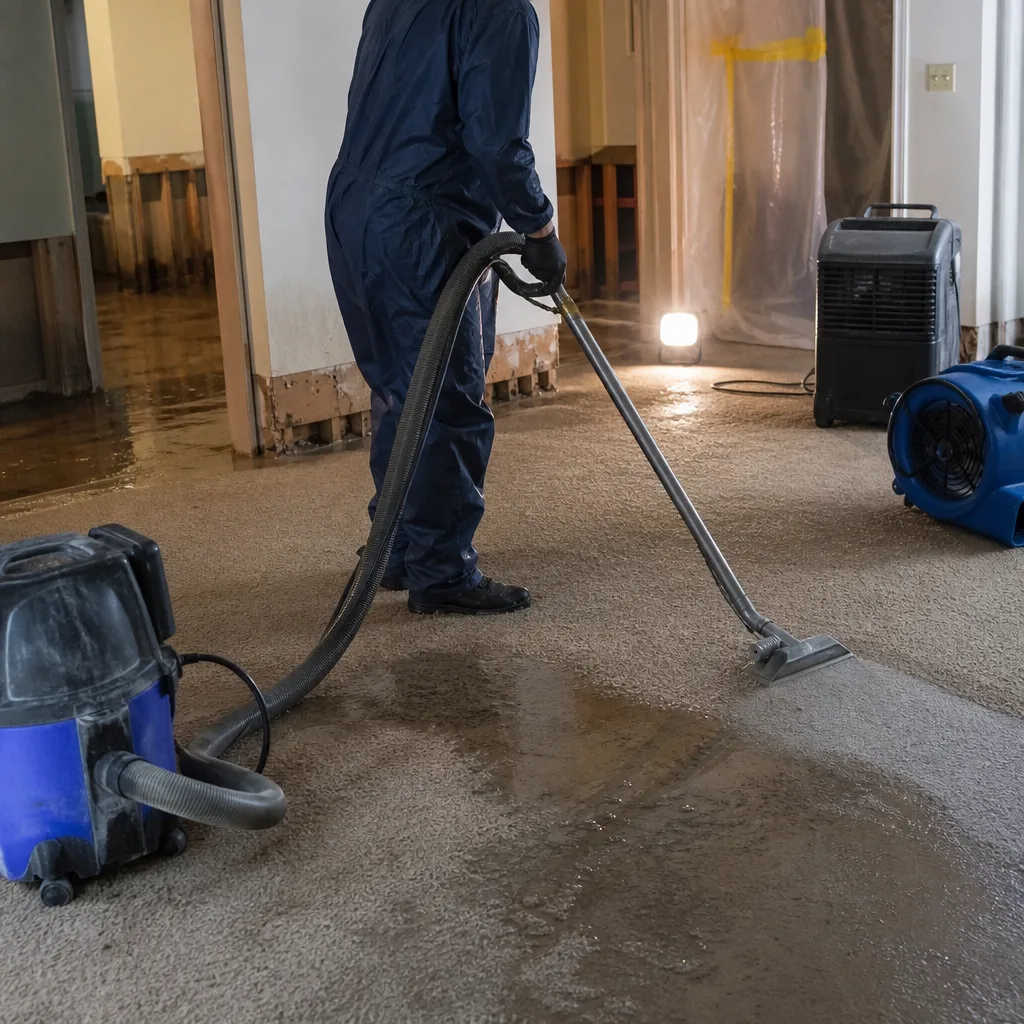
This is Brighton Beach’s defining restoration challenge. The Atlantic is a block away, the water table is high, and storm surge doesn’t just flood, it saturates. We extract, treat for salt, dry to standard, and watch for the mold that follows floodwater in this neighborhood faster than anywhere else in Brooklyn. The flooding after a nor’easter on Neptune Avenue isn’t the same as a burst pipe in Park Slope. We treat it differently because it is different.
Emergency Board-Up
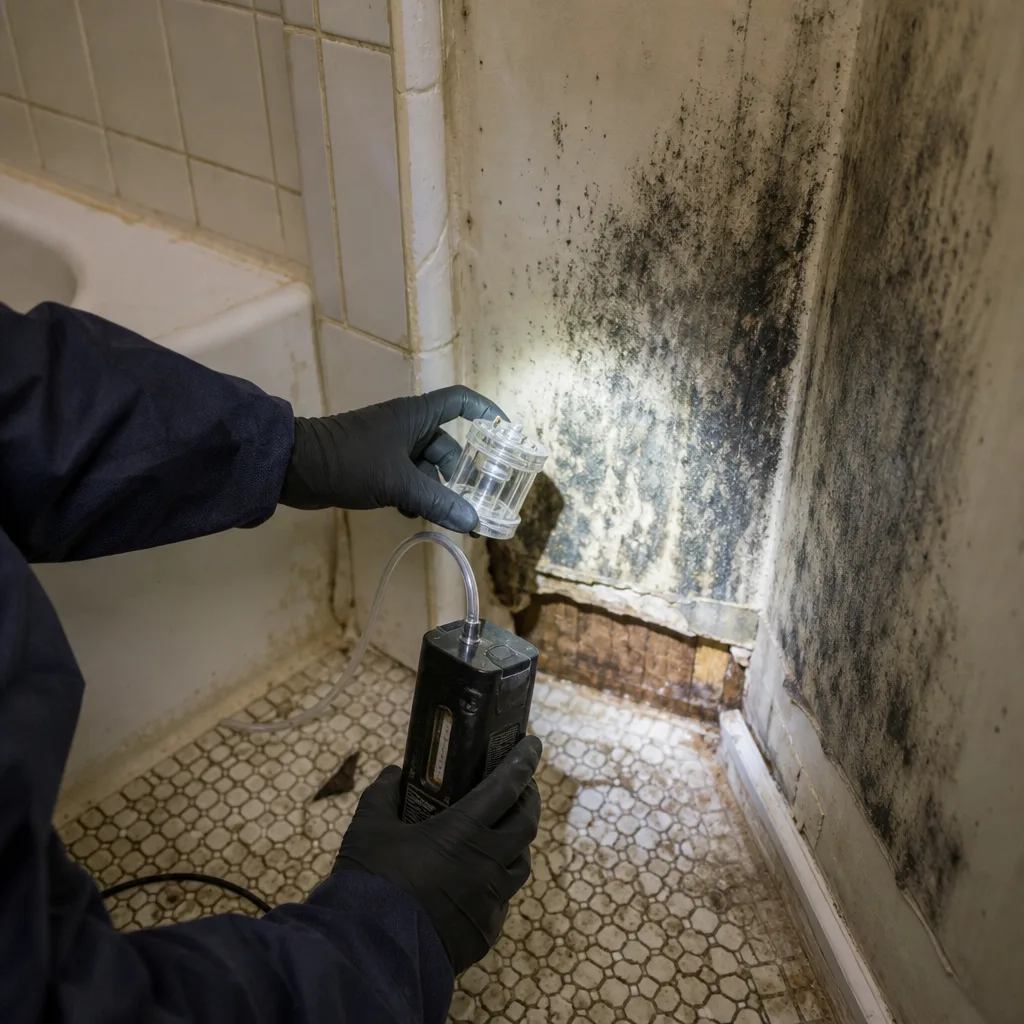
When wind blows out a window or tears open a roof on a Brighton Beach apartment building, the gap lets in rain, birds, and worse. We board up and tarp vulnerable openings fast, using materials that will hold for the days or weeks until full repairs are scheduled. On pre-1978 buildings, we check for asbestos before any screws go into old window frames or soffits, which protects your remediation scope from costly stop-work notices later.
Roof Tarping
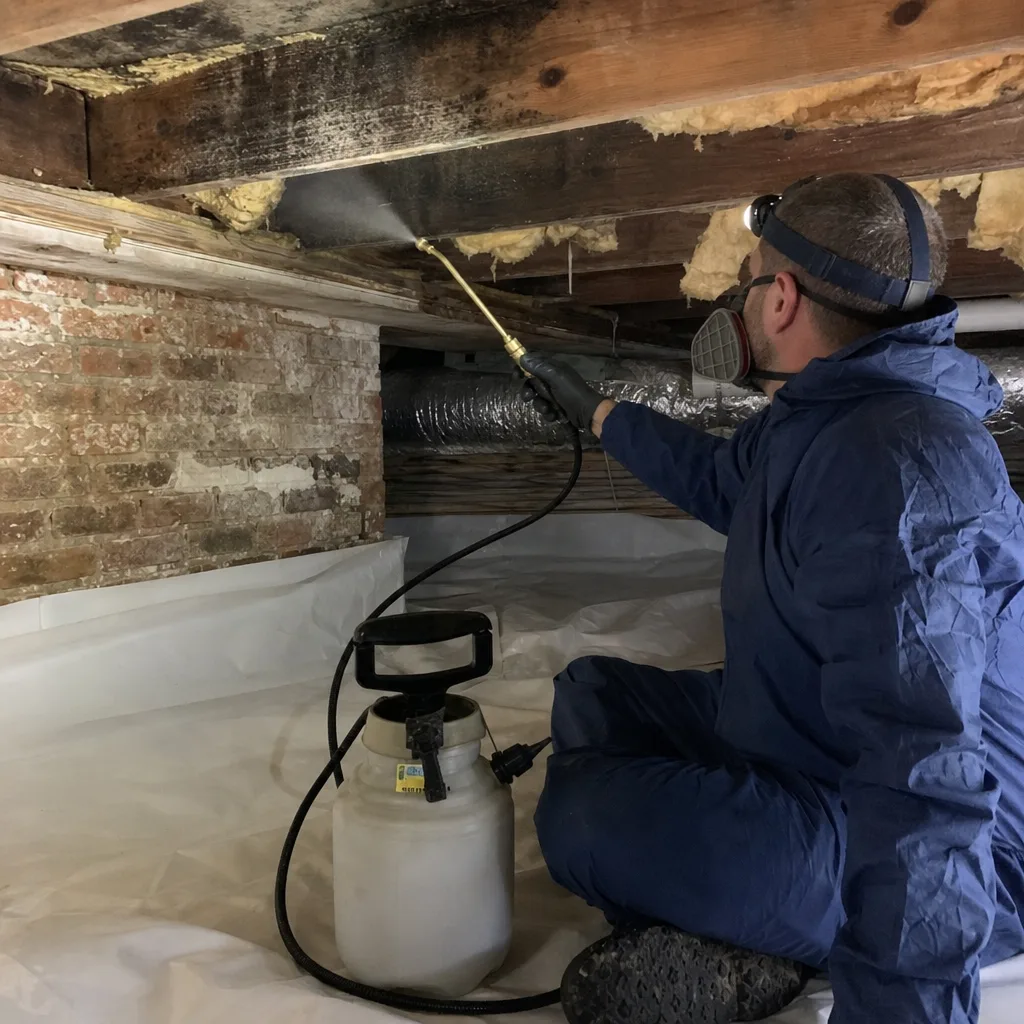
A tarp is a stopgap, not a repair, but it has to be a good one. We secure tarps over damaged roof sections with anchored fastening that survives the next wind event. Brighton Beach’s exposure to ocean winds means a poorly secured tarp becomes airborne and causes more damage than the original storm. We don’t let that happen.
Debris Removal
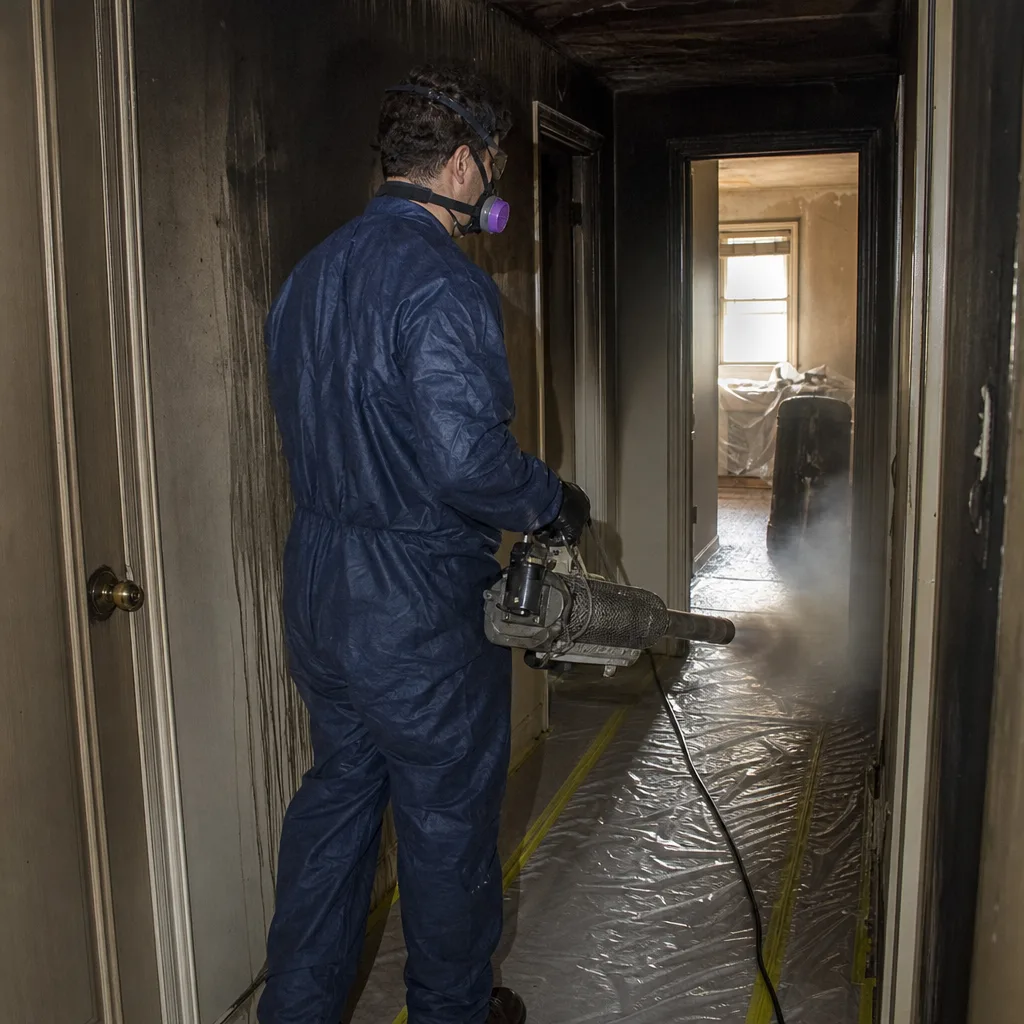
Storm debris in Brighton Beach often includes salt-contaminated materials, broken fiberglass, and building components that predate modern safety standards. We remove it safely, separating out materials that require special handling, and document the process for your insurance claim. The goal is a clean site without creating a contaminated pile that becomes someone else’s problem.
What happens when you call
- 1
A real person answersNo phone trees - you reach a local pro.
- 2
You get an upfront price rangeHonest numbers before anyone is dispatched.
- 3
A background-checked tech heads outLicensed & insured, dispatched right away.
- 4
You approve before work beginsNothing starts until you say go.
Storm & Disaster Restoration Costs in Brighton Beach, NY
Honest numbers help you plan, so here they are. Emergency board-up and roof tarping in Brighton Beach typically runs $400 to $1,200, depending on how many openings need securing and what condition the framing is in. Flood damage restoration for a basement unit averages $3,800 to $15,000, with saltwater events pushing toward the higher end because of the extra treatment and longer drying cycles. Storm debris removal usually lands between $500 and $2,500 for residential scopes. Mold remediation that follows hidden flood moisture runs $2,000 to $8,000 depending on how far the colony has spread and whether containment needs to cover multiple rooms. Full reconstruction after a major storm event in Brighton Beach is the big variable, anywhere from $15,000 to $80,000 or more, because pre-war buildings hide structural surprises and often trigger asbestos or lead abatement. Your insurance covers most of these costs in a covered storm event, and we bill your carrier directly. The fastest way to get a firm number is a free visual inspection. Call (917) 924-4221 and we’ll have someone out to look, walk you through what we’re seeing, and put a written scope in your hands before any work starts.
We Also Serve Cities Near Brighton Beach
Our crews cover the surrounding neighborhoods and communities, including Fairview, Harrison, East Bronx, and Hunts Point. If your property sits just outside Brighton Beach proper, call us and we’ll confirm coverage. Storm response doesn’t stop at a neighborhood line, and neither do we.
Brighton Beach Storm & Disaster Restoration Questions, Answered
Why does Brighton Beach require different drying protocols than inland Brooklyn after a flood?
Brighton Beach sits on a low-lying barrier beach with a high water table and direct Atlantic exposure, so floodwater here is saltwater, not freshwater. Salt is hygroscopic, meaning it keeps pulling moisture from the air long after visible water is gone, and it corrodes concrete, rebar, and copper wiring on a faster timeline. Freshwater drying protocols leave salt residue behind, which leads to reactivated mold and hidden structural damage months after a job looks finished. We flush surfaces, treat for salt, and run longer, logged drying cycles specifically calibrated for coastal conditions.
How do you handle hidden mold in Brighton Beach apartments that were ‘already cleaned up’ after Hurricane Sandy?
We treat them as active mold sites until proven otherwise. After Sandy, many Brighton Beach units were cleaned by unlicensed contractors or settled informally without professional drying, leaving moisture trapped behind original plaster walls for years. Our crews routinely find live black mold colonies inside wall cavities in apartments that look fine from the hallway. We inspect with thermal imaging, set up containment, and do clearance testing after remediation to confirm the space is actually safe, not just visually clean. If you suspect a past cleanup in your building, call us at (917) 924-4221 for a visual inspection.
What special precautions do you take for Brighton Beach’s pre-1978 brick buildings during storm damage repair?
Most of Brighton Beach’s housing stock went up between the 1920s and 1960s, which means asbestos pipe insulation and lead paint are common. Before we cut into any drywall, plaster, or old framing during a storm damage scope, we assess for these materials and follow proper containment and abatement procedures. Skipping this step contaminates the entire job and triggers stop-work orders. Our crews are trained to identify and handle these conditions within the restoration scope, and we document everything for your carrier.
Can you restore original plaster walls after a flood, or do they always need to be replaced?
Plaster can often be saved if it hasn’t been saturated with saltwater for an extended period. Original plaster in Brighton Beach buildings is lime-based and surprisingly resilient, but once saltwater soaks into it, the salt crystallizes inside the plaster matrix and can’t be flushed out. In those cases, the plaster has to come out and be replaced with modern drywall or a plaster-compatible alternative. We assess each wall individually and save what’s salvageable, which protects the character of older buildings and keeps your restoration scope honest.
Why do basement units in Brighton Beach flood so easily even during moderate storms?
The neighborhood is built on a barrier beach with a water table that sits just a few feet below grade. When a moderate nor’easter pushes ocean water toward shore, the ground saturates quickly and hydrostatic pressure forces water through foundation walls and floor cracks. It doesn’t take a hurricane. Even a strong winter storm pushes water into below-grade units on Neptune Avenue and Brighton Beach Avenue simply because the water has nowhere else to go. That’s also why drying takes longer here, the moisture is coming from outside, not just from what flooded in.
How fast can you actually get to Brighton Beach?
Our commitment is 45 minutes or less for storm emergencies in Brighton Beach, and our dispatch is live 24 hours a day. When you call, a person answers and starts your file immediately. We don’t use automated callbacks or answering services. Crew locations update in real time, and the closest certified team gets dispatched while you’re still on the phone.
Will my insurance cover storm and flood damage in Brighton Beach?
Most homeowner policies cover storm and wind damage, but flood damage from storm surge typically requires a separate flood policy, often through FEMA’s NFIP program. Brighton Beach sits in a FEMA high-risk flood zone, so flood insurance is common here but not universal. We document everything from the first hour so your claim has what it needs, and we bill your carrier directly for covered work. If portions of the damage fall to you, we give you a written scope and honest numbers before any out-of-pocket work begins.
What should I do right after storm damage happens?
First, make sure everyone is safe and shut off power if water has reached electrical systems. Then call us at (917) 924-4221. Don’t walk through standing water, don’t turn on HVAC equipment, and don’t start pulling drywall or carpet yourself, especially in a pre-1978 building where asbestos and lead may be present. The first 30 minutes after water enters your home set the trajectory for everything that follows. Faster extraction means less saturation, less mold, and a smaller restoration scope.
Serving Brighton Beach, NY - Our Local Coverage Area
We’re based in the Brighton Beach area and know this community well. Use the map below to see our service coverage - if you’re nearby, we can almost certainly help.
The Brighton Beach Building You’re In Shapes the Restoration You Need
Most storm damage pages give you generic advice. Here’s what actually matters in Brighton Beach. The neighborhood is dominated by six- to ten-story brick apartment buildings put up between the 1920s and 1960s, with below-grade basement units and ground-floor retail that sit at or near sea level. When a storm surge hits, those basements flood first. But the real problem is what happens after. The water doesn’t drain away in Brighton Beach the way it does a few miles inland. The water table is high, the soil is saturated, and the ground holds water for days. That means the wetting period is longer, the drying period is longer, and the window for mold colonization inside original plaster walls is wider than anywhere else in Brooklyn. Add the salt. Saltwater intrusion leaves chloride residue inside masonry, which corrodes rebar and copper wiring and can’t be removed by ordinary drying. And because most of these buildings predate 1978, restoration work often intersects with asbestos pipe insulation and lead paint, which must be identified and contained before any invasive demolition. This combination, salt, age, density, and a water table that never really drains, means storm restoration in Brighton Beach is a fundamentally different job than the same storm hitting Sunset Park or Midwood. Any crew that treats it the same is guessing. We don’t guess. We’ve been doing this work in buildings exactly like yours for over 42 years, and we back it with the 90-Day Done Right Promise: the Keystone Standard, in writing, no arguing.
One field example. After a nor’easter pushed Category 3 storm surge into a basement unit on Neptune Avenue, our crew found saltwater had crept behind the original plaster of a pre-war brick building, corroding copper wiring and feeding black mold inside wall cavities that a previous unlicensed ‘remediation’ had missed. We set up containment, mapped moisture with thermal imaging and penetrating meters, cut out salt-laden drywall and insulation, applied antimicrobial treatment, and ran Dri-Eaz LGR dehumidifiers with XPOWER air movers until moisture readings returned to pre-loss condition, then documented every step in our drying logs. That’s what a real Brighton Beach restoration looks like. It’s not quick, and it’s not cheap, but it’s done right, and it holds.
If a storm has put water in your Brighton Beach home or building, don’t wait to see what dries on its own. It won’t. Call (917) 924-4221 now and talk to a live dispatcher. We’ll have a certified crew on site fast, we’ll give you a free visual inspection and a written scope before any work starts, and we’ll see the job through from first extraction to final rebuild. In Brighton Beach, that’s the only way storm restoration works.
Written by Curt Bowman, Owner at Floodline Restoration Co. of Manhattan, serving Brighton Beach and the surrounding communities.