
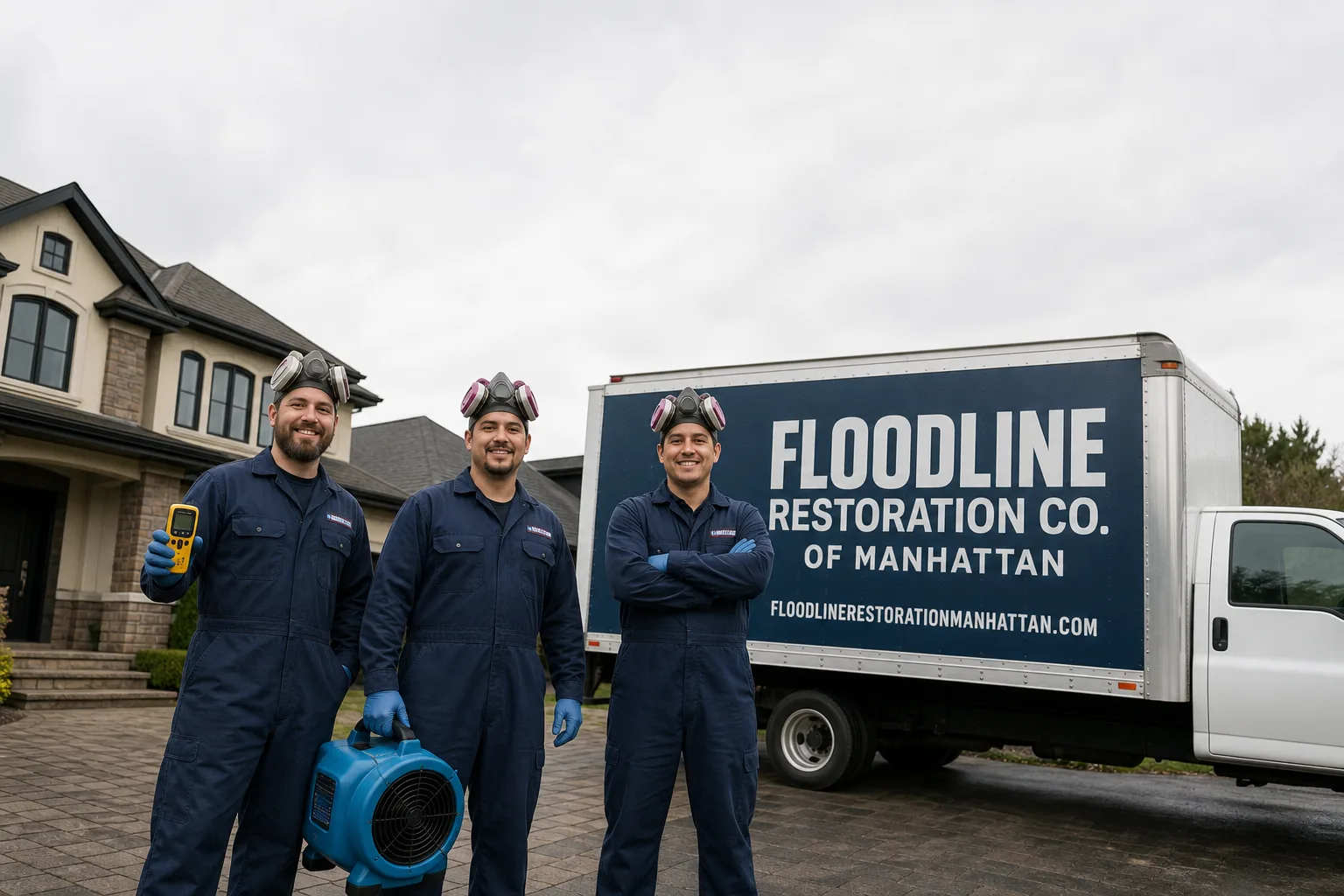
Free visual inspection and a written scope of work before any mitigation begins - photos, moisture readings, and drying logs go in your claim file
The scope we write is the scope we bill. Anything new gets shown to you, in writing, before we touch it.






 Before
 After
After Before
 After
After Before
 After
After24/7 Emergency Storm & Disaster Restoration in Cambria Heights
Storm damage in Cambria Heights moves fast, and so do we. When a nor’easter pushes Category 3 water up through your floor drain or wind peels roofing off a 1950s Cape Cod, you need a crew that answers the phone at 2 a.m. and reaches your block the same visit. Floodline Restoration Co. of Manhattan dispatches certified technicians to Cambria Heights around the clock, every day of the year. Call (917) 924-4221 and a live person picks up, not a recording. The first hour after a storm decides how much of your basement can be saved, and on former wetland soil like Cambria Heights’s, waiting is the most expensive decision you can make.
Understanding Storm & Disaster Restoration Severity in Cambria Heights Properties
Not all floodwater is the same, and Cambria Heights sees the worst kind more often than most of Queens. Category 1 water is clean, from a burst supply line. Category 2 carries contaminants. Category 3, what backs up through a floor drain when the combined sewer system on 118th Avenue or Linden Boulevard gets overwhelmed, is sewage- and pathogen-laden. That water demands antimicrobial treatment, containment, air scrubbing, and a drying protocol that begins within 24 to 48 hours, before mold colonizes the original plaster-and-lath walls and asbestos-containing ceiling tiles common in homes built between 1945 and 1965. Moisture mapping with thermal imaging tells us where water wicked behind baseboards and into wall cavities, places a shop-vac never reaches. Structural drying in these brick colonials and Capes is slower than homeowners expect: clay and wetland-adjacent soils hold groundwater against the foundation, so we keep running Dri-Eaz and Phoenix dehumidifiers with daily readings until the dry standard is met. Your vintage house can be saved, but only if the severity is treated honestly from hour one.
Why Cambria Heights Property Owners Choose Floodline Restoration Co. of Manhattan
- 45-minute response commitment: When you call from Cambria Heights, a crew is dispatched immediately and on the way. We’ll be there when we say.
- 24/7 live answer, never an automated system: A real dispatcher picks up at any hour, gathers the details, and gets a certified team moving toward your street.
- IICRC-certified crews: Our technicians hold WRT and ASD certifications and train to RIA and IFA standards. They read moisture maps, not guesswork.
- Free visual inspection: We assess the damage on-site, explain what you’re looking at, and give you a written scope before any work begins.
- Direct insurance billing: We document from the first hour and coordinate with your adjuster directly. You never play messenger between us and the carrier.
- One team from extraction to reconstruction: The same certified crew that extracts the water also dries the structure and rebuilds what needs rebuilding. No mid-job handoff to a subcontractor.
Our Storm & Disaster Restoration Process
Inspection & Assessment
We arrive, walk the property, and map the moisture with thermal imaging and hygrometers. You get a plain-English explanation of the category of water, what’s salvageable, and what the next 72 hours should look like.
Extraction & Stabilization
Truck-mounted extraction removes standing water from finished basements and crawlspaces. We set up containment and remove unsalvageable drywall and flooring that would otherwise hold moisture against the structure.
Drying & Dehumidification
Dri-Eaz and Phoenix dehumidifiers paired with XPOWER air movers create the airflow and humidity control these vintage homes need. Daily readings are logged and shared with you and your carrier until the dry standard is met.
Cleaning & Sanitization
For Category 3 water, we apply antimicrobial treatment to affected surfaces and cast-iron drain lines and run HEPA air scrubbers to capture airborne contaminants before rebuild begins.
Specialty Storm Treatment
This is the step that matters in Cambria Heights specifically: treating the foundation wall seepage, sealing around the floor drain penetration, and addressing the slow drainage that made your basement flood in the first place.
Repairs & Restoration
The same crew that started the job handles the build-back: drywall, trim, flooring, paint, and any necessary electrical work. We stand behind it with the 90-Day Done Right Promise, in writing.
Need Emergency Storm & Disaster Restoration in Cambria Heights Now?
Crews minutes away, answering live 24 hours a day. The sooner we start, the less it costs.
Working With Your Insurance Company
Most Cambria Heights homeowners have never filed a water damage claim until the night the sewer backs up. That’s normal, and it’s why we handle the paperwork. We photograph every room, log moisture readings daily, and write a line-item scope that matches what your carrier expects. If your adjuster has questions, we answer them directly. You have enough on your plate without learning insurance terminology. The goal is simple: your covered loss gets paid, and your home gets dried and rebuilt to the standard your policy and your family deserve.
What We Provide Your Insurer
- Thorough documentation of the loss
- Photos of all damage, room by room
- Moisture readings and drying logs
- A detailed, line-item scope of work
- Direct coordination with your carrier
Built for Cambria Heights’s Loss Calendar
Cambria Heights has a storm calendar, and homeowners who’ve lived here twenty years know it by heart. January and February bring deep freezes that burst supply lines in unheated basements under suspended slab floors. March and April mean thaw and the first real test of foundation drainage, as snowmelt pushes against brick foundation walls already sitting in high water table soil. July and August thunderstorms dump an inch of rain in an hour, and the combined sewer system on Francis Lewis Boulevard and Springfield Boulevard simply can’t move it. September and October bring the nor’easters and the remnants of Atlantic tropical systems, the events that send Category 3 water up through floor drains and into finished basements along 227th Street and 228th Street. Every one of these seasons produces a different kind of loss, and we respond to all of them with the same equipment and the same standard. Storm & Disaster Restoration is not a seasonal business for us. The dispatch board stays lit year-round.
Storm & Disaster Restoration Across Cambria Heights’s Neighborhoods
Cambria Heights runs roughly from Linden Boulevard south to Merrick Boulevard, with the Cross Island Parkway shaping its eastern edge, and the response patterns differ block by block. The homes along 219th Street and 220th Street, set back on slightly higher grade, tend to handle ordinary rain, but a combined sewer backup there still pushes water into any basement below the street line. Over near 233rd Street and the Brookville border, the older housing stock includes some of the earliest post-WWII Capes, where original cast-iron drain lines under the slab are now seventy-plus years old and prone to cracking under pressure. Along 118th Avenue and 119th Avenue, where the grade drops toward the former wetland basin, we see the most frequent foundation seepage and the slowest drying times. The finished basements around Cambria Heights Park and Liberty Avenue, many converted decades ago without waterproofing membranes, are the ones where a single sewer event creates the largest restoration scope. Our crews know these routes. We know which blocks drain slow and which intersections flood first during a nor’easter. That local knowledge means we arrive with the right equipment for your street, not a generic game plan. We’re proud to serve Cambria Heights with that kind of precision.
Specialized Storm & Disaster Restoration Services We Offer in Cambria Heights
Flood Damage Restoration
The recurring emergency in this neighborhood. We extract the standing water, remove affected drywall and flooring, dry the structure with professional-grade dehumidifiers, and rebuild it. On 1950s homes with plaster-and-lath walls, we work to save the original plaster where possible rather than gutting the room, and we document everything for your carrier from the first hour.
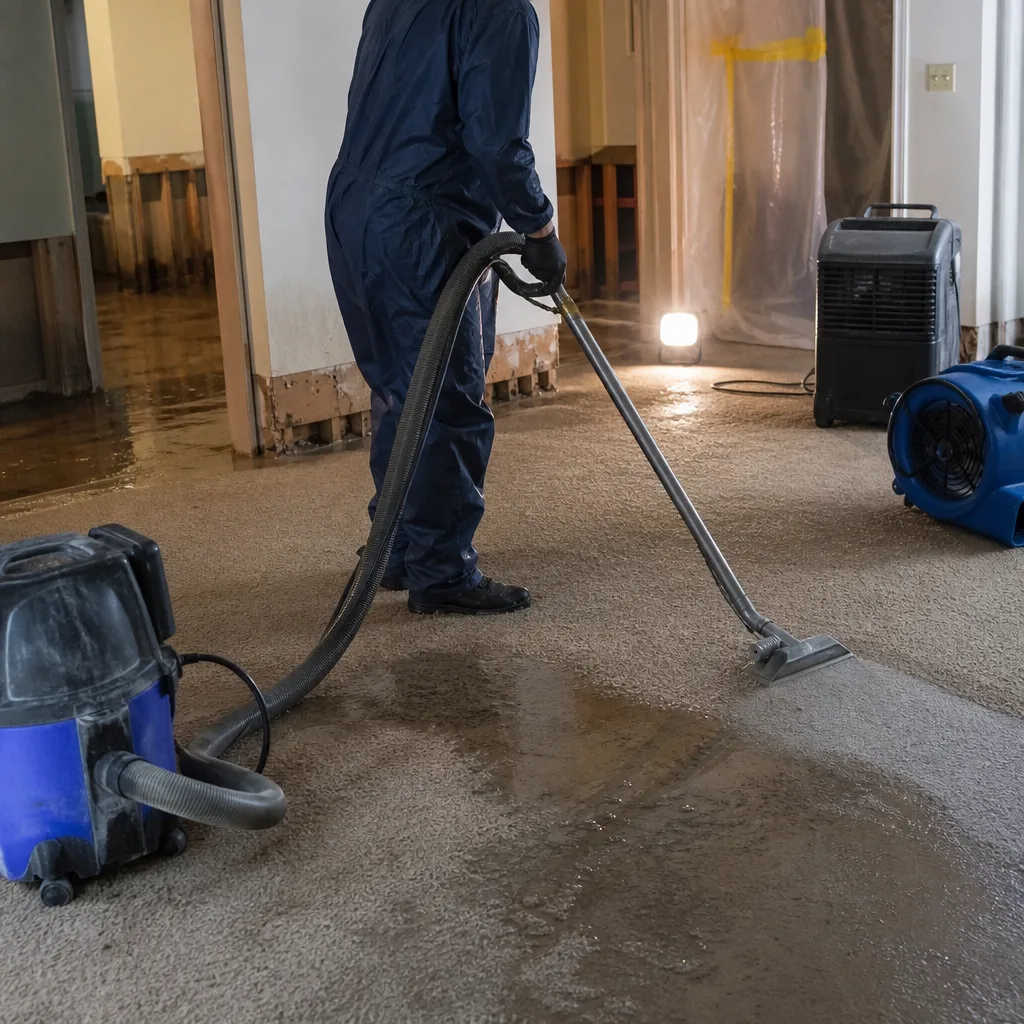
Storm Damage Cleanup
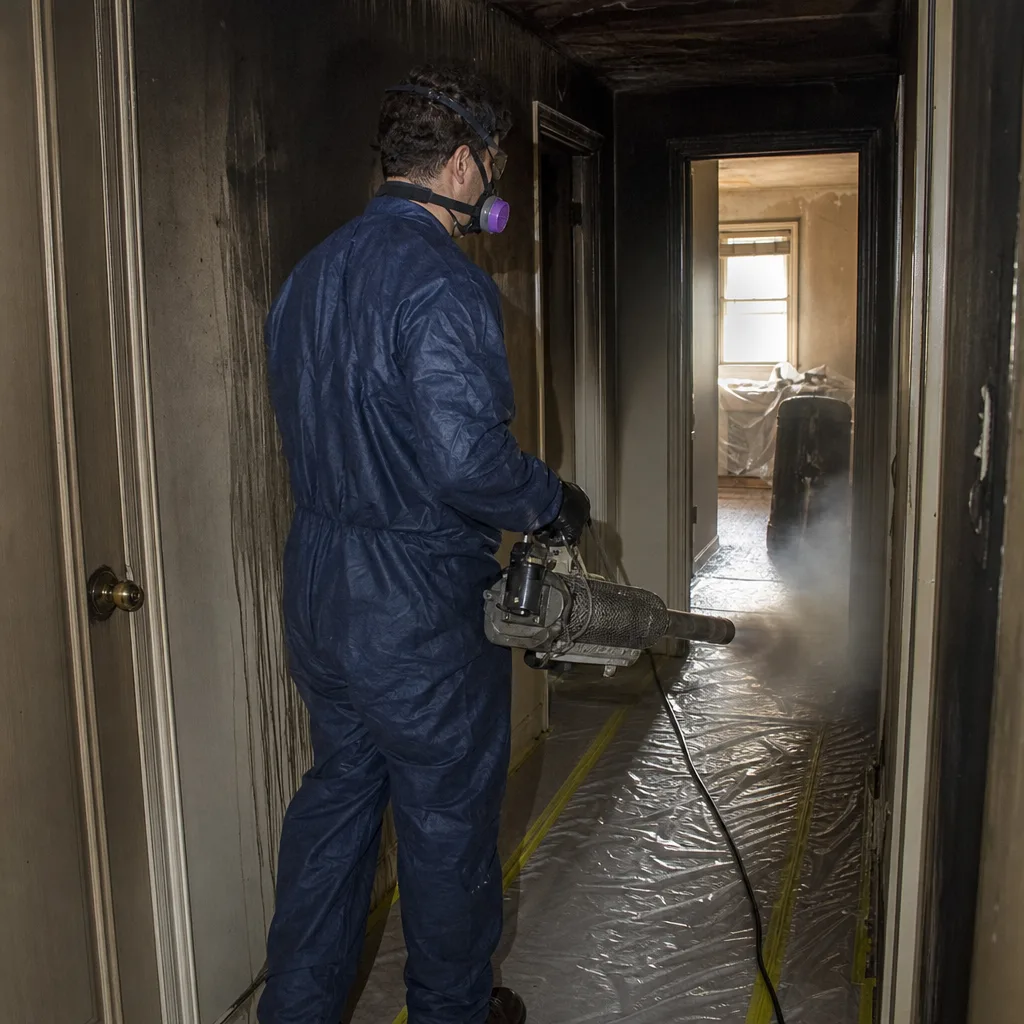
After wind-driven rain or a sewer backup, the visible mess is only the start. We remove contaminated debris, sanitize affected surfaces, and handle the odor that settled into your basement framing. Our cleanup protocol is written for older homes: asbestos-containing ceiling tiles are managed per abatement standards, not treated like ordinary drywall.
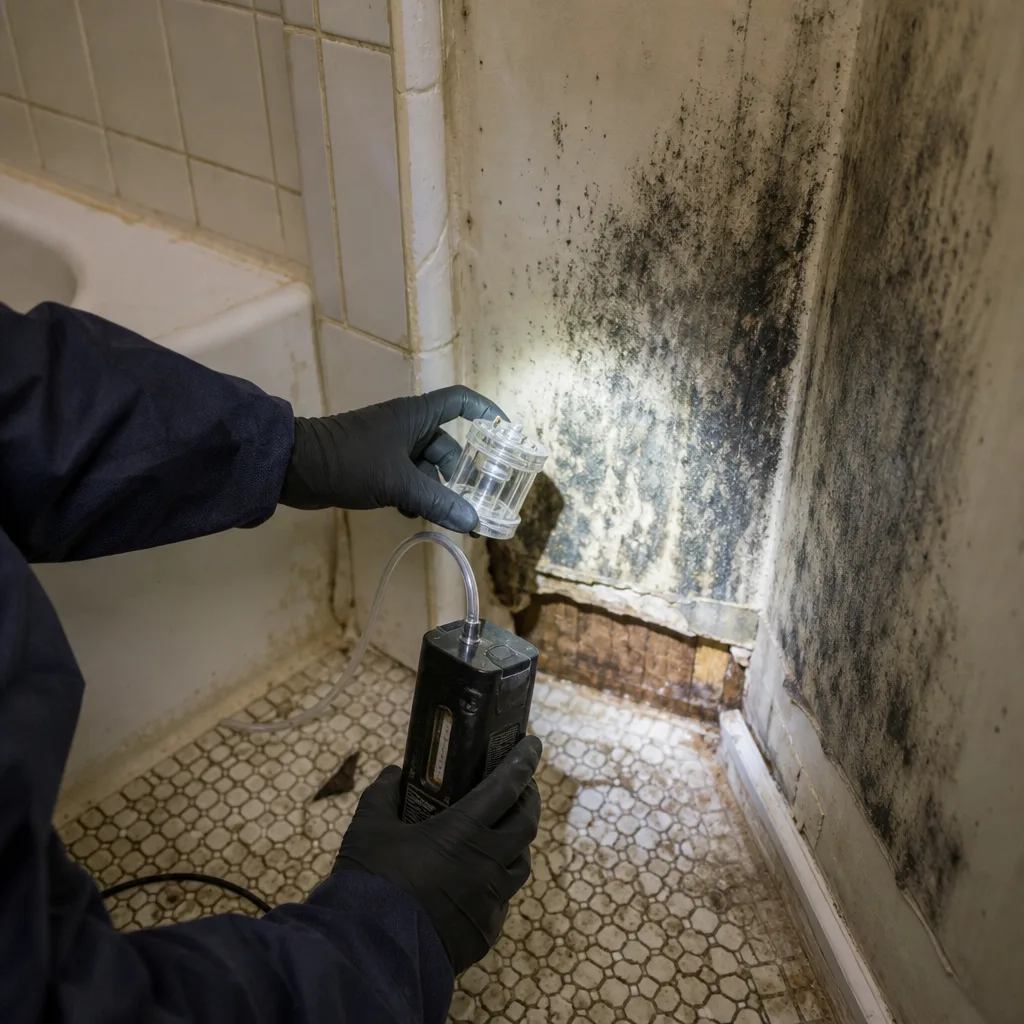
Emergency Board-Up
When wind takes a window or a falling branch opens your roof, the house is exposed to rain, animals, and everything else. We board up openings the same day, tarp the roof if needed, and make the structure secure while the full repair scope gets written. In Cambria Heights, where many homes are detached and exposed on three sides, a fast board-up prevents a small wind loss from becoming a full interior flood loss.
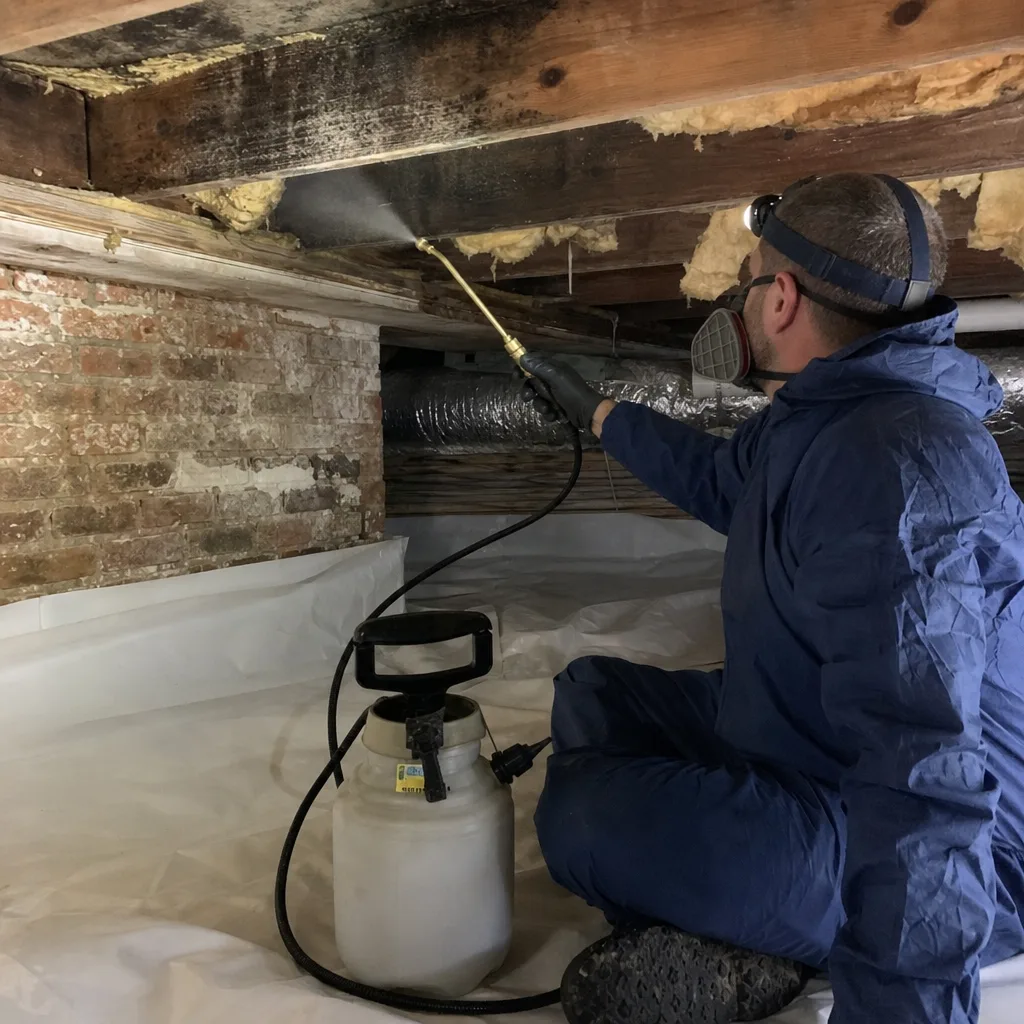
Roof Tarping
A lifted shingle or punctured roof on a 1950s Cape lets water run into the attic, down the walls, and into that finished basement. We tarp the damaged section with anchored, waterproof membrane that holds through the next storm, and we document the damage for your adjuster before the interior work begins.
Debris Removal
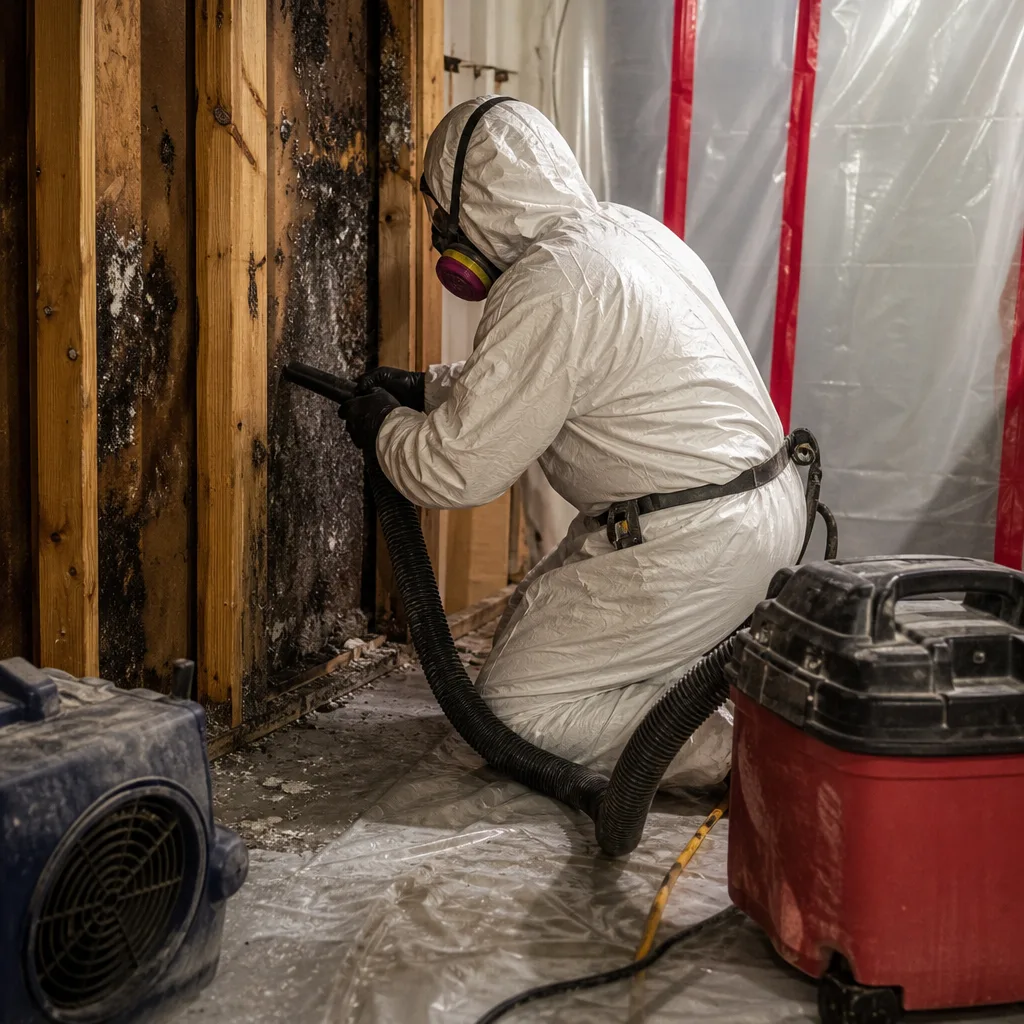
Fallen branches, torn siding, and flood-soaked carpet all have to go before drying can start. We haul the debris, keep what’s salvageable, and leave the job site clean enough to begin reconstruction the same week. You don’t rent a dumpster. We handle it.
What happens when you call
- 1
A real person answersNo phone trees - you reach a local pro.
- 2
You get an upfront price rangeHonest numbers before anyone is dispatched.
- 3
A background-checked tech heads outLicensed & insured, dispatched right away.
- 4
You approve before work beginsNothing starts until you say go.
Storm & Disaster Restoration Costs in Cambria Heights, NY
What does storm restoration actually run in this neighborhood? Here are real ranges for the work we do most often in Cambria Heights. A water extraction and drying job on a 400-to-600-square-foot finished basement with Category 3 water typically runs $3,800 to $7,500, depending on how much drywall, flooring, and baseboard has to come out. A full basement gut and rebuild after a sewer backup, including drywall, trim, flooring, and paint, lands between $9,000 and $22,000. Emergency roof tarping runs $450 to $900 for most single-family Capes and colonials, while board-up service after wind damage starts around $300 per opening. Foundation seepage repairs, including interior drain tile and sump pump installation where recommended, run $6,500 to $14,000. The price moves based on how fast we get in: water that sat for three days before extraction costs more than water extracted the same night. Your inspection is free, and you’ll get a written scope with line-item pricing before any work starts. Call (917) 924-4221 for an exact quote.
We Also Serve Cities Near Cambria Heights
Floodline Restoration Co. responds throughout southeastern Queens and the Nassau border. Beyond Cambria Heights, we regularly serve Elmont, Hollis, Valley Stream, and Rosedale, bringing the same certified crews and 24/7 live dispatch to every call.
Serving Cambria Heights, NY - Our Local Coverage Area
We’re based in the Cambria Heights area and know this community well. Use the map below to see our service coverage - if you’re nearby, we can almost certainly help.
Cambria Heights Storm & Disaster Restoration Questions, Answered
Why does basement flooding happen so often in Cambria Heights even during moderate rain?
Cambria Heights was developed on former wetland soils with a high water table, and that geography hasn’t changed just because houses sit on top of it. When moderate rain falls, the ground can’t absorb it fast enough, the combined sewer system reaches capacity, and water pushes through foundation walls and floor drains in the neighborhood’s mid-century homes. It’s a recurring condition, not a one-time event. Call (917) 924-4221 and we’ll assess your specific drainage situation and recommend fixes that actually work on this soil.
What does ‘Category 3 water’ mean for a Cambria Heights sewer backup, and why can’t we just dry it?
Category 3 water is grossly contaminated, carrying sewage, bacteria, and pathogens. When a combined sewer backs up through your floor drain on 118th Avenue, that’s Category 3, and drying alone leaves the contaminants behind. It requires extraction, antimicrobial treatment, containment, air scrubbing, and removal of porous materials that absorbed the water. This is not a DIY job, and skipping the sanitization step is how homes end up with recurring odors and health complaints months later. Call (917) 924-4221 for a professional assessment the same day.
Can you save the original plaster and lath walls in my 1950s Cape Cod after a flood, or do they have to come out?
In many cases, yes, we can save original plaster walls. Plaster is more water-resistant than modern drywall, and if we begin structural drying within 48 hours and the water wasn’t contaminated, the plaster can often be dried, cleaned, and repainted. The deciding factors are how long the water sat, whether it was Category 3, and what our moisture mapping shows behind the lath. We’ll tell you honestly what’s salvageable, and our goal is always to save the character of your original house where it’s safe to do so. Call (917) 924-4221 and we’ll walk the damage with you.
My finished basement was done years ago without permits. How does that affect a storm damage restoration job?
Most finished basements in Cambria Heights were converted decades ago without waterproofing membranes or building permits, which means the electrical work, framing, and egress may not meet current code. When we restore the space, we have to rebuild to code, and that sometimes means upgrading wiring or adding an egress window. It also affects your insurance claim: a carrier may cover the damage but not the cost of bringing unpermitted work up to code. We’ll give you a straight answer about what your specific space needs, and we’ll coordinate with your adjuster so there are no surprises. Call (917) 924-4221 for a free inspection.
How quickly do I need to start drying after a nor’easter floods my Cambria Heights basement to prevent mold?
Within 24 to 48 hours. That’s the window before mold begins to colonize on the original plaster-and-lath walls, asbestos-containing ceiling tiles, and any drywall in your finished basement. On Cambria Heights’s high water table soils, moisture lingers longer than in drier parts of Queens, so the clock is even shorter. If water has been sitting for more than a day, don’t wait. Call (917) 924-4221 and we’ll start extraction the same visit.
How fast can a crew actually get to my house in Cambria Heights?
Our commitment is a 45-minute response from the time you call. A live dispatcher takes your information and routes the nearest certified crew to your block. We serve the Cambria Heights area directly, not from a distant hub, so we know the routes from Linden Boulevard to Merrick Boulevard and everywhere between. Call (917) 924-4221 and we’ll be on the way.
Will my insurance cover storm and sewer backup damage in Cambria Heights?
Most standard homeowners policies cover sudden water damage from storms, but sewer backup coverage is often a separate rider. If you have the rider, a Category 3 backup is typically a covered loss. We document everything from the first hour, write a line-item scope your adjuster can process, and bill the carrier directly. If you’re not sure what your policy covers, call (917) 924-4221 and we’ll help you understand your specific situation before you commit to anything.
Can we stay in our home during storm restoration work?
It depends on the severity and the category of water. For Category 1 water and straightforward drying, most Cambria Heights families stay home while we work in sections. For Category 3 sewage backup, especially in a finished basement with forced-air HVAC, we may recommend temporarily relocating while containment, air scrubbing, and antimicrobial treatment are completed. We’ll give you a clear recommendation for your specific situation, and we’ll work around your family’s needs. Call (917) 924-4221 to talk through your options.
Written by Curt Bowman, Owner at Floodline Restoration Co. of Manhattan, serving Cambria Heights and the surrounding communities. Curt founded the company in 2010, built it around a dispatch board instead of a sales desk, and still answers for every job personally.