
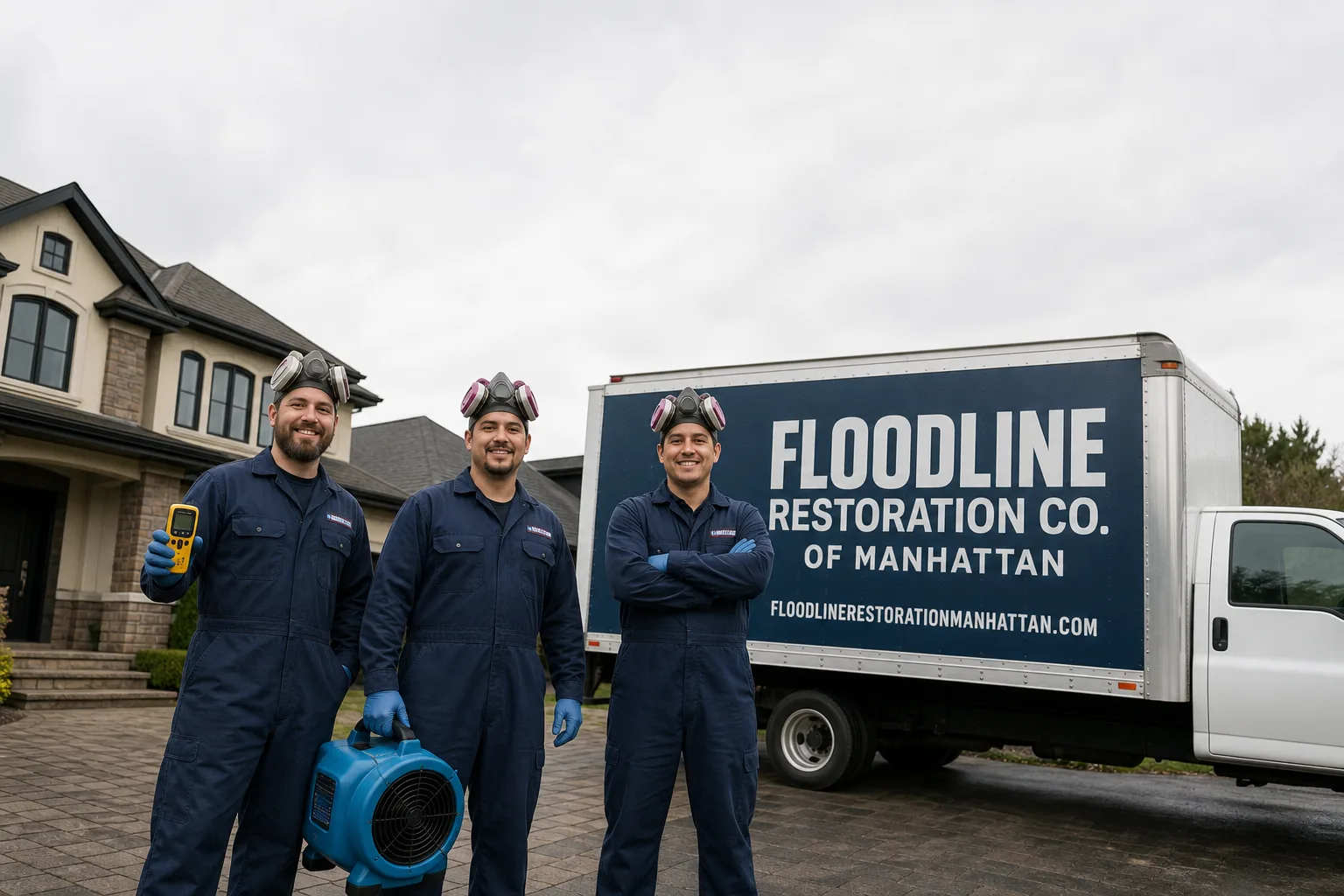
Free visual inspection and a written scope of work before any mitigation begins - photos, moisture readings, and drying logs go in your claim file
The scope we write is the scope we bill. Anything new gets shown to you, in writing, before we touch it.






 Before
 After
After Before
 After
After Before
 After
After24/7 Emergency Storm & Disaster Restoration in Carlstadt
Storm damage in Carlstadt moves fast, and so do we. When wind rips a section of roof off a Broad Street warehouse or floodwater backs up into a basement off Hoboken Road, you need a crew that answers the phone at 2 a.m. and gets extraction running the same visit. Call (917) 924-4221 any hour, any day. A live dispatcher picks up. Not a recording. We dispatch background-checked, uniformed technicians from our New York City office straight into Carlstadt, and the first hour matters because brackish Hackensack River water starts corroding framing and feeding mold within 24 to 48 hours. Our free visual inspection tells you exactly what you’re facing before any work is approved.
Understanding Storm & Disaster Restoration Severity in Carlstadt Properties
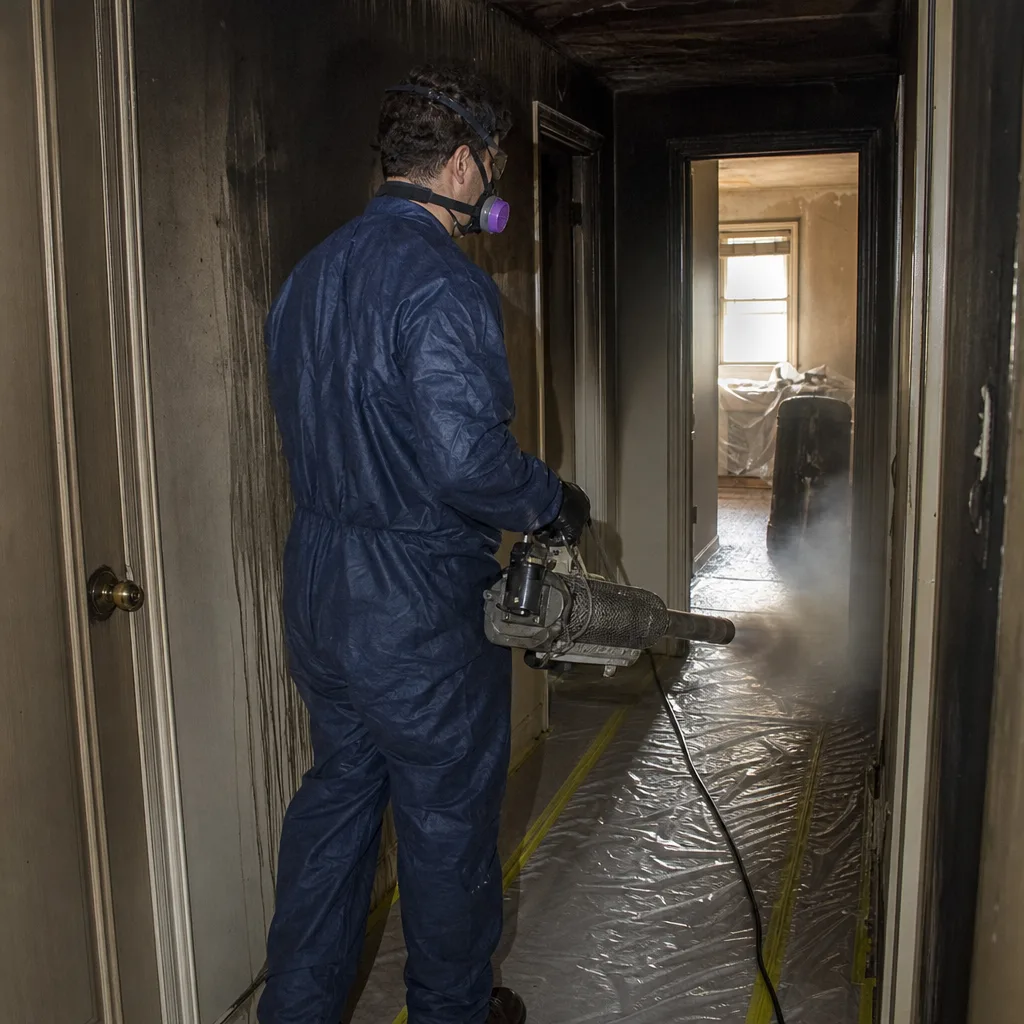
Carlstadt’s older housing stock, mainly 1940s-to-1960s single and two-family homes with full basements, sits close to the Meadowlands water table. That means floodwater here is rarely clean. We classify water the way the IICRC teaches: Category 1 is clean supply-line water, Category 2 carries contaminants, and Category 3, what we typically see after a nor’easter pushes Hackensack River backflow into loading docks and basements, is grossly contaminated with sewage, salt, and industrial runoff. Category 3 demands full containment, antimicrobial treatment, and structural drying with moisture mapping, not just mopping. Storm damage here also splits into wind-driven rain intrusion, which wets insulation and drywall from above, and flood-driven hydrostatic pressure, which pushes water up through basement slabs and cove joints from below. Both require different drying strategies, and older Carlstadt basements with original concrete are especially prone to slow wicking that hides moisture behind paneling. Soot and smoke from storm-related electrical fires add another layer, requiring HEPA air scrubbing and surface-specific cleaning before reconstruction begins.
Why Carlstadt Property Owners Choose Floodline Restoration Co. of Manhattan
- 45-minute response commitment – We dispatch from the metro office with crews routed through Route 17 and Paterson Plank Road, not from a call center in another state.
- 24/7 live answer – A real person answers the phone every time. Curt Bowman built this company around a dispatch board, not a sales desk.
- IICRC-certified crews – Our technicians hold WRT and FSRT certifications and train to RIA and IFA standards, so the work is measured, logged, and defensible to your carrier.
- Free visual inspection – We look before we quote. You’ll know the actual scope, in writing, before any equipment rolls into your driveway or loading dock.
- Direct insurance billing – We bill your carrier directly and speak with your adjuster, so you don’t carry the paperwork between two parties.
- One team from extraction to reconstruction – The same crew that reads the moisture map on day one handles daily readings, hands you the log, and rebuilds what needs rebuilding. No mid-job handoff.
Our Storm & Disaster Restoration Process
Inspection & Assessment
We start with thermal imaging and hygrometers to map moisture inside walls, under flooring, and behind steel-framed cavities. For storm damage, we also check wind-rated door tracks, roof decking, and below-grade pits for hidden water. You get a written scope before anything is demolished.
Extraction & Stabilization
Truck-mounted extraction pulls standing water from basements, loading docks, and mechanical rooms. We board up broken windows, tarp damaged roofs, and brace compromised openings the same visit so weather can’t keep damaging the structure.
Drying & Dehumidification
We set Dri-Eaz and Phoenix air movers and low-grain refrigerant dehumidifiers, then log daily moisture readings until the dry standard is met. Carlstadt’s high water table means we run drying longer on below-grade spaces than inland crews often expect.
Cleaning & Sanitization
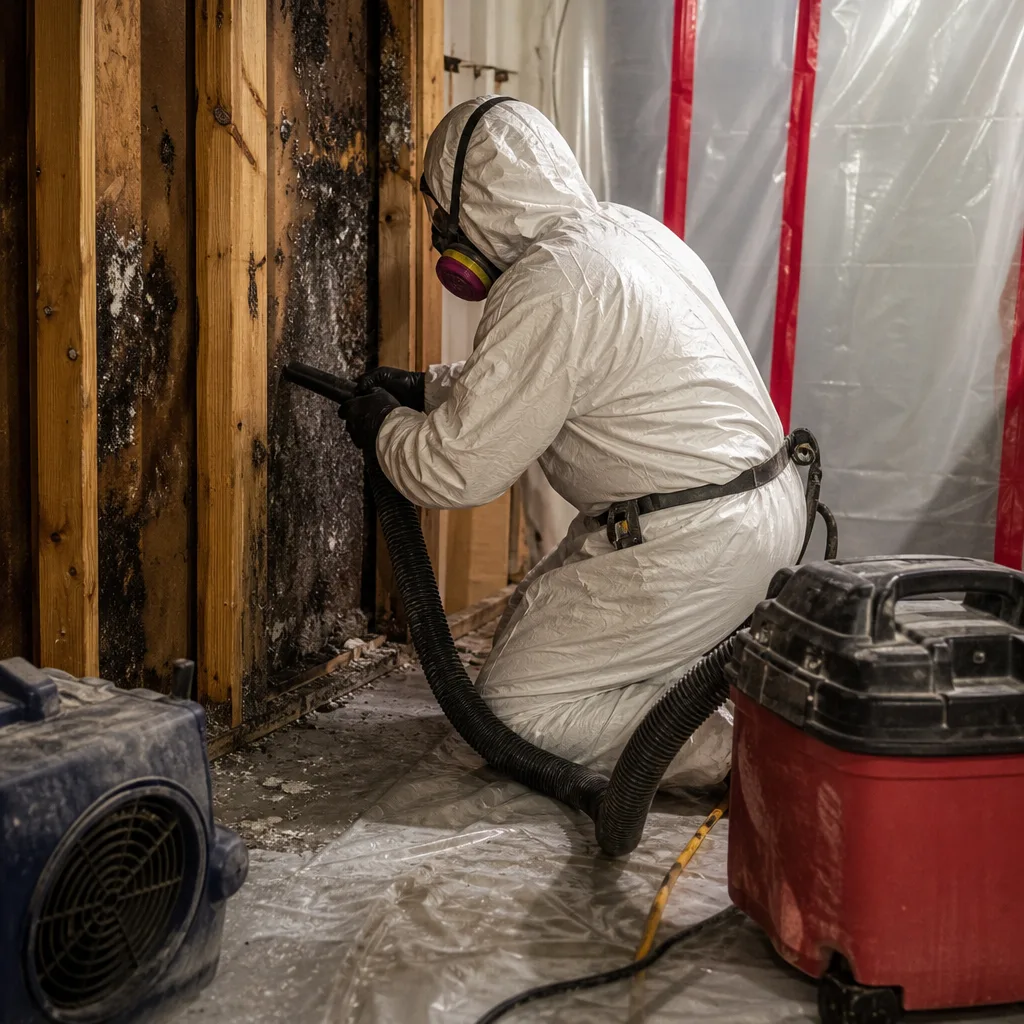
Floodwater from the Hackensack River leaves brackish, corrosive residue. We clean with antimicrobial agents appropriate for Category 3 water, and run HEPA air scrubbers to capture mold spores and particulate that got airborne during the storm.
Specialty Storm Treatment
For steel-framed commercial buildings, we open wall cavities to inspect for hidden mold colonies behind panels, the failure mode we see most often in Carlstadt’s warehouse corridor. For wind damage, we assess track alignment and panel integrity on roll-up doors before anything is patched.
Repairs & Restoration
We rebuild what the storm took: drywall, insulation, flooring, roof sections, dock pit sumps, and wind-rated doors. Every job closes with the 90-Day Done Right Promise in writing. If it’s not done right, we make it right.
Need Emergency Storm & Disaster Restoration in Carlstadt Now?
Crews minutes away, answering live 24 hours a day. The sooner we start, the less it costs.
Working With Your Insurance Company
Storm and flood claims in Carlstadt move smoother when the documentation starts in the first hour. We photograph every room, every affected surface, and every piece of equipment before we touch it. Our line-item scope uses industry-standard pricing, which your adjuster already recognizes, and we communicate with the carrier directly so you don’t have to translate technical drying reports into insurance language. If your carrier pushes back on a line item, we provide the moisture logs, category classification, and photo evidence to support it. For Carlstadt homeowners and warehouse operators who’ve been through this before, that documentation is the difference between a covered claim and a deducted one.
What We Provide Your Insurer
- Thorough documentation of the loss
- Photos of all damage, room by room
- Moisture readings and drying logs
- A detailed, line-item scope of work
- Direct coordination with your carrier
Built for Carlstadt’s Loss Calendar
Carlstadt’s storm damage follows a seasonal rhythm, and we staff to it. January and February bring deep freezes that burst supply lines in unheated warehouse mechanical rooms and older residential basements. March and April snowmelt combines with spring rain to push the Hackensack River up against its banks, and hydrostatic pressure drives water through basement cove joints all over the borough. June through August brings the intense thunderstorms that drop two inches of rain in an hour, overwhelming the borough’s storm drains and sending street runoff into below-grade loading docks along the industrial corridor. September through November is nor’easter season: sustained winds that tear roof membranes off flat-roofed commercial buildings and drive rain horizontally into wall cavities. Superstorm Sandy in 2012 made Carlstadt a reference case for Meadowlands flood damage, and the tidal influence on the Hackensack means fall storms here can bring brackish backflow, not just rain.
Storm & Disaster Restoration Across Carlstadt’s Neighborhoods
Carlstadt is small, roughly four square miles, but the loss patterns shift block by block. Along Hoboken Road and the residential streets near Memorial Field, we respond to mid-century homes with full basements that take on water through cove joints and sump failures during heavy rain. Along Paterson Plank Road and the streets feeding Route 17, wind damage to siding, gutters, and older roof assemblies is the more common call, with rain intrusion following the wind. The commercial corridor around Washington Avenue and the warehouse district near the Hackensack River is a different animal entirely: flat roofs, steel framing, roll-up doors, and below-grade loading docks that become flood-collection points when the river surges. We’ve worked buildings off Broad Street where the dock pits held water for days before anyone noticed, and we’ve opened residential basements near St. Joseph’s Church where the water table is so high the slab never truly dries. Each area gets the same team but a different drying plan, because a rowhouse basement and a 40,000-square-foot distribution center are not the same job.
Specialized Storm & Disaster Restoration Services We Offer in Carlstadt
Storm Damage Cleanup
After a nor’easter or derecho, Carlstadt properties are left with wind-strewn debris, soaked drywall, downed limbs against siding, and water that worked its way under doors and through roof penetrations. We remove the debris, extract the water, and stabilize the structure so secondary damage stops. This is the first call to make after the storm passes, before mold gets a foothold.
Flood Damage Restoration
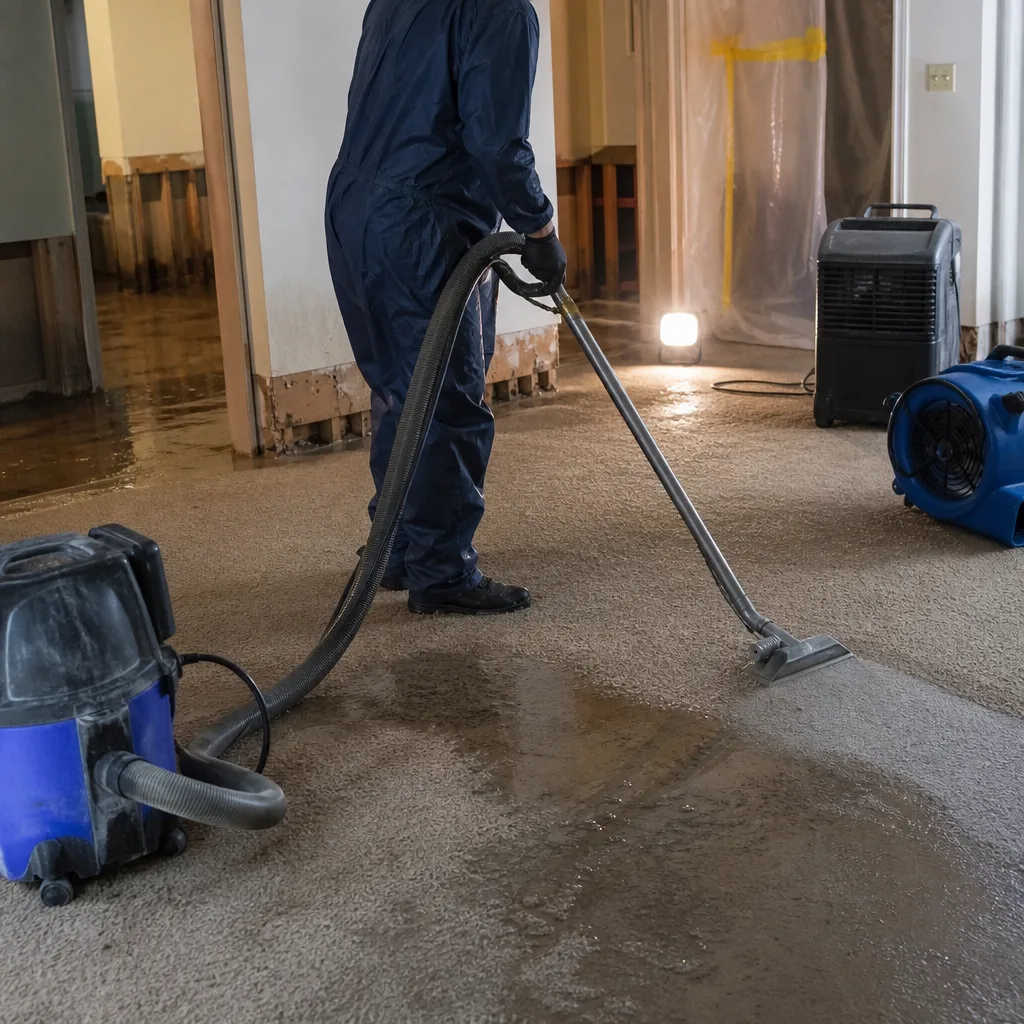
Hackensack River flooding and storm-drain backup are the dominant calls in Carlstadt. We handle full basement flood extraction, commercial dock pit pumping, and structural drying for buildings that took on brackish water. The goal is a building that reaches dry standard, not just one that looks dry on the surface.
Emergency Board-Up
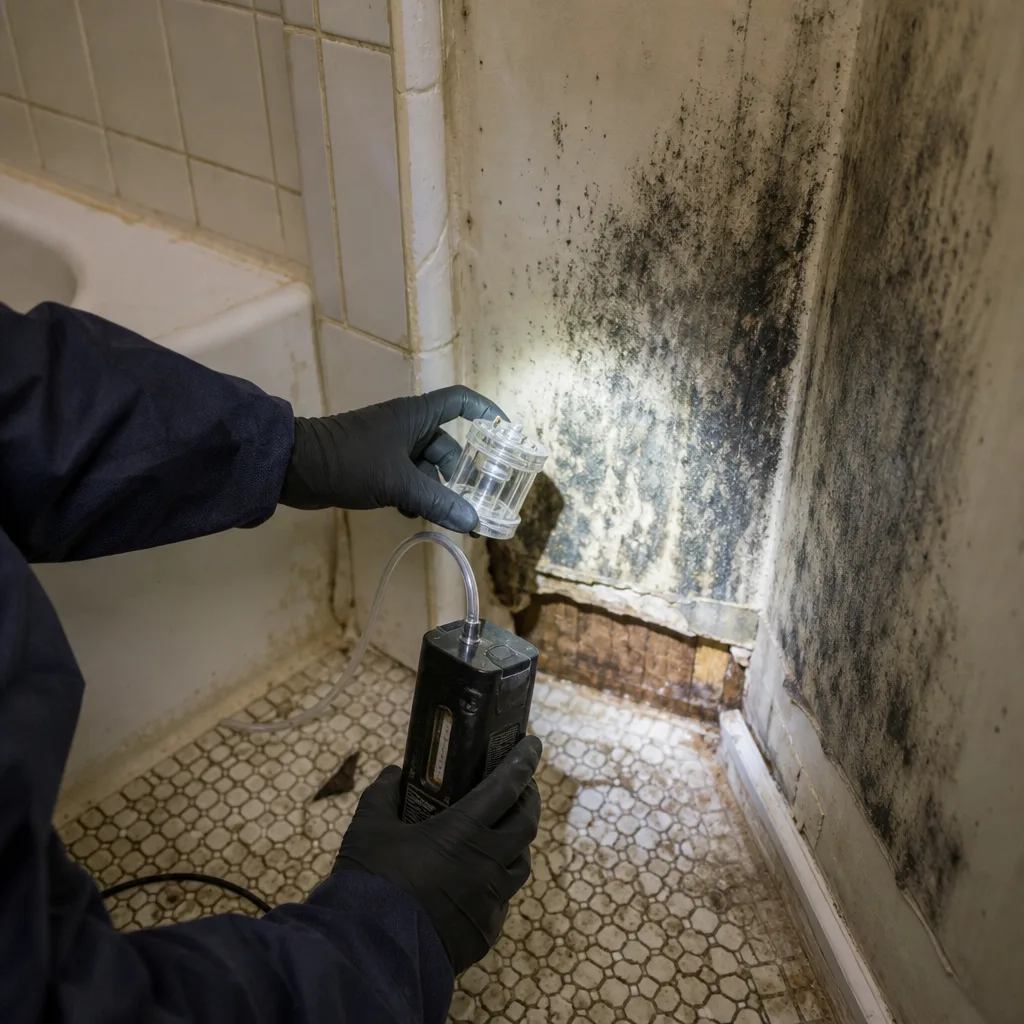
Broken windows, blown-out storefront glass, and damaged overhead doors leave Carlstadt buildings open to weather, trespass, and further loss. Our crews board and secure openings the same day, using plywood and fastening methods that hold up to follow-up gusts. For commercial roll-up doors that buckled under wind load, we secure the opening until the track and panels can be replaced with wind-rated components.
Roof Tarping
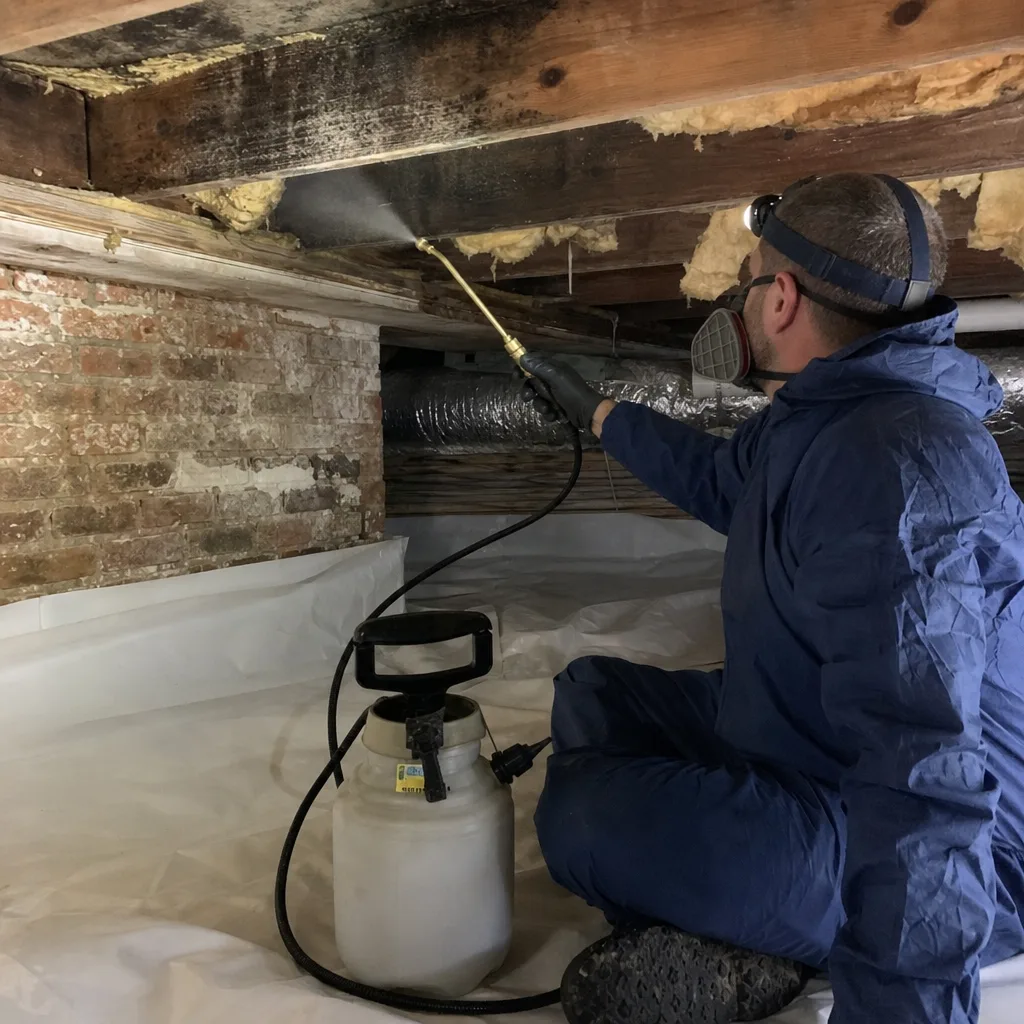
When wind peels membrane off a flat commercial roof or tears shingles off a residential roof on the blocks near the Meadowlands, water follows. We tarp damaged roof sections the same visit, sealing the building from rain while the full roof repair is scoped and scheduled. Tarping buys you days, not months, so we always pair it with a written plan for permanent repair.
Debris Removal
Storm debris in Carlstadt often includes more than tree branches. We’ve hauled away sections of roofing, broken glass, soaked insulation, and twisted metal framing from the warehouse corridor. Full debris removal is part of our Storm & Disaster Restoration scope, not an add-on line item, so the path from mess to rebuild stays in one crew’s hands.
What happens when you call
- 1
A real person answersNo phone trees - you reach a local pro.
- 2
You get an upfront price rangeHonest numbers before anyone is dispatched.
- 3
A background-checked tech heads outLicensed & insured, dispatched right away.
- 4
You approve before work beginsNothing starts until you say go.
Storm & Disaster Restoration Costs in Carlstadt, NJ
Storm damage restoration in Carlstadt runs a wide range because the borough mixes modest residential homes with large commercial buildings. A residential water extraction and dry-out after a flooded basement typically runs $2,800 to $6,500, depending on square footage and how long the water sat. Emergency board-up on a storefront or warehouse usually lands between $800 and $2,200. Roof tarping runs $400 to $1,200 for most residential damage and $1,500 to $4,000 for flat commercial roofs. Full commercial structural drying after a dock pit flood can run $15,000 to $60,000 on large-loss buildings. The variables that move the price: category of water, how much drywall and insulation must come out, how many days of drying equipment are needed, and whether we find hidden mold behind wall cavities. The fastest way to a firm number is our free visual inspection, which gives you a written scope before any work begins. For many Carlstadt policyholders, the carrier covers the bulk of it, and we bill directly, so you’re not floating the cost while your claim processes.
We Also Serve Cities Near Carlstadt
Our crews handle storm and flood restoration across the Meadowlands and lower Bergen County. You’ll find us responding in Carlstadt, East Rutherford, Wallington, Rutherford, and Hasbrouck Heights. Same live dispatch, same 45-minute response commitment, same written guarantee.
Serving Carlstadt, NJ - Our Local Coverage Area
We’re based in the Carlstadt area and know this community well. Use the map below to see our service coverage - if you’re nearby, we can almost certainly help.
Carlstadt Storm & Disaster Restoration Questions, Answered
How does Carlstadt’s location in the Meadowlands affect storm damage cleanup after a nor’easter?
Carlstadt sits low and flat, bordered by the tidal Hackensack River, so nor’easters here bring wind, rain, and brackish river backflow together. That means cleanup involves three problems at once: wind-damaged roofs and openings, rain intrusion through those openings, and Category 3 floodwater that carries salt and contaminants. The brackish residue corrodes framing faster than clean rainwater and demands antimicrobial treatment plus longer structural drying. It’s the combination, not any single element, that makes Meadowlands storm work different from inland Bergen County towns.
When should we call for emergency board-up after wind damage to our Carlstadt commercial building?
Call the moment you see a damaged window, buckled roll-up door, or open roof section. Leaving the building open to follow-up rain, wind, or unauthorized entry turns a repair into a full restoration. We board and tarp the same visit, so the building is protected while the permanent repair is scoped. Delaying even one night in storm season risks water getting into steel-framed wall cavities where it hides until mold spreads behind the panels.
Does Carlstadt require special permits for wind-rated door replacements?
Yes. Carlstadt follows New Jersey’s adoption of the IBC with wind-load requirements for exterior doors and overhead doors on commercial buildings. When we replace a roll-up door that failed during a storm, the replacement must meet the borough’s wind-rating standard, and the permit goes through the Carlstadt Building Department. We handle the paperwork as part of the rebuild scope, but it’s one reason a boarded-up opening shouldn’t stay patched with plywood longer than necessary.
Why does mold appear inside steel-framed wall cavities after minor Carlstadt floods?
Steel framing holds moisture differently than wood. Water that gets behind metal panels in a warehouse or commercial building has no porous material to wick it out, so it sits in the cavity and condenses repeatedly with temperature swings. In Carlstadt, that water is often brackish from Hackensack River backflow, which leaves salt residue that pulls more moisture from the air. Minor floods that drain away on their own still leave enough water inside those cavities to grow mold behind the panels, where no one sees it until we open the wall.
Can roof tarping alone protect my Carlstadt home’s basement from storm backflow?
No. Roof tarping stops water from entering from above, but Carlstadt basements flood from below when the water table rises and storm drains back up. That hydrostatic pressure pushes water through the slab and cove joints regardless of what’s happening at the roofline. You need interior extraction, sump management, and structural drying for the basement, plus roof protection. Covering one without addressing the other leaves half the building exposed.
How fast can a crew actually get to Carlstadt?
Our response commitment is 45 minutes for emergency calls in Carlstadt. Dispatch routes crews through Route 17, Paterson Plank Road, and the local streets around the borough, and the live dispatcher is on the phone with you while the truck rolls. Extraction equipment runs the same visit, not the next morning.
Will my insurance cover storm and flood damage in Carlstadt?
Most standard homeowners policies cover wind damage and rain intrusion, but flood damage from rising water, including Hackensack River backflow, typically requires a separate flood policy through the NFIP or a private carrier. Commercial policies vary more. We document the cause of loss carefully, classify the water correctly, and work directly with your adjuster so the claim reflects what actually happened, not a generic description that gets underpaid.
What should I do in the first 30 minutes after storm damage?
If it’s safe, kill power to any wet area, move valuables up off the floor, and call (917) 924-4221. Don’t walk through standing water if you can’t see the floor, and don’t open walls or panels to inspect, because brackish floodwater carries contaminants and hidden cavities are where damage hides. Take photos from a safe distance, then let our crew do the technical assessment. The first 30 minutes are about safety and stopping further loss, not about fixing anything yourself.
Written by Curt Bowman, Owner at Floodline Restoration Co. of Manhattan, serving Carlstadt, NJ and the Meadowlands region with storm and disaster restoration since 2010.