

Free visual inspection and a written scope of work before any mitigation begins - photos, moisture readings, and drying logs go in your claim file
The scope we write is the scope we bill. Anything new gets shown to you, in writing, before we touch it.



 Before
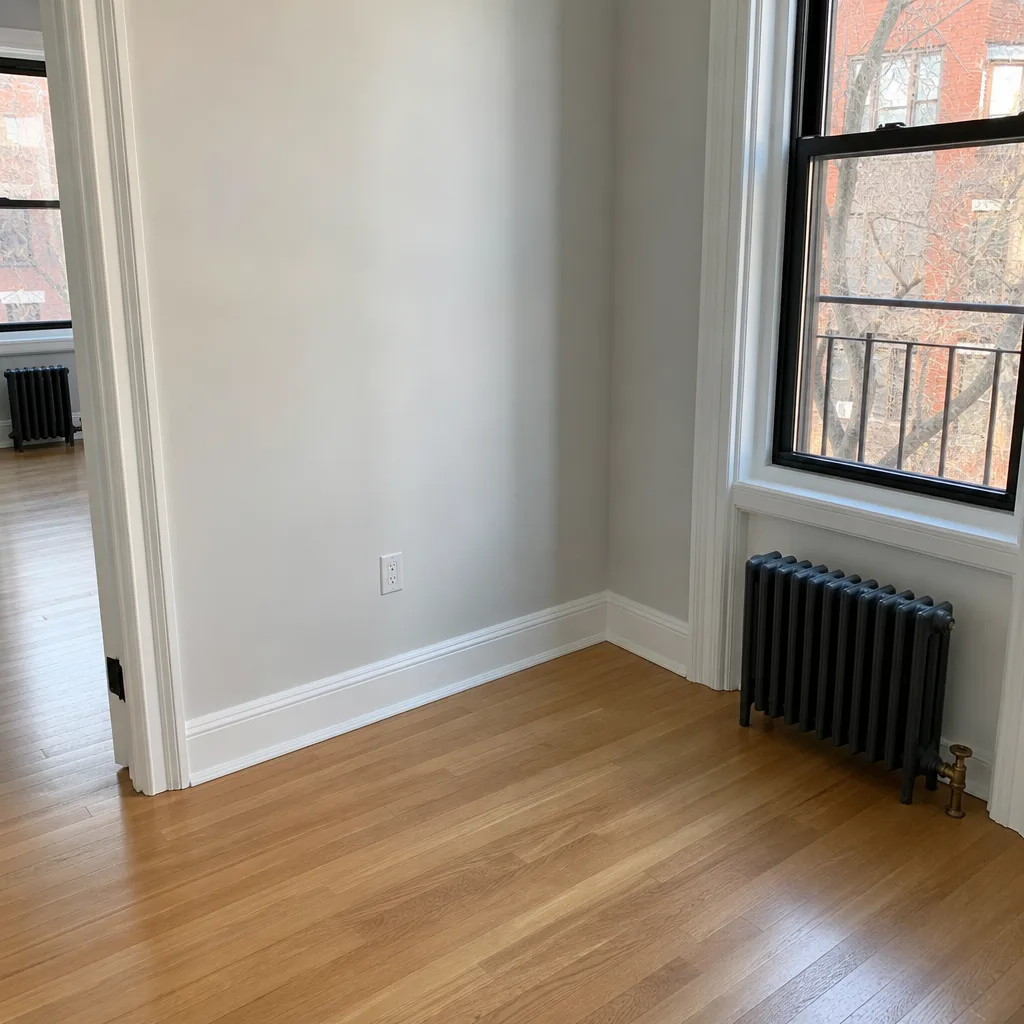 After
After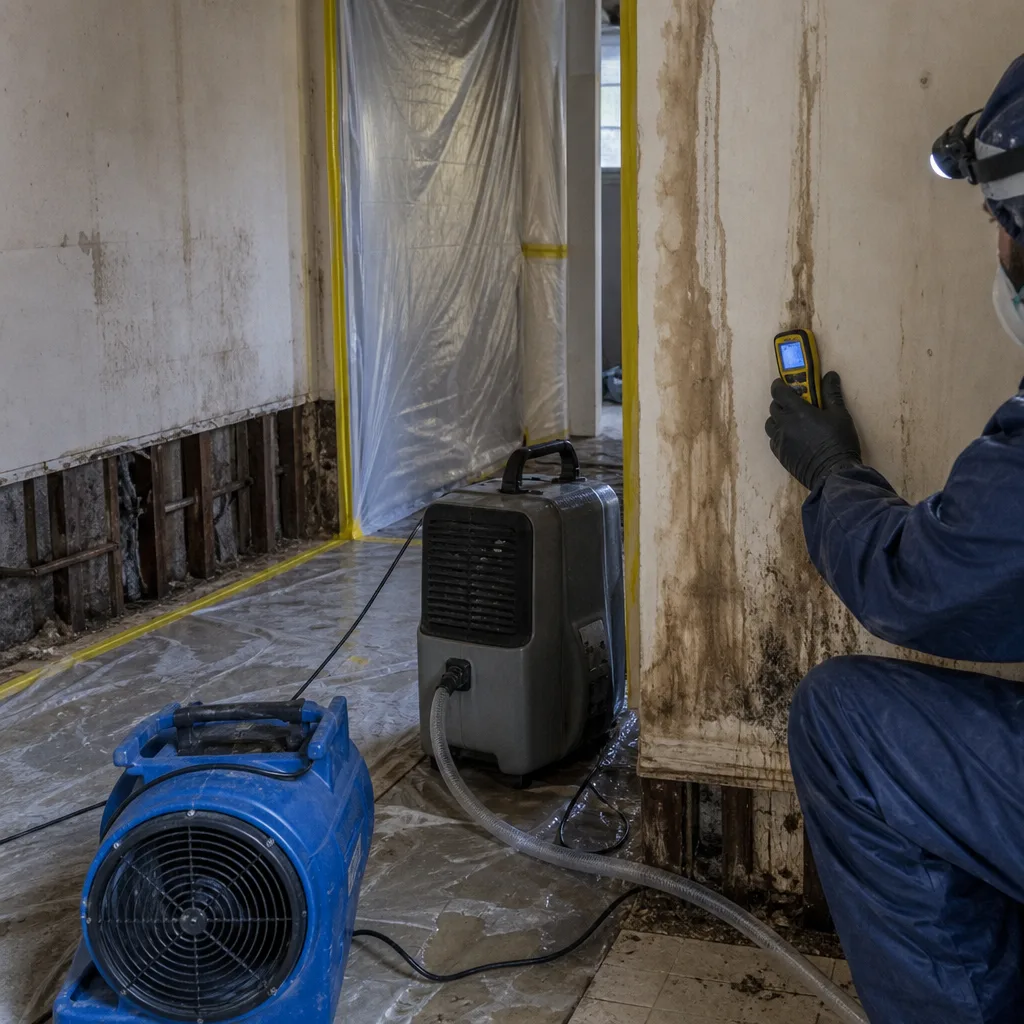 Before
 After
After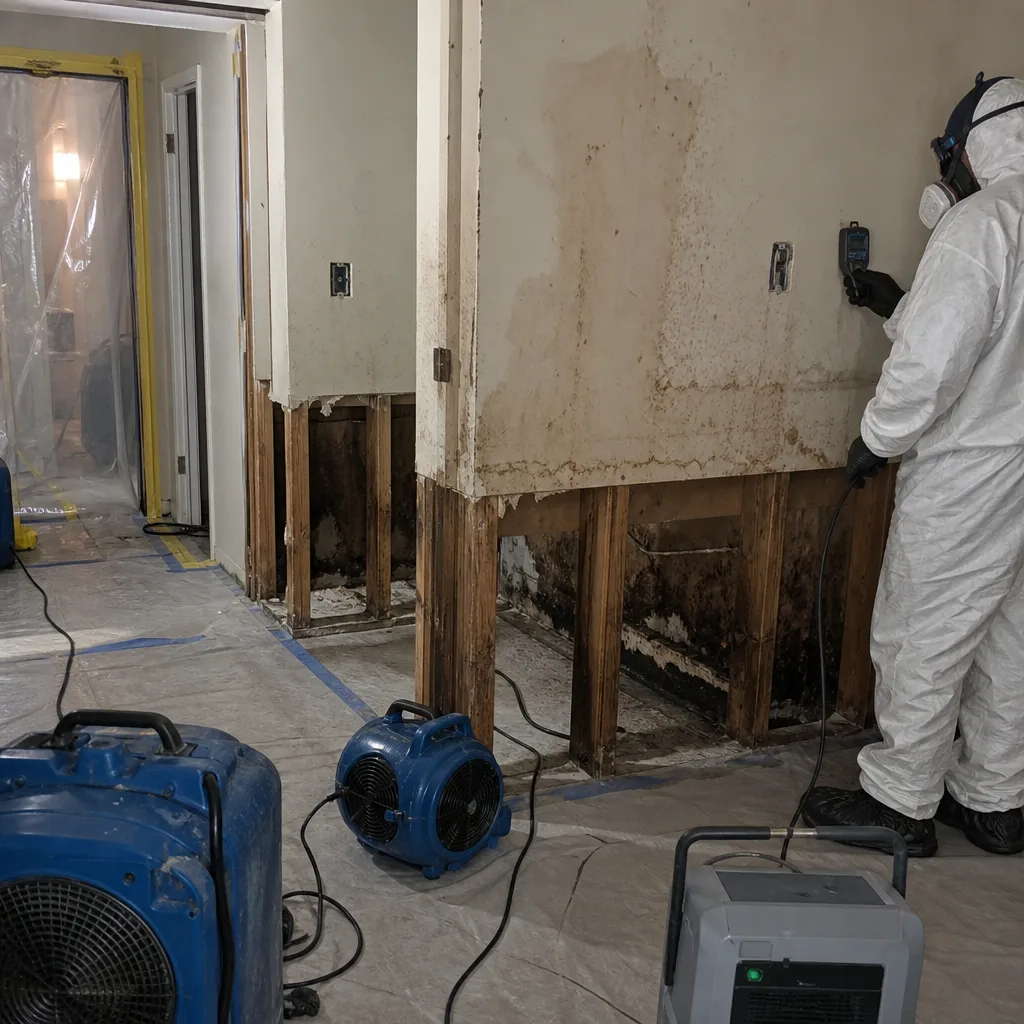 Before
 After
After24/7 Emergency Storm & Disaster Restoration in Charleston
When storm water is moving through a 19th-century farmhouse in Charleston, every hour you wait changes the outcome. We answer the phone live at (917) 924-4221, any hour, any day. A dispatcher takes the call, a crew gets moving, and extraction starts the same visit. Storm damage in this town doesn’t wait for business hours, and neither do we.
Call (917) 924-4221 the moment you see water where it shouldn’t be, shingles in the yard, or a tree limb through a window. The first hour after storm damage is when you still have a drying project instead of a mold remediation project. Our Storm & Disaster Restoration team is staged to reach Charleston quickly, and the visual inspection is free. We tell you plainly what’s damaged, what’s salvageable, and what it’ll take to get your house dry and sound again.
Understanding Storm & Disaster Restoration Severity in Charleston Properties
Storm damage in Charleston rarely behaves the way it does in newer construction. Most homes here are wood-frame farmhouses built between 1840 and 1930, with original plaster-and-lath walls, balloon framing, and no vapor barrier anywhere in the wall assembly. When rain or snowmelt gets behind that plaster, it doesn’t just dampen the surface. It soaks into the horsehair plaster, wicks up through the lath, and saturates the stud cavities. The water sits there, held by century-old materials that were never designed to dry quickly.
That’s why we classify water by category before we touch it. Category 1 is clean water from a supply line or rain entering through a fresh opening. Category 2 carries contaminants, like roof runoff that’s picked up soil and debris. Category 3, the dangerous stuff, comes from sewage, river flooding, or standing water that’s sat for days. In Charleston’s unconditioned farmhouses, even Category 1 water becomes a mold risk inside 24 to 48 hours because the walls never dry on their own. Moisture mapping with thermal imaging and hygrometers tells us exactly where the water went. Without it, you’re guessing. Guessing is how plaster delaminates and mold comes back.
Why Charleston Property Owners Choose Floodline Restoration Co. of Manhattan
- 45-minute response commitment – from the time you hang up, we’re moving. In a town where other crews route in from hours away, that window matters.
- A live person answers, 24/7 – no answering service, no “press 2 for emergencies.” You get a dispatcher who knows what to ask and what to send.
- IICRC-certified technicians – our crews train to WRT, FSRT, and AMRT standards. Not an online certificate. Real field certification.
- Free visual inspection – we come out, look at the damage, and tell you what you’re dealing with before anyone signs anything.
- Direct insurance billing – we file the claim documentation, handle adjuster calls, and bill the carrier directly. You’re not the messenger.
- One crew from extraction to rebuild – the same people who dry your walls are the ones who rebuild them. No handoff, no inherited mess.
Curt Bowman founded this company in 2010 around a dispatch board, not a sales desk. We’ve kept it that way. Every job in Charleston gets the 90-Day Done Right Promise in writing. If it isn’t done right, we make it right. No arguing.
Our Storm & Disaster Restoration Process
Inspection & Assessment
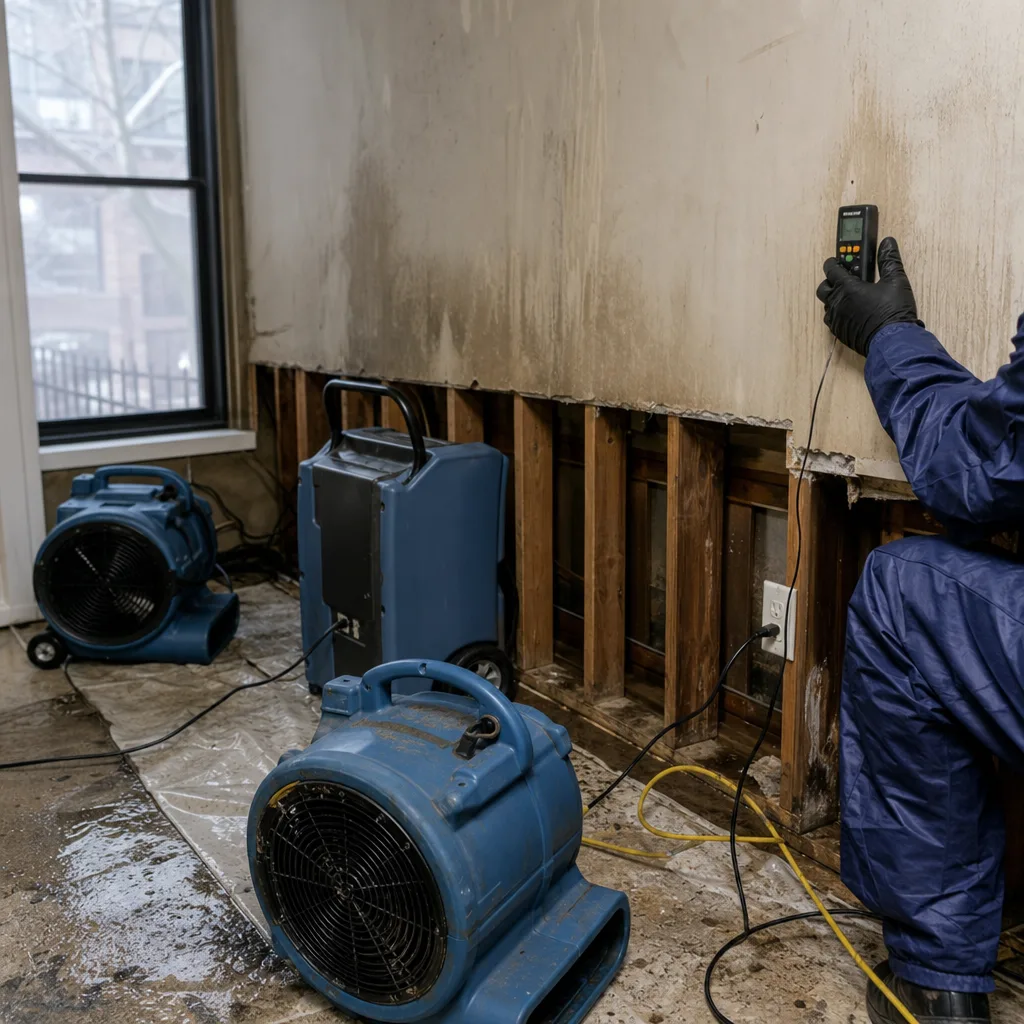
We arrive, walk the property, and map the damage. Thermal imaging finds water you can’t see, especially behind original plaster and inside attached barn walls. You get a written scope before any work starts.
Extraction & Stabilization
Standing water comes out first, using truck-mounted extraction and submersible pumps. Then we tarp roofs, board windows, and stop any active intrusion. The holes get sealed the same visit.
Drying & Dehumidification
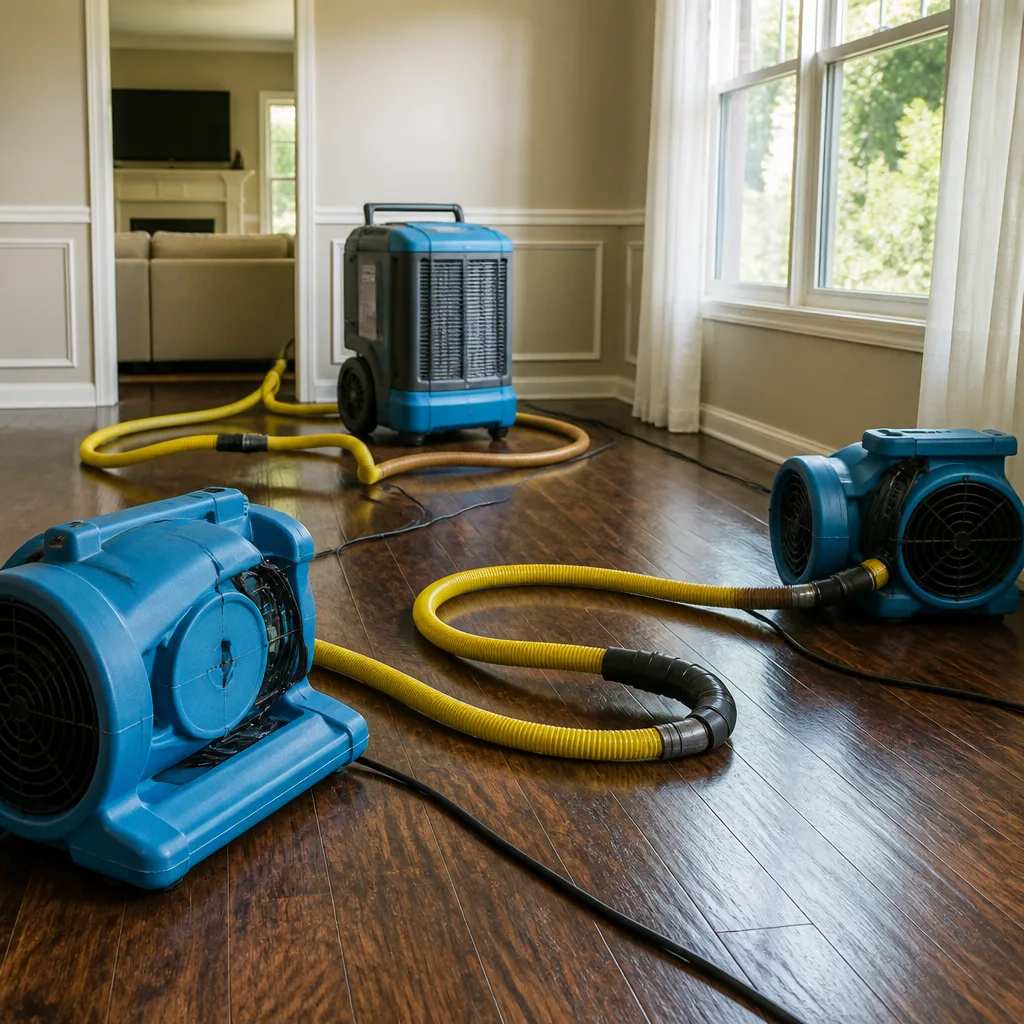
We set Dri-Eaz dehumidifiers and Phoenix air movers, then log moisture readings daily in every affected cavity. In Charleston farmhouses, we run drying long enough to bring those walls below 15% moisture content, not just until the surface feels dry.
Cleaning & Sanitization
Contaminated surfaces get treated to IICRC standards. HEPA scrubbing controls airborne particles. Soft goods are evaluated for cleaning or disposal, with photos for your carrier.
Targeted Storm-Damage Treatment
This is where the job gets specific: antifungal treatments on saturated structural timbers, injection drying for old plaster wall cavities, and rodent-migration assessment where barn and house walls meet.
Repairs & Restoration
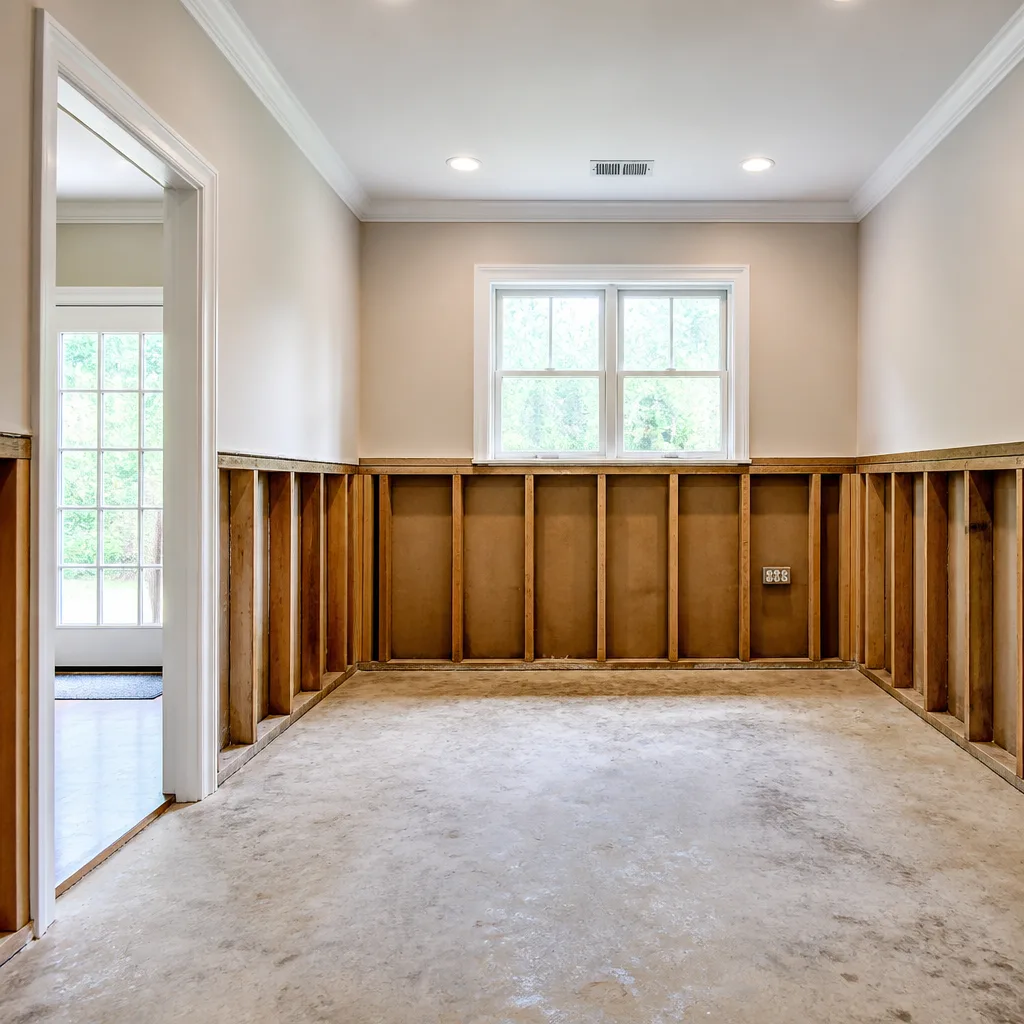
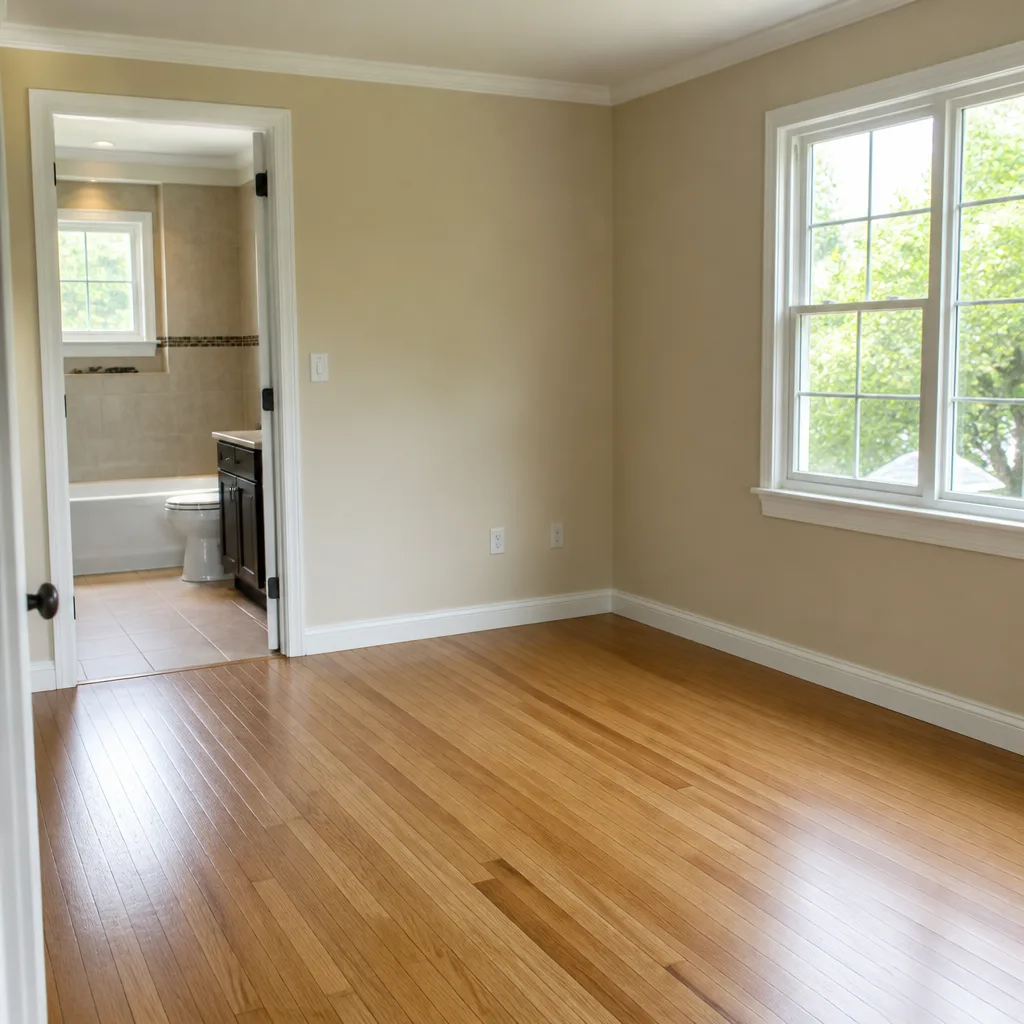
Once the dry standard is met, we rebuild. Plaster repair, insulation retrofits, structural reinforcement, flooring, trim. The same crew that dried it now puts it back together.
Need Emergency Storm & Disaster Restoration in Charleston Now?
Crews minutes away, answering live 24 hours a day. The sooner we start, the less it costs.
Working With Your Insurance Company
Insurance claims after storm damage in Charleston often stall because the adjuster doesn’t understand what it takes to dry a 150-year-old farmhouse. That’s why we document everything from the first hour. Photos of the loss room by room. Moisture readings in the affected cavities. A daily drying log that shows what we measured, what we did, and when the dry standard was met. The claim moves forward on evidence, not argument.
We talk to your adjuster directly. You don’t get stuck relaying questions or explaining why lath-and-plaster drying costs more than drywall replacement. We write the scope in language carriers accept and homeowners understand. Then we bill the insurance company directly, so you aren’t floating the cost.
What We Provide Your Insurer
- Thorough documentation of the loss
- Photos of all damage, room by room
- Moisture readings and drying logs
- A detailed, line-item scope of work
- Direct coordination with your carrier
Built for Charleston’s Loss Calendar
Charleston gets hit in predictable seasons, and the damage follows a pattern. January and February bring deep freezes that burst supply lines in unheated crawl spaces and on exterior walls with no insulation. March turns to freeze-thaw cycles with ice dams forming at the eaves, sending meltwater through ceilings and down the interior plaster. April and May bring snowmelt running off the hill country slopes, flooding low basements and root cellars. Summer thunderstorms drop several inches in an hour, overwhelming the shallow drains on old properties and pushing water into fieldstone foundations. Fall nor’easters take down limbs and tear off aging roof sections on barns and ells that haven’t seen new flashing in decades.
Knowing the calendar means knowing what to send. When we dispatch to Charleston, we know whether we’re likely to find frozen pipes, a saturated wall system, or a barn that’s been leaking into the house for a week. That’s the difference between showing up and being ready.
Storm & Disaster Restoration Across Charleston’s Neighborhoods
Charleston spreads across Montgomery County hill country with homes set far apart on country roads, not packed into subdivisions. The response route up Carlisle Road winds past century farmsteads before splitting off toward Rural Grove and Charleston Four Corners. Each corner of the town has its own profile. The older farmsteads along Carlisle Road tend to have attached barns and root cellars, where stormwater finds its way in through shared wall penetrations long before it’s visible in the house. Properties up toward the Charleston State Forest have deeper snow loads and ice dam problems, their roofs carrying heavy accumulation through March. The area near East Branch and the scattered homes toward Lighthall Road see more runoff flooding in spring, as the terrain funnels snowmelt into low foundations. We know these roads because we respond to them. Storm & Disaster Restoration in Charleston means knowing that a call from Carlisle Road is likely an older farmhouse, and a call from up near the forest is probably wind or ice.
Specialized Storm & Disaster Restoration Services We Offer in Charleston
Storm Damage Cleanup
Storm cleanup in Charleston starts with getting the water, tree debris, and mud out of the living space. But the real work is reading the building. Original plaster-and-lath absorbs water differently than drywall, and unconditioned rooms dry on a different timeline. We map the moisture, not just mop the floor.
Emergency Board-Up
When a limb takes out a window on a Charleston farmhouse, the opening gets boarded before the next band of weather arrives. We board with structural panels, not cheap sheathing, because the wind up here doesn’t let up when the storm ends. The board-up holds until your glass and framing are replaced.
Roof Tarping
A tarp on a damaged roof is only as good as its tie-down points. On older homes with boxed eaves, we anchor tarps in a way that won’t tear out more fascia when the wind catches. We also tarp attached barns and outbuildings, because an open barn roof wicks into the house through shared wall framing.
Flood Damage Restoration
Snowmelt flooding and flash-flood runoff don’t stop at the foundation. They flow into basements, root cellars, and crawl spaces, and they stay there. We extract, dry, and treat those spaces, including the dirt floors and stone foundations that most companies don’t know how to handle.
Debris Removal
Limbs, shingles, wet insulation, whatever the storm left in your yard or on your roof. We haul it, photograph it for your claim, and get it out of the way so the reconstruction can move. You don’t pay a separate crew to clean up after our work.
What happens when you call
- 1
A real person answersNo phone trees - you reach a local pro.
- 2
You get an upfront price rangeHonest numbers before anyone is dispatched.
- 3
A background-checked tech heads outLicensed & insured, dispatched right away.
- 4
You approve before work beginsNothing starts until you say go.
Storm & Disaster Restoration Costs in Charleston, NY
Storm damage restoration costs in Charleston depend on square footage, materials, and how long the water sat before we started. A straightforward storm cleanup with tarping and a few days of drying on a single room typically runs $1,200 to $3,800. A full basement flood from spring snowmelt with extraction, structural drying, and sanitization runs $4,500 to $9,000. Ice dam damage in a farmhouse attic with plaster wall drying and partial rebuild runs $6,000 to $15,000. If water reached a connected barn and wicked through shared wall framing, add $2,000 to $5,000 for the extra drying and mold prevention work.
What moves the price is the age of the house and the wall construction. A modern sheetrocked room dries in three days. A lathe-and-plaster wall in an 1880s farmhouse might need six days of logged, verified drying before anyone rebuilds. That’s not markup, it’s the job. We’ll give you a free inspection and a firm written estimate before any work begins. Call (917) 924-4221.
We Also Serve Cities Near Charleston
Our crews cover Charleston and the surrounding hill country, including Fairview, Harrison, East Bronx, and Hunts Point. Same live dispatch, same 45-minute response commitment, same written guarantee. If you’re nearby, call (917) 924-4221.
Charleston Storm & Disaster Restoration Questions, Answered
How quickly can your crew actually get to a storm-damaged home in the hill country of Charleston, NY, given how remote the area is?
We commit to 45 minutes from dispatch to arrival at Charleston properties, and we stage crews so that’s realistic even in winter conditions. Our dispatchers know the secondary roads up here because we run them weekly. The inspection is free when we arrive.
My 150-year-old farmhouse has no vapor barrier behind the original plaster walls. Does that change how you dry it after storm flooding?
Yes, and it changes the drying timeline too. Without a vapor barrier, moisture moves freely through the wall assembly. We dry longer, use injection drying in the stud cavities, and only sign off when every mapped cavity reads below 15% moisture content. Surface-dry isn’t dry enough in these walls.
A storm blew rain into the attached barn and now I smell must in the connecting room. Can precipitation that entered the barn really cause mold inside the main house?
Yes, and it happens often in Charleston. The barn and house share wall framing, so water in the barn wicks through those shared studs and plates into the house. By the time you smell must, the moisture has been moving for days. We treat the barn as part of the living space when we dry, no matter where the storm entered.
After a snowstorm, should I wait for the power company to restore electricity before you start drying my wet basement in Charleston?
No. We bring generators and our drying equipment runs off them. Waiting for the utility means the water sits longer, and in an old stone basement with a dirt floor, that’s how you get Category 3 conditions. Call us when the water’s down. We’ll bring power.
My root cellar flooded during spring snowmelt but the water only sits on the dirt floor. Is that a Category 1 water loss, or something worse?
If the water came from snowmelt running over the ground into the cellar, it’s usually Category 2 at minimum, because it picked up soil, agricultural runoff, and whatever sat on the surface. A dirt floor doesn’t make it clean water. We test and classify the water before we treat it, and we’ll tell you what we found.
Will my homeowners insurance cover storm damage restoration in Charleston?
Most policies cover storm and wind damage, including the restoration work that follows. Snowmelt flooding, ice dams, and tree-fall damage are typically covered perils, though every policy reads differently. We document everything from the first hour and work with your adjuster directly, including providing the written scope and drying logs the carrier wants to see.
Do I need full restoration or just a cleanup after storm water came into my Charleston farmhouse?
If water got behind plaster or into the wall cavities, cleanup alone won’t stop mold from forming inside the walls. In unconditioned farmhouse construction, the difference between cleanup and restoration is a moisture map. We’ll do one free, and you’ll know within the hour whether you need drying or just mopping.
What should I do in the first 30 minutes after storm damage in Charleston?
Call (917) 924-4221. Then if it’s safe, shut off power to affected areas and move valuables out of the water. Don’t enter standing water in a basement if the electrical panel is there, and don’t climb onto a damaged roof. We’ll handle the rest when we arrive, and we’ll walk you through what we’re doing at each step.
One Local Insight That Changes Everything
In Charleston, the single biggest mistake homeowners make after storm damage is treating their home like it’s built the way modern houses are built. It isn’t. Almost every house in this town is a 19th- or early 20th-century wood-frame farmhouse with no vapor barrier, no modern insulation, and original plaster-and-lath walls that hold water like a sponge. When a storm soaks those walls, the water doesn’t evaporate on its own. It sits in the cavities, feeds mold, and slowly destroys the plaster from the inside out. Standard restoration approaches fail here because they’re written for drywall and modern framing. Charleston homes need structural drying and moisture mapping done before any rebuild is considered. We start there every time.
We responded to a legacy farmhouse on Carlisle Road after a March ice dam sent meltwater through the attic and down the interior walls. Our crew set up containment in the front parlor, ran Phoenix air movers and a Dri-Eaz dehumidifier for six days, and logged moisture readings in five wall cavities until we restored pre-loss condition, saving the original wide-plank floors and picture rail. That job took six days because it needed six days. A crew that pulled their fans on day three would have left enough moisture in those cavities for mold to take hold by April. We don’t guess on Charleston’s old houses. We measure until it’s done.
The Barn Is Part of the House
Most Charleston properties have connected barns or outbuildings. Shared wall penetrations between the barn and the main house are the rule, not the exception. When storm water gets into that barn, it moves through the framing into the house quietly. You smell must in the connecting room a week later, and by then the moisture has been active for days. That’s why our moisture mapping doesn’t stop at the house door. We check the shared wall, the sills, and the plates on both sides. Waiting for a plumber from Amsterdam or Cobleskill before starting extraction doesn’t help either. The clock on mold starts when the water lands, not when the plumber arrives. In Charleston’s unconditioned farmhouse walls, that window is 24 to 48 hours. Call (917) 924-4221 while the water is still moving.
Serving Charleston, NY - Our Local Coverage Area
We’re based in the Charleston area and know this community well. Use the map below to see our service coverage - if you’re nearby, we can almost certainly help.
Contact Floodline Restoration Co. of Manhattan
Storm damage in Charleston doesn’t wait, and neither should you. Call (917) 924-4221 now for a free estimate and a live person who knows what to do. Emergency dispatch to Charleston runs 24 hours a day, 7 days a week. Licensed and insured, IICRC-certified crews, direct insurance billing, and the 90-Day Done Right Promise in writing. The line the water left is where we start.
Written by Curt Bowman, Owner at Floodline Restoration Co. of Manhattan, serving New York since 2010.