

Free visual inspection and a written scope of work before any mitigation begins - photos, moisture readings, and drying logs go in your claim file
The scope we write is the scope we bill. Anything new gets shown to you, in writing, before we touch it.

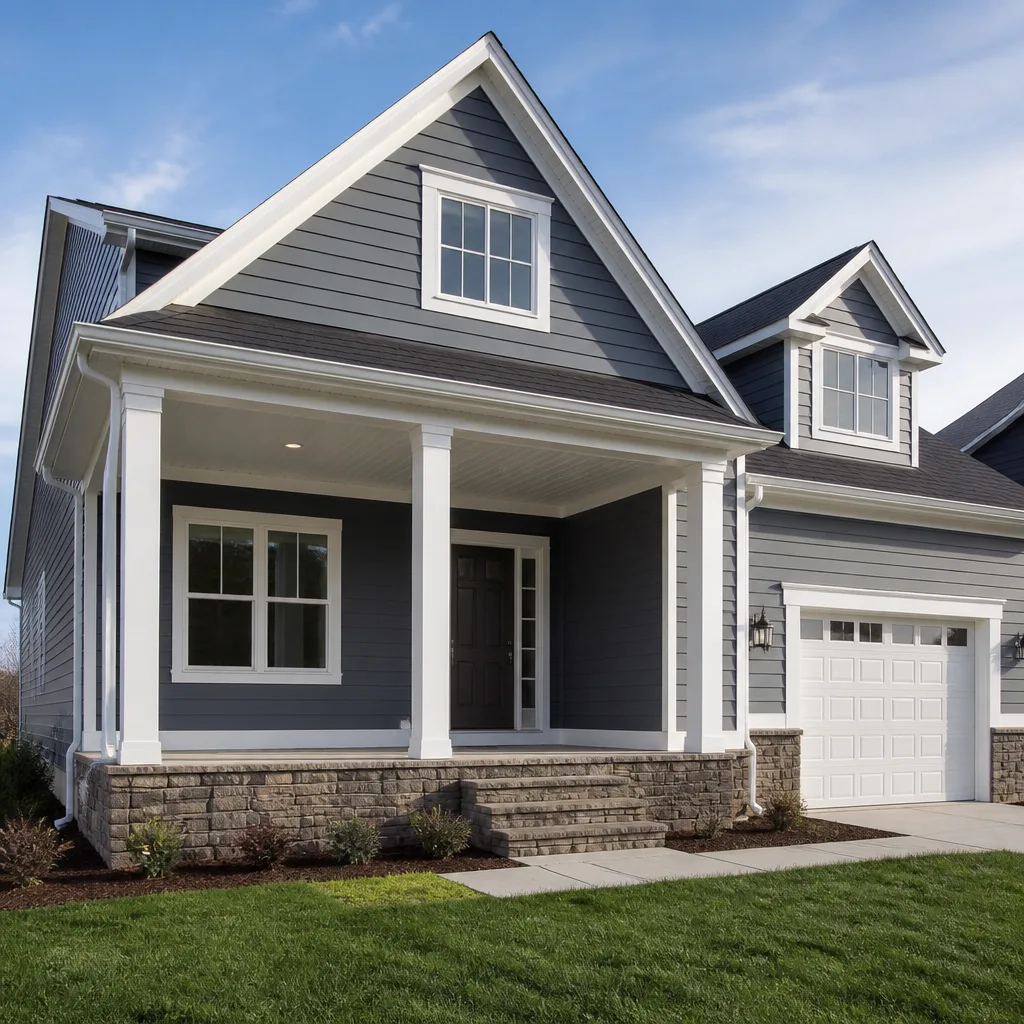
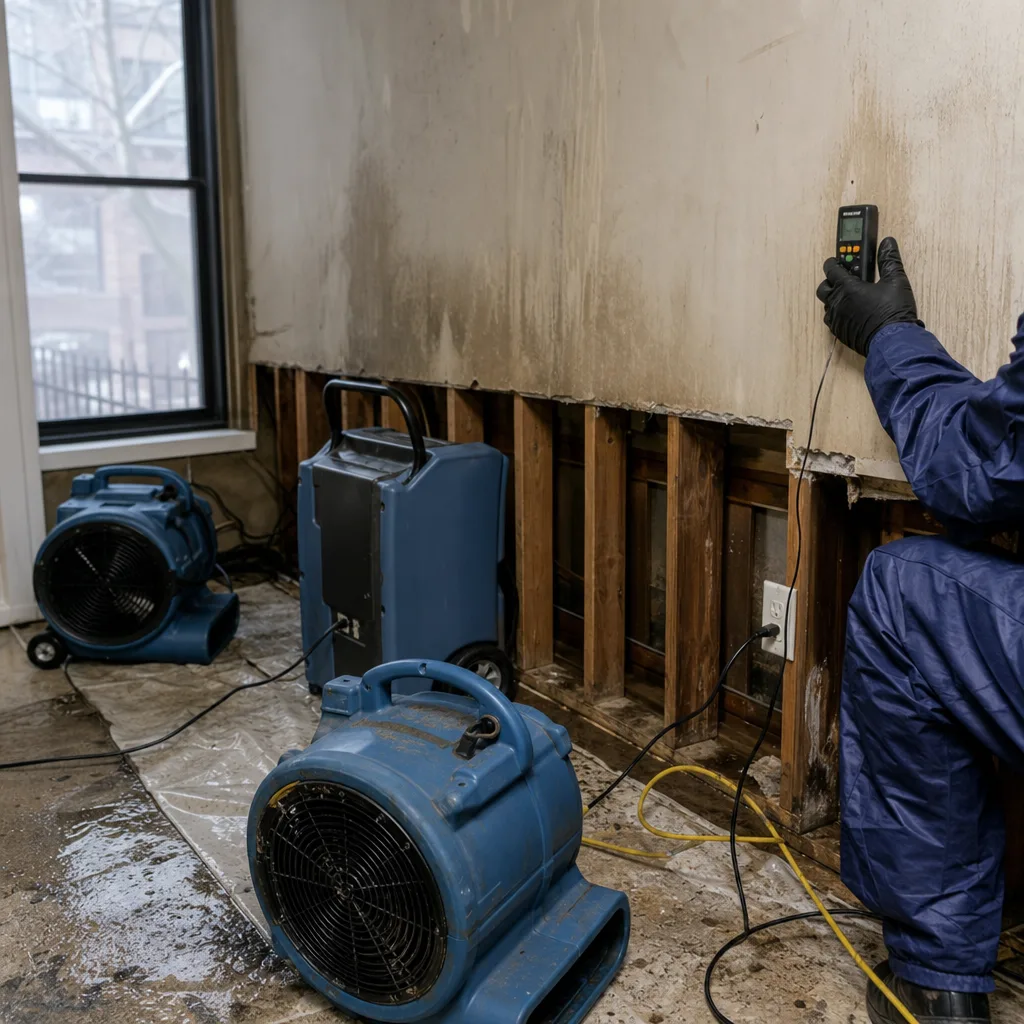 Before
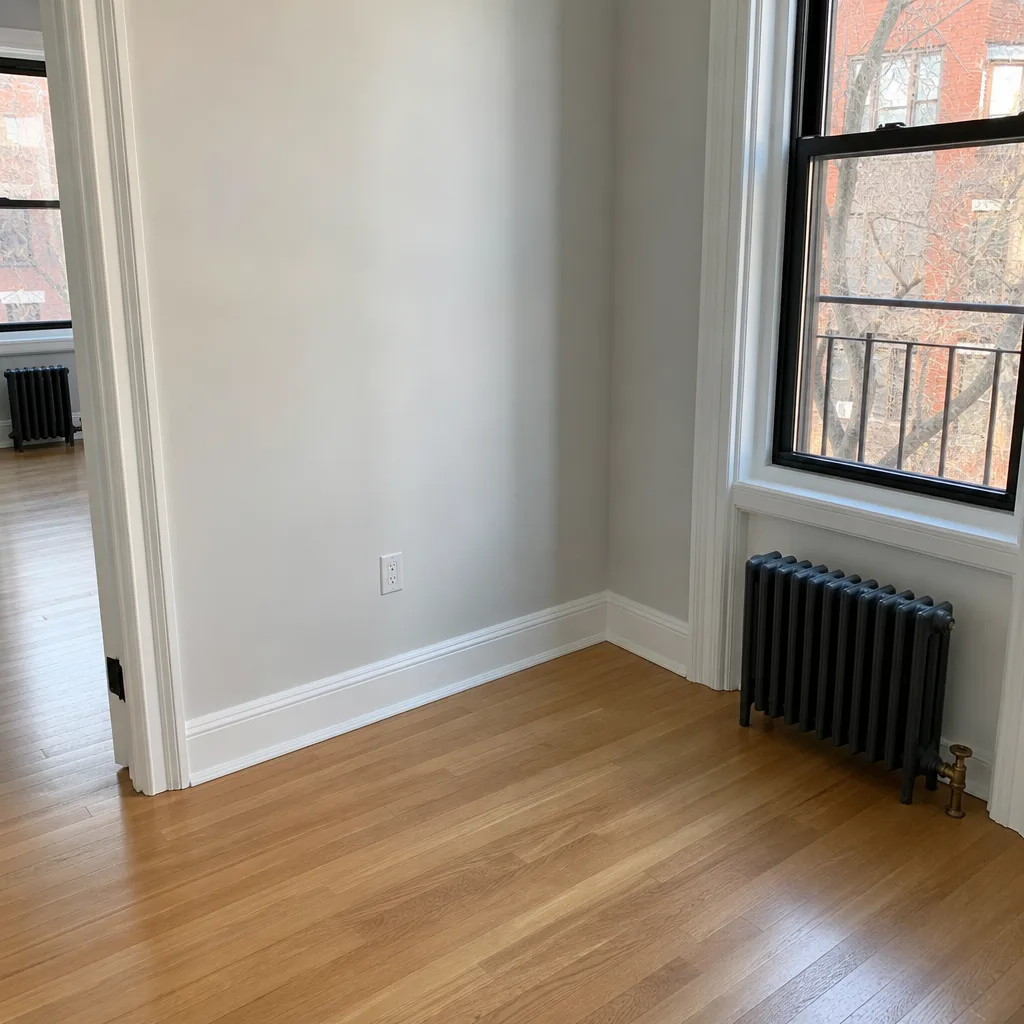 After
After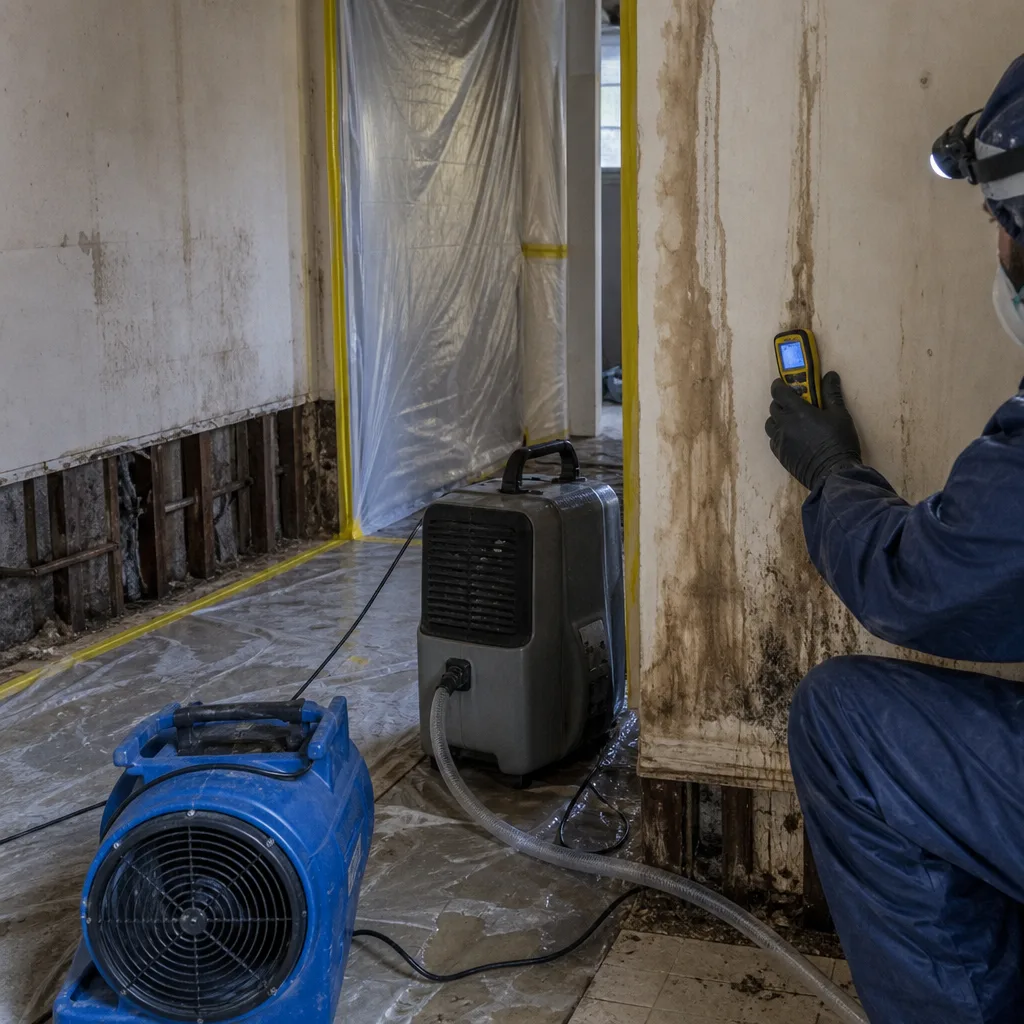 Before
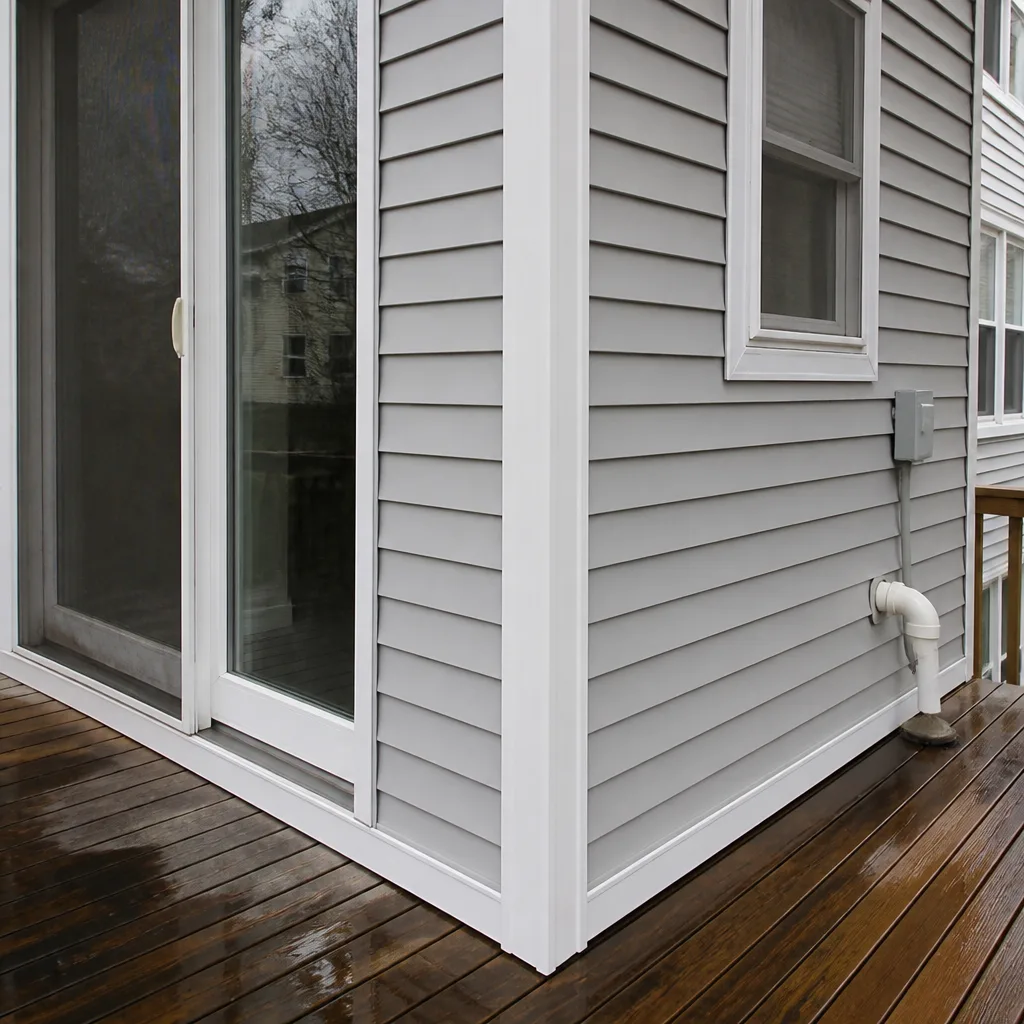 After
After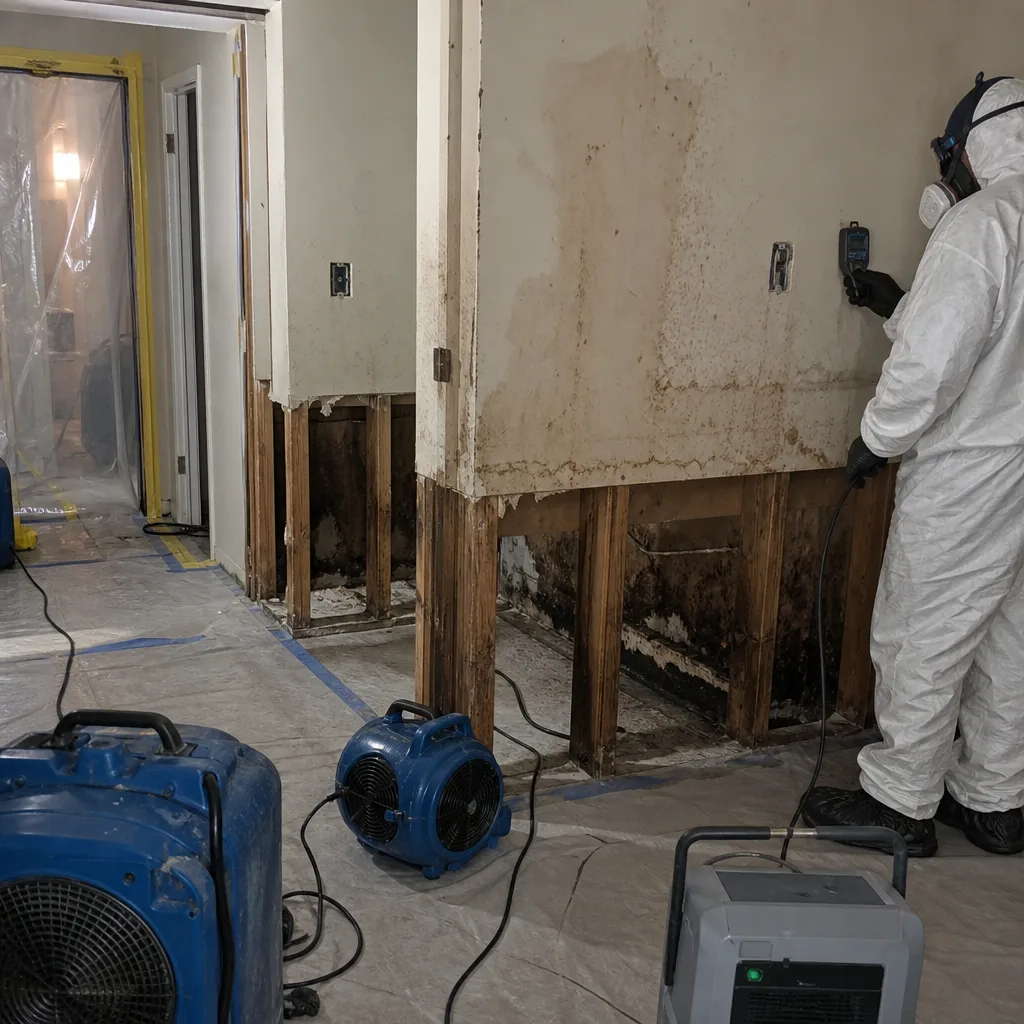 Before
 After
After24/7 Emergency Storm & Disaster Restoration in Chestnut Ridge
When a nor’easter tears through Rockland County or a summer thunderstorm sends runoff down the ridge into your foundation, you need a crew that answers the phone at 2 a.m. and gets to work the same visit. Floodline Restoration Co. of Manhattan dispatches certified crews throughout Chestnut Ridge around the clock, every day of the year. Call (917) 924-4221 and a live person picks up, not a recording. We’ll walk you through the first steps, tell you honestly what you’re facing, and have a background-checked, uniformed technician at your door with professional-grade extraction equipment. The first hour after storm water enters a Chestnut Ridge basement matters more than most homeowners realize, because the village’s clay soils and finished-basement living patterns mean water that sits too long turns into a mold remediation job, not just a drying job. We’ve handled enough April nor’easters on this ridge to know exactly what the clock is doing.
Key Takeaways
- Storm water in Chestnut Ridge moves downhill fast. The glacially formed ridge and dense clay soils push runoff into foundations quicker than in Spring Valley or Monsey.
- Extraction should start within hours, not days. Finished basements used as bedrooms and prayer spaces hide moisture behind shelving and wainscoting until mold is already active.
- We answer live, 24/7. (917) 924-4221. A real dispatcher, not an automated system, every time.
- One crew handles the whole job. From board-up and extraction through drying, remediation, and rebuild. No mid-job handoff.
- Direct insurance billing. We document everything from the first hour and talk to your adjuster so you don’t play messenger.
Understanding Storm & Disaster Restoration Severity in Chestnut Ridge Properties
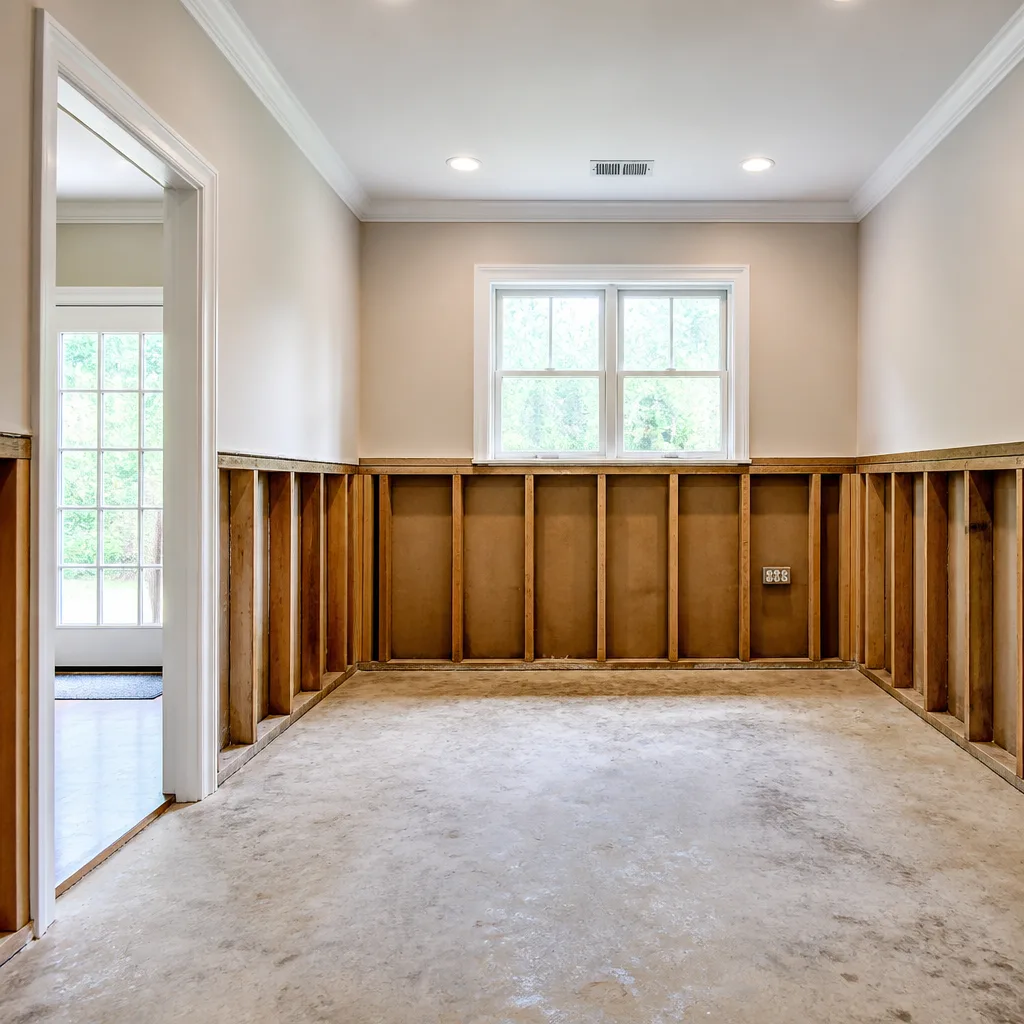
Storm damage in Chestnut Ridge hits differently than in flatter parts of Rockland County, and the severity usually comes down to one thing: where the water ends up. Category 1 water, clean rainwater or a supply line break on the first floor, is straightforward to extract and dry. Category 2, gray water that has picked up soil, silt, or sump discharge, needs antimicrobial treatment and more aggressive drying. Category 3, black water from sewage backup or outside flooding that carries contaminants, requires full containment, disposal of porous materials, and HEPA air scrubbing. On this ridge, category 2 water in a finished basement that serves as a permanent bedroom or playroom is a bigger job than category 2 water in an empty utility room would be. The wainscoting, built-in shelving, carpet, and drywall all absorb moisture at different rates, and moisture mapping with thermal imaging is what tells us where the water actually traveled, not just where it pooled. Many Chestnut Ridge homes are 1960s to 1980s colonials and split-levels with basement conversions and additions. Those additions often changed the original grading around the foundation, which means water intrusion pathways here are unpredictable and need a trained eye to trace.
Why Chestnut Ridge Property Owners Choose Floodline Restoration Co. of Manhattan
- 45-minute response commitment. Once you call (917) 924-4221, a crew is dispatched to Chestnut Ridge immediately. Our live dispatcher confirms the address, the nature of the loss, and the fastest route while you’re still on the phone.
- A real person answers, 24/7. No automated system, no callback queue. At two in the morning in the middle of a nor’easter, you talk to someone who knows restoration, not a sales script.
- IICRC-certified crews on every job. Our technicians hold WRT, FSRT, and AMRT certifications and are trained to RIA and IFA standards. Background-checked and uniformed, every time.
- Free visual inspection and honest scope. We tell you what needs doing and what doesn’t. A written scope of work before anything starts, so you’re never surprised by the bill.
- Direct insurance billing. We document the loss from the first hour, provide line-item estimates, and coordinate with your adjuster directly. You don’t chase paperwork.
- One team from extraction to reconstruction. The same certified crew that reads the moisture map on day one handles daily readings, hands the log to you and your carrier, and rebuilds what needs rebuilding. No inherited crew, no handoff.
Our Storm & Disaster Restoration Process
Inspection & Assessment
We arrive with thermal imaging cameras and hygrometers to map exactly where water traveled. In a Chestnut Ridge finished basement, that means checking behind baseboards, under built-ins, and inside wall cavities where moisture hides until it’s too late.
Extraction & Stabilization
Commercial extraction units pull standing water immediately. If wind damage compromised a window or roof section, we board up and tarp before extraction so no more water gets in while we work.
Drying & Dehumidification
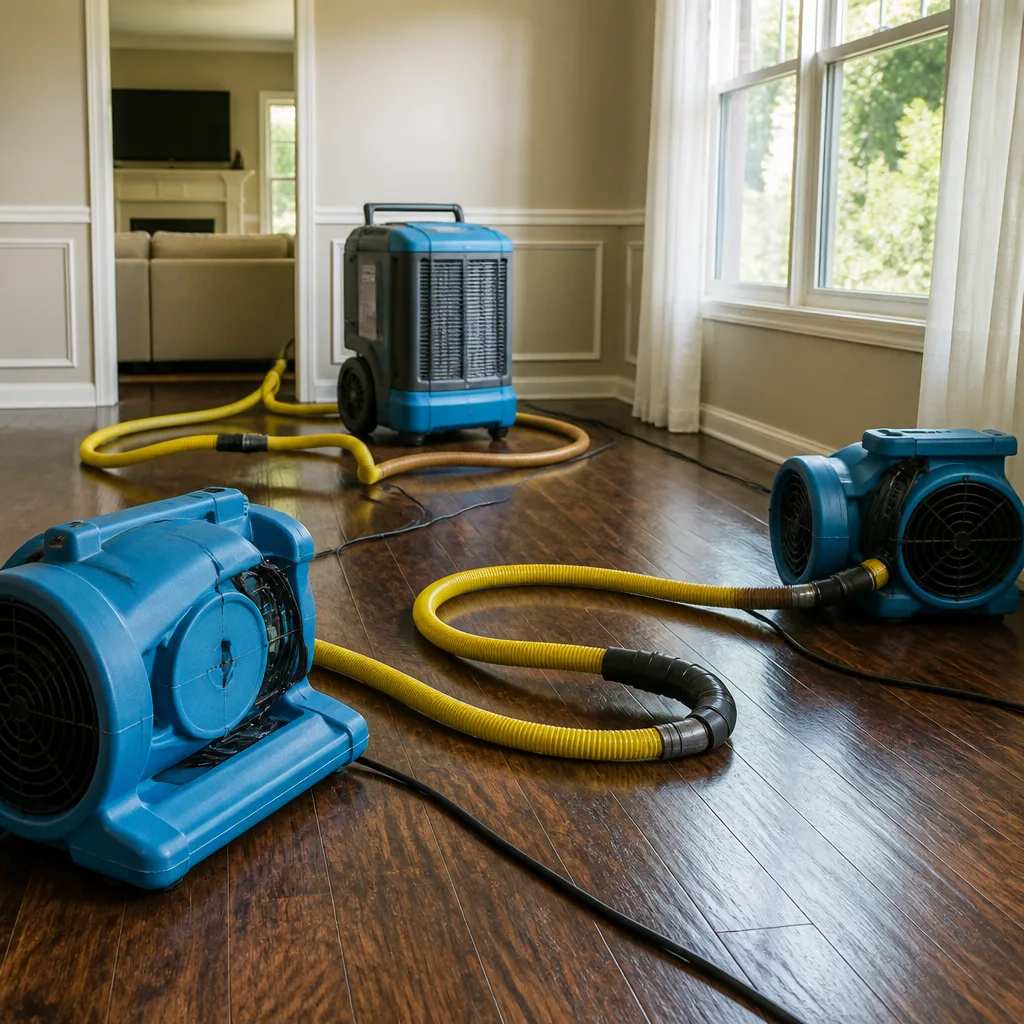
Dri-Eaz dehumidifiers and XPOWER air movers run continuously, with daily moisture readings logged until the dry standard is met. You get that log. Your adjuster gets that log. Nobody guesses at dry.
Cleaning & Sanitization
For category 2 and 3 water, we apply antimicrobial treatments and run HEPA air scrubbers to keep mold spores from establishing. On a ridge with clay-heavy soil, storm water carries silt and organics that make this step non-negotiable.
Storm-Specific Treatment
On Chestnut Ridge, this means addressing what caused the intrusion: clogged 1960s perimeter drains, grading around split-level additions, or hydrostatic pressure at cove joints. Drying the symptom doesn’t fix the drainage flaw.
Repairs & Restoration
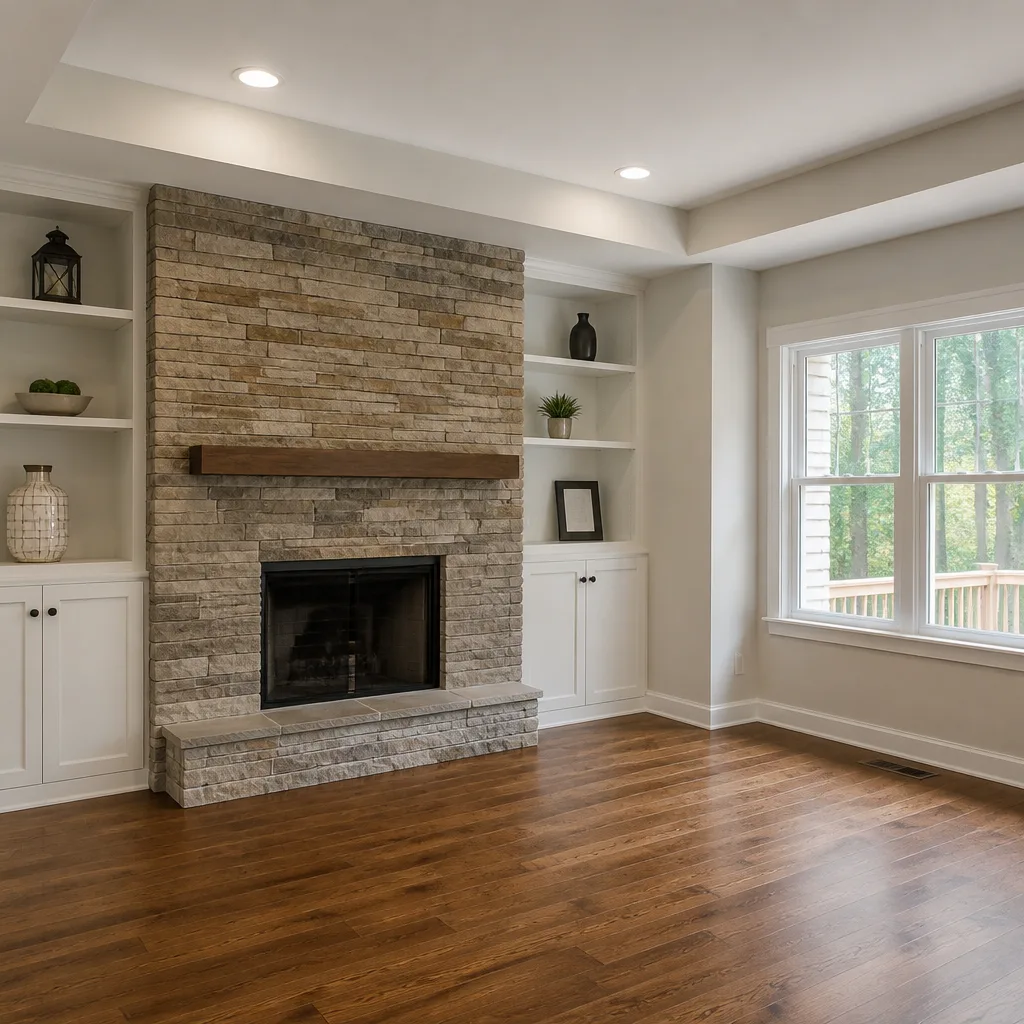
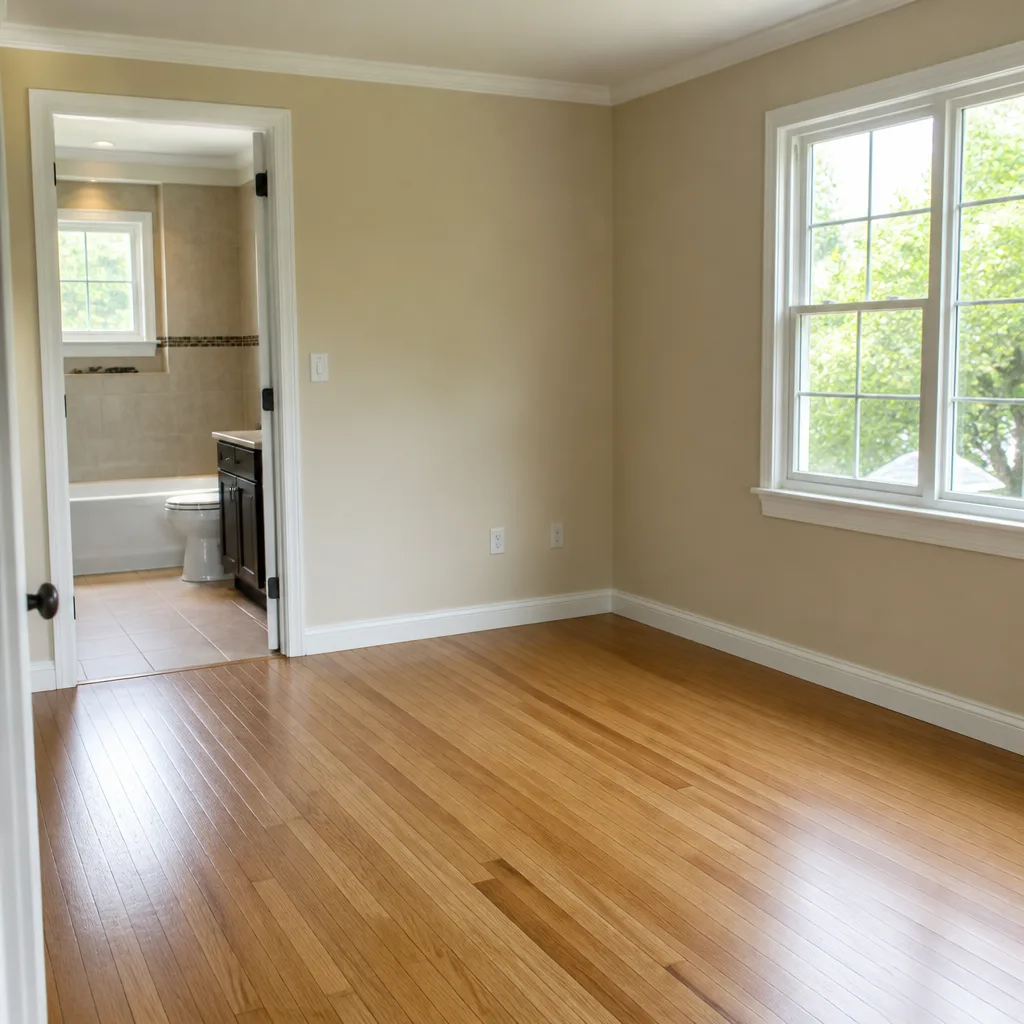
We rebuild what was removed, from drywall and flooring to basement bedrooms and playrooms, so your household gets its living space back. The 90-Day Done Right Promise covers the work in writing.
Need Emergency Storm & Disaster Restoration in Chestnut Ridge Now?
Crews minutes away, answering live 24 hours a day. The sooner we start, the less it costs.
Working With Your Insurance Company
We’ve handled enough storm claims in Rockland County to know what adjusters need, and we give it to them from the first hour. When our crew arrives in Chestnut Ridge, we start photographing everything: water levels, wall staining, baseboard removal, moisture readings before and after extraction. That photographic record, combined with our line-item scope of work and daily drying logs, gives your carrier exactly what they need to process the claim without weeks of back-and-forth. We talk to your adjuster directly, and we answer their technical questions in the language they expect. You get a square deal: no surprises on the bill, and someone else handles the paperwork battle. If your carrier asks for additional documentation or a re-inspection, we provide it. If they need a second moisture reading, we’re already logging daily readings anyway.
What We Provide Your Insurer
- Thorough documentation of the loss, from arrival onward
- Photos of all damage, room by room, before and after extraction
- Moisture readings and drying logs with daily entries
- A detailed, line-item scope of work with clear pricing
- Direct coordination with your carrier, including adjuster calls
Built for Chestnut Ridge’s Loss Calendar
Storm damage in Chestnut Ridge follows a predictable rhythm if you’ve lived here long enough. January and February bring deep freezes that burst supply lines behind finished basement walls, and because those walls are often framed and insulated for living space, the water sits undetected until pressure or staining gives it away. March and April thaw the clay soils, and the spring rains that follow send saturated groundwater through hairline foundation cracks and clogged perimeter drains from the 1960s. Summer thunderstorms dump inches of rain in an hour, and the ridge’s downslope drainage means basements flood before homeowners even realize the storm was that heavy. Late summer and fall bring the remnants of tropical systems, and Hurricane Ida in 2021 showed everyone in Rockland County what stalled tropical moisture can do to a foundation. Nor’easters hit in late fall and winter, driving wind-blown rain against north-facing walls and pulling water into additions whose original grading has been altered over decades. On top of the water, winter ice dams on north-facing roof slopes tear off gutters and back water under shingles. Each season has its own failure mode, and we’ve seen them all on this ridge.
Storm & Disaster Restoration Across Chestnut Ridge’s Neighborhoods
Chestnut Ridge spreads across a ridge top and slopes down on all sides, and the neighborhood you live in changes how storm damage shows up. Homes along Chestnut Ridge Road sit at higher elevation where wind exposure is stronger, so siding, roofing, and window blowouts are more common there than in the valleys. The split-levels and colonials off Red Schoolhouse Road were largely built in the 1970s, and many have additions that changed original drainage, meaning stormwater now flows toward the house instead of away from it. Along Hungry Hollow Road, the topography drops quickly, and homes at the lower elevations catch runoff from above during heavy rain. The finished basement pattern holds across the whole village, particularly in households that use basement space as permanent sleeping rooms, play areas, or prayer spaces, which means water intrusion almost always triggers full remediation in occupied living areas rather than a quick sump-pump check. Near the northern edge of the village, where the land flattens slightly toward Spring Valley, drainage problems shift from hydrostatic pressure to surface water ponding against foundation walls. Our crews know these routes and the loss patterns that come with them.
Storm Damage in Chestnut Ridge Won’t Wait
Call (917) 924-4221 now. A live dispatcher answers, and a crew starts moving.
Specialized Storm & Disaster Restoration Services We Offer in Chestnut Ridge
Storm Damage Cleanup
After wind, rain, or falling debris hits a Chestnut Ridge home, the cleanup scope goes beyond mopping up. We remove saturated drywall, carpet, and insulation, then dry the structure to pre-loss condition with daily moisture logs. On a ridge where clay soils push water through foundations quickly, cleanup that skips the drying step just guarantees a mold problem in the studs later.
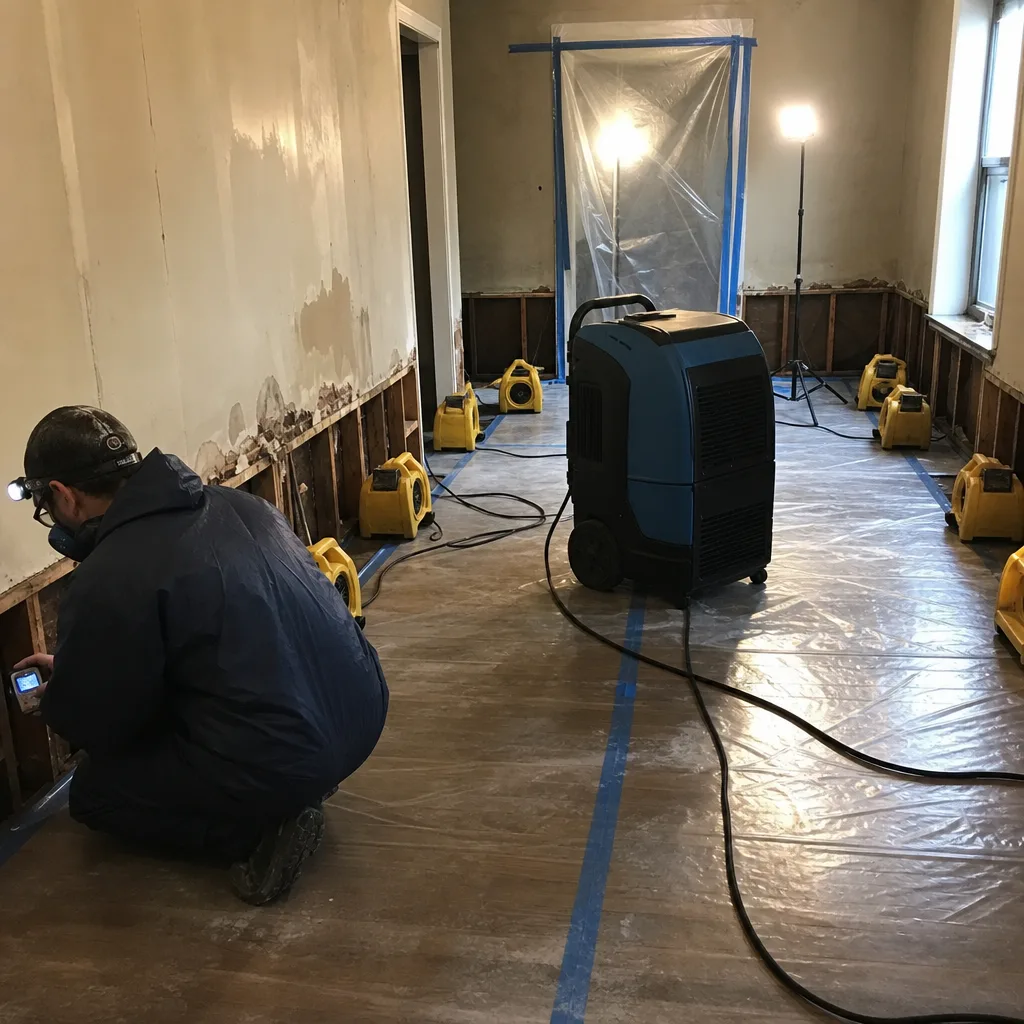
Flood Damage Restoration
When the ridge’s downslope runoff overwhelms 1960s perimeter drains and water backs up behind foundation walls, we start extraction immediately. Our team reads the moisture map the same day, sets containment if category 3 water is present, and runs Dri-Eaz and Phoenix equipment until the dry standard is met, not until the visible water is gone. In finished basements used as bedrooms, that aggressive dry-down is what saves the space from full tear-out.
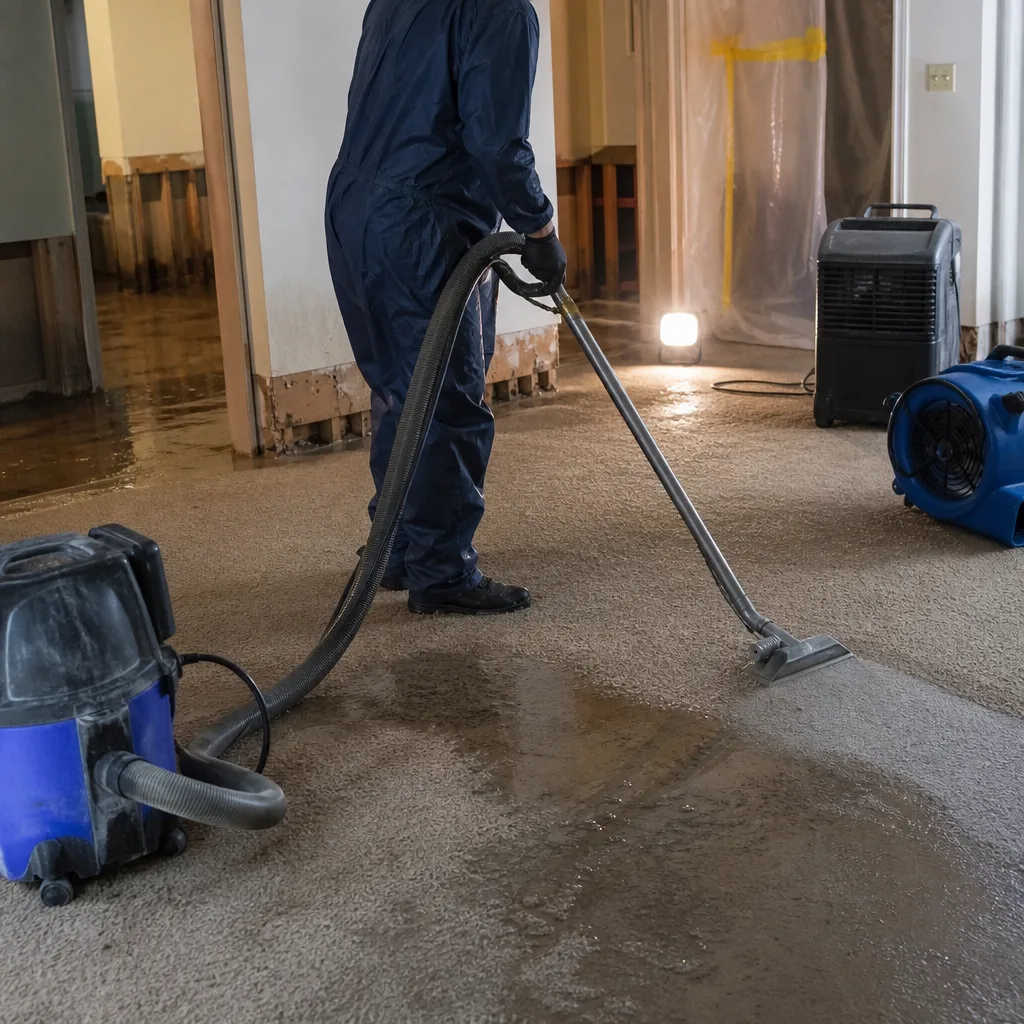
Emergency Board-Up
A nor’easter can take out a picture window at 3 a.m., and leaving it open until morning invites more water, animals, and security risk. We board up broken windows and damaged doors the same visit, using weather-rated materials that hold against continued wind. Then we tarp roof damage before more rain gets through. A boarded opening is a temporary fix done right, not a patch job that fails in the next gust.
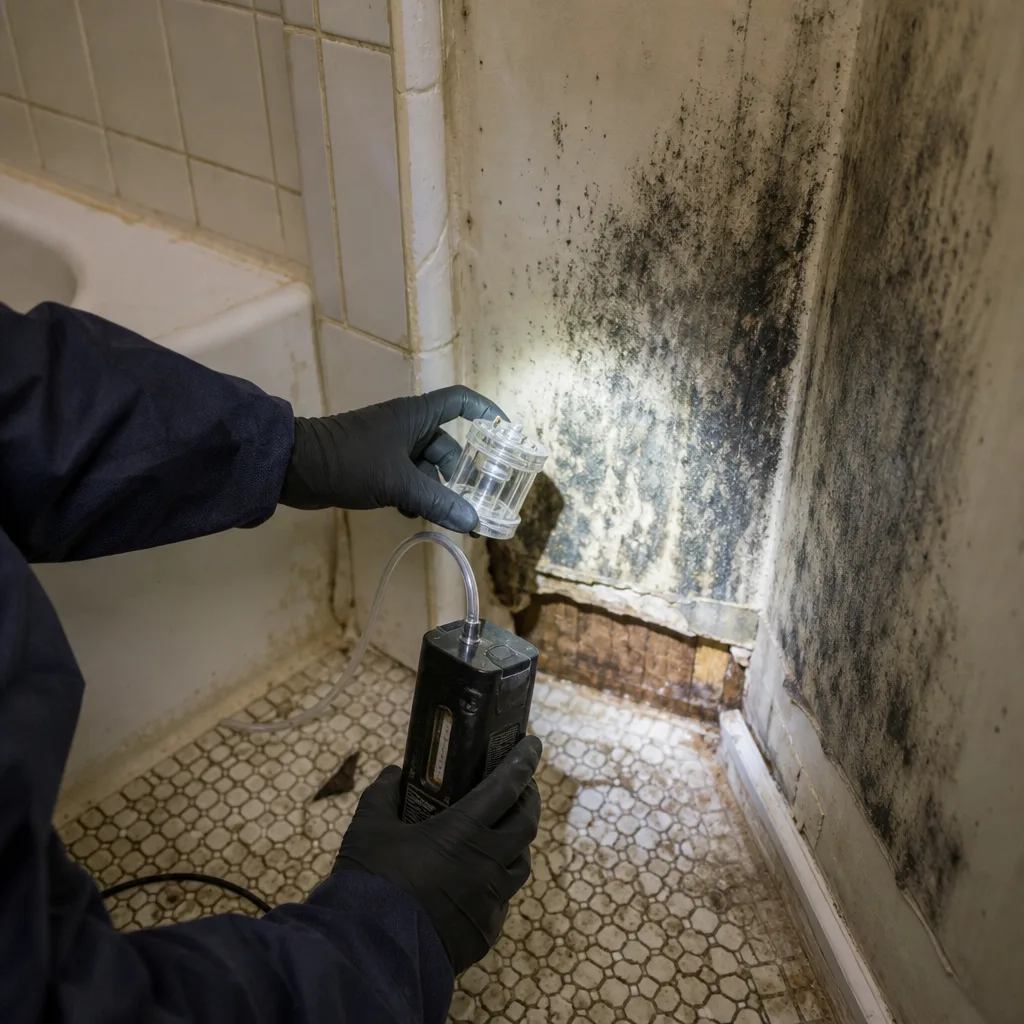
Roof Tarping
Wind-driven rain on Chestnut Ridge’s north-facing roof slopes finds every gap in a damaged roof. We tarp exposed roof sections securely, with fastening that holds up to ridge-top wind loads, not just until the next calm day. The tarp is a stopgap, but it stops the water, and that’s what keeps a roof leak from becoming a finished-basement flood.
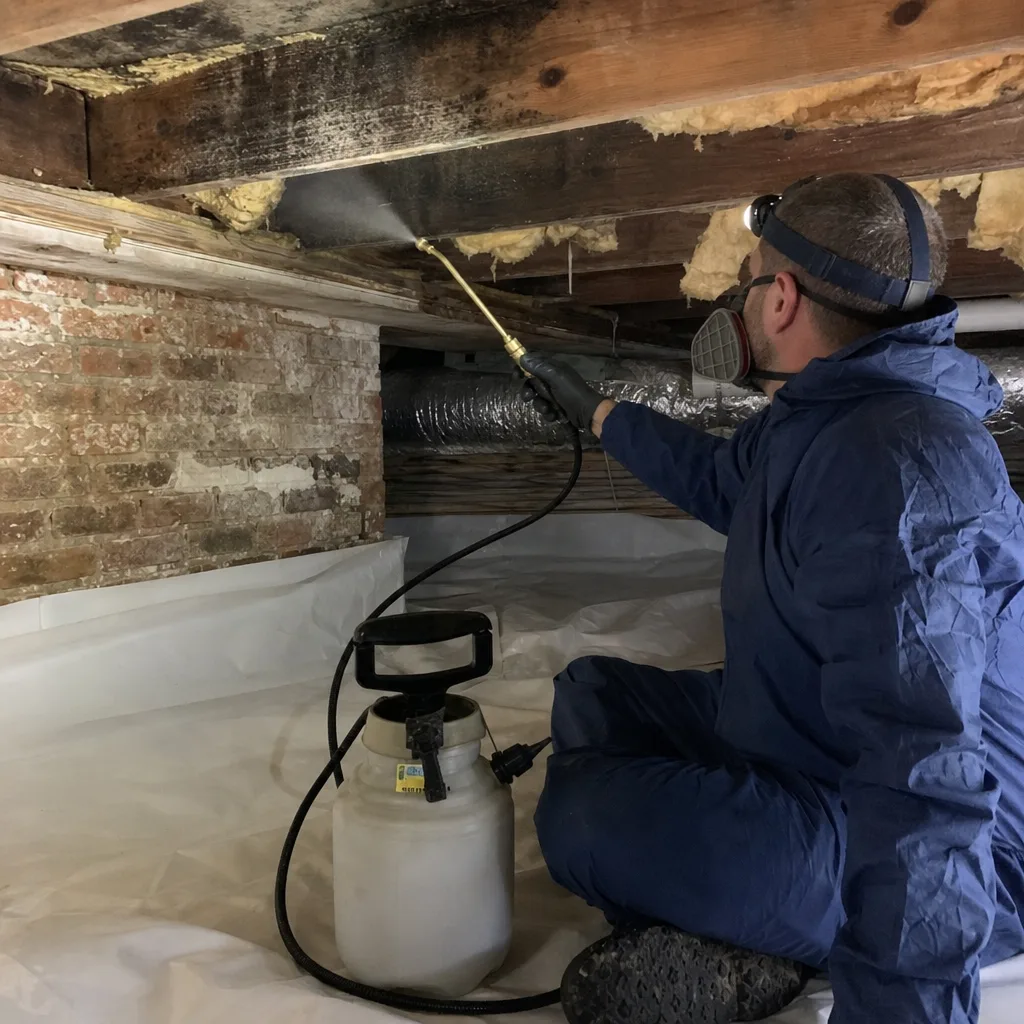
Debris Removal
Falling branches, torn siding, and blown-in leaves and silt all end up somewhere. We remove storm debris from your property and from inside the house if wind opened a wall or window. Then we assess what the debris damaged on its way down, because a branch that tore off a gutter often also compromised the roof edge and the fascia behind it.
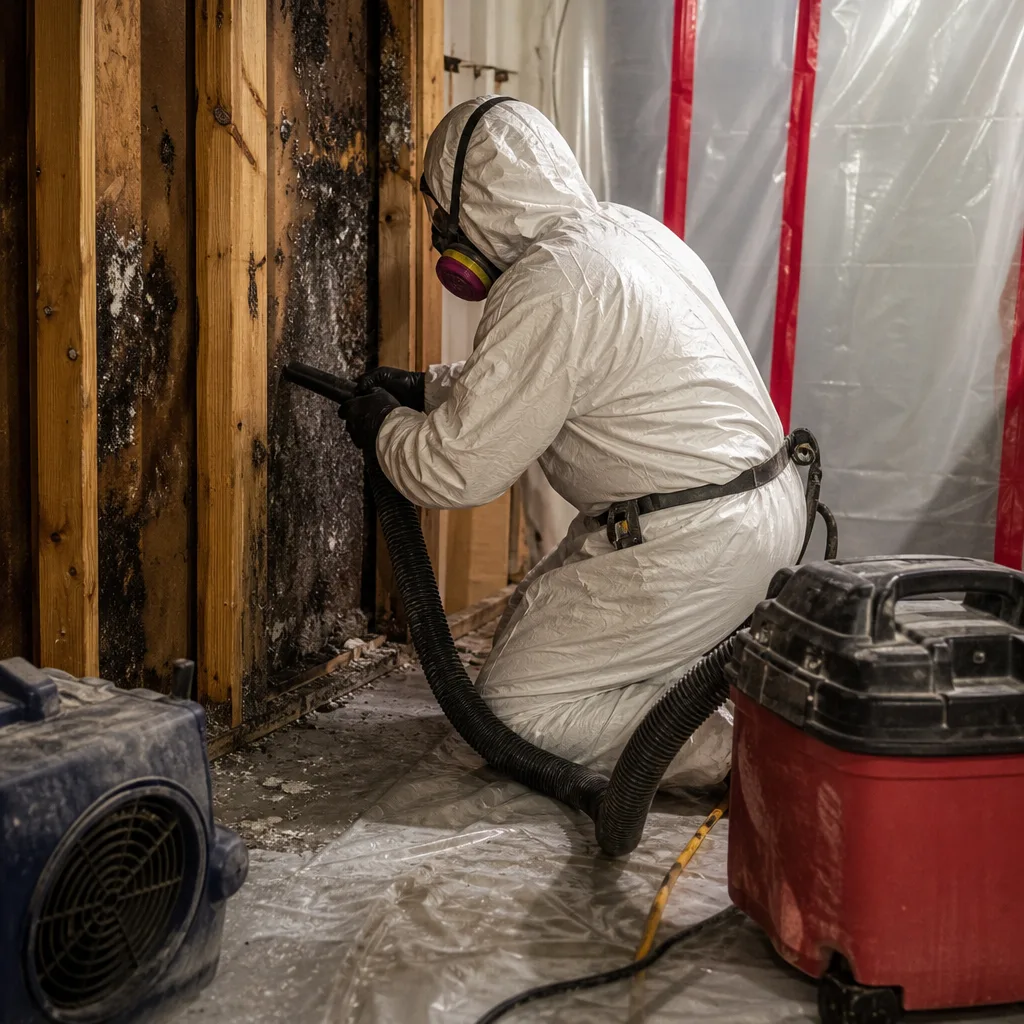
Wind Damage Repair
Chestnut Ridge’s elevation means wind load is a real structural factor, not an afterthought. We repair torn flashing, replace wind-damaged siding and fascia, and rebuild roof edges so they meet Rockland County wind rating expectations. If a window or door frame was pulled loose, we re-seat and seal it properly before the next storm season, not just caulk the gap and call it done.
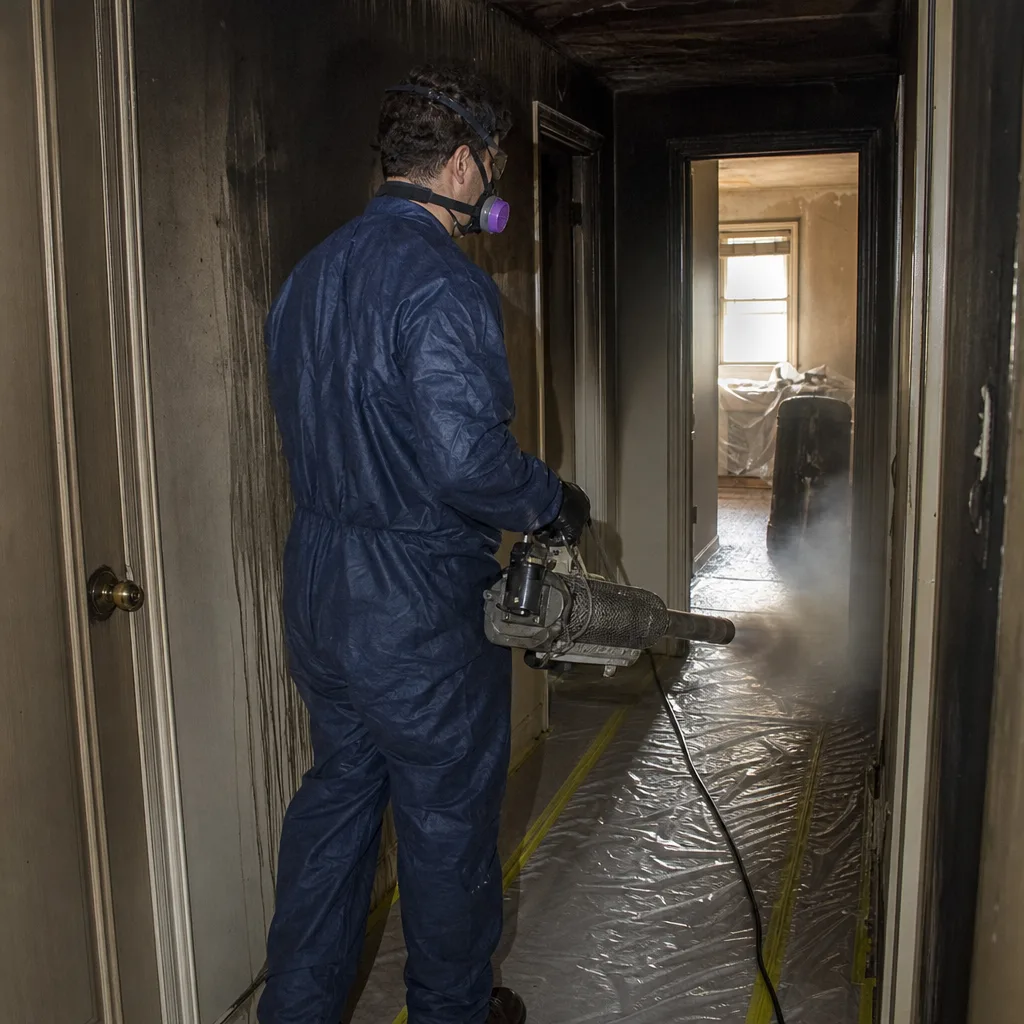
What happens when you call
- 1
A real person answersNo phone trees - you reach a local pro.
- 2
You get an upfront price rangeHonest numbers before anyone is dispatched.
- 3
A background-checked tech heads outLicensed & insured, dispatched right away.
- 4
You approve before work beginsNothing starts until you say go.
Storm & Disaster Restoration Costs in Chestnut Ridge, NY
Storm damage restoration in Chestnut Ridge runs a wide range because the scope depends on what actually happened, but honest numbers help you plan. Emergency board-up for a broken window or door typically runs $250 to $600 on this ridge, depending on opening size and whether we’re securing plywood or composite panels. Roof tarping after wind damage generally runs $400 to $900 for a standard colonial or split-level roof section. Water extraction from a flooded finished basement runs $1,800 to $4,500, and that number climbs when category 2 or 3 water requires containment, antimicrobial treatment, and full drywall removal. Storm debris cleanup usually runs $300 to $1,200 depending on volume and whether structural damage is behind it. The full package, extraction through drying and rebuild of a finished basement, commonly runs $8,000 to $25,000+ in Chestnut Ridge because these basements are living space, not storage. What moves the price: how long the water sat, what category it is, whether mold is already active, and whether the original drainage system needs repair. Insurance covers most storm-related losses when documented properly. We provide that documentation. The free visual inspection gives you a firm scope in writing before anything starts, so you know the number going in.
We Also Serve Cities Near Chestnut Ridge
Our crews regularly respond to storm damage in Fairview, Harrison, East Bronx, and Hunts Point. If you’re just outside Chestnut Ridge and dealing with flood water, wind damage, or a downed tree through the roof, call (917) 924-4221. The same live dispatcher answers, and the same certified crews roll out.
Chestnut Ridge Storm & Disaster Restoration Questions, Answered
After a nor’easter on the ridge, how fast do we need to start water extraction before mold sets in?
Mold can begin establishing within 48 to 72 hours of water intrusion in a heated Chestnut Ridge basement, and on this ridge, category 2 water carrying clay and silt accelerates that timeline. In a finished basement with wainscoting, built-ins, and carpet over subfloor, hidden moisture can start supporting mold growth even faster because it stays dark and damp behind surfaces. That’s why we answer live at 2 a.m. and dispatch crews the same visit. The first hours of extraction are the cheapest and most effective mold prevention there is. Call (917) 924-4221 as soon as you see water, not the next morning.
Do I need emergency board-up after a windstorm knocks out a window, or can it wait until morning?
Board it up the same night. An open window on Chestnut Ridge during a nor’easter lets in more wind-driven rain, and the ridge’s elevation means wind keeps pushing water through that opening all night. By morning, the water has moved down into the wall cavity, soaked the subfloor, and possibly reached the basement. A same-visit board-up costs a few hundred dollars. Waiting until morning to board up can turn a broken window into a full water extraction and drying job. We board up and tarp the same visit, every time.
How do you map moisture in a Chestnut Ridge finished basement that’s used as a bedroom?
We use thermal imaging cameras and penetrating moisture meters to read moisture levels inside wall cavities, behind built-in shelving, and under carpet and pad. In a finished basement bedroom, water wicks up drywall and travels along the baseplate into studs, often far from the visible puddle. The thermal camera shows the temperature difference that moisture creates, and the moisture meter gives us the exact percentage in each material. We mark the affected area, set the drying equipment accordingly, and log daily readings until every material reads below the dry standard. You and your adjuster get that log.
Will my 1970s split-level’s addition need re-grading after flood damage, or is drying enough?
That depends on what our inspection shows, but in Chestnut Ridge, if the addition’s original grading now slopes toward the house, drying alone won’t stop the problem from recurring. Many 1970s and 1980s additions in this village changed the way water flows around the foundation, and a nor’easter or heavy thunderstorm will find that path again. Our crew will tell you honestly: if re-grading or a drainage correction is needed, we say so in writing, with a scope and a price. If drying is genuinely enough, we’ll tell you that too. The moisture map and the grading assessment together give you the answer.
What does category 2 water in a basement playroom mean for cleanup scope compared to an unfinished utility room?
Category 2 water in a finished playroom means removing and replacing porous materials that absorbed it: carpet, pad, drywall, insulation, and any built-in shelving that wicked moisture. It means antimicrobial treatment and HEPA air scrubbing before rebuild. That’s a substantially larger job than extracting water from a concrete-floored utility room, where non-porous surfaces are easier to dry and clean. In Chestnut Ridge, where finished basements are commonly used as playrooms, bedrooms, and prayer spaces, category 2 water almost always triggers this fuller scope. The price difference is real, and we’ll show you exactly what’s required in the written scope before work starts.
What should I do in the first 30 minutes after storm water enters my Chestnut Ridge home?
Call (917) 924-4221 first. Then, if it’s safe to do so, shut off the main electrical breaker to the affected area, especially if water is near outlets or appliances. Move small valuables and electronics to higher ground. Don’t use a shop vac on standing water, and don’t turn on ceiling fans or HVAC systems, which can blow contaminated air through the house. Take photos of the standing water and the damage for your insurer. Stay out of the water if you suspect it’s mixed with sewage. Then wait for our crew, which is already on the way.
Are your technicians certified for storm and flood restoration work?
Yes. Our technicians are background-checked, uniformed, and certified to IICRC standards, holding WRT (Water Damage Restoration Technician), FSRT (Fire and Smoke Restoration Technician), and AMRT (Applied Microbial Remediation Technician) certifications where relevant. They’re also trained to RIA and IFA standards, and they use professional-grade Dri-Eaz, Phoenix, XPOWER, and B-Air equipment on every Chestnut Ridge job. We don’t send uncertified labor to your house, and we don’t subcontract the work to someone we wouldn’t put in our own homes.
How does the 90-Day Done Right Promise work for storm restoration in Chestnut Ridge?
If the work we do isn’t done right, we make it right, in writing, for 90 days after completion. That covers the extraction, drying, remediation, and rebuild work our crews performed. If moisture reappears, if a tarped section fails in a subsequent storm, or if a rebuild detail isn’t holding up, call us and we return. No paperwork battles, no arguing. It’s the Keystone Standard, and every job in Chestnut Ridge gets it in writing before we leave.
A Chestnut Ridge Field Note
After an April nor’easter, our crew responded to a split-level off Chestnut Ridge Road where wind-driven rain had forced water through a 1970s addition’s foundation wall. Our techs ran moisture mapping across the finished basement, which served as a permanent bedroom, and found category 2 water wicking up the drywall. We set containment, pulled baseboards, and ran Dri-Eaz dehumidifiers and XPOWER air movers to reach pre-loss condition before mold set in at the 48-hour mark. The homeowner’s adjuster received the full photo log and daily moisture readings, and the rebuild started once every reading hit the dry standard. That’s the job on this ridge: water moves downhill fast, and the response has to move faster.
Serving Chestnut Ridge, NY - Our Local Coverage Area
We’re based in the Chestnut Ridge area and know this community well. Use the map below to see our service coverage - if you’re nearby, we can almost certainly help.
The Ridge Changes the Scope
Here’s the thing most national restoration franchises won’t tell you about Chestnut Ridge. This village sits on a glacially formed ridge, and the ground under these homes is dense clay. When a nor’easter or a stalled tropical remnant drops inches of rain, that water doesn’t soak in gradually the way it does in sandy soil. It runs downslope, fast, and it pushes against foundation walls from the outside with real hydrostatic pressure. The original 1960s perimeter drains beneath many of these homes were never designed for that volume, and fifty years of ridge-top silt has clogged many of them entirely. Water backs up behind the foundation, enters through cove joints and hairline cracks, and saturates finished basement living space before any sump pump even engages. In a flatter neighboring village like Spring Valley or Monsey, the same storm sends water toward sewers and surface drainage. Here, it sends water into your foundation, and because so many Chestnut Ridge basements are permanent bedrooms, play areas, and prayer spaces, what starts as a water job becomes a mold remediation job in occupied living space. That’s the real scope difference, and it’s why our drying logs on this ridge are more aggressive, our moisture mapping is more thorough, and our conversation with your adjuster includes drainage corrections that a flatter town would never need. When you call (917) 924-4221, you’re not getting a generic storm crew. You’re getting people who know this ridge’s drainage, this village’s housing stock, and what a finished basement means to a Chestnut Ridge household.
Written by Curt Bowman, Owner at Floodline Restoration Co. of Manhattan, serving Chestnut Ridge and the surrounding Rockland County communities.