
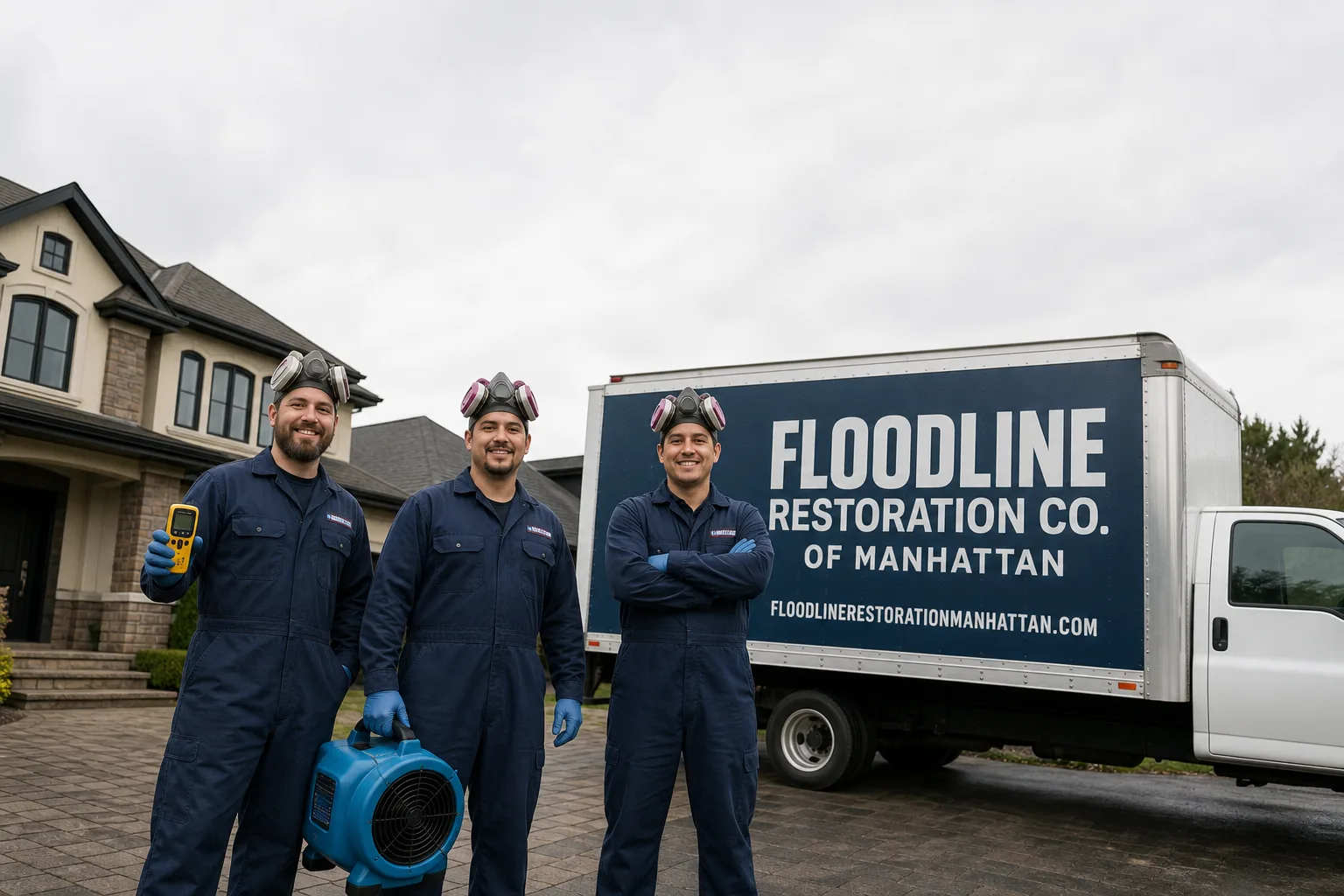
Free visual inspection and a written scope of work before any mitigation begins - photos, moisture readings, and drying logs go in your claim file
The scope we write is the scope we bill. Anything new gets shown to you, in writing, before we touch it.






 Before
 After
After Before
 After
After Before
 After
After24/7 Emergency Storm & Disaster Restoration in Congers
Storm and flood damage in Congers moves fast, and the first hour after water enters your basement sets the cost and the recovery timeline. Our crews answer live at (917) 924-4221 any hour of any day, and we dispatch into the Congers area immediately. A visual inspection is free, and the sooner we start extraction, the less the damage compounds into mold, framing rot, and lost keepsakes. If the storm pulled shingles, smashed a window, or left your basement under water from the lake’s high water table, call now. We’ll be there when we say.
Understanding Storm & Disaster Restoration Severity in Congers Properties
Water in a Congers basement is rarely a clean, isolated event. The hamlet’s clay soil and the two standing water bodies to either side, Congers Lake and Lake DeForest, keep the water table high year-round. That changes how we classify the water. Storm water that rises from a saturated floor drain or weeps through a block foundation is often Category 2 or Category 3 water, meaning it carries silt, organics, and sometimes sewage from overwhelmed municipal lines. Treating that water as clean is a costly mistake. On 1950s through 1970s cape cods, ranches, and split-levels, the poured-concrete and block foundations are porous enough that hydrostatic pressure keeps pushing moisture in even after the visible puddle is vacuumed. Moisture mapping tells us the real story. We map the wicking line up the drywall, log the readings daily, and run structural drying until the dry standard is met, not just until the floor looks good. In Congers, that standard takes longer than inland towns because the ambient humidity off the two lakes never really drops. Skipping this step is how a one-time storm cleanup becomes a mold remediation contract three weeks later.
Why Congers Property Owners Choose Floodline Restoration Co. of Manhattan
- 45-minute response commitment. When a storm has your basement filling, we dispatch a crew to Congers within 45 minutes, day or night.
- 24/7 live answer, never an automated system. A real person picks up at 2 a.m. and starts the dispatch. No phone tree, no recording, no waiting for a callback.
- IICRC-certified crews. Our technicians hold WRT, FSRT, and AMRT certifications, so the drying, fire, and mold work is done to the national standard.
- Free visual inspection. Before any work starts, we walk the damage with you and explain exactly what we found and what the job needs.
- Direct insurance billing. We bill your carrier directly and handle the adjuster conversation. You get the paperwork, not the runaround.
- One team from extraction to reconstruction. The same background-checked, uniformed crew that pulls the water is the crew that rebuilds the wall. No mid-job handoff.
Our Storm & Disaster Restoration Process
Inspection & Assessment
We start with thermal imaging and moisture meters to find water you can’t see, especially along the footer line where Congers block foundations weep. The assessment includes a written scope before any work begins.
Extraction & Stabilization
Truck-mounted extraction pulls the standing water, and we stabilize the structure immediately. That includes emergency board-up, roof tarping, and debris removal so no more weather gets in.
Drying & Dehumidification
We set Dri-Eaz LGR dehumidifiers and air movers according to a moisture map, not guesswork. Daily hygrometer readings are logged until the dry standard is hit, which takes longer near the lakes than in New City.
Cleaning & Sanitization
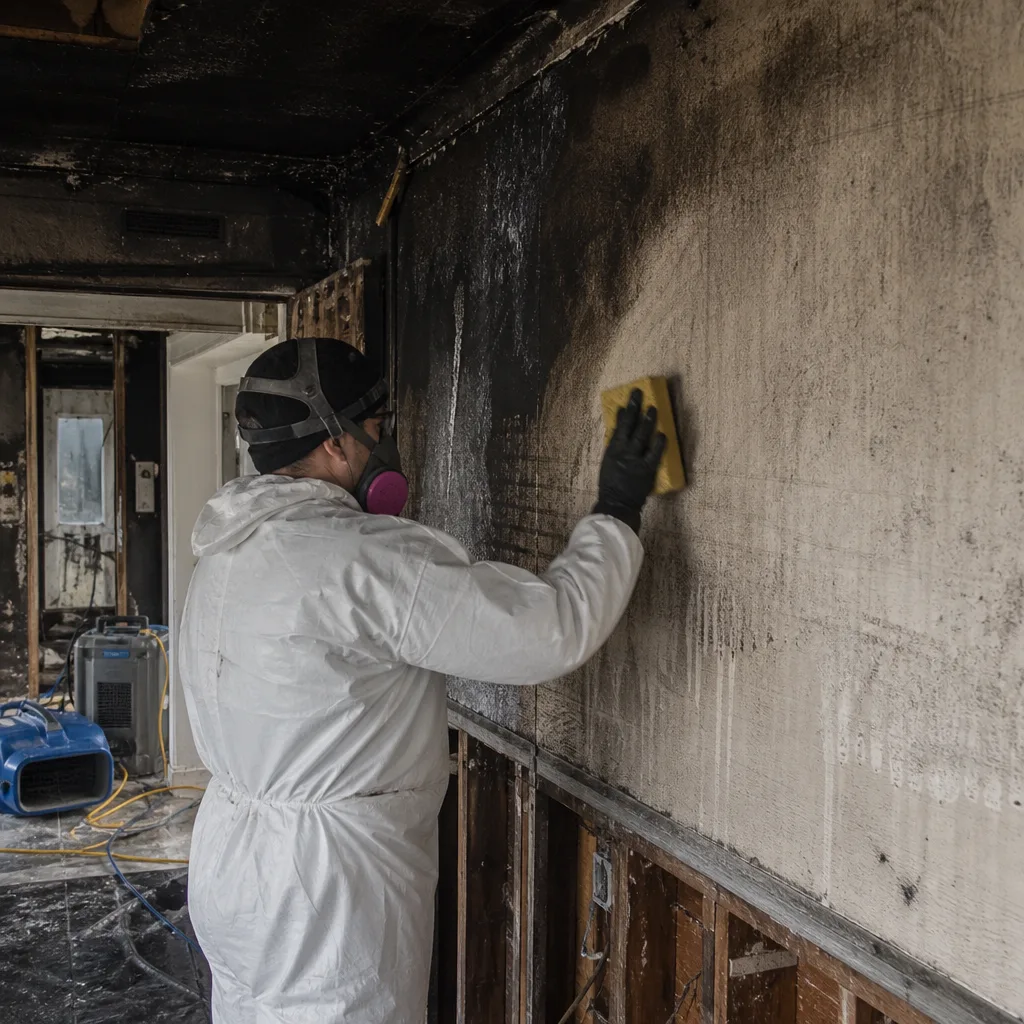
Contaminated surfaces get antimicrobial treatment. We remove affected drywall and insulation, and HEPA air scrubbers run during the entire containment phase to keep spores from migrating.
Mold & Water Table Treatment
In lake-adjacent Congers homes, we treat the chronic condition, not just the storm. That means addressing efflorescence, failed 1960s footer tile, and the high water table that keeps moisture moving through block walls.
Repairs & Restoration
The same crew that did the extraction does the rebuild. Drywall, trim, flooring, paint. You get a finished room and a moisture log in your hands, plus the 90-Day Done Right Promise in writing.
Need Emergency Storm & Disaster Restoration in Congers Now?
Crews minutes away, answering live 24 hours a day. The sooner we start, the less it costs.
Working With Your Insurance Company
Storm damage claims in Rockland County have a reputation for going slowly, and homeowners near Congers Lake get hit twice: once by the water, once by the paperwork. We handle the second hit. From the first hour, we photo-document every room, every wicking line, every piece of damaged material. We write industry-standard estimates your adjuster can read, and we talk to the carrier directly so you don’t play messenger. The moisture log we produce during structural drying is the evidence carriers need to approve the full drying and mold treatment scope. Direct insurance billing means you aren’t floating thousands of dollars while the claim gets argued.
What We Provide Your Insurer
- Thorough documentation of the loss
- Photos of all damage, room by room
- Moisture readings and drying logs
- A detailed, line-item scope of work
- Direct coordination with your carrier
Built for Congers’s Loss Calendar
Congers’s storm losses follow a rhythm, and we plan our dispatch around it. January and February hard freezes burst supply lines in unheated basements and crawlspaces, and the freeze-thaw cycling stresses the clay around foundations until a thaw opens a crack and water finds the path in. Spring brings the highest water table of the year, right when snowmelt and April rain push Lake DeForest and Congers Lake water levels to their seasonal peaks. That’s when the basement calls spike. Summer thunderstorms dump two inches in an hour, and the low-lying streets near the lakes, Lake Road and the surrounding blocks, back up through overwhelmed drains. September arrives with the nor’easter threat, and in 2021 Hurricane Ida’s remnants flooded basements across the hamlet that hadn’t taken water in decades. The lesson from that fall: drainage in low-lying Congers was never built for the volume, and a high water table means the water doesn’t leave on its own.
Storm & Disaster Restoration Across Congers’s Neighborhoods
Homes along Lake Road and the streets that slope down toward Congers Lake see the most aggressive basement intrusion. The elevation contour puts foundations below the lake’s water line during wet seasons, and the original 1960s drainage tile around those footers has long since silted over or failed outright. We know before we arrive what we’ll likely find: block walls weeping, efflorescence blooming, and a water table that never fully recedes between rain events. On the eastern side of the hamlet, off Route 303 near the Lake DeForest reservoir, newer construction sits on the same clay but with slightly better grading, so calls there more often involve roof damage from wind, downed trees across driveways, and garage flooding rather than full basement failures. The central residential blocks around Congers Road and Old Haverstraw Road, mostly 1950s capes and ranches, give us the in-between calls: sump pump failures during thunderstorms, window well flooding, and water pushing through the cove joint where floor meets wall. Each area responds differently, and the drying plan changes accordingly.
Specialized Storm & Disaster Restoration Services We Offer in Congers
Storm Damage Cleanup
After wind, hail, or a nor’easter, the first job is making the house safe and weatherproof. We clear fallen limbs, tarp damaged roof sections, and board up broken windows the same visit. The cleanup includes interior water extraction if rain followed the storm through the opening.
Flood Damage Restoration
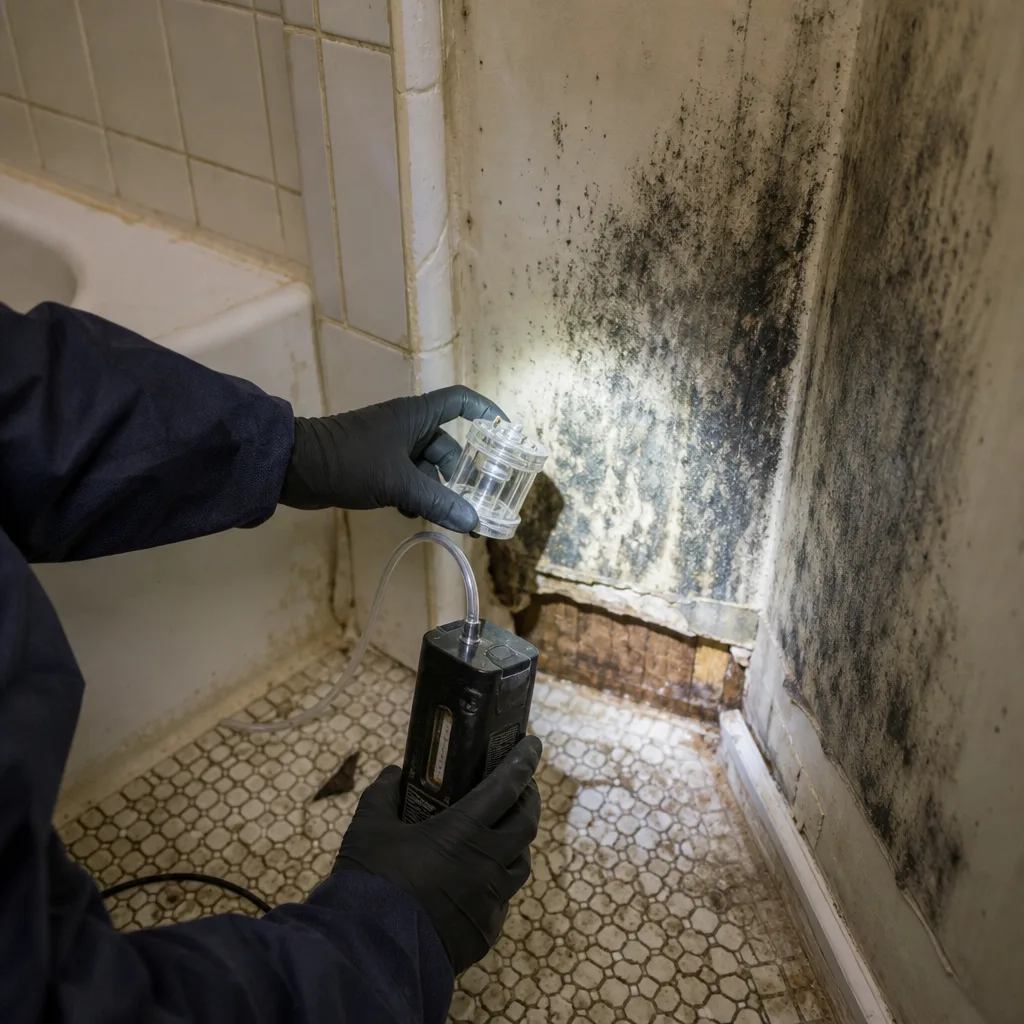
Flood work in Congers means dealing with Category 2 or Category 3 water, not a clean pipe leak. The water table near the lakes carries silt and organics, so we treat it as contaminated, remove the affected drywall and insulation, and run full containment with HEPA air scrubbing. The moisture log we keep during drying is your evidence for the carrier.
Emergency Board-Up
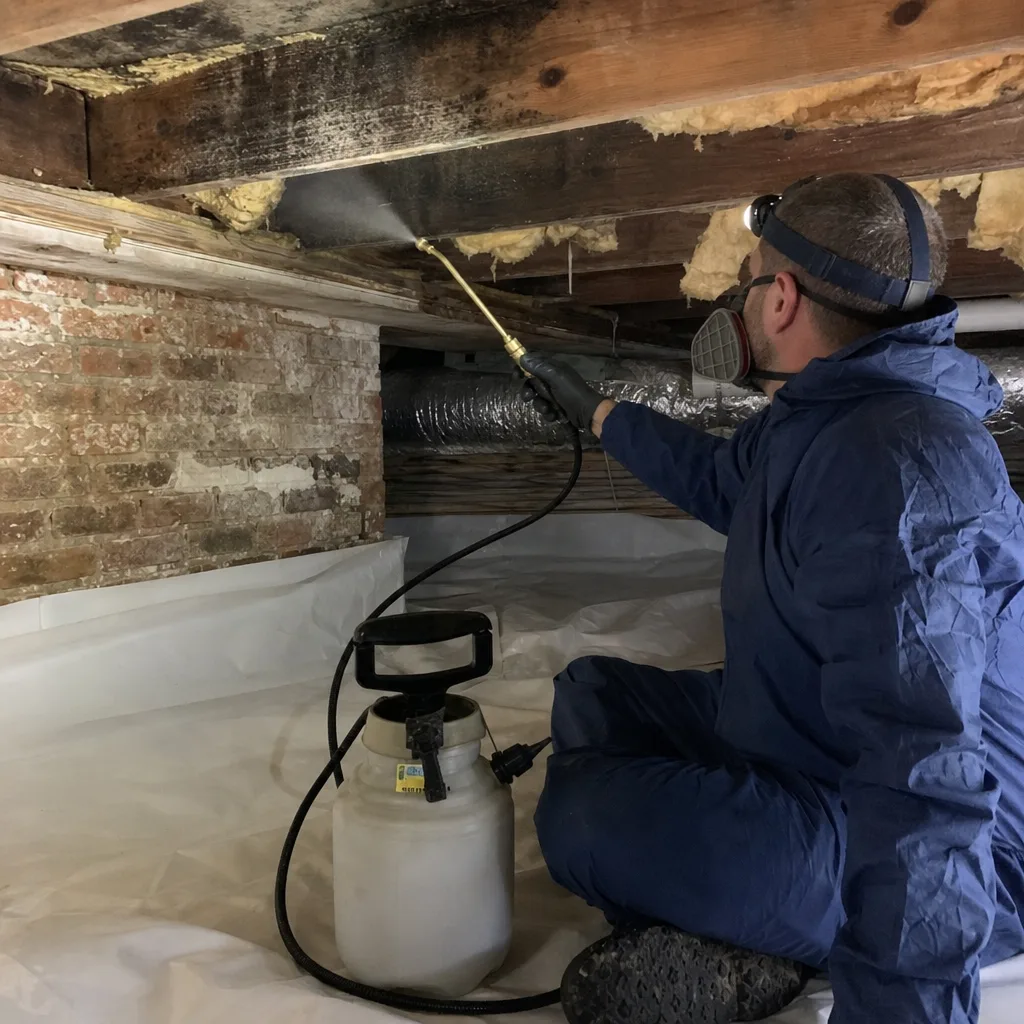
A shattered patio door or a tree limb through a window can’t wait for business hours. We board up with plywood and framing that holds until permanent repairs, keeping weather and animals out and your insurance claim intact. Board-up is part of our 24/7 storm response.
Roof Tarping
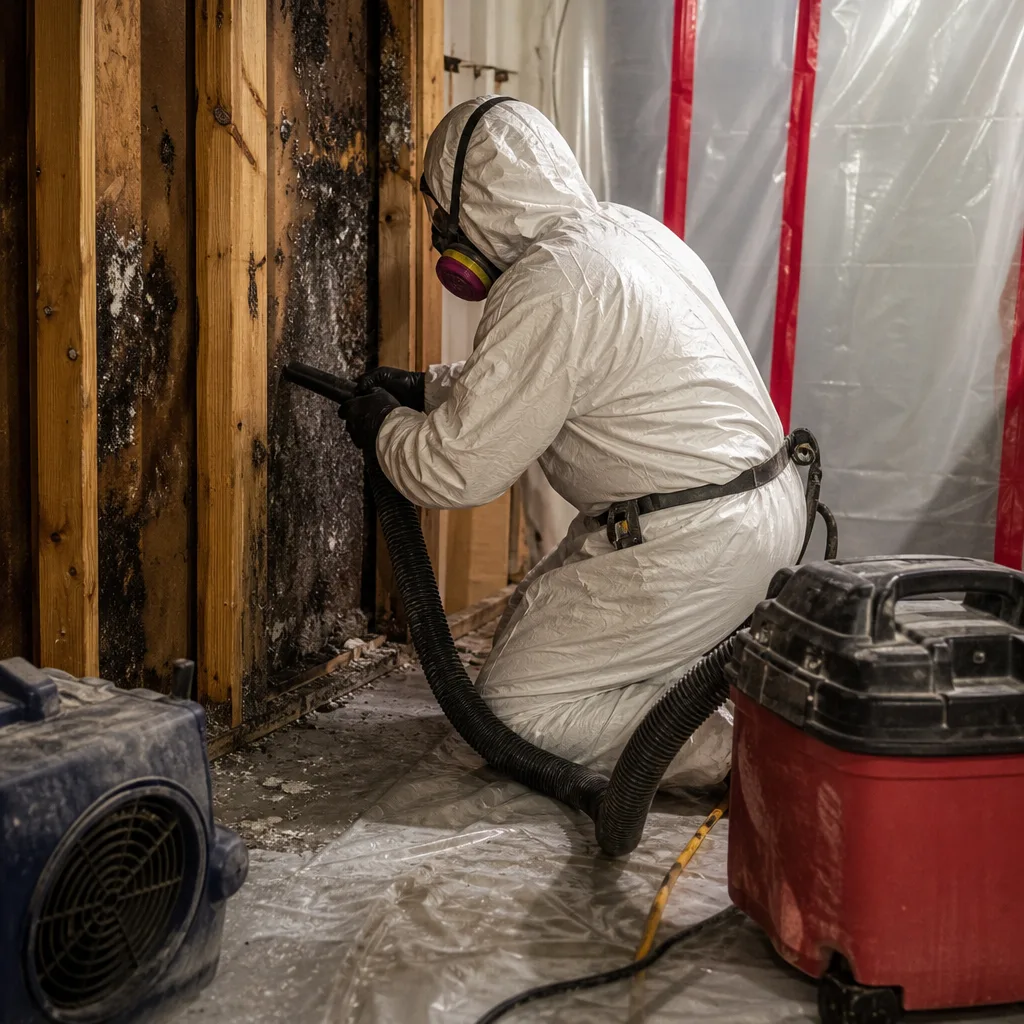
Missing shingles or a breached section over the garage lets water run through the house for days before a roofer can schedule. We tarp it the same visit, secured for Rockland County wind loads, so the interior damage stops growing while the claim proceeds.
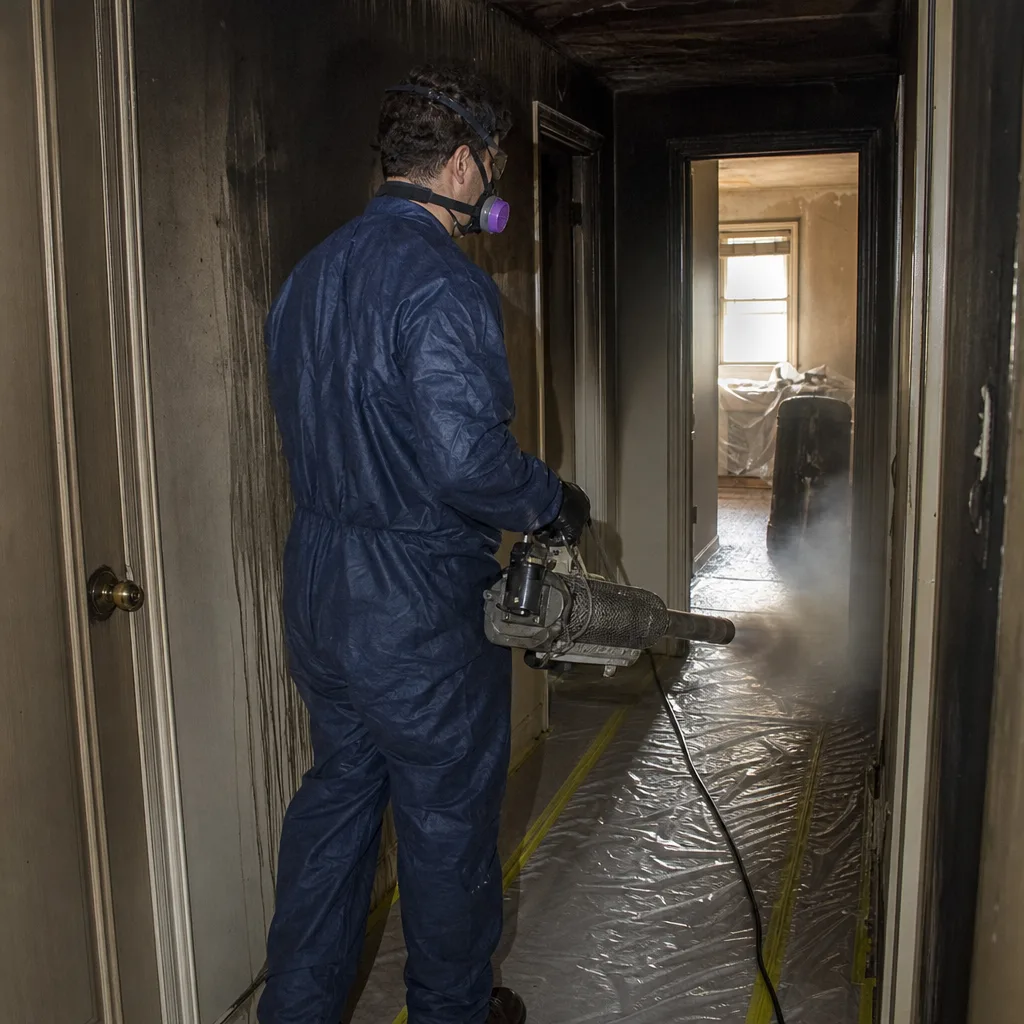
Debris Removal
Fallen trees, broken fencing, and storm trash left by the town’s haulers are part of the job. We clear the driveway, the yard, and the access paths so our equipment and your family can move safely, and we document everything before anything leaves the property.
What happens when you call
- 1
A real person answersNo phone trees - you reach a local pro.
- 2
You get an upfront price rangeHonest numbers before anyone is dispatched.
- 3
A background-checked tech heads outLicensed & insured, dispatched right away.
- 4
You approve before work beginsNothing starts until you say go.
Storm & Disaster Restoration Costs in Congers, NY
Pricing in Congers runs on a spectrum, and the variables are the water volume, the water category, and how much drywall and flooring has to come out. A straightforward storm damage cleanup with extraction and a few days of drying typically runs $2,800 to $5,500. A full flood damage restoration with contaminated water, tear-out to the studs, antimicrobial treatment, and structural drying lands between $6,500 and $14,000 for the average basement. Emergency board-up and roof tarping run $450 to $1,200, and debris removal adds $350 to $1,800 depending on the trees involved. Homes near Congers Lake sit at the higher end because the chronic water table means longer drying times and more demolition to reach dry material. Most storm loss is covered by homeowners insurance, and we bill the carrier directly. Your out-of-pocket is usually the deductible. A free inspection gets you a written scope and a firm number before any work starts. Call (917) 924-4221 for an exact quote.
We Also Serve Cities Near Congers
Our Congers crews regularly work storm and flood losses in the surrounding Rockland County communities. We serve Valley Cottage, New City, Haverstraw, and West Nyack with the same 45-minute response commitment and the same IICRC-certified technicians. If the storm hit your street, we’ll get to it.
Serving Congers, NY - Our Local Coverage Area
We’re based in the Congers area and know this community well. Use the map below to see our service coverage - if you’re nearby, we can almost certainly help.
Congers Storm & Disaster Restoration Questions, Answered
Why do Congers homes near the lake need a different drying approach than those in Nanuet?
Homes near Congers Lake sit on clay soil with a chronically high water table, so moisture keeps feeding into the foundation even after visible water is gone. Nanuet sits on better-drained ground, so drying there is a straightforward mechanical process. Here we have to control the water table pressure itself, sometimes running dehumidifiers longer and treating the foundation’s moisture pathway, not just the flood water.
How do you handle basement floods in Congers with failed 1960s footer tile?
We extract the standing water, then address the footer tile failure directly. That means exposing the footer area, documenting the failed or silted tile, and writing a scope that includes new drainage measures where the foundation is exposed. Treating only the surface water without fixing the footer tile guarantees the same flood returns with the next heavy rain.
What’s the difference between a storm damage cleanup and a flood restoration job in Congers?
A storm damage cleanup handles the aftermath of wind, hail, and debris: board-up, tarping, yard clearing, and interior drying where rain entered. A flood restoration job deals with standing water that sat in the basement, often Category 2 or Category 3 water from overwhelmed drains or lake overflow, and requires tear-out, antimicrobial treatment, and structural drying. In Congers the two often overlap because storms trigger the flooding.
After Hurricane Ida, what did Congers basements on clay soil reveal about drainage?
Ida showed that the hamlet’s storm drainage was never sized for the water volume we’re seeing now. The clay soil doesn’t percolate, the two lakes hold water high, and the 1960s footer tiles have failed. Basements that had never flooded took four feet of water, and the water stuck around for weeks because it had nowhere to drain.
Can a one-trip restoration really handle a Congers basement mold situation?
Yes, when the crew arrives equipped for the full scope. That means extraction, containment, HEPA air scrubbing, demolition of affected materials, antimicrobial treatment, and structural drying all staged in one visit. The catch is that the drying itself takes days. The crew sets up day one, then returns daily for readings until the dry standard is met. One trip to start, one continuous job through the finish.
How fast can you get to a Congers home after a storm?
Our commitment is 45 minutes to dispatch a crew in the Congers area, 24/7. That’s a real person answering the phone and a real team on the road, not a call center taking a message. Emergency extraction should start within hours, not days.
Will my insurance cover storm and flood restoration in Congers?
Most storm losses are covered under homeowners policies, including water that enters from storm openings or backup. Flooding from rising water outside, like overland lake flooding, usually requires a separate flood policy. We bill your carrier directly and provide the photo documentation and moisture logs they need to pay the claim without a fight.
What should I do in the first 30 minutes after water enters my Congers home?
Call (917) 924-4221 and kill the power to affected areas if the panel is safe to reach. Don’t use a shop vac on contaminated water, and don’t enter standing water if it’s near outlets. Take photos from the dry side, and let us handle the entry, extraction, and documentation.
Written by Curt Bowman, Owner at Floodline Restoration Co. of Manhattan, serving Congers since 2010.