
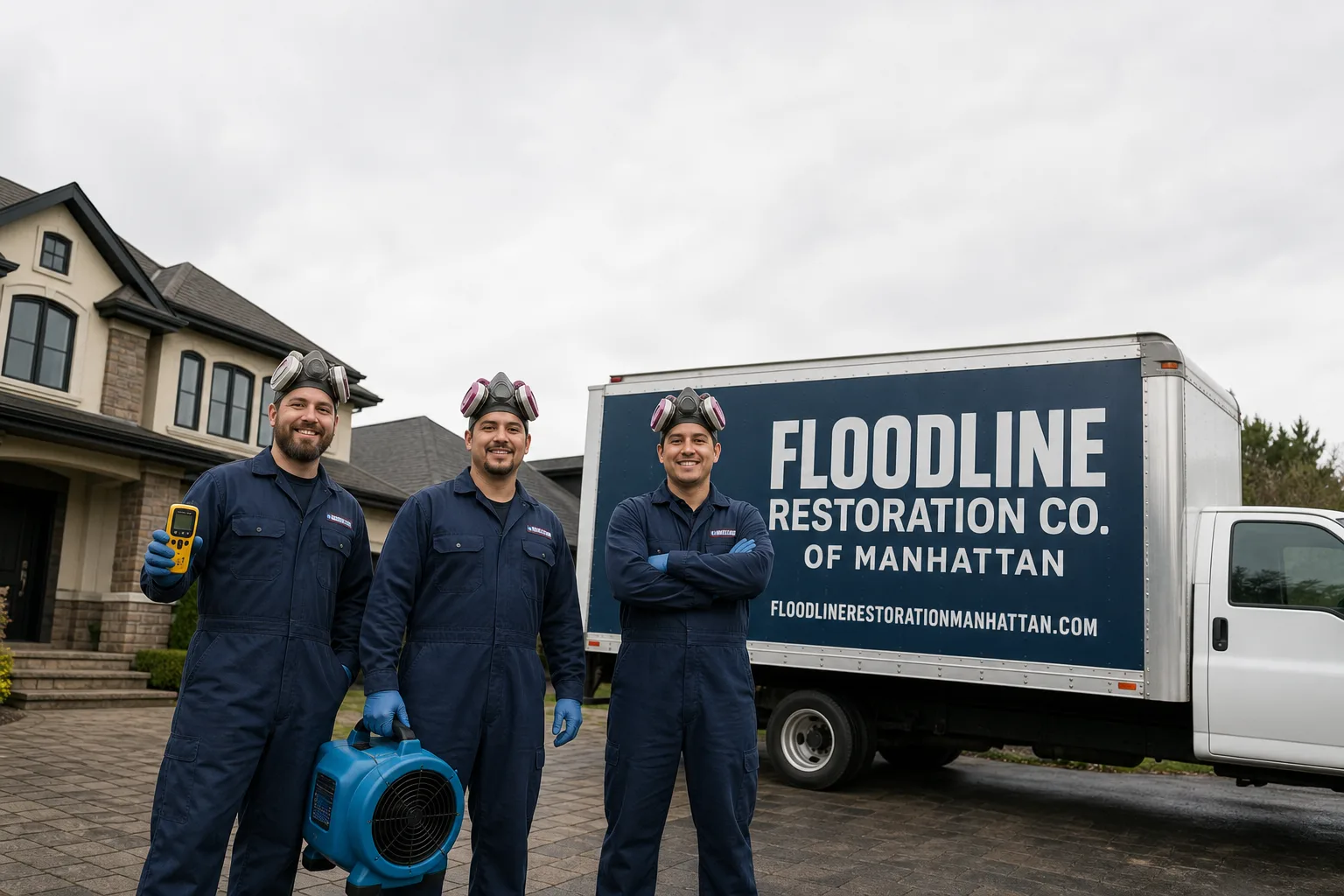
Free visual inspection and a written scope of work before any mitigation begins - photos, moisture readings, and drying logs go in your claim file
The scope we write is the scope we bill. Anything new gets shown to you, in writing, before we touch it.






 Before
 After
After Before
 After
After Before
 After
After24/7 Emergency Storm & Disaster Restoration in Crown Heights
Storm damage in Crown Heights doesn’t wait for business hours, and neither do we. A live dispatcher answers at (917) 924-4221 any hour, every day of the year. When a nor’easter tears open a flat roof deck on St. Marks Avenue or a summer cloudburst backs sewage into a garden-level apartment off Kingston Avenue, our crews are dispatched inside the Crown Heights area immediately. The first hour matters more than most homeowners realize: water migrating through original horsehair-plaster ceilings and shared party walls spreads laterally into attached rowhouses within hours, not days. We arrive fast, run a free visual inspection, and start extraction the same visit. No recording, no callback queue. A person picks up, a crew rolls out, and the drying starts.
Understanding Storm & Disaster Restoration Severity in Crown Heights Properties
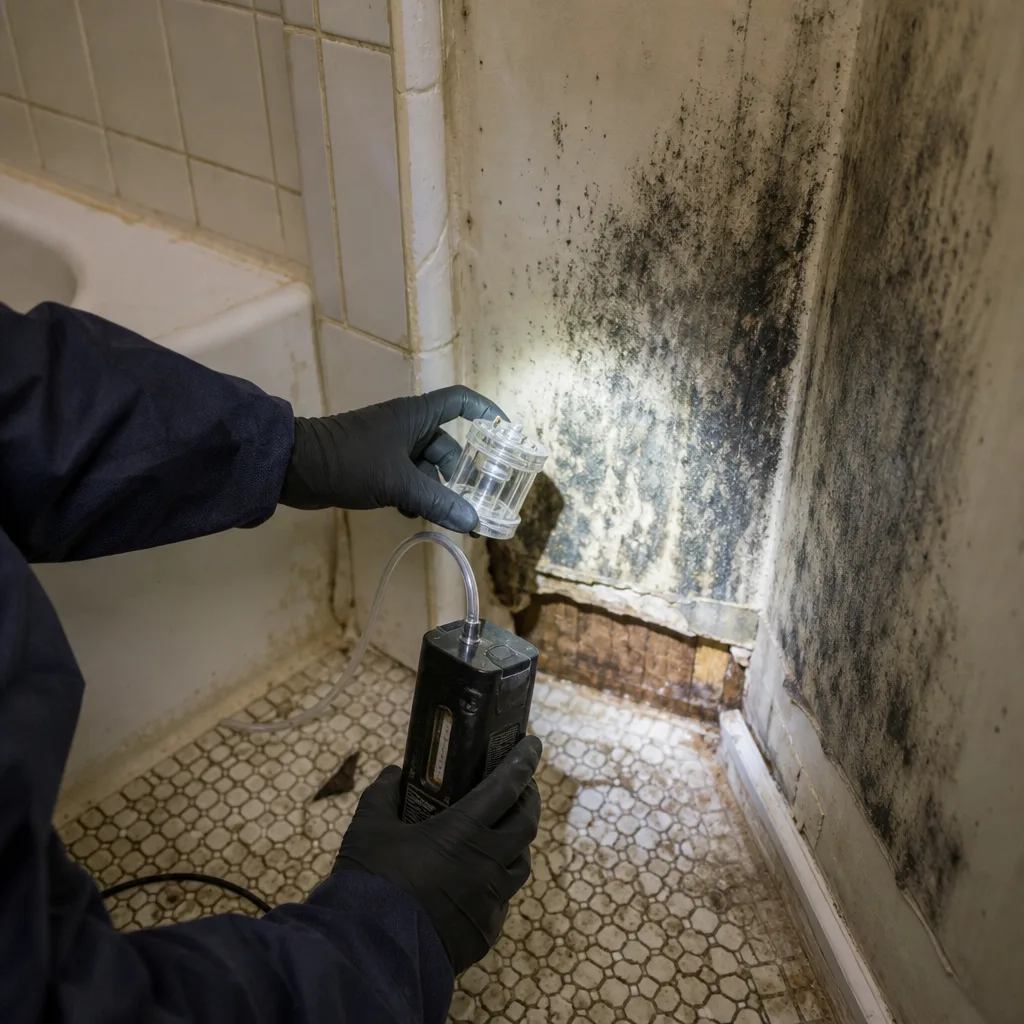
Crown Heights restoration work carries a severity curve that flattens most outsiders. The attached brick rowhouses built between 1890 and 1925 share structural party walls, which means water never respects the property line. We classify water by category: Category 1 is clean supply-line water, Category 2 carries significant contamination, and Category 3 is grossly unsanitary, the kind that comes up through a flooded combined sewer. A garden-level sewage backup in Crown Heights is almost always Category 3, which means the drywall and carpet come out, not get dried. Moisture mapping with thermal imaging and penetrating meters tells us where water has traveled inside wall cavities before we open anything. Structural drying in these buildings runs slower than in newer construction because cast-iron drain stacks, unapproved mid-century plumbing runs, and original plaster all trap water in pockets that casual readings miss. A rowhouse that looks dry on the surface often isn’t, and that gap is where mold starts within 24 to 48 hours behind the plaster.
Why Crown Heights Property Owners Choose Floodline Restoration Co. of Manhattan
- 45-minute response commitment: when you call with active water coming through a Crown Heights ceiling, a crew is dispatched immediately and most jobs see extraction running the same visit.
- 24/7 live answer, every time: a real dispatcher picks up at 2 a.m. during a nor’easter, not an automated system asking you to leave a message.
- IICRC-certified crews: our technicians hold WRT, FSRT, and AMRT certifications and carry professional-grade Dri-Eaz, Phoenix, and XPOWER equipment on every truck.
- Free visual inspection: before any work begins, we walk the loss, map the moisture, and give you a straight read on scope. No charge for the visit.
- Direct insurance billing: we coordinate with your carrier, provide line-item documentation, and bill directly so you aren’t playing messenger.
- One team, start to finish: the same certified crew that reads the moisture map on day one handles daily readings, logs everything, and rebuilds what needs rebuilding. No mid-job handoff.
Our Storm & Disaster Restoration Process
Inspection & Assessment
We start with a full walk of the loss, including the rowhouses flanking yours. Thermal imaging and penetrating moisture meters map where water has traveled through party walls and ceiling cavities before we open a single surface. You get a written scope and a straight answer on what’s wet, what’s salvageable, and what comes out.
Extraction & Stabilization
Standing water comes out first. If a roof deck has failed, we tarp it immediately using alley-load access that keeps the block passable. For sewage backups, contaminated materials are cut out and bagged. For storm-driven flooding, truck-mounted extraction pulls the bulk water fast.
Drying & Dehumidification
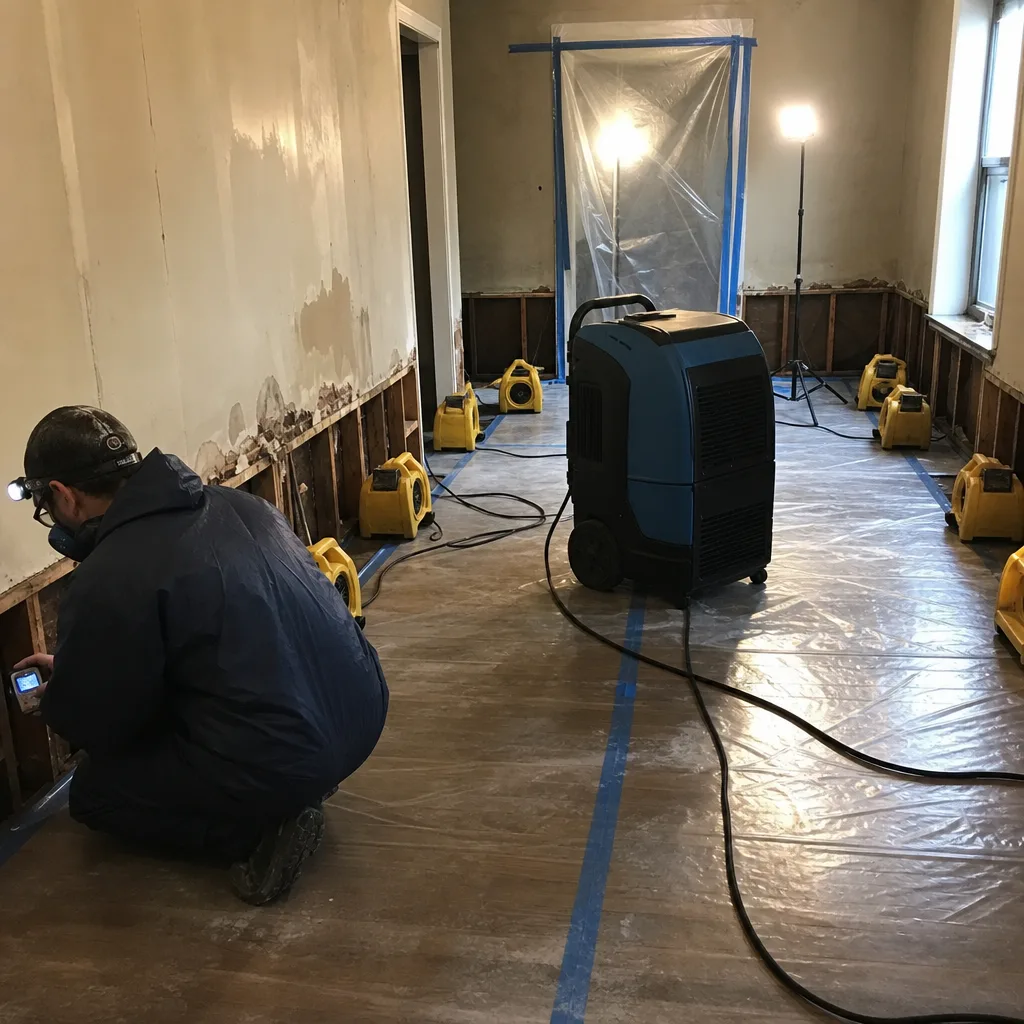
Dri-Eaz and Phoenix air movers and dehumidifiers are placed based on the moisture map, not a guess. Daily readings are logged until the dry standard is met. In Crown Heights rowhouses, that often means running equipment inside wall cavities we never opened, because lateral migration through shared masonry wicks moisture between units.
Cleaning & Sanitization
HEPA air scrubbers run during and after demolition to pull airborne particulates out of the space. All affected structural surfaces are cleaned and treated. For Category 3 losses, we sanitize and apply antimicrobial treatments to any surface the contaminated water contacted.
Storm-Specific Treatment
After drying, we address what the storm actually did: roof membrane repair or replacement, wind-damage repair to parapet walls and flashing, and debris removal from roof decks, drains, and scuppers. The same crew that dried the building handles the repairs, so nobody inherits a half-finished job.
Repairs & Restoration
Once the structure is dry and stable, we rebuild. Plaster repair, drywall replacement, flooring, paint, trim. Reconstruction on a Crown Heights rowhouse means matching original profiles and working with the building’s actual geometry. We finish with the 90-Day Done Right Promise in writing.
Need Emergency Storm & Disaster Restoration in Crown Heights Now?
Crews minutes away, answering live 24 hours a day. The sooner we start, the less it costs.
Working With Your Insurance Company
Storm and disaster claims in Crown Heights get complicated fast because a single roof membrane failure often touches three or four attached addresses. We document everything from the first hour. Photos of the loss, room by room. Moisture readings from day one through the dry standard. A line-item scope of work your adjuster can read and approve without a phone tag. We coordinate directly with the carrier, so you aren’t translating between restoration crews and claims desks. If your neighbor’s rowhouse shares a party wall and our readings show migration into your unit, we document that too, because many Crown Heights claims start as a neighbor’s problem and become yours within 48 hours.
What We Provide Your Insurer
- Thorough documentation of the loss
- Photos of all damage, room by room
- Moisture readings and drying logs
- A detailed, line-item scope of work
- Direct coordination with your carrier
Built for Crown Heights’s Loss Calendar
Crown Heights sees storm losses on a calendar that hasn’t changed much in a century. January and February deep freezes burst supply lines inside unheated stairwells and garden-level units, sending water down through the original plaster and into the basement. Late winter and early spring are when freeze-thaw cycles finish off aging flat roof membranes, so ceiling water-intrusion calls spike every March. Summer cloudbursts overwhelm the neighborhood’s combined sewer infrastructure, pushing Category 3 backups into below-grade garden apartments and basements. And nor’easters, whether they hit in October or March, rip open roof decks and drive wind-driven rain through parapet walls and flashing. The pattern is reliable, which means our crews know what they’re walking into before the door opens. This is our Storm & Disaster Restoration team’s home turf.
Storm & Disaster Restoration Across Crown Heights’s Neighborhoods
Crown Heights runs from the Brooklyn Botanic Garden and Eastern Parkway south toward Empire Boulevard and east past Utica Avenue, and the building stock shifts street by street. The blocks between Franklin and Bedford Avenues are dense with late-Victorian rowhouses, many with original flat roofs and cast-iron drain stacks, where a single failed membrane sends water through three floors in an afternoon. Over near Weeksville and St. Marks Avenue, we see the same attached-brick geometry with more subdivided multi-unit rentals, which means unapproved plumbing runs and ad-hoc repairs layered over original construction with no permit history. Garden-level apartments along Kingston and Nostrand Avenues take the brunt of summer sewage backups when the combined system can’t keep up. And the blocks around Brower Park and St. John’s Place have narrow alley-load access that makes emergency board-up and tarping a logistics problem most crews don’t account for. That’s why our trucks are staged and equipped for Crown Heights clearances, not a suburban driveway.
Specialized Storm & Disaster Restoration Services We Offer in Crown Heights
Storm Damage Cleanup
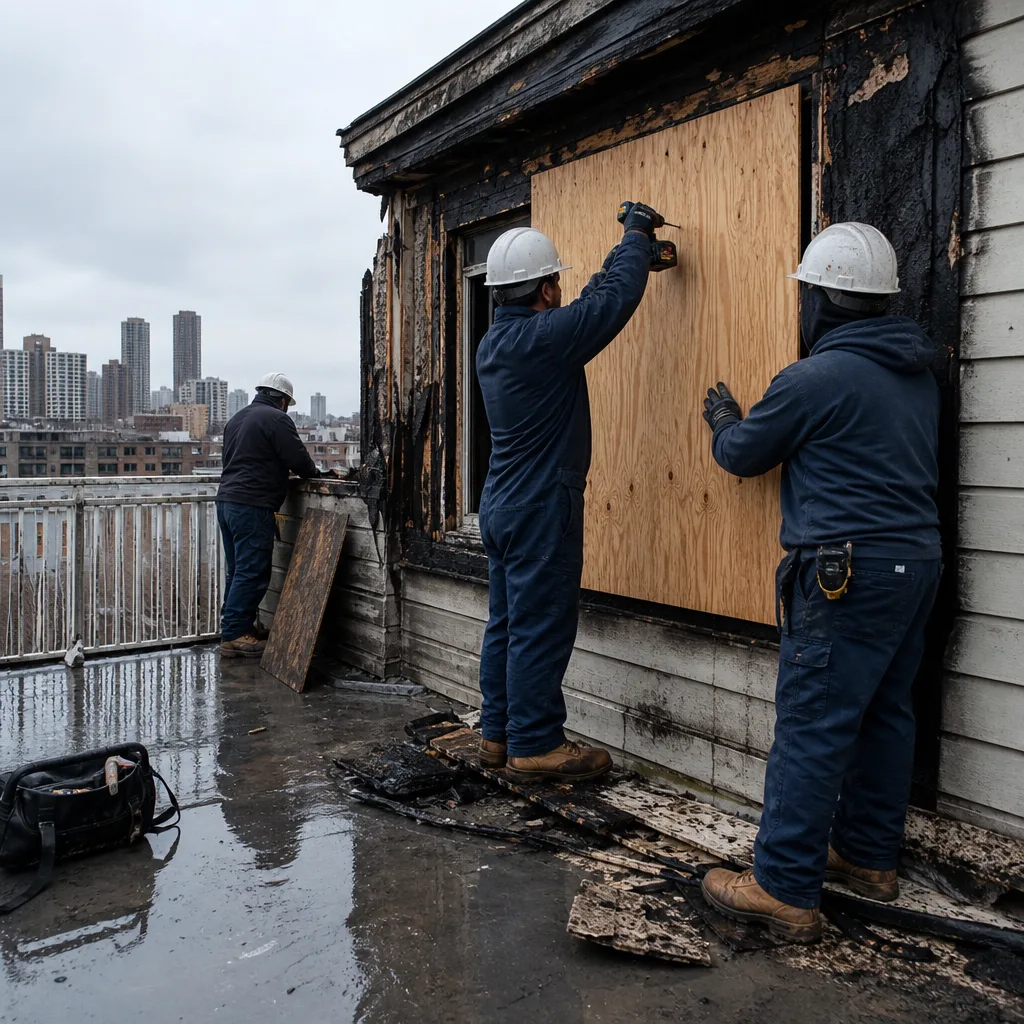
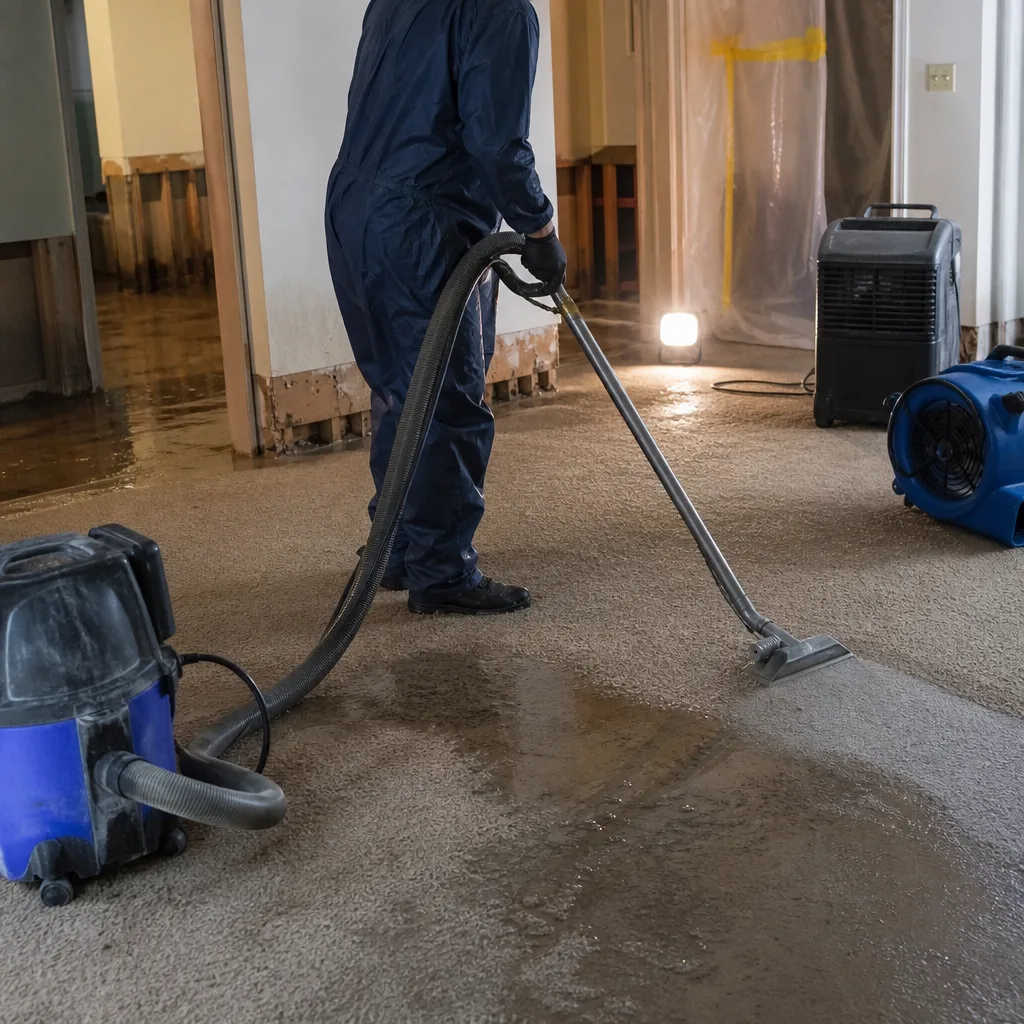
After wind and water move through a Crown Heights rowhouse, the cleanup isn’t cosmetic. We remove water-damaged plaster, drywall, flooring, and insulation, then run HEPA air scrubbers to pull particulate out of the air. In attached rowhouses, we include the flanking units in our moisture readings because the shared party walls don’t stop at the property line.
Flood Damage Restoration
Whether the water came from a burst supply line, a nor’easter, or a backed-up combined sewer, the sequence matters. We classify the water, extract it, map the moisture, and dry the structure to the dry standard with daily logged readings. In Crown Heights, flood restoration often means cutting out garden-level drywall and carpet because the water that comes up through floor drains here is almost always Category 3.
Emergency Board-Up
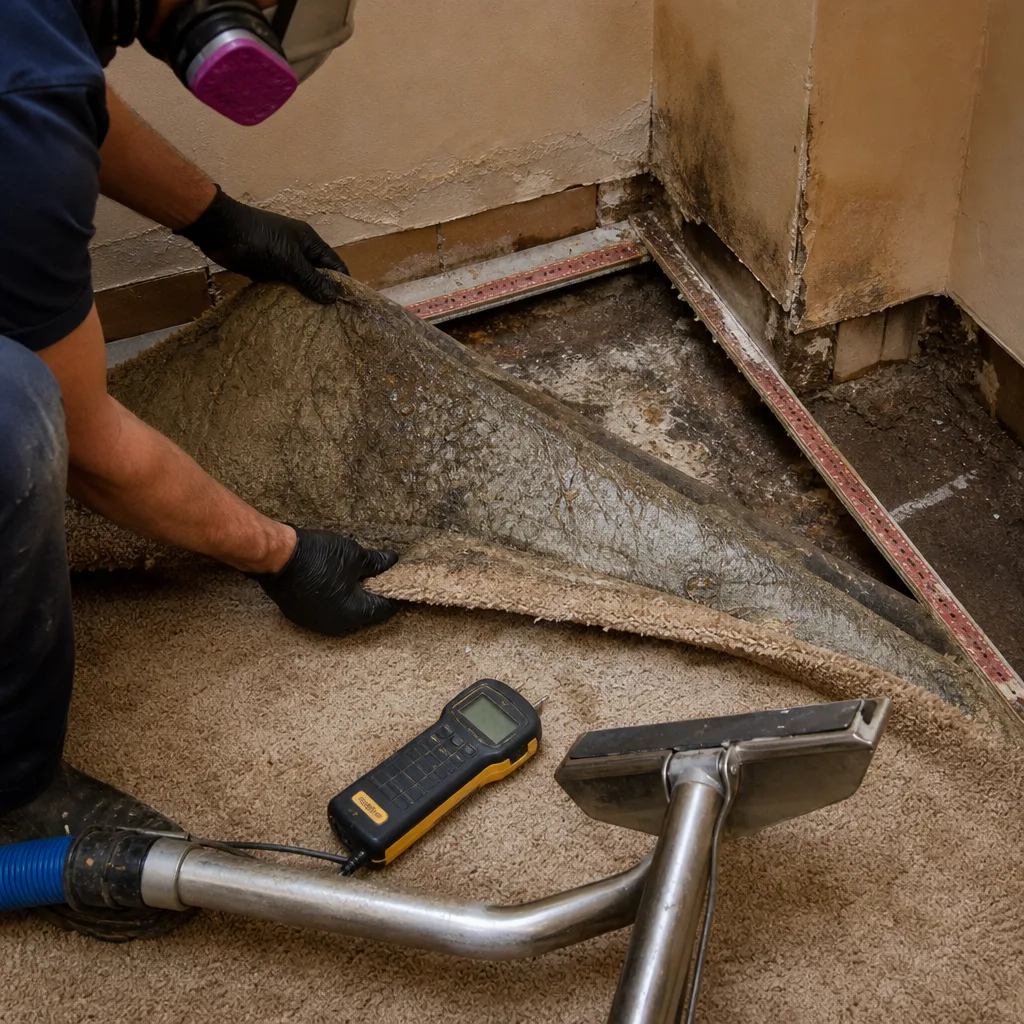
When wind tears out a window or a tree limb punches through a rowhouse wall, the opening has to be secured before the weather does more damage. We board up fast using plywood cut to the actual opening, and we factor in narrow Crown Heights alley-load access so our truck doesn’t block the whole block while the nor’easter keeps dumping water inside.
Roof Tarping
A failed flat roof membrane on a Crown Heights rowhouse can’t wait for a full roof replacement. We tarp the deck immediately, sealing the membrane breach and any compromised flashing so the interior drying can actually start. Our crews work from the roof deck and parapet walls, so most flat rowhouse roofs can be tarped without full scaffolding, which matters when rain is still coming down.
Debris Removal
Storm debris on a flat roof deck clogs drains and scuppers, which turns the next rainstorm into a standing-water problem that finds its way through the membrane. We clear roof decks, parapet drains, and areaway areas, then haul the debris out through alley access that works for a Crown Heights block, not just our truck.
What happens when you call
- 1
A real person answersNo phone trees - you reach a local pro.
- 2
You get an upfront price rangeHonest numbers before anyone is dispatched.
- 3
A background-checked tech heads outLicensed & insured, dispatched right away.
- 4
You approve before work beginsNothing starts until you say go.
Storm & Disaster Restoration Costs in Crown Heights, NY
Storm restoration pricing in Crown Heights runs higher than detached-home markets one borough over because attached rowhouse geometry changes the scope. A typical storm damage cleanup with extraction and drying on a Crown Heights rowhouse runs $3,800 to $8,500 depending on how many floors took water and whether the party walls are involved. Roof tarping on a flat deck runs $650 to $1,500 as a standalone emergency job, more if scaffolding is needed for access. A garden-level Category 3 sewage cleanup with cut-out and sanitization typically lands between $5,000 and $11,000. Full reconstruction after a major storm loss, including plaster repair, flooring, and paint, usually falls between $15,000 and $40,000 on a Crown Heights rowhouse. The biggest cost drivers are lateral water migration through party walls, hidden cavities that need containment, and whether the building’s original plaster can be saved or must come out. Most storm losses are covered under homeowners insurance, and our free visual inspection gives you a firm scope before you commit to anything. Call (917) 924-4221 for an exact quote. Crown Heights homeowners deal with these numbers every storm season, and we walk you through the claim from first reading to final rebuild.
We Also Serve Cities Near Crown Heights
Our crews work throughout the surrounding area. We handle storm damage cleanup, flood restoration, roof tarping, and emergency board-up in Fairview, Harrison, East Bronx, and Hunts Point. Same live dispatch, same 45-minute response commitment, same written guarantee.
Serving Crown Heights, NY - Our Local Coverage Area
We’re based in the Crown Heights area and know this community well. Use the map below to see our service coverage - if you’re nearby, we can almost certainly help.
Crown Heights Storm & Disaster Restoration Questions, Answered
Why do we need to inspect the rowhouses on either side of our Crown Heights water loss?
Because the original rubble-stone and mortar party-wall foundations wick moisture freely between attached units. A neighbor’s flooded basement often saturates your wall cavities before you see staining. We inspect the two or three flanking rowhouses on every active water loss and include readings from those walls in your scope, so containment happens before mold starts. Call (917) 924-4221 and we’ll map the full migration path.
How does a flat roof membrane failure on a Crown Heights rowhouse cause a Category 3 sewage backup in the garden-level apartment?
Stormwater overwhelms the combined sewer, and when the roof membrane fails at the same time, the water has nowhere to go but through the original cast-iron drain stacks and up through floor drains in garden-level and basement units. That water is Category 3, so drywall and carpet come out, not get dried. We classify it correctly the first time.
What makes structural drying slower in 1890s-1920s Crown Heights rowhouses than in newer buildings?
Original horsehair plaster, cast-iron drain stacks, and unapproved mid-century plumbing runs all trap water in pockets that surface readings miss. We run daily readings with penetrating meters and thermal imaging until the dry standard is met, which often takes days longer than a modern build. Call (917) 924-4221 for a real timeline on your rowhouse.
Can you tarp a flat roof deck on a Crown Heights rowhouse without a full scaffold?
In most cases, yes. Our crews work from the roof deck and parapet walls using safety lines and edge protection, and typical flat rowhouse roofs don’t require full scaffolding for emergency tarping. We factor in alley-load access so the block stays passable. Estimates are free.
If my neighbor’s rowhouse has a roof leak, do I need my own mitigation?
Often yes. Lateral moisture migration through shared party walls can saturate your wall cavities and ceilings before any staining shows on your side. We recommend a free visual inspection and moisture reading in your unit if your neighbor has an active loss. Early containment is cheaper than a full mold remediation later.
How fast can someone actually get to my Crown Heights address?
Our 45-minute response commitment applies across Crown Heights, from Eastern Parkway down to Empire Boulevard and from Franklin Avenue east past Utica. A live dispatcher takes the call and a crew is dispatched immediately. Extraction usually runs the same visit.
Will insurance cover storm damage in Crown Heights?
Most homeowners policies cover storm-related water damage, wind damage, and sewage backup when the cause is sudden and accidental. We document everything from the first hour and work directly with your adjuster, providing line-item scopes and drying logs so the claim moves without you playing messenger.
What should I do in the first 30 minutes after discovering storm damage?
Shut off power to affected areas if it’s safe to do so, move valuables away from active water, and call (917) 924-4221. Don’t enter standing sewage water. Don’t try to dry the structure yourself. The faster we start extraction and containment, the less of the original plaster and flooring we can save.
One late-February nor’easter call out to a rowhouse off St. Marks Avenue sticks with us. Our crew found a Category 3 sewage backup in a below-grade garden apartment while the source roof membrane failure had already wetted the parlor-floor horsehair-plaster ceilings two floors up. We ran moisture mapping across the party walls to the flanking rowhouses and caught saturated cavities in both neighbors before their own tenants noticed staining. Our containment plan included air movers and dehumidification inside walls we didn’t even open, and we coordinated pack-out and structural drying across three attached addresses in one scope of work. That’s what Crown Heights losses look like, and that’s the job we’re built to handle.
If you’re looking for storm and disaster restoration in the attached brick rowhouses of Crown Heights, call (917) 924-4221. A live person answers. A certified crew arrives. The line the water left is where we start. And the 90-Day Done Right Promise means it’s done right, in writing, or we make it right.
Written by Curt Bowman, Owner at Floodline Restoration Co. of Manhattan, serving Crown Heights since 2010.