
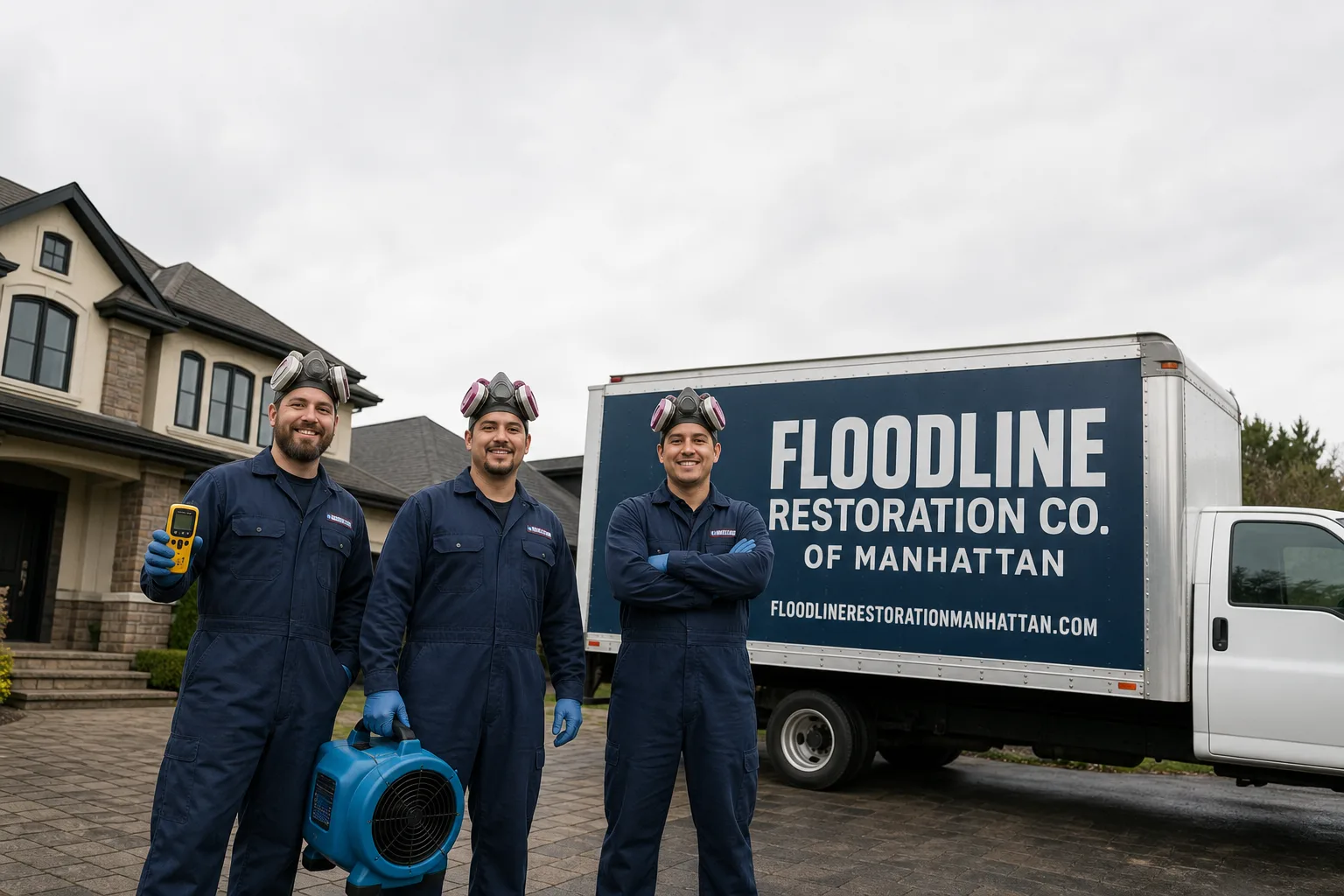
Free visual inspection and a written scope of work before any mitigation begins - photos, moisture readings, and drying logs go in your claim file
The scope we write is the scope we bill. Anything new gets shown to you, in writing, before we touch it.






 Before
 After
After Before
 After
After Before
 After
After24/7 Emergency Storm & Disaster Restoration in East Bronx
Storm and flood damage in East Bronx moves fast, and so do we. Our crews are on call around the clock, answering live at (917) 924-4221, with dispatch coordinated out of our New York City office and trucks rolling into neighborhoods from Throggs Neck to Soundview within 45 minutes of your call. The first hour after water enters a home decides whether you’re facing a cleanup or a rebuild. The sooner extraction starts, the less flooring, drywall, and framing you lose, and the lower your out-of-pocket cost if insurance pushes back on anything.
We don’t put you through to a recording at 2 a.m. when a nor’easter has just pushed Long Island Sound over the bulkhead. A live dispatcher picks up, a certified crew gets the address, and extraction equipment is running the same visit. That’s how Floodline Restoration Co. has operated since Curt Bowman founded the company in 2010, and it’s the standard we hold to on every storm loss in East Bronx, whether it’s a Parkchester apartment with water migrating across six units or a single-family brick rowhouse off East Tremont Avenue.
Understanding Storm & Disaster Restoration Severity in East Bronx Properties
Storm surge restoration in coastal East Bronx differs from inland flood work in one critical way: the water itself. Tidal surge from Long Island Sound and Eastchester Bay carries Category 3 black water, which the IICRC defines as grossly contaminated, carrying sewage, marine pathogens, and salt. Category 3 water demands antimicrobial treatment and porous-material removal, not just drying. A contractor who treats a Throggs Neck basement surge as a Category 2 grey water event will leave pathogens inside the wall cavities even after structural drying is complete. That’s the kind of shortcut that surfaces as a musty smell six months later, or worse, as a family’s recurring respiratory issues in a home that “should” be fine.
Beyond water classification, East Bronx building stock creates its own severity scale. Parkchester’s 171 mid-rise brick buildings, built between 1938 and 1942, share plumbing risers that send a single pipe failure cascading through stacked units. Attached brick homes built in the 1940s through 1960s along Pelham Bay and Throggs Neck share common joist spaces, meaning water migrates laterally across party walls, not just vertically. Our crews moisture-map every affected cavity, including the joist bays your neighbor’s side shares with yours, because drying one unit while the adjacent frame stays saturated is a failure pattern we’ve corrected too many times to ignore.
Why East Bronx Property Owners Choose Floodline Restoration Co. of Manhattan
- 45-minute response commitment: from the moment you call (917) 924-4221, a crew is dispatched with the extraction equipment already loaded, not after a sales call or a site survey.
- 24/7 live answer: a real dispatcher picks up at any hour, every day, and can tell you exactly when the truck will reach your block in Parkchester, Soundview, or City Island.
- IICRC-certified crews: our technicians carry WRT, FSRT, and AMRT certifications and follow the dry standard down to the daily moisture reading, documented and handed to you and your carrier.
- Free visual inspection: before we touch the work, you get a clear-eyed assessment of what’s wet, what’s salvageable, and what the scope should be.
- Direct insurance billing: we communicate with your adjuster, provide the documentation, and bill the carrier directly so you’re not financing the cleanup out of pocket while you wait.
- One team from extraction to reconstruction: the crew that pulls the water is the same crew that dries the frame and rebuilds the wall. No mid-job handoff, no inherited crew, no re-explaining your loss to a stranger.
Our Storm & Disaster Restoration Process
Inspection & Assessment
We walk the entire affected area with thermal imaging and moisture meters, mapping the true boundary of water migration. In attached East Bronx homes, that means checking joist cavities on the shared wall, not just the room where you saw standing water.
Extraction & Stabilization
Using truck-mounted extraction units and submersible pumps, we pull standing water fast. For storm surge, we also begin antimicrobial treatment immediately on Category 3 contact surfaces before any demolition starts, preventing cross-contamination from the start.
Drying & Dehumidification
We set Dri-Eaz and Phoenix dehumidifiers with XPOWER air movers positioned to create real airflow across the wetted surfaces, not just recirculate the same humid air. Daily moisture readings get logged until the structure meets the IICRC dry standard, and that log is yours and your insurer’s.
Cleaning & Sanitization
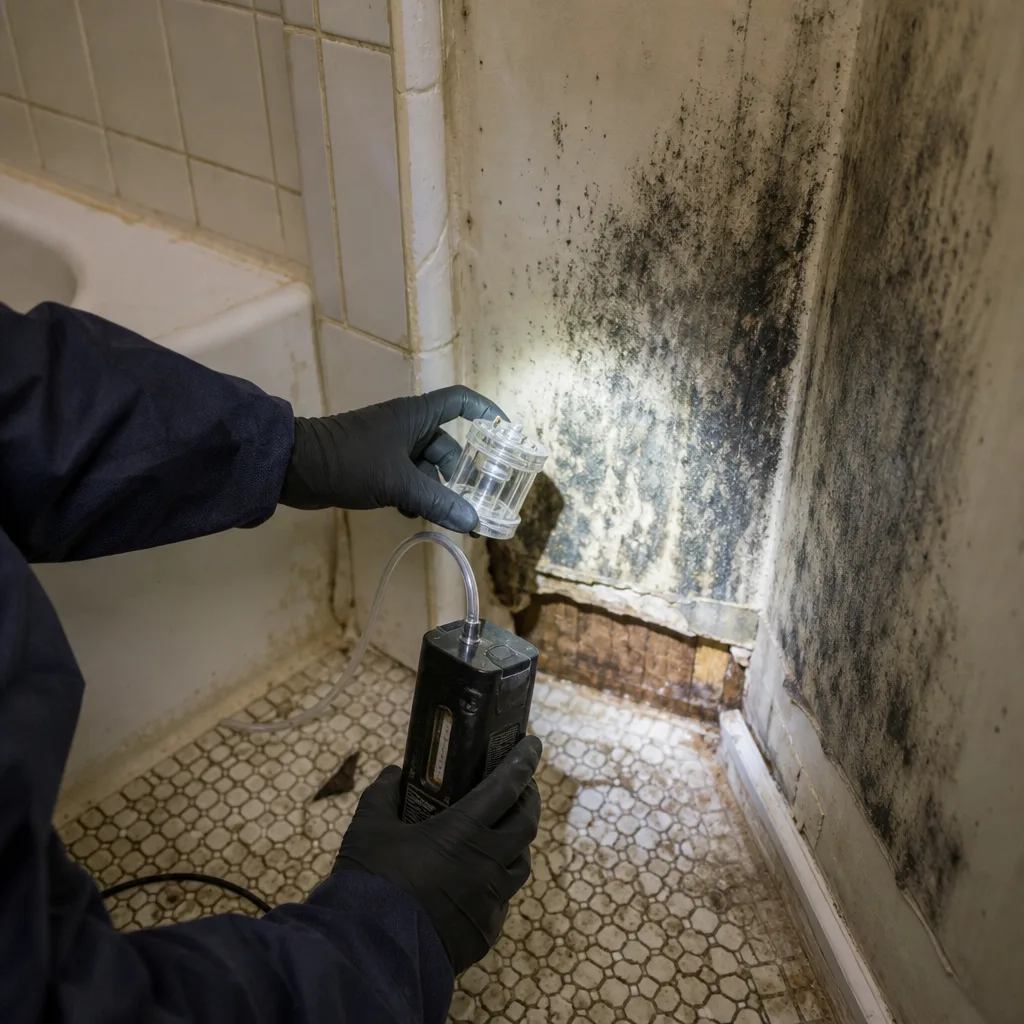
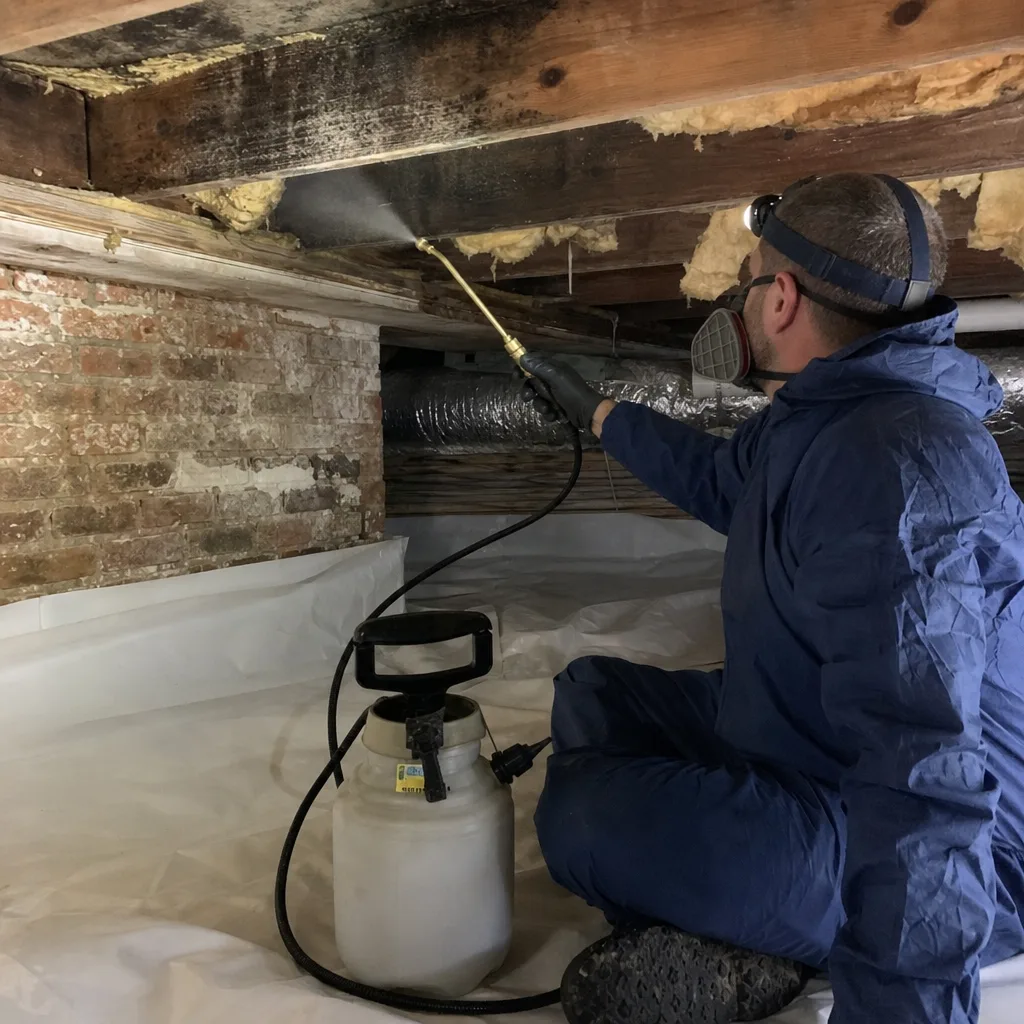
Surfaces that stay get cleaned with appropriate antimicrobials, HEPA-vacuumed where needed, and tested. Anything porous that took on Category 3 water gets cut out and bagged, not painted over.
Specialty Treatment
Storm and disaster losses in East Bronx often mean both water and wind damage at once. We handle emergency board-up, roof tarping, and debris removal as part of the same job, so your insurance claim is one file, not three phone calls.
Repairs & Restoration
The same Floodline crew rebuilds what was removed, matching the original construction style of your East Bronx home. Our 90-Day Done Right Promise applies to the whole job, from first extraction to final coat of paint, and it’s in writing.
Need Emergency Storm & Disaster Restoration in East Bronx Now?
Crews minutes away, answering live 24 hours a day. The sooner we start, the less it costs.
Working With Your Insurance Company
Storm and flood claims in East Bronx are rarely simple, especially when the water came over the Sound and not just from a burst pipe. We document from the first hour: photos of every affected room before we move anything, moisture readings in writing, and a line-item scope that reflects the actual work required, not a generic template. When your adjuster questions whether the drywall really needed to come out, our documentation answers. When your carrier needs to understand why Category 3 surge water mandated antimicrobial treatment, our logs show it.
What We Provide Your Insurer
- Thorough documentation of the loss
- Photos of all damage, room by room
- Moisture readings and drying logs
- A detailed, line-item scope of work
- Direct coordination with your carrier
You never play messenger between us and the carrier. The 90-Day Done Right Promise doesn’t just cover the workmanship; it sits on top of a process built to keep your claim moving without you chasing anyone.
Built for East Bronx’s Loss Calendar
East Bronx doesn’t have one storm season. It has four distinct failure periods, and our crews carry the trade knowledge to match each one. January and February bring deep freezes that burst supply lines in uninsulated crawl spaces common to the older single-family stock near Pelham Bay and Throggs Neck, where salt air has already spent forty years gnawing at piping hangers and copper. The freeze-thaw cycles near the water hit harder than inland Monroe or Williamsbridge, and a pipe that splits at 3 a.m. on Super Bowl Sunday floods a basement before the family hears it.
March through May brings snowmelt and spring rain, saturating the soil around foundations that were poured in the Truman administration. Basement seepage in attached brick rows along roads like Crosby Avenue and Middletown Road is a near-annual event, not an anomaly. Summer thunderstorm cells drop two inches of rain in an hour on streets that were never designed for that volume, and flash flooding pushes water through window wells and bulkhead doors. Then comes September through November, when nor’easters and the remnants of tropical systems push Long Island Sound up and over the barrier edges, turning City Island and the low streets of Throggs Neck into a working waterfront nobody asked for.
Storm & Disaster Restoration Across East Bronx’s Neighborhoods
Response patterns in East Bronx change block by block. In Parkchester, the centralized property management that oversees all 171 mid-rise buildings means emergency access approvals move through a single bureaucratic channel, a bottleneck unlike anything you’d face in a private home. Our crews know the office, know the forms, and know how to get the go-ahead faster because we’ve done it on enough storm losses in the complex to understand the approval sequence.
On City Island and the eastern edge of Throggs Neck, the failure is almost always tidal. Floodwater is Category 3 black from the first minute, and salt accelerates corrosion in the building’s electrical and mechanical systems even after the water recedes. In Soundview and Clason Point, the housing stock varies from post-war brick to frame construction, and the low-lying streets off the Bruckner Expressway hold water longer after a storm, extending the drying window and raising the risk of mold colonization. Pelham Bay’s attached single-family rows present the party-wall migration problem, where one side’s dry frame hides the neighbor’s saturated joist cavities.
Specialized Storm & Disaster Restoration Services We Offer in East Bronx
Flood Damage Restoration
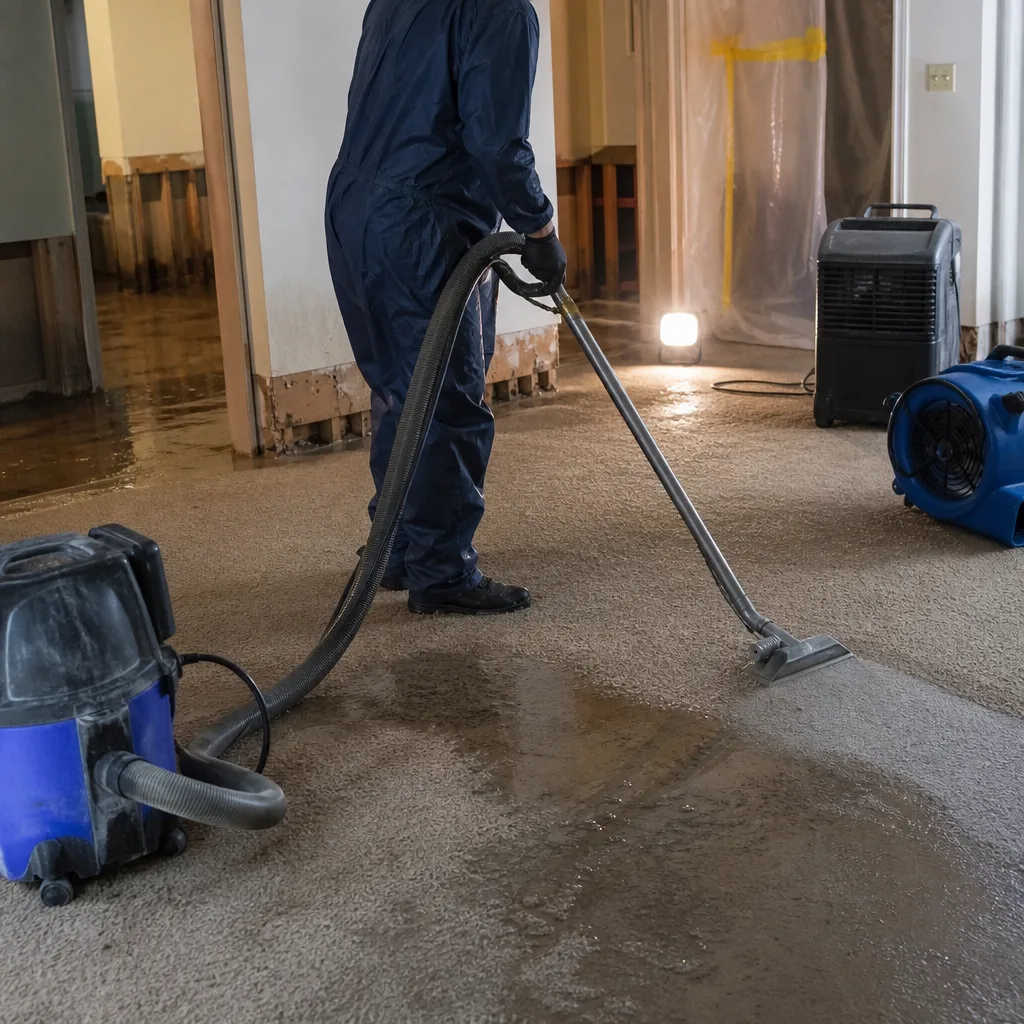
Flood water in East Bronx is not one thing. A burst pipe in a Parkchester kitchen is a Category 1 or 2 event when caught fast. That tidal surge through your Throggs Neck basement door is Category 3, and the restoration standard changes accordingly. We classify, contain, treat, extract, dry, and rebuild to the correct standard for the water you actually got, not the water someone wishes you had.
Emergency Board-Up
When a nor’easter blows out a window or a falling branch opens a hole in your roofline on City Island, the clock starts immediately. Rain keeps coming, animals get in, and your insurance company will ask why the interior got wet after the storm passed. Our board-up crews secure openings within hours, using plywood and fasteners chosen for the wind exposure your block actually faces, not whatever fits the truck.
Debris Removal
Post-storm debris in East Bronx ranges from tree limbs on a Soundview driveway to a neighbor’s siding in your yard to construction material carried by floodwater into a Clason Point basement. We haul it, document it for your claim, and separate salvageable items from true waste so you’re not losing family photographs in a dumpster because someone was in a hurry. Any repair over $250 carries the current $50 discount, and seniors and veterans get 5% off, always.
What happens when you call
- 1
A real person answersNo phone trees - you reach a local pro.
- 2
You get an upfront price rangeHonest numbers before anyone is dispatched.
- 3
A background-checked tech heads outLicensed & insured, dispatched right away.
- 4
You approve before work beginsNothing starts until you say go.
Storm & Disaster Restoration Costs in East Bronx, NY
Storm damage restoration in East Bronx generally runs from $1,200 for a small Category 1 cleanup to $8,500 or more for a Category 3 surge event with full pack-out and structural drying. A flood-damaged Parkchester apartment with water through three rooms and floor demo typically lands between $3,500 and $6,500 before rebuild work starts. Emergency board-up alone runs $250 to $500, while roof tarping after wind damage adds $300 to $700 on top of whatever interior work follows. Debris removal costs $200 to $900 depending on volume and whether the material is construction debris, vegetation, or both.
What moves the price is water classification, square footage of affected material, and how fast extraction starts. A Category 1 pipe burst caught in the first hour could be a $1,200 drying job with no demo. The same square footage sitting in Category 3 water for 48 hours becomes mold remediation, pack-out, and rebuild, and you’re into five figures. The reason we push 45-minute response in East Bronx is that speed is the cheapest line item in the whole scope.
Every job starts with a free visual inspection and a written scope agreed before work begins. You’ll never get a “we’ll figure it out later” number from us. Call (917) 924-4221 and we’ll give you an honest read on what you’re facing.
We Also Serve Cities Near East Bronx
Our crews work the full coastal and inland network around East Bronx, including Fairview, Harrison, Hunts Point, and Jerome Park. If you’re just outside the East Bronx line on the water side or the inland side, the same 45-minute response and the same live dispatcher apply. Storm damage doesn’t care about municipal borders, and our response radius doesn’t either.
East Bronx Storm & Disaster Restoration Questions, Answered
Does handling storm surge water from Long Island Sound in City Island or Throggs Neck require different restoration steps than a typical plumbing leak?
Yes, and the difference is the water classification. Tidal surge is Category 3 black water, which requires antimicrobial treatment, containment, and removal of porous materials, not just extraction and drying. A plumbing leak from a clean supply line is usually Category 1, and can often be dried in place. Treating surge water like a plumbing leak leaves pathogens in the wall cavities. Call (917) 924-4221 if you’re not sure what you’re dealing with.
If a nor’easter floods my ground-floor apartment in Parkchester, is there a faster restoration route than waiting for the complex’s central management to approve access?
Generally, yes. Because we’ve worked storm losses in Parkchester’s 171-building system before, we know the approval sequence and can often move faster than a contractor unfamiliar with the complex. That said, management approval is legally required before we enter a common area or cut into shared walls. Our crews can begin documentation, moisture mapping, and containment planning while that approval is pending, which compresses the timeline. Call us first at (917) 924-4221, then call management.
Why do basements in East Bronx waterfront neighborhoods stay damp and moldy even after the visible floodwater is gone?
Because the water didn’t stop at the visible line. Salt-laden surge water wicks up into drywall, through concrete block, and into the joist cavities above. If drying equipment isn’t placed based on a proper moisture map of those cavities, the air feels dry but the structure doesn’t hit the dry standard. Then mold grows. In attached homes, the neighbor’s side of the common joist space is often the missed area. We dry to the IICRC standard and hand you the moisture log to prove it.
What should I do with wet contents after a storm surge floods my basement in Soundview, can anything be saved?
Non-porous items such as metal tools, sealed glass containers, and certain plastics can be cleaned and saved if treated promptly with the right antimicrobial. Porous materials such as upholstered furniture, mattresses, cardboard boxes, and most textiles that took on Category 3 water should be cut from the claim and discarded, not just “dried out.” Our crews can help you sort salvageable from unsalvageable during the pack-out, and we document everything for your insurance claim.
How quickly does mold start after a storm surge in an East Bronx basement, and does the water source make a difference?
Mold colonization typically begins within 24 to 48 hours on wet porous materials, and Category 3 water accelerates the problem because it introduces both moisture and organic material. Salt water adds a corrosion problem on top of the mold risk. The difference between a $2,000 drying job and a $12,000 mold remediation is usually just a day or two of delay. That’s why we answer live and dispatch immediately when you call (917) 924-4221.
How fast can you actually reach East Bronx neighborhoods like Throggs Neck or Soundview in a real emergency?
Our commitment is 45 minutes from your call to our crew’s arrival anywhere in East Bronx. That’s not a sales line; it’s the dispatch standard. On nights when a nor’easter is still over us, our trucks are already staged near the coast because we know which blocks flood first. On a random Tuesday at 2 a.m. when a pipe bursts in Parkchester, the dispatcher answering the phone is the same one calling the crew.
Will my insurance cover storm surge flooding, or is that considered a separate flood policy?
It depends on your policy. Standard homeowners insurance covers wind-driven damage, burst pipes, and some water events, but tidal surge is often considered flood damage under a separate flood policy. The National Flood Insurance Program or a private flood carrier handles that. If you’re in a FEMA AE flood zone in Throggs Neck or City Island, you likely have flood coverage. We work with both your homeowners carrier and your flood carrier, and we’ll help you understand which one pays for what before we start.
What should I do in the first 30 minutes after floodwater enters my East Bronx home?
Get yourself and your family to a safe, dry location first. Do not enter standing water in a basement if the power is still connected. Then call us at (917) 924-4221. If you can safely identify the water source, shut it off. Photograph the visible damage with your phone from a safe position. Move small valuables to higher ground if you can do so without entering the water. Do not run fans or attempt DIY extraction on Category 3 water. Let our crew start the process correctly from the first minute.
Serving East Bronx, NY - Our Local Coverage Area
We’re based in the East Bronx area and know this community well. Use the map below to see our service coverage - if you’re nearby, we can almost certainly help.
Storm & Disaster Restoration, Done Right in East Bronx
East Bronx takes weather seriously because the Sound takes it seriously back. The Storm & Disaster Restoration work we do here is built around the specific way water and wind attack this peninsula, from Parkchester’s centralized access bottlenecks to the salt-corroded pipes of Throggs Neck to the party-wall migration pattern in Pelham Bay’s attached brick rows. You don’t need a contractor who’s read about storm damage in a manual. You need a crew that has pulled Category 3 water from a City Island rowhouse and logged the drying readings until the frame hit the standard, with the paperwork to prove it.
If storm water has found its way into your East Bronx home, call (917) 924-4221 now. A live person will answer. A certified crew will arrive. And the job will be done right, backed by the 90-Day Done Right Promise, in writing.
Written by Curt Bowman, Owner at Floodline Restoration Co., serving East Bronx and the surrounding boroughs since 2010.