
Free visual inspection and a written scope of work before any mitigation begins - photos, moisture readings, and drying logs go in your claim file
The scope we write is the scope we bill. Anything new gets shown to you, in writing, before we touch it.






 Before
 After
After Before
 After
After Before
 After
After24/7 Emergency Storm & Disaster Restoration in East Flatbush
Storm and disaster restoration in East Flatbush moves on a different clock than the rest of the city because the water here is sewer-driven, not coastal. That means a heavy afternoon thunderstorm can push Category 3 black water up through floor drains and into converted basement apartments within an hour. We answer the phone live at (917) 924-4221, any hour, and dispatch a certified crew to East Flatbush immediately. The first hour matters because sewage-contaminated water begins soaking into drywall, carpet, and the shared masonry party walls that define this neighborhood’s rowhouses. Our team arrives with truck-mounted extraction units and moisture-mapping equipment to stop the damage at the floodline and start the containment that keeps a one-unit loss from becoming a multi-unit case.
Understanding Storm & Disaster Restoration Severity in East Flatbush Properties
East Flatbush’s building stock changes the severity math on storm damage. Most homes here are 1920s through 1950s two- and three-family brick rowhouses and semi-detached buildings with shared masonry party walls, original plaster-and-lath interiors, and drain lines that are either clay tile or galvanized steel. Those aging drains sit beneath flat glacial outwash terrain with almost no grade change, so stormwater has nowhere to run. When Brooklyn’s combined sewer system backs up during a heavy rain, the result is not clean groundwater in the basement. It is Category 3 water: sewage backflow carrying bacteria, viruses, and pathogens into below-grade living spaces. Category 3 losses require full PPE, antimicrobial treatment, and removal of all porous materials to the floodline, including drywall, carpet, insulation, and often the bottom two feet of plaster-and-lath walls. Shared party walls complicate this further. Contaminated water wicks laterally through brick and old mortar into the neighboring unit, which means containment and moisture mapping have to happen on day one, before the loss migrates.
Why East Flatbush Property Owners Choose Floodline Restoration Co. of Manhattan
- 45-minute response commitment: Our East Flatbush crews are dispatched from the NYC metro office the moment you call, and we hold ourselves to a 45-minute arrival window for emergency storm and flood losses.
- 24/7 live answer, always a person: You will never reach a recording when you call (917) 924-4221. A live dispatcher picks up at 2 a.m., takes your address, and starts the crew moving.
- IICRC-certified crews: Our technicians hold WRT, FSRT, and AMRT certifications, plus RIA and IFA training, so the crew that reads your moisture map knows exactly what Category 3 water demands.
- Free visual inspection: We do not charge to show up, look at the damage, and tell you straight what you are dealing with and what it will take to fix it.
- Direct insurance billing: We work with your carrier from the first photo to the final drying log so you never play messenger between us and the adjuster.
- One team, extraction to reconstruction: The same Floodline crew that extracts your basement and runs the dehumidifiers rebuilds the walls, because a job handed off is a job that gets argued about later.
Our Storm & Disaster Restoration Process
Inspection & Assessment
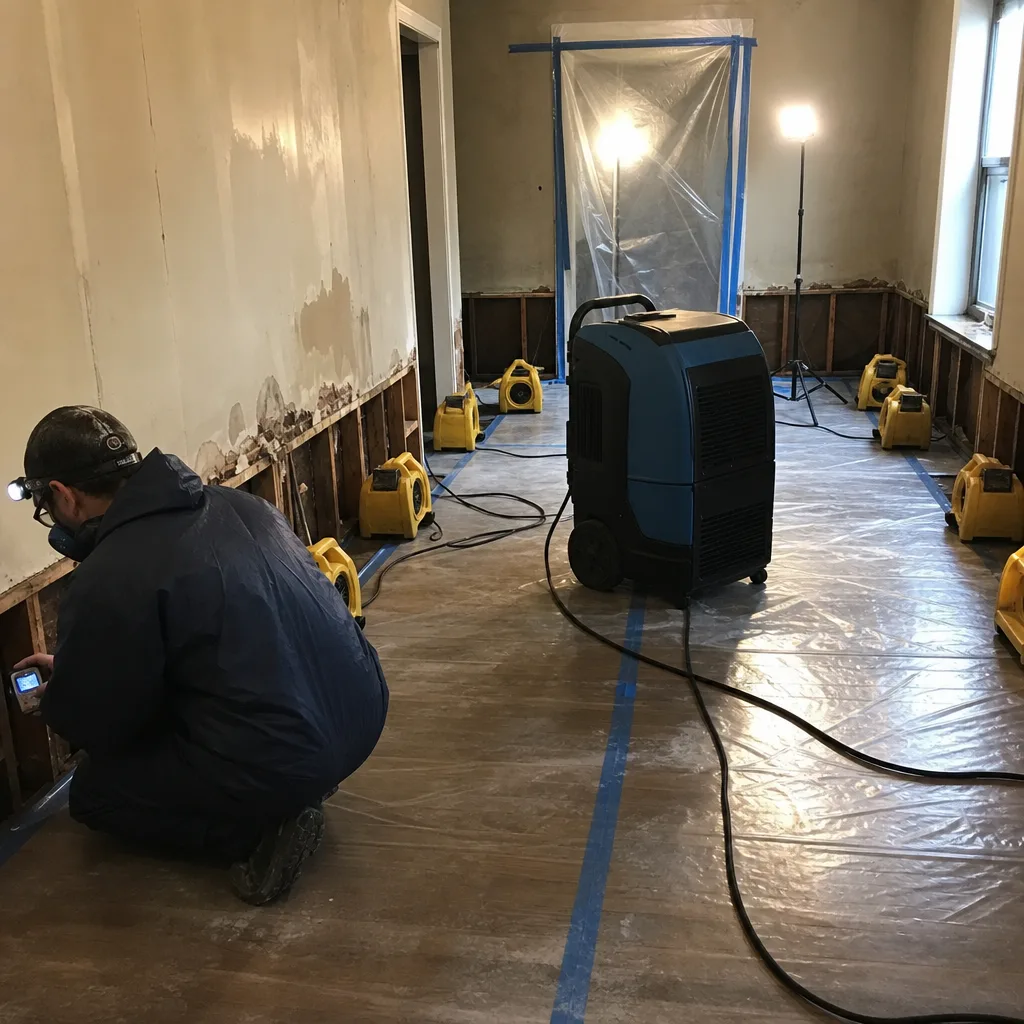
We arrive, walk the property, and identify the water category, the source, and the path it has traveled. Thermal imaging and moisture meters map how far water has wicked into walls, floors, and the party walls that separate East Flatbush rowhouses.
Extraction & Stabilization
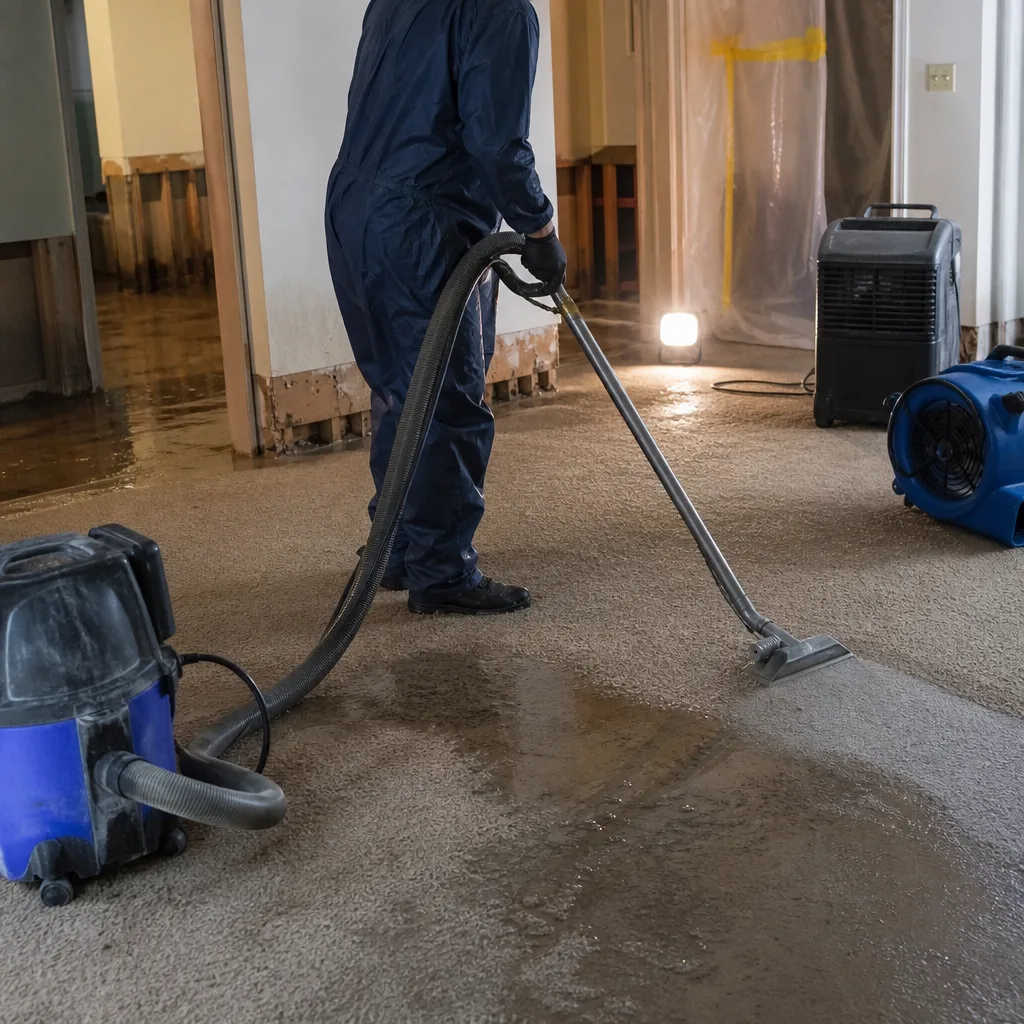
Black water is removed with truck-mounted Dri-Eaz extraction units and professional-grade pumps. We set containment with HEPA air scrubbers to stop sewage-contaminated air from moving through the rest of the house.
Drying & Dehumidification
Phoenix and XPOWER air movers plus LGR dehumidifiers run until the structure hits the dry standard. We log moisture readings every 12 hours and date each entry, because the drying log is what proves pre-loss condition to your insurer.
Cleaning & Sanitization
All affected surfaces receive antimicrobial treatment appropriate to Category 3 water. Porous materials that cannot be fully decontaminated, including drywall and insulation below the floodline, are cut out and removed.
Structural Drying of Party Walls
East Flatbush’s shared masonry walls demand specialized drying. We run Injectidry systems on party walls where contaminated water has wicked into brick and mortar, because drying one side of a shared wall is not drying the wall.
Repairs & Restoration
The same crew rebuilds what was removed: framing, drywall, insulation, flooring, trim, and paint. We return the basement apartment or living space to its pre-loss condition and hand you the full documentation package.
Need Emergency Storm & Disaster Restoration in East Flatbush Now?
Crews minutes away, answering live 24 hours a day. The sooner we start, the less it costs.
Working With Your Insurance Company
Storm and disaster restoration claims in East Flatbush hinge on documentation. Sewer backup losses often involve multiple parties: your homeowner’s policy, sometimes a flood policy, sometimes the city’s sewer infrastructure. From the first hour, we photograph every affected area room by room, log moisture readings by date and time, and build a line-item scope that your adjuster can read without interpretation. Curt Bowman, who founded Floodline Restoration Co., built this company around direct carrier communication because he watched too many homeowners get stuck delivering messages between contractors and insurers. We talk to your adjuster, provide the evidence they ask for, and bill your carrier directly. The 90-Day Done Right Promise is in writing, and it applies to the final result, not just the emergency phase.
What We Provide Your Insurer
- Thorough documentation of the loss
- Photos of all damage, room by room
- Moisture readings and drying logs
- A detailed, line-item scope of work
- Direct coordination with your carrier
Built for East Flatbush’s Loss Calendar
East Flatbush does not have a storm season so much as a storm rhythm, and it hits differently than the coastal neighborhoods. The winter months bring deep freezes that crack aging galvanized supply lines inside uninsulated rowhouse walls. Spring arrives and the thaw meets Brooklyn’s already-strained combined sewer system, sending meltwater and early rain back up through basement floor drains. Summer is where the real damage concentrates: quick-moving convective storms dump an inch of rain in an hour, the flat terrain cannot shed the water, and the sewers push it back into below-grade apartments along Church Avenue, Remsen Avenue, and the side streets off Utica. Fall nor’easters bring wind damage to aging roofs and saturated ground that finds every crack in a 1930s foundation. The pattern repeats year after year, which is why we carry a full complement of storm damage cleanup and flood damage restoration equipment on every East Flatbush truck, and why our crews know the block-level drainage patterns before they park. Our Storm & Disaster Restoration team is built for this rhythm.
Storm & Disaster Restoration Across East Flatbush’s Neighborhoods
The response routes we run through East Flatbush tell you a lot about how storm losses play out block by block. Over near the Lenox Road corridor east of Utica Avenue, the semi-detached brick rowhouses share party walls that transmit water and moisture fast, so containment starts before extraction. Around the Church Avenue commercial spine, the mixed-use buildings put residential units directly above basement spaces that business owners sometimes think of as storage until a summer storm turns them into Category 3 losses. The residential blocks west toward Rutland Road and the areas bordering Prospect-Lefferts Gardens hold some of the oldest clay-tile drain lines in the neighborhood, and those are the ones that send sewage back up through toilets during the first heavy rain of spring. Down near the East 40s and 50s around Kings Highway, the housing stock includes more single-family homes with converted basements, many done without permits, many without vapor barriers, and many that hold water inside finished walls without anyone noticing until the smell starts. Each block pattern changes the scoping, but the underlying failure mode is the same: flat ground, aging drains, and water that has nowhere to go but up.
Specialized Storm & Disaster Restoration Services We Offer in East Flatbush
Flood Damage Restoration
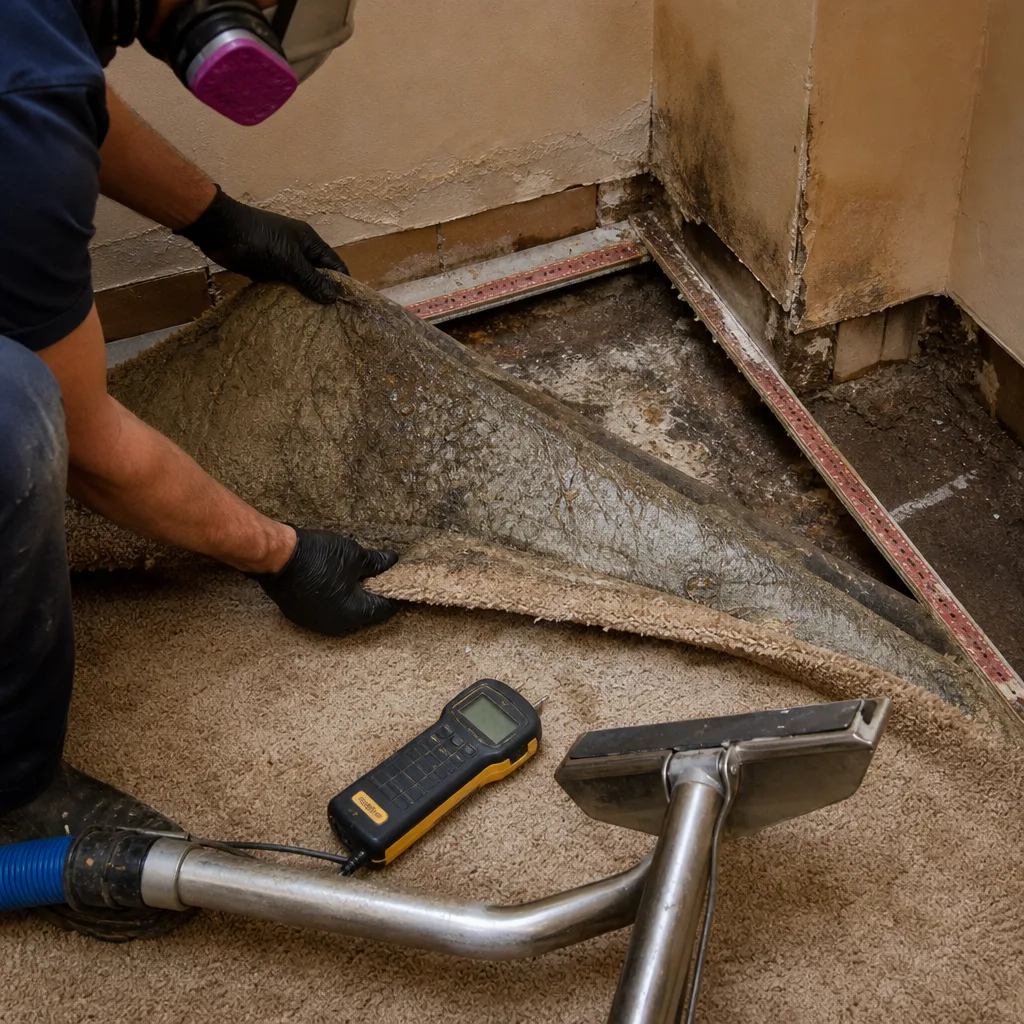
In East Flatbush, flood damage restoration usually means Category 3 sewage backflow, not clean groundwater. We extract the water, remove contaminated porous materials to the floodline, treat the remaining structure with antimicrobials, and dry the space with professional-grade Phoenix and Dri-Eaz equipment until the moisture log shows the structure has reached pre-loss condition. Shared party walls get special attention, because water that wicks into a neighbor’s side of the wall is still your wall.
Storm Damage Cleanup
Wind-driven rain, downed tree limbs, and roof damage all fall under storm damage cleanup. We remove debris, tarp damaged roofs, and stabilize openings the same visit. Then we document everything, because the cleanup phase is where the insurance trail starts, and a well-photographed loss is a faster-settled claim.
Emergency Board-Up
When a storm blows out windows or a falling limb opens a hole in a rowhouse wall, we board up the same day. Security and weather-tightness are the immediate goal, and we use a board-up that keeps rain out and keeps the property secured while the full repair scope is written.
Roof Tarping
East Flatbush’s 1920s and 1930s rowhouses have aging roof membranes that fail under nor’easter winds. We install heavy-duty tarps that hold through follow-up storms while the roof deck dries and the repair scope is finalized with your carrier.
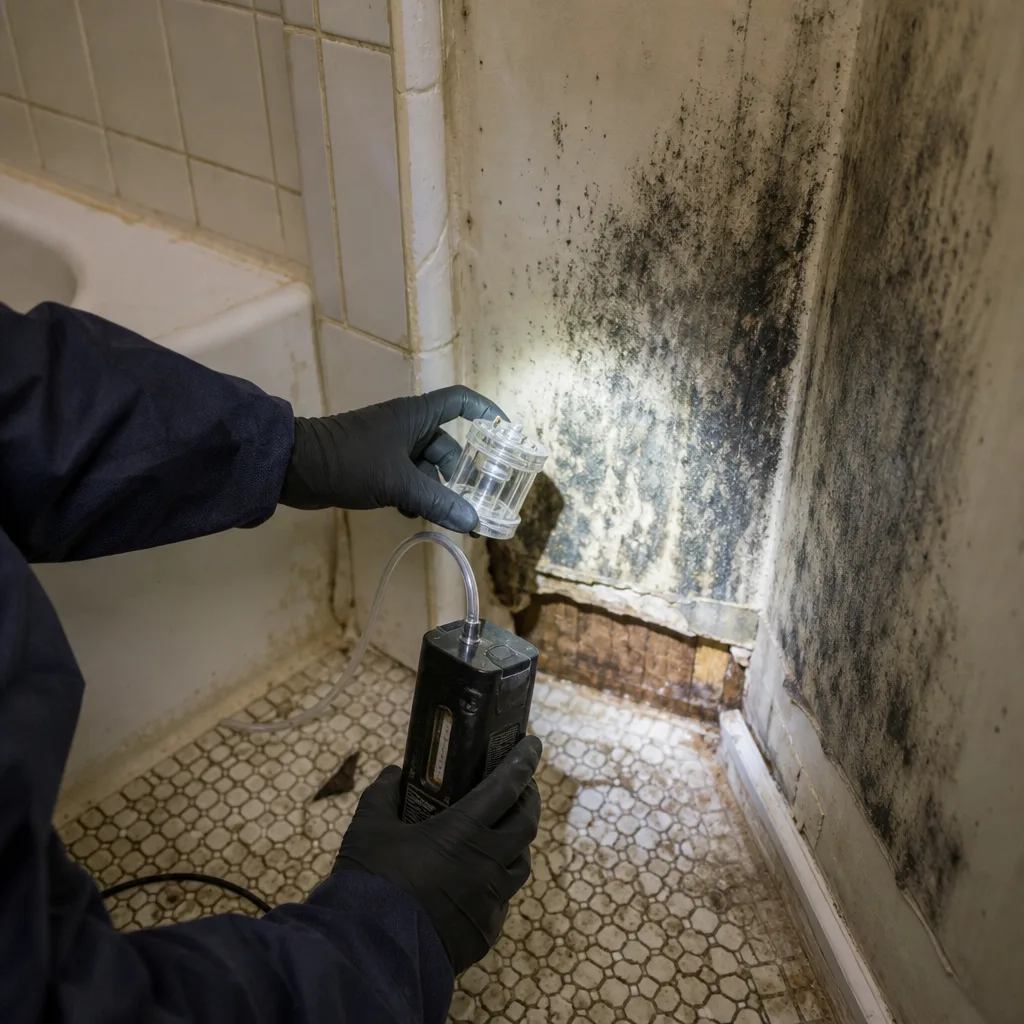
Debris Removal
Storm debris, including downed branches, damaged building materials, and waterlogged contents from a flooded basement, is removed and disposed of properly. We separate hazardous materials where required and keep the cleanup moving so mitigation can start.
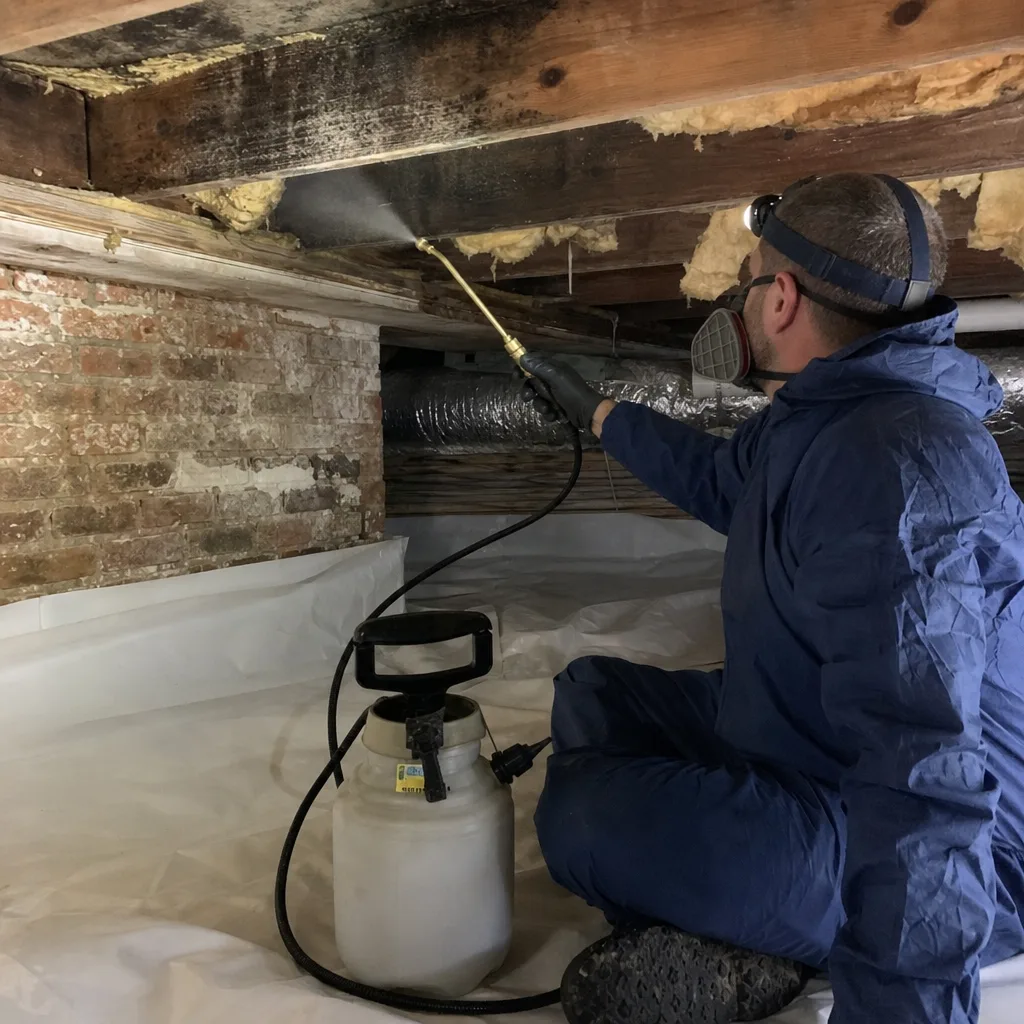
What happens when you call
- 1
A real person answersNo phone trees - you reach a local pro.
- 2
You get an upfront price rangeHonest numbers before anyone is dispatched.
- 3
A background-checked tech heads outLicensed & insured, dispatched right away.
- 4
You approve before work beginsNothing starts until you say go.
Storm & Disaster Restoration Costs in East Flatbush, NY
Because East Flatbush’s losses are so often Category 3 sewer backups rather than clean-water floods, the pricing reflects full contamination protocols. Emergency flood water extraction in East Flatbush typically runs $3,500 to $7,000 for a standard basement apartment, including containment, antimicrobial treatment, and the first 72 hours of drying. A full Category 3 flood damage restoration with drywall removal to the floodline, structural drying, and rebuild work typically lands between $7,000 and $18,000, depending on square footage and how far water migrated into party walls. Storm damage cleanup after a nor’easter, including debris removal and roof tarping, generally runs $1,800 to $4,500. Emergency board-up sits between $800 and $1,500. What moves the price is the water category, the number of rooms involved, and whether the water reached the shared party wall. Many of these losses are covered by sewer backup endorsements or standard homeowners policies, and we write the claim documentation to match. Call (917) 924-4221 and we will come out, assess the loss, and give you a written scope for free before any work starts.
We Also Serve Cities Near East Flatbush
Our crews cover East Flatbush and the surrounding Brooklyn and Bronx areas, including Fairview, Harrison, East Bronx, and Hunts Point. The same live dispatch, certified technicians, and 90-Day Done Right Promise apply everywhere we work.
Serving East Flatbush, NY - Our Local Coverage Area
We’re based in the East Flatbush area and know this community well. Use the map below to see our service coverage - if you’re nearby, we can almost certainly help.
East Flatbush Storm & Disaster Restoration Questions, Answered
After a heavy rain, my East Flatbush basement apartment has sewage coming up through the floor drain. Is this Category 3 water, and what must be removed?
Yes, that is Category 3 black water, and anything porous it touched must come out. Drywall below the floodline, carpet, pad, insulation, and often base cabinets are removed and replaced. The concrete or wood subfloor is treated with antimicrobials and dried to the dry standard. If it was a finished basement apartment, expect a multi-day mitigation plus rebuild, not a one-day dry-out. Call (917) 924-4221 the moment you see it; the faster we extract, the less you lose.
How fast does mold start in a below-grade East Flatbush basement after a sewer backup, and why does that change the scope of work?
Mold can begin on wet drywall within 24 to 48 hours in East Flatbush’s humid below-grade spaces. That is why we cut porous materials early, set containment, and run HEPA air scrubbers. It changes the scope because demolition happens sooner and more aggressively, which is cheaper than a full mold remediation that also has to be documented for the insurer and may lead to a denied claim if we did not respond promptly. A same-day response keeps the loss smaller.
My neighbor’s rowhouse flooded and my shared wall feels damp. Can contaminated water migrate into my unit through the party wall?
Yes, and it often does. East Flatbush’s brick party walls are porous, and Category 3 water wicks laterally through brick and mortar. If your neighbor’s side of the wall is wet, the water will not respect the property line. Containment and moisture mapping on both sides of the wall are the only way to know how far it has traveled, and drying one side only leaves the wall wet and mold-prone. We map and log moisture on both sides and bill the loss accordingly, including the neighbor’s unit if appropriate.
Why does East Flatbush flood multiple times a year while Red Hook only floods during coastal storms?
Because East Flatbush’s flooding is sewer-driven, not tide-driven. The neighborhood sits on a flat glacial outwash plain with almost no grade change, so stormwater has nowhere to drain. Brooklyn’s combined sewer system, which handles both sewage and stormwater, backs up under the load and pushes black water back through floor drains and toilets into below-grade spaces. Red Hook floods when the harbor surges. East Flatbush floods when it rains hard, which happens multiple times every year. That makes it a chronic restoration market, and our crews are set up for exactly that recurrence.
My basement conversion was done without permits. How does that affect Storm & Disaster Restoration work and my insurance claim?
It affects the scope and sometimes the claim. Unpermitted basement work often lacks vapor barriers, proper waterproofing, and code-compliant egress, and demolition reveals those deficiencies. Our job is restoration to pre-loss condition, not code enforcement, but when hidden construction issues complicate drying or create moisture pockets, the scope grows. The insurance side depends on your policy language; we document exactly what we find and provide a written scope so your carrier sees the full picture. A free inspection with us will tell you where you stand before you make a claim decision. Call (917) 924-4221.
How fast can your crew actually reach my East Flatbush address in an emergency?
We commit to a 45-minute response window for emergency storm and flood losses in East Flatbush. Calls go to a live dispatcher, not an answering service, and the crew is moving before the call ends. If it is 2 a.m. and sewage is backing up into a basement apartment, we are not waiting for business hours.
What certifications do your Storm & Disaster Restoration technicians hold?
Our technicians are certified to IICRC standards including WRT (Water Damage Restoration Technician), FSRT (Fire and Smoke Restoration Technician), and AMRT (Applied Microbial Remediation Technician), plus RIA and IFA training. They are background-checked and uniformed, and they arrive with professional-grade Dri-Eaz, Phoenix, XPOWER, and Injectidry equipment.
What should I do in the first 30 minutes after water starts rising in my East Flatbush basement?
Do not enter the water if it is sewage-contaminated, which it almost always is in this neighborhood. Shut off power to the basement at the breaker if you can do so safely. Call (917) 924-4221 immediately. Move nothing out of the water; we will handle extraction and salvage. Documenting the event with photos is helpful, but the priority is starting extraction within the first hour, because sewage water is soaking into drywall, carpet, and the party wall the entire time you wait.
East Flatbush’s storm losses are different from the coast, different from the brownstone belt, and different from what any generic restoration page will tell you. The water here comes up from below, it is contaminated, and it recurs. When it happens to your house, call (917) 924-4221. A live person will answer, and a crew that knows this neighborhood’s failure patterns will be on the way.
Written by Curt Bowman, Owner at Floodline Restoration Co. of Manhattan, serving East Flatbush, NY.