
Free visual inspection and a written scope of work before any mitigation begins - photos, moisture readings, and drying logs go in your claim file
The scope we write is the scope we bill. Anything new gets shown to you, in writing, before we touch it.






 Before
 After
After Before
 After
After Before
 After
After24/7 Emergency Storm & Disaster Restoration in East Flushing
Storm & Disaster Restoration in East Flushing typically begins with a sewage backup or a burst supply line, not a tree through the roof. That changes the first hour. Our crews respond to East Flushing within 45 minutes, with extraction equipment running the same visit, because Category 3 water does not wait for business hours. Call (917) 924-4221 any hour, any day. A live dispatcher picks up at 2 a.m., not a recording, and the visual inspection is free.
Understanding Storm & Disaster Restoration Severity in East Flushing Properties
East Flushing’s 1920s-1940s brick semi-attached homes handle water differently than newer construction. The full finished basements found on blocks between Northern Boulevard and the Port Washington LIRR corridor sit below grade against a persistently shallow water table. When the combined sewer system along Northern Boulevard reaches capacity during a nor’easter or tropical remnant, the backflow entering these basements is Category 3 water: sewage-contaminated, carrying pathogens, and legally requiring full antimicrobial treatment and disposal of porous contents. We classify every loss by IICRC standard first. Category 1 (clean supply line) water in an East Flushing basement often goes unnoticed behind finished walls until flooring buckles, at which point it has migrated to Category 2. Moisture mapping with thermal imaging and hygrometers tells us where the water actually traveled, not just where it pooled. Structural drying in these brick homes requires managing hydrostatic pressure from outside while pulling moisture from inside, because the parging and mortar joints admit moisture even after standing water is gone.
Why East Flushing Property Owners Choose Floodline Restoration Co. of Manhattan
- 45-minute response commitment. We dispatch from our New York City office into East Flushing immediately, with a live person confirming your address while the crew is already moving.
- 24/7 live answer, never an automated system. The dispatcher who takes your call stays on the file until the crew arrives. No menus, no callbacks.
- IICRC-certified crews. Our technicians hold WRT, FSRT, and AMRT certifications and arrive background-checked and uniformed.
- Free visual inspection. Before any work begins, you get a written scope and a straight answer about what needs mitigation versus full restoration.
- Direct insurance billing. We document from the first hour and bill your carrier directly. You never play messenger between us and the adjuster.
- One team from extraction to reconstruction. The same crew that reads the moisture map on day one handles daily readings and rebuilds what needs rebuilding. No mid-job handoff.
Our Storm & Disaster Restoration Process
Inspection & Assessment
We locate every affected area, including behind walls and under flooring, using thermal imaging and penetrating moisture meters. You get a written scope of work with line-item pricing before we start.
Extraction & Stabilization
Standing water comes out with truck-mounted extraction and submersible pumps fitted to the space. For sewage backups, containment goes up first to keep airborne contaminants from the rest of the house.
Drying & Dehumidification
Dri-Eaz air movers and low-grain refrigerant dehumidifiers are placed per the moisture map, not scattered. Daily readings are logged until the dry standard is met, and the log goes to both you and your carrier.
Cleaning & Sanitization
Category 3 water demands antimicrobial treatment of every affected surface and disposal of porous materials that cannot be cleaned. We follow IICRC S500 standards on every sewage job.
Specialty Treatment for East Flushing’s Sewer Backups
Shared masonry party walls in semi-attached homes require containment on both sides of a wall breach. We run parallel scopes when a single backup migrates into the adjoining property.
Repairs & Restoration
Drywall, flooring, trim, and painting go back in by the same uniformed crew that performed mitigation. The 90-Day Done Right Promise covers the finished work in writing.
Need Emergency Storm & Disaster Restoration in East Flushing Now?
Crews minutes away, answering live 24 hours a day. The sooner we start, the less it costs.
Working With Your Insurance Company
Flooding from a sewer backup is covered under most East Flushing homeowners policies only when the specific endorsement is present, so we document claims from the first hour with your carrier’s requirements in view. We photograph room by room before anything is moved, and every moisture reading and drying log entry is timestamped and policy-ready. Our estimators write industry-standard line-item scopes your adjuster recognizes. The goal is a square deal: you know your mitigation cost, your rebuild cost, and your out-of-pocket exposure before signing anything. We bill direct and coordinate with your adjuster throughout.
What We Provide Your Insurer
- Thorough documentation of the loss
- Photos of all damage, room by room
- Moisture readings and drying logs
- A detailed, line-item scope of work
- Direct coordination with your carrier
Built for East Flushing’s Loss Calendar
East Flushing’s storm season runs through the combined sewer system, and it has a rhythm. January and February bring hard freezes that split the aging galvanized and cast-iron supply lines still present in this era of housing stock, flooding finished basements with clean water that often goes unnoticed until flooring buckles. March and April thaw the ground around foundations, raising hydrostatic pressure against parging that predates modern waterproofing membranes. Summer thunderstorms drop enough rain in thirty minutes to push the Flushing Creek drainage basin over its limit. September nor’easters and tropical remnants, like Ida’s 2021 floods that inundated finished basements across East Flushing with Category 3 water, remain the season’s most destructive events. Each season produces the same call: a basement full of contaminated water, a homeowner who thought the dampness was normal, and a restoration crew that should have been called twelve hours earlier.
Storm & Disaster Restoration Across East Flushing’s Neighborhoods
The blocks between Northern Boulevard and 35th Avenue hold the densest concentration of semi-attached brick homes in East Flushing, and they sit closest to the combined sewer mains that back up first during heavy rainfall. We know the response route from our dispatch office into this corridor without a map, and we know that a backup on one side of a party wall usually means water on the other side within hours. Along 149th Street and the side streets running toward Kissena Park, homes tend toward the same 1920s-1940s brick construction with finished basements, and we see the same chronic pattern: recurring Category 3 backups that homeowners have learned to live with until mold takes hold. Near the LIRR corridor and the industrial edge by College Point Boulevard, storm debris and wind damage add a second layer, but the water loss still drives the call. The Korean-American homeowner base across East Flushing deserves a contractor who can walk through insurance paperwork without making the language a second battle. Curt Bowman built Floodline Restoration Co. around exactly that: plain spoken, documented, and accountable.
Specialized Storm & Disaster Restoration Services We Offer in East Flushing
Storm Damage Cleanup
When a nor’easter or tropical remnant moves through East Flushing, the damage arriving first is wind-driven water entering through basement windows and foundation cracks. We extract, dry, and sanitize, then repair the entry point so the next storm does not repeat the loss. No homeowner should re-set the same basement twice.
Flood Damage Restoration
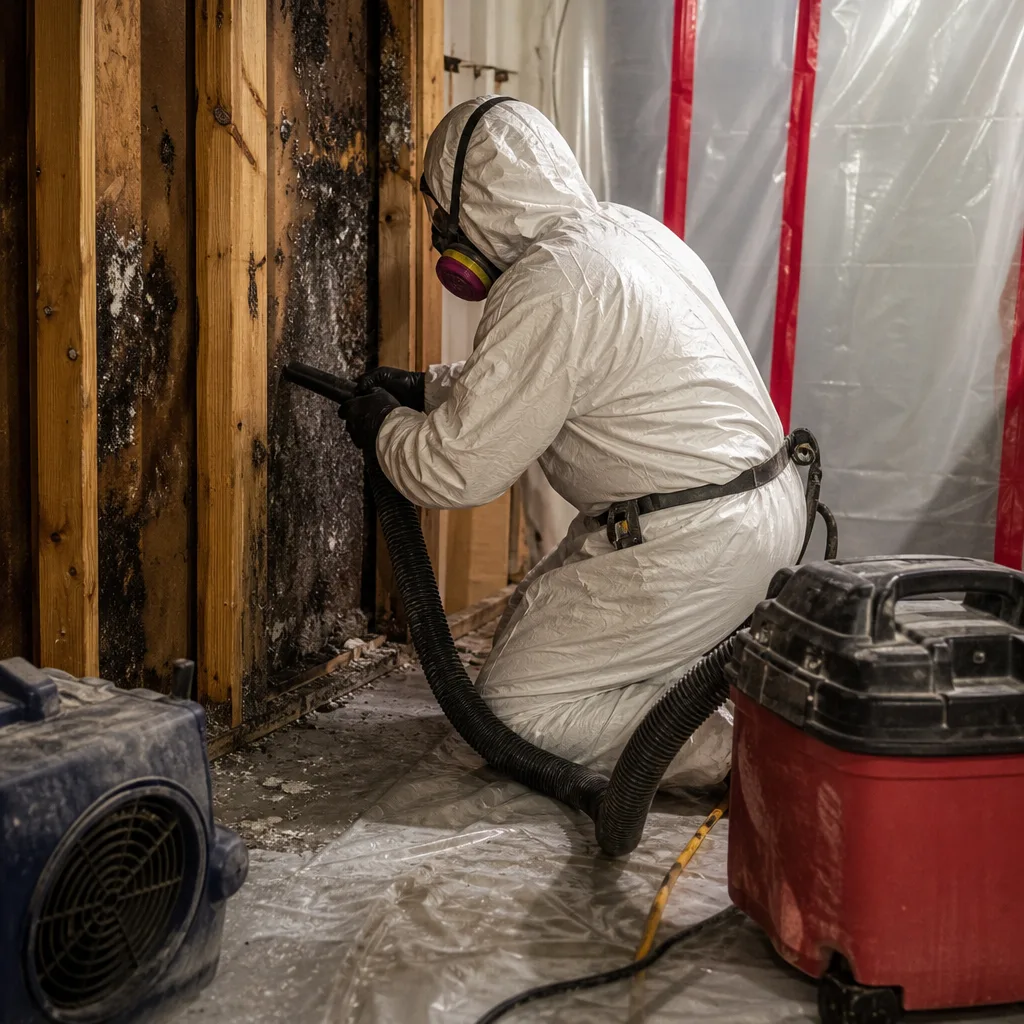
This is the dominant restoration work in East Flushing, and the Storm & Disaster Restoration team treats it as a Category 3 event until proven otherwise. Sewage backflow through floor drains and toilets carries pathogens that require full containment, antimicrobial treatment, and disposal of affected porous materials. We run the entire scope, from first extraction to finished rebuild, under one roof. The East Flushing homes we serve have finished basements that double as family rooms, so restoration means returning the space to use, not just drying it out.
Emergency Board-Up
When a storm blows out a basement window or a tree limb punctures a wall on a Northern Boulevard side street, an open opening invites looters, animals, and more water. We arrive with plywood and fasteners, secure the property, and document everything for the carrier. Board-up is a stopgap; our crews are back for permanent repair once the claim clears.
Roof Tarping
A damaged roof over a 1920s brick semi-attached in East Flushing leaks into the walls and down into the finished basement. Tarping stops the active leak within hours, and we secure tarps to handle the wind loads this neighborhood gets off Flushing Bay. The tarp buys time for a proper scope; it is not the repair.
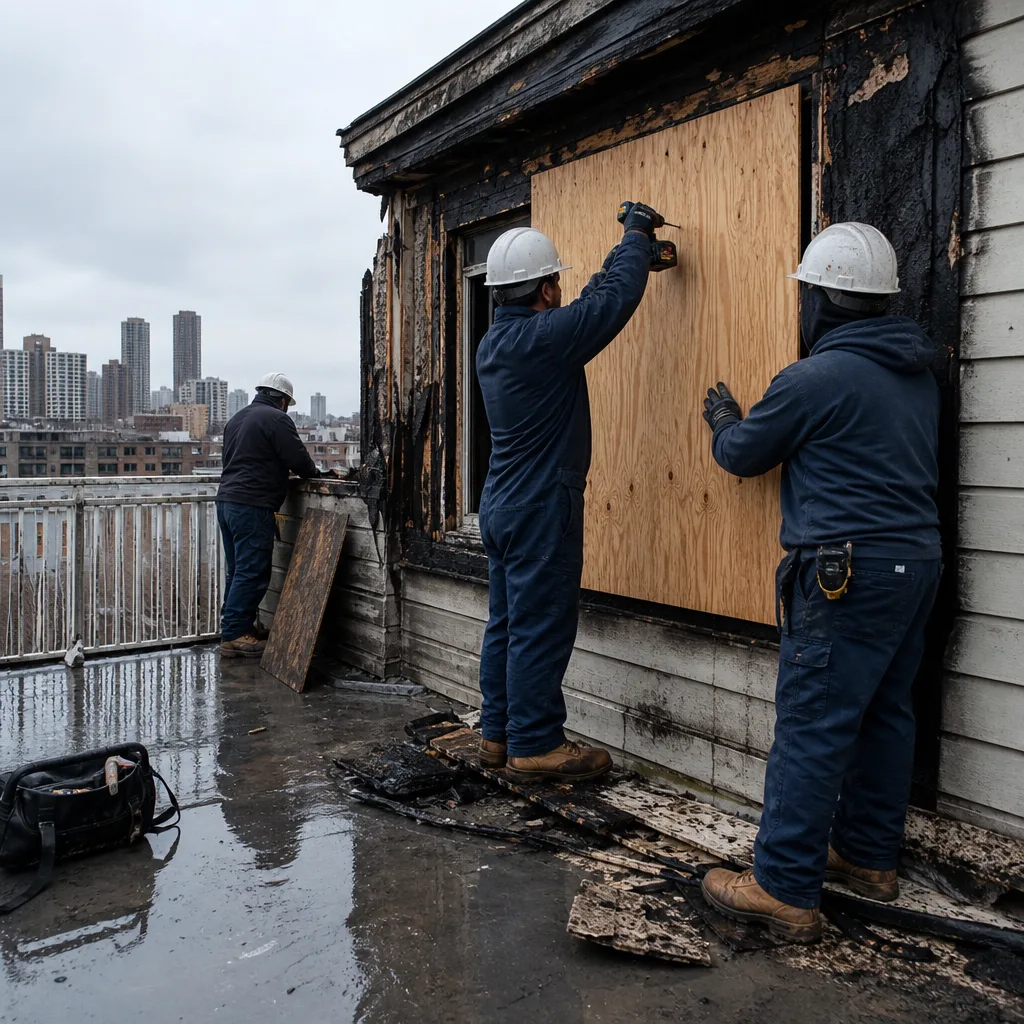
Debris Removal
Nor’easters drop tree limbs and garbage across East Flushing yards and into basement stairwells. We clear the debris, document the loss for insurance, and keep the job moving toward the water extraction that matters. No debris sits between a homeowner and a dry basement.
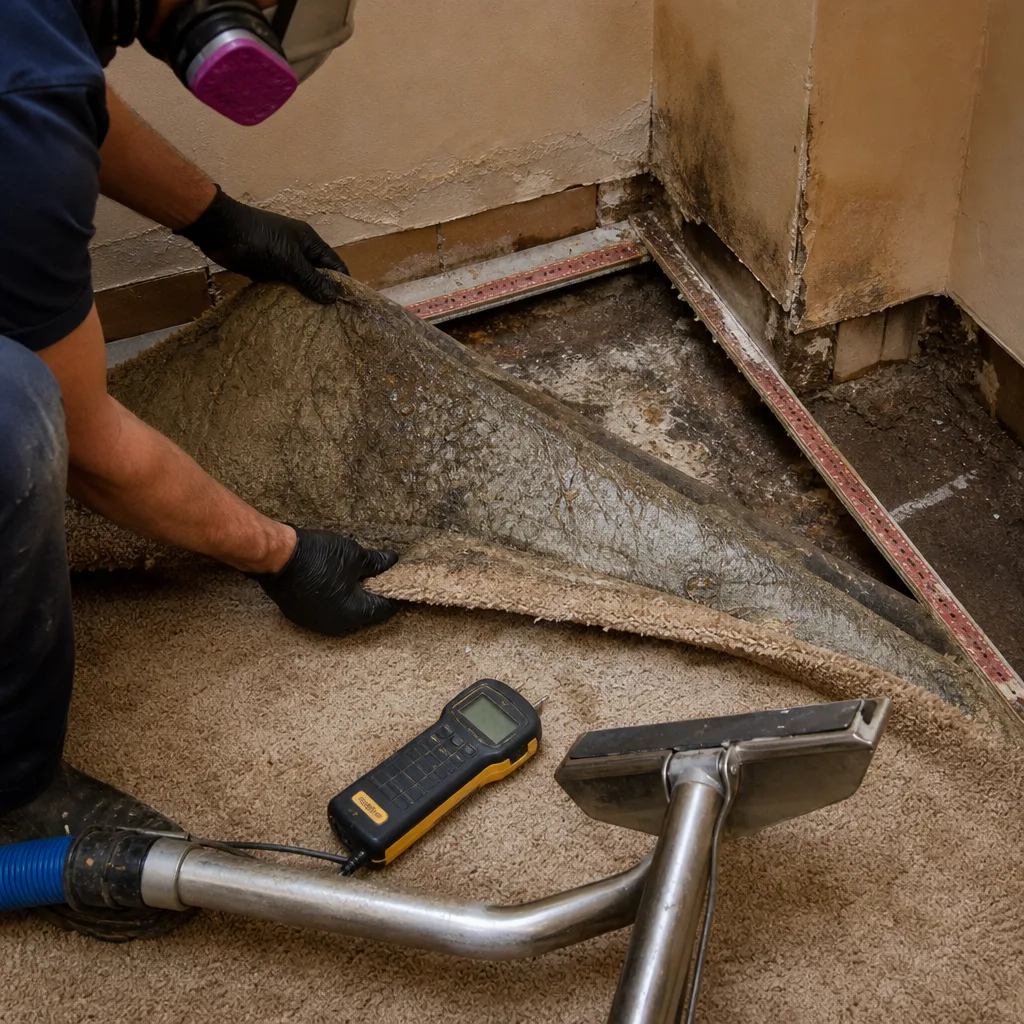
What happens when you call
- 1
A real person answersNo phone trees - you reach a local pro.
- 2
You get an upfront price rangeHonest numbers before anyone is dispatched.
- 3
A background-checked tech heads outLicensed & insured, dispatched right away.
- 4
You approve before work beginsNothing starts until you say go.
Storm & Disaster Restoration Costs in East Flushing, NY
A Category 3 sewage backup in an East Flushing finished basement typically runs $3,200-$6,500 for full mitigation, which includes extraction, containment, antimicrobial treatment, structural drying, and disposal of contaminated materials. Clean water extraction from a burst supply line runs lower, usually $1,900-$3,400, depending on how far the water traveled and how much drywall and flooring must be removed. Emergency board-up in East Flushing runs $450-$900, and roof tarping $600-$1,200. What moves the price most is the square footage of finished basement affected and whether a shared party wall forces a parallel scope in the neighboring unit. Insurance covers most of these losses when the right endorsements exist. The free visual inspection produces a firm, line-item scope so you know the number before work begins. Call (917) 924-4221 for an exact quote, estimates are free.
We Also Serve Cities Near East Flushing
Our crews respond to storm and flood losses across the surrounding area, including Fairview, Harrison, East Bronx, and Hunts Point. If you’re near East Flushing and facing water in a basement, call us, and we’ll tell you honestly if we can be there in time to matter.
Serving East Flushing, NY - Our Local Coverage Area
We’re based in the East Flushing area and know this community well. Use the map below to see our service coverage - if you’re nearby, we can almost certainly help.
East Flushing Storm & Disaster Restoration Questions, Answered
How does ‘sympathy flooding’ work in East Flushing’s semi-attached homes during a combined-sewer overflow?
Sympathy flooding happens when a combined sewer backup enters one semi-attached unit’s basement and then migrates through the shared masonry party wall into the adjoining home. The wall is brick and mortar, not a waterproof barrier. Raw Category 3 water finds the path of least resistance, which is often through deteriorated mortar joints at the foundation line. Both homeowners then need extraction, containment, drying, and antimicrobial treatment, and each files a separate claim under their own policy.
Why are Category 3 sewage backups the dominant restoration job in East Flushing rather than fire or wind damage?
East Flushing sits within the Flushing Creek drainage basin, and its combined sewer mains along Northern Boulevard reach capacity under heavy rainfall, sending sewage backflow into low-lying basements. The housing stock is uniformly built with full finished basements below grade, which is where the backflow arrives first. Fire and wind losses happen, but the chronic, repeating flood pattern through the sewer system makes sewage mitigation the neighborhood’s core restoration work.
What structural features of 1920s-1940s brick homes in East Flushing make flood damage worse?
The era of construction predates modern waterproofing membranes and depends on aging parging and mortar joints that admit hydrostatic moisture under pressure. Finished basements hide water behind drywall and flooring until damage is extensive. Shared masonry party walls between semi-attached units create direct pathways for water migration. And the aging galvanized and cast-iron supply lines in these homes burst during hard freezes, flooding basements with clean water that goes unnoticed for days.
How quickly should I start water extraction after an East Flushing sewer backup?
You should start extraction within hours, not days. Category 3 water carries pathogens that multiply quickly, and porous materials like drywall, carpet, and upholstery absorb contamination permanently once they remain wet. The longer water sits, the more drywall and flooring must be removed and the higher the final cost. Call (917) 924-4221 the moment you see water; we respond in about 45 minutes.
Will restoration from a shared-party-wall flood affect my neighbor’s insurance too?
Yes, in most cases. When a single sewer backup migrates through a shared party wall into the adjoining home, each homeowner files a claim under their own policy. We document each unit with separate moisture readings, photos, and drying logs so both adjusters have complete, independent scopes. We bill each carrier directly, and the two claims proceed in parallel.
How long does full restoration take in an East Flushing finished basement after Category 3 water?
Extraction and containment start the day you call. Structural drying typically runs 3-5 days with daily moisture readings. Antimicrobial treatment and disposal of contaminated materials follow. Full rebuild of drywall, flooring, and trim depends on the scope but commonly runs 2-4 weeks from start to finish. We give you a written timeline with your scope, and the 90-Day Done Right Promise covers the work.
Can we stay in our East Flushing home during sewage mitigation?
During active Category 3 mitigation, you should not occupy the affected basement, and in many cases we recommend staying out of the home during the first 24-48 hours while containment is in place and air scrubbers run. Clean water losses from a burst pipe are usually different; you can stay upstairs while drying runs in the basement. We tell you honestly after the initial assessment.
What should I do in the first 30 minutes after discovering an East Flushing sewer backup?
Turn off power to the affected area if you can do so safely from a dry location. Do not walk through the water, and do not run a shop vac or fan. Keep children and pets away. Call (917) 924-4221 immediately and tell the dispatcher it’s a sewage backup, not clean water. The first 30 minutes determine how much of your finished basement can be saved.
On a block between Northern Boulevard and the Port Washington LIRR corridor, our crew responded to a nor’easter sewage backup that had pushed Category 3 water through a shared foundation wall into two finished basements. We ran simultaneous water extraction and containment in both units, documented moisture readings and drying logs for each insurance policy, and completed structural drying with Dri-Eaz air movers and dehumidifiers before antimicrobial treatment and pack-out. Both homeowners had been told by previous contractors that the dampness was normal for the area. It was not. The line the water left is where we start.
Written by Curt Bowman, Owner at Floodline Restoration Co., serving East Flushing and the surrounding boroughs.