
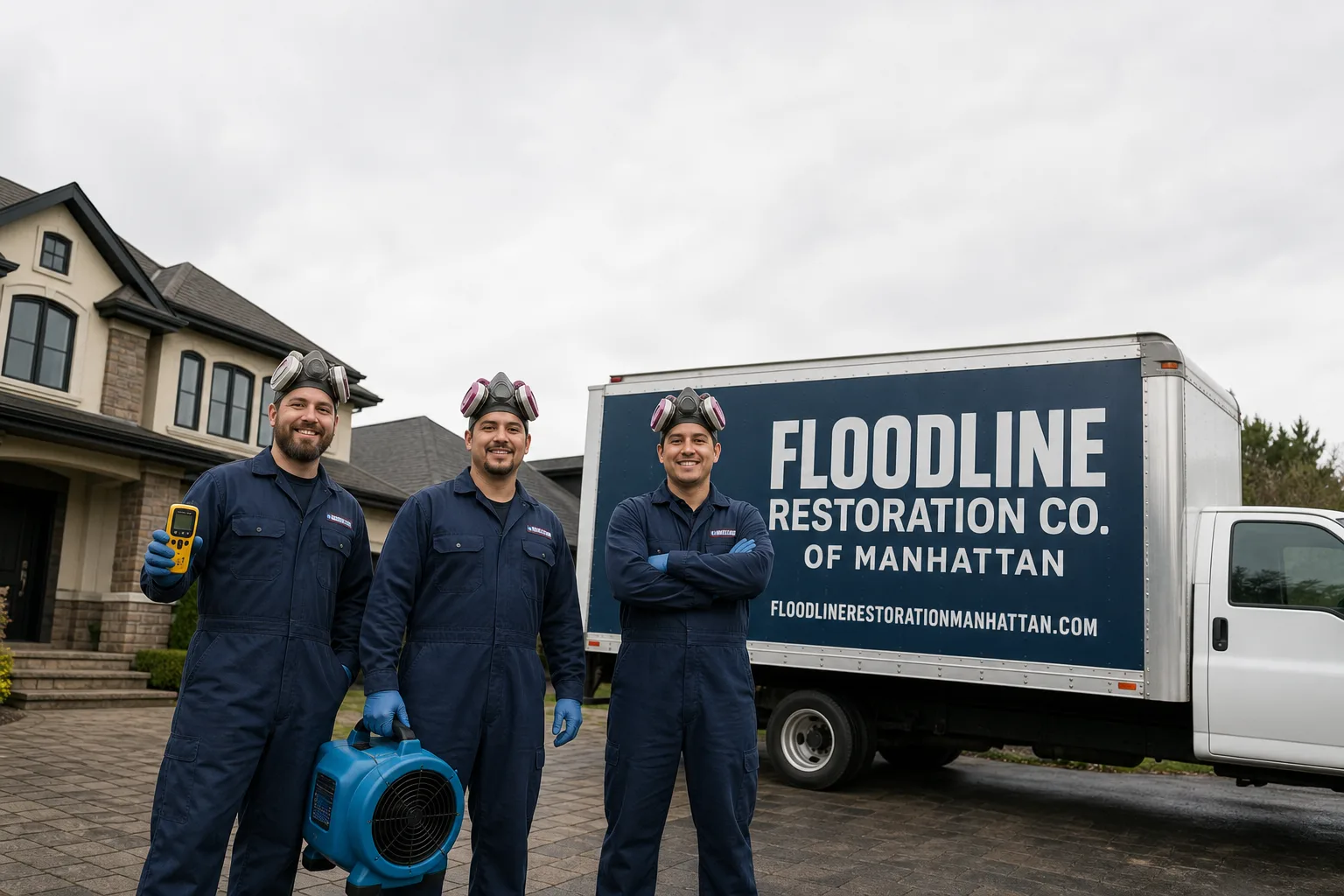
Free visual inspection and a written scope of work before any mitigation begins - photos, moisture readings, and drying logs go in your claim file
The scope we write is the scope we bill. Anything new gets shown to you, in writing, before we touch it.






 Before
 After
After Before
 After
After Before
 After
After24/7 Emergency Biohazard & Crime Scene Cleanup in Bedford-Stuyvesant
When a death, trauma, or hazardous biological event happens inside a Bedford-Stuyvesant rowhouse, the first call should be to (917) 924-4221. We answer live at any hour, and a Floodline Restoration Co. of Manhattan crew can be dispatched to your block within 45 minutes. The reason speed matters here has a lot to do with the buildings themselves: the 1870s-1910s brownstones and brick rowhouses that define Bed-Stuy share structural walls with neighboring homes, and organic fluids move through horsehair plaster, old-growth pine, and deteriorated mortar far faster than most owners expect. A free visual inspection happens before any work begins, so you know exactly what you are dealing with. We handle the full scope, from containment to final restoration, and we document everything for your insurer.
Understanding Biohazard & Crime Scene Cleanup Severity in Bedford-Stuyvesant Properties
Bed-Stuy’s housing stock makes biohazard events measurably more complex than what a crew faces in a drywall-built suburban home. Most rowhouses here still carry their original horsehair plaster over wood lath, layered onto soft Belleville brownstone or brick party walls. Plaster is absorbent. When blood, decomposition fluid, or sewage soaks into it, the contamination does not sit on the surface the way it does on painted drywall. It wicks down into the lath, then into the joists and, along party walls, toward the neighbor’s side of the structural seam.
We classify these events by contamination level, the same way a restoration firm classifies water damage. A minor blood spill on a sealed floor is a Category 1 event: surface cleaning, antimicrobial treatment, done. An unattended death where fluids soaked into heart pine is Category 3. That requires full containment, negative air pressure, controlled demolition of affected plaster and flooring, structural drying, and clearance testing. In Bed-Stuy, we routinely find that a Category 3 event in one unit has begun transmitting odor or moisture into the adjacent property through a shared wall cavity. That changes the scope, the timeline, and the insurance picture. Our techs are trained to IICRC standards for trauma and biohazard work, and they scope the structure, not just the visible scene.
Why Bedford-Stuyvesant Property Owners Choose Floodline Restoration Co. of Manhattan
- 45-minute response commitment: We get a certified crew rolling toward your Bed-Stuy block the moment you hang up, day or night, including holidays.
- 24/7 live answer: A real dispatcher picks up at 2 a.m. You never leave a message or wait for a callback when a biohazard emergency is spreading into a shared wall.
- IICRC-certified technicians for trauma and biohazard work: Our crews hold WRT, FSRT, and AMRT certifications, which means they have formal training in contamination control, structural drying, and mold remediation as it applies to Category 3 events.
- Free visual inspection: Before any work is authorized, we walk the space with you and explain what actually needs to happen. A written scope follows, agreed to before we open a single wall.
- Direct insurance billing: We communicate with your adjuster, provide the documentation they need, and bill the carrier directly so you are not playing messenger.
- One team from containment to reconstruction: The same crew that sets air scrubbers and removes contaminated plaster is the crew that rebuilds the lath work, re-plasters, and restores the floor. No mid-job handoff to an unknown subcontractor.
Our Biohazard & Crime Scene Cleanup Process
Inspection & Assessment
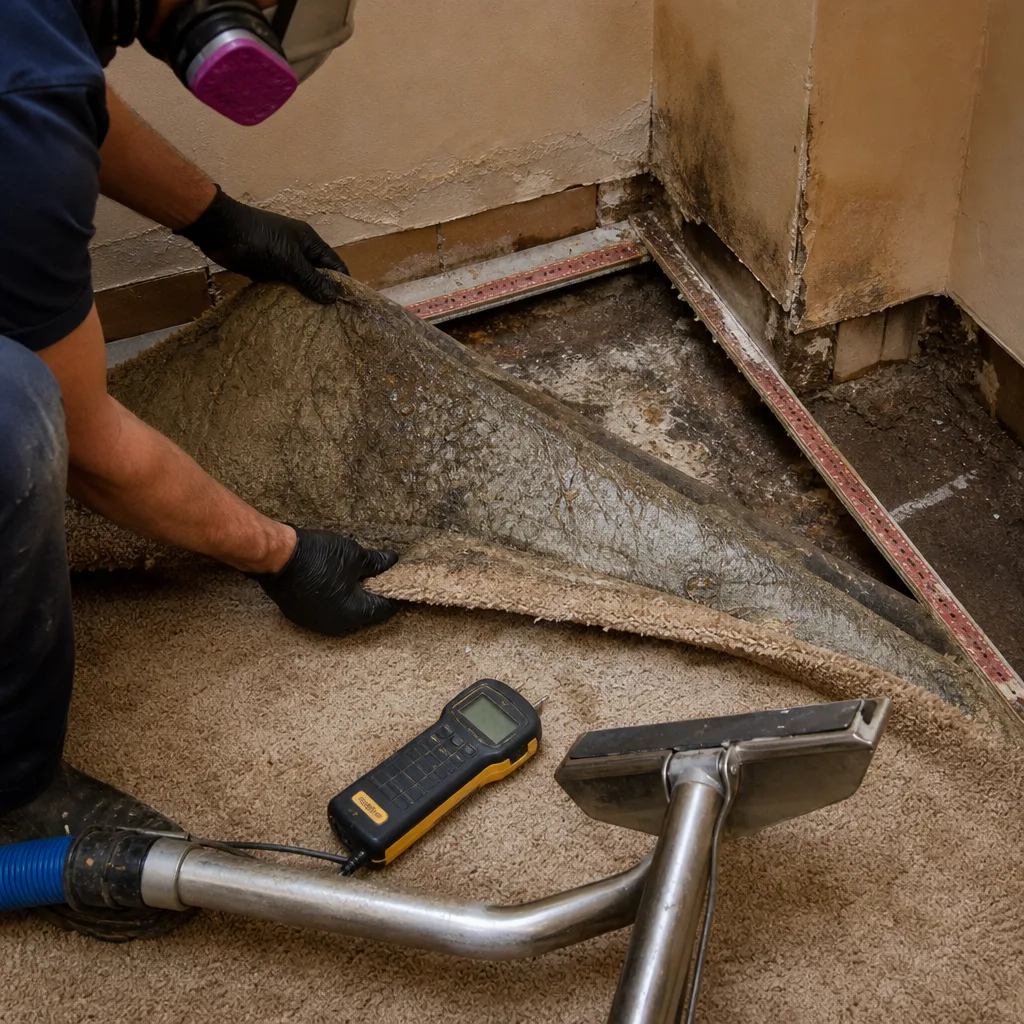
We arrive, assess the scene, and determine the contamination category. In Bed-Stuy, this always includes checking the party wall seam and any old waste lines or radiator lines that may have contributed. Thermal imaging and moisture meters help us find what is hidden inside plaster and subflooring.
Containment & Stabilization
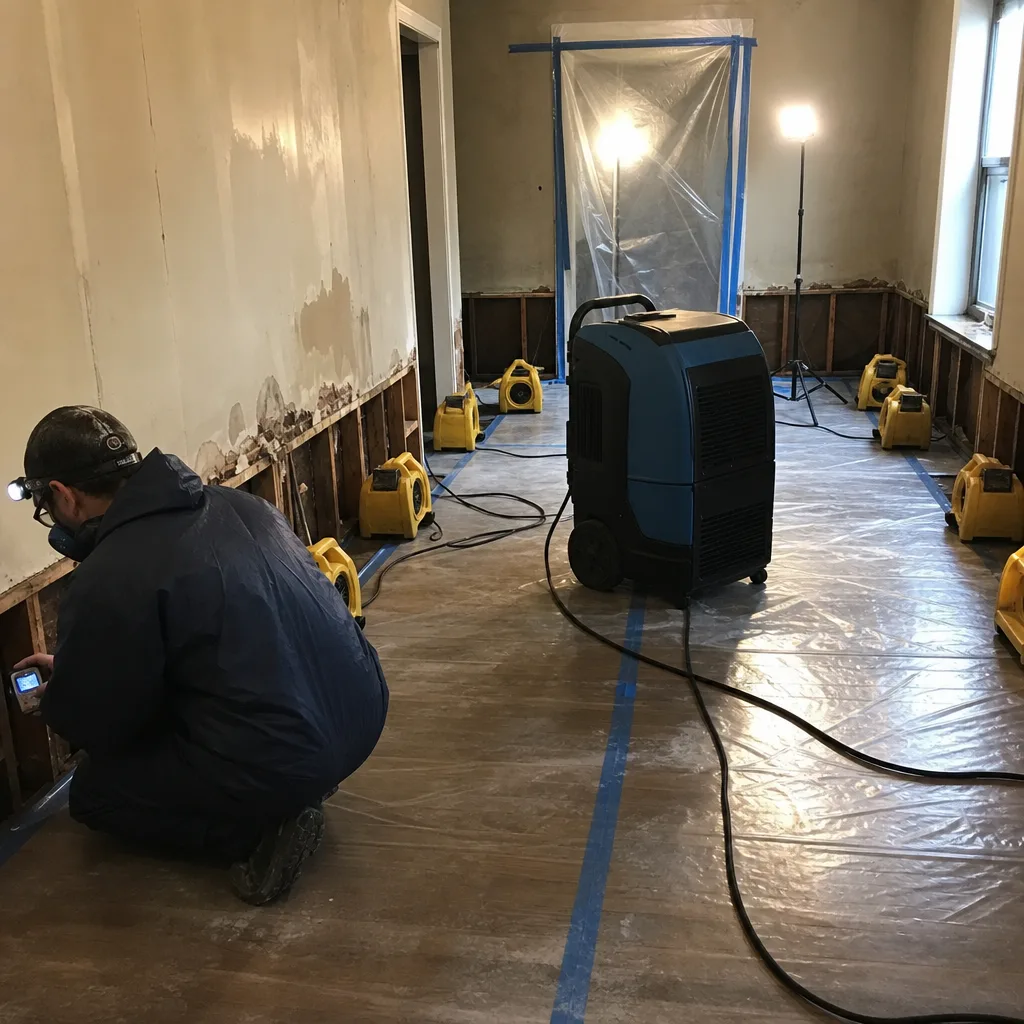
Before we disturb any material, we seal the affected area with poly sheeting and establish negative air pressure using HEPA-filtered air scrubbers. In rowhouses, we run containment on both sides of shared walls when needed. This keeps aerosolized tissue, blood, or pathogens from moving into the neighbor’s unit.
Removal of Contaminated Materials
Fluid-soaked heart pine, plaster, lath, or insulation comes out in sealed, labeled containers for lawful disposal. We cut plaster back to clean, solid edges, not just to where the stain stops. Joists and studs get assessed for saturation depth before we decide what stays.
Cleaning & Sanitization
Remaining structural members are scrubbed with hospital-grade antimicrobial treatments. We treat the cavity space, not just visible surfaces. Dri-Eaz dehumidifiers and XPOWER air movers run continuously, with daily moisture readings logged until the framing matches the pre-loss condition of the rest of the structure.
Odor & Air Clearance
Odor in old buildings travels. We run HEPA air scrubbing continuously, then confirm clearance with air sampling where needed. For party walls, we monitor the seam under negative pressure until we are certain no odor transfer has occurred to the adjacent property. This is the step national franchises skip in Bed-Stuy, and it is the step that prevents callbacks in July.
Repairs & Restoration
We rebuild the affected area to match the building. That means horsehair plaster work, wood lath replacement, heart pine patching, and period-appropriate trim where needed. Our crews do this in-house. The same people who contained the scene finish the job, and the same 90-Day Done Right Promise applies to every stitch of it.
Need Emergency Biohazard & Crime Scene Cleanup in Bedford-Stuyvesant Now?
Crews minutes away, answering live 24 hours a day. The sooner we start, the less it costs.
Working With Your Insurance Company
Most biohazard and trauma cleanup claims are covered under the property’s homeowner’s policy, and we deal with the carrier directly so you do not have to interpret policy language at 3 a.m. From the first hour on site, we photograph every affected surface, log moisture readings, and notate exactly where contamination reached. That documentation is what gets a claim approved without the adjuster’s second-guessing. Curt Bowman, who founded Floodline Restoration Co., built the company around a simple idea: a homeowner should never be left negotiating between a restoration crew and an insurance company. We send the adjuster a detailed, line-item scope written in the same software and format the carriers already use, which means fewer delays and fewer requests for clarification. For party-wall situations where a neighbor’s unit is also affected, we coordinate with both carriers so the two claims do not collide.
What We Provide Your Insurer
- Thorough documentation of the loss
- Photos of all damage, room by room
- Moisture readings and drying logs
- A detailed, line-item scope of work
- Direct coordination with your carrier
Built for Bedford-Stuyvesant’s Loss Calendar
Bed-Stuy’s biohazard calls follow the calendar in patterns that anyone who has lived here for a decade will recognize. Deep winter freezes stress the old cast-iron waste lines and radiator supply pipes inside uninsulated brownstone walls, and when a line bursts or a radiator valve fails, the released water often carries sewage or heating sludge into living spaces. Spring thaw brings basement seepage through the soft Belleville brownstone foundation walls, which reactivates old contamination sealed beneath floorboards. Summer is the season for odor re-emergence: humidity rises, the city gets hot, and anything that was not fully remediated starts smelling again, especially in buildings where fluids once soaked into heart pine. Nor’easters and summer thunderstorms push water through century-old flat-roof drains and behind parapet coping stones, running down through multiple plaster levels before anyone notices. And the biohazard calls that are not water-related at all, the unattended deaths and trauma scenes, arrive without season. Those happen year-round, which is why our dispatch board never closes.
Biohazard & Crime Scene Cleanup Across Bedford-Stuyvesant’s Neighborhoods
We work the full length of Bedford-Stuyvesant, from the blocks around Herbert Von King Park and Tompkins Avenue up to the Stuyvesant Heights historic district, over to the Marcy Avenue corridor, and across the brownstone rows near Fulton Street and Malcolm X Boulevard. Each pocket of the neighborhood has its own building rhythm. The blocks east of Marcus Garvey Boulevard have some of the oldest intact rowhouses, many with original party-wall masonry that has never been fully repointed. The area around MacDonough Street and Decatur Street sees a lot of subdivided brownstones with illegal basement apartments, which means improvised plumbing branches and old waste lines tapped with PVC. Near Throop Avenue and along the western edge toward Classon, we see more converted rentals with recent gut renovations layered over older moisture damage. The point is that response routes and building types vary block by block, and our crews know the difference between a Stuyvesant Heights brownstone and a Jefferson Avenue walk-up without asking for directions.
Specialized Biohazard & Crime Scene Cleanup Services We Offer in Bedford-Stuyvesant
Crime Scene Cleanup
After law enforcement releases the scene, we handle blood, tissue, and other biological material under strict containment. In a Bed-Stuy rowhouse, this often means working inside a narrow room with plaster walls on two sides and a shared wall on a third. We contain the space before any material is disturbed, because once aerosolized blood enters the party-wall cavity, it becomes a two-address problem.
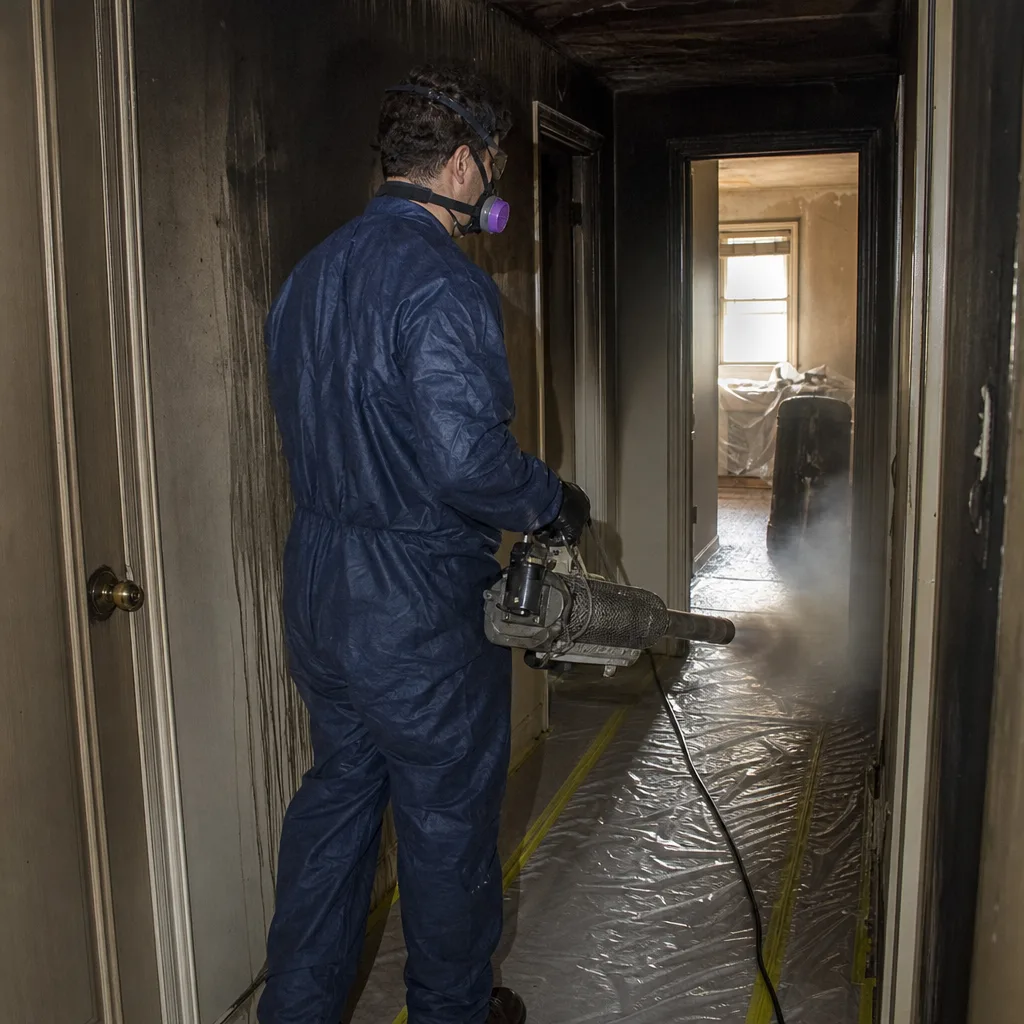
Trauma & Unattended Death Cleanup
This is the most common biohazard call we run in Bedford-Stuyvesant. A neighbor notices an odor, or a building owner finds a tenant who passed days earlier. Fluids settle into heart pine flooring and wick into the plaster and joists below. Surface cleaning is not enough. We remove affected flooring and plaster, treat the framing, dry to pre-loss moisture levels, and restore the space so the building does not smell on the first humid day in June. Our full Biohazard & Crime Scene Cleanup team handles this in-house.
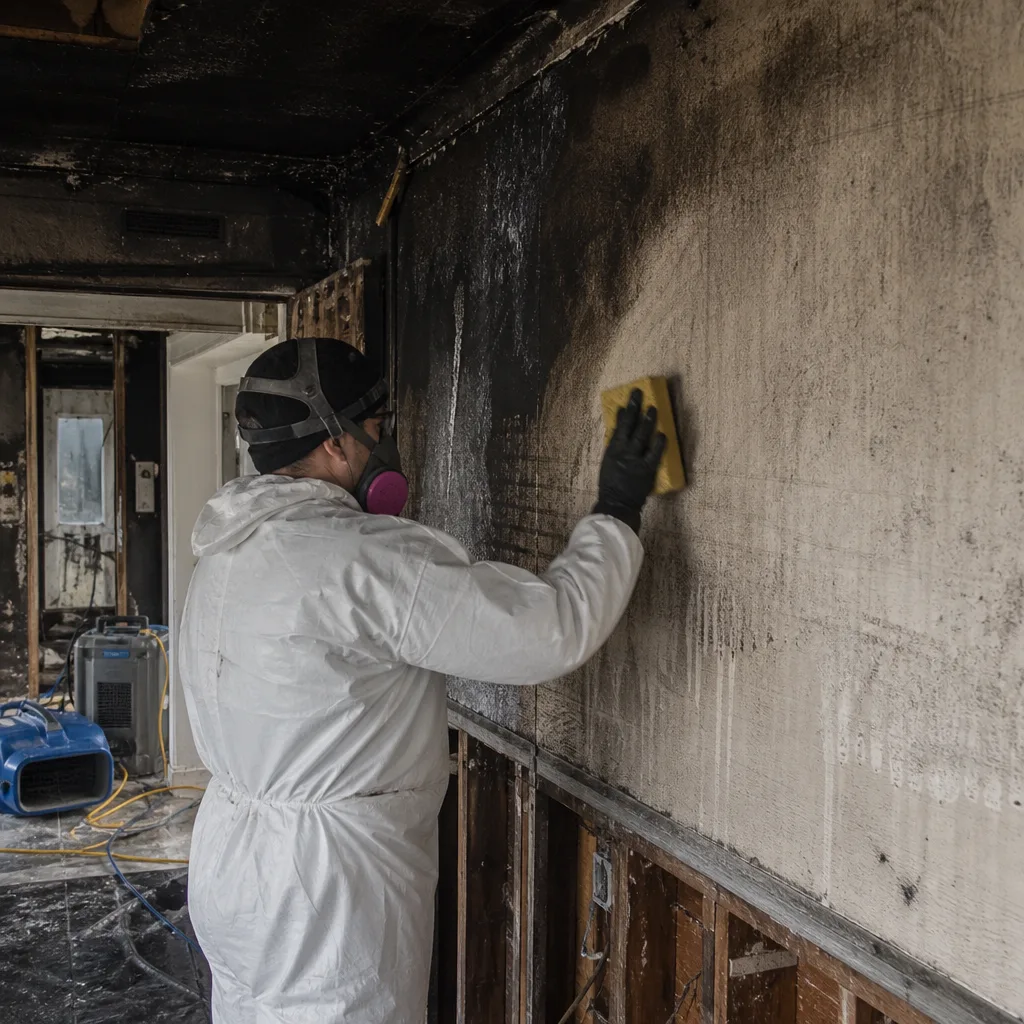
Hoarding Cleanup
Hoarding in a Bed-Stuy brownstone presents a different challenge than in a suburban house, because the added weight and accumulated debris are sitting on 140-year-old floor joists, often above other occupied units. We clear debris, sort what needs saving, and then assess the structure underneath. In many cases, years of accumulated moisture and pest activity have damaged the original pine and plaster, and the cleanup reveals a full restoration scope that the owner could not see before the space was cleared.
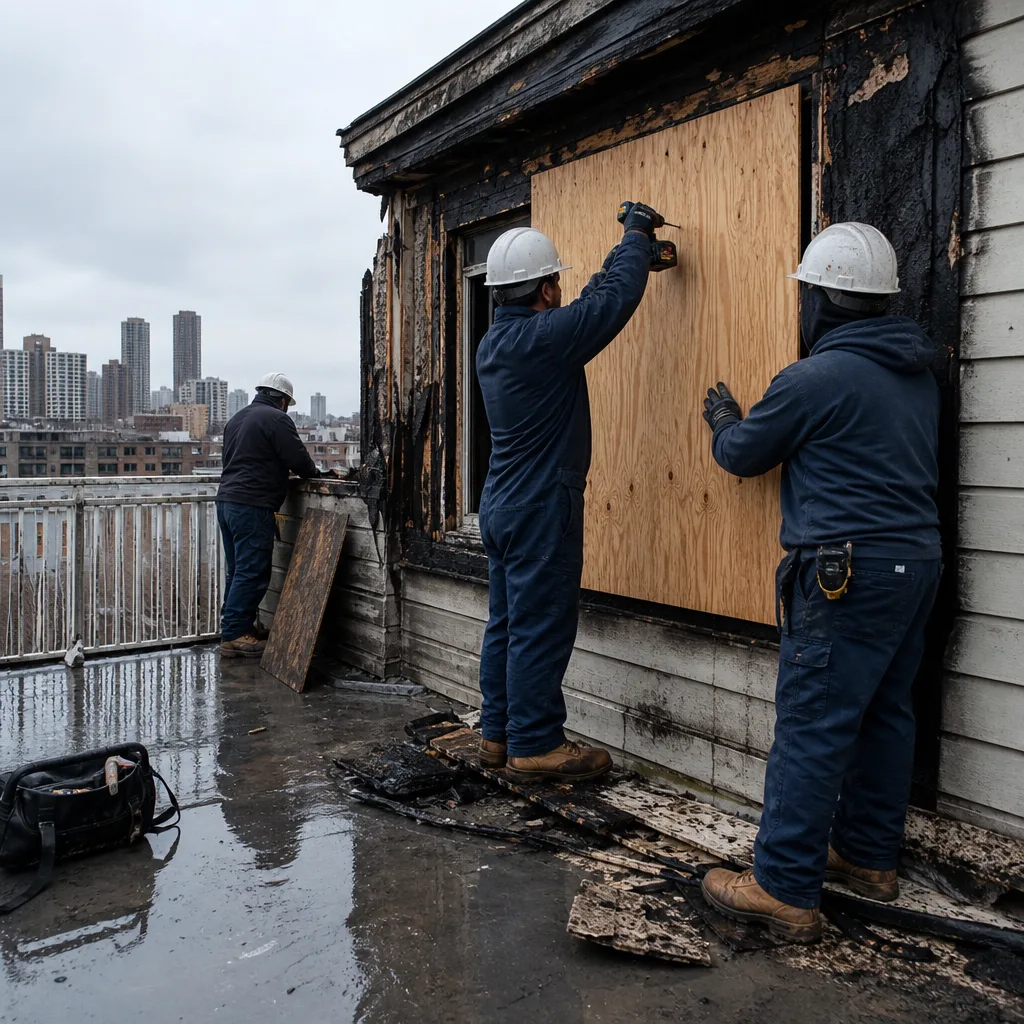
Blood & Bodily Fluid Cleanup
Blood spills from a medical event, an accident, or a death require more than wiping the floor. On original heart pine, the fluid soaks between the boards and into the tongue-and-groove seams. We remove the affected flooring where saturation occurred, treat the subfloor and joists, and replace with period-matched pine. For plaster walls, we cut back to clean lath and re-plaster, which is the only way to remove the contamination entirely.
Infectious Disease Disinfection
After a confirmed or suspected infectious disease event, like MRSA, C. diff, or COVID, we disinfect all high-touch and contaminated surfaces using EPA-registered hospital-grade products. In shared buildings, we pay particular attention to door hardware, stair rails, and mail areas. Documentation of the disinfection is provided for building owners and, where requested, for the insurer.
What happens when you call
- 1
A real person answersNo phone trees - you reach a local pro.
- 2
You get an upfront price rangeHonest numbers before anyone is dispatched.
- 3
A background-checked tech heads outLicensed & insured, dispatched right away.
- 4
You approve before work beginsNothing starts until you say go.
Biohazard & Crime Scene Cleanup Costs in Bedford-Stuyvesant, NY
Biohazard cleanup in Bedford-Stuyvesant runs higher than in most outlying neighborhoods, and the reason is structural. A standard unattended death cleanup on a sealed floor might run $2,500 to $5,000. But in a Bed-Stuy rowhouse with original heart pine and plaster over lath, the same event typically runs $6,000 to $14,000 because the affected flooring and wall material must be removed and the framing dried before restoration begins. Hoarding cleanups usually fall between $3,000 and $12,000 depending on volume, access, and whether the structure beneath has been damaged. Blood cleanup on a contained single-room scene runs $1,500 to $4,000. Crime scene work with extensive contamination can reach $20,000 or more when full structural remediation and plaster restoration are required. Most of these costs are covered under the property’s homeowner’s policy, and we bill the carrier directly. The free visual inspection gives you a firm, written scope before anything is authorized. Call (917) 924-4221 for an onsite assessment.
We Also Serve Cities Near Bedford-Stuyvesant
Our crews respond throughout the surrounding area, including Fairview, Harrison, East Bronx, and Hunts Point. We carry the same equipment, the same certifications, and the same 90-Day Done Right Promise to every job, whether it is a party-wall rowhouse in Bed-Stuy or a detached home a few miles out.
Serving Bedford-Stuyvesant, NY - Our Local Coverage Area
We’re based in the Bedford-Stuyvesant area and know this community well. Use the map below to see our service coverage - if you’re nearby, we can almost certainly help.
Bedford-Stuyvesant Biohazard & Crime Scene Cleanup Questions, Answered
How do you handle a biohazard cleanup when the bedroom floor is original heart pine and the unit shares a party wall?
We remove the affected heart pine boards, cut out the contaminated plaster and lath on the party-wall side, and run containment with negative air pressure on both sides of the wall during the entire process. The framing is then treated, dried with Dri-Eaz dehumidifiers until moisture readings match the surrounding structure, and rebuilt with period-matched materials. The neighbor never experiences odor transfer because the wall seam stays under negative pressure the whole time. Call (917) 924-4221 to have a crew assess the specific room.
What is different about a hoarding cleanup in a Bed-Stuy brownstone with original plaster and wood lath?
The difference is that the debris is sitting on 140-year-old floor joists, often above other occupied units, and removing the hoard usually reveals structural damage hidden underneath. Plaster that has been covered for decades may have absorbed moisture, pest waste, or even decomposition fluids, and it cannot be surface-cleaned. We clear the space, assess the joists and subfloor, and only remove plaster and lath where actual contamination is present. The goal is a clean, safe unit without unnecessarily gutting an original brownstone interior.
How do you keep a biohazard from spreading into the neighbor’s rowhouse through the shared wall during cleanup?
We run containment on both sides of the party wall before any material is opened. HEPA-filtered negative air machines keep the seam from exhaling contaminated air into the adjacent unit, and we do not open the wall cavity until that containment is confirmed. In practice, this means a small floor-to-ceiling enclosure against the shared wall on the neighbor’s side, which we remove once the work is complete and air clearance confirms no contamination crossed the seam.
Does your scope of work change if the biohazard is from a burst radiator or old cast-iron waste line rather than a death?
Yes, but the contamination class is often identical. Radiator water and sewage are both Category 3, which means the affected plaster, lath, and flooring must come out and the framing must be disinfected and dried. The difference is the plumbing component: we scope the full drain path or radiator line before we finish, because in many Bed-Stuy brownstones, an old cast-iron line has been tapped with PVC branches that fail again. If we only treat the visible damage and not the failed line, the problem returns.
Do you need to inform the NYC DOB or the neighbor’s insurance for a trauma cleanup that touches a party wall in Bedford-Stuyvesant?
Most biohazard cleanup work does not require a DOB filing, but when structural work on a party wall is needed, like cutting into shared masonry or replacing joists that bear on the party wall, filing may be required. We tell you exactly what applies to your building before the work starts. For the neighbor’s insurance, we notify them only if contamination or damage has actually crossed the property line, which is precisely what our containment protocol is designed to prevent.