
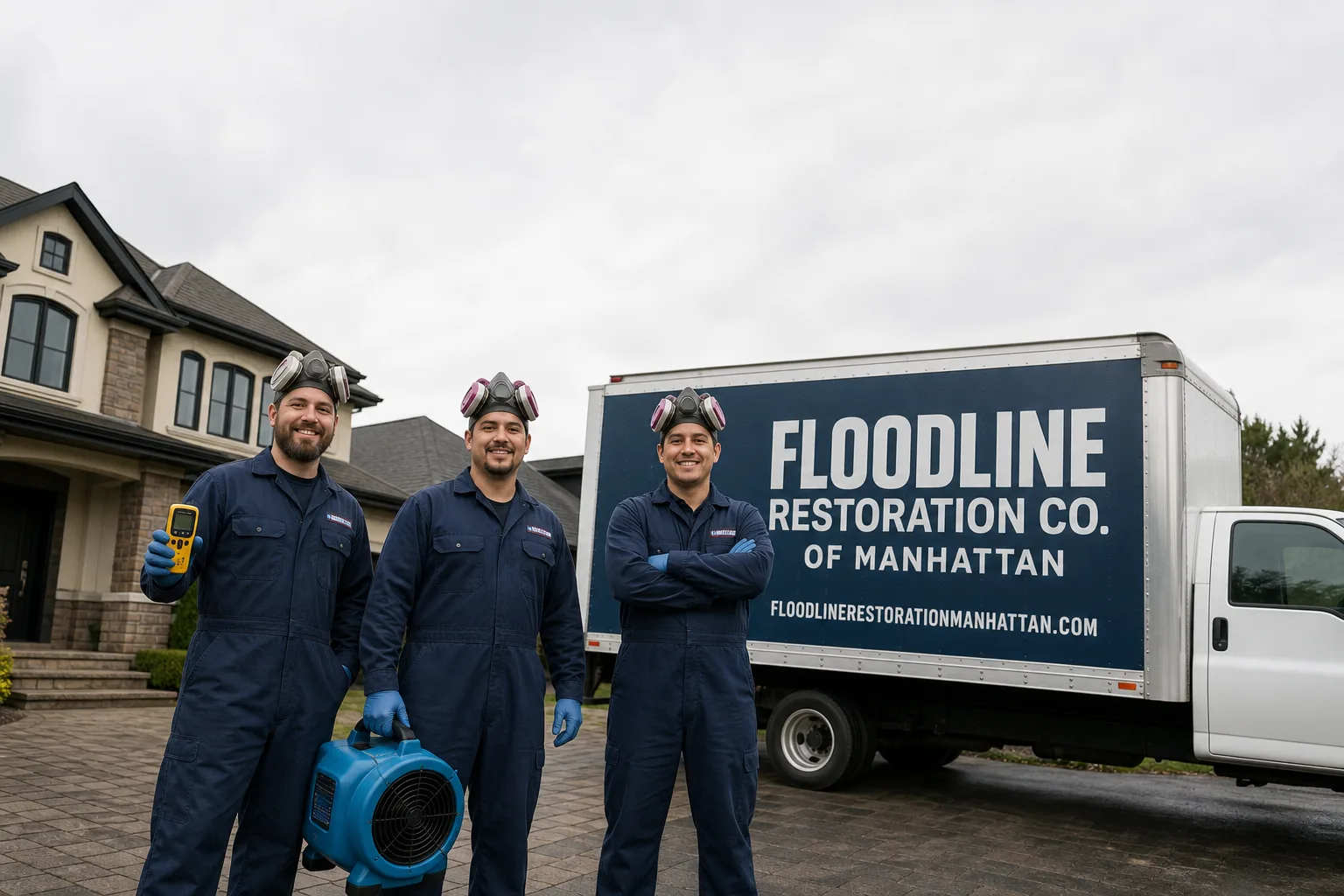
Free visual inspection and a written scope of work before any mitigation begins - photos, moisture readings, and drying logs go in your claim file
The scope we write is the scope we bill. Anything new gets shown to you, in writing, before we touch it.






 Before
 After
After Before
 After
After Before
 After
After24/7 Emergency Biohazard & Crime Scene Cleanup in Bedford
A trauma scene, an unattended death, or a serious blood loss event inside a Bedford home requires immediate, certified containment and removal. Our crews answer live at (917) 924-4221 around the clock and dispatch into Bedford, Bedford Hills, and the surrounding estate roads without delay, because the first hours after a biohazard event determine how much of the structure can be saved and how much must be removed. We arrive in marked trucks, set containment before anything else, and give you a written scope before any demolition or disposal begins. The damage stops spreading the moment we start.
Understanding Biohazard & Crime Scene Cleanup Severity in Bedford Properties
Biohazard cleanup is not a cleaning service. Blood, bodily fluids, and decomposition byproducts penetrate porous materials within hours, and in Bedford’s older homes those materials are often irreplaceable. A 19th-century manor with horsehair plaster walls, wide-plank pine or chestnut flooring, and fieldstone foundations absorbs fluids differently than a modern drywall-and-plywood house. Pathogens travel through plaster keys, wick up timber sills, and settle into stone mortar joints where standard surface cleaning never reaches. When we assess a scene, we classify the affected zone by material type, porosity, and whether the fluids have contacted subfloor, sill plates, or foundation stone. In an 18th-century Bedford farmhouse, a blood spill near a wall can migrate into the plaster and lath cavity, requiring removal of plaster that predates the Civil War. That is a different job than cleaning a tile bathroom in a 2005 colonial. Severity also depends on decomposition staging: an unattended death of several days in an unheated carriage house creates aerosolized pathogens, insect activity, and odor saturation in timber framing that requires HEPA air scrubbing, negative air pressure, and full removal of affected soft goods and porous surfaces.
Why Bedford Property Owners Choose Floodline Restoration Co. of Manhattan
- 45-minute response commitment to Bedford addresses, with a live dispatcher who knows the local roads and can route a crew from the New York City office without delay.
- 24/7 live answer, every day of the year. No answering service, no call-back queue. A person picks up at 2 a.m. and starts the dispatch.
- IICRC-certified technicians trained to the standards that matter for biohazard work, including bloodborne pathogen protocols, PPE discipline, and safe containment of Category 3 water.
- Free visual inspection before any work is authorized. We tell you what we see, what it will cost, and what your insurer will need from us.
- Direct insurance billing. We handle the carrier communication, the adjuster calls, and the documentation. You do not play messenger.
- One team from containment to rebuild. The same background-checked, uniformed crew that sets containment on day one handles the drying logs, the antimicrobial treatment, and any reconstruction Bedford’s historic properties require.
Our Biohazard & Crime Scene Cleanup Process
Inspection & Assessment
We walk the affected area, identify all porous materials that have absorbed blood or fluids, and map the zone that needs containment. For Bedford’s older homes, this includes checking fieldstone foundation joints and timber sill plates where fluids can pool unseen.
Containment & Stabilization
We seal the affected space with 6-mil poly, establish negative air pressure, and place HEPA air scrubbers before disturbing any material. This prevents aerosolized pathogens from moving into unaffected rooms. Stabilization stops the spread within the first hour.
Removal of Affected Materials
We cut out contaminated plaster, flooring, subfloor, and trim, along with any soft goods that cannot be sanitized. In Bedford’s historic homes, we remove only what is necessary and document every cut for the insurer and any historic district review.
Cleaning & Antimicrobial Treatment
All remaining surfaces are cleaned with appropriate antimicrobial agents registered for bloodborne pathogen decontamination. We treat exposed framing, stone, and masonry joints, not just visible surfaces.
Drying & Dehumidification
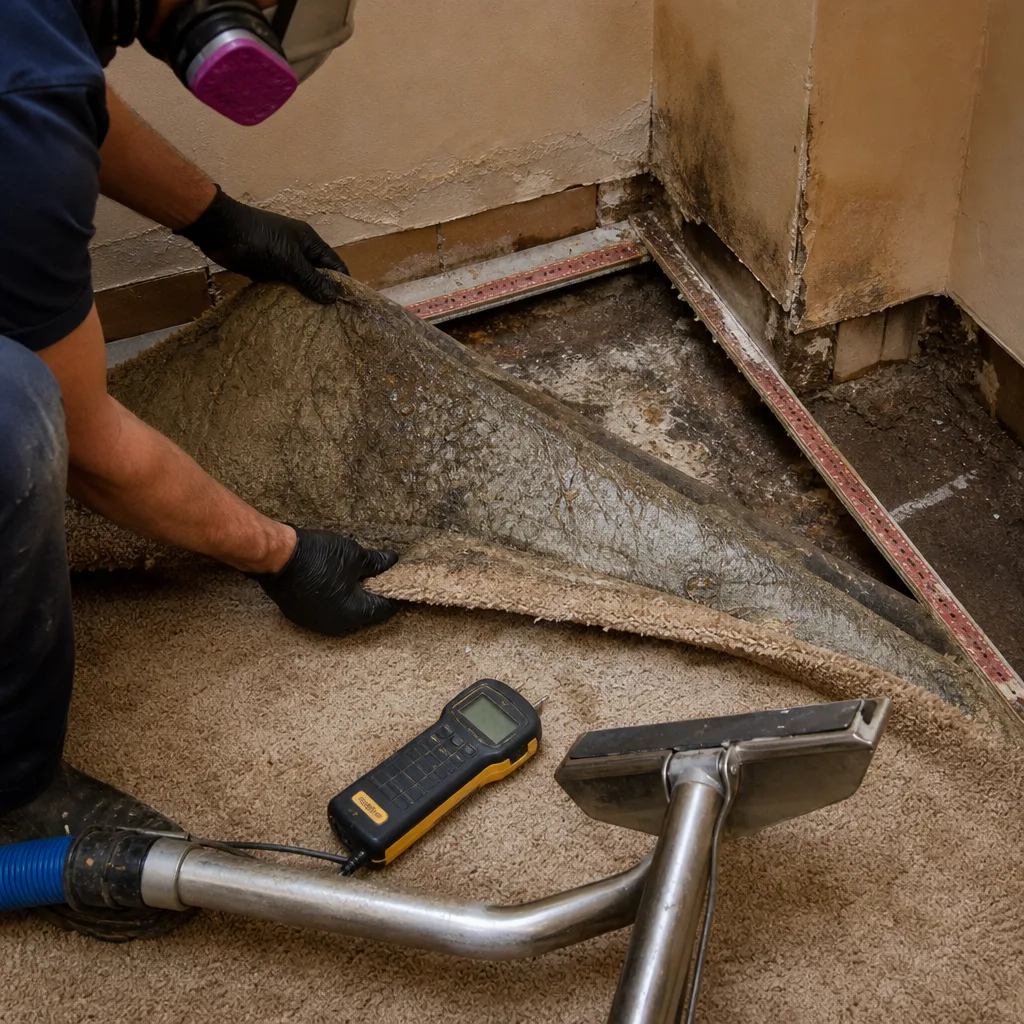
If fluids have penetrated flooring or subfloor, or if Category 3 water from a plumbing failure or foundation seepage is present beneath a scene, we set Dri-Eaz and Phoenix dehumidifiers with air movers, and log daily moisture readings until the dry standard is met.
Repairs & Restoration
We rebuild what was removed, matching materials to the property’s era and construction. That means lime plaster where horsehair plaster stood, salvaged or milled-to-match flooring where originals could not be saved, and coordination with any town approvals required.
Need Emergency Biohazard & Crime Scene Cleanup in Bedford Now?
Crews minutes away, answering live 24 hours a day. The sooner we start, the less it costs.
Working With Your Insurance Company
Most homeowners policies in Bedford cover biohazard remediation following a covered loss, such as a crime, an accident, or a death in the home. We document everything from the first hour: photos of the scene before we touch anything, room-by-room damage logs, moisture readings from any affected subfloor or framing, and a detailed line-item scope of work that matches what adjusters expect to see. Our team communicates directly with your adjuster, sends the documentation they request, and pushes back when an initial offer does not match the actual scope of what Bedford’s older construction requires. We have handled claims involving 18th-century plaster, fieldstone foundations, and timber-frame additions, and we know how to document hidden damage that a quick adjuster visit will miss. The 90-Day Done Right Promise applies here too: if something we did fails within 90 days, we make it right, in writing, with no argument.
What We Provide Your Insurer
- Thorough documentation of the loss
- Photos of all damage, room by room
- Moisture readings and drying logs
- A detailed, line-item scope of work
- Direct coordination with your carrier
Built for Bedford’s Loss Calendar
Bedford’s elevation in northern Westchester makes it colder and more ice-prone than towns closer to the Sound, and that shapes when we get called. January and February bring deep freezes that burst supply lines in unheated wing additions and converted outbuildings, often saturating floors and walls beneath a scene that already requires biohazard response. Spring thaw and repeated freeze-thaw cycles crack fieldstone foundation mortar, letting groundwater seep into basements and crawl spaces where a trauma or unattended death occurred weeks earlier. Summer thunderstorms can knock out power to estate properties, leaving an occupied home without climate control during a decomposition event. Nor’easters in autumn and winter topple mature oaks and maples, and Bedford’s Town Tree Preservation Law means a fallen specimen tree on a driveway or beside an outbuilding cannot simply be cut and hauled without a permit. That permitting delay can hold up access to a scene, and we know how to sequence containment, documentation, and town review so remediation moves forward while the permit is pending.
Biohazard & Crime Scene Cleanup Across Bedford’s Neighborhoods
Bedford is not one housing type. The estates along Guard Hill Road and Succabone Road are 18th- and 19th-century manor houses with carriage barns, fieldstone foundations, and timber frames. A blood cleanup in a converted barn on Guard Hill Road means treating stone and timber, not drywall and plywood. The old village center around Bedford Village and the roads off Route 172 hold colonials and farmhouses with horsehair plaster and wide-board floors that predate modern building codes. Properties near the Mianus River, including the corridor along Long Ridge Road, deal with higher groundwater and chronic dampness in basements and crawl spaces, which complicates any biohazard remediation because moisture reactivates bacteria and slows drying. Homes in the newer luxury subdivisions near Bedford Hills and Katonah borders were built under stricter architectural review, but they still sit on the same ledge and clay soils that move water toward foundations. We know the response routes: Route 22 and 35 from the south, 172 through the village, 121 north toward Katonah, and the back roads that ice over first in January. When you call at 2 a.m., the dispatcher knows which crew is closest and how to reach your property.
Specialized Biohazard & Crime Scene Cleanup Services We Offer in Bedford
Crime Scene Cleanup
After law enforcement releases a scene, we handle blood and bodily fluid removal, fingerprint dust cleanup, tear gas residue if it was used, and the structural decontamination Bedford’s older homes require. This is our core Biohazard & Crime Scene Cleanup work, and we have done it in colonial-era houses where plaster and timber required careful, documented removal rather than wholesale demolition.
Trauma & Unattended Death Cleanup
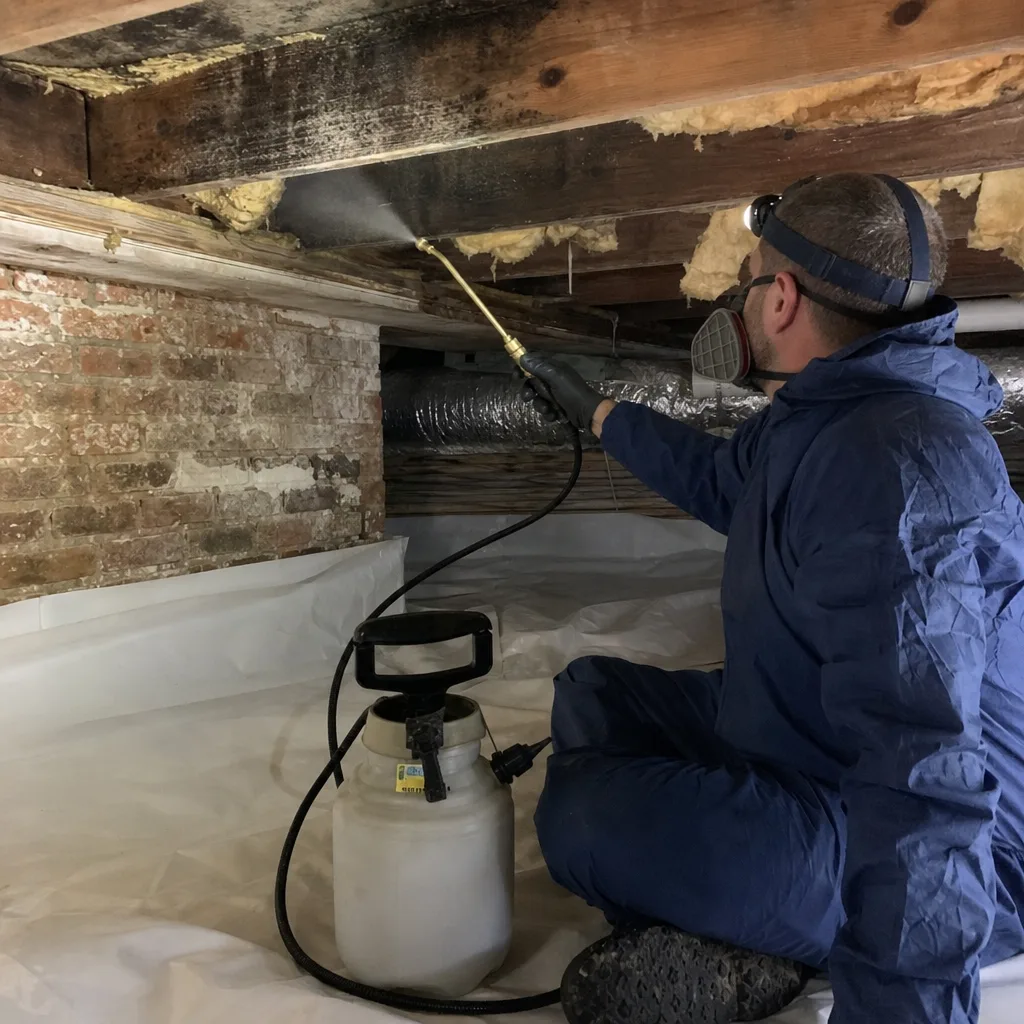
Decomposition fluids in a Bedford manor or a converted carriage barn saturate flooring, migrate into sill plates, and aerosolize into adjoining rooms. We set containment, run HEPA air scrubbers, remove affected porous materials, and treat timber and stone with antimicrobial agents. If the property has been unoccupied, we also address the water and dampness that Bedford’s fieldstone foundations let in, because wet organic material complicates decontamination.
Hoarding Cleanup
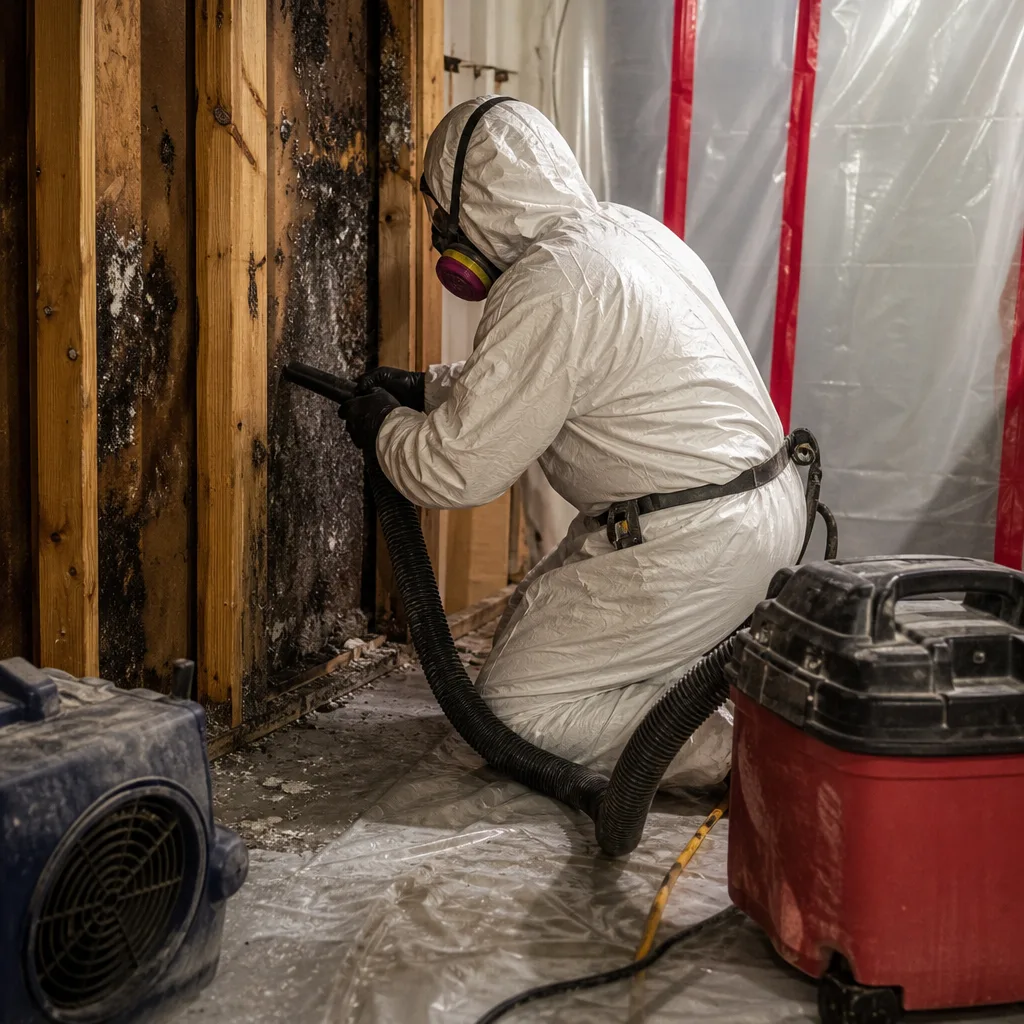
Hoarding scenes on Bedford estates often involve decades of contents inside historic outbuildings, attics, and garages. We sort, document for the insurer, remove debris, and decontaminate the structure beneath. Town permit requirements for debris removal at the curb or from an estate lot can apply, and we coordinate that with the town while the cleanup moves forward indoors.
Blood & Bodily Fluid Cleanup
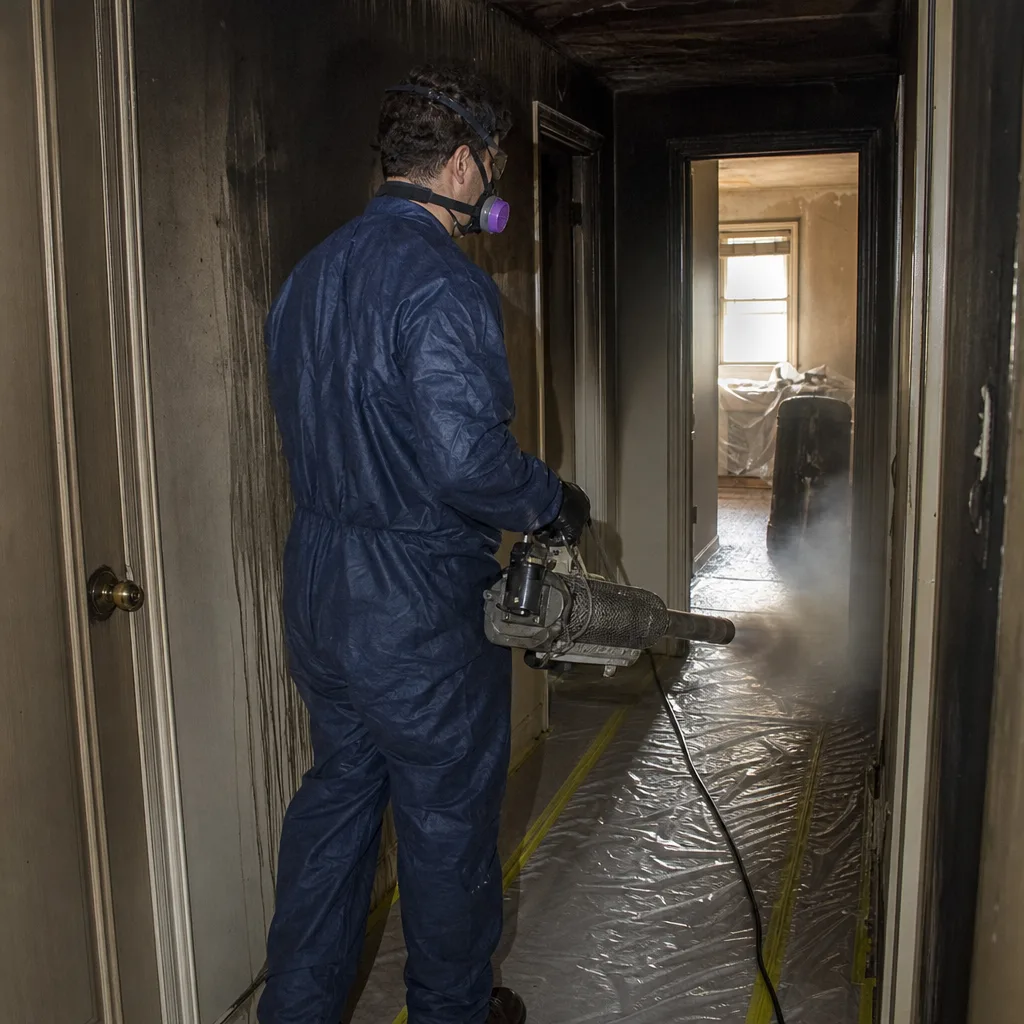
A significant blood loss in a bathroom, kitchen, or bedroom of a Bedford home can spread into subfloor, baseboards, and wall cavities within hours. We trace the migration path, open only what must be opened, and treat every affected surface. In horsehair plaster walls, that means cut access panels and treatment behind the lath, not just surface wiping.
Infectious Disease Disinfection
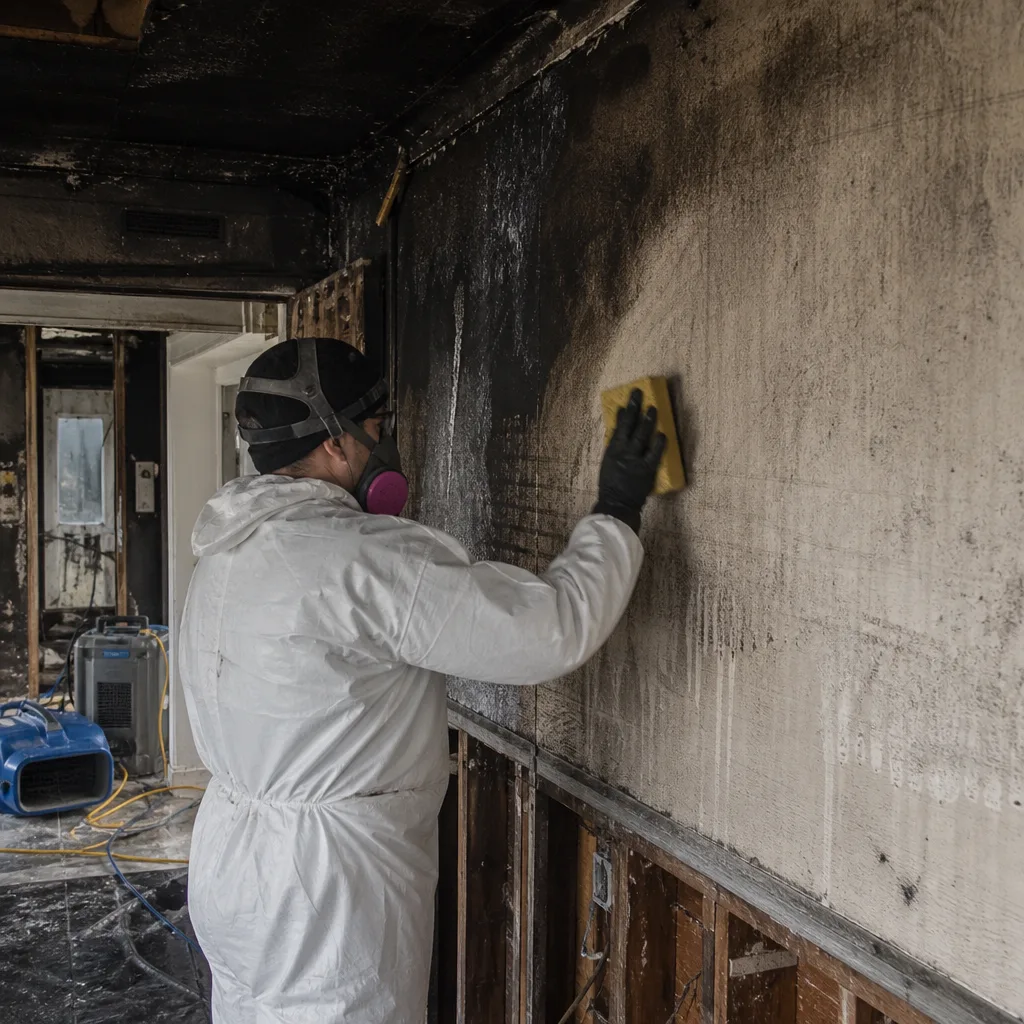
After a confirmed infectious disease event, we disinfect hard and soft surfaces throughout the affected area using EPA-registered products, with special attention to high-touch surfaces, HVAC registers, and any porous materials that cannot be safely cleaned. For Bedford’s older homes, this includes checking original ductwork and fireplace surrounds that often get overlooked.
Tear Gas & Chemical Cleanup
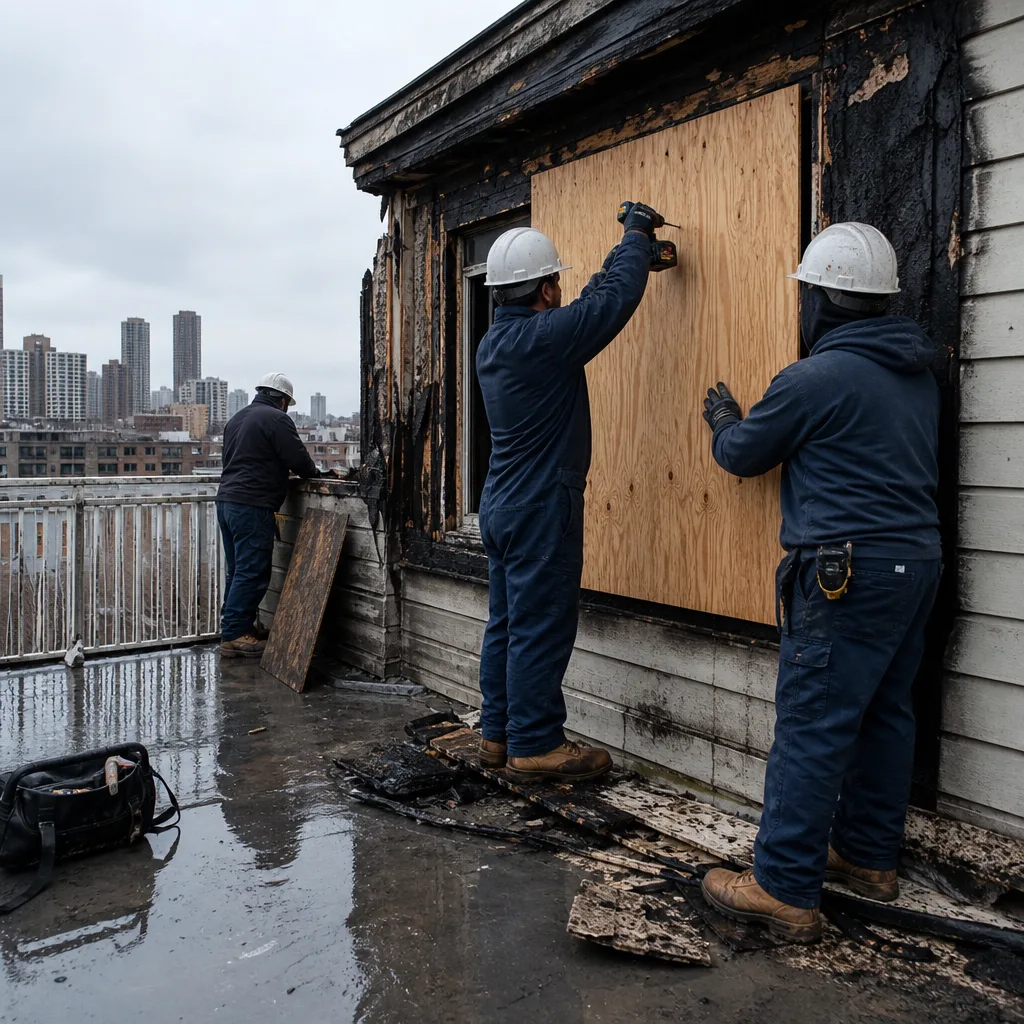
Tear gas residue clings to plaster, wallpaper, and unfinished wood in old houses and is difficult to remove without specialized cleaning agents. We treat the affected room, the HVAC system, and any soft goods that were exposed, and we document everything for your carrier.
What happens when you call
- 1
A real person answersNo phone trees - you reach a local pro.
- 2
You get an upfront price rangeHonest numbers before anyone is dispatched.
- 3
A background-checked tech heads outLicensed & insured, dispatched right away.
- 4
You approve before work beginsNothing starts until you say go.
Biohazard & Crime Scene Cleanup Costs in Bedford, NY
A typical blood or bodily fluid cleanup in a Bedford home runs $1,200 to $4,500 depending on the area affected and whether subfloor or wall cavities are involved. An unattended death cleanup in a Bedford property typically runs $3,500 to $12,000 or more when decomposition has progressed and structural materials must be removed. Hoarding cleanup on an estate lot can run $8,000 to $25,000 depending on volume, access, and disposal requirements. What moves the price in Bedford specifically is the construction: horsehair plaster removal costs more than drywall cutting, fieldstone foundation treatment takes longer than a poured concrete slab, and historic district coordination can add time even when it does not add direct cost. Most of these jobs are covered under homeowners insurance following a covered event, and we bill directly. We provide a free visual inspection and a written scope before work starts, so you know the number before you authorize anything. Call (917) 924-4221 and we will come look.
We Also Serve Cities Near Bedford
Our crews serve Bedford and the surrounding towns, including Bedford Hills, Mount Kisco, Armonk, and Katonah. If your property sits in one of these nearby communities, the same 45-minute response commitment and the same written-scope process applies.
Serving Bedford, NY - Our Local Coverage Area
We’re based in the Bedford area and know this community well. Use the map below to see our service coverage - if you’re nearby, we can almost certainly help.
Bedford Biohazard & Crime Scene Cleanup Questions, Answered
How does Bedford’s Town Tree Preservation Law affect crime scene cleanup on an estate?
Bedford’s Town Tree Preservation Law requires permits for removal of mature specimen trees, and when a storm-toppled oak or maple blocks access to an outbuilding where a crime scene or unattended death occurred, the permit review can delay remediation. Our crews set containment and begin interior work while the town reviews the tree removal application, and we sequence the job so the scene is stabilized and documented before any exterior debris is touched. Call (917) 924-4221 and we will coordinate the phases with the town directly.
Do Bedford historic district rules limit what materials you can use during blood cleanup in a 19th-century house?
In some parts of Bedford, yes. If your property is in a locally designated historic district or on a landmark list, replacing horsehair plaster with modern drywall can trigger a stop-work order. We document the existing materials, remove only what contamination requires, and rebuild with lime plaster, salvaged flooring, or milled-to-match materials that the historic review board will approve. The insurer gets the same documentation, and the claim covers the compliant materials.
Why does water in a fieldstone foundation matter for a biohazard cleanup in Bedford?
Fieldstone foundations in Bedford let groundwater seep in through mortar joints, and that water carries Category 3 contamination from soil and organics. If a biohazard scene sits above a wet fieldstone basement, the moisture reactivates bacteria and slows antimicrobial treatment. We dry the foundation zone with dehumidifiers and air movers, log daily readings, and apply antimicrobial treatment only after the dry standard is met. Skipping that step means the contamination returns.
What happens if an unattended death occurs in an unheated carriage house during a Bedford winter?
Decomposition slows in the cold, which can reduce initial odor and insect activity, but fluids still migrate into timber flooring and sills. When the space warms, odor and pathogen risk reactivate quickly. We treat cold-weather carriage house scenes with the same containment and removal protocols, and we pay extra attention to fieldstone foundations and original timber framing that hold moisture and organic material. Call us as soon as the scene is released, regardless of the season.
Do you need a town permit to remove hoarded debris from an estate in Bedford?
In many cases, yes. Bedford requires permits for debris removal at the curb or from an estate lot when the volume exceeds standard household pickup, and access improvements like a Dumpster on a private road can trigger additional review. We coordinate with the town, document the debris for the insurer, and keep the indoor cleanup moving while permits are processed. You do not handle the town communication.
How fast can a crew reach a Bedford address for a biohazard emergency?
We commit to 45 minutes for emergency biohazard calls within Bedford, assuming normal road conditions. Our dispatchers know Route 22, Route 35, 172 through the village, and the back roads that ice over first in winter. The sooner we set containment, the less of the structure must be removed.
Will my homeowners insurance cover crime scene cleanup in Bedford?
Most Bedford homeowners policies cover biohazard remediation after a covered event like a crime, an accident, or a death in the home. We bill your carrier directly, send them the documentation they need, and coordinate with the adjuster. If the carrier’s initial offer does not match the documented scope, we push back with the photos, moisture readings, and line-item details they require.
What should I do in the first 30 minutes after finding a biohazard scene in my Bedford home?
Do not enter the area. Do not attempt to clean it. Close the door to the affected room if you can do so without stepping into it, turn off the HVAC system if the thermostat is accessible, and call us at (917) 924-4221. Keep pets and children away from the area. The scene should be documented by a professional before anything is disturbed, both for your safety and for the insurance claim.
Written by Curt Bowman, Owner at Floodline Restoration Co. of Manhattan, serving Bedford since 2010.