
Free visual inspection and a written scope of work before any mitigation begins - photos, moisture readings, and drying logs go in your claim file
The scope we write is the scope we bill. Anything new gets shown to you, in writing, before we touch it.






 Before
 After
After Before
 After
After Before
 After
After24/7 Emergency Biohazard & Crime Scene Cleanup in Greenpoint
Biohazard and crime scene cleanup in Greenpoint means removing blood, bodily fluids, and other biological hazards from homes, apartments, and commercial spaces, then restoring the area to a safe, livable condition. Most jobs in the neighborhood are completed within 24 to 48 hours of our first call, with costs typically ranging from $1,200 to $4,500 depending on the scope and whether structural removal is required. If you’re facing a trauma scene, unattended death, or sewage backflow right now, call (917) 924-4221. A live dispatcher answers at two in the morning, not a recording, and a certified crew can reach most Greenpoint addresses within 45 minutes. The first hour matters because bloodborne pathogens begin drying into porous surfaces and airborne particulates settle into every crevice. Fast containment is the single biggest factor in keeping a biohazard event from becoming a lingering contamination problem in your home.
Understanding Biohazard & Crime Scene Cleanup Severity in Greenpoint Properties
We classify biohazard work by the source material, not just the visible mess. Blood and bodily fluid require full OSHA 29 CFR 1910.1030 bloodborne pathogen protocols: absorbent removal, surface disinfection with an EPA-registered hospital-grade agent, and HEPA-filtered negative air containment to keep aerosolized particulates from spreading. Unattended death adds decomposition fluids that migrate through floorboards, subflooring, and into porous masonry. In Greenpoint’s housing stock, that migration path is often more direct than people expect. Most of the neighborhood’s attached brick rowhouses and railroad tenements were built between the 1880s and 1920s with unreinforced brick or rubble-stone foundation walls and no modern vapor barrier. Decomposition fluids don’t just pool on the surface. They work their way into the lime mortar joints and down into the cellar floor. When that happens, surface cleaning isn’t enough. We remove affected porous materials, run moisture mapping with thermal imaging and hygrometers, and log drying conditions until readings return to pre-loss levels. Sewage backflow from the combined sewer system is always treated as category 3 water, which carries bacteria, viruses, and parasites. In Greenpoint, that classification carries an extra complication we’ll get into below.
Why Greenpoint Property Owners Choose Floodline Restoration Co. of Manhattan
- 45-minute response commitment: We dispatch from our New York City office to Greenpoint addresses with a target on-site time of 45 minutes or less for emergency biohazard calls, day or night.
- A live person answers, 24/7: No phone tree, no answering service callback. A real dispatcher picks up and starts routing a crew while you’re still on the line.
- Certified to the standard, not a sales pitch: Our technicians carry IICRC certifications including WRT, FSRT, and AMRT, plus RIA and IFA training. Background-checked and uniformed on every job.
- Free visual inspection: Before any work begins, we walk the scene and tell you plainly what needs to happen, what the scope is, and what can wait. No charge for that honesty.
- Direct insurance billing: We handle the carrier communication, photo documentation, and line-item scopes. You never play messenger between us and your adjuster.
- One team from first extraction to finished rebuild: Floodline Restoration Co. doesn’t hand your home off to a third-party reconstruction crew. The same certified team handles cleanup, drying, and any structural repair, all backed by our 90-Day Done Right Promise in writing.
Our Biohazard & Crime Scene Cleanup Process
Inspection & Assessment
We arrive, establish containment, and assess the full scope: what biohazard material is present, how far it has migrated, and whether moisture from a flood or sewage backflow has compounded the contamination. In Greenpoint basements, we check for evidence of petroleum sheen or odor from the underlying oil plume before any extraction begins.
Extraction & Stabilization
Solid biohazard material is removed under protocol and bagged for regulated disposal. If standing water is present, we extract using truck-mounted and portable extraction units. We do not pump and dump blindly in Greenpoint. Water pulled from flooded cellars here occasionally tests positive for hydrocarbons, which changes the disposal pathway entirely.
Drying & Dehumidification
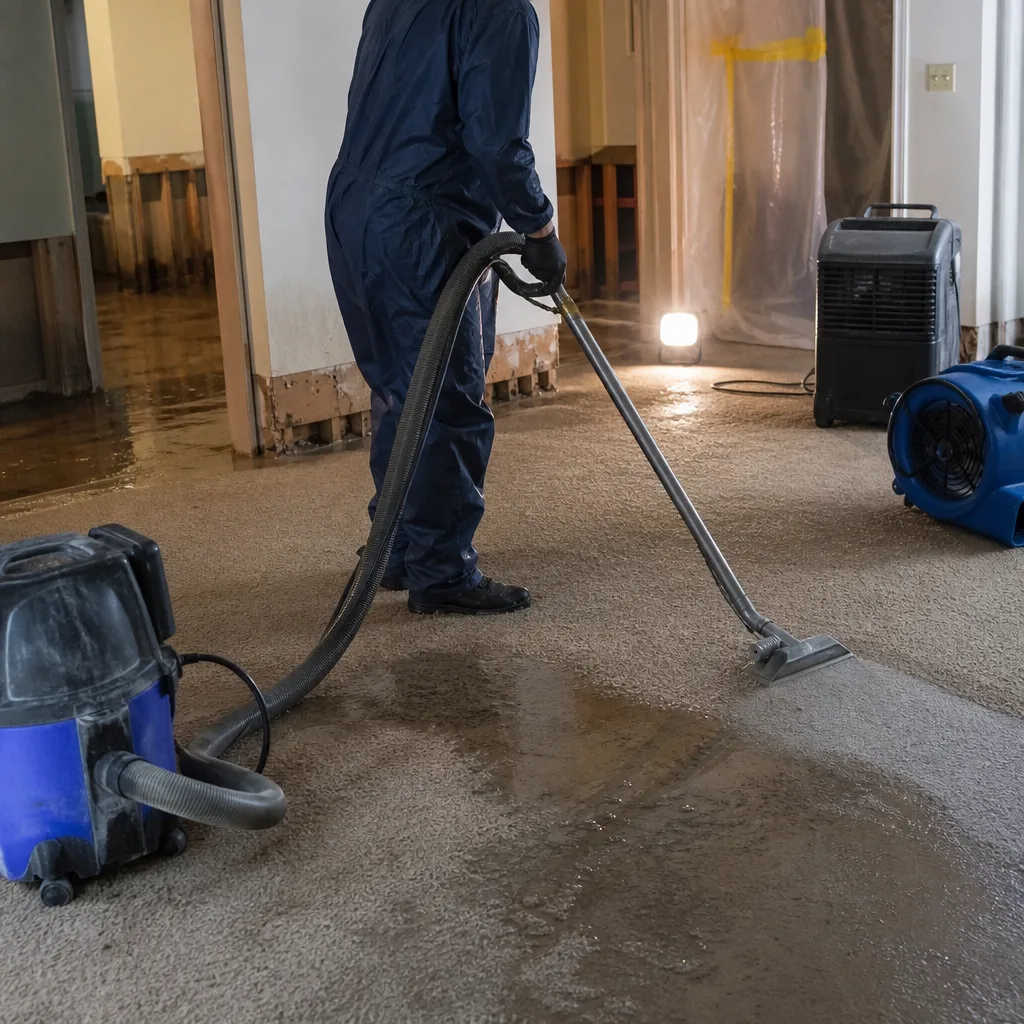
After removal, we set up Dri-Eaz and Phoenix air movers, dehumidifiers, and when needed, Injectidry systems for wall cavities and under flooring. Daily moisture readings are logged until the structure meets the dry standard. You get the log. So does your carrier.
Cleaning & Sanitization
Surfaces are cleaned with EPA-registered hospital-grade disinfectants appropriate to the biohazard class. HEPA air scrubbers run throughout to capture airborne particulates. We do not fog and call it done. Cleaning is verified by visual inspection and ATP surface testing where indicated.
Specialty Treatment: Petroleum Screening & Hazardous Waste Coordination
This step is unique to Greenpoint. If basement water was involved in the biohazard event, we request waste characterization before disposal. Should the water test positive for hydrocarbons from the Greenpoint oil spill, disposal at a standard facility becomes a regulatory violation. We coordinate with New York State DEC and use a licensed hazardous-waste hauler. This protects you from liability.
Repairs & Restoration
Removed drywall, flooring, and structural members are rebuilt by our own reconstruction crew, not a subcontractor you’ve never met. The job is finished when the moisture log is complete, the air is clear, and the space is restored to use. Then the 90-Day Done Right Promise kicks in, in writing.
Need Emergency Biohazard & Crime Scene Cleanup in Greenpoint Now?
Crews minutes away, answering live 24 hours a day. The sooner we start, the less it costs.
Working With Your Insurance Company
Most biohazard and crime scene cleanup claims in Greenpoint are covered under homeowners policies when the event is sudden and accidental, which trauma scenes and sewage backflows generally are. Unattended death cleanup is typically covered as well, though some policies require a named peril. We document everything from the first hour: photos of every affected room, moisture readings, containment logs, and a line-item scope of work that matches the adjuster’s system. We communicate directly with your carrier and bill them directly where coverage applies, so the only thing you handle is choosing the finishes on the reconstruction. If an adjuster pushes back, our documentation does the arguing for you. That is how the Keystone Standard works: done right, every time, your home first, standing behind it.
What We Provide Your Insurer
- Thorough documentation of the loss
- Photos of all damage, room by room
- Moisture readings and drying logs
- A detailed, line-item scope of work
- Direct coordination with your carrier
Built for Greenpoint’s Loss Calendar
Greenpoint’s geography shapes its biohazard calendar. The neighborhood sits on a low-lying peninsula between Newtown Creek and the East River, with an elevated water table and drainage that was never designed for modern storm volume. January and February bring deep freezes that burst supply lines in uninsulated prewar buildings, flooding cellars and, in the worst cases, creating conditions where a standard water loss becomes a biohazard event when sewage from the combined sewer system backs up. Spring thaw and heavy rain push groundwater against those old foundation walls, bringing chronic lateral moisture that keeps cellars damp for weeks. Late summer thunderstorms overwhelm street drains, and nor’easters, like the ones that hammered the city during Sandy, push tidal backflow through the combined sewer into basements. Any sewage intrusion is category 3 water, which carries biohazard protocols by definition. If you live in an 1880s rowhouse off Manhattan Avenue or a converted loft near the waterfront, your property is more exposed to this pattern than the newer buildings further inland.
Biohazard & Crime Scene Cleanup Across Greenpoint’s Neighborhoods
Greenpoint isn’t one uniform grid. The housing stock shifts block by block, and so does the nature of the work. Along Franklin Street and the blocks east toward McGuinness Boulevard, the attached brick rowhouses built from the 1880s through the 1920s share party walls, meaning airborne biohazards from one unit can migrate through wall cavities and joist bays into the neighboring home. We run negative air and seal party-wall penetrations on every job in this district. Up near the Newtown Creek border, the old industrial blocks and converted lofts present high ceilings and large floor plates, but also heavy timber framing that absorbs fluids quickly and requires aggressive drying or removal. The blocks west of Manhattan Avenue toward the East River, including the historic core near the Greenpoint Historic District, hold many railroad tenements with narrow stairwells and tight cellar access. Moving equipment and removing contaminated material there is slow, careful work. On Java Street, India Street, and the cross streets between, basement water intrusion is chronic. No two blocks respond the same way, but after 42 years in this city’s restoration trade, we know the difference between a Greenpoint cellar that can be dried and one that needs to be removed to the masonry.
We built our dispatch around these patterns. A call from a rowhouse on Milton Street at 3 a.m. gets a different initial response plan than a call from a loft building on West Street, because the building tells us something before the crew ever arrives. That’s local knowledge, and it comes from doing the work, not from a routing algorithm.
Specialized Biohazard & Crime Scene Cleanup Services We Offer in Greenpoint
Trauma & Unattended Death Cleanup
This is the work we handle most in Greenpoint’s older buildings. Decomposition fluids migrate through wood flooring, subfloor, and into the masonry below. We remove affected materials, treat surrounding surfaces, and restore the space. If the death occurred days or weeks before discovery, we run HEPA air scrubbers and ozone treatments where appropriate to address odors that have settled into plaster walls and wood trim.
Blood & Bodily Fluid Cleanup
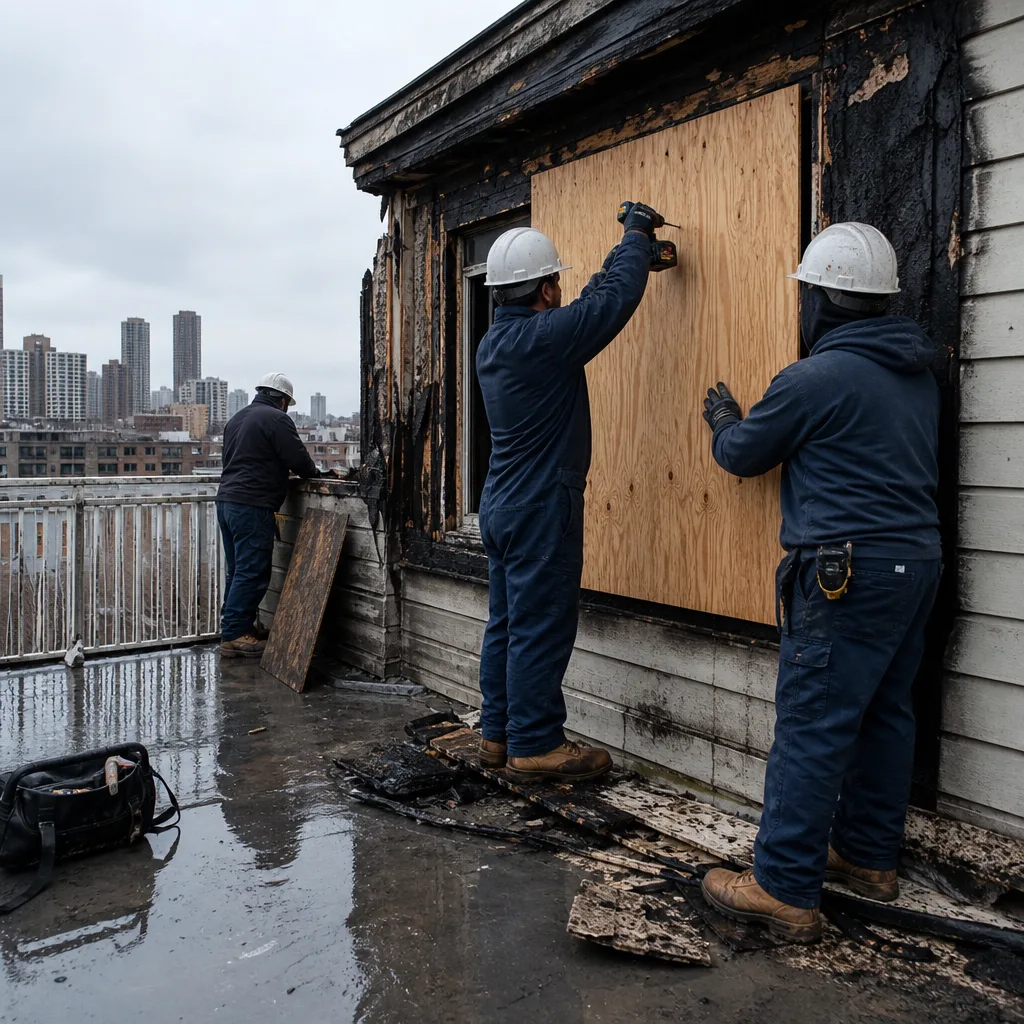
Blood cleanup in any Greenpoint home starts with OSHA bloodborne pathogen protocols. We remove saturated materials, clean with hospital-grade disinfectants, and verify the work. In attached rowhouses, we check adjacent units by agreement when penetration through shared walls is suspected. We do not paint over it and call it clean. The biological load is either gone or it isn’t.
Infectious Disease Disinfection
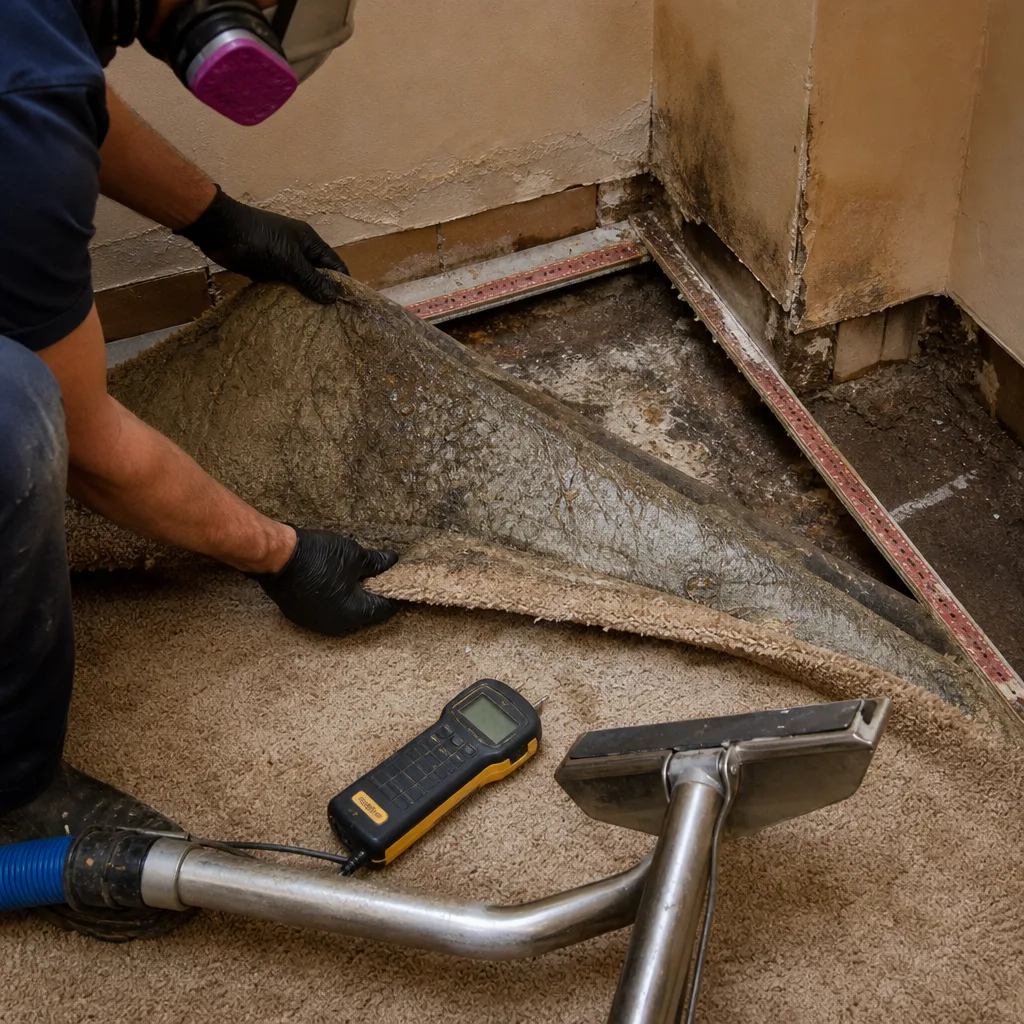
After a confirmed infectious disease exposure, a COVID-19 outbreak, or MRSA, C. diff, or norovirus contamination, we perform full surface disinfection with EPA-registered products rated for the specific pathogen, along with air scrubbing and, where indicated, UV-C treatment. We’ll also advise you on what to dispose of and what can be reliably disinfected, so you don’t pay to clean items that should be discarded.
Hoarding Cleanup
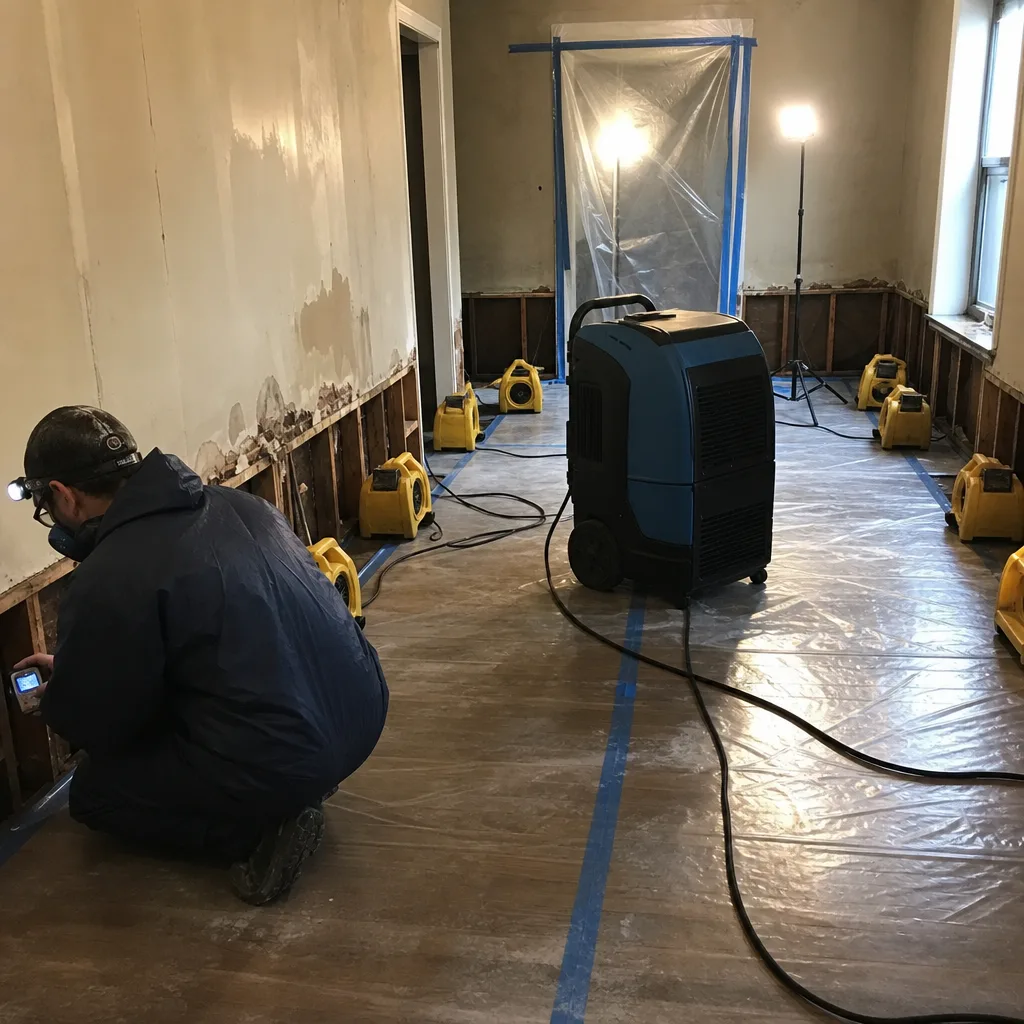
Hoarding cleanup in Greenpoint’s tightly stacked homes requires patience and discretion. We sort, remove, and sanitize, working with you on what is salvageable and what isn’t. When hoarding has contributed to structural damage or pest intrusion, we stabilize and repair. The crew is background-checked and uniformed, and we treat the contents of your home with respect, no matter the condition.
For the full scope of our Biohazard & Crime Scene Cleanup work across the city, including tear gas and chemical cleanup, we handle every phase from containment to reconstruction.
What happens when you call
- 1
A real person answersNo phone trees - you reach a local pro.
- 2
You get an upfront price rangeHonest numbers before anyone is dispatched.
- 3
A background-checked tech heads outLicensed & insured, dispatched right away.
- 4
You approve before work beginsNothing starts until you say go.
Biohazard & Crime Scene Cleanup Costs in Greenpoint, NY
Greenpoint pricing tracks with the building stock because so much of the cost is access and removal, not just cleaning. A standard blood cleanup on a hard-surface floor in a Greenpoint apartment typically runs $1,200 to $2,500. An unattended death cleanup with structural removal in one of the old rowhouses off Manhattan Avenue generally falls between $2,800 and $4,500, and it goes up from there when the cellar is involved, when moisture mapping shows category 3 water migration, or when petroleum screening is required before disposal. Hoarding cleanup in a railroad tenement can run $3,000 to $8,000 depending on volume and access. Infectious disease disinfection for a whole unit is usually $800 to $1,500 for a standard residential floor plan. The free visual inspection gets you a firm line-item scope before we start, so the number on the estimate matches the number on the final bill. Call (917) 924-4221. We’re straight about what this costs before the first drop of disinfectant is poured.
We Also Serve Cities Near Greenpoint
Floodline Restoration Co. of Manhattan serves Greenpoint and the surrounding communities of Fairview, Harrison, East Bronx, and Hunts Point with the same 24/7 live dispatch, certified crews, and written guarantee. If you’re just outside the neighborhood and facing a biohazard situation, call the same number. We’ll route the nearest available crew.
Serving Greenpoint, NY - Our Local Coverage Area
We’re based in the Greenpoint area and know this community well. Use the map below to see our service coverage - if you’re nearby, we can almost certainly help.
Greenpoint Biohazard & Crime Scene Cleanup Questions, Answered
How fast can a crew actually reach my Greenpoint address?
Our target is 45 minutes from your call for emergency biohazard response in Greenpoint, 24 hours a day. Actual time depends on traffic and the dispatch board at that moment, but we do not send you to voicemail at 2 a.m. and hope for a callback. You talk to a live dispatcher immediately.
Does Greenpoint’s petroleum plume affect how you handle biohazard cleanup in flooded basements?
Yes, and it changes the disposal path. If your basement biohazard event involved standing water, that water may contain hydrocarbons from the Greenpoint oil spill plume beneath the neighborhood. Pumping it without waste characterization can turn a cleanup into a hazardous-waste violation under DEC rules. We screen before disposal and coordinate with a licensed hauler when the water tests positive. This is not standard practice in Williamsburg or Long Island City, but it is here.
After a nor’easter sewer backflow, do you always use category 3 water protocols in Greenpoint?
Always. Sewage backflow from the combined sewer system is category 3 water by definition, carrying bacteria, viruses, and parasites. In Greenpoint’s low-lying blocks near the river and the creek, nor’easters push tidal backflow into basements, and we treat every one of those jobs as biohazard work. Porous materials that absorbed that water are removed, not dried. Drying them leaves pathogen reservoirs in the floor.
How do you prevent airborne biohazards from spreading to attached neighbors in old rowhouses?
We establish negative air containment before disturbing contaminated materials, and we seal shared party-wall penetrations in Greenpoint’s attached brick rowhouses and tenements. Those buildings share joist bays and wall cavities, and airborne particulates from a biohazard scene can migrate. Containment comes first, every time.
What’s the timeline for mold growth after an unattended death cleanup in a damp Greenpoint cellar?
Mold can begin colonizing damp porous materials within 24 to 48 hours when moisture and organic matter are present. In a Greenpoint cellar with chronic lateral moisture from the high water table, decomposition fluids accelerate that timeline. We remove affected materials and run drying equipment immediately, then log moisture readings until the dry standard is met.
Would a standard blood cleanup in Greenpoint require New York State DEC involvement?
No. A standard blood cleanup on a floor or wall does not require DEC involvement. DEC coordination only enters the picture when water from a flooded Greenpoint basement is involved, because of the petroleum contamination in the subsurface. A routine trauma scene cleanup does not trigger that.
Will my insurance cover biohazard cleanup in Greenpoint?
In most cases, yes. Trauma scenes, unattended deaths, and sewage backflows are typically covered as sudden and accidental losses under homeowners policies. We photograph everything, provide moisture logs and line-item scopes, and bill your carrier directly. If coverage is denied, we’ll tell you that plainly before work starts, not after.
What should I do in the first 30 minutes after discovering a biohazard situation?
Do not enter the area. Bloodborne pathogens and decomposition fluids are not something to clean up with household products. If it is safe to do so, close off the room and prevent access. Then call (917) 924-4221. We’ll talk you through what to do until the crew arrives, and we’ll get them moving immediately.
Written by Curt Bowman, Owner at Floodline Restoration Co. of Manhattan, founded 2010. Curt has led the company’s restoration work across New York City for over a decade and still reviews every Greenpoint biohazard scope before work begins.