

Free visual inspection and a written scope of work before any mitigation begins - photos, moisture readings, and drying logs go in your claim file
The scope we write is the scope we bill. Anything new gets shown to you, in writing, before we touch it.






 Before
 After
After Before
 After
After Before
 After
After24/7 Emergency Biohazard & Crime Scene Cleanup in SoHo
A biohazard cleanup in SoHo typically costs $1,800 to $5,500 depending on the scope, and a technician can reach most buildings within 45 minutes of your call. If you’re standing in a loft on Greene Street or Wooster Street dealing with blood, bodily fluids, or an unattended death, you need a crew that understands cast-iron buildings and the Landmarks rules that come with them. We answer the phone at (917) 924-4221 at any hour with a live person, not a recording. The first hour matters because decomposition fluids and bloodborne pathogens move fast through old wide-plank flooring and into the masonry pockets between iron facades and floor systems. Once contamination wicks into original subfloor, the job changes from a surface cleaning to a structural remediation. We dispatch crews from our New York City office directly into SoHo, and a certified technician can walk the scene, contain the area, and give you a written scope before anything gets disturbed further. Call us first. You do not have to manage this alone.
Understanding Biohazard & Crime Scene Cleanup Severity in SoHo Properties
Biohazard contamination falls into distinct severity classes, and SoHo’s 1860s to 1890s cast-iron loft buildings have a habit of turning a straightforward cleanup into something deeper. A Category 1 scene is fresh blood or bodily fluid on a hard surface, tile, or sealed wood. Containment, HEPA air scrubbing, and hospital-grade disinfection usually resolve it. Category 2 is the same material that has sat for a day or two, or that has begun to wick into porous material like the 1880s wide-plank pine subfloors common in Greene and Mercer Street lofts. The fluid follows the grain, travels under baseboards, and settles in the cavity between the floor deck and the original masonry pocket. That is where standard interior-only cleaning fails. Category 3 involves decomposition fluid from an unattended death, or bioaerosols that have moved into the building’s shared cast-iron stairwell air shafts and neighboring HVAC cavities. In a SoHo loft with 12 to 15 foot ceilings and minimal interior walls, airborne contamination spreads across thousands of undivided square feet before anyone opens a window. And opening that window is not a casual act here. When the entire neighborhood sits inside the SoHo-Cast Iron Historic District, exterior access, even temporary sash opening for ventilation, can pull in Landmarks Preservation Commission review. That is the part a generic cleanup company does not know. We do.
Why SoHo Property Owners Choose Floodline Restoration Co. of Manhattan
- 45-minute response commitment for SoHo properties - our dispatchers know the neighborhood. We route trucks through the SoHo grid with the reality that Broome, Spring, and Prince Street traffic changes by the hour.
- A live person answers, day or night - you will not get a voicemail at 2 a.m. A dispatcher picks up, asks the right questions, and a crew starts moving.
- IICRC-certified crews trained for biohazard work - our technicians hold certifications for trauma scene and biohazard remediation, with training across containment, air scrubbing, and structural drying.
- Free visual inspection with a written scope - before any work starts, you get a line-item scope in writing. No surprises on the bill, no crew inventing work on site.
- Direct insurance billing with photo documentation - we document everything from the first hour, deal with your adjuster directly, and you never play messenger between us and the carrier.
- One team from first extraction to finished restoration - the same crew that contains the contamination handles the drying, the removal, and the rebuild. No mid-job handoff to a crew you have never met.
Our Biohazard & Crime Scene Cleanup Process
Inspection & Assessment
We walk the scene with you, identify the contamination class, and map how far fluids have traveled through flooring, under baseboards, and into wall cavities. In cast-iron lofts we check the masonry pockets where the iron facade meets the floor system. We tell you plainly what needs to be removed and what can be saved.
Containment & Stabilization
We install full containment with negative air pressure using XPOWER air movers and HEPA filtration before any material gets disturbed. This keeps bioaerosols from entering the shared stairwell or neighboring units. If a landmarked cast-iron sash must be opened for ventilation, we flag the LPC implications before we touch it.
Removal & Decontamination
Contaminated porous material, including flooring sections where fluid wicked into the subfloor, gets cut out and packed for regulated disposal. We use thermal imaging and moisture mapping to find what the eye misses. Non-porous surfaces receive hospital-grade disinfection.
Drying & Verification
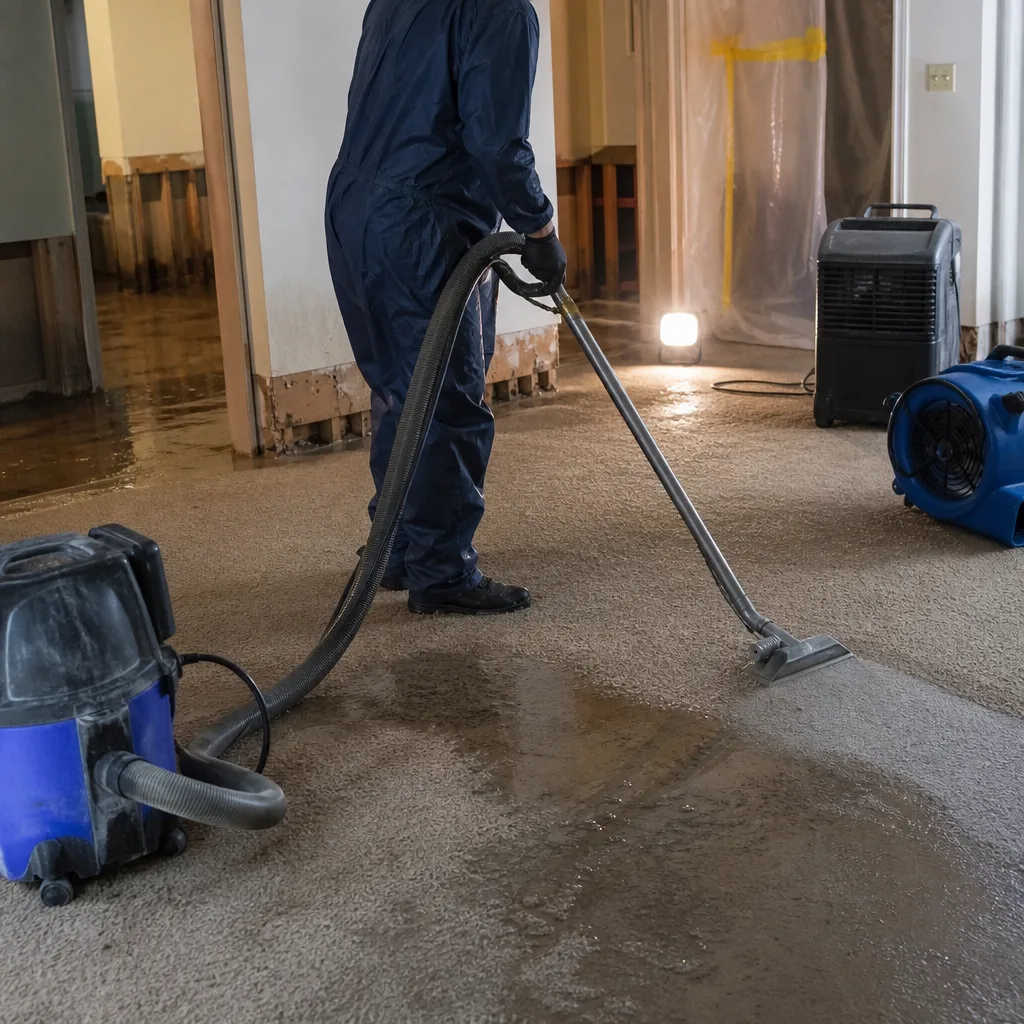
Dri-Eaz dehumidifiers and Phoenix air movers dry the cavity space after removal. We take daily moisture readings and log them. You get the log, and your insurer gets a copy. The dry standard is met before anyone talks about closing walls.
Odor & Air Clearance
HEPA air scrubbing runs until particulate counts drop to clearance levels. In SoHo buildings with shared cast-iron stairwell air shafts, we depressurize the shaft and verify that air is not carrying residual contamination to other floors.
Repairs & Restoration
Floodline Restoration Co. does not stop at the cleanup. We replace flooring, repair plaster, restore painted surfaces, and rebuild what we removed. Done right, and backed in writing by the 90-Day Done Right Promise.
Need Emergency Biohazard & Crime Scene Cleanup in SoHo Now?
Crews minutes away, answering live 24 hours a day. The sooner we start, the less it costs.
Working With Your Insurance Company
Insurance claims for biohazard and crime scene cleanup in SoHo get complicated fast, and the complications rarely have anything to do with the actual cleaning. They have to do with building classifications, landmark rules, and the carrier’s unfamiliarity with both. Many SoHo lofts carry the city’s Joint Living-Work Quarters for Artists zoning designation, a legal leftover from the 1970s Artist-in-Residence era. That classification can trigger additional Department of Buildings scrutiny when permits get pulled, and some adjusters do not know how to categorize a claim filed from a JLWQA unit. We flag the unit’s legal use before any paperwork gets filed. That single step has saved SoHo owners weeks of claim delay. We document the loss from the first hour, photograph everything room by room, provide moisture readings and drying logs, and build a line-item scope the carrier can read without a translator. We talk to your adjuster directly. We have been doing this since 2010, and we built our claim process around one idea: the homeowner should never be the one arguing with an insurance carrier at midnight.
What We Provide Your Insurer
- Thorough documentation of the loss
- Photos of all damage, room by room
- Moisture readings and drying logs
- A detailed, line-item scope of work
- Direct coordination with your carrier
Built for SoHo’s Loss Calendar
SoHo’s biohazard and crime scene work follows a calendar that is specific to this neighborhood’s buildings and streets. January and February bring the frozen pipe calls, when a supply line bursts in a 5,000 square foot loft on Crosby Street and saturates floors that have not been opened since the 1980s. That water damage becomes a biohazard problem when it sits, and when it seeps into original subfloor it carries whatever was already there into the cavity below. Spring brings the thaw, and with it the basement and cellar seepage that never fully dried after Hurricane Sandy’s 2012 surge inundated ground-floor and below-grade spaces across lower Manhattan. The residual moisture in those old masonry foundations feeds mold and keeps the building envelope damp. Summer thunderstorms flash-flood the narrow street canyon, and nor’easter season from September into April keeps us moving through the cast-iron district on a regular rhythm. The pattern is not random. The same architectural features that make SoHo’s lofts beautiful, the wide-open floor plans, the 12 foot windows with original iron surrounds, the masonry bearing walls, are the ones that accelerate contamination and make proper containment harder. That is why a SoHo-specific crew matters.
Biohazard & Crime Scene Cleanup Across SoHo’s Neighborhoods
SoHo runs from Houston Street down to Canal, and from West Broadway east to Lafayette, and the building stock changes subtly from block to block. Along Greene Street and Mercer Street, the 1860s cast-iron facades have distinctive window patterns and iron columns, and the lofts behind them tend to be deep, narrow, and dark at the center. A trauma cleanup there often means working in spaces where natural light only reaches the front 15 feet, and where ventilation without disturbing landmarked fenestration is a genuine technical problem. Wooster Street and West Broadway carry the heavier retail ground floors, which means a crime scene in a loft above a store can push fluid into the masonry pocket between the iron facade and the floor system. If the contamination settles there, standard interior-only cleanup misses it, and the LPC later flags any exterior access needed to remediate it. Broome and Spring Streets run east-west and see the heaviest traffic and narrowest sidewalk access. Our crews stage equipment carefully in those side streets, because parking a restoration truck on a cobblestone Belgian-block street requires some forethought. The buildings east of Broadway trend toward the later, larger lofts from the 1880s and 1890s, with bigger floor plates and more complex mechanical retrofits. Each block has its own failure mode, and we know them by address.
Specialized Biohazard & Crime Scene Cleanup Services We Offer in SoHo
Trauma & Unattended Death Cleanup
Unattended death in a SoHo loft is a situation no homeowner should face alone. When a body is not discovered for days, decomposition fluids move through the floor and into the subfloor within the first 48 hours. In an 1870s loft with original wide-plank flooring, that fluid travels along the boards, under the baseboards, and into the spaces between the joists. We remove the affected flooring, treat the structural framing, and verify with moisture mapping that no contamination remains. This is not a cleaning job. It is a careful, documented removal and restoration.
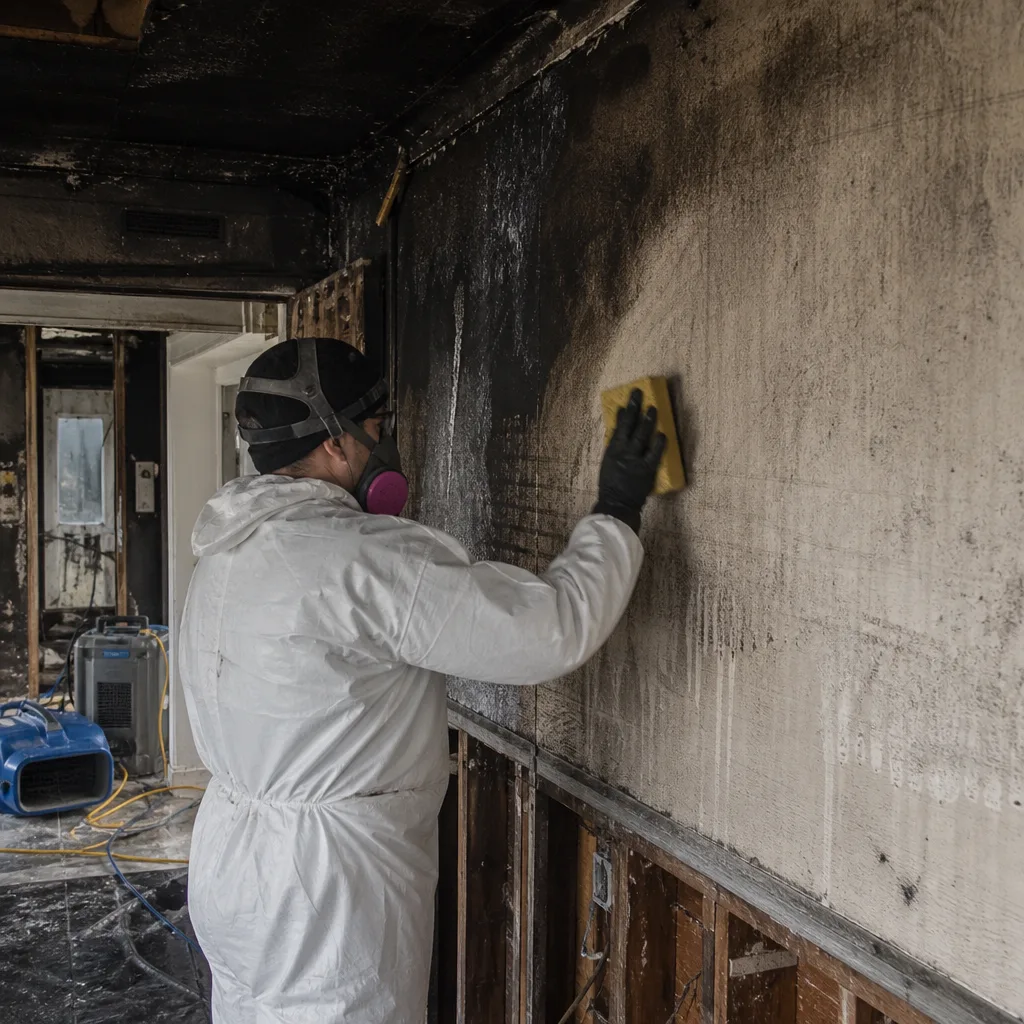
Blood & Bodily Fluid Cleanup
Blood and bodily fluid carry bloodborne pathogens that demand full containment, proper disposal, and testing before the space is habitable again. In a SoHo loft with a landmarked cast-iron sash, opening a window for ventilation without containment creates a bioaerosol path into the street canyon. We install negative air and HEPA scrubbing first. Then we handle the cleaning. Then we verify. The order matters.
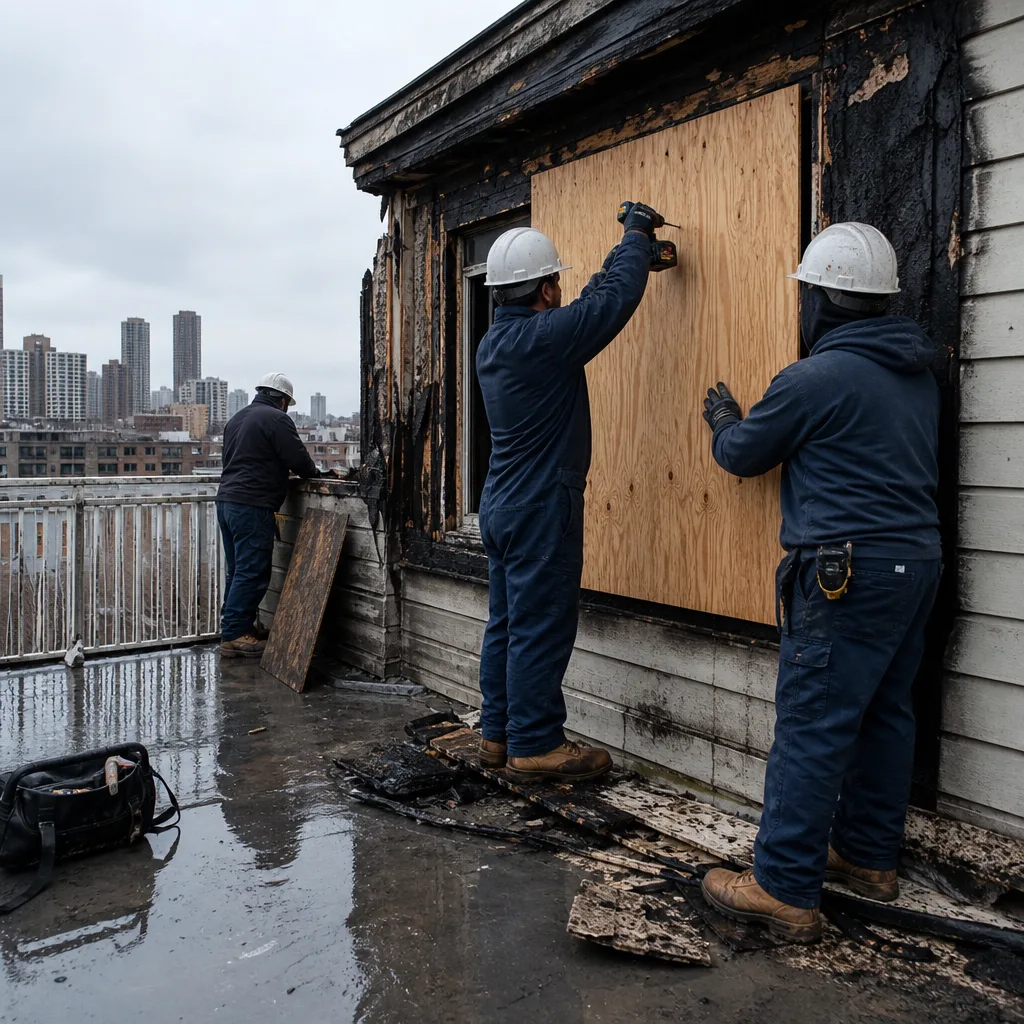
Hoarding Cleanup
Hoarding cleanup in a 5,000 square foot SoHo loft is a different animal from hoarding cleanup anywhere else. The volume of material is enormous, and the pace of the work is often dictated by landmarked window light and ventilation limits. If a crew opens a stuck cast-iron sash for air exchange before installing containment, they have just sent whatever is in that loft into the air shaft that serves the entire building. We set containment first, every time. Then we clear, sort, sanitize, and restore. We have helped SoHo families recover lofts that had not been fully walked in years.
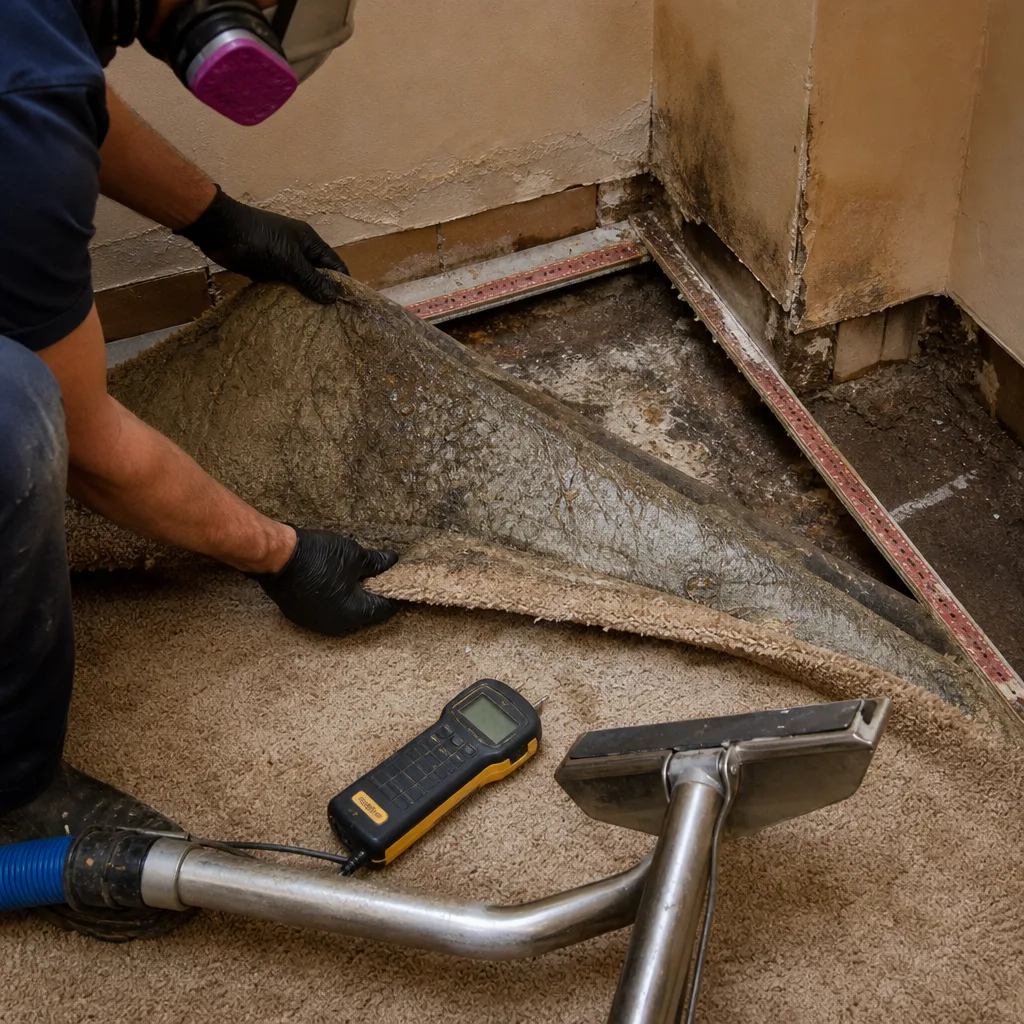
Infectious Disease Disinfection
When illness strikes a SoHo household, especially in a converted manufacturing building with shared stairwells and centralized shafts, disinfection has to go beyond wipe-down. We use EPA-registered disinfectants, HEPA air scrubbing, and we treat the air path between units where it exists. The cast-iron stairwell air shafts in these 19th century buildings act like chimneys, and they move air between floors whether anyone wants them to or not.
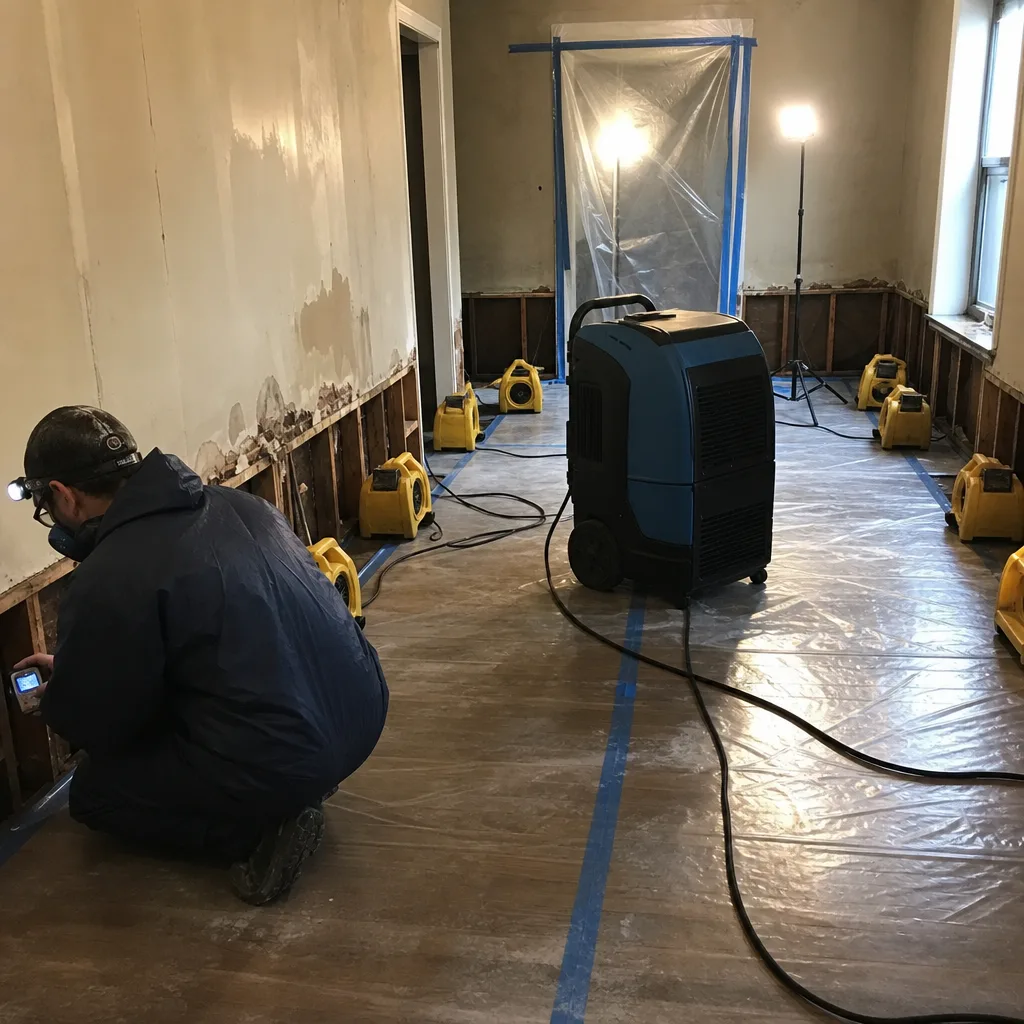
Tear Gas & Chemical Cleanup
A chemical release or tear gas incident in a converted manufacturing building leaves residue that clings to iron, brick, and plaster. The shared cast-iron stairwell air shafts distribute that residue far beyond the affected unit. A cleanup that only treats the source unit without depressurizing the shaft and taking moisture readings on the iron structure will not pass a post-remediation inspection. We treat the shaft, the unit, and the air path, then we document it all for the building and the insurer.
Every one of these jobs falls under our broader Biohazard & Crime Scene Cleanup practice, and every one of them requires the same discipline: contain first, document always, verify before closing. We stand behind the work with the 90-Day Done Right Promise. If it is not done right, we make it right. In writing. No arguing.
What happens when you call
- 1
A real person answersNo phone trees - you reach a local pro.
- 2
You get an upfront price rangeHonest numbers before anyone is dispatched.
- 3
A background-checked tech heads outLicensed & insured, dispatched right away.
- 4
You approve before work beginsNothing starts until you say go.
Biohazard & Crime Scene Cleanup Costs in SoHo, NY
A typical blood or bodily fluid cleanup in a SoHo loft runs $1,800 to $3,500 when the contamination is contained to hard surfaces and fresh. An unattended death cleanup, where decomposition fluid has wicked into the original subfloor and requires removal of flooring sections, runs $4,000 to $8,500. Hoarding cleanup in a 3,000 to 6,000 square foot SoHo loft runs $6,000 to $15,000 depending on volume, the condition of the underlying floor, and whether the cast-iron windows require LPC-flagged ventilation work. Infectious disease disinfection runs $1,200 to $3,000 for a typical loft when containment and air scrubbing are included. What moves the price most in SoHo is the building. A landmarked cast-iron facade that requires special handling adds cost. A JLWQA unit that needs DOB paperwork before pack-out adds time and filing fees. A subfloor that has to come up in sections adds material and labor. Insurance covers most crime scene and biohazard work when the claim is documented properly. For anything out of pocket, we give you a free visual inspection and a written scope before you commit to a dollar. Call (917) 924-4221 and we will walk the scene with you. No charge for the look.
We Also Serve Cities Near SoHo
Our crews serve SoHo and the surrounding communities, including Fairview, Harrison, East Bronx, and Hunts Point. If you are in one of those areas and dealing with a biohazard, crime scene, or unattended death situation, call the same number: (917) 924-4221. A live person answers, and the same certified crews respond.
Serving SoHo, NY - Our Local Coverage Area
We’re based in the SoHo area and know this community well. Use the map below to see our service coverage - if you’re nearby, we can almost certainly help.
SoHo Biohazard & Crime Scene Cleanup Questions, Answered
Does a biohazard cleanup inside a SoHo cast-iron loft require Landmarks Preservation Commission approval?
Interior-only biohazard cleanup inside a SoHo loft generally does not require LPC approval, but any exterior access, facade penetration, or even temporary shoring of a cast-iron window to ventilate a contaminated space can trigger LPC review because the entire neighborhood is the SoHo-Cast Iron Historic District. A cleanup that stays fully inside the unit and does not touch the facade usually proceeds without a Landmarks filing. But the moment you need to open a stuck cast-iron sash, cut an exterior ventilation point, or stage a dumpster on a landmarked sidewalk, the rules change. Our team flags these issues before we start, so you do not get a stop-work order mid-job.
What happens when decomposition fluid has wicked into the wide-plank floors of an 1870s SoHo loft?
Decomposition fluid follows the wood grain and settles into the gaps between the wide-plank boards and the joists below. The affected boards have to come out in sections, the structural framing gets treated and sealed, and the cavity gets dried with Dri-Eaz dehumidifiers until moisture readings hit the dry standard. If the fluid reached the masonry pocket where the cast-iron facade meets the floor system, the remediation could involve interior access to that pocket, and any exterior work needed to fully seal it may require LPC review. We document every step with photos and moisture logs for the insurer.
How does a JLWQA artist-loft zoning designation change a crime scene cleanup in SoHo?
The Joint Living-Work Quarters for Artists designation means the unit is legally classified for both residential and work use, which can trigger additional Department of Buildings scrutiny when restoration permits are filed. Some insurers are also unfamiliar with the classification and may stall a claim while they figure out how to categorize it. We flag the unit’s legal use before any paperwork gets filed, which saves time and prevents a claim from getting bounced back. It is a small step that matters a lot in these buildings.
Why is mold a secondary issue after a blood or bodily fluid cleanup in a SoHo loft?
Blood and bodily fluids add organic material and moisture to surfaces that were previously dry. In a SoHo loft with original wood flooring and no vapor barrier between the subfloor and the masonry below, that moisture creates an ideal environment for mold growth within 48 to 72 hours. If the biohazard cleanup does not include proper drying and moisture verification, mold can appear weeks later as a secondary problem. Our crews carry moisture meters and log readings until the dry standard is met, so you do not trade one problem for another.
Can hoarding cleanup in a SoHo loft be done without evacuating the neighboring units on the same floor?
In most cases, yes. Full containment with negative air pressure and HEPA scrubbing keeps bioaerosols from leaving the unit. The challenge in SoHo is the shared cast-iron stairwell air shafts in 19th century converted manufacturing buildings. If those shafts are not depressurized during the cleanup, air can move between floors. Our crews seal the unit, manage the air pressure, and monitor the shaft. Neighboring units typically stay occupied, but we tell you upfront if the building’s configuration makes that unsafe.
How fast can someone actually get to a SoHo address?
Our dispatch team routes crews into SoHo from our New York City office, and our goal is a 45-minute arrival for most biohazard and crime scene calls in the neighborhood. Broome Street, Spring Street, and Prince Street traffic changes by the hour, but we know the side streets and the staging realities. A live person answers the phone at (917) 924-4221, and the crew update you by phone as they move. We will be there when we say.
Will insurance cover a crime scene cleanup in a SoHo loft?
Most homeowners policies cover crime scene and biohazard cleanup when the loss is sudden and accidental, and when the claim is documented properly from the first hour. The SoHo complications are the building’s landmark status and the JLWQA zoning on many units. Carriers can stall when they do not understand either one. We bill the carrier directly, provide photos and line-item scopes, and deal with the adjuster so you do not have to. Call (917) 924-4221 and we will help you sort out coverage before the work begins.
What should I do in the first 30 minutes after discovering a biohazard situation in SoHo?
Do not touch anything. Do not open windows. Do not run fans or the building’s HVAC system, because in a converted manufacturing building with shared shafts, you can push contaminated air into neighboring units. Keep people and pets out of the affected area. If the scene involves a death, call the appropriate authorities first. Then call us at (917) 924-4221. A live person answers, and a certified crew starts moving toward SoHo.
Written by Curt Bowman, Owner at Floodline Restoration Co. of Manhattan, serving SoHo and all of lower Manhattan since 2010.