
Free visual inspection and a written scope of work before any mitigation begins - photos, moisture readings, and drying logs go in your claim file
The scope we write is the scope we bill. Anything new gets shown to you, in writing, before we touch it.






 Before
 After
After Before
 After
After Before
 After
After24/7 Emergency Commercial Restoration in Bayonne
Commercial water damage in Bayonne rarely waits for business hours, and neither do we. Floodline Restoration Co. of Manhattan answers every call with a live dispatcher, 24 hours a day, 7 days a week, and can have a certified crew at your Bayonne property within 45 minutes of your call. The first hour after a pipe burst, sewer backup, or storm surge is when the damage spreads fastest in a commercial structure - inventory soaks, drywall wicks moisture upward, and mold starts colonizing in as little as 24 to 48 hours. Call (917) 924-4221 the moment you see standing water, a ceiling stain, or a musty smell in your building. We’ll walk you through the first steps on the phone and dispatch a crew to Bayonne immediately, with a free visual inspection of the loss before any work is scoped.
Understanding Commercial Restoration Severity in Bayonne Properties
Not all commercial water damage in Bayonne is equal, and the difference matters for how we price the job, how long it takes, and what your insurer will accept. Category 1 water is clean water from a broken supply line or failed water heater; it’s the easiest to dry, but it degrades to Category 2 within 48 hours if left standing. Category 2 water is gray water with some contamination - dishwasher overflow, sump pump discharge, or a leaking roof after heavy rain. Category 3 water is the one Bayonne building owners know too well: saltwater from tidal surge, raw sewage, or any water that came in from the street. It carries pathogens, salt, and sediment, and it demands full containment, antimicrobial treatment, and often removal of porous materials rather than just drying. In Bayonne’s attached brick row buildings, severity compounds fast: water wicks through shared masonry party walls into the adjacent storefront, and moisture trapped in a 1920s basement rises through the joist pockets to the first-floor retail space. We classify the water first, then build the restoration plan around that classification - every time.
Why Bayonne Property Owners Choose Floodline Restoration Co. of Manhattan
- 45-minute response commitment. A live dispatcher answers your call and a certified crew leaves for Bayonne immediately. We don’t book “windows.” We book an arrival.
- Live answer, 24/7. The person who answers at 2 a.m. is a real dispatcher, not a recording. You’ll never be routed to a call center mailbox or told to “leave a message and we’ll get back to you.”
- IICRC-certified commercial crews. Our restoration technicians hold WRT, FSRT, and AMRT certifications, and every crew member is background-checked and uniformed. That matters when we’re walking through your storefront, your back office, or your tenants’ spaces.
- Free visual inspection. We’ll assess the loss in Bayonne and tell you plainly what needs to happen and what doesn’t - before any equipment is unloaded or any invoice is written.
- Direct insurance billing. We bill your carrier directly and coordinate with your adjuster from the first phone call. You won’t play messenger between Floodline and the insurance company.
- One team from extraction to reconstruction. The same Floodline crew that reads the moisture map on day one handles the daily drying readings, the rebuild, and the final walkthrough. No mid-job handoff to a subcontractor hired off a list.
Our Commercial Restoration Process
Inspection & Assessment
We arrive in Bayonne, walk the entire affected area - including adjacent units in attached buildings - and map moisture with thermal imaging cameras and penetrating moisture meters. You get a written scope of work and a firm plan before any equipment is staged. This is where we determine the water category and set the dry standard for the building.
Extraction & Stabilization
Standing water comes out first, using truck-mounted and portable extraction units. In Bayonne’s commercial basements and storefronts, we also stabilize the envelope: sandbagging or sealing active entry points, shutting down compromised HVAC, and isolating the loss from the rest of the building.
Drying & Dehumidification
Our drying floor plan is specific to Bayonne’s brick and masonry construction. We place low-grain refrigerant dehumidifiers, high-velocity air movers, and supplemental heat in a calculated layout, and record daily moisture readings on every affected surface. Drying logs are submitted to your carrier - a non-negotiable in commercial flood claims.
Cleaning & Sanitization
After the dry standard is met, we clean and sanitize all impacted surfaces. For Category 3 water, this includes antimicrobial application, controlled demolition of saturated drywall and insulation, and HEPA air scrubbing to remove airborne particulates before finish work begins.
Specialty Treatment for Commercial Flood Loss
In Bayonne’s low-lying waterfront blocks, we address what saltwater leaves behind: efflorescence, salt crystallization inside block foundations, and corrosion at metal door frames, floor drains, and utility connections. This step is the difference between a building that holds its finish and one that spalls and stains within a year.
Repairs & Restoration
We rebuild what was removed - drywall, trim, flooring, storefront fixtures, ceiling systems - and paint to match the existing finish. When we’re done, you get a completed moisture log, a written record of all remediation, and our 90-Day Done Right Promise: if it’s not done right, we make it right. In writing, no arguing.
Need Emergency Commercial Restoration in Bayonne Now?
Crews minutes away, answering live 24 hours a day. The sooner we start, the less it costs.
Working With Your Insurance Company
Commercial flood claims in Bayonne are detail-heavy, and the adjuster assigned to your file is going to ask for proof of every step. Our documentation starts the moment we arrive: photographs of every affected room, moisture readings from day one through the day we hand you a dry building, and a line-item scope of work that matches the carrier’s estimating software. We speak directly with your adjuster, schedule re-inspections, and handle the back-and-forth so you can keep your operation running. If you’re a retail owner on Broadway, a landlord with three units on Avenue C, or an HOA dealing with a shared basement under four attached stores, direct billing removes the cash-flow pressure from the restoration. You focus on reopening. We handle the claim file.
What We Provide Your Insurer
- Thorough documentation of the loss, from the first hour
- Photos of all damage, room by room
- Moisture readings and drying logs, recorded daily
- A detailed, line-item scope of work
- Direct coordination with your carrier, from first call to final invoice
Built for Bayonne’s Loss Calendar
Bayonne’s commercial damage season is shaped by geography, not just weather. The peninsula sits between Newark Bay, the Kill Van Kull, and Upper New York Bay, and much of the city’s eastern and western waterfront sits under 10 feet of elevation. What that means for a building owner is a year-round calendar of threats. Winter brings deep freezes that burst supply lines in unheated rear additions, stairwells, and vacant storefronts. Spring arrives with thaw cycles and rain on snow, pushing groundwater into commercial basements through floor cracks and cove joints. Summer thunderstorms dump an inch of rain in an hour onto Bayonne’s dense street grid, overwhelming the drainage system and forcing stormwater back through floor drains and into loading bays. Fall is nor’easter season, when storm surge rolls up the Kill Van Kull and Upper New York Bay and into the low blocks east of Broadway. Every one of these events lands differently in a 1920s row building than it does in a modern warehouse. We precondition our response around that reality.
Commercial Restoration Across Bayonne’s Neighborhoods
Bayonne isn’t one commercial district; it’s a collection of storefront corridors and mixed-use blocks, and each one presents a different restoration problem when water gets in. Broadway, the city’s central spine, runs through some of the oldest mixed-use stock in Bayonne - two- and three-story brick buildings with storefronts at grade and apartments above. Water in a Broadway basement almost always means shared party-wall migration into the neighboring retail unit, and extraction without adjacent-unit moisture checks is a setup for hidden mold claims six months later. The Bergen Point area, at the southern tip where the Kill Van Kull narrows, has some of the lowest elevation in the city and some of the tightest access for equipment staging. Midtown Bayonne, around 22nd to 34th Streets, carries a heavier load of larger commercial structures, churches, schools, and institutional buildings, where a single burst riser can flood 20,000 square feet before anyone notices. The Constable Hook industrial corridor on the eastern shore handles bulk cargo, chemical storage, and marine-adjacent businesses, where industrial-grade cleaning and rapid structural drying after a surge are non-negotiable. And the residential grid off Avenue C is dense with attached two-family brick homes, but the corner storefronts mixed into that grid face every challenge of both a residence and a business: tight clearances, shared walls, and neighbors whose spaces are directly affected the moment water spreads.
Specialized Commercial Restoration Services We Offer in Bayonne
Multi-Unit & HOA Restoration
Attached row buildings doing commercial duty - storefront below, apartments above, shared basements, common roof drains - don’t restore like single structures. We run containment from the start, establish drying zones in every affected unit, and take moisture readings in adjacent spaces even when they look dry. HOA and multi-tenant claims in Bayonne demand documented drying logs for every unit, and we provide exactly that, because the carrier will ask.
Large-Loss Response
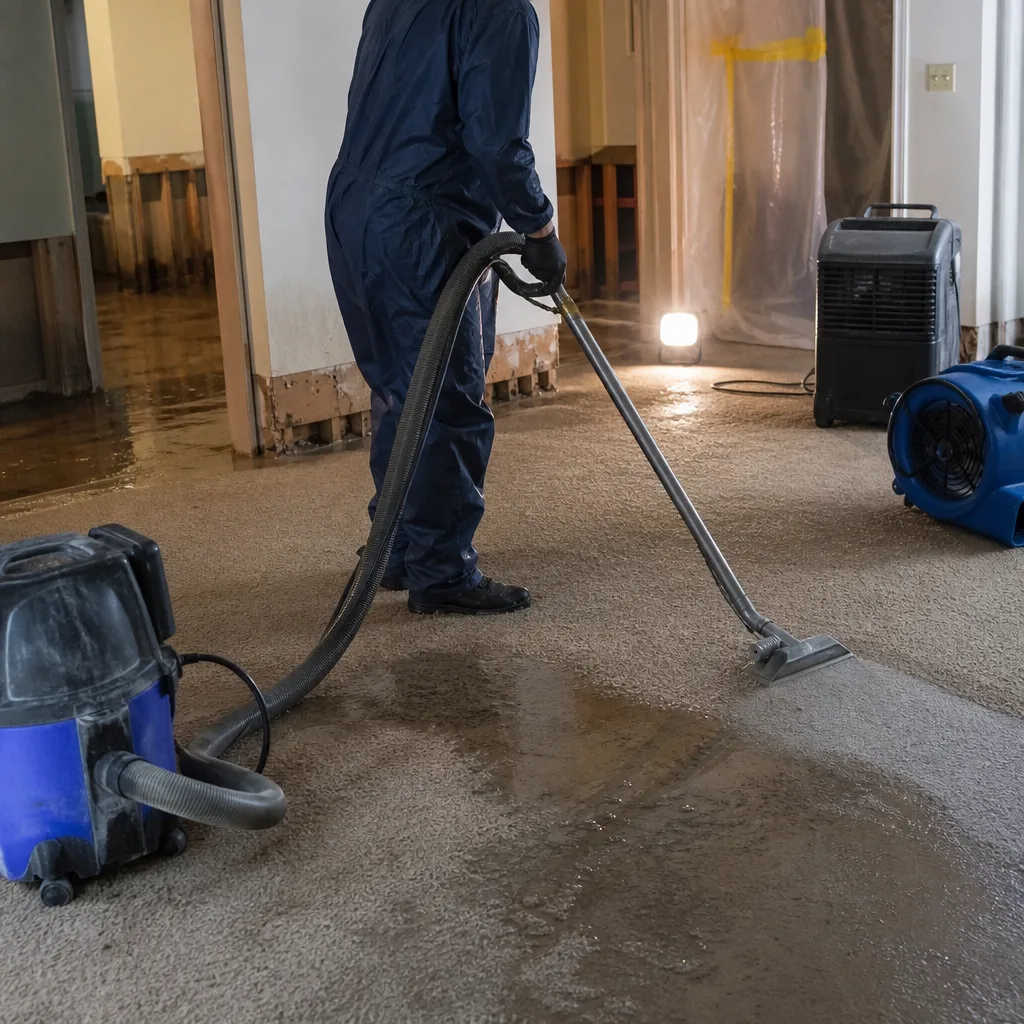
When a fire sprinkler lets go on the third floor of a Bayonne medical office building, or a tidal surge fills a warehouse on Constable Hook, the loss is measured in tens of thousands of square feet, not rooms. We stage multiple crews, industrial desiccant dehumidification where needed, and a project manager who stays on site through the entire drying sequence. Large-loss commercial restoration in Bayonne means coordinating with your property manager, your tenants, and your carrier simultaneously - and we do all three.
Business Interruption Minimization
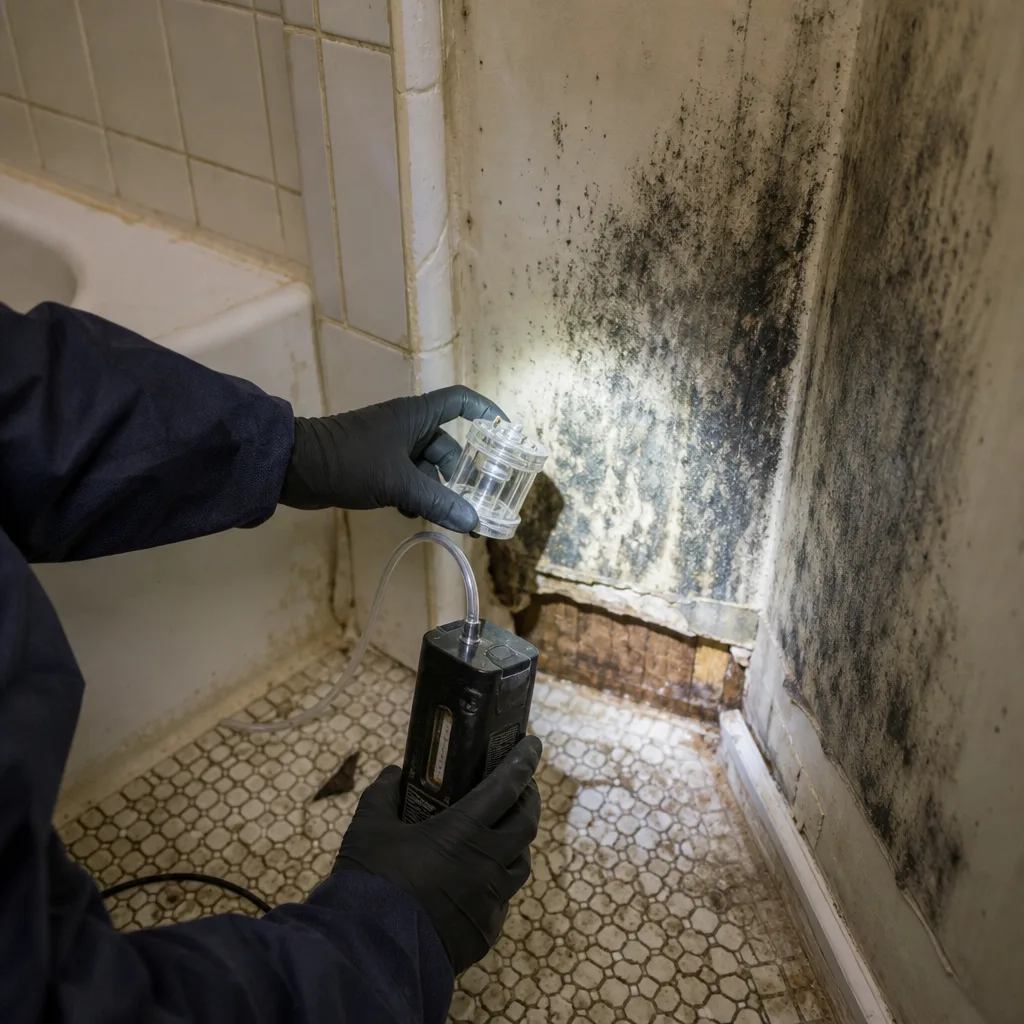
Every day a Bayonne storefront is dark is revenue lost forever, and insurance won’t make up all of it. Our crew layout is designed to get retail and office space back to operation as fast as the drying physics allow. In many cases, we can isolate the loss behind containment and keep the front of house open and selling while drying continues in the rear. We’ll tell you plainly what’s possible and what isn’t - no timeline promises we can’t hold.
Office & Retail Restoration
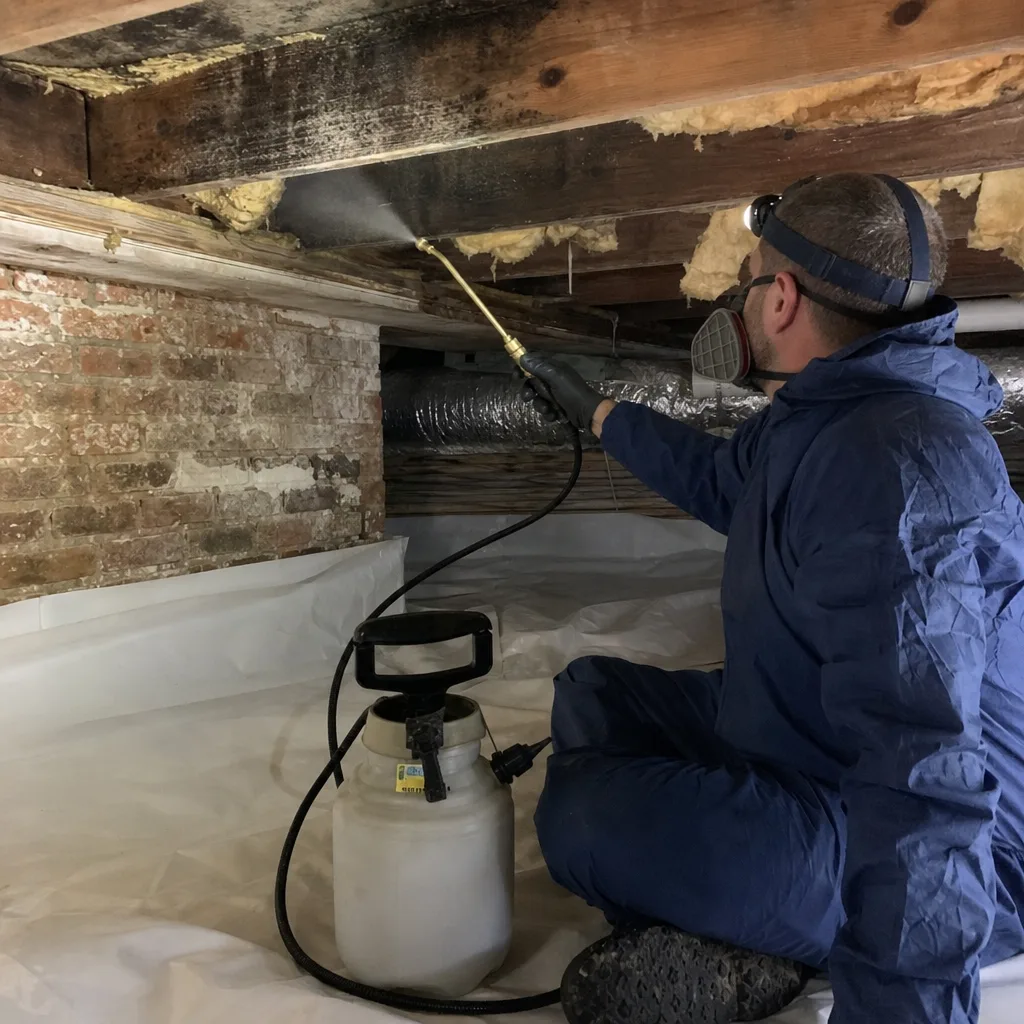
Drying a Bayonne retail space is about more than floors and drywall - inventory, display fixtures, point-of-sale systems, and stored documents all respond differently to humidity. We use targeted drying with Injectidry mat systems under cabinets and built-ins, and LGR dehumidification sized for the cubic footage, not the square footage. The goal is a store that looks like it did before the event, not a dry box that needs a full rebuild.
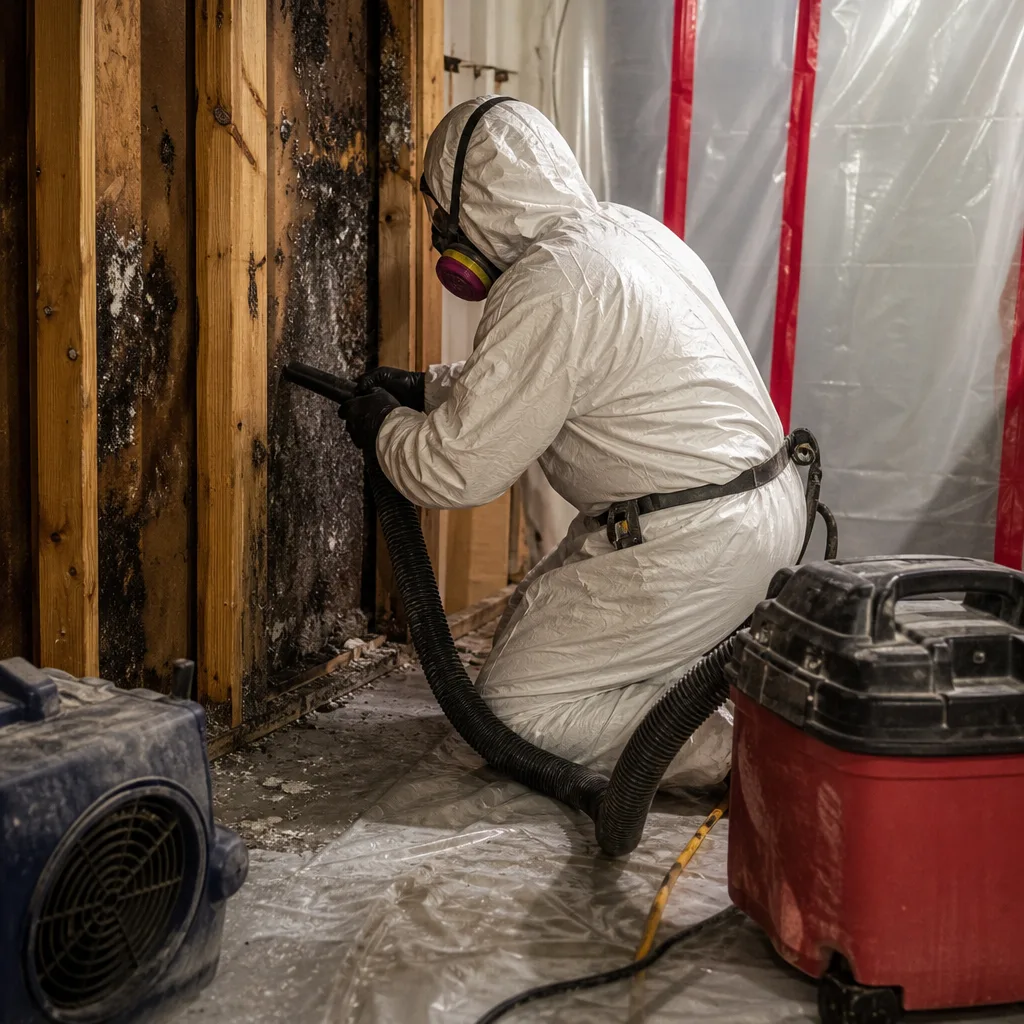
Industrial Facility Cleanup
Constable Hook and the industrial blocks off Avenue A throw a different set of problems: concrete floors, loading docks, heavy equipment, and floor drains tied to the bay. We run structural drying with high-capacity air movement and chemical-appropriate cleaning for what’s stored on site. Saltwater in an industrial bay demands aggressive corrosion control at every metal connection, and we treat it as a structural issue, not just a cleaning issue.
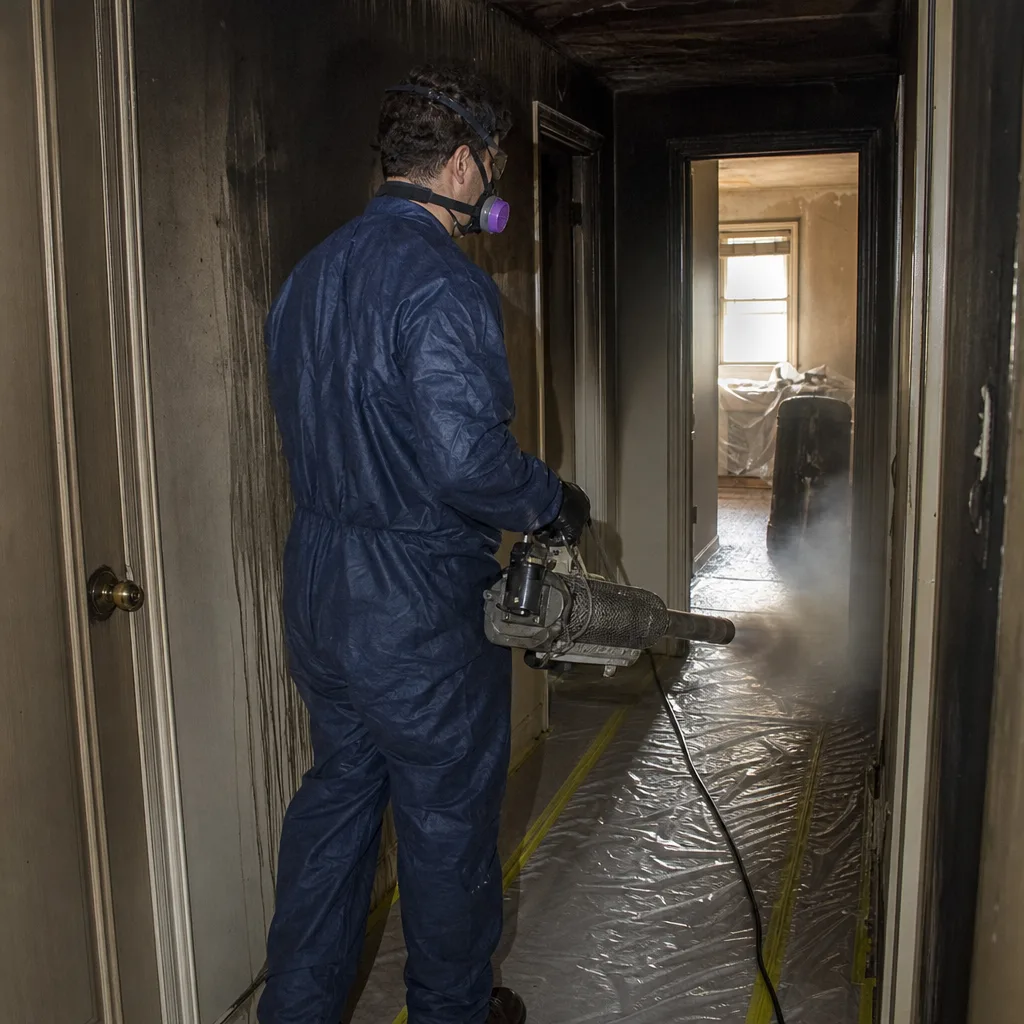
What happens when you call
- 1
A real person answersNo phone trees - you reach a local pro.
- 2
You get an upfront price rangeHonest numbers before anyone is dispatched.
- 3
A background-checked tech heads outLicensed & insured, dispatched right away.
- 4
You approve before work beginsNothing starts until you say go.
Commercial Restoration Costs in Bayonne, NJ
What you’ll pay for commercial restoration in Bayonne depends on the water category, the square footage, and how much finish material has to come out. A straightforward Category 1 water loss in a single storefront - burst supply line, caught within hours, no contamination - typically runs $2,800 to $6,500 in Bayonne for extraction, drying, and minor rebuild. A Category 2 loss with partial drywall removal and sanitization in a multi-unit attached building lands in the $6,000 to $18,000 range, mostly because shared party walls push drying time and containment cost. Category 3 saltwater or sewage in a Bayonne basement is the serious one: full containment, controlled demolition, masonry treatment, and rebuild can run $15,000 to $65,000 or more depending on the building’s age and how far the salt wicked into brick. The free visual inspection is how you get a firm number. We’ll walk the affected space in Bayonne, map the loss, and hand you a written scope with a line-item price before any work begins. Call (917) 924-4221 and we’ll send a crew out today.
We Also Serve Cities Near Bayonne
Floodline Restoration Co. of Manhattan runs commercial restoration crews to Bayonne daily, but our service map extends through the surrounding Hudson County markets. We respond to commercial water, fire, and storm losses in Jersey City, Harrison, Kearny, and Hoboken with the same 45-minute commitment and the same live-dispatched crews. If your building is anywhere in the Bayonne orbit, call (917) 924-4221 and we’ll route the nearest available crew.
Serving Bayonne, NJ - Our Local Coverage Area
We’re based in the Bayonne area and know this community well. Use the map below to see our service coverage - if you’re nearby, we can almost certainly help.
Bayonne Commercial Restoration Questions, Answered
How soon after a nor’easter hits Bayonne’s eastern waterfront do we need to start commercial water extraction before mold sets in?
Mold colonization in a commercial building begins in 24 to 48 hours, and Bayonne’s high ambient humidity compresses that window further. We recommend starting extraction within 12 hours of surge water entering your building - same-day response is standard for us. Call (917) 924-4221 as soon as the water recedes enough for a crew to access the space, and we’ll begin extraction and air movement the same visit.
When a Bayonne row-house storefront floods, does my neighbor’s space need to be checked too?
Yes, absolutely. In Bayonne’s attached brick buildings, water moves through shared party walls and common joist pockets, and a basement flood in one unit will show elevated moisture in the adjacent unit within days. We always take readings in neighboring spaces on the same inspection visit. Your carrier will not cover a neighbor’s damage if it’s discovered six months later as “pre-existing” - early detection protects everyone on the block.
What’s different about drying a Bayonne basement that has flooded multiple times?
Repeated flood events in a Bayonne basement leave residual moisture inside the masonry itself, not just on the surface. That saltwater wicking we see in the eastern waterfront blocks causes efflorescence and spalling in block foundations, and you can’t just dry the air and repaint. Our crew treats the wall assembly as part of the drying plan, with masonry drying and re-pointing where needed before any finish work. A one-event basement in an inland town would not require that step.
Can we keep our Bayonne retail store open during Category 1 or 2 water mitigation?
Often, yes. For a Category 1 or 2 loss isolated to a rear stockroom or basement, we can set up containment barriers and negative air so the front of house stays open and customers never see the work. For a Category 3 loss, the store generally needs to close during active contamination removal, but we’ll give you a straight timeline and stick to it. The honest answer at inspection, before you commit to anything.
Why do we need drying logs for a commercial claim after a Bayonne flood?
Drying logs are how we prove to your insurer that the building was brought to a defensible dry standard - and in commercial flood claims in Bayonne, the adjuster will ask for them. Without daily moisture readings documented from day one to day last, the carrier can argue that the drying was incomplete or that pre-existing moisture was present. We provide the log to you and to the adjuster simultaneously, so there is no gap in the claim file. This is standard in our commercial work across Bayonne, and we don’t charge extra for it.
How long does commercial drying take in a Bayonne building?
Most commercial drying jobs in Bayonne run three to seven days for Category 1 or 2 water, and longer for Category 3 saltwater losses where masonry is involved. The building’s age matters: a 1920s brick row building holds more moisture in its wall cavities than a modern steel-frame building, and multi-unit buildings take longer because every adjacent space extends the drying envelope. We give you a day-one drying plan with a target dry date, and we update it daily as readings come in.
Are your crews certified for commercial restoration in Bayonne?
Every Floodline Restoration Co. of Manhattan technician on your Bayonne commercial job is background-checked, uniformed, and certified to IICRC standards, including WRT for water damage, FSRT for fire and smoke, and AMRT for microbial remediation. Our crew leads have years of commercial experience across Hudson County, not a weekend training course. When we’re standing in your storefront, the person holding the moisture meter knows what the reading means and what to do about it.
What should I do in the first 30 minutes after water gets into my Bayonne commercial space?
Cut power to the affected area if you can do so safely from a dry location. Do not walk through standing water if you can’t tell whether it’s in contact with an electrical source. Move undamaged inventory and documents off the floor if the floor is wet. Then call (917) 924-4221. A live dispatcher will answer, and we’ll have a crew from our Commercial Restoration team en route to Bayonne while you’re still on the phone. The faster extraction starts, the less inventory you lose and the shorter the entire claim runs.
Written by Curt Bowman, Owner at Floodline Restoration Co. of Manhattan, serving Bayonne, NJ and surrounding Hudson County commercial properties.