
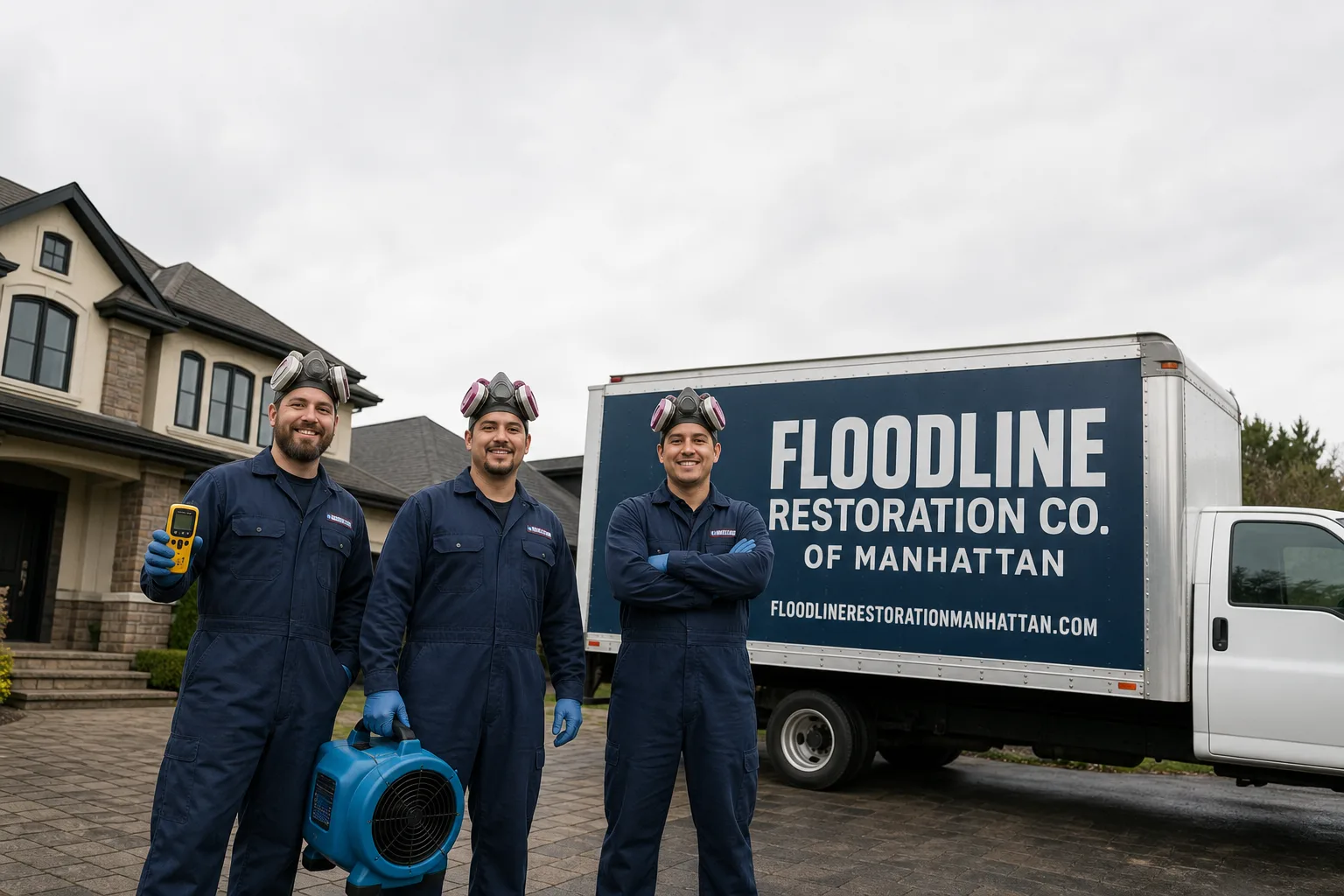
Free visual inspection and a written scope of work before any mitigation begins - photos, moisture readings, and drying logs go in your claim file
The scope we write is the scope we bill. Anything new gets shown to you, in writing, before we touch it.






 Before
 After
After Before
 After
After Before
 After
After24/7 Emergency Commercial Restoration in Chelsea
Commercial restoration in Chelsea moves on two clocks: the one on the wall, and the one saltwater and humidity set the moment building materials get wet. We answer live at (917) 924-4221 around the clock, every day, and our certified crews reach Chelsea commercial addresses fast because they work this neighborhood constantly, not occasionally. In a district where basements, loading docks, and ground-floor retail in pre-war buildings can take on category 2 and 3 water within minutes of a failed cast iron stack or tidal surge, the first hour determines whether you are drying a space or rebuilding it.
We arrive, we assess, we set containment where it is needed, and we start extraction. Every visit starts with a free visual inspection, and because we are already moving through Chelsea daily for office, retail, and gallery calls, response is measured in minutes, not days. Our team coordinates with co-op boards, property managers, and building supers on the ground, the way commercial work in Chelsea actually has to get done.
Understanding Commercial Restoration Severity in Chelsea Properties
Severity in Chelsea commercial buildings rarely announces itself plainly. A pooled spill on a retail floor may be category 1 water, clean and treatable. Water traveling down from a converted loft’s residential plumbing into the commercial space below is often category 2, carrying detergents, soil, and biological load. Storm surge off the Hudson is category 3, salt-laden and contaminated with everything the river and the street carried in. Chelsea’s western blocks live with that third category as a real, recurring possibility, not a theoretical one.
Building age sharpens the stakes. Chelsea’s five- to seven-story walk-up tenements and converted industrial warehouses often retain original cast iron drain stacks, century-old interior brick masonry, and concrete slab subfloors that wick and retain moisture long after visible water is removed. Moisture mapping with thermal imaging and hygrometers tells us which of those old assemblies are actually dry, because visual dryness means nothing behind wainscoting, under gallery floors, or inside walls insulated with pre-1980 materials. Mold onset in these conditions begins within 24 to 48 hours, faster when humidity is already high off the river, which is why our Mold Remediation - Chelsea crews treat speed as critical. We read the building before we dry it, because a Chelsea building hides more than it shows.
Why Chelsea Property Owners Choose Floodline Restoration Co. of Manhattan
- Fast response, with a number you can reach at 2 a.m. Our live dispatchers pick up 24/7, and our Chelsea crews are minutes from commercial addresses throughout the district. We don’t put you on hold while water keeps moving.
- IICRC-certified technicians trained to WRT, FSRT, and AMRT standards, plus RIA and IFA protocols. The people in your building know what they’re looking at.
- Free visual inspection on every loss. You get a straight read on what we found and what it will take before we touch a thing.
- Direct insurance billing, handled properly. We document from hour one and talk to your carrier ourselves. You are not the messenger.
- One team from extraction to reconstruction. The same background-checked, uniformed crew that maps the moisture on day one does the daily readings and rebuilds what needs rebuilding.
- In writing, guaranteed. The 90-Day Done Right Promise, the Keystone Standard, comes with every job. If it’s not done right, we make it right. No paperwork battles.
Our Commercial Restoration Process
Inspection & Assessment
We arrive with thermal imaging cameras and moisture meters, mapping every affected surface and the assemblies behind them. In Chelsea buildings with old brick and cast iron, that means reading what isn’t visible yet.
Extraction & Stabilization
Extraction pumps and truck-mounted units pull standing water from floors, loading docks, and basement sumps. We stop the active loss before it spreads.
Drying & Dehumidification
Professional-grade Dri-Eaz and Phoenix dehumidifiers run with XPOWER air movers positioned from the moisture map, not guesswork. In Chelsea’s brick warehouses, Injectidry mats work into concrete slab subfloors where ordinary drying stalls.
Cleaning & Sanitization
HEPA air scrubbers run under containment while surfaces are cleaned with appropriate antimicrobials. In gallery and archive spaces, we build climate-controlled enclosures before pack-out so humidity spikes never touch the inventory.
Specialty Treatment for Commercial Losses
Salt-laden surge water on Chelsea’s western blocks gets flushed, not just dried. Document recovery, inventory processing, and business interruption planning run parallel to physical restoration so you aren’t picking between assets and dryout.
Repairs & Restoration
The same Floodline Restoration Co. of Manhattan team that dried it rebuilds it, from stripped drywall to finished retail floors. Commercial Restoration with us doesn’t end with a moisture log; it ends with the space back in service.
Need Emergency Commercial Restoration in Chelsea Now?
Crews minutes away, answering live 24 hours a day. The sooner we start, the less it costs.
Working With Your Insurance Company
Commercial claims in Chelsea involve layers: your policy, your tenant’s policy, sometimes a co-op’s master policy, and a property manager who has seen too many losses. We handle the documentation so the layers don’t sit on you. From the first hour, our crews photograph damage room by room, log moisture readings daily, and build a line-item scope of work your adjuster can read without a translator. We coordinate directly with carriers and answer their questions so you are not playing phone tag between a drying schedule and a claim deadline.
What We Provide Your Insurer
- Thorough documentation of the loss
- Photos of all damage, room by room
- Moisture readings and drying logs
- A detailed, line-item scope of work
- Direct coordination with your carrier
Built for Chelsea’s Loss Calendar
Chelsea commercial losses follow the Hudson’s seasons more than the calendar. January deep freezes burst supply lines inside old walk-up walls, sending water down into ground-floor retail and offices. Nor’easters push storm surge up the Hudson and into the western blocks along 10th and 11th Avenues, flooding loading docks and basement levels even without a named hurricane, making Storm & Disaster Restoration in Chelsea a year-round necessity. Spring thaw finds weaknesses in aging parapet walls and lintels, where freeze-thaw cycling has been spalling brick every winter for a century. Summer thunderstorms hit hard and fast in a dense, impermeable streetscape, and drainage systems in pre-war buildings often cannot keep up. Every season in Chelsea produces a different loss, but the same urgent rule applies: get extraction running early, and document everything from the first readings. That is the only way to keep a small loss from turning into a gut renovation.
Commercial Restoration Across Chelsea’s Neighborhoods
The work changes block to block. Along the West 20s between 10th and 11th Avenues, the blue-chip gallery corridor, our calls are often about climate-controlled drying around irreplaceable art. A gallery roof leak or loading dock flood there is not a water job; it is a liability job, requiring moisture documentation at every decision point before anyone touches a canvas. In the walk-up commercial strips along 8th and 9th Avenues, ground-floor retail under residential units deals with category 2 water from cast iron stack failures and tenant plumbing leaks, so we coordinate with co-op boards and manage containment inside active sales floors. The converted industrial warehouses near the High Line present concrete slab subfloors, floor-to-ceiling windows, and original masonry that holds saltwater longer than anyone expects. And in the residential-to-retail conversions toward 7th Avenue, century-old interior brick wicks moisture upward from flooded basements, so drying logs and daily readings matter more than a quick mop and a coat of paint. Commercial Restoration in Chelsea means knowing which building type you are standing in before you set a single air mover.
Specialized Commercial Restoration Services We Offer in Chelsea
Office & Retail Restoration
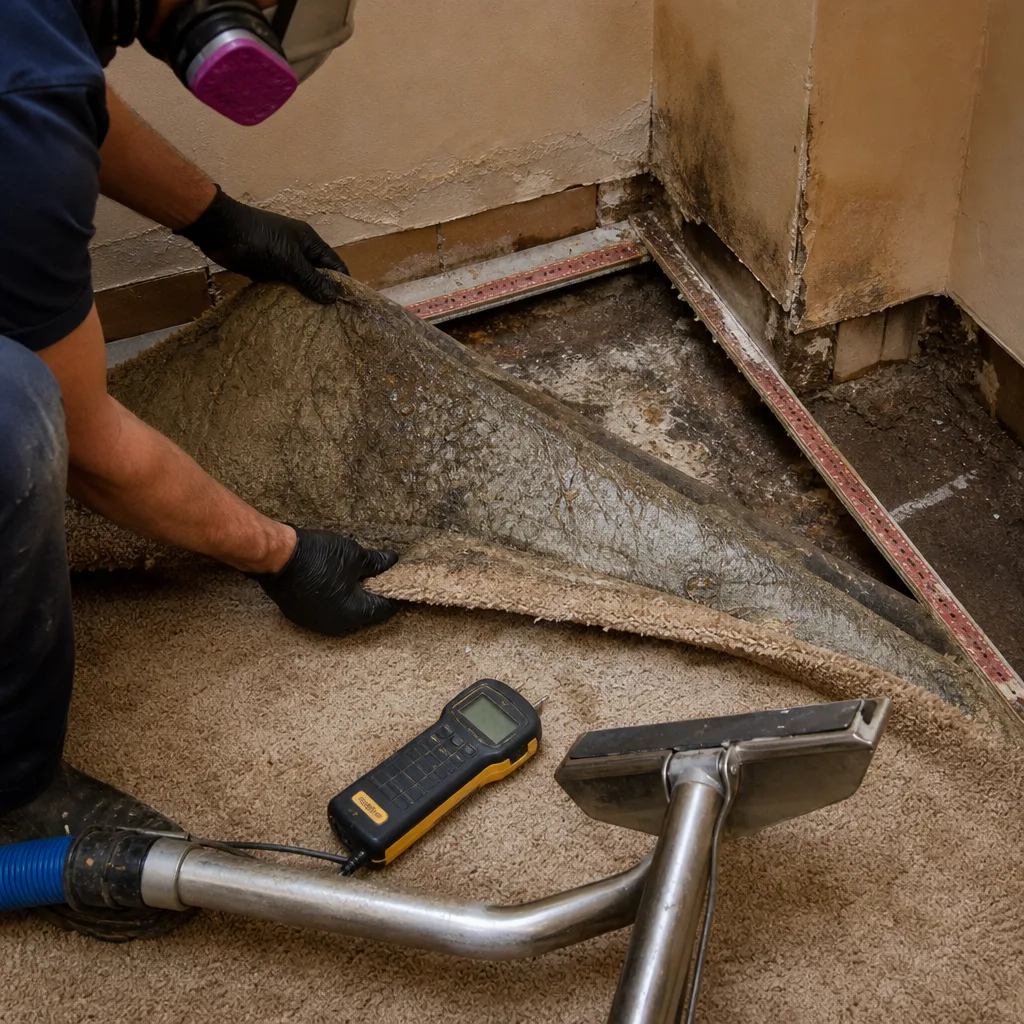
Ground-floor retail and upper-story offices in Chelsea’s pre-war buildings face water that travels through old assemblies, not just across floors. We restore sales floors, stock rooms, and office suites with drying plans built around occupancy schedules, because a closed storefront on 8th Avenue costs more every hour.
Large-Loss Response
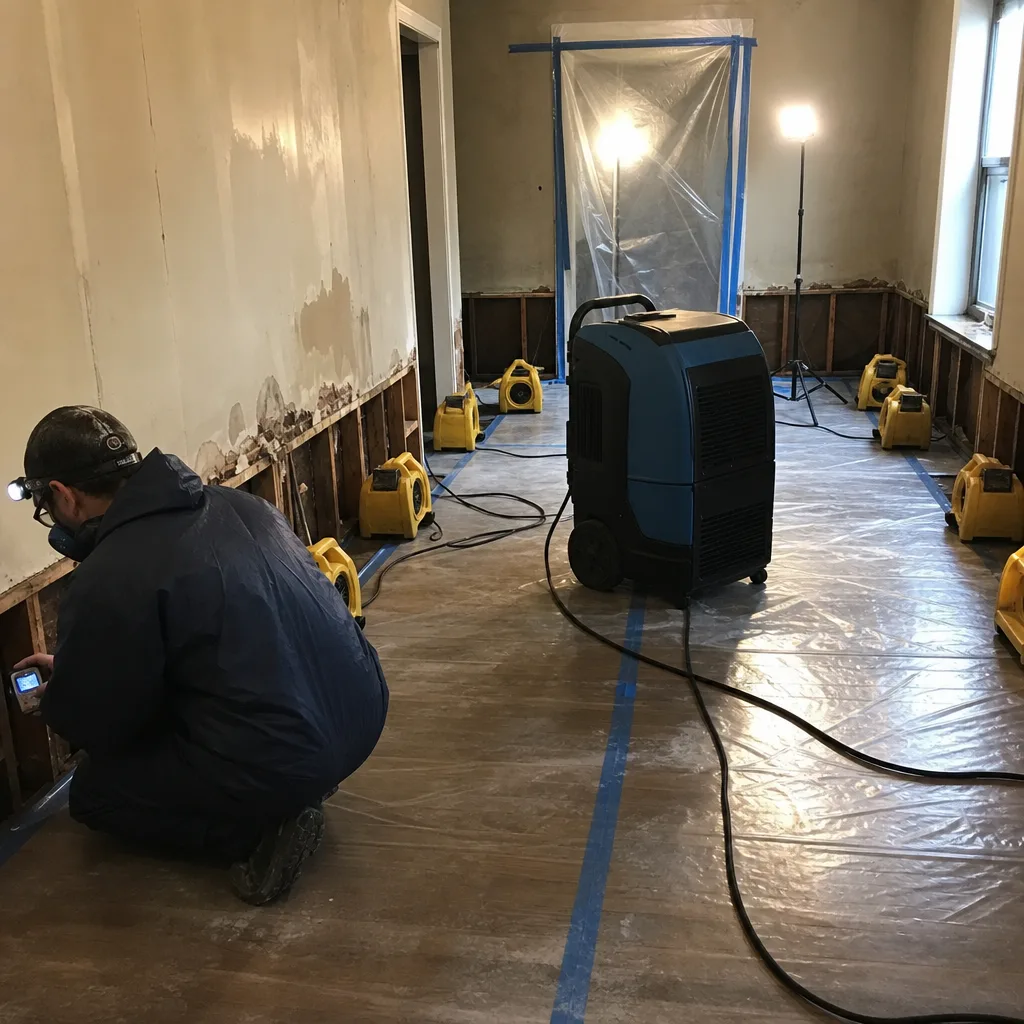
When a single plumbing failure or surge event cascades through multiple commercial units, we bring the full Floodline Restoration Co. of Manhattan response: multiple extraction teams, commercial-grade Dri-Eaz and Phoenix drying arrays, and containment built to let unaffected tenants keep working. Large-loss in Chelsea means coordination across co-op boards, property managers, and insurers, and we run that end of it without handing you a checklist.
Business Interruption Minimization
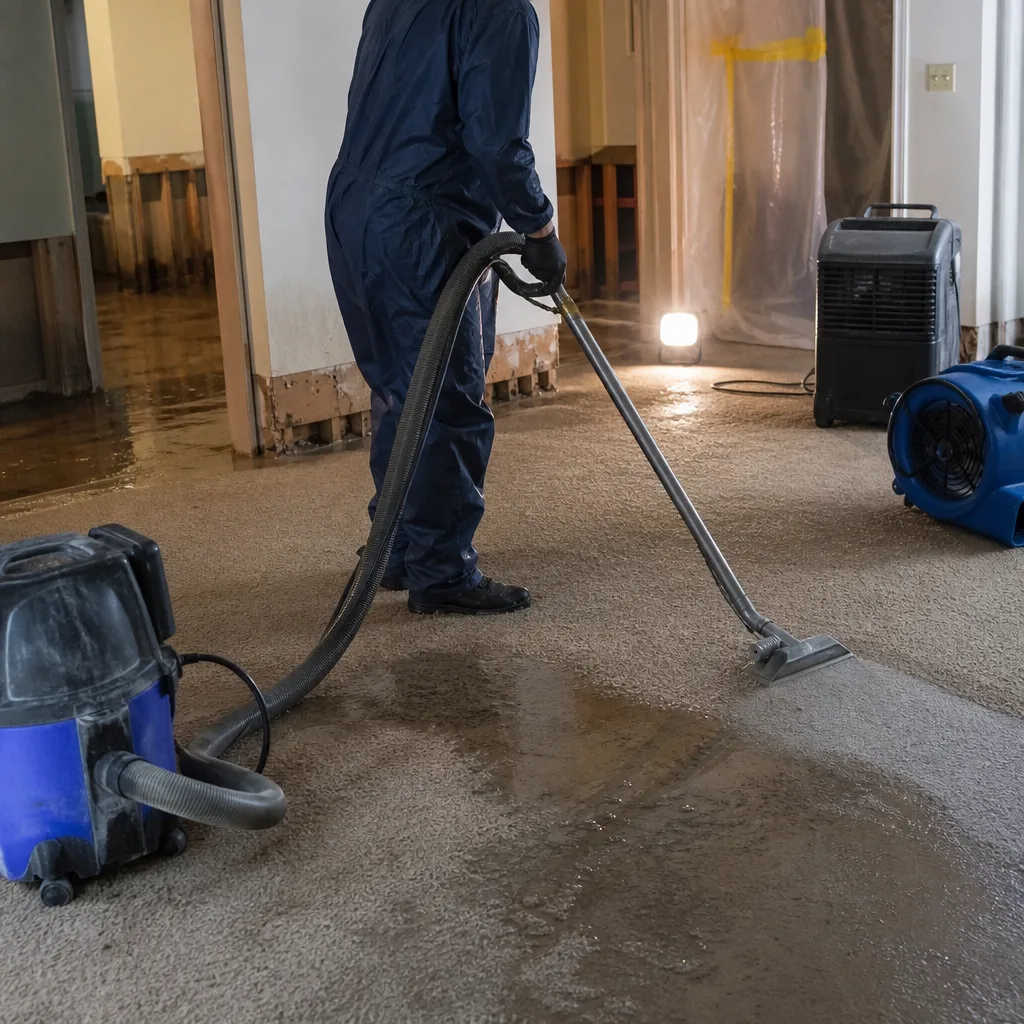
Every day a Chelsea business is closed is revenue gone. Our crews build dry-in-place strategies where possible, run after-hours work in active spaces, and keep containment tight so portions of your operation can continue. We document drying progress daily so you can show your carrier exactly when the space was usable again.
What happens when you call
- 1
A real person answersNo phone trees - you reach a local pro.
- 2
You get an upfront price rangeHonest numbers before anyone is dispatched.
- 3
A background-checked tech heads outLicensed & insured, dispatched right away.
- 4
You approve before work beginsNothing starts until you say go.
Commercial Restoration Costs in Chelsea, NY
Cost in Chelsea follows building age, water category, and what sits inside the space. A contained single-room water extraction and drying job in a ground-floor retail space on 9th Avenue typically runs $2,800 to $6,500. Multi-floor water events in walk-up buildings, where category 2 water travels through old framing, land between $9,000 and $22,000. Storm surge losses on the western blocks, with saltwater contamination and masonry drying, commonly start at $18,000 and can exceed $60,000 when structural drying and our Fire & Smoke Damage Restoration in Chelsea finish restoration are involved. Gallery and archive work adds cost for climate-controlled enclosures and art-safe handling, often $3,000 to $12,000 before restoration itself starts. A free visual inspection gives you a firm scope and a number in writing, so there are no surprises on the bill before work begins. Direct insurance billing keeps you out of the payment middle. Call (917) 924-4221 for an honest read.
We Also Serve Cities Near Chelsea
Floodline Restoration Co. of Manhattan serves commercial and residential customers across the Hudson corridor. In addition to Chelsea, our crews respond to commercial losses in Shrub Oak, Crompond, Peekskill, and Shenorock. The same certified technicians, the same direct insurance billing, the same 90-Day Done Right Promise.
Serving Chelsea, NY - Our Local Coverage Area
We’re based in the Chelsea area and know this community well. Use the map below to see our service coverage - if you’re nearby, we can almost certainly help.
Chelsea Commercial Restoration Questions, Answered
How does saltwater flooding from a Hudson River surge change the restoration scope in a Chelsea commercial space?
Saltwater is category 3 water, and it changes the job entirely. It is contaminated, corrosive, and it leaves salt crystals behind that keep pulling moisture from the air long after the visible water is gone. Our crews flush affected assemblies with appropriate cleaning agents, not just dry them, and in Chelsea’s brick warehouses the masonry itself gets special attention because salt wicks upward and attacks mortar and plaster. Drying logs run longer, moisture mapping is revisited daily, and any porous finish that soaked saltwater is typically removed rather than dried. Call (917) 924-4221 for an exact scope, which is free to establish.
Why does restoring a Chelsea gallery after a roof leak require moisture mapping before pack-out?
Because moving art out of a wet space without knowing the humidity story can be worse than leaving it in place. In Chelsea’s gallery corridor along the West 20s, undetected humidity spikes can warp canvases, bloom mold spores in frames, and ruin an undocumented loss if insurance questions the cause. We map moisture throughout the space first, build climate-controlled staging if needed, and log every reading so the documentation aligns with what the insurer needs. Call (917) 924-4221 and we’ll send a certified technician to assess before anything gets moved.
Can you coordinate with a Chelsea co-op board when a tenant’s plumbing failure floods the ground-floor retail space below?
Yes. We work with co-op boards and property managers throughout Chelsea, and we understand the approval realities: board notifications, insurance certificates, work-hour restrictions, and building access rules. Our team handles that coordination directly and keeps the board updated with the same moisture logs and scope documents your carrier receives. Call (917) 924-4221 and we’ll start the process immediately.
How quickly can you start mitigation in a Chelsea business after a flood to minimize closure time?
Our Chelsea crews typically reach commercial addresses within 45 minutes of your call, and extraction often starts the same visit. We answer live 24/7, so there’s no morning wait time. The faster water comes out and drying starts, the shorter your business stays closed, and your insurance documentation becomes cleaner as a result. Call (917) 924-4221 and we’ll have a crew moving.
Do you handle frozen-pipe water damage in Chelsea’s historic walk-up office buildings?
We handle it constantly in January and February. Frozen supply lines in Chelsea’s old walk-up buildings burst inside walls, sending category 1 or 2 water down through floors into offices below. Our crews trace the water path through original framing, extract, dry, and rebuild, all with the paperwork your building’s insurer and your own carrier need. Call (917) 924-4221 and we’ll get there.
What does commercial restoration cost in Chelsea compared to nearby areas?
Chelsea pricing runs somewhat higher than outlying areas because the buildings are older, access is tighter, and materials like asbestos and lead paint often require licensed handling protocols. A retail flood job that might run $2,500 in a newer building in the outer boroughs often lands between $3,500 and $6,500 in Chelsea. Exact numbers come from the free visual inspection. Call (917) 924-4221 for a scope without pressure.
How long does drying take in a Chelsea commercial building after a flood?
Most Chelsea commercial spaces dry to standard in 2 to 5 days once extraction is running, but old brick masonry and cast iron assemblies can hold moisture longer. Gallery spaces with climate-controlled inventory sometimes run 5 to 10 days when containment is part of the plan. We track daily moisture readings and show you the log. Call (917) 924-4221 and we’ll tell you what your specific building will need.
What should I do in the first 30 minutes after discovering water in my Chelsea business?
Call (917) 924-4221 and shut down power to affected areas if it is safe to do so. Do not enter standing water that may be in contact with electrical systems. Move small portable items only if you can do so safely, and leave fixed finishes alone. Take photos for your insurer. Then let us handle extraction and documentation from the first hour. The sooner we start, the less it costs to put your business back in service.
Written by Curt Bowman, Owner at Floodline Restoration Co. of Manhattan, serving Chelsea and the surrounding New York area.