
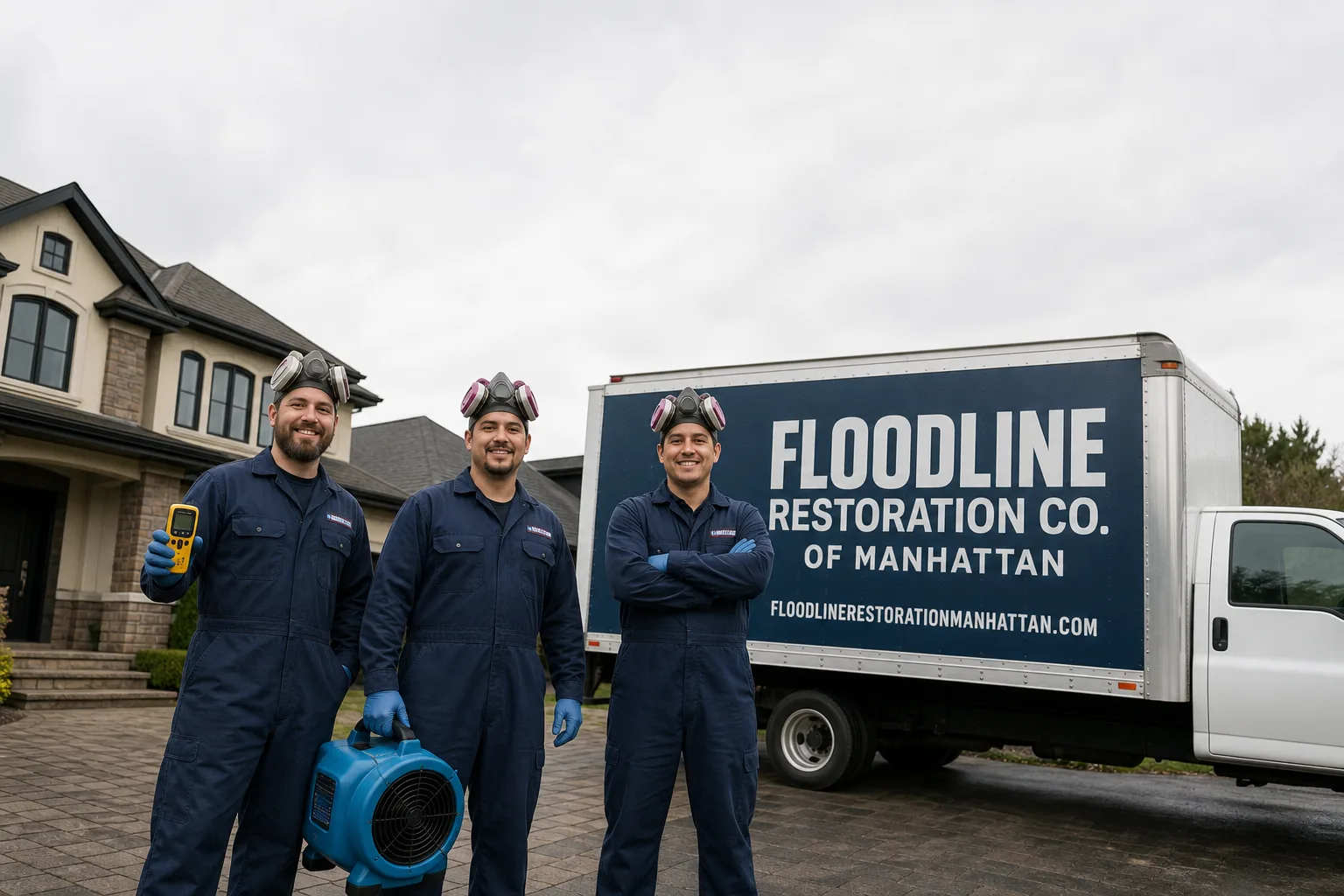
Free visual inspection and a written scope of work before any mitigation begins - photos, moisture readings, and drying logs go in your claim file
The scope we write is the scope we bill. Anything new gets shown to you, in writing, before we touch it.






 Before
 After
After Before
 After
After Before
 After
After24/7 Emergency Commercial Restoration in Fort Lee
Commercial water damage in Fort Lee doesn’t wait for regular business hours, and neither do we. A live dispatcher answers at (917) 924-4221 around the clock, every day, and we commit to having a certified crew heading toward your property within 45 minutes of that call. The first hour after a burst supply line or wind-driven rain intrusion matters more than most property owners realize: water migrating through concrete slab assemblies, behind drywall, and into electrical chase ways compounds the loss every minute it sits. Our Commercial Restoration team arrives for a free visual inspection, maps the moisture, and starts extraction the same visit. In Fort Lee’s high-rise towers and retail corridors, that speed is the difference between a contained claim and a multi-unit catastrophe.
Understanding Commercial Restoration Severity in Fort Lee Properties
Commercial damage in Fort Lee runs a wide spectrum, and the severity dictates the response, whether it calls for water extraction, mold remediation, or full reconstruction. A Category 1 water loss, water from a clean supply line, is dryable when caught early and handled correctly. But a Category 2 loss, water that has passed through cast-iron drain stacks or old galvanized piping, carries contaminants that require antimicrobial treatment and often disposal of affected materials. Category 3, water from sewage or exterior flooding, demands full containment and demolition of porous materials. In Fort Lee’s 1960s through 1980s-era towers, the vertical migration pattern complicates severity assessment: water that starts as a category 1 on the 14th floor may cross through ceiling assemblies, concrete slabs, and aging pipe chases within hours, picking up decades of accumulated debris and arriving in the unit below as category 2 or 3. Moisture mapping and thermal imaging are not optional here. They are how we find what the eye misses before we write the scope.
Why Fort Lee Property Owners Choose Floodline Restoration Co. of Manhattan
- 45-minute response commitment. A live dispatcher answers, a crew is dispatched immediately, and we arrive inside the hour across Fort Lee. Not a callback. Not a recording.
- 24/7 live answer, always a person. No automated phone tree at two in the morning. A real dispatcher picks up, every time.
- IICRC-certified crews, including WRT and AMRT credentials. Technicians carry IICRC WRT and AMRT certifications and are trained to RIA and IFA standards. Certifications you can verify.
- Free visual inspection with a written scope before work starts. No surprises on the bill. You see the plan and the numbers before we touch a wall.
- Direct insurance billing. We document, photograph, and bill your carrier directly. You never play messenger between us and your adjuster.
- One crew from extraction to reconstruction. The same team that reads the moisture map on day one handles daily readings, rebuilds what needs rebuilding, and hands you the log. No mid-job handoff to a subcontractor you never met.
Our Commercial Restoration Process
Inspection & Assessment
We start with a walkthrough of the affected space, using thermal imaging and moisture meters to map exactly where water has traveled. In high-rise properties, that means checking concrete slabs, pipe chases, and common-area walls, not just the unit that first noticed the leak.
Extraction/Stabilization
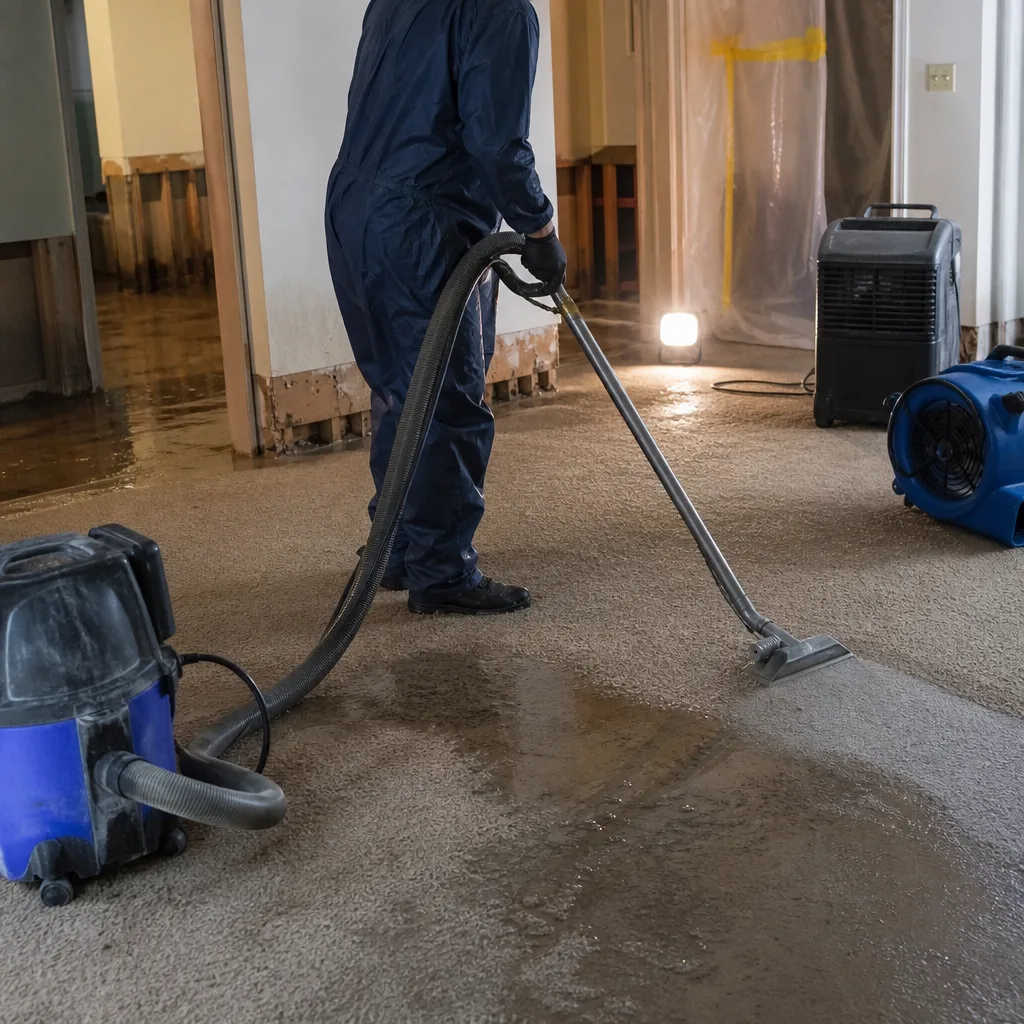
Standing water comes out immediately using truck-mounted extraction units and XPOWER submersible pumps. We isolate and stabilize affected areas, including shutting down electrical circuits where water has reached the panel.
Drying & Dehumidification
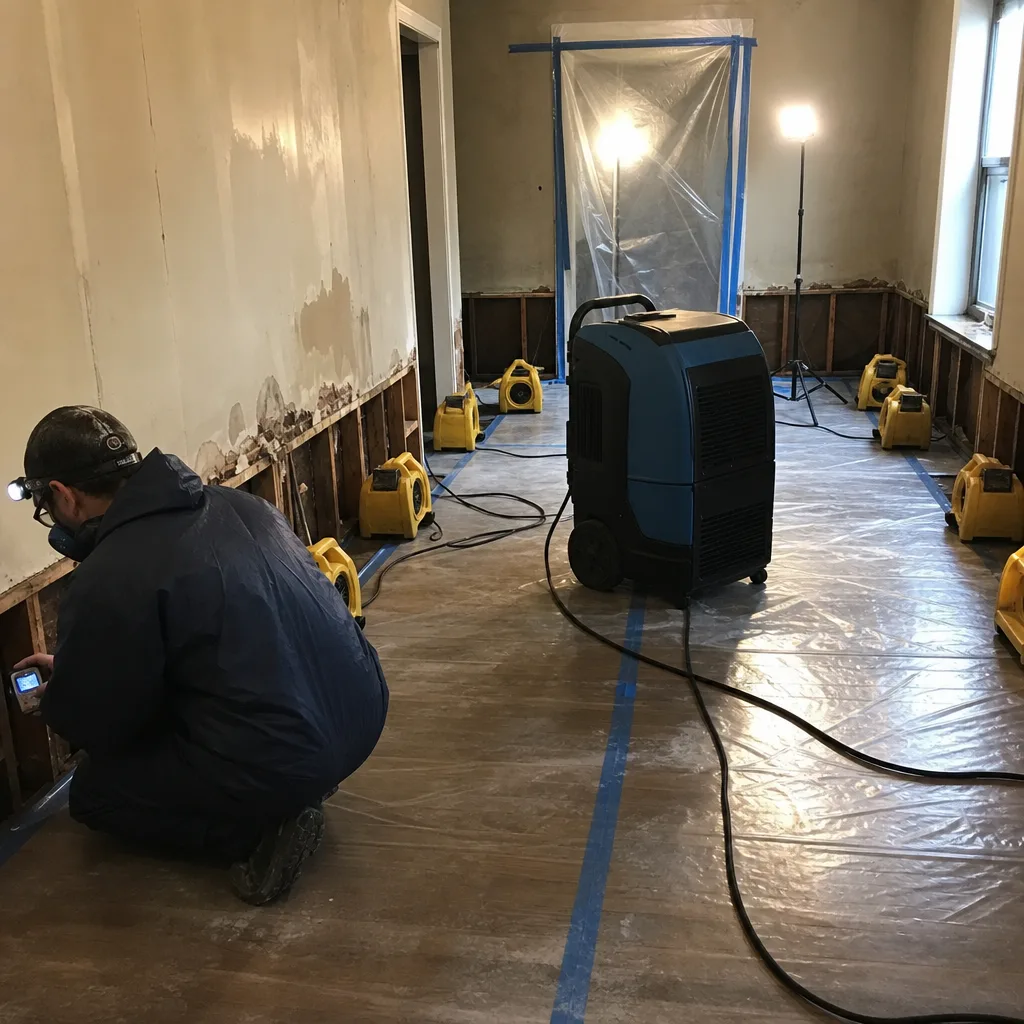
Dri-Eaz and Phoenix dehumidifiers paired with high-velocity air movers create a controlled drying environment. We set containment barriers to protect unaffected areas and log daily moisture readings until the dry standard is met.
Cleaning & Sanitization
HEPA air scrubbers run throughout the drying phase to pull airborne particulates, and we apply EPA-registered antimicrobial agents on category 2 or 3 affected surfaces. Every surface that can be saved gets cleaned; every surface that cannot gets cut out and replaced.
Odor & Corrosion Treatment
Commercial water losses in older Fort Lee buildings often leave odor inside wall cavities and ductwork. We treat the source, not the symptom, using hydroxyl generators and thermal fogging where appropriate, and we document con-ditions with photos and readings for your carrier.
Repairs & Restoration
Drywall, flooring, cabinetry, electrical, paint. The same crew that dried the space rebuilds it, and we walk the finish with you before we call the job done. When it is not right, we make it right under our 90-Day Done Right Promise.
Need Emergency Commercial Restoration in Fort Lee Now?
Crews minutes away, answering live 24 hours a day. The sooner we start, the less it costs.
Working With Your Insurance Company
Commercial claims in Fort Lee high-rises get complicated fast because multiple parties often share a wall, a slab, or a chase. We handle that friction for you. From the first hour on site, we document everything: photos of every affected room and assembly, moisture readings, drying logs, and a line-item scope of work written to industry estimating standards. Our team communicates directly with your adjuster, sends the documentation your carrier needs without you having to chase it, and bills the insurer directly. When three condo owners, a commercial tenant, and an HOA all file claims from the same event, the documentation package we provide is the thing that keeps your claim moving.
What We Provide Your Insurer
- Thorough documentation of the loss
- Photos of all damage, room by room
- Moisture readings and drying logs
- A detailed, line-item scope of work
- Direct coordination with your carrier
Built for Fort Lee’s Loss Calendar
Fort Lee’s position atop the Palisades ridge puts every commercial building directly in the Hudson Valley wind corridor. In January and February, deep freezes push supply lines in 50-year-old mechanical rooms past their breaking point, and a single burst pipe on the 11th floor becomes a five-unit event by morning. Spring brings the thaw cycle, when freeze-thaw expansion on exposed parapet walls and rooftop mechanical rooms lets bulk water behind the membrane and into top-floor offices. Summer is flash thunderstorm season: wind-driven rain is forced through aging curtain-wall joints and deteriorated window glazing on the borough’s 1970s-era towers, producing chronic facade infiltration. And nor’easter season from October through April throws wind-whipped rain at the river-facing elevations, making Storm & Disaster Restoration in Fort Lee a year-round necessity. Every one of these events in Fort Lee is compounded by the vertical migration problem baked into concrete high-rise construction. We built our response around that calendar, not around a generic national playbook.
Commercial Restoration Across Fort Lee’s Neighborhoods
The way we serve a retail storefront on Main Street differs from how we serve a 14th-floor condo office near the George Washington Bridge. On Main Street and along Lemoine Avenue, narrow loading zones and tight alley access mean our crews stage equipment efficiently and never park a box truck where it will get ticketed. In the Palisade Avenue corridor, where the 1970s towers sit shoulder to shoulder, we coordinate with building supers from the first call because the super controls riser access and common-area shutdowns. The area around Fort Lee Road and the approach to the GWB carries high traffic volumes, so when a loss happens here, we dispatch during off-peak traffic windows when possible. Down by the river side of the Palisades, wind-driven rain and facade leaks show up most on the western elevations. Each of these Fort Lee areas has its own access pattern, its own failure modes, and its own path from first call to completed restoration. We know them from repeated local response.
Specialized Commercial Restoration Services We Offer in Fort Lee
Multi-Unit & HOA Restoration
This is the bread and butter of Fort Lee commercial work. A burst supply line on an upper floor of a 1970s tower cascades through multiple units below, triggering simultaneous claims from different condo owners, a tenant, and the HOA. We coordinate access with building management, document each affected unit separately for each carrier, and keep mitigation moving while authorization works its way through multiple parties.
Office & Retail Restoration
Closed doors cost money. We respond to a water loss in a Palisade Avenue retail storefront or a Lemoine Avenue office suite with the goal of keeping the business operating or getting it back open in days, not weeks. Containment allows adjacent spaces to remain occupied while we extract, dry, and clean the affected unit. We regularly work nights and weekends around a tenant’s operating hours.
Industrial Facility Cleanup
Warehouse and light industrial spaces in Fort Lee have their own challenges: concrete floor slabs, high-bay ceilings, and equipment that can’t simply be moved out. We stage extraction and drying around fixed assets, use floor mats to pull moisture through slab-on-grade construction, and document everything for the facility’s carrier.
Large-Loss Response
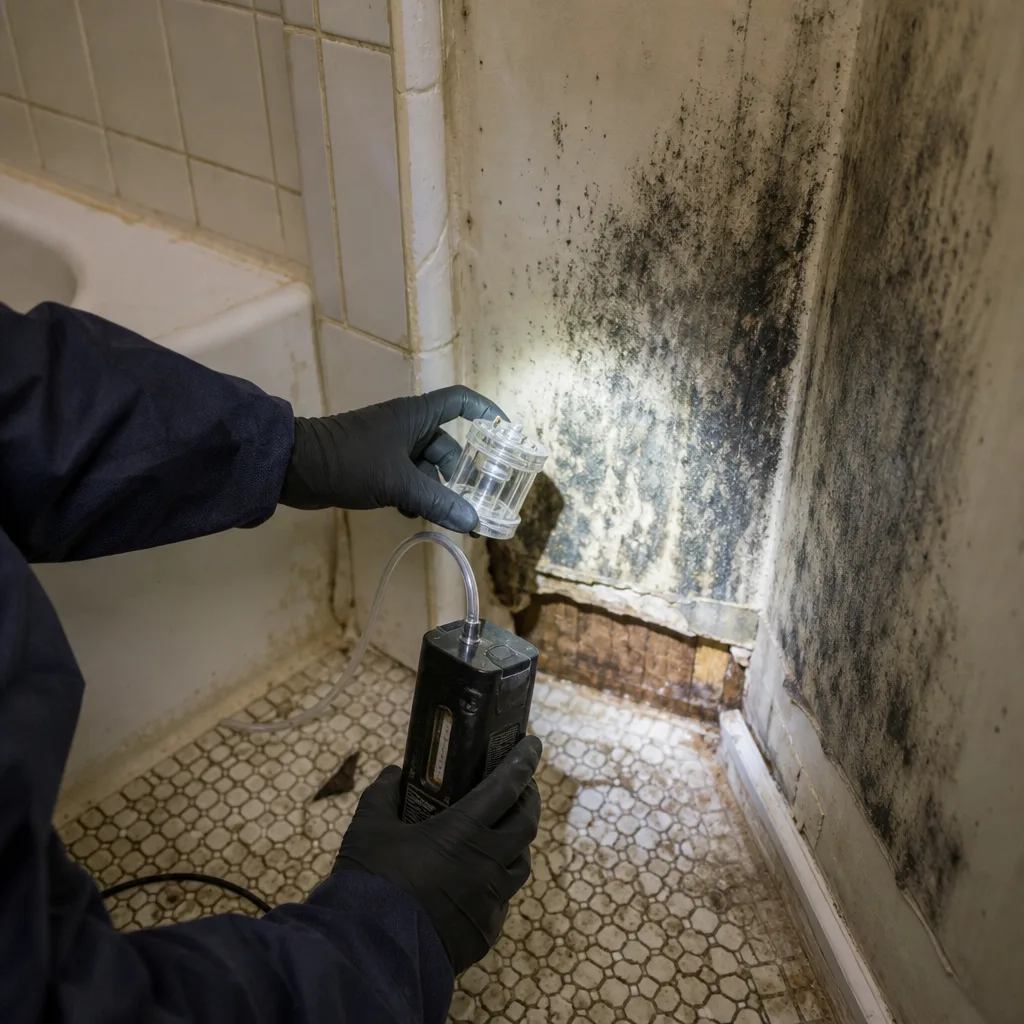
When a nor’easter drives water through the curtain wall of an entire tower face, or a failed rooftop bulkhead floods a commercial floor, this is not a repair job. It’s a large-loss event. We bring in additional certified crews, set up critical containment across the affected area, and work with the building’s management and insurance broker as a single point of accountability. Our Commercial Restoration division handles the project from first extraction through final paint, with daily moisture logs and photo documentation throughout.
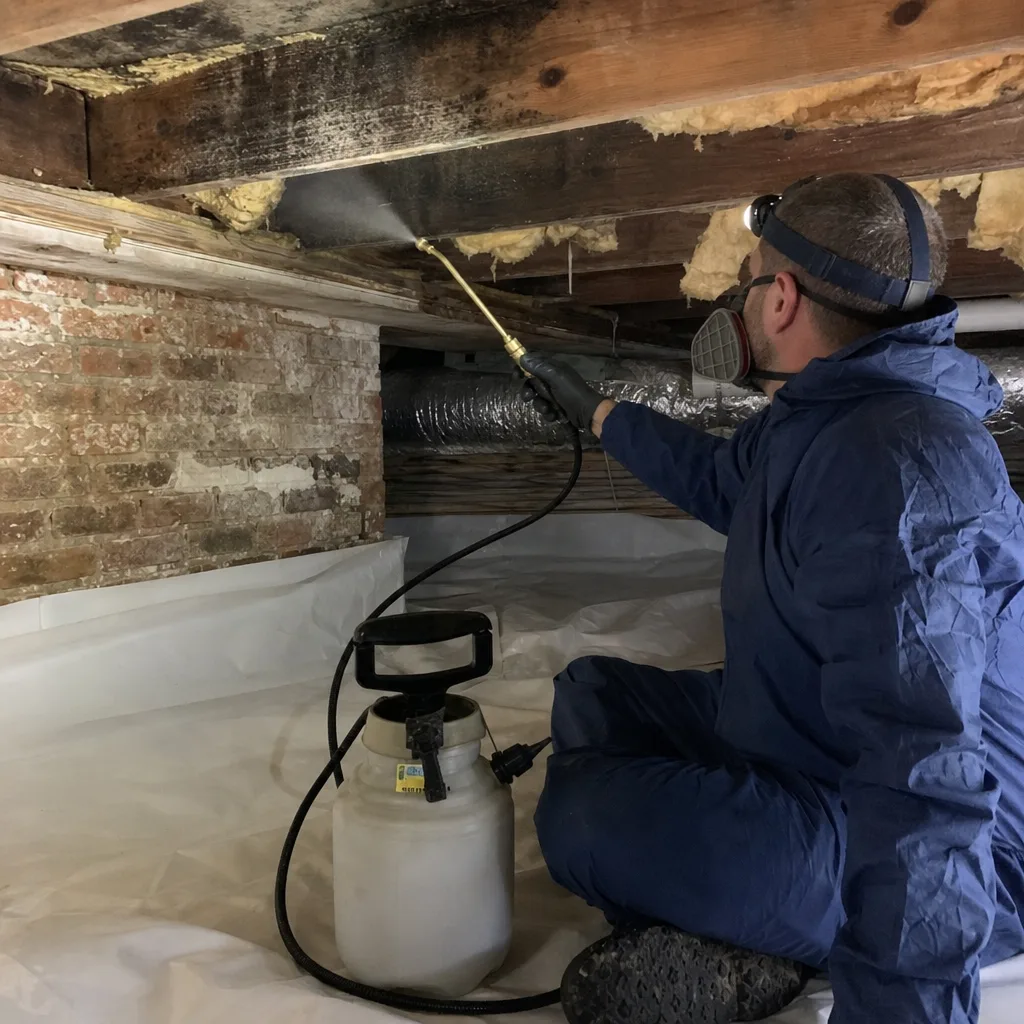
Business Interruption Minimization
Every hour your Fort Lee business is closed is revenue you don’t get back. We sequence the work to get you operational as fast as conditions allow: extracting and drying the customer-facing area first, containing the construction zone, and scheduling reconstruction around your business hours where possible. The written scope you approve before work starts includes the timeline, so you can make operational decisions with real information rather than guesswork.
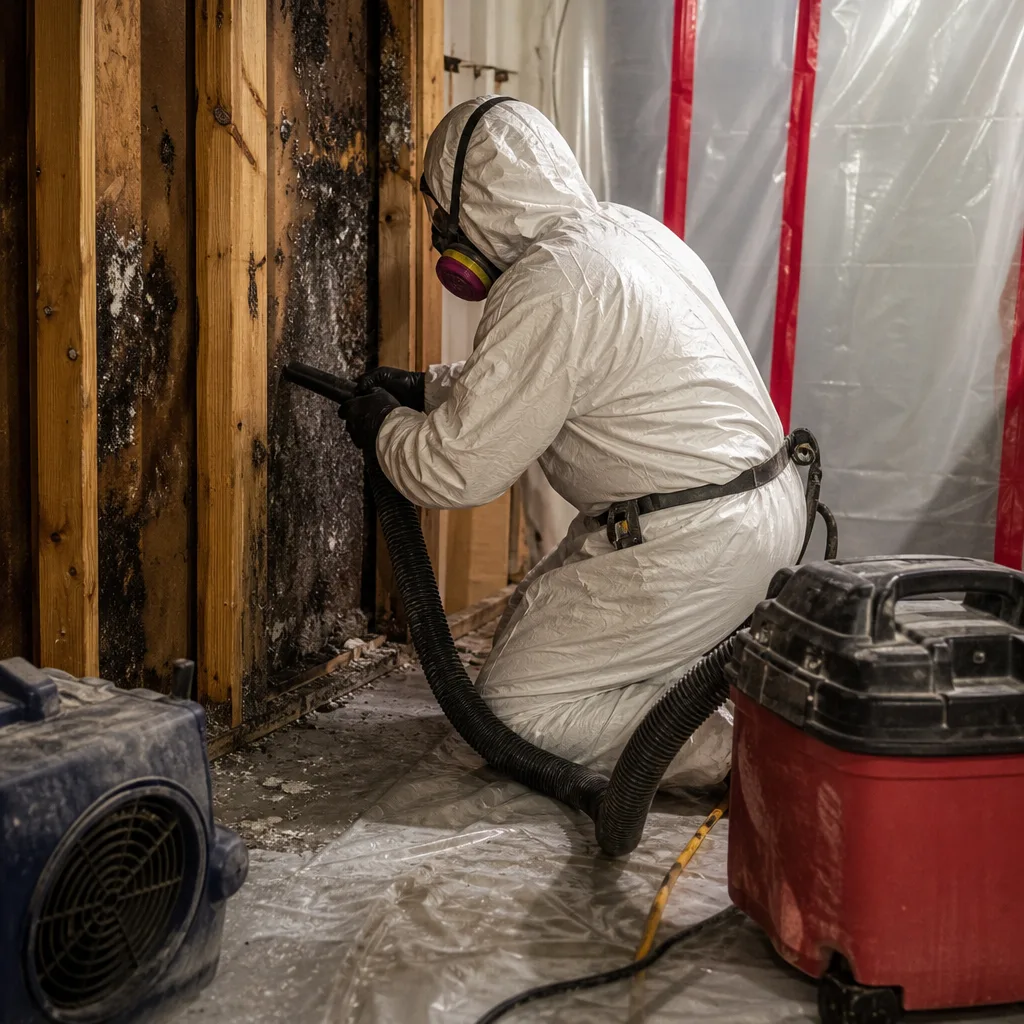
What happens when you call
- 1
A real person answersNo phone trees - you reach a local pro.
- 2
You get an upfront price rangeHonest numbers before anyone is dispatched.
- 3
A background-checked tech heads outLicensed & insured, dispatched right away.
- 4
You approve before work beginsNothing starts until you say go.
Commercial Restoration Costs in Fort Lee, NJ
Commercial water damage restoration in Fort Lee typically runs $2,800 to $8,500 for a contained single-unit loss, while a multi-unit vertical event in a high-rise tower often falls between $12,000 and $45,000 depending on how many floors are affected. A straightforward office water extraction with drying equipment and minor drywall repair runs $2,800 to $5,000. A retail storefront with a slab-penetrated water event, containment, flooring removal, and reconstruction can hit $15,000 to $30,000. What moves the price: category of water, square footage affected, how many units or tenant spaces are involved, whether asbestos or lead testing is required in an older building, and whether reconstruction is needed. Most Fort Lee commercial losses are covered under commercial property policies with business interruption riders, and we bill the carrier directly. The free visual inspection we provide is how you get a firm written scope without obligation.
We Also Serve Cities Near Fort Lee
Our crews respond across Bergen County, including Leonia, Palisades Park, Edgewater, and Ridgefield. The high-rise density changes from town to town, but the playbook doesn’t: answer live, arrive fast, document everything, and finish right.
Serving Fort Lee, NJ - Our Local Coverage Area
We’re based in the Fort Lee area and know this community well. Use the map below to see our service coverage - if you’re nearby, we can almost certainly help.
Fort Lee Commercial Restoration Questions, Answered
Who authorizes commercial restoration work in a Fort Lee high-rise when multiple condo owners and the HOA are involved?
The authorization chain depends on the building’s governing documents, but in practice, work begins when the unit owner who called us authorizes mitigation inside their unit. For anything touching common areas like pipe chases, hallways, or the building envelope, the HOA or building manager must sign off, and we help you get that signature fast. We deal with supers and property managers on these calls weekly, so we know what language and what documentation moves the authorization forward while the water is still migrating.
How do you handle water extraction in a Fort Lee office with tight clearance between tenant spaces and no loading dock?
We stage from the street with compact extraction units and carry equipment in through the building by hand when a loading dock isn’t there. The process is the same, the equipment footprint is smaller. We have handled losses in Fort Lee offices where the only access route was a single elevator and a service corridor, and we work around those constraints daily.
Can you dry a Fort Lee retail storefront without tearing out the concrete slab if water came from a category 1 supply line?
Often yes. If the water was clean supply water and we reach it before it sat and wicked, we use a floor drying mat system over the affected slab and run dehumidifiers and air movement until the slab reaches dry standard. Not every slab needs to come out. The determination comes from moisture readings, not guesswork, and we tell you straight before we cut anything.
What structural drying challenges are unique to the 1960s through 1980s concrete towers in Fort Lee?
Concrete acts like a sponge. Water that hits a slab wicks sideways and down through reinforcement channels, then migrates into the unit below. The only way to find the full migration path is with thermal imaging and atmospheric probes, not visual inspection. The other big challenge is heat: in a high-rise, drying air that rises through the building’s stack effect can mask elevated moisture in lower floors if readings are taken from the wrong location. Our crews know this and set up monitoring points accordingly.
How fast can you start mitigation on a Fort Lee commercial unit after a wind-driven rain intrusion through curtain-wall joints?
We can have a crew on site within 45 minutes of your call to set critical containment and protect the contents. Mitigation equipment goes in the same visit in most cases. Wind-driven rain through curtain-wall joints is a recurring loss in this borough, and our techs know the building types, the joint systems, and how to document it for a carrier without losing another day.
Will my commercial insurance cover water damage from a burst supply line that affected units below mine?
In most Fort Lee condominium bylaws, the affected owner’s policy covers the damage inside their unit while the HOA master policy covers common elements. The unit where the pipe burst may face liability for the units below depending on the circumstances. We provide the documentation each carrier needs to sort out coverage: photos, moisture logs, and a scope that clearly identifies origin, migration, and affected materials. We also bill the appropriate carrier directly so you are not fronting the claim.
How long does commercial water damage drying take in a Fort Lee high-rise versus a single-level retail space?
A standard retail space in Fort Lee may reach dry standard in three to four days. A high-rise loss that migrated through a concrete slab typically runs four to seven days with daily moisture readings to confirm the slab is dry. The concrete holds moisture longer than wood framing does, and pulling it out of a slab between occupied units requires containment, negative air, and a drying plan specific to the building’s stack effect.
What should I do in the first 30 minutes after discovering commercial water damage in Fort Lee?
Call us, then if it is safe to do so, shut off the water source and cut power to the affected area. Do not enter standing water if the panel is below you or the water came from a drain line. Take photos with your phone for your own records. Then stop: do not move wet contents through dry hallways, do not run a household fan on contaminated water, and do not wait for a board or owner vote if you have the authority to start mitigation. Call (917) 924-4221 and a real person will pick up.
Written by Curt Bowman, Owner at Floodline Restoration Co. of Manhattan, serving Fort Lee and the surrounding communities.