
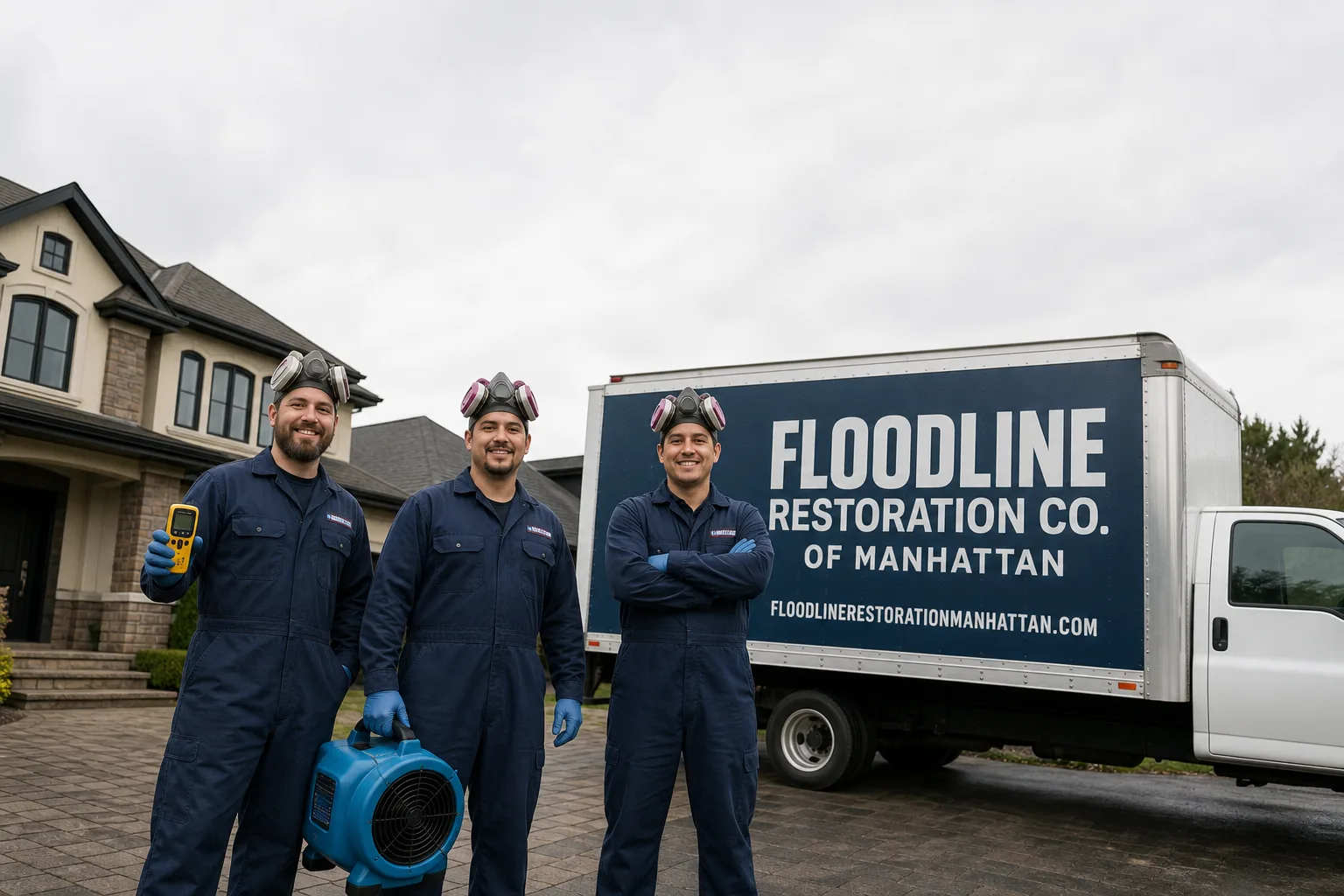
Free visual inspection and a written scope of work before any mitigation begins - photos, moisture readings, and drying logs go in your claim file
The scope we write is the scope we bill. Anything new gets shown to you, in writing, before we touch it.






 Before
 After
After Before
 After
After Before
 After
After24/7 Emergency Commercial Restoration in Passaic
Commercial restoration in Passaic follows a rhythm the rest of northern New Jersey doesn’t quite understand. When the Passaic River climbs its banks, the same low-lying blocks flood, the same basements take water, and the same storefronts close. We answer the phone at (917) 924-4221 at 2 a.m., not a recording. A live dispatcher takes the address, checks the board, and gets a certified crew rolling into Passaic within 45 minutes. The first hour matters because category 2 and 3 water moves fast through old plaster walls and wood framing, and every hour it sits means more inventory ruined, more flooring buckled, more days the business stays dark. Free visual inspection comes first. No dispatch fee, no pressure, just a crew that knows Passaic’s buildings and starts extraction the same visit.
Understanding Commercial Restoration Severity in Passaic Properties
Passaic’s commercial buildings run old and dense. Most of the mixed-use stock along Main Avenue, Passaic Street, and Market Street went up between 1890 and 1940, which means brick party walls, original plaster over wood lath, and in many cases cast-iron or galvanized supply lines finally giving out. A Category 1 water loss, clean water from a burst supply line, becomes Category 2 or 3 within 48 hours if it sits, and in Passaic’s multi-family commercial buildings it rarely sits in one unit. Water moves down through ceilings, along joists, into the retail space below. Severity gets harder to control when asbestos wrap or lead paint sits behind the plaster, because demolition stops until testing comes back. That’s not bureaucracy. That’s protecting tenants and crews. In our experience, the businesses that lose the most in Passaic are the ones who treat a third-floor pipe break like a mop-and-fan problem and call us three days later when the ceiling below has dropped onto a display case.
Why Passaic Property Owners Choose Floodline Restoration Co. of Manhattan
- 45-minute response commitment to Passaic. We dispatch from the metro office and maintain crews who know Passaic’s streets, so a real person arrives fast, not a subcontractor who’s never seen the building.
- 24/7 live answer, every single call. You get a human dispatcher at (917) 924-4221, not an automated tree. At 2 a.m. that matters when water is running through a retail space.
- IICRC-certified crews trained to WRT, FSRT, and AMRT standards. Our techs hold RIA and IFA credentials as well, and they apply commercial drying protocols, not residential shortcuts.
- Free visual inspection before any work begins. We walk the damage, show you what we see, and give a written scope. No obligation, no hidden dispatch charge.
- Direct insurance billing. We talk to your adjuster, not through you. We provide the documentation carriers need without you playing messenger.
- One crew from extraction to rebuild. The team that does the moisture mapping handles the drying log and the reconstruction. No mid-job handoff, no inherited crew at the finish.
Our Commercial Restoration Process
Inspection & Assessment
We start with a full visual and thermal imaging walk of the affected floors. Moisture mapping with hygrometers and infrared cameras pinpoints water migration through party walls and between units. We document everything photographically before any equipment runs.
Extraction & Stabilization
Standing water comes out with professional-grade extraction units. If asbestos or lead protocols apply, we stop and test before cutting. We stabilize the structure so no more inventory, flooring, or drywall gets ruined while drying begins.
Drying & Dehumidification
Dri-Eaz dehumidifiers and XPOWER air movers go in with a commercial drying plan sized for dense brick and old plaster, not a carpet job. Daily moisture readings are logged against the dry standard until every affected surface tests dry.
Cleaning & Sanitization
Category 2 and 3 water bring contaminants. We clean and sanitize all affected surfaces, apply antimicrobial treatments where the damage dictates, and run HEPA air scrubbers in occupied areas to control airborne particulates.
Document & Inventory Recovery
For retail, office, and mixed-use spaces, we triage merchandise, files, and equipment. What can be dried and restored, we dry and restore. What can’t, we document line by line for your carrier so nothing gets lost in the claim.
Repairs & Restoration
The same crew rebuilds what needed to come out: drywall, plaster repair, flooring, trim, paint. Because we did the drying, we know exactly what’s dry enough to close up, and we stand behind it with the 90-Day Done Right Promise in writing.
Need Emergency Commercial Restoration in Passaic Now?
Crews minutes away, answering live 24 hours a day. The sooner we start, the less it costs.
Working With Your Insurance Company
Insurance claims for commercial restoration in Passaic get complicated when multiple tenants, multiple policies, and a repeat flood history sit in the same file. We photograph from hour one, before extraction changes the scene. We produce industry-standard estimates using the same line-item software your carrier’s adjuster recognizes. And we talk directly to the adjuster, so you don’t spend your day relaying messages. A written scope, agreed before work starts, protects you from surprise bills. If the carrier pushes back, we provide the documentation: moisture logs, daily readings, pre-existing condition photos, and the precise scope of what we did and why. In our experience, carriers don’t argue with a complete drying log.
What We Provide Your Insurer
- Thorough documentation of the loss
- Photos of all damage, room by room
- Moisture readings and drying logs
- A detailed, line-item scope of work
- Direct coordination with your carrier
Built for Passaic’s Loss Calendar
Passaic’s commercial restoration calendar tracks the river and the weather. January and February bring deep freezes that split supply lines in unheated back rooms and vacant upper floors of old mixed-use buildings. The thaw in March sends meltwater through foundation cracks into basements and storage areas. Nor’easters in spring and fall push the Passaic River over its banks, and the same low-lying blocks flood, same as the last time and the time before that. Summer thunderstorms overwhelm the dense urban hardscape; the water has nowhere to drain, so it ponds on flat roofs and seeps through parapet walls into top-floor units. Year-round, the real variable is building age: knob-and-tube wiring remnants, cast-iron drain lines rusted thin, original plaster that holds water like a sponge. Every season asks something different of a commercial restoration crew in Passaic, and we’ve handled all of them enough times to know what’s coming before the first reading is taken.
Commercial Restoration Across Passaic’s Neighborhoods
Along Main Avenue, the commercial strips run brick-and-wood mixed-use buildings from the 1920s and 30s, ground-floor retail with apartments above. A pipe break in a third-floor kitchen drains through the law office, the tax prep storefront, and into the basement before anyone notices. In the blocks around Passaic Street and Market Street, the tenement-to-retail conversions hold original plaster and cast-iron plumbing, so restoration means stopping for asbestos and lead testing before cutting anything. Near Gregory Avenue and the numbered streets toward the river, the lower elevation puts basements and first floors directly in the flood path during a nor’easter. The neighborhoods around Passaic High School and Pulaski Park sit slightly higher, but surface water still finds its way into ground-floor commercial spaces during heavy summer storms. Each area has its own pattern, and crews that know the difference move faster and cut less.
Specialized Commercial Restoration Services We Offer in Passaic
Multi-Unit & HOA Restoration
Passaic’s multi-family commercial buildings are mostly owner-occupied two-to-four-family structures rented floor by floor. When a top-floor unit floods, the water drops through the ceiling of the occupied unit below, and sometimes the one below that. That means multiple tenants, multiple claims, sometimes multiple adjusters, and one address. We manage the whole stack: containment per unit, drying per floor, documentation per policy. One crew, one moisture log, one person you call. That’s the only way it works cleanly.
Office & Retail Restoration
A closed storefront in Passaic loses money by the hour. We prioritize reopening: targeted drying rather than gutting, inventory triage and pack-out where it saves more than it costs, and scope decisions made with the owner, not just the adjuster. Retail spaces on Main Avenue and Passaic Street don’t have backroom storage to spare, so every square foot counts. We get the drying plan right the first time so you’re not closed twice.
Industrial Facility Cleanup
Passaic’s older industrial buildings, especially the brick mill-era structures converted to mixed use, present concrete floors, high ceilings, and deep basements that flood fast. We deploy commercial dehumidification at scale, with Phoenix and Dri-Eaz units staged for dense-air environments. Moisture hides in concrete and block walls, so we map it with thermal imaging and log readings daily until the structure itself tests dry.
Large-Loss Response
When a nor’easter pushes the Passaic River over its banks, the call volume jumps and the jobs get big. We’ve run large-loss response in Passaic where three connected mixed-use buildings took category 3 water in the same night. Our dispatch board scales: multiple crews, staged equipment, and a command sequence that keeps every affected tenant informed. Large loss doesn’t mean slower; it means more organized.
Business Interruption Minimization
Every day a Passaic storefront stays closed costs rent, wages, and customers who find somewhere else to shop. Our approach to business interruption is simple: get the space dry and safe enough to reopen as fast as code allows, then finish non-critical rebuild behind temporary barriers. We’ve reopened ground-floor retail spaces within days that other contractors quoted two weeks to dry. The difference is enough dehumidification, enough air movement, and a commercial drying plan that knows old brick buildings hold more moisture than anyone wants to admit.
What happens when you call
- 1
A real person answersNo phone trees - you reach a local pro.
- 2
You get an upfront price rangeHonest numbers before anyone is dispatched.
- 3
A background-checked tech heads outLicensed & insured, dispatched right away.
- 4
You approve before work beginsNothing starts until you say go.
Commercial Restoration Costs in Passaic, NJ
Commercial restoration in Passaic runs wider than residential because the structures are older and the damage is often bigger before anyone calls. Water extraction and drying for a single-unit retail space in Passaic typically runs $2,800 to $6,500, depending on how far the water traveled through walls and floors. Multi-unit flood damage across two or three floors of a brick rowhouse conversion frequently lands between $9,000 and $28,000 when you factor in asbestos testing, lead-paint containment, drying across party walls, and rebuild of original plaster. Industrial spaces with deep basements and concrete floors run higher: $15,000 and up for large-loss response. What moves the price: how long the water sat, whether category 3 contamination applies, how much original plaster and lath needs removal, and whether multiple tenants open multiple claims. Insurance covers most of it when the documentation is complete. Our free visual inspection gives you a firm scope and a written number before any work starts, so you decide with real figures, not guesses.
We Also Serve Cities Near Passaic
Our crews run commercial restoration jobs in Wallington, Garfield, East Rutherford, and Rutherford regularly. Same live dispatch, same 45-minute response commitment, same one-crew-from-extraction-to-rebuild process. If your building sits on the Passaic side of the river or just across the bridge, call (917) 924-4221.
Serving Passaic, NJ - Our Local Coverage Area
We’re based in the Passaic area and know this community well. Use the map below to see our service coverage - if you’re nearby, we can almost certainly help.
Passaic Commercial Restoration Questions, Answered
How does commercial restoration in Passaic differ from nearby cities like Clifton or Garfield when the Passaic River floods?
Passaic sits directly along the river’s lowest-lying stretches, so flooding here is more repetitive and more predictable than in Clifton or Garfield, which sit further from the river’s main channel. Restoration work in Passaic means handling the same addresses multiple times per decade, often with the same multi-family buildings and the same basements taking water. The building stock is also older and denser here, with more pre-1940 brick-and-plaster construction than Garfield’s later housing stock. That means more asbestos and lead protocols, more party-wall drying, and more multi-tenant claims on a single job than neighboring cities typically see.
What is the fastest way to minimize business interruption for a Passaic storefront after a flood?
Call us while the water is still coming in, not after it stops. The first hour determines how much inventory, flooring, and drywall gets saved. We set up containment around the affected area, run commercial-grade extraction, and get Dri-Eaz dehumidifiers and XPOWER air movers running the same visit. After that, we dry to a reopenable standard as fast as code allows and schedule the remaining rebuild behind temporary barriers. The businesses that lose the least are the ones that don’t wait for the adjuster’s first callback before calling us.
Can you handle restoration in old Passaic buildings that still have original plaster, knob-and-tube wiring, or cast-iron plumbing?
Yes, and we’ve done more of it than most crews working Passaic today. Original plaster holds water differently than drywall, so our drying plans start with moisture mapping and daily readings rather than assumptions. Knob-and-tube remnants mean we cut cautiously and test before opening walls where old wiring may be live. Cast-iron plumbing typically means we’re dealing with a corroded pipe failure, not just a joint leak. The bigger issue is asbestos and lead-paint: on pre-1940 structures, we test before any demolition. It protects your tenants, your crews, and your permit status.
When a top-floor unit floods in a Passaic multi-family commercial building, how do you handle the apartments below?
We open the ceiling cavities fast to map where the water went, with thermal imaging and moisture meters in every affected unit. Each tenant gets documented containment, drying, and sanitization as needed. Claims get separated cleanly: each policy gets its own photos, readings, and scope. The property owner gets one crew coordinating the whole stack, so no one works at cross purposes and no one’s space gets reopened before it’s actually dry. This is the single most common complex job we run in Passaic, and the one where our one-crew model saves the most time and money.
How do you document drying for Passaic insurance adjusters when multiple claims are open at the same address?
We log daily moisture readings per unit, per room, with photos attached to each reading. Each unit’s claim gets a separate file with its own drying log, scope of work, and photo set. The adjusters get industry-standard documentation they can match against policy language. And we talk to them directly, so you don’t spend your day on hold. When three adjusters are looking at the same building, one clear file per unit keeps everything moving instead of stalling.
How fast can someone actually get here after I call?
We commit to 45 minutes for Passaic. A live dispatcher takes the call at (917) 924-4221, confirms the address, and pulls the crew from whoever is closest. In river-flood events, we stage crews in Passaic as soon as the forecast starts calling for heavy rain onto already-saturated ground. During nor’easters, response can stretch longer because every affected building on the same blocks is calling at once, but we still answer live and give you a real arrival window.
Do I really need full restoration or just a cleaning?
If the water came from the Passaic River or from sewage backup, yes, you need full restoration. Category 3 water carries contaminants that cleaning alone won’t remove from porous materials like plaster, drywall, carpet pad, and wood subfloor. If it was clean water from a supply line, the answer depends on how long it sat and what it touched. Our free visual inspection tells you straight: what needs to come out, what can be dried in place, and what’s fine. We don’t sell demolition you don’t need.
Floodline Restoration Co. of Manhattan serves commercial property owners in Passaic, NJ with crews that understand the river, the old brick buildings, and the multi-tenant claims that come with them. Call (917) 924-4221 for a free estimate. A real person answers, day or night. We’ll be there when we say.
Written by Curt Bowman, Owner at Floodline Restoration Co., serving Passaic with commercial restoration and full-cycle water, fire, and mold recovery. Since founding the company in 2010, Curt has built the dispatch-first model that keeps a live person on the phone and a certified crew on the road, 24 hours a day, 7 days a week.