
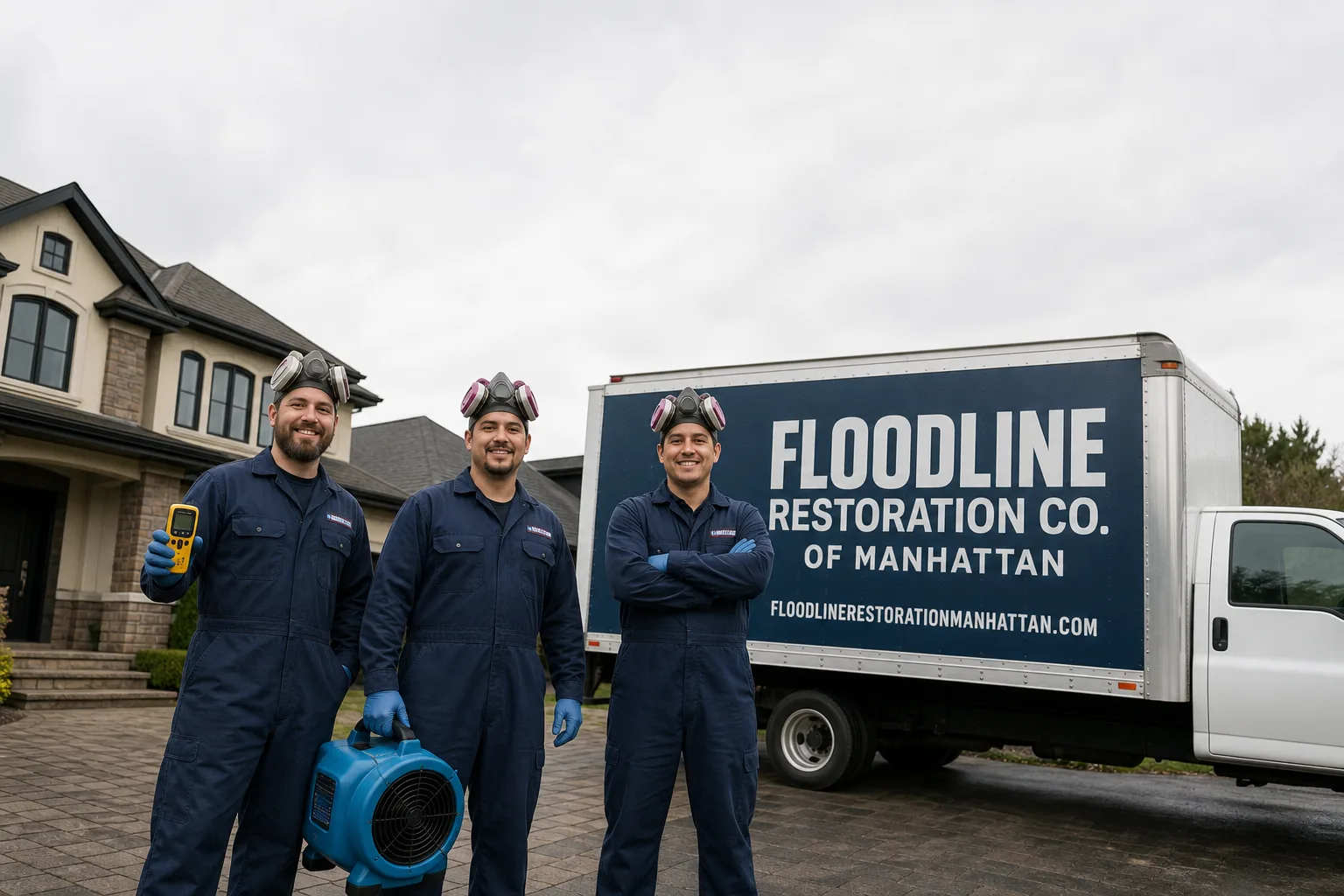
Free visual inspection and a written scope of work before any mitigation begins - photos, moisture readings, and drying logs go in your claim file
The scope we write is the scope we bill. Anything new gets shown to you, in writing, before we touch it.






 Before
 After
After Before
 After
After Before
 After
After24/7 Emergency Commercial Restoration in River Edge
When river water enters a commercial building in River Edge, the first call should be to a crew that knows the Hackensack River’s behavior, not a generic franchise. Floodline Restoration Co. of Manhattan answers live, 24 hours a day, at (917) 924-4221, and our certified technicians reach River Edge commercial properties quickly. Every hour Category 2 or 3 water sits in a New Bridge Road storefront or office lower level, the damage spreads upward through drywall, paneling, and inventory. We arrive with a free visual inspection, a written scope in hand, and the equipment already on the truck. The line the water left is where we start, and we don’t hand the job off until extraction, drying, and rebuild are finished by the same crew.
Understanding Commercial Restoration Severity in River Edge Properties
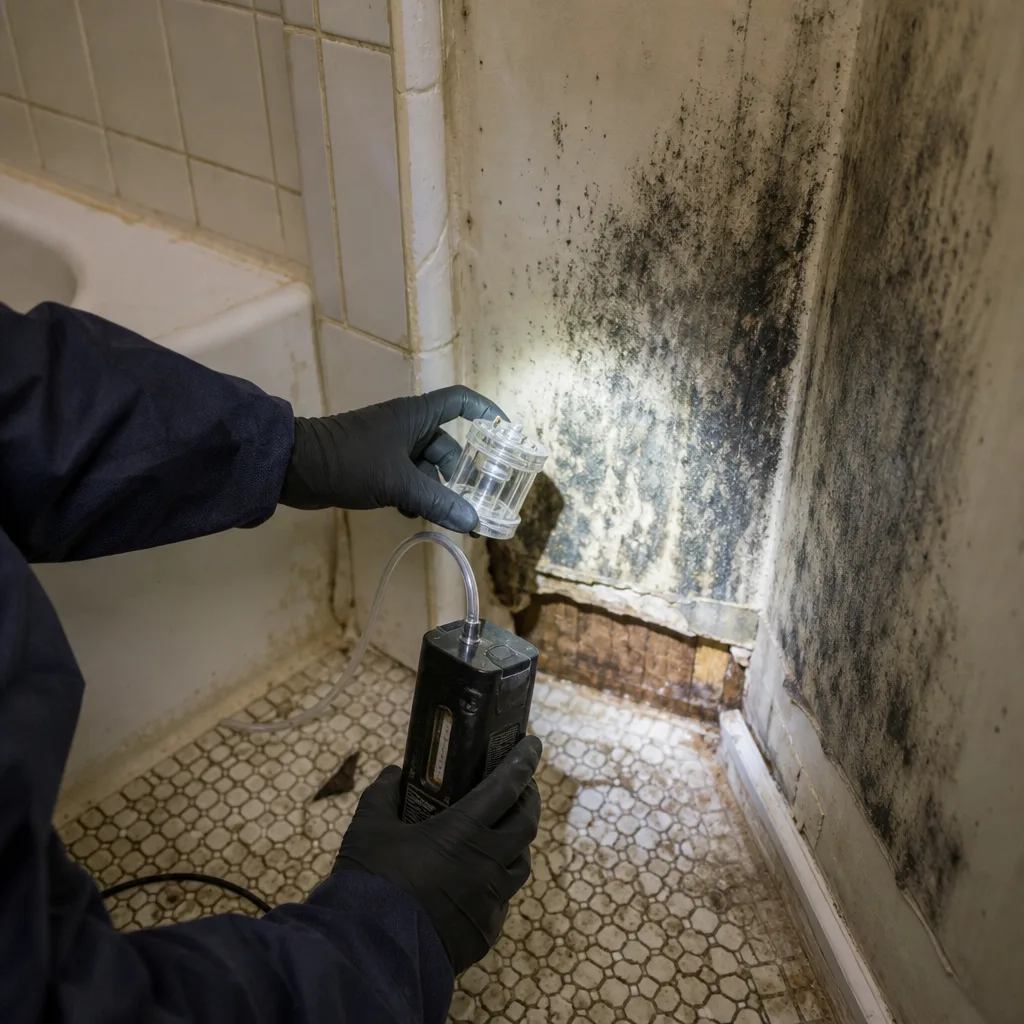
River Edge commercial buildings face a specific damage profile tied directly to their age and geography. Most structures along Kinderkamack Road, New Bridge Road, and the side streets running east toward the Hackensack were built between the late 1940s and 1960s, with block-foundation basements and lower levels that were never waterproofed for sustained hydrostatic pressure. When the river rises, Category 3 water, carrying sewage, fuel residue, and silt from upstream, forces its way through foundation cracks and floor drains. Finished lower levels added in the 1970s and 80s compound the problem. Vinyl or wood paneling, drop ceilings, and carpet installed directly over concrete trap moisture behind walls, and by the time our techs pull thermal imaging readings, mold colonies are already forming behind OSB sheathing. This is not a surface cleaning job; it’s a structural drying project with containment.
Severity in River Edge commercial settings follows the water’s migration path. Category 1 breaks, like a burst supply line in a second-floor office, are contained and fast to dry. Category 2, from sump pump failure or washing machine overflow, requires antimicrobial treatment. Category 3, from riverine floodwater or sewage backup, means full gut-out of affected lower-level finishes, pack-out of inventory, and negative-air containment. The sluggish drainage of the Hackensack into the Meadowlands extends saturation times, so drying protocols that work in Paramus fail here unless they account for the slower wicking and longer inundation window.
Why River Edge Property Owners Choose Floodline Restoration Co. of Manhattan
- 45-minute response commitment. Our commercial crews are dispatched from the metro area with a target arrival window of 45 minutes to River Edge, and a live person confirms the dispatch time on the phone.
- 24/7 live answer, never a recording. A real dispatcher picks up at 2 a.m. and starts the dispatch board. You’ll never navigate an automated menu while water spreads.
- IICRC-certified crews on every job. Our technicians carry WRT and ASD certifications, and our mold remediation techs hold AMRT. We don’t send uncertified subs to commercial losses.
- Free visual inspection, in writing. Before any work begins, you get a written scope. No handshake estimates, no surprises on the bill.
- Direct insurance billing. We document the loss, communicate with your adjuster, and bill the carrier directly. You don’t play messenger.
- One team from extraction to reconstruction. The same uniformed, background-checked crew reads the moisture map on day one and stands beside the finished rebuild.
Our Commercial Restoration Process
Inspection & Assessment
We walk the affected area with a thermal imaging camera and hygrometers, identifying water migration behind walls and under flooring. For commercial properties, we map the building’s systems and inventory exposure in the same visit. You get a written scope and a firm plan before any equipment runs.
Extraction / Stabilization
Category 3 water in River Edge lower levels requires full extraction with truck-mounted or portable units, then removal of saturated paneling, drywall, and flooring that cannot be saved. We salvage what we can, document what cannot, and stage the pack-out of inventory and records.
Drying & Dehumidification
Dri-Eaz dehumidifiers and XPOWER air movers are placed against a moisture map, not scattered by guesswork. In River Edge’s slow-drainage zone, we run daily readings and hold drying until the dry standard is met, not until the surface feels dry. The moisture log goes to you and your carrier.
Cleaning & Sanitization
Containment and HEPA air scrubbing run alongside antimicrobial and odor treatment. For flooded retail and office spaces, we clean or dispose of affected merchandise per IICRC standards and your insurer’s direction.
Document & Inventory Recovery
We recover paper files, electronics, and inventory where possible, using pack-out, freeze-drying for documents, and content cleaning for hard goods. For New Bridge Road businesses, this step often saves thousands in lost records.
Repairs & Restoration
Rebuild begins only after the space passes final moisture readings. Our reconstruction team handles drywall, flooring, trim, and paint, bringing the commercial space back to pre-loss condition. The job ends with the 90-Day Done Right Promise in writing.
Need Emergency Commercial Restoration in River Edge Now?
Crews minutes away, answering live 24 hours a day. The sooner we start, the less it costs.
Working With Your Insurance Company
River Edge business owners who have been through a flood claim know the carrier wants documentation, not conversation. We build that file from the first hour. Photos are taken before equipment moves in, room by room. Moisture readings are logged daily. The scope of work is line-itemed against current industry pricing, and we send it to your adjuster directly. When a commercial policy covers lost business income, our documentation supports that claim too. We have handled enough Hackensack River flood losses to know what adjusters look for, and we give it to them without you chasing paperwork.
What We Provide Your Insurer
- Thorough documentation of the loss
- Photos of all damage, room by room
- Moisture readings and drying logs
- A detailed, line-item scope of work
- Direct coordination with your carrier
Built for River Edge’s Loss Calendar
River Edge’s commercial restoration calls follow a pattern tied to the river’s mood and the seasons. January and February bring deep freezes that burst supply lines in older buildings along Kinderkamack Road, where original plumbing in 1950s construction gives way under ice expansion. March and April send snowmelt and spring rain into block foundations already saturated from winter, and sump pumps fail under the load. Summer’s thunderstorms, especially the slow-moving fronts that stall over Bergen County in July and August, overwhelm drainage and push surface water into rear loading areas and basement entries. But the big losses come with nor’easters and tropical remnants. Ida in 2021, Irene in 2011: these storms backed the Hackensack over its banks and into the low-lying commercial parcels east of New Bridge Road. Those are Category 3 events, and the recovery is measured in weeks, not days. Floodline has responded to every one of these seasons in River Edge, and our equipment is staged accordingly.
Commercial Restoration Across River Edge’s Neighborhoods
River Edge’s commercial corridors each present a different restoration profile, and our crews know the difference. Along New Bridge Road, the low-lying eastern stretch nearest the Hackensack sees recurring flood intrusion into mixed-use buildings with retail on the ground floor and offices or apartments above. These jobs often require simultaneous extraction, pack-out, and business interruption planning. Kinderkamack Road, the borough’s main commercial spine, runs slightly higher but contains older storefronts with original plumbing and shared walls, where a second-floor supply line break cascades into multiple tenants. The Hackensack Avenue corridor near the Oradell border includes medical and professional offices where downtime means appointment cancellations, so we prioritize speed and containment there. And the residential-adjacent commercial pockets off Howland Avenue and Bogert Road, often converted from older homes, bring split-level layouts and finished basements that hide moisture behind 1980s paneling. Each area has its own failure mode, and we plan the restoration accordingly.
Specialized Commercial Restoration Services We Offer in River Edge
Office & Retail Restoration
Retail and office spaces in River Edge cannot afford a two-week shutdown for a one-day flood. We restore storefronts on Kinderkamack Road and professional offices near Hackensack Avenue with a focus on reopening fast, using structural drying that minimizes unnecessary demolition and cleaning methods that preserve fixtures and inventory.
Multi-Unit & HOA Restoration
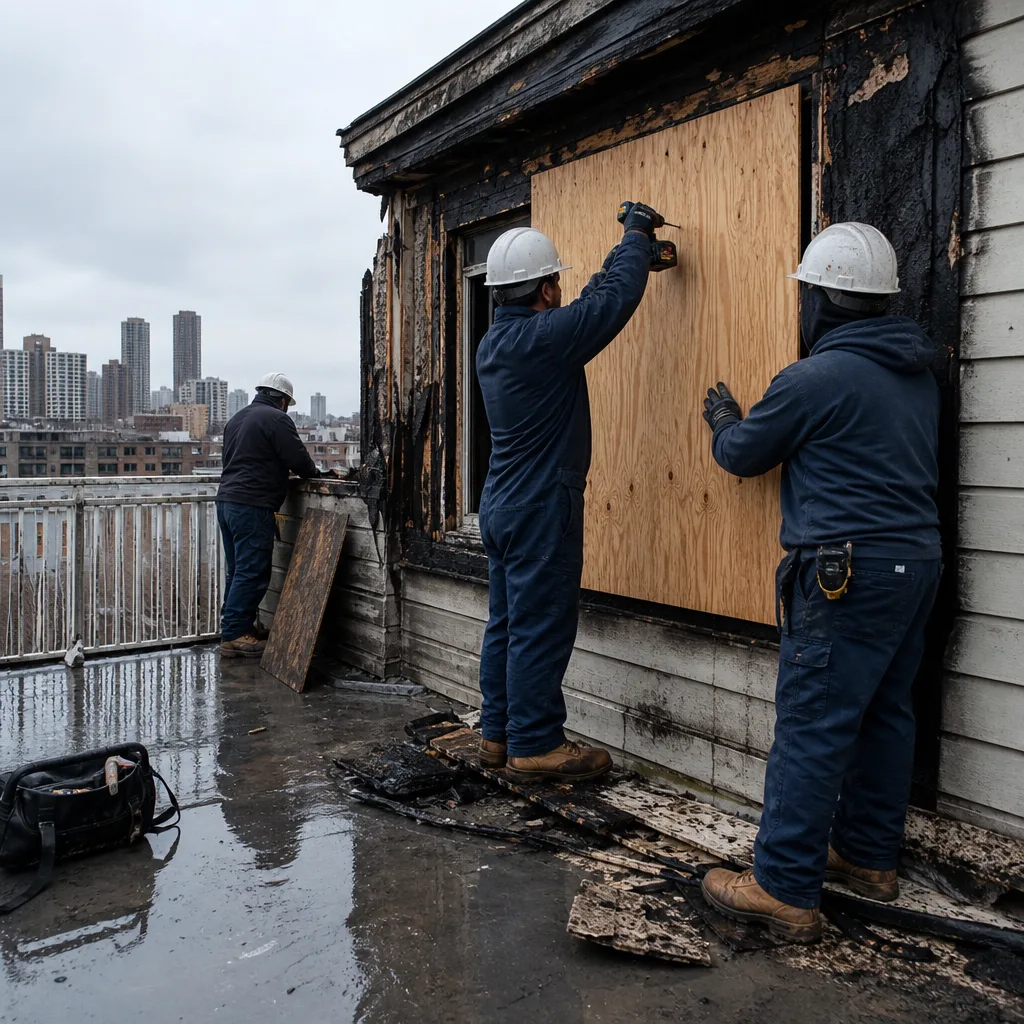
When water moves through shared walls or a common lower level in River Edge’s mixed-use buildings, one unit’s damage becomes everyone’s problem. We coordinate with property managers and HOA boards, contain the loss at the source, and document common-area versus unit-level damage for clean insurance allocation.
Industrial Facility Cleanup
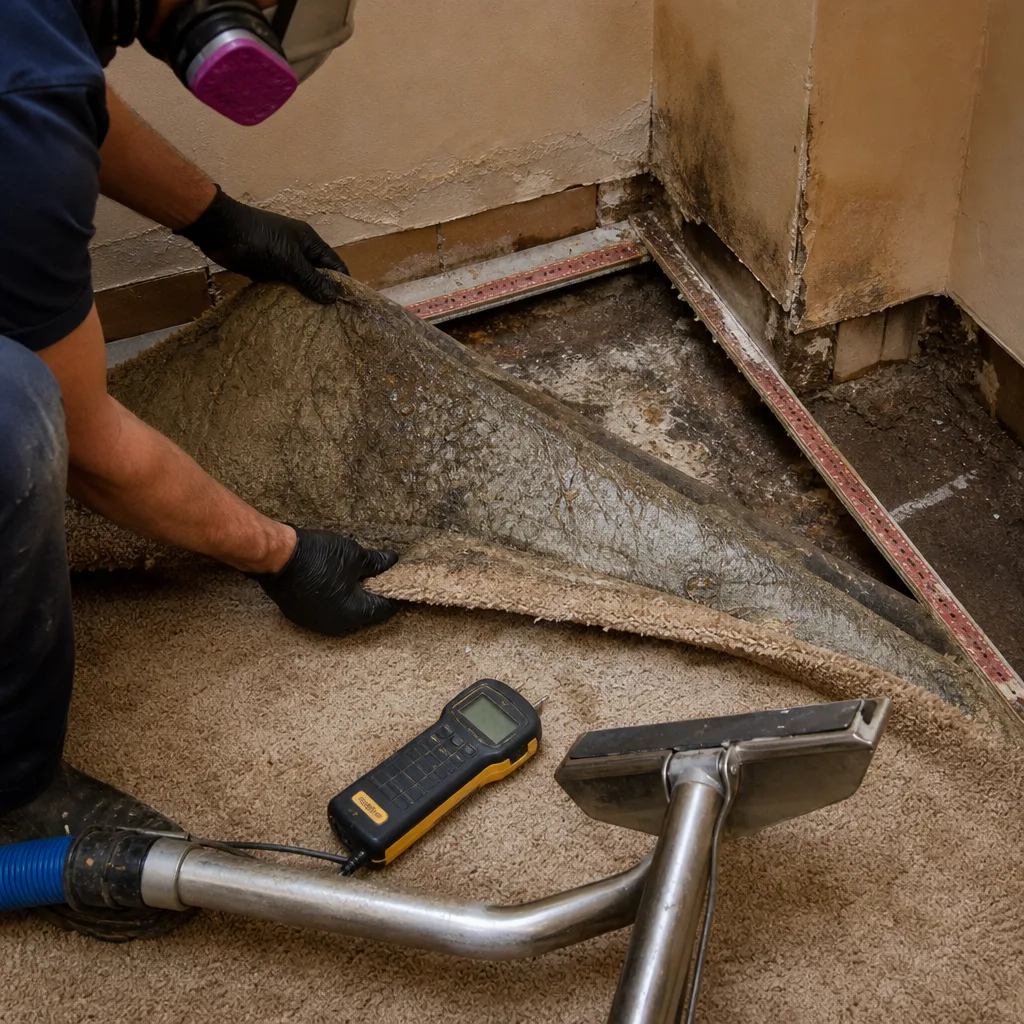
For River Edge’s light industrial and storage spaces, we handle water extraction, cleaning, and drying with equipment sized for large square footage. Our crews use Phoenix dehumidifiers and high-velocity air movers to dry concrete, racking, and machinery spaces without forcing a full shutdown.
Large-Loss Response
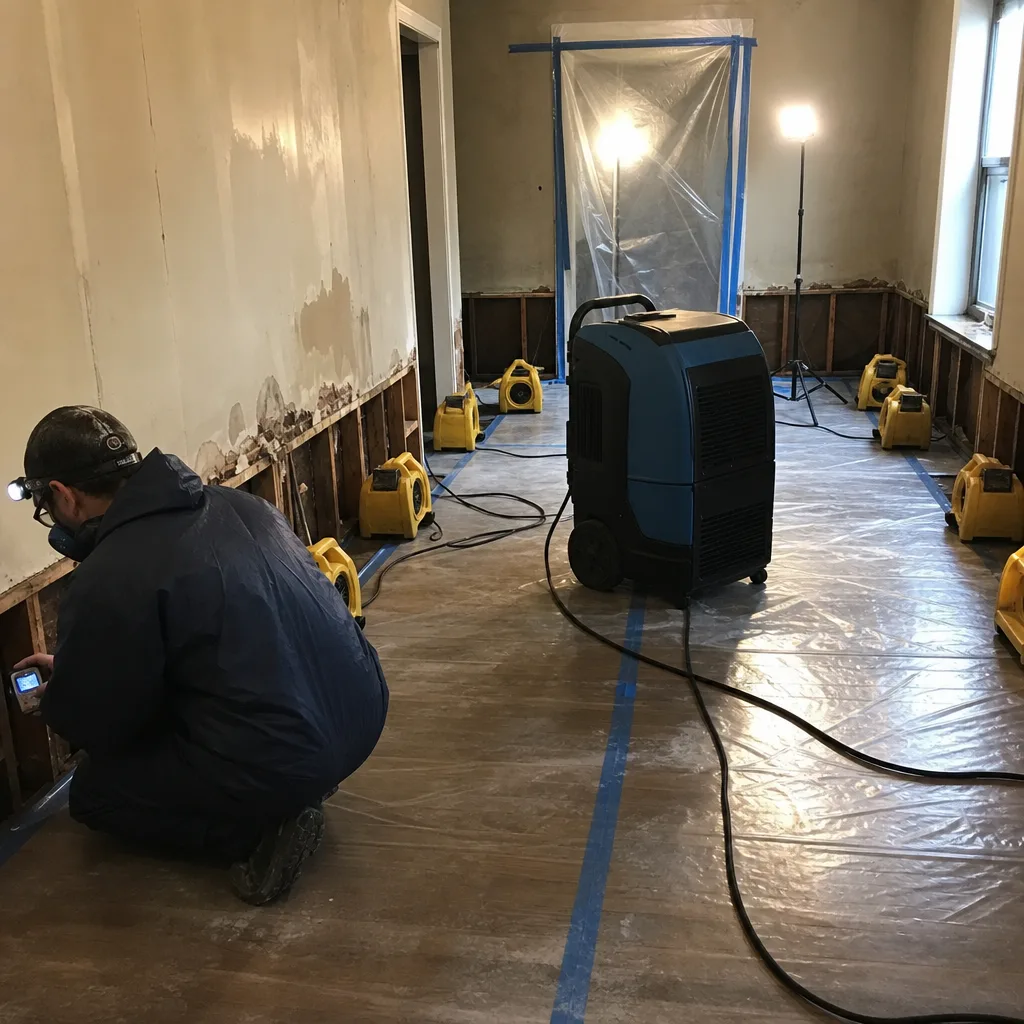
A large-loss event on the Hackensack floodplain overwhelms ordinary restoration companies. We stage additional crews and equipment for River Edge commercial buildings with thousands of square feet affected, coordinate with your carrier on a daily basis, and keep the project moving until the final inspection passes.
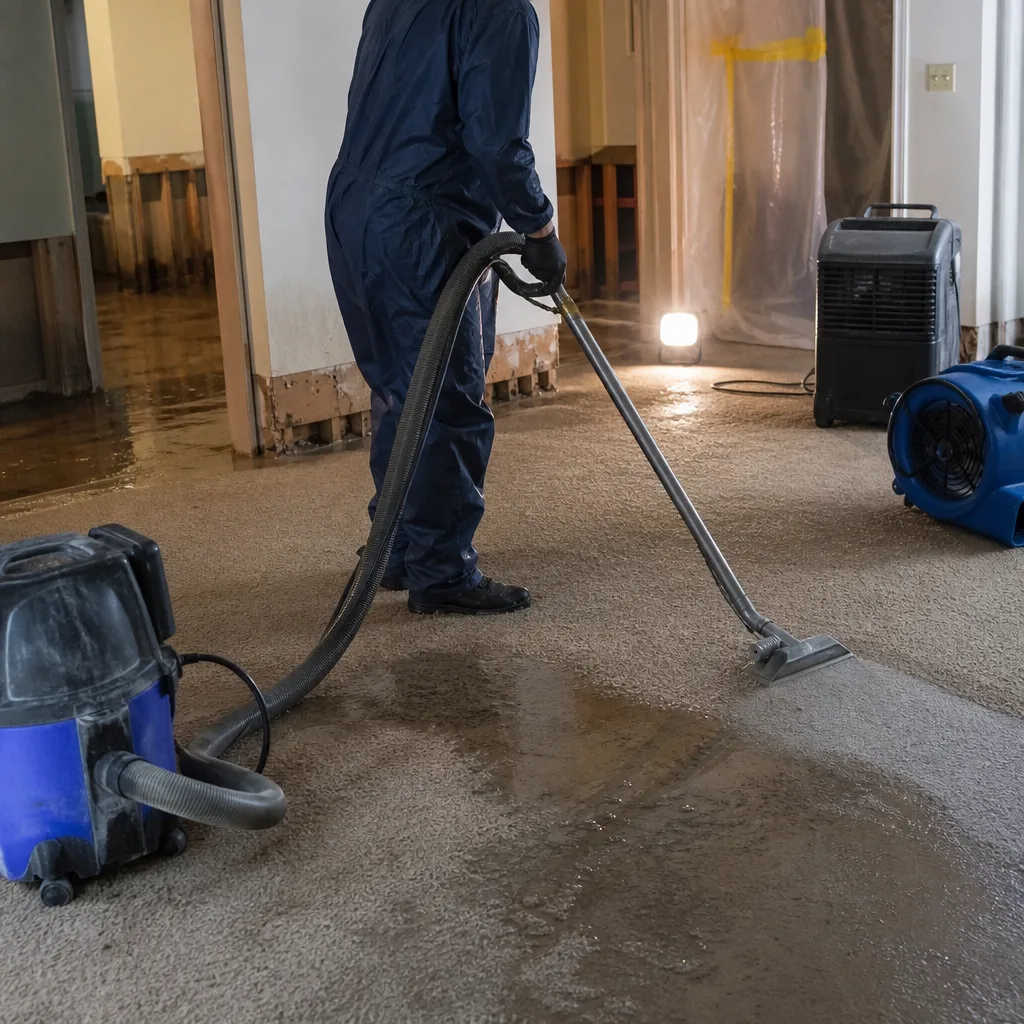
Business Interruption Minimization
The real cost of a River Edge flood is rarely the drywall; it’s the lost revenue while your doors are closed. We sequence the work to get a temporary sales floor, office, or operational area functioning as early as possible, then complete the full restoration around it. We also document every day of closure so your business interruption claim is supported, not disputed.
What happens when you call
- 1
A real person answersNo phone trees - you reach a local pro.
- 2
You get an upfront price rangeHonest numbers before anyone is dispatched.
- 3
A background-checked tech heads outLicensed & insured, dispatched right away.
- 4
You approve before work beginsNothing starts until you say go.
Commercial Restoration Costs in River Edge, NJ
River Edge commercial restoration pricing lands slightly above the Bergen County average, driven by the borough’s older construction, finished lower levels, and the longer drying times the Hackensack drainage pattern demands. Here’s what we’re seeing in this market:
- Commercial water extraction and drying (Category 1, contained): $2,800 to $5,500 for a standard retail or office lower level.
- Category 2/3 flood restoration with lower-level gut-out: $8,000 to $25,000, depending on square footage, paneling removal, and content pack-out.
- Full commercial lower-level rebuild after river flooding: $35,000 to $80,000 when drywall, electrical, flooring, and fixtures on New Bridge Road corridors are replaced.
- Document and inventory recovery: $1,200 to $6,000, scaled by volume and whether freeze-drying is needed.
What moves the number is the extent of hidden moisture behind 1980s finishes, whether inventory must be cleaned or written off, and how long drying must run in the slow-drainage zone. Insurance typically covers the restoration when the loss is sudden and accidental, minus your deductible. Our free visual inspection gives you a firm scope before any work begins, so the number on paper matches the job we do. Call (917) 924-4221 to schedule it.
We Also Serve Cities Near River Edge
Floodline Restoration Co. handles commercial restoration across Bergen County, including New Milford to the north, Oradell to the northeast, Paramus to the west, and Maywood to the south. If your commercial property sits in a neighboring borough, the same live dispatch and Dri-Eaz-equipped crews are minutes away.
River Edge Commercial Restoration Questions, Answered
How does commercial restoration on River Edge’s Hackensack River floodplain differ from typical inland commercial water damage?
Commercial restoration on River Edge’s floodplain differs because the Hackensack River drains sluggishly into the Meadowlands, leaving properties near New Bridge Road inundated longer, so Category 3 water wicks higher into walls and mold establishes faster than in inland towns. This demands longer structural drying times, more aggressive demolition of finished lower levels, and a restoration team that knows the repeat-flood pattern on those blocks rather than treating it as a one-time event.
What should a River Edge business do immediately after the Hackensack River floods their commercial space?
Call Floodline at (917) 924-4221 immediately, cut power to the affected lower level if safe, and do not enter standing Category 3 water. Then begin documenting in photos from the doorway, and notify your insurance carrier. Every hour of delay after river water recedes allows moisture to migrate upward through drywall and wick into paneling and OSB sheathing, expanding the damage footprint and the final restoration cost.
Which commercial areas in River Edge are most at risk for repeated flood damage?
The eastern parcels along New Bridge Road from the Hackensack Avenue junction south to the borough line, plus any commercial building whose rear boundary touches the floodplain, are the highest-risk zones. These areas have appeared on our call logs multiple times per decade after nor’easters and tropical remnants, making them the definition of a recurring, cyclical restoration market in River Edge.
How does structural drying work in a River Edge commercial building with a finished lower level added in the 1980s?
We remove the paneling or drywall that is trapping moisture against the block foundation, then place Dri-Eaz dehumidifiers and air movers mapped to the building’s moisture readings. In a 1980s-finished lower level, that means opening wall cavities, pulling baseboards in the affected zones, and running daily readings until the dry standard is met. Skipping cavity opening is the number one reason River Edge commercial properties rebound into mold weeks after an initial drying attempt.
Can a River Edge business reopen before drying is complete after a flooding event?
No, and doing so is a false economy. Reopening before the lower level meets the dry standard pushes humidity into merchandise, documents, and finished surfaces, and mold will force a second closure within weeks. We sequence the restoration to get a temporary operational area running in days where possible, but the full space stays closed to occupancy until final moisture readings pass.
Does commercial flood insurance cover restoration costs for River Edge properties?
Most commercial policies in River Edge include coverage for sudden, accidental water damage and often for business interruption, but floodplain properties near the Hackensack typically require a separate flood policy through the NFIP or a private carrier. We document the loss, coordinate with your adjuster, and bill the carrier directly, so you know what’s covered before the rebuild starts. Call (917) 924-4221 for a documented assessment your adjuster will accept.
What certifications do your River Edge commercial restoration crews hold?
Our technicians are background-checked, uniformed, and certified to IICRC, RIA, and IFA standards, with WRT and ASD credentials on water jobs and AMRT on mold remediation. The same crew that reads the moisture map on day one handles daily readings, hands the log to you and your carrier, and rebuilds what needs rebuilding. No uncertified subcontractors appear on a Floodline job.
How fast can a commercial restoration crew actually reach River Edge?
Our dispatch target for River Edge commercial losses is 45 minutes from your call to a crew on site, with a live person confirming the exact window on the phone. For a New Bridge Road flood event, every minute counts, and we stage equipment so the first truck arrives ready to start extraction, not just to assess and leave. Call (917) 924-4221 and a real dispatcher will tell you precisely when we’ll be there.
Serving River Edge, NJ - Our Local Coverage Area
We’re based in the River Edge area and know this community well. Use the map below to see our service coverage - if you’re nearby, we can almost certainly help.
Why Floodline Restoration Co. Is the Right Commercial Restoration Team for River Edge
River Edge’s commercial property owners need a restoration company that treats the Hackensack River floodplain as a recurring fact, not a surprise. Commercial Restoration is what we do, and we do it with one team from first extraction to final rebuild. Our crews have worked the New Bridge Road corridor after Ida and Irene, and we know that the same basement addresses appear on our call logs decade after decade. That local knowledge tells us to hold drying longer, to open walls further, and to document more thoroughly than a generic franchise would. Proudly serving local communities for over 42 years, we’re a company that answers the phone with a person and stands behind the job with the 90-Day Done Right Promise. For commercial restoration in River Edge, call (917) 924-4221 for a free visual inspection and a written scope. Done right, and backed in writing.
Written by Curt Bowman, Owner at Floodline Restoration Co. of Manhattan, serving River Edge, NJ.