
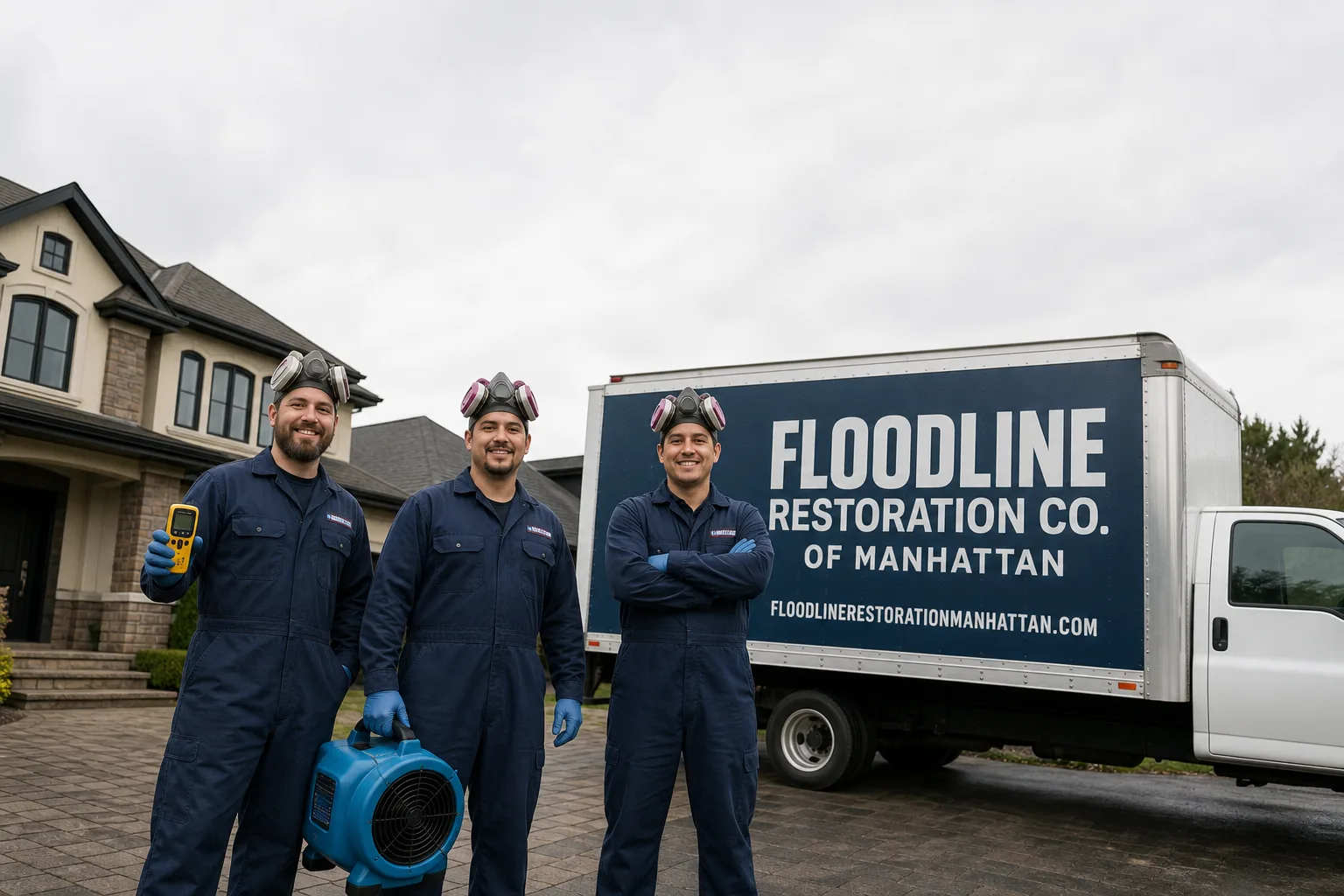
Free visual inspection and a written scope of work before any mitigation begins - photos, moisture readings, and drying logs go in your claim file
The scope we write is the scope we bill. Anything new gets shown to you, in writing, before we touch it.






 Before
 After
After Before
 After
After Before
 After
After24/7 Emergency Commercial Restoration in Tarrytown
Commercial restoration in Tarrytown means getting a business back open fast after water, fire, mold, or storm damage. Call (917) 924-4221 any hour and a live dispatcher answers, not a recording. We stage crews inside the Tarrytown area so response times stay short, and our first visual inspection is free. The first hour after a water loss matters most: Hudson River humidity accelerates mold colonization faster than inland sites, so extraction running the same day often determines whether you’re drying or tearing out walls. If you own a storefront near Main Street, a medical office, a multi-unit building, or an industrial space, the clock starts the moment water enters. We answer that call at 2 a.m. and a certified crew reaches the job, sets containment, and gets extraction running that same visit.
Understanding Commercial Restoration Severity in Tarrytown Properties
Commercial buildings in Tarrytown carry a distinct severity profile compared to newer suburban construction. The village’s commercial stock includes late-Victorian brick and wood-frame structures along Main Street and Broadway, many with original horsehair plaster, balloon-frame walls, and 1890s fieldstone foundations. When water intrudes here, structural drying requires moisture mapping behind plaster, not just surface readings, because water migrates laterally through wall cavities and settles in original mortar joints. Category 3 water, the kind that carries sewage or river-borne contaminants, demands containment, HEPA air scrubbing, and antimicrobial application before any drying begins. Fire losses in older buildings leave layered soot residues that bond differently to oil-based paints and varnished woodwork common in pre-1920 storefronts. Soot from protein fires needs a different chemistry than dry soot from paper or wood fires. Mold in riverfront commercial spaces where Hudson Valley fog keeps ambient humidity elevated year-round grows inside a shorter window, often within 36 to 48 hours. That compression changes the severity math: what’s a simple extraction two miles inland can become a full containment and remediation case near the waterfront.
Why Tarrytown Property Owners Choose Floodline Restoration Co. of Manhattan
- 45-minute response commitment. Crews staged near Tarrytown roll immediately and confirm arrival time by phone before we dispatch.
- 24/7 live answer. A person picks up at our dispatch desk every hour of every day. You’ll never leave a voicemail during an emergency.
- IICRC-certified crews. Technicians hold WRT, FSRT, and AMRT certifications and train to RIA and IFA standards on real Tarrytown buildings.
- Free visual inspection. We assess the loss, map the moisture, and give you a written scope before any work begins.
- Direct insurance billing. We coordinate with your adjuster and bill the carrier directly. You don’t carry messages between us.
- One team, start to finish. The same certified crew handles extraction, drying, cleaning, and reconstruction. No mid-job handoff to strangers.
Our Commercial Restoration Process
Inspection & Assessment
We walk the full loss area with thermal imaging and moisture meters, classify the water category, and identify building materials that need specialty handling, including lead paint or asbestos protocols common in pre-1920 Tarrytown commercial spaces.
Extraction / Stabilization
We extract standing water with truck-mounted units and set up containment immediately. For fire losses, we stabilize soot on surfaces before it can etch glass or permanently stain fixtures. For mold, we seal the affected zone and run HEPA air scrubbers before disturbing materials.
Drying & Dehumidification
Professional-grade Dri-Eaz and Phoenix air movers plus LGR dehumidifiers run against a moisture map we update daily. Horsehair plaster and balloon-frame cavities dry slower, so we log readings until the dry standard is met, not when surfaces feel dry.
Cleaning & Sanitization
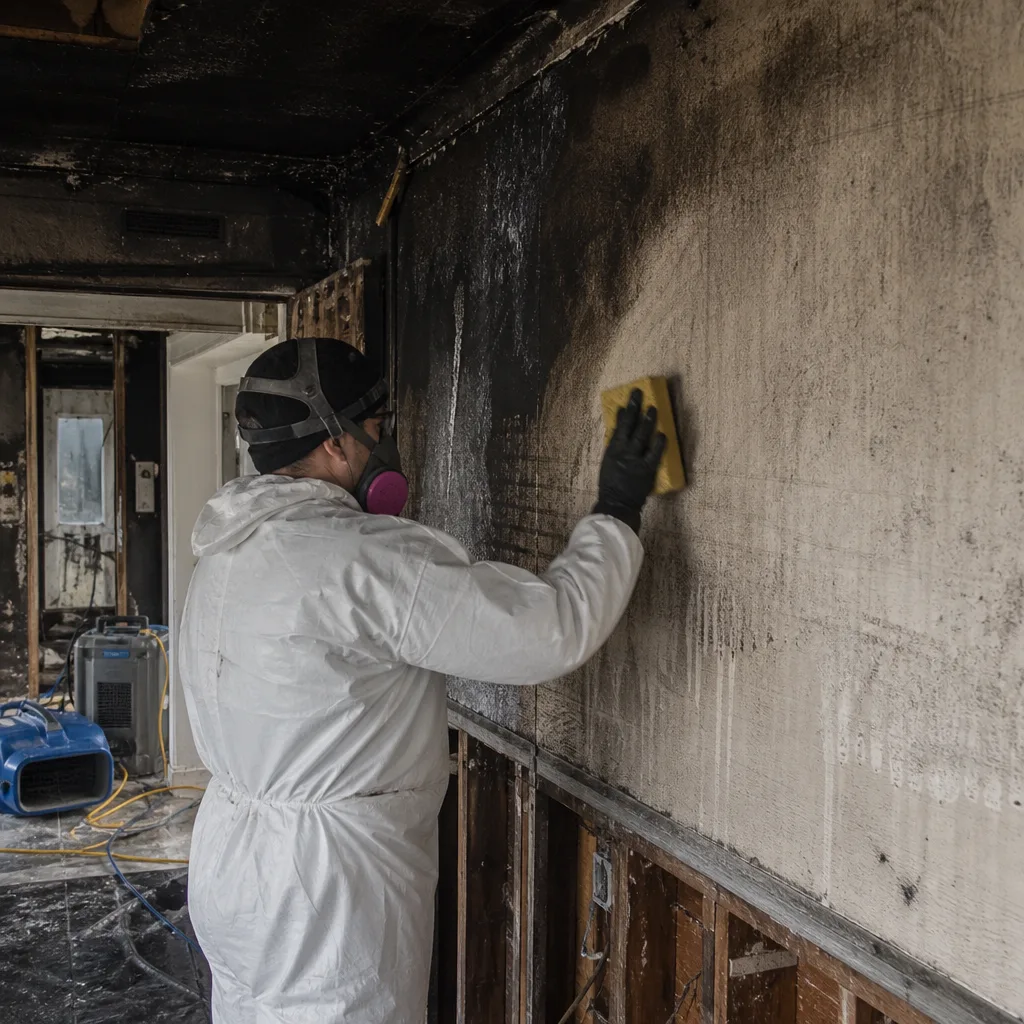
Antimicrobial application, soot removal with chemistry matched to residue type, and HEPA vacuuming across all surfaces. We follow salvage first, replacement only when structurally or hygienically required.
Specialty Treatment
Document and inventory recovery for water-damaged records, electronics, and retail stock. If salt-air corrosion has compromised garage doors serving your loading bay, we replace springs, tracks, and rollers with galvanized or stainless hardware so access never fails mid-recovery.
Repairs & Restoration
We rebuild what needs rebuilding, from drywall and flooring to structural framing and storefront finishes. The same crew that read the moisture map on day one handles the final coat. Written scope, no surprises, and the 90-Day Done Right Promise in your hands.
Need Emergency Commercial Restoration in Tarrytown Now?
Crews minutes away, answering live 24 hours a day. The sooner we start, the less it costs.
Working With Your Insurance Company
Commercial claims in Tarrytown move faster when the restoration company documents like an adjuster. We photograph every room before touching anything, log moisture readings daily, and write a line-item scope to industry standards. Our team handles adjuster calls directly, so you’re not the one explaining why a 1905 brick building needs different drying than a drywall box. We tell your carrier what’s salvageable, what’s not, and what the code in this village requires. It’s a square deal: no surprises on the bill and no homeowner playing messenger.
What We Provide Your Insurer
- Thorough documentation of the loss
- Photos of all damage, room by room
- Moisture readings and drying logs
- A detailed, line-item scope of work
- Direct coordination with your carrier
Built for Tarrytown’s Loss Calendar
Tarrytown’s commercial restoration calendar follows two forces: the Hudson and the seasons. Deep freezes in January and February burst galvanized supply lines in unheated rear additions and under-delivery bays, sending water across retail floors before anyone notices. Spring thaw and heavy rain saturate the hillside neighborhoods above Broadway, and runoff channels into mid-elevation basements of commercial buildings on North Washington and Kaldenberg. Summer thunderstorms drop flash flooding on low-lying streets near the Metro-North station, where tidal surge adds to the load. Nor’easters in fall and early winter drive wind-driven rain into aging window frames on Main Street and along the waterfront, the same pattern behind our brick building call near Main Street after a late-season storm. Every season in Tarrytown produces a distinct loss signature, and we plan equipment staging around it.
Commercial Restoration Across Tarrytown’s Neighborhoods
Downtown Main Street between Broadway and the Music Hall gives us a row of 1880s to 1920s brick commercial buildings, most with basement level shops, original wood windows, and fieldstone foundations. Water here pools against shared party walls and migrates between tenant spaces, which means restoration has to account for adjacent units and often multi-tenant coordination. The waterfront district near the Tappan Zee Bridge and Metro-North station carries flood-zone repair rules under FEMA and a salt-air corrosion profile that eats garage door springs and track hardware in a few years. We replace that hardware with coated or stainless components so a failed opener never blocks our drying equipment access. Upper Broadway and the hill blocks toward Neperan Road hold converted Victorians operating as offices and inns, with horsehair plaster and balloon-frame construction that require lead and asbestos testing before invasive drying can begin. East side commercial corridors near the Tarrytown Lakes and Route 9 have younger 1950s and 1960s construction but still sit in the same river valley humidity. Multi-unit buildings anywhere in the village carry the same dual-flood profile: surge near the river, runoff at mid-elevation, and sometimes both within one property.
Specialized Commercial Restoration Services We Offer in Tarrytown
Office & Retail Restoration
Storefronts on Main Street and Broadway need restoration that respects historic fabric while meeting code. We dry behind plaster, salvage original millwork where possible, and stage containment so foot traffic stays safe. If the space has a loading bay with an overhead door, we inspect springs, hinges, and tracks for salt-air corrosion before relying on that door for daily access.
Multi-Unit & HOA Restoration
Co-ops, condos, and rental buildings in Tarrytown carry layered responsibility across units, common areas, and exteriors. We work with boards and property managers on scope, access, and insurance documentation. When one unit floods, our moisture mapping tells you whether the loss stopped at the drywall or migrated through framing into the next unit.
Industrial Facility Cleanup
Warehouse and light industrial spaces near the waterfront or off White Plains Road deal with large floor areas, high ceilings, and specialized equipment. We stage extraction and air movement at scale, handle Category 3 water safely, and coordinate with your operations so the facility stays functional where possible.

Large-Loss Response
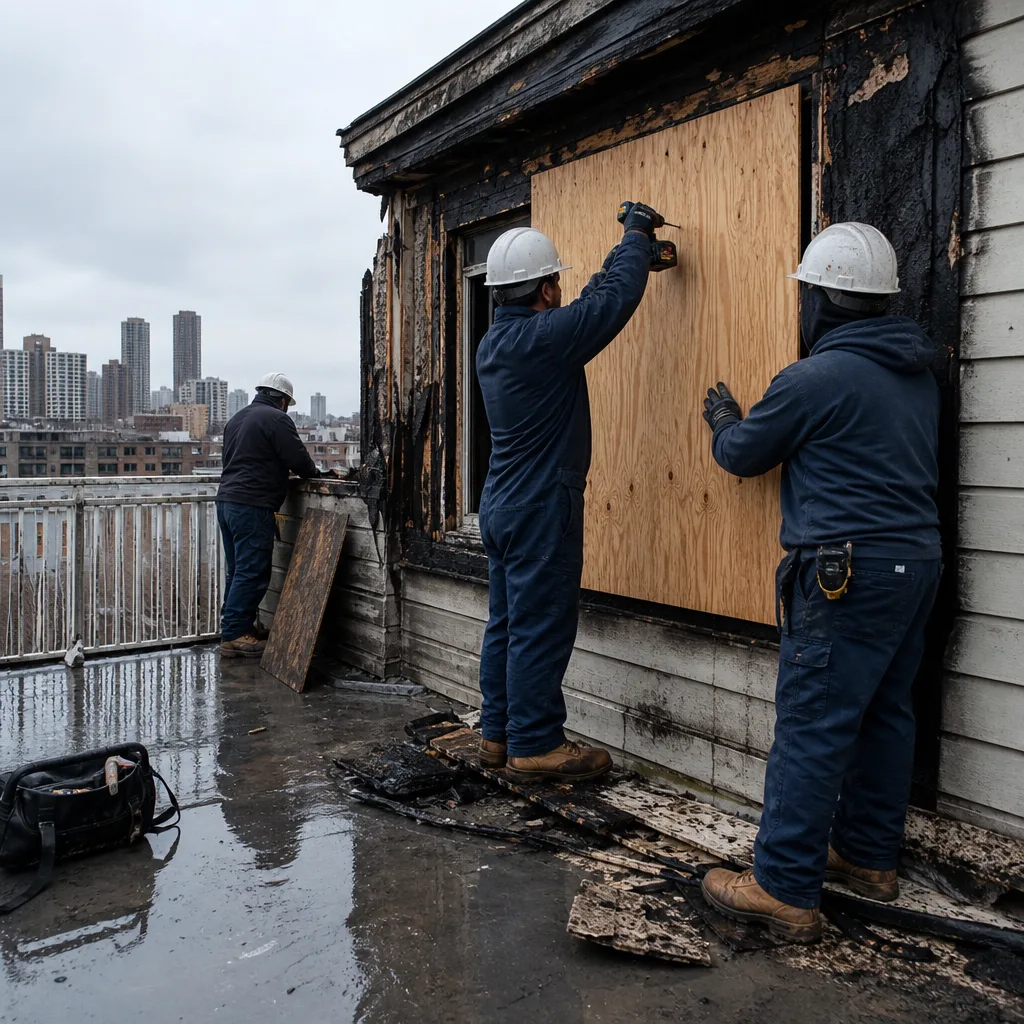
When a fire or a burst main impacts an entire wing or building, we bring multiple certified crews, industrial dehumidification, and a single point of contact who manages schedules, documentation, and adjuster communication. Our Commercial Restoration team runs large-loss jobs with the same line-item discipline as a single storefront.

Business Interruption Minimization
Every day a Tarrytown business stays closed is revenue that doesn’t come back. We sequence the work around what lets you reopen: securing the space, drying critical paths first, isolating construction zones with containment, and keeping your customers and staff away from unsafe areas. We’ve reopened Main Street retailers in under a week after wind-driven rain losses.

What happens when you call
- 1
A real person answersNo phone trees - you reach a local pro.
- 2
You get an upfront price rangeHonest numbers before anyone is dispatched.
- 3
A background-checked tech heads outLicensed & insured, dispatched right away.
- 4
You approve before work beginsNothing starts until you say go.
Commercial Restoration Costs in Tarrytown, NY
A water extraction and structural drying job for a Tarrytown office or retail space typically runs $2,800 to $7,500, depending on square footage, water category, and whether plaster walls are involved. Mold remediation on a contained commercial area starts around $3,200 and runs to $12,000 or more when historic materials and multiple rooms are affected. Fire and smoke restoration for a small commercial space usually lands between $5,000 and $20,000, with soot type and structural depth moving the number. Sewage or Category 3 water cleanup adds $1,500 to $5,000 for containment and antimicrobial work. Salt-air corrosion repair on a commercial garage door runs $375 to $1,200 for springs, rollers, and track hardware replacement. Insurance covers most of these when the loss is sudden and accidental; the free inspection gives you a written scope so you know your number before you commit. Call (917) 924-4221 and we’ll price it straight.
We Also Serve Cities Near Tarrytown
Our crews run restoration calls across the neighboring Hudson River corridor, including Tarrytown, Elmsford, Hawthorne, Valhalla, and Irvington. Same 24/7 dispatch, same certified teams, same written guarantee.
Serving Tarrytown, NY - Our Local Coverage Area
We’re based in the Tarrytown area and know this community well. Use the map below to see our service coverage - if you’re nearby, we can almost certainly help.
Tarrytown Commercial Restoration Questions, Answered
How does living on the Hudson River in Tarrytown change the mold timeline after a commercial water loss?
Mold starts colonizing faster near the Tarrytown waterfront because Hudson Valley fog and river humidity keep ambient moisture elevated year-round. In our experience, riverfront storefronts can show mold growth within 36 to 48 hours, versus 72 hours or more at inland sites. That’s why we treat every water loss in the lower-lying blocks near the station as a race: extraction and dehumidification start the same day, and drying logs track the dry standard until cleared.
What happens when a Main Street commercial building is in a FEMA flood zone and a Westchester historic district at the same time?
You get two sets of rules: FEMA flood-zone compliance governs what materials can be replaced and to what elevation, while Westchester County historic-district guidelines protect original fabric like wood windows, masonry, and trim from unapproved alteration. We’ve handled buildings on Main Street that carry both designations. The restoration scope has to satisfy both codes, sometimes within the same multi-unit property. Our team documents what’s salvageable, what must be replaced, and what each authority requires before work begins, so the insurance claim and the permits move together.
Do you charge differently for drying a Category 1 vs. Category 3 water source in a Tarrytown office?
Yes. Category 1 water from a burst supply line requires extraction and structural drying only, with lower equipment and labor costs. Category 3 water, which carries sewage or river-borne contaminants from Hudson surge, requires containment, HEPA air scrubbing, antimicrobial treatment, and removal of porous materials like carpet and drywall. A Category 3 loss in a Tarrytown office typically runs $1,500 to $5,000 more than the same square footage of Category 1 damage. We classify the water category during the free inspection and put the classification in writing.
Why do you keep getting called back to Tarrytown waterfront buildings that flooded during Hurricane Sandy a decade ago?
Sandy flooded riverfront blocks near the Tarrytown station, and a decade ago many owners did extraction and surface drying without addressing moisture migration into original 1890s fieldstone foundations. That water stayed in the masonry, wicked upward, and now shows up as recurring mold, efflorescence, or weakened mortar. We re-open those jobs, map the actual moisture path, and dry the foundation properly this time. It’s a known pattern in the blocks between Main Street and the Hudson, and we plan for it whenever a waterfront building shows water history.
How do you keep a Tarrytown retail business open while you dry the space?
We set containment walls around the drying zone, run low-profile air movers and dehumidifiers, and route customers away from the work area. If the loss is in a rear stockroom, the sales floor often stays open the same day. We schedule noisy equipment runs around your business hours where possible, and we stage pack-out so inventory you need stays accessible. Most Tarrytown storefronts we handle stay partially open during restoration, which keeps revenue flowing while the claim processes.
What’s the fastest way to get a commercial restoration crew to my Tarrytown property right now?
Call (917) 924-4221. A live dispatcher answers 24/7, confirms your address and loss type, and dispatches a certified crew staged near Tarrytown. We commit to a 45-minute response window for most village locations, and extraction equipment runs the same visit.
Will my insurance cover commercial restoration in Tarrytown, and who deals with the adjuster?
Most sudden and accidental water, fire, storm, and mold losses are covered under standard commercial policies, with coverage specifics varying by carrier and policy year. We document everything from the first hour with photos, moisture readings, and a line-item scope, then communicate directly with your adjuster. You never carry messages between us and the carrier. If there’s a coverage gap, we tell you plainly before work starts, not after.
What should I do in the first 30 minutes after discovering commercial water damage in Tarrytown?
Shut off the water source if you can do so safely. Move inventory, electronics, and documents to dry ground. Don’t enter standing water that may be electrically live. Then call (917) 924-4221. The sooner extraction starts, the less damage you’ll carry, especially in river-adjacent Tarrytown buildings where mold moves fast. We’ll walk you through the next 30 minutes on the phone while the crew rolls.
Written by Curt Bowman, Owner at Floodline Restoration Co. of Manhattan, serving Tarrytown and the Hudson River corridor.