
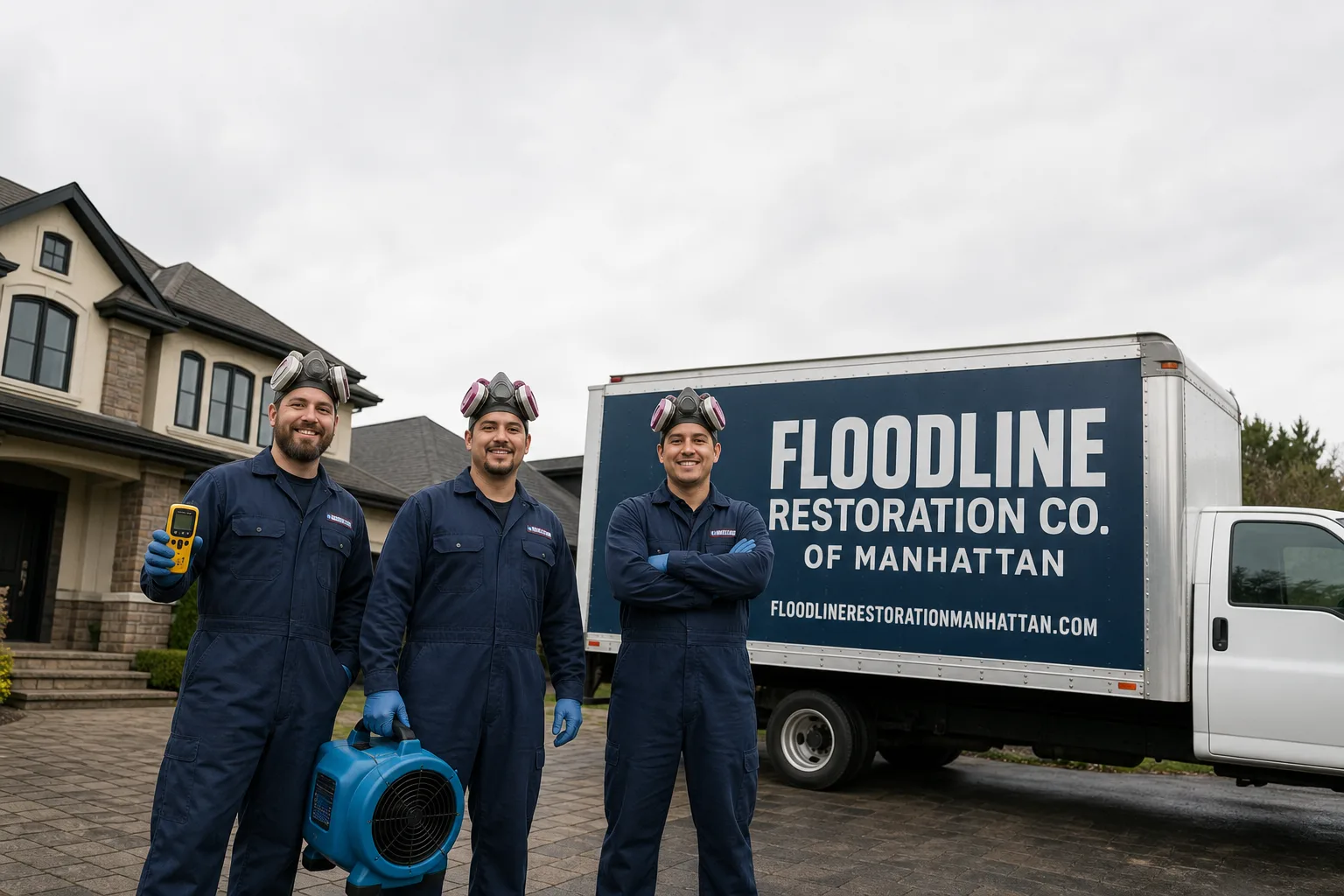
Free visual inspection and a written scope of work before any mitigation begins - photos, moisture readings, and drying logs go in your claim file
The scope we write is the scope we bill. Anything new gets shown to you, in writing, before we touch it.






 Before
 After
After Before
 After
After Before
 After
After24/7 Emergency Commercial Restoration in Woodhaven
Commercial restoration in Woodhaven means responding to a burst supply line inside a 1920s row house at 2 a.m., or a sewage backup that has pushed Category 3 water through a shared party wall into two storefronts along Jamaica Avenue at once. Floodline Restoration Co. of Manhattan answers live around the clock, with certified crews dispatched from our New York City office and arriving inside the Woodhaven area in about 45 minutes. Call (917) 924-4221 the moment you see standing water, smoke residue, or mold growth. The first hour determines whether you’re drying structural framing or tearing out soaked plaster and buckled flooring.
We do not route emergency calls to a call center. A live dispatcher picks up, a Woodhaven-bound crew is rolling, and extraction starts the same visit in most cases. The visual inspection is free, and the written scope comes before any work begins.
Understanding Commercial Restoration Severity in Woodhaven Properties
Woodhaven’s commercial and mixed-use buildings are mostly pre-WWII brick row houses and two-families with storefronts carved into the ground floor. That changes the severity math on every loss. A Category 1 clean-water leak becomes a Category 2 or 3 event fast when it travels through a 100-year-old knob-and-tube wire chase, carrying degraded insulation dust and decades of wall cavity contamination. A Category 3 sewage backup is already contaminated; in a Woodhaven basement with original cast-iron drain lines, it often means removing saturated wainscoting and floor tile, not just extracting standing water.
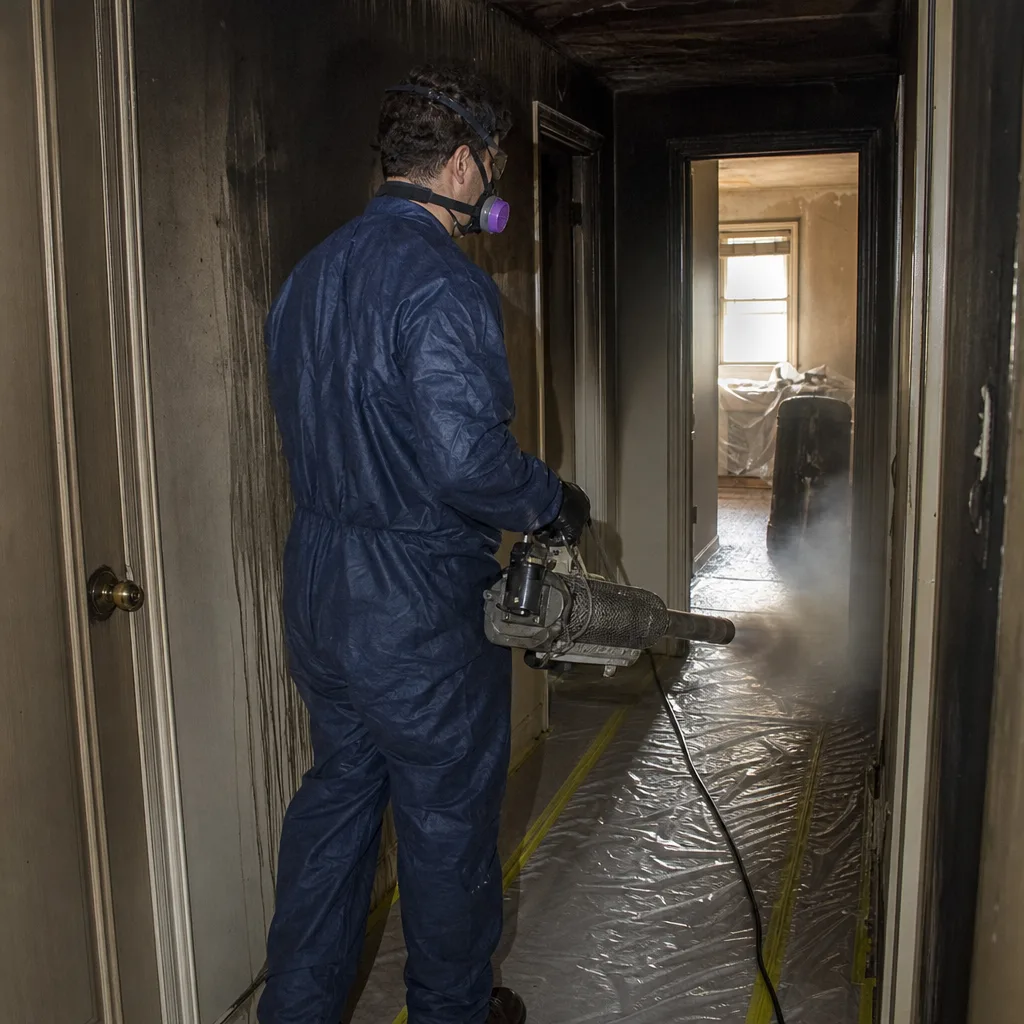
Brick cavity walls trap moisture long after the visible water is gone. Moisture mapping tells the real story. We check saturation on both sides of a party wall before we start drying, because water that wicked into the shared wythe on Monday will re-wet the “dry” side by Wednesday. Soot, smoke, and mold follow their own logic: protein soot from a kitchen fire clings to painted surfaces, while synthetic soot from a retail fixture fire leaves a black residue that smears if wiped without the right chemistry. Mold in a shared wall cavity needs containment and HEPA air scrubbing before the wall comes open. Severity in Woodhaven is rarely about the size of the leak. It’s about where the water went and what it passed through on the way.
Why Woodhaven Property Owners Choose Floodline Restoration Co. of Manhattan
- 45-minute response commitment. We dispatch crews from our New York City office immediately, and we aim to have a Woodhaven-bound team on-site within 45 minutes of your call. The sooner we start, the less damage spreads.
- 24/7 live answer, always a person. No automated menus, no “leave a message.” A real dispatcher answers at 2 a.m. and starts the response. Every day of the year.
- IICRC-certified technicians. Our crews hold WRT, FSRT, and AMRT certifications and train to RIA and IFA standards. They are background-checked and uniformed on every job.
- Free visual inspection with a written scope. We assess the full loss, explain what needs removal versus drying, and hand you a line-item scope before any billable work starts. No surprises on the bill.
- Direct insurance billing. We bill your carrier directly and coordinate with your adjuster from the first hour. You are not playing messenger between us and the insurance company.
- One team from extraction to reconstruction. The same certified crew that reads the moisture map on day one handles daily drying readings and rebuilds what needs rebuilding. No mid-job handoff to an unfamiliar subcontractor.
Our Commercial Restoration Process
Inspection & Assessment
We walk the full loss in Woodhaven, including the adjoining unit if a party wall is involved. Thermal imaging and penetrating moisture meters map the actual extent. You get a written explanation of Category 1, 2, or 3 water and what it means for your building.
Extraction & Stabilization
Standing water comes out first, using truck-mounted or portable extraction units sized to the job. We stabilize the structure and shut off the source. On a row-house loss, that means checking both sides of the shared wall before water keeps moving.
Drying & Dehumidification
Dri-Eaz and Phoenix air movers and dehumidifiers go in, positioned for the actual moisture load, not a one-size-fits-all layout. In Woodhaven’s brick row houses, we run drying off separate circuits when the property still has original armored cable wiring. Daily hygrometer readings are logged until the dry standard is met.
Cleaning & Sanitization
Category 2 and 3 water change the cleaning protocol entirely. Contaminated materials are removed, surfaces are treated with professional antimicrobials, and HEPA air scrubbers run during and after the dirty work. The moisture log and photos document everything for your carrier.
Woodhaven-Specific Structural Treatment
Shared brick party walls get moisture readings on both sides before, during, and after drying. We document saturation on the neighbor’s side before drying starts, so both insurance carriers stay aligned on one scope. This is the step most crews skip, and it is the step that prevents a re-wetted wall and mold 48 hours later.
Repairs & Restoration
We rebuild what needs rebuilding: drywall, flooring, ceiling plaster, trim, paint, and cabinetry. The same crew that did the extraction handles the finish work, so the transition from mitigation to restoration never involves a new contractor learning the building from scratch.
Need Emergency Commercial Restoration in Woodhaven Now?
Crews minutes away, answering live 24 hours a day. The sooner we start, the less it costs.
Working With Your Insurance Company
Most Woodhaven commercial policies cover sudden water damage, fire, and sewage backup, but the claim’s strength depends on documentation from the first hour. We build that file as we work: photos of the loss room by room, moisture readings from every affected surface, daily drying logs, and a line-item scope that matches what your adjuster expects. When a row-house loss crosses a party wall into the neighboring property, we coordinate with both carriers so no one is left holding someone else’s claim. You get the documentation, the adjuster gets the facts, and nobody plays messenger.
What We Provide Your Insurer
- Thorough documentation of the loss
- Photos of all damage, room by room
- Moisture readings and drying logs
- A detailed, line-item scope of work
- Direct coordination with your carrier
Built for Woodhaven’s Loss Calendar
Woodhaven’s commercial losses follow the seasons with a pattern that surprises no one who has worked the corridor long. January deep freezes split copper supply lines and crack cast-iron fittings in unheated storefront basements. Early spring thaw and heavy nor’easter rain overwhelm Queens’ aging combined sewer system, forcing sewage backflow into full-depth basements along Jamaica Avenue and the side streets off it. Summer thunderstorms dump enough water fast enough that street drains simply stop taking it, and low-lying blocks see Category 3 water where there was none an hour before.
Pre-WWII buildings add their own calendar. Original galvanized drain lines in a 1920s two-family corrode from the inside, failing without warning. Knob-and-tube wiring chases create pathways for water that should never have left the supply line. We plan for this. Our Woodhaven crews keep extraction and drying equipment staged so we can respond to the season’s inevitable calls without delay. When the call comes at 2 a.m. in February or 4 p.m. in July, we answer live and move.
Commercial Restoration Across Woodhaven’s Neighborhoods
Woodhaven’s commercial stretch along Jamaica Avenue runs storefront-to-storefront, with apartments upstairs and shared party walls between nearly every unit. A water loss in one storefront is rarely contained to that storefront. Our crews know the response routes: Jamaica Avenue itself, Atlantic Avenue to the north, Woodhaven Boulevard cutting north-south, and the residential blocks off Park Lane South and Forest Parkway. Parking is tight near the elevated J/Z line, so our teams arrive prepared to work from a single truck and run hoses and drying equipment through narrow stairwells and rear alley access.
Over near Dexter Park and the blocks around PS 60, the housing stock shifts to attached brick row houses with finished basement storefronts or offices. These are the jobs where a burst supply line in the first-floor ceiling becomes a two-unit loss before we arrive. South toward Ozone Park and the border streets, the buildings are similar: two-family brick with shared walls and original plumbing. The loss patterns repeat. The solution never does, because every party wall, every basement drain line, and every insurance situation is different. That is why our Commercial Restoration team carries moisture meters and thermal imaging on every truck, not just the big jobs.
Woodhaven’s commercial restoration needs are not a suburb’s needs. They are a dense, pre-war, attached-housing market’s needs. We have worked the row-house corridor long enough to know that a drying job is not done when the wet unit reads dry. It is done when the shared brick wythe reads dry on both sides, and both property owners have the documentation to prove it.
Specialized Commercial Restoration Services We Offer in Woodhaven
Office & Retail Restoration
A flooded storefront on Jamaica Avenue closes revenue by the hour. We prioritize extraction and structural drying in the customer-facing space first, then the back office and stock areas. The goal is a reopened door as fast as the drying standard allows, with a written scope so you know exactly what is coming out and what is being dried in place.
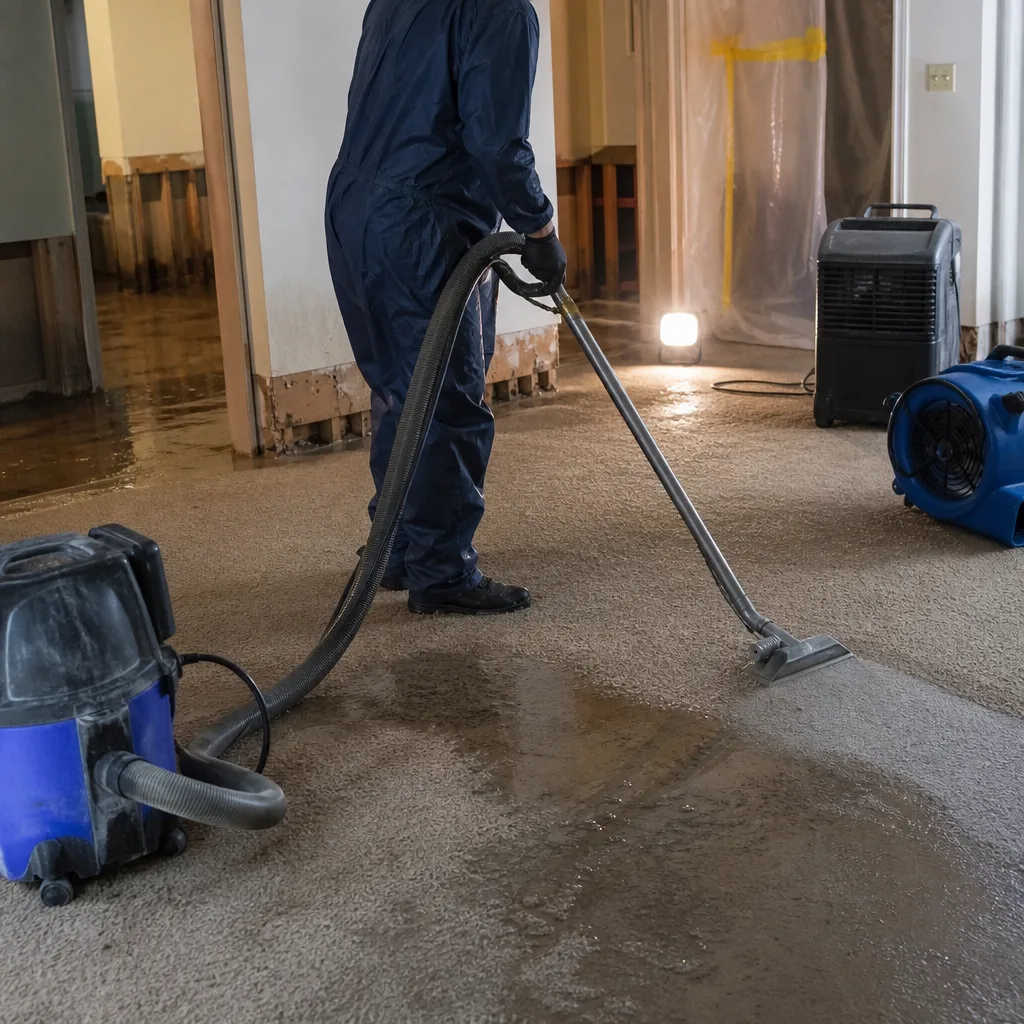
Multi-Unit & HOA Restoration
Woodhaven’s two-family row houses and attached commercial buildings mean one loss often involves multiple owners, multiple insurance policies, and a shared structural element. We document both sides of every party wall, coordinate with each carrier separately, and produce one coherent scope. HOAs get the documentation they need to justify the assessment; individual owners get direct billing to their own carriers.
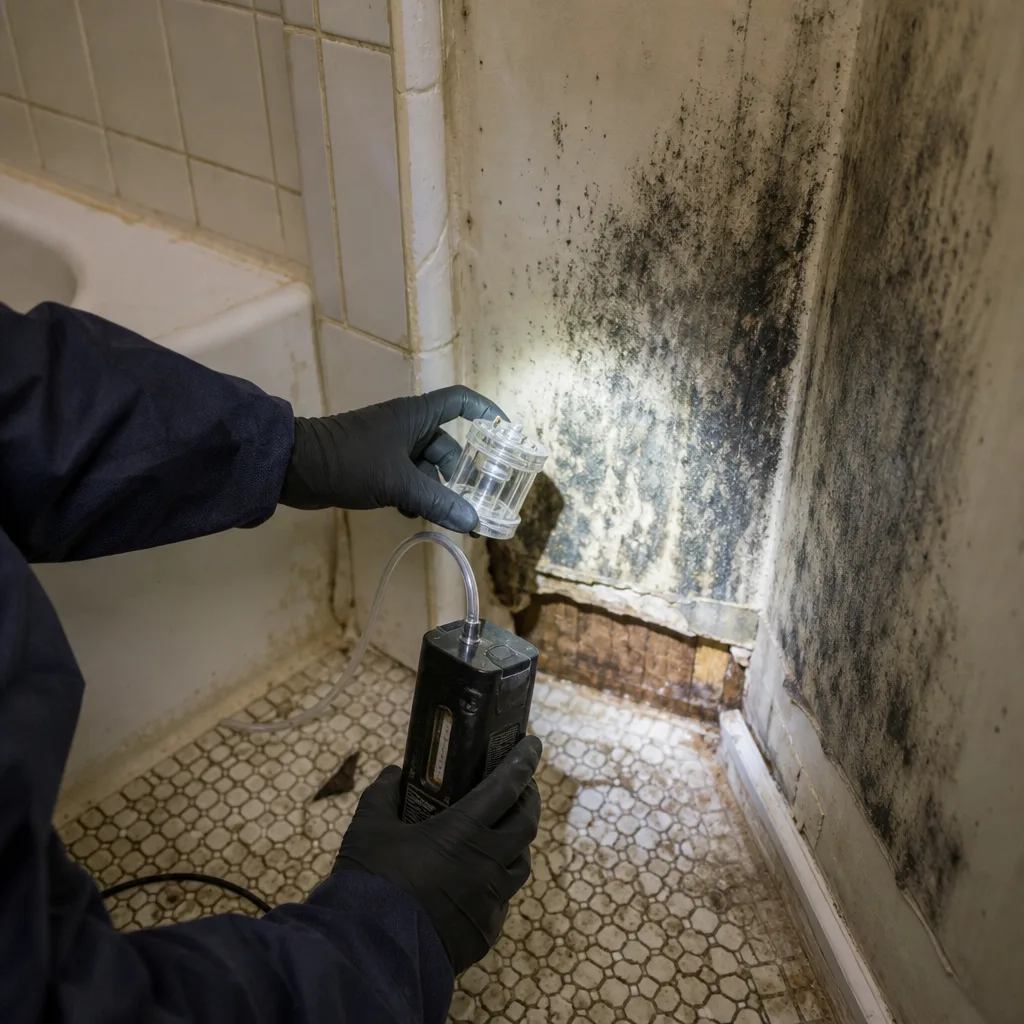
Industrial Facility Cleanup
Warehouse and light-industrial spaces along Atlantic Avenue and near the rail corridor need high-volume extraction, aggressive structural drying, and often heavy debris removal. We run the same Dri-Eaz and Phoenix equipment scaled up to the square footage, with containment and negative air where a loss involves dust, soot, or chemical residue.
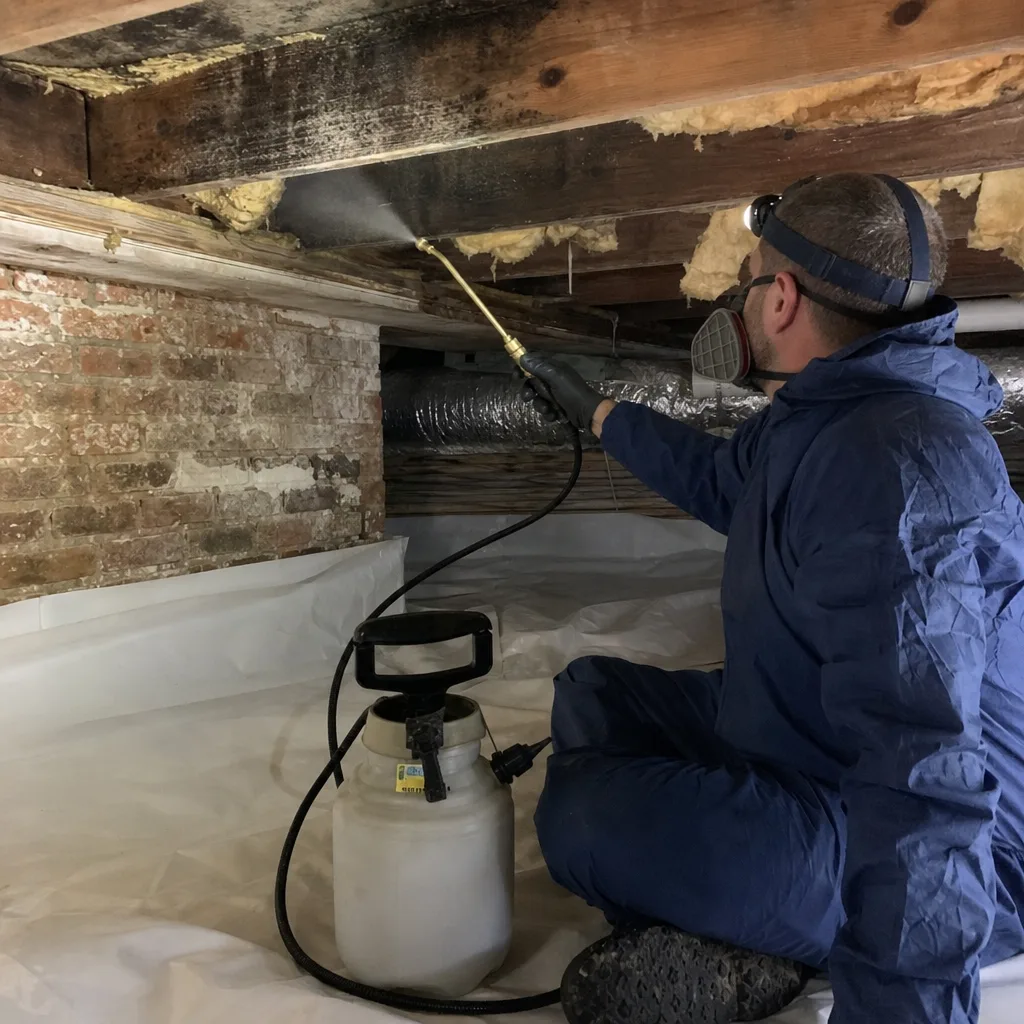
Large-Loss Response
When a sewer backup affects several row houses along the same block, or a fire in one attached storefront spreads smoke through a shared attic, the response is not a single-unit job. We mobilize multiple crews, stage equipment on the block, and assign one project lead to coordinate the whole loss. That lead carries the moisture log for every affected unit and communicates with every adjuster involved.
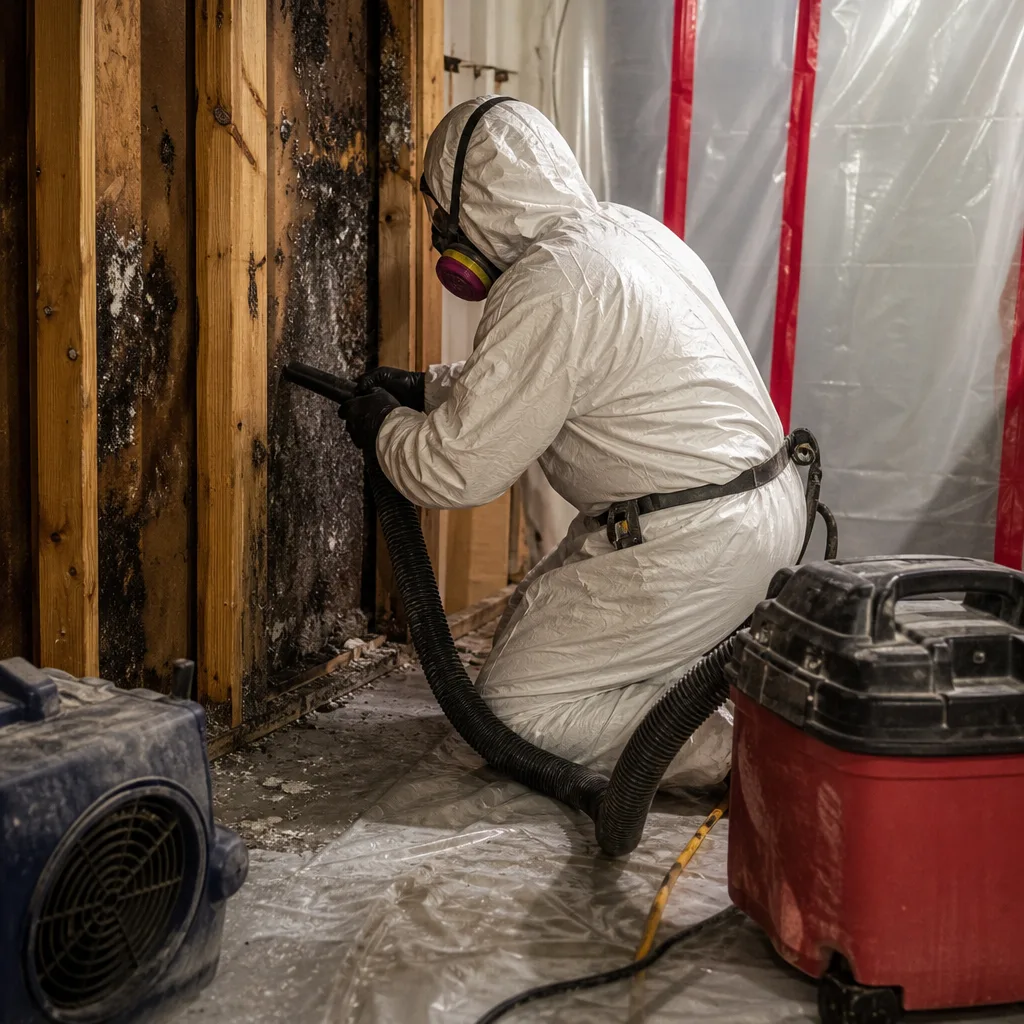
Business Interruption Minimization
Every hour a Woodhaven storefront is closed costs revenue. Our job is to shorten that closure legally and safely. We extract and dry in the shortest defensible timeline, document every step for your business interruption claim, and give your adjuster the drying logs and photos that support the loss-of-income filing.
What happens when you call
- 1
A real person answersNo phone trees - you reach a local pro.
- 2
You get an upfront price rangeHonest numbers before anyone is dispatched.
- 3
A background-checked tech heads outLicensed & insured, dispatched right away.
- 4
You approve before work beginsNothing starts until you say go.
Commercial Restoration Costs in Woodhaven, NY
Commercial restoration pricing in Woodhaven depends on the loss category, the square footage, and whether a party wall is involved. A typical single-storefront Category 1 water extraction and drying job along Jamaica Avenue runs $3,200 to $6,800. A Category 2 or 3 sewage backup that crosses a shared wall and requires containment, antimicrobial treatment, and partial demolition in a two-family row house runs $9,500 to $21,000. Fire and smoke restoration with heavy soot on structural framing and full repainting of a storefront commonly lands between $18,000 and $45,000, depending on the finish level.
Insurance covers most sudden losses; the deductible and coverage limits are the variables. For uninsured or below-deductible work, we offer honest line-item pricing, and the three standing Floodline offers apply: $50 off any repair over $250, the $89 seasonal tune-up, and a 5% senior and veteran discount, always. The free visual inspection is the path to a firm written scope. Call (917) 924-4221 and we’ll come look, assess, and hand you a number in writing before any billable work begins.
We Also Serve Cities Near Woodhaven
Our commercial restoration crews work the full Queens corridor around Woodhaven, including Ozone Park, Richmond Hill, Kew Gardens, and South Richmond Hill. If your building sits near the neighborhood line, the same live dispatch, the same 45-minute response commitment, and the same written scope apply.
Serving Woodhaven, NY - Our Local Coverage Area
We’re based in the Woodhaven area and know this community well. Use the map below to see our service coverage - if you’re nearby, we can almost certainly help.
Woodhaven Commercial Restoration Questions, Answered
How do you handle a commercial water loss in a Woodhaven storefront when the adjacent unit shares a party wall and the damage crosses the property line?
We treat it as a two-unit loss from the first visit. Our crew sets containment on both sides of the party wall, takes moisture readings on the shared brick wythe before drying begins, and documents saturation on the neighbor’s side. We coordinate with both insurance carriers so each side has its own photos, moisture log, and scope, and neither owner is left negotiating someone else’s claim. Call (917) 924-4221 for an exact quote; the inspection is free.
My Woodhaven building was built in the 1920s and still has original cast-iron drain lines. What does that mean for black water cleanup after a sewer backup?
It means the cleanup extends beyond the visible water. Original cast-iron lines corrode from the inside, and a sewer backup through them often leaves behind contamination and degraded pipe scale. Category 3 water requires removal of saturated porous materials, professional antimicrobial treatment, and sometimes partial replacement of the failed drain line before we finish. We will document everything for your carrier and bill them directly.
Can you dry out a finished basement in a Woodhaven row house without tearing out the neighbor’s side of the party wall?
Yes, but only if we catch the moisture before mold takes hold and the neighbor allows access. We use penetrating moisture meters to map saturation on both sides of the shared wall. If the neighbor’s side reads wet, we need access to place drying equipment or we can drill small monitoring ports (with permission) to confirm the wall is drying. Skipping this step almost guarantees the “dry” side re-wets within 48 hours. Call us at (917) 924-4221 and we’ll walk the full scope with you.
How quickly can you respond to a commercial water loss on Jamaica Avenue when parking and alley access are tight?
We commit to a 45-minute response in the Woodhaven area, including the Jamaica Avenue commercial corridor. Our crews arrive in a single truck sized for tight parking, run hoses through rear alleys or narrow stairwells, and stage equipment to fit the space. A live dispatcher takes the call day or night. The sooner we start, the less water migrates through shared walls and the less flooring we have to remove.
What documentation do you provide for a multi-unit HOA restoration where several row houses along the same block are affected by a single sewer backup?
We provide per-unit documentation: photos of the loss room by room, moisture readings from every affected surface, daily drying logs, and a line-item scope for each address. The HOA gets a block-level summary showing the shared cause and the shared response. Each unit’s carrier gets its own file. We bill each carrier directly and coordinate with every adjuster involved. Call (917) 924-4221 and we’ll set up the assessment.
How long does commercial drying take in a pre-war Woodhaven brick building?
Most single-storefront water losses in Woodhaven’s brick row houses dry in 3 to 5 days when we start within hours of the leak. Category 3 sewage backups take longer because of demolition and sanitization, often 5 to 10 days before rebuild starts. Brick cavity walls are the variable: they hold moisture longer than framed walls, and we do not stop drying until the moisture log shows the shared wall is dry on both sides, not just the affected unit.
Are your technicians certified, and what does that actually mean for my building?
Our crews hold IICRC certifications in water damage restoration (WRT), fire and smoke restoration (FSRT), and applied microbial remediation (AMRT). They train to RIA and IFA standards, are background-checked, and wear uniforms on every job. For you, it means the person in your storefront understands moisture mapping, containment, and drying science, not just how to run a fan. They will hand you a moisture log and explain every reading.
What should I do in the first 30 minutes after a commercial water loss in Woodhaven?
Shut off the water source if you can do so safely. Kill power to the affected area if water is near outlets or a panel. Move stock, files, and electronics out of the water’s path. Then call (917) 924-4221. Do not run a shop vac on sewage or try to dry a Category 3 loss yourself; contaminated water spreads faster than it dries. A live dispatcher will answer and a Woodhaven-bound crew will be moving within the hour.
Written by Curt Bowman, Owner at Floodline Restoration Co. of Manhattan, serving Woodhaven with commercial restoration and full-cycle rebuild since 2010.