
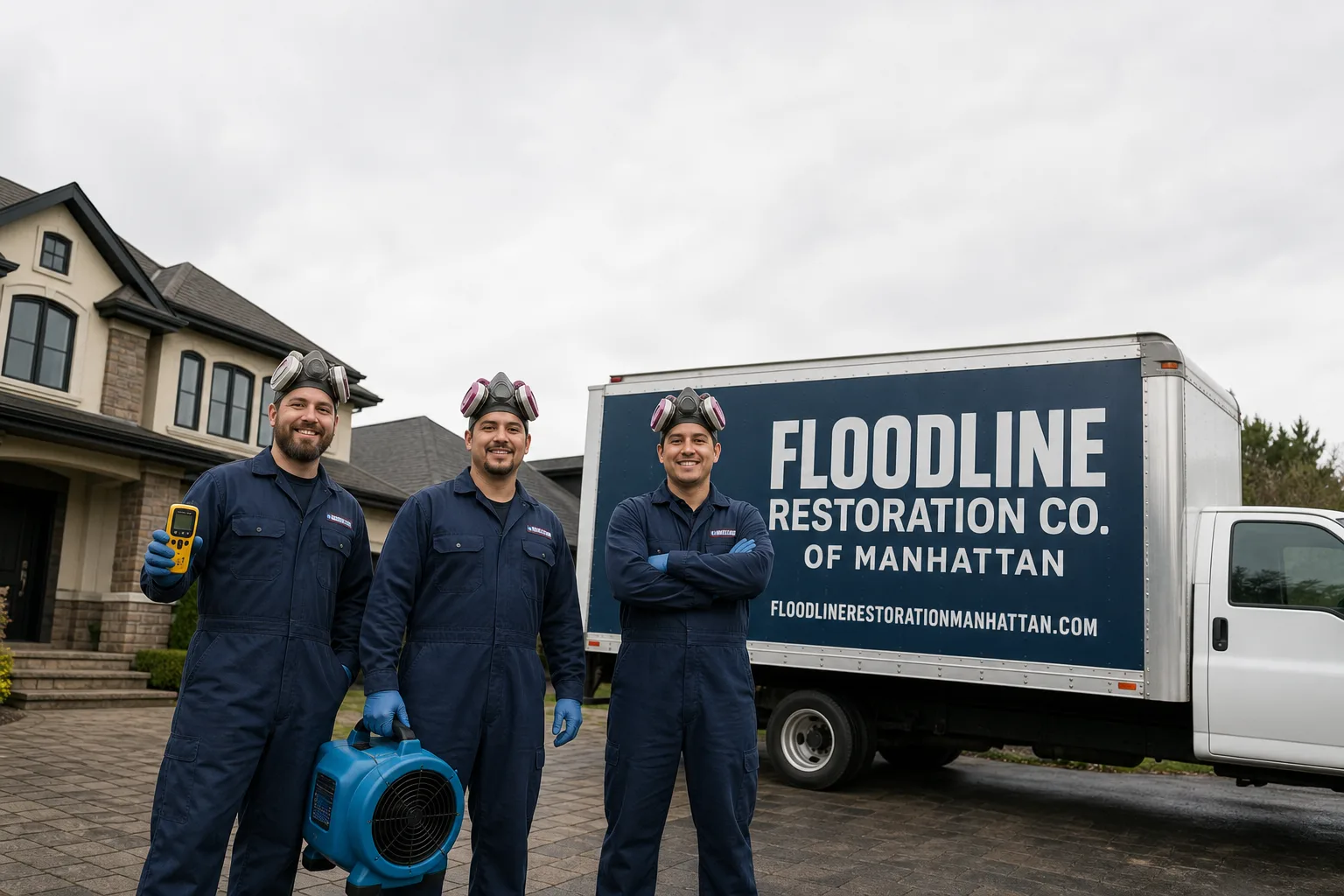
Free visual inspection and a written scope of work before any mitigation begins - photos, moisture readings, and drying logs go in your claim file
The scope we write is the scope we bill. Anything new gets shown to you, in writing, before we touch it.






 Before
 After
After Before
 After
After Before
 After
After24/7 Emergency Fire & Smoke Damage Restoration in Chappaqua
A house fire in Chappaqua rarely stops at the burn line. Smoke pushes through plaster walls, soot settles into century-old millwork, and the water used to knock the fire down soaks into oak flooring and stone foundations. Floodline Restoration Co. of Manhattan answers the phone with a live dispatcher at any hour, including 2 a.m., and crews are dispatched into the Chappaqua area immediately. We perform a free visual inspection, document every surface, and start mitigation the same visit. The first hour matters because acidic soot begins etching glass and metal within days, and smoke odor sets permanently into porous wood faster than most homeowners realize. Call (917) 924-4221 now. We’ll be there when we say.
Understanding Fire & Smoke Damage Restoration Severity in Chappaqua Properties
Not all fire damage behaves the same way, and Chappaqua’s housing stock makes severity assessment more complicated than in newer suburbs. Light smoke damage may leave only a film on walls and a persistent odor. Moderate damage involves soot residues driven into plaster pores, insulation, and ductwork. Severe losses include structural charring, compromised framing, and water from fire suppression that has saturated plaster-and-lath assemblies. We identify three soot types on site: dry protein soot from kitchen fires, which is invisible but aggressively odorous; oily fuel soot from furnace puffbacks, which smears if wiped incorrectly; and wet smoke residue from slow-burning or extinguished fires, which bonds to surfaces and requires chemical lifting. In Chappaqua center-hall colonials and stone-foundation estates built between 1910 and 1960, smoke migrates through original plaster-and-lath walls differently than drywall. It travels along stud cavities, through balloon-framed wall runs common in pre-1940 construction, and into attic spaces under slate or clay-tile roofs. Thermal imaging and moisture mapping tell us where suppression water pooled inside wall cavities, because plaster dries far slower than drywall and hidden moisture becomes a mold problem inside 48 hours. The severity question is never answered by the first room we see. It is answered by what we find inside the walls.
Why Chappaqua Property Owners Choose Floodline Restoration Co. of Manhattan
- 45-minute response commitment. From the moment you call, our Chappaqua-bound crew is selected and rolling. We do not schedule you for tomorrow when your plaster is still wet tonight.
- 24/7 live answer, always a person. No automated systems. A real dispatcher picks up at any hour and starts coordinating equipment for your address.
- IICRC-certified crews, trained to FSRT standards. Our technicians hold IICRC Fire & Smoke Restoration Technician certification and work under RIA protocols. The people in your home are background-checked and uniformed.
- Free visual inspection. We assess the loss, document it with photos, and give you a straight read on what must happen now and what can wait.
- Direct insurance billing. We communicate directly with your adjuster and carrier. You do not carry messages between Floodline and the insurance company.
- One team from extraction to reconstruction. The same crew that reads the moisture map on day one handles daily readings, hands you the drying log, and rebuilds what needs rebuilding. No handoff, no inherited crew.
Our Fire & Smoke Damage Restoration Process
Inspection & Assessment
We walk the full loss with you, including attic spaces and the sill plate line. Thermal imaging locates heat-compromised framing, and moisture mapping tracks suppression water through plaster assemblies. You receive a written scope before work starts.
Stabilization & Board-Up
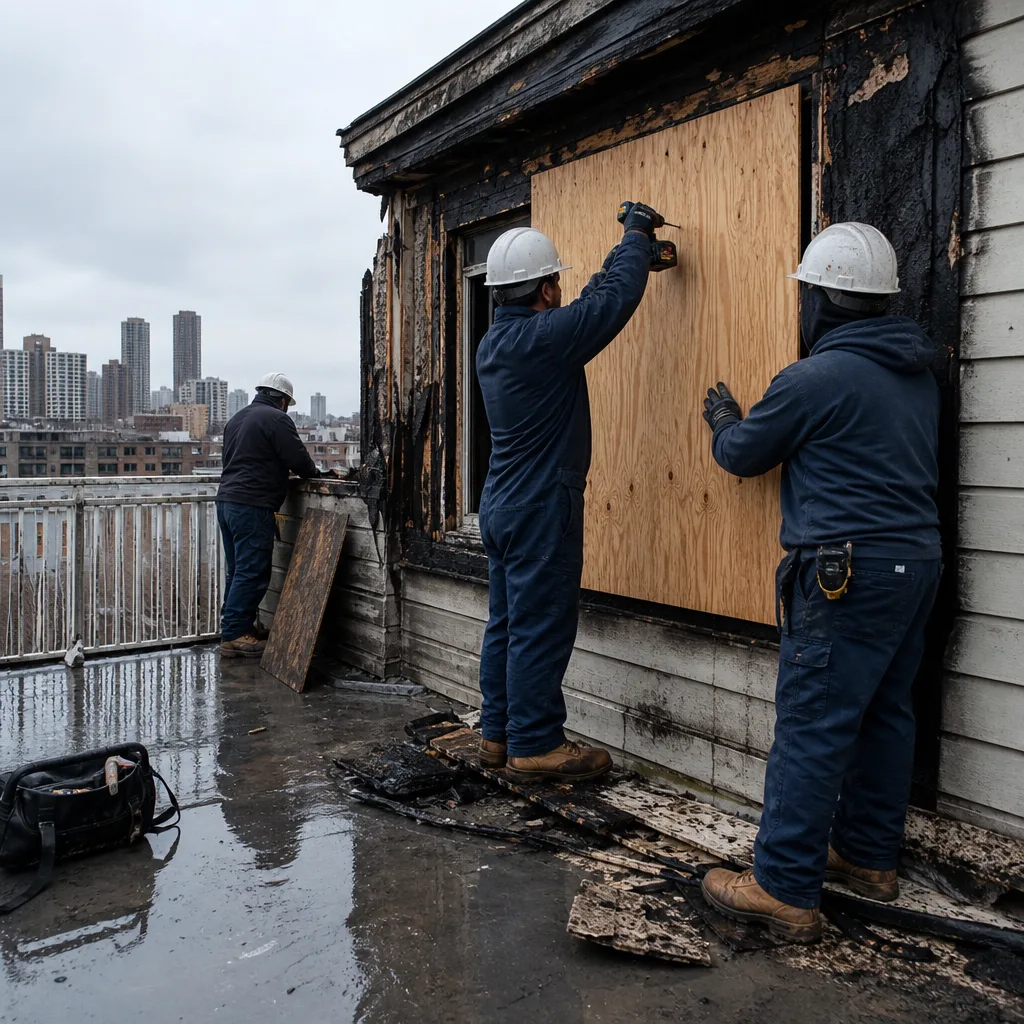
Damaged windows, roof penetrations, and compromised openings get sealed with impact-rated plywood and heavy tarping. In Chappaqua, where mature oaks overhang most rooflines, this step prevents wind-driven rain and embers from turning a contained loss into a structural one.
Soot & Residue Removal
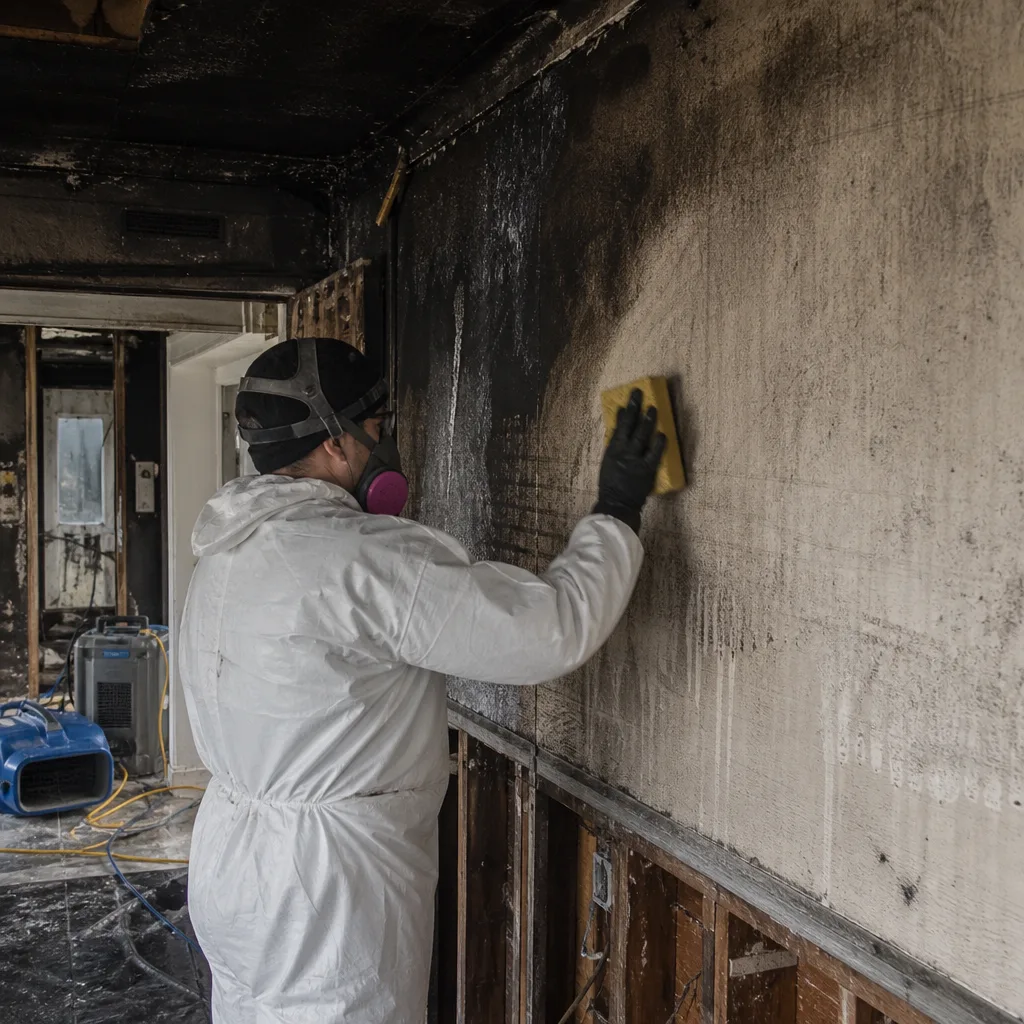
Dry chemical sponges open plaster pores so HEPA vacuums can pull soot out rather than smear it. Oily residues get lifted with appropriate solvents. We protect unaffected surfaces before any cleaning begins.
Odor Removal & Deodorization
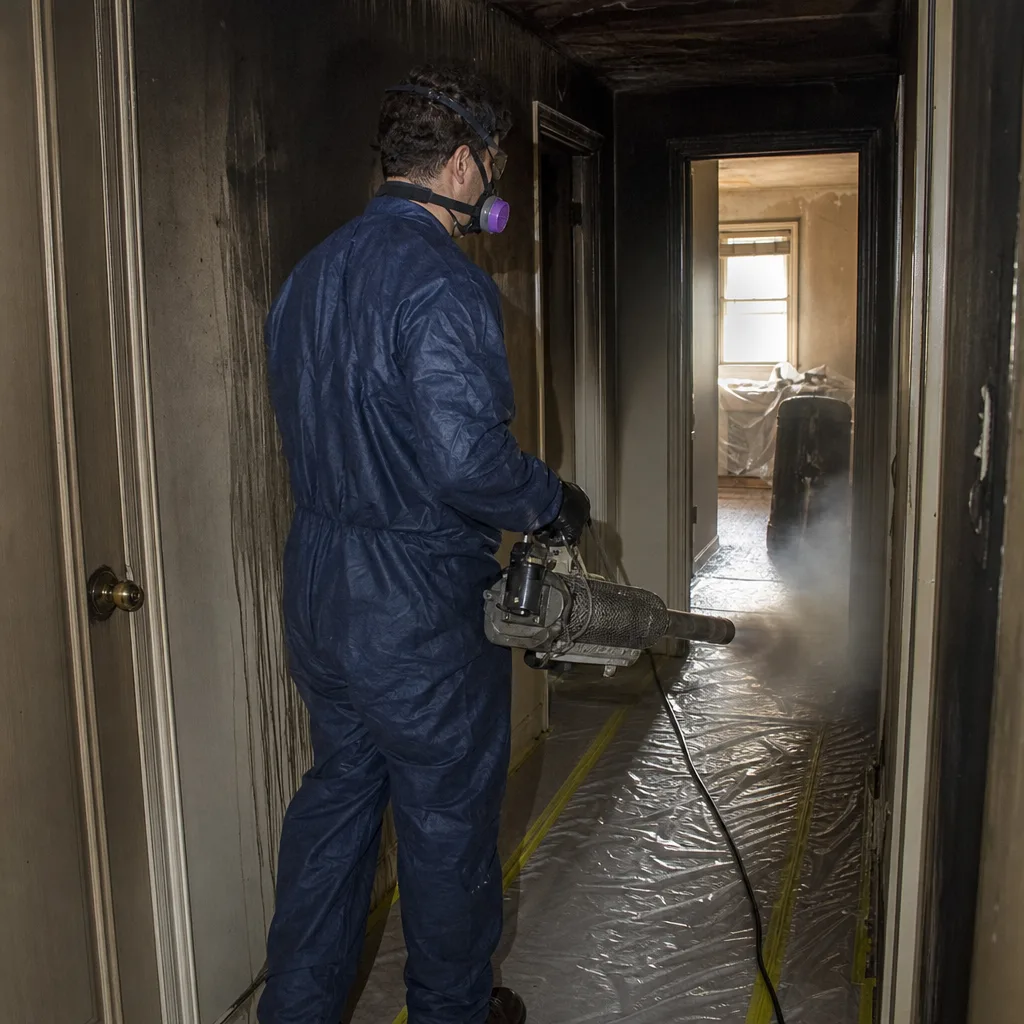
Hydroxyl generators and ozone treatments run in sealed areas to break down odor molecules embedded in century-old millwork, built-ins, and plaster. Generic deodorizers mask. We remove.
Structural Drying
Suppression water in plaster-and-lath walls dries on a different timeline than drywall. Dri-Eaz dehumidifiers and Phoenix air movers run continuously with daily hygrometer readings logged until the dry standard is verified.
Repairs & Restoration
Period-appropriate plaster repair, matching original finish coats, refinishing hardwood and millwork, and rebuilding what fire compromised. Every job ends with our 90-Day Done Right Promise in writing. If it’s not done right, we make it right.
Need Emergency Fire & Smoke Damage Restoration in Chappaqua Now?
Crews minutes away, answering live 24 hours a day. The sooner we start, the less it costs.
Working With Your Insurance Company
Insurance claims after a fire in Chappaqua hinge on documentation quality. The adjuster needs to see what the pre-loss condition was, what the smoke actually touched, and what the water from suppression did afterward. We start documenting from the first hour: photos of every room, moisture readings from wall cavities, a line-item scope of work written in the same language carriers use. Our team coordinates directly with your adjuster, sends the drying log to your carrier, and bills the carrier directly for covered work. You do not stand between Floodline and the insurance company arguing about scope. That argument is ours to handle, and we have been doing it for over 42 years as a company. We do not inflate estimates, and we do not cut corners to fit a carrier’s preference. The written scope governs.
What We Provide Your Insurer
- Thorough documentation of the loss
- Photos of all damage, room by room
- Moisture readings and drying logs
- A detailed, line-item scope of work
- Direct coordination with your carrier
Built for Chappaqua’s Loss Calendar
Fire and smoke losses in Chappaqua follow a rhythm that locals know but restoration contractors from outside the area often miss. January and February bring furnace stress failures and chimney fires in homes that heat on oil and burn wood in original fireplaces. The mature tree canopy that gives Chappaqua its character also drops heavy branches onto power lines during winter storms, triggering electrical faults that smolder inside walls for hours before anyone notices. Spring thaw along the Saw Mill River watershed saturates basements and puts sump pumps on overtime, and soaked wiring in older panels becomes a genuine ignition source. Summer thunderstorms bring lightning strikes to tall oaks and maples near rooflines, and wind-driven embers from a neighbor’s grill or fire pit can settle into dry soffit material. Nor’easter season from November through March is the busiest: power flickers, generators run hot, and portable heaters get placed too close to drapes in drafty prewar houses. We stock response trailers for this calendar, not a generic one.
Fire & Smoke Damage Restoration Across Chappaqua’s Neighborhoods
Response routes matter when you are running a board-up at midnight in a storm. From the Saw Mill River corridor up through Quaker Road and King Street, we know which roads flood first, which hilly stretches ice over, and which access points get blocked by downed limbs. Homes in the Douglas Road and Hardscrabble Road corridors sit on large wooded lots with long driveways that slow down lesser crews. We pre-stage our trucks for this reality. The Whippoorwill area near the eastern edge of town has steep grade changes and close-grown canopy that complicates ladder work and roof tarping. Along Seven Bridges Road, the winding access and stone walls framing the road require careful equipment positioning. In the center of Chappaqua near the train station, older colonials sit closer together, which means a fire in one house threatens neighbors directly with radiant heat and smoke migration. Each neighborhood demands a different board-up and mitigation approach, and our crews know the difference without being told.
Specialized Fire & Smoke Damage Restoration Services We Offer in Chappaqua
Emergency Board-Up & Tarping
After a fire, a Chappaqua house with a breached roof or missing window is one storm away from a second loss. Our crews arrive with impact-rated plywood, heavy-duty tarps, and the fasteners needed for slate and clay-tile roof fields. Board-up is not a temporary patch job. It is the structural boundary that keeps wind-driven rain, embers, and animals out until permanent repairs are scoped.
Smoke & Soot Removal
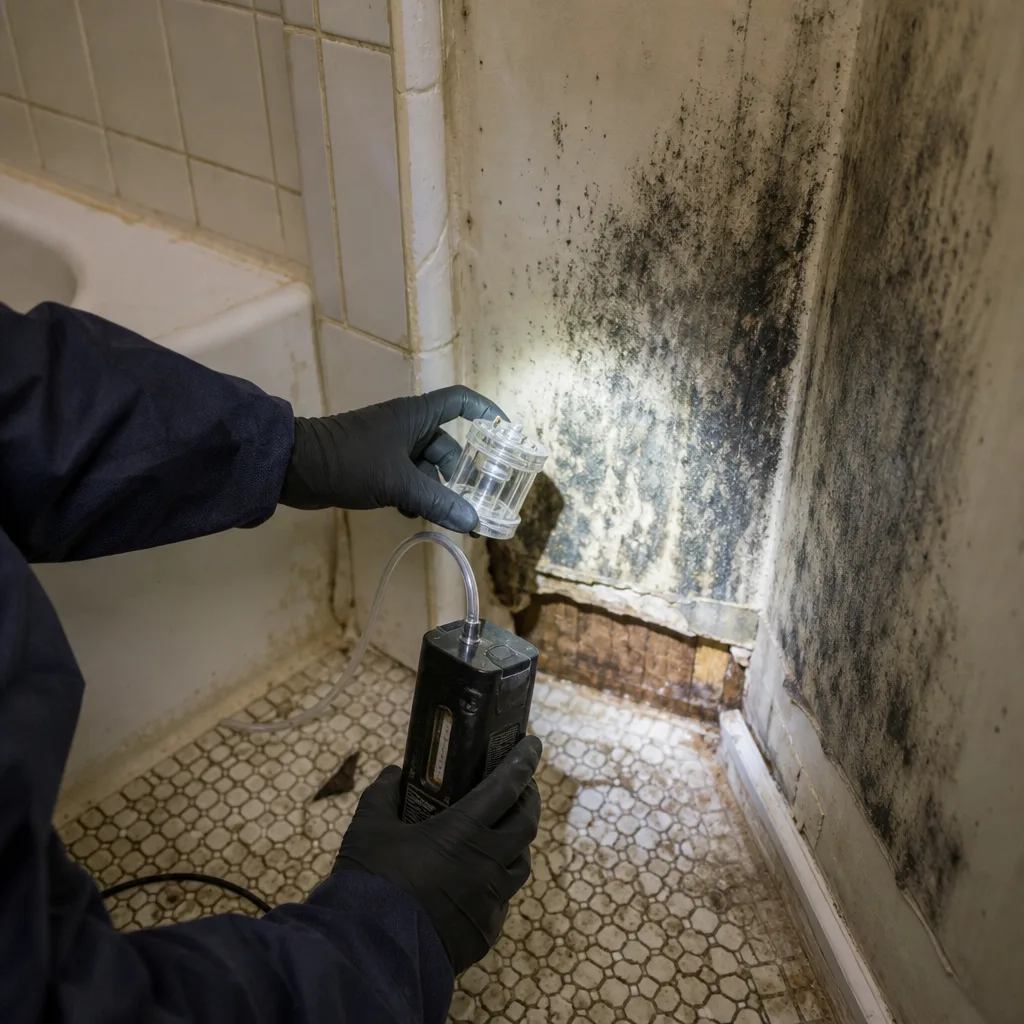
Soot on plaster-and-lath behaves differently than soot on drywall. The porous lime-based finish absorbs residue deep into the surface, and aggressive wiping drives it further in. We use dry chemical sponges and HEPA extraction first, then move to appropriate wet methods only where the surface can tolerate it. In homes with original crown moldings, carved mantels, and coffin ceilings, this sequencing is the difference between restoration and a ruined finish.
Odor Removal & Deodorization
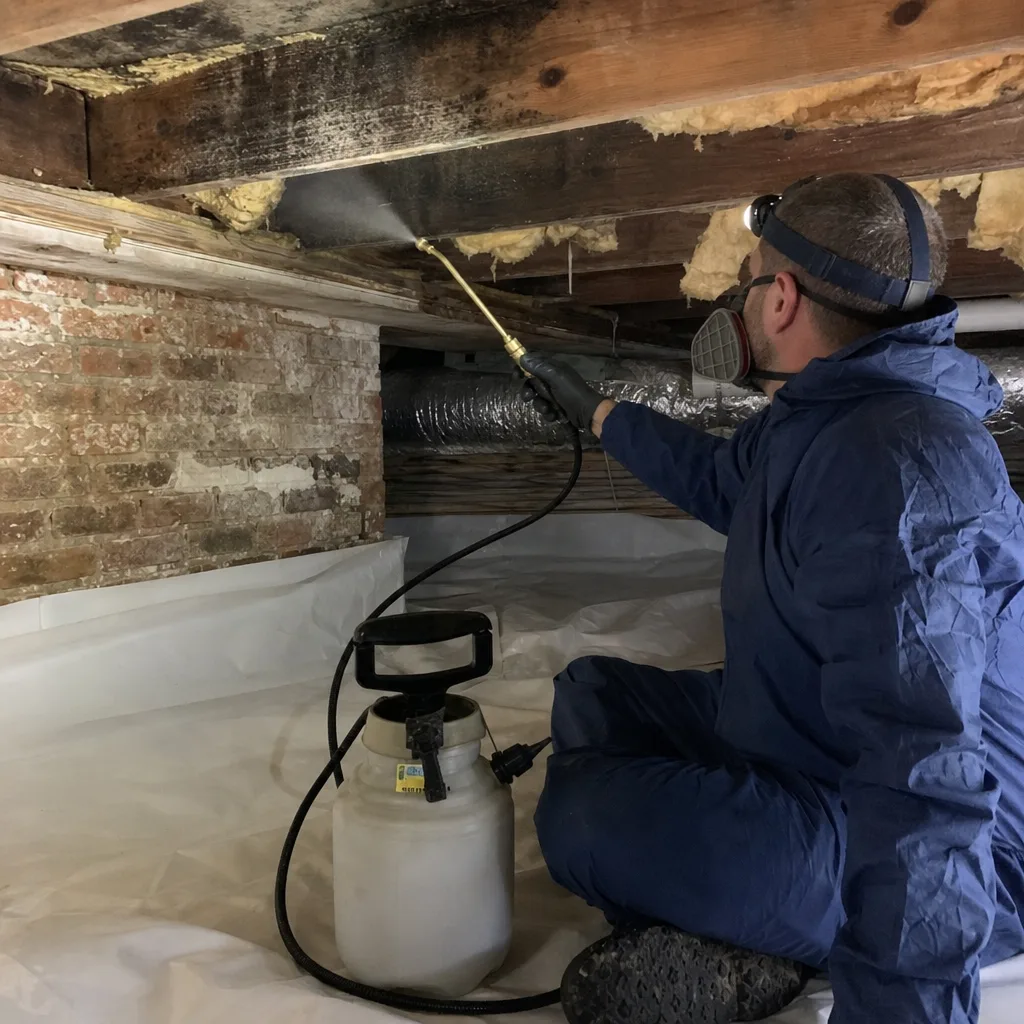
Smoke odor does not leave on its own. It embeds in unfinished wood inside walls, in attic framing, in the felt lining of drawers, in books, and in the insulation layer above plaster ceilings. We deploy hydroxyl generators and ozone treatments in contained spaces, paired with sealed-area air scrubbing. On century-old millwork and custom built-ins, we do not mask with fragrance. We oxidize the odor molecules and verify with your nose before we case the job closed.
Contents Cleaning & Pack-Out
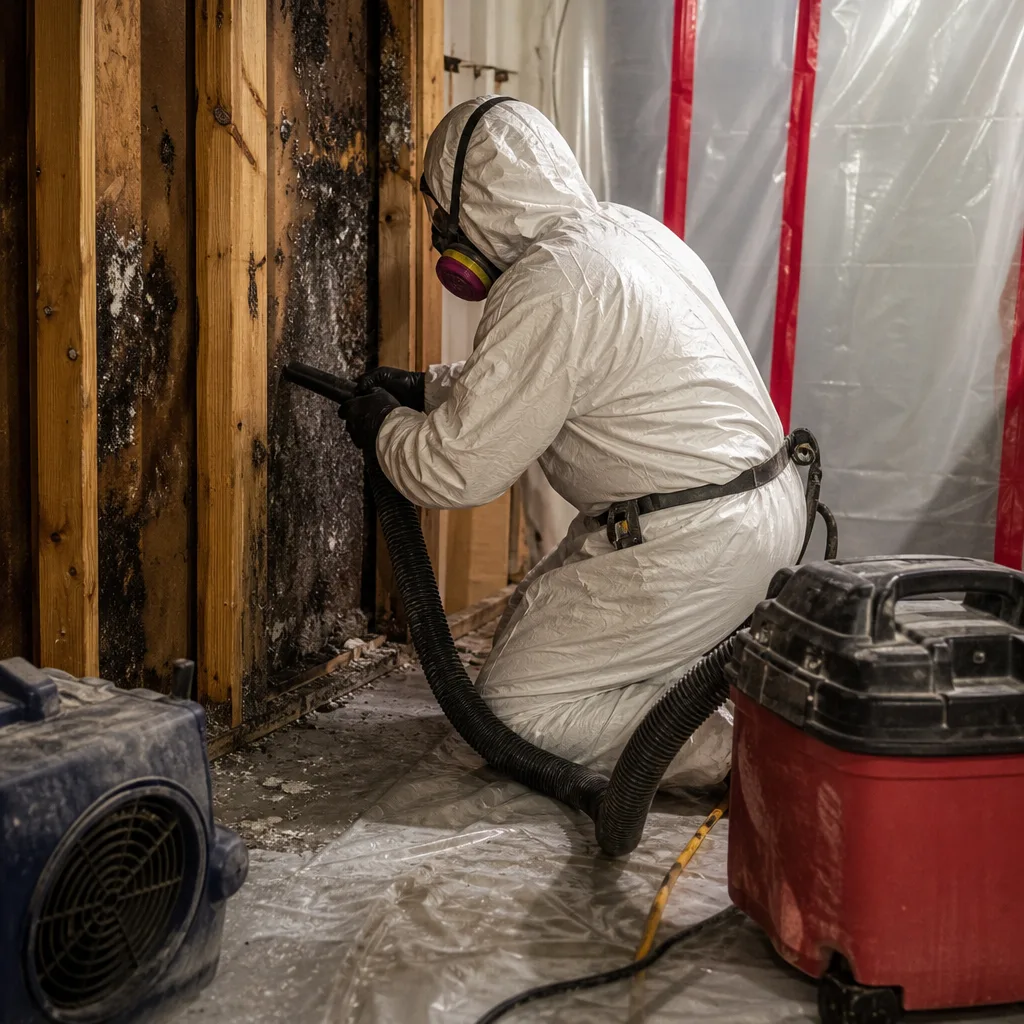
Clothing, upholstery, papers, and art in a Chappaqua house fire need more than a wipe-down. We inventory what can be restored on site and what needs pack-out to our cleaning facility. Each item gets documented, cleaned with appropriate methods, and returned. For smoke-damaged paperwork and books, we coordinate specialist conservation cleaning where warranted.
Emergency Board-Up & Tarping
Already covered above, but worth saying plainly: board-up is the service that stops a bad night from becoming a full rebuild. If you have a hole in the roof from a fallen oak and smoke still moving through the second floor, call us before the next front moves through.
Structural Fire Repair
Charred framing, compromised beams, and smoke-damaged sheathing get repaired to code, not cosmetically covered. For Chappaqua’s older homes, this means working with the town’s building department where permits are required, matching period framing dimensions, and preserving original materials wherever salvageable. We rebuild the way the house was built, not the way a drywall crew would.
What happens when you call
- 1
A real person answersNo phone trees - you reach a local pro.
- 2
You get an upfront price rangeHonest numbers before anyone is dispatched.
- 3
A background-checked tech heads outLicensed & insured, dispatched right away.
- 4
You approve before work beginsNothing starts until you say go.
Fire & Smoke Damage Restoration Costs in Chappaqua, NY
Chappaqua pricing runs higher than county averages because the houses are older, larger, and finished with materials that cost real money to match. A full fire and smoke cleanup on a 4,000-square-foot colonial typically runs $12,000 to $35,000 depending on how far smoke migrated and how much of the finish needs restoration. Smoke and soot removal alone on a contained kitchen fire lands between $3,500 and $8,500. Odor removal with hydroxyl or ozone treatment runs $1,800 to $6,000 depending on square footage and how many contained areas are needed. Emergency board-up and tarping runs $900 to $4,500 on the same visit, depending on openings and roof complexity. Contents pack-out and cleaning adds $2,500 to $15,000. The price moves most on three things: square footage of smoke migration, how much plaster needs period-appropriate repair, and whether structural framing needs rebuilding. Many wildfire, furnace, and chimney claims are covered by standard homeowner policies. The free inspection gives you a line-item scope before you commit to anything.
We Also Serve Cities Near Chappaqua
Our crews respond daily across northern Westchester. We also provide fire and smoke damage restoration in Millwood, Pleasantville, Mount Kisco, and Thornwood. Same live-answer phone, same 90-Day Done Right Promise, same crew from board-up to rebuild.
Chappaqua Fire & Smoke Damage Restoration Questions, Answered
How does Chappaqua’s tree canopy affect fire and smoke damage restoration after a storm?
Chappaqua’s mature oaks and maples mean every storm can turn a contained fire into a structural event. Wind-driven embers from nearby burning branches, downed limbs hitting chimneys, or a tree through the roof all carry fire beyond the original room. We board up first and assess second, because overhanging branches keep the exposure live until the opening is sealed. The canopy also shades roof sections, which slows natural drying after fire suppression water saturates the attic assembly.
What special considerations apply to smoke-damaged plaster-and-lath walls in older Chappaqua homes?
Plaster-and-lath absorbs soot and smoke odor far deeper than drywall, and it dries much slower after fire suppression water. Using drywall-standard repair techniques leaves visible seams, texture mismatches, and waves in high-ceilinged rooms. We match the original finish coat, often working with lime-based materials, and we verify the wall is actually dry before any repair work starts. Skipping the drying step means mold inside the wall within 48 hours.
Can you restore smoke-damaged custom millwork and built-ins in a Chappaqua colonial without replacing them?
Usually yes. Original built-ins, carved mantels, and solid hardwood millwork are often salvageable even after heavy smoke exposure. The method is dry soot lifting with chemical sponges, HEPA vacuuming of the wood grain, controlled hydroxyl or ozone treatment, and refinishing where the original finish has been etched. Replacement is a last resort, and we tell you straight when salvage is not worth the cost.
Does Chappaqua require special permits for fire damage structural repairs on older homes?
Structural repairs after fire damage generally require a Chappaqua building permit, and work on homes in designated historic districts or with locally protected architectural features may involve additional review. We handle permit paperwork and coordinate directly with the town’s building department. You get a scope of work that matches what the permit requires before any structural repair begins.
How quickly can you board up a Chappaqua home after a fire to prevent further storm damage?
We commit to a 45-minute response once you call, and board-up starts the same visit. The board-up is never a next-day service. We carry impact-rated plywood, heavy tarps, and the right fasteners for slate, clay-tile, and asphalt shingle roof fields on the truck, so the work happens when we arrive, not after a trip back to a warehouse.
How fast can someone actually get to my house in Chappaqua?
We dispatch from our New York City office the moment you call, and our Chappaqua-bound crews are typically at your door within 45 to 60 minutes depending on exactly where you are in town and road conditions. On Quaker Road, Hardscrabble Road, or Seven Bridges Road during a storm, we account for downed limbs and flooding on the access route. The dispatcher on the phone will give you a realistic window, not a promise we cannot keep.
Will my insurance cover fire and smoke damage restoration in Chappaqua?
Standard homeowner policies in New York generally cover fire, smoke, and the water used to suppress the fire. What varies is how much the carrier will pay for period-appropriate restoration versus generic replacement. We document the pre-loss condition, photograph every surface, and write the scope in the line-item format carriers expect. We bill directly and coordinate with your adjuster so you are not the one arguing about matching your original millwork.
Do I really need full restoration or just a cleaning after a small fire in Chappaqua?
That depends on what the smoke actually touched and how far it migrated. A contained kitchen fire with smoke that stayed in one room may only need cleaning, deodorization, and repainting prep. A fire that pushed smoke through plaster wall cavities into the second floor or attic needs more. Our free inspection includes thermal imaging and moisture mapping, so you see evidence for the scope, not a sales pitch. We only recommend what the data supports.
Serving Chappaqua, NY - Our Local Coverage Area
We’re based in the Chappaqua area and know this community well. Use the map below to see our service coverage - if you’re nearby, we can almost certainly help.
One More Thing About Chappaqua’s Tree Canopy
Chappaqua’s unusually dense mature-tree canopy on large, hilly lots creates a dual damage threat rare even within Westchester. Nor’easters and summer thunderstorms routinely bring down massive old-growth oaks and maples onto roofs and walls, while low-lying areas along the Saw Mill River corridor are repeatedly hit by flash flooding after heavy rain events. A modest chimney fire or electrical blaze can quickly become a structural event when wind-driven embers ignite overhanging branches, and that risk profile is distinct from neighboring towns with newer, flatter, less-wooded development. Restoration contractors working here must be equipped for high-end structural rebuilds on century-old estate homes and rapid water mitigation in the same ZIP code. That combination sets Chappaqua apart, and it is exactly the combination our Fire & Smoke Damage Restoration team trains for.
After a Nor’easter brought an 80-year-old oak through the slate roof of a center-hall colonial on Hardscrabble Road, our crew performed emergency board-up with impact-rated plywood and tarping before smoke and soot could spread through the original plaster-and-lath walls. We then deployed HEPA air movers and hydroxyl generators for odor removal, and used moisture mapping to confirm that no water had migrated into the insulation, allowing us to preserve the home’s pre-loss condition without unnecessary tear-out. That is the standard we bring to every Chappaqua call.
If your home has smoke in the walls and a storm in the forecast, call (917) 924-4221 now. The line between a cleanup and a rebuild is drawn in the first hours, not the first week. We stand behind the work in writing, with the 90-Day Done Right Promise in your hands.
Written by Curt Bowman, Owner at Floodline Restoration Co. of Manhattan.