

Free visual inspection and a written scope of work before any mitigation begins - photos, moisture readings, and drying logs go in your claim file
The scope we write is the scope we bill. Anything new gets shown to you, in writing, before we touch it.


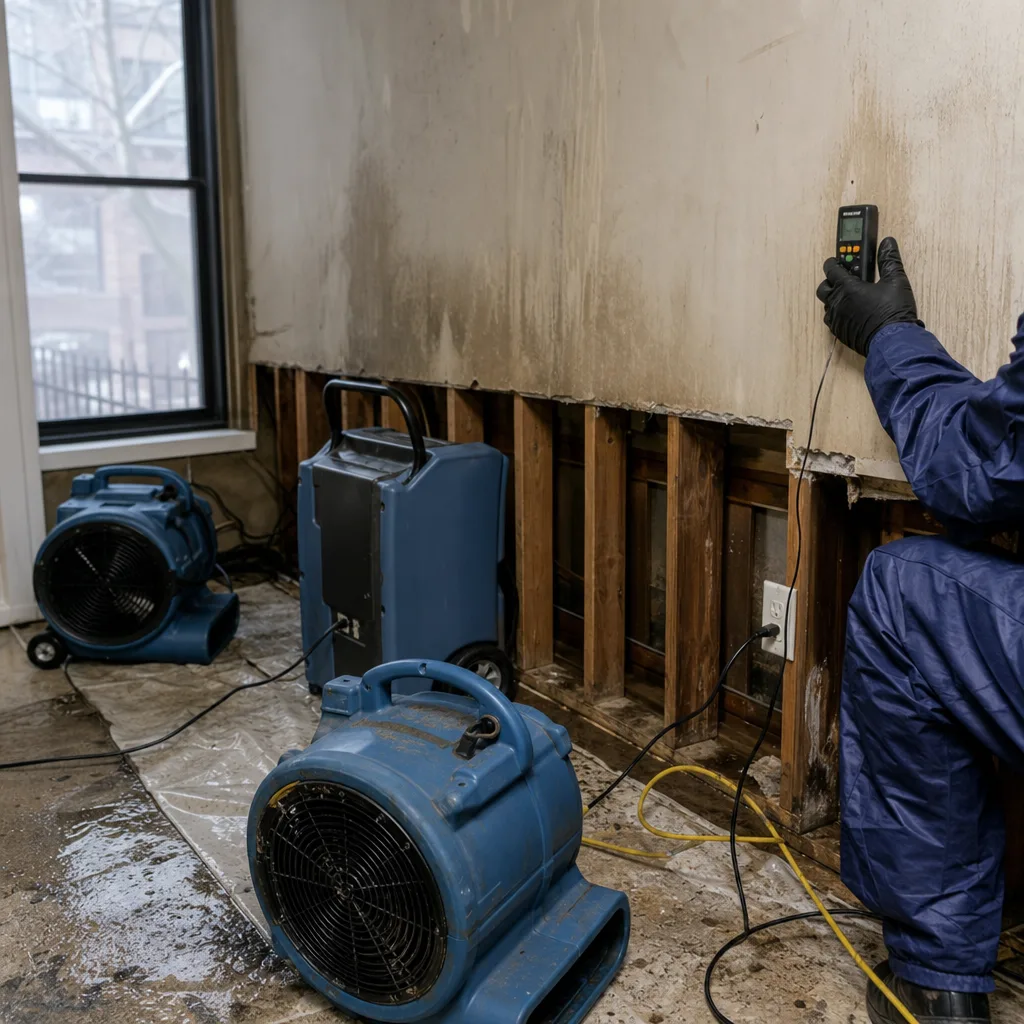 Before
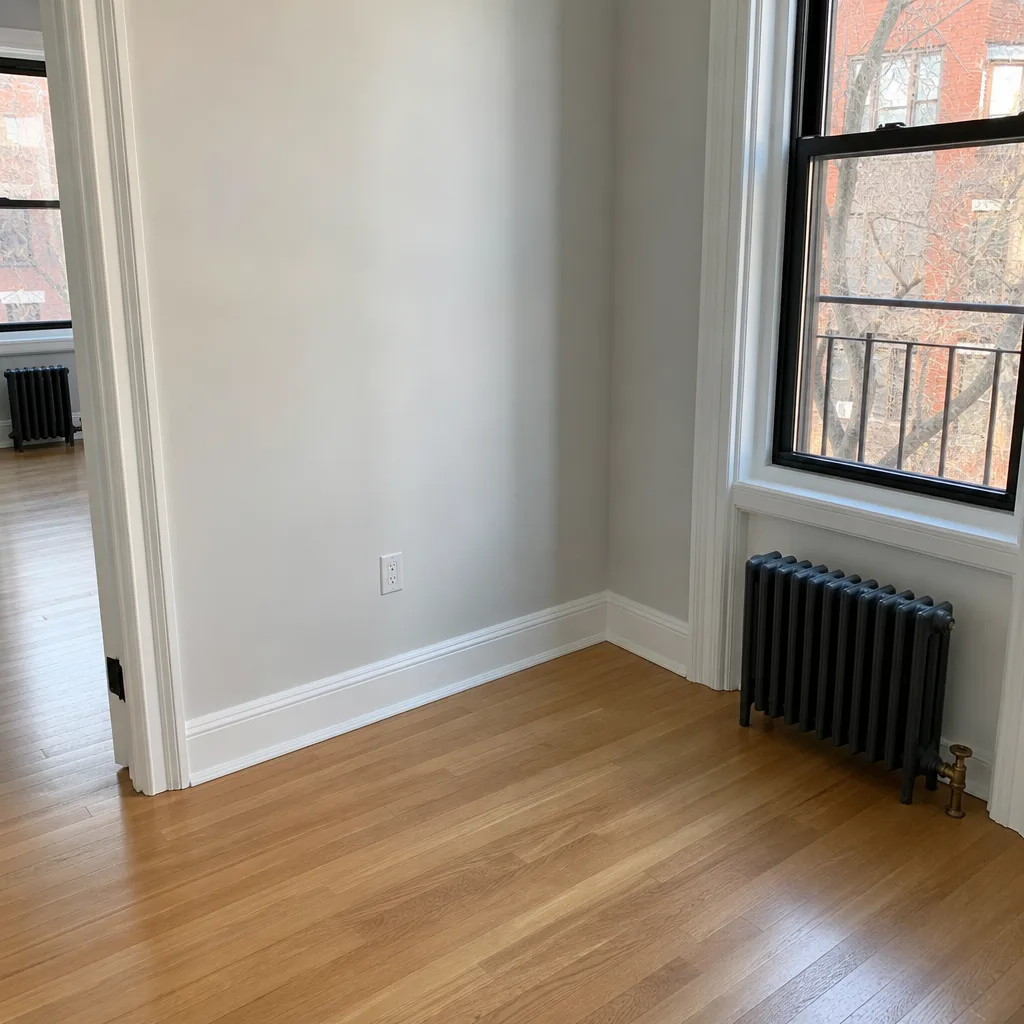 After
After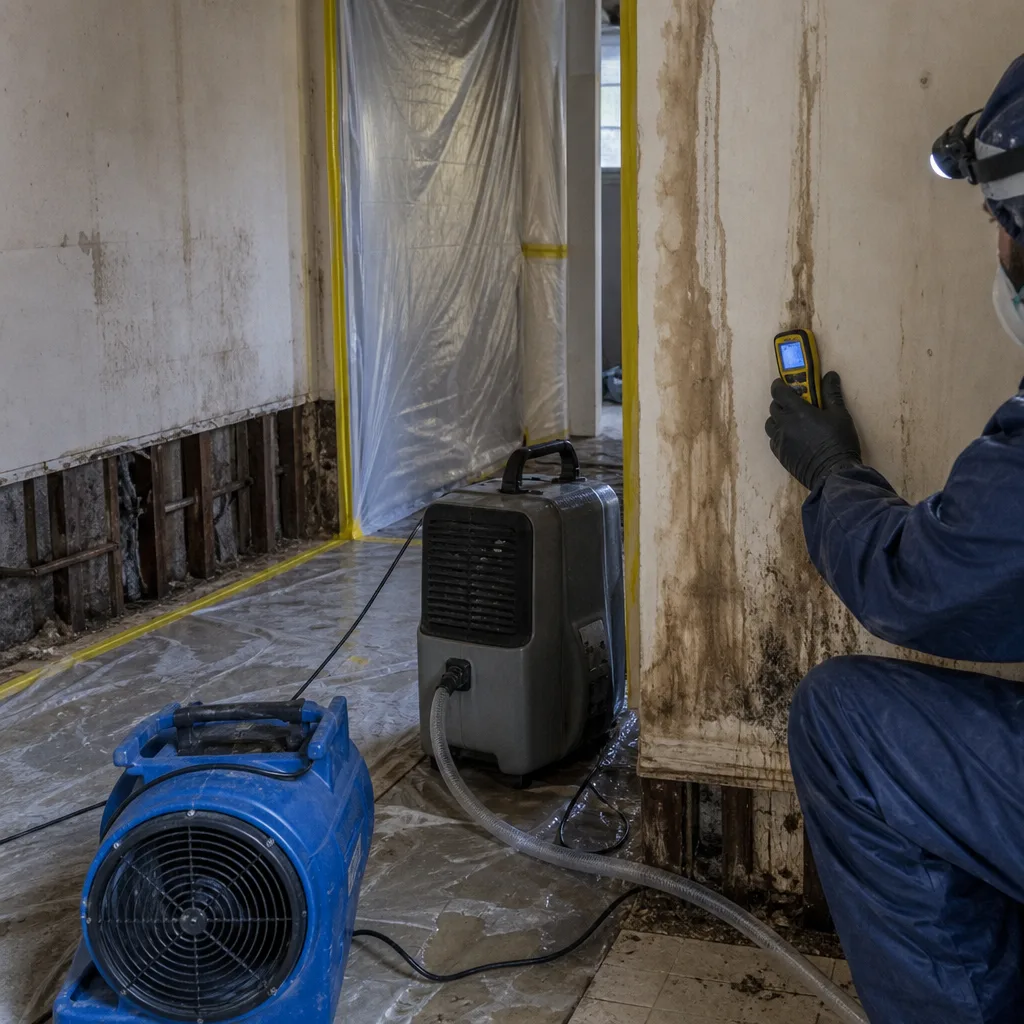 Before
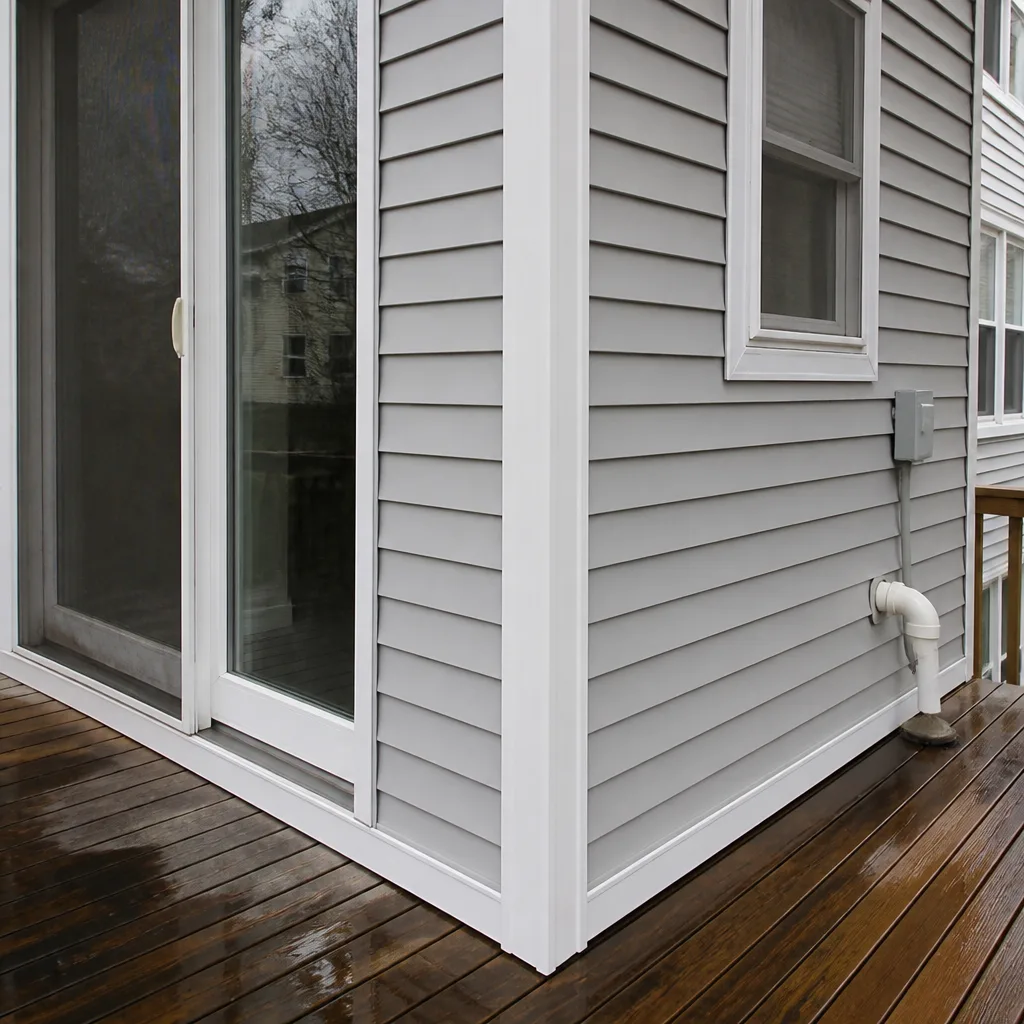 After
After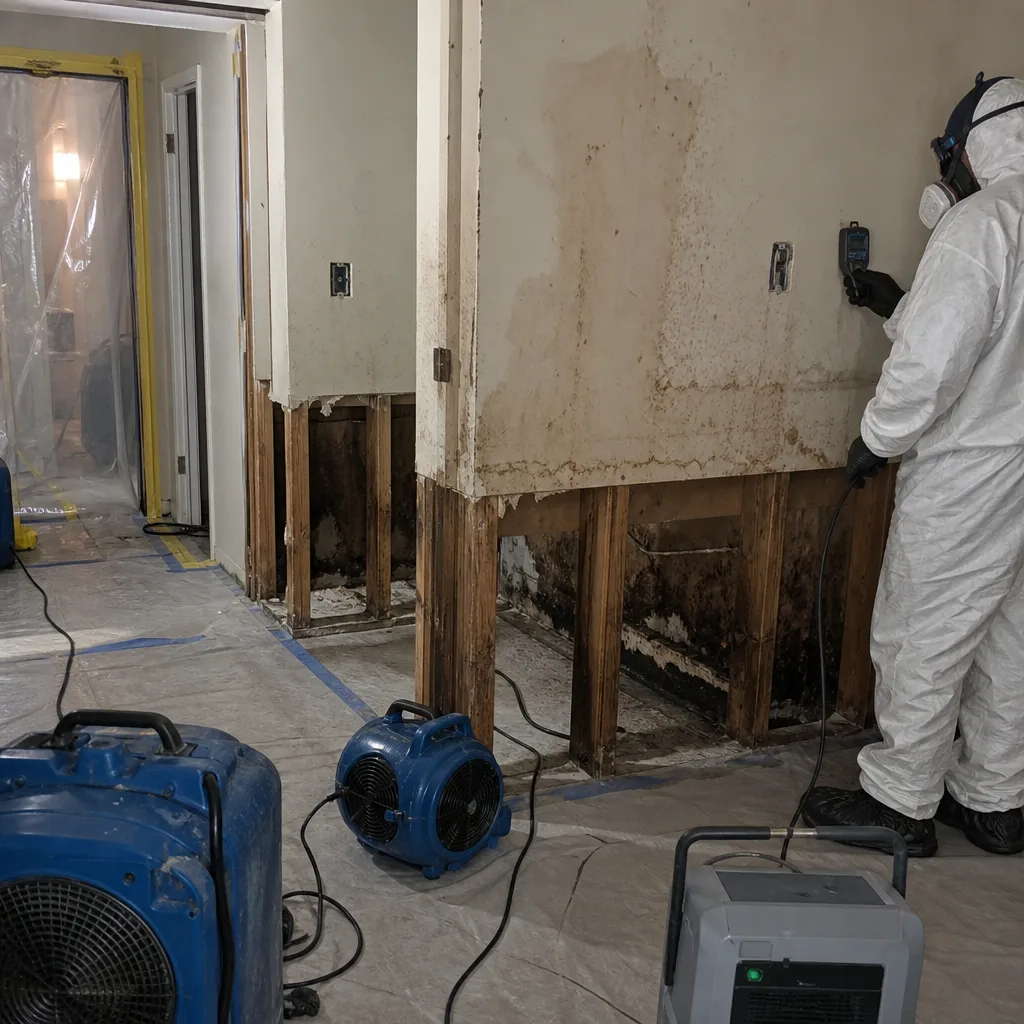 Before
 After
After24/7 Emergency Fire & Smoke Damage Restoration in Great Neck Estates
Fire and smoke damage in Great Neck Estates moves fast, and so do we. Our crews answer live around the clock and can be at your door inside 45 minutes, beginning a free visual inspection and containment setup before the smoke odor gets a chance to settle into plaster walls and old timber framing. The first hour determines how much of your home’s original materials survive, especially in the pre-war estate houses that define this village. Call (917) 924-4221 now and you will speak with a real dispatcher who can tell you exactly when a certified crew will arrive.
Understanding Fire & Smoke Damage Restoration Severity in Great Neck Estates Properties
Every fire produces a specific soot profile, and in Great Neck Estates those profiles interact with plaster-on-lath walls, old-growth timber, and the village’s saltwater-saturated stone foundations. Dry soot from a fast-burning kitchen fire behaves one way; the greasy, protein-based residue from an oven or grease fire behaves entirely another. We classify fires by soot type before we touch a surface because the wrong cleaning method drives residue deeper into porous plaster and grout. Smoke also migrates through wall cavities and along the same paths water takes, which means in Great Neck Estates it follows stud bays down to those stone basement foundations that hold ambient moisture for weeks after a tide event. That pairing, smoke residue meeting chronically damp stone, is why odor removal here requires extended dehumidification and repeated moisture mapping rather than a quick air scrub. Old plaster walls and 1920s-1940s framing hold heat differently than drywall too, so we thermal-scan every surface before writing a scope. Severity assessment in this village is not a template; it is a property-by-property read of how a specific house was built and how the fire moved through it.
Why Great Neck Estates Property Owners Choose Floodline Restoration Co. of Manhattan
- 45-minute response commitment. We dispatch crews inside Great Neck Estates from our New York City office, and a live person confirms the arrival window when you call.
- 24/7 live answer. No recordings. A real dispatcher picks up at 2 a.m. and a certified crew is on the road.
- IICRC-certified crews. Fire & Smoke Damage Restoration technicians hold FSRT and OCT certifications, with additional WRT training for water-related fire suppression.
- Free visual inspection. We assess the damage, document it for your carrier, and give you a written scope before any work begins.
- Direct insurance billing. We coordinate with your adjuster directly. You never play messenger between Floodline and your carrier.
- One team from extraction to reconstruction. The same crew that sets containment on day one handles structural repairs through final paint. No mid-job handoff.
Our Fire & Smoke Damage Restoration Process
Inspection & Assessment
Our crew walks the full property with thermal imaging and moisture meters, reading soot type and smoke migration paths through every room. We photograph everything before touching a surface. You get a written scope of work and a straight answer about what can be cleaned versus what needs full replacement.
Stabilization & Containment
If fire compromised the envelope, we board up or tarp the affected areas the same visit. We set negative air containment on damaged zones so soot and odor do not spread to unaffected rooms. This step protects your contents from secondary damage while we work.
Drying & Dehumidification
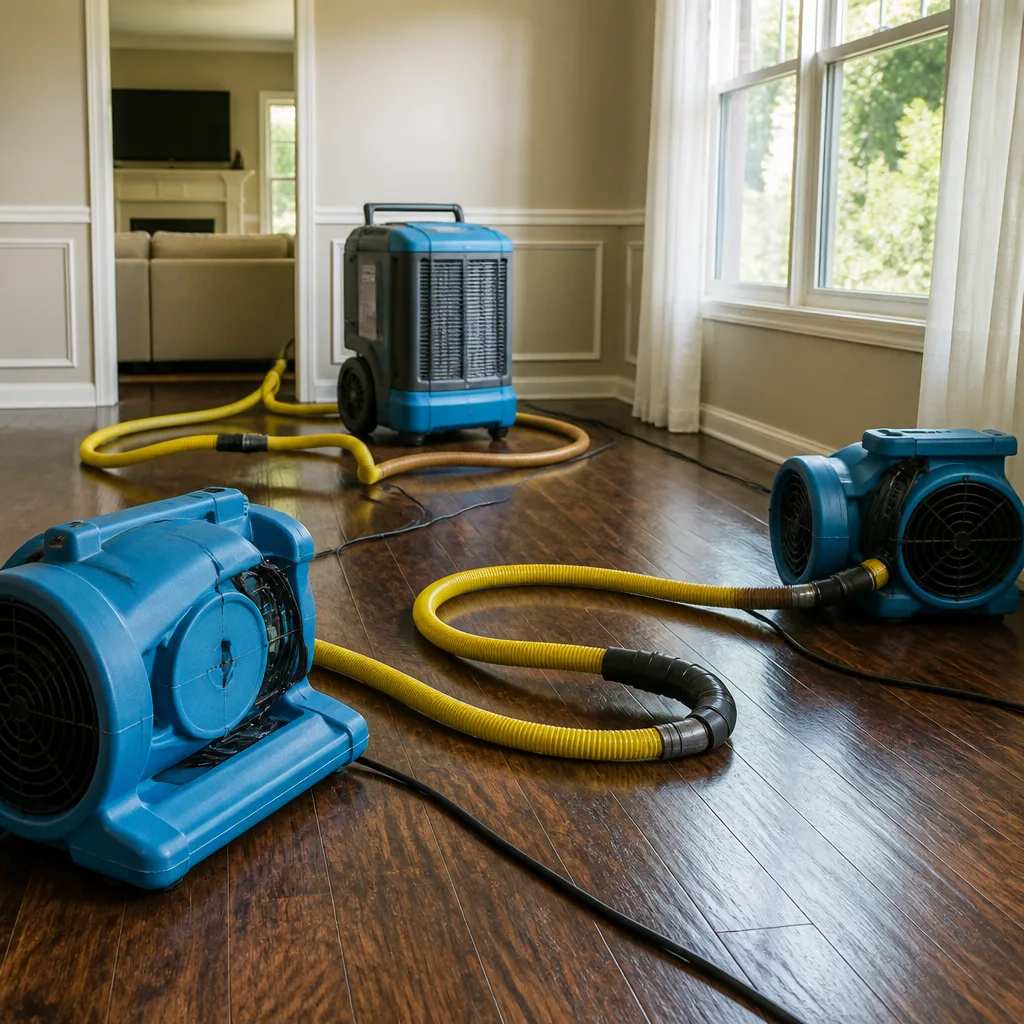
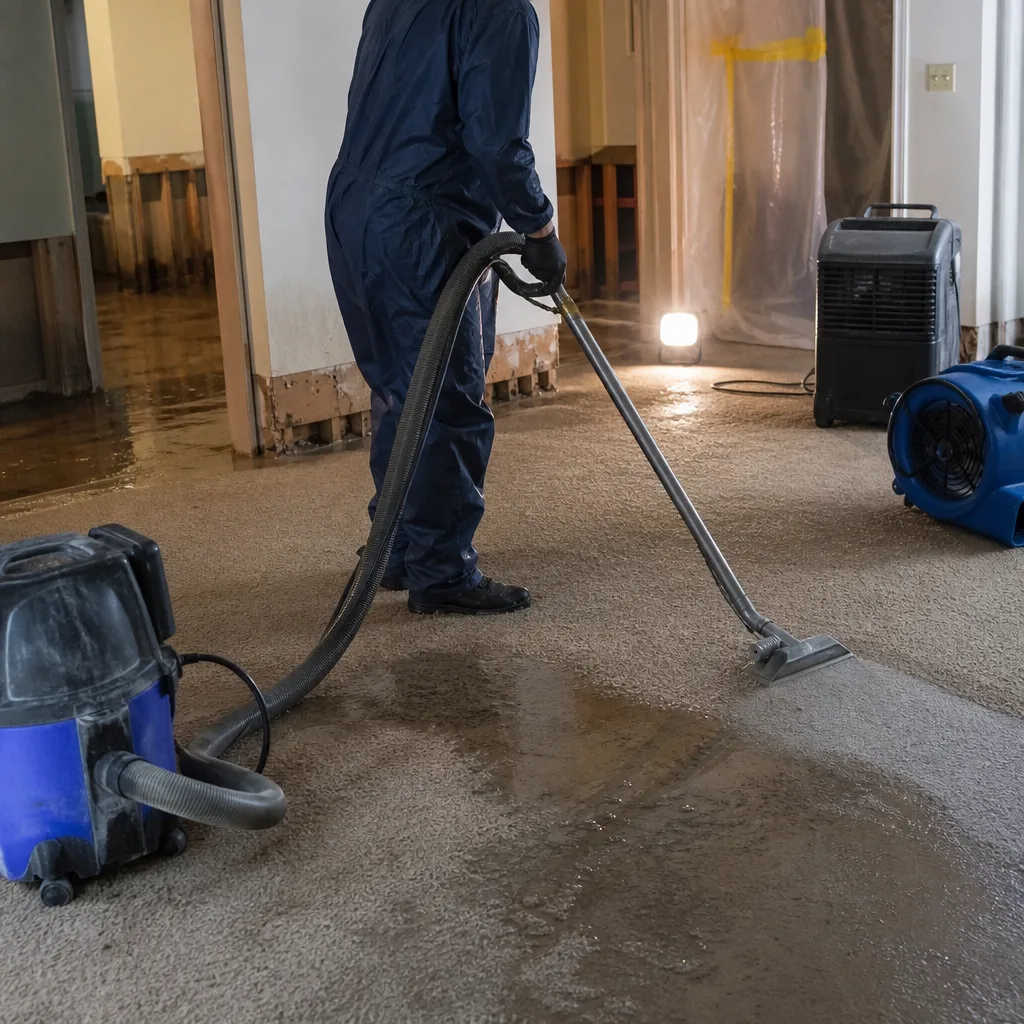
Water from suppression hoses and burst pipes soaks immediately into plaster and stone. We run Phoenix 200 Max LGR dehumidifiers and B-Air air movers to pull moisture from framing, with daily hygrometer readings logged until wood reaches the dry standard. In Great Neck Estates, stone basement walls are checked separately and often require extended staging.
Cleaning & Sanitization
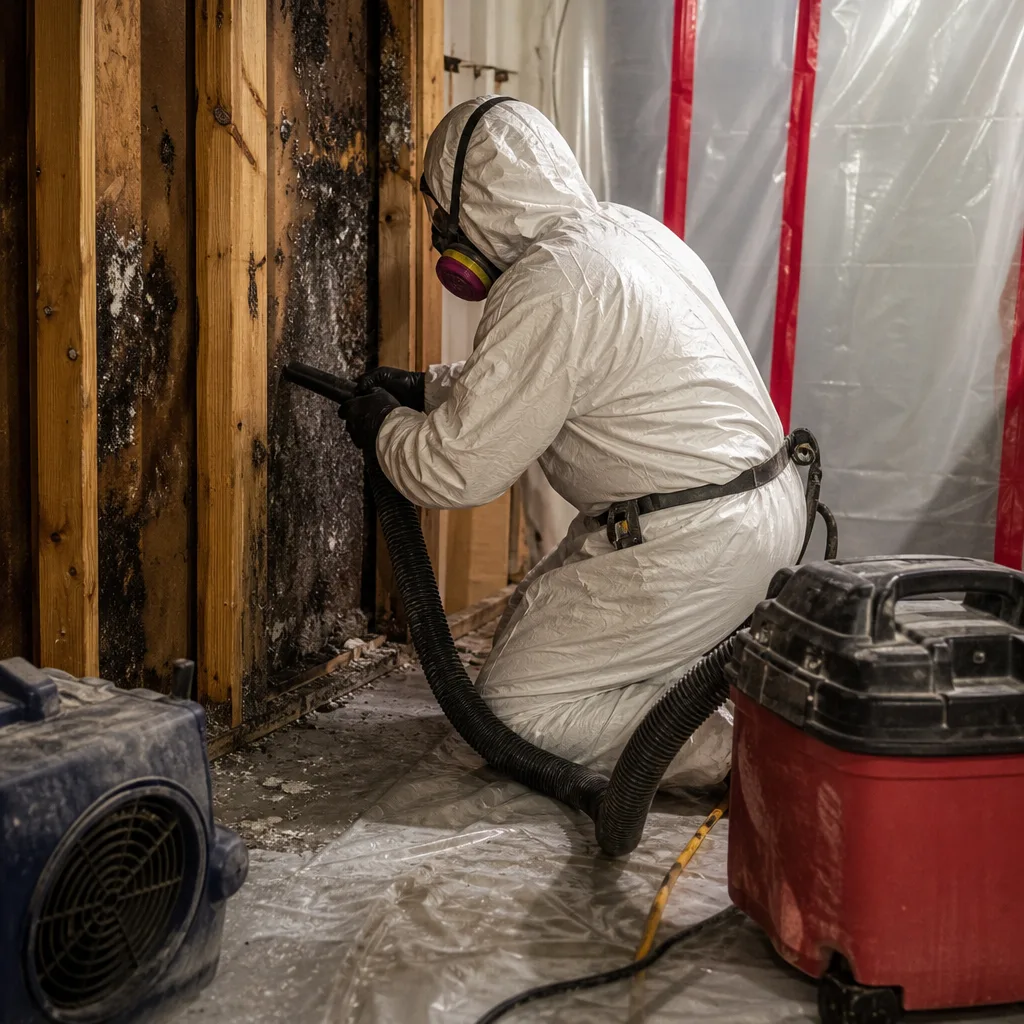
HEPA vacuuming and dry-ice soda blasting lift soot from plaster crowns, beam pockets, and hard surfaces without driving residue deeper. We treat all affected rooms, not just the fire origin point. Porous materials are assessed for pack-out or replacement on a case-by-case basis.
Odor Removal & Deodorization
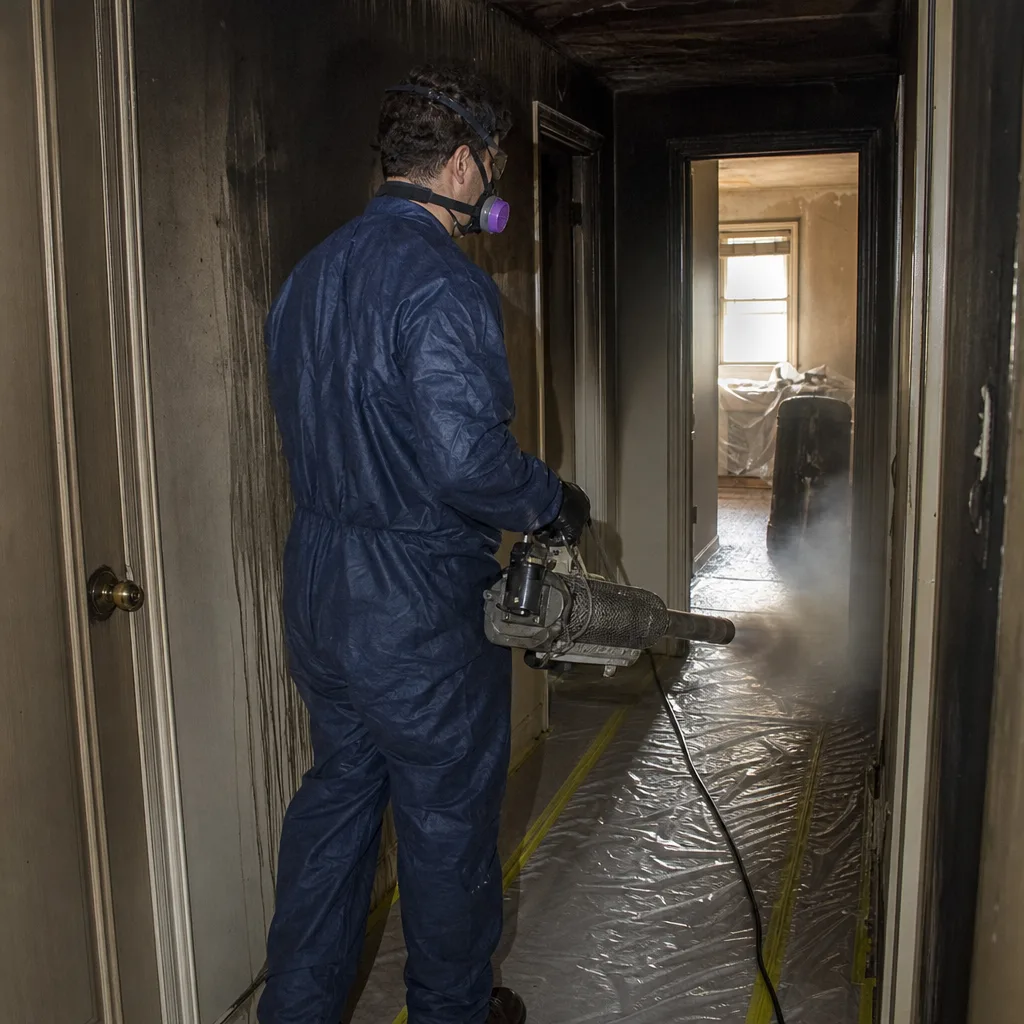
Thermal fogging paired with hydroxyl generators neutralizes smoke odor at the molecular level rather than masking it. For Great Neck Estates homes with salt-saturated basements, we extend dehumidification during this phase so trapped moisture cannot re-release smoke odor when humidity rises during nor’easter season.
Repairs & Restoration
We rebuild what fire consumed, from charred roof framing to cracked plaster walls, matching original profiles and materials where possible. The same crew that pulled moisture readings on day one finishes the trim, paint, and final walkthrough. Your 90-Day Done Right Promise covers the result in writing.
Need Emergency Fire & Smoke Damage Restoration in Great Neck Estates Now?
Crews minutes away, answering live 24 hours a day. The sooner we start, the less it costs.
Working With Your Insurance Company
We document the loss from the first hour and build an industry-standard estimate your carrier can process without back-and-forth. Our crews photograph every room, every surface, every compromised material. We log moisture readings daily, write a detailed line-item scope, and speak to your adjuster directly so you are not stuck relaying messages between us and the desk in a claims office. If your carrier disputes a line item, we provide the documentation to justify it. If the claim requires a second visit from an adjuster, we walk them through the property and show them the evidence. You hired us to fix the house, not to fight with your insurance. We handle the second part too.
What We Provide Your Insurer
- Thorough documentation of the loss
- Photos of all damage, room by room
- Moisture readings and drying logs
- A detailed, line-item scope of work
- Direct coordination with your carrier
Built for Great Neck Estates’s Loss Calendar
Great Neck Estates sees distinct fire and smoke damage patterns through the year. Winter brings freeze-thaw cycling that stresses original copper and cast-iron supply lines in pre-war homes, causing burst pipes that flood basements and short-circuit old wiring, which can spark electrical fires. Spring thaw and rain events push groundwater against those thick stone foundation walls, raising indoor humidity that makes smoke residues from even small stovetop fires harder to eradicate. Summer thunderstorms bring lightning strikes like the one that ignited roof framing on a stucco Mediterranean near Shore Drive, a call we answered with containment barriers, two Phoenix 200 Max LGR dehumidifiers, and six B-Air air movers before the smoke spread through the first-floor plaster walls. Fall nor’easters knock out power across the peninsula, and homeowners using generators or space heaters in older homes with original wiring face elevated fire risk. Late winter, when freeze-thaw spalling opens cracks in old mortar, lets humid air back into framing cavities that previously held smoke residue, and odor complaints resurface weeks after a fire that was considered closed. Our crews plan for these cycles because we work this village year-round.
Fire & Smoke Damage Restoration Across Great Neck Estates’s Neighborhoods
The homes along Shore Drive and the waterfront face multi-directional exposure to Manhasset Bay on the west, which means smoke from a fire inside a shoreline estate gets pulled toward whichever side of the house the wind is hitting. That accelerates smoke migration through wall cavities faster than in inland neighborhoods. The Tudor Revival and Colonial Revival estates off Middle Neck Road sit on slightly higher ground but share the same plaster-on-lath construction, so fire spreads through wall cavities differently than in nearby drywall-built homes. Properties near Allenwood Park tend toward the stone and stucco Mediterranean styles, where exterior walls hold heat longer and require extended thermal scanning before we clear a structure for repairs. The streets around Breuer Park and the northwest shore see the worst of storm surge, which means basement mechanicals and electrical panels are more prone to saltwater corrosion shorting out, an ignition source that inland houses in Nassau County simply do not face. Our crews know these blocks because we have worked them for years, and we know which houses have original balloon framing that lets fire race from basement to attic in minutes.
Specialized Fire & Smoke Damage Restoration Services We Offer in Great Neck Estates
Fire Damage Cleanup
We remove charred debris, damaged drywall and plaster, and compromised insulation from the fire origin point and anywhere smoke traveled. In Great Neck Estates estates, that often means working around original millwork and lead-paint-era plaster that require containment barriers before any demolition begins. We document every piece removed for your carrier.
Smoke & Soot Removal
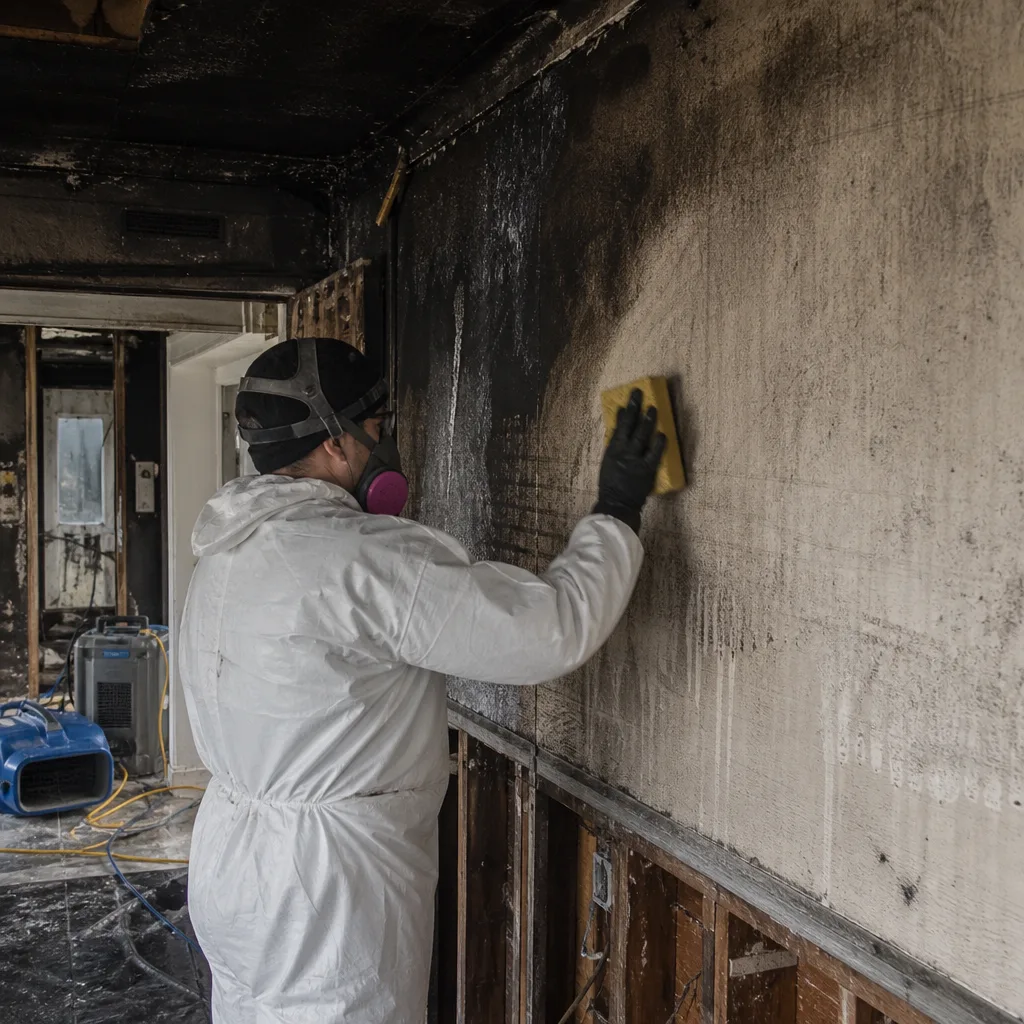
Dry-ice soda blasting, HEPA vacuuming, and chemical sponging lift soot from plaster crowns, beam pockets, and original hardwood without driving residue into porous surfaces. On 1920s-1940s plaster, we never spot-clean without a containment barrier because soot pushed into wall cavities causes full pack-out later. Our FSRT-certified crews match the cleaning method to the soot type on every surface.
Odor Removal & Deodorization
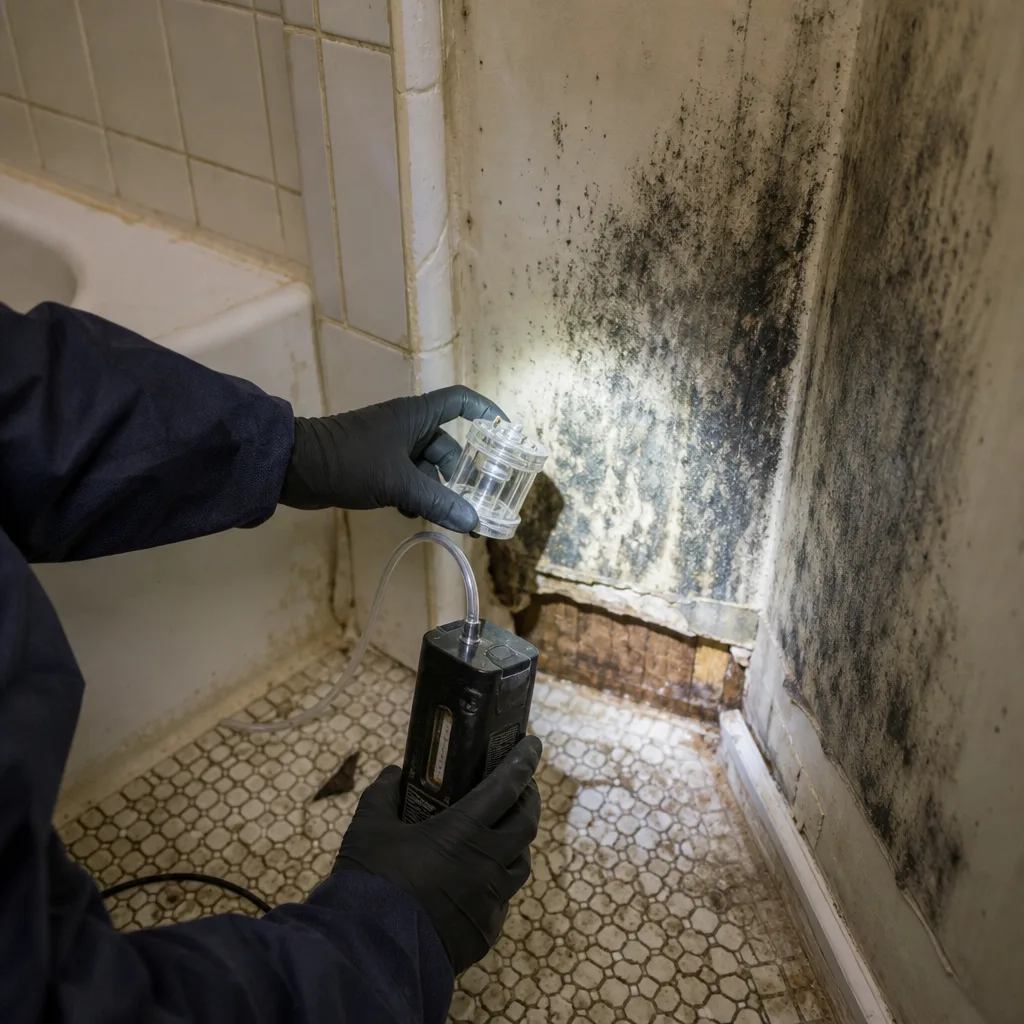
Thermal fogging paired with hydroxyl generators eliminates smoke odor at the molecular level. In Great Neck Estates, where stone basements hold saltwater moisture for weeks, we extend dehumidification during this phase so trapped humidity cannot re-release smoke compounds when nor’easter weather pushes moisture back into the building envelope. Drying logs tell us when the odor is gone, not just covered.
Contents Cleaning & Pack-Out
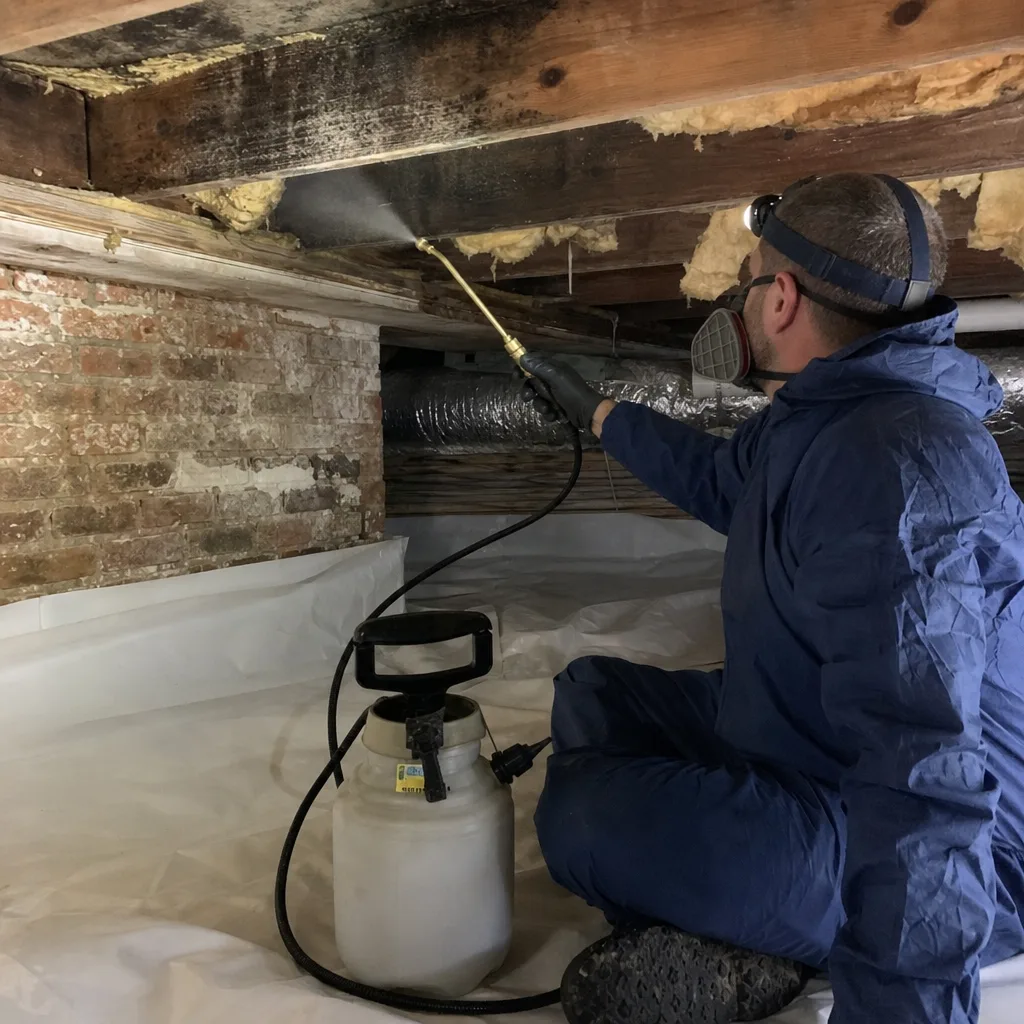
We inventory, photograph, pack, and transport salvageable contents to our cleaning facility, where they are treated for soot and odor before storage in a climate-controlled environment. For waterfront homes in Great Neck Estates, we add salt-air corrosion assessment to the item-by-item evaluation, because metal fixtures, fine art frames, and electronics degrade differently when salt is present in the soot residue.
Emergency Board-Up & Tarping
When fire compromises windows, doors, or a roofline, we secure the property same-visit with board-up and tarping that keeps weather and intruders out. In Great Neck Estates, village code reviews on 1920s Tudor and Colonial exteriors may require specific materials before fire repairs start, and we handle that conversation with the building department for you.
Structural Fire Repair
Our reconstruction crews rebuild charred rafters, floor joists, and load-bearing walls, matching original profiles and materials so the repair sits right in a pre-war estate home. Lead-paint protocols on 1930s-era Colonial Revivals are part of the written scope, not a surprise supplement. The crew that dried the structure performs the rebuild, keeping every decision tied to the moisture map from day one.
What happens when you call
- 1
A real person answersNo phone trees - you reach a local pro.
- 2
You get an upfront price rangeHonest numbers before anyone is dispatched.
- 3
A background-checked tech heads outLicensed & insured, dispatched right away.
- 4
You approve before work beginsNothing starts until you say go.
Fire & Smoke Damage Restoration Costs in Great Neck Estates, NY
In Great Neck Estates, a basic smoke cleanup with surface soot removal on a single room typically runs $1,800 to $4,500. A kitchen fire with moderate smoke throughout a 1920s Colonial, including pack-out of contents to our cleaning facility and deodorization, generally lands between $8,000 and $22,000 depending on how far soot traveled through wall cavities and whether original finishes require specialty cleaning. Full structural fire repair on a pre-war estate, including plaster restoration, framing replacement, and lead-paint abatement, can run $45,000 to $110,000 or more. What moves those numbers: the condition of original materials, the extent of smoke migration into stone basement walls, and whether contents need pack-out versus on-site cleaning. Insurance covers most fire and smoke restoration when the loss is sudden and accidental, minus your deductible. We write a line-item scope after a free visual inspection, so you have a firm number before work begins, not an estimate that drifts upward. Call (917) 924-4221 and we will put it in writing.
We Also Serve Cities Near Great Neck Estates
Our Fire & Smoke Damage Restoration crews serve the full peninsula and surrounding communities, including Great Neck Estates and neighboring Fairview, Harrison, East Bronx, and Hunts Point. If your property sits in one of these nearby areas, the same live dispatch, 45-minute response commitment, and written scope apply. Call and you will reach a person who can route a crew to you immediately.
Serving Great Neck Estates, NY - Our Local Coverage Area
We’re based in the Great Neck Estates area and know this community well. Use the map below to see our service coverage - if you’re nearby, we can almost certainly help.
Great Neck Estates Fire & Smoke Damage Restoration Questions, Answered
How does the saltwater-saturated stone foundation of a Great Neck Estates estate home affect the timeline for clearing smoke odor after a fire?
Saltwater-saturated stone foundations extend odor-removal timelines by days to weeks because those thick walls hold ambient moisture at 18 to 24 percent even after the rest of the structure meets the dry standard. Smoke compounds trapped in wall cavities re-release into the air whenever humidity rises, which means we run dehumidifiers and perform repeated moisture mapping on basement stone until readings stabilize before we sign off on deodorization. In some Great Neck Estates homes near the shoreline, this adds five to ten days to the project compared to an inland drywall house. Call (917) 924-4221 and we will explain what that means for your specific foundation.
Will emergency board-up on a 1920s Tudor in Great Neck Estates trigger any village-specific code reviews before we can start fire repairs?
Yes, and that is normal for this village. Great Neck Estates building review for exterior work on pre-war homes often requires a description of the board-up materials and the repair scope before structural fire repair proceeds, especially when original Tudor half-timbering or stucco is visible from the street. We handle that documentation for you, and our crews know the village review process well enough to keep the project moving while the paperwork clears. The board-up itself is an emergency step and can happen immediately, it is the subsequent permanent repair that triggers review.
What happens to the original plaster walls and old-growth framing after a kitchen fire in a Great Neck Estates colonial?
Original plaster survives surprisingly well when we set containment early and clean with dry-ice soda blasting rather than liquid chemicals. Old-growth framing, though, absorbs smoke deeply, and the same density that makes it structurally superior also holds odor compounds for weeks. We dry to the wood standard before deodorizing, then thermal-scan every stud bay to confirm no hidden soot pockets remain. Where plaster is too damaged to save, we match the original profile and lime content so the repair does not look like a patch.
Can smoke damage be cleaned without a full pack-out of contents in a Great Neck Estates waterfront home with salt air exposure?
Sometimes. If the fire was small, soot is light, and no smoke entered wall cavities, we can clean contents on site with HEPA vacuuming and chemical sponging. But in waterfront homes where salt air has been present for decades, soot binds to the thin salt film on furniture, frames, and textiles, making on-site cleaning far less effective. Those cases usually require pack-out to our cleaning facility, where we use ultrasonic and immersion cleaning that cannot be done inside the house. The free visual inspection determines which path applies to your contents before we touch anything.
Do fire and smoke restoration crews in Great Neck Estates need to worry about lead paint during structural fire repair on a 1930s Colonial Revival?
Yes, and we treat that seriously. Any pre-1978 home in Great Neck Estates, which is essentially the entire village housing stock, requires lead-safe work practices during structural fire repair when original painted surfaces are disturbed. That means containment, HEPA filtration, and specific disposal protocols on top of the normal fire restoration scope. It adds cost and time, but ignoring it is not an option, and our crews follow the protocols as a matter of course, not as a change order.
How fast can a fire and smoke restoration crew actually get to a Great Neck Estates property?
Our commitment is 45 minutes from your call to a crew at your door inside Great Neck Estates. Dispatch is live 24 hours a day, every day, and the person who answers the phone can tell you the arrival window while you are still on the line. In the fire department is still on scene, we can stage nearby and start documentation the moment they release the property back to you. Call (917) 924-4221 for the current response time.
Will insurance cover fire and smoke damage restoration on a Great Neck Estates pre-war home?
Most homeowner policies cover sudden and accidental fire damage, including smoke and soot cleaning, structural repair, and contents restoration, minus your deductible. We bill your carrier directly, provide the documentation they require, and speak with your adjuster throughout the process. Where saltwater foundation dampness requires extended drying beyond a standard fire claim, we justify that additional scope with moisture logs and photographic evidence so the claim moves through without you fighting for coverage.
What should we do in the first 30 minutes after a fire in Great Neck Estates?
Call your insurance company to open the claim, then call us at (917) 924-4221 for same-visit stabilization. Do not enter the structure until the fire department confirms it is safe. Do not wipe soot off surfaces yourself, the wrong cleaning method drives residue into plaster and wood. Turn off HVAC systems if accessible, because they circulate smoke into rooms the fire never reached. Open windows only if doing so does not pull smoke toward unaffected areas. We handle the rest from the first hour.
Written by Curt Bowman, Owner at Floodline Restoration Co. of Manhattan. Our Fire & Smoke Damage Restoration team has worked the Great Neck Estates peninsula for years and stands behind every job with a written 90-Day Done Right Promise. Call (917) 924-4221 for a free estimate.