
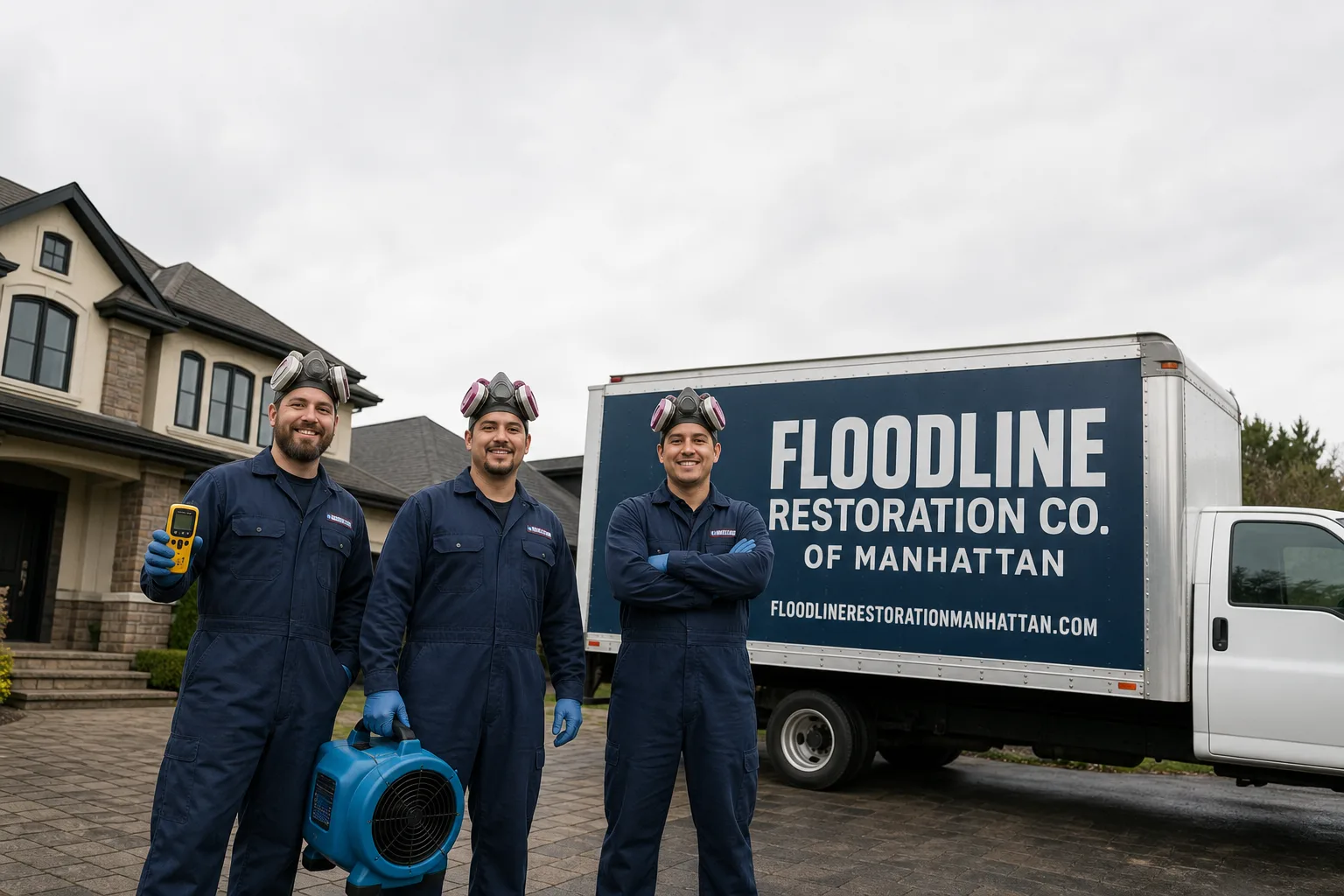
Free visual inspection and a written scope of work before any mitigation begins - photos, moisture readings, and drying logs go in your claim file
The scope we write is the scope we bill. Anything new gets shown to you, in writing, before we touch it.






 Before
 After
After Before
 After
After Before
 After
After24/7 Emergency Fire & Smoke Damage Restoration in Jefferson Valley-Yorktown
When a fire hits your home in Jefferson Valley-Yorktown, the first call you make should get a real person on the line, not a voicemail. We answer live at (917) 924-4221 any hour, any day. Our crews dispatch to Jefferson Valley-Yorktown immediately, usually arriving within 45 minutes for a free visual inspection of the fire damage. Smoke continues to travel through wall cavities and ductwork long after the flames are out, and the acidic soot left behind begins etching glass, corroding metal fixtures, and staining paint within hours. The sooner we start containment and air scrubbing, the less permanent damage your home takes on. We also stabilize the structure fast, boarding up broken windows and tarping roof damage the same day so weather and vandals don’t compound the loss.
Understanding Fire & Smoke Damage Restoration Severity in Jefferson Valley-Yorktown Properties
Fire damage in Jefferson Valley-Yorktown doesn’t follow a single pattern. The town’s housing stock, mostly colonials, raised ranches, and split-levels built between the 1960s and 1980s, distributes smoke differently depending on the floor plan and the fire’s origin. A kitchen fire in a split-level sends smoke down into the lower-level family room through the return ducts, saturating carpets, upholstery, and insulation with oily soot that plain surface cleaning won’t remove. Fires in finished basements, common in the area’s older homes with paneled walls and drop ceilings, trap heat and smoke in confined spaces, forcing soot deep into porous materials. We classify soot residue in three types: dry protein residue from burned food, oily/tacky residue from plastics and synthetics, and dry/loose residue from burning wood and paper. Each requires different cleaning chemistry. Jefferson Valley-Yorktown homes with original 1960s-era hollow-core doors and pine subfloors are especially vulnerable, because those materials wick smoke and moisture deep into their fibers, and they often can’t be restored to pre-loss condition without replacement.
Why Jefferson Valley-Yorktown Property Owners Choose Floodline Restoration Co. of Manhattan
- 45-minute response commitment to homes anywhere in Jefferson Valley-Yorktown, from Route 6 to the Amawalk Reservoir corridor.
- Live answer, twenty-four hours a day. A dispatcher picks up at 2 a.m., not a machine. A real person logs the call and gets a crew moving.
- IICRC-certified crews. Our technicians hold FSRT (Fire and Smoke Restoration Technician), WRT (Water Damage Restoration Technician), and AMRT (Applied Microbial Remediation Technician) certifications. They understand the chemistry of soot and the physics of smoke migration.
- Free visual inspection. Before any work starts, we walk the property with you and explain exactly what we’re seeing, what can be cleaned, and what needs replacement.
- Direct insurance billing. We bill your carrier directly, and we handle the adjuster conversation so you don’t have to play messenger.
- One team from board-up to rebuild. The same certified crew that stabilizes the structure on day one handles the cleaning, drying, and reconstruction. No mid-job handoff to an unfamiliar subcontractor.
Our Fire & Smoke Damage Restoration Process
Inspection & Assessment
We arrive, walk the property with you, and map every affected surface using thermal imaging and moisture meters. We look for hidden smoke migration, trapped firefighting water, and structural compromise. You get a written scope of work before anything starts.
Extraction & Stabilization
Firefighting water is removed using truck-mounted extraction. We board up broken glass, tarp damaged roofs, and brace any structural areas the fire weakened. Containment is set up to prevent soot from spreading to unaffected rooms.
Drying & Dehumidification
We run Dri-Eaz and Phoenix air movers and dehumidifiers, plus Injectidry systems in wall cavities and under floors. Daily moisture readings are logged until every affected area hits the dry standard. This step matters especially in Jefferson Valley-Yorktown, where the rock ledge beneath foundations holds groundwater that complicates drying.
Cleaning & Sanitization
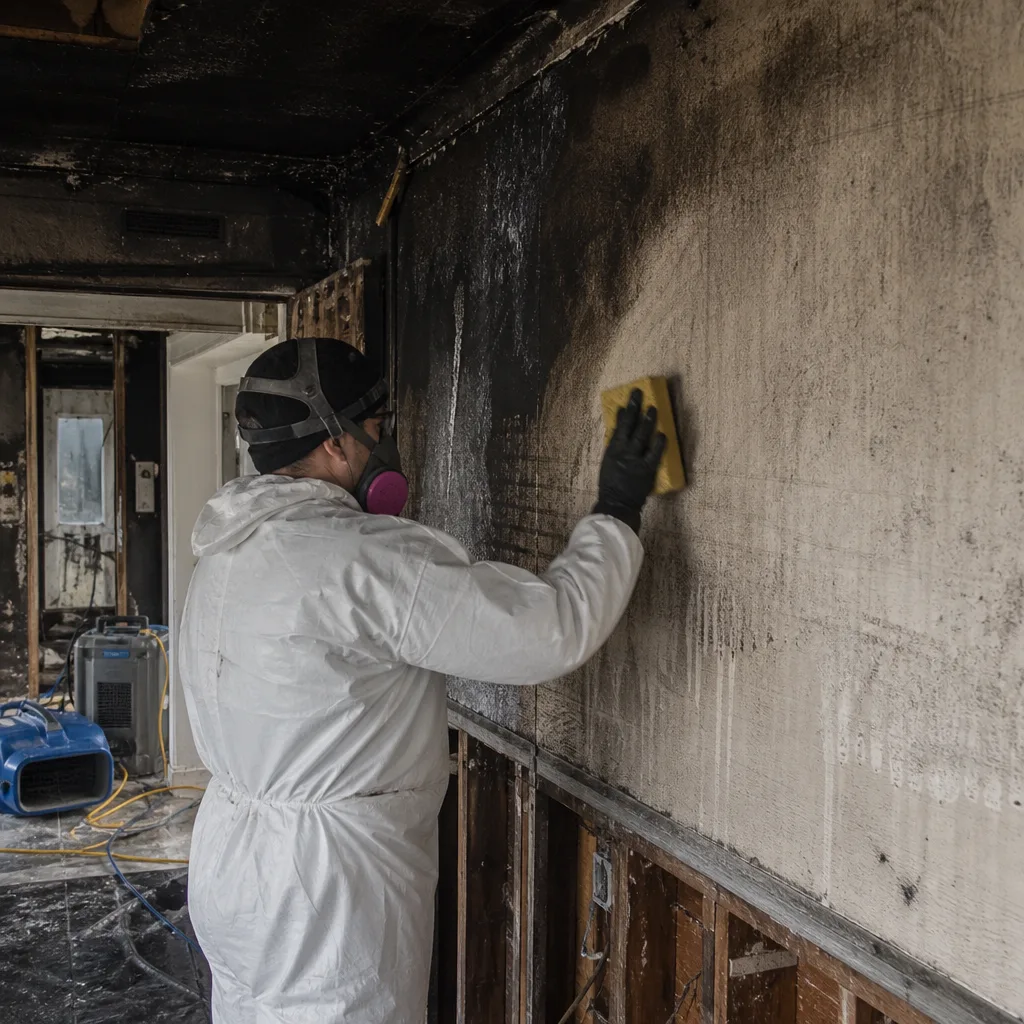
Soot is removed using HEPA vacuums, dry-chem sponges, and appropriate wet cleaning methods matched to the residue type. We sanitize all affected surfaces with EPA-registered antimicrobials, with special attention to areas that absorbed firefighting water.
Odor Removal & Deodorization
Smoke odor lives in porous materials. We use thermal fogging, hydroxyl generators, and ozone treatment in contained spaces, but we sequence these methods carefully because older plaster walls in Jefferson Valley-Yorktown colonials can react badly to aggressive chemical deodorizers.
Repairs & Restoration
This is where we differ from the fire-damage-only companies. Our carpenters rebuild the damaged framing, drywall, flooring, and trim. We finish with paint and finishes matched to your home’s original character, and the 90-Day Done Right Promise is yours in writing.
Need Emergency Fire & Smoke Damage Restoration in Jefferson Valley-Yorktown Now?
Crews minutes away, answering live 24 hours a day. The sooner we start, the less it costs.
Working With Your Insurance Company
We know the insurance side of fire claims in Jefferson Valley-Yorktown because we’ve handled hundreds of them. From the first hour, we document everything: before photos, during and after photos, room-by-room inventories, moisture readings, and daily drying logs. Our estimates follow industry-standard pricing software, which means your carrier recognizes every line item and doesn’t kick it back for being inflated or vague. We speak directly with your adjuster, walk them through the property, and explain the scope in technical terms they can approve. When the firefighting water caused basement damage from rock-ledge seepage that predates the fire, we document that separately so the fire claim covers the actual fire loss, and you’re not stuck arguing about pre-existing conditions. The same crew that starts the cleanup finishes the rebuild, so nobody can blame a subcontractor for a mistake.
What We Provide Your Insurer
- Thorough documentation of the loss from the first hour
- Photos of all damage, room by room
- Moisture readings and drying logs until the dry standard is met
- A detailed, line-item scope of work with industry-standard pricing
- Direct coordination with your carrier
Built for Jefferson Valley-Yorktown’s Loss Calendar
Fire losses in Jefferson Valley-Yorktown don’t follow a flat line through the year. They spike with the seasons. January and February bring ice storms and nor’easters that take down power lines and knock trees onto service drops, which can start electrical fires in older homes with original wiring. The same storms drive ice dams under the steep colonial rooflines common along Route 6 and near the reservoir, letting meltwater into wall cavities where it meets electrical boxes and starts slow-burning smolders. Spring thaw sends groundwater through the fractured rock ledge into basements, and when that water reaches an old oil burner or a sump pump wired with aging cloth-insulated cable, the risk climbs. Summer thunderstorms hit fast with high winds, and Jefferson Valley-Yorktown’s heavy oak and maple canopy means a downed limb through a roof is a routine call for our board-up crews. Fall heating season brings the first use of long-dormant furnaces and wood stoves, which is when we see chimney fires and failed heat exchangers. We plan our dispatch and equipment accordingly, and we keep live crews ready in Jefferson Valley-Yorktown all year.
Fire & Smoke Damage Restoration Across Jefferson Valley-Yorktown’s Neighborhoods
Jefferson Valley-Yorktown spreads across a series of ridges and valleys, and the housing patterns change from one section to the next. In Baldwin Ridge, the split-levels and raised ranches off Route 118 were mostly built in the 1970s and early 1980s, with lower-level family rooms that collect smoke pushed down from first-floor kitchens. The colonials near the Amawalk Reservoir corridor sit on steep, wooded lots with tall oak canopies, which means roof fires from wind-driven tree falls and chimney fires from aging masonry are the patterns we see most. Over in the Lake Osceola area, the lakefront homes tend to be older, with original plumbing and electrical still in service, which compounds fire losses with water losses when supply lines melt and feed the flames. The Yorktown Heights border area, where newer construction mixes with 1960s-era originals, has a wider range of materials, from plaster walls to drywall, and that variety affects how we approach odor removal and surface cleaning. Each neighborhood requires a slightly different response route and a different set of expectations about what the inside of the wall looks like. We know these streets because we work them every week.
Specialized Fire & Smoke Damage Restoration Services We Offer in Jefferson Valley-Yorktown
Fire Damage Cleanup
We remove charred building materials, clean soot from every affected surface, and clear debris before the damage spreads. In Jefferson Valley-Yorktown basements where the rock ledge keeps groundwater close to the slab, fire damage almost always overlaps with water intrusion, so we sequence the cleanup to address both contaminants rather than just wiping down the blackened areas.
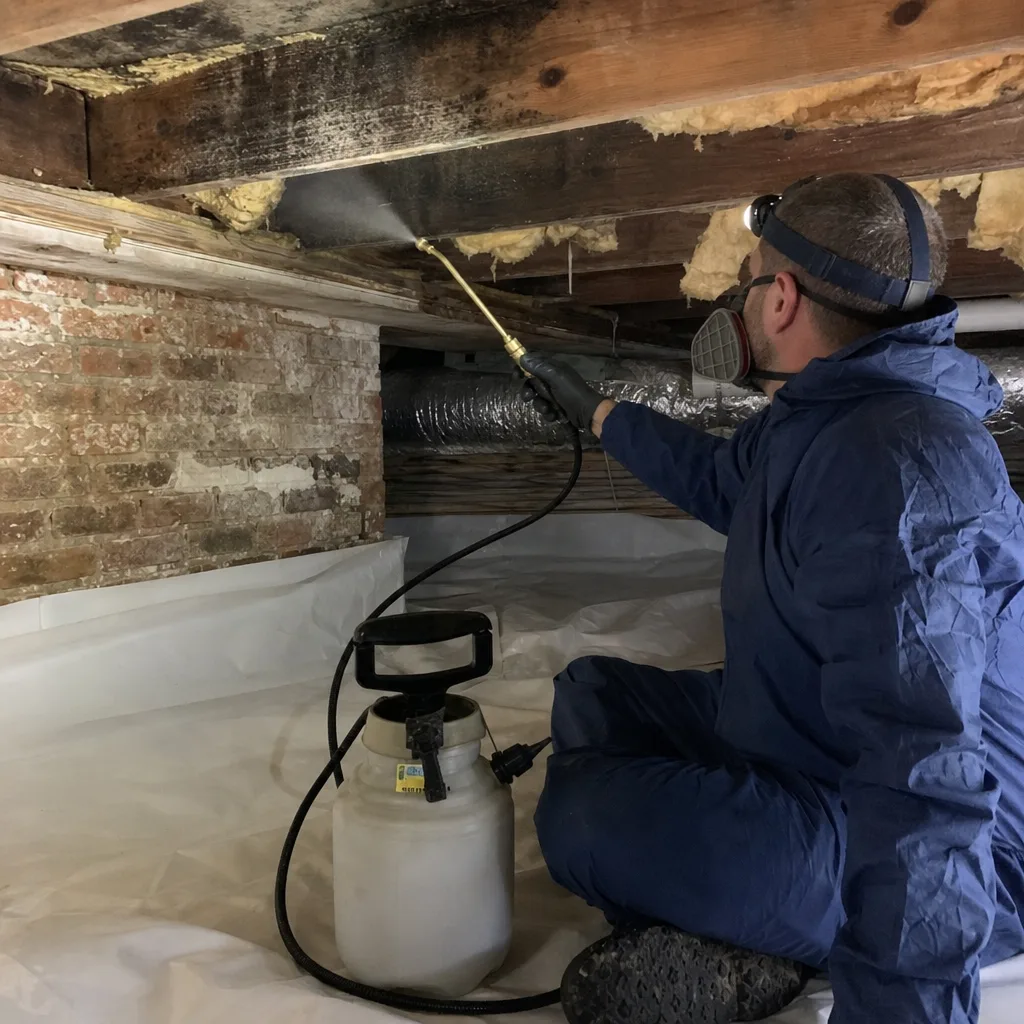
Smoke & Soot Removal
Smoke leaves behind acidic residue that eats into metal fixtures, etches glass, and discolors paint within hours. We use HEPA vacuums, dry-chem sponges, and appropriate wet methods to lift soot from structural surfaces, trim, doors, and ductwork. The hollow-core doors typical of 1970s and 1980s Jefferson Valley-Yorktown homes are especially porous and often need total replacement after heavy smoke exposure.
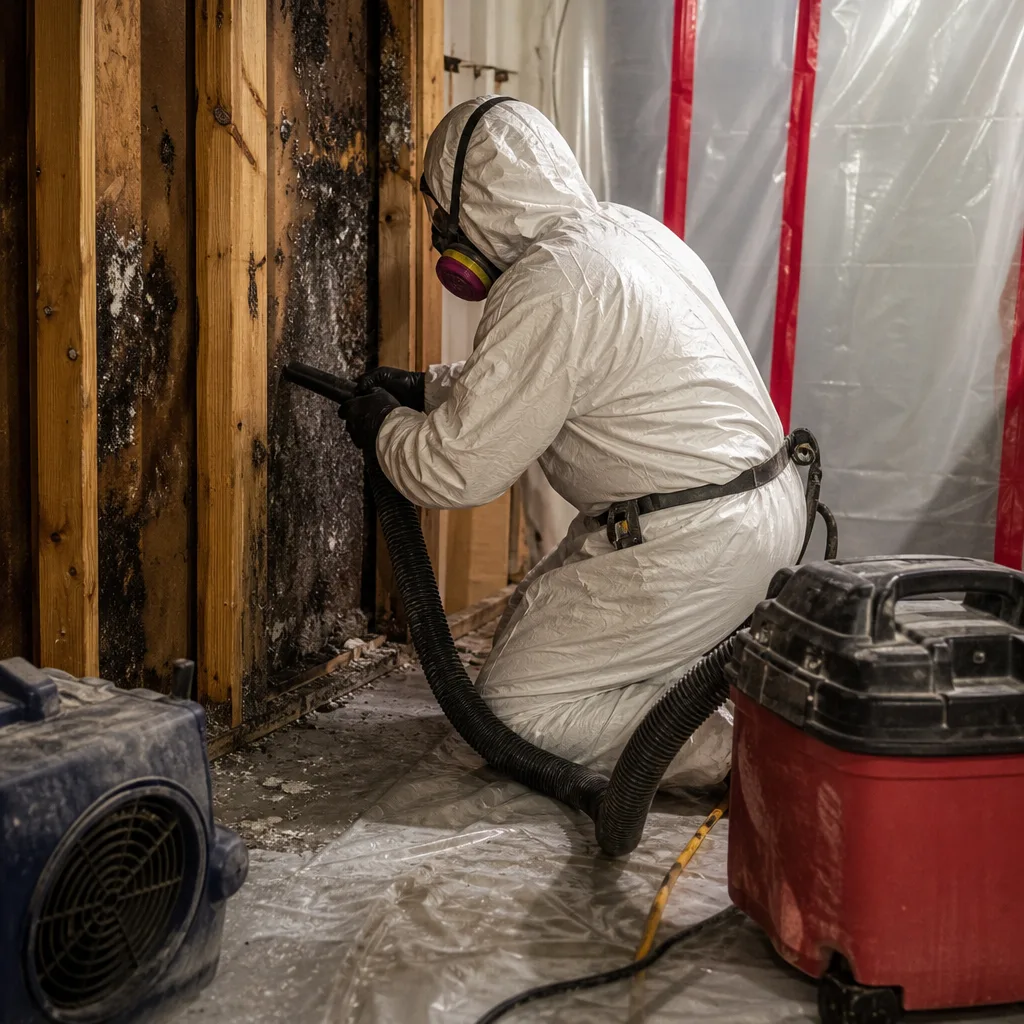
Odor Removal & Deodorization
Surface cleaning doesn’t remove smoke odor. The odor lives in insulation, carpet pad, drywall, and fabric. We use hydroxyl generators and thermal fogging in contained spaces, and we recommend pack-out of textiles when smoke has traveled through basement ductwork and settled into family-room upholstery. On older plaster walls, we avoid aggressive chemical deodorizers that can react with the original lime-based plaster and cause staining or crumbling.
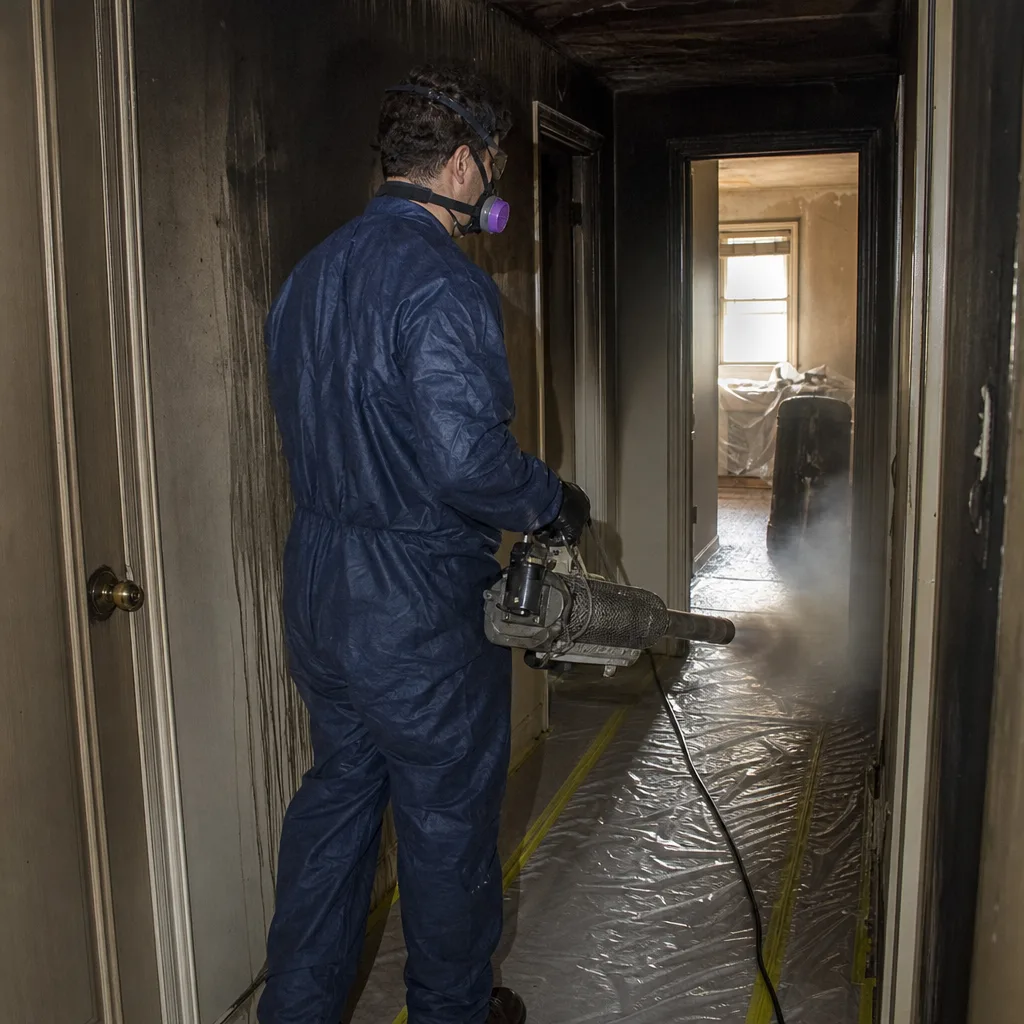
Contents Cleaning & Pack-Out
We inventory, photograph, wrap, and transport salvageable contents to our secure facility where they’re cleaned and stored until reconstruction is finished. This matters especially in Jefferson Valley-Yorktown homes where lower-level family rooms double as storage for seasonal items, furniture, and personal papers, and where smoke from a first-floor kitchen fire travels down through the returns and coats everything.
Emergency Board-Up & Tarping
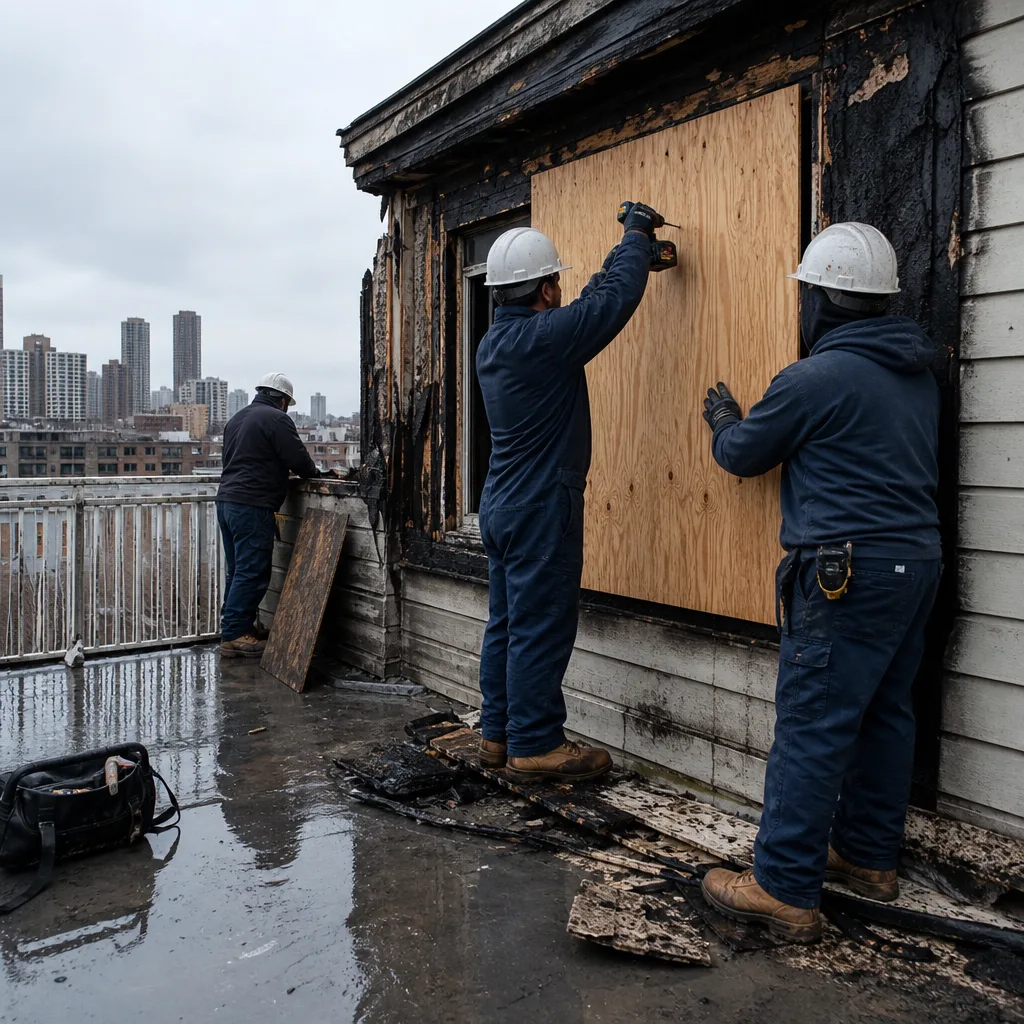
We respond same day to board up broken windows, doors, and walls, and to tarp damaged roofs with heavy-duty poly secured against the winds that whip across the ridge lines. In Jefferson Valley-Yorktown, where the tree canopy is dense and a fire-damaged roof is immediately exposed to nor’easter weather, fast board-up prevents a fire loss from becoming a water loss as well.
What happens when you call
- 1
A real person answersNo phone trees - you reach a local pro.
- 2
You get an upfront price rangeHonest numbers before anyone is dispatched.
- 3
A background-checked tech heads outLicensed & insured, dispatched right away.
- 4
You approve before work beginsNothing starts until you say go.
Fire & Smoke Damage Restoration Costs in Jefferson Valley-Yorktown, NY
A kitchen fire cleanup in Jefferson Valley-Yorktown, with soot removal, odor treatment, and moderate structural repairs, typically runs $4,000 to $14,000. A finished basement fire in one of the area’s 1970s split-levels, where firefighting water soaked the subfloor and the rock-ledge seepage compounded the moisture, often falls between $12,000 and $30,000 for full structural drying, flooring replacement, and paneling remediation. Whole-home smoke damage from a chimney fire, requiring full pack-out of contents and complete odor treatment, starts around $8,000 and can reach $40,000 depending on square footage and how much of the colonial’s original plaster and trim needs work. What moves the price most is how far the smoke traveled and how much water the firefighters put down. Insurance typically covers the majority of these costs, and we bill your carrier directly. Your out-of-pocket exposure is usually your deductible, and we’ll confirm that against your policy before work begins. Call (917) 924-4221 for a free inspection and a written scope, no obligation.
We Also Serve Cities Near Jefferson Valley-Yorktown
Our crews handle fire and smoke restoration in the communities around Jefferson Valley-Yorktown as well: Fairview to the west, Harrison to the south, East Bronx and Hunts Point toward the city. If you’re in one of these areas and need emergency fire damage help, call (917) 924-4221 and we’ll get a crew moving.
Serving Jefferson Valley-Yorktown, NY - Our Local Coverage Area
We’re based in the Jefferson Valley-Yorktown area and know this community well. Use the map below to see our service coverage - if you’re nearby, we can almost certainly help.
Jefferson Valley-Yorktown Fire & Smoke Damage Restoration Questions, Answered
How does Jefferson Valley-Yorktown’s granite ledge affect fire damage restoration in a basement that also took on water?
When a fire happens in a below-grade space in Jefferson Valley-Yorktown, the firefighters’ water doesn’t drain away through the rock ledge beneath the slab. It pools and absorbs into framing, drywall, and flooring, often mixing with groundwater that was already seeping laterally through cracks in the foundation. That means the basement has two sources of contamination: soot from the fire and Category 3 water from the firefight plus the pre-existing seepage. You can’t just dry it and paint over it. Porous materials near the foundation almost always need replacement because they’ve absorbed both contaminants. We sequence the drying carefully, document the pre-existing seepage separately from the fire loss, and work with your adjuster so the claim covers the finished result. Call (917) 924-4221 if this sounds like your situation.
Why do split-level homes in the area often need more than just ozone treatment after a kitchen fire?
In a split-level, the kitchen sits at the middle level, and the return ducts run down through the lower floor framing. Smoke from a kitchen fire gets pulled into those ducts and distributed into the lower-level family room, where it settles into carpet, upholstery, drywall, and insulation. Ozone treatment only reaches surfaces it can contact. It doesn’t pull smoke residue out from inside wall cavities, behind paneling, or out of carpet pad. Those hidden reservoirs of odor release slowly for weeks or months after the fire, which is why homeowners report the smell “coming back” after a surface-only ozone job. We remove and replace the saturated porous materials, clean the ductwork, and then deodorize the structural surfaces. Call (917) 924-4221 for a real assessment of your split-level.
Our colonial near Amawalk Reservoir had a roof fire during a windstorm. What hidden water damage should we expect inside walls?
When a tree limb drops through a colonial roof near the Amawalk Reservoir, the fire damage is obvious, but the water from firefighting goes straight down through the roof deck, into the attic insulation, and then down through the wall cavities. In a colonial, those cavities are balloon-framed in many cases, meaning they run from attic to basement without fire blocking. Water that enters the wall at the roofline can travel all the way to the sill plate in the basement. We inspect with thermal imaging and moisture meters, open up the affected cavities where readings are high, and dry inside the walls using Injectidry systems. The same windstorm that put the tree through the roof may have also driven rain into the exposed areas before we got tarping up, so we assume water intrusion everywhere the roof was breached. Call (917) 924-4221 and we’ll walk you through it.
Can you save the original solid-wood doors and trim in a 1970s raised ranch after a smoke event, or do they have to be replaced?
Solid-wood doors and trim from a 1970s raised ranch in Jefferson Valley-Yorktown can often be saved if they were stained and sealed rather than painted, and if the smoke exposure was moderate. Solid wood has a tight grain that resists deep soot penetration better than hollow-core doors. We clean them with the appropriate methods, then seal them to lock in any remaining odor. Painted wood is trickier, because the paint itself absorbs smoke and often needs stripping and repainting. Hollow-core doors from the same era are almost always a loss after heavy smoke because the interior is porous fiberboard that can’t be cleaned. If the doors in your house are original and you want them saved, call (917) 924-4221 and ask us to look at them specifically before anyone starts throwing them in a dumpster.
How soon can you start after a fire in Jefferson Valley-Yorktown, and will you handle the board-up the same day?
We start the same day you call. If you reach us before the fire trucks have left the scene, we’ll be there within the hour. Board-up and tarping happen on the first visit, because Jefferson Valley-Yorktown’s weather doesn’t wait. A broken window or a roof breach becomes a water intrusion event within hours, and a spring rain can undo everything the fire didn’t destroy. We secure the structure, assess the smoke and soot spread, and get containment and air scrubbers running the same day. Call (917) 924-4221 and a live dispatcher will get the crew moving.
Will my insurance cover fire and smoke damage restoration in Jefferson Valley-Yorktown?
Most homeowner policies in New York cover sudden and accidental fire damage, including smoke damage to the structure and contents. The details matter: the policy’s dwelling coverage limit, the contents coverage, and any additional living expense coverage if you need to stay elsewhere during reconstruction. We work directly with your carrier, provide the documentation they need, and bill them directly. The biggest disputes we see are about pre-existing conditions, like the rock-ledge seepage in the basement that predates the fire. We document that separately so the fire claim doesn’t get bogged down. If you’re unsure about your coverage, call (917) 924-4221 and we’ll talk through what your policy likely covers.
How long does fire damage restoration take in a typical Jefferson Valley-Yorktown home?
A moderate kitchen fire with smoke damage throughout a split-level usually takes 2 to 4 weeks from board-up to finished paint. A basement fire with heavy firefighting water and rock-ledge seepage can run 4 to 8 weeks because of the structural drying time and the reconstruction. A whole-home smoke event requiring full pack-out, duct cleaning, and repainting can run 6 to 12 weeks. We give you a written timeline as part of the scope of work before we start, and we update it as drying readings dictate. The drying standard is not negotiable: we dry until the moisture meters say it’s dry, and we log every reading for your carrier.
What should I do in the first 30 minutes after a fire in my Jefferson Valley-Yorktown home?
Get everyone out and stay out. Call 911 first if the fire department isn’t already there. Then call us at (917) 924-4221. Don’t turn on any electrical switches or lights, because the wiring may be compromised. Don’t wipe soot off walls with a wet cloth, which smears it and drives it deeper. Don’t use any electrical appliances until they’ve been inspected. Don’t move furniture through the house, because you’ll track soot into unaffected rooms. Keep doors closed to limit smoke spread. We’ll walk you through the rest when we arrive.
In Jefferson Valley-Yorktown, where shallow fractured rock ledge holds water against basement foundations, a fire below grade leaves behind two problems in one: char and soot from the fire, and Category 3 water from the firefight mixing with the groundwater that was already trying to get in. That double contamination changes the entire approach. You can’t simply dry the structure and paint over the smoke. Porous materials near the slab usually need replacement, not cleaning, and the drying itself has to be sequenced around the rock-ledge drainage profile. That’s the difference our Fire & Smoke Damage Restoration team brings to every job here. We’ve worked the split-levels off Route 118, the colonials near the Amawalk Reservoir, and the raised ranches throughout Jefferson Valley-Yorktown. We know how these houses are framed, how their ducts run, and what the rock beneath them does with water. If you’ve had a fire, call (917) 924-4221 now. We’ll be there when we say.
Written by Curt Bowman, Owner at Floodline Restoration Co. of Manhattan, serving Jefferson Valley-Yorktown and the surrounding Westchester communities.