

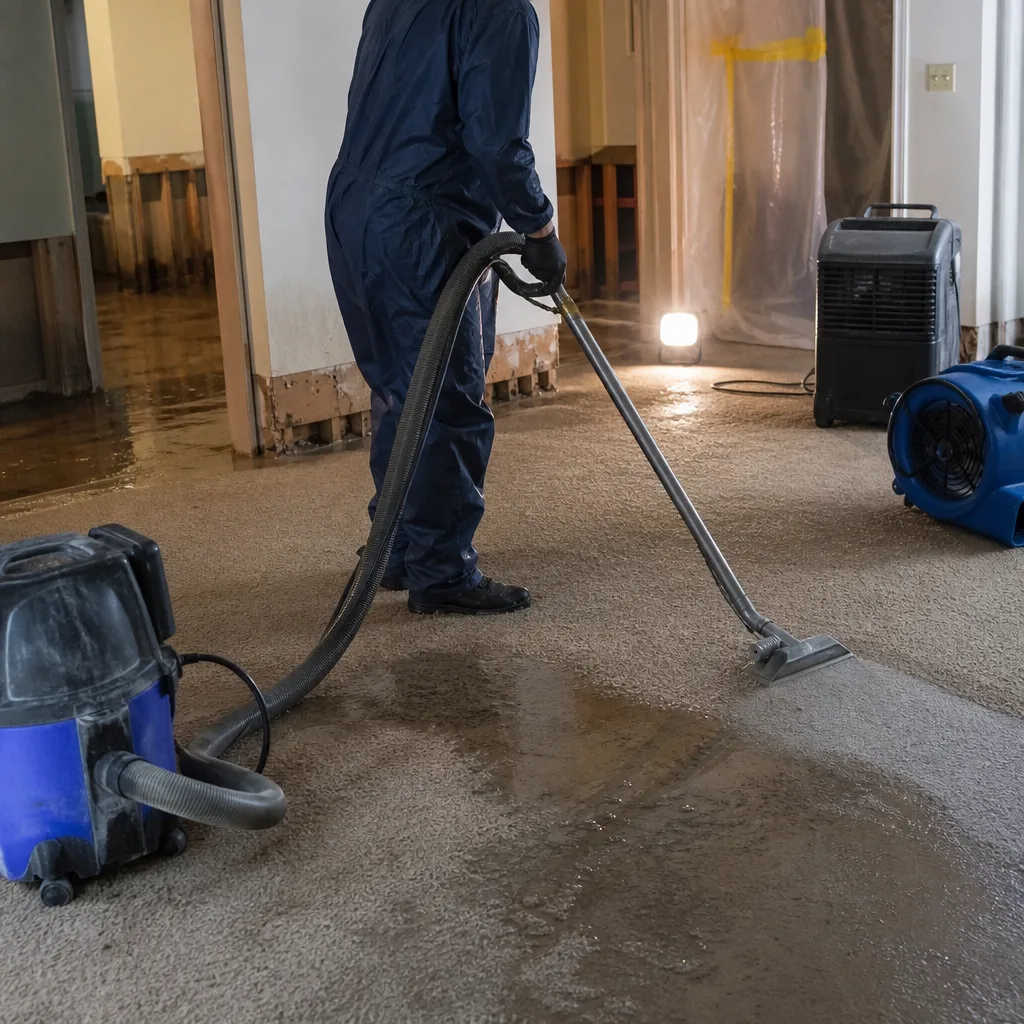
Free visual inspection and a written scope of work before any mitigation begins - photos, moisture readings, and drying logs go in your claim file
The scope we write is the scope we bill. Anything new gets shown to you, in writing, before we touch it.






 Before
 After
After Before
 After
After Before
 After
After24/7 Emergency Fire & Smoke Damage Restoration in Manhasset Hills
A kitchen fire in a 1960s split-level off Searingtown Road doesn’t stay in the kitchen. Smoke moves through wall cavities, follows chase lines into the basement, and settles above drop ceilings where nobody looks until the odor gives it away weeks later. We answer the phone live at 2 a.m., we dispatch crews into Manhasset Hills the same hour, and we start with a free visual inspection that tells you exactly what you’re dealing with. Call (917) 924-4221 now. The first hour after a fire determines whether you need cleaning or a full gut-and-rebuild, and that difference usually runs into five figures in this hamlet’s older homes.
Understanding Fire & Smoke Damage Restoration Severity in Manhasset Hills Properties
Fire damage in Manhasset Hills rarely behaves the way generic restoration guides describe, because the housing stock here isn’t generic. Most homes went up between 1950 and 1975, which means plaster-over-lath walls instead of modern drywall, post-and-beam framing that creates open chases between floors, and finished basements with drop ceilings that hide the original ceiling above. Smoke residue falls into three categories our crews classify on arrival: dry soot from fast-burning synthetic materials (light, dusty, responds to dry-chem sponges), protein-based residue from kitchen fires (nearly invisible, extremely pungent, requires enzyme neutralization), and wet soot from smoldering low-heat fires (concentrated at the source, spreads as a sticky film, damages painted surfaces within 48 hours). Plaster walls hold smoke differently than drywall. The lime-and-gypsum base acts like a sponge, pulling odor compounds deep into the material, which means surface wiping alone leaves the smell embedded until humidity reactivates it. Finished basements here add another layer: visible damage at floor level understates what’s accumulated above the drop ceiling, behind paneling, inside the post-and-beam voids. Any scope of work that doesn’t include overhead cavity inspection is incomplete for this hamlet’s construction.
Why Manhasset Hills Property Owners Choose Floodline Restoration Co. of Manhattan
- 45-minute response commitment to Manhasset Hills - we dispatch from the metro office and have crews staged across Nassau County’s North Shore corridor, so a certified technician walks your property within the hour, not the afternoon.
- A live person answers, 24 hours a day - no recording, no call-back queue. You get a dispatcher who asks the right questions and sends the right crew, whether it’s 3 p.m. or 3 a.m.
- IICRC-certified crews with FSRT and OCT credentials - Fire & Smoke Restoration Technician and Odor Control Technician designations, plus RIA and IFA training, on every fire job we run in Manhasset Hills.
- Free visual inspection before any work begins - we walk the property, open the cavities we need to see, and hand you a written scope. You approve it before we touch anything.
- Direct insurance billing with adjuster coordination - we document from the first hour, we talk to your carrier directly, and you never play messenger between us.
- One team from board-up to final rebuild - the same background-checked crew that sets containment on day one is the crew that reinstalls your drywall on day thirty. No mid-job handoff, no inherited strangers.
Our Fire & Smoke Damage Restoration Process
Inspection & Assessment
We map the fire line, test soot type, and run thermal imaging plus moisture mapping from floor to overhead cavity. In Manhasset Hills basements, that means lifting drop-ceiling panels before we set drying protocols, because what’s above the visible fire line drives the scope. You get a written estimate with line items.
Emergency Board-Up & Stabilization
Broken windows, compromised doors, roof openings from venting, exposed framing. We secure the property the same visit so weather and trespass don’t add to your loss. On split-level homes, that often means tarping the roofline and boarding lower-level windows.
Smoke & Soot Removal
We attack soot residue with HEPA vacuums, dry-chem sponges, and chemical agents matched to the residue type. Plaster walls get more aggressive treatment than drywall; we test absorption depth before choosing the method. Drop-ceiling cavities get opened and cleaned, not just the visible panels.
Odor Removal & Deodorization
This is where Manhasset Hills homes need more than standard treatment. We use thermal fogging and hydroxyl generators, plus cavity injection where smoke penetrated framing voids. Protein fires in older kitchens get enzyme neutralization, not just masking. The goal is pre-loss condition, not a lingering smell when humidity rises in July.
Contents Cleaning & Pack-Out
We inventory, pack, and clean salvageable contents at our facility, then store them climate-controlled until your rebuild is finished. For 1960s homes, that includes careful handling of older furniture and textiles that take smoke differently than modern pieces.
Repairs & Restoration
From fire-rated drywall replacement to full reconstruction, Floodline handles it in-house. Town of North Hempstead permits get pulled before structural work starts, and any asbestos-containing materials discovered during tearout get abatement coordination built into the timeline. You end with a finished home and our 90-Day Done Right Promise in your hand.
Need Emergency Fire & Smoke Damage Restoration in Manhasset Hills Now?
Crews minutes away, answering live 24 hours a day. The sooner we start, the less it costs.
Working With Your Insurance Company
Fire claims in Manhasset Hills move faster when the restoration contractor documents properly from the first hour. We photograph every room, every cavity we open, every layer we remove. We run industry-standard estimating software that your adjuster recognizes, and we send line-item scopes of work, not vague summaries. Your carrier gets moisture readings, soot test results, pack-out inventories, and daily drying logs without you forwarding a single email. We coordinate directly with your adjuster, including for the Town of North Hempstead permit questions that come up when structural work is required. All three standing offers apply: $50 off any repair over $250, the $89 seasonal tune-up, and a 5% discount for seniors and veterans, always.
What We Provide Your Insurer
- Thorough documentation of the loss
- Photos of all damage, room by room
- Moisture readings and drying logs
- A detailed, line-item scope of work
- Direct coordination with your carrier
Built for Manhasset Hills’s Loss Calendar
Fire losses in this hamlet follow a pattern we’ve learned to expect. December through March brings space-heater fires in older homes where original wiring predates modern breaker panels and finished basements run on undersized circuits; freeze-thaw cycles also burst galvanized supply lines that were never upgraded, dumping Category 1 water into walls firefighters later had to open. April through June, the nor’easter season pushes wind-driven rain through aging roofs and around original window flashing, and the same storms that flood basements also short the old electrical panels that many 1950s homes still run. July and August bring attic fires from overtaxed window units and kitchen fires from summer cooking that spreads smoke through open-wall chases into the basement drop-ceiling cavities. Fall is dead-leaf season, when dry leaves against foundation walls and around gas meters turn small exterior fires into smoke events that force odor remediation through entire ranches. Homeowners who’ve lived in their Manhasset Hills house twenty years know the rhythm; our dispatch board is built around it.
Fire & Smoke Damage Restoration Across Manhasset Hills’s Neighborhoods
Response routes vary by block in a hamlet this compact, and building types shift with the street. The ranch rows near Shelter Rock Road and the northern edge of the hamlet run single-level layouts where smoke moves horizontally through attic space, pooling above bedrooms before anyone notices the odor. Off Searingtown Road, the split-levels and Cape Cod homes present vertical chase lines, meaning kitchen smoke reaches the finished basement faster than it reaches the second floor. Around the Manhasset Hills elementary school and the streets fanning south toward Hillside Avenue, the original 1950s capes have shallower basements with lower drop ceilings, making overhead cavity inspection tighter and slower, but no less important. The homes backing up to Whitney Pond sit on slightly damp soil year-round, and post-fire water from suppression systems lingers longer in those crawl spaces, creating secondary damage that would read as fire residual if we weren’t running moisture mapping. Every corner of Manhasset Hills shares one thing: when our Fire & Smoke Damage Restoration team opens a wall or a ceiling, we find construction details that generic restoration crews outside the hamlet don’t expect.
Specialized Fire & Smoke Damage Restoration Services We Offer in Manhasset Hills
Fire Damage Cleanup
Manual debris removal, structural stabilization, and surface preparation in fire-damaged rooms. In Manhasset Hills homes with plaster walls, we test for asbestos-containing materials before anyone swings a hammer. Linoleum and vinyl asbestos tile hidden under newer kitchen flooring is a known reality in 1960s construction, and chipping it during fire debris removal triggers abatement delays. We check first.
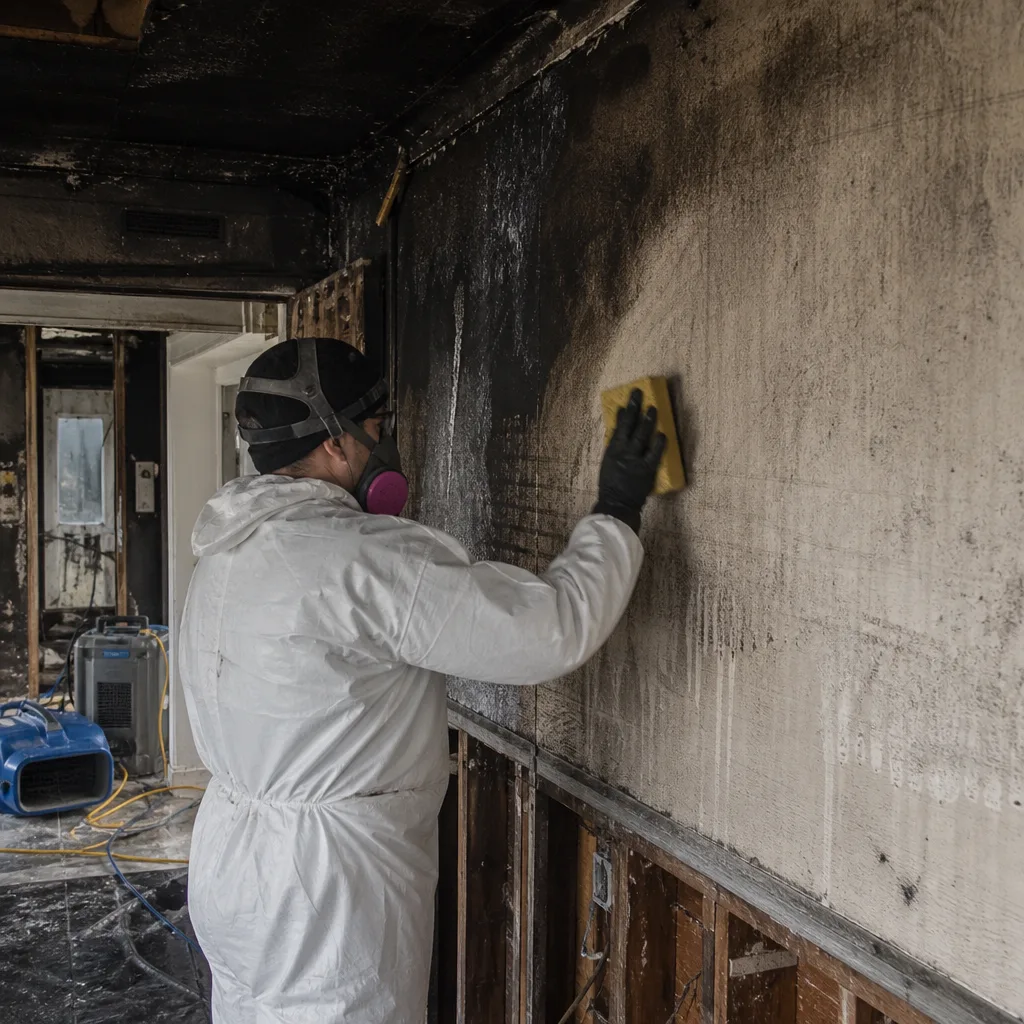
Smoke & Soot Removal
Room-by-room soot classification and removal matched to residue type. Dry soot from fast-burning synthetics gets HEPA vacuuming and dry-chem sponges before wet cleaning. Wet soot from smoldering fires needs immediate chemical treatment before it etches painted surfaces. In Manhasset Hills, that includes opening the drop ceilings in finished basements, because soot migrates upward and settles in the cavity above the visible fire line.
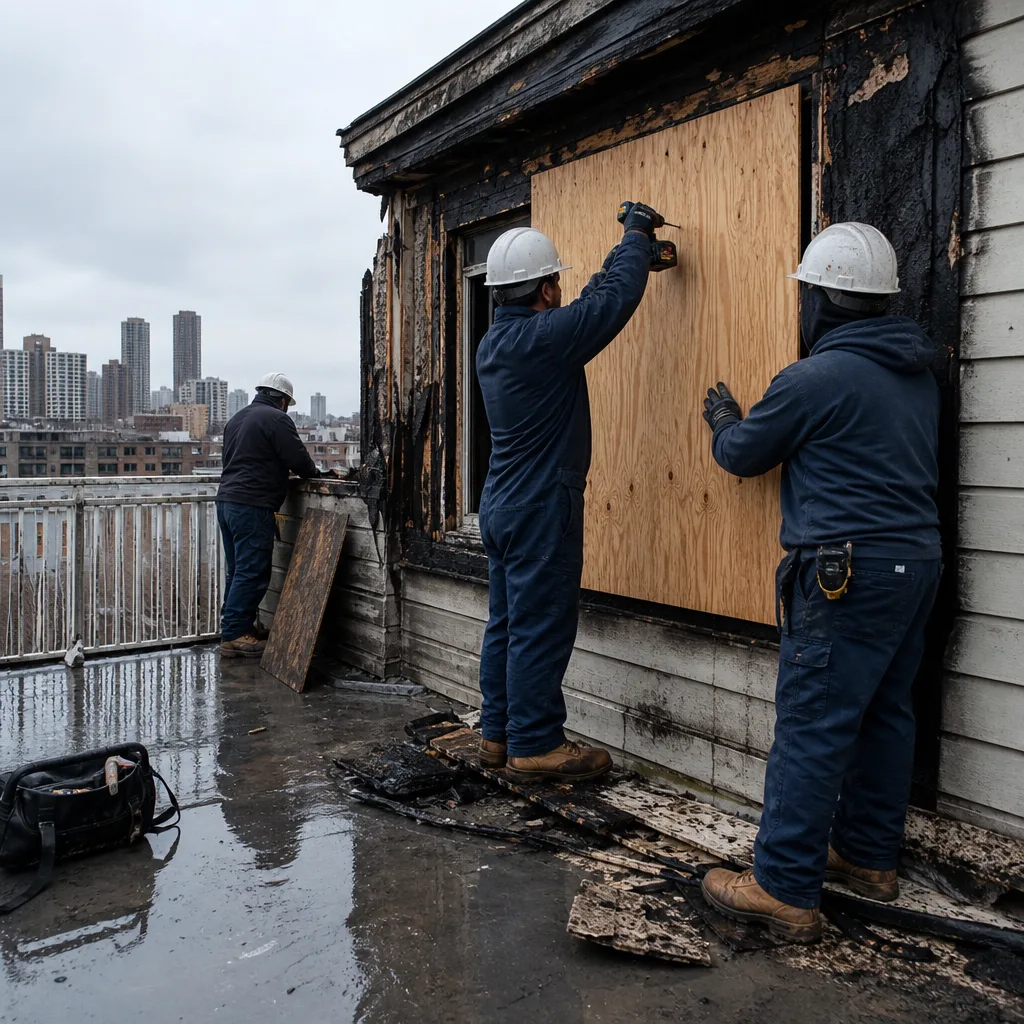
Odor Removal & Deodorization
Thermal fogging, hydroxyl generation, and cavity injection are standard on this page’s jobs because standard surface treatment fails in plaster-wall homes. The original lath-and-plaster construction absorbs smoke compounds deep, and humidity in a Long Island summer brings the smell back if we haven’t neutralized at depth. Protein-fire residue from kitchens gets enzyme treatment, not masking agents.
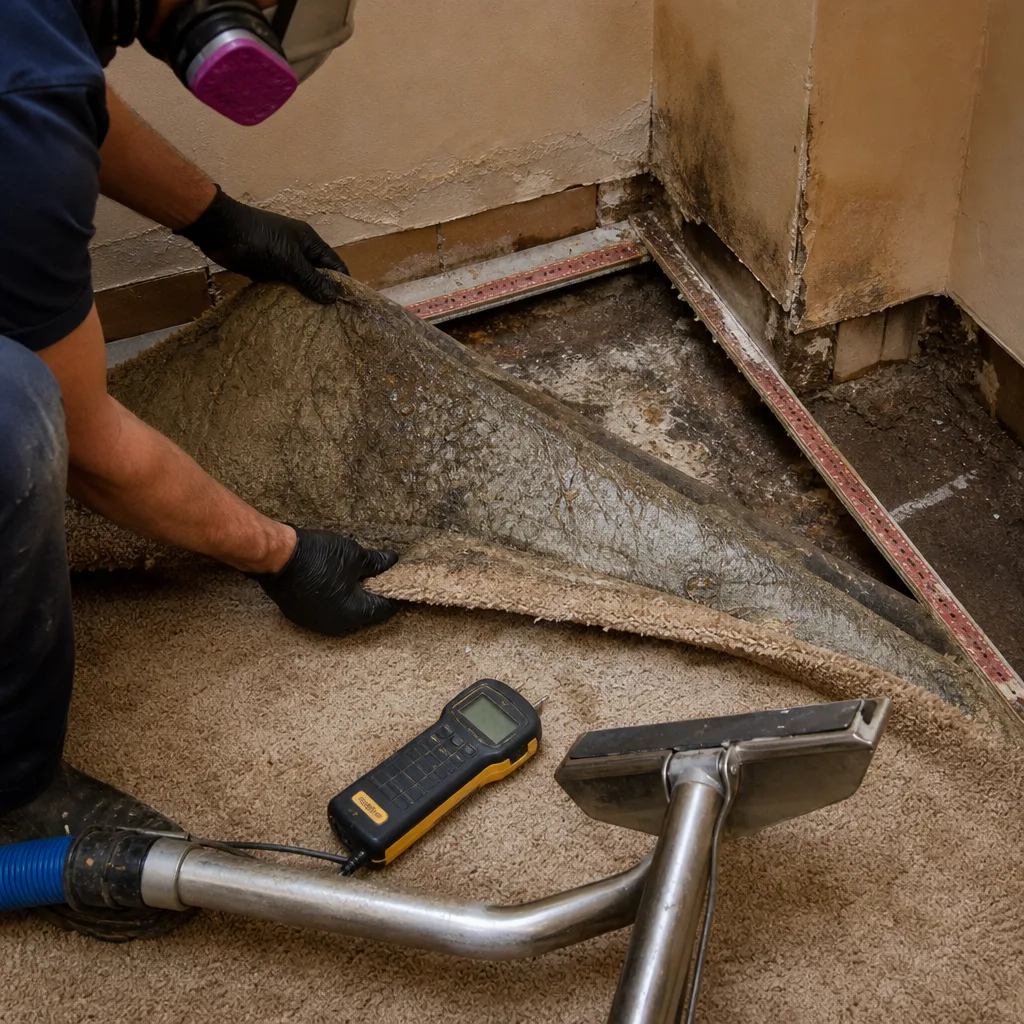
Contents Cleaning & Pack-Out
Full inventory, pack-out, cleaning, and climate-controlled storage at our facility. For Manhasset Hills homeowners, that means we handle the sentimental mid-century furniture and the family photos with the same documentation standard as your structural claim. Contents from a 1960s ranch clean differently than modern pieces; we know which textiles survive ozone treatment and which need gentler handling.
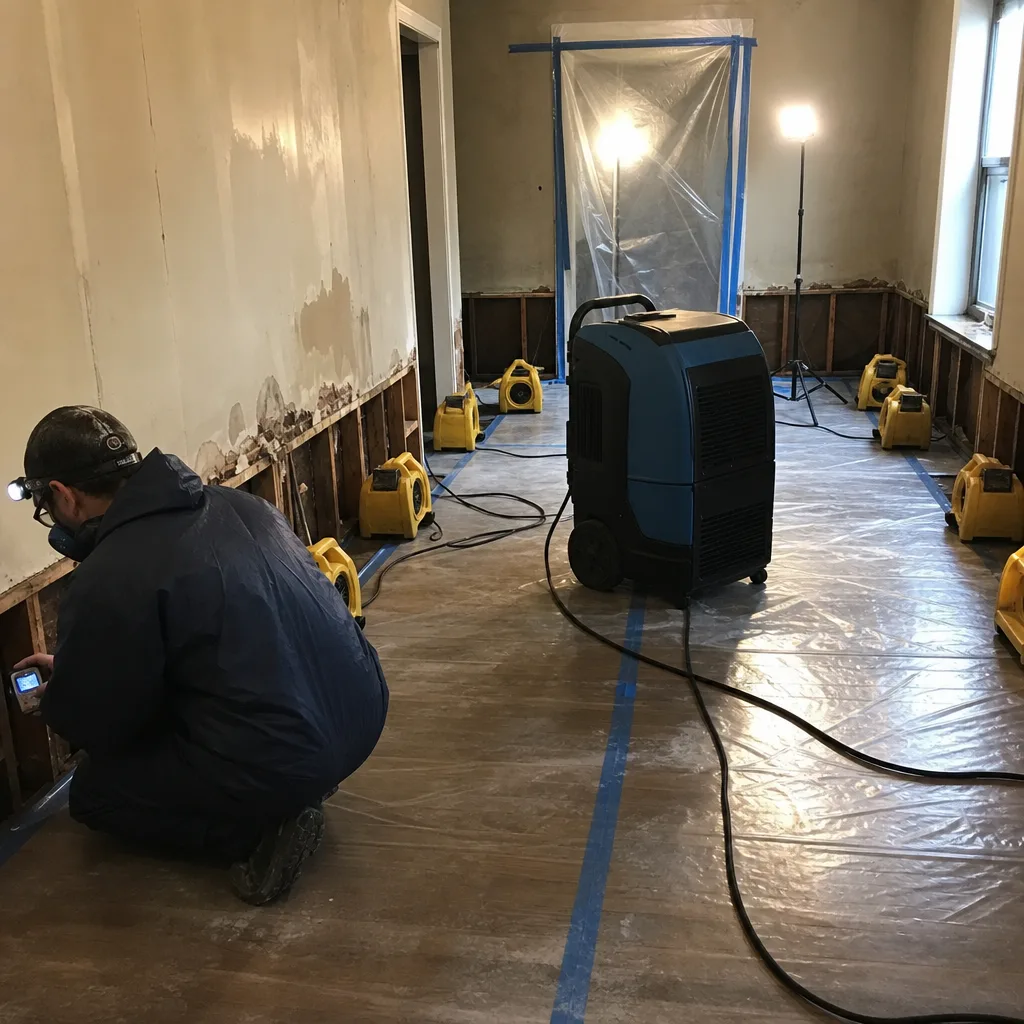
Emergency Board-Up & Tarping
Same-visit stabilization for broken windows, fire-vented roofs, and compromised entries. On split-levels, that often means securing the lower-level windows and tarping the roofline before nor’easter weather finds an opening. Board-up isn’t a temporary patch; it’s security and weather protection priced at a square deal, no surprises on the bill.
What happens when you call
- 1
A real person answersNo phone trees - you reach a local pro.
- 2
You get an upfront price rangeHonest numbers before anyone is dispatched.
- 3
A background-checked tech heads outLicensed & insured, dispatched right away.
- 4
You approve before work beginsNothing starts until you say go.
Fire & Smoke Damage Restoration Costs in Manhasset Hills, NY
Honest numbers for this hamlet’s market. A small kitchen fire with smoke damage confined to one room and no structural repair typically runs $2,800 to $5,500 in Manhasset Hills. Full smoke and soot removal across a 1,500-square-foot ranch, including drop-ceiling cavity treatment and odor neutralization, lands between $5,000 and $11,000 depending on how far smoke migrated. Content pack-out and cleaning adds $2,000 to $7,500 based on volume and the materials involved. A finished-basement fire requiring structural repair, asbestos abatement coordination, and full reconstruction runs $18,000 to $45,000 and up in this hamlet’s mid-century stock. Insurance covers most fire losses; your out-of-pocket is typically the deductible plus any upgrades you choose. The free visual inspection gives you a firm written scope before we start, so you know the number going in. Call (917) 924-4221 for an exact quote. The senior and veteran discount knocks 5% off our line items, always.
We Also Serve Cities Near Manhasset Hills
Our crews cover the North Shore corridor and the surrounding Nassau County communities. We respond regularly to Fairview and Harrison, run jobs across East Bronx, and take calls from Hunts Point property owners who need the same live-answer dispatch and written-scope process we run in Manhasset Hills.
Manhasset Hills Fire & Smoke Damage Restoration Questions, Answered
How does a drop ceiling affect fire and smoke restoration in a Manhasset Hills finished basement?
A drop ceiling hides the real smoke damage. Smoke and soot rise through the chase lines and settle in the cavity above the drop-ceiling panels, coating the original 1960s drywall or plaster above the visible surface. Standard cleaning that only wipes the panels leaves odor and residue overhead, which resurfaces when humidity rises. Our first move in any finished basement here is lifting panels and running moisture mapping and soot testing overhead before setting any protocol.
Will the Town of North Hempstead require a permit for fire restoration in Manhasset Hills?
Yes, for structural work. The hamlet sits within the Town of North Hempstead’s jurisdiction, and any structural repair tied to fire damage, including framing replacement, electrical work, and significant drywall replacement, requires a permit and inspection. We pull the permits, schedule the inspections, and build the permit timeline into your restoration schedule so you don’t face a re-open after the job is finished. Cosmetic cleaning and odor removal alone typically don’t require a permit.
Can you clean fire-damaged contents from a 1960s Manhasset Hills home without moving them off-site?
Yes, for many items. On-site content cleaning works for hard surfaces, some furniture, and items that don’t need specialized drying or deodorization. But soft goods, textiles, books, and anything with deep smoke penetration usually need pack-out to our facility for ozone or hydroxyl treatment and climate-controlled storage. We inventory everything either way, and you decide what goes and what stays after you see the written scope and the numbers.
What kind of smoke residue is typical in Manhasset Hills homes with older plaster walls?
Protein-based residue from kitchen fires and wet soot from smoldering electrical fires are the two we see most in this hamlet’s 1950s and 1960s construction. Plaster walls absorb both deeply, and the residue type determines the treatment. Protein residue is nearly invisible but extremely pungent and needs enzyme neutralization. Wet soot is sticky and damages painted surfaces within 48 hours. A standard wet-wipe on plaster leaves both embedded, which is why we test absorption depth before choosing chemicals.
Why does a small kitchen fire in a Manhasset Hills ranch lead to odor in the finished basement?
Because the post-and-beam framing and open wall chases in these mid-century homes create vertical pathways between floors. Smoke follows the path of least resistance, which means it travels down through the wall cavities and collects in the basement’s drop-ceiling space, where the colder air settles it onto the original ceiling above. We see this on ranches and split-levels throughout the hamlet, and it’s why we always include overhead cavity inspection in any scope for a Manhasset Hills fire, even a small one.
How fast can someone actually get here for a fire emergency?
We commit to 45 minutes for Manhasset Hills response. Our dispatch is live 24 hours a day, and a real person answers at 2 a.m. the same way they do at noon. The crew that arrives starts containment and stabilization the same visit, so the damage stops spreading while you still have adrenaline running. Call (917) 924-4221.
Do I really need full odor remediation or just a cleaning?
It depends on where the smoke went. In Manhasset Hills homes with plaster walls and open chases, a surface cleaning usually isn’t enough because the odor compounds are embedded in materials you can’t see. The free inspection tells you the difference. We test with thermal imaging, lift the drop-ceiling panels, and show you what we find before we recommend full remediation. If a cleaning is genuinely enough, we say so and quote it as a cleaning.
What should I do in the first 30 minutes after a fire in my Manhasset Hills home?
Call (917) 924-4221 first. Then stay out of rooms with visible soot, don’t turn on HVAC systems because they spread smoke through the ducts, don’t wipe walls because wet soot smears and sets deeper, and don’t plug anything into outlets in the fire area. If it’s safe, open windows to ventilate. If there’s standing water from firefighting, stay clear of electrical panels. A live dispatcher will walk you through the next steps until our crew pulls up.
Serving Manhasset Hills, NY - Our Local Coverage Area
We’re based in the Manhasset Hills area and know this community well. Use the map below to see our service coverage - if you’re nearby, we can almost certainly help.
Why This Matters in Manhasset Hills Specifically
Here’s what a Google search won’t tell you, and what we know from running fires in this hamlet. The finished basements here, built in the 1950s through 1970s, almost always have drop ceilings that hide the original plaster or drywall above. When fire or smoke enters that basement, the visible damage at floor level dramatically understates what’s collected in the cavity above. Moisture from firefighting water also runs down into that cavity and sits against the original framing, creating conditions for mold that standard fire restoration crews miss. Our overhead-first protocol exists because we’ve re-opened too many Manhasset Hills basements where a previous contractor cleaned the visible surface and called it done. The 90-Day Done Right Promise we give in writing, the Keystone Standard, means if we miss something above those drop-ceiling panels, we’re back to fix it. No paperwork battles, no arguing. We stand behind it.
Written by Curt Bowman, Owner at Floodline Restoration Co. of Manhattan, serving Manhasset Hills and the North Shore corridor since 2010.