
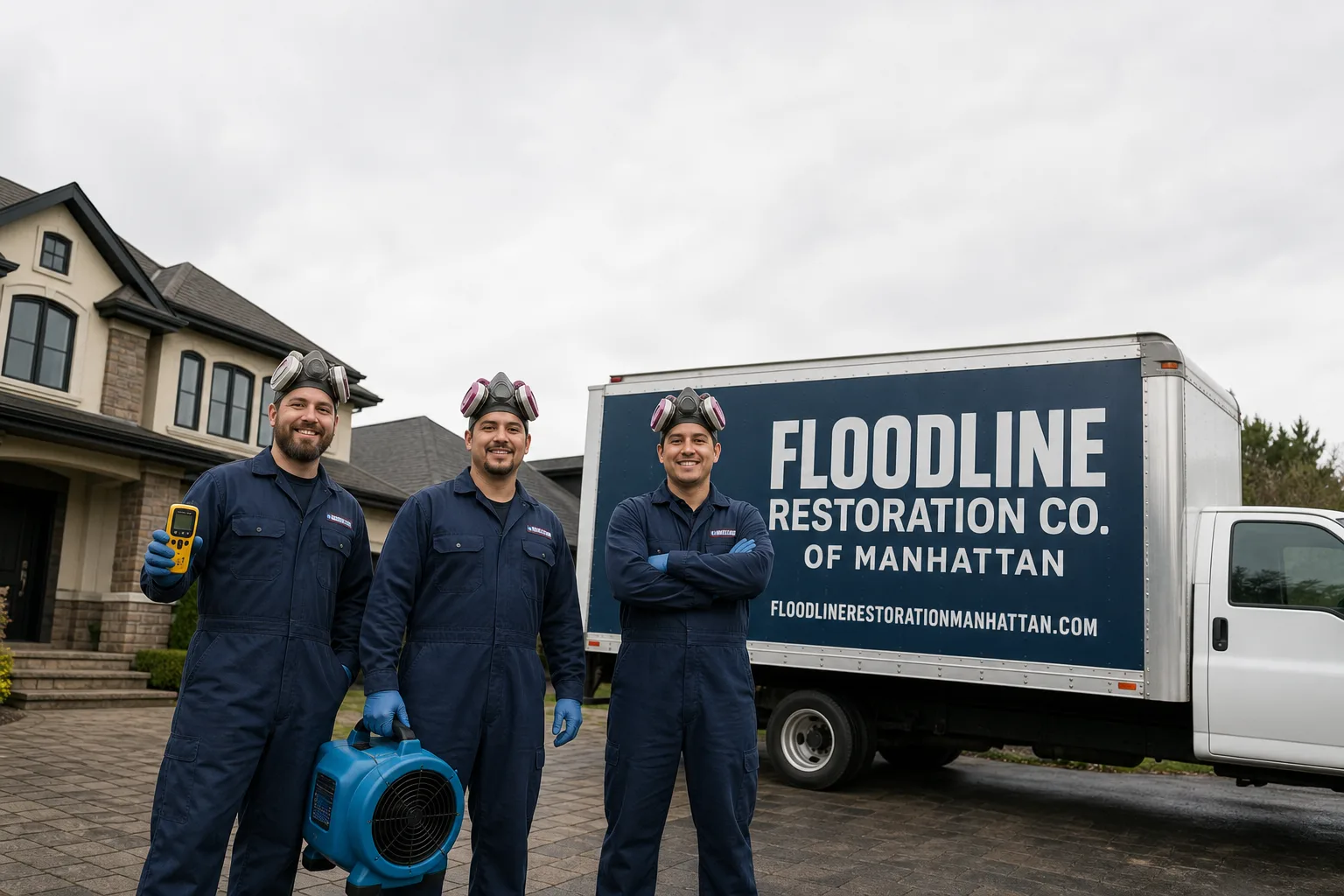
Free visual inspection and a written scope of work before any mitigation begins - photos, moisture readings, and drying logs go in your claim file
The scope we write is the scope we bill. Anything new gets shown to you, in writing, before we touch it.






 Before
 After
After Before
 After
After Before
 After
After24/7 Emergency Fire & Smoke Damage Restoration in Midtown West
Fire and smoke damage in Midtown West doesn’t wait for business hours, and neither do we. A kitchen fire in a Hell’s Kitchen walk-up or a smoke event in a Times Square hotel corridor needs a crew that understands this neighborhood’s unforgiving density. Floodline Restoration Co. of Manhattan answers live, 24 hours a day, every day. Call (917) 924-4221 and a dispatcher picks up. Not a recording. We’ll have a certified crew en route to your Midtown West property within the hour, because the first hour after a fire determines how much smoke residue settles into plaster walls, upholstery, and ductwork. Every minute of delay deepens the damage. We’ve seen it in pre-war tenements and high-rise condos both. The call is free, the visual inspection is free, and we’ll tell you plainly what needs doing and what can wait.
Understanding Fire & Smoke Damage Restoration Severity in Midtown West Properties
Not all fire damage is the same, and Midtown West’s building stock makes severity assessment trickier than most places. Light smoke damage leaves a fine soot film on walls and fabrics; that’s surface-level, though the odor gets into porous materials fast. Moderate damage drives oily soot into paint, carpet, and behind baseboards. Severe damage, from a grease fire or electrical fire, leaves a residue that turns sticky with heat and embeds itself in wall cavities, insulation, and mechanical systems. In Hell’s Kitchen’s 1900s-era walk-ups, open wall voids around one-pipe steam risers give smoke a highway through the building’s guts, spreading odor far beyond the fire room. Modern buildings have sealed assemblies, but they also recirculate smoke through shared HVAC. We inspect, we map the damage, and we give you an honest read before any work is authorized.
Why Midtown West Property Owners Choose Floodline Restoration Co. of Manhattan
- A real person answers, at 2 a.m., every time. Live dispatch around the clock. No phone tree, no call-back request. You get a human being. Curt Bowman built this company around that principle in 2010.
- Forty-five minute response in Midtown West. We stage crews for this neighborhood’s access constraints, from Hudson Yards loading docks to Hell’s Kitchen stairwells. We are a local Manhattan operation, not a national franchise routed from out of state.
- IICRC-certified crews, trained to FSRT standards for fire and smoke. Our technicians carry certifications from IICRC, RIA, and IFA, and they show up in uniforms with ID. Background-checked, every one of them.
- Free visual inspection, no pressure. We walk the property, document everything, and put a scope in writing before you commit. No high-pressure upsells. Just straight talk and a square deal.
- Direct insurance billing. We coordinate with your adjuster, provide photos and moisture readings, and bill the carrier directly so you’re not playing messenger. You handle your home; we handle the paperwork.
- One team from first response to final coat of paint. The same certified crew that extracts water and scrubs soot is the one that rebuilds the drywall and refinishes the floors. No mid-job handoffs, no inherited subs.
Our Fire & Smoke Damage Restoration Process
Inspection & Assessment
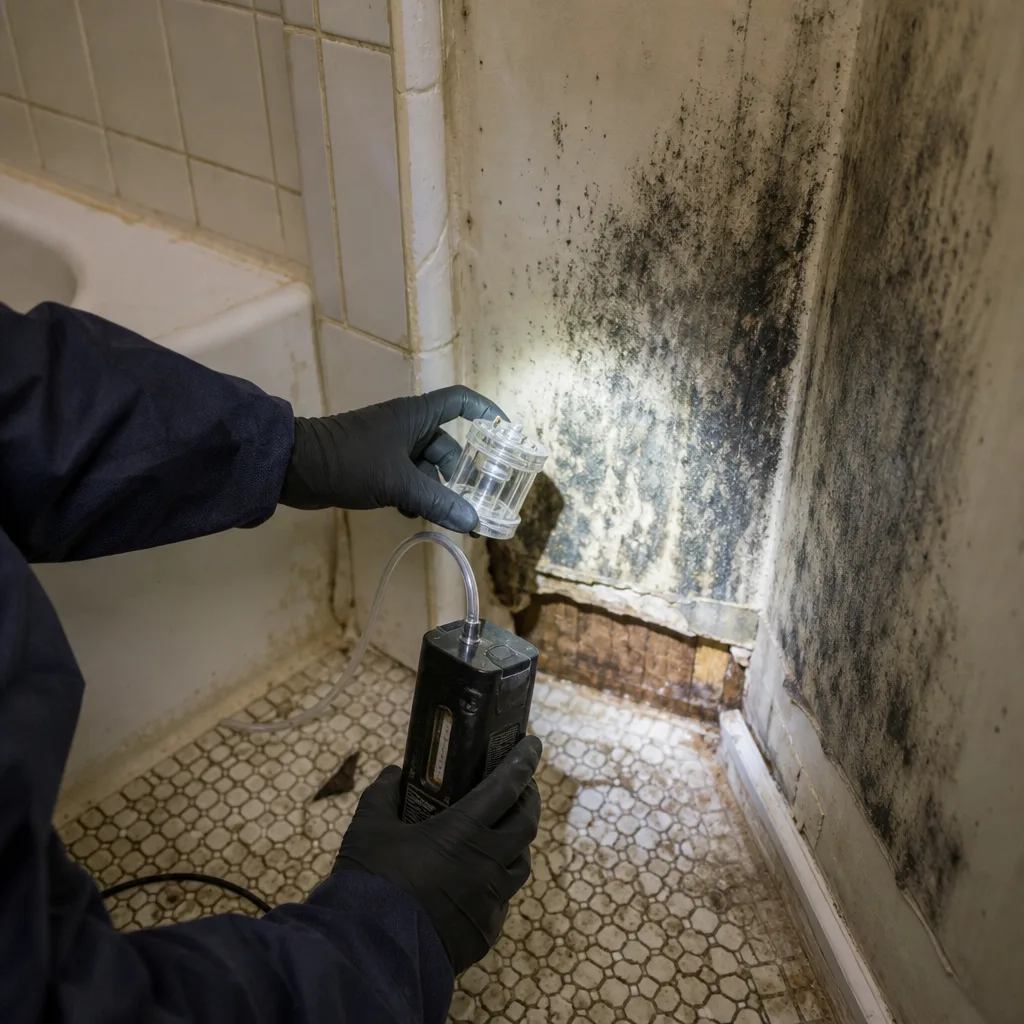
We arrive, walk the entire property with you, and document every surface. Thermal imaging finds hot spots inside walls. Moisture meters map where fire suppression water soaked through. We then lay out the scope in plain language and in writing.
Stabilization & Emergency Board-Up
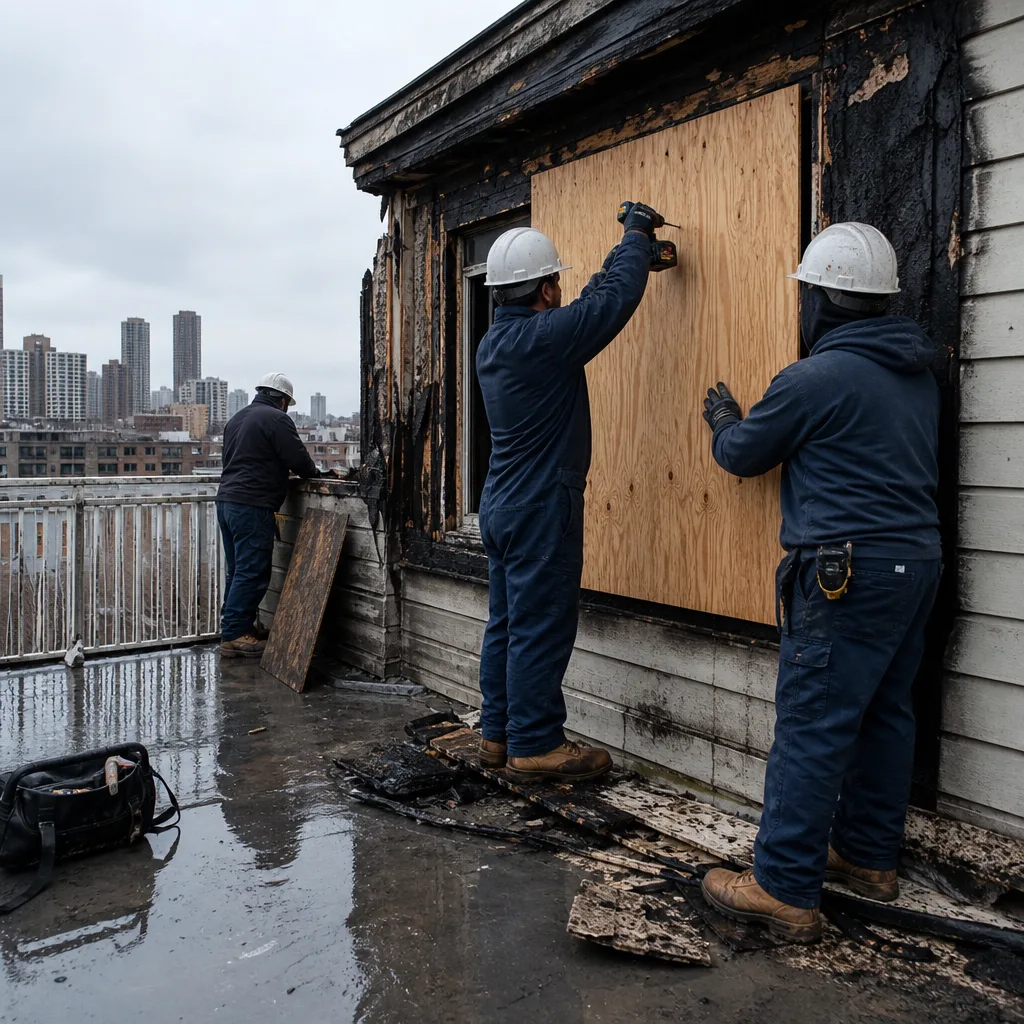
If windows are blown or the roof is open, we board up and tarp immediately. Securing the building prevents weather damage, keeps pests out, and protects your contents. In Midtown West’s dense blocks, this also satisfies building management and keeps neighbors safe from falling debris.
Smoke & Soot Removal
We use HEPA-vacuuming and dry chemical sponges to lift soot from walls, ceilings, and hard surfaces. Different soot types require different chemistry: protein soot from kitchen fires, oily soot from synthetics, dry soot from wood. We match the method to the residue, because scrubbing the wrong way grinds soot deeper.
Drying & Dehumidification
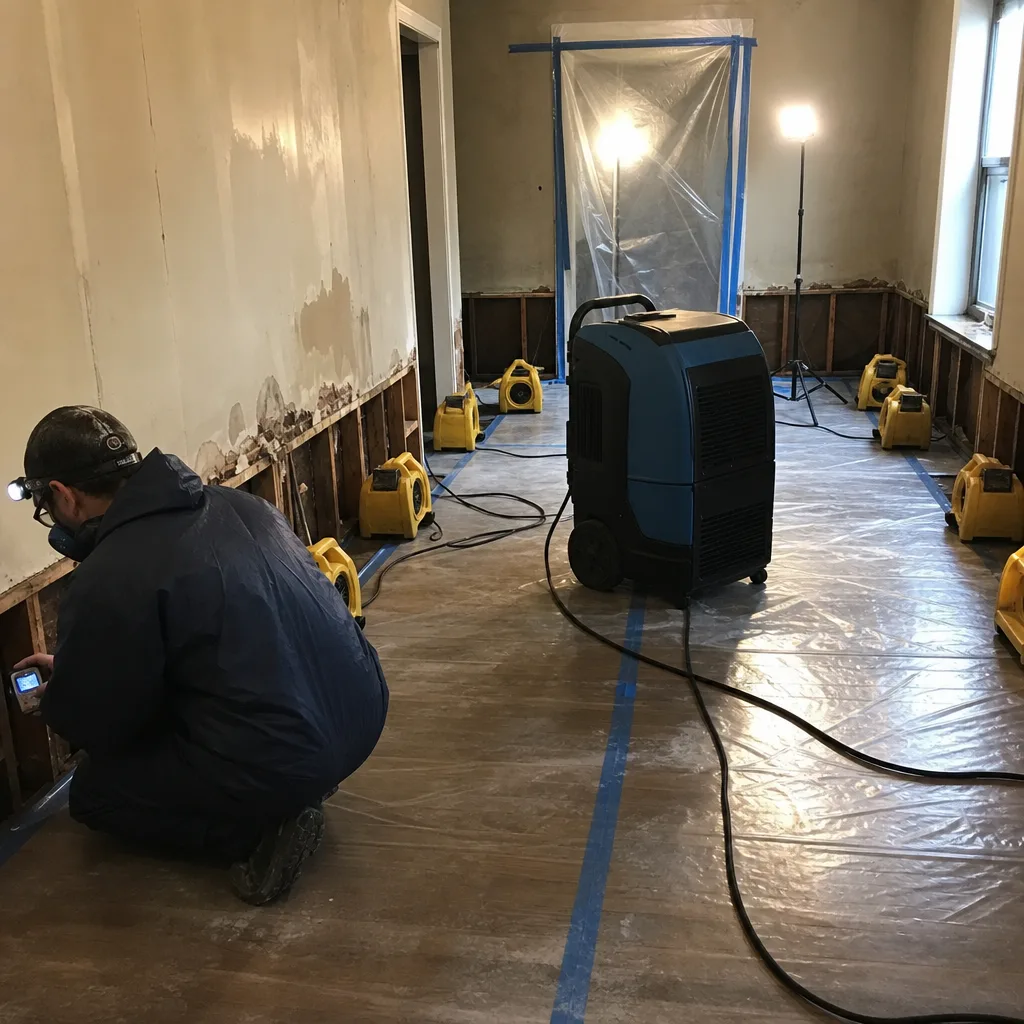
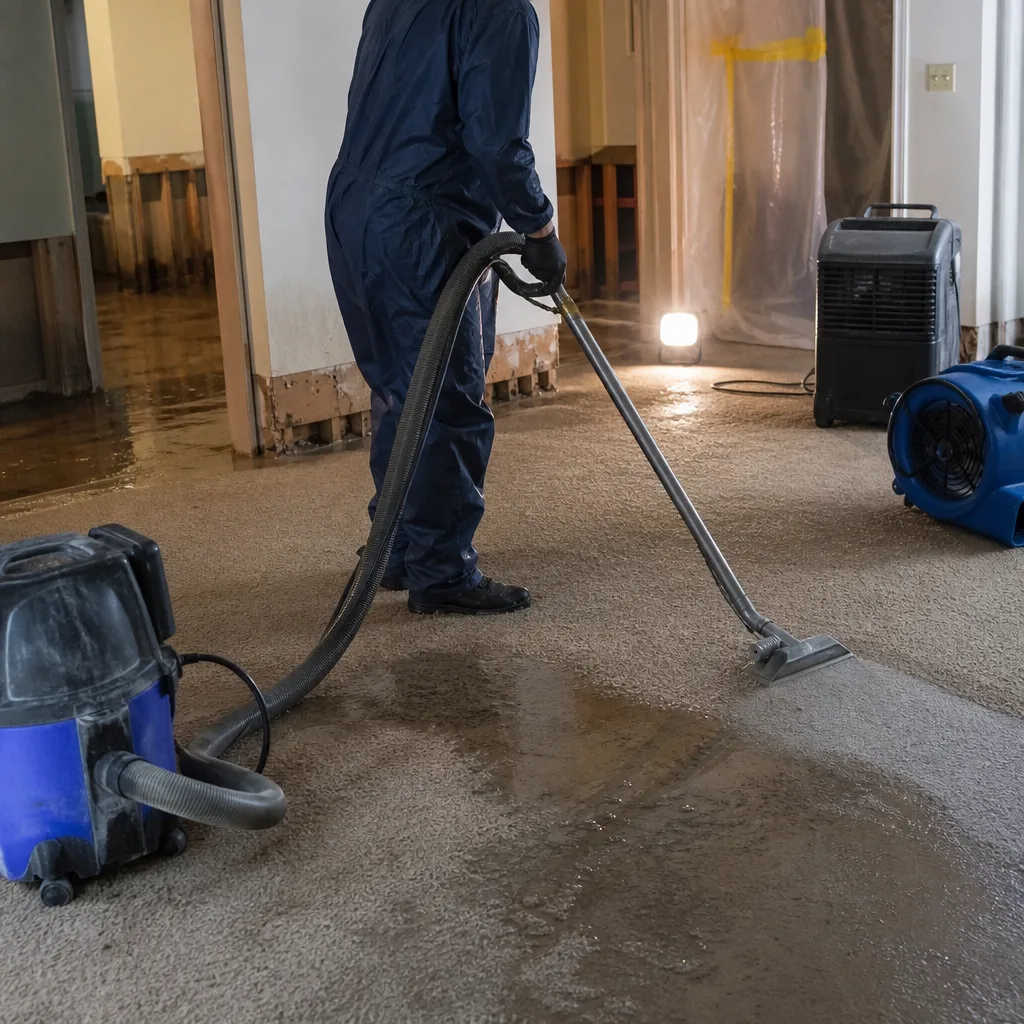
Fire suppression water often causes as much damage as the fire. We set up professional-grade Dri-Eaz and Phoenix air movers and dehumidifiers, take daily moisture readings, and maintain a drying log in writing until the structural dry standard is met. The log goes to you and your insurance carrier.
Odor Removal & Deodorization
Surface cleaning alone won’t remove smoke odor; it’s usually inside wall cavities, carpet backing, and ductwork. We use hydroxyl generators, thermal fogging, and ozone in controlled settings, plus HEPA air scrubbers for airborne particulates. In pre-war buildings, we treat the shared cavities, not just the fire unit.
Repairs & Reconstruction
Once everything is dry and clean, we rebuild. Drywall, trim, paint, flooring, cabinetry. The same Floodline crew that started the job finishes it. Backed by our 90-Day Done Right Promise in writing. If it’s not right, we make it right.
Need Emergency Fire & Smoke Damage Restoration in Midtown West Now?
Crews minutes away, answering live 24 hours a day. The sooner we start, the less it costs.
Working With Your Insurance Company
Fire claims move faster when documentation is sharp and complete from hour one. We photograph every room, every surface, every damaged item before touching anything. We keep moisture logs, drying charts, and a line-item scope that insurance adjusters recognize. Direct adjuster communication is standard practice for us in Midtown West, whether your loss is in a Hell’s Kitchen tenement or a Hudson Yards tower. You won’t relay messages between us and your carrier. You’ll get the written scope before work begins, and we bill the carrier directly for covered losses. No surprises on the bill. That’s the deal.
What We Provide Your Insurer
- Thorough documentation of the loss
- Photos of all damage, room by room
- Moisture readings and drying logs
- A detailed, line-item scope of work
- Direct coordination with your carrier
Built for Midtown West’s Loss Calendar
Midtown West’s fire and smoke losses follow a rhythm all year. January and February bring space-heater overloads in pre-war apartments, where original wiring strains under modern demand and old radiators push too-hot air into rooms packed with furniture. Spring thaw exposes roof leaks over 1920s-era tar-and-gravel roofs along Ninth and Tenth Avenues; water finds electrical junctions and causes smoldering shorts. Summer’s humidity makes smoke odor set faster and hold harder in un-air-conditioned walk-up units. Fall’s dry air turns minor cooking flare-ups into grease fires that fill entire floors with smoke. All year round, the hotel stock that lines Seventh, Eighth, and Broadway keeps us on the clock differently than any residential neighborhood in the borough. A smoke condition in a hotel corridor cannot wait for a convenient window; it has to be managed now, around guests, in occupied buildings.
Fire & Smoke Damage Restoration in Midtown West’s Hotels and Tenements
This page’s job is to explain something most restoration companies never mention: Midtown West changes the playbook. The neighborhood holds one of the densest concentrations of hotel rooms in North America, stretching from the Theater District down through Hell’s Kitchen to Hudson Yards. That density creates a revenue-per-room-per-hour urgency unlike anything in Astoria, Riverdale, or even the Upper West Side. When smoke filters through a hotel floor, the property is bleeding nightly rate on every affected room. Our crews work around occupied guests, set containment discreetly in service corridors, and coordinate air-mover placement with building engineering so a lobby doesn’t look like a disaster zone. In residential buildings, the pace is different, but the stakes are just as high, especially in Hell’s Kitchen’s tenement walk-ups, where smoke travels vertically through original one-pipe steam chases faster than anyone expects. We know both realities, and we plan for both before we arrive. Our Fire & Smoke Damage Restoration team has handled every building type this neighborhood has to offer.
Fire & Smoke Damage Restoration Across Midtown West’s Neighborhoods
Midtown West is not one place; it’s a patchwork of building types crammed into a few dozen square blocks. What works near the Port Authority Bus Terminal does not automatically work in the Hudson Yards high-rises or the brownstones tucked between Ninth and Tenth Avenues.
Hell’s Kitchen’s pre-war tenements, especially between 40th and 57th Streets west of Eighth Avenue, give us the tightest work. Narrow stairwells, original tin ceilings, plaster walls, and steam risers that run through shared wall cavities with no as-built drawings. When a radiator lets go on an upper floor, we’ve seen water hit four apartments below before the building super reaches the basement shutoff. That’s not hypothetical. We’ve cleaned that exact scene more than once.
Over by Hudson Yards, around 33rd through 38th Streets and west of Tenth Avenue, the towers are newer, but they come with their own demands: freight-elevator scheduling, building-management approval for every fan we place, air-pressure readings in sealed corridors, and fire-life-safety compliance checks we have to clear before we unpack equipment. Restoration there is as much coordination as it is cleaning.
The Times Square corridor from 40th to 50th on Broadway and Seventh Avenue is hotel territory, plus a few older residential conversions above retail. Service elevators get shared with housekeeping. Fire doors in corridors limit where we can run hoses or power cords. And the New York City Fire Department patrols this district more than any other; our work has to be code-compliant and clean, every single hour of the job.
Around Chelsea’s northern edge, south of 34th and west of Eighth, a mix of pre-war co-ops and converted lofts gives us attic-level smoke migration through shared cocklofts and fire escapes. The smoke travels up, but the water from fire suppression travels down, and we’re often drying two floors at once. That’s the reality of Midtown West work, and we’ve built our scheduling around it.
Specialized Fire & Smoke Damage Restoration Services We Offer in Midtown West
Fire Damage Cleanup
Fire damage in Midtown West apartments and hotel rooms means burned framing, charred drywall, melted wiring, and waterlogged floors from fire-suppression efforts. We remove unsalvageable material, stabilize what remains, and prepare the space for rebuild. In occupied hotels, we schedule demolition around check-out and check-in windows so one wing stays livable while another is restored.
Smoke & Soot Removal
Soot from a Midtown West kitchen fire coats everything from crown molding to HVAC grilles, sometimes across multiple floors. Our technicians use HEPA vacuums, chemical sponges, and targeted wet-cleaning methods for different soot types. In pre-war buildings, we open wall cavities where smoke traveled along unsealed chases and clean what the eye can’t see. Hidden soot is what turns a “clean” apartment sour months later.
Odor Removal & Deodorization
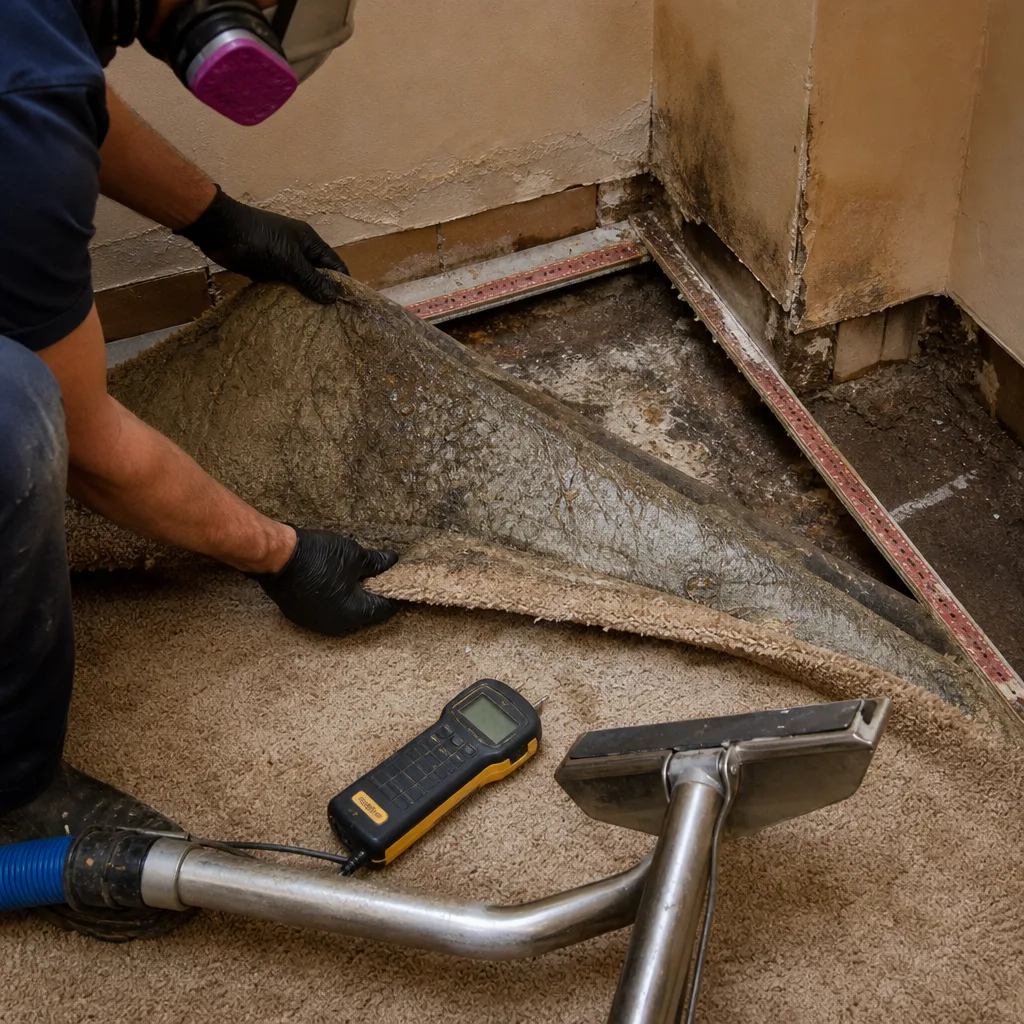
Smoke odor in Midtown West’s older housing stock lives in places people don’t look: behind radiators, inside pipe chases, under floorboards, inside closet walls. We use thermal fogging, hydroxyl generators, and HEPA air scrubbers to neutralize odor at its source rather than masking it with fragrance. In occupied hotel floors, we run low-profile scrubbers that keep corridors passable while quietly pulling smoke particulates from the air.
Contents Cleaning & Pack-Out
When soot covers furniture, clothing, books, and electronics, we inventory, photograph, pack out, and clean contents off-site when needed, then restore them. In Midtown West hotel environments, we’ve handled content management for dozens of affected rooms at once, tagging every item for chain-of-custody accuracy. In residential tenements, pack-out often means coordinating through narrow stairwells and sidewalk staging during limited hours.
Emergency Board-Up & Tarping
After a fire, broken windows and roof openings invite weather, vandals, and pests. We board up and tarp the same day, using materials that meet NYC code and satisfy building management. In Midtown West’s dense streetscape, we schedule this work with minimal sidewalk disruption and secure every opening before we leave the first visit. A property left unsecured in this neighborhood becomes a liability fast; our Midtown West customers see us treat board-up as non-negotiable, not optional.
What happens when you call
- 1
A real person answersNo phone trees - you reach a local pro.
- 2
You get an upfront price rangeHonest numbers before anyone is dispatched.
- 3
A background-checked tech heads outLicensed & insured, dispatched right away.
- 4
You approve before work beginsNothing starts until you say go.
Fire & Smoke Damage Restoration Costs in Midtown West, NY
Square deal numbers for Midtown West: emergency board-up and tarping typically runs $350-$900 depending on openings and material. Smoke and soot cleanup in a single-room kitchen fire usually lands between $1,200 and $3,800. Full odor removal across multiple rooms, with contents cleaning and pack-out, ranges from $4,000 to $15,000 or more when the damage spans three floors of a Hell’s Kitchen walk-up. Structural fire repair, which includes drywall replacement, painting, and possibly flooring, commonly falls in the $8,000-$40,000 range depending on square footage and finish quality. Hotel corridor smoke jobs are priced by scope; we work with property management on a per-incident basis. Every job starts with a free visual inspection, so you’ll have a written, line-item scope before any dollar is committed. The 90-Day Done Right Promise applies to every restoration we perform in Midtown West, and the $50 Off Any Repair Over $250 offer, the $89 Seasonal Tune-Up, and the Senior & Veteran 5% discount are always available.
We Also Serve Cities Near Midtown West
Floodline Restoration Co. of Manhattan runs crews to the neighborhoods and adjacent communities around Midtown West every week. We handle fire and smoke damage restoration in Fairview, Harrison, East Bronx, and Hunts Point with the same 24/7 live answer and 45-minute response commitment. If your property sits just outside our core Midtown West service area, call us anyway. Odds are we have a crew nearby.
Serving Midtown West, NY - Our Local Coverage Area
We’re based in the Midtown West area and know this community well. Use the map below to see our service coverage - if you’re nearby, we can almost certainly help.
Midtown West Fire & Smoke Damage Restoration Questions, Answered
How does Midtown West’s hotel density change fire and smoke restoration timelines?
It compresses everything. A smoke event on a hotel floor in Times Square or the Theater District represents lost revenue every hour the rooms sit dark, so restoration work there is scheduled around occupancy windows and often runs overnight. Residential jobs move at a deliberate pace, but in hotels we execute extraction, drying, and odor control on a 24-hour clock with minimal guest disruption.
Can smoke damage travel between pre-war tenement apartments in Hell’s Kitchen?
Absolutely, and it does more often than you’d think. The original one-pipe steam systems run through shared wall cavities with no unit-level dampers. Smoke follows those open chases from floor to floor, and it also moves under doors, through electrical outlets, and up stairwells. That’s why we open and treat the shared cavities, not just the fire unit.
What extra coordination is needed for fire damage in a Hudson Yards high-rise?
Hudson Yards towers require freight-elevator reservations, security-clearance for every technician, building-engineering sign-off before we place air movers or HEPA scrubbers in corridors, and compliance with the building’s fire-life-safety plan. We handle all of that. You shouldn’t have to become a building-code expert after a fire, and with us, you don’t.
How do you handle smoke odor in a building with original steam radiators and no unit-level shutoffs?
We work around the system rather than against it. Radiators and their supply risers hold heat, which bakes smoke odor into nearby plaster and paint. We cannot power down a whole riser to clean one wall, so we use containment and localized treatment: chemical sponges, thermal fogging, and hydroxyl generators placed to treat the cavity without disrupting the building’s steam service. It takes longer than a sealed modern unit, but the odor gets out.
Do you pack out contents from Midtown West hotel rooms differently than from residential units?
Yes. Hotel content pack-out is chain-of-custody work: every item photographed, tagged, logged, and moved through service corridors on a schedule agreed with housekeeping and front desk. Residential pack-out in a tenement or condo is more personal. We handle both, and we document both the same way your insurance carrier expects: photo by photo, room by room.
How fast can someone actually get to Midtown West?
Within 45 minutes, usually faster. Our dispatch is local to Manhattan, not a national call center routing calls across three states. Call (917) 924-4221 and we’ll give you an honest arrival window before you hang up.
Will insurance cover fire and smoke restoration in Midtown West?
Most standard homeowner policies cover fire and smoke damage as a named peril, including the water damage from fire suppression. Commercial and hotel policies differ by carrier and property class. We document the loss from the first hour, coordinate directly with your adjuster, and bill the carrier for covered work. You’ll see the scope in writing before any charge is authorized.
What should I do in the first 30 minutes after a fire in my Midtown West apartment?
Get everyone out and call 911 first. Once the Fire Department clears the scene, call us at (917) 924-4221. Don’t touch soot-covered surfaces, don’t run the HVAC or fans, and don’t try to clean anything yourself. Soot oils get pressed into paint and fabric by untrained wiping. Keep movement to a minimum and wait for our crew. The sooner we start, the more we salvage.
Written by Curt Bowman, Owner at Floodline Restoration Co. of Manhattan, serving Midtown West since 2010.