
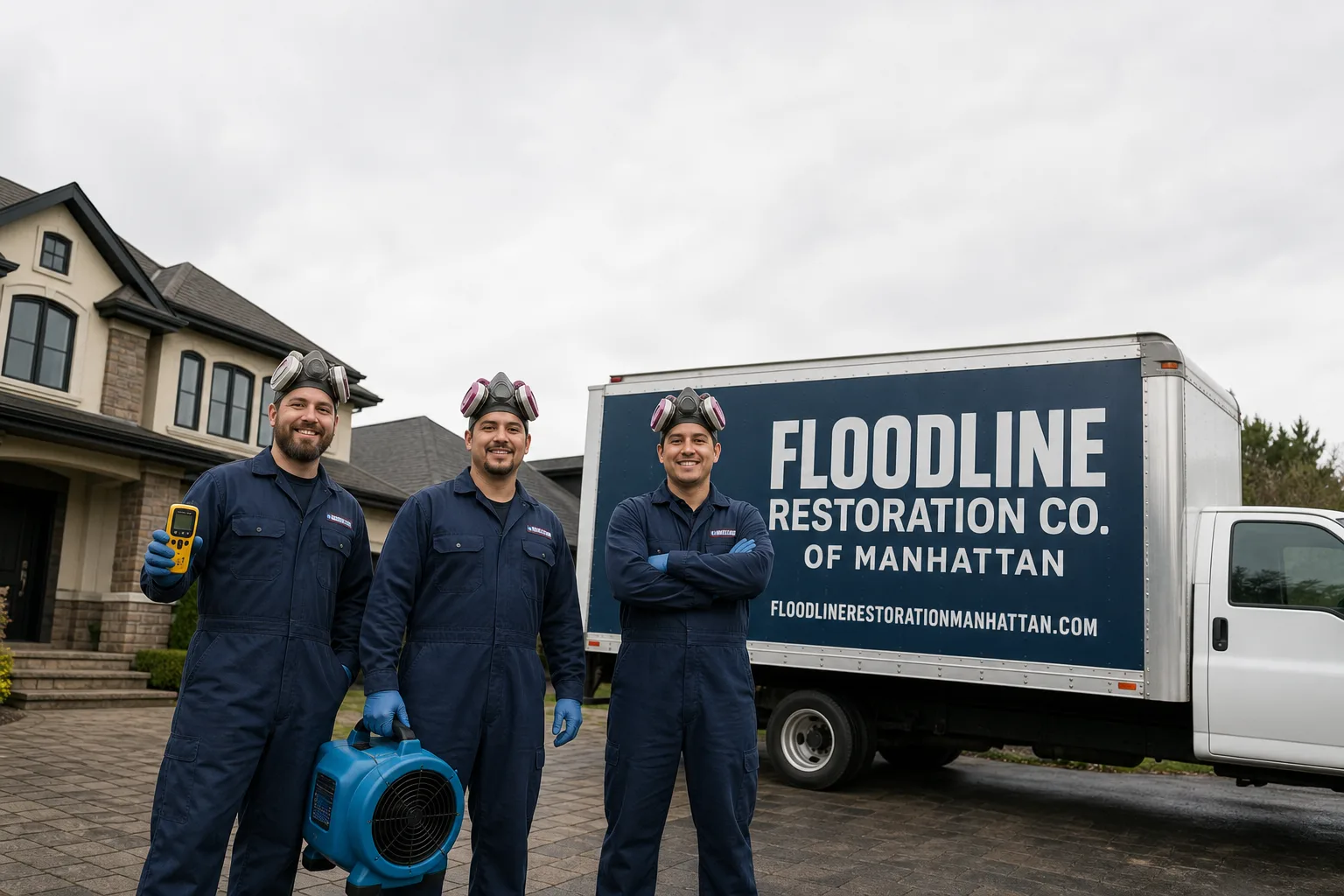
Free visual inspection and a written scope of work before any mitigation begins - photos, moisture readings, and drying logs go in your claim file
The scope we write is the scope we bill. Anything new gets shown to you, in writing, before we touch it.






 Before
 After
After Before
 After
After Before
 After
After24/7 Emergency Fire & Smoke Damage Restoration in Ridgefield
Fire and smoke damage in Ridgefield needs a response that starts before the last truck leaves your driveway. Our crews are dispatched from the moment you call (917) 924-4221, and a live dispatcher answers at any hour. Every minute smoke sits in balloon-frame walls and plaster ceilings, it works deeper into porous surfaces, and what started as a room-and-contents job becomes a whole-house odor problem. We arrive in under 45 minutes for emergency board-up, tarping, and smoke containment. The first hour decides how much of your home comes back and how much gets torn out.
Ridgefield’s older colonial and cape-style homes hold smoke differently than newer construction. Open wall cavities, lath-and-plaster, and decades of layered paint give soot places to hide that a quick wipe-down never reaches. Our Fire & Smoke Damage Restoration team reads the damage the way Ridgefield’s houses are actually built, then writes a scope of work around it. Before any equipment rolls in, we do a free visual inspection and explain exactly what we found in plain language. You get a written scope, your insurance gets the documentation they need, and the work starts with your sign-off.
Understanding Fire & Smoke Damage Restoration Severity in Ridgefield Properties
Fire damage severity is driven by three things: how far the flames traveled, what type of soot residue was produced, and where the smoke migrated. Ridgefield’s mid-century housing stock makes that third factor the one most often underestimated. Homes built between the 1930s and 1970s along Grand Avenue, Edgewater Road, and the Cedar Lane corridor frequently used balloon-frame construction. In balloon-frame walls, there is no fire blocking between studs. A first-floor kitchen fire smokes a wall cavity, and within hours that smoke has climbed the stud bay into the attic, carrying soot past three floors of living space without touching them visually.
Soot residue types matter too. Protein-based soot from a kitchen fire is nearly invisible but greasy and stubborn, while dry, powdery soot from burning wood or paper responds to different cleaning chemistry than the wet, acidic residue left by burning synthetics. Mixing up the chemistry or painting over untreated soot fails within months. Painted-over soot bleeds through new latex paint as a yellowish shadow, and the odor returns. In Ridgefield’s older homes with original wood lath and horsehair plaster, soot also settles into wall voids and behind baseboards. If the cavity is not addressed, the home smells like a campfire every time the heat kicks on. We scope for that on every job, not just the fire-damaged room.
Why Ridgefield Property Owners Choose Floodline Restoration Co. of Manhattan
- 45-minute response commitment for emergency board-up, tarping, and smoke containment in Ridgefield. We beat water and weather to the punch because we dispatch from a board, not a sales desk.
- 24/7 live answer, every single call. A dispatcher picks up at 2 a.m. Not a recording. You talk to a person who can actually send a crew. That matters when a fire happens at 2 a.m.
- IICRC-certified crews trained to FSRT and OCT standards for fire and smoke restoration and odor control. Background-checked, uniformed technicians on every job.
- Free visual inspection before any work starts. We tell you what needs doing and what can wait. No pressure, no invented scope.
- Direct insurance billing. We send our documentation and line-item scope to your carrier and coordinate with your adjuster. You never play messenger between us.
- One team from extraction to reconstruction. The same crew that sets containment and runs air scrubbers handles the rebuild. No mid-job handoff, no inherited crew that never saw the fire.
Floodline Restoration Co. was founded by Curt Bowman in 2010, built around a dispatch board rather than a sales team. Every job carries the 90-Day Done Right Promise, our Keystone Standard. If it’s not done right, we make it right. In writing. No arguing. No paperwork battles. That’s the deal we’ve offered since day one, and it’s written into every scope of work we hand a Ridgefield homeowner.
Our Fire & Smoke Damage Restoration Process
Inspection & Assessment
We map every affected surface, including wall cavities and the attic if smoke traveled upward. Thermal imaging and moisture meters show us where heat and humidity have moved, and we test soot residue to choose the right cleaning chemistry. You get a written scope of work before anything else happens.
Extraction & Stabilization
If the fire department used water, that water is saturated with soot and carries odor. We extract it the same visit. Emergency board-up and roof tarping happen first when the fire has opened the envelope. We secure the site before we clean it.
Drying & Dehumidification
Fire suppression water soaks drywall, framing, and flooring. Using Dri-Eaz and Phoenix dehumidifiers with daily moisture readings, we dry to the IICRC standard and hand you the log. No guessing, no “it feels dry to me.”
Cleaning & Sanitization
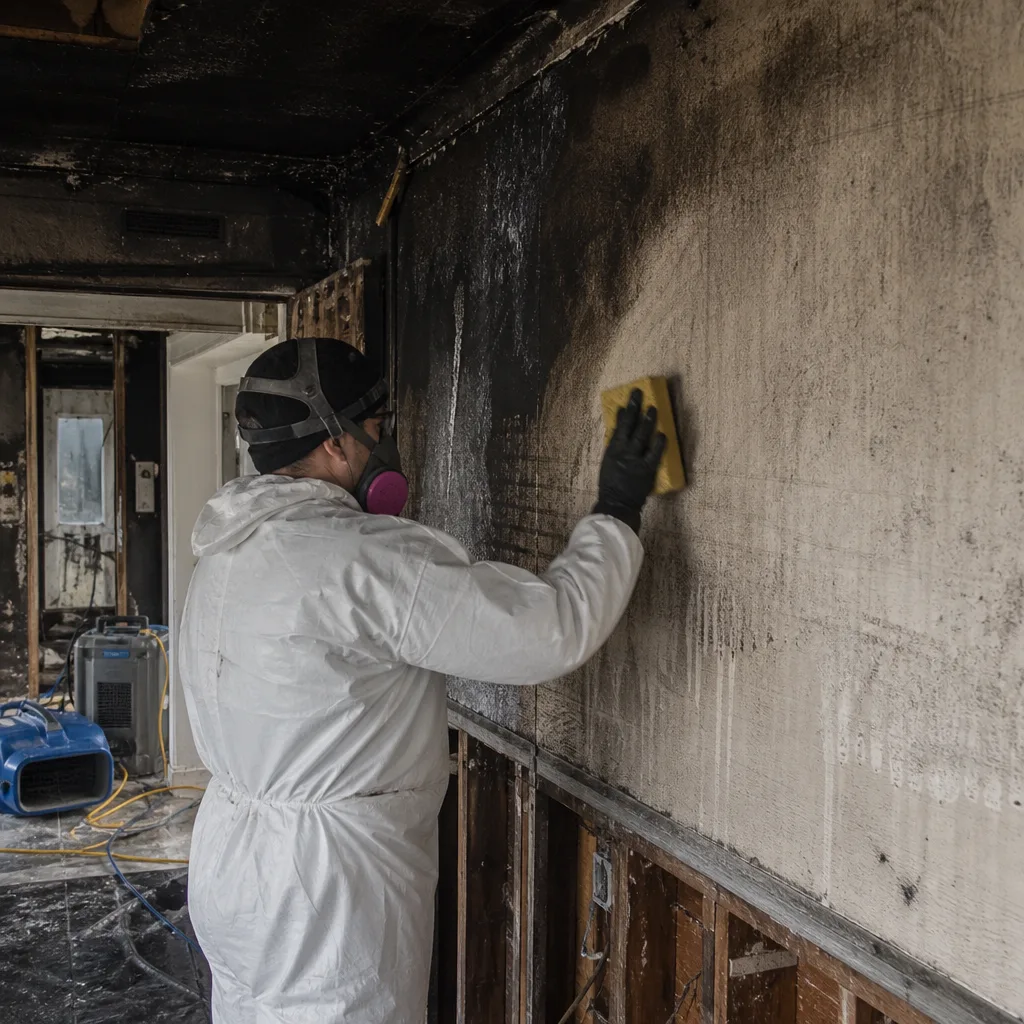
Every salvageable surface gets cleaned with the chemistry that matches its soot type. HEPA vacuuming captures loose particulate. We sanitize with products that don’t just mask odor. They remove it at the source.
Odor Removal & Deodorization
For Ridgefield’s older homes, this is the step that separates our work from a generalist’s. XPOWER air scrubbers, hydroxyl generators, and thermal fogging treat wall cavities and structural voids, not just the air. If smoke lived in the stud bay, we treat the stud bay.
Repairs & Restoration
We rebuild what the fire took. Drywall, trim, flooring, paint. The crew that scoped the job and ran the drying logs does our Reconstruction & Cleanup in Ridgefield. When we hand you the key, the job is whole, and it’s backed by the 90-Day Done Right Promise.
Need Emergency Fire & Smoke Damage Restoration in Ridgefield Now?
Crews minutes away, answering live 24 hours a day. The sooner we start, the less it costs.
Working With Your Insurance Company
Fire claims move differently than water claims. Smoke damage is harder to photograph than standing water, and adjusters need more than a picture of a soot-stained wall to approve a $12,000 odor remediation scope. That’s where our documentation habit changes the conversation. From the first hour on site, we photograph room by room, log humidity and moisture readings, and record where smoke traveled using thermal imaging. We write line-item scopes that match the language insurance carriers expect, and we send everything directly to your adjuster. You don’t chase paperwork. We do.
Most Ridgefield homeowners we serve have carriers who have seen our documentation before. The adjuster gets a complete packet: photos, drying logs, chemistry notes, and a scope that explains why the wall cavity needed treatment, not just the drywall in front of it. When the scope is written by a certified FSRT crew with the supporting data, approvals happen faster. It’s a square deal: no surprises on the bill, no homeowner translating between the crew and the carrier.
What We Provide Your Insurer
- Thorough documentation of the loss
- Photos of all damage, room by room
- Moisture readings and drying logs
- A detailed, line-item scope of work
- Direct coordination with your carrier
Built for Ridgefield’s Loss Calendar
Ridgefield’s fire and smoke restoration calls follow the seasons, and after 15 years of answering the phone in this trade, we can tell you what’s coming before you call. Winter brings chimney fires and space heater incidents, especially in the older capes along Shaler Boulevard and the side streets off Broad Avenue where heating systems date back to the original construction. Freeze-thaw cycling pushes ice dams onto under-insulated roofs, and when water drips into wall cavities around a chase or flue, the damage hides until the smell gives it away. Spring and fall are gutter seasons. Overhanging maples and oaks drop enough leaf load to clog gutters completely in some Ridgefield yards, and a clogged gutter against a wooden soffit is one stray chimney ember away from a roof fire. Summer thunderstorms rolling through the Hudson Valley bring lightning strikes and electrical fires, frequently in homes where original 1960s wiring was never upgraded. The common thread is the house itself: older, wood-framed, with cavities that move smoke and heat faster than homeowners expect.
We plan our equipment loads for it. Hydroxyl generators and HEPA air scrubbers run longer in Ridgefield’s older homes because wall cavities hold particulate. Drying times extend in uninsulated wall assemblies. The job is the same discipline every time: find the smoke, follow the smoke, treat the smoke, then rebuild what the fire and the water took. Floodline Restoration Co. has done it this way since Curt Bowman founded the company in 2010, and we’ll be doing it this way in 2035.
Fire & Smoke Damage Restoration Across Ridgefield’s Neighborhoods
Response routes shape how fast we move. From the Edgewater border north to the Overpeck County Park boundary, Ridgefield’s streets are a mix of tight one-ways off Broad Avenue and wider residential blocks along Shaler Boulevard. A crew heading to a kitchen fire off Cedar Lane takes a different route than one responding to a second-floor smoke incident near Veterans Memorial Park. We know the traffic patterns and the shortcuts. That’s not a marketing line; it’s the difference between a 35-minute arrival and a 55-minute one when a fire has just been extinguished and smoke is still moving through the house.
The neighborhoods tell the story of the housing stock. Down along Ray Avenue and the smaller side streets, you’ll find capes and split-levels built in the 1950s and 1960s. Many still have original kitchens, original wiring, and open basements with stone or block foundations. Fires in these homes frequently start in the kitchen or the utility room and smoke moves upstairs through balloon-frame walls that were never fire-blocked. Around the Overpeck Creek side east of Broad Avenue, the homes sit lower and closer together, and wind-driven ember transfer between properties is a real concern during an outbuilding or garage fire. South of Edgewater Road toward the Palisades Park line, the housing shifts toward slightly newer construction, but even those 1970s-era homes have decades of deferred maintenance in the soffits and rooflines, and smoke from an attic fire finds its way down through the same wall cavities on its way out.
Specialized Fire & Smoke Damage Restoration Services We Offer in Ridgefield
Smoke & Soot Removal
Soot in a Ridgefield colonial is rarely just what’s on the wall in front of you. We clean all surfaces with chemistry matched to the soot type, then we open and treat the cavities behind them. Soot that gets painted over fails within months. We don’t paint over soot. We remove it.
Odor Removal & Deodorization
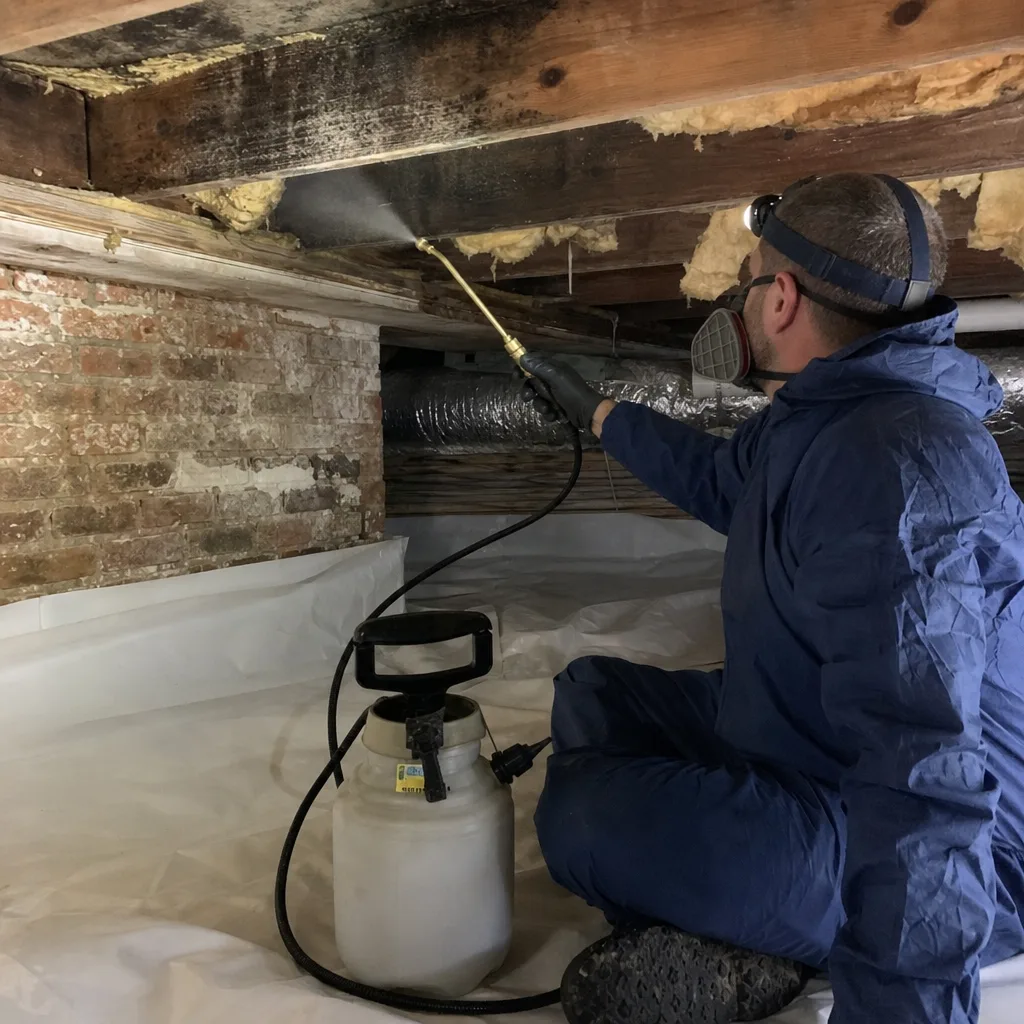
Odor lives where smoke lived: stud bays, wall cavities, duct runs, floor systems. In Ridgefield’s balloon-frame homes, smoke from a first-floor fire can reach the attic through the wall assembly. We run XPOWER HEPA air scrubbers, hydroxyl generators, and thermal foggers long enough to treat those hidden spaces, not just the room where the fire burned. That’s how you get rid of the smell permanently instead of masking it for a season.
Contents Cleaning & Pack-Out
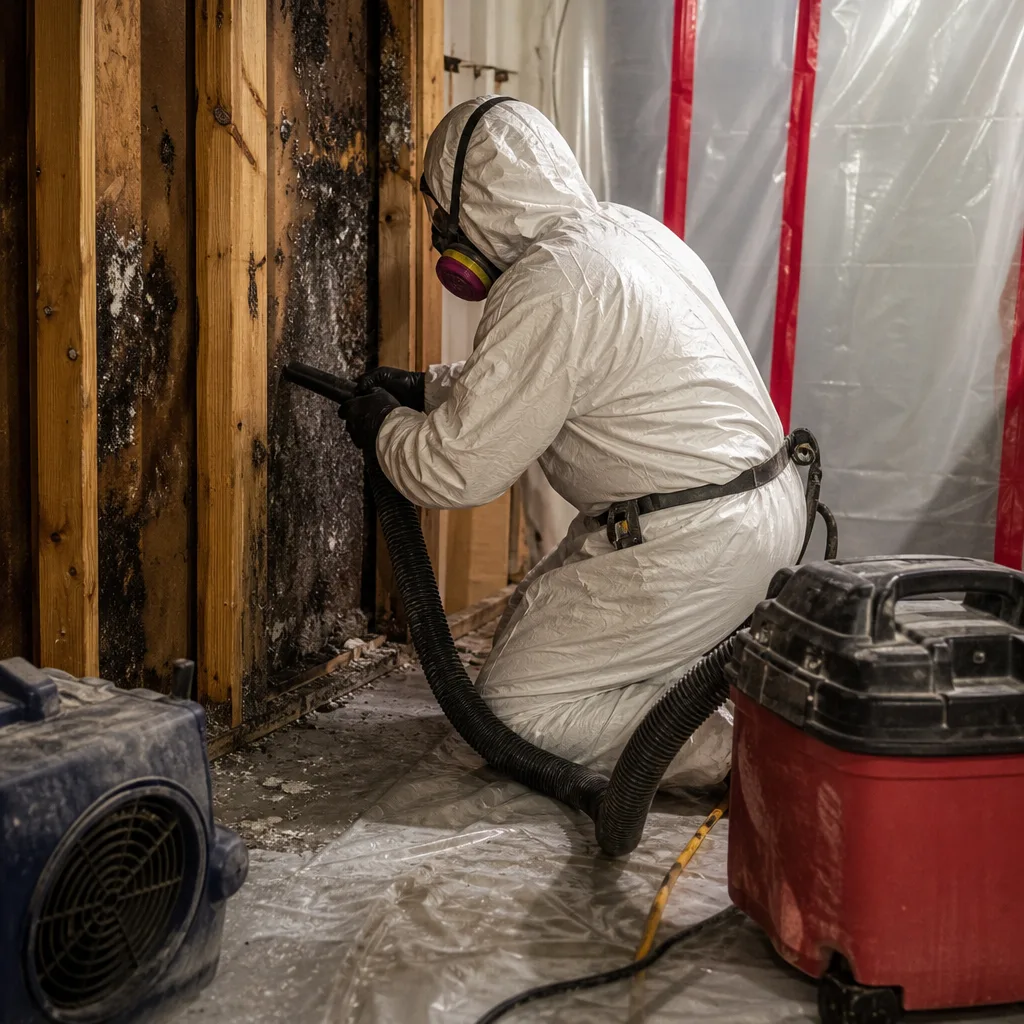
Clothing, furniture, books, and dishes in a smoke-filled Ridgefield home need more than a wipe-down. We pack out salvageable contents, inventory them, and clean them off-site with ultrasonic cleaning where it makes sense. What can’t be saved gets documented for your claim. What can be saved comes back clean and odor-free. We restored kitchen equipment, winter coats, and family photo albums from a split-level off Cedar Lane after a kitchen fire had pushed smoke through the entire upper floor. The clothes came back without a trace of smoke. That’s the standard.
Fire Damage Cleanup
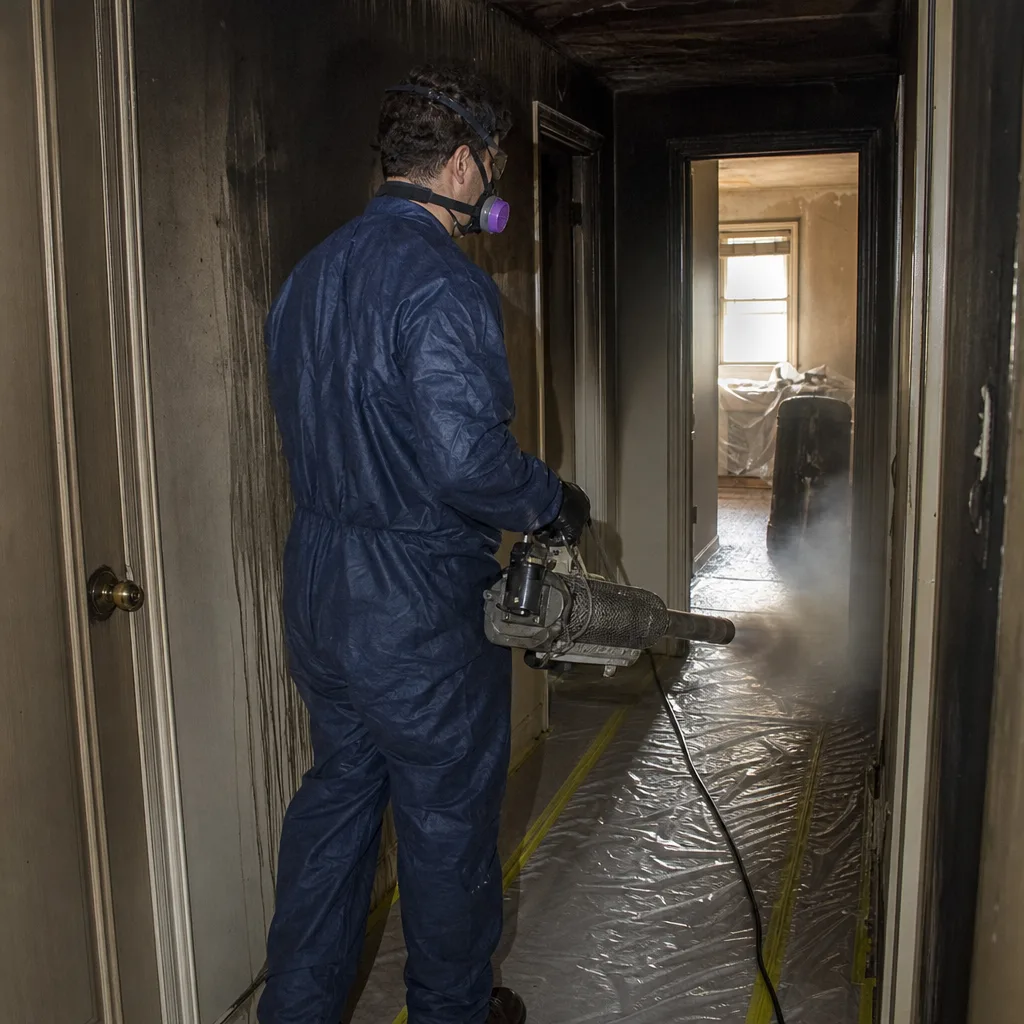
Debris removal, structural cleaning, and disposal of unsalvageable materials happen before we start rebuilding. We remove the burned material, clean the remaining structure, and prep it for drying and repair. On older Ridgefield homes, we check for asbestos in plaster and flooring when the home’s age suggests it might be present. That’s part of doing the job right, not an upsell.
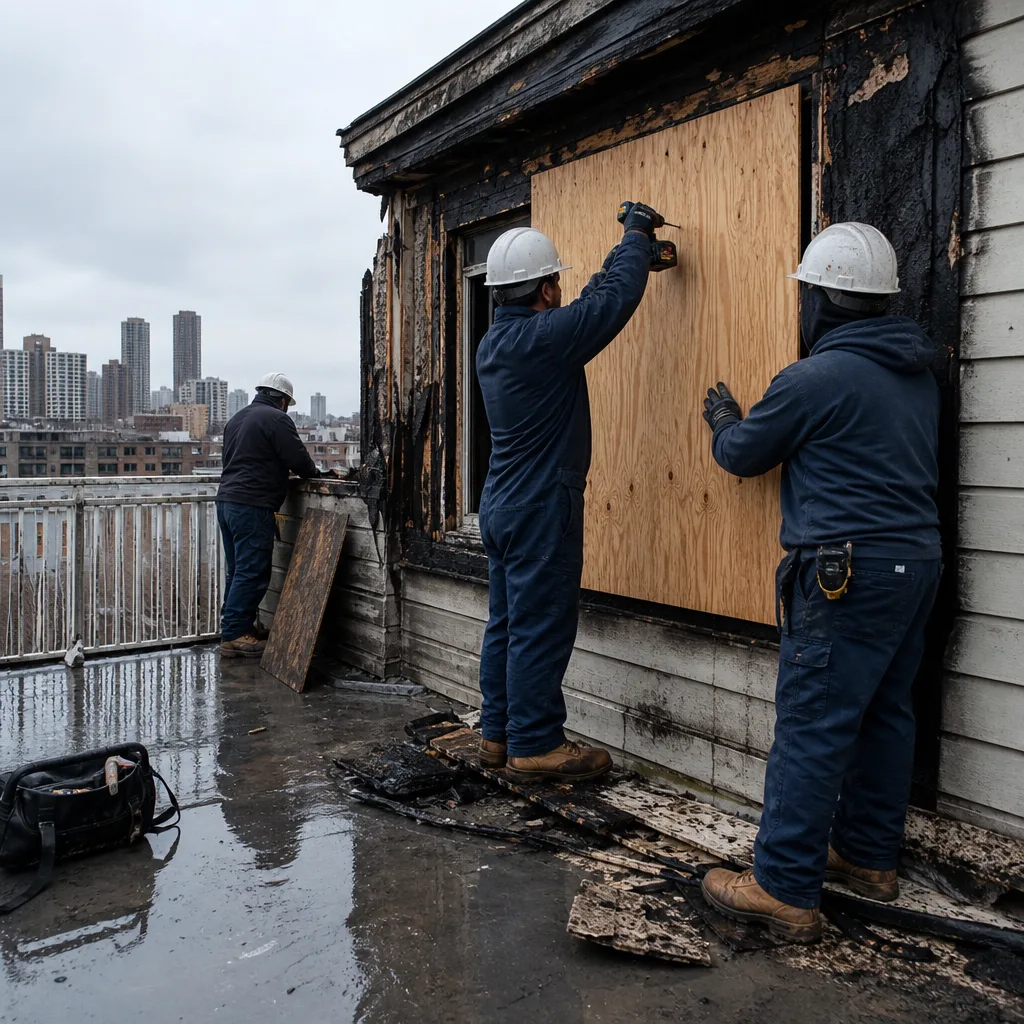
Emergency Board-Up & Tarping
When a Ridgefield fire leaves a hole in the roof or a burned-out window, the house is open to weather, animals, and theft. We board up and tarp the opening within hours of the fire department leaving. Secure the site first, then start the mitigation. It’s the only order that makes sense.
What happens when you call
- 1
A real person answersNo phone trees - you reach a local pro.
- 2
You get an upfront price rangeHonest numbers before anyone is dispatched.
- 3
A background-checked tech heads outLicensed & insured, dispatched right away.
- 4
You approve before work beginsNothing starts until you say go.
Fire & Smoke Damage Restoration Costs in Ridgefield, NJ
A contents-only smoke cleaning in Ridgefield with no structural damage typically runs $1,800 to $4,500, depending on the square footage and the soot type. Full structural smoke and soot removal on a 1,500-square-foot cape after a moderate kitchen fire, including wall cavity treatment and odor remediation, usually falls between $9,000 and $22,000. Severe fires with burned framing, roof damage, and full pack-out of contents run $35,000 to $75,000 or more, and those are the jobs where our documentation habit pays for itself: the difference between an approved claim and a denied one is frequently a scope that explains why the wall cavity needed treatment.
Board-up and tarping alone runs $450 to $1,200 depending on window count and roof opening size. Odor elimination as a standalone service in a 1,000-square-foot home runs $2,500 to $6,000. What moves the price is square footage, how far smoke traveled, whether plaster or drywall needs opening, and how long air scrubbers need to run. The free visual inspection gets you a firm scope with real numbers. Call (917) 924-4221 and we’ll come look at what actually happened, then tell you what it costs to fix. Estimates are free, and we’ll never invent work you don’t need.
We Also Serve Cities Near Ridgefield
Floodline Restoration Co. of Manhattan serves the communities around Ridgefield every day, including Ridgefield, Palisades Park, Cliffside Park, Fairview, and Edgewater. Same crews, same 45-minute commitment, same written guarantee. If your home is in one of those towns and you’re looking at smoke damage, call the same number: (917) 924-4221.
Serving Ridgefield, NJ - Our Local Coverage Area
We’re based in the Ridgefield area and know this community well. Use the map below to see our service coverage - if you’re nearby, we can almost certainly help.
Ridgefield Fire & Smoke Damage Restoration Questions, Answered
Why does smoke odor linger in Ridgefield capes and colonials even after the fire is out?
Smoke odor lingers because the smoke itself traveled into places you can’t see. In Ridgefield’s older capes and colonials with balloon-frame construction, wall stud bays run continuously from the basement to the attic with no fire blocking. Smoke from a first-floor fire climbs those open cavities and deposits soot into wood lath, plaster, and insulation three floors away from the burn room. Cleaning the visible surfaces without treating those cavities leaves enough particulate to release odor every time the home heats up or humidity rises. The fix is cavity treatment: air scrubbers, thermal fogging, and controlled demolition where needed. Call (917) 924-4221 if you’re smelling smoke months after a fire; that’s a cavity problem, not a cleaning problem.
Does Ridgefield’s freeze-thaw cycle affect how you treat smoke-damaged drywall?
It does, and it’s one of the first things we evaluate on a winter fire. Fire suppression water soaks into drywall, and when Ridgefield temperatures swing from below freezing at night to above freezing during the day, that water expands and contracts inside the gypsum core. The freeze-thaw cycling breaks down the drywall’s internal structure faster than it would in a warmer climate, which means smoke-damaged drywall that absorbed firefighting water often fails structurally even if it looks intact. We test it with a moisture meter before we decide to dry it or replace it. Treating a wall that’s about to crumble wastes your money. Replacing drywall that could have been saved costs you more than necessary. The testing takes minutes and the answer matters.
Can you restore contents that were in a smoke-filled finished basement with no fire damage?
Yes, and we do it regularly in Ridgefield. Smoke sinks. A fire on the first floor pushes smoke up through walls, but it also drifts down into finished basements, and the contents down there absorb odor just as thoroughly as the room where the fire burned. We inventory and pack out salvageable contents, clean them with the same chemistry we use on the main floor, and run ultrasonic cleaning on glassware, tools, and hard surfaces. Textiles get ozone and hydroxyl treatment. Paper and books get HEPA vacuuming and desiccant treatment. The standard is no detectable smoke odor, and we test before we bring anything back. If the item can’t be saved, we photograph it and document it for your claim, so you’re not arguing with an adjuster about whether it was really damaged.
What’s the biggest difference between fire damage restoration in Ridgefield vs. a flat town like Paramus?
Terrain and trees. Ridgefield’s hilly, wooded lots put homes closer to overhanging hardwoods, and gutters here clog faster than anywhere flat. Leaf litter and pine needles build up against roof valleys and soffits, and during a chimney or roof fire, embers fall onto that accumulated debris. That means post-fire smoke jobs in Ridgefield are more likely to involve exterior soot staining, gutter damage, and odor that moved from a burning soffit into the attic, not just interior smoke from a kitchen fire. It changes how we scope the job: we’re walking the roofline and cleaning gutters as part of exterior smoke mitigation, not just treating rooms. A flat-lot subdivision house doesn’t have that exposure. A Ridgefield cape on a wooded slope does.
How soon can you start odor removal after the fire department leaves?
Same visit, typically. Once the fire marshal releases the property and it’s safe to enter, we start with emergency board-up and tarping, then move straight into air scrubbing and containment. The sooner HEPA filtration and hydroxyl generators start running, the less soot and odor embed into porous surfaces. Every hour of delay lets particulate settle deeper into plaster, drywall, and fabrics. We dispatch within 45 minutes of your call and run first-phase odor control on the same visit. It won’t be the final deodorization; that comes after structural drying and cleaning. But it stops the problem from getting worse that first day. Call (917) 924-4221 and the process starts tonight.
Will my insurance cover fire and smoke damage restoration in Ridgefield?
Most Ridgefield homeowners’ policies cover fire and smoke damage from sudden, accidental events. The coverage question is usually not whether the peril is covered, but whether the scope of work matches what the adjuster will approve. Smoke odor remediation in wall cavities, deodorization of structural framing, and contents cleaning are the line items most often disputed. We write scopes that anticipate that, with photo documentation, thermal imaging, and moisture logs that show the adjuster exactly why each line item is necessary. We coordinate directly with your carrier and provide line-item documentation to match their estimating standards. Coverage for things like code upgrades and asbestos abatement varies by policy. We’ll tell you what to expect before we start, not after the bill arrives.
How long does fire and smoke damage restoration take in a Ridgefield home?
A contents-only smoke cleaning usually takes two to four days. A moderate kitchen fire with structural drying, wall cavity treatment, and paint typically runs seven to fourteen days. A severe fire with rebuild can take four to twelve weeks, depending on the permit process and the extent of the structural replacement. In Ridgefield’s older homes, the biggest variable is what we find inside the walls. Original wiring that has to be brought to code, plaster that needs full replacement, and balloon-frame cavities that need fire blocking added all extend the timeline. We give you a written schedule as part of the scope of work and update it if the hidden conditions change it. No one likes surprises in a rebuild, so we front-load the inspection to find them early.
What should I do in the first 30 minutes after a fire in my Ridgefield home?
Call us at (917) 924-4221. Then don’t touch anything. Don’t wipe soot with a damp cloth; you’ll grind it into the surface. Don’t turn on the HVAC system; you’ll push smoke into every room. Don’t plug anything in near water or fire-suppression areas. If the fire department has released the property and you can safely do so, open windows to ventilate. If the fire left an opening in the roof or a window broken, stay out of those rooms and wait for board-up. The first hour determines how far smoke travels and how much of your contents can be restored. Call us before you call anyone else except your insurance carrier, and if you call us first, we’ll help you with the insurance call too.
Floodline Restoration Co. has served communities around Ridgefield since Curt Bowman founded the company in 2010, and every job carries the 90-Day Done Right Promise. If smoke odor returns, if soot bleeds through the paint, if the job isn’t done right, we make it right. In writing. No arguing. That’s the Keystone Standard, and it applies to every home we step into.
Call (917) 924-4221 for a free visual inspection and a written estimate. A live dispatcher answers now.