
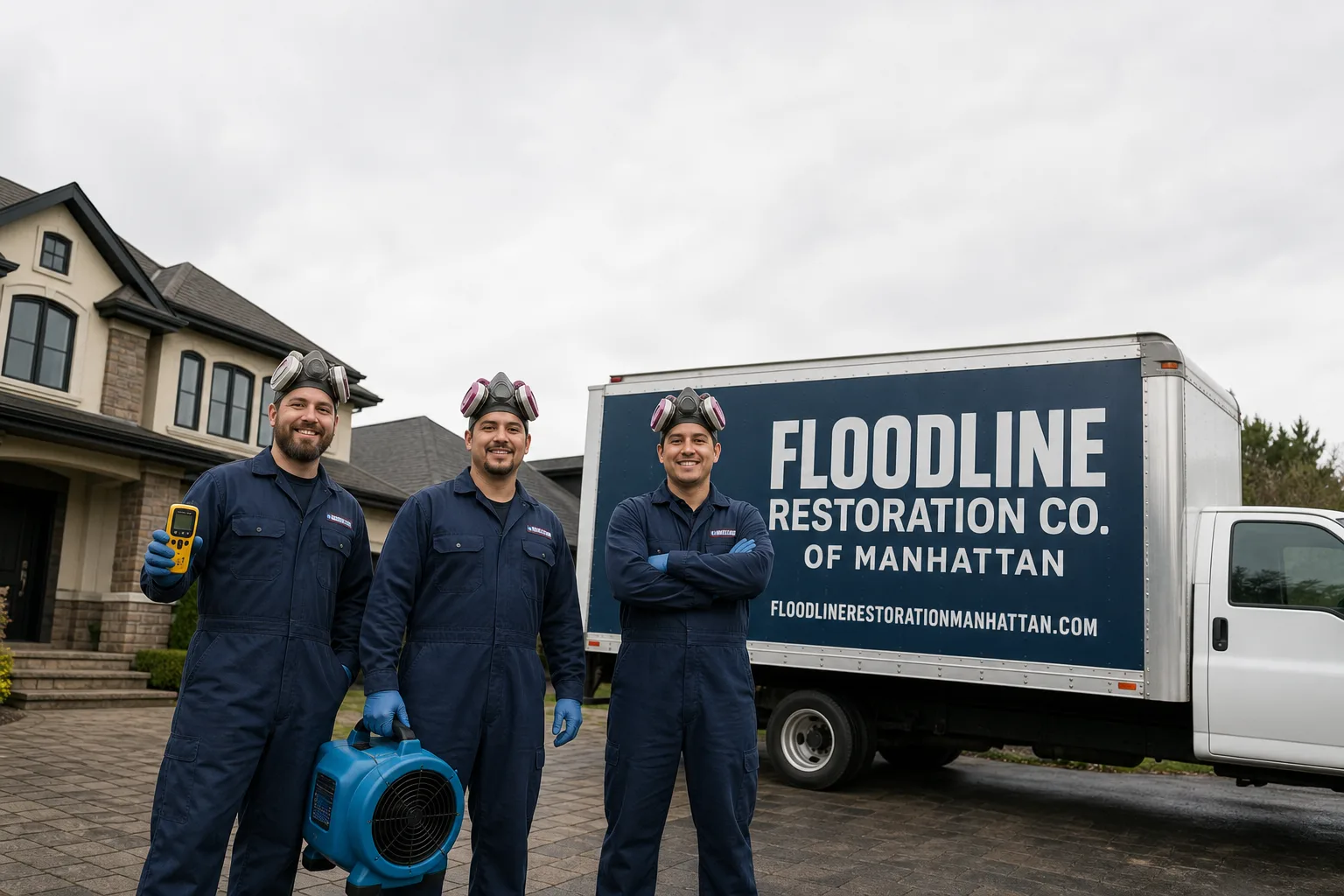
Free visual inspection and a written scope of work before any mitigation begins - photos, moisture readings, and drying logs go in your claim file
The scope we write is the scope we bill. Anything new gets shown to you, in writing, before we touch it.






 Before
 After
After Before
 After
After Before
 After
After24/7 Emergency Fire & Smoke Damage Restoration in Spring Valley
Fire and smoke damage in Spring Valley moves fast, and the first call after the flames are out is the one that determines how much can be saved. Our crews answer live at any hour and dispatch into Spring Valley rather than shuffling you to a call center. The first hour matters because soot residue from a structure fire begins etching into finishes within days, and smoke odor follows building cavities into neighboring units inside Spring Valley’s dense multi-family buildings. Call (917) 924-4221 for a free visual inspection. We will be there when we say.
Understanding Fire & Smoke Damage Restoration Severity in Spring Valley Properties
Not every fire loss is a charred room. In fact, the most expensive restorations we handle in Spring Valley start with a small kitchen fire and end with odor and soot in three or four units. Severity depends on the soot residue type: dry soot from paper and wood fires wipes clean but travels farthest; protein soot from grease fires is nearly invisible and clings hard to painted surfaces; wet soot from smoldering plastics is corrosive and needs chemical cleaning. All three appear in Spring Valley’s older two-family homes and garden apartments, where shared plumbing chases and ceiling assemblies give smoke a direct path between units. Smoke migration will follow the exact route water takes. The visible soot on the ceiling of the unit that called is rarely the extent of the loss. Spring Valley’s post-war building stock, much of it framed with original 1950s and 1960s materials, tends to hold smoke residue in drywall compound and cracked plaster that absorbs odor long after the surface is cleaned. A proper scope requires thermal imaging and vertical tracing through shared wall cavities before anyone opens a wall.
Why Spring Valley Property Owners Choose Floodline Restoration Co. of Manhattan
- 45-minute response commitment for Spring Valley calls. A live dispatcher confirms the address, the nature of the fire, and whether board-up is needed before the crew rolls.
- 24/7 live answer, always a person. No automated tree. No “leave a message.” A dispatcher picks up at two in the morning and starts the process.
- IICRC-certified crews trained to FSRT and WRT standards. Fire and smoke restoration technicians plus water restoration certification, because fire suppression always leaves water behind.
- Free visual inspection with a written scope before work starts. No pressure, no vague verbal promises. You see the plan and the price before we start.
- Direct insurance billing and adjuster coordination. We document the loss, talk to your carrier, and carry the paperwork. You don’t play messenger.
- One team from board-up to rebuild. The same crew that sets containment on day one handles contents pack-out, deodorization, and the structural repair that closes the job.
Our Fire & Smoke Damage Restoration Process
Inspection & Assessment
We walk the property with thermal imaging and moisture meters, tracing smoke migration through wall cavities, plumbing chases, and shared ceilings. The smoke path, not just the visible soot, determines the scope.
Emergency Board-Up & Stabilization
We secure windows, doors, and roof penetrations so weather and trespassers stay out. In Spring Valley’s multi-unit buildings, this includes sealing party walls where fire suppression water is still draining into adjacent apartments.
Water Extraction & Structural Drying
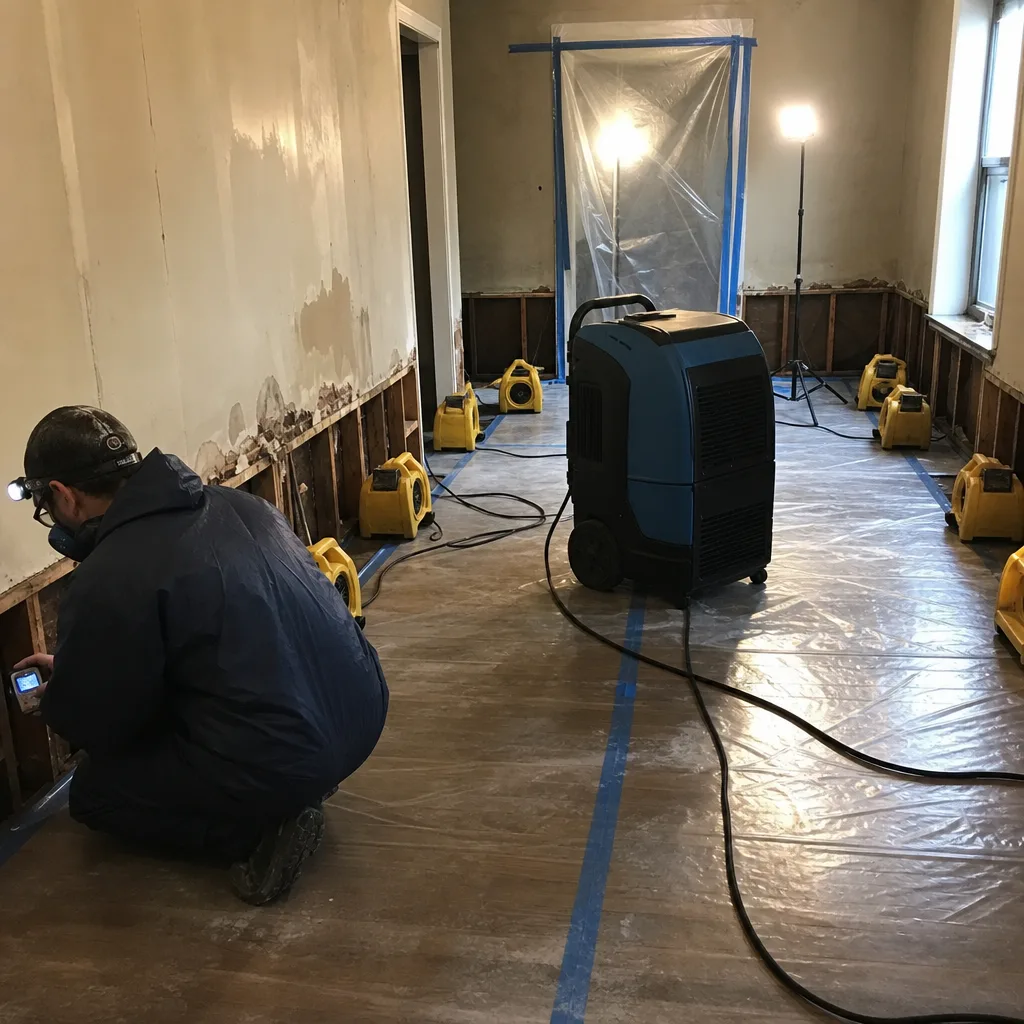
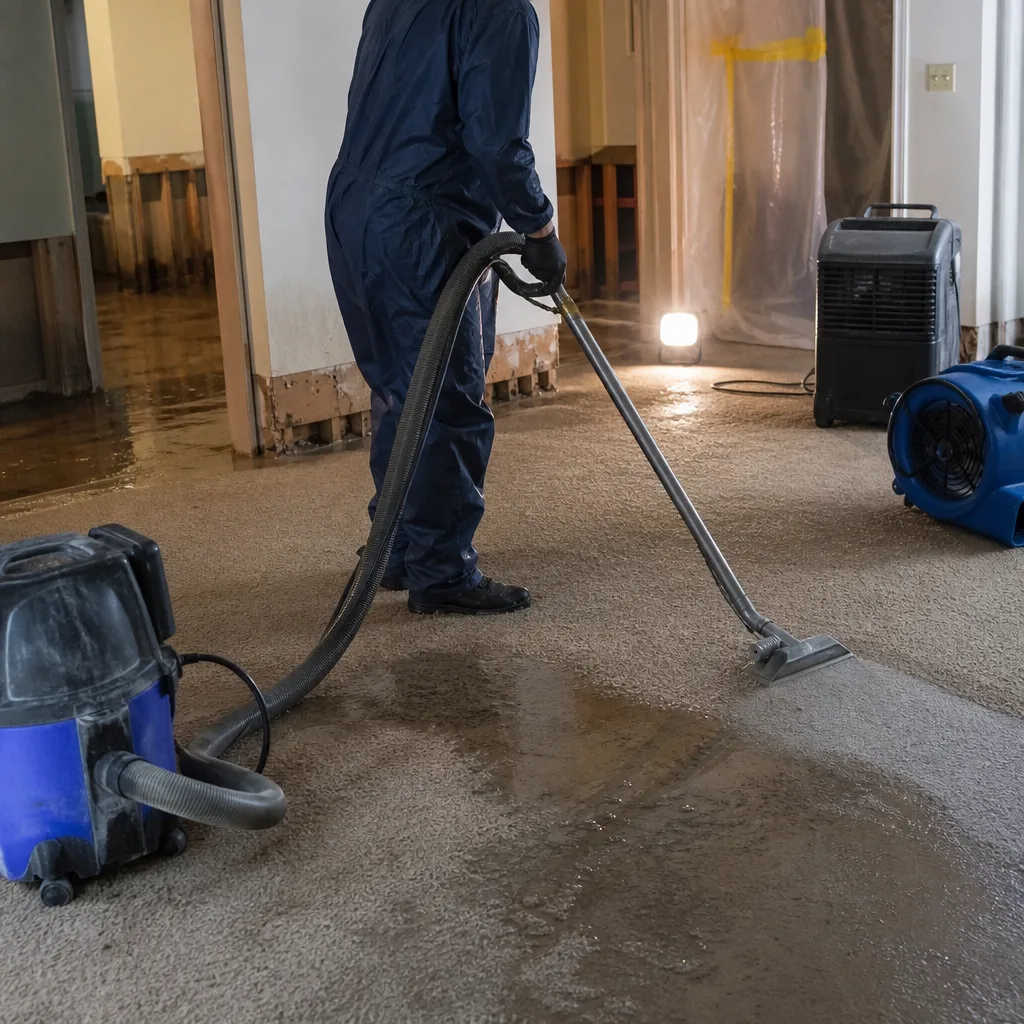
Fire suppression always leaves water. We run Dri-Eaz and Phoenix extraction units and air movers, logging readings daily until the structure hits the dry standard. On a two-family home off South Main Street, this phase took three days before smoke work could begin.
Contents Cleaning & Pack-Out
We inventory, photograph, and move affected contents to a secure off-site facility or an on-site cleaning area. In occupied rental units, we work around tenants and document every item for the carrier.
Smoke, Soot & Odor Removal
HEPA air scrubbing, dry sponge soot lift, and where needed, hydroxyl or ozone treatment in unoccupied spaces. We never mask smoke odor with fragrance; we eliminate the source. In Spring Valley’s older buildings, this often includes cleaning inside shared wall cavities, not just finished surfaces.
Repairs & Restoration
The same certified crew that read the moisture map on day one rebuilds drywall, refinishes surfaces, and restores the property to pre-loss condition. One team, one written scope, one name held accountable.
Need Emergency Fire & Smoke Damage Restoration in Spring Valley Now?
Crews minutes away, answering live 24 hours a day. The sooner we start, the less it costs.
Working With Your Insurance Company
Most Spring Valley fire losses involve a carrier, and the smoothest claims are documented from the first hour. We photograph damage room by room before any cleanup begins, log readings from the first day of drying, and write a line-item scope in the format adjusters expect. Our team talks directly with your adjuster so the file moves without you chasing calls. For landlords in Spring Valley’s rental stock, we flag tenant-unit damage and common-area damage separately, because most policies handle those differently. The goal is simple: a fair settlement and the work done right, with no surprises on the bill.
What We Provide Your Insurer
- Thorough documentation of the loss
- Photos of all damage, room by room
- Moisture readings and drying logs
- A detailed, line-item scope of work
- Direct coordination with your carrier
Built for Spring Valley’s Loss Calendar
Spring Valley fire losses do not spread evenly across the year. January and February bring space-heater fires in the village’s older frame two-families, often tied to overloaded circuits in buildings still carrying original 1960s branch wiring. Spring comes with rain and storm water intrusion through flat and low-pitch roofs, and where water meets compromised wiring, the next call is a fire job. Summer convective storms, the kind that back up Spring Valley’s culverted sections of the Pascack Brook watershed, send water into basement-level apartments and then into electrical panels. Nor’easters bring down trees onto service drops along Main Street and the neighborhood streets east of Route 45. In every case, the fire or smoke loss arrives with water already in the building, and the restoration plan has to handle both at once. That is exactly how we scope it: one crew, one moisture map, one deodorization pass that covers the whole affected building, not just the fire unit.
Fire & Smoke Damage Restoration Across Spring Valley’s Neighborhoods
Spring Valley is not one building type. The blocks around Memorial Park hold a mix of pre-war wood-frames and early post-war two-families that burn hot and fast, with balloon framing that carries smoke from a basement fire to the attic before the first engine arrives. The apartment clusters near the village center not far from the Spring Valley Metro-North station are mostly 1960s and 1970s garden-style buildings where shared plumbing chases and suspended ceiling assemblies give smoke a straight run between units, three and four doors down from the point of origin. Along Route 59 and the commercial strips near Hillcrest, commercial cooking fires produce heavy protein soot that clings to hoods, ductwork, and every painted surface in the vent path. The residential streets off North Main Street, with their mix of older single-family homes and converted two-families, are where we see the most delayed-reporting losses: absentee landlords, tenants who stayed with family after a small fire, and a full odor problem by the time we walk in.
Our crew responded to a two-family home off South Main Street where a stovetop grease fire had flashed through the kitchen of the second-floor unit. Thermal imaging traced soot migration through the plumbing chase and shared ceiling assembly into the first-floor apartment and an adjacent garden-style building. We set containment along the party walls, packed out contents from all three affected units, and ran structural drying with Phoenix air movers and dehumidifiers before beginning smoke and soot removal on both levels. The visible fire damage was one kitchen. The smoke damage crossed two property lines.
Specialized Fire & Smoke Damage Restoration Services We Offer in Spring Valley
Fire Damage Cleanup
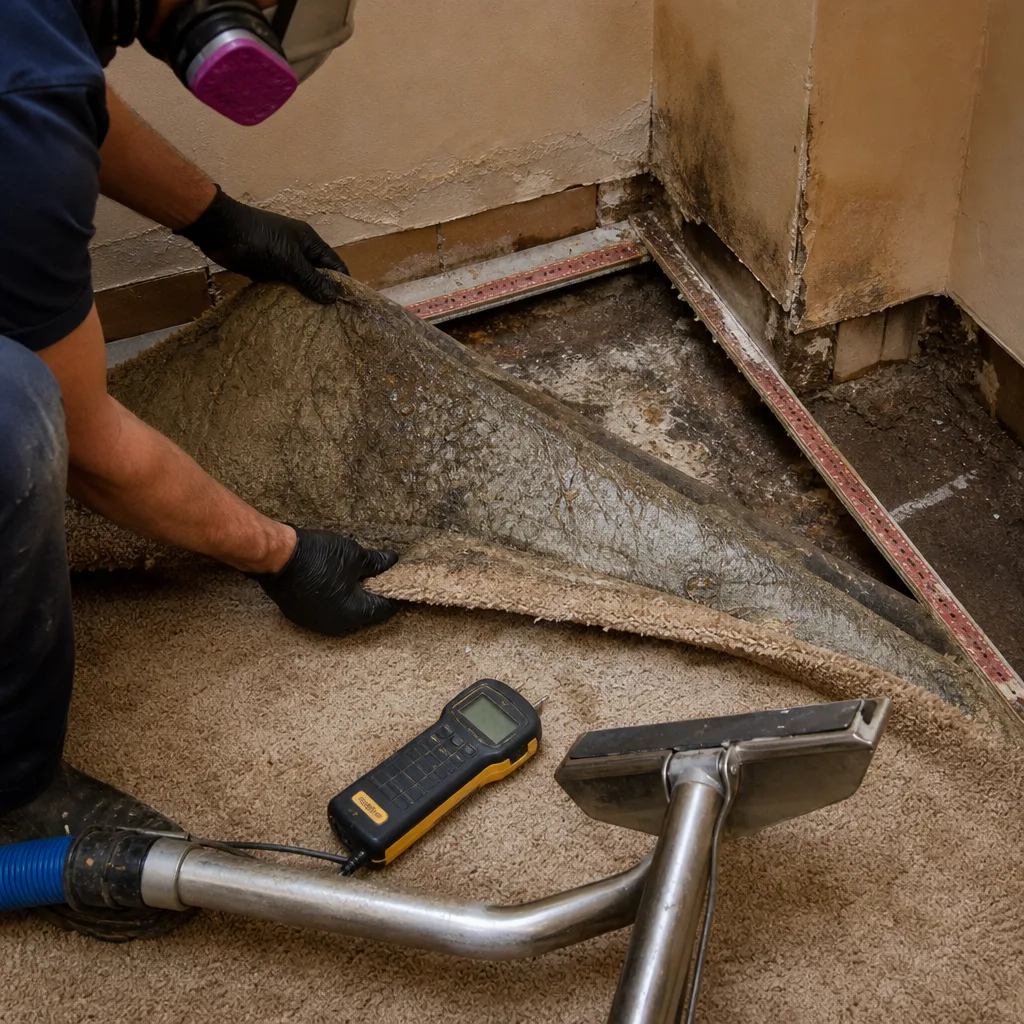
Removal of charred materials, debris, and fire-suppression residue from the affected unit and any adjacent space where soot carried. In Spring Valley’s older buildings, we open walls only after checking for asbestos-containing materials in pre-1980 drywall compound and floor tile. State and federal protocols apply the moment structural demolition starts, no exceptions.
Smoke & Soot Removal
The most common mistake in Spring Valley is treating a fire loss as a single-unit cleanup. Smoke and soot move through shared wall cavities and plumbing chases, and our team traces that path with thermal imaging before cleaning starts. We use dry-sponge soot lift, HEPA vacuuming on framing and duct interiors, and chemical cleaning for wet, corrosive soot from plastics and synthetics.
Odor Removal & Deodorization
Smoke odor in older Spring Valley housing does not air out on its own. Porous surfaces, cracked plaster, old drywall compound, and drafty framing all absorb odor and release it for months. We run HEPA air scrubbers during the entire job, treat cavity spaces directly, and apply hydroxyl or ozone only in unoccupied units. This is the service tenants and adjacent homeowners ask about most after a fire in a neighboring apartment.
Contents Cleaning & Pack-Out
In a Spring Valley rental building, tenants cannot always move out during restoration, and their contents may not be safely cleanable on site. We inventory, photograph, and pack out affected contents, cleaning soft goods and electronics off-site and delivering a signed inventory to the carrier and the property owner. For tenants, that means a clear list of what left, what is being cleaned, and when it returns.
Emergency Board-Up & Tarping
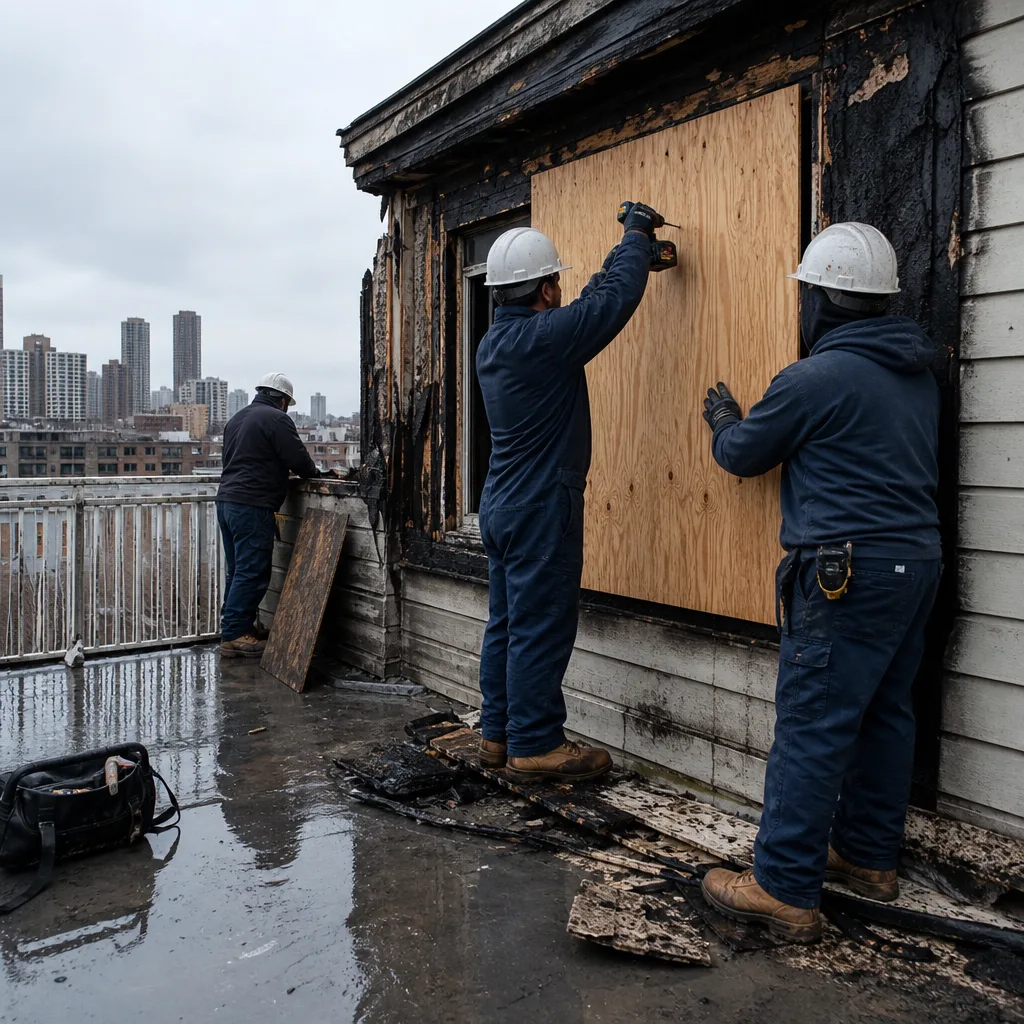
We board windows, doors, and roof penetrations the same day, typically within hours of the first call. In multi-unit Spring Valley buildings, board-up often has to block access to damaged hallways and stairwells while leaving the rest of the building habitable, a balance that matters when forty other tenants are trying to live their lives.
What happens when you call
- 1
A real person answersNo phone trees - you reach a local pro.
- 2
You get an upfront price rangeHonest numbers before anyone is dispatched.
- 3
A background-checked tech heads outLicensed & insured, dispatched right away.
- 4
You approve before work beginsNothing starts until you say go.
Fire & Smoke Damage Restoration Costs in Spring Valley, NY
Smoke and soot removal in a single Spring Valley apartment typically runs $2,800 to $6,500. Odor removal across multiple units in a shared-ceiling building lands between $4,000 and $12,000 once containment, air scrubbing, and cavity deodorization are scoped. Contents pack-out and off-site cleaning for a full apartment usually runs $1,500 to $4,500 depending on volume. Where structural fire repair is needed, the rebuild price follows the same meter as any Rockland County remodel: $45 to $85 per square foot for drywall, trim, and paint. Most fire losses in Spring Valley are insurance claims, and our line-item scope is written to the carrier’s format from day one. For a small out-of-pocket job, like smoke odor in a single room after a cooking fire, expect $900 to $2,200. Call (917) 924-4221 and we will walk the property, trace the smoke path, and give you a written number before any work starts.
We Also Serve Cities Near Spring Valley
Our Spring Valley crews handle fire and smoke losses in Nanuet, New City, West Nyack, and Pearl River. The building stock changes town by town, but the standard we hold to doesn’t: same certified technicians, same written scope, same 90-Day Done Right Promise.
Spring Valley Fire & Smoke Damage Restoration Questions, Answered
How does fire and smoke damage spread between units in Spring Valley’s multi-family buildings, and what does that mean for containment?
Smoke follows the same shared wall cavities, plumbing chases, and ceiling assemblies that water does, so a kitchen fire in one unit routinely pushes soot into three or four adjacent apartments even when the fire itself never left the room. Containment must be planned per unit, with negative air pressure along party walls and HEPA air scrubbing in every affected space, not just the source unit. That is the difference between a one-day cleanup and a three-unit deodorization project.
What asbestos and lead protocols are triggered when fire restoration requires opening walls in Spring Valley’s 1950s-1970s buildings?
Any drywall compound, floor tile, pipe insulation, or textured ceiling from before roughly 1980 must be tested for asbestos before demolition starts, and lead paint is a mandatory concern in any pre-1978 building. Fire damage often makes testing impossible on the burned surfaces, so we test the same materials in an adjacent unaffected room. Work pauses until lab results clear or an abatement plan is in place. No exceptions, regardless of the landlord’s timeline.
How quickly does smoke odor become permanent in Spring Valley’s older housing, and what does that change about the first call?
In our experience, smoke odor sets into porous surfaces within days, not weeks, and Spring Valley’s cracked plaster and aging drywall compound hold it harder than newer construction. A delay of two weeks often turns a deodorization job into a full surface-sealing and repaint project. The first call should happen the day the fire is out, because the difference in cost between a five-day scope and a two-week scope is real, and it usually lands on the claim.
What does pack-out and contents cleaning look like in a Spring Valley rental unit where tenants can’t move out during fire restoration?
We inventory and photograph everything that leaves, clean what can be safely cleaned on site for the tenant’s day-to-day use, and pack out the rest to our facility. The tenant gets a signed list. Their carrier or the landlord’s carrier gets the invoice-level detail. We never hold contents hostage over a payment dispute. The goal is to get people back to a habitable unit with their belongings intact.
How does restoration differ when a Spring Valley kitchen fire involves aluminum branch wiring from the 1960s?
Aluminum wiring heats differently than copper, and any fire-adjacent aluminum branch circuit should be inspected by a licensed electrician during the restoration rather than simply cleaned and covered. Charred insulation behind a wall is a re-fire risk. We flag every aluminum-wired circuit in the affected area during our initial scope, and if the wiring is compromised, the repair plan includes remediation by a licensed electrician before drywall goes back up. Call (917) 924-4221 to have us look at the full picture, not just the visible soot.
How fast can someone actually get here for a Spring Valley fire or smoke emergency?
Typically within 45 minutes for a Spring Valley call, and board-up can usually be complete the same visit. A live dispatcher answers around the clock, so the clock starts the moment you call, not the next morning.
Will my insurance cover fire and smoke restoration in a Spring Valley multi-family building?
Most policies cover fire and smoke damage, but multi-unit buildings in Spring Valley often involve two policies: the landlord’s and the tenant’s, plus possible subrogation if the fire started in a different unit. We document which damage belongs to which unit, coordinate directly with the adjusters, and bill the carrier where coverage applies. A written scope goes to everyone at the same time, so no one is caught by surprise.
What should I do in the first 30 minutes after a fire in my Spring Valley property?
Call (917) 924-4221 first. Do not enter a fire-damaged structure until the fire department has cleared it, and do not wipe soot off surfaces yourself; dry soot wipes into finishes and becomes permanent staining. Do not turn on any electrical system in a fire-affected building. Open no windows if odor control is a concern; cross-ventilation spreads soot. Then let our team walk the property, trace the smoke path, and set containment while the first 24-hour window is still open.
Serving Spring Valley, NY - Our Local Coverage Area
We’re based in the Spring Valley area and know this community well. Use the map below to see our service coverage - if you’re nearby, we can almost certainly help.
Fire & Smoke Damage Restoration in Spring Valley, Done Right and Backed in Writing
When a fire crosses a shared wall in Spring Valley, the cleanup is never a one-unit job. Our Fire & Smoke Damage Restoration team traces the smoke path through wall cavities, plumbing chases, and ceiling assemblies, then sets containment and deodorization across every affected unit before we rebuild. We work throughout Spring Valley, from the apartment clusters near the village center to the older two-families off South Main Street and the commercial strips along Route 59. The first inspection is free, the scope is written, and the work is covered by our 90-Day Done Right Promise: if it is not done right, we make it right. No arguing, no runaround. Call (917) 924-4221 now. A live dispatcher answers, day or night, and the clock starts when you call.
Written by Curt Bowman, Owner at Floodline Restoration Co. of Manhattan, serving Spring Valley and Rockland County.