

Free visual inspection and a written scope of work before any mitigation begins - photos, moisture readings, and drying logs go in your claim file
The scope we write is the scope we bill. Anything new gets shown to you, in writing, before we touch it.






 Before
 After
After Before
 After
After Before
 After
After24/7 Emergency Fire & Smoke Damage Restoration in Throggs Neck
Fire and smoke damage restoration in Throggs Neck typically costs $2,800 to $9,500 for a standard single-room kitchen fire, and our crews can reach most homes on the peninsula within 45 minutes of your call. We answer live around the clock at (917) 924-4221, and the first hour matters most for fire damage because acidic soot residue begins etching glass, corroding metal, and driving smoke odor deeper into drywall and framing the moment the flames are out. Call us first. We’ll walk you through board-up, tarping, and a free visual inspection before the smoke has fully settled.
Curt Bowman built Floodline Restoration Co. around a dispatch board, not a sales desk, and that distinction matters at 2 a.m. when a fire has just torn through a Throggs Neck kitchen. A live person answers. A certified crew gets dispatched. The job starts the same visit.
Understanding Fire & Smoke Damage Restoration Severity in Throggs Neck Properties
Fire damage in Throggs Neck rarely behaves like fire damage in an apartment building in Manhattan or a newer development in the North Bronx. The peninsula’s post-WWII brick and wood-frame homes, most built between the 1940s and 1960s, burn differently than modern construction. Older wiring, original balloon framing, and the finished basements that make Throggs Neck homes so livable all shape how smoke travels and how soot deposits.
Fire restoration professionals classify soot by type: dry soot from paper and wood, protein residue from kitchen fires (nearly invisible but aggressively odorous), and oily soot from plastics and synthetics. Each demands a different cleaning chemistry. In Throggs Neck, where finished basements and attached garages are common, fire smoke has a tendency to travel through shared wall cavities and sagging old ductwork, depositing residue three rooms away from the fire’s origin. We map smoke migration with thermal imaging, identify every affected surface, and set containment so cleanup does not spread soot through the rest of the house.
What makes Throggs Neck different is the water. Because the peninsula is bounded by the East River, Throggs Neck Bay, and Eastchester Bay, fire jobs here frequently inherit moisture from fire suppression efforts that saturate materials already carrying salt-air corrosion and, in many homes, residual moisture from Sandy-era flooding that was never fully dried. A kitchen fire in a Harding Park bungalow is never just a fire job. It’s a fire job with a moisture problem hiding inside the framing.
Why Throggs Neck Property Owners Choose Floodline Restoration Co. of Manhattan
- 45-minute response commitment: Our dispatch board routes the closest certified crew to your street in Throggs Neck, and we’ll be there when we say.
- 24/7 live answer: A real person picks up at 2 a.m. Not a recording. Not a call center script. A dispatcher who can send help.
- IICRC-certified crews: Our technicians hold FSRT and WRT certifications and are trained to IICRC, RIA, and IFA standards, so fire damage and its water component are both handled correctly.
- Free visual inspection: Before any work begins, we walk the site, map the damage, and give you a written scope. No obligation, no pressure.
- Direct insurance billing: We coordinate with your adjuster and bill the carrier directly. You never play messenger between us and the insurance company.
- One team, start to finish: Extraction, drying, board-up, structural repair, and rebuild. The same certified crew that reads the moisture map on day one handles daily readings and finishes the job.
Our Fire & Smoke Damage Restoration Process
Inspection & Assessment
We map the burn area, trace smoke migration through wall cavities and ductwork, and run moisture readings on every affected surface. In Throggs Neck, that moisture check is not optional, even for a fire caused by an electrical short. Salt air and historic flood moisture hide in framing.
Emergency Board-Up & Tarping
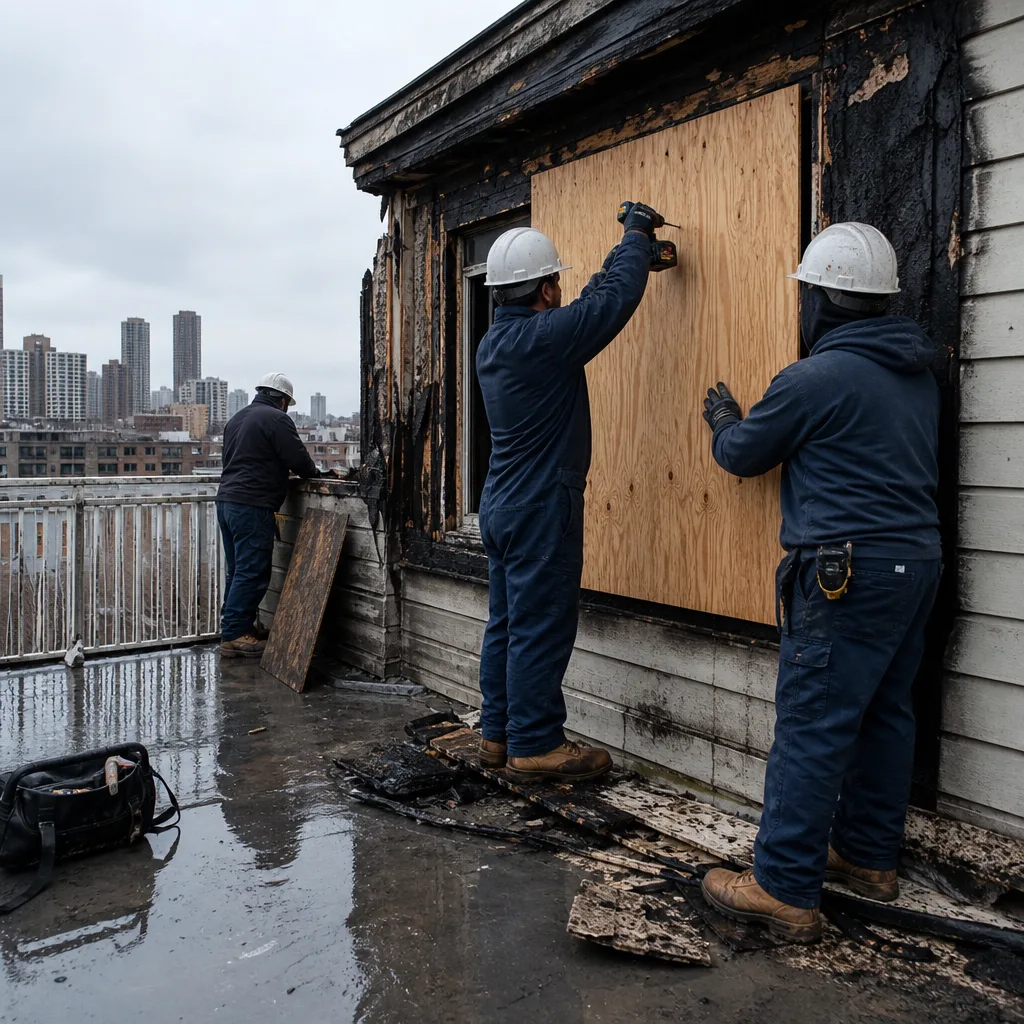
Burned roof openings and broken windows get secured immediately. Throggs Neck’s three-sided tidal exposure means wind-driven rain can push through an unsecured opening within hours, converting a fire loss into a catastrophic water event.
Water Extraction & Structural Drying
Fire suppression water gets extracted, and we set professional-grade Dri-Eaz air movers and dehumidifiers. Daily moisture readings are logged until the dry standard is met, and the homeowner and carrier both get the log.
Cleaning & Sanitization
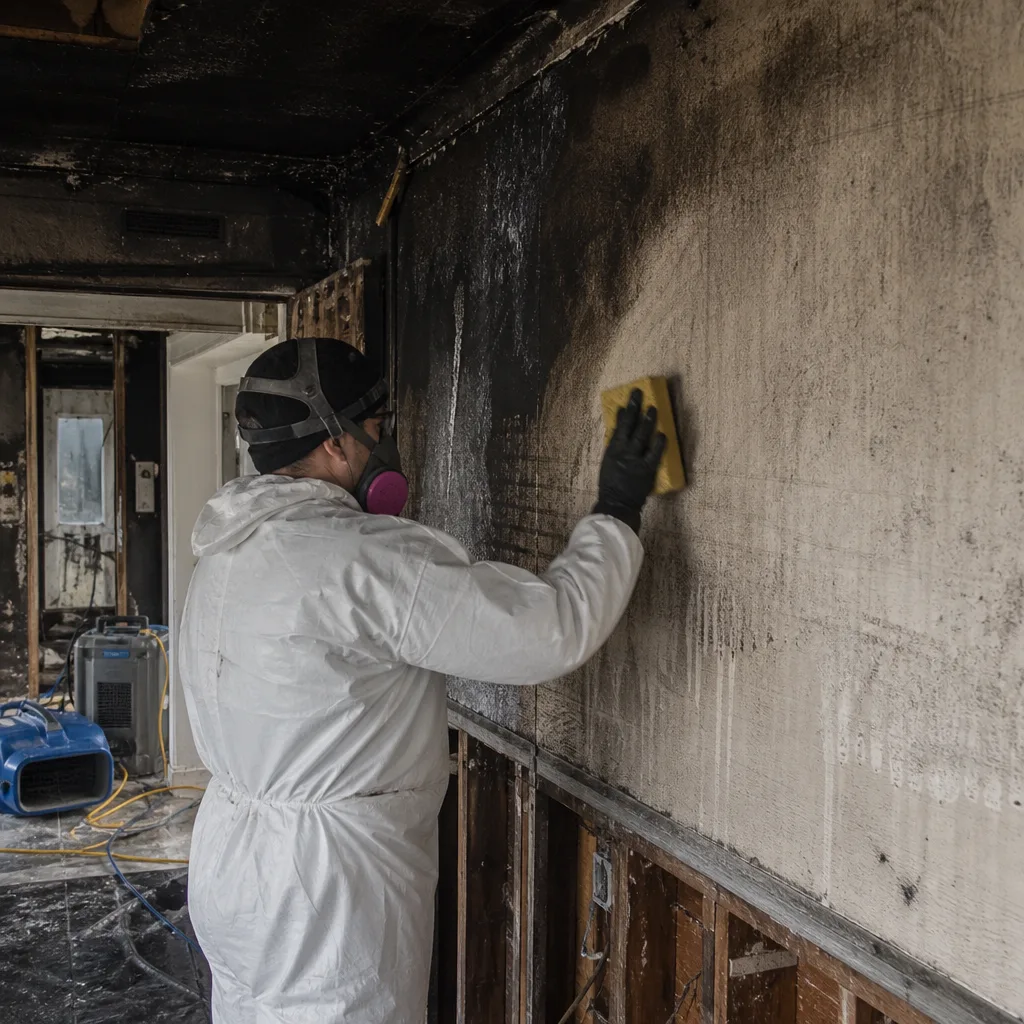
Soot removal, odor neutralization, and HEPA air scrubbing. We use chemistry specific to the soot type present, and we treat the salt-rich surfaces common near the water differently than inland drywall.
Odor Removal & Deodorization
Smoke odor hides in porous materials. We treat framing, subflooring, and insulation with thermal fogging and hydroxyl generators where needed, ensuring the smell doesn’t return six months later.
Repairs & Restoration
Fire-damaged drywall comes out, corroded fasteners get checked and replaced, and structural repairs are completed before finish work begins. The job isn’t done until the rebuild is done, and the 90-Day Done Right Promise goes in your hand in writing.
Need Emergency Fire & Smoke Damage Restoration in Throggs Neck Now?
Crews minutes away, answering live 24 hours a day. The sooner we start, the less it costs.
Working With Your Insurance Company
We document the loss from the first hour, before demolition starts. Photos, room by room. Moisture readings logged daily. A detailed, line-item scope of work built to industry standards, not a vague estimate. Our team talks directly with your adjuster, submits documentation on your behalf, and bills the carrier directly. That matters in Throggs Neck because post-Hurricane Sandy FEMA remapping placed large portions of the neighborhood into AE and VE flood zones, and many fire claims here carry overlapping water damage that requires NFIP documentation, FEMA Elevation Certificates, and sometimes Increased Cost of Compliance claims. We handle that coordination so you don’t have to decode a government form at your kitchen table.
What We Provide Your Insurer
- Thorough documentation of the loss
- Photos of all damage, room by room
- Moisture readings and drying logs
- A detailed, line-item scope of work
- Direct coordination with your carrier
Built for Throggs Neck’s Loss Calendar
Throggs Neck sees fire losses that follow the weather. January and February bring space heaters and overtaxed old wiring in 1940s and 1950s homes, when the salt air has spent decades quietly corroding connections and junction boxes. Spring storms push water into basements, and that moisture finds its way into electrical systems. Summer brings the thunderstorms that roll up the East River, and with them, lightning strikes and power surges that ignite older panels. Fall and early winter bring nor’easters, and a fire in an unsecured home with roof damage becomes a flood before the fire department’s report is even filed. We plan crews around this calendar, and we keep board-up materials and tarps staged for fast deployment before the next coastal storm hits the peninsula.
Fire & Smoke Damage Restoration Across Throggs Neck’s Neighborhoods
Harding Park, the cluster of modest bungalows on the low-lying western spit, presents the toughest fire restoration challenges in the neighborhood. Original 1930s wood framing, salt-damaged sill plates, and corroded anchor bolts are common, and crews that skip moisture mapping before closing walls get called back for mold and rot within two years. We’ve worked those streets enough to know to check for Sandy-era moisture first.
Along East Tremont Avenue, the commercial corridor that anchors the peninsula, fire jobs often involve mixed-use buildings with apartments above storefronts. Smoke migration through shared wall cavities and floor systems is more aggressive there, and containment is critical to protect neighboring units. The residential blocks between Throgs Neck Boulevard and Schurz Avenue are predominantly brick two-family homes from the 1950s and 1960s, where kitchen fires are the most common loss, and protein soot from cooking fires coats every surface with a nearly invisible film that requires aggressive deodorization.
Near the Throgs Neck Bridge approach, homes sit closer to the water and face stronger wind loads. Board-up and tarping there must be tied down to withstand the same gusts that make the bridge sway. Farther north toward the Country Club area, larger single-family homes with finished basements and attached garages mean fire damage frequently spreads into below-grade spaces, where smoke lingers and moisture from fire suppression collects.
Specialized Fire & Smoke Damage Restoration Services We Offer in Throggs Neck
Our Fire & Smoke Damage Restoration team handles every phase, from the first board-up to the finished rebuild. Here’s what that looks like in Throggs Neck specifically.
Fire Damage Cleanup
We remove fire-damaged drywall, insulation, and flooring, and we clean salvageable framing and subflooring. In Throggs Neck’s older homes, that framing often carries decades of salt-air corrosion, so we inspect fasteners and connectors as we work.
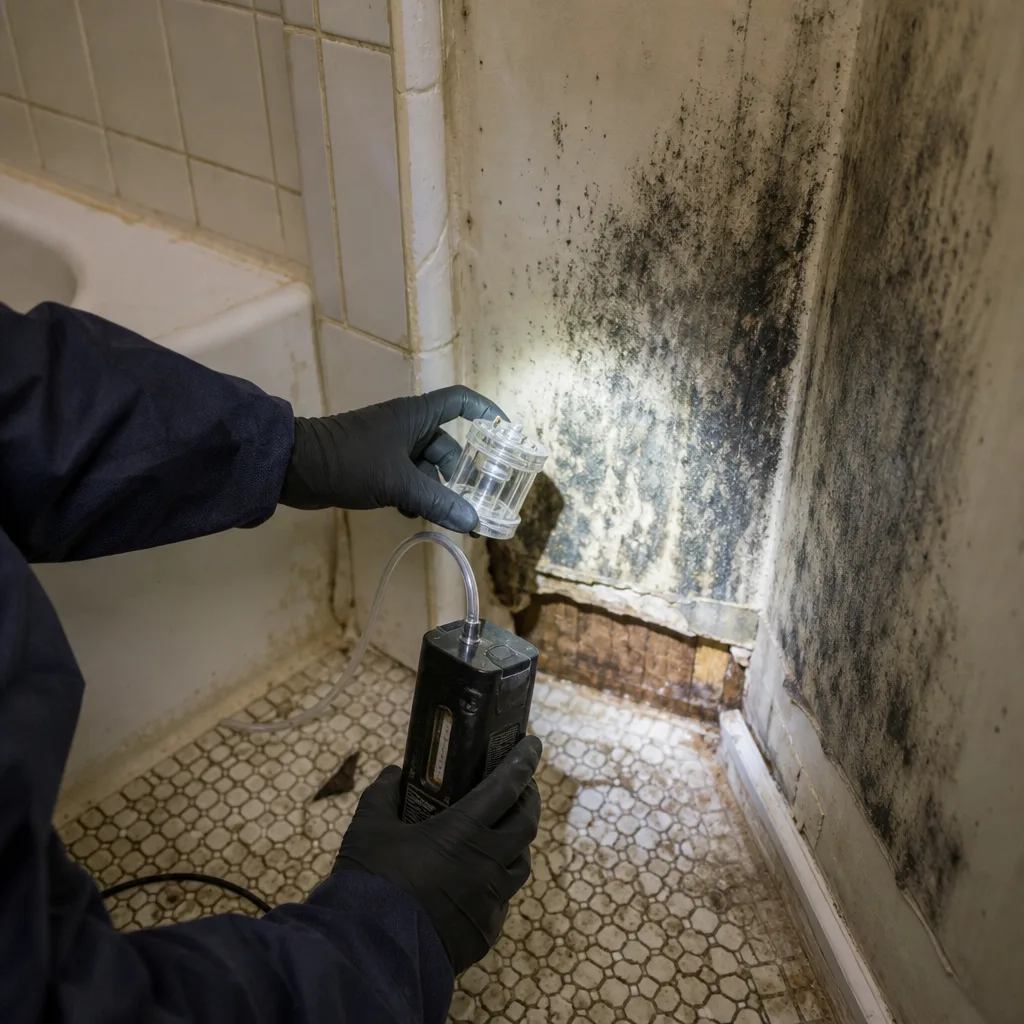
Smoke & Soot Removal
Soot is acidic. Left on surfaces, it etches glass, corrodes metal, and permanently stains paint. We clean every affected surface with the right chemistry for the soot type, then seal surfaces to prevent re-emergence. Homes near Eastchester Bay see faster corrosion rates because of the persistent salt in the air, so we move quickly on metal fixtures and electrical components.
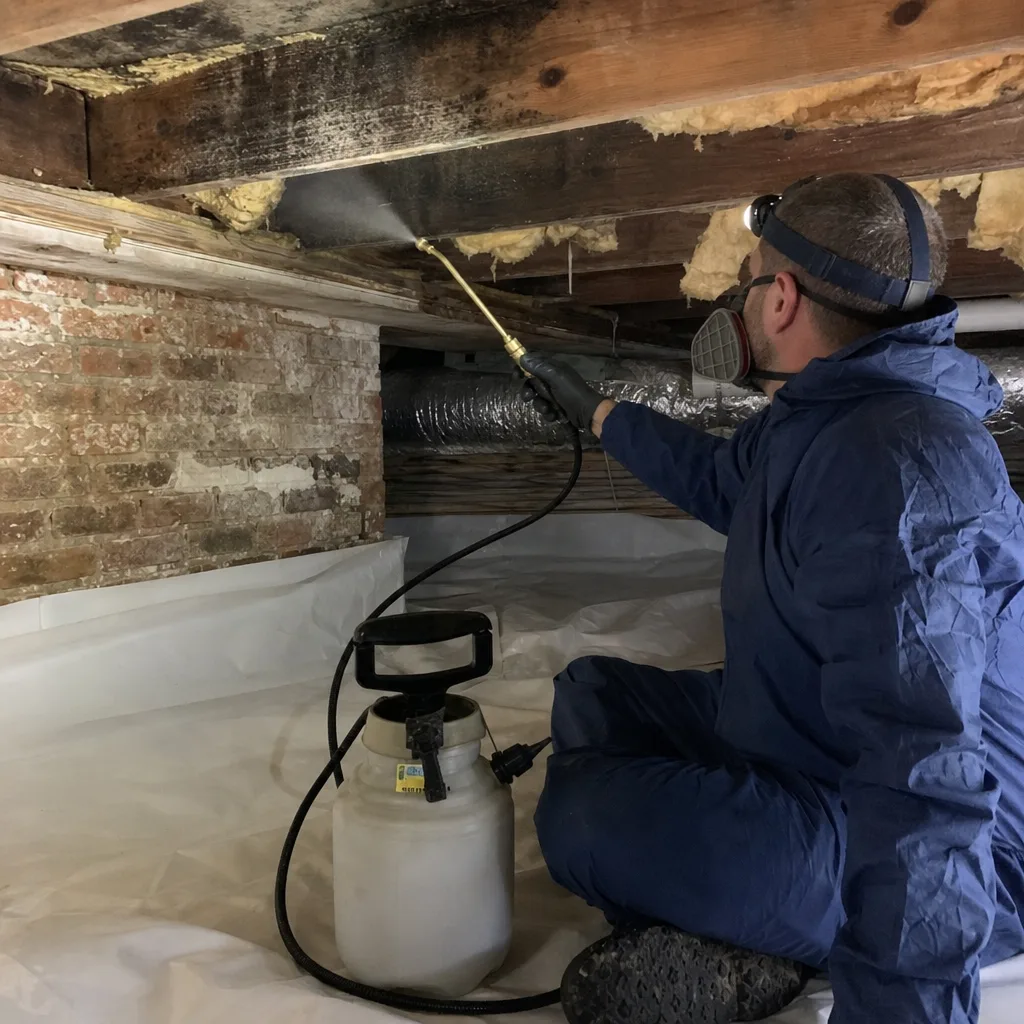
Odor Removal & Deodorization
Smoke odor penetrates drywall, insulation, and framing. We use hydroxyl generators, thermal fogging, and where needed, ozone treatments to neutralize odor at the source rather than masking it. After a fire in a finished Throggs Neck basement, the odor frequently travels through the shared HVAC ductwork, and we treat the entire system.
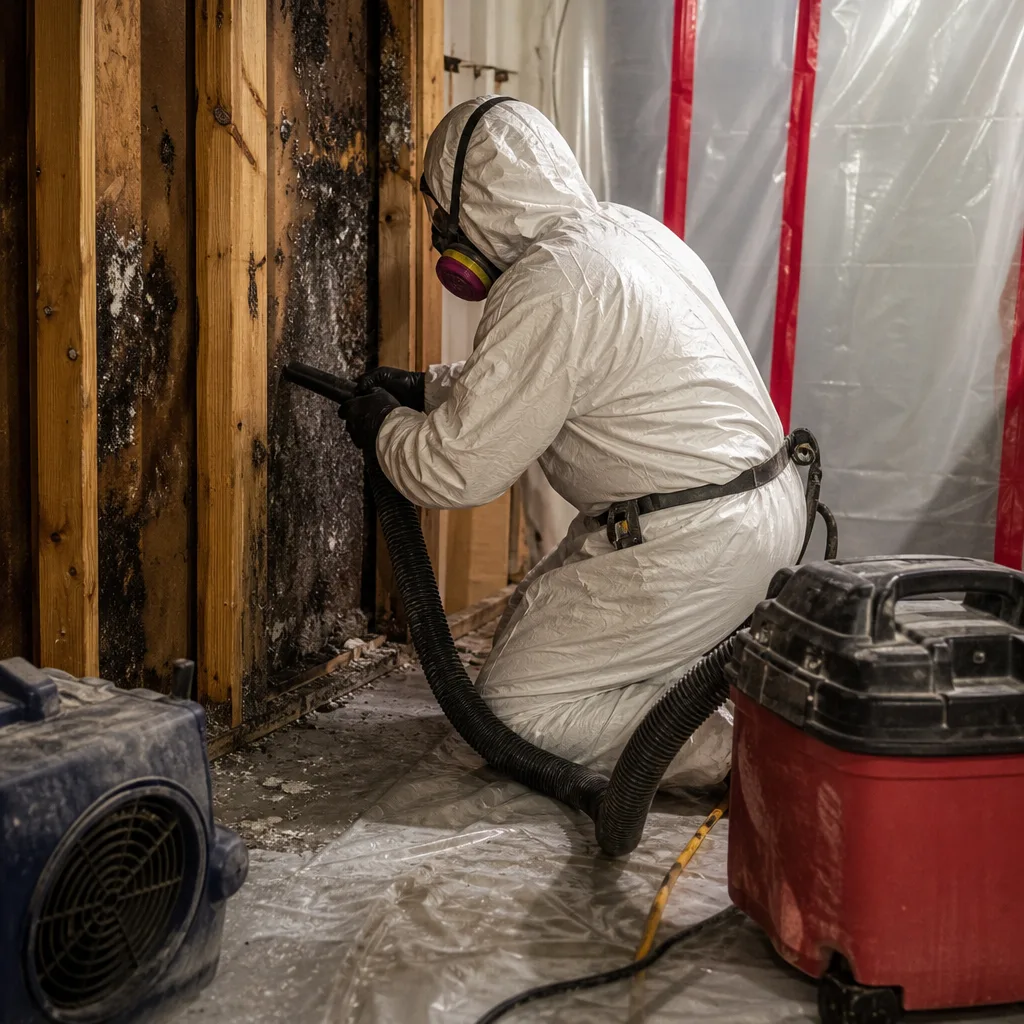
Contents Cleaning & Pack-Out
Furniture, clothing, dishes, and personal effects get inventoried, packed out, and cleaned at our facility. Soot damaged contents respond well to professional ultrasonic cleaning and ozone treatment. We photograph everything, document condition, and work directly with your adjuster on the contents claim.
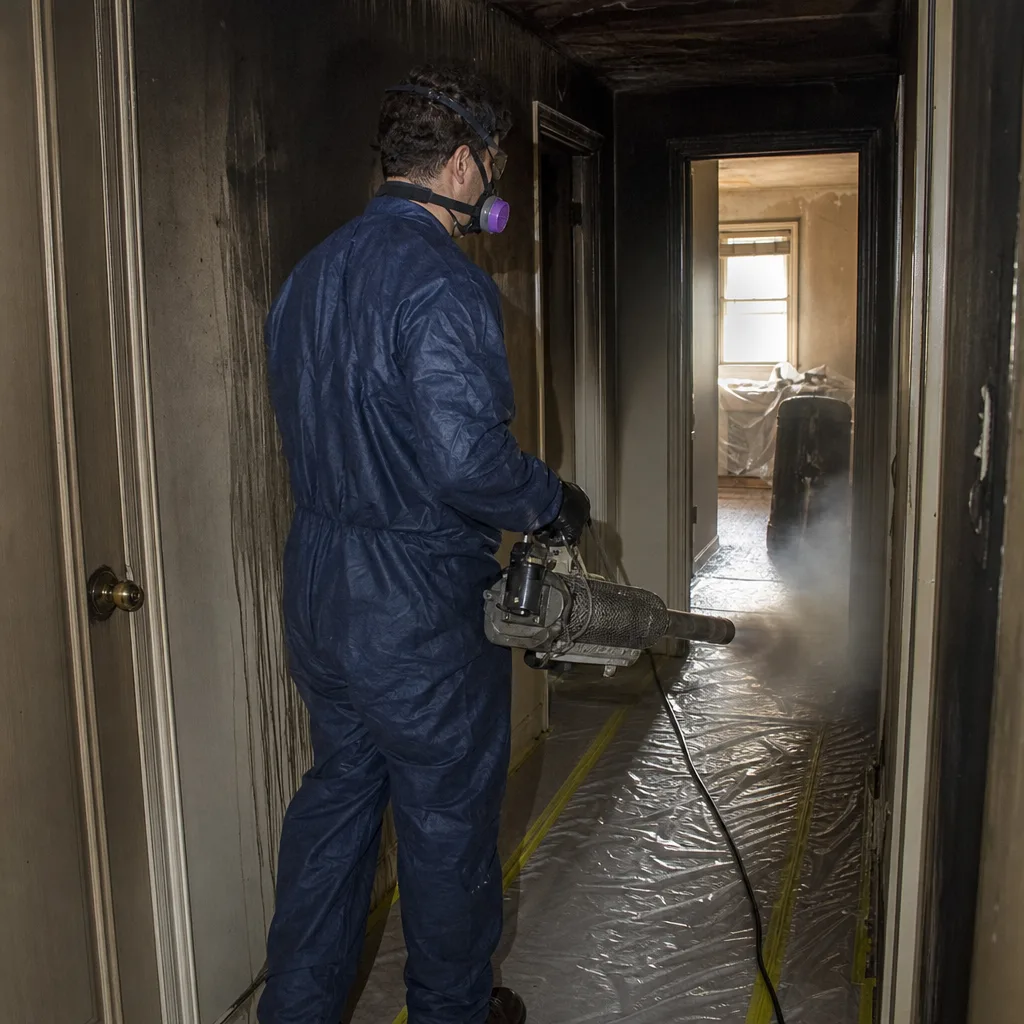
Emergency Board-Up & Tarping
Throggs Neck’s wind exposure makes this step critical. A burned roof opening or broken window invites wind-driven rain off the East River within hours. We secure openings with plywood and heavy-gauge tarps tied down to withstand coastal gusts. This step alone can prevent a $15,000 fire loss from becoming a $60,000 water damage claim.
Structural Fire Repair
After cleanup and drying, we rebuild what the fire destroyed. That includes framing repairs, drywall replacement, electrical repairs by licensed contractors, and finish work. In Harding Park bungalows, we routinely replace corroded anchor bolts and salt-damaged sill plates before closing walls. The job isn’t done right if the structure underneath the new drywall isn’t sound.
What happens when you call
- 1
A real person answersNo phone trees - you reach a local pro.
- 2
You get an upfront price rangeHonest numbers before anyone is dispatched.
- 3
A background-checked tech heads outLicensed & insured, dispatched right away.
- 4
You approve before work beginsNothing starts until you say go.
Fire & Smoke Damage Restoration Costs in Throggs Neck, NY
A typical kitchen fire cleanup and restoration in Throggs Neck runs $2,800 to $9,500, depending on the extent of smoke migration and the condition of the framing behind the walls. Board-up and tarping alone typically costs $400 to $1,200, more when wind-rated tie-downs are required near the waterfront. Full structural fire repair on a Harding Park bungalow with salt-damaged framing can run $12,000 to $40,000, because the work includes replacing corroded fasteners and sill plates, not just fire-damaged drywall.
Smoke and soot removal for a contained fire runs $1,500 to $4,500. Odor removal and deodorization adds $800 to $2,500. Contents cleaning and pack-out varies widely based on volume, but most Throggs Neck homeowners spend $1,000 to $5,000 on contents restoration. The free visual inspection gives you a firm, written scope before any work begins.
Most fire claims are covered by homeowners insurance. The exceptions are fires caused by negligence that a carrier disputes, or when the fire damage overlaps with flood damage in an AE or VE zone, which triggers NFIP documentation. We handle that coordination. Call (917) 924-4221 for an exact quote, and remember the Senior & Veteran 5% discount applies to any out-of-pocket work.
We Also Serve Cities Near Throggs Neck
Beyond Throggs Neck, our crews respond regularly in Fire & Smoke Damage Restoration in Throggs Neck and the surrounding communities: Fairview, Harrison, East Bronx, and Hunts Point. If your home sits just outside the peninsula, we can still reach you fast.
Serving Throggs Neck, NY - Our Local Coverage Area
We’re based in the Throggs Neck area and know this community well. Use the map below to see our service coverage - if you’re nearby, we can almost certainly help.
Throggs Neck Fire & Smoke Damage Restoration Questions, Answered
Why does fire damage restoration in Throggs Neck require moisture mapping even when the fire was caused by an electrical short, not a flood?
Because Throggs Neck sits on a tidal peninsula where salt air and historic flood moisture hide in framing. Fire suppression water saturates materials that may already carry moisture from Sandy-era flooding that was never fully dried. We map moisture before closing any wall. Skipping this step leads to hidden mold and structural rot within two years.
How does salt air from the nearby bays affect smoke and soot damage in homes along the Throggs Neck waterfront?
Salt air accelerates corrosion of metal surfaces, and soot is acidic on its own. Combine the two, and metal fixtures, electrical panels, and structural fasteners deteriorate faster here than inland. We inspect electrical components and connectors during every fire restoration, and we often replace corroded fasteners that would be fine in a similar home in the North Bronx.
What additional risks exist when doing structural fire repair in Harding Park bungalows compared to the rest of Throggs Neck?
Harding Park bungalows date to the 1920s and 1930s, with original wood framing, salt-damaged sill plates, and corroded anchor bolts. Many were flooded during Sandy and re-drywalled over before the framing was fully dry. We open walls expecting fire damage and routinely find hidden moisture and corrosion. Structural repair there requires addressing the framing before any finish work begins.
If a fire damaged my roof and a nor’easter is forecast, can your board-up and tarping handle Throggs Neck’s wind loads?
Yes. We use heavy-gauge tarps and plywood tied down with fasteners rated for coastal wind exposure. Throggs Neck’s position between the East River and Long Island Sound means wind gusts can exceed what inland crews expect. Our board-up is engineered for that. Call (917) 924-4221 and we’ll get a crew out before the storm arrives.
Do I need to coordinate fire smoke restoration with FEMA or NFIP documentation if my Throggs Neck home is in an AE or VE flood zone?
If your fire claim overlaps with any water damage in a flood zone, yes. Post-Sandy FEMA remapping placed much of Throggs Neck into AE and VE zones, and carriers may require NFIP documentation, Elevation Certificates, or ICC claims. We work with your adjuster and submit the paperwork directly, so you’re not left decoding flood maps at your kitchen table.
How fast can someone actually reach my home in Throggs Neck?
Our crews reach most homes on the peninsula within 45 minutes of your call. We answer live 24/7, and dispatch is based on proximity, so the closest certified crew gets the job. The sooner we arrive, the less soot and smoke residue spreads, and the less the restoration costs.
Should I stay in my home during fire and smoke restoration?
In most cases, no. Smoke residue and soot particles are respiratory irritants, and the drying and deodorization equipment adds noise and air movement. We recommend staying elsewhere until containment is complete, air scrubbing has run, and we’ve confirmed the air quality is safe. Your insurance policy may cover temporary housing.
What should I do in the first 30 minutes after a fire in Throggs Neck?
Call 911 first, then call us at (917) 924-4221. Don’t touch or wipe any surfaces, because soot smears and becomes harder to remove. Don’t turn on electronics, and don’t re-enter the home until the fire department says it’s safe. Then let us board up, tarp, and begin the restoration the right way.
Written by Curt Bowman, Owner at Floodline Restoration Co., serving Throggs Neck with fire, water, mold, and storm restoration since 2010.