
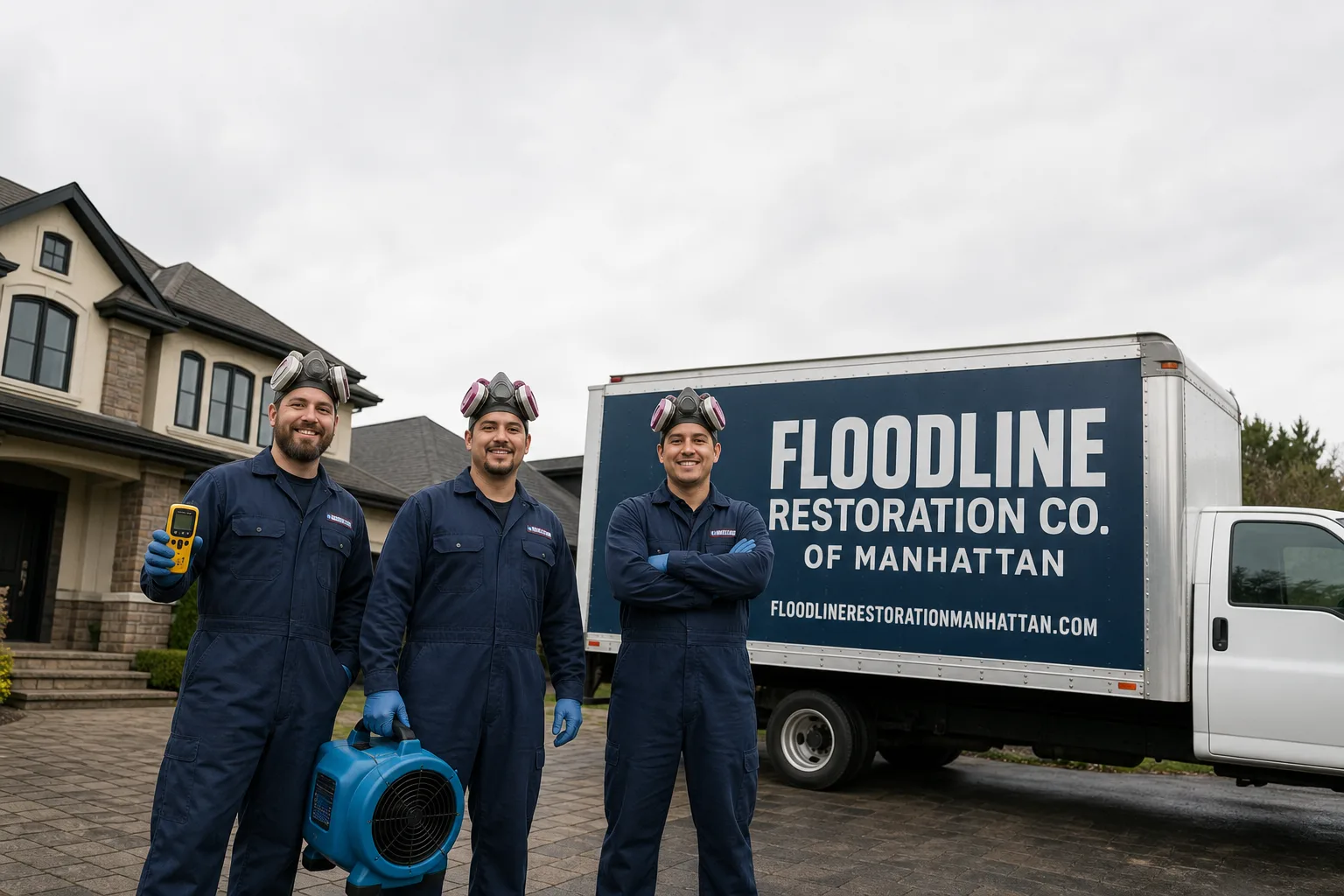
Free visual inspection and a written scope of work before any mitigation begins - photos, moisture readings, and drying logs go in your claim file
The scope we write is the scope we bill. Anything new gets shown to you, in writing, before we touch it.
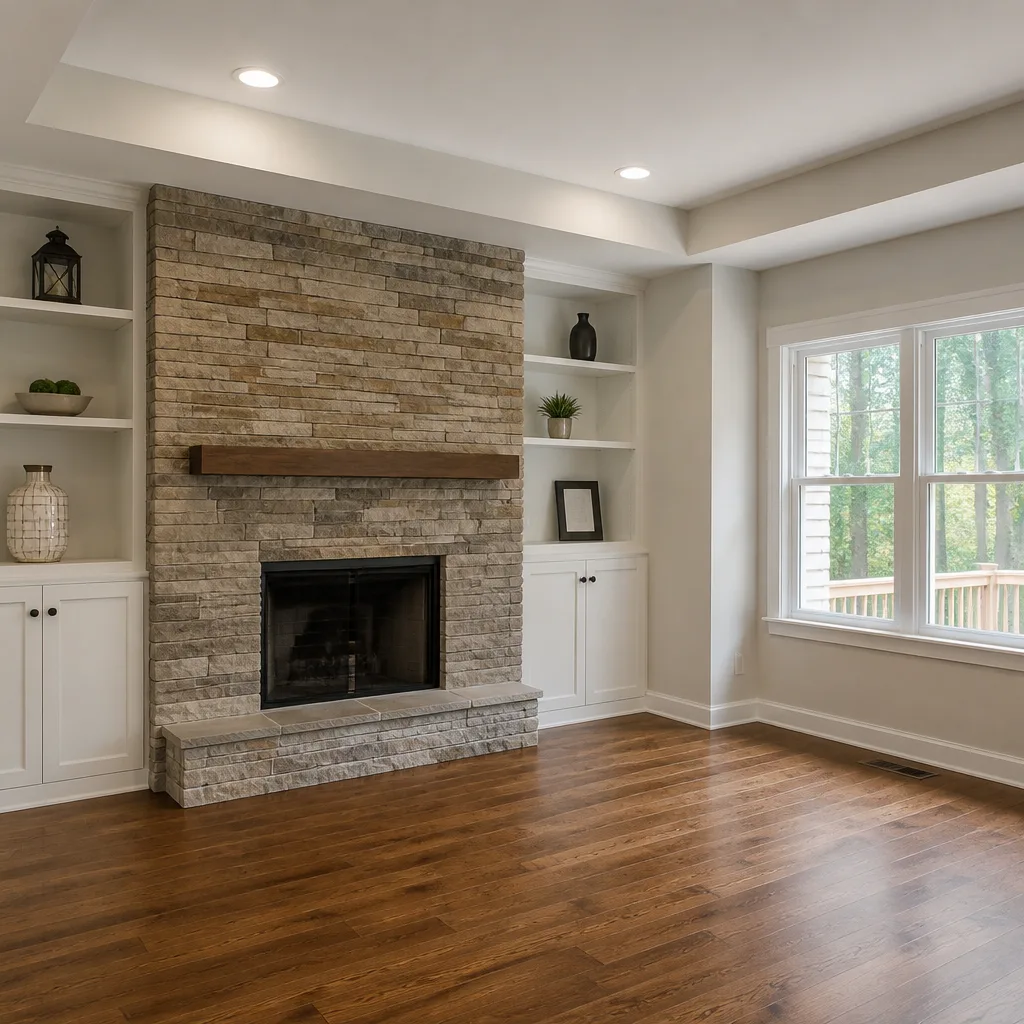
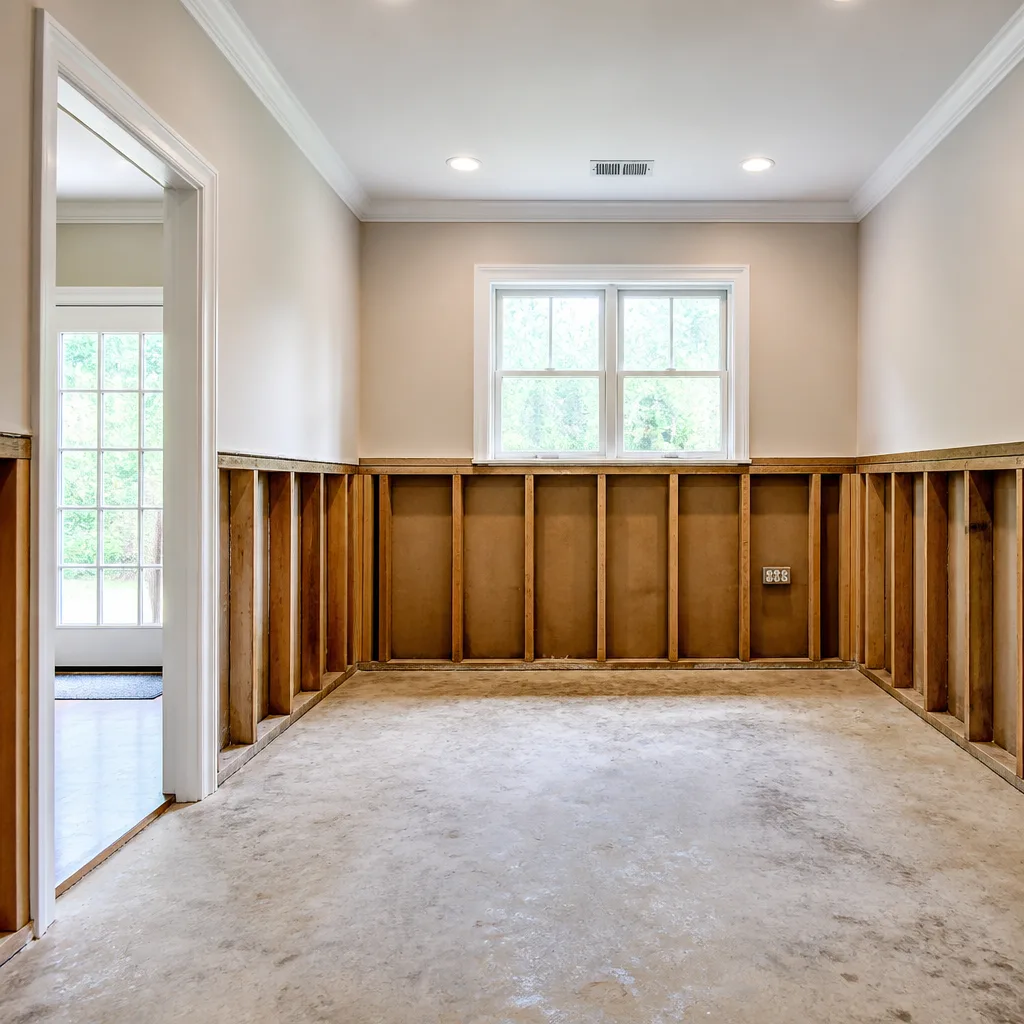

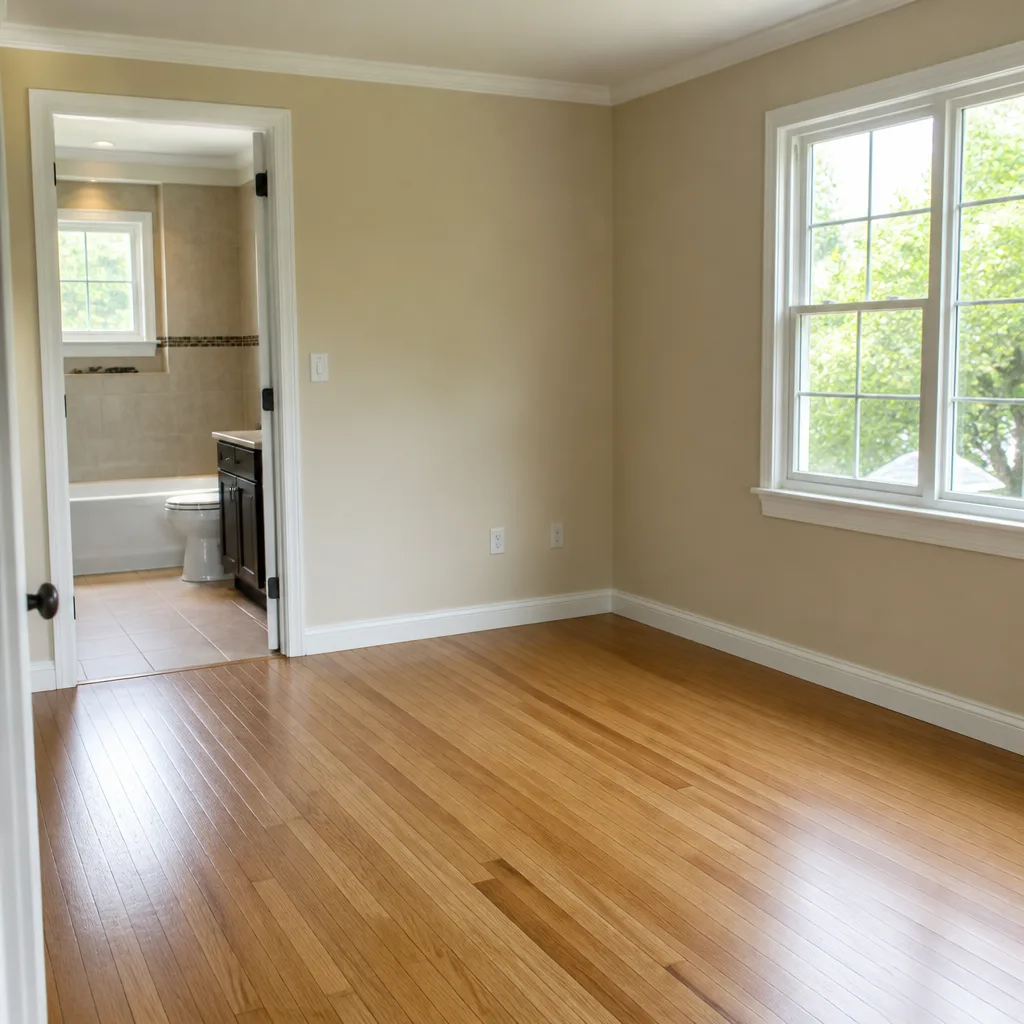
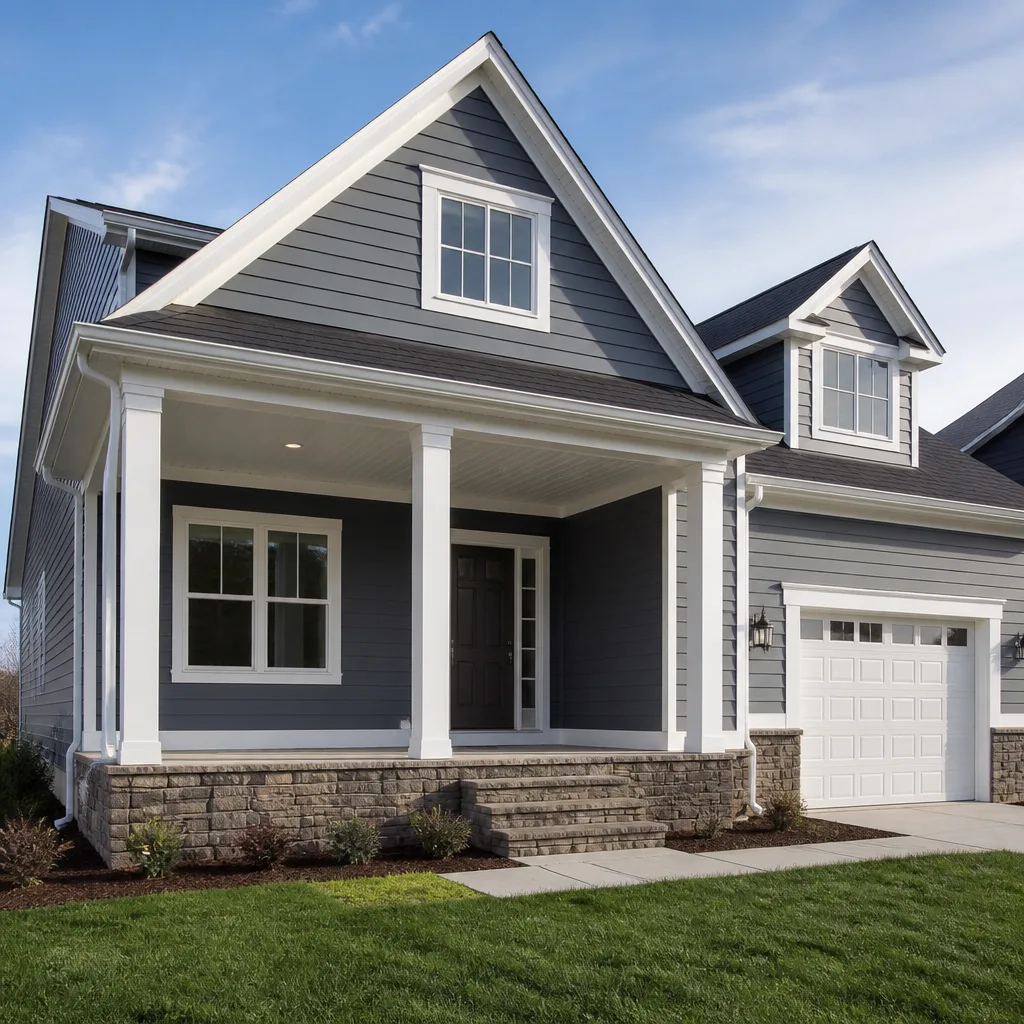
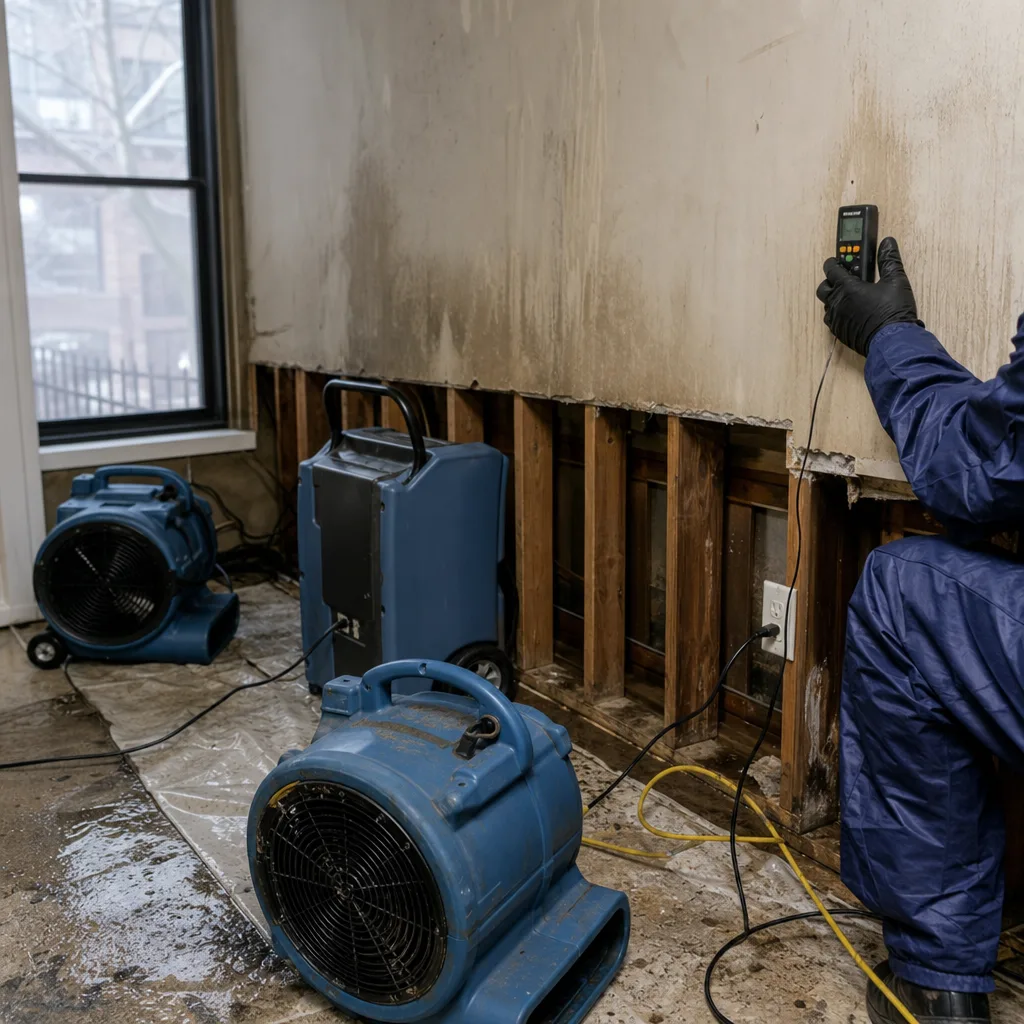 Before
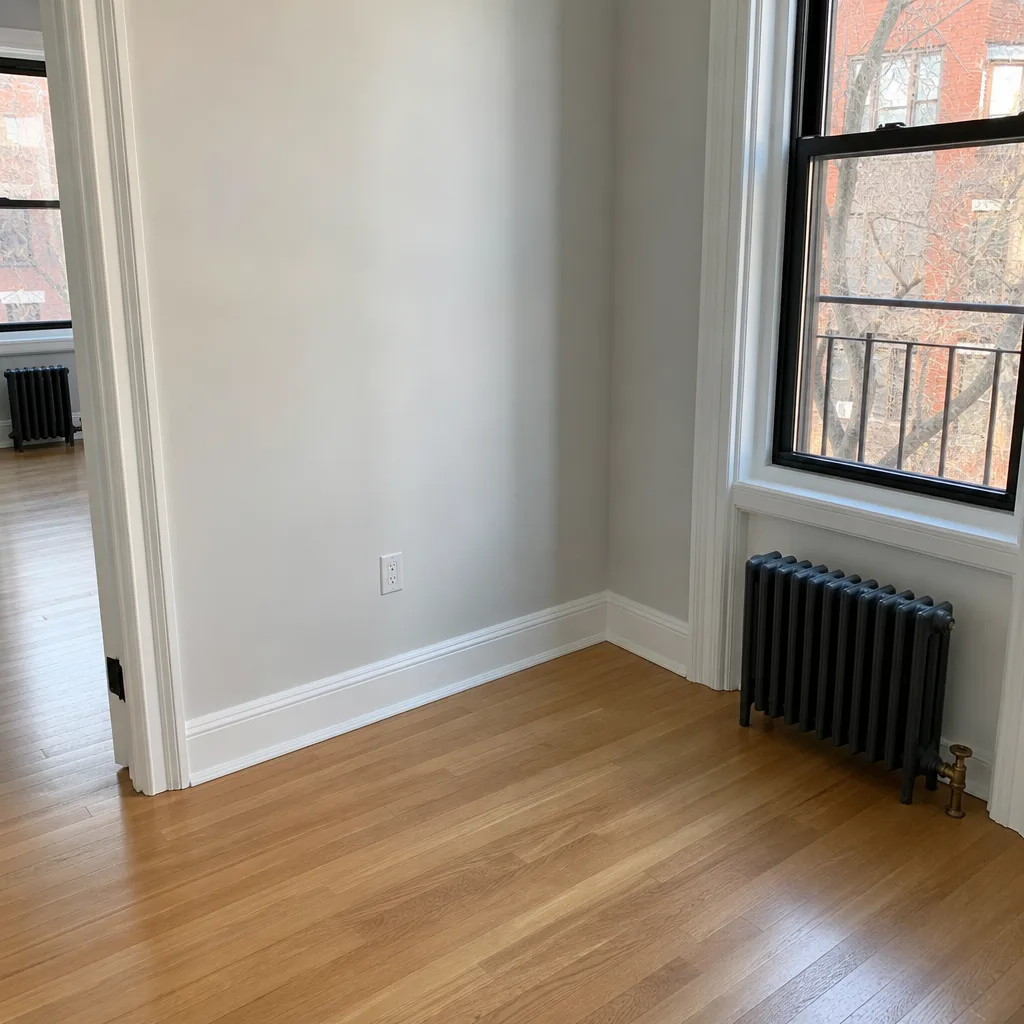 After
After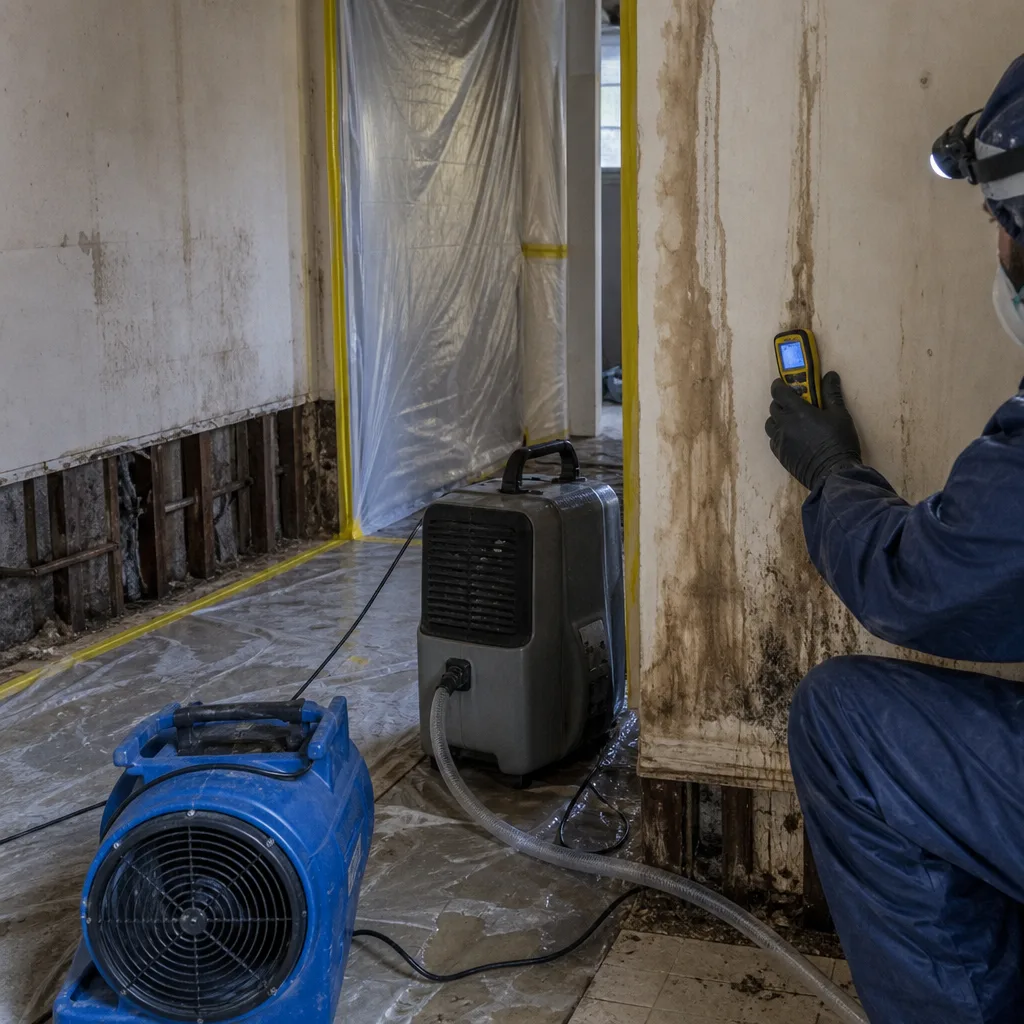 Before
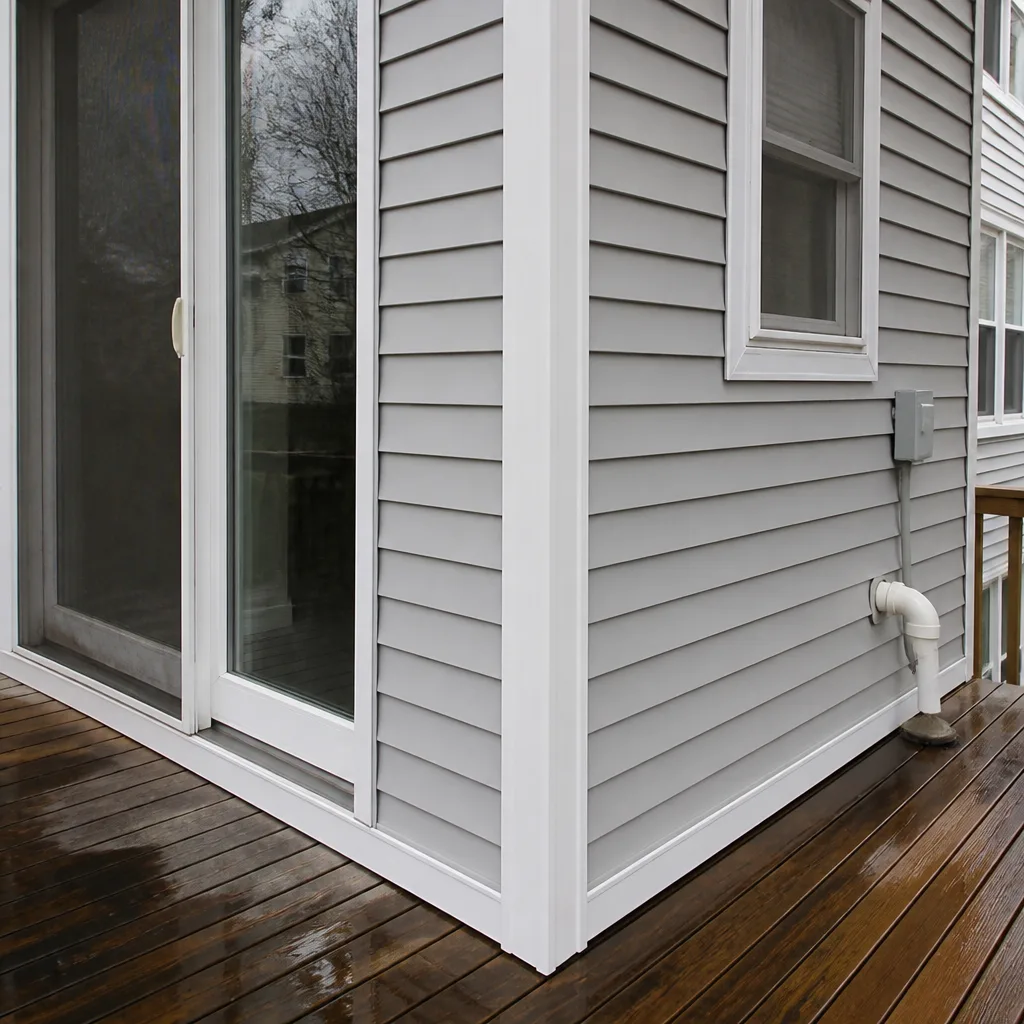 After
After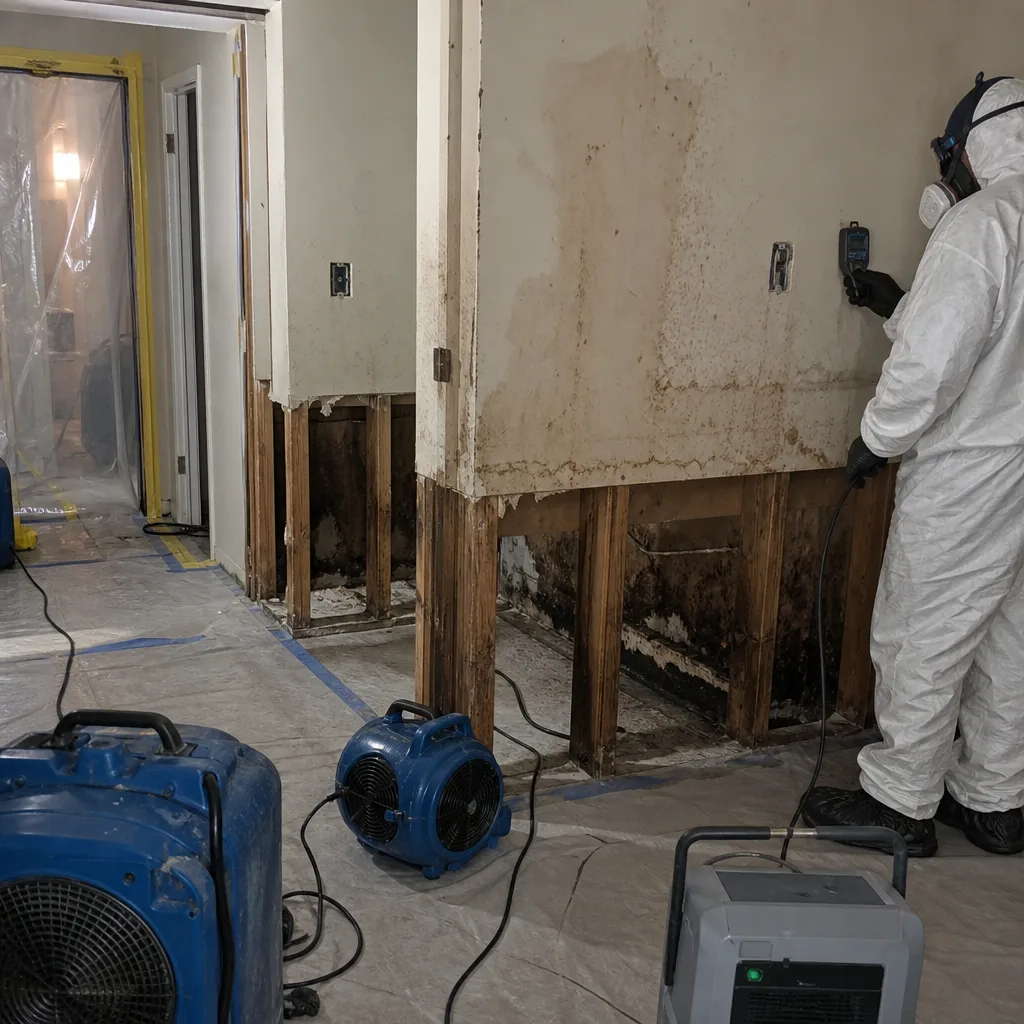 Before
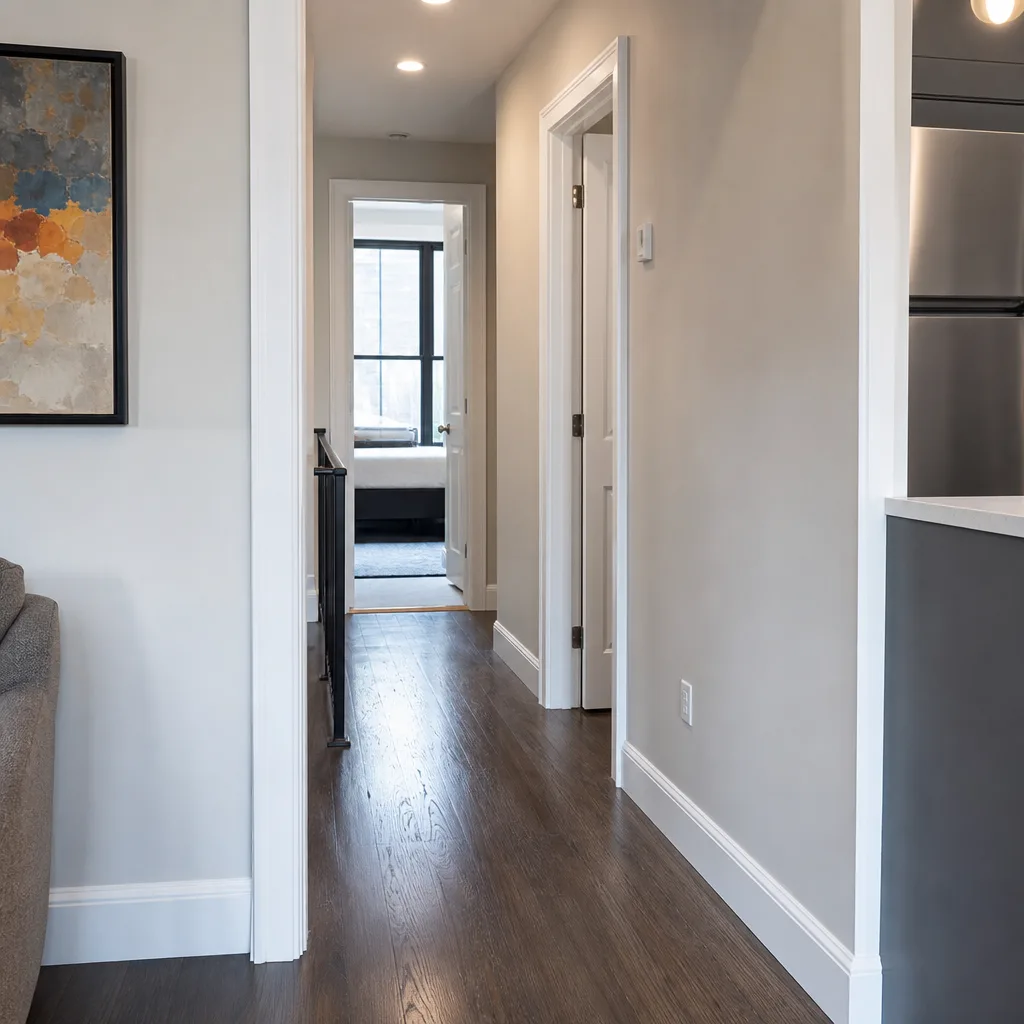 After
After24/7 Emergency Fire & Smoke Damage Restoration in Valley Stream
Fire and smoke damage restoration in Valley Stream starts with a live answer on the phone, not a recording. Our crews are dispatched from the New York City office and reach Valley Stream quickly, typically starting the board-up and soot containment during the first visit. The first hour after a fire matters because smoke residue turns acidic within days, etching glass, corroding wiring, and forcing odor deep into drywall and framing. Call (917) 924-4221 any hour. A certified technician performs a free visual inspection on site, so you know exactly what you’re facing before any work begins.
This page tells you exactly how Valley Stream’s chronic Mill River basement flooding changes every step of fire and smoke damage restoration, from the first water extraction to the final wind-rated structural repair.
Understanding Fire & Smoke Damage Restoration Severity in Valley Stream Properties
The severity of a fire loss in Valley Stream depends on three things: how far the smoke migrated, how much water the fire department used, and whether that water found its way into a basement already sitting near the local water table. Most of Valley Stream’s residential stock consists of postwar Cape Cods and modest colonials built from the late 1940s through the early 1960s, nearly all with full basements. Those basements are the primary damage zone whenever fire suppression water drains downward. Wet charred drywall, soaked insulation, and standing water on a concrete slab demand both fire and water mitigation protocols in the same job.
We classify smoke residue by type: dry smoke from fast-burning paper and wood, wet smoke from smoldering synthetics, protein residue from kitchen fires, and fuel-oil soot from furnace puffbacks. Each residue requires a different cleaning chemistry. Valley Stream’s aging cast-iron drain stacks and original sump pits mean that when fire hoses add thousands of gallons, the floor drain often backs up simultaneously, introducing category 3 contamination into the same structure that just sustained smoke damage. A restoration team has to read both loss types at once.
Why Valley Stream Property Owners Choose Floodline Restoration Co. of Manhattan
- 45-minute response commitment: When you call about fire or smoke damage in Valley Stream, a crew is dispatched immediately and reaches your street fast. We’ll be there when we say.
- A real person answers, 24/7: No automated menu. A live dispatcher picks up at 2 a.m., every day, and stays on the phone until a certified crew is routed to you.
- IICRC-certified technicians: Our crews hold FSRT and WRT certifications, so fire, smoke, and water damage are handled by the same trained team, not a subcontractor switchover.
- Free visual inspection: We walk the property, map the smoke migration and water saturation, and give you a written scope before any work starts. No sales pressure.
- Direct insurance billing: Floodline communicates with your adjuster and bills the carrier directly. You never play messenger.
- One team from emergency to rebuild: The same background-checked, uniformed crew that boards up on day one handles drying, odor removal, contents pack-out, and structural repair. The 90-Day Done Right Promise backs it in writing.
Our Fire & Smoke Damage Restoration Process
Inspection & Assessment
We inspect the full structure, not just the burn room. Smoke migrates into wall cavities, ductwork, and closets two floors away. We use thermal imaging to find hidden hot spots and moisture meters to map water saturation from fire hoses or Mill River backups.
Extraction & Stabilization
Standing water comes out first. In Valley Stream, that often means category 3 water from a backed-up floor drain or post-fire storm flooding, so extraction and disposal follow strict contamination protocols before drying begins.
Drying & Dehumidification
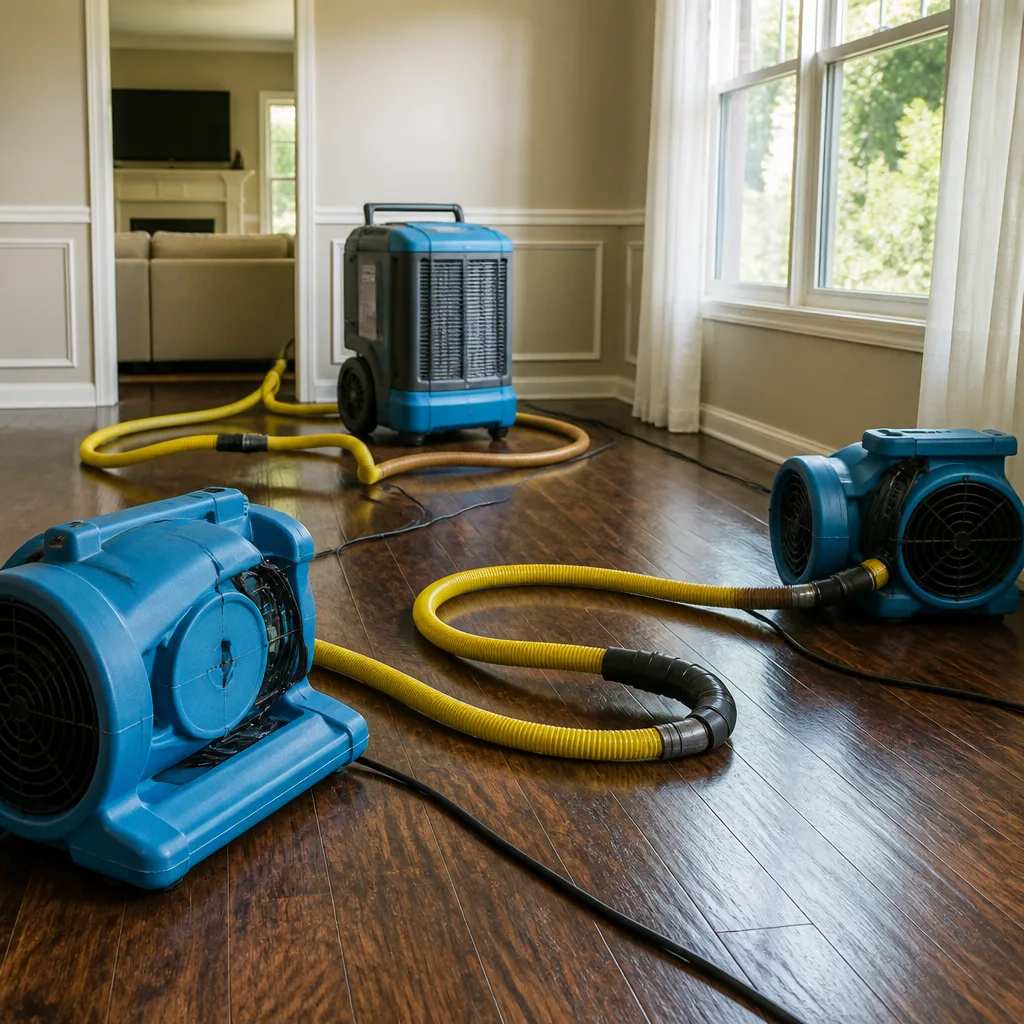
Dri-Eaz air movers and Phoenix dehumidifiers are placed against saturated studs and under charred drywall. Daily moisture readings are logged until the dry standard is met, and the log goes to you and your carrier.
Cleaning & Sanitization
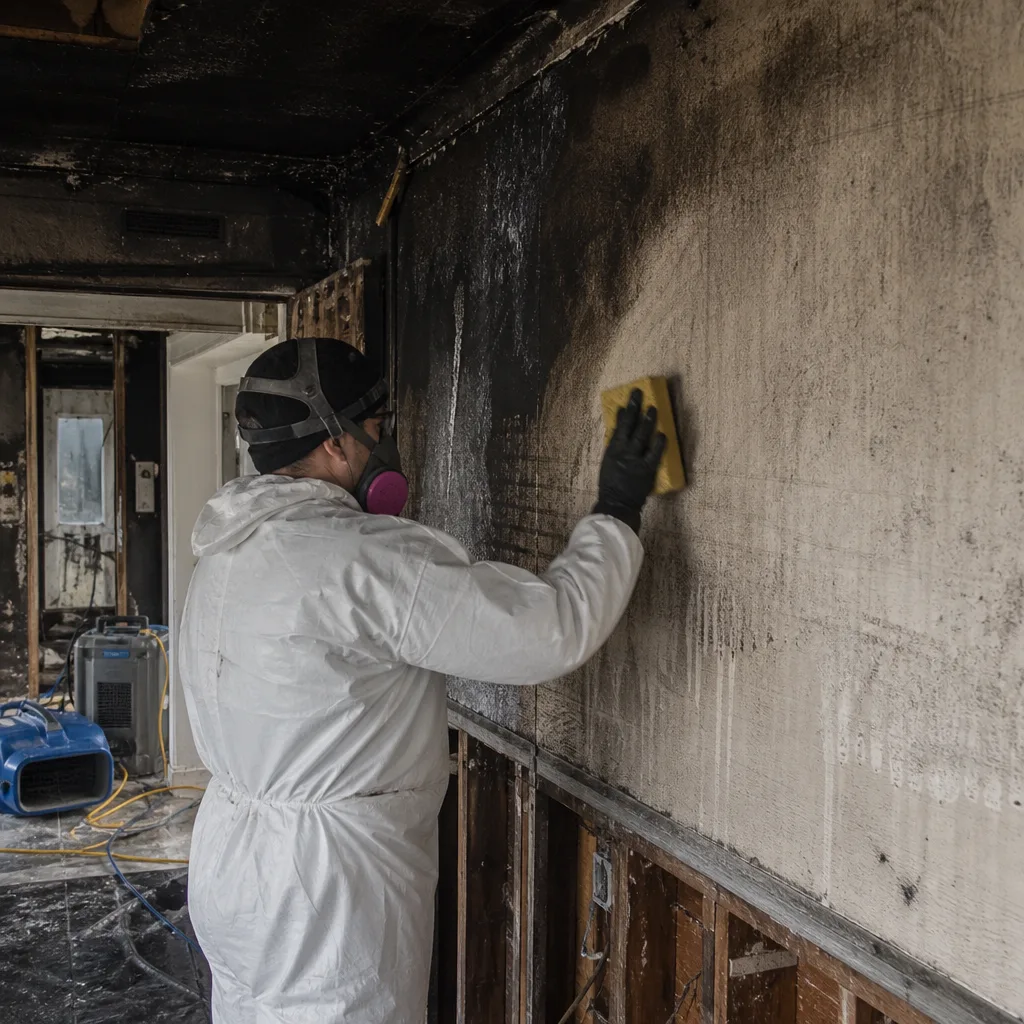
HEPA air scrubbers run during the entire cleaning phase. Soot residue is removed from hard surfaces with appropriate chemistry for each residue type, and charred materials are cut back to clean, dry substrate.
Smoke & Odor Removal
We treat cavities, not just surfaces. Thermal fogging, hydroxyl generators, and sealant-locking primers address the odor trapped behind walls. This is the step that separates a cosmetic patch from a restoration.
Structural Fire Repair & Restoration
Damaged framing, sill plates, windows, and doors are rebuilt to pre-loss condition. Exterior doors and storm-door tracks on Valley Stream homes are checked against wind-load requirements, because the next nor’easter does not wait.
Need Emergency Fire & Smoke Damage Restoration in Valley Stream Now?
Crews minutes away, answering live 24 hours a day. The sooner we start, the less it costs.
Working With Your Insurance Company
Insurance claims after a fire in Valley Stream often involve two losses at once: the burn itself and the flood contamination that followed. Your carrier needs documentation that separates fire damage from water damage, because the cause of loss affects coverage limits and deductibles. We photograph every room before work begins, log daily moisture readings, and produce a line-item scope of work that matches industry-standard estimating formats. Our team communicates directly with your adjuster, answers their questions, and submits the documentation they need. You stay informed, but you do not become the go-between.
What We Provide Your Insurer
- Thorough documentation of the loss
- Photos of all damage, room by room
- Moisture readings and drying logs
- A detailed, line-item scope of work
- Direct coordination with your carrier
Built for Valley Stream’s Loss Calendar
Valley Stream’s fire losses do not follow a single pattern. January deep freezes push aging heating systems hard, and oil-to-gas conversion furnaces in 1950s colonials occasionally produce puffbacks that coat entire floors in soot. Spring brings basement seepage as the water table rises, and a small electrical fire in a damp cellar becomes a combined smoke-and-water job immediately. Summer thunderstorms overwhelm the village’s aging storm-sewer infrastructure within hours, backing floor drains into fire-damaged basements. Nor’easters drive Jamaica Bay surge northward through the Mill River system, which is why we coordinate emergency board-up with storm tracking during fall and winter fire losses. A kitchen fire on a Tuesday in October becomes a flood-damage remediation job by Thursday if we do not secure the openings first. Valley Stream’s geography demands that planning.
Fire & Smoke Damage Restoration Across Valley Stream’s Neighborhoods
Response routes matter here. Homes in the Gibson section, south of Merrick Road, sit closest to Jamaica Bay’s tidal influence and are first to see storm surge backup through floor drains. A fire loss there almost always carries category 3 water from the outset. In the North Valley Stream area near the Elmont border, the postwar Capes along Dutch Broadway and Fenwood Drive tend toward older electrical panels and original wiring, so we see more smoldering electrical fires that migrate smoke through balloon-framed walls. The central village around Rockaway Avenue and Sunrise Highway has a denser mix of colonials and capes where fire department response times are short but suppression water still pools in basements. The Mill River corridor, east of Corona Avenue, floods fast during heavy rain, and we routinely arrive at fire-damaged homes there to find standing water already inside. Valley Stream is small enough that a crew can be anywhere in the village inside minutes, but large enough that each corridor has its own loss pattern.
Specialized Fire & Smoke Damage Restoration Services We Offer in Valley Stream
Fire Damage Cleanup
We remove charred drywall, burned insulation, and damaged framing down to clean substrate. In Valley Stream basements, that often means cutting back materials that have been sitting in contaminated floodwater since the fire trucks left. Charred drywall that got soaked by category 3 water cannot be dried in place; it comes out.
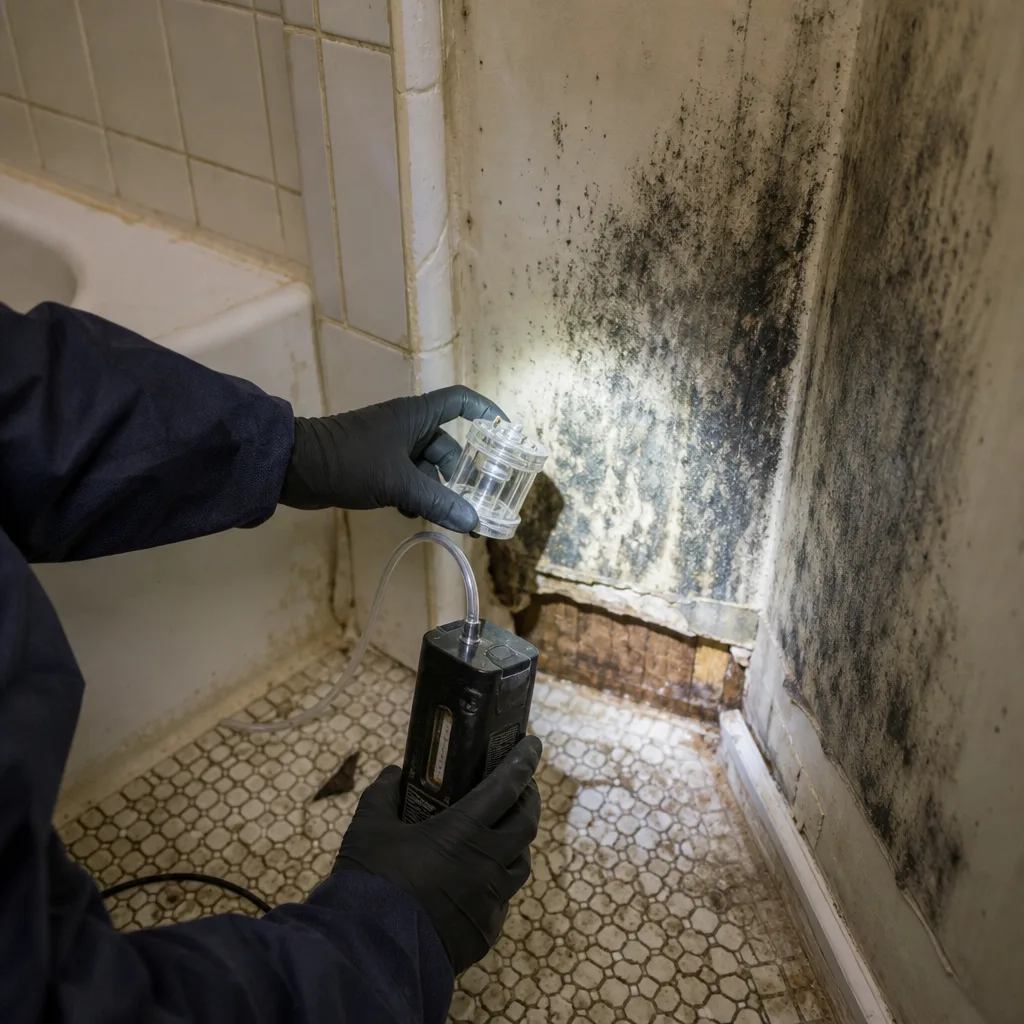
Smoke & Soot Removal
Soot removal here is never a surface-only job. Smoke travels through the same wall cavities where Mill River floodwater later travels, so we treat the cavity, not just the painted wall. Years of follow-up calls from Valley Stream homeowners have taught us where smoke hides in postwar capes: behind baseboards, inside cold-air returns, and under stair stringers.
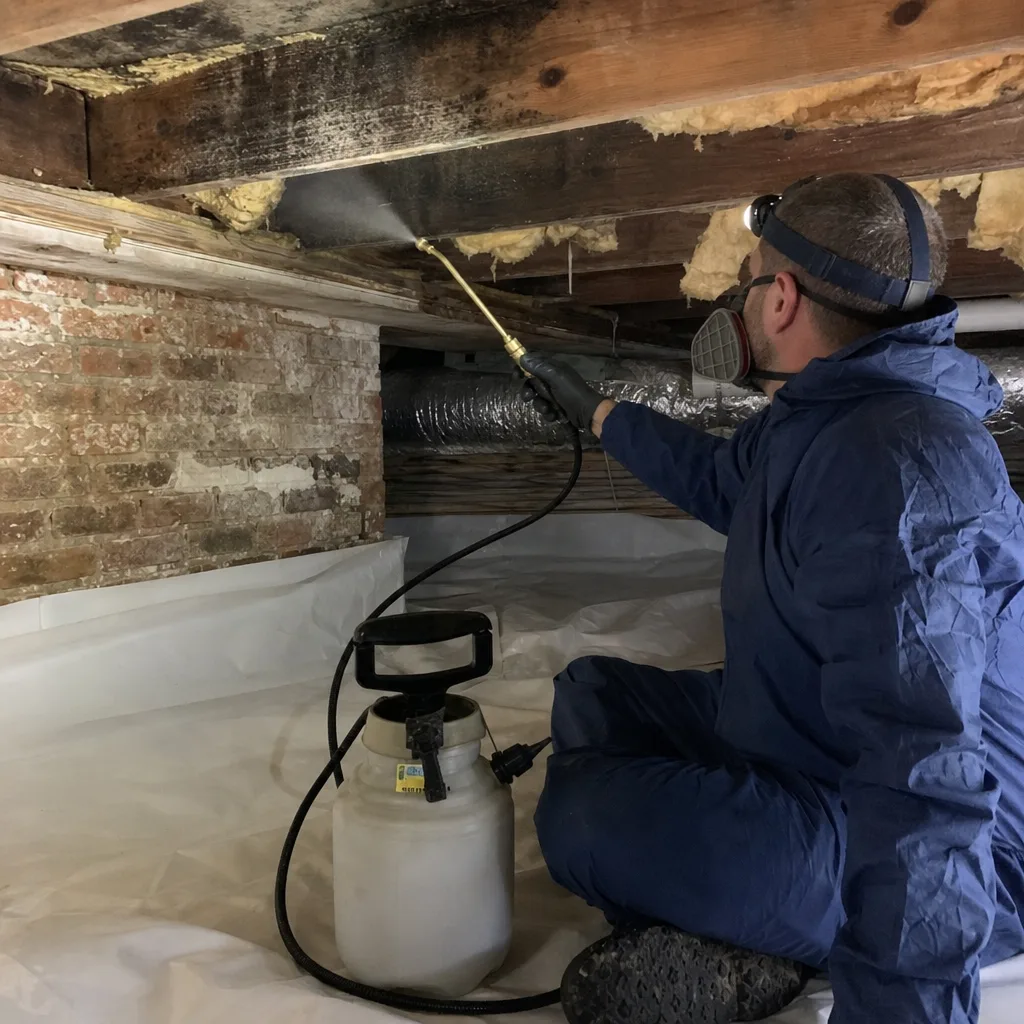
Odor Removal & Deodorization
Odor persists when the source is only sealed, not removed. We combine hydroxyl generators, thermal fogging, and cavity treatments to neutralize smoke odor rather than mask it. After a kitchen fire in a cape near the Mill River, the smoke smell kept coming back through closet walls until we fogged the shared stud bay. That is the difference between odor control and odor removal.
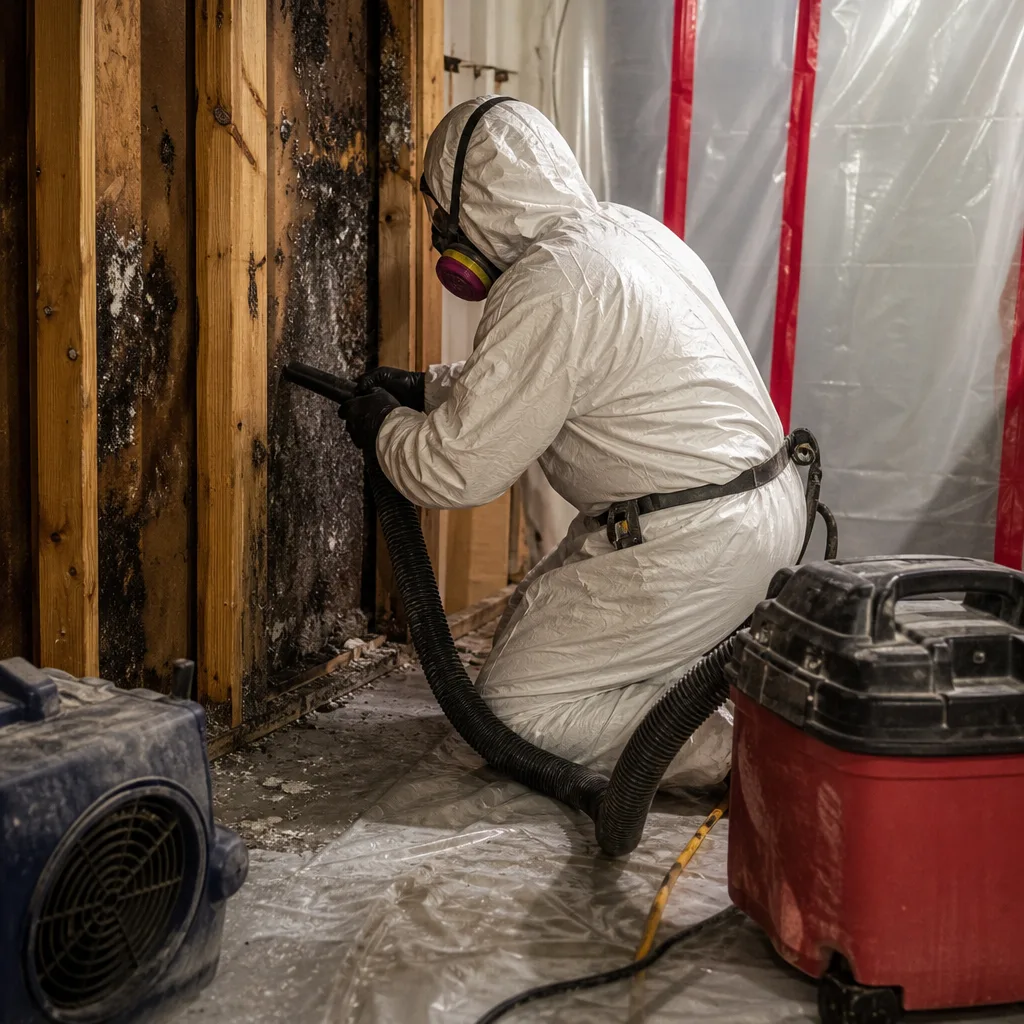
Contents Cleaning & Pack-Out
Soot-covered furniture, clothing, and dishes are documented, inventoried, packed out, and cleaned at our facility. We photograph everything for your insurer. Items that cannot be restored are listed with a replacement value. Your belongings return cleaned and stored until the rebuild is done.
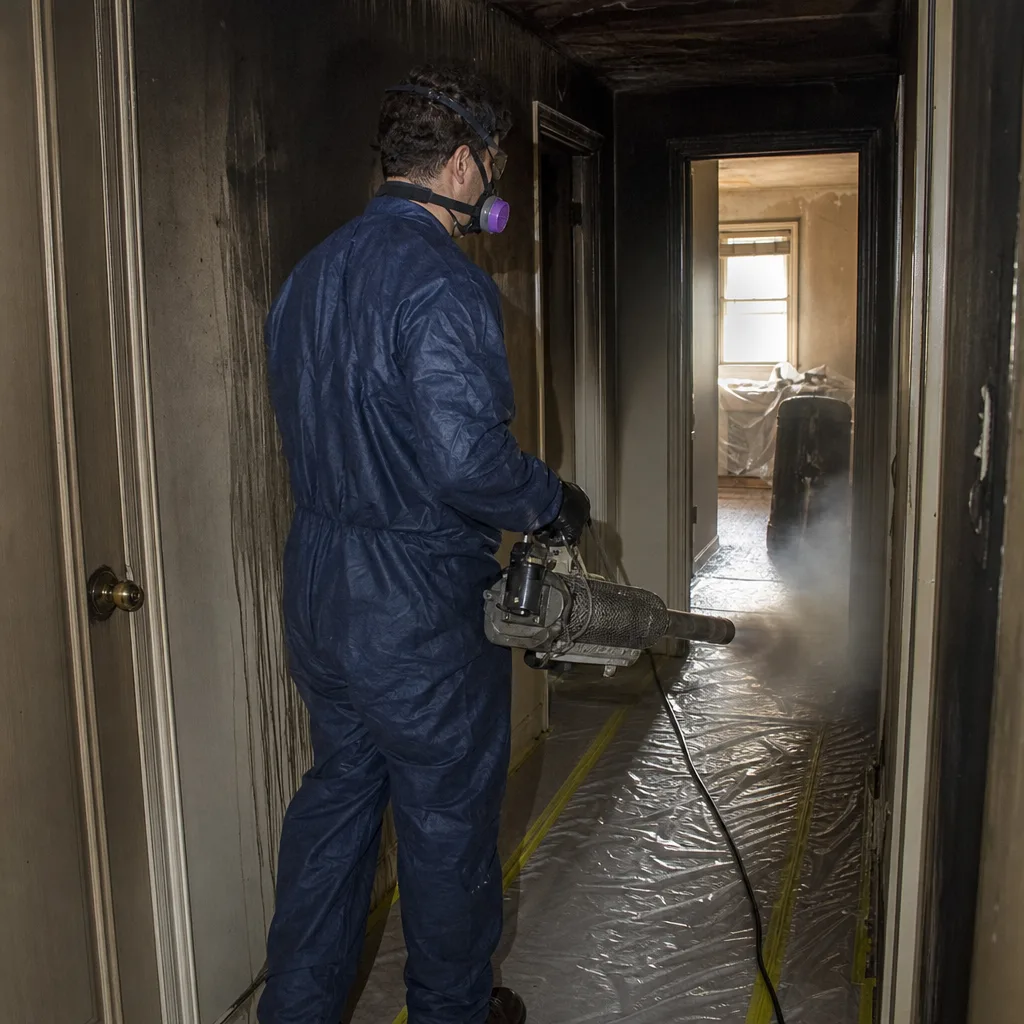
Emergency Board-Up & Tarping
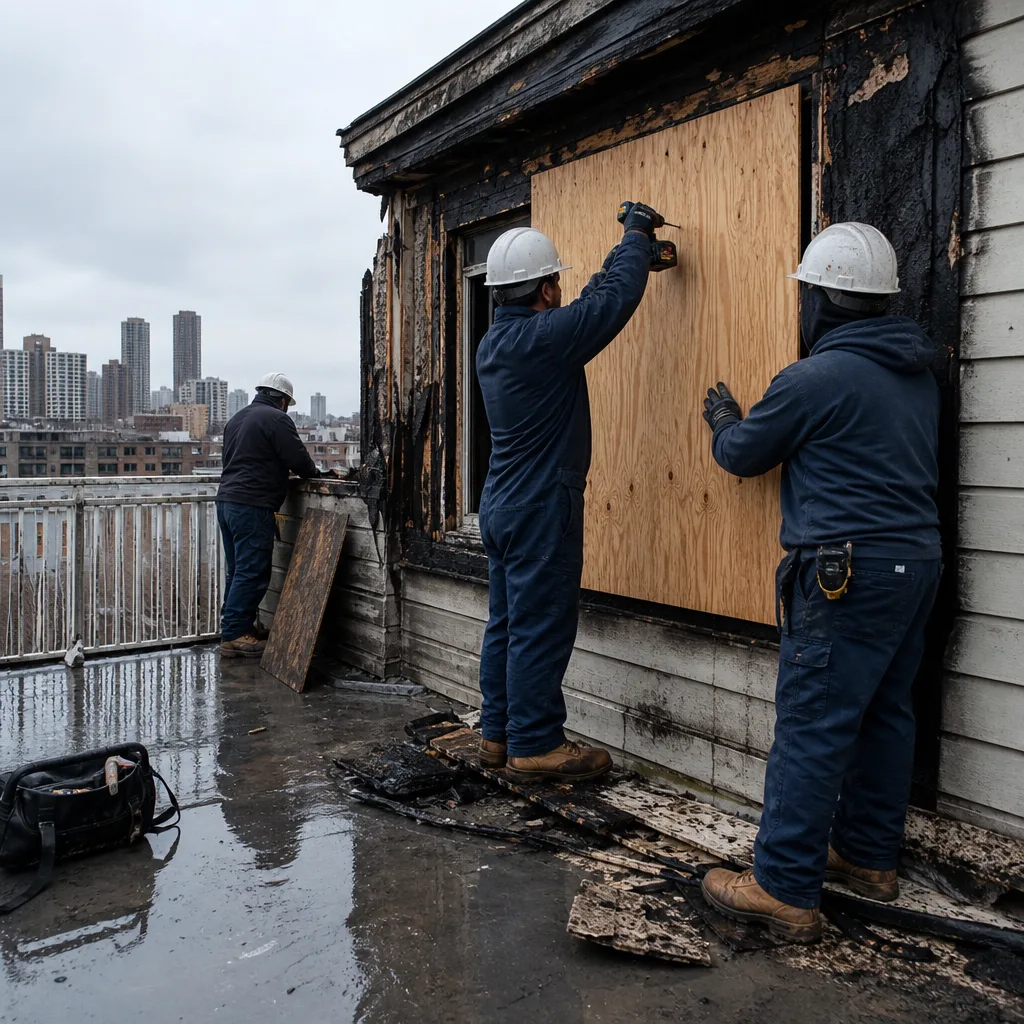
Valley Stream sits in a wind corridor that turns a broken window into a pressure problem during the next storm. We board up fire-damaged openings and tarp rooflines the same day, before wind or rain adds water damage to the smoke damage. Board-up is not a pause; it is the first structural protection on the job.
Structural Fire Repair
After a fire, the sill plate, studs, and roof members that survived the flames may have been soaked by fire-suppression water or flood backup. We rebuild those members to current code, including wind-rated door and window installations where the original openings were damaged. Valley Stream’s building department expects structural repairs to meet Nassau County wind-load standards, and so do we.
What happens when you call
- 1
A real person answersNo phone trees - you reach a local pro.
- 2
You get an upfront price rangeHonest numbers before anyone is dispatched.
- 3
A background-checked tech heads outLicensed & insured, dispatched right away.
- 4
You approve before work beginsNothing starts until you say go.
Fire & Smoke Damage Restoration Costs in Valley Stream, NY
A typical smoke and soot removal in Valley Stream runs $1,800 to $4,500, depending on square footage and residue type. Odor removal with thermal fogging and cavity treatment adds $800 to $2,200. Emergency board-up and tarping runs $400 to $1,200 on the first visit. Full fire damage cleanup including charred drywall removal and drying runs $4,000 to $11,000. A complete fire restoration with structural repair ranges from $12,000 to $38,000. The free visual inspection gives you a firm, written scope before you commit to anything. Most fire losses are covered by homeowner’s insurance, and we bill your carrier directly. For uninsured work, the Senior & Veteran 5% discount always applies. Call (917) 924-4221 for an exact quote. Estimates are free.
We Also Serve Cities Near Valley Stream
Our crews regularly respond to fire and smoke losses in Valley Stream and the surrounding communities, including Elmont, Rosedale, Cambria Heights, and Springfield Gardens. If your home is a few blocks outside the village line, call us any hour. Dispatch works the same way wherever you are.
Serving Valley Stream, NY - Our Local Coverage Area
We’re based in the Valley Stream area and know this community well. Use the map below to see our service coverage - if you’re nearby, we can almost certainly help.
Valley Stream Fire & Smoke Damage Restoration Questions, Answered
After a fire, how do I know if the water used to put it out is Category 1, 2, or 3 in Valley Stream?
Fire department water starts as Category 1, but it becomes Category 2 or 3 the moment it passes through charred debris, soot, and building materials, and it becomes Category 3 when it mixes with Mill River or sanitary sewer backup. In Valley Stream, a floor drain that backs up during the same event automatically makes the water category 3, which means the wet materials must be removed, not dried in place. Our technicians test and classify the water on arrival and show you the readings. Call (917) 924-4221 and ask for a free visual assessment.
Does floodwater from the Mill River affect smoke damage differently than a fire without flooding?
Yes. Mill River floodwater carries sewage, silt, and organic matter into the same cavities where smoke residue has settled, forcing a combined restoration protocol. The contaminated water reactivates soot and forces odor deeper into porous framing. Smoke damage that would have been treatable with surface cleaning plus fogging now requires cavity removal, antimicrobial treatment, and full structural drying. That combined loss is the defining challenge of fire restoration in Valley Stream.
Will the fire department’s water cause mold behind walls that weren’t burned but got wet?
It will if the framing stays wet longer than 48 to 72 hours. Fire suppression water runs down through the burn room into wall cavities and basement spaces that never saw flame. Those cavities, once soaked, become mold-friendly within days. That is why we open, inspect, and dry wall cavities with Dri-Eaz air movers and Phoenix dehumidifiers, logging daily moisture readings until the dry standard is met. The moisture log goes to your insurer as proof of proper drying.
I boarded up my windows after a fire, but the wind from a nor’easter pulled the tarp off. What should I do?
Call us. A loose tarp in Valley Stream wind becomes a hazard to your siding, your neighbors, and your already-damaged roof. We re-secure the board-up and check the pressure points where wind got behind the covering. A properly installed board-up accounts for Nassau County wind loads, and that is what we install the first time. Call (917) 924-4221 and a crew will come out the same day.
My 1950s colonial had a fire in the kitchen, and the floor drain in the basement backed up during the same storm. Can you handle both?
This is a common Valley Stream scenario. We handle fire, smoke, and category 3 water in one job, with one certified crew, under one scope of work. The fire damage gets addressed above grade, while truck-mounted extractors pull the contaminated water from the basement below. Your adjuster gets a single line-item scope from a single contractor, which streamlines the claim. The 90-Day Done Right Promise covers the entire job.
How fast can a certified crew actually reach my Valley Stream home after I call?
Our dispatch commitment is 45 minutes to arrival for emergency fire and smoke calls in Valley Stream. A live person answers the phone immediately, confirms your address, and routes the nearest available certified crew. In practice, many calls are within the village in under a half hour because our crews are continuously staged around Nassau County.
Are your technicians certified for this work?
Yes. Our background-checked, uniformed technicians hold IICRC certifications including FSRT for fire and smoke restoration and WRT for water restoration. Crews are also trained to RIA and IFA standards for structural repair and contents handling. The same standards apply to every job, whether the damage is a kitchen fire or a full basement flood.
What should I do in the first 30 minutes after a fire in my Valley Stream house?
Get everyone out, call 911 if it is not already handled, and call us at (917) 924-4221. Do not walk through soot-covered rooms, because soot oils get pressed into carpet and hardwoods. Do not turn on ceiling fans or HVAC systems, which spread smoke soot deeper into the ductwork. Keep doors closed to limit smoke migration. We board up, tarp, and start containment while the fire department is still clearing the scene if we are allowed.
Written by Curt Bowman, Owner at Floodline Restoration Co. of Manhattan, serving Valley Stream, NY.