
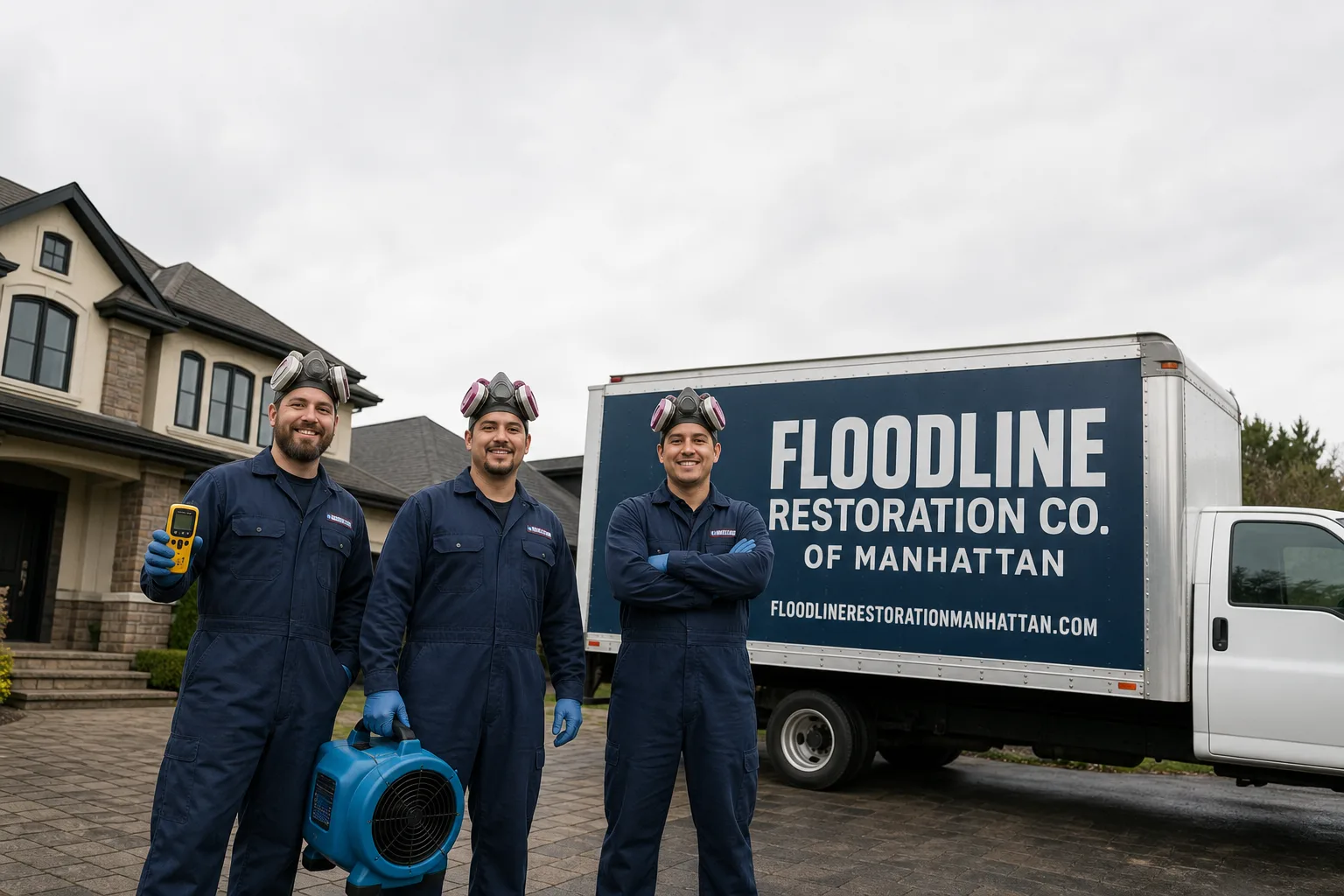
Free visual inspection and a written scope of work before any mitigation begins - photos, moisture readings, and drying logs go in your claim file
The scope we write is the scope we bill. Anything new gets shown to you, in writing, before we touch it.






 Before
 After
After Before
 After
After Before
 After
After24/7 Emergency Mold Remediation in Alphabet City
Mold remediation in Alphabet City typically costs $1,800-$6,500 depending on how far the colony has spread behind century-old plaster, and we can usually have a certified crew on site within 45 minutes of your call. Call (917) 924-4221 any hour, any day. A live dispatcher answers. Not a recording. Not a call center.
We work Alphabet City’s pre-war tenements every week, and we know what the first hour means here. In a five-story old-law building off Avenue B, mold that started in one unit behind a weeping galvanized riser can colonize the shared wall cavities and reach three or four apartments before anyone sees staining. The faster containment goes up, the less plaster and lathe has to come out. We’ll tell you straight what needs to happen after a free visual inspection. No pressure. A written scope before any work begins.
Understanding Mold Remediation Severity in Alphabet City Properties
Mold severity in Alphabet City breaks into three practical levels. Level one is surface colonization: visible growth on plaster, baseboards, or drywall where a one-time leak or high-humidity stretch fed it, usually treatable with containment, HEPA air scrubbing, and antimicrobial cleaning without major demolition. Level two is cavity colonization: mold inside wall assemblies, behind intact plaster that shows no exterior staining. This is the Alphabet City signature. Old-law and new-law tenements built between the 1880s and 1920s used thick plaster-and-lath over wood framing, and those cavities trapped moisture from Hurricane Sandy, from shared cast-iron drain stacks, and from decades of roof patches. Level three is systemic: mold that has moved through shared vertical plumbing chases and now spans multiple rent-stabilized units in the same line, which requires full containment per floor, negative air pressure, and coordination with the building’s owner and carrier.
What separates a real remediation from a cosmetic wipe-down in this neighborhood is moisture mapping and clearance testing. We use thermal imaging and penetrating moisture meters to find water you can’t see, dry to a documented standard, then run post-remediation verification so you know the job actually finished. In Flood Zone AE buildings east of Avenue B, the baseline humidity alone can keep mold alive if drying isn’t done properly.
Why Alphabet City Property Owners Choose Floodline Restoration Co. of Manhattan
- 45-minute response commitment - our Alphabet City crews stage locally, so dispatch to Avenue A or Avenue D happens fast, not “sometime tomorrow.”
- 24/7 live answer - a person picks up at 2 a.m. and starts the clock. You never leave a message during an active mold event.
- IICRC-certified crews - our technicians hold IICRC AMRT (Applied Microbial Remediation Technician) and WRT (Water Restoration Technician) certifications, trained to RIA and IFA standards.
- Free visual inspection - we assess the scope before you commit to anything, and the estimate is a firm written number.
- Direct insurance billing - we document, estimate, and bill your carrier directly. You’re not the messenger between us and the adjuster.
- One team, start to finish - the same Mold Remediation crew that sets containment on day one rebuilds the plaster and trim when the remediation is done. No mid-job handoff to subcontractors.
Our Mold Remediation Process
Inspection & Assessment
We start with a visual inspection, thermal imaging, and moisture mapping of the affected unit and any adjacent cavities. In Alphabet City tenements, that means checking the shared walls, the plumbing chase, and the ceiling cavity below the roof line. You get a written scope and a firm number before any work starts.
Containment & Air Scrubbers
We seal the work area with 6-mil poly sheeting and run HEPA-filtered negative air machines to prevent cross-contamination into hallways and neighboring units. In a five-story walk-up with open stairwells, containment is the difference between a one-unit job and a building-wide problem.
Moisture Mapping & Structural Drying
Using thermal hygrometers and penetrating meters, we locate every wet cavity, then place Dri-Eaz dehumidifiers, XPOWER air movers, and Phoenix axial fans where they’ll actually dry the structure. Daily moisture readings are logged and shared with you and your carrier.
Removal of Contaminated Material
Saturated plaster, lathe, baseboards, and insulation come out under containment. We cut clean lines, bag contaminated debris in sealed poly, and HEPA-vacuum every exposed surface. What should be saved gets cleaned and dried. What can’t be saved goes.
Cleaning, Antimicrobial Treatment & Clearance
All remaining surfaces are HEPA-vacuumed, scrubbed with EPA-registered antimicrobial agents, and treated to resist recolonization. When drying goals are met, we run post-remediation verification and provide written clearance documentation for your records and your insurance company.
Repairs & Restoration
The same Floodline crew rebuilds what we removed: new plaster or drywall, trim, paint, and any structural repair the tenement needs. We don’t hand you off to a reconstruction company. One phone number, one written guarantee, one finished apartment.
Need Emergency Mold Remediation in Alphabet City Now?
Crews minutes away, answering live 24 hours a day. The sooner we start, the less it costs.
Working With Your Insurance Company
Mold claims in Alphabet City often trace back to a covered water event: a burst supply line, a roof leak, a Sandy-era intrusion that was never properly dried. The challenge is proving the chain. That’s where our documentation does the heavy lifting. From the first hour on site, we photograph everything, log every moisture reading, and produce a line-item scope that speaks the carrier’s language. Our team has handled adjusters from every major insurer in the New York metro, and we communicate with them directly so you don’t have to interpret coverage language or fight about line items. If mold spread behind your plaster because of a covered water loss, we make the case with evidence, not adjectives.
What We Provide Your Insurer
- Thorough documentation of the loss
- Photos of all damage, room by room
- Moisture readings and drying logs
- A detailed, line-item scope of work
- Direct coordination with your carrier
Built for Alphabet City’s Loss Calendar
Alphabet City’s mold season doesn’t follow a single pattern; it follows the building’s age and the weather’s worst instincts. January deep freezes split galvanized supply lines in unheated stairwells and behind exposed riser chases. Water runs down four floors of plaster before anyone notices. Spring thaw and heavy March rain push groundwater into basement and garden-level apartments, especially east of Avenue B where the water table sits close and old foundations were never dampproofed. Summer thunderstorm flash flooding overwhelms the combined sewer system and backs up into cellar drains. Then comes late summer and early fall: high humidity sits inside unventilated tenement apartments, and the mold that winter’s leaks left behind starts blooming behind the walls. We see the spike every September. Nor’easters in late fall and winter drive wind-driven rain through flat tar roofs that were patched, not replaced, decades ago. None of this is theoretical; it’s the rhythm of this neighborhood.
Mold Remediation Across Alphabet City’s Neighborhoods
Alphabet City isn’t one building type. It’s a patchwork, and each pocket fails differently. East of Avenue B, from East 3rd up to East 14th, the buildings sit inside FEMA Flood Zone AE and took direct storm surge during Sandy. Those ground-floor and basement apartments still carry moisture in the wall cavities, hidden behind plaster that was painted over in 2013 and never properly dried. Avenue C and Avenue D tenements share the oldest cast-iron drain stacks in the neighborhood, and we regularly find slow leaks that have been feeding mold behind kitchen and bath walls for years. Along Tompkins Square Park, the newer mid-rise buildings have their own issues: high-efficiency windows that trap humidity, and HVAC chases that move moisture between floors. And in the corridor from East Houston Street up past East 10th, the mixed old-law and new-law stock means every job is a different wall assembly. We’ve worked L-shaped railroad apartments, dumbbell layouts, and air-shaft-facing bedrooms. The one constant is this: if there’s mold behind plaster in Alphabet City, there’s usually a moisture source that predates the stain you can see.
Specialized Mold Remediation Services We Offer in Alphabet City
Mold Inspection & Testing
We start with a visual inspection and moisture mapping, then take air and surface samples when needed to identify the species and spore load. In Alphabet City’s pre-war tenements, that means testing the air in the room, inside the wall cavity, and in the hallway outside the unit so you know whether the problem is contained or building-wide. Lab results come back with a plain-English explanation, not a scare report.
Moisture & Humidity Control
Mold doesn’t grow without water. In East Village tenements where ventilation is limited and summers are humid, the fix often includes dehumidification strategy, source control at the plumbing or roof level, and guidance on keeping apartments below the 60% relative humidity threshold that sustains mold growth. We can install permanent monitoring in problem buildings so a slow leak never becomes a five-unit colony again.
Black Mold Remediation
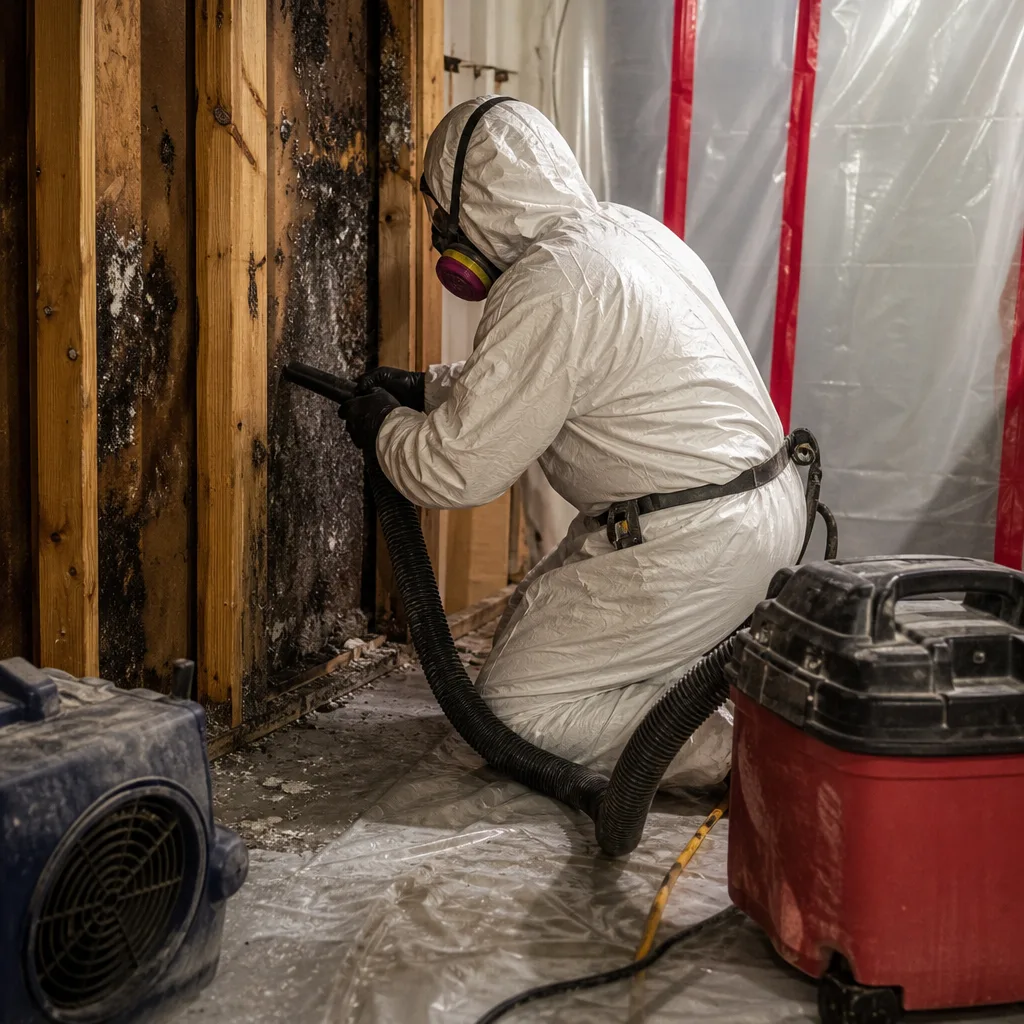
Stachybotrys gets the headlines, but the truth is simpler: any extensive mold in an Alphabet City wall cavity deserves full containment and professional removal, because the spores don’t care what species you call them. We treat every suspected black mold job with the same protocol as a confirmed one: full containment, HEPA air scrubbing, antimicrobial treatment, and clearance verification. If you see black staining on plaster or baseboards, call us. Don’t disturb it.
Mold Removal
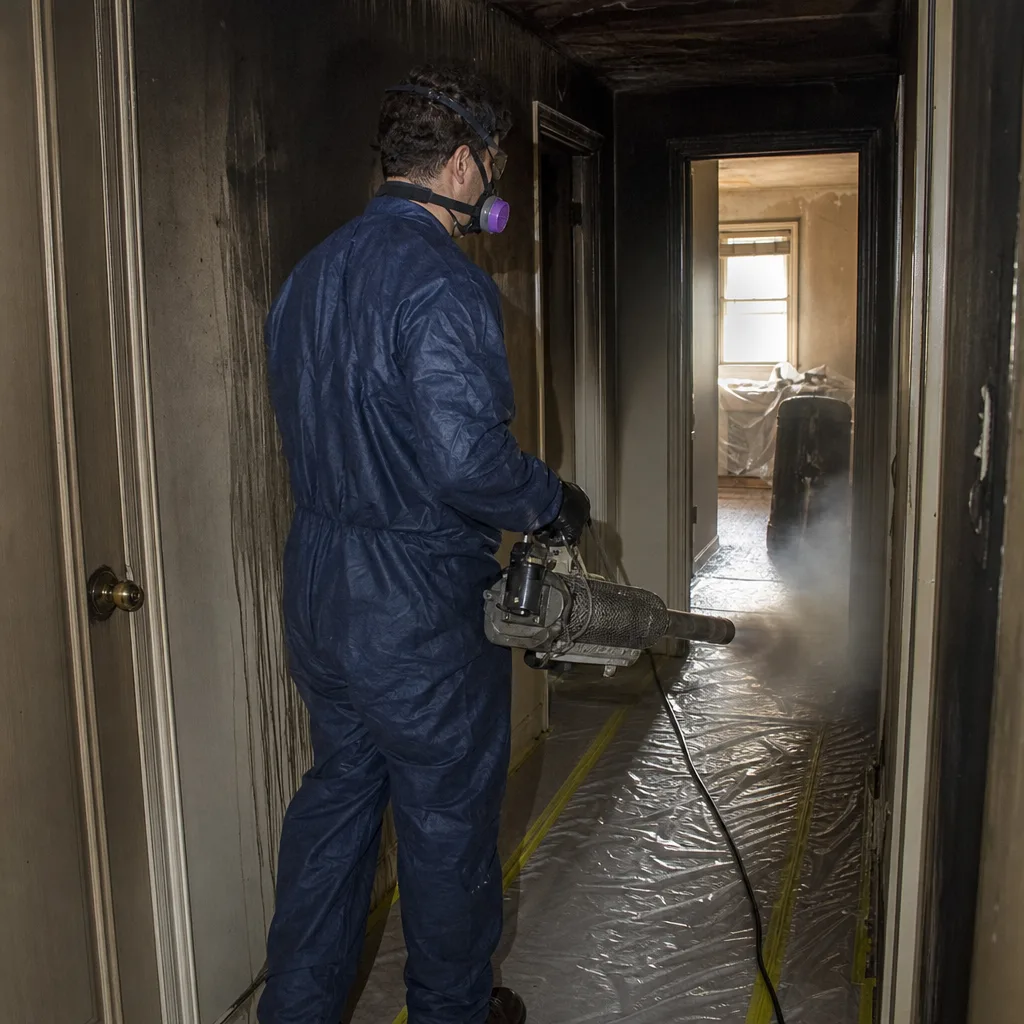
Removal in Alphabet City usually means surgical demolition: cutting out the contaminated plaster, lathe, and insulation while leaving the surrounding original fabric intact. That’s a skill. We’ve removed mold from behind ornate plaster ceilings, wainscoting, and original tin ceilings without destroying the features that make these apartments worth living in. Every cut is made to a clean line, and every surface is treated before it’s closed back up.
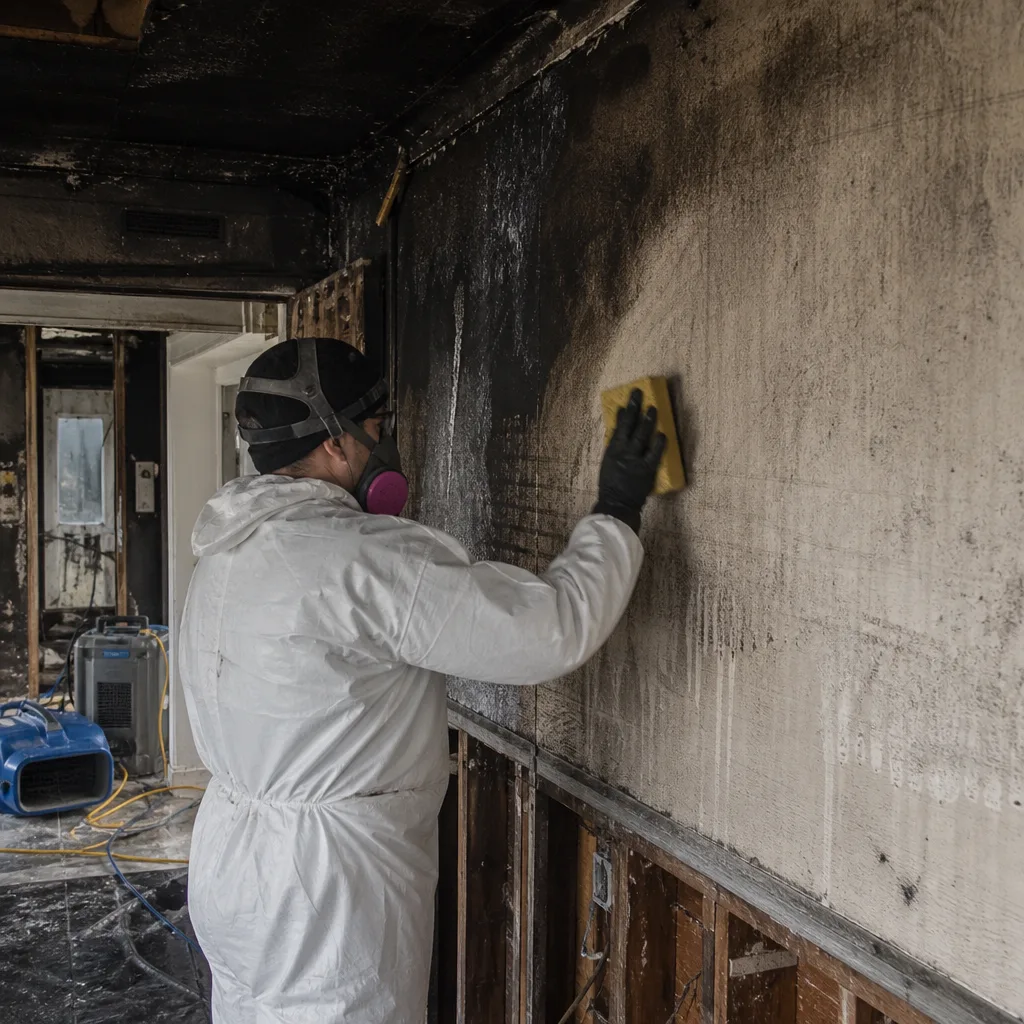
Air Quality Restoration
After the contaminated material is out and the structure is dry, the air in your apartment still carries residual spores. We run HEPA air scrubbers for the duration of the job, then verify clearance with post-remediation air sampling. The goal isn’t just to remove what you can see; it’s to leave the air you’re breathing measurably cleaner than when we arrived.
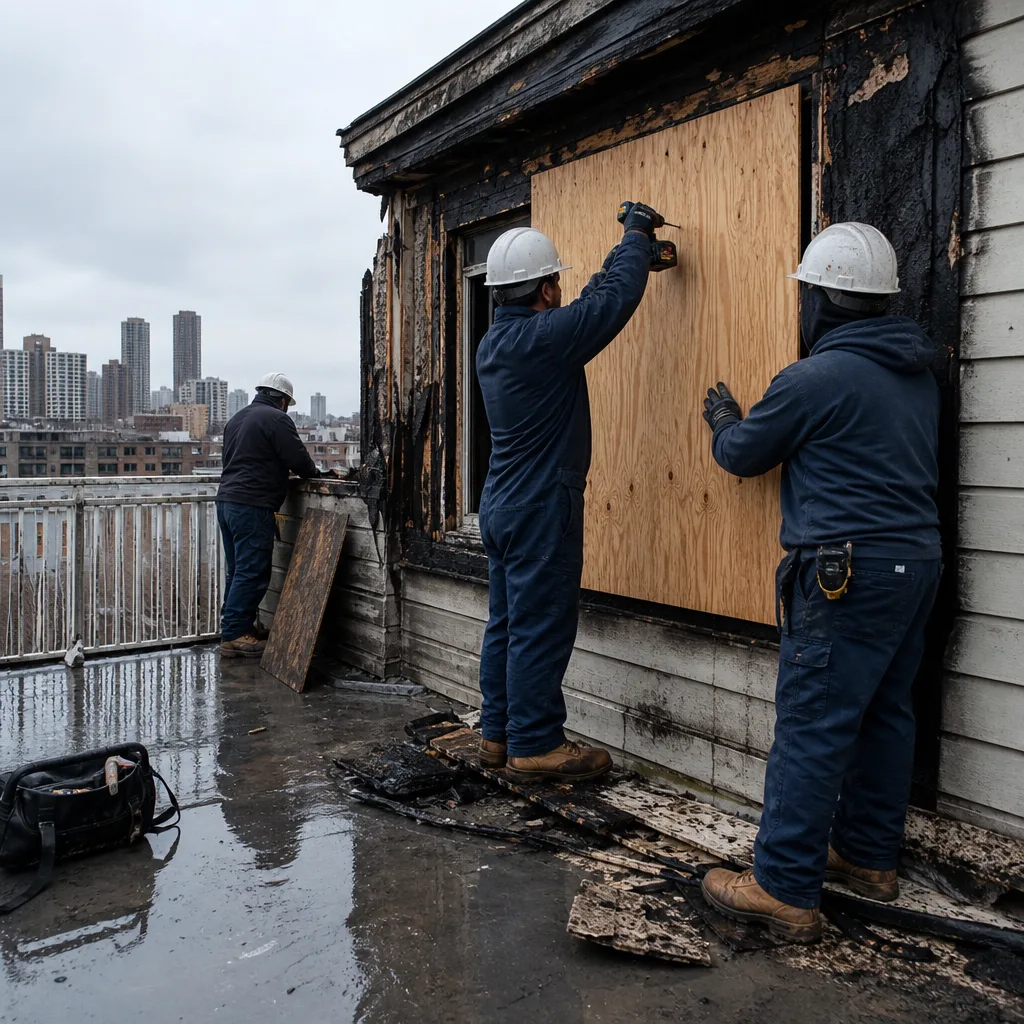
Crawl Space Treatment
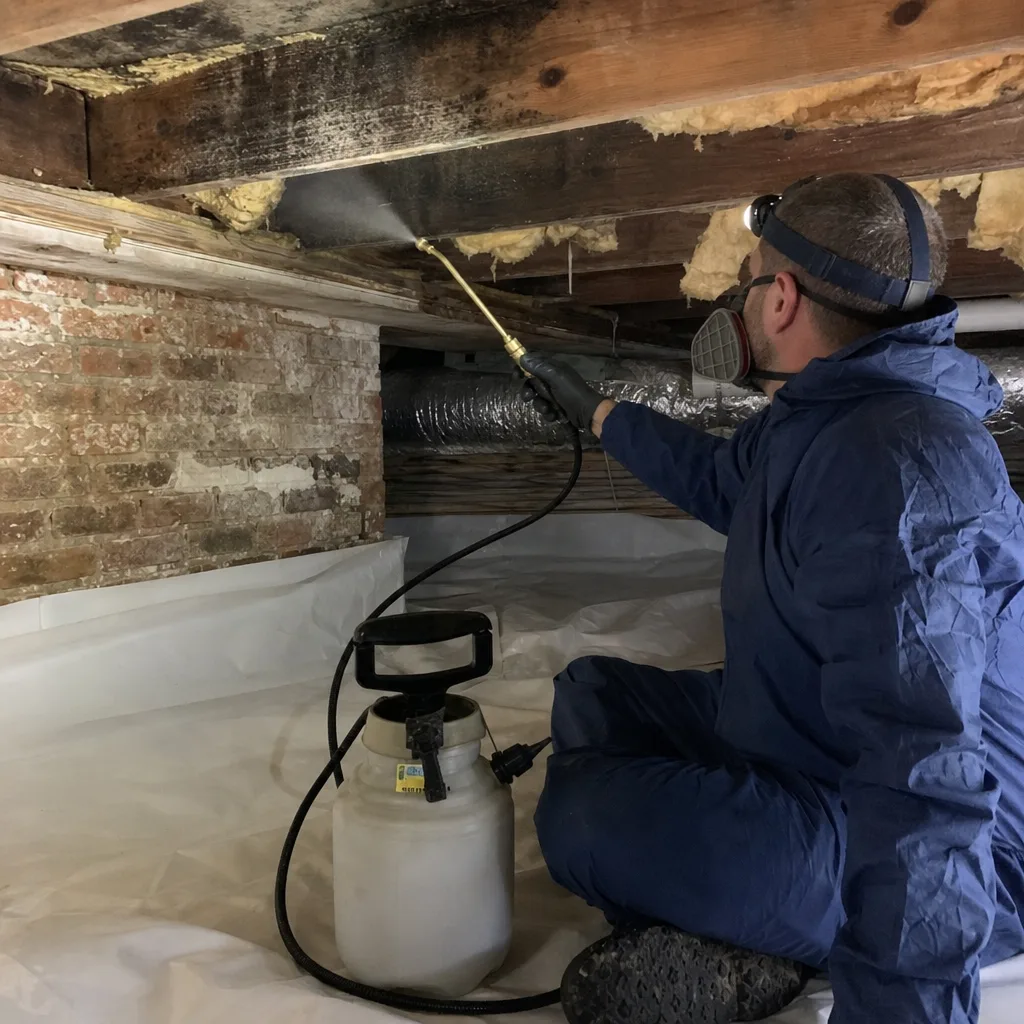
Avenue C garden-level and basement apartments often include crawl spaces under the front stoop or rear extension where moisture builds against old brick and rubble stone. We clean, dry, and apply antimicrobial treatment in these tight spaces, then address the moisture source so the mold doesn’t return. It’s confined, dirty work, but leaving it untreated means the mold migrates up into the living space above.
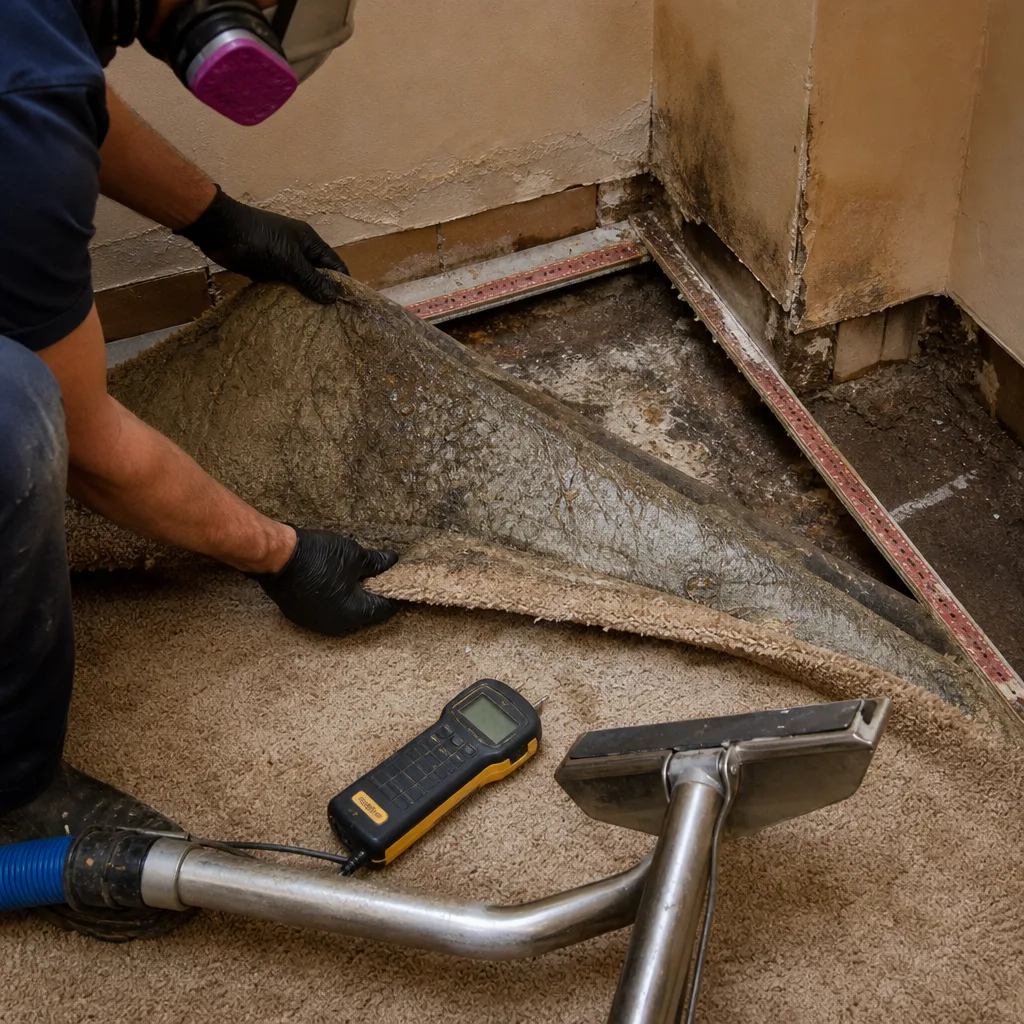
What happens when you call
- 1
A real person answersNo phone trees - you reach a local pro.
- 2
You get an upfront price rangeHonest numbers before anyone is dispatched.
- 3
A background-checked tech heads outLicensed & insured, dispatched right away.
- 4
You approve before work beginsNothing starts until you say go.
Mold Remediation Costs in Alphabet City, NY
For a typical Alphabet City tenement apartment with mold behind one wall cavity or ceiling, budget $1,800-$4,000 for containment, removal, drying, and treatment. A bathroom or kitchen with a leaking riser and mold spreading into adjacent units can run $4,000-$7,500, especially if shared plumbing chases require cross-unit access. Whole-floor or multiple-unit remediation in a five-story walk-up starts around $8,000 and goes up from there, driven by how much plaster comes out and how many air scrubbers run. If the mold traces back to a covered water loss, your carrier may pick up much of the tab. The free visual inspection tells you honestly which side of the line you’re on. Call (917) 924-4221 and we’ll give you a firm number, in writing, before any work begins. The $50 Off Any Repair Over $250 and Senior & Veteran 5% Discount offers apply.
We Also Serve Cities Near Alphabet City
Our crews regularly work Fairview, Harrison, East Bronx, and Hunts Point, along with all of Alphabet City. If you’re nearby and watching a water stain grow, call us. Same live answer, same 45-minute response commitment.
Alphabet City Mold Remediation Questions, Answered
How do you find mold behind intact plaster in Alphabet City tenements that looks fine from the hallway?
We use thermal imaging and penetrating moisture meters to map wet cavities behind plaster that shows no visible staining. In Alphabet City’s old-law and new-law tenements, we know where to look: around plumbing risers, below window sills, along rooflines, and at the base of shared walls. The equipment finds the moisture; our experience tells us where it’s likely hiding.
Do I need to move out of my Alphabet City apartment during mold remediation?
For containment jobs affecting one room, most people stay in place; we seal the work area and run negative air so spores stay put. For large-scale remediation where multiple rooms or the whole unit is involved, especially if you have respiratory issues or a compromised immune system, we recommend temporary relocation. Your insurance policy may cover lodging under loss-of-use provisions. We’ll tell you honestly which situation you’re in after the inspection.
Can you remediate the mold in my old-law tenement without ripping out the original plaster walls?
Sometimes. If the mold is surface-only and the plaster is still sound, we clean, treat, and dry it in place. If moisture has penetrated the lathe behind the plaster, that material usually has to come out; no amount of surface treatment fixes a colonized cavity. We cut to clean lines and preserve what we can. In Alphabet City, where original plaster and decorative details matter, we’d rather save than demolish.
Is my Alphabet City building’s Sandy-era moisture still causing mold problems today?
Yes, in many buildings. Hurricane Sandy flooded ground-floor and basement units east of Avenue B, and some owners did cosmetic patch jobs that sealed moisture inside wall cavities. A later roof leak or pipe failure re-wets that same cavity, and mold that’s been dormant for years starts growing again behind intact plaster. We’ve seen active colonies in 2024 and 2025 that trace directly back to 2012 water. If your building flooded during Sandy and wasn’t professionally dried, the mold risk is real and ongoing.
How long does mold remediation take in a typical five-story Alphabet City tenement?
A single-unit job with one affected wall cavity usually takes three to five days from containment setup through clearance. A multi-unit job involving a shared plumbing chase or Sandy-era moisture across several apartments can take two to four weeks, including drying time and any reconstruction. We’ll give you a written timeline before we start, and you’ll get daily updates from the same crew lead throughout.
Will my insurance cover mold remediation in Alphabet City?
It depends on the source. If the mold resulted from a covered water event like a burst pipe, roof leak, or flood-related intrusion, remediation is often covered, at least in part. If the mold grew from long-term humidity or lack of maintenance, coverage is less likely. Our documentation and direct adjuster communication can make a real difference in how your claim is decided. We photograph everything, log every reading, and give your carrier the evidence they need to approve the scope.
What should I do in the first 30 minutes after discovering mold in my apartment?
Don’t disturb it. Don’t wipe it, don’t paint over it, don’t run fans that might spread spores. Close the door to the affected room if possible, note any recent leaks or water events, and call us at (917) 924-4221. Turn off the HVAC if the intake might draw spores from the affected area. Taking photos is helpful for your records, but resist the urge to scrub. Disturbing mold releases spores into the air and can turn a wall cavity problem into a whole-apartment problem.
Why should I use Floodline Restoration Co. instead of a cheaper general contractor?
Because a general contractor in Alphabet City hasn’t seen what we’ve seen behind these walls. Pre-war tenements hide moisture in ways modern buildings don’t, and generic remediation that stops at visible staining leaves the source alive. We’re IICRC-certified, we document to a standard that holds up with insurance carriers, and we back every job with the 90-Day Done Right Promise in writing. If it’s not done right, we make it right. No arguing. That’s the Keystone Standard, and it’s worth something in a neighborhood with this much history in its walls.
Serving Alphabet City, NY - Our Local Coverage Area
We’re based in the Alphabet City area and know this community well. Use the map below to see our service coverage - if you’re nearby, we can almost certainly help.
How Alphabet City’s Flood Zone AE Tenements Hide Mold
Here’s what separates Alphabet City from the rest of Manhattan when it comes to mold: the water never really left. The blocks east of Avenue B sit inside FEMA Flood Zone AE, with a base flood elevation that put basement and ground-floor apartments under several feet of East River storm surge during Hurricane Sandy. After the water receded, many buildings got cosmetic patching: new drywall over wet cavities, fresh paint over stained plaster, new flooring over soaked subfloor. The moisture stayed. And in the years since, that trapped moisture has been re-wetted again and again by roof leaks, pipe failures, and high-humidity summers. What looks like a recent water-loss job in an Avenue C tenement is frequently layered damage: Sandy-era moisture that was painted over in 2013, re-wetted by a 2019 roof leak, and now showing active mold behind plaster that looks perfectly fine from the hallway. Generic remediators miss this because they treat what they can see. Our crew responded to a mold complaint in a five-story new-law tenement on East 5th Street off Avenue C where a corroded original galvanized riser had been weeping behind the plaster for weeks. We established containment, ran moisture mapping and structural drying with Dri-Eaz dehumidifiers and XPOWER air movers, then removed the saturated plaster and lathe to expose active mold colonies that had spread across three rent-stabilized units before anyone called us. That’s the reality of this housing stock. The line the water left is where we start, and in Alphabet City, that line is often a decade old.
If you suspect mold in your Alphabet City apartment, especially in a pre-war building east of Avenue B, call (917) 924-4221. We’ll inspect for free, tell you straight what we found, and give you a written scope with a firm number. No pressure. Just the facts, and a crew that knows these buildings.
Written by Curt Bowman, Owner at Floodline Restoration Co. of Manhattan, serving Alphabet City and the greater New York metro since 2010.