
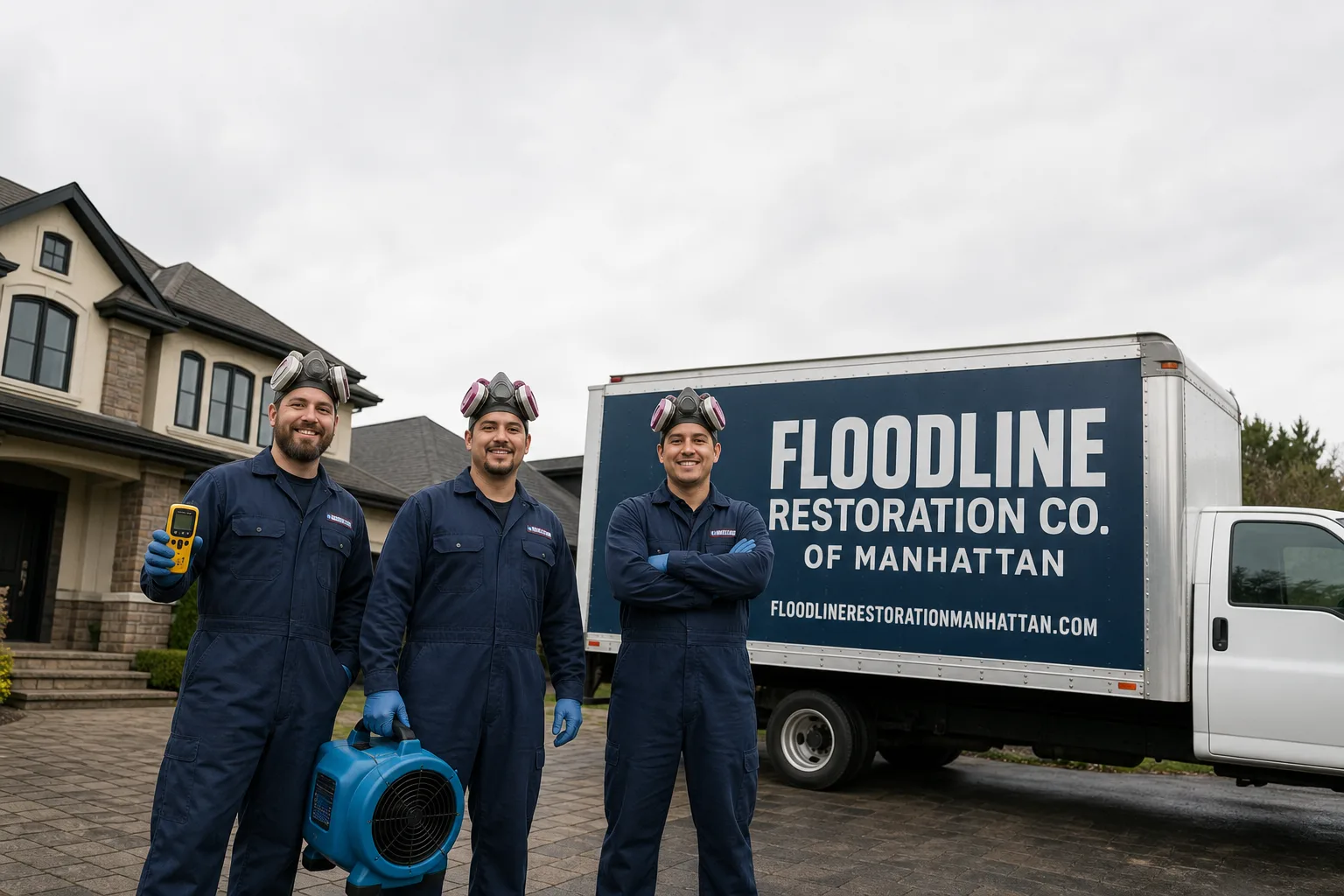
Free visual inspection and a written scope of work before any mitigation begins - photos, moisture readings, and drying logs go in your claim file
The scope we write is the scope we bill. Anything new gets shown to you, in writing, before we touch it.






 Before
 After
After Before
 After
After Before
 After
After24/7 Emergency Mold Remediation in Astoria
Mold remediation in Astoria typically costs between $1,800 and $6,500 depending on how far the growth has spread through shared walls and original building cavities, and most jobs can be contained within a single visit once we’ve mapped the moisture. If you’ve spotted staining, a musty smell, or peeling paint in your unit, call (917) 924-4221 right now. A live dispatcher answers at 2 a.m. the same way they answer at noon, and a background-checked, uniformed crew reaches most Astoria addresses within 45 minutes for a free visual inspection.
Here’s what matters in the first hour: mold that’s feeding inside a pre-war party wall doesn’t wait for a convenient appointment. Every day it spreads, the containment zone grows, the scope expands, and the claim gets more complicated. We’ve been doing this since 2010, and in Astoria’s attached brick buildings, the difference between a one-unit stain and a five-unit claim is almost always measured in days, not weeks. Our Mold Remediation team is built around speed without shortcuts: moisture-mapped from day one, HEPA air scrubbers running before we open a single wall cavity, and daily drying logs until the dry standard is met.
Understanding Mold Remediation Severity in Astoria Properties
Severity in this trade isn’t about how bad the stain looks. It’s about where the moisture is coming from, what it’s been feeding on, and how many cavities it’s traveled through. In Astoria, that equation is shaped by buildings most American remediation companies rarely see up close.
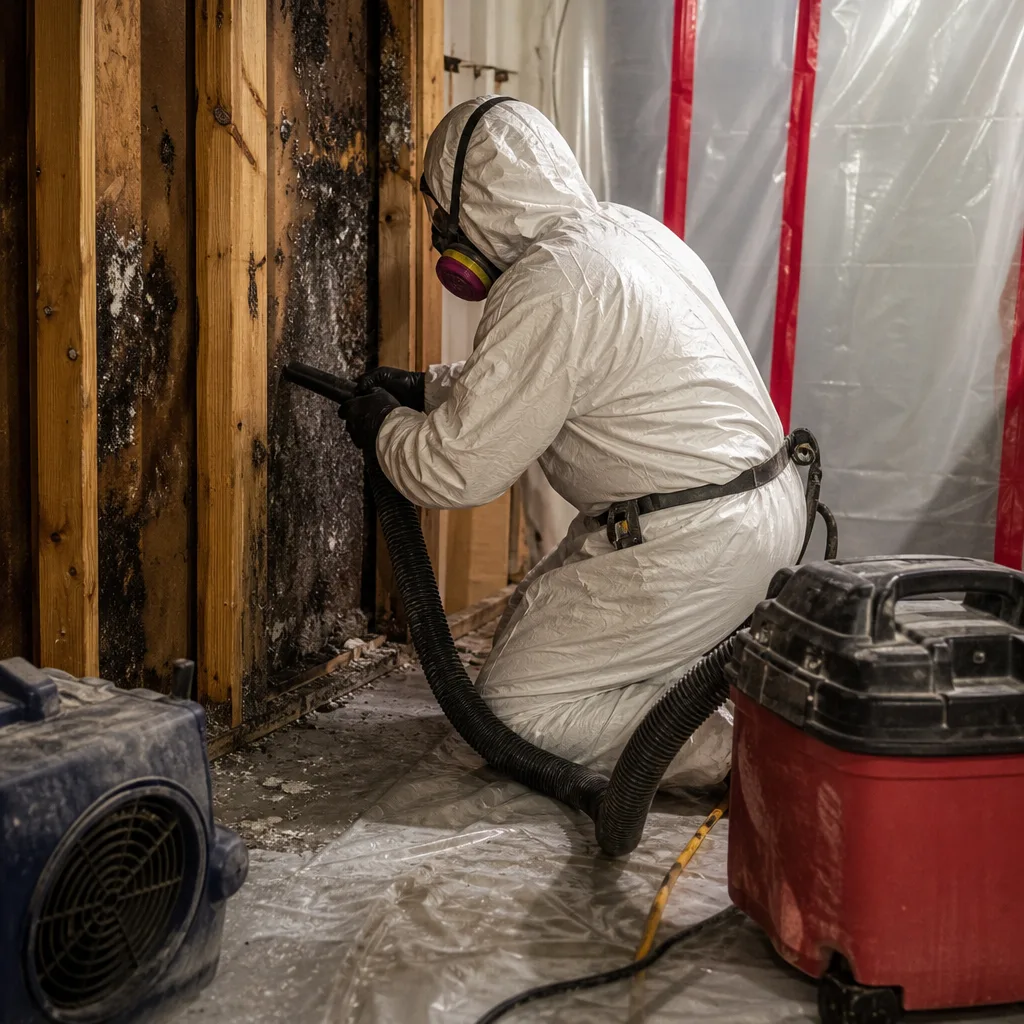
We classify mold work into three broad levels. Level one is surface colonization: visible growth on plaster, drywall, or tile with a known, recent moisture source. Level two involves hidden growth inside wall cavities, under flooring, or behind baseboards, usually fed by a slow leak in an original cast-iron drain stack or a compromised roof membrane. Level three is the Astoria specialty: growth that has migrated laterally through shared party walls or common drainage chases into adjacent units, where the tenant who called has no idea their neighbor’s failed roof drain is the source. That’s when containment has to span multiple addresses, and the documentation has to match. We run negative air with HEPA filtration, seal off each affected area with 6-mil poly, and run air scrubbers until a third-party clearance test confirms spore counts have returned to baseline.
One thing we tell every property owner in the neighborhood: dense 1920s brick does not dry itself out. It holds moisture like a sponge and feeds mold for weeks after the visible water event is over.
Why Astoria Property Owners Choose Floodline Restoration Co. of Manhattan
- 45-minute response commitment to Astoria addresses. Our dispatchers know the difference between a Ditmars Boulevard walk-up and a rowhouse near Steinway Street, and our crew vehicles are staged to reach both fast.
- A live person answers, every time, 24/7. No phone tree, no callback queue. You speak to a dispatcher who knows remediation, not a sales rep reading a script.
- IICRC-certified crews trained to AMRT and WRT standards. Applied Microbial Remediation Technician certification means we understand the biology, not just the cleanup.
- Free visual inspection with moisture mapping. We bring infrared cameras and pin-type moisture meters to every initial visit so we can show you where the water actually is, not just where the stain appears.
- Direct insurance billing without the runaround. We write the scope in insurance-standard language, send photos and drying logs straight to your adjuster, and bill the carrier directly wherever your policy allows.
- One crew from first opening to final rebuild. The same team that sets containment is the team that applies the antimicrobial, replaces the plaster, and paints the wall. No handoff, no inherited crew, no excuses.
Our Mold Remediation Process
Inspection & Assessment
We start with a visual walkthrough plus infrared thermal imaging and moisture readings across all suspect surfaces, including shared wall cavities and ceiling voids. In Astoria’s attached buildings, we also check the unit’s relationship to adjacent addresses and common drain chases before we open anything.
Containment & Source Control
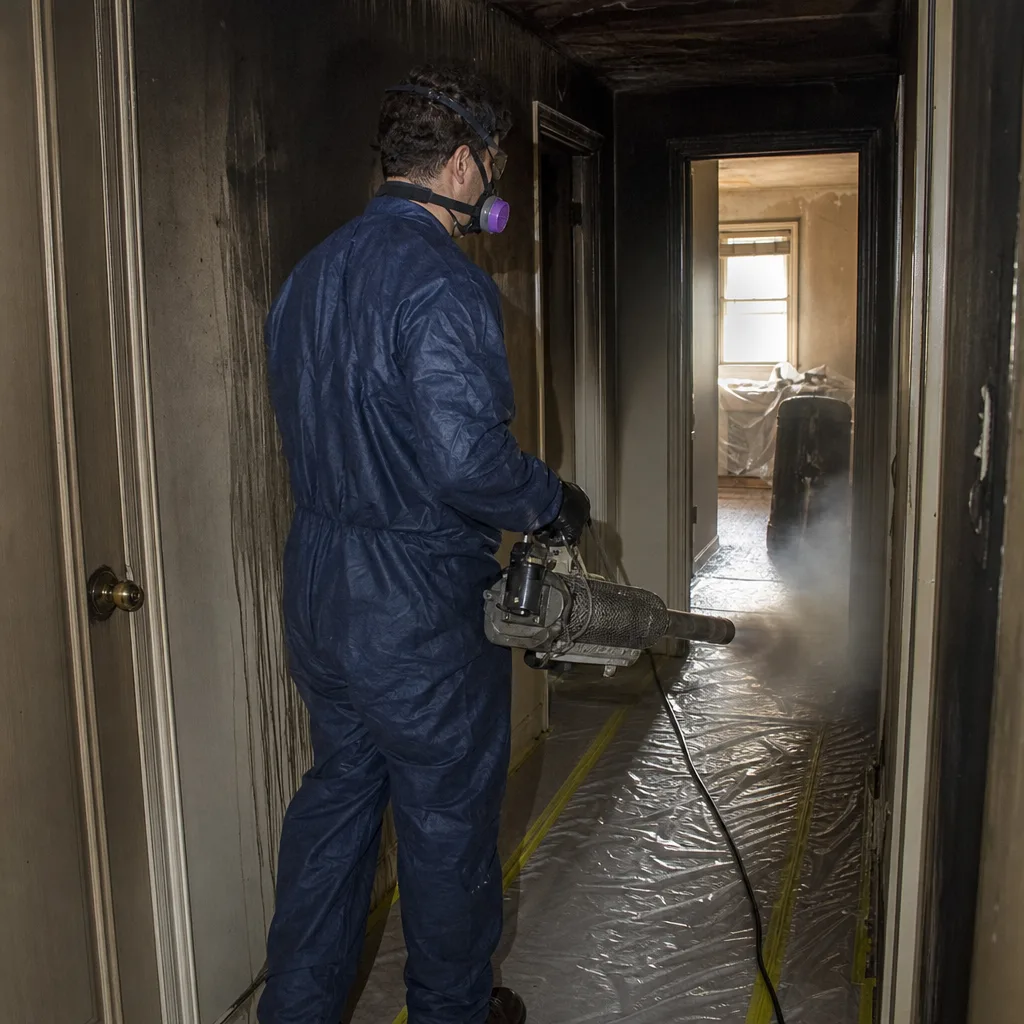
Before any wall is opened, we seal the affected area with 6-mil poly and run HEPA-filtered negative air. The source of moisture, whether it’s a failed roof drain, a sweat joint on original cast iron, or a seepage path through masonry, gets stopped that same visit.
Drying & Dehumidification
We deploy commercial-grade Dri-Eaz and Phoenix dehumidifiers with XPOWER air movers, positioned using the moisture map we built in step one. Daily readings are logged until the dry standard is met, and that log goes to you and your carrier.
Cleaning & Antimicrobial Treatment
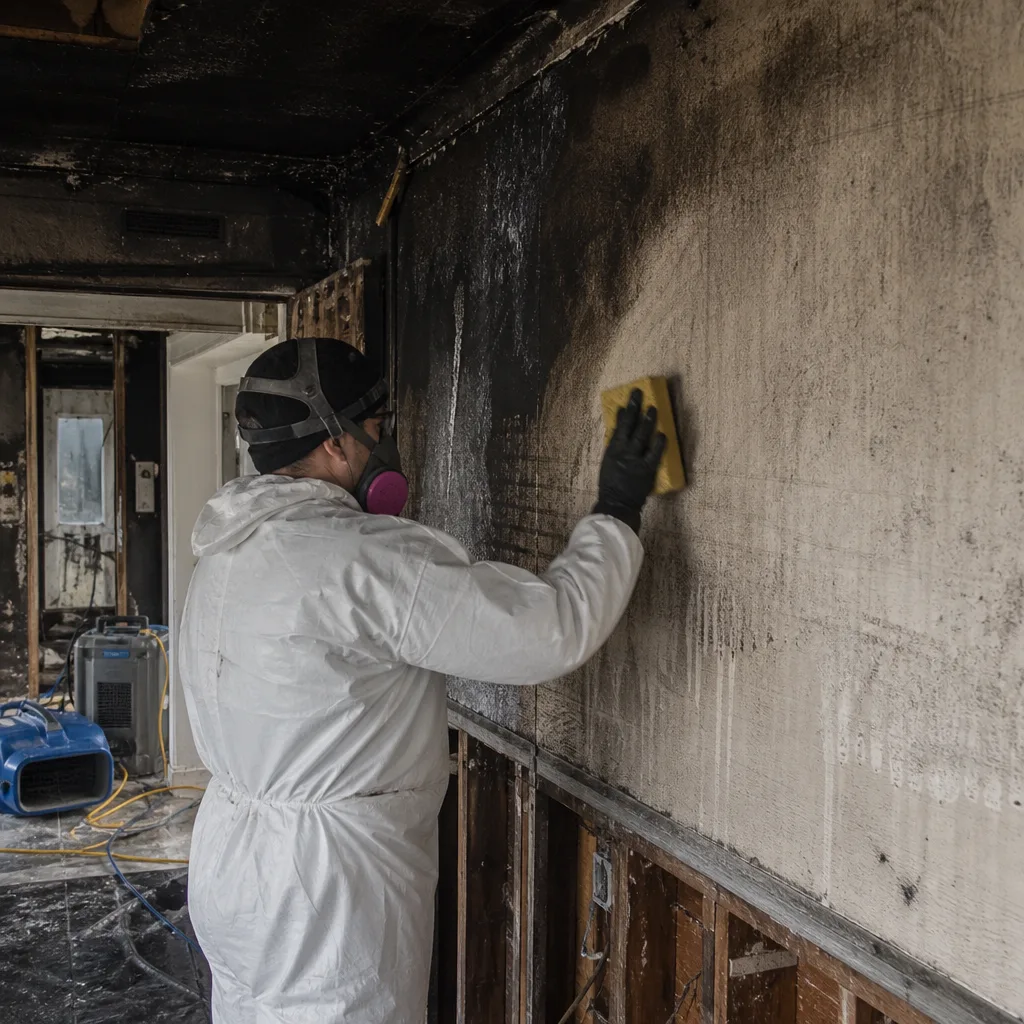
Affected surfaces are HEPA-vacuumed, wire-brushed where appropriate, and treated with EPA-registered antimicrobials. In pre-war construction, that often means treating original brick and lath, not just replacing drywall.
Air Quality Restoration
Air scrubbers run continuously through the drying and treatment phases. Before we remove containment, we conduct clearance air sampling and compare it to baseline outdoor levels. You get the numbers, not a guess.
Repairs & Restoration
The same certified crew rebuilds what was opened: plaster, lath, flooring, trim. If the source was a plumbing stack or roof drain, we coordinate the repair so the fix and the restoration happen in one sequence, not two separate projects.
Need Emergency Mold Remediation in Astoria Now?
Crews minutes away, answering live 24 hours a day. The sooner we start, the less it costs.
Working With Your Insurance Company
Mold claims in Astoria are shaped by multi-party reality: your policy, your landlord’s policy, sometimes the neighbor’s policy, and the building’s master policy all in the same room. We handle this every week. From the first hour, we document everything: photos of the original condition, thermal images showing hidden moisture, daily drying logs, and a line-item scope of work that uses the exact language adjusters expect to see. We talk to your adjuster directly, send documentation straight to the carrier, and bill them where your policy permits.
You should never have to play messenger between a restoration company and an insurance company. That’s part of the Floodline square deal, and it’s been our practice since Curt Bowman founded the company in 2010.
What We Provide Your Insurer
- Thorough documentation of the loss
- Photos of all damage, room by room
- Moisture readings and drying logs
- A detailed, line-item scope of work
- Direct coordination with your carrier
Built for Astoria’s Loss Calendar
Astoria’s mold season doesn’t follow one simple pattern. Here’s what our crews actually see through the year.
In January and February, deep freezes crack original supply lines and radiator pipes in pre-war buildings, and the water follows gravity through plaster ceilings and shared chases. The leak often doesn’t surface for days, by which time mold is already established behind the lath. Spring brings thaw cycles that stress aging flat roof membranes and parapet brick, sending water into top-floor units and party walls. Summer thunderstorms overwhelm old roof drains and push water under basement doors near the East River and Bowery Bay. Fall nor’easters drive wind-driven rain into deteriorated mortar joints, and water moves laterally through brick before anyone sees it indoors.
The common thread is this: in Astoria’s attached housing stock, almost none of these events are contained to one unit. That’s why we document scope across adjacent addresses from the first inspection, even when the call came from a single tenant.
Mold Remediation Across Astoria’s Neighborhoods
Our response routes through Astoria reflect the neighborhood’s building geography. Along Ditmars Boulevard, we’re in and out of 1920s and 1930s walk-ups where failed roof drains and original waste stacks are the most common mold sources. Those five- and six-story attached buildings hide moisture in shared cores that run from basement to parapet. Over near Steinway Street, the two- and three-family rowhouses have their own signature: semi-attached construction where water migrates through one shared wall, and where a neighbor’s neglected gutter or leaking bathroom can become your mold problem within a season.
South toward Broadway and 34th Avenue, the housing stock shifts to denser attached rows with basement apartments, where chronic seepage through foundation walls feeds hidden growth behind paneling and drywall. Along the western edge near Astoria Park and the waterfront, ground-floor and basement units sit closer to the water table and carry the legacy of Sandy-era inundation. Moisture rises through original slab foundations and finds the organic material in old plaster and wood lath. Each of these areas requires a slightly different remediation plan, and we build ours block by block, not from a template.
Whether you’re in a co-op near Crescent Street, a private rowhouse off 30th Avenue, or a basement rental near Hoyt Avenue, we respond to the building first and the paperwork second. That’s the only way mold remediation in Astoria actually stays done.
Specialized Mold Remediation Services We Offer in Astoria
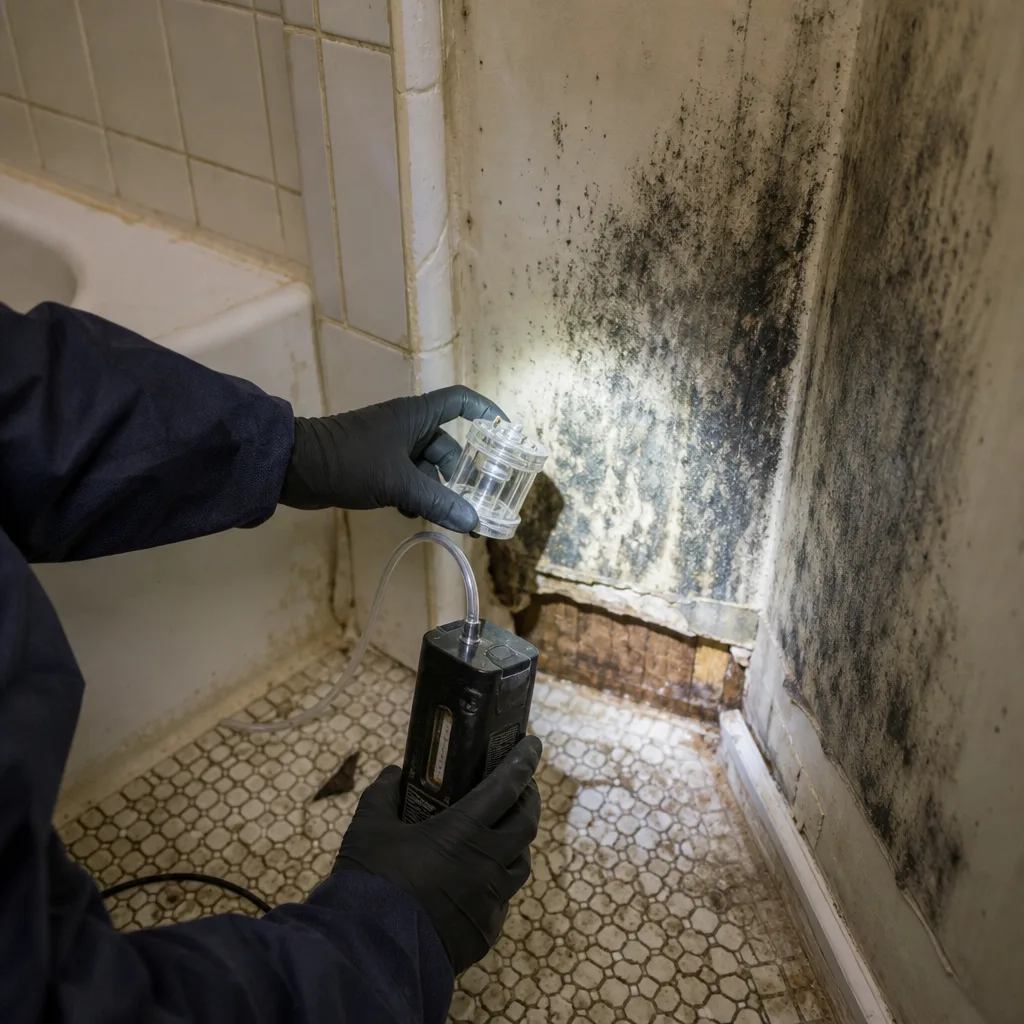
Mold Inspection & Testing
We start with a visual inspection, then add thermal imaging and moisture mapping across the unit and any adjacent cavities we can access. When air sampling is warranted, we run spore trap samples and compare indoor counts to outdoor baselines. In Astoria’s attached buildings, we also look for evidence of moisture migration from neighboring units, because that’s frequently the source when a tenant swears they have no leak.
Mold Removal
Removal begins with containment, not demolition. We seal the work area, establish negative air pressure, and then remove affected drywall, plaster, insulation, and flooring as needed. In pre-war buildings, that often means preserving original features where possible and treating the brick or lath behind them. We rebuild what we open, and we do it with the same crew.
Black Mold Remediation
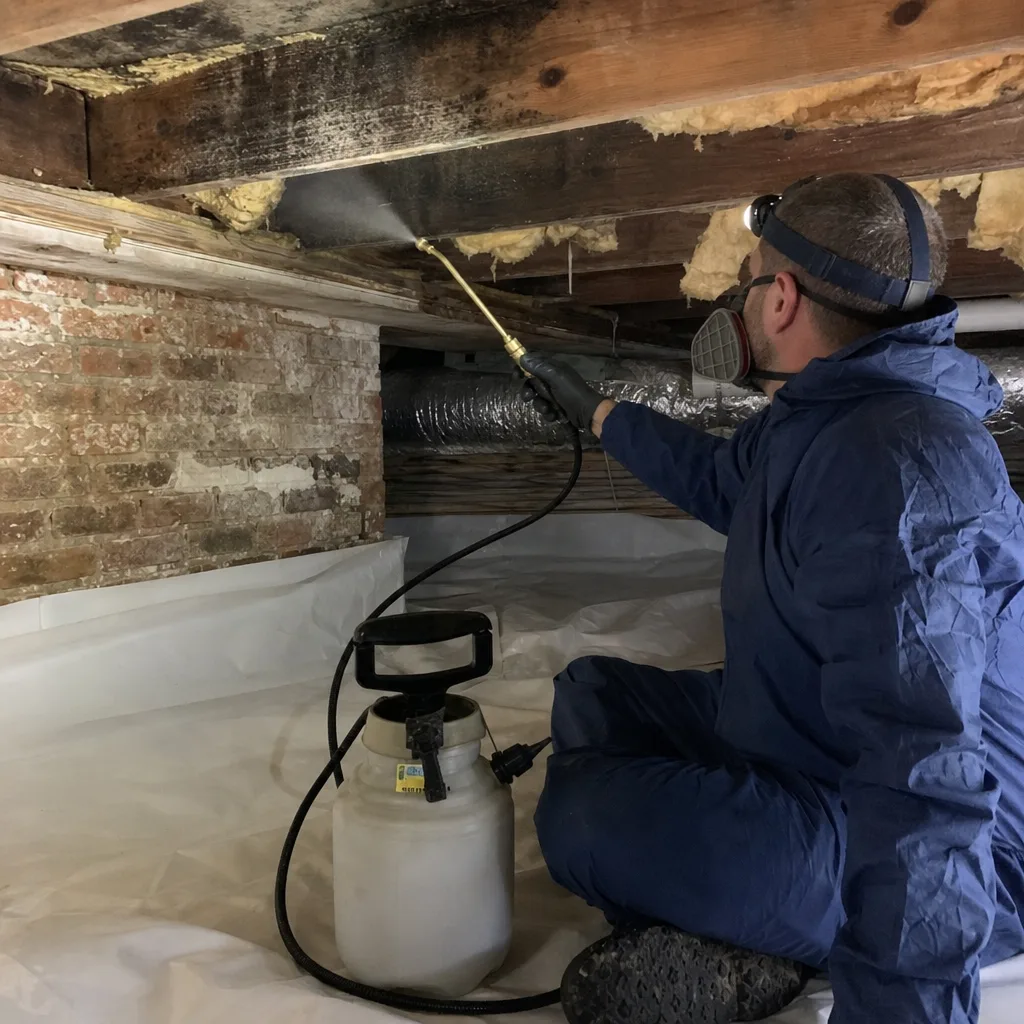
Stachybotrys chartarum gets the headlines, but the reality in Astoria is that any mold growing in a dark, damp party-wall cavity deserves the same careful handling. We treat black mold with full containment, HEPA air scrubbing, antimicrobial application, and clearance testing. No shortcuts, regardless of whose unit or which floor it’s on.
Air Quality Restoration
After remediation, the air inside a pre-war apartment can still carry elevated spore counts from disturbed cavities. We run HEPA air scrubbers through the drying and treatment phases, then conduct clearance sampling before we remove containment. You receive the numbers in writing, and we stand behind them with the 90-Day Done Right Promise.
Crawl Space Treatment
Many Astoria rowhouses have shallow crawl spaces below the first floor, often with dirt floors and original brick foundation walls. Moisture rises through those spaces and feeds mold on the floor joists above. We treat the source: vapor barriers, drainage corrections where feasible, and antimicrobial application to the structure, not just the visible surfaces.
What happens when you call
- 1
A real person answersNo phone trees - you reach a local pro.
- 2
You get an upfront price rangeHonest numbers before anyone is dispatched.
- 3
A background-checked tech heads outLicensed & insured, dispatched right away.
- 4
You approve before work beginsNothing starts until you say go.
Mold Remediation Costs in Astoria, NY
What does mold remediation actually cost in Astoria? Most single-unit jobs with moderate growth run between $1,800 and $4,200. When the mold has migrated through a party wall into adjacent units, or when multiple floors of a walk-up are involved, scopes typically land between $4,500 and $9,000. A full multi-unit containment with source repair and rebuild can exceed $12,000, especially when original plaster and lath must be matched.
What moves the number? How many rooms are affected, whether the moisture source requires a plumbing or roofing repair, how much plaster and lath must be opened, and how many units the containment zone must span. Smaller jobs, like a single bathroom wall with surface growth and a known source, often fall between $1,200 and $2,400.
The fastest way to an exact figure is a free visual inspection with moisture mapping. We give you a written scope before any work starts, so there are no surprises on the bill. Call (917) 924-4221 and we’ll be there when we say.
We Also Serve Cities Near Astoria
Our crews respond across western Queens from the same dispatch board. When we’re not in Astoria, we handle mold remediation in Long Island City, Sunnyside, Woodside, and Jackson Heights, often on the same day the call comes in.
Serving Astoria, NY - Our Local Coverage Area
We’re based in the Astoria area and know this community well. Use the map below to see our service coverage - if you’re nearby, we can almost certainly help.
Astoria Mold Remediation Questions, Answered
My Astoria rowhouse shares a wall with my neighbor, and I see mold in my apartment but not in theirs. Is that possible?
Yes, and it’s common in Astoria’s attached rowhouses. Water from a leak in your neighbor’s unit or from a shared roof drain can travel through the party wall cavity and emerge on your side while their side stays dry. We’ve documented cases where a failed roof drain on one side of a shared wall produced mold in the adjacent address with no visible moisture at the source. This is why we inspect shared cavities and adjacent units, not just the room where the staining appeared. Call (917) 924-4221 for a free inspection if you suspect a neighbor-side source.
How fast can mold start in my pre-war Astoria apartment after a roof leak?
In the warm months, mold can begin colonizing within 48 to 72 hours on wet drywall, plaster, or wood lath. In Astoria’s pre-war buildings, the problem is often older than the tenant realizes because water moves through shared cavities and original drain chases before it ever becomes visible. By the time staining appears on your ceiling or wall, the growth may have been feeding for weeks. That’s why we recommend calling as soon as you notice any water mark, musty smell, or bubbling paint, not waiting for visible black growth.
Do I need to coordinate with my building owner and neighbors for mold remediation in an Astoria walk-up?
Usually yes, and we handle that coordination as part of our scope. When moisture has traveled through a party wall or common drain chase, effective remediation requires containment and treatment in adjacent units as well. We document the affected areas across each address, write a scope that reflects the multi-unit reality, and communicate directly with building owners, property managers, and individual tenants. You don’t run messages between parties; we do.
Is black mold more dangerous in basement units near Astoria’s waterfront?
The risk is less about geography and more about moisture load. Basement units near the East River and Bowery Bay sit closer to the water table and carry the legacy of Sandy-era flooding, which means persistent dampness that supports heavier mold growth, including Stachybotrys. The danger is real, regardless of species: elevated spore counts indoors are a respiratory hazard, especially for people with asthma or immune conditions. If you’re in a waterfront basement unit with visible mold, call (917) 924-4221. We’ll assess it properly.
My Astoria building has original cast-iron plumbing. Can mold be coming from inside the pipes?
Not from inside the pipes themselves; mold doesn’t grow inside a water supply line. But original cast-iron drain stacks sweat, corrode, and develop pinhole leaks at joints, and the moisture from those leaks feeds mold in the wall cavities and chases around them. We find this pattern constantly in pre-war Astoria buildings. The fix is to repair the stack, dry the cavity properly, and treat the affected surfaces, not just to clean the visible wall.
Will my insurance cover mold remediation in Astoria?
Coverage depends on the source and your policy language. Sudden, accidental water damage, like a burst supply line or stormwater intrusion, is often covered, while long-term seepage or neglected maintenance may not be. We write every scope in insurance-standard language, document everything from the first hour, and communicate directly with your adjuster. Many Astoria claims involve multiple policies, and we’re used to that. Call (917) 924-4221 and we’ll help you understand the path.
How long does mold remediation take in a typical Astoria apartment?
Most single-unit jobs with moderate growth take three to five days from first opening to final clearance. Multi-unit jobs with party-wall involvement typically run six to ten days, depending on drying time and rebuild scope. We log moisture readings daily and don’t rush the drying phase; dense brick and plaster release moisture slowly, and cutting corners there is how mold comes back. We’ll give you a written timeline before work starts.
What should I do in the first 30 minutes after I find mold in my Astoria home?
Don’t disturb it. Don’t scrub it, don’t paint over it, don’t run a household fan on it, because that spreads spores through your living space. Close the door to the affected room if you can, note whether you smell anything musty elsewhere in the unit, and call (917) 924-4221. A live dispatcher answers immediately, and we’ll get a certified crew to you fast. The free inspection tells you what you’re actually dealing with before any work is authorized.
Written by Curt Bowman, Owner at Floodline Restoration Co. of Manhattan, serving Astoria since 2010.