
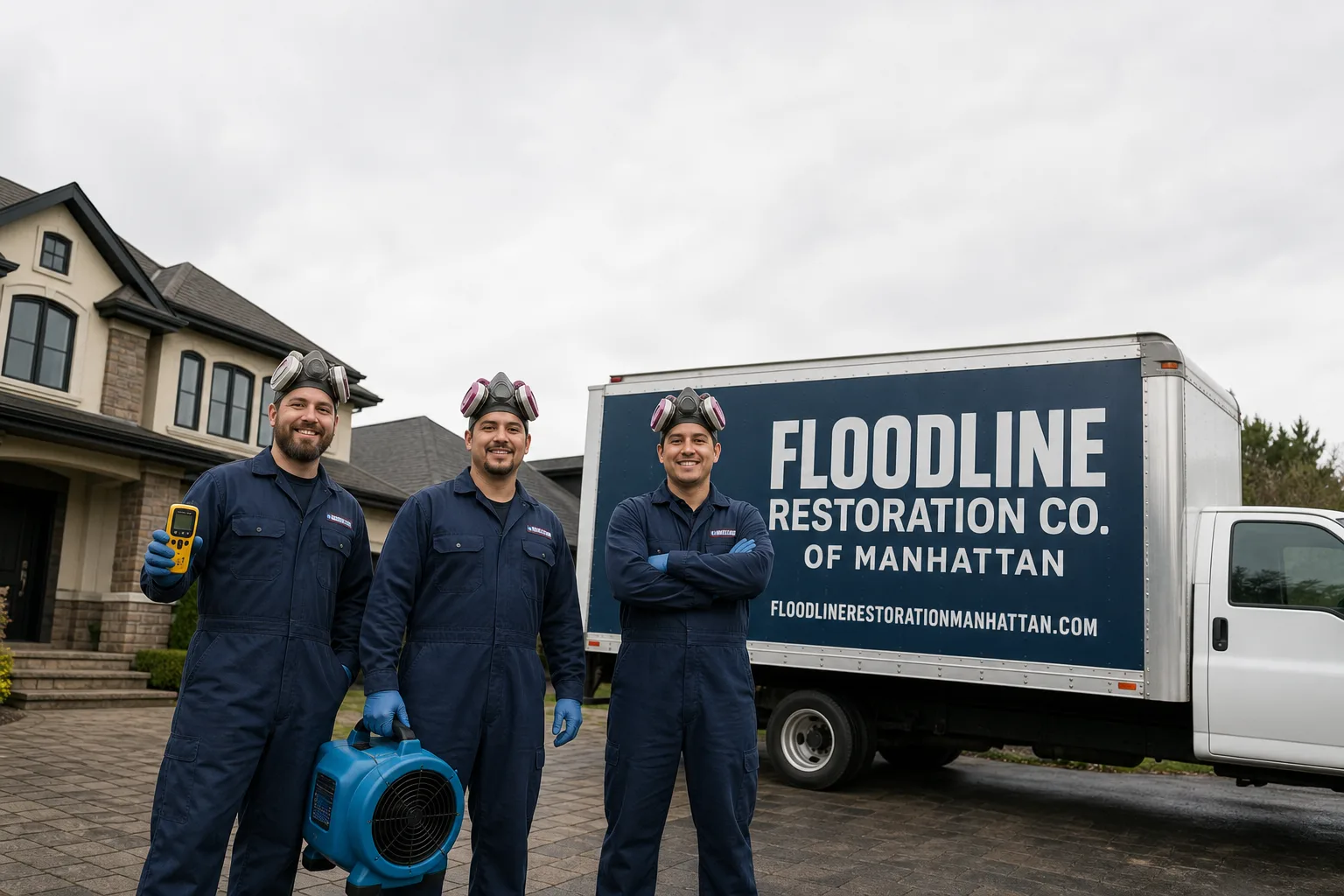
Free visual inspection and a written scope of work before any mitigation begins - photos, moisture readings, and drying logs go in your claim file
The scope we write is the scope we bill. Anything new gets shown to you, in writing, before we touch it.
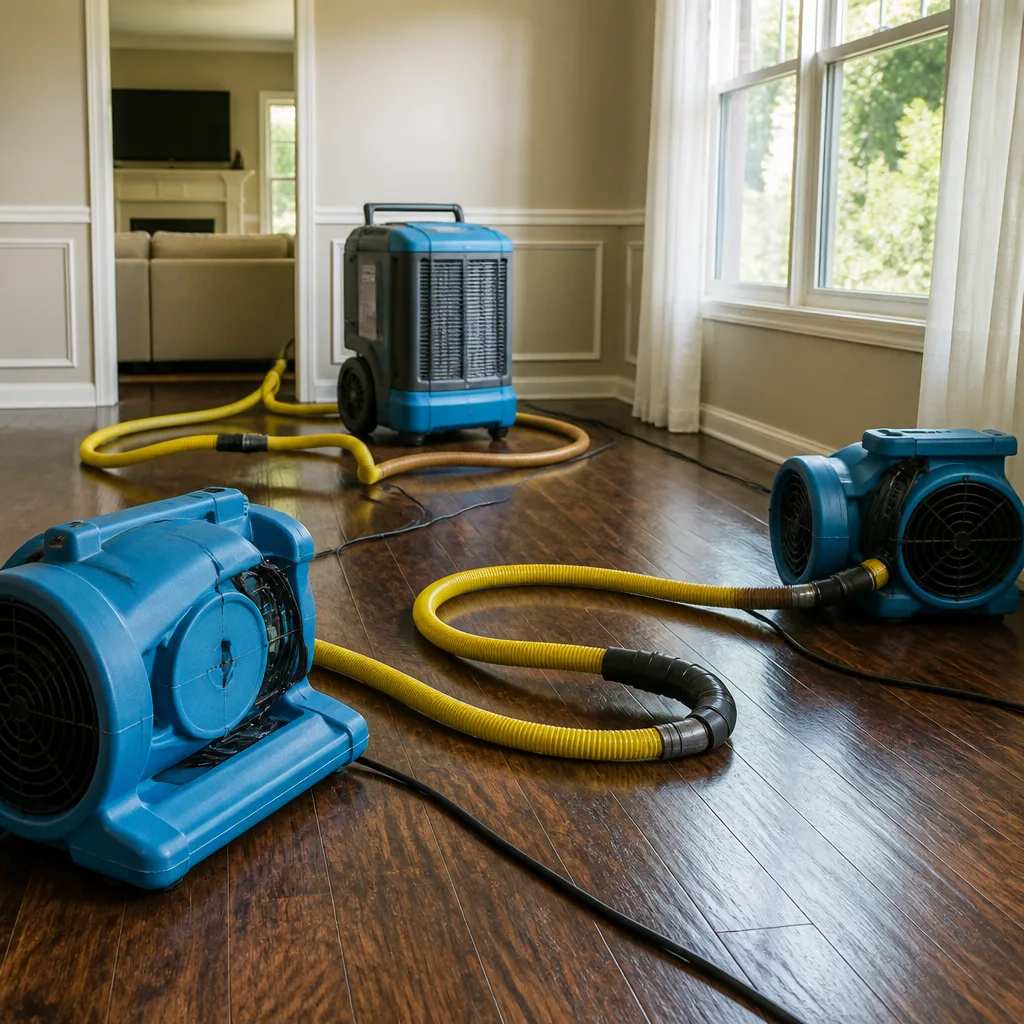

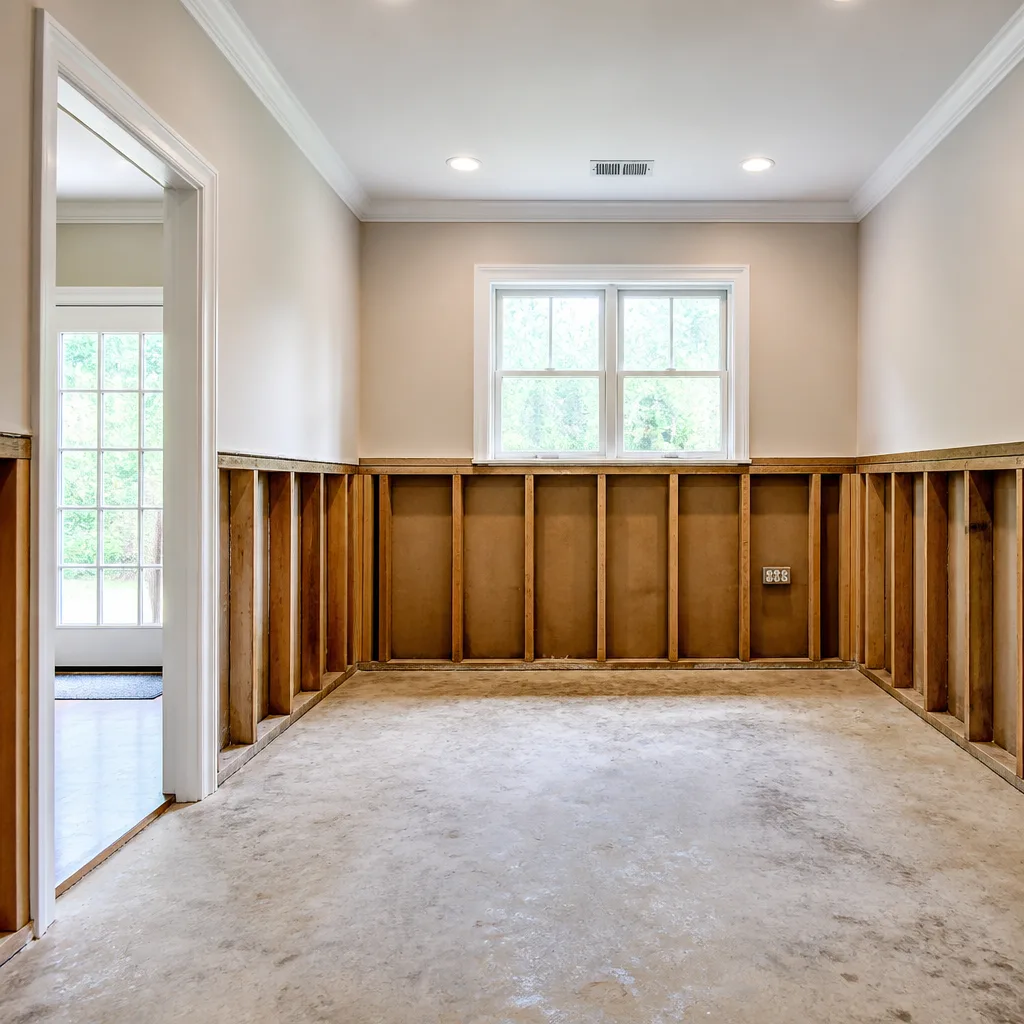

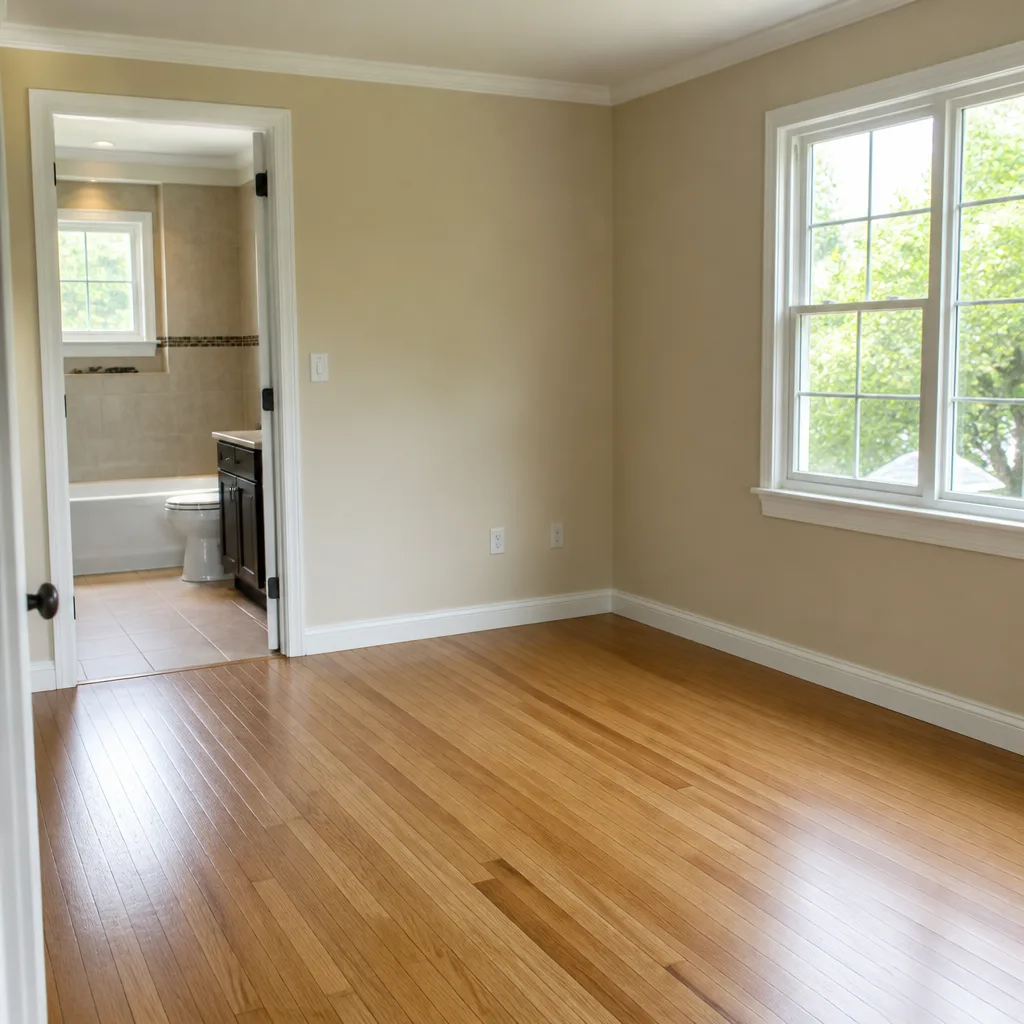

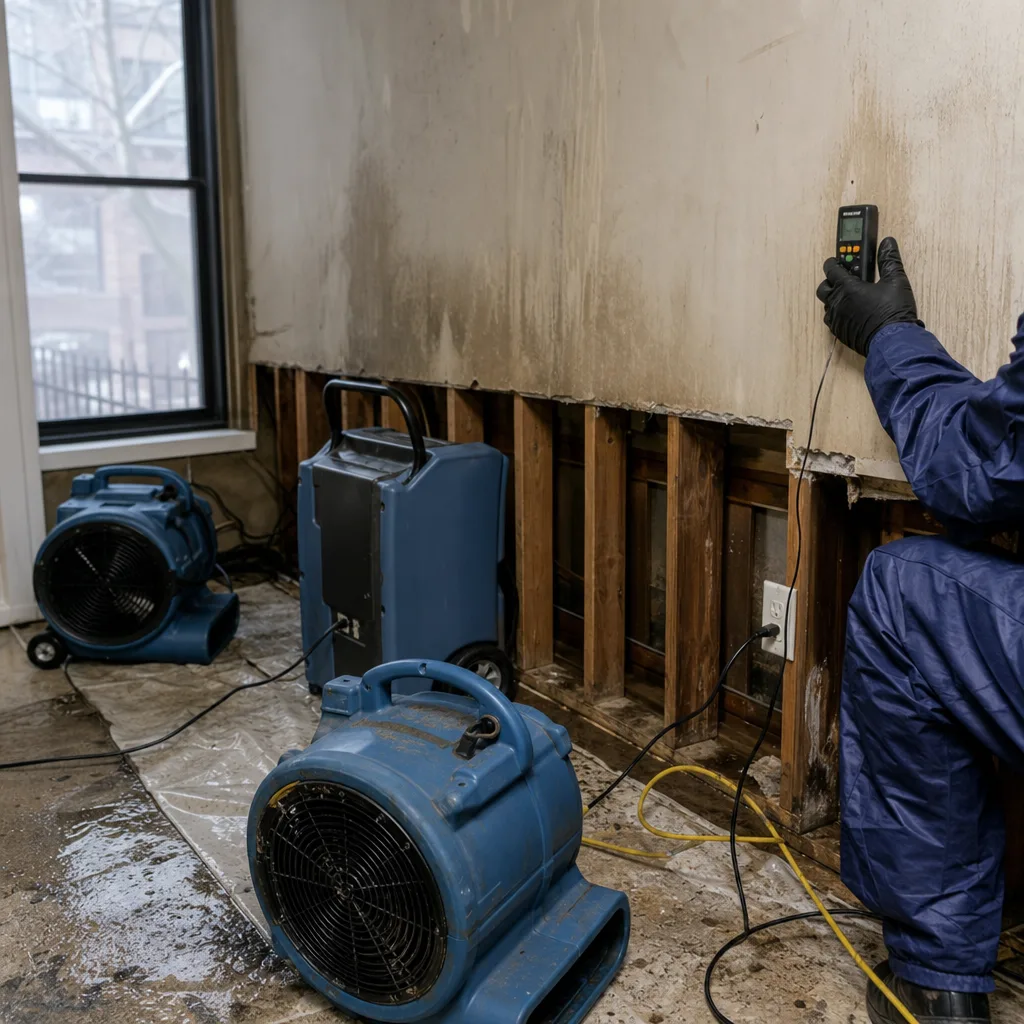 Before
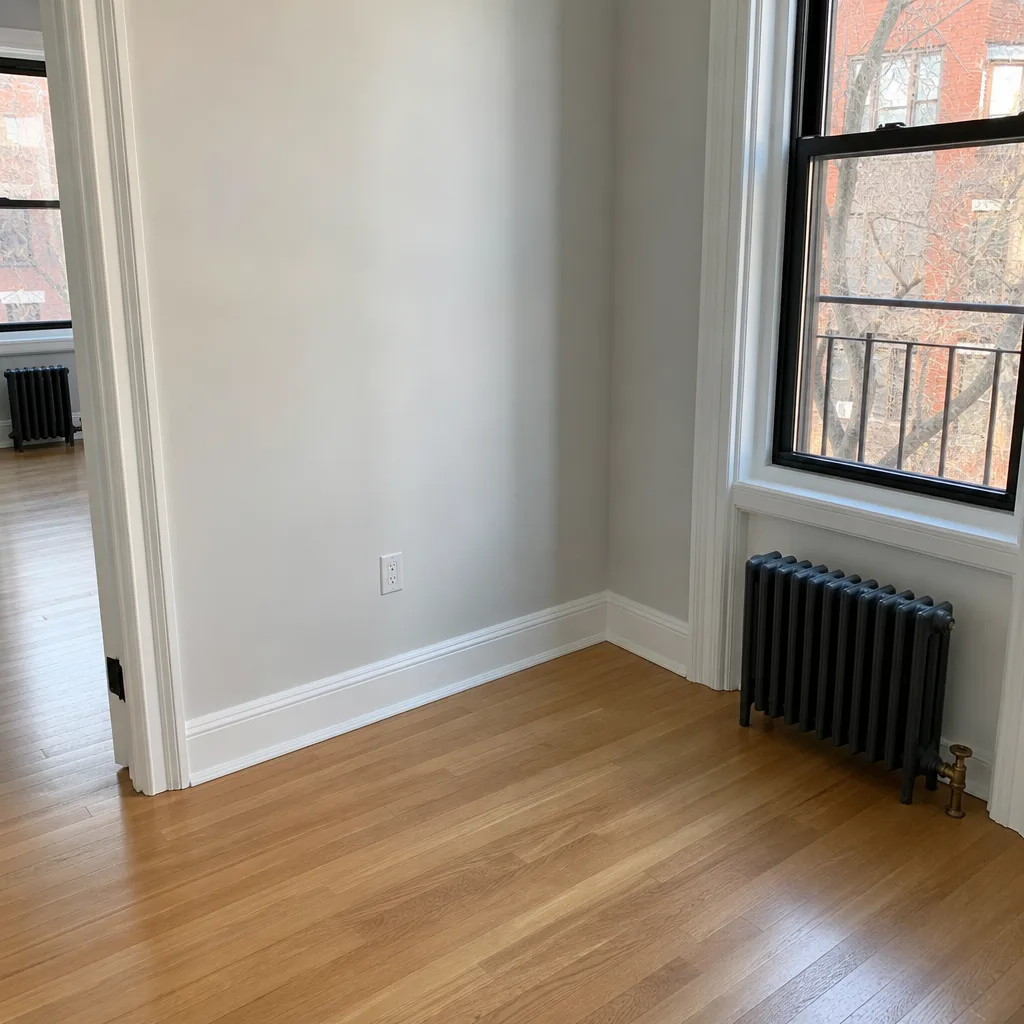 After
After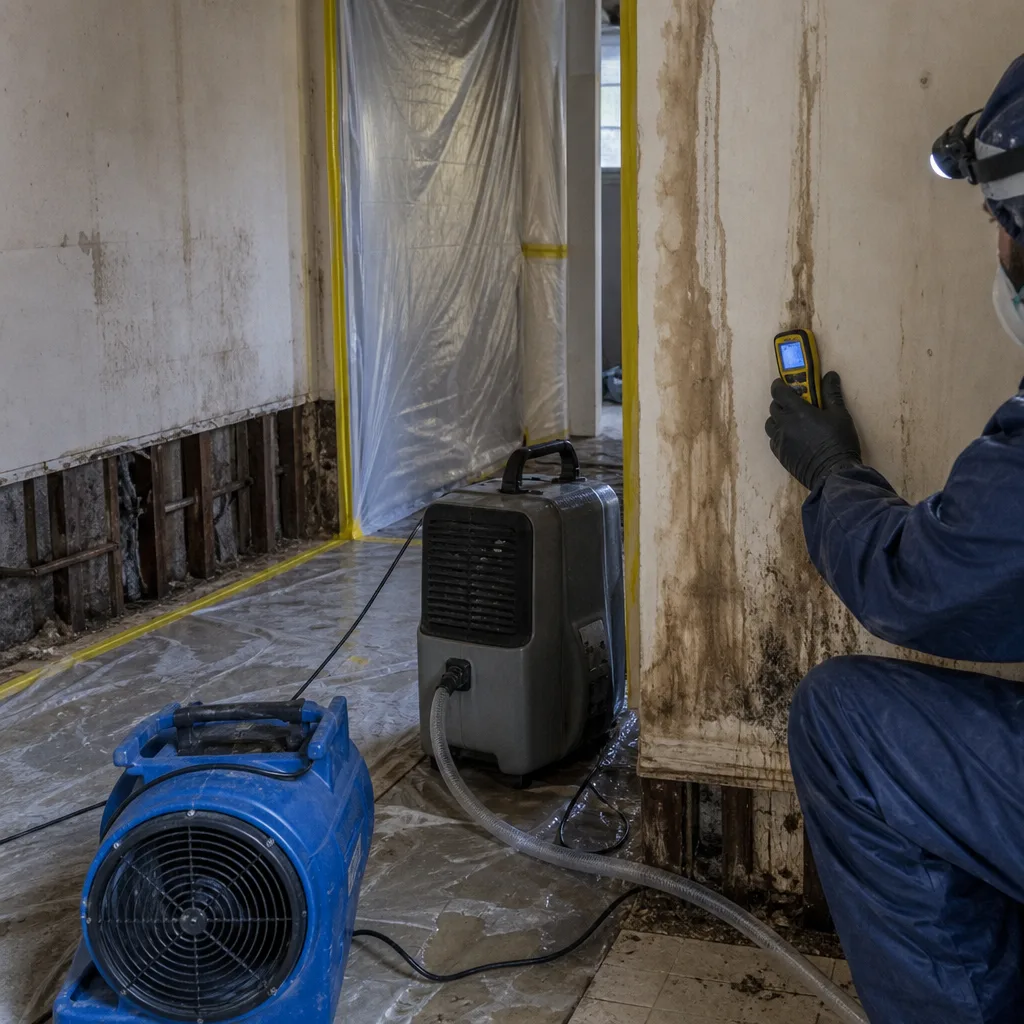 Before
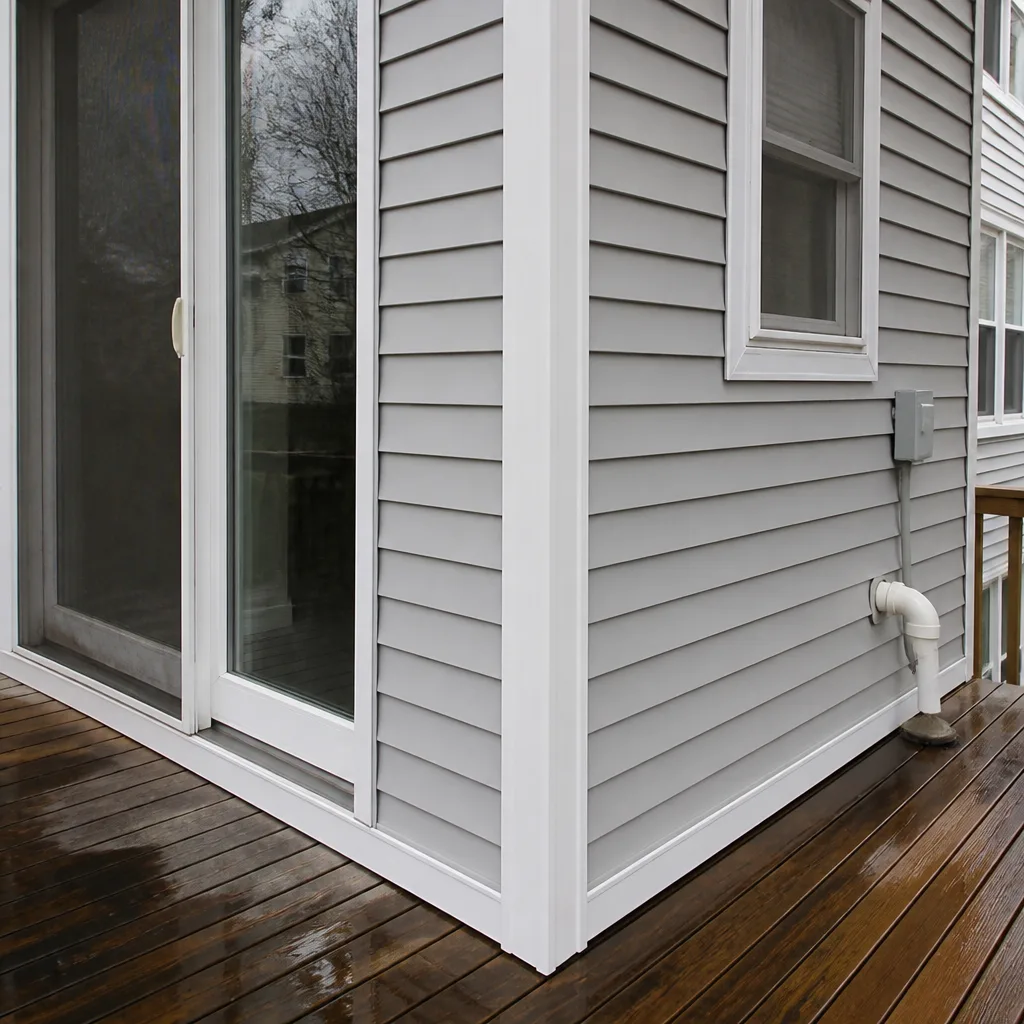 After
After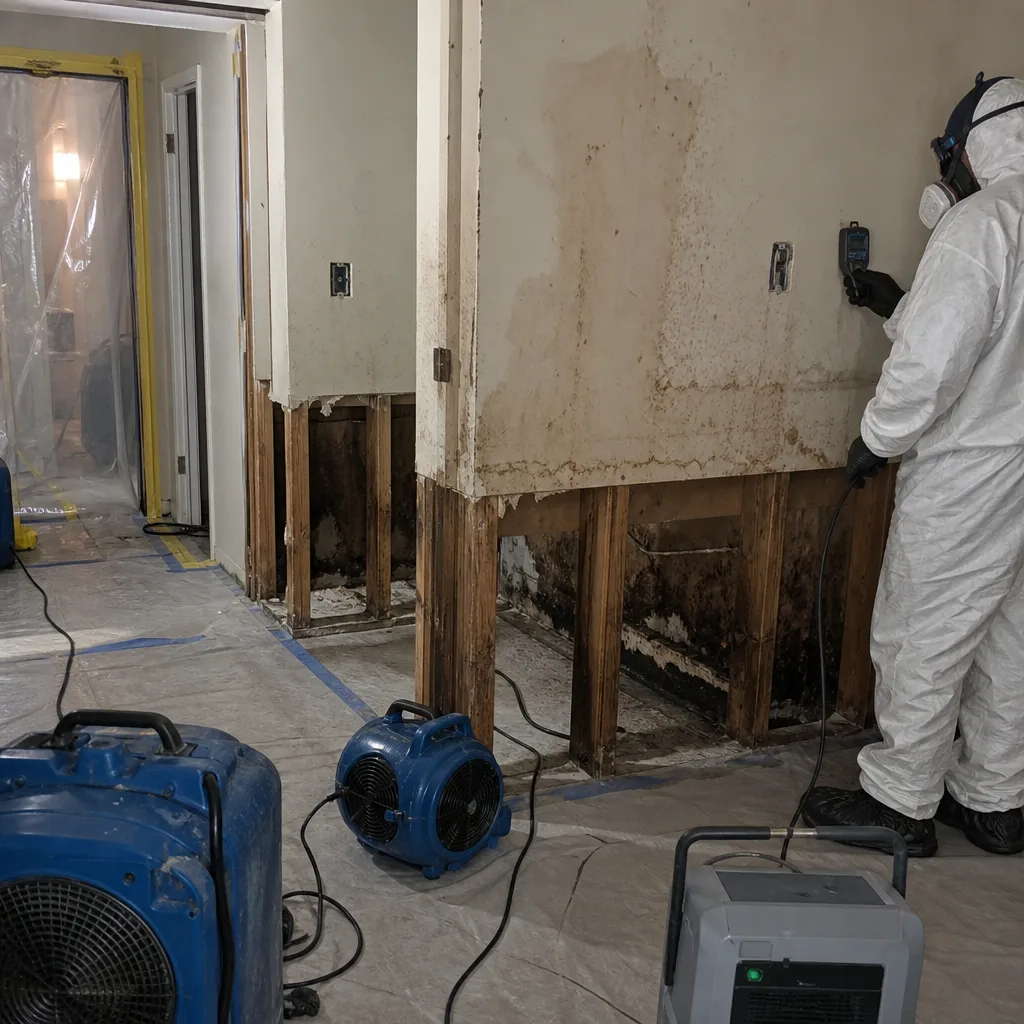 Before
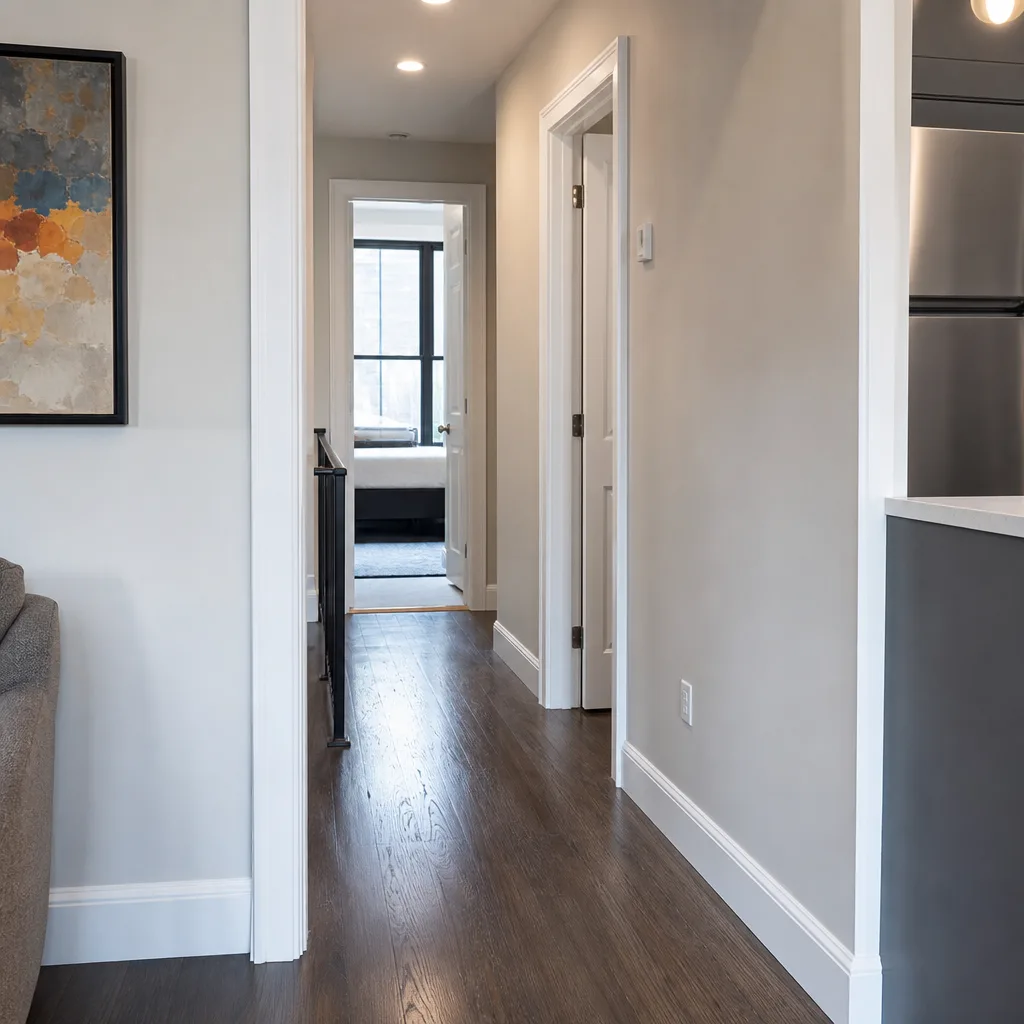 After
After24/7 Emergency Mold Remediation in Bowery
Mold remediation in Bowery typically costs $1,800-$6,500 depending on the square footage affected and whether hidden moisture sources are involved, and Floodline Restoration Co. of Manhattan answers the phone live at (917) 924-4221 around the clock. We dispatch crews into the Bowery area within 45 minutes because mold that gets a foothold in a century-old masonry building spreads faster than most people realize. When you call, a real person picks up, not a recording, and our background-checked, IICRC-certified technicians arrive with professional-grade Dri-Eaz and Phoenix equipment running the same visit. The first hour matters because Bowery buildings hold moisture differently than modern construction, and every day of delay lets spores move deeper into lime-mortar joints and timber joists. Call (917) 924-4221 now and we’ll do a free visual inspection before you commit to anything.
Understanding Mold Remediation Severity in Bowery Properties
Bowery’s building stock changes the mold remediation playbook. Most structures here date from the 1860s through the 1910s: five-to-seven-story cast-iron-fronted and brick masonry loft buildings, many originally run as lodging houses and SRO hotels before later conversion to mixed residential and commercial use. Those original timber floor joists and lime-mortar joints wick moisture differently than gypsum drywall on steel studs. When we assess severity, we’re looking at four factors: the moisture source (a capped SRO plumbing stub versus a roof leak versus flood-zone surge water), how long moisture has been present, what materials are affected (lath-and-plaster, original timber, or modern drywall over masonry), and whether the building sits inside FEMA Flood Zone AE near Canal Street. A Category 2 gray-water leak inside a concealed plumbing chase can produce a larger remediation scope than a Class 3 flood in a modern high-rise, because in Bowery buildings the water travels silently through hidden chases across multiple floors before surfacing. That’s why our severity classifications here always include thermal imaging and moisture mapping, not just visual inspection. Containment barriers, HEPA air scrubbing, and antimicrobial treatment are standard on every Bowery job we scope, regardless of visible square footage, because the concealed pathways in pre-war masonry demand it.
Why Bowery Property Owners Choose Floodline Restoration Co. of Manhattan
- 45-minute response commitment – We dispatch certified crews into the Bowery area within 45 minutes of your call, day or night.
- 24/7 live answer, always a real person – A live dispatcher picks up at 2 a.m., not a voicemail system, so you’re never waiting on a callback while mold spreads.
- IICRC-certified crews trained to WRT, FSRT, and AMRT standards – Our technicians hold advanced mold remediation certifications and follow IICRC S520 guidelines on every job.
- Free visual inspection with moisture mapping – We assess the full scope, including concealed chases and masonry wicking, before any work is priced.
- Direct insurance billing – Floodline works with your carrier directly, from first documentation to final invoice, so you never play messenger.
- One team from extraction to reconstruction – The same crew that contains and remediates the mold handles any rebuild, so there’s no mid-job handoff to strangers.
Our Mold Remediation Process
Inspection & Assessment
We start with a free visual inspection, then run thermal imaging and moisture mapping with hygrometers to find every wet pocket, including hidden SRO plumbing chases and lime-mortar wicking that drywall-centric protocols miss. You get a written scope of work and a firm price before anything starts.
Containment & Source Stabilization
We seal the affected area with 6-mil poly containment and establish negative air pressure with HEPA-filtered air scrubbers so spores don’t spread during remediation. Any active moisture source, whether a leaking plumbing stack or flood-zone seepage, is stopped before treatment begins.
Drying & Dehumidification
Using Dri-Eaz LGR dehumidifiers and Phoenix air movers, we drive moisture out of timber joists and masonry until readings match pre-loss condition. In Bowery’s flood-zone buildings, this phase often takes longer than standard drywall jobs because old masonry releases water slowly.
Cleaning & Antimicrobial Treatment
We remove affected porous materials, HEPA-vacuum all surfaces, and apply EPA-registered antimicrobial treatments to remaining structure. Lath-and-plaster walls that can be saved get treated in place rather than needlessly torn out, which matters when LPC review is in play.
Air Quality Restoration
After remediation, we run HEPA air scrubbing until particle counts return to clean-room levels, then conduct post-remediation verification sampling. You get written documentation showing the air is safe, not just a verbal assurance.
Repairs & Restoration
The same Floodline crew rebuilds what was removed: drywall over masonry, plaster repair, flooring, trim. We coordinate any Landmarks Preservation Commission requirements before touching historic fabric, so your project doesn’t stall mid-mitigation. Every job carries the 90-Day Done Right Promise in writing.
Need Emergency Mold Remediation in Bowery Now?
Crews minutes away, answering live 24 hours a day. The sooner we start, the less it costs.
Working With Your Insurance Company
Mold claims on the Bowery get complicated fast, especially in buildings inside FEMA Flood Zone AE where flood insurance and standard homeowners policies can point fingers at each other. We’ve handled enough of these to know what carriers need: documentation from the first hour, industry-standard estimates using Xactimate, and a remediation team that speaks adjuster. Floodline photographs everything room by room, logs daily moisture readings until the dry standard is met, and communicates directly with your carrier so you never have to translate technical findings. If your policy covers mold remediation as a covered peril, we bill the carrier directly. If it doesn’t, you’ll know exactly what’s out-of-pocket before any work starts, because our written scope is firm. We do the paperwork battles so you don’t have to.
What We Provide Your Insurer
- Thorough documentation of the loss
- Photos of all damage, room by room
- Moisture readings and drying logs
- A detailed, line-item scope of work
- Direct coordination with your carrier
Built for Bowery’s Loss Calendar
Bowery mold problems follow the seasons, but not the way they do in modern high-rises. January deep freezes burst supply lines in unheated basement-level spaces, and in pre-war masonry buildings that water finds its way into lime-mortar before anyone notices. Spring brings thaw cycles and rising groundwater that seeps into sub-grade foundations along the Canal Street corridor, where Flood Zone AE soil stays saturated for weeks. Summer thunderstorms dump flash runoff onto aging roof membranes over original timber decking, and the humidity alone can push a marginal masonry wall into active mold growth. Fall nor’easters drive wind-driven rain through cast-iron facades and original window frames, and every one of those leaks lands on plaster and timber that has been wet before. The pattern across all of it: Bowery buildings hide moisture, then reveal it as mold weeks or months after the weather event. That’s why we recommend a seasonal Moisture & Humidity Control check for any building here with a history of water intrusion, especially conversions with capped SRO plumbing stacks that fail silently behind drywall.
Mold Remediation Across Bowery’s Neighborhoods
The Bowery runs a narrow corridor from Chatham Square north to Astor Place, and the building stock changes as you move. Down near the Bowery Mural and the southern stretch approaching Canal Street, we’re working inside Flood Zone AE buildings where basement-level and ground-floor mold ties directly to storm surge and recurring tidal flooding, the same conditions Hurricane Sandy exposed in 2012. Mid-Bowery, around the old Amato Opera building and the New Museum, the 1860s-to-1880s cast-iron lofts carry original timber joists set into masonry pockets, and we routinely find concealed moisture at the joist ends where they enter exterior walls. North of Houston, approaching Cooper Square and the NoHo Historic District, LPC oversight is a live factor on every job, and we sequence remediation so containment phases never get held up by facade or landmark review. East of the corridor toward Chrystie Street and Sara D. Roosevelt Park, the blocks hold a mix of converted SRO hotel buildings and smaller tenement structures, and the capped plumbing stubs from 10-to-15-room-per-floor conversions are our single most common hidden mold source. Different blocks, different failure patterns, same playbook: find the hidden moisture, stop it, dry the masonry, treat the surfaces, prove the air is clean.
Specialized Mold Remediation Services We Offer in Bowery
Mold Inspection & Testing
We offer full mold inspection and testing for Bowery lofts, including air sampling, surface sampling, and moisture mapping behind walls using thermal imaging. Because so many Bowery buildings were converted from SRO hotels with dead-ended plumbing stacks, our inspections specifically probe concealed chases that standard inspections never touch. You can’t fix what you can’t find, and we find it without tearing open walls.
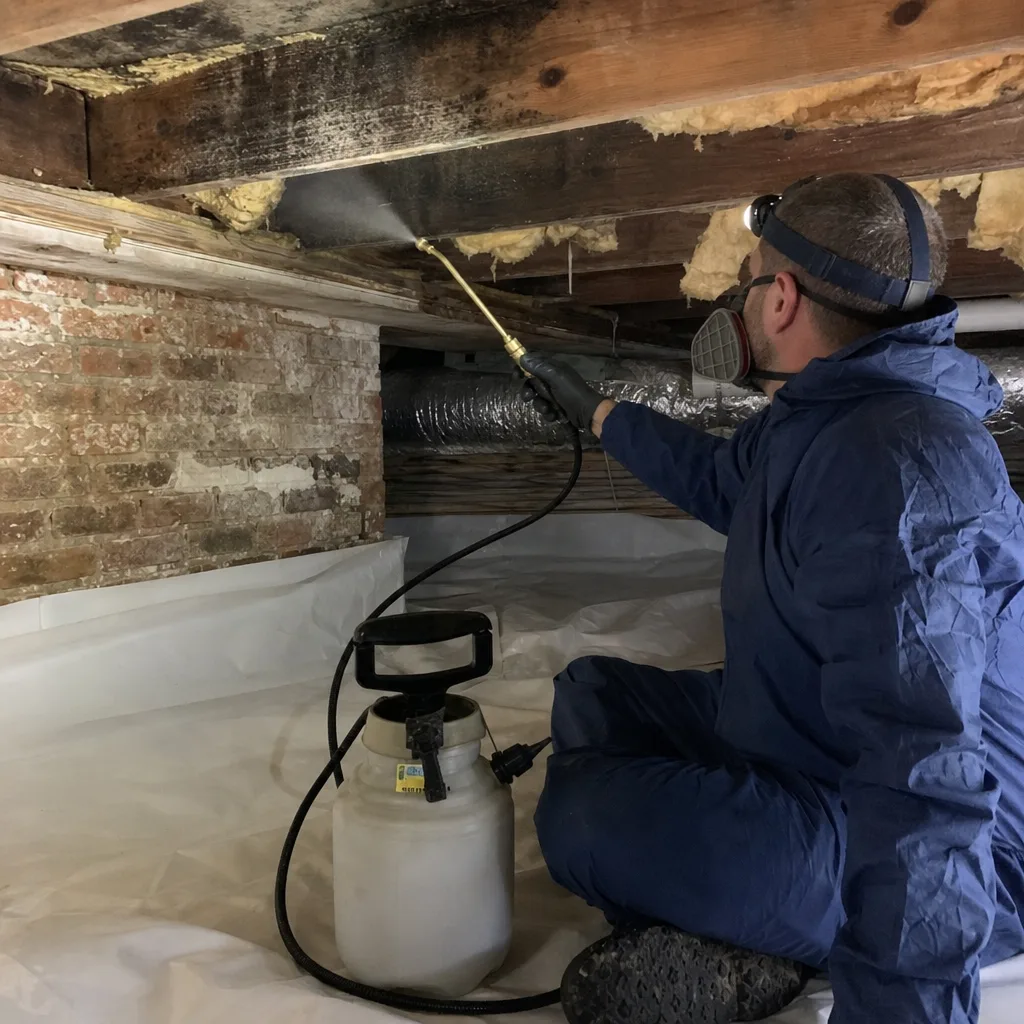
Mold Removal
Mold removal in Bowery buildings means more than cutting out visible growth on drywall. We remove affected porous materials, HEPA-vacuum structural surfaces, and treat timber and masonry in place where salvageable. In buildings with original lath-and-plaster that would trigger LPC review if replaced, preserving what’s sound saves you weeks of regulatory delay and thousands in landmark-compliance costs.
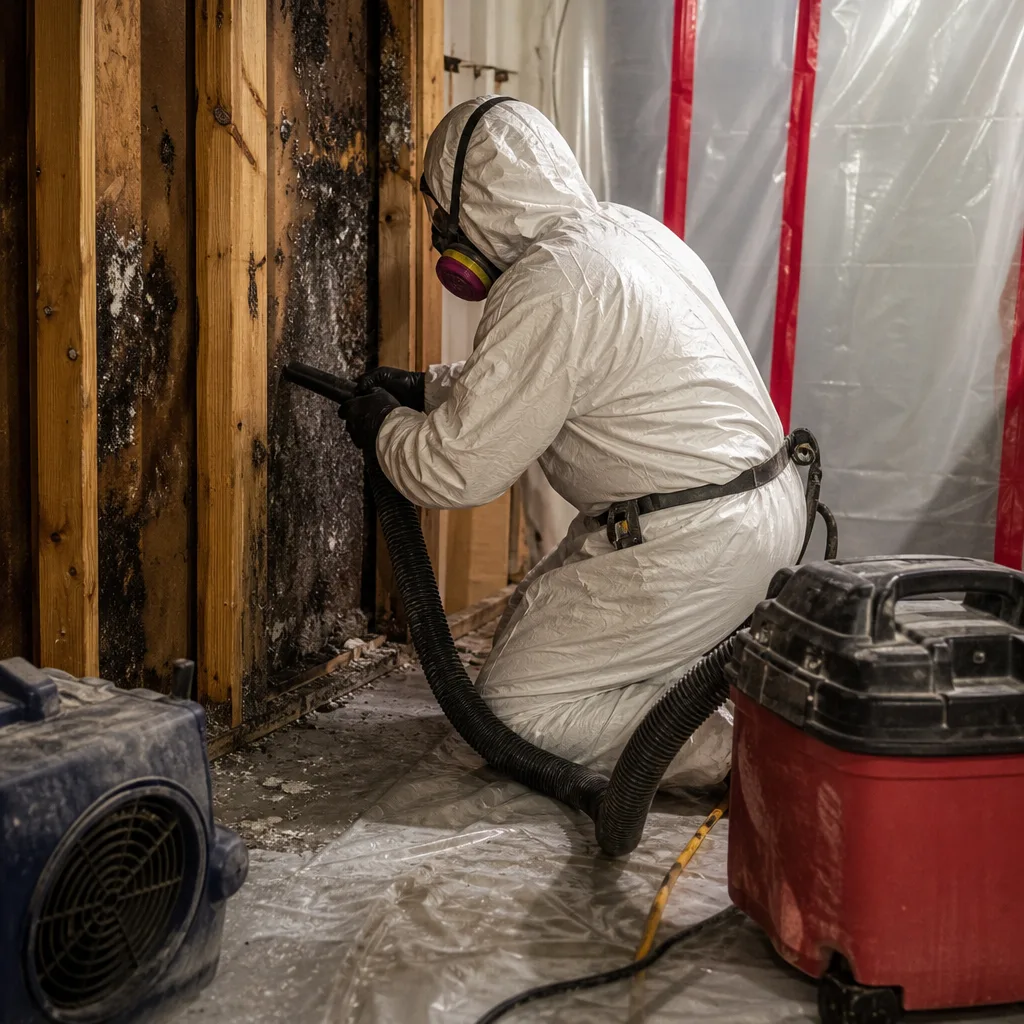
Black Mold Remediation
Black mold, or Stachybotrys, shows up in Bowery buildings where water has sat undisturbed for weeks, often inside concealed plumbing chases or behind furniture against exterior masonry walls. Our black mold remediation follows full containment protocols with negative air pressure and HEPA scrubbing, and we don’t just kill the surface growth; we eliminate the moisture condition that feeds it, then verify with post-remediation air testing.
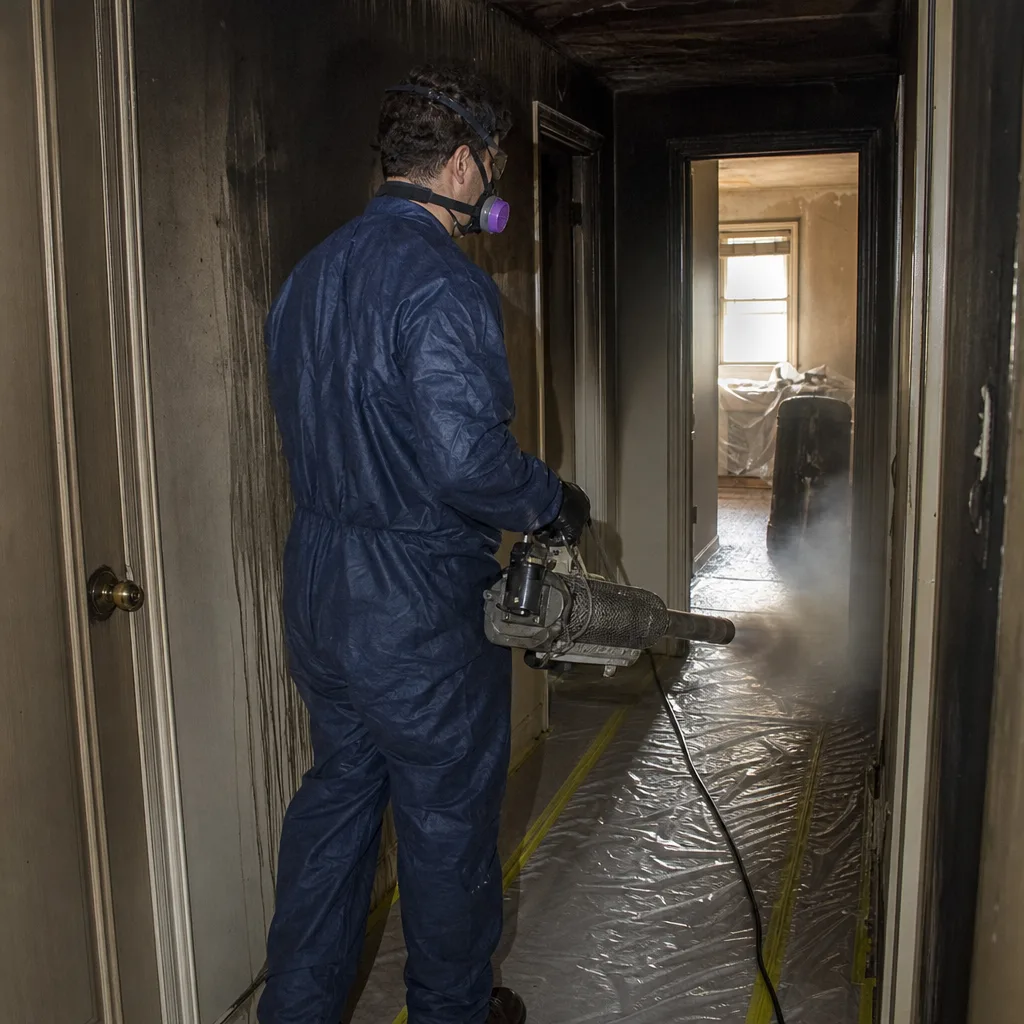
Air Quality Restoration
The Bowery’s old buildings hold mold spores in duct systems, plaster dust, and original floor framing. After physical remediation, we run HEPA air scrubbers until airborne particle counts drop to acceptable levels, then document the results. If you’ve had a recurring musty smell in a loft even after a previous “cleanup,” air quality restoration is usually the missing step.
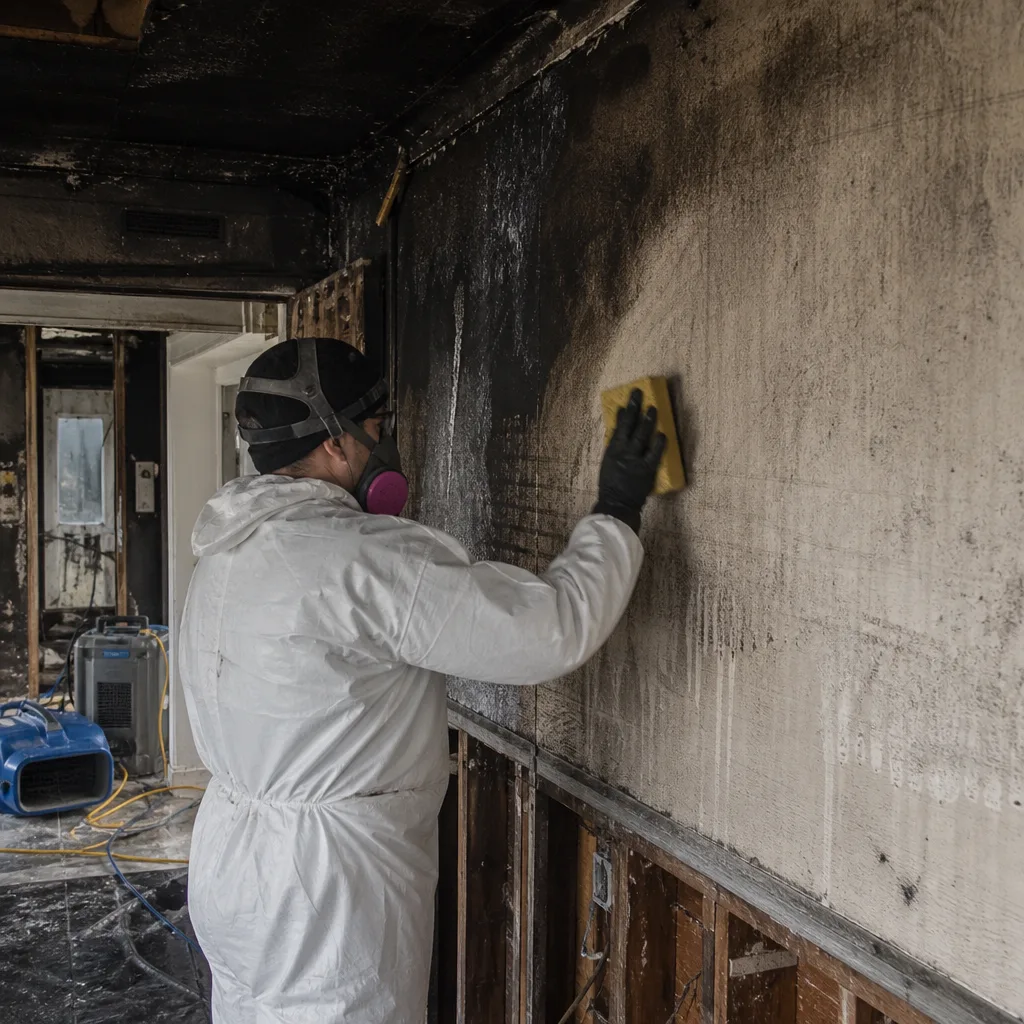
Crawl Space Treatment
Some Bowery buildings, especially smaller tenement structures and rear extensions, have crawl spaces over dirt or old rubble foundations. Those spaces breathe moisture upward into the first-floor framing and can feed mold growth for years without visible signs. We treat crawl spaces with vapor barriers, dehumidification, and antimicrobial application, then log moisture readings until the space holds stable dry conditions.
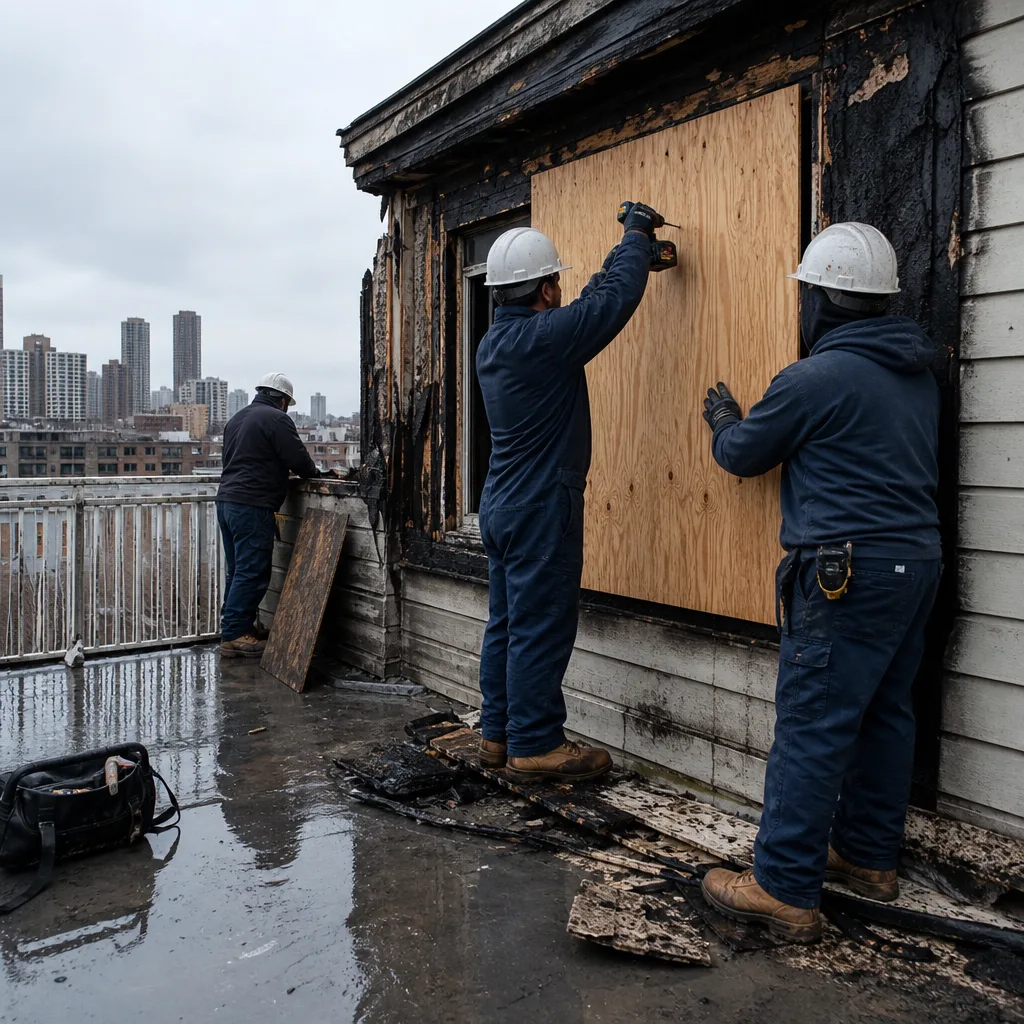
Moisture & Humidity Control
In Bowery’s flood-zone masonry buildings, moisture control is the long game. We install and calibrate dehumidification systems, recommend ventilation changes for basement-level and ground-floor spaces, and set up monitoring so you know when relative humidity climbs into mold-friendly ranges. This is the service that keeps mold from coming back, which matters more in a lime-mortar brick loft than anywhere else in Manhattan.
What happens when you call
- 1
A real person answersNo phone trees - you reach a local pro.
- 2
You get an upfront price rangeHonest numbers before anyone is dispatched.
- 3
A background-checked tech heads outLicensed & insured, dispatched right away.
- 4
You approve before work beginsNothing starts until you say go.
Mold Remediation Costs in Bowery, NY
Mold remediation in Bowery runs higher than the New York City average because the buildings are older, the masonry wicks longer, and landmark review adds a compliance layer. A basic contained remediation of a single bathroom or closet in a modernized Bowery unit typically runs $1,800-$3,200. A full-floor remediation involving concealed plumbing chases, original timber joists, and lath-and-plaster runs $4,500-$8,500. Whole-building SRO-conversion scopes with multiple affected floors can reach $12,000-$25,000, especially when LPC review requires preservation-grade materials rather than standard replacement. What moves the price: how many concealed chases we have to open and trace, whether flood-zone masonry needs extended drying time, and whether historic plaster must be saved rather than replaced. Insurance covers mold remediation when it stems from a covered peril like a burst pipe or storm-related water intrusion; flood-zone mold from rising groundwater typically falls under separate flood insurance. The free inspection path is simple: call (917) 924-4221, we walk the space with you, we hand you a written scope and a firm number, and you decide from there.
We Also Serve Cities Near Bowery
Floodline Restoration Co. of Manhattan provides the same 24/7 mold remediation service to property owners in Fairview, Harrison, East Bronx, and Hunts Point. Crews dispatch from our New York City office into all five boroughs, with the same live-answer phone line and the same 90-Day Done Right Promise on every job.
Serving Bowery, NY - Our Local Coverage Area
We’re based in the Bowery area and know this community well. Use the map below to see our service coverage - if you’re nearby, we can almost certainly help.
Bowery Mold Remediation Questions, Answered
How does the Bowery’s FEMA Flood Zone AE designation change a mold remediation scope of work?
FEMA Flood Zone AE classification means the building sits in a mapped special flood hazard area where storm surge or tidal flooding is a recurring, expected condition, not a one-time event. For mold remediation in Bowery, that changes the scope in two ways: we have to assume the masonry below grade has absorbed brackish water multiple times over its life, which means extended structural drying with LGR dehumidifiers before antimicrobial treatment will hold; and we have to document everything carefully because flood insurance and standard homeowners policies often split coverage differently in Zone AE. Call (917) 924-4221 and we’ll walk your specific building through what that means.
What hidden mold sources are common in Bowery buildings converted from SRO hotels?
Capped SRO plumbing stacks are the number one hidden mold source we find in Bowery conversions. When each floor held 10-15 single-occupancy rooms, every room had its own sink line, and during conversion most of those lines were cut and drywalled over rather than properly removed. When one fails behind the drywall, water travels silently through the concealed chase across multiple floors before anyone sees or smells anything. We trace every chase with thermal imaging and moisture meters before we finalize a scope, because missing one stub means mold comes back in eight weeks.
Does Landmarks Preservation Commission approval affect how quickly mold can be removed on the Bowery?
It can. If your building is within or adjacent to the NoHo Historic District, any removal or replacement of historic fabric including original lath-and-plaster, cast-iron elements, or facade components technically requires LPC review before work proceeds. Floodline sequences remediation so containment and drying start immediately, while any LPC-flagged items are documented and submitted in parallel. In practice, this means we can begin mitigation within 45 minutes of your call even on a landmark-adjacent Bowery building, because we’re not waiting on a permit to run dehumidifiers.
Why does mold keep returning in some Bowery lofts even after professional remediation?
Mold returns when the moisture source was never actually eliminated, and in Bowery’s masonry buildings the source is frequently inside a concealed chase, inside a lime-mortar joint, or inside original timber that standard drywall-centric remediation protocols never touched. The surface mold gets cleaned, the air smells fine for two months, and then the hidden moisture feeds new growth. We run moisture mapping with thermal imaging and hygrometers before finalizing any scope, and we don’t sign off until readings match pre-loss condition throughout the affected area. If mold comes back after we’ve remediated, the 90-Day Done Right Promise covers making it right.
Can you do mold inspection and testing without tearing open walls in a Bowery brick loft?
Yes. We run non-invasive inspection first: thermal imaging to identify temperature differentials that signal hidden moisture, moisture meters to quantify readings in masonry and plaster, and air sampling for spore counts. If those readings point to a concealed reservoir, we open only the minimum area necessary to confirm and treat, typically a small access panel rather than full wall removal. In most Bowery lofts, we can complete a thorough inspection and provide you a written report without significant demolition.
How fast can Floodline actually get to my Bowery building?
We commit to 45-minute dispatch into the Bowery area from our New York City office, with a live dispatcher answering the phone 24/7. For active water intrusion or visible mold, same-visit containment and drying equipment start is typical. Call (917) 924-4221 and a real person will tell you exactly when a crew reaches your building.
Will my homeowners insurance cover Bowery mold remediation?
Coverage depends on the moisture source. Mold stemming from a covered peril, like a burst pipe, a roof leak from storm damage, or a water heater failure, is generally covered under standard homeowners policies, subject to mold-specific limits which often run $5,000-$10,000. Mold from rising groundwater in Flood Zone AE typically falls under separate flood insurance, which often excludes mold unless a flood policy has a mold endorsement. Floodline documents the loss from hour one and communicates directly with your adjuster, so you’ll know where you stand before committing to any out-of-pocket work.
What should I do in the first 30 minutes after discovering mold in my Bowery loft?
Don’t disturb it. Spores spread when mold is scrubbed, sanded, or disturbed, so leave it alone. Shut the door to the affected room if possible. Turn off any HVAC or fan that could circulate spores. If you can see an active water source, like a dripping pipe, shut off the water supply to that fixture. Then call (917) 924-4221 and tell the dispatcher what you’re seeing; we’ll walk you through what’s safe to do while the crew is on the way. The less you disturb it before we contain it, the smaller the scope stays.
If you’ve got mold in a Bowery building, the worst move is waiting. Call Floodline Restoration Co. of Manhattan at (917) 924-4221 for a free visual inspection and a written scope with a firm price. We answer live, we get there fast, and we stand behind the work with the 90-Day Done Right Promise, in writing, no arguing. Done right, back in writing, that’s the Mold Remediation standard we’ve built our name on across Bowery.
Written by Curt Bowman, Owner at Floodline Restoration Co. of Manhattan, serving New York City since 2010.