

Free visual inspection and a written scope of work before any mitigation begins - photos, moisture readings, and drying logs go in your claim file
The scope we write is the scope we bill. Anything new gets shown to you, in writing, before we touch it.






 Before
 After
After Before
 After
After Before
 After
After24/7 Emergency Mold Remediation in Charleston
Mold remediation in Charleston, NY typically costs between $1,800 and $6,500 depending on how far moisture has traveled through a farmhouse’s shared wall cavities, and it’s usually started within 45 minutes of your call. We answer live around the clock because mold does not wait for business hours, and neither do burst pipes in a January deep freeze. Call (917) 924-4221 now and a certified crew heads your way from dispatch, not a voicemail box. The first hour matters here more than in a suburban house, because Charleston’s drafty 19th-century construction lets airborne spores move through unconditioned spaces faster than most property owners realize. We offer a free visual inspection so you know exactly what you’re dealing with before any work begins.
Understanding Mold Remediation Severity in Charleston Properties
Mold severity breaks into three practical levels, and Charleston’s housing stock makes all three more common than the county average. Level one is surface colonization: visible growth on drywall, framing, or stored goods, usually under 30 square feet, and often triggered by condensation in a root cellar or attached barn. Level two involves moisture that has wicked into structural cavities, the shared wall penetrations between a connected barn and the main house, or a crawl space under a 1900s farmhouse with no vapor barrier. This is where containment and air scrubbing become necessary, because drying the visible surface alone leaves hidden reservoirs alive. Level three is systemic: prolonged water intrusion from a burst supply line or ice-dam leak that soaked structural lumber for days before discovery. At that point we’re running commercial dehumidifiers from Dri-Eaz inside full containment, with daily moisture readings until every wall cavity meets the dry standard. Most Charleston calls we take start as a “small leak” in the kitchen pantry and turn into level two or three once thermal imaging reads the shared wall behind it.
Why Charleston Property Owners Choose Floodline Restoration Co. of Manhattan
We’re the restoration company that starts at the floodline, the honest mark the water left on the wall, and doesn’t hand the job off until the rebuild is finished by the same certified crew. That matters out here, where a distant franchise might dispatch from Utica or Schenectady and arrive three hours late. Here’s what Charleston homeowners get with us:
- 45-minute response commitment for Charleston dispatch. Crews are staged to reach rural Montgomery County addresses quickly, because waiting three hours for a distant franchise lets mold establish in a hay loft before mitigation even starts.
- A live person answers at 2 a.m., not a recording. Our dispatchers pick up every call, every day, all night. You’ll never leave a message when water is spreading.
- IICRC-certified crews trained to WRT and AMRT standards. Our technicians hold water damage restoration and applied microbial remediation certifications, and they arrive in uniform with background checks already done.
- Free visual inspection before any work is authorized. We walk the affected area, read moisture levels, and show you what we found. You get a written scope of work before anything is torn out.
- Direct insurance billing with adjuster coordination. We document everything from the first hour and send it straight to your carrier. You never play messenger.
- One team from extraction to reconstruction. Floodline Restoration Co. was built around a dispatch board, not a sales desk. The same crew that reads the moisture map on day one handles daily readings, hands you the log, and rebuilds what needs rebuilding. No mid-job handoff.
Our Mold Remediation Process
Inspection & Assessment
We start with a free visual inspection and moisture mapping using thermal imaging and hygrometers. In Charleston’s wood-frame farmhouses, we pay special attention to shared wall penetrations from attached barns and root cellars, because that’s where hidden moisture travels undetected. You get a written scope before any work begins.
Containment & Stabilization
We set up full containment barriers with negative air pressure before disturbing any mold, so spores don’t spread through a drafty 1800s house. HEPA air scrubbers run continuously during the work. The source of moisture gets stopped first: a supply line shut off, a roof tarped, or a crawl space drain routed.
Drying & Dehumidification
Dri-Eaz dehumidifiers and Phoenix air movers run inside the contained area until structural materials hit their dry standard. We log daily moisture readings and share that log with both you and your insurance adjuster. In unconditioned spaces like hay lofts or attached barns, drying takes longer because outside air keeps re-humidifying the framing.
Cleaning & Sanitization
Affected surfaces are HEPA-vacuumed, wire-brushed where needed, and treated with EPA-registered antimicrobial products. Water-damaged drywall and insulation get removed entirely; you cannot sanitize what’s already waterlogged. We bag and dispose of contaminated material under containment.
Air Quality Restoration
After physical remediation, we run HEPA air scrubbers to filter out airborne spores, then conduct clearance testing where requested. For Charleston homes with connected barns, we often recommend crawl space and attic sealing so agricultural dust and spores stop migrating into the living space through shared cavities.
Repairs & Restoration
We rebuild what we removed: drywall, insulation, vapor barriers, sill plates, and trim, matched to the house’s age and character. A 19th-century farmhouse should look like itself when we’re done, not like a line-item claim from a big-box franchise. The 90-Day Done Right Promise covers every repair in writing.
Need Emergency Mold Remediation in Charleston Now?
Crews minutes away, answering live 24 hours a day. The sooner we start, the less it costs.
Working With Your Insurance Company
Mold claims in Charleston depend heavily on the source of the water. A sudden pipe burst or ice-dam leak is usually covered as a covered peril, and the mold remediation that follows is part of that claim. Long-term seepage through a fieldstone foundation, or mold that grew over years in an attached barn, often is not. That’s why we document everything from the first hour: photos before anyone moves a wall, moisture readings from day one, and a line-item scope of work your adjuster can approve without follow-up questions. You talk to your carrier once, maybe twice. We handle the rest, including direct billing so you’re not floating thousands of dollars waiting for a check.
What We Provide Your Insurer
- Thorough documentation of the loss
- Photos of all damage, room by room
- Moisture readings and drying logs
- A detailed, line-item scope of work
- Direct coordination with your carrier
Built for Charleston’s Loss Calendar
Charleston’s damage season follows a pattern set by Montgomery County’s hill country weather. January and February bring repeated freeze-thaw cycles and lake-effect snow that load up old roofs, causing ice dams that back water under shingles and into attic insulation. The same deep freezes burst supply lines in unoccupied or seasonally used farmhouses, and by the time someone checks, water has been running through wall cavities for days. March and April send rapid snowmelt downhill into low-lying basements and root cellars, where fieldstone foundations and dirt floors wick moisture straight into the sill plate. Summer brings thunderstorms that dump two inches in an hour, and in Charleston’s topography, that runoff finds the nearest basement or crawl space fast. The common thread: every one of these events hits houses that were built without modern vapor barriers, so the water that gets in tends to stay in. We plan our dispatcher coverage around this calendar, because we know when the phone will ring.
Mold Remediation Across Charleston’s Neighborhoods
Charleston is a spread-out rural town, and our crews know the response routes. Along Carlisle Road, the 19th-century wood-frame farmhouses with connected barns present the most complex mold jobs we see in Montgomery County, because shared wall penetrations let moisture and rodent-driven damage migrate into living spaces undetected. Out toward Rural Grove and the town’s southern hill country, properties sit on sloping ground where spring snowmelt channels directly toward fieldstone foundations. Homes near the Charleston town line with Glen and Root share the same elevation-driven runoff patterns: basements and root cellars that stay damp from March through May. On the higher ridges west of town, ice dams hit hardest because winter winds drive snow into roof valleys that never fully thaw. Every one of these areas has the same underlying weakness: 19th- and early 20th-century wood framing with no vapor barrier, minimal insulation, and unconditioned spaces that hold moisture like a sponge. When one of these houses gets wet, mold starts within 24 to 48 hours, not the 72-hour window you might see quoted for a modern suburban build.
Specialized Mold Remediation Services We Offer in Charleston
Mold Inspection & Testing
A visual inspection only finds what’s visible. In Charleston farmhouses, what’s visible is rarely the whole story, because shared wall cavities from attached barns hide moisture for months before staining appears on the kitchen side of the wall. We use thermal imaging and moisture meters to trace the water, and we take air and surface samples where warranted. You get a written report with photos and moisture readings, not a scare tactic. Call (917) 924-4221 to schedule a free visual inspection.
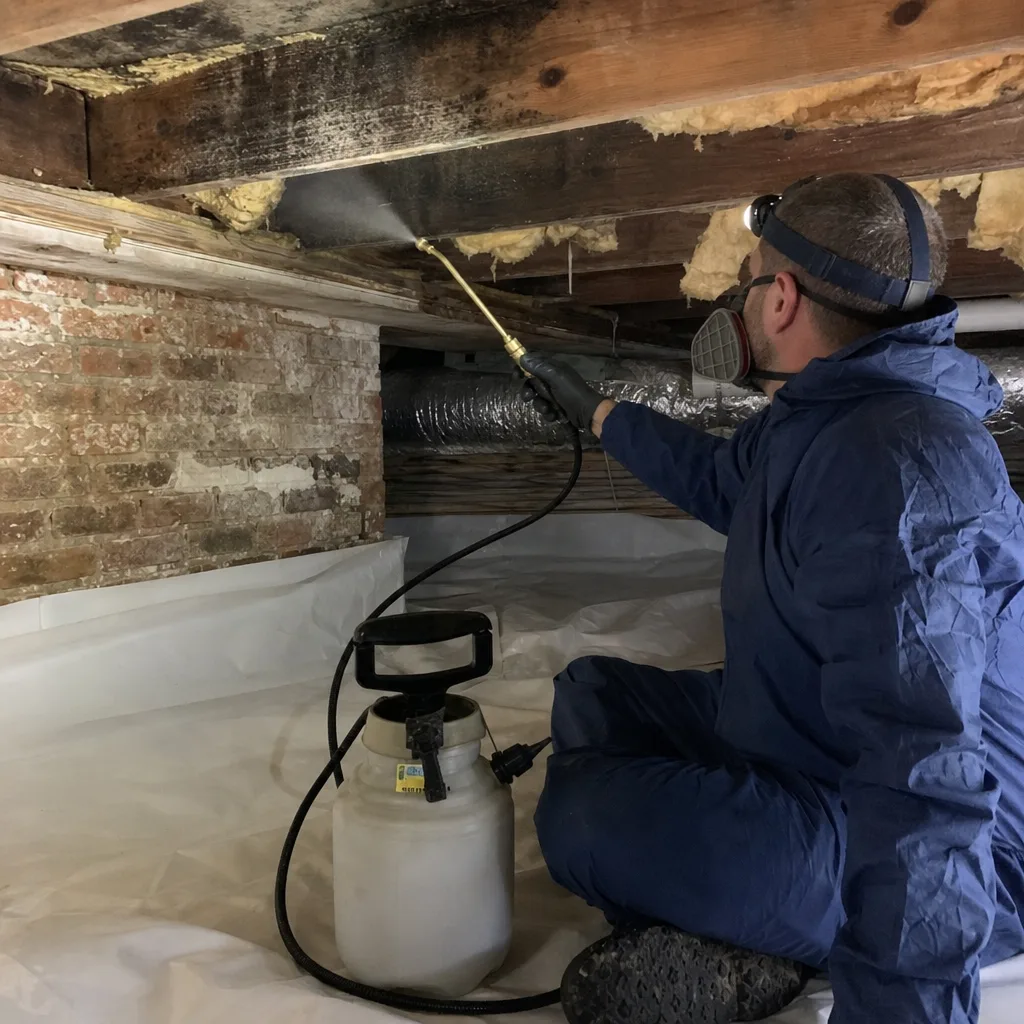
Mold Removal
Actual mold removal is physical: cutting out water-damaged drywall, wire-brushing framing, HEPA-vacuuming surfaces, and bagging contaminated material under containment. It is not fogging a room and walking away. In Charleston’s older homes, removal often extends into crawl spaces, root cellars, and the back side of shared barn walls where moisture has been lingering for years. The challenge is not killing the mold; it’s finding every reservoir and removing the moisture source so it does not return.
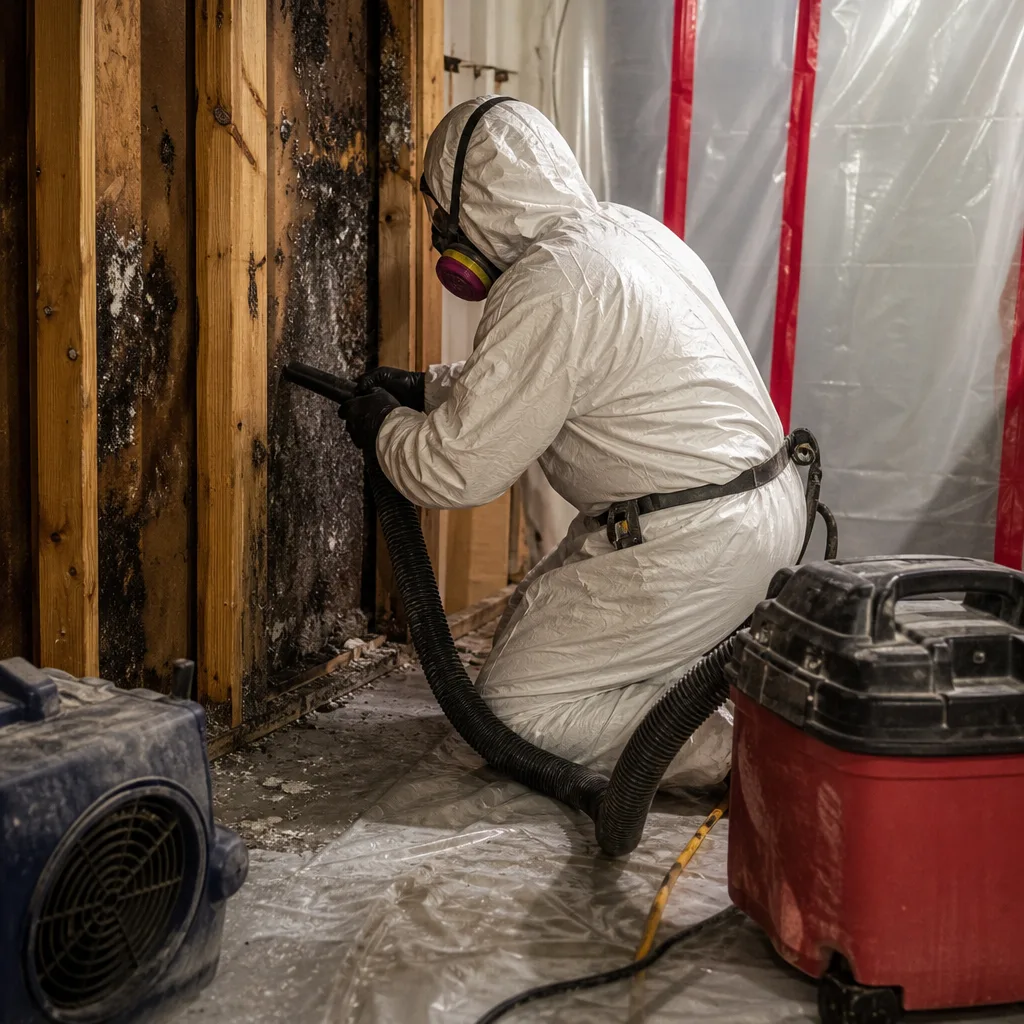
Black Mold Remediation
Stachybotrys, the black mold people worry about, grows on chronically wet cellulose: drywall, ceiling tiles, cardboard, and the paper backing on insulation. Charleston’s unconditioned spaces, hay lofts and root cellars especially, give it exactly the dark, humid, still-air environment it prefers. Our crews handle black mold in these spaces routinely, using full containment, negative air pressure, and HEPA air scrubbing. We do not advise property owners to disturb it themselves; spores aerosolize fast in drafty old houses.
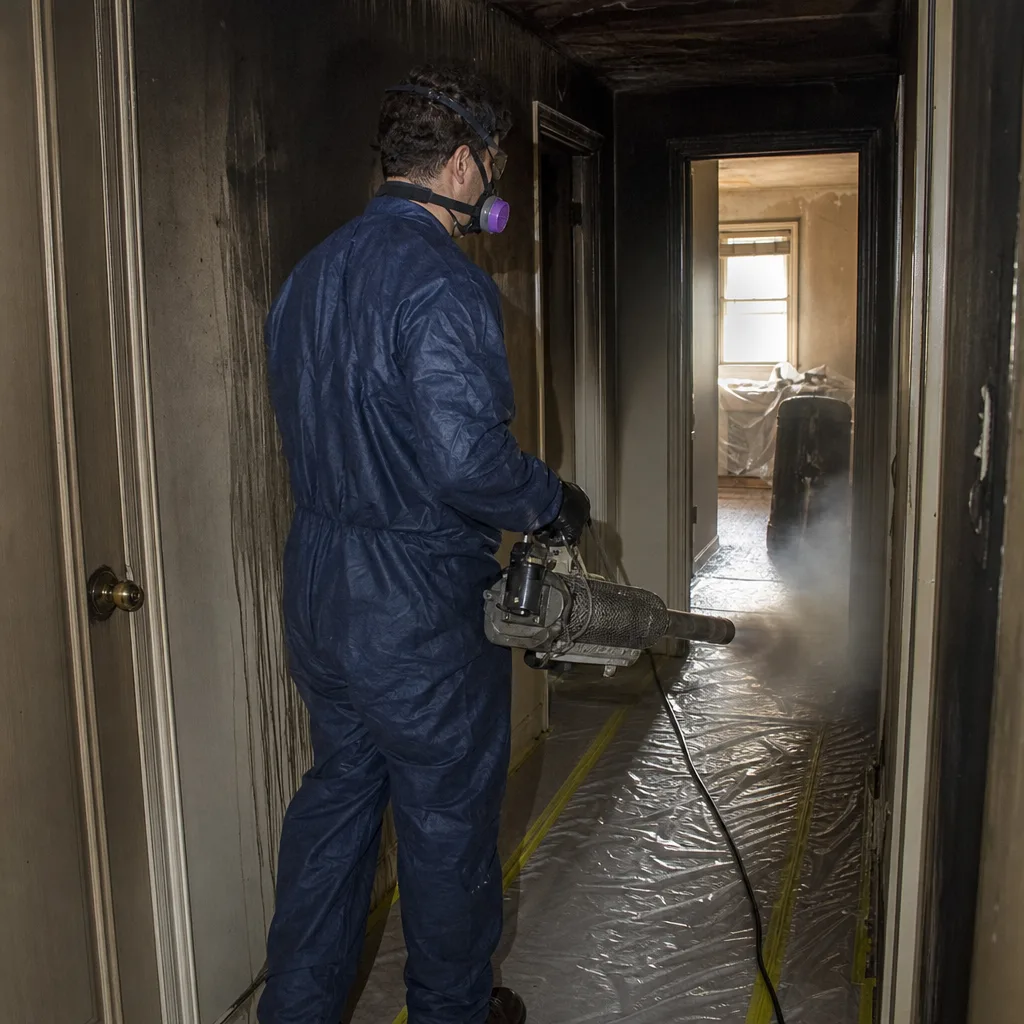
Air Quality Restoration
After physical remediation, airborne spore counts can stay elevated for days if the air is not actively filtered. We run HEPA air scrubbers inside containment during the work and often leave them running after, especially in Charleston homes where connected barns act as spore reservoirs. For properties with chronic mustiness but no active leak, we address the humidity source first, because dry air is the only lasting cure for airborne mold.
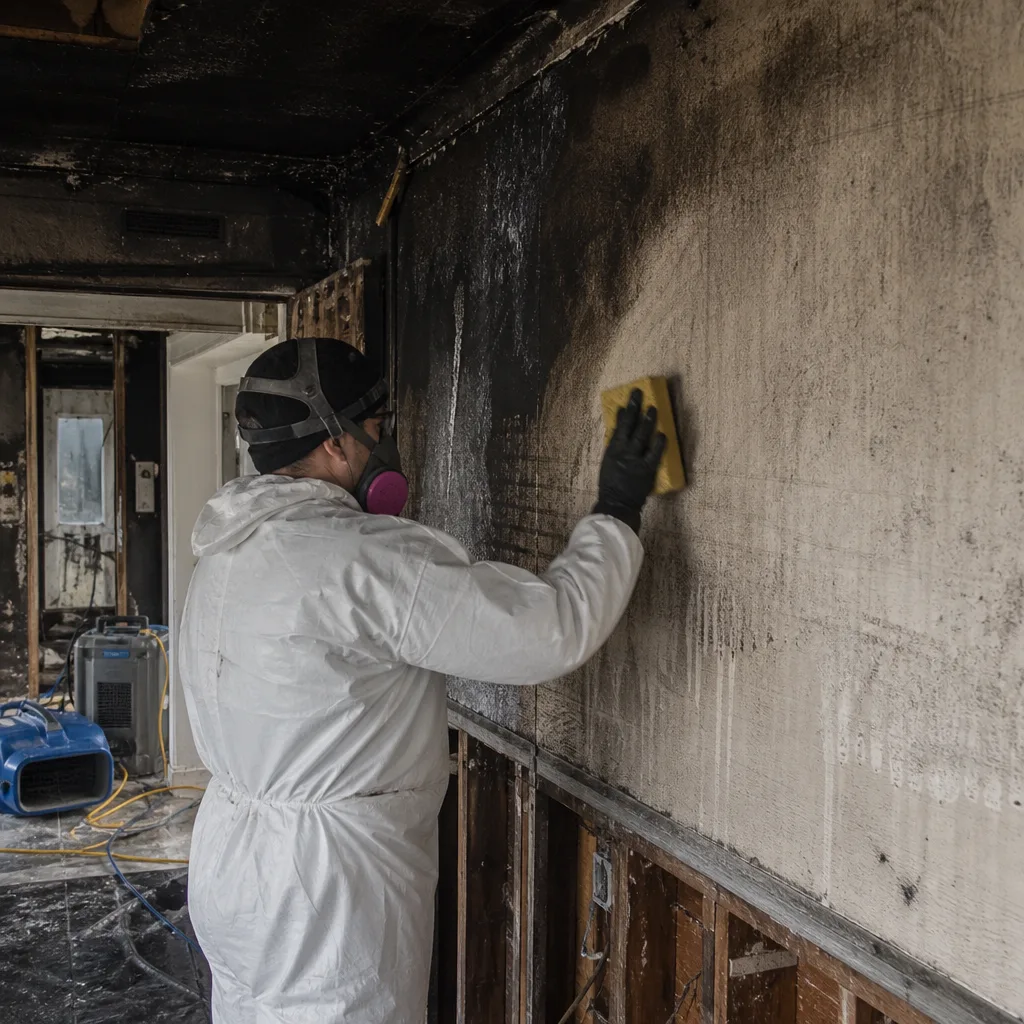
Crawl Space Treatment
A dirt-floor crawl space under a 1900s farmhouse is a mold factory. Warm, humid air rises from the soil, condenses on cold floor joists, and feeds fungal growth that eventually works its way into the subfloor above. We install vapor barriers, seal foundation vents where appropriate, and run drying equipment until the framing reaches its dry standard. This work often prevents the kitchen floor from needing full replacement later.
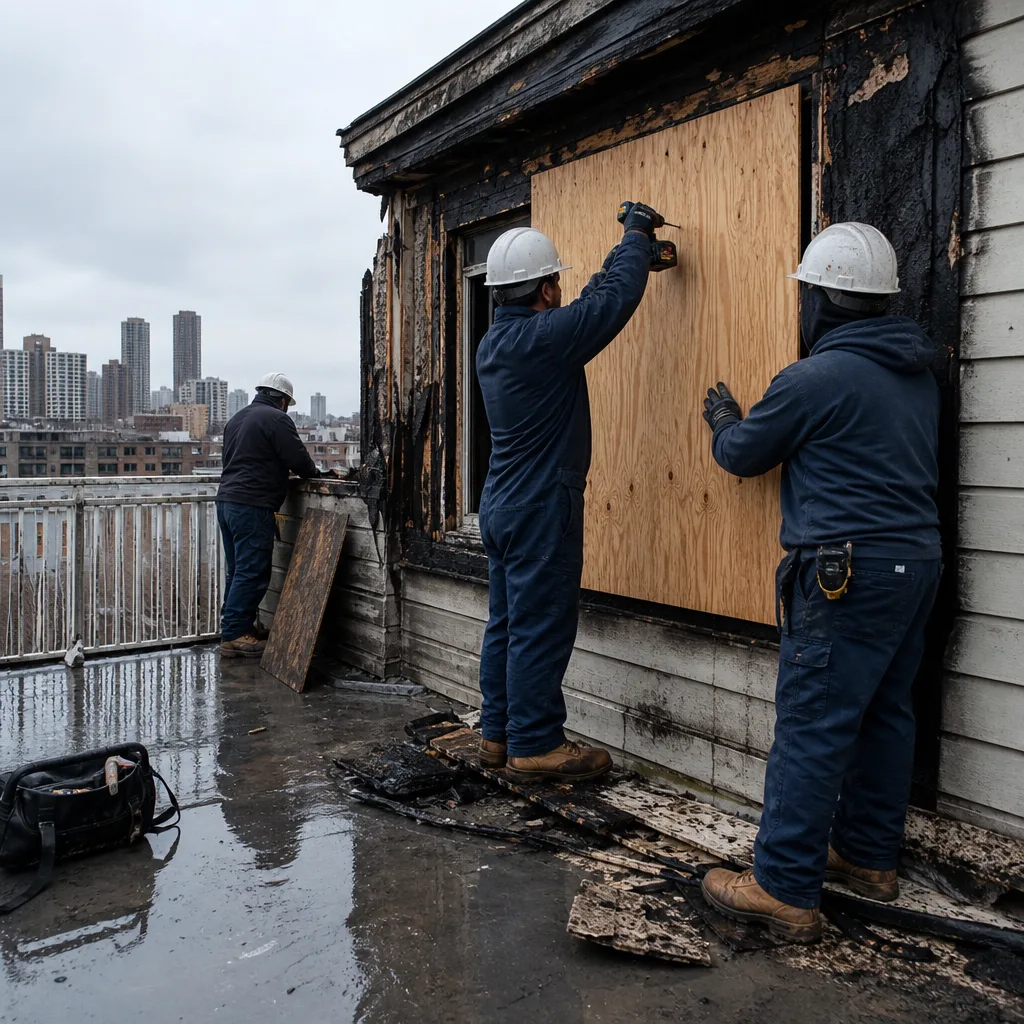
Moisture & Humidity Control
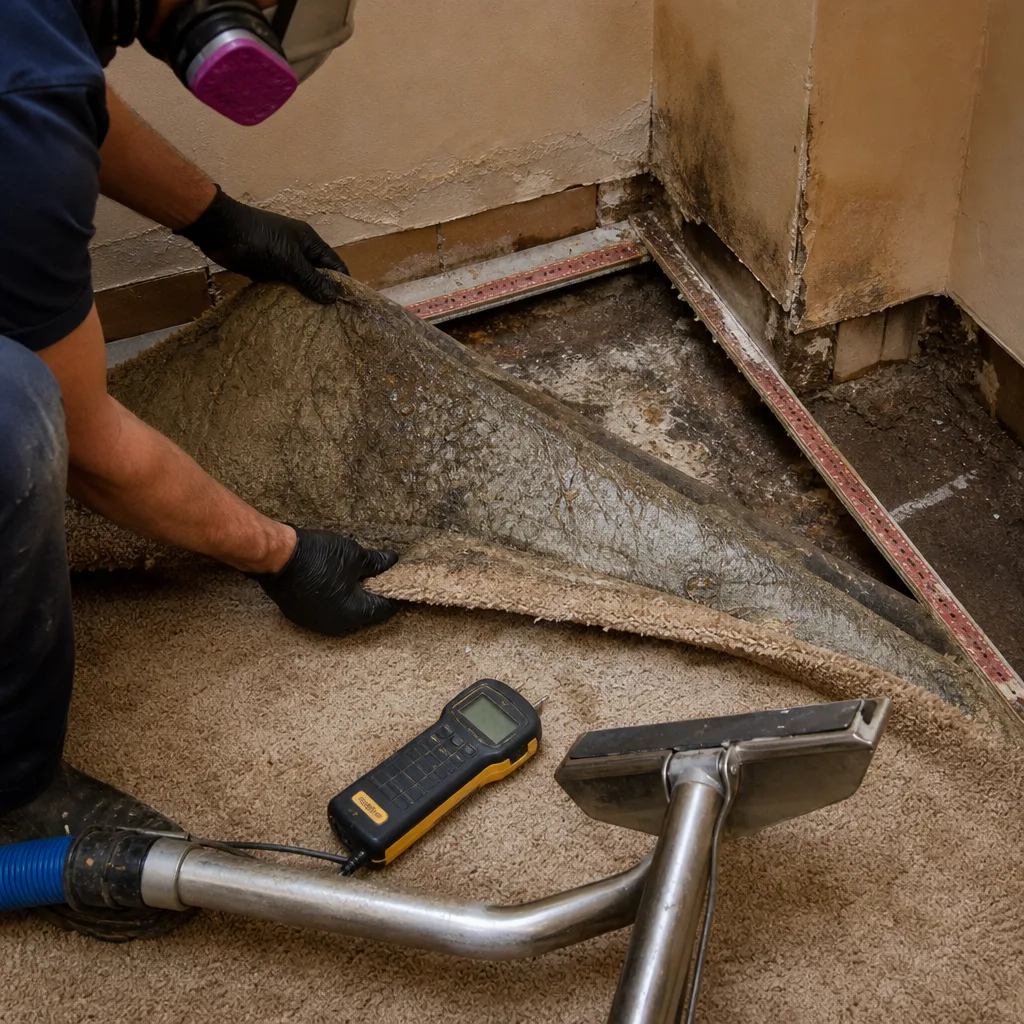
Mold is a moisture problem, not a cleaning problem. In Charleston, where many properties sit on sloping ground and lack gutters in the right places, water gets in from below and from above. We fix the moisture source: downspout extensions, crawl space encapsulation, dehumidifier sizing, attic ventilation. A dehumidifier alone in a drafty, uninsulated 1800s farmhouse will not solve the problem. The water has to stop coming in.
What happens when you call
- 1
A real person answersNo phone trees - you reach a local pro.
- 2
You get an upfront price rangeHonest numbers before anyone is dispatched.
- 3
A background-checked tech heads outLicensed & insured, dispatched right away.
- 4
You approve before work beginsNothing starts until you say go.
Mold Remediation Costs in Charleston, NY
Charleston’s market is shaped by the age of its housing stock, not by square footage alone. A contained wall cavity job in a single room, where we remove drywall, treat framing, and dry the space, typically runs $1,800 to $3,200. A full crawl space treatment with vapor barrier installation on a 1900s farmhouse runs $3,500 to $6,500. Black mold remediation in an attached barn or hay loft, which requires full containment and extended drying, starts around $4,000 and climbs based on structural access. What moves the price is how far the moisture traveled and how much containment is required. The free visual inspection gives you a firm scope in writing before you commit. We bill your insurance carrier directly where the loss is covered, and we never surprise you with a change order. Current offers that help: $50 off any repair over $250, a Senior & Veteran 5% discount always in effect, and an $89 seasonal tune-up that includes a moisture check.
We Also Serve Cities Near Charleston
Our crews regularly handle Mold Remediation in the surrounding communities, including Fairview, Harrison, East Bronx, and Hunts Point. The same certified technicians, the same written scope before work starts, and the same live dispatcher at 2 a.m. covering the whole area. If you’re anywhere near Charleston, call and we’ll be there when we say.
Charleston Mold Remediation Questions, Answered
How quickly can mold start growing in my Charleston farmhouse after a winter pipe burst?
Mold can begin colonizing wet drywall and wood within 24 to 48 hours in Charleston because older farmhouse wall cavities are warm enough and humid enough to support growth faster than modern construction. Call (917) 924-4221 the moment you find the leak, and we’ll have extraction and drying started the same visit.
What makes mold remediation in an attached barn different from a standard basement job?
Attached barns share wall penetrations with the main house, so moisture, humid air, and mold spores migrate through those cavities into living spaces undetected. We treat the barn as part of the conditioned envelope during drying, which means more containment, more air movement, and longer drying times.
Does your crew handle black mold in unconditioned spaces like hay lofts or root cellars?
Yes. We routinely set up full containment and HEPA air scrubbing in hay lofts, root cellars, and attached barns throughout Charleston. These spaces need extended drying because outside air keeps re-humidifying the framing, but the same process works there as in a basement.
What should I do while waiting for your crew to arrive if a leak has already soaked my kitchen wall?
Shut off the water at the main valve if the source is active, move furniture and rugs out of the wet area, and do not disturb visible mold. Opening walls or scrubbing mold yourself can aerosolize spores through a drafty old house. Keep the area closed off if you can, and call (917) 924-4221 right away. A live dispatcher answers and a crew is on the way.
Can you dry out a crawl space under a 1900s farmhouse without tearing out the floor?
Usually, yes. We access the crawl space from outside or through existing access hatches, install vapor barriers and drying equipment below, and bring the subfloor framing to its dry standard without removing finished flooring. Floor replacement is only needed when rot has already compromised the structure.
Will my homeowner’s insurance cover mold remediation in Charleston?
If the mold resulted from a sudden and accidental covered event, like a burst pipe or ice-dam roof leak, your policy likely covers the remediation as part of the water damage claim. Long-term seepage or pre-existing moisture issues are often excluded. We document everything and coordinate directly with your adjuster so you know where you stand before work starts.
How long does mold remediation take in a Charleston farmhouse?
A contained single-room job usually takes 3 to 5 days including drying. A full attached-barn or crawl-space job runs 7 to 10 days because unconditioned spaces dry slower. We give you a written timeline with your scope of work and stick to it, with daily moisture readings logged and shared.
Are your technicians certified for mold work?
Yes. Our crews hold IICRC certifications including Water Damage Restoration Technician (WRT) and Applied Microbial Remediation Technician (AMRT), and they train to RIA and IFA standards. Every technician is background-checked, uniformed, and arrives with professional-grade equipment from Dri-Eaz and Phoenix.
Serving Charleston, NY - Our Local Coverage Area
We’re based in the Charleston area and know this community well. Use the map below to see our service coverage - if you’re nearby, we can almost certainly help.
Call for a Free Mold Inspection in Charleston
A mold call in Charleston is rarely just a mold call. It’s a shared barn wall, a root cellar nobody goes into until spring, a sill plate chewed through by rodents years ago. We know because we’ve been answering these calls for over 42 years as a company, and we built our process around what these old houses actually need. Call (917) 924-4221 for a free visual inspection and a written scope before you commit to anything. A real person answers, day or night. Done right, and backed in writing: that’s the 90-Day Done Right Promise, the Keystone Standard, in your hands.
Written by Curt Bowman, Owner at Floodline Restoration Co., serving Charleston and the surrounding Montgomery County hill towns.