
Free visual inspection and a written scope of work before any mitigation begins - photos, moisture readings, and drying logs go in your claim file
The scope we write is the scope we bill. Anything new gets shown to you, in writing, before we touch it.






 Before
 After
After Before
 After
After Before
 After
After24/7 Emergency Mold Remediation in East Flatbush
Mold remediation in East Flatbush typically runs $1,800-$6,500 depending on whether the contamination is contained to a single wall cavity or has spread through a shared party wall into adjacent living space. Most jobs here start with a moisture source that other contractors missed because East Flatbush’s 1920s-1950s brick rowhouses hide water behind plaster and masonry joints. Call (917) 924-4221 and a live dispatcher answers. Not a recording. Not a call center queue. We dispatch a certified mold remediation crew to East Flatbush the same visit, because mold that sits for 48 hours doubles the containment area and can push spores through mortar joints into the neighbor’s unit.
Floodline Restoration Co. of Manhattan runs background-checked, uniformed technicians into East Flatbush at any hour. The first inspection is free. The scope is written before any work starts. And every mold job is backed by the 90-Day Done Right Promise, in writing, with no argument phase.
Understanding Mold Remediation Severity in East Flatbush Properties
Mold severity in East Flatbush is not about the visible patch on the drywall. It’s about what’s feeding it behind the wall. We classify mold jobs by contamination class and moisture history. A Class 1 job is surface growth on non-porous material from a one-time leak. A Class 2 job means porous material is involved. Class 3 is hidden growth inside wall cavities, under baseboards, or behind plaster-and-lath. Class 4 is what East Flatbush crews see most often: sewage-contaminated backflow that saturated shared masonry party walls, requiring full containment, negative air pressure, and antimicrobial treatment to the flood line.
The housing stock here makes this predictable. Two- and three-family brick rowhouses with shared walls, original plaster, and aging clay-tile drains. When the combined sewer backs up during a heavy rain event on East Flatbush’s flat terrain, Category 3 black water pushes up through floor drains into below-grade basement apartments. That water wicks into brick and mortar. Within 48 hours, mold colonies form inside the wall cavity. The homeowner sees a small patch near the baseboard. The moisture meter reads 85-98% RH through the wall. That’s a Class 3 or 4 job, not a surface wipe-down.
Why East Flatbush Property Owners Choose Floodline Restoration Co. of Manhattan
- 45-minute response commitment: A live dispatcher takes your call and a certified crew moves toward East Flatbush immediately. We answer at 2 a.m. the same way we answer at noon.
- 24/7 live answer, every time: No phone tree. No “leave a message and we’ll call back.” A person picks up. A person dispatches.
- IICRC-certified crews: Our technicians hold IICRC certifications including AMRT (Applied Microbial Remediation Technician) and WRT (Water Restoration Technician). They wear full PPE on every mold job, including Class 3 and 4.
- Free visual inspection: We assess the damage before you commit to anything. You get the facts. The scope comes in writing.
- Direct insurance billing: We document the loss from hour one, send the adjuster a line-item scope, and deal with the carrier directly. You don’t play messenger.
- One team, start to finish: The same certified crew that sets containment handles the demolition, drying, antimicrobial treatment, air scrubbing, and rebuild. No mid-job handoff to a subcontractor you’ve never met.
Our Mold Remediation Process
Inspection & Assessment
We start with a thermal imaging scan and moisture map of the affected area. In East Flatbush rowhouses, that means checking not just the visible patch but the shared party wall, the baseboard line, and the floor joists above the basement. We measure RH inside wall cavities with a penetrating meter. You get a written assessment of contamination class and scope.
Containment & Source Control
Before any demolition, we seal the work area with poly sheeting and run HEPA-filtered negative air machines to keep spores from spreading to the rest of the house. For shared-wall jobs in East Flatbush, we test the adjacent unit. If moisture migrated through the mortar joints, we set containment on both sides and coordinate access with the neighbor.
Water Extraction & Demolition
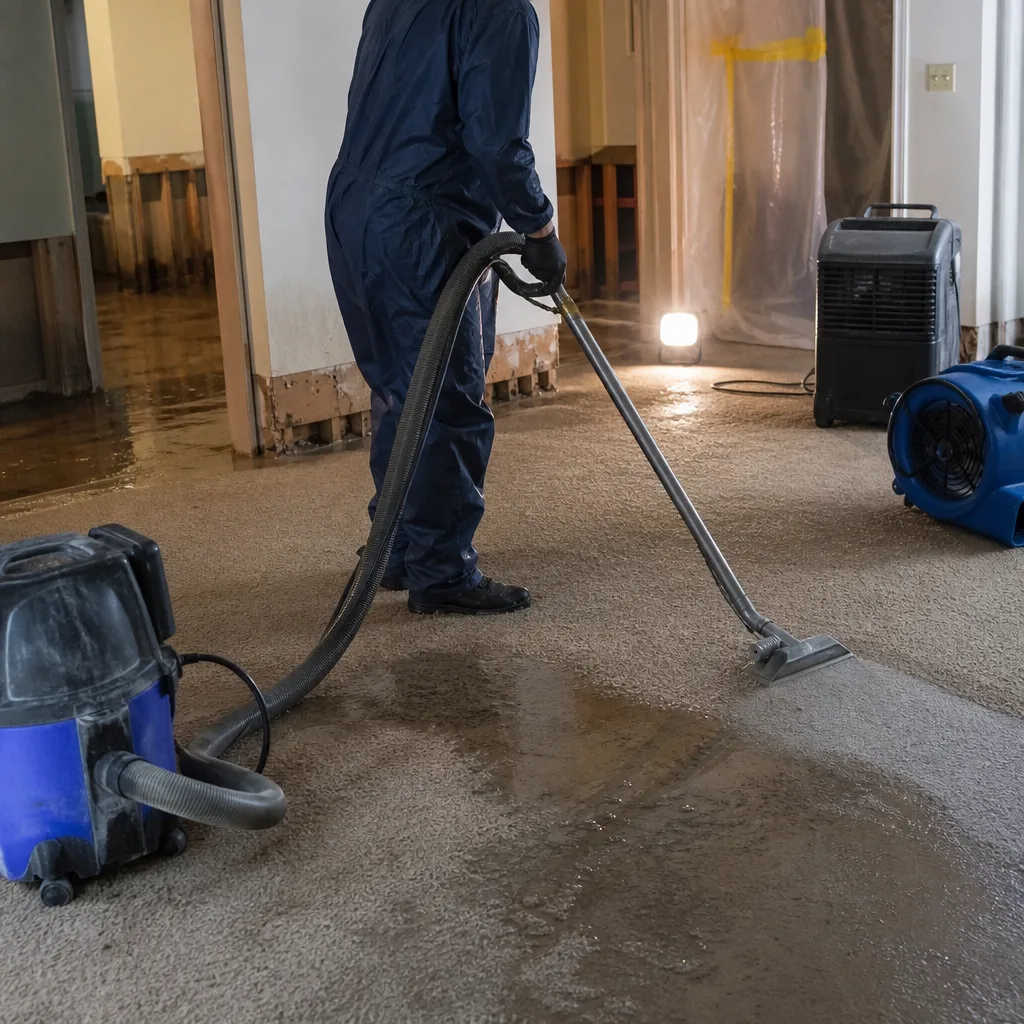
Standing water comes out first with professional-grade extraction units. Then we remove porous materials below the flood line: drywall, carpet, padding, insulation, and any plaster that has lost structural integrity. We don’t paint over it. We don’t spray bleach and call it done. Removal to the flood line is the only answer when sewage has been in the water.
Drying & Dehumidification
Dri-Eaz dehumidifiers, Phoenix air movers, and XPOWER units run continuously on a dry log we read daily. The moisture standard is set before work starts, usually 8-10% MC for structural wood. Injectidry suction panels go into wall cavities when moisture is trapped in masonry, which is common in East Flatbush party walls after black-water backflow.
Antimicrobial Treatment & Air Scrubbing
Every surface that contacted Category 3 water gets an EPA-registered antimicrobial treatment. HEPA air scrubbers run through the entire drying period and for 24-48 hours after demolition is complete. For East Flatbush basement apartments, we also check for hidden mold behind baseboards and inside wall cavities with a borescope before we close anything up.
Repairs & Restoration
Same crew, same project, no abandonment. We rebuild what we removed. Drywall, insulation, trim, paint, and any necessary vapor barrier work. The final step is a clearance test and a written summary of what was done, what was removed, and what the moisture readings were on day one and on the last day. That goes to you and your carrier.
Need Emergency Mold Remediation in East Flatbush Now?
Crews minutes away, answering live 24 hours a day. The sooner we start, the less it costs.
Working With Your Insurance Company
Most East Flatbush mold claims start as water claims. Sewer backflow, supply line breaks, storm-driven sump failures. The carrier covers the water damage. Mold remediation gets covered when it results from a covered water loss and you acted promptly. But carriers push back on mold claims when documentation is thin. That’s where we earn our keep. From the first hour, we photograph everything. Room by room. Moisture readings logged daily. Containment setup documented. Demolition scope photographed at every step. We write the estimate in the carrier’s preferred format and send it directly to the adjuster, with you copied. When the adjuster calls, we answer. The 90-Day Done Right Promise means the work is guaranteed in writing. Your insurer gets the same documentation you do. No side versions.
What We Provide Your Insurer
- Thorough documentation of the loss
- Photos of all damage, room by room
- Moisture readings and drying logs
- A detailed, line-item scope of work
- Direct coordination with your carrier
Built for East Flatbush’s Loss Calendar
East Flatbush mold jobs don’t cluster around one season. They cluster around rain events and temperature swings. January and February bring deep freezes that split supply lines in uninsulated basement crawl spaces. Water runs behind walls for days before anyone notices. By the time the drywall stains, mold has been growing for a week. Spring thaw and heavy rain soak the flat outwash plain. Stormwater pools because there’s nowhere for it to drain. Combined sewers back up. Basements flood with Category 3 black water. Summer thunderstorms dump an inch of rain in an hour, overwhelming Brooklyn’s sewer infrastructure exactly like a nor’easter does, just faster. Fall nor’easters bring the worst of it: sustained rain, saturated ground, and every floor drain in East Flatbush fighting against a combined sewer system that’s been undersized since the neighborhood was built. Mold follows every one of these events. The homeowners who call us the same day get a one-room dry-out. The ones who wait a week get full containment and wall removal.
Mold Remediation Across East Flatbush’s Neighborhoods
East Flatbush runs from Empire Boulevard down to Kings Highway, and the building stock shapes the mold patterns block by block. Around Clarendon Road, the two-family brick rowhouses built in the 1930s share double-wythe masonry party walls. Sewer backflows hit the below-grade basements, wick into the wall, and transfer moisture into the adjacent unit through unrepaired mortar joints. We coordinate access with both owners before containment even starts. Over near Church Avenue, the semi-detached homes with side driveways and converted garage spaces see slab leaks and poor exterior drainage. Water runs toward the foundation instead of away from it. Mold grows behind baseboards where the slab meets the wall. In the blocks west of Utica Avenue, older limestone foundations and clay-tile drain lines still carry sewage. During a heavy rain, those lines surcharge and send black water up through the floor drain. The mold that follows is sewage-fed, not groundwater-fed. And in the basement apartments south of Linden Boulevard, informal conversions without proper vapor barriers trap humidity year round. A dehumidifier won’t fix it. The wall cavity has to be opened, dried, and treated.
Specialized Mold Remediation Services We Offer in East Flatbush
Mold Inspection & Testing
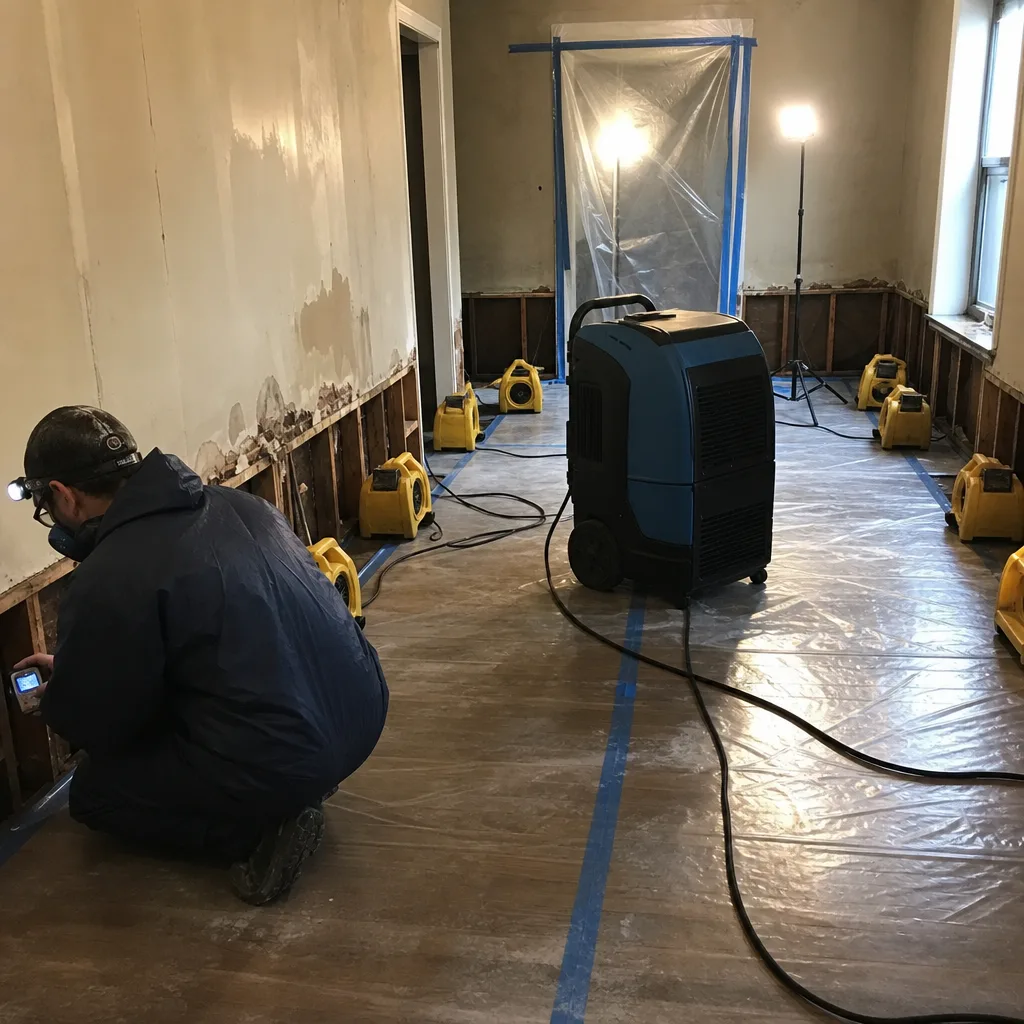
We don’t sell mold testing as a standalone upsell. We inspect first, with moisture meters, thermal imaging, and borescopes where needed. If testing is warranted, we use an independent lab. You get the results directly. In East Flatbush rowhouses, inspection means checking the shared wall, not just the room with the stain.
Mold Removal
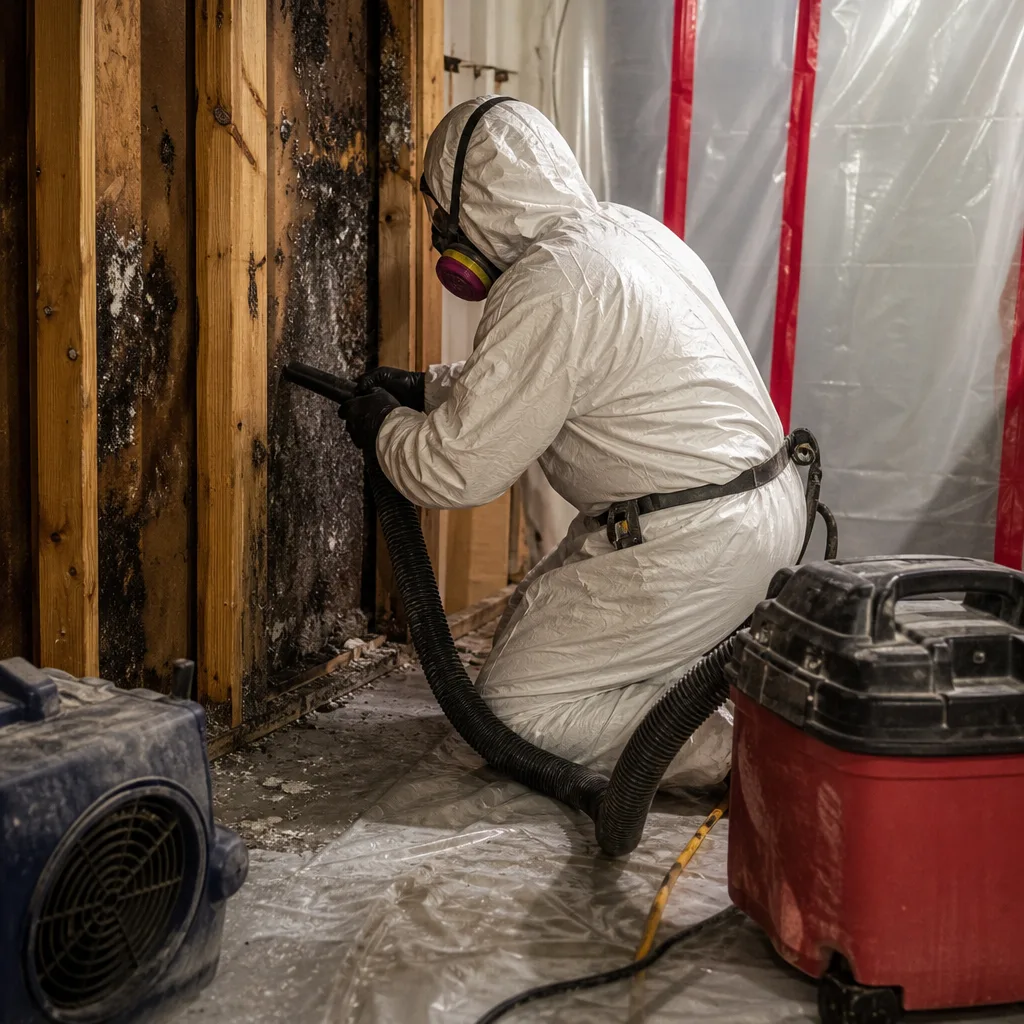
Removal means physical removal of contaminated material, not spraying. Porous materials below the flood line come out: drywall, insulation, carpet, padding. Non-porous surfaces get HEPA vacuuming and antimicrobial treatment. In East Flatbush’s plaster-and-lath homes, we save what’s structurally sound and remove what’s saturated. The goal is a clean cavity, not a covered-up one.
Black Mold Remediation
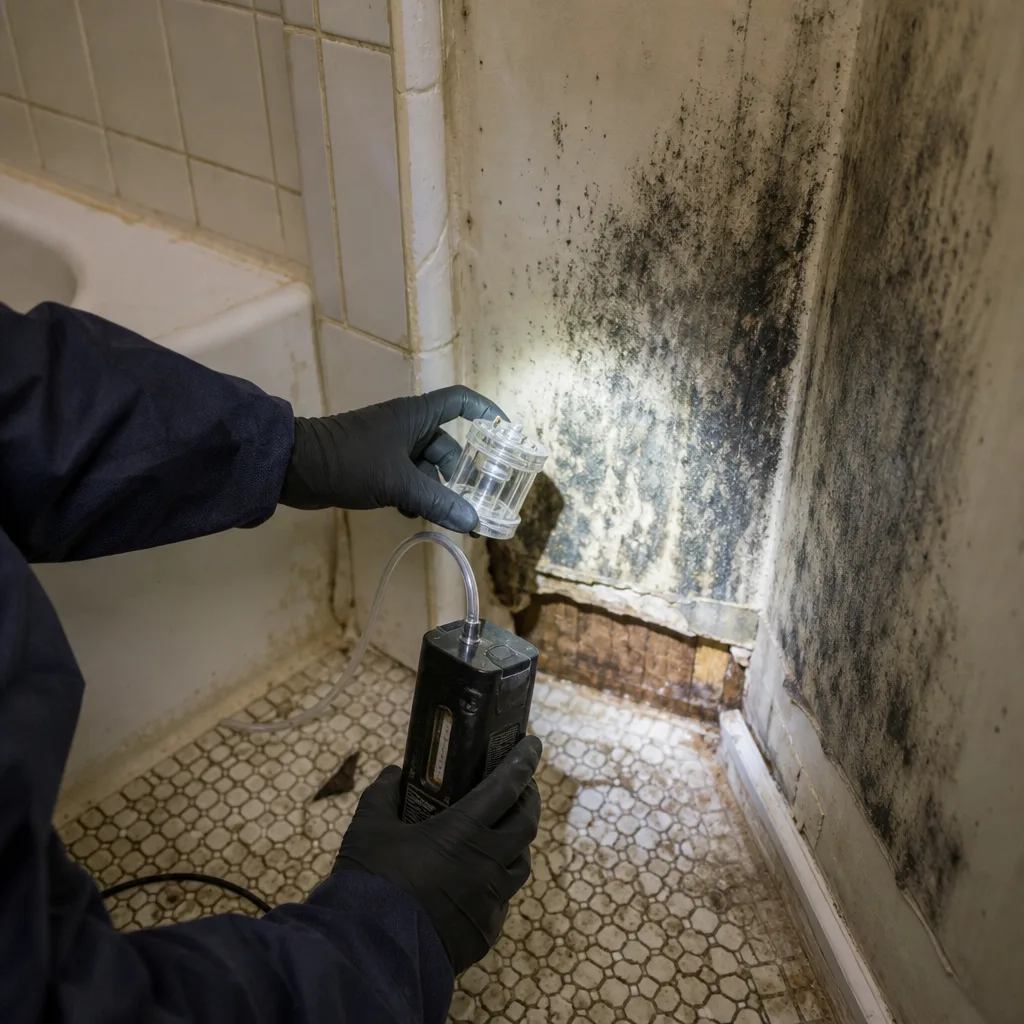
Stachybotrys gets the headlines. The reality is that any mold growing after sewage backflow carries the same health burden: mycotoxins, allergens, and irritants. East Flatbush sees black mold precisely because the water source is sewage, not rain. Full PPE, full containment, negative air. We treat every Category 3 job with the same protocols regardless of species.
Air Quality Restoration
After the contaminated material is removed and the cavity dried, the air in the house still carries spores. We run HEPA air scrubbers through the entire remediation, then run them for a day or two after as a final polish. For East Flatbush basement apartments, air quality means more than a scrubber. It means sealing off the floor drain that keeps backing up and installing a check valve where the plumber says it’s needed.
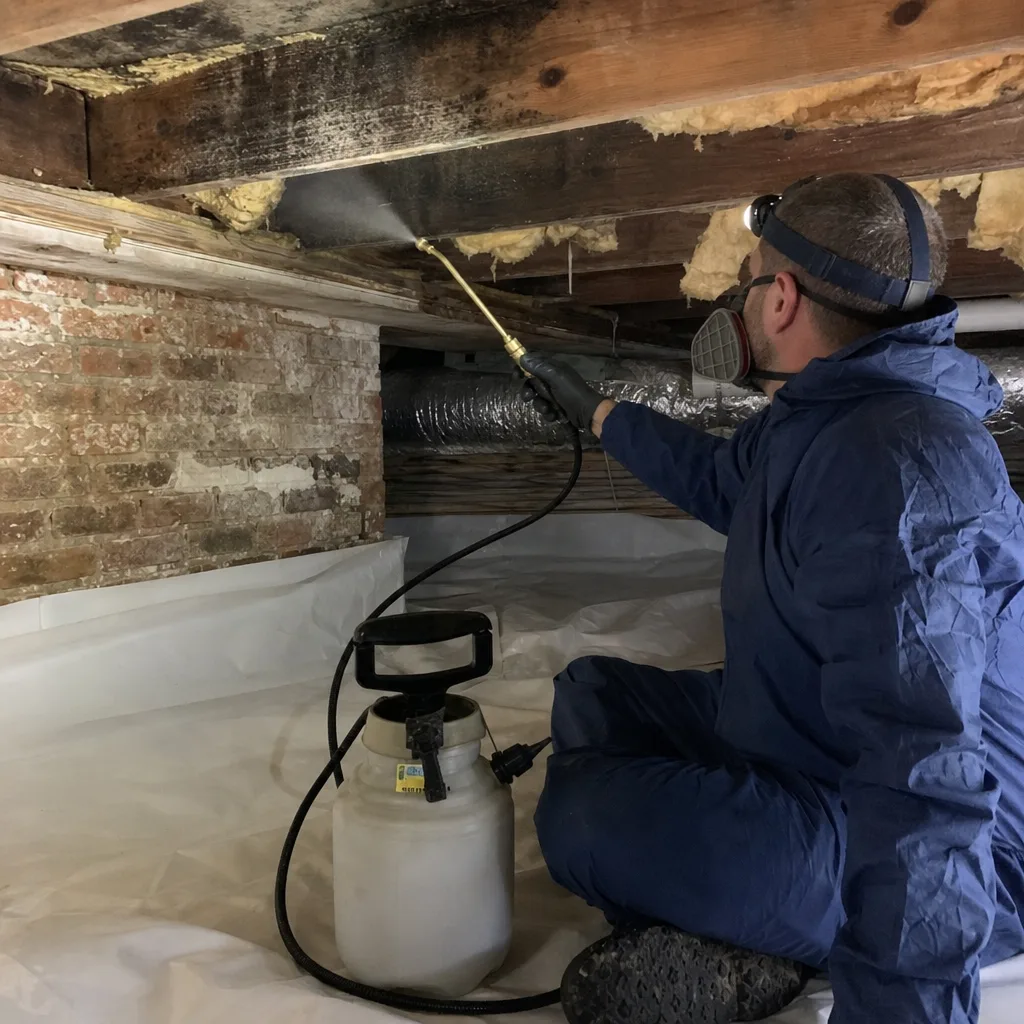
Crawl Space Treatment
Many East Flatbush rowhouses have shallow crawl spaces under the front or rear extension. Dirt floors, no vapor barrier, and the same sewer lines running directly beneath. When the crawl space floods, the moisture rises into the floor joists. Mold follows. We excavate contaminated soil where needed, run drying equipment into the crawl, treat the framing, and install a proper vapor barrier. It’s unglamorous work. It’s also the difference between a mold job that stays fixed and one that returns in six months.
What happens when you call
- 1
A real person answersNo phone trees - you reach a local pro.
- 2
You get an upfront price rangeHonest numbers before anyone is dispatched.
- 3
A background-checked tech heads outLicensed & insured, dispatched right away.
- 4
You approve before work beginsNothing starts until you say go.
Mold Remediation Costs in East Flatbush, NY
Mold inspection with a written scope runs $250-$500 in East Flatbush, waived when you proceed with remediation. A small surface mold job, one wall, no cavity involvement, typically runs $900-$1,800. A typical basement mold remediation after a sewer backflow in a two-family rowhouse runs $2,800-$5,500, including containment, demolition, drying, antimicrobial treatment, and air scrubbing. When the mold has crossed through a shared brick party wall into the adjacent unit, costs push to $6,000-$12,000 because containment has to run on both sides and coordination with a second property owner adds days. What moves the price: contamination class, size of the affected area, whether the source is still active, and whether code requires demolition to the flood line. Insurance covers most of this when the original water loss was covered. The free visual inspection gives you a firm number before anything starts. Call (917) 924-4221 and we’ll send a certified tech to East Flatbush the same day.
We Also Serve Cities Near East Flatbush
Our crews cover East Flatbush and the surrounding Brooklyn and Bronx communities: Fairview, Harrison, East Bronx, and Hunts Point. Same live dispatch. Same certified technicians. Same 90-Day Done Right Promise, in writing, on every job.
Serving East Flatbush, NY - Our Local Coverage Area
We’re based in the East Flatbush area and know this community well. Use the map below to see our service coverage - if you’re nearby, we can almost certainly help.
East Flatbush Mold Remediation Questions, Answered
Why does East Flatbush see so much black-water mold compared to Canarsie or Red Hook?
East Flatbush’s mold problem is sewer-driven, not coastal. The neighborhood sits on a flat glacial outwash plain with almost no grade change. When heavy rain overwhelms Brooklyn’s combined sewer system, sewage backs up through floor drains into below-grade basement apartments. Canarsie and Red Hook get coastal flooding from storm surge. East Flatbush gets Category 3 black water from the sewer line under the street, and it happens multiple times a year. That’s why mold here is chronic, not event-driven.
Can we safely remediate mold in a basement apartment without disturbing the tenants upstairs?
Yes. Containment is built around the affected area with poly barriers and negative air pressure. HEPA scrubbers run continuously so spores don’t migrate upstairs through stairwells, heating ducts, or wall cavities. For East Flatbush rowhouses, we also test the wall cavity between the basement and the first floor. If moisture migrated upward through the party wall, we extend containment before any demolition starts. Tenants upstairs can usually stay in the unit during the work.
Our basement was flooded with sewage last week. Do we need to tear out all the drywall?
Almost certainly yes, if the drywall was within absorption range of the flood line. Category 3 water means sewage. Anything porous that touched it, drywall, insulation, carpet, padding, becomes contaminated. Cleaning the surface does not clean the wall cavity, and East Flatbush’s shared brick party walls hold moisture longer than standalone houses. Call (917) 924-4221 and we’ll assess it with a moisture meter, not a guess.
How do you handle mold that has spread through the shared brick wall into our neighbor’s unit?
We coordinate access with the adjacent owner and set containment on both sides of the party wall. Moisture readings tell us how far the contamination extends. Typically, we remove affected material on both sides, run Injectidry suction panels into the masonry cavity, and treat the full thickness with antimicrobial agents. The 90-Day Done Right Promise covers both units when we’re the ones doing the work. You don’t pay for the neighbor’s side if their insurance covers it, but we manage both scopes so the mold doesn’t return through the mortar joints.
Why do mold jobs in East Flatbush take longer than in other Brooklyn neighborhoods?
Because of the party walls and the black-water source. A standalone home with a clean-water leak can often be dried in three to five days. An East Flatbush rowhouse with sewage backflow means Category 3 protocols: full PPE, containment, removal to the flood line, antimicrobial treatment, and extended drying of masonry that holds water far longer than drywall. Add the coordination with a neighboring unit and the job naturally runs two to three weeks. Cutting corners on that timeline is how mold comes back behind the same baseboard.
How fast can you get to East Flatbush?
We commit to a 45-minute response. The dispatch system is live 24/7. A real person answers. A certified crew moves toward East Flatbush immediately. For an active mold bloom, the first priority is source control and containment, which we can set up on the first visit. Call (917) 924-4221.
Will my insurance cover mold remediation?
Most policies cover mold remediation when it results from a covered water loss, like a burst pipe or sewer backflow, and when the homeowner acted promptly. What they push back on is long-standing moisture problems from deferred maintenance and a lack of documentation. We photograph everything from the first hour, log moisture readings daily, and send the adjuster a line-item scope in the carrier’s preferred format. Direct billing means we deal with the carrier, not you.
What should I do in the first 30 minutes after I find mold in East Flatbush?
Don’t wipe it. Don’t spray bleach. Don’t run a box fan on it. Shut the door to the affected room if possible, turn off the HVAC if it’s moving air through the house, and call (917) 924-4221. Take photos before anyone touches anything. Then stay out of the space. The sooner containment goes up, the smaller the job stays.
Written by Curt Bowman, Owner at Floodline Restoration Co. of Manhattan, serving East Flatbush since 2010.